‘They that wive twixt sickle and scythe shall never thrive’
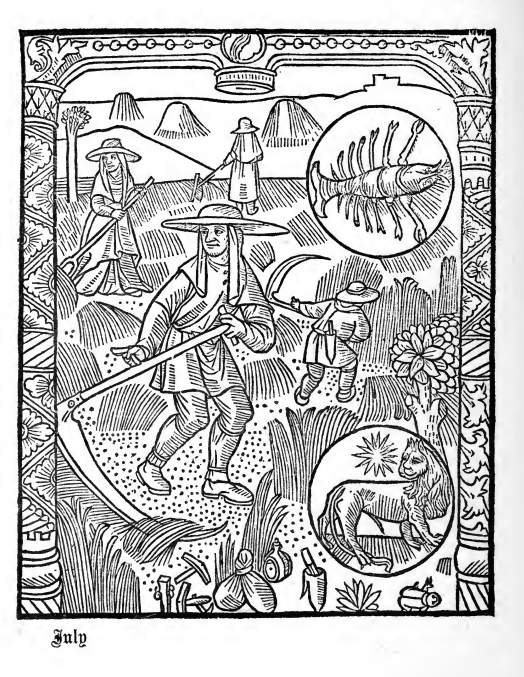
The time between haymaking and the corn harvest was such a busy period, that it was considered a bad time to marry. Haymaking was done by hand with a sickle, these were swung at an angle to cut the grass. It was easier if a good rhyme could be set up. The first man would step out in to the meadow but the next man had to leave a little gap to ensure he was safe from his fellows swinging sickle.
Apparently, the song ‘One Man went to mow, went to move a meadow’ gives the right gap, the second man would come in with the next line ‘Two Men went to mow, went to move a meadow’ and so on.
Once cut, the grass needed to be dried out in the fields, and turned every so often with a pitchfork. Once dried, it was taken to the farmyard and the hay built into a hayrick. The rick typically had a thatched roof. The hay, normally made of a mixture of grasses, was cut off from the rick by a hay knife to fed to animals in the winter.
Experiments at Rothamsted Park Grass, in Hertfordshire, have allowed scientists to study the effects of annual hay cutting. This study has been in continuous operation since 1856 which makes it the oldest continuous field experiment in the world. Among the many findings is the counterintuitive discovery that when fertiliser was evenly applied, the number of plant species declined from forty to fewer than five. Here is an article on Rothamsted Park Grass which gives interesting details.
If you wish to grow your lawn to increase biodiversity and to make it wildlife friendly, then read this is article. It is very important that we revive our battered wildlife. 97% of the UK’s semi-natural grassland has been destroyed over the last 80 years says ecologist Jack Marley.
July Haymaking from the Kalendar of Shepherds 15th Century
First published in June 2023, and republished in July 2024.
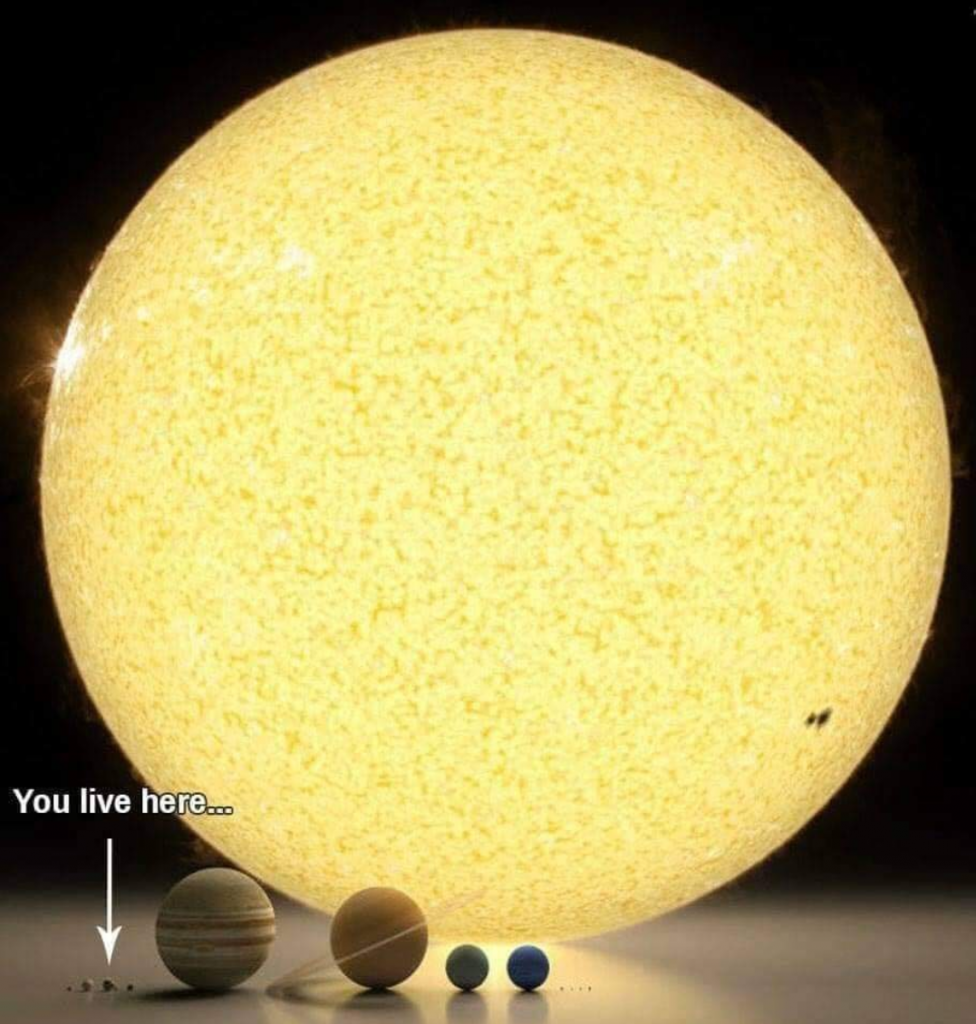
A gentle midsummer reminder of our place in the universe – source Facebook post.
Midsummer Solstice is the 21st of June. The Celtic version begins when the Celtic Day begins. This is at dusk on June 20th, which we would call Midsummer’s Eve. Midsummer, astronomically, begins on 21st June. But, meteorologically speaking, it has been here Summer since the beginning of June.
Midsummer is a fire festival, dedicated to the Celtic Fire God, Belinus. His name might mean Powerful One or Shining One, and he is linked to Apollo, one of the Greco-Roman Sun Gods. His main festival is Beltane, May Day, but many of the attributes of May celebrations and indeed Halloween celebrations are also carried out at Midsummer. (See my post on May Day)
In the early medieval period, the Church hijacked Midsummer’s Day and transferred it to June 24th. St John the Baptist’s Day. John was born 6 months before Jesus. John Aubrey in the 17th Century writes:
‘Still in many places on St John’s Night they make Fires on the Hills: but the Civil Warres coming on have putt all these Rites or customes quite out of fashion.’
The lark at heaven’s gate sings, And Phoebus ‘gins arise, His steeds to water at those springs. On chalic’d flowers that lies; And winking Mary-buds begin To ope their golden eyes; With everything that pretty is, My lady sweet, arise: Arise, arise.
Cloten Scene III Cymberline. William Shakespeare
Or words for a Druid watching the Sun rise?
Arise, O Sun! Let the Darkness of Night Fade before the beams of your glorious Radiance
Uncanny Summer
To prepare for Midsummer, remember that it is, like Halloween, an uncanny period. Hobgoblins, Fairies and Sprites, are, as in Shakespeare’s Play, Midsummer’s Night’s Dream, all abroad making mischief. Like May Fires, Belinus’ fire should be made from wood donated from all farms in the area, and using a range of trees. Ideally, collected by 9 men and from 9 different trees. Blazing branches should be carried sunwise around the fields to bless the crops, and it was good luck to jump over the ashes of the fire.
St John’s Wort
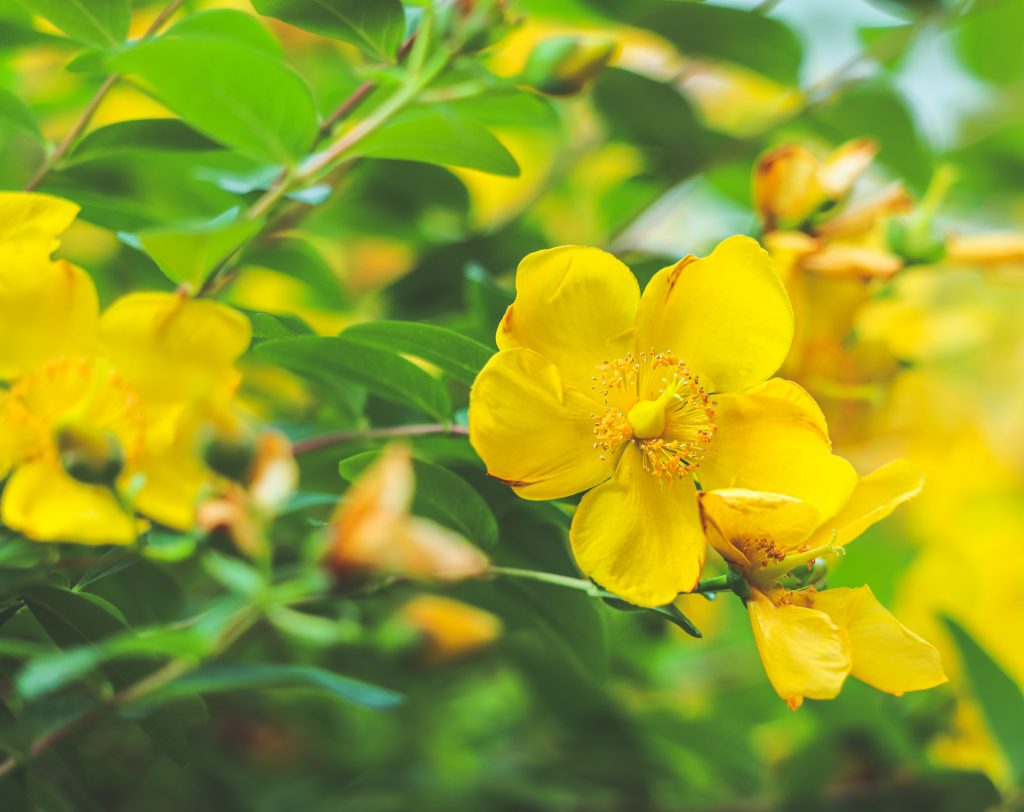
First in the line of defence against the infernal is St John’s Wort, known as Chasse-diable, Demon Chaser, Fuga Daemonum (amongst many other appellations). It was used to keep demons away, and to exorcise haunted houses. John Aubrey in ‘Miscellanies’ talks about a haunted London house which was cured by a Doctor who put St John’s Wort under the pillow of the bed. Bankes Herbel 1525 says:
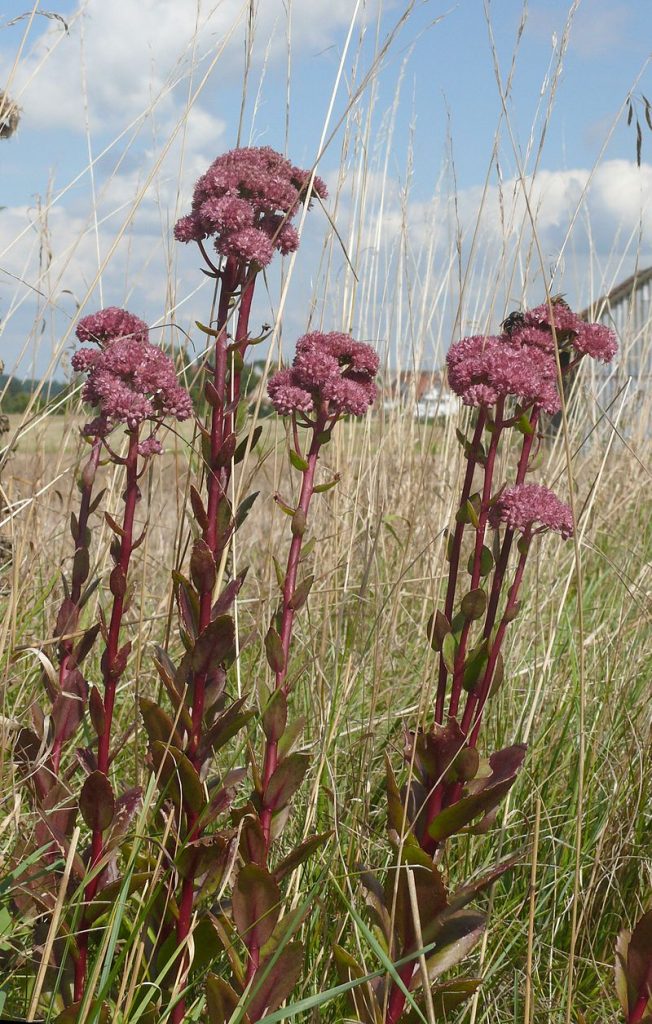
Sedum_telephium by Bernd Haynold wikipedia
‘The virtue of St John’s Wort is thus. If it be put in a man’s house, there shall come no wicked sprite therein.’
Vervain, yarrow, corn marigold, and orpins were also used, often woven into garlands, and hung around the necks of cows, or on door lintels as protection. If the St John’s Wort withered, the picker was to die or at least endure disappointment. If orpins entwined themselves on Midsummer’s Night, marriage would follow. Orpine, (Sedum Telephium) aka Live Long, or Life Everlasting was valued for the length of time it remained fresh after being gathered. Medicinally, it was considered good to use outwardly to cool scaldings, inflammations, and wounds.
St John’s Wort has a reputation for helping with depression, menopausal symptoms, ADHD, anxiety and other conditions.
A girl seeking love should walk around the Church seven or twelve times (accounts vary!) at midnight scattering hempseed, and singing:
Hempseed I sow Hempseed I hoe Let him that is my true love Come after me and mow
In the South West of England, there was a custom to watch the church porch on Midsummer Evening. This was when the spirits of all the living people of the village could be seen entering the church. Those not seen coming out again would surely die, as would any watcher foolish enough to fall asleep.
Thanks to the ‘Customs and Ceremonies of Britain’ by Charles Kightly.
First written in June 2023, and revised and republished in June 2024, and 2025
This post sprang from something that my grandson said to in the middle of the park. He was curious as to why I was concerned that the park toilets were out of action. He told me I could, like him, just pull down my trousers and wee, right here, right then, up against the tree in the park. My attempt at explanation drew a perplexed, ‘What?’ ‘What?’ is his new word. After an explanation, his next word is invariable another ‘What?’.Hopefully the relevance of this will become apparent.
May and June are the most prolific months for dandelions, which used to be known as ‘piss-a-beds’. They are diuretic and were often eaten, and so might well have consequences for the young trainee child.
John Hollybush in his 1561 ‘The Homish Apothecary’ says:
‘When a young body does piss in his bed either oft or seldom: if ye will help him take the bladder of a goat and dry it to powder, and get him to drink with wine, or else take the beans or hinder fallings of a goat, and give him of the powder in his meat morning and evening, a quarter ounce at every time.’
(quoted in ‘The Perpetual Almanac by Charles Kightley)
Hinder fallings are what falls out of the hind-quarters of a goat. I’m not sure even an indulgent Grandparent is allowed to give droppings and wine to the little ones. Nor can I find any mention of goat products in modern medical recommendations. So I won’t be recommending this as a practical aid.
Medically, dandelions were very well regarded. Mrs Grieve’s ‘Modern Herbal’ reports that it are diuretic and a general stimulant to the system but particularly the urinary system. They were good for liver and kidney complaints; gall-stones; and piles. They were considered excellent to eat and drink. Particularly, dandelion sandwiches using young leaves, with salt, pepper, and lemon juice. They were also taken in salads, teas, and beers.
We used to blow the seeds from the dandelion seed head saying ‘She loves me. She loves me not’ at each blow, until the truth was revealed.
First written in June 2023, revised june 2024,2025. Rewritten 2025
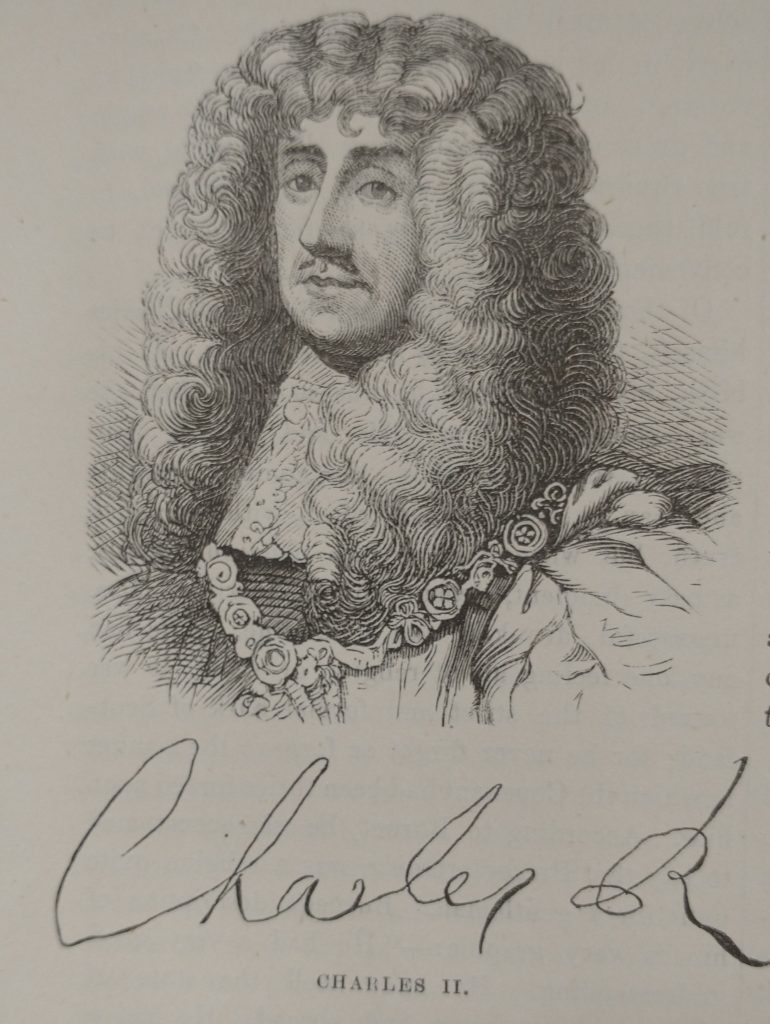
Oak Apple Day was set up by Parliament in 1660 as “An Act for a Perpetual Anniversary of Thanksgiving”. They were celebrating the restoration of Charles II to the throne in May of 1660. The Day was abolished in 1859, but a few places continue to celebrate the day.
The Oak was chosen partly as a symbol of England but particularly because after Cromwell’s Parliamentary Army defeated the Royalists at the Battle of Worcester (September 3rd 1651), Charles hid in an Oak Tree near Boscobel House in Shropshire on his epic journey to the South Coast and the safety of France.
People wore oak apples (or shick-shacks) which are a type of ‘plant-gall‘. This is an abnormal growth from a point of irritation on a plant. Or they were used sprigs of Oak leaves.
The text of the Parliamentary Bill said:
That in all succeeding ages, the 29th of May be celebrated in every parish Church and Chapel in England and the Dominions thereof, by rendering thanks to God for the Kings (Charles II’s) restoration to actual possession and exercise of his legal authority over his subjects’
Church Services for the Restoration; for the preservation from the Gunpowder Plot and the death of Charles the First were kept up until the year 1859.
Sementivae, was a festival dedicated to seed and to Ceres. Ceres is an Earth Goddess who gives her name to our word cereal. The festival was also called. Paganalia. The Mediterranean world had many names for the Earth Goddess. Tellus, Demeter, Cybele, Gaia, Rhea etc..
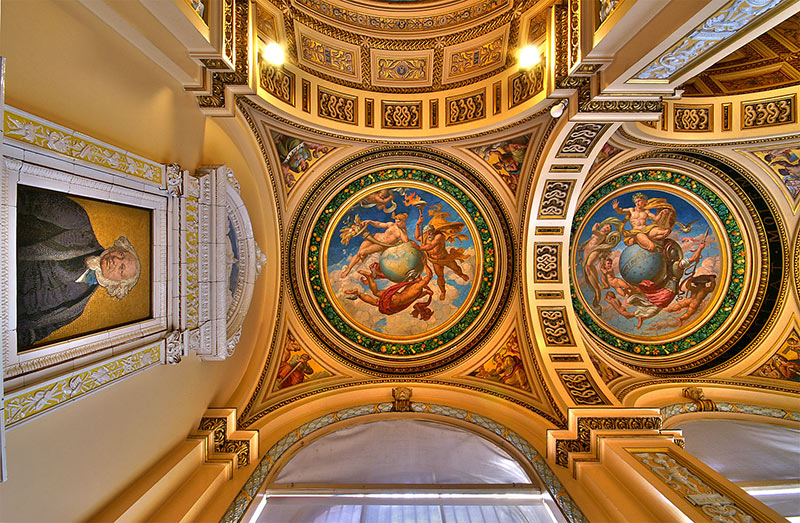
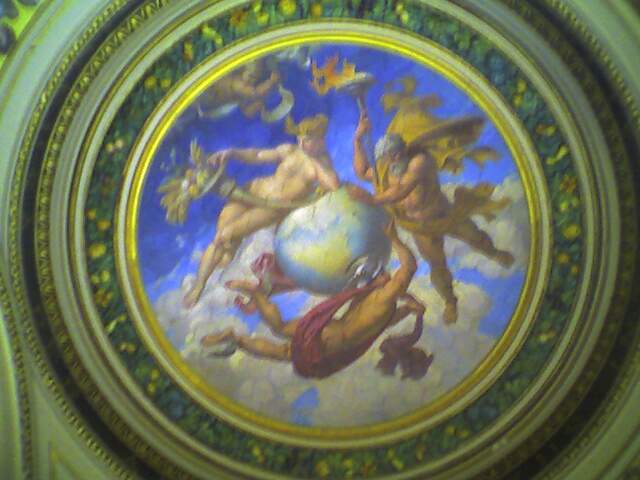
Ceres can be seen on the top left roundel resting on the Globe on the marvellous Ceramic Staircase at the V&A (photo above). And in my slightly out of focus photograph below. (To be honest, in real life, it looks a little more like my photo than the gorgeous photo above!)
Ceres represented Agriculture, Mercury Commerce, and Vulcan Industry. Old Photo by the Author.
Sementivae Dies – a moveable feast.
To create life, we need earth and water to nurture and seeds for fertility. And so into the cold dead world of January the Romans created a festival of sowing. It had two parts, one presided over by Mother Earth (Tellus) and the other by Ceres, the Goddess of Corn. The actual day of the festival was chosen not by rote on a set day of the calendar but by the priests, in accordance with the weather. This seems very sensible, as there is no point sowing seeds in terrible weather conditions. I’m assuming the Priests took professional advice!
On the 24th-26th January Tellus prepared the soil, and in early February seeds were sown under the aegis of Ceres. Tellus Mater (also Terra Mater) was known as Gaia to the Greeks.
Gaia
Gaia was selected by James Lovelock & Lynn Margulis in the 1970s as the face of their Gaia hypothesis. To me, the importance of the idea is not the scientific principle that environments co-evolve with the organisms within them. But, rather in Gaia as a personification of our world as a complex living ecosystem. One that we have to care for. Gaia exists as a series of feedback loops. Lovelock hypotheses that she will spit us out unless we can live in balance with our alma mater.
Ovid and Sementivae
This is what the Roman Poet Ovid has to say in his poetic Almanac known as ‘Fasti’ (www.poetryintranslation.com)
Book I: January 24
I have searched the calendar three or four times, But nowhere found the Day of Sowing: Seeing this, the Muse said: That day is set by the priests, Why are you looking for moveable days in the calendar? Though the day of the feast ís uncertain, its time is known, When the seed has been sown and the land ís productive. You bullocks, crowned with garlands, stand at the full trough, Your labour will return with the warmth of spring. Let the farmer hang the toil-worn plough on its post: The wintry earth dreaded its every wound.
Steward, let the soil rest when the sowing is done, And let the men who worked the soil rest too. Let the village keep festival: farmers, purify the village, And offer the yearly cakes on the village hearths. Propitiate Earth and Ceres, the mothers of the crops, With their own corn, and a pregnant sow ís entrails. Ceres and Earth fulfil a common function: One supplies the chance to bear, the other the soil. Partners in toil, you who improved on ancient days Replacing acorns with more useful foods, Satisfy the eager farmers with full harvest, So they reap a worthy prize from their efforts. Grant the tender seeds perpetual fruitfulness, Don’t let new shoots be scorched by cold snows. When we sow, let the sky be clear with calm breezes, Sprinkle the buried seed with heavenly rain. Forbid the birds, that prey on cultivated land, To ruin the cornfields in destructive crowds. You too, spare the sown seed, you ants, So you’ll win a greater prize from the harvest.
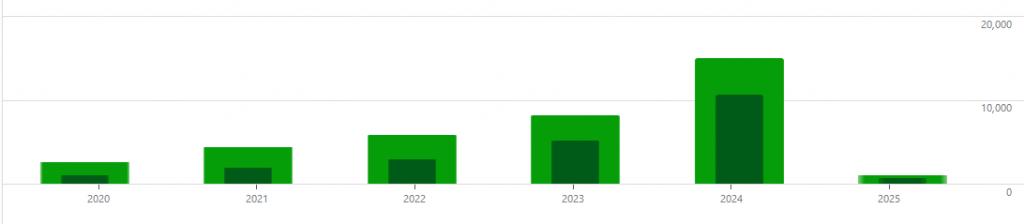
News from the Almanac showing readership/viewership of the site.
I have been waiting for a day when I haven’ t got a post to publish. Why? To update readers about the Almanac of the Past. And with a bit of manoeuvring today is the day.
What is the News from the Almanac of the Past?
The plan is to have a post for each day. I am virtually there for November to March, but a way away for the warmer months.
In the winter months, I have been revising, improving, developing and adding content to previously published pages. For those of you who have been here a while, you will have been receiving posts you have seen before. Next year, you might be seeing some for the third time. I’m not sure what to do about this except improve posts and add content. But I am considering stopping automatically posting repeated posts to subscribers. Maybe from next November? Feed back would be good – please email me at kpflude at chr . org . uk (I’ve slightly scrambled the email to stop the robots).
What is the planned content for the Almanac of the Past?
The nature of an almanac is to be a pot-pourri. They are about seasons, time, folklore, history, important events, and anniversaries. I also like to cover history, famous people and discoveries. Gods, Goddesses, Saints, sinners, and archaeology. What I want it to be is something that makes us more mindful about the passing of the year. How seasons and time change the way people see their world. My focus is mostly on the UK, but also on Rome and Greece. With occasional excursions to other places. I am trying to find more content that is London-based, but not to the exclusion of everything else. I also have an ambition to add more important news of discoveries that change our view of the past. If I get the formula right, I will attempt to get a publication from it, otherwise it will remain online.
Developments for the Almanac
It takes quite a lot of time for me to keep it up. You will see, from the graph above, that the readership is yearly making progress. Particularly, last year. But then it’s a steady progress from a small base, rather than Kardashian viral.
This is, at least, partially because I would rather not spend my time marketing. I want to be writing. But, I have decided I need to spend a little more time marketing the site. When I ran the Old Operating Theatre Museum, I had the skills to get our web site to first place on google searches. But this was in the pioneering days of the World Wide Web. Now, it’s more difficult, but I am taking a ‘Search Engine Optimisation’ (SEO) course. I have also loaded some ‘plugins’ to WordPress which help with SEO. I thought you might be interested in some of the consequences.
The plugins ‘parse’ the site and give recommendations for improvements. This should, get the site further up the Google landing page. I have no doubt that it involves or will involve AI. The ‘Yoast’ plugin I am using as I type this, tells me words like ‘however’ are a ‘complex’ word and so they down grade my ‘readability’ quotient. It also tells me that that last sentence was too long. So, it wants simple sentences, and words that join sentences together. And not too many sentences in a paragraph and a proper scattering of headings.
It also assesses the SEOness of the text. So I have to tell it what the main subject of the page is. And it wants that word or phrase in:
the title: the first paragraph the image the meta description tag and scattered, but not too densely (because Google will punish the site for playing the algorithm) through the text.
Hence, you will see the phrase ‘News from the Almanac’ scattered more than I would normally like through this text. Of course, I know no one really will be searching for ‘News from the Almanac. So I should change the SEO phrase just to Almanac. But, then I’m not really interested in attracting non-readers to this page. I see this as between me and my email subscribers!
After writing that paragraph I realised that I would want people to land up here if they typed in ‘Almanac of the Past’. So you will see, I’ve editing the text scattering that phrase here and thereabouts.
In effect, I am being trained by a slightly stupid tutor who has no particular understanding of the needs of a writer of history! And you can’t answer back, you just get downgraded!
And it seems to be working as my numbers are getting better more quickly.
Any problems for the Almanac of the Past?
Obviously, my terrible proofreading is a concern! Maybe that’s one-way republishing helps. A year later, it’s easier to see the typos, the ugly writing, and issues with the content.
But there is another issue with the emails, which I have been trying to solve for about 6 months. The links in the emailed posts don’t work. But they do work if you visit the almanac on the web. This is nuts as I always use the full URL. For example: https://www.chr.org.uk/anddidthosefeet/december-29th-st-thomas-wassailing/.
So, this is very much a technical issue, one might say a bug in the system. I think it stems from the fact that my blog was stored not in https:/public_html/ but in https://public_html/anddidthosefeet. This seemed a logical choice at the time, as the blog shared space with other things. I haven’t managed to convince the tech guys at either the internet provider or WordPress that this is a bug. So, the alternative is to move the blog. But I am reluctant to do this in case it completely messes everything up.
Change the content of the newsletter, you might think. But I can find nothing that allows me to alter or add anything to the email version of the post. As I write this, I think I will temporarily add a line at the bottom of the post which says:
if the links are not working, copy and paste this URL https://www.chr.org.uk/anddidthosefeet/whateverkevinsalmanacpageiscalled
to your browser. This, will get you to the Almanac of the Past on the web where all the links will work.
And this will allow you to easily copy or link to the webpage and send the Almanac of the Past to your friends and followers. (I’m hoping you are Taylor Swift). You willalso be able to comment easily and maybe even like the post?
Another advantage of visiting the web version is that you get a better version to read. This is because I often find howling typos when I read the emailed post. I correct them, with a red embarrassed face.
If you are reading this on the web, then all the above must have been very annoying to read! Maybe I will move it down to the bottom of the post! (which I did).
Trying new things on the Blog
Do you want to make a comment?
Please leave me a comment – its great to hear what you think.Cancel reply
In order to clear January 22nd I moved the previous January 22nd post to December 10th. As its all about Mulled Wine, Glugg, and Gluwein., its better at the beginning of the Christmas Season than in late January.
To see it click here: or cut and past this url https://www.chr.org.uk/anddidthosefeet/january-22-22-time-to-mull-it-over/
I also didn't tell you Monday was Blue Monday because I had already sent you one post on the 20th. So this is the Blue Monday Post. https://www.chr.org.uk/anddidthosefeet/january-13th-18th-blue-monday-wolf-moon-start-of-lambing-and-twelfth-night-old-style/
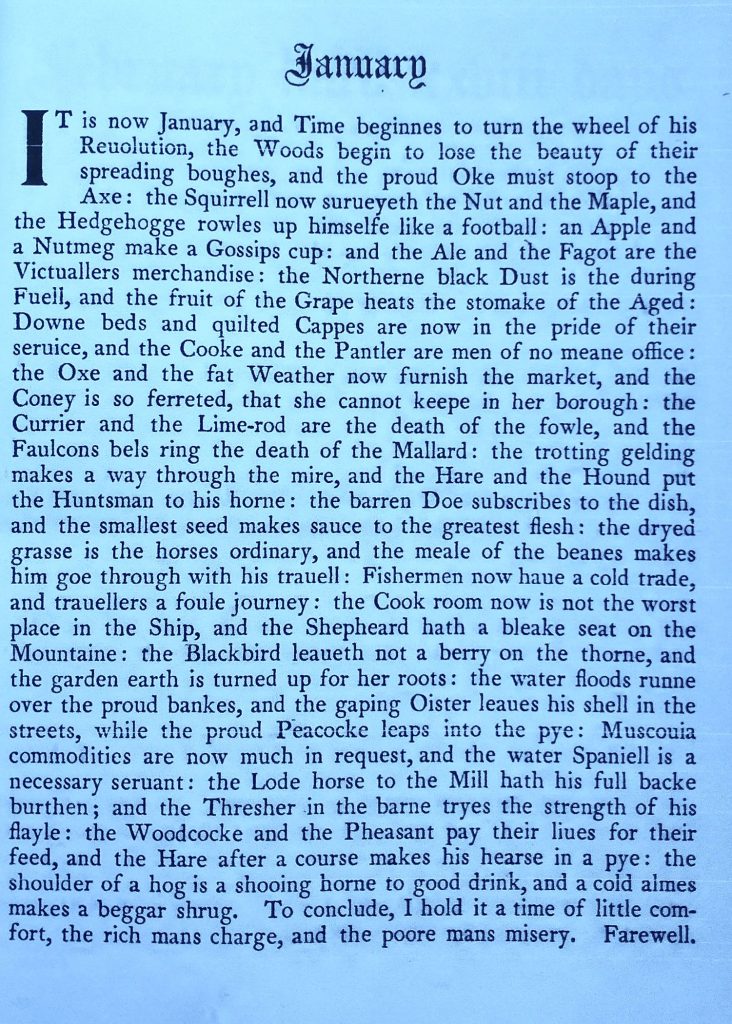
January from Nicholas Breton’s ‘Fantasticks 1626 from the Kalendar of Shepherds (digitised by Internet Archive)
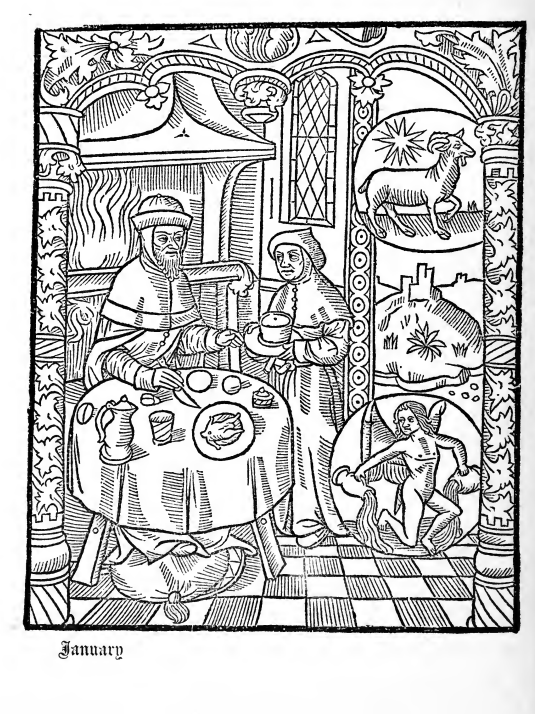
The Kalendar of Shepherds was printed in 1493 in Paris and provided ‘Devices for the 12 Months.’ I use a modern (1908) reconstruction of it using wood cuts from the original French and adding various text from English 16th and 17th Century sources. The text of the month (as shown above) is provided from a 17th Century source. It gives an interesting view of the countryside in January. To see the full Kalendar, look here:
Nicholas Breton, the writer of the text above, concludes that January:
‘is a time of little comfort, the rich man’s charge, and the poore man’s misery.’
The rich man is burdened by having to help out all the poor people who depending upon him to get through the shortages of winter. The image for January shows that January is best spent indoors by a roaring fire, eating pies.
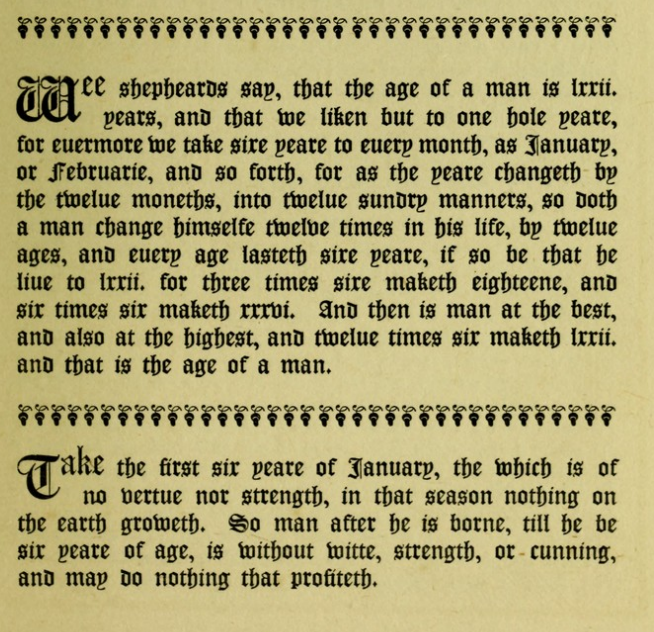
The Kalendar introduces a ‘conceit’ which is that the year mirrors our lives, and we can forecast what will happen in our lives by looking at the months.
Kalendar of Shepherds, January text
So our lives, which are of 72 years, can be divided into 12 ages of man, each of 6 years. So, January represents the first 6 years of a person’s life. And as you can see, that during these first 6 years, the child is ‘without witte, strength, or cunning, and may do nothing that profiteth‘. As the year changes every month, so, ‘a man change himself twelve times in his life’. At three times 6 (18 or March) a child becomes a man, and 6 times 6 (36 or June) man is at his best and highest. And at 12 times 6 (72 or December) man is at the end of his allotted span.
Shakespeare numbered the Ages of Man as seven, in the great speech of Jacques in ‘As You Like it’ I dealt with this and other Ages of the World in my post:
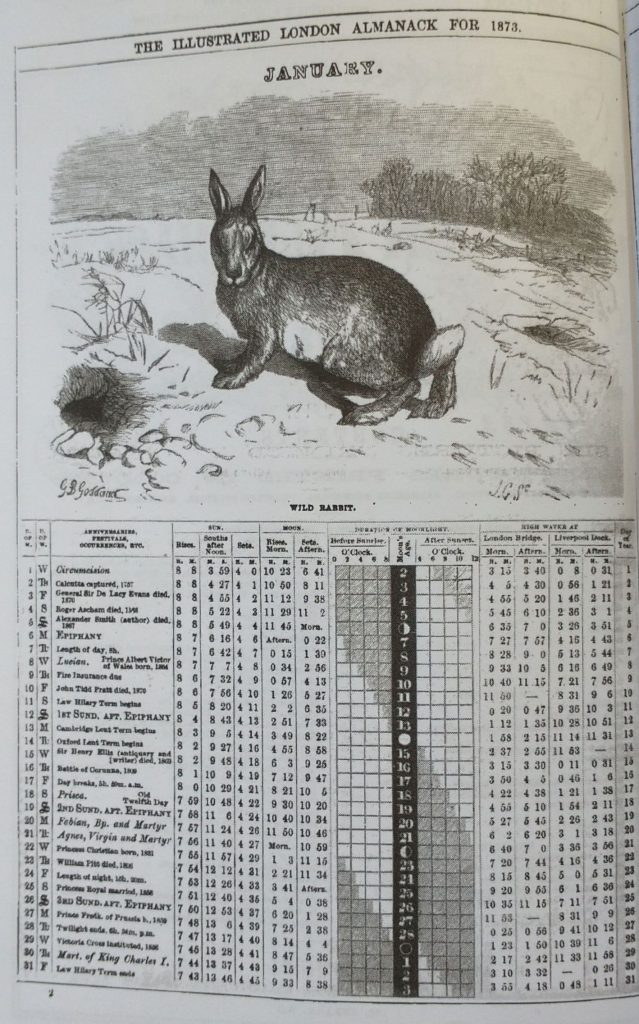
Bereton tells us that, in January, the ‘coney is so ferreted that she cannot keep in her borough’. To put that is modern speech, ‘the rabbit is so hunted with the aid of ferrets that she cannot keep in her burrow’. The London Illustrated Almanac of 1873 chose the Rabbit as its wild animal of the month.
January from London Illustrated Almanac of 1873
To have luck for a month, you are supposed to say ‘Rabbit, Rabbit’. No less a person than FD Roosevelt used to say this. No one knows why. Rabbit’s feet are lucky too. I remember some of my friends had them in our Surrey village in the early 60s. Some of Dad’s nieghbours kept ferrets, and I remember dead Rabbits hanging from walls. The history.com website gives an idea, possibly exaggerated view, of the merits of the feet which depended upon how they were collected:
“A 1908 British account reports rabbits’ feet imported from America being advertised as ‘the left hind foot of a rabbit killed in a country churchyard at midnight, during the dark of the moon, on Friday the 13th of the month, by a cross-eyed, left-handed, red-headed bow-legged Negro riding a white horse,’
As to why, no one really knows. But Pliny the Elder in 71AD reported that cutting off the foot of a live hare could cure gout. There are European traditions of rabbit and other animal’s feet amulets curing all sorts of ailments. There are associations with witches, who could shape-shift into a rabbit. So a rabbit’s foot would be witchy and therefore powerful. In March, I reported on the Hare, and their, similar, associations with witches:
For lovers of Music, Chas and Dave’s hit song ‘Rabbit’ has a chorus of ‘Rabbit, Rabbit’.According to the Cockney’s singers (they do love a Knee’s Up) it comes from the Cockney Rhyming Slang expression: Rabbit and Pork. This means ‘Talk’ because it rhymes with ‘Talk’. To hear the song, its gestation and Royal connections, click here.
Now, I must stop rabbiting on. Time to get things done.
First, published in 2023, revised in January 2024, 2025
My true love sent to me 6 Geese a Laying; 5 Golden Rings; 4 Calling Birds; 3 French Hens; 2 Turtle Doves and a Partridge in a Pear Tree
The Lord of Misrule, Masters of the Revels, and Boy Bishops
The Roman festival of Saturnalia, held between 17th and 23rd of December, included reversing rules so that slaves, ruled and masters served. In the medieval period, the disorder of Christmas was continued with the election of Lords of Misrule, Masters of the Revels, and Boy Bishops.
John Stow’s, Survey of London
He was London’s first great historian, wrote of the Lord of Misrule in London. In this section, Stow begins the role of the Lords of Misrule at Halloween and continues it until Candlemas, in erly February. See my post here for more details on Candlemas. This is what Stow says:
Now for sports and pastimes yearly used.
First, in the feast of Christmas, there was in the king’s house, wheresoever he was lodged, a lord of misrule, or master of merry disports, and the like had ye in the house of every nobleman of honour or good worship, were he spiritual or temporal. Amongst the which the mayor of London, and either of the sheriffs, had their several lords of misrule, ever contending, without quarrel or offence, who should make the rarest pastimes to delight the beholders.
These lords beginning their rule on Alhollon eve, continued the same till the morrow after the Feast of the Purification, commonly called Candlemas day. In all which space there were fine and subtle disguisings, masks, and mummeries, with playing at cards for counters, nails, and points, in every house, more for pastime than for gain.
Against the feast of Christmas every man’s house, as also the parish churches, were decked with holm, ivy, bays, and whatsoever the season of the year afforded to be green. The conduits and standards in the streets were likewise garnished; (…) , at the Leaden hall in Cornhill, a standard of tree being set up in midst of the pavement, fast in the ground, nailed full of holm and ivy, for disport of Christmas to the people…
Holm is an evergreen oak called Quercus ilex. John Stow talks about the Tree in Leadenhall Street being destroyed in the great wind of 1444 which you can read about here. You might also like to see the following posts, which include information about John Stow and London’s customs, and churches.
The Solstice and the East Pediment of the Parthenon
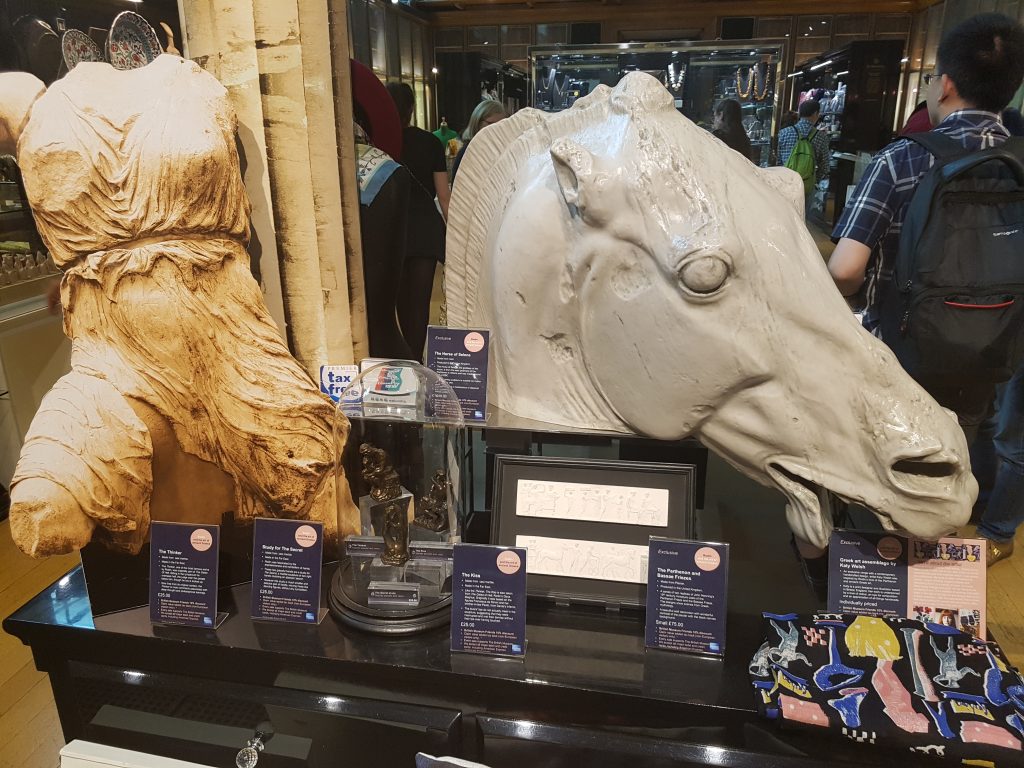
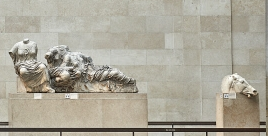
British Museum Shop, reproductions of Hestia and Selene’s Horse from the Parthenon Marbles
At the Summer Solstice, I took a group to the British Museum and, a few days later, to Stonehenge, and managed to ‘integrate’ the two into a solstice narrative. At the BM, over years of trying to explain the sculptures, I have been building in my mind an interpretation of the Pediment that gives, I hope, an original insight into the possible intentions of the sculptors. I don’t know how ‘true’ it is, but I do think it gives an insight into metaphor and symbolism in great works of art. Bear in mind that there is a lot of uncertainty about some of the attributions, and, that the male and female virtues that I am talking about are traditional ones, not necessarily how we would express it in the modern world.
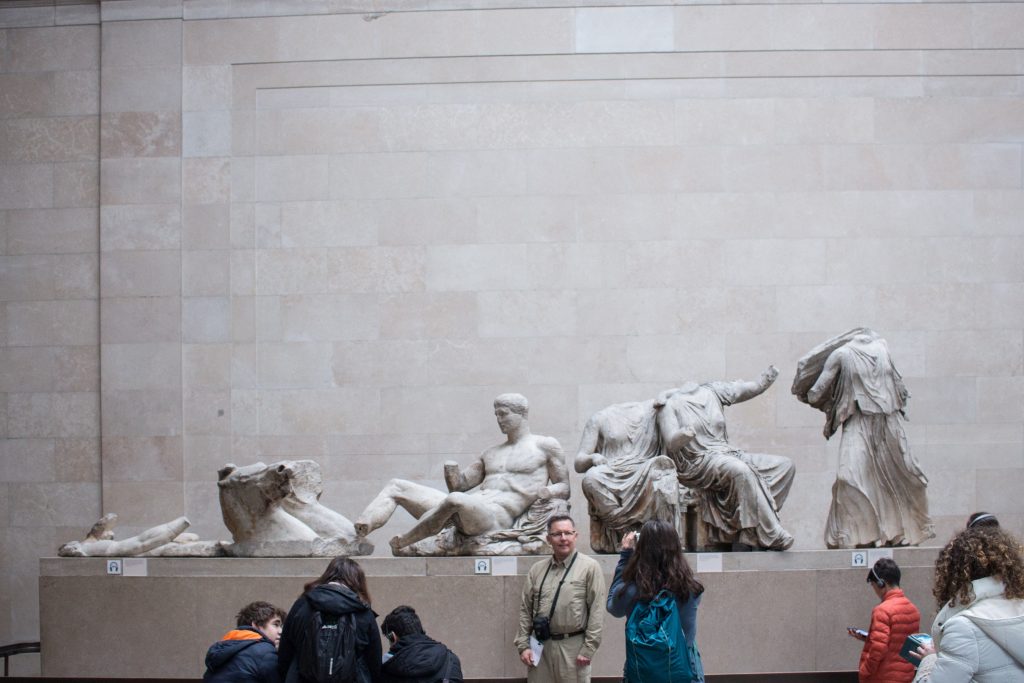
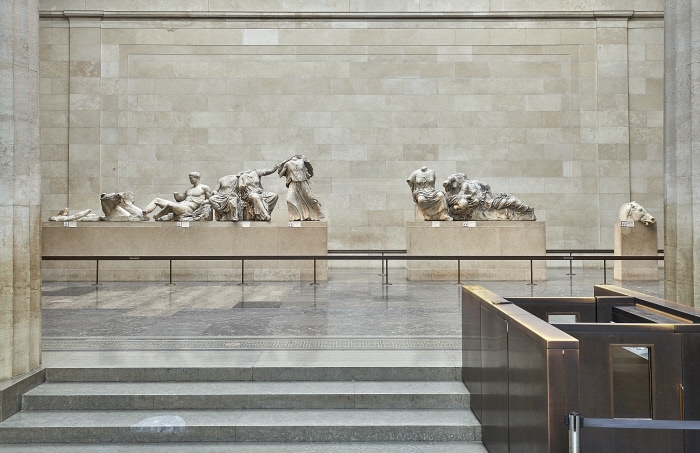
At the left of the above photography, you see the horses that take Helios chariot into the sky to bring up the sun to light the world every day. Most sun deities are male, and the Sun gives light and life to the world, without it this earth is an inert block of ice cold stone. The next statue is casually laying back and looking fit, relaxed and not looking as if he is in that position because of the impossible triangular Pediment space he inhabits. He is the epitome of male strength, usually identified with Hercules but other people have other ideas and a young Dionysus is another suggestion. Whoever he is he represents male beauty and strength. So this end of the pediment represents the Sun and male virtues. This is the East Pediment of the Parthenon which is orientated to the rising sun, a little north of east.
Next are Demeter, the goddess of fertility, the goddess of the earth. Placed here to remind us that the Sun needs the Earth to create life and sustenance. It reminds us that the universe is not male, the male only works in conjunction with the female. Demeter is cuddling her daughter Persephone, the Goddess of Hades. She reminds us that life is a cycle of death and life. Plants die, turn into soil and create the conditions for future life.
Next is Hebe, daughter of Zeus and Hera, wife of Heracles (Hercules). She is the cupbearer to the Gods and gives them the ambrosia that keeps them forever young. She is the Goddess of Immortality, a reminder that the universe is eternal.
Next to Hebe is a void where there was the central statue of the east pediment depicting the Birth of Athena (according to Pausanias who wrote a guide in the 2nd Century BC to the Temple). Athena was born from the head of her father Zeus- a virgin birth. Athena therefore is, in some ways, the greatest of the Olympians, as she has the virtues of her female sex and the virtues of her father’s masculinity (and, dear Gods, hopefully not the massive ‘Me Too’ vices of her father). She is therefore, wise, nurturing, just, intuitive, decisive, a leader; an ideal combination of male and female.
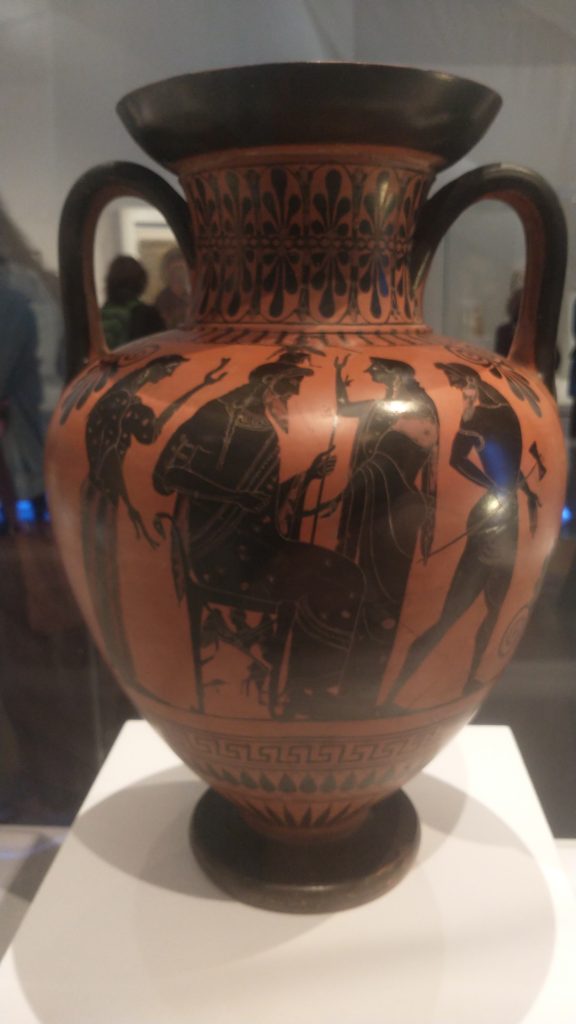
Zeus (sitting) Hephastus to right (looking back with Axe) Athena just visible above Zeus’s head
So Zeus eats Athena’s mum, Metis, who is pregnant with her. Sometime later he has a cracking headache. Hephaestus, the disabled artificer God hits Zeus over the head to clear the headache. Zeus gives birth to a fully formed Athena from the split in his head. She was known as Athena Parthenos, Athena the Virgin. Her name is originally Athene but it got changed to Athena in 500 BC.
Hestia, Dione, Aphrodite, Horse of Selene’s chariot
To Athene’s left is Hestia (Vesta for the Romans). Her name means “hearth, fireplace, altar” and she is the goddess of the domestic sphere, of the comforts of home, of a warm fire enjoyed by a loving family.
The next set are two beautifully draped women languidly leaning on each other, and these are Dione, with her daughter Aphrodite – the Goddess of Love. Dione is the daughter of Gaia and Uranus daughter of earth and sky. So, here, counterpoised to Hercules, are epitomes of women. Women of power, creation, and love.
Finally, we have the exhausted horse of Selene. Her chariot takes the moon into the sky, positioned opposite to Helios and the Sun. Selene is the Moon goddess, and the Moon is beautiful, powerful as it gives us the tides and fundamental to the life of humans as she presides over the menstrual cycle. Compared to the movements of the Sun which any fool can work out, and which are relentless (symbolising Justice) the movements of the Moon are mysterious to most of us. So Selene is beautiful, powerful, creative and the Goddess of Intuition.
So, if you put it all together, the East Pediment of the Parthenon shows that the world is a union of the male and the female, balanced between the two with Zeus and Athene in the middle, with Athene holding the main part because she, in her person, represents both the male and the female.
Of course, we know that the Athenian society was a patriarchal one with women mostly kept in the domestic sphere. But here, at least, women were given an equal billing in the organisation of the Cosmos.
Sculptures from the east pediment of the Parthenon
I must end by warning the reader that this is only my interpretation. I am not a scholar of Ancient Greece. I have come to my own conclusion based on spending a lot of time looking at the marbles, doing Solstice Virtual Tours, and mostly informed by the labels in the gallery, with of course, some reading including Mary Beard’s book entitled ‘Parthenon’ and the BM’s guidebook. In particular, I have not incorporated into my ‘story’ the sculptures that were in the gaps that do not survive or only in fragments scattered throughout the Museum world. Mary Beard was cleverer than I, not reaching conclusions on the basis that we don’t know. But what we do know is that in the centre is Zeus and Athene and at the edges are the chariots of the Sun and the Moon. And so fitting to celebrate the Solstice.
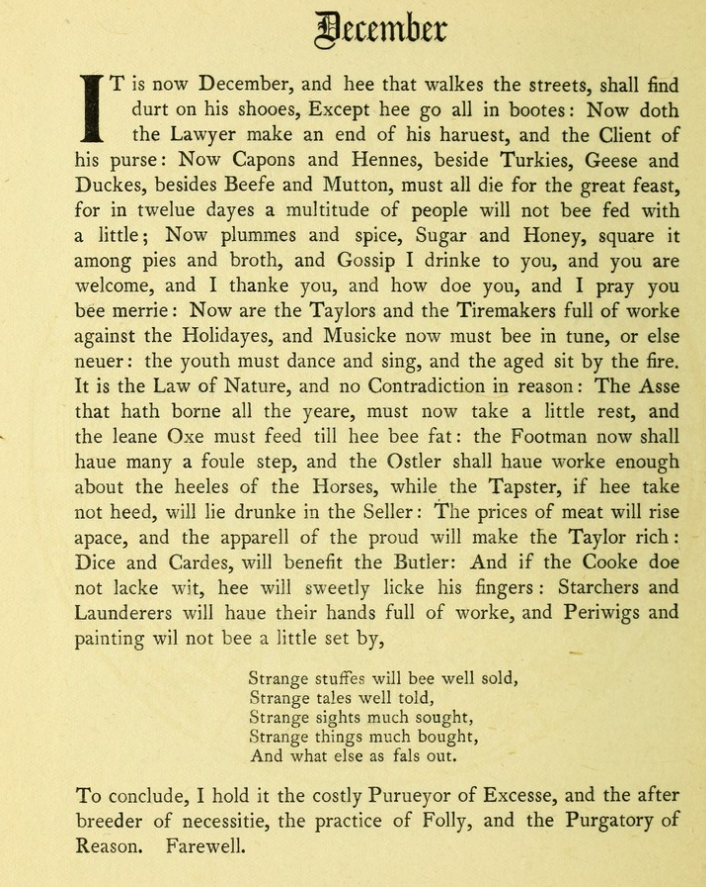
I am finishing my post on September, and using the Kalendar of Shepherds. As you may have noticed, I often use the Kalendar of Shepherds to provide an insight into how the seasons were seen in the past. Mostly, I use it for the posts at the beginning of each month. I have created this page as a placeholder to put information on the Kalendar for anyone who is eager to explore it more or to make use of it. Each month I will link to it, so I do not have to repeat the basic information about the Kalendar. Much of this text was contained in the December post, and I have used this month as my example. Tomorrow, you will get the September version.
About the Kalendar of Shepherds.
The Kalendar was printed in 1493 in Paris and provided ‘Devices for the 12 Months.’ The version I’m using is a modern (1908) reconstruction of it. It uses wood cuts from the original 15th Century version and adds various texts from 16th and 17th Century sources. (Couplets by Tusser ‘Five Hundred Parts of Good Husbandrie 1599. Text descriptions of the month from Nicholas Breton’s ‘Fantasticks of 1626.) This provides an interesting view of what was going on in the countryside every month.
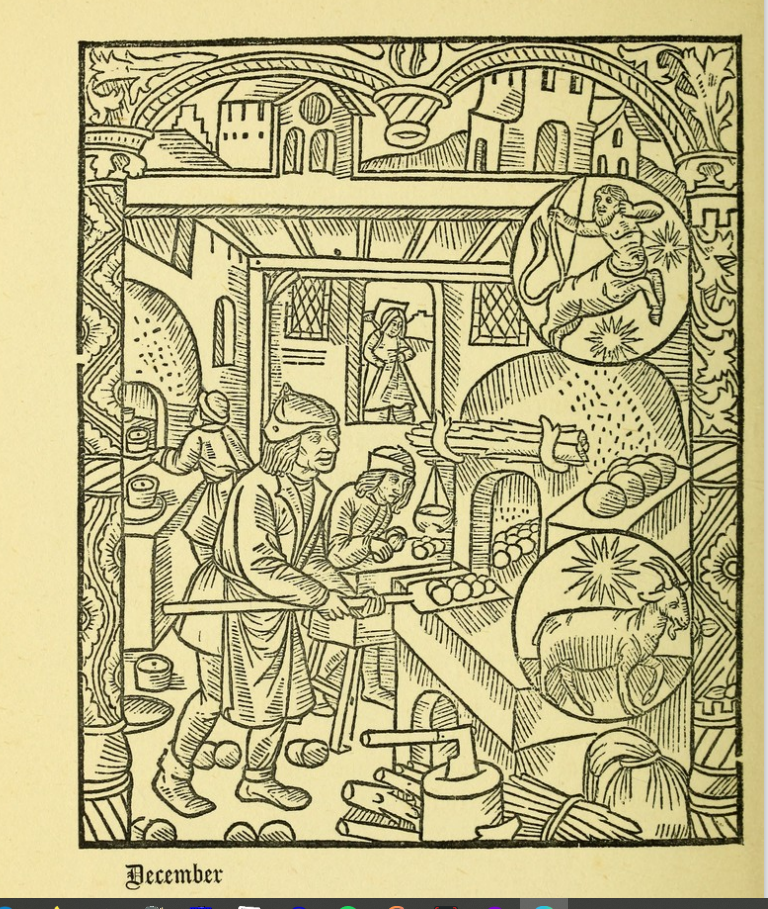
The Kalendar of Shepherds has an illustration for each month (December above) which shows typical activities for the time of year, and has inserts to identify the astrological signs of the month. So, in December they are baking and collecting firewood. The star signs are Sagittarius (November 22 – December 21) and Capricorn(December 22 – January 19).
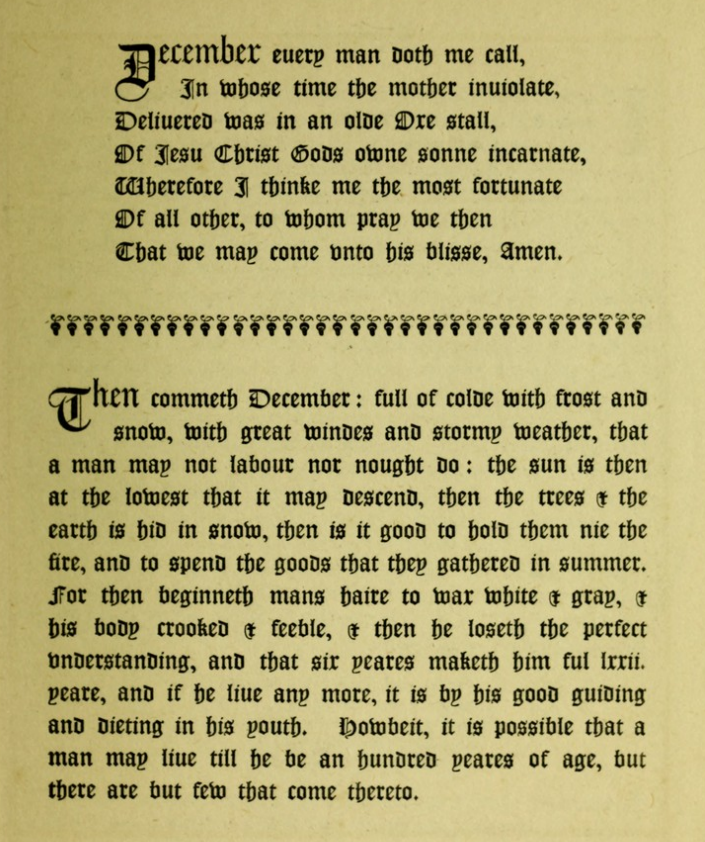
The text below gives a vivid description of December weather and then elaborates on the last six years of a man’s life, with hair going white, body ‘crooked and feeble’. The conceit here is that there are twelve months of the year, and a man’s lot of ‘Six score years and ten’ is allocated six years to each month. So December is not just about the 12th months of the Year but also the last six years of a person’s allotted span. The piece allows the option of living beyond 72, ‘and if he lives any more, it is by his good guiding and dieting in his youth.’ Good advice, as we now know. But living to 100 is open to but few.
Kalendar of Shepherds
The longer description of December (shown below) is by Breton (1626) and gives a detailed look at the excesses of Christmas, who is on holiday, and who working particularly hard. But it concludes it is a costly month.



Please leave me a comment – its great to hear what you think.