Anniversary of the accession of Queen Elizabeth I and the end of burning of heretics November 17th

Black and white drawing of Queen Elizabeth I with a copy of her signature below it
Queen Elizabeth

The anniversary was celebrated in London with bonfires and bell-ringing. Lighted fire-barrels were rolled along Cheapside. It was, in a way, the precursor to Guy Fawkes Day (1605 onwards). Protestants celebrated it with such joy as it was the end of the reign of Elizabeth’s sister, Queen Mary I. ‘Bloody’ Mary, as she was named by Protestants, was the daughter of Katherine of Aragon. Her Government had 287 Protestants burnt at the stake, mostly relatively ordinary people: clergy, apprentices, artisans, and agricultural workers.  60 were women; 67 were Londoners: the majority were of the younger generation, and most from the South East of England.

The executions were overwhelmingly unpopular, ghastly exhibitions of brutality. In 1555 the weather was unusually wet, so the burnings were an even slower form of torture.  The savagery was blamed by the Protestants on the Old Religion and particular the Spaniards who came over with Mary’s Spanish husband.  Ironically, Philip, in fact, urged caution. When Mary refused to be as lenient to religious dissidents as she was to political ones, he suggested the executions should, at least, be in private. She refused, as the immortal souls of the population were put at risk by Protestant dogma. So the public nature of the deaths was a justifiable deterrent.

When, three years later, in 1558, in the early hours of the 17th November (6am) Queen Mary died, London rejoiced. An old regime, a foreign regime, a Catholic regime was swept away by a young Queen (Elizabeth was 25), with a young Court sworn to protect the new Protestant religion. (For my post on the nicknames for her courtiers look here.)

More on the accession of Elizabeth I at ‘History Today, here.

Soon, Foxe’s Book of Martyrs outsold all other books printed except the Bible, and enthusiasm for religious reform morphed into anti-Catholic intolerance.

The Author’s copy of Foxe’s Book of Martyrs

One of the martyrs in the book is Thomas Tomkins, a weaver and a Londoner from Shoreditch, a few hundred yards from where I live.

Tomkins was a humble but godly man who was kept imprisoned by Bishop Bonner, the Bishop of London, at his Palace at Fulham. Here he was beaten. The Bishop personally beat him around the face and ripped off part of his beard. The beatings continued for six months. Finally, exasperated at his failure to persuade the weaver of his error, Bonner burnt Tomkins hand with a lighted taper until ‘the veins shrunk and the sinews burst’. I assume Bonner would defend his action by saying he wanted to give the weaver Tomkins a foretaste not only of the burning he faced but of the very fires of Hell.

But nothing would avail; Tomkins, the simple man that he was, would not accept that bread was made into flesh.  (Transubstantiation). He would not say that which he did not believe. So he met his end at Smithfield by fire with his bandaged hand in the reign of Queen Mary on 16th March 1555.

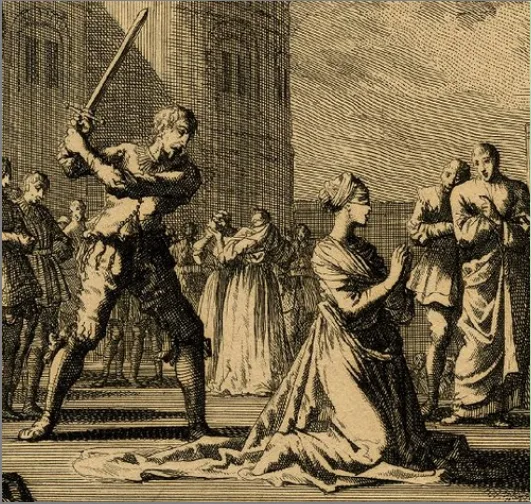
Thomas Bilney martyred in Smithfield. Black and white engraving
Thomas Bilney martyred in Smithfield.

First Published 17th November 2023, revised 2024,2025

Exercise to keep you warm and fit for the ordeal of winter – November 15th

Medieval drawing of an archer
Medieval drawing of an archer. Good resistance exercise to get the muscle/fat ratio on the healthy side?

‘Leaping is an exercise very commendable and healthful for the body.’

The Compleat Gentleman 1634

Thomas Fuller in his book published in 1642 says:

Running, Leaping, and Dancing, the descants on the plain song of walking, are all excellent exercises. And yet those are the best recreations which besides refreshing enable, at least dispose, men to some other good ends. Bowling teaches mens hands and eyes Mathematicks, and the rules of Proportion: Swimming hath sav’d many a mans life, when himself hath been both the wares, and the ship: Tilting and Fencing is warre without anger; and manly sports are the Grammer of Military performance. But above all Shooting is a noble recreation…..

‘The Holy State’ by Thomas Fuller B.D. and Prebendarie of Sarum

Published St Pauls Churchyard 1642

The Holy State is a fascinating book – it provides instruction on how to be the Good Wife; the Good Advocate; the Good King; Bishop etc. etc.; has general rules of behaviour; some case studies of good lives to emulate and discussion of profane states not to emulate.

It can be read online here:

On This Day

15th of November 1712 A Famous Duel between Lord Mohun and the Duke of Hamilton

‘In short, they fought at seven this morning. The dog Mohun was killed on the spot; and while the Duke was over him, Mohun shortening his sword, stabbed him in at the shoulder to the heart. The Duke was helped towards the Cake House by the Ring in Hyde Park (where they fought) and died on the grass, before he could reach the house; and was brought home in his coach by eight, while the poor Duchess was asleep.

Jonathan Swift ‘The Journal to Stella’ 1712

Lord Mohun seemed to be the villian, not only making the initial affront, but also issuing the challenge and stabbing his rival in such an underhand way! After the Duel there was fighting between the servants of the men, and the seconds had to flee to avoid arrest. Duels were illegal but remained a part of upperclass society into the 19th Century. Pehaps, Thomas Fuller’s advocacy of fencing as a good keep fit exercise is not such a great idea!

Text taken from ‘A London Year’ Compiled by Travis Elborough and Nick Rennison

To read my post on Jonathan Swift and Chelsea Buns see my post here.

First published November 2023, republished 2025

Lay in stocks of fire wood against the Winter November 14th

Photo by Sergey Lapunin on Unsplash

As the winter comes nearer and the St Martin’s Summer comes to an end – make sure you have good stocks of firewood. Here, is some ancient advice on the burning of wood:

Beechwood fires burn bright and clear
If the logs be kept a year
Oaken Logs if dry and old
Keep away the winter’s cold
Chestnut’s only good they say
If for years ’tis laid away
But ash-wood green or ash-wood brown
Are fit for a King with a golden Crown
Elm she burns like the churchyard mould
Even the flames are cold
Birch and pine-wood burn too fast
Blaze too bright and do not last
But ash wet or ash dry
A Queen may warm her slippers by.

For more professional modern advice for your wood burning stove, look here, or at this, excellent, although American source. For more on a St Martin’s Summer, see my post here:

IKEA Furniture and Me.

My own very limited experience of firewood is from the very occasional fires I lit during Christmas past. I found a particular joy in burning IKEA furniture which had failed during the year. My kindling of choice was dried Christmas tree, which pops and crackles like a good indoor firework. I suspect burning IKEA furniture, however good for the soul, is appalling for the environment, so please don’t do it! Take a pickaxe to it instead, or even better, upcycle it.

The nightmare that is a flatpack!

A postscript on IKEA. To appreciate the joy this gave me, you have to understand my dislike of shopping in IKEA. And my even greater frustration at putting together the flatpack items. I have a form of flatpraxia which begins with an inability to spot key construction information cryptically hidden in those little drawings. Magically, as you survey the slightly wonky creation in front of you at ‘completion’, my mind finally resolves the importance of tiny details on those little diagrams. Understanding comes with the realisation that I have put it all together in the wrong sequence. This added with a ham-fisted DIY disability means, my IKEA is full of quirks such as drawers that are not the smooth sliders you dream of. So, when an alternative piece of furniture comes to my attention, with more character and, crucially, already put together, the IKEA is ready for its joyous ritual disappearance from my house.

First Published 14th November 2022, revised 14th November 2023, 2024 and 2025

Death of Old Parr (and Yarrow) November 13th 1635

Thomas Parr, aged 152. Line engraving by J. Condé, after Sir P.P. Rubens, 1793

(V0007249EL, aft Credit: Wellcome Library, London. Wellcome Images images@wellcome.ac.uk http://wellcomeimages.org Thomas Parr,
Copyrighted work available under Creative Commons Attribution only licence CC BY 4.0 http://creativecommons.org/licenses/by/4.0/)

I first came across the story of Old Parr, when I lived in Camden Town. It was the name of a local pub, in Plender Street, near to my flat. I found out it was named after a very long-lived man called Thomas Parr. He was said to be 152 years old when he died in 1635. He was on his way to visit King Charles 1st in London.

If we are to believe his story, he was born in 1483 and was married when he was 80. He fathered two children. Then married for a second time at 120 years old. He was buried in Westminster Abbey.

There are, or I should say were,, 3 London Pubs named Old Parr’s Head or Parr’s Head. They were in Camden, Islington, and West Kensington. But have all closed either converted to flats or into a branch of Jigsaw (Islington).

His tomb in Westminster Abbey has this inscription:

THO: PARR OF YE COUNTY OF SALLOP, BORNE.
IN AD: 1483. HE LIVED IN YE REIGNES OF TEN
PRINCES VIZ: K.ED.4. K.ED.5. K.RICH.3.
K.HEN.7. K.HEN.8. K.EDW.6. Q.MA. Q.ELIZ.
K.JA. & K. CHARLES. AGED 152 YEARS.
& WAS BURYED HERE NOVEMB. 15. 1635.

Medical Opinions of Old Parr

The famous William Harvey (discoverer of the circulation of blood) undertook an autopsy. He found Parr’s internal organs to be in a good state. He suggested this might be due to Parr’s diet of:

‘subrancid cheese and milk in every form, coarse and hard bread and small drink, generally sour whey’ and lived free of care.

However, medically his age is nigh on impossible to believe. Wikipedia has the following 10 oldest verified humans. All I think, female:

1Jeanne Calment21 February 18754 August 1997122 years, 164 days[b]France
2Kane Tanaka2 January 190319 April 2022[10]119 years, 107 daysJapan
3Sarah Knauss24 September 188030 December 1999119 years, 97 daysUnited States
4Lucile Randon11 February 190417 January 2023[13]118 years, 340 daysFrance
5Nabi Tajima4 August 190021 April 2018117 years, 260 daysJapan
6Marie-Louise Meilleur29 August 188016 April 1998117 years, 230 daysCanada
7Violet Brown10 March 190015 September 2017117 years, 189 daysJamaica
8Maria Branyas4 March 190719 August 2024[16]117 years, 168 daysSpain[c]
9Emma Morano29 November 189915 April 2017117 years, 137 daysItaly
10Chiyo Miyako2 May 190122 July 2018[19]117 years, 81 daysJapan

Wikipedia lists the top 100. The oldest man is a mere 116 years old. A Guardian article reports on a study on Maria Branyas, number 8 above. It concludes she had a number of genetic factor that made her less vulnerable to killer diseases like heart attack and diabetes, But she was also not overweight, ate a lot of yoghurt, did not drink or smoke, and had a lively social life in her local area.

BP Doughty thinks Parr might have been over 100 when he died, although others suggest perhaps only as old as 70 – 80. Doughty BP. Old Parr: or how old is old? South Med J. 1988 Jul;81(7):906-8. doi: 10.1097/00007611-198807000-00023. PMID: 3293237.

Old Parr’s death is reputed on different days in the sources I found. But it seems he was buried on 15th November 1635, but died on 13th, not 14th, of November.

For more on Camden see my post on Thomas Hardy and St Pancras.

November 13th is also the Time to Gather Yarrow

Yarrow
(achillea millefolium) – image by CongerDesign

This is the time to gather yarrow which is often still flowering. It grows everywhere creeping through its roots and spreading with its seeds, until it becomes a garden weed.

Traditionally, it is one of the most useful of medicinal plants. It had a myriad of uses and a plethora of names (see thefreedictionary for a comprehensive list). It was used for wounds (aka ‘Soldier’s Woundwort’); staunches nose bleeds (aka ‘Nosebleed’); inflammations (aka ‘Stauchweed’). It also slows hair lose, reduces pain of tooth-ache and good for those who cannot hold their water. Generally, it was considered excellent for stomach problems, diabetes, periods pains, anything to do with blood flow (aka ‘Bloodwort’)..

It also has a devilish tradition so used for divination by spells, and thus aka Devil’s Nettle, Devil’s Plaything, Bad Man’s Plaything.

On a gentler note, hopeful lovers will put it under their pillow and dream, thereby, of their future spouse. (Mrs Grieve). In Sussex and Devonshire, so Wikipedia tells me, one should pick Yarrow from a young man’s grave and recite this poem:

Yarrow, sweet yarrow, the first that I have found,
in the name of Jesus Christ, I pluck it from the ground;
As Joseph loved sweet Mary, and took her for his dear,
so in a dream this night, I hope, my true love will appear.

The yarrow is then put under the pillow. preparatory to falling asleep and dreaming of someone dark and handsome.

See my post below on the medical and other effects of Dandelions.

Old Parr was first published on 14th November 2022. Revised 14th November 2023, and 13th November 2024. Yarrow was first published on 14 November 2022, revised 13 November 2023, and combined with Old Parr in 2024.

Revised and republished 2025

William Shakespeare’s First Folio 402 Years Old Today November 8th

Droeshout Portrait of Shakespeare from the First Folio

On November 8th in 1623, the First Folio was registered at Stationer’s Hall near the publishing district around St Pauls Cathedral in London. It was actually called:

Mr. William Shakespeare’s Comedies, Histories, & Tragedies

Sketch of the First Folio by William Shakespeare
Sketch of the First Folio

It was put together by his actor friends, John Heminge and Henry Condell seven years after his death. They wanted to replace all the corrupt editions of his plays and poems that had been:

“stol’n and surreptitious copies, maimed and deformed by frauds and stealths of injurious impostors”

The true texts of his plays and poems “are now offer’d to your view cured, and perfect of their limbes; and all the rest, absolute in their numbers as he conceived them.” Wikipedia

Shakespeare at the Frankfurt Book Fair

In fact, the plays were ready earlier than 1623, as they entered into the catalogues for the Frankfurt Book festival to appear between April and October 1622. How amazing is it that the Frankfurt Book festival is still the dream of any aspirant writer? Wikipedia tells me that hand-written books were traded at the general trade fair in Frankfurt from the 12th Century. But 1462 is the date that appointed as being when the Book Fair was certainly established.

The First Folio offers plenty of proof that Shakespeare was the author of the plays. He left gold rings of remembrance to Heminge and Condell in his Will. They were part of his Players Company, and had worked together on many of the plays. The Folio has forewords by people extolling the virtues of the writer. Enough proof for any reasonable person.

Heminge and Condell

Heminge and Condell are commemorated in the Garden of St Mary Aldermary behind the Guildhall. They were Churchwardens of St Mary. A few streets away lived William Shakespeare in 1611. True friends, so don’t go telling me he didn’t write the plays!

St Mary Aldermany monument to Shakespeare, Heminge and Condell and the First Folio.

There was a wonderful BBC festival of Shakespeare on in 2023/24 to celebrate. If you look at this link, here. You will find great content. Much of it is available if you search BBC Sounds, or BBC iPlayer.

Visit my post on Shakespeare’s Birthday here.

On This Day

International Intersex Day

Intersex Day of Remembrance, also known as Intersex Solidarity Day, is an internationally observed civil awareness day. (Wikipedia).

First Published November. 2023, revised November 2024, 2025

Remember, Remember, the 5th of November

Old print showing the plotters for the Gunpowder plot
The Gunpowder Plotters, culminating on the 5th of November

Soon, after the discovery of the Gunpowder Plot, Parliament legislated for an annual commemoration of the Catholic Plot. The date they chose was the anniversary of finding Guy Fawkes with a lantern next to piles of barrels of Gunpowder underneath Parliament. This was the occasion of the State Opening of Parliament, 5th November 1605. The King, his Queen, the King’s children. The Lords from the House of Lords & MPs from the House of C would all have been blown up.

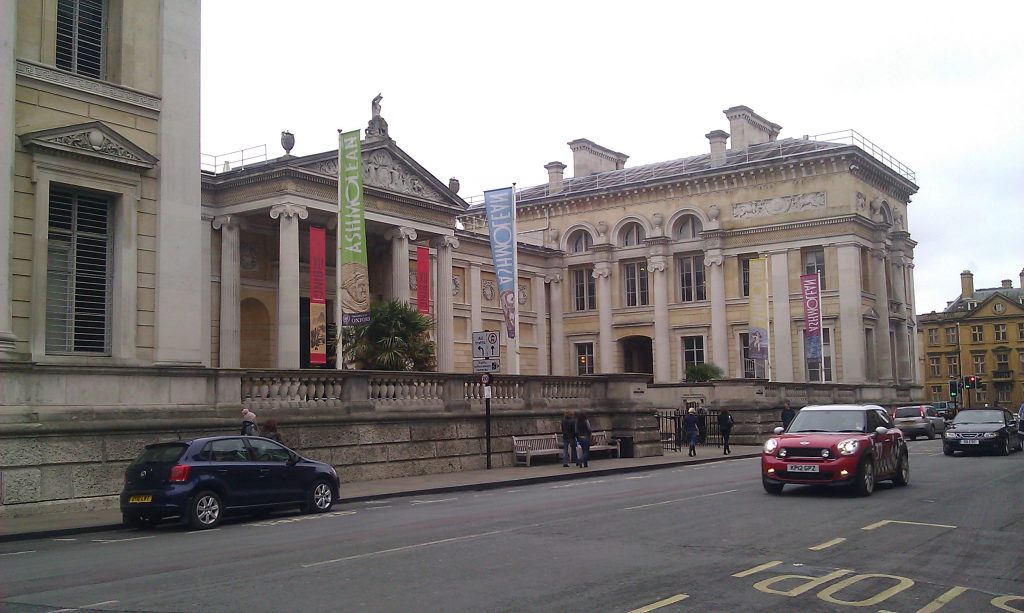
The Ashmolean Lantern

Guy Fawkes Lantern at the Ashmolean Museum

This was the one held by Fawkes. It was given the Museum by Robert Heywood in 1641. He got it from his brother, Peter, who was a Westminster Magistrate among the party who arrested Guy Fawkes in the cellar. Peter Heywood, took the lantern from Guy Fawkes to stop him setting fire to the pile of gunpowder barrels. Or at least that is the story Robert Heywood told.

A commemoration of fireworks and bonfires was clearly appropriate given that it has been estimated that the amount of gunpowder in the barrels would have killed the king, the Royal Family, the House of Lords and the House of Commons and devastated a huge area around Westminster. But some suggest that the nature of the commemoration draws some elements from Halloween – use of bonfires and dressing up. Halloween was frowned upon by puritans, but they supported Guy Fawkes Day as it was anti-catholic.

Banner in Lewes

The anti-catholic nature of the celebration is a fact, but it really isn’t something we think about today. There is little anti-Catholic prejudice in Britain (except in one or two very specific places). Irish friends are amazed we still celebrate it, but for the vast majority of people in Britain it is really just Fireworks night, nothing to do with anti-catholic sentiment.

The Lewes Bonfire

Traces of the original anti-catholic nature of it do continue in places like Lewes, which is one of the most traditional Fireworks Nights. This consists of clubs who organise a parade through the town. Then it ends with the burning of an effigy of the Pope and, more recently, other unpopular figures on the contemporary scene. Click here for more on Lewes.

Procession in Lewes

Tar Barrel Rolling

Ottery St Mary continues the tradition of using Tar Barrels. These are wooden barrels in which tar and tinder are set on fire. The Barrels are either rolled through the Town, or down a hill. But in Ottery they are carried on the shoulders of volunteers (see video below). This has a pedigree which goes back before 1605 as there are references to tar barrels and displays in Protestant processions to celebrate the accession to the throne of Edward VI and Elizabeth 1.

Tar Barrels in Ottery St Mary
Stephen and Claire – 2 Zany Brits on YouTube

Discovering the Plot

King James 1 took credit for discovering the plot as he is said to have deciphered the warning given in a letter, written to William Parker, 13th Baron Morley, 4th Baron Monteagle. Monteagle wrote the letter at his house in Hoxton, London (commemorated by a plaque in Hoxton Street near where I live) which warned against turning up at Parliament but was not explicit as to the nature of the threat.

Letter Lord Monteagle passed on to King James 1

My lord, out of the love I beare to some of youere frends, I have a care of youre preservacion, therefore I would aduyse you as you tender your life to devise some excuse to shift youer attendance at this parliament, for God and man hath concurred to punishe the wickedness of this tyme, and thinke not slightly of this advertisement, but retire yourself into your country, where you may expect the event in safety, for though there be no apparance of anni stir, yet I saye they shall receive a terrible blow this parliament and yet they shall not seie who hurts them this cowncel is not to be contemned because it may do yowe good and can do yowe no harme for the dangere is passed as soon as yowe have burnt the letter and i hope God will give yowe the grace to mak good use of it to whose holy proteccion i comend yowe.

National Archives

James realised this sentence: ‘they shall receive a terrible blow this parliament and yet they shall not seie who hurts them ‘ implied an explosion. His father, Lord Darnley, was killed in a Gunpowder Plot in Edinburgh, so perhaps he was particularly attuned to the threat. On the other hand, there is a possibility that the King’s Secret Service were aware of the plot and arranged matters, so the King could receive the credit for its discovery.

The Fifth of November

    Remember, remember!
    The fifth of November,
    The Gunpowder treason and plot;
    I know of no reason
    Why the Gunpowder treason
    Should ever be forgot!
    Guy Fawkes and his companions
    Did the scheme contrive,
    To blow the King and Parliament
    All up alive.
    Threescore barrels, laid below,
    To prove old England’s overthrow.
    But, by God’s providence, him they catch,
    With a dark lantern, lighting a match!
    A stick and a stake
    For King James’s sake!
    If you won’t give me one,
    I’ll take two,
    The better for me,
    And the worse for you.
    A rope, a rope, to hang the Pope,
    A penn’orth of cheese to choke him,
    A pint of beer to wash it down,
    And a jolly good fire to burn him.
    Holloa, boys! holloa, boys! make the bells ring!
    Holloa, boys! holloa boys! God save the King!
    Hip, hip, hooor-r-r-ray!

English Folk Verse (c.1870)

See my post on preparing for Guys Fawkes day here:

First published 5th November 2021, revised 2024, 2025

The Horned God & Preparing for Guy Fawkes Day November 4th

medieval monks seat showing carving of a Horned man (with Ram's Horn) at Stratford on Avon Holy Trinity Church) Photo: K Flude
Horned God (with Ram’s Horn) at Stratford on Avon Holy Trinity Church) Photo: K Flude. Carving of a dolphin to the left (symbol of Christ) a goat to the right (symbol of the damned – as Christ divides the sheep from the goats who are going to hell)

Horned Gods

November 4th is dedicated to hunting gods such as Herne, the Horned God, Cernunnos, The Green Man and Pan.

Herne the Hunter first appears in Shakespeare:

There is an old tale goes, that Herne the
Hunter
(sometime a keeper here in Windsor Forest)
Doth all the winter-time, at still midnight
Walk round about an oak, with great ragg’d horns;
And there he blasts the tree, and takes the cattle,
And makes milch-kine yield blood, and shakes a chain
In a most hideous and dreadful manner.
You have heard of such a spirit, and well you know
The superstitious idle-headed eld
Receiv’d, and did deliver to our age
This tale of Herne the Hunter for a truth.

William Shakespeare, The Merry Wives of Windsor, Act 4, scene 4

I have recently seen a brilliant staging of the Merry Wives of Windsor at the Royal Shakespeare Company in Stratford. I saw it three times and think it one of the best Shakespeare productions I have seen. The lead actor, John Hodgkinson, with whom I used to play cricket, was a fantastic Falstaff.

Cernunnos

Cernunnos comes from karnon which means “horn” or “antler”. This may be the source of the name ‘Cerne’. (Please note that the Cerne Abbas Giant has just been redated from the Celtic to the Anglo-Saxon period.) Cerney and Cirencester in Gloucestershire might have similar origins for their names.

Ginger Cake

Felicity Cloake The Guardian Parkin

Ginger cake is the traditional accompaniment to a cold night watching the Fireworks. There is a good recipe in Markham’s The English Housewife of 1683. But I’m suggesting you use this recipe from the Guardian for Parkin Cake. ‘Parkin is a gingerbread cake traditionally made with oatmeal and black treacle, which originated in Northern England.’ (Wikipedia).

For my post on November the 5th look here.

London picture Penny for the Guy on Guy Fawkes Day

I haven’t seen children asking for ‘a penny for the Guy’ for a while. But it was part of my childhood. We would create a ‘Guy’ out of old clothes and take it into the streets to raise money. The Guy is named after Guy Fawkes, who was discovered on 5th November 1605 in a cellar under Parliament. He was by a pile of barrels of gunpowder with a slow match. The plan was to blow up the King and Parliament, on the occasion of the Opening of Parliament on the 5th of November.

Once the plot had been broken and the plotters hanged, drawn and quartered, the King ordered that November 5th should be commemorated throughout the Country. Bonfires were a part of the seasonal celebrations at the time, used at Halloween, but this aspect was transferred to November 5th and continues as a major British event every year.

The money we raised, we spent exclusively on ‘bangers’ loud explosive fireworks not pretty fountains, Roman candles nor rockets. The bangers just made a horrendously loud bang. One stunt we experimented with was to cycle through the streets and to put a lit banger into the handle bars, which would act as a rocket launcher! Don’t try this at home.

Meanwhile, we would collect wood for the village bonfire:

A stick and a stake
For King George’s sake
Will you please to give us a faggot
If you won’t give us one, we’ll steal you two
The better for we and the worse for you.

English Folk Verse (c.1870)

First published 4th November 2021, republished 4th November 2024, 2025

Sliding Ducks & the Equivocation of Prophecy – November 3rd

Ducks in Winter 
Photo by <a href="https://unsplash.com/@timromanov?utm_content=creditCopyText&utm_medium=referral&utm_source=unsplash">Timur Romanov</a> on <a href="https://unsplash.com/photos/ducks-on-water-a5U8v7Pm-yg?utm_content=creditCopyText&utm_medium=referral&utm_source=unsplash">Unsplash</a>
Sliding Ducks? or Swimming Ducks? Timur Romanov, Photo from Unsplash

Folklore is full of ways of predicting the future – mostly about the weather or love. The Perpetual Almanac by Charles Kightly features many of these in rhyme form of the ‘Sky at Night Shepherd’s Delight’ type. Here is a seasonal one.

If ducks do slide at Hallowentide
At Christmas they will swim
If ducks do swim at Hallowentide
At Christmas they will slide

From my experience, in the south of the UK, this is simply not true as we very rarely get ice in early November. Nor do we get snow at Christmas that often. But maybe, the further north you go, the truer this becomes.

Macbeth & Prophecy

But, as far as taking prophecy seriously, it’s good to remember what Macbeth said on seeing the wood moving to Dunsinane.

‘(I) begin to doubt the equivocation of the fiend, that lies like truth.’

He has just realised that prophecy is a double-edged sword which has led him to his doom. He had been told by the Three Witches that he:

‘shall never vanquish’d be until Great Birnam Wood to high Dunsinane Hill shall come against him’

Still, as he heads to the final battle, Macbeth knows he is invincible and that

‘none of woman born shall harm Macbeth’.

But in his savage fight with Macduff, he is told that Macduff was not of woman born, but was:

from his mother’s womb / Untimely ripped’.

So Macbeth is killed.

Google Map showing Birnam (Scotland), top left, and Dunsinane Hillwith red markers in the middle. Note Scone is where Macbeth is Macbeth was crowned

King Macbeth (Mac Bethad mac Findlaích) 1040 – 1057

In reality, Macbeth, was a successful King who reigned for 17 years. He was one of the last Gaelic Kings as Scottish society was changing with contact with England.

This is a draft of the text that (edited) forms part of my best-selling book ‘Divorced, Beheaded, Died’ The Kings and Queens of Britain in Bite-sized Chunks’

Macbeth was nicknamed the Red King. He was a Gaelic speaker, descended from the Kings of Dal Riata. Macbeth’s father, Finlay MacRory, was Mormaer (Grand Steward) of Moray and was was murdered by Gillacomgain. He took MacRory’s title. Gillacomgain was burnt to death with 50 of his followers, probably by Macbeth, who thus not only regained the title as ruler of Moray but married his dead rival’s widow, Gruoch. She was the granddaughter of Kenneth II. Macbeth was also himself descended from the Kings of Scotland via his mother Donada probably daughter of Malcolm II.

His claim to the throne was therefore strong, and following the disasters of King Duncan’s reign, Macbeth seized the opportunity to take the throne for himself.

He ruled well for nearly 2 decades imposing a strong sense of law and order, encouraging Christianity and leading successful raids across the border into England. In 1050 he went on pilgrimage to Rome. Exiled Normans, supporters of Edward the Confessor were settled in Scotland in Macbeth’s reign. There is no evidence that Macbeth was any more evil then the rest of the early Scottish Kings.

In 1057 Macbeth was killed in battle against Duncan I’s son who became Malcolm III. Macbeth is buried on Iona. He and Gruoch had no children but Guoch’s son, Lulach, son of Gillacomgain briefly followed Macbeth as king before being assassinated by Malcolm III

‘Divorced, Beheaded, Died’ The Kings and Queens of Britain in Bite-sized Chunks’ for more details look here.

Prophecy ‘lies like the truth’ a trope that is used in many ancient tales such as Oedipus Rex.

On this Day

Hilaria

The 3rd of November is also the Hilaria, the last day of the festival of Isis/Osiris. This is the day of the rebirth of Osiris. He was ‘the god of fertility, agriculture, the afterlife, the dead, resurrection, life, and vegetation.’ Isis was the wife (and sister) of Osiris God-King of Egypt. Osiris was killed by his brother. Set. Isis restored his body to life for long enough to conceive their son Horus.

Horus revenged his father, regained the throne, restored Cosmic Order and completed the resurrection of Osiris. Isis is normally shown holding the baby Horus in a pose that may have influenced images of the Virgin Mary. Londinium would have had a celebration on this day as there is a pot found near London Bridge inscribed ‘At London, at the Temple of Isis).

Roman pot with Isis inscription, London

Head Graft and St Winifred

Stained glass depiction of St Winifred, designed by William Burges, at Castell Coch, Cardiff. Wikipedia Hchc2009 – Own work

St Winifred’s Day She was beheaded by Caradog who would not accept her refusal to have him because of her religious views. She was restored to life by St Beuno, or St Bono. Head and all. Where her head fell their slowed a spring. This is on the North Welsh Coast, and called Holywell. It was one of the Seven Wonders of Wales, and called the Lourdes of Wales.

First Posted on 3 November 2021. Revised 3 November 2023 & 2024 & 2025

All Souls Day – November 2nd

Picture of window sill with skulls, Chrysanthemums  and pictures of remembrance
El Dia de los Muertos – All Souls Day, in Haggerston, London. Photo K Flude.

Today is the Mexican Day of the Dead. In fact, the second day of El Dia de Muertos. Here is a video from Mexico, which you will enjoy for its Latin song and images of the Day of the Dead in Mexico. (It’s on Facebook, so may not work unless you have a login). And here is a YouTube explanation of celebrations in Mexico.

Today is the day to celebrate all those loved ones who have passed away. To keep them in mind, to remind you that you still care about them. It is the third day of the season of Allhallowstide, following All Hallows Evening (Halloween), and All Saint’s Day.

Beata, who comes from Poland, tells me that, November the 1st is the day when relatives visit the cemeteries of the dead. Loved ones bringing chrysanthemums to decorate the graves. It’s a happy day for the dead because they are being remembered and visited. Today, November 2nd, is a more sombre day – a day to stay at home and think of the loved ones. Perhaps looking through albums of photographs?

Souling

In England, it was the time of year in which ‘Souling’ used to take place. Households made soul-cakes. Children or people in need of food come to visit and are given soul cakes in exchange for praying for the dead.

Soul, soul, for a souling cake.
I pray good Missus for a souling cake.
Apple or pear, plum or cherry.
Anything good to make us merry.

Traditional rhyme from Shropshire and Cheshire

Moving on from Purgatory

This is based upon the idea of Purgatory, and the belief that intervention on Earth can influence the amount of time an ancestor spends in purgatory for their sins. John Aubrey (1626 – 1697), antiquarian, collector of folklore and writer, mentions a custom in Hereford which shows a variant of the idea.

John Aubrey (Wikipedia)

In the County of Hereford was an old Custom at Funerals, to hire poor people, who were to take upon them all the Sins of the part deceased. One of them I remember (he was a long, lean, lamentable poor rascal). The manner was that when a Corpse was brought out of the house and laid on the Bier; a Loaf of bread was brought out and delivered to the Sin-eater over the corps, as also a Mazer-bowl full of beer, which he was to drink up, and sixpence in money, in consideration whereof he took upon him all the Sins of the Defunct, and freed him (or her) from Walking after they were dead.

John Aubrey, Remains of Gentilism 1688

This belief in the power of action in the Here and Now to lubricate passage through Purgatory to the Ever After was a major part of fund-raising for Catholic Institutions before the Reformation. For example, in the records of St Thomas Hospital, Southwark, a wealthy widow called Alice (de Bregerake – if I remember the spelling correctly) left her wealth to the hospital in return for an annual Rose rent; lifetime accommodation in the Hospital in Southwark, and for the monks and nuns to pray for her soul and the souls of her ancestors.

Purgatory was not a settled thing in Catholic Theology before the 12th Century or so. However, the idea that prayers for the dead could be useful dates back before the Roman period. Catholics took 2 Maccabees as their biblical authority for Purgatory. But Luther demoted Maccabees to “apocrypha“. And today the Anglicans view it as ‘useful’ but not to be used for ‘doctrine.’

Ludovico Carracci: English: An Angel Frees the Souls of Purgatory (Wikipedia)
Ludovico Carracci: English: An Angel Frees the Souls of Purgatory 1610 (Wikipedia)

All Souls, London

One of London’s most beautiful churches is dedicated to All Souls. It is All Souls, Langham Place. It is just near the BBC HQ and on a wonderful site, as it is on a bend in Regent’s Street. This shows it to great advantage. The architect was John Nash (1824) as part of his transformation of the West End with his boulevard from Regent’s Park south to Westminster. As he could not get all the property owners on the alignment of the road to sell him the land, he disguised this enforced bend with a magnificent Church.

All Souls Langham Place By David Castor (dcastor) – Own work, Public Domain, https://commons.wikimedia.org/w/index.php?curid=6516081
Regent’s Street looking north to All Souls (photo K Flude)

See my posts on Halloween and, and All Hallows Day here

Revised 2nd November 2025, 2024, 2023 and first published 2nd Nov 2021

Douai Martyrs Saints Day October 29th

Thomas Bilney martyred in Smithfield. Black and white engraving
Thomas Bilney martyred in Smithfield.

Today, is the feast day of 158 English Martyrs from the English School at Douai. They were killed by the English state between 1577 and 1680.

On the accession of the Protestant Queen Elizabeth, Catholics who preferred exile gathered in Douai (125 Kilometres South of Calais). An English School was set up, which was in essence a Catholic Oxford College in Exile. Its mission became to train priests to re-enter England and minister to the many Catholics who wanted to continue to practice their faith despite official intolerance.

Catholic worshippers were fined if they did not attend Church of England services in their local churches. Catholic Priests re-entering England could be charged with High Treason and, if found guilty, hanged, drawn and quartered. This was often at Tyburn (at the west end of Oxford Street in London).

In the short reign of Mary I, nicknamed ‘Bloody Mary’, over 250 protestants were burned at the stake for heresy. In the long reign of her sister, Elizabeth I, over 300 Catholics were executed for Treason by being Hanged, Drawn and Quartered. Elizabeth is known as ‘Good Queen Bess’. There is no value in balancing evil, but pro-rata Mary’s reign was much more bloody. Elizabeth would probably also suggest that she did not execute Catholics because of their belief, but because the policy of the Catholic Church was to destroy Elizabeth’s regime. So, the Priests were not executed for heresy but for treason. However, this is a fine distinction to be made, in such horrendous blood-letting.

The number of martyrdoms from one institution shows incredible bravery in the face of intolerance, and the Douai Martyrs were a remarkable group of people. Most have been beatified by the church, some have been made ‘venerable’, twenty have been canonised. A few remain simply as ‘martyrs’

In London in Ely Place is St Etheldreda’s Church, which has memorials to Catholic Martyrs, and no mention of Protestant Martyrs. A few hundred yards away in Smithfield is a plaque to the Protestant Martyrs under Queen Mary and no mention of the Catholic Martyrs. Personally, I think it is about time the two traditions made it clear that both groups of martyrs are worthy of equal distinction, and the authorities who allowed such toxic intolerance to triumph deserve our contempt.

Two examples of martyrs in Smithfield:

John Forest, a Franciscan Monk was burnt at the stake at Smithfield and commemorated in St Etheldreda’s Church. He was Catherine of Aragon’s Confessor, and refused to accept King Henry VIII as head of the Church of England.

John Rogers was a scholar and worked to continue William Tyndale’s work in translating the bible into English. He was the Vicar of the Holy Sepulchre Church, which is halfway between Smithfield and St Etheldreda. He was the first person to be burned during Queen Mary I’s reign, and mentioned on the memorial in Smithfield.

Thanks to my friend Derek, who suggested I cover this topic. His children went to a school in London named after the 158 English Martyrs,

For a longer look at the Protestant Martyrs at Smithfield have a look at my post which deals with the martyrdom of Thomas Thompkins a simple honest man burnt at the stake.

For more on St Etheldreda look at my post here.

First published in 2024, revised 2025