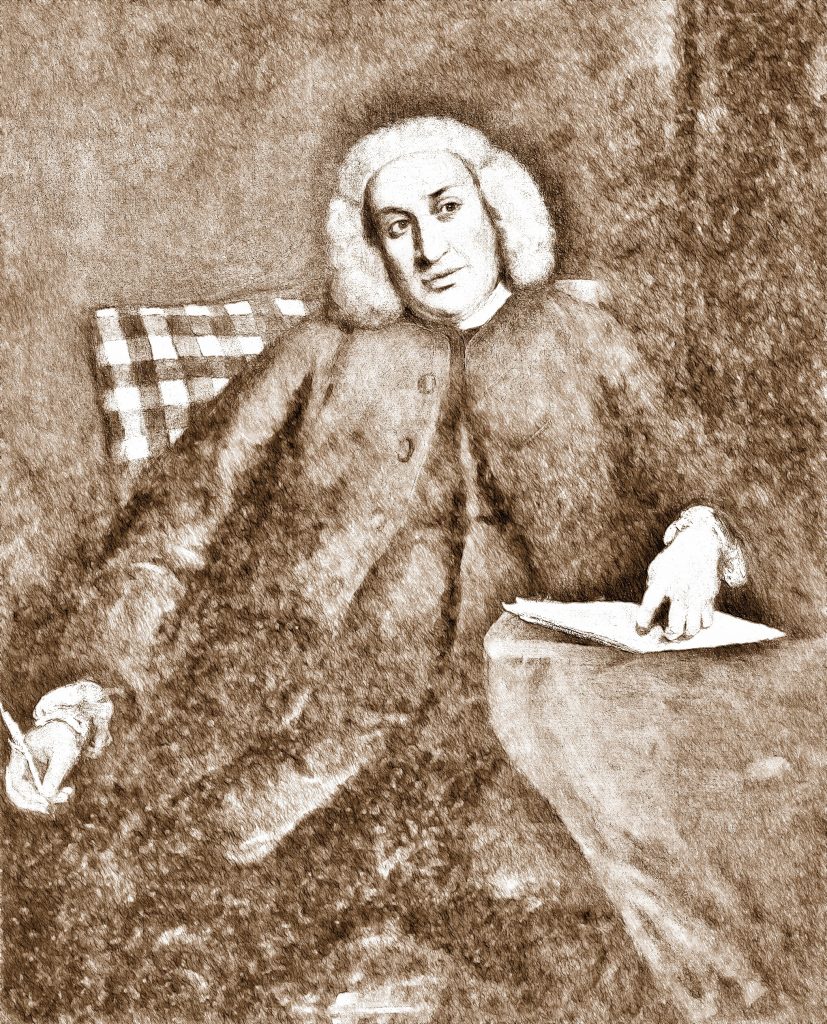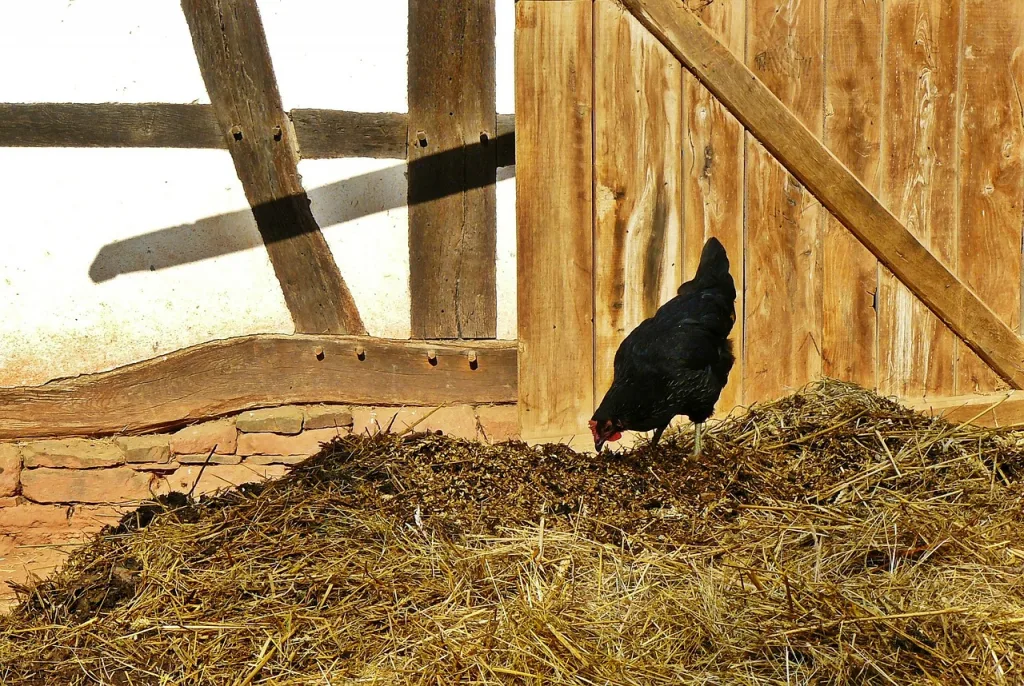
John Worlidge knew all about dung. And it is all spread out in his ‘Worlidge Systema Agriculurae’ of 1697 brought to my attention by Charles Kightly’s Perpetual Almanac.
Worlidge tells us that although it used not be esteemed, but Hens and Pigeons’s Dung is the best if mixed with common earth or sand, and let to rot. He says:
Pigeons or Hens dung is incomparable, one Load is worth ten Load of other Dung, and therefore it’s usually sown on Wheat (or Barly) that lieth afar off, and not easily to be helped; it’s extraordinary likewise on a Hop-garden.
… It’s generally little set by, because our Fore-fathers did not make any great matter of it, and because they understand not the strength and power of it; for when they take it out of the houses it’s of a very hot nature, and must needs injure some things, if laid thereon; but if it be mixed well with common Earth, Sand, or such-like, and let lie till it rot well together, you will finde it a very rich Manure, and of value to answer a great part of your Poultreys expence.
I have known a Quince-tree whereon Poultrey always pearched, that by reason of the Rain washing to its Roots the salt and fatness of the Dung, did bear yearly an incredible number of very excellent Quinces.
Mr. Camel is fascinated by his friend Dilbert Dung Beetle’s diet.
He thinks eating up excrement, feces and manure is a riot.
It is tasty! Delicious! You should try a salty elephant pie!
Dilbert Dung Beetle says. You would love it if you gave it a try!
Mr. Camel watches Dilbert dig in, gulping down gobs of the stuff.
He thinks it must have a weird smell, but Dilbert can’t get enough.
You might sample a tiny bit Dilbert says, it is delicious you see!
Mr. Camel shakes his head and says “Sorry, it does not appeal to me.”
Homemade Quince J am (just out of the freezerHomemade Quince Jelly
I made quince jam this winter for the third year running from my Father’s Tree. Likely to be the last year as he is 98 and has just gone into a lovely home. It’s very easy to make (although very hard to cut up the fruit) and delicious because it is not too sweet. Here is a recipe (not necessarily the one I used}. Indeed, my most successful year was when I didn’t use a recipe, just boiled the fruit with sugar to taste. Beginner’s Luck, I expect.
Quince is mentioned once in Shakespeare, when the Nurse says the pastry makers are calling for Quince and Dates. (Here is a recipe for Tudor Quince Pie) And of course, the mechanicals theatre director is Peter Quince the Carpenter. But the most famous reference is in the Owl and the Pussycat by Edward Lear.
They dined on mince, and slices of quince Which they ate with a runcible spoon; And hand in hand, on the edge of the sand, They danced by the light of the moon.
Quinces are native to the Caspian Seas, and Wikipedia says spread to England when planted at the Tower of London at the order of Edward I. Quinces were sacred to Aphrodite. and taste great with Cheese (dulce de membrillo) if you are in Span. The Balkans have an aqua vita called rakija. Quince is considered old-fashioned and not grown very much in gardens in the UK.
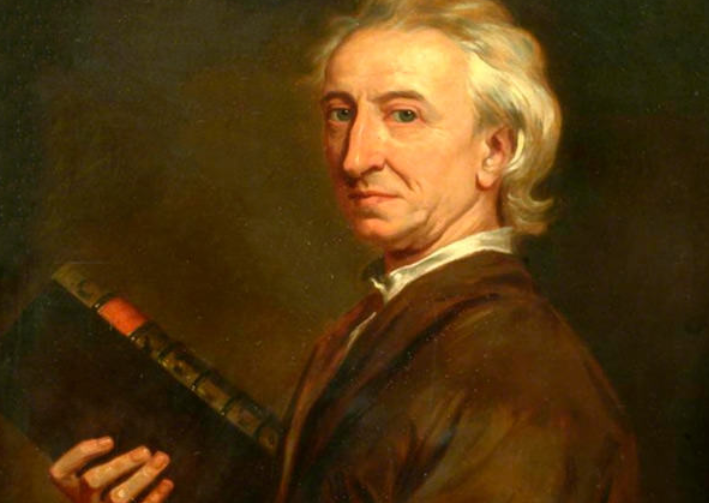
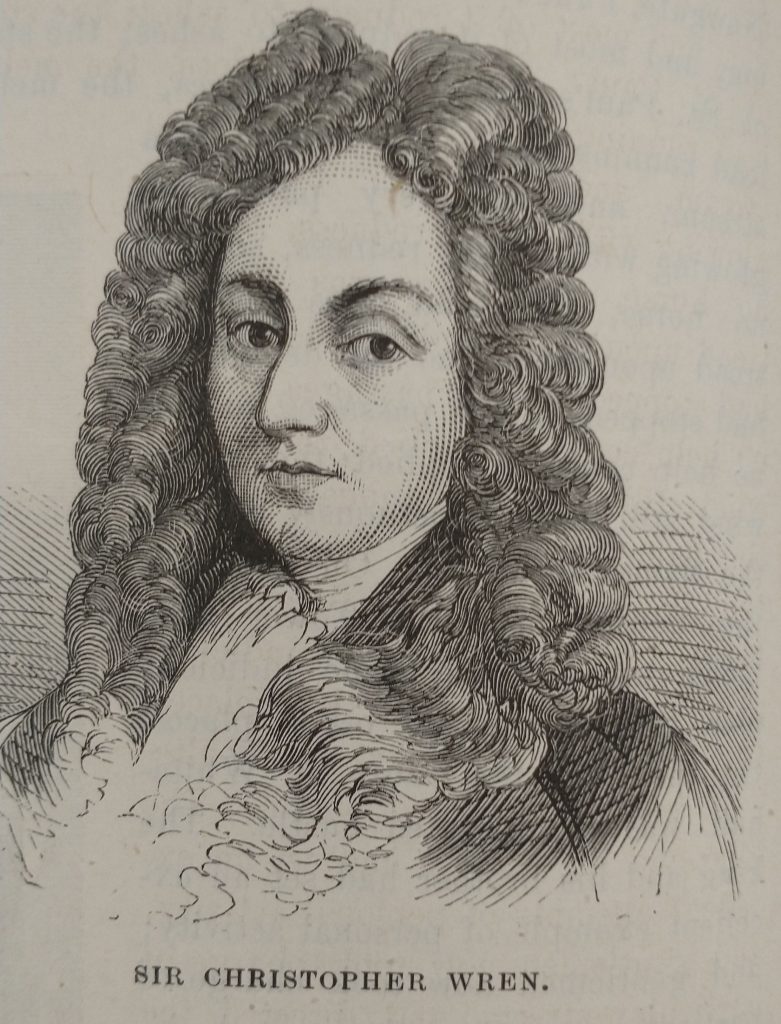
John Evelyn is, with Pepys and Wren, one of the great figures of 17th Century London. Unlike Pepys, he was an avowed Royalist who hated Oliver Cromwell and all he stood for. He went into exile with his King and gives a great description of Paris (see below).
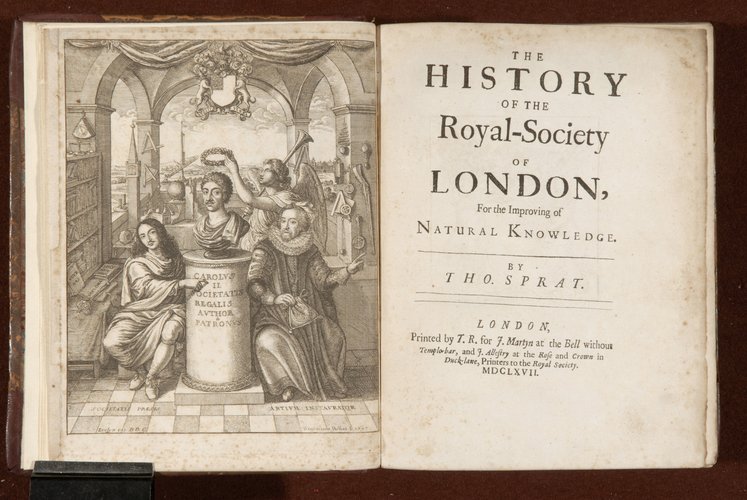
Like Pepys, John Evelyn was a diarist and a writer. And they, like Wren, were alumni of the Royal Society, one of the great scientific societies. John Evelyn was a founding fellow. It was innovative in that it employed an experimenter. This was Robert Hooke – one of the great early Scientists, who also worked with Wren rebuilding London after the Great Fire. The Royal Society encouraged scientists to experiment, write up their observations, and submit their theories for peer review. This is the foundation of modern Science, and a bedrock of the Enlightenment.
Frontispiece of ‘the History of the Royal-Society of London by Thomas Sprat. John Evelyn was a founder member
Evelyn the Writer.
John Evelyn has a place in my history because, in the 1980’s I worked. with Paul Herbert, on a project to create an interactive history of London. It was financed by Warner Brothers, and in cooperation with the short-lived ‘BBC Interactive TV Unit’. One part of it was a Literary Tour of London. The first half of this Tour is the basis for my book ‘In Their Own Words’ (To buy click here ) And this is where I came across John Evelyn using several of the quotations on this page.
Evelyn was a prolific traveller and a polymath. He wrote on the need to improve London’s architecture and air in Fumifugium (or The Inconveniencie of the Aer and Smoak of London Dissipated). Here is an extract from his Furmifugium.
‘That this Glorious and Antient City, which from Wood might be rendred Brick, and (like another Rome) from Brick made Stone and Marble; which commands the Proud Ocean to the Indies, and reaches to the farthest Antipodes, should wrap her stately head in Clowds of Smoake and Sulphur, so full of Stink and Darknesse, I deplore with just Indignation.
That the Buildings should be compos’d of such a Congestion of mishapen and extravagant Houses; That the Streets should be so narrow and incommodious in the very Center, and busiest places of Intercourse: That there should be so ill and uneasie a form of Paving under foot, so troublesome and malicious a disposure of the Spouts and Gutters overhead, are particulars worthy of Reproof and Reformation; because it is hereby rendred a Labyrinth in its principal passages, and a continual Wet-day after the Storm is over. ‘
And he was an expert on trees. Author of: Sylva, or A Discourse of Forest-Trees (1664). He lived at Sayes Court in Depford near Greenwich, which he ill-advisedly rented to Peter the Great of Russia. Letting to Peter was a lot-like inviting a 1960s Rock Band to trash your mansion.
John Evelyn the Exile
Here is a taste of Evelyn’s time as an Exile. It is a short extract from a long entry on the splendid Palaces in and around Paris.
27th February, 1644. Accompanied with some English gentlemen, we took horse to see St. Germains-en-Laye, a stately country house of the King, some five leagues from Paris. By the way, we alighted at St. Cloud, where, on an eminence near the river, the Archbishop of Paris has a garden, for the house is not very considerable, rarely watered and furnished with fountains, statues,[and groves; the walks are very fair; the fountain of Laocoon is in a large square pool, throwing the water near forty feet high, and having about it a multitude of statues and basins, and is a surprising object. But nothing is more esteemed than the cascade falling from the great steps into the lowest and longest walk from the Mount Parnassus, which consists of a grotto, or shell-house, on the summit of the hill, wherein are divers waterworks and contrivances to wet the spectators; this is covered with a fair cupola, the walls painted with the Muses, and statues placed thick about it, whereof some are antique and good. In the upper walks are two perspectives, seeming to enlarge the alleys, and in this garden are many other ingenious contrivances.
This was Evelyn’s reaction when Charles II was restored to the throne in 1660,
May 29th 1660:
This day came in his Majestie Charles the 2d to London after a sad, and long exile… this was also his birthday, and with a Triumph of above 20,000 horse and foote, brandishing their swords and shouting with unexpressable joy; the wayes strawed with flowers, the bells ringing, the streets hung with Tapisry, fountains running with wine: ‘
‘The mayor, Aldermen, all the companies in their liveries, chaines of gold, banners, Lords and nobles, cloth of Silver, gold and velvet every body clad in, the windows and balconies all set with Ladys, Trumpetes, Musik, and myriads of people … All this without one drop of bloud …it was the Lords doing…
1661 – ‘Ash Wednesday. Preached before the King the Bishop of London (Dr. Sheldon) on Matthew xviii. 25, concerning charity and forgiveness.‘
John Evelyn’s Diary Dr Sheldon, the Bishop of London mentioned above, went on to become Archbishop of Canterbury. He was a friend of Wren’s Father, and commissioned Wren to build the Sheldonian Theatre, in Oxford.
1782 – OK! Let’s give up! The House of Commons votes against continuing the war with Revolutionary America.
1900 – The Labour Party is founded. And today, the UK woke up to a by-election in a safe Labour seat won by the Greens (40%) with Reform 2nd (29%) and the Labour Party third (26%) Conservatives fourth (2%). So, clearly a progressive vote determined to beat Reform, Labour won about 50% of the vote last time, so a disaster for them. Not a success for Reform, and bad result for the Conservatives.
1933 – Reichstag burns down. Hitler uses it to suspend Civil Liberties, and attack the German Communist Party which was falsely blamed for the fire.
First Published 2024, republished 2025, Making Lardy Cake moved to Fat Thursday and On This Day added 2026

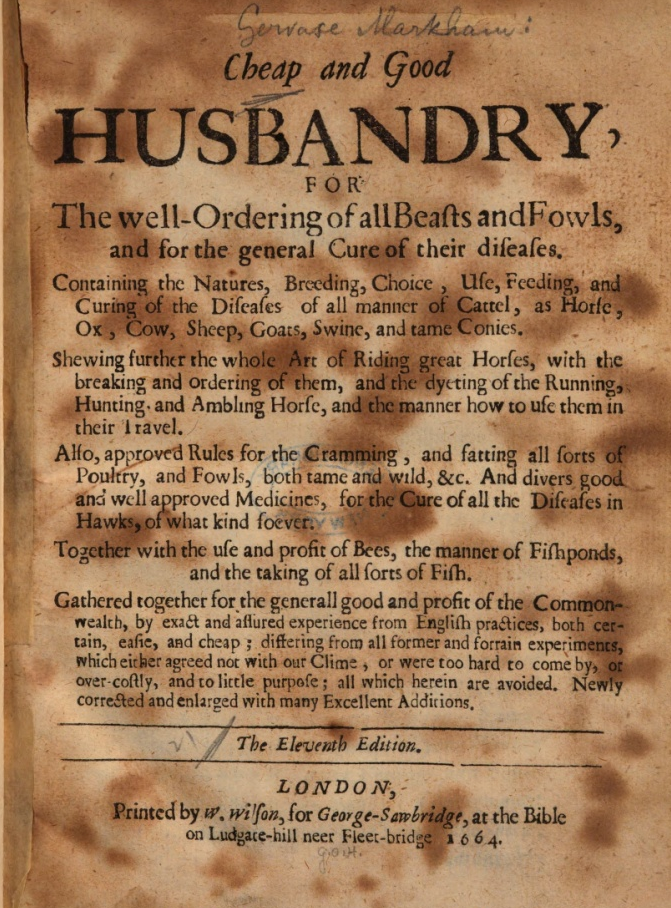
Spring Chickens appear in Cheap and Good Husbandry by Gervaise Markham London 1664
Of Setting Hens (and Spring Chickens)
Gervase Markham wrote a heap of farming and horticulture books in the 17th Century. In ‘Cheap and Good Husbandry’ he wrote about ‘Spring Chickens’. Spring Chickens are essentially March Chickens, March Hares and even March Cats are all special. Markham starts by suggesting this is the time to impregnate them for birth in March:
The best time to set Hens to have the best, largest, and most kindly Chickens;, is in February, in the increase of the Moon, so that they may hatch or disclose her Chickens; in the increase of the next new Moon, being in March; for one brood of March Chickens; is worth three broods of any other: You may set Hens from March; till October, and have good Chickens;, but not after by any means, for the Winter is a great enemy to their breeding….
The expression comes from the 17th Century when Spring/March Chickens were more profitable than old chickens that had gone through the winter. Commonly, it is used in the negative, as in ‘Kevin ain’t no spring chicken.’
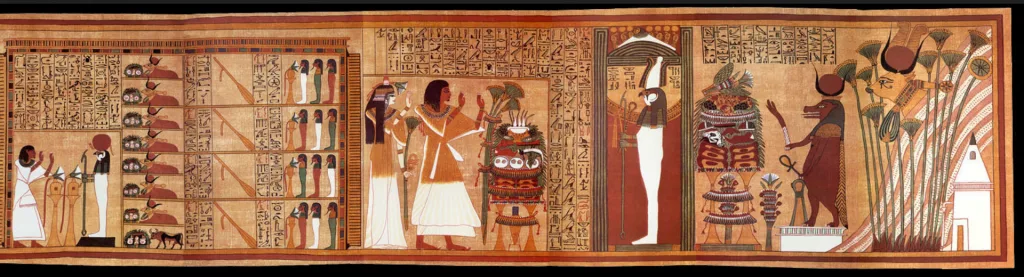
Egyptian Book of the Dead goes on display at the Brooklyn Museum
After three years of conservation, the world’s most complete gilded Book of the Dead goes on display at the Brooklyn Museum. Have a look at their post here. The Book of the Dead was prepared to accompany the deceased on their journey in the afterlife. It is full of spells, prayers and incantations. There was no one fixed format, but some are incredibly complex and beautiful. My own feeling is that they confirm my opinion that the Egyptian way of death is totally OCD. There is so much an Egyptian has to do to get a good afterlife. Not only embalming but having models of food, slaves, boats, mummies of dead cats, anything you want to have. It feels like they must have been terrified of death.
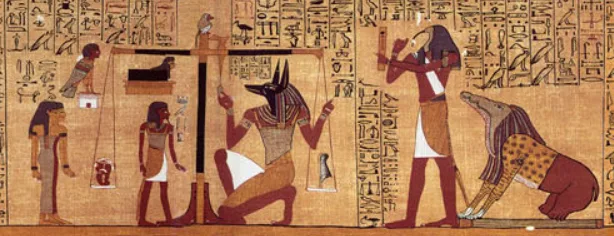
A scene from the Papyrus of Ani (British Museum) It shows the heart being weighed on the scale of Maat against the feather of truth. Doing the weighing is the jackal-headed Anubis The ibis-headed Thoth records the result. Behind Toth is Ammit part crocodile, lion, and hippopotamus. The facsimiles were produced by E. A. Wallis Budge; original artist unknown. Public Domain
One of the issues is that the deceased had to have their heart weighed against the feather of Truth (belonging to the Goddess of Truth, balance, law, morality, and justice, Maat) . If it was found deficient, the deceased would be eaten by Ammit who has the head of a crocodile, the shoulders of a lion, and the legs of a hippo.
Wikipedia has a tremendous scan of the facsimile of the Papyrus of Ani, it is a 78ft long scroll and wonderful to look at To see it click on the first picture and zoom in and look left and right! https://en.wikipedia.org/wiki/Papyrus_of_Ani.
The story of its acquisition is also gob-smacking. Budge acquired in it Luxor in 1888. The Egyptian Police came to investigate the house of the illegal dealers. Budge distracted the police while his people tunnelled into the house from the rear, and retrieved ‘his’purchases. He took them to the British Museum and was paid a gratuity of £150 for them!
On this day
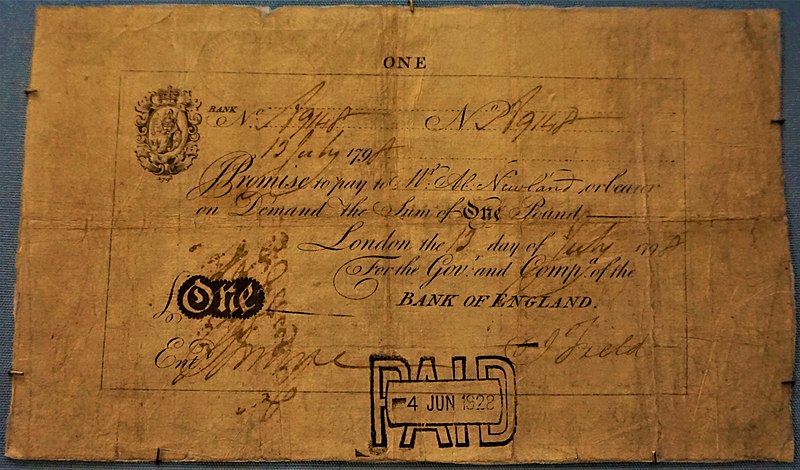
First £1 note of the Bank of England Museum 1797 Source Joy_of_Museums Public Domain (CC by sa 4.0)
February 26th 1797 First Pound Note:
The Bank of England issued it’s first ever one pound note (although some sources say March 1797). The Bank had been issuing paper notes since the late 17th Century, but this was the first £1 note. They still had to be signed by hand and allocated to a specific person. The hand signed white paper notes were withdrawn in 1820, and the pound note was, finally, withdrawn in 1988. The £1 in 1797 was worth the equivalent of £157.46 today, so quite a big note! (see here for the calculator.)
1815 – Bonaparte escapes from exile on the island of Elba. War begins all over again.
1995 – Barings Bank collapses after a rogue securities broker Nick Leeson loses $1.4 billion by speculating on futures contracts. Barings is the UK’s oldest investment banking institute,
Pound note first published 2024, Spring Chicken added February 26th 2025 Egyptian book of the Dead added February 26th 2026
Photo Mohammad Amiri from unsplash. Notice the crimson stigma and styles, called threads, Crocus is one of the characters in Ovid’s Metamorphoses
The story of Crocus and Smilax is in Ovid’s Metamorphoses. The book tells the story of myths which involve the metamorphosis of a person to a flower, or to a constellation, or to an echo or some supernatural change in being. This poem is one of the most famous in the world, written in about 6 AD. It influenced Dante, Bocaccio, Chaucer, Shakespeare, Keats, Bernard Shaw, and me. Seamus Heaney and Ted Hughes have translated modern versions of some of the tales.
The mechanicals in ‘The Midsummers Night Dream’ perform Ovid’s story of Pyramus and Thisbe, Titian painted Diana and Actaeon. Shaw wrote about Pygmalion, and we all know the story of Arachne. She claimed to be better than Athene at weaving. And then was turned into a spider.
The poem is about love, beauty, change, arrogance and is largely an Arcadian/rural poem. This is a contrast to Ovid’s ‘Art of Love’ which I use for illustrations of life in a Roman town. The stories are all about metamorphoses, mostly changes happening because of love. But it is also an epic as it tells the classical story of the universe from creation to Julius Caesar.
Ovid’s Metamorphoses and the Crocus
‘Crocus and his beloved Smilax were changed into tiny flowers.’ Ovid tell us, but chooses to give us no more details. So we have to look elsewhere. There are various versions. In the first, Crocus is a handsome mortal youth, beloved of the God Hermes (Mercury). They are playing with a discus which hits Crocus on the head and kills him. Hermes, distraught, turns the youth into a beautiful flower. Three drops of his blood form the stigma of the flower. In another version, Crocus and the nymph Smilax, fall in love. And are rewarded by immortality as a flower. One tale has Smilax turned into the Bindweed.
Morning Glory or Field Bindweed photo Leslie Saunders unsplash
Ovid’s Metamorphoses and Bindweed
It turns out that Smilax means ‘bindweed’ in Latin. Bindweed is from the Convolvulus family, and I have grown one very successfully in a pot for many years. But they have long roots. According to the RHS ‘Bindweed‘ refers to two similar trumpet-flowered weeds. Both of which twine around other plant stems, smothering them in the process. They are difficult to remove. This, could suggest that Smilax is either punished for spurning Crocus, or that she smothered him with love. Medically, Mrs Grieve’s Modern Herbal says all the bindweeds have strong purgative virtues, perhaps another insight into Smilax’s psychology?
The Metamorphosis of Data and the correct use of the plural
Apparently, in the UK some say crocuses and others use the correct Latin plural, croci. On an earlier version of this post I used the incorrect plural crocii.
On the subject of Roman plurals, the Financial Times editorial department made an earth-shattering decision, a couple of years ago. They updated their style guide to make the plural word data (datum is the singular form) metamorphise into the singular form.
So it is now wrong to say ‘data are’ but right to say ‘data is’. For example, it was correct to say: ‘the data are showing us that 63% of British speakers use crocuses as the plural’ but now, it is better to write ‘the data is showing us that 37% of British people prefer the correct Latin form of croci’.
Violets and Crocuses
Violets and crocuses are coming out. They often come out for St Valentine’s Day, and so obviously associated with Love. White croci usually represented truth, innocence, and purity. The purple variety imply success, pride and dignity. The yellow type is joy.’ according to www.icysedgwick.com/, which gives a fairly comprehensive look at the Crocus.
Crocus & Saffron
The autumn-flowering perennial plant Crocus sativus, is the one whose stigma gives us saffron. Roman civilisation spread the plants around Europe. They used it for medicine, as a dye, and a perfume. It was much sought after as a protection against the plague, and extensively grown in the UK. Saffron Walden was a particularly important production area in the 16th and 17th Centuries.
Saffron in London
Snowdrop, Crocus, Violet and Silver Birch circle in Haggerston Park. (Photo Kevin Flude, 2022)
The Bishop of Ely grew Saffrom in his beautiful Gardens just outside of the City of London. The area remembered by the London street name: Saffron Hill. It is home to the fictional Scrooge. This area became the London home of Christopher Hatton, the favourite of Queen Elizabeth 1. His garden was on the west bank of the River Fleet, in London EC1, in the area now known as Hatton Garden. (For more on Christopher Hatton see my post on nicknames Queen Elizabeth I gave to her favourites).
I found out more about Saffron from listening to BBC Radio 4’s Gardener’s Question time and James Wong.
Croydon (on the outskirts of London) means Crocus Valley. A place where Saffron was grown. The Saffron crops in Britain failed eventually because of the cost of harvesting, and it became cheaper to import it. So, we now import it from Spain, Iran, and India amongst other places. But it is being reintroduced in Norfolk, Suffolk, Kent, and Sussex. These are – the hot and dry counties. The plant enjoys a South-facing aspect. But it needs protection from squirrels and sparrows who love it. To grow it, look at this post from the Garden Doctor.
Saffron Photo by Vera De on Unsplash
Violets
Viola odorata CC BY-SA 2.5 Wikipedia
The Celts used Violets as cosmetics; the Athenians to moderate anger; the Iranians for insomnia, and are loved by all because of their beauty and fragrance. They have been symbols of death for the young, and used as garlands, nosegays posies, which Gerard says are ‘delightful’.
For more on Ovid, use the search facility (click on menu) or read my post here.
On This Day
197 – The Battle of Lugdunum sees the victory of Septimius Severus over Clodius Albinus reputedly the bloodiest battle between Roman armies. The previous emperor Pertinax died in 193 during the Year of the Five Emperors. Three main contenders emerged Severus who was African, Niger was from Central Italy, Albinus was the Governor of Britain.
1800 – Napoleon proclaims himself First Consul making him the dictator of France.
1846 – The Republic of Texas officially transfers power to the State of Texas government and becomes part of the United States.
1878 – Thomas Edison patents the phonograph.
1945 – Battle of Iwo Jima began with the landing of 30,000 US troops.
The Independent January 2021 The Raven the Palladium of Britain
The Raven – the Palladium of Britain
Corvus corax is hatching. An early nesting bird, the Raven is the biggest of the Corvids. They were pushed to the west and north by farmers and game keepers but are making a comeback. Ravens are finding towns convenient for their scavenging habits. So they, again, cover most of the UK except the eastern areas. The Raven is one of the Palladiums of Britain.
A Palladium is something that keeps a city or country safe, They are named after a wooden statue of Pallas Athene, which protected Troy. Perceiving this, Odysseus and Diomedes stole the Palladium from Troy shortly before the Trojan Horse episode. Troy fell and the palladium went to Italy (I’m guessing with Diomedes who is said to have founded several cities in Italy). It ended up in Rome.
The Romans claimed to be descendants of Trojan exiles led by Aeneas. So it was back with its rightful owners. It protected Rome until it was transferred to the new Roman capital at Constantinople. It then disappeared, presumably allowing the Ottoman Turks to conquer the City of Caesar? To read of London Stone as a Palladium see my post here.
The Ravens habits (it is said they know where the battlefields are before they are fought) and their black plumage have made them harbingers of death. In poetry, Ravens glut on blood like the warriors whose emblem they are. Here is a very famous quotation from Y Gododdin, a medieval poem but thought to derive from a poem by the great poet Aneirin from the 7th Century.
‘He glutted black ravens on the rampart of the stronghold, though he was no Arthur.’
This is one of the much argued-about references to King Arthur in the ‘Was he a real person’ trope. The point being, it doesn’t make sense to mention Arthur if King Arthur wasn’t a real person. The story at the Tower of London is that the Ravens kept in the Tower, with clipped wings, keep Britain safe from Invasion. (But see below).
Bran’s Head – the original Palladium of Britain?
By Sonny Mauricio from Unsplash
The Raven was also the symbol of the God-King Bran. Bran was one of the legendary Kings of Britain. His sister, Branwen, was married to the King of Ireland. To cut a long story short, Branwen was exiled by her Irish husband to the scullery. She trained a starling to smuggle a message to her brother, to tell of her abuse.
So Bran took an army over the Irish Sea to restore her to her rightful state. But the ships were becalmed. Mighty Bran blew the boats across the sea – he was that much a hero. Bran was mortality wounded in the fighting that followed. This was a problem because he had previously given away his cauldron of immortality. He gave it to the Irish King in recompense for the insults given to the Irish by Bran’s brother, who hated anyone not British.
Bran’s Head Returns to London
So, the dying Bran, told his companions to cut off his own head and take it back to the White Hill in London. His head was as good a companion on the way back as it was on the way out, and the journey home took 90 years.
At last, they got to London, where Bran told his men to bury his head on the White Hill. As long as it stays here, he said, Britain would be safe from foreign invasion. The White Hill is said to be Tower Hill with its summit at Trinity Gardens, although Primrose Hill is sometimes offered as an alternative.
This was one of the Three Fortunate Concealments and is found in ‘the Triads of the Island of Britain.’ The Triads are from medieval manuscripts which preserve fragments of folklore, mythology and history. They are grouped in groups of three.
Arthur and Bran’s Head
But many years later, King Arthur saw no need for anybody or anything other than himself to protect the realm. So he had the head dug up. Calamity followed in the shapes of Sir Lancelot and Mordred which led to the end of the golden age of Camelot and conquest of Britain by the Saxons. This was one of the Three Unfortunate Disclosures.
If we want a rational explanation for the story, there is evidence that Celtic cultures venerated the skull, and palladiums play a part in Celtic Tales.
So what was Arthur doing destroying the palladium that kept Britain safe? Vanity is the answer the story gives. But, perhaps, it’s a memory of Christian rites taking over from pagan rituals? God, Arthur might have thought, would prefer to protect his people himself rather than Christians having to rely on a pagan cult object.
Ravens in the Tower of London
The story of Bran’s head is inevitably linked to the Ravens in the Tower who, it is still said, keep us safe from invasion. As you can see from the photo at the top we still get in a tizz when one goes missing.
Sadly, and I am probably sadder about this than most, the link between the Tower, Bran, and the Ravens cannot be substantiated. Geoffrey Parnell, who is a friend of mine, told me that while working at the Tower of London he searched the records assiduously for the story of the ravens. He found no evidence of the Raven myth & the Tower before the 19th Century, and concluded that it was most likely a Victorian invention. IanVisits has a 2025 story about the Ravens, and also concurs that the Ravens are a recent myth.
The Welsh Triads give a total of two palladiums for Britain, a couple of nationalistic fighting dragons.
The Head of Bran the Blessed, son of Llyr, which was concealed in the White Hill in London, with its face towards France. And as long as it was in the position in which it was put there, no Saxon Oppression would ever come to this Island; The second Fortunate Concealment: the Dragons in Dinas Emrys, which llud son of Beli concealed; And the third: the Bones of Gwerthefyr the Blessed, in the Chief Ports of this Island. And as long as they remained in that concealment, no Saxon Oppression would ever come to this Island.
All good but then came:
The Three Unfortunate Disclosures:
And there were the Three Unfortunate Disclosures when these were disclosed. And Gwrtheyrn the Thin disclosed the bones of Gwerthefyr the Blessed for the love of a woman: that was Ronnwen the pagan woman; And it was he who disclosed the Dragons; And Arthur disclosed the head of Bran the Blessed from the White Hill, because it did not seem right to him that this Island should be defended by the strength of anyone, but by his own.
Gwrtheyrn is Vortigen, the leader of the Britons after the fall of the Roman Empire in Britain, one or two leaders before Arthur. Vortigern, which means something like strong leader in Welsh was a real person in so far as he, unlike Arthur, is mentioned by Gildas a near contemporary source.
The story of the dragons is supposedly from the pre-Roman Iron Age. Every May Day, the Dragons made a terrible noise, causing miscarriages and other misfortunes. So, King Ludd, whom legends says gave his name to London (Ludd’s Dun or Ludd’s walled City), drugged the dragons. He had them buried in a cavern at Dinas Emrys in Eryri (Snowdonia). The Red Dragon represented the Britons (also called the Welsh) and White Dragons the Saxons.
Vortigern, Merlin and Vortimer
Hundreds of years later, (five hundred?) after the Romans had come and gone. Vortigern was trying to build a castle in Eryri at Dinas Emrys. But the walls keep falling down. ‘You need the blood of a boy born not of man’, his necromancers say. They find a boy called Ambrosius aka Merlin whose mother had lain with an incubus. Merlin accused the necromancers of ignorance and explains the wall collapse is caused by two dragons. They find the cavern and let the dragons go. The walls now stand undisturbed. But the Welsh Red Dragon and the Saxon White Dragon can not now be at peace, and the Britons are defeated by the Saxons.
Vortigern betrayed his own people for the lust of Rowena the daughter of Hengist, the Saxon. Hengist was given the province of Kent as his reward, and thus began the Anglo-Saxon take over.
Vortigern’s son is Gwerthefyr (or Vortimer). He was a better man than his dad and fought to keep the Saxons out. After Vortimer’s death his bones were buried at the chief ports on the South Coast. Here they acted as a palladian and they kept the country safe. But they were moved to Billingsgate, in London and put in a Tower. The loss of the palladium allowed the Saxons to land safely on the Kent coast and consolidate their increasing hold over Britain and turning it into England.
Birds in Love
Here is a lovely little medieval poem. It was found in 1931 in the end leaf of a manuscript where someone had been testing their goose quill and scribbled these three lines:
Why it is so wet in the UK at the moment (February 18th)? The answer seems to be that there is a block of cold weather over the States that is moving the Jet Stream south, bringing lots of wet weather. But there is also another block of cold weather over Scandinavia. This means that the low pressures being driven by the Jet Stream, have no where to go and are stopping and dumping their rain all over the UK.
3102 BC – the death of Krishna starts Kali Yuga, the fourth and final yuga of Hinduism.
1478 – George, Duke of Clarence, traitor to his Brother, Edward IV, was executed in private at the Tower of London. It is said he was drowned in a vat of Malmsey Wine.
1678 – First Part of Pilgrim’s Progress by John Bunyan published.
1991 – The IRA plant bombs at Paddington station and Victoria station in London. The IRA gave warnings, and the Victoria bomb went off at 4.20am and caused no casualties. At or just before 7am, the IRA warned that all London Stations were to be bombed in 45 minutes time. The Authorities were slow to clear the stations and at Paddington a bomb went off at 7:40am. 1 person was killed and 38 people were injured. 11 days earlier, the IRA attacked Downing St with a mortar bomb attack.
Written on February 21 revised in February 18th 23, 24, 25, Birds in Love, Wet Weather and On This Day added in 2026
For this was St. Valentine’s Day When every bird came there to chose their mate. Of every type, that men think may And that so huge a noise did they make That earth and sea and tree and every lake So full was, that hardly was there space For to stand so full was the place.
St Valentine’s Patronage
This is the first reference to St Valentine’s as a romantic day. And some people charge Chaucer with making the whole thing up! St Valentine, is supposed to have been martyred in the 3rd Century (290AD) on the Via Flaminia on February 14. He refused to stop marrying people in the Christian rites. Therefore, he is the patron Saint of lovers. Valentine is also the patron Saint of epileptics, fainting and beekeepers. According to legend, he taught a young blind girl how to look after Bees, and, sometime later, her eyesight was restored. He also is said to have treated a young man of epilepsy. Epilepsy was sometimes called the Falling Sickness, and so he is also the Saint of Fainting.
But until Chaucer, there was no particular link with romance. In fact, there are at least three Saint Valentines who were martyred in the Roman period. Their relics are scattered around Europe (have a look at this National Geographic article for the full S.P.). These include bones in Glasgow and his heart in Dublin. There are in total 11 Saints called Valentine in the list of Catholic Saints.
Another theory is that St Valentine has taken over the aspect of the God Cupid, as a Christian attempt to create a holy festival to replace the Lupercalia. See my post on the Lupercalia here.
St Valentine’s Day and Birds
Chaucer’s poem suggests one possible route to the link with romance. Early February is about the time when birds pair off. If they want to have their chicks at the optimal time, then they need to get going before spring has really sprung.
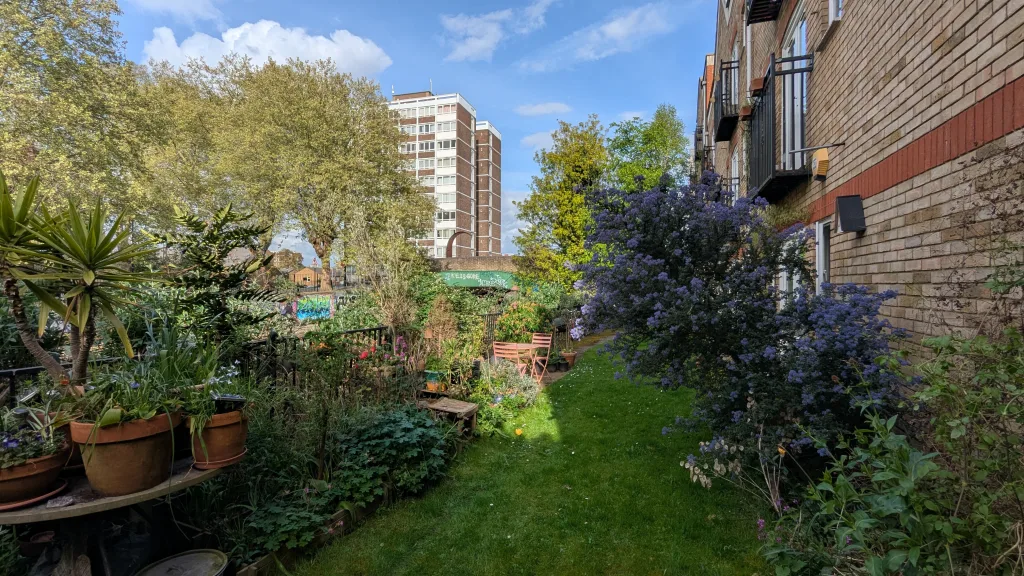
When I think of love, I don’t think of birds. Maybe, this is because I live by a Canal. Outside my garden, I frequently see and hear a Coot chasing his pair across the water before violently mounting her. But then they are fiercely monogamous and defend their nest, fearlessly, against much bigger birds. And swans glide by in beautiful family groups. But Magpies are my favourite lovebird because you see one, and then look around, and you very often see the partner. I have adopted an old tradition that you are supposed to say:
‘Hello, Mr Magpie! Where’s Mrs Magpie?’
And look for the mate. It is good luck if you see her and bad luck if you don’t. (Please feel free to assign your own favourite gender!)
‘One for Sorrow’ is a well-known nursery rhyme found in many variations, and is an example of ‘ornithomancy superstition’ whereby the number of Magpies you see determines some aspect of your future. Magpies normally mate for life, and are not gregarious during the nesting season, but thereafter, they ‘join together in large wintering flocks of more than 20 or so birds.‘. So, perhaps we need at least another seven lines for the rhyme? So, far I have never seen a flock of them. If you have a photo of a flock, please send it to me!
One for sorrow, Two for joy, Three for a girl, Four for a boy, Five for silver, Six for gold, Seven for a secret, Never to be told. Eight for a wish, Nine for a kiss, Ten a surprise you should be careful not to miss, Eleven for health, Twelve for wealth, Thirteen beware it’s the devil himself.
As to the likelihood of seeing thirteen magpies together – well I have seen them often in pairs, occasionally in threes and often alone.
Here is another, more dangerous version of the rhyme (you are more likely to see the Devil)
One for sorrow, Two for mirth Three for a funeral, Four for birth Five for heaven Six for hell Seven for the devil, his own self
For details of the history of versions of this poem, click here:
Bad Birds
Magpies don’t have a good reputation, traditionally being regarded as thieves and scavengers with untidy nests and eating habits. They are supposed to be attracted to shiny things, but Exeter University did some research which found that they have the normal Corvid’s curiosity for objects. But they are as happy to snatch a dull object as a shiny one. So, we can see they are very intelligent as well as faithful lovers. For me, a good-omened bird (as long as I see the two of them).
44BC – Julius Caesar was appointed dictator in perpetuum. Or perpetual dictator of the Roman Republic. Coins were issued with the phrase DICT PERPETVO.
1400 -Richard II died shortly after Epiphany Rising, a failed plot to restore him to the throne. Some think he was starved to death in captivity in Pontefract Castle. Or he starved himself. His body was taken to London and put on display in St Paul’s Cathedral on 17 February. His remains were taken to one of his favourite palaces at King’s Langley Priory on 6 March. Henry V had his remains ‘translated’ to Westminster Abbey. King’s Langley was a Royal Palace lived in by Eleanor of Aquitaine and Edward II, as well as Richard II. It is near Slough.
‘The accepted tale of the king’s death is that in despair and grief at the death of his friends, King Richard refused to eat or drink, although a few say he was purposely starved to ensure he died as if from a natural death. Another rumour is that when an esquire mentioned the words ‘King Henry’ while he was eating dinner, Richard struck him with the knife he was using. Guards charged in and the king, pushing the table away, took a bill out of one man’s hand and managed to slay four of them but one leapt onto the chair he had vacated and felled him with a stroke of his poleaxe.’
1876 – Alexander Graham Bell applies for a patent for the telephone
1895 – The Importance of Being Earnest, first produced at the St James’s Theatre, London
1918 – Russia finally adopts the Gregorian calendar. see my post here.
First Published in February 2023, revised and updated in February 2024, 2025 On This Day added 2026

Annual Grimaldi Memorial Service at All Saints Church, Haggerston.
Today, was the Annual Grimaldi Memorial Service in Haggerston, Hackney, London. It began as a memorial service for the famous Regency Clown Joseph Grimaldi. But it has become a service to celebrate Clowns. The service takes place on the first Sunday in February. The service used to be at Holy Trinity Church, but has switched to Haggerston.
Grimaldi was born on 18 December 1778. He died in poverty on 31 May 1837. In between, he was the most famous clown. He transformed the Harlequin role and made the white-faced clown the central part of the British Pantomime. The part became known as a Joey after Grimaldi. He performed at the Theatre Royal, Drury Lane, the Sadler’s Wells and Covent Garden theatres.
All Saints Church, Haggerston
Video by K Flude of Annual Grimaldi Clown Service in Haggerston
All Saints Church, Haggerston is 5 minutes walk from where I live and 2 minutes from where my Dad was born. (see my post here). So I popped in today and took this video. The service, which has been held since the 1940s, attracts clown performers from all over the world who attend the service in full clown costume. The Spitalfield’s Life blog has a very full description of the service, and lots of very good pictures. Follow the link below:
January 30th is the anniversary of the execution of King Charles I. Today, he was beheaded as a murderer and traitor. Or as a Royalist would see it, it is the anniversary of the Martyrdom of Charles I.
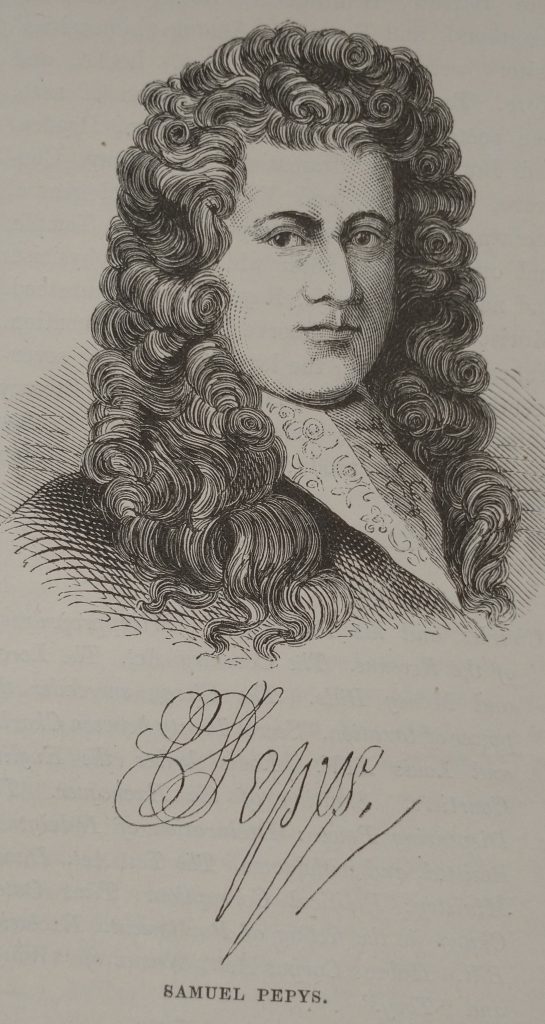
Thousands came to see the execution, amongst them Samuel Pepys. They crowded around the scaffold outside a window of Inigo Jones’s magnificent Banqueting Hall, in Whitehall, London. Charles was brought into the Banqueting House. There he must have looked up at the magnificent Peter Paul Reubens’ ceiling. Charles had commissioned the painting to depict of the Apotheosis of his father, James I. It was the symbol of the Divine Right of the King to rule.
Scaffold to Heaven?
I doubt he saw the irony. I suspect he thought he was going to heaven to join his father, in glory as a Martyr to his religion. He walked outside, through the window, into the cold January air. Two of his bloodstained shirts still exist, probably to stop him shivering. He wanted to be seen as going fearless to his death not shivering with fear. Then, he made a short speech exonerating himself. He spoke without stammering for the first time in his public life. The Rooftops around were lined with spectators. Black cloth framed the scaffold. As the executioner axe fell, there was a dull grown from the crowd (most could not see the axe falling).
This was on January 30th, 1648. But, if you look at a history book, it will tell you it was in 1649. This was before our conversation to the Gregorian calendar. Then the year number changed not as we do on January 1st but on March 25th. This was the day the Archangel Gabriel revealed to the Virgin Mary that she was pregnant. For more on the importance of March 25th look at my Almanac entry here:
‘Oh the stupendous, and inscrutable Judgements of God’
On the same day, twelve years later, in 1661 Oliver Cromwell and his chief henchmen were dug up from their splendid Westminster Abbey tombs. Their bodies were abused by official command. Cromwell’s head was stuck on the top of Westminster Hall. There it remained until blown off in the Great Fire of 1703 (or 1672, or 1684). Then, it taken to Cambridge, Sidney Sussex College, which Cromwell attended. Only the Head Porter knew where. (According to someone who came on my Oliver Cromwell Walk last year.) Whether it is his head or not is disputed. The tale of the head is told in detail here.
The Royalist, John Evelyn, said in his diary:
This day (oh the stupendous, and inscrutable Judgements of God) were the Carkasses of that arch-rebel Cromwel1, Bradshaw, the Judge who condemned his Majestie and Ireton, sonn in law to the usurper, dragged out of their superb Tombs (in Westminster among the Kings) to Tybourne, and hanged on the Gallows there from 9 in the morning till 6 at night, and then buried under that fatal and ignominious Monument in a deep pit. Thousands of people (who had seen them in all their pride and pompous insults) being spectators .
Samuel Pepys records by contrast:
…do trouble me that a man of so great courage as he was should have that dishonour, though otherwise he might deserve it enough…
Pepys served the Parliamentary side before the restoration of Charles II, when he adroitly, swapped over to the Royalist side.
Every year, I do a Guided Walk and a Virtual Tour on Charles I and the Civil War on this day or the last Sunday in January. Look here for details.
Photo of London Fields in the snow of 2022 by Kevin Flude
January 1776:
‘On the 27th much snow fell all day, and in the evening the frost became very intense. At South Lambeth, for the four following nights, the thermometer fell to 7, 6, 6, and at Selborne to 7, 6, 10, and on the 3ist of January , just before sunrise, with rime on the trees and on the tube of the glass, the quicksilver sunk exactly to zero, being 32 degrees below the freezing point’ Gilbert White
Gilbert White and Darwin
He, of course, is talking Fahrenheit, so well below zero. If there was a Giant upon whose shoulders Charles Darwin climbed, then Gilbert White owned one pair.. He was one of many churchmen of the 18th and 19th Century who spent their extensive leisure time, on observing God’s wonderful creation in their gardens and parishes. What made White so important was that his practice was ‘observing narrowly’ and regularly. For example, his observations of the importance of earth worms were fundamental to Charles Darwin’s own studies. When Darwin came back from his travels on the Beagle, he settled in a country property in Orpington. Like White, he used his garden and the local area as his laboratory. Here he worked to prove his theory of evolution.
Gilbert White and Earth worms
Earth worms were one of Darwin’s passions. This is what Gilbert White wrote about their contribution to nature:
“Earth-worms, though in appearance a small and despicable link in the chain of Nature, yet, if lost, would make a lamentable chasm. For, to say nothing of half the birds, and some quadrupeds which are almost entirely supported by them, worms seem to be the great promoters of vegetation, by boring, perforating, and loosening the soil, and rendering it pervious to rains and the fibres of plants, and, most of all, by throwing up such infinite numbers of lumps of earth called worm-casts, which, being their excrement, is a fine manure for grain and grass.”
By such minute and repeated observations, Gilbert White investigated the food chain, and the migration of birds (which was at the time disputed). He laid the foundations of what we now call ecology.
Gilbert White’s Career
He became Dean of Oriel College in Oxford. But chose to spend his career in the relatively humble occupation of Curate. A Curate is the bottom-feeder in the Anglican Church food chain. A Curate hardly earned enough to maintain a position in the Gentry (£50 p.a.). Although, White was upgraded to the title of Perpetual Curate. He still would only be pulling in, I guess, something like £200 p.a. (Patrick Bronte was also a Perpetual Curate). Essentially, it is Vicar looking after a part of a too large Parish.
Financially, White didn’t need much, he inherited his father’s property at Shelborne, Hampshire. White’s grandfather was the Vicar at Shelborne. But Gilbert could not inherit the title because he went to Oriel College. The ‘living’ of the Parish of Shelborne was ‘in the gift of’ Magdalen College. And they were not going to give the role to an alumnus of a rival college.
Gilbert White & The Austen Family
The house, now open to the public, is just around the corner from Chawton. This is where Jane Austen spent her last years. He was born in 1720; was 55 when Austen was born, and he died in 1793, when she was 18. He lived 4 miles away, so the families knew of each other. We know Jane Austen’s brother wrote a poem about Gilbert White and his natural history observations, particularly on birds.
From ‘Selbourne Hanger’ by James Austen
Who talks of rational delight } When Selbourne’s Hill appears in sight } And does not think of Gilbert White? } Such sure he was – by Nature grac’d With her best gift of genuine taste; And Providence – which cast his lot Within this calm, secluded spot, Plac’d him where best th’enquiring mind Might study Nature’s works, and find Within her ever open book Beauties which others overlook. Enthusiast sweet! Your vivid style The attentive reader can beguile Through many a page, and still excite An Interest in what you write! For whilst observant you describe The habits of the feathery tribe Their Loves and Wars – their nest and Song, We never think the tale too long.
For more information on White and Austen, go to Gilbert White’s House’s web page here:
More Snow!
Here is more of that epic cold January 1776
‘… but by eleven in the morning, though in the shade, it sprang up to I6J,1 — a most unusual degree of cold this for the south of England. During these four nights the cold was so penetrating that it occasioned ice in warm chambers and under beds ; and in the day the wind was so keen that persons of robust constitutions could scarcely endure to face it. The Thames was at once so frozen over both above and below bridge that crowds ran about on the ice. The streets were now strangely encumbered with snow, which crumbled and trod dusty ; and, turning grey, resembled bay-salt : what had fallen on the roofs was so perfectly dry that, from first to last, it lay twenty-six days on the houses in the city ; a longer time than had been remembered by the oldest housekeepers living…..’
‘The consequences of this severity were, that in Hampshire, at the melting of the snow, the wheat looked well, and the turnips came forth little injured. The laurels and laurustines were somewhat damaged, but only in hot aspects. No evergreens were quite destroyed ; and not half the damage sustained that befell in January, 1768. Those laurels that were a little scorched on the south-sides were perfectly untouched on their north-sides. The care taken to shake the snow day by day from the branches seemed greatly to avail the author’s evergreens. A neighbour’s laurel-hedge, in a high situation, and facing to the north, was perfectly green and vigorous ; and the Portugal laurels remained unhurt.’
More Frost!
‘We had steady frost on to the 25th, when the thermometer in the morning was down to 10 with us, and at Newton only to 21. Strong frost continued till the 31st, when some tendency to thaw was observed ; and, by January the 3d, 1785, the thaw was confirmed, and some rain fell.’
Rosemary flowering in my garden, photo by Kevin Flude
Gilbert White’s House is open to the public and also contains a display on Lawrence Oates, who died on Scots Antarctic expedition. For more information look at my post here.
There is another mention of Gilbert White in the Almanac of the Past here.
Herbs: Winter savory, parsley, chervil, coriander, rosemary, bay, sage
Cheeses: Stilton, Lanark Blue
(from the Almanac by Lia Leendertz)
On This Day
1754 – Horace Walpole coined the new word ‘serendipity’ from the ‘Three Princes of Serendip’ fairy tale. The Princes ‘ere always making discoveries, by accidents and sagacity, of things they were not in quest of.’
1898 – Walter Arnold became the first motorist to be fined for speeding. He was going 8 miles an hour in a 2 mile an hour area in Kent
1986 – Explosion of US Space Shuttle Challenger. All 7 astronauts killed, including teacher Christa McAuliffe who would have been the first civilian in space.
The food section posted originally in 2023, the part on Gilbert White written on 28th January 2024, revised 2025, On This Day added 2026