Remember, Remember, the 5th of November

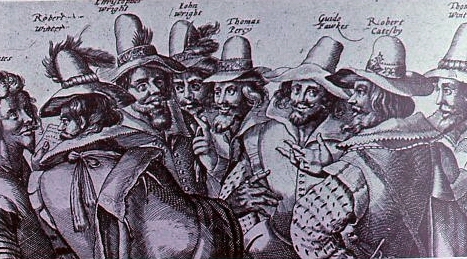
Old print showing the plotters for the Gunpowder plot
The Gunpowder Plotters, culminating on the 5th of November

Soon, after the discovery of the Gunpowder Plot, Parliament legislated for an annual commemoration of the Catholic Plot. The date they chose was the anniversary of finding Guy Fawkes with a lantern next to piles of barrels of Gunpowder underneath Parliament. This was the occasion of the State Opening of Parliament, 5th November 1605. The King, his Queen, the King’s children. The Lords from the House of Lords & MPs from the House of C would all have been blown up.

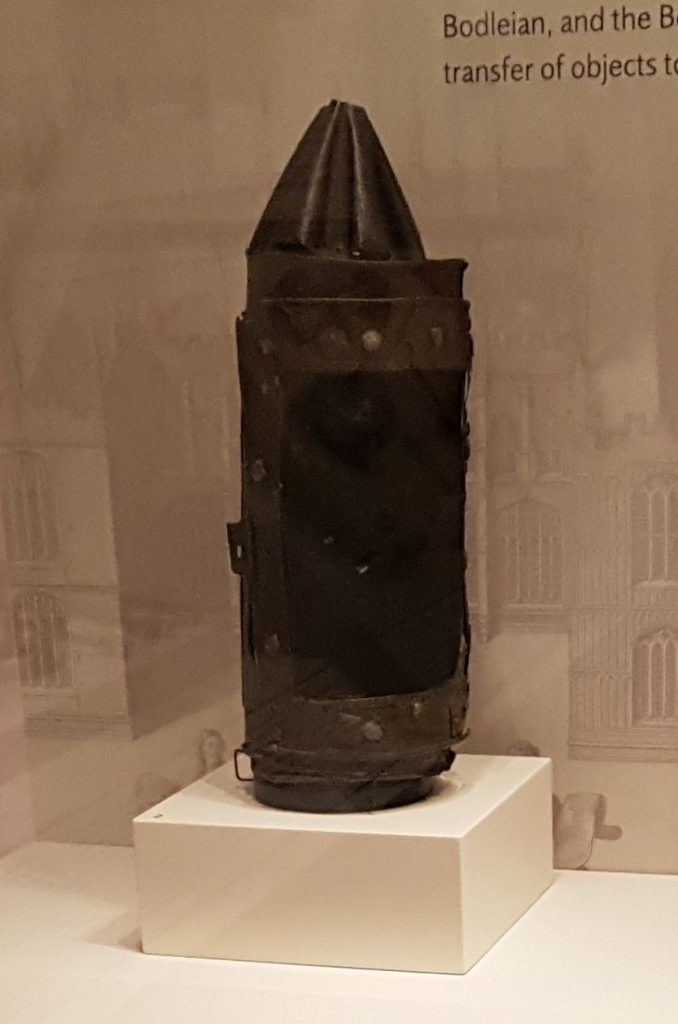
The Ashmolean Lantern

Guy Fawkes Lantern at the Ashmolean Museum

This was the one held by Fawkes. It was given the Museum by Robert Heywood in 1641. He got it from his brother, Peter, who was a Westminster Magistrate among the party who arrested Guy Fawkes in the cellar. Peter Heywood, took the lantern from Guy Fawkes to stop him setting fire to the pile of gunpowder barrels. Or at least that is the story Robert Heywood told.

A commemoration of fireworks and bonfires was clearly appropriate given that it has been estimated that the amount of gunpowder in the barrels would have killed the king, the Royal Family, the House of Lords and the House of Commons and devastated a huge area around Westminster. But some suggest that the nature of the commemoration draws some elements from Halloween – use of bonfires and dressing up. Halloween was frowned upon by puritans, but they supported Guy Fawkes Day as it was anti-catholic.

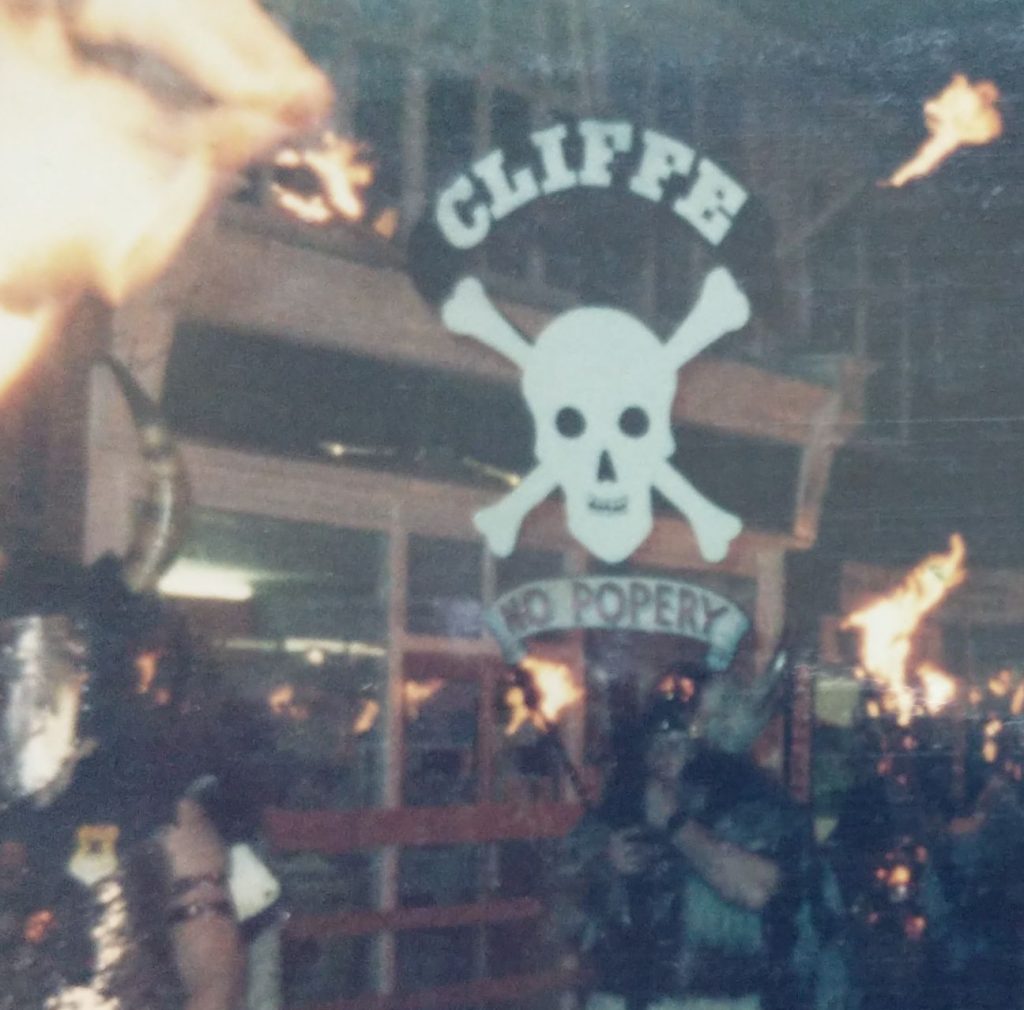
Banner in Lewes

The anti-catholic nature of the celebration is a fact, but it really isn’t something we think about today. There is little anti-Catholic prejudice in Britain (except in one or two very specific places). Irish friends are amazed we still celebrate it, but for the vast majority of people in Britain it is really just Fireworks night, nothing to do with anti-catholic sentiment.

The Lewes Bonfire

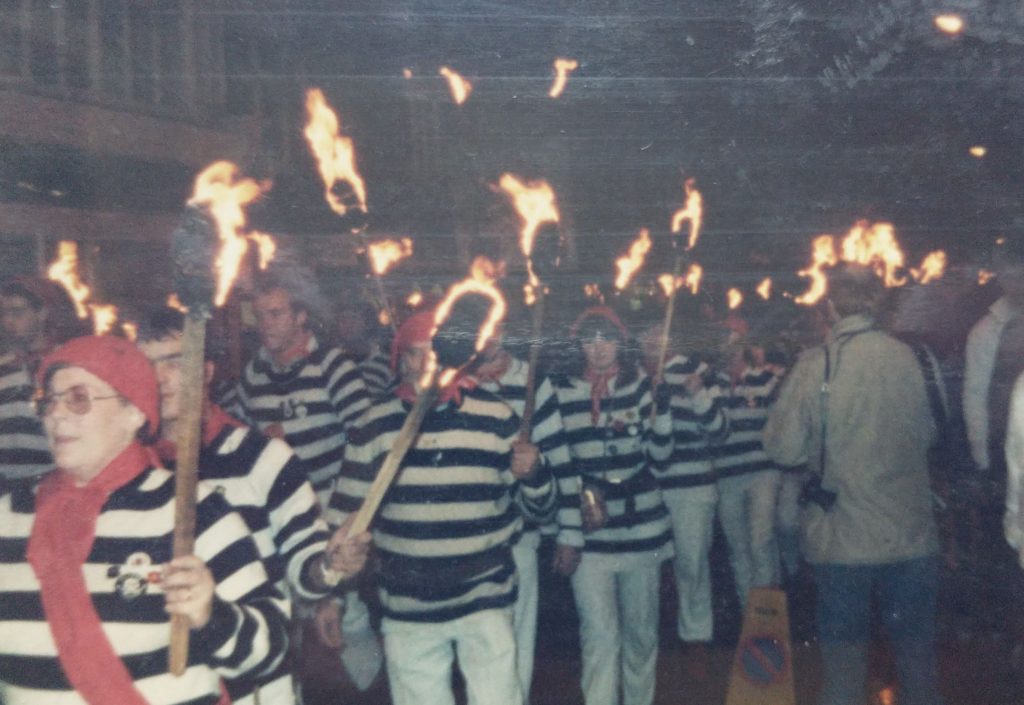
Traces of the original anti-catholic nature of it do continue in places like Lewes, which is one of the most traditional Fireworks Nights. This consists of clubs who organise a parade through the town. Then it ends with the burning of an effigy of the Pope and, more recently, other unpopular figures on the contemporary scene. Click here for more on Lewes.

Procession in Lewes

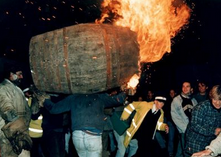
Tar Barrel Rolling

Ottery St Mary continues the tradition of using Tar Barrels. These are wooden barrels in which tar and tinder are set on fire. The Barrels are either rolled through the Town, or down a hill. But in Ottery they are carried on the shoulders of volunteers (see video below). This has a pedigree which goes back before 1605 as there are references to tar barrels and displays in Protestant processions to celebrate the accession to the throne of Edward VI and Elizabeth 1.

Tar Barrels in Ottery St Mary
Stephen and Claire – 2 Zany Brits on YouTube

Discovering the Plot

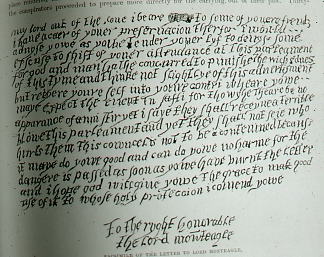
King James 1 took credit for discovering the plot as he is said to have deciphered the warning given in a letter, written to William Parker, 13th Baron Morley, 4th Baron Monteagle. Monteagle wrote the letter at his house in Hoxton, London (commemorated by a plaque in Hoxton Street near where I live) which warned against turning up at Parliament but was not explicit as to the nature of the threat.

Letter Lord Monteagle passed on to King James 1

My lord, out of the love I beare to some of youere frends, I have a care of youre preservacion, therefore I would aduyse you as you tender your life to devise some excuse to shift youer attendance at this parliament, for God and man hath concurred to punishe the wickedness of this tyme, and thinke not slightly of this advertisement, but retire yourself into your country, where you may expect the event in safety, for though there be no apparance of anni stir, yet I saye they shall receive a terrible blow this parliament and yet they shall not seie who hurts them this cowncel is not to be contemned because it may do yowe good and can do yowe no harme for the dangere is passed as soon as yowe have burnt the letter and i hope God will give yowe the grace to mak good use of it to whose holy proteccion i comend yowe.

National Archives

James realised this sentence: ‘they shall receive a terrible blow this parliament and yet they shall not seie who hurts them ‘ implied an explosion. His father, Lord Darnley, was killed in a Gunpowder Plot in Edinburgh, so perhaps he was particularly attuned to the threat. On the other hand, there is a possibility that the King’s Secret Service were aware of the plot and arranged matters, so the King could receive the credit for its discovery.

The Fifth of November

    Remember, remember!
    The fifth of November,
    The Gunpowder treason and plot;
    I know of no reason
    Why the Gunpowder treason
    Should ever be forgot!
    Guy Fawkes and his companions
    Did the scheme contrive,
    To blow the King and Parliament
    All up alive.
    Threescore barrels, laid below,
    To prove old England’s overthrow.
    But, by God’s providence, him they catch,
    With a dark lantern, lighting a match!
    A stick and a stake
    For King James’s sake!
    If you won’t give me one,
    I’ll take two,
    The better for me,
    And the worse for you.
    A rope, a rope, to hang the Pope,
    A penn’orth of cheese to choke him,
    A pint of beer to wash it down,
    And a jolly good fire to burn him.
    Holloa, boys! holloa, boys! make the bells ring!
    Holloa, boys! holloa boys! God save the King!
    Hip, hip, hooor-r-r-ray!

English Folk Verse (c.1870)

See my post on preparing for Guys Fawkes day here:

First published 5th November 2021, revised 2024, 2025

Battle of Hastings October 14th 1066

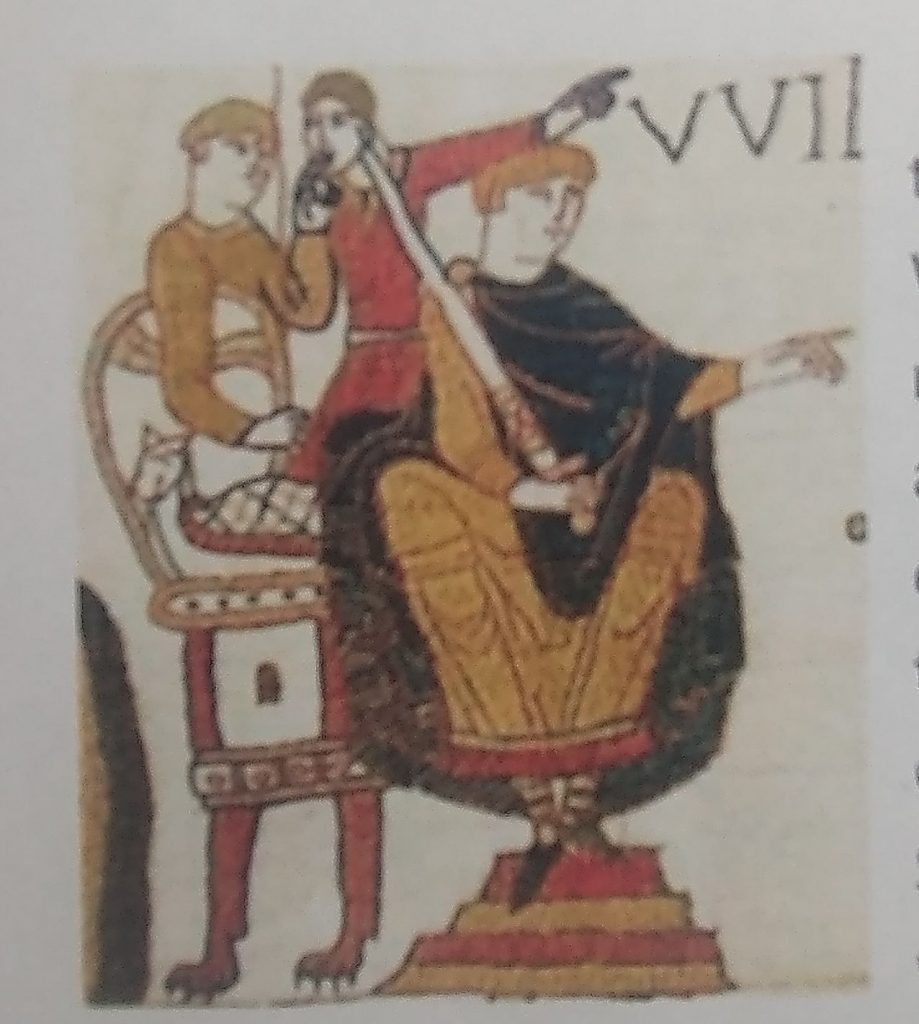
William the Conqueror before hte Battle of Hastings sitting on his throne with his pudding basin haircut and shaven face

Today is the anniversary of the most fateful battle in British History.  The victory by William the Bastard led to over 300 years or so of control of England by a French aristocratic elite. 

French replaced English as the language of the ruling elite which, over the long term, changed the English language to a powerful, nuanced hybrid language.

Arguably, it also established a class system in which the ruling class was separated from the ruled by language, education, culture, and wealth.  And which has reverberations down to the present time.

It pivoted England from a North Sea power to a European state.  And it may have contributed to England becoming a less community-based society.  To put it briefly, if England had remained focussed on the North Sea region, might we now have a society more like the Scandinavian Countries? – more willing to spend money on the public realm, a more equal and a happier society? A society in which the elite are less willing to educate their children in fee paying schools separate from the people of the country?

Harold’s Strategic Errors

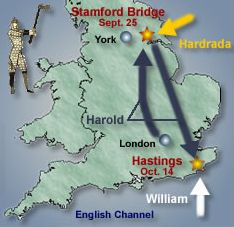
Map of 1066

Personally, I’m quite angry with King Harold II.  He should have won the Battle of Hastings, or at the very least made sure that defeat at that battle did not mean conquest by the Normans.

Harold was in a strong position following the astounding victory over Harold Hadarada at Stamford Bridge, in Yorkshire.  Particularly, if Harold Had not rushed to confront William, but rested and gathered his troops.  This would have allowed his troops to recover and give time for fresh troops to join him .See my posts on the Battle of Stamford Bridge and the Battle of Fulford.

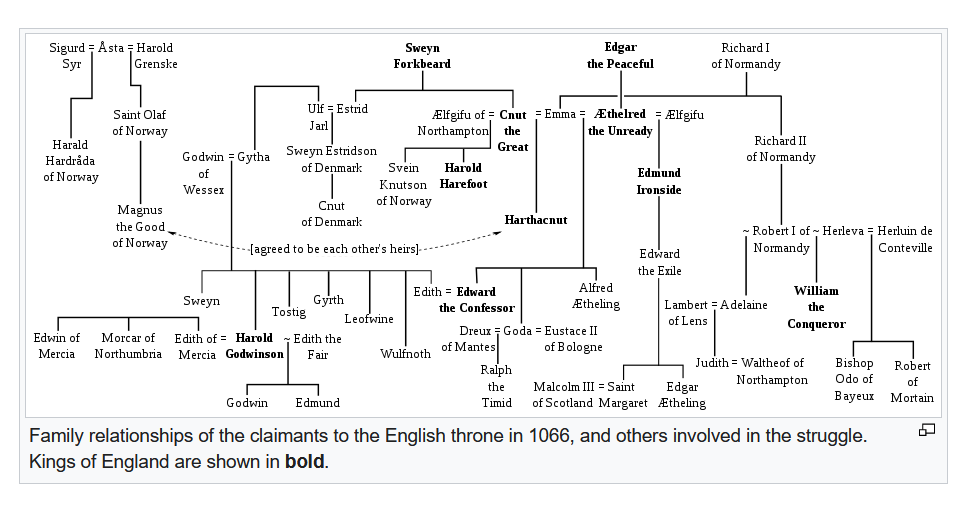
The 1066 claimants to the Throne of England

While waiting, Harold could have arranged the harrying of William’s army. Attacked their supply lines, increasing their anxiety, and sapping their resolution.  When Harold had reached maximum strength, then would be the time to take on the weakened Norman Army.

But also, he should have had a succession plan. What would happen if he lost the battle?  Who was to succeed him?  As it was, he took his two brothers with him to the Battle, where all three of them died, leaving no clear adult heir to the throne.  The English soon surrendered to William after the Battle of Hastings, precisely because there was no clear adult successor, unless that person was William himself. 

Why did the English surrender to William?

Given the catastrophe for the English ruling class that William inaugurated, it’s difficult to understand why the English magnates decided to accept William as King.  But let’s have a shot at looking at it from their perspective, they remembered that the reign of King Cnut, a Dane, created a successful fusion of English and Danish culture that was more stable than that of the weak English King Edward the Confessor.  So, recent history taught: better a strong foreign King than a weak English King.

They were not to know that William would ensure that virtually all English nobles, church leaders, language and culture, would be swept aside and replaced by Norman and French alternatives. England would never be the same.

The Battle of Hastings

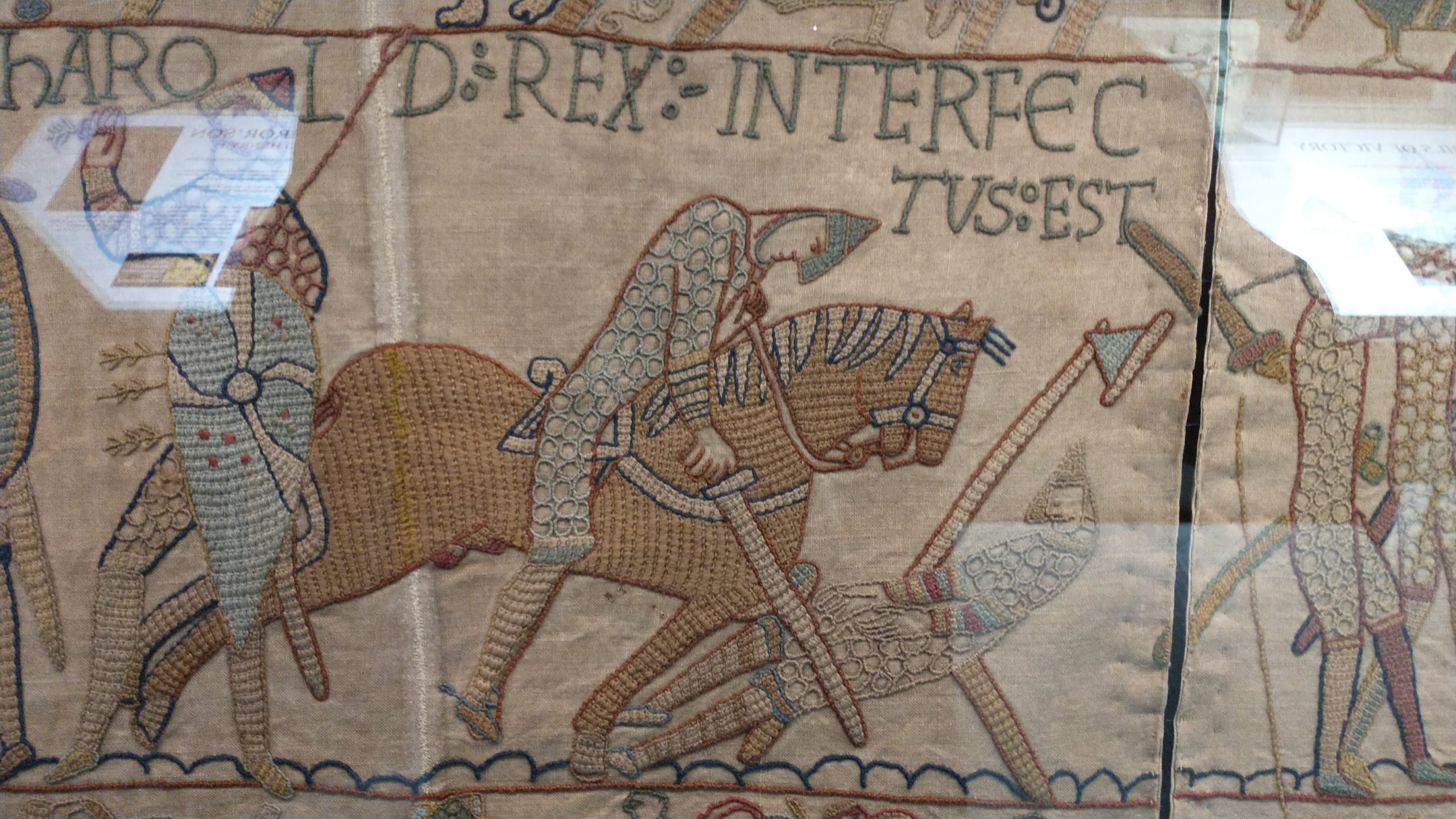
As to the Battle itself, there is no definitive account of what happened.  We don’t know the composition of the armies nor their number.  Estimates vary from 7,000 to over 20,000. But it was a ferocious battle which lasted all day and was often in the balance. 

Harold fought the battle early, probably for 2 main reasons.  Firstly, he had won the Battle of Stamford Bridge with the same tactics of fighting immediately after a long march, surprising the enemy and winning an overwhelming victory.  Secondly, William had landed on Harold’s own personal land and Harold would not have easily borne a foreign power devastating his people. 

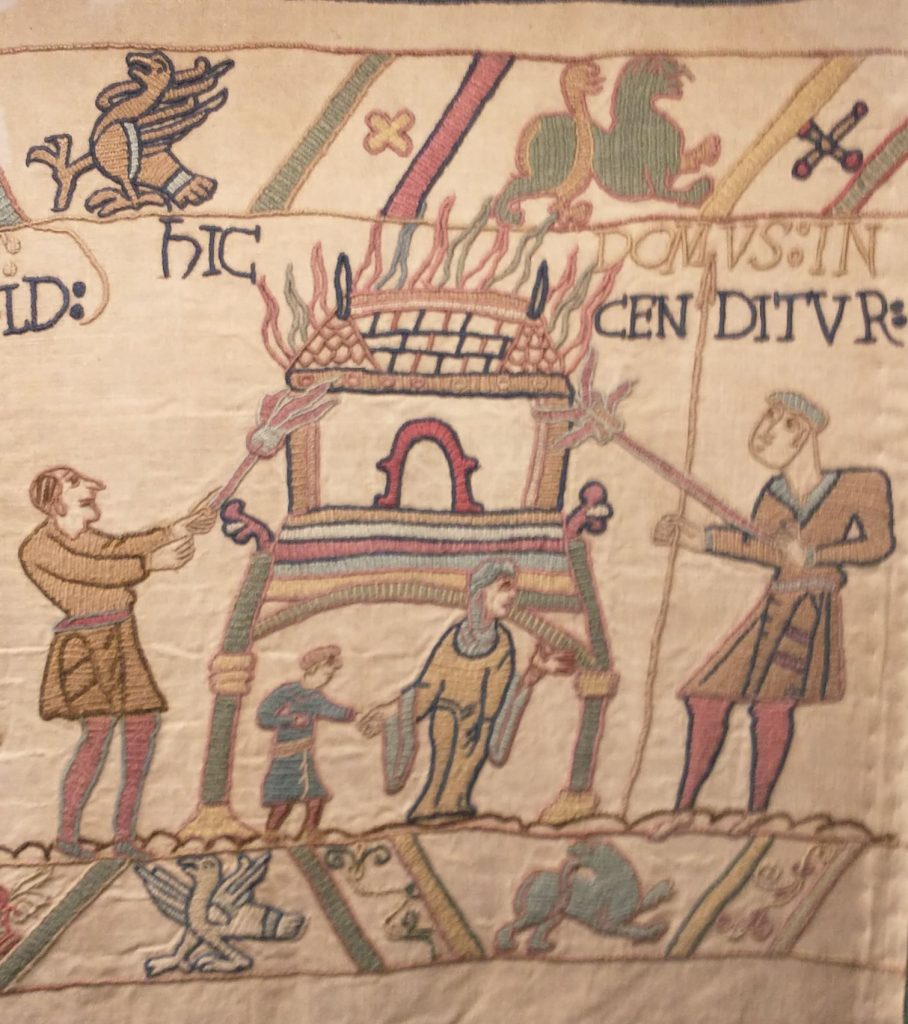
Normans burning English houses.
Reading Museum copy of the Bayeaux Tapestry Photo Kevin Flude

So, he matched as quickly as he could from London to Senlac near Hastings, where Battle Abbey would be later sited.  He chose the top of a ridge, with a stream or ditch in front of it.  William accepted battle and fighting began early in the day.  Troops were still arriving to reinforce Harold.  All he needed to do was hold his ground till dark and reinforcements would probably have made William’s position untenable.

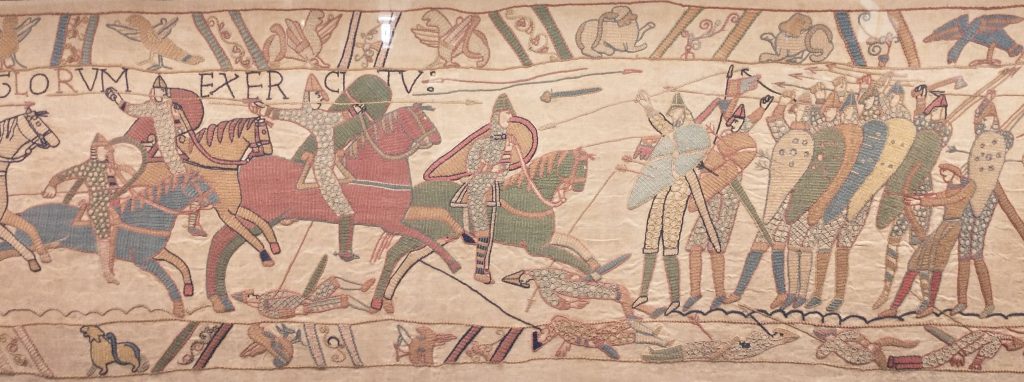
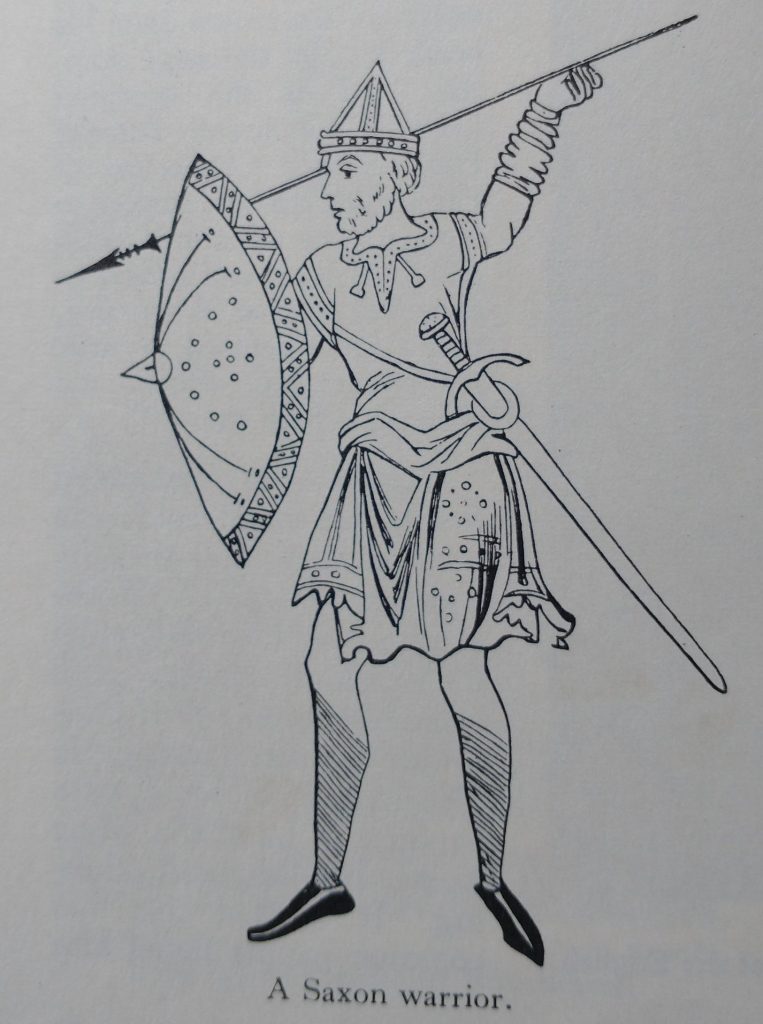
Harold would have established his shield wall, although there are suggestions this was done while the Normans attached. 

Mounted Normans confront the Saxon Shield Wall. 
Reading Museum copy of the Bayeaux Tapestry Photo Kevin Flude

Harold seems to have held the ground until late afternoon.  There are suggestions that his army was weakened by their rash pursuit of the retreating Normans down the hill.  The Normans thought William was killed but he showed his face to reassure his troops, rallied his troops and turned on the English who, without the protection of their shield wall and the high ground, were badly mauled.  The Normans renewed their attack.

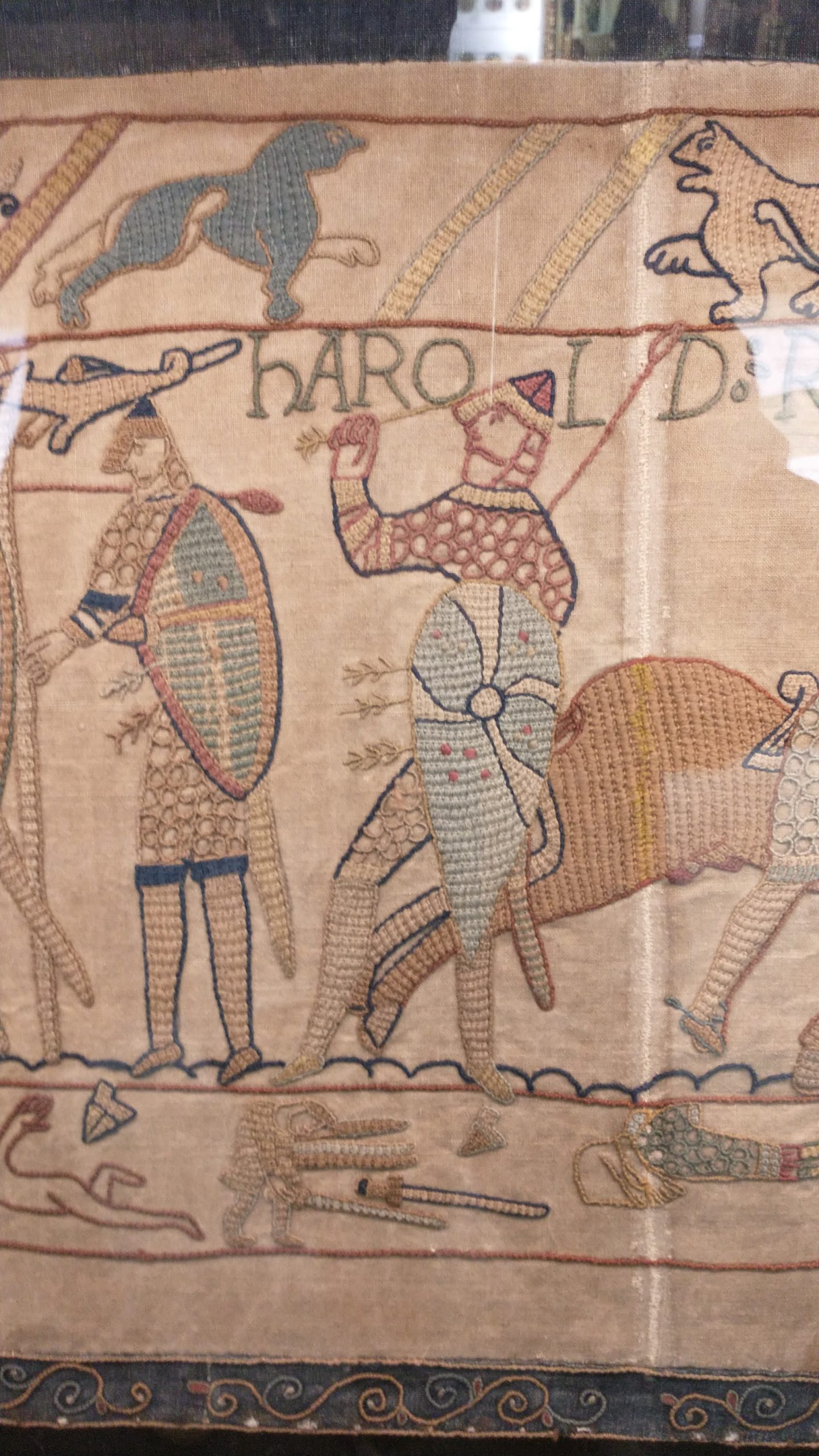
At some point Harold’s brothers were killed, followed by Harold himself, possibly after being injured in the face by an arrow, but that is not proven. 

As darkness fell the English retreated, pursued by the Normans.  The English fled back to London.  In the following days, the Normans attached London Bridge, but Londoners stoutly defended the Bridge. They were led by the  Portreeve Ansgar. He h ad been wounded at Hastings and was carried in a litter during the siege. The Portreeve was the King’s official in London, similar to a Shire Reeve.  He also had the Danish title of ‘Staller’.  The next day the Witangemote met in London and elected Edgar the Atheling as King. He was a nephew of Edward the Confessor, but only about 14 years old.

The Normans retreated from London and proceeded to harry the South, trying to find a crossing point over the Thames. We will return to the story in the following weeks.

Charlie Watts and the Bayeaux Tapestry

Charlie Watts owned a 19th Century reproduction of the Bayeaux Tapestry and this has recently been sold. It was photographed by a V&A photographer. ( To see more follow the link below.

https://www.theguardian.com/world/2024/jan/29/bayeux-museum-lands-19th-century-reproduction-of-tapestry-for-16000?utm_term=65b730e6db0a371ac9c15f2aed7f9cf8&utm_campaign=GuardianTodayUK&utm_source=esp&utm_medium=Email&CMP=GTUK_email

The Tapestry is also coming to the UK on exhibition at the BM in 2026

On This Day

1586 Mary, Queen of Scots put on trial accused of Treason

1964 Martin Luther King wins Nobel Peace Prize. (see also my page on his visit to St Pauls Cathedral)

First Published in 2024, revised 2025

William the Bastard invades England September 28th 1066

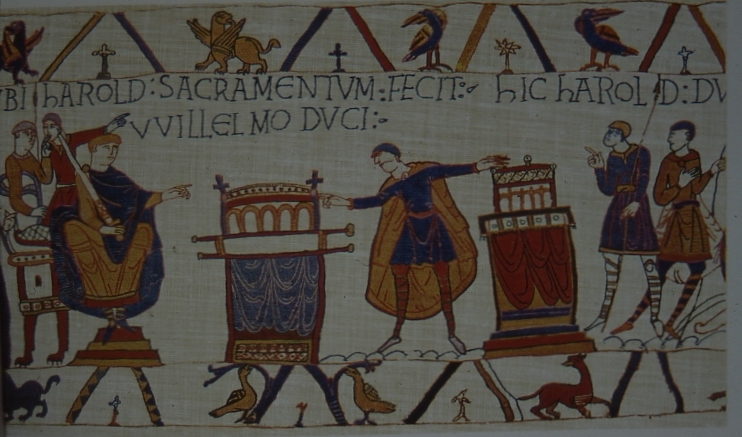
Bayeux Tapestry, Harold with moustache swearing an oath, William with pudding basin haircut sitting down at left.

Harold II was scurrying south after almost annihilating the Viking army of Harold Hardrada, when he heard news that the Normans had landed at Pevensey. (see my post (battle-of-stamford-bridge-september-25th-1066)

William was an unlikely Duke because it is very rare for illegitimate children to take the title of their father. It was normally not even considered as an option. A legitimate cousin or uncle would be chosen instead.  But he not only got the title and survived many rebellions, but was known as the William the Bastard

He came to England in 1051 to see his distant cousin Edward the Confessor, who was the son of the English King Aethelred the Redeless (the ill advised – more often called ‘the Unready) and Emma of Normandy.  Edward, whose marriage to Edith of Wessex was not great, insofar as both made claims to be holy virgins.  So, Edward had no children. He, according to William, offered him the throne.

Did he, though? Well, the Pope agreed he did.  William claimed that Harold of England accepted William as heir, too. And not only that, Harold, he said, agreed under Holy Oath.

The Bayeaux Tapestry, shows Harold making an oath with his hands on holy relics. But British Historians believe it may never have happened.  And if it did, then it was an inadmissable endorsement as it was not freely given, Harold had been detained on a visit in 1064. He was probably never going to get home unless he took the oath.

But the clincher for the English viewpoint is that Harold was the legitimate King because he was elected as was traditional by the Witanagemote, the King’s Council.

But was he really the legitimate claimaint? He had no English Royal blood in him, only a distant touch of Danish royalty on his mum’s side.  It is true, that in England, the King’s Council or Witan elected Kings and often did not choose the first in line but preferred the best suited candidate be he brother, cousin or uncle. But Harold was only the brother of the King’s wife, no royal blood there. 

However, Harold was so powerful that he would have prepared the ground for his election irrespective of whether this was the freely given choice of the Witan. His father, Earl Godwin, had been a disloyal and over mighty subject of King Edward, but had prepared the way for Harold to be virtual ruler of the country long before the King died.

So, even if the Witan’s endorsement clearly choose Harold there was plenty of scope for a contested succession.

In late September 1066 Harold was the English King  who had already defeated the Norwegian claimant. Now, he was rushing to put to rest the Norman claim.

William Prepares for Conquest

William had begun by getting Pope Alexander II’s blessing for his claim to the English throne. He spent 10 months planning the invasion. He recruited adventurers from Normandy, France, Brittany, and Flanders. His allies collected boats for the invasion, while William had hundreds of new boats built, using thousands of carpenters, metalworkers, carters etc and cutting down a vast number of trees. 

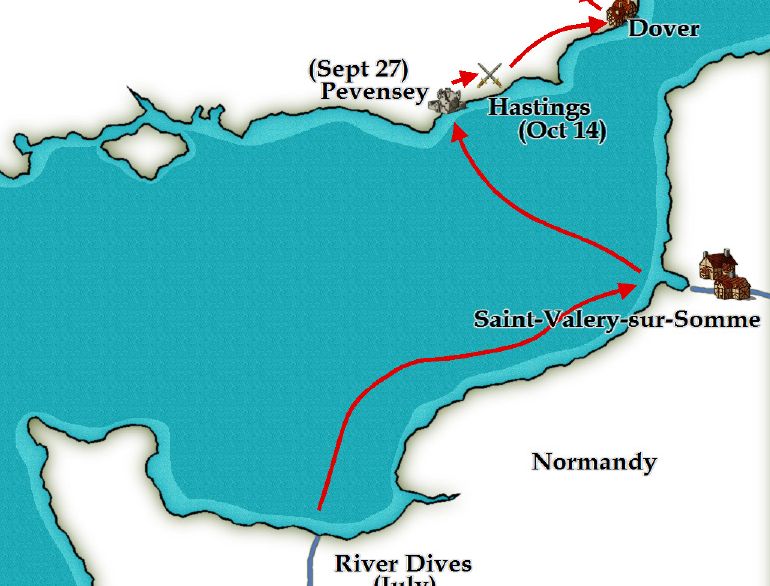
The boats were ready by 12 August near Caen on the River Dives.  They set sail, but contrary winds blew them into Saint Valery-sur-Seine.  Winds in the summer are usually blowing south on that coast, and William had a long, frustrating wait for a north wind.

Meanwhile, Harold was waiting with his army and a 400 ship navy at his manor of Bosham, near Chichester, on the South Coast.  Then he heard about the Norwegian invasion of the North. He probably hoped it was getting too late in the year for William to risk invasion. So, Harold decided, on September 18th, to go North with his army, which was the more immediate risk to his throne.

Map of the the progress of William;s fleet. Opinion suggests landing was on 28th September 1066

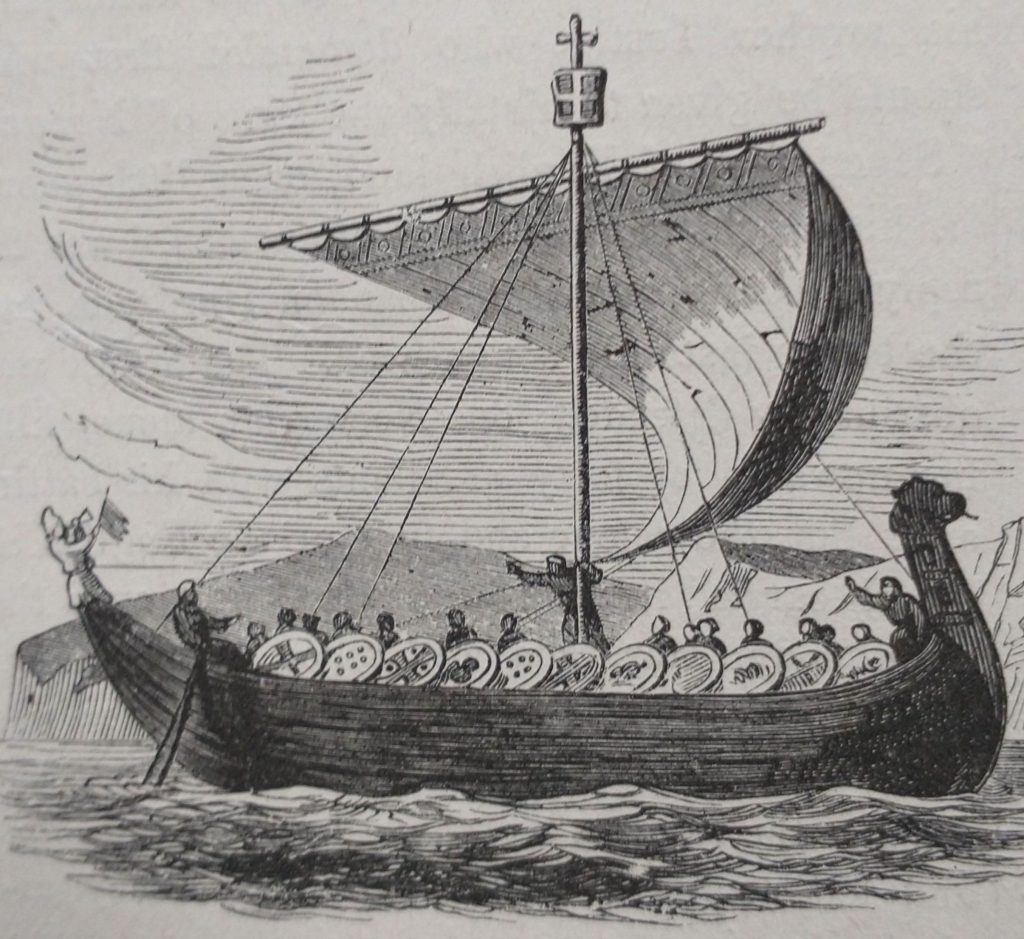
On September 27th, the north winds blew, the Normans embarked, and on the 28th of September William and his boat, given as a present to him by his wife, found themselves alone in the Channel off the English coast.

After an anxious wait, the rest of the fleet was spotted sailing towards William.  They landed at Pevensey.  Built a castle at Hastings and proceeded to ravage the land of Harold’s homeland. Harold had by now destroyed the Norwegian threat at Stamford Bridge on 25th September. He heard William had landed and rushed towards London

To be continued