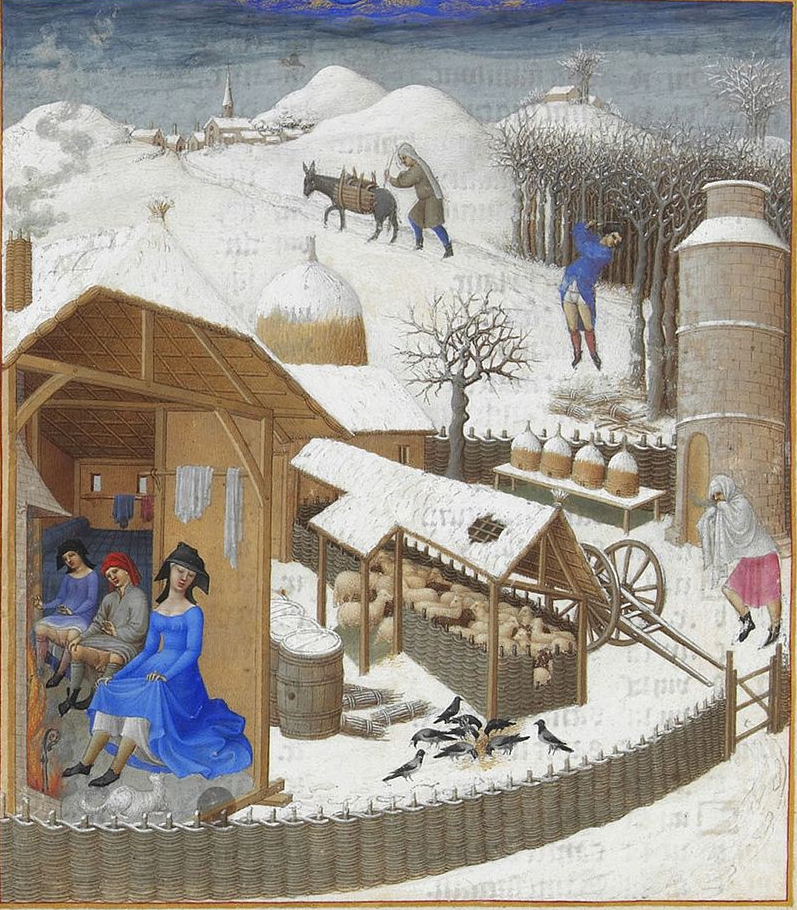
A swarm in May Is worth a load of hay A swarm in June Is worth a silver spoon A swarm in July Is not worth a fly.‘
‘Five Hundred Points of Good Husbandry’ published 1573, suggests we should:
‘Take heed to thy Bees, that are ready to swarm, the loss thereof now, is a crown’s worth of harm.’
According to Hillman’s ‘Tusser Redivus’ of 1710, swarming in May produces particularly good honey. ‘Their hours of swarming are for the most part between the hours of ten and three, and they ought to be watched every day.’ He advises following the bees to retrieve them:
‘You are entitled by custom to follow them over anyone’s land and claim them … but only so long as you ‘ting-tang’ as you go, by beating some metal utensil – the sound whereof is also said to make your bees stop.’
Much of the above is quoted from The Perpetual Almanac of Folklore by Charles Kightly.
Queen Bee
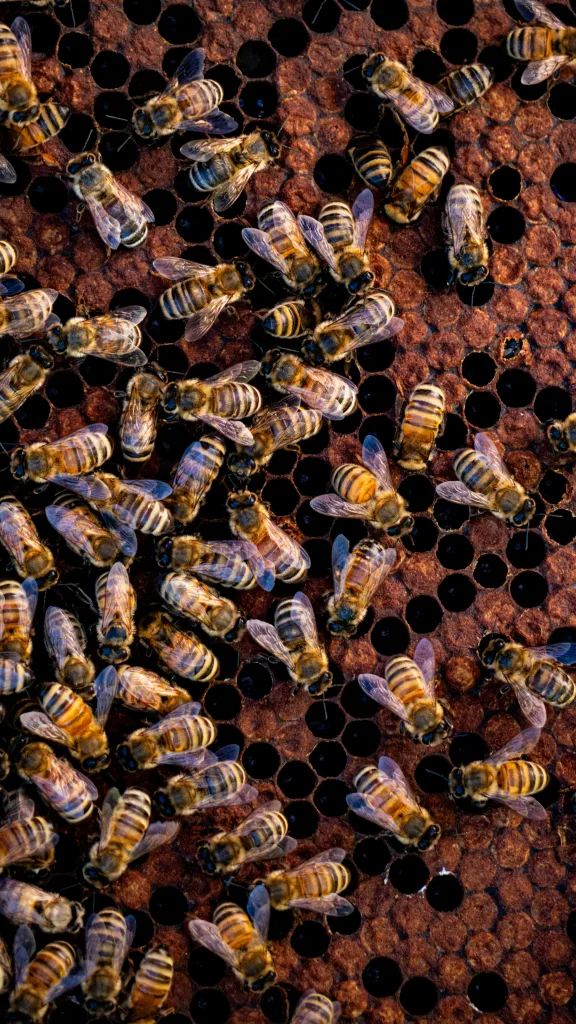
Bees swarm when a new Queen Bee takes a proportion of the worker bees to form a new colony. They will latch unto a branch or a shrub, even a car’s wing mirror. Then sending worker bees out searching for a suitable new home, such as a hollow tree. There may be hundreds or even thousands in the new colony. This may be very alarming. But, at this point, they will not be aggressive as they do not have a hive to protect. Look here for more information on swarming.
Sweet, Long Distance Flyers
An average hive will produce 25 lbs of honey, and the bees will fly 1,375,000 miles to produce it. This is like flying 55 times around the world (according to the British beekeepers Association (and my maths)) https://www.bbka.org.uk/honey
Swarming in Hackney
Swarm of Bees, Hackney (Photo Kevin Flude 30th May 2018). The Swarm is at the top of the Column and on the edge of the porch roof.
In 2018, on 30th May, I was perturbed to find a swarm of Bees hanging outside my front door. Frightened of leaving my house, I rang a local beekeeper, who came to take possession of the Bees and take them to a new home. By the time he came, they had moved 20 yards to a Buddleia bush.
Swarm of Bees, having moved 20 yards to a second perch, being ‘rescued’ by a bee keeper. You can see the swarm above his head.
Helping Bees
Bees are still having a hard time as their habitats are diminishing and threats increasing. In July, DEFRA hosts Bees’ Needs Week 2026: 13 to 19 July. This aims to increase public awareness of the importance of pollinators.
They suggest we can help by these 5 simple actions
Grow more nectar rich flowers, shrubs, and trees. Using window or balcony boxes are good options if you don’t have a garden.
Let patches of garden and land grow wild.
Cut grass less often.
Do not disturb insect nests and hibernation spots.
Think carefully about whether to use pesticides.
Patron Saints of Bees include: St. Ambrose, St. Gobnait, and St. Valentine. Click here to see my post of St Valentine.
On This Day
1821 – Napoleon dies in exile on the island of Saint Helena.
1835 – The first railway in continental Europe opens between Brussels and Mechelen, which is 36 kms.
1964 – Europe Day is launched by the Council of Europe but the European Union celebrates Peach and Unity in Europe on May 9th
First Published 2024, revised 2025, rearranged 2026
Google Screenshot welcoming the Beginning of the Financial Year
Why is April 6th the Beginning of the Financial Year?
If you remember, in the medieval period, the official New Year was on March 25th. This was the Day of the Annunciation, the Day Mary conceived Jesus. (for much more on this see my post march-25th-feast-of-the-annunciation/). But in 1752, we followed belatedly, Pope Gregory’s reorganisation of the Julian Calendar. We had to put our days back in sync with the Sun. This had gone 11 days out of kilter since Julius Caesar’s reorganisation of the calendar (see my post here!). As we lost 11 days, we had to put them back. So the beginning of the Financial Year in 1753 was changed to April 5th. A further adjustment in 1800 was necessary, as this would have been a leap year. So the new Financial Year moved to April 6th. And it has remained so ever since. For more on the Gregorian Calendar look here.
Today, we breathe a sigh of relief if we have transferred money into our ISAs or briefed our investment advisers, or rue the day that we didn’t get around to any of it, yet again, or didn’t have any money to take advance of tax breaks.
Exploring Mayfair
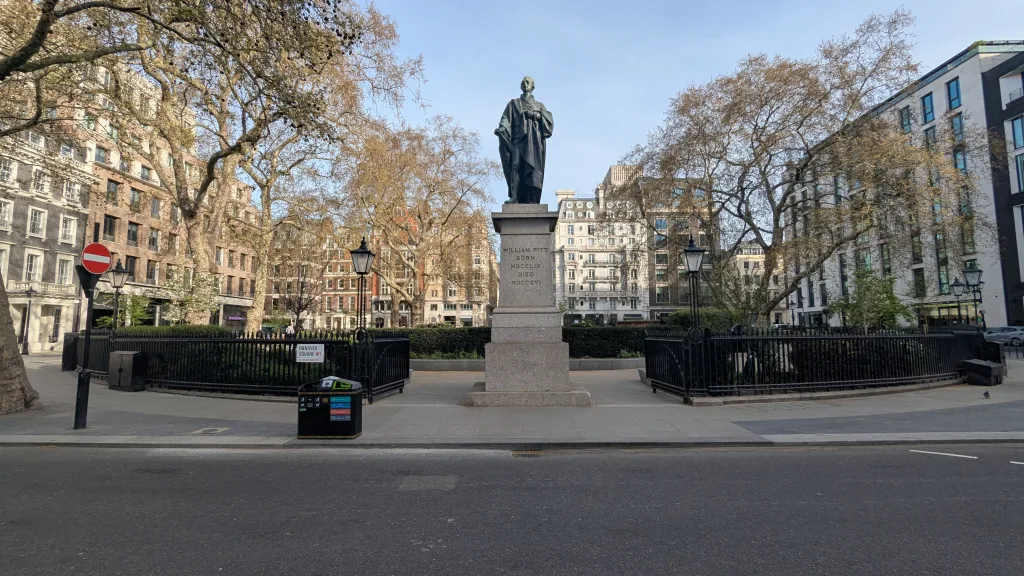
Hanover Square laid out in 1717. Statue of William Pitt the Younger.
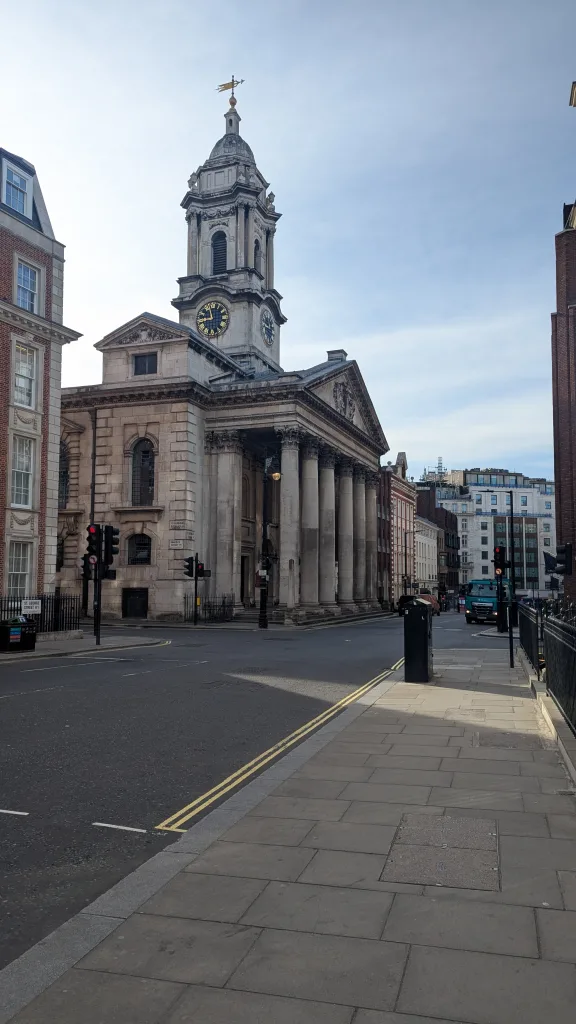
On April 6th 2025, and 2026. I did Jane Austen in Mayfair walks. Today, I met my client at Claridges, (£930 a night). Arriving early, I had a chance to look around, and work out some changes to my Jane Austen walk. I decided to start it at Bond Street, rather than Green Park. This gives a chance to look at Hanover Square, where the tedious Palmers fictionally live (Sense & Sensibility). It is also the location of St George’s Church where Henry Crawford is telling Fanny he will marry her (Mansfield Park). (He won’t).
St George’s Church – St George’s Street, Mayfair London.
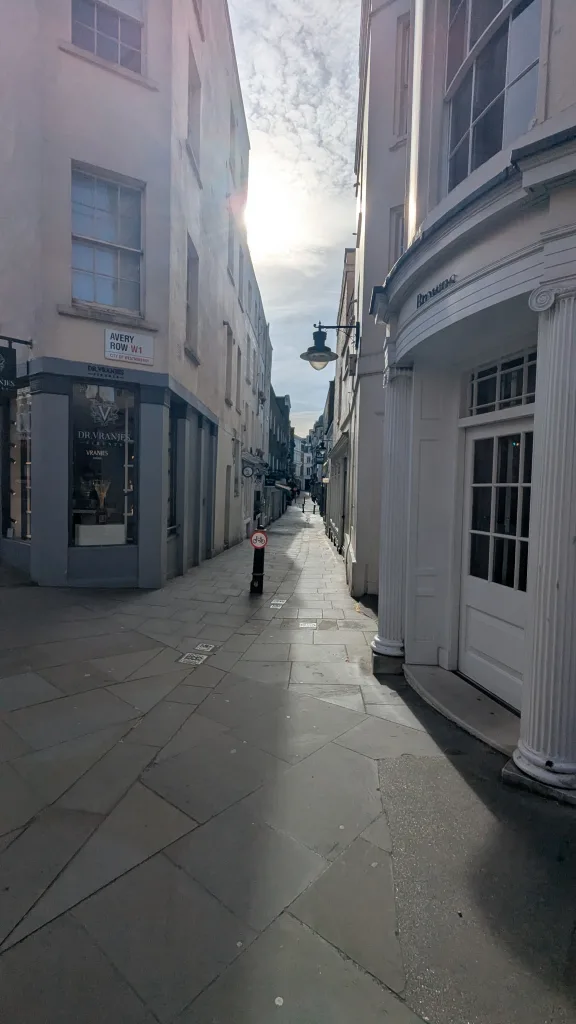
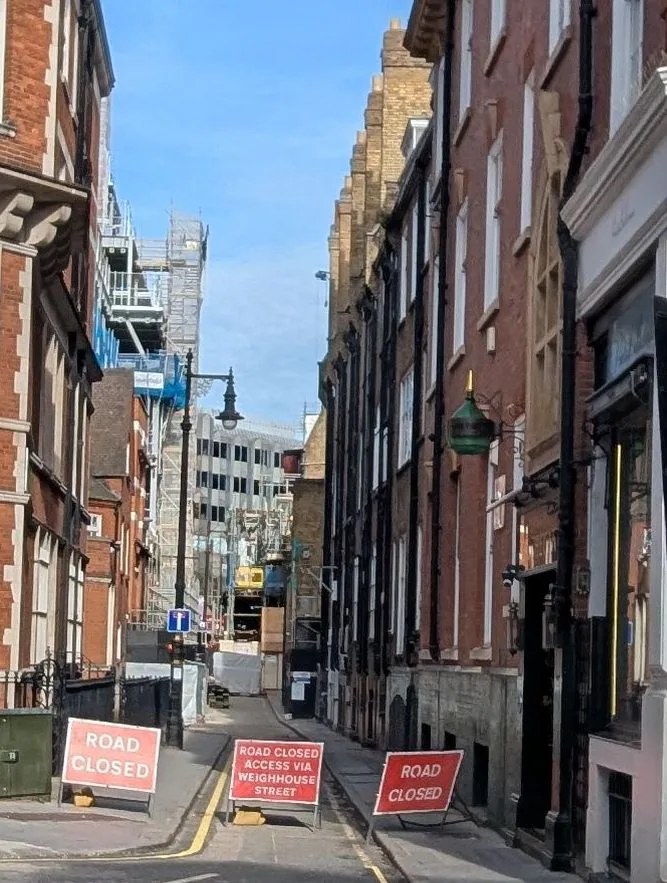
I really love exploring Cities, and here are a few reasons. I knew the Tyburn River used to flow near here. So, I was delighted to see a place where the road to the west rose in height and the road to the east also climbed a small hill. This was the valley of the Tyburn. As I reached the depression, looking left and right, instead of grand boulevards were two pokey little lanes, cutting at an angle in which you could imagine the babbling brook.
Avery LaneS Morton Lane
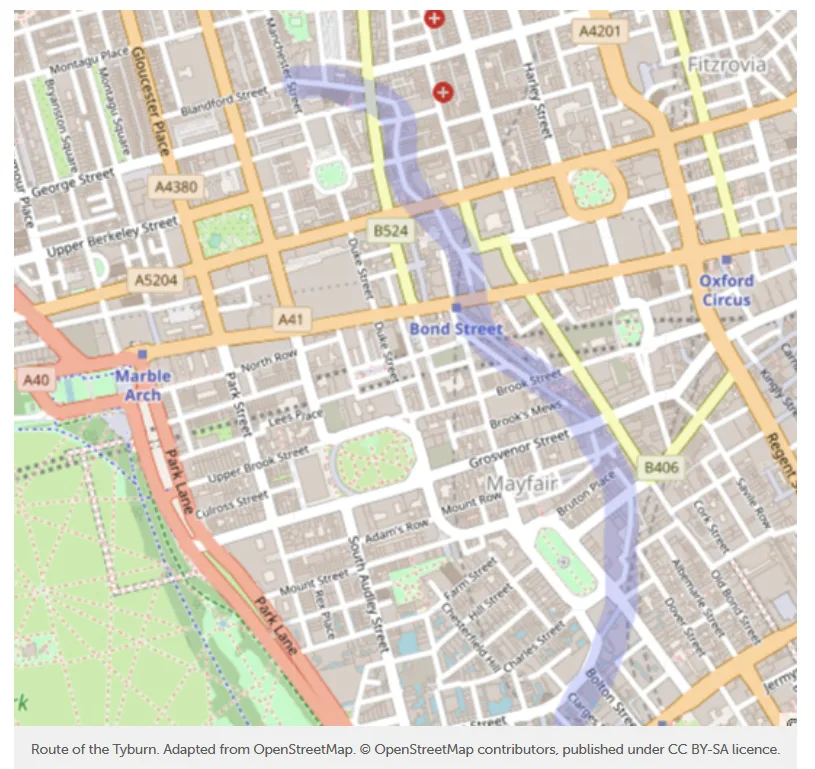
Post walk research confirmed the guess, this was the course of the Tyburn. Below is an open-source map from the Londonist. Look at their post for more on the Tyburn.
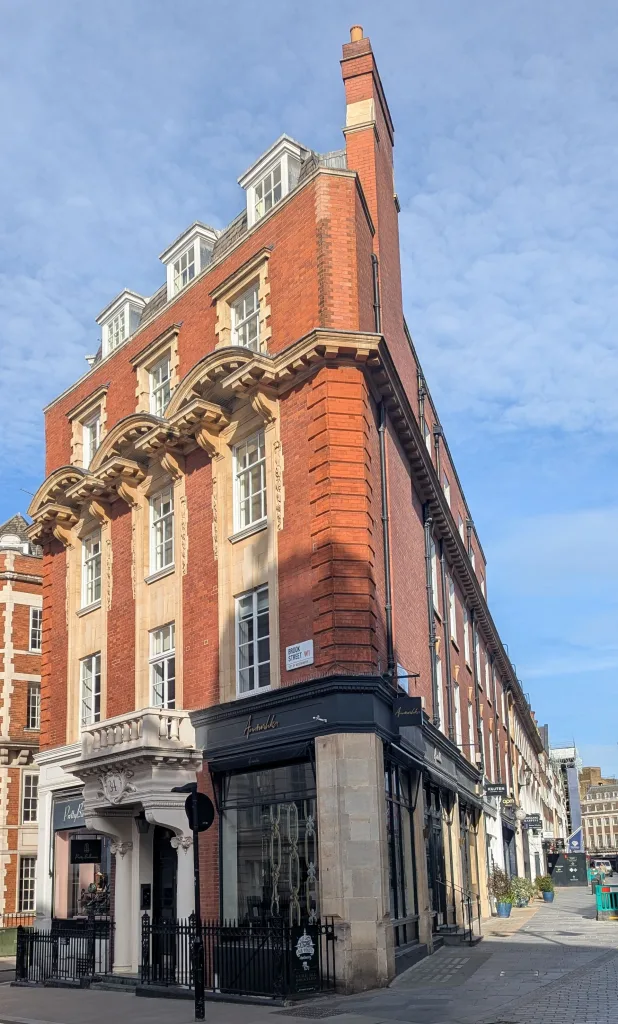
Further down Brook Street were a couple of delightful buildings. First a juxta-position of a Georgian town house with a fine brutalist tower, and then a fabulous triangular brick corner house.
Brook St, London, Photos K Flude
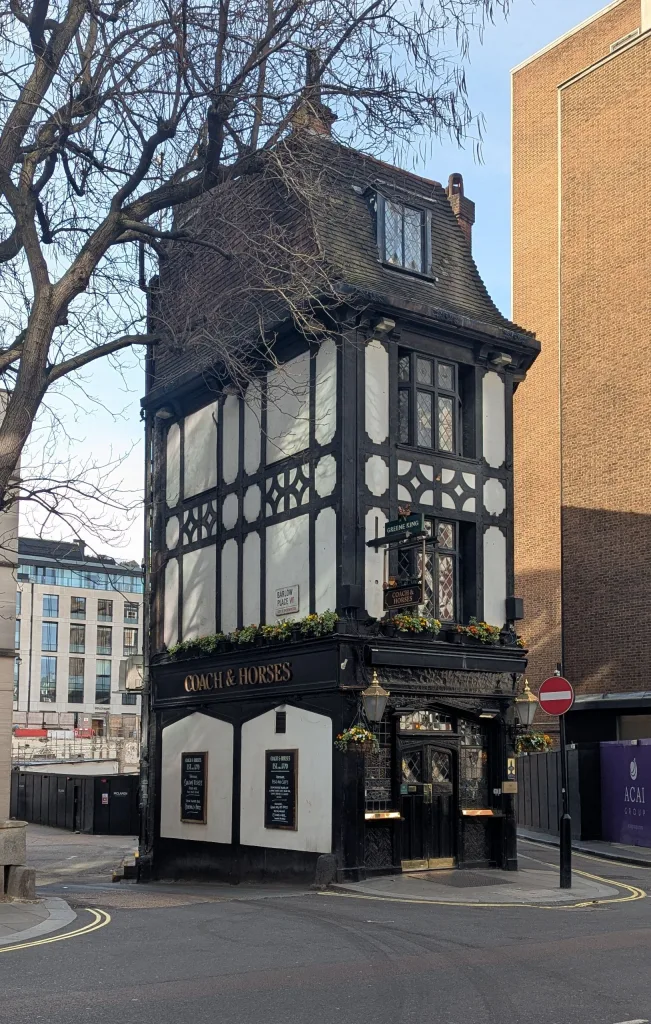
Finally, in Bruton Street just where the Tyburn would have crossed the road was the very epitome of an old inn – the Coach & Horses which survives since 1770, 5 years before the birth of Jane Austen! It is the ‘oldest surviving unreconstructed tavern in Mayfair.’ If you want to do my Jane Austen walk for London Walks, please follow this link.
Coach & Horses Bruton Street Photo K Flude
Object of the Day – Allies
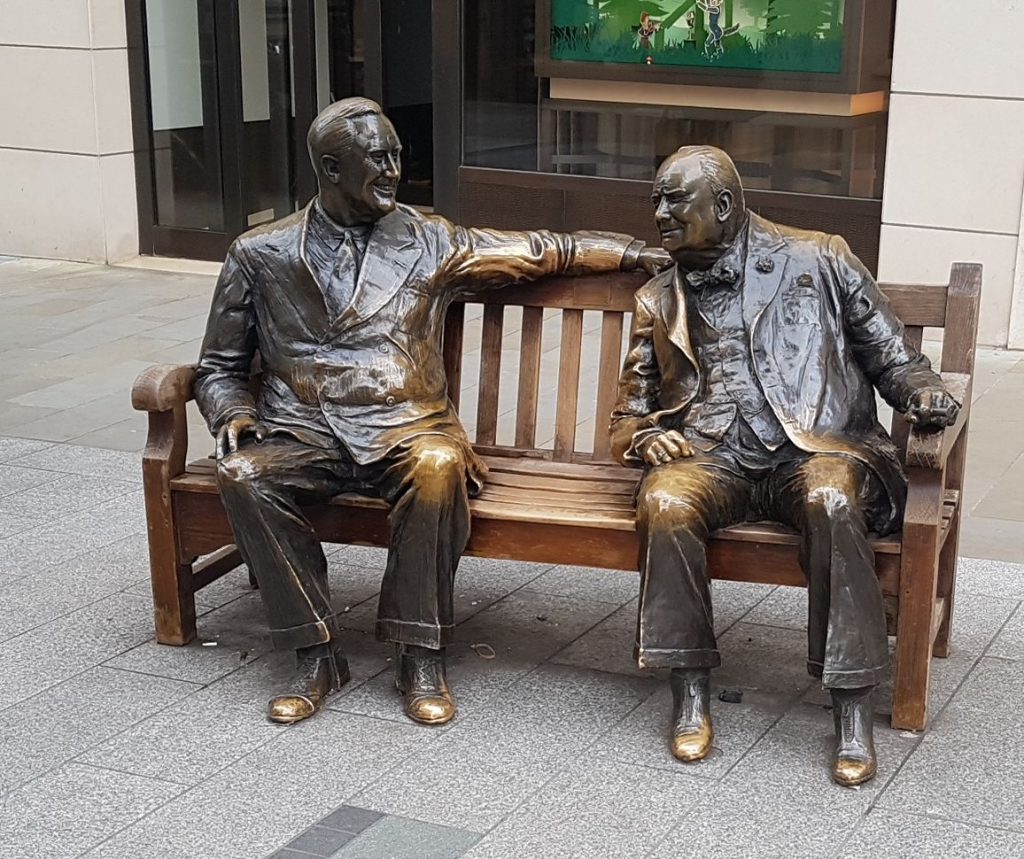
Allies by Lawence Holofcener. 2nd May 1995 to commemorate 50 years of Peace. Photo by K Flude
On my walk, like last year, we saw the statue of Churchill sitting on a park bench chatting with Roosevelt. Seemed like it was from a different world? Given President Trump’s recent statements on NATO?
Details of the Statue
Wise Words on Tariffs.
As it’s the end of the financial year I might be forgiven for keeping in this post words from last year when, coincidentally, I did the same walk. Last year the issue was Tariffs. This is what President Ronald Reagan said about high tariffs.
YouTube video of Ronald Reagan on Tariffs
First Published 6th April 2025, Mayfair content added and post revised 2026
This year, Good Friday is on Friday 3rd of April, and the day we eat Hot Cross Buns. The Hot Cross Bun is a simpler sort of bun than the Chelsea Bun, which was the bun to have at Easter in London in the 18th Century.
Hot Cross Buns Good Friday Traditions
There seem to be all sorts of dubious traditions around the origins of the Hot Cross Bun. It has been suggested that the Greeks knew how to put a cross on a bun. Also, that the Anglo-Saxons celebrated the Goddess Eostre with the crossed bun. It is suggested that the cross represents, not the cross, but the four quarters of the moon, the four seasons and the Wheel of the Year. But there is very little evidence for Eostre other than the Venerable Bede’s mentioning her name. Bede says:
‘‘Eosturmonath has a name which is now translated ‘Paschal month’, and which was once called after a goddess of [the English people] named Eostre, in whose honour feasts were celebrated in that month’ (quoted from florencehrs.substack.com/p/eostre-pagan-fertility-goddess)
So nothing is known about Eostra herself nor her rituals and customs. So her association with Hot Cross Buns cannot be known. However, the cross, and the association with Easter, makes the bun powerful, so there are many superstitions on record. A piece of an Easter Hot Cross Bun given to the sick may promote a cure. It was said that a bun cooked and served at Easter will not go off for a year. This might help explain the traditions that hanging them up on a string or ribbon is a good thing. One hung in a kitchen prevents fire. On a ship prevents sinking. In East London, the Widow’s Son Pub in East London has an old bun. This remembers a sailor-son who never returned to eat it on Good Friday.
Making and Eating Hot Cross Buns
The technology of putting a cross on a Bun requires nothing more complicated than a flour and water paste so it might well be an ancient tradition. A more impressive cross can be made with shortcrust pastry. The bun itself is simply flour, milk, butter, egg, salt, spices and mixed fruit. Here is a recipe from the BBC www.bbcgoodfood.com
In my opinion, they need to be purchased from a shop. Home-made Hot Cross Bun might be better but would be strangely disappointing. It’s normally eaten toasted and buttered although I prefer the soft doughy untoasted and unbuttered bun. But then I can get carried away and eat the entire pack of four.
‘RRRRRare Chelsea Buns’ as Jonathan Swift called them in a letter to Stella in 1711.
Fragrant as honey and sweeter in taste As flaky and white as if baked by the light As the flesh of an infant soft, doughy and slight.
The buns were made from eggs, butter, sugar, lemon and spices. The tradition was that, on Good Friday, 18th and 19th Century Londoners would go to Chelsea to buy Chelsea Buns. Thousands of people would turn up at the Five Fields. These stretched from Belgravia to what is now Royal Hospital Street. There were swings, drinking booths, nine pins and ‘vicious events that disgraced the metropolis’. The Bun House was on Jew’s Row as Royal Hospital Street was then called. As several King Georges visited the Bun House it became known as the Royal Chelsea Bun House. It was run by the Hands family. They were said to sell 50,000 Buns on the day. Stromboli tea garden was nearby.
Chelsea Cabinets of Curiosity
Inside the Chelsea Bun House was a collection of curiosities. Chelsea became known for its collection of curiosities in the 18th Century. Of course, there was the great Hans Sloane’s collection which was the founding collection of the British Museum. And then there was Don Saltero’s which was a coffee house that had curiosities on the wall. The Bun House displayed clocks, curiosities, models, paintings, and statues on display to attract a discerning Public.
Find me a Chelsea Bun! (Or make one yourself!)
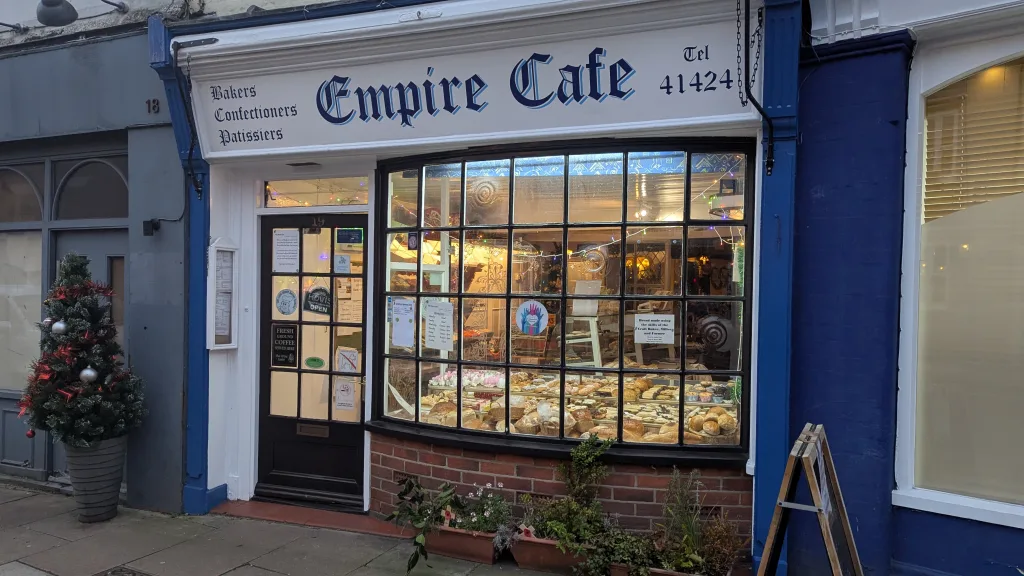
Me. I love a Chelsea Bun above all buns, But can you get them any more? The British Library Cafe was the last place I found that sold them. And that was 7 years ago. I did Chelsea Buns on sale in the Empire Cafe in Newbury but apart from that nada. Their place has been taken first by Danish Pastries and more recently the ubiquitous Cinnamon Bun. If you see any Chelsea Buns on sale please let me know.
Chelsea Buns, middle top row, next to the white cakesEmpire Cafe baking in Newbury since 1874
There is a tradition of Skipping on Good Friday. I can’t say I ever saw it – in my school skipping was a perennial activity, mostly enjoyed by the girls, but the boys would sometimes be intrigued enough to join in.
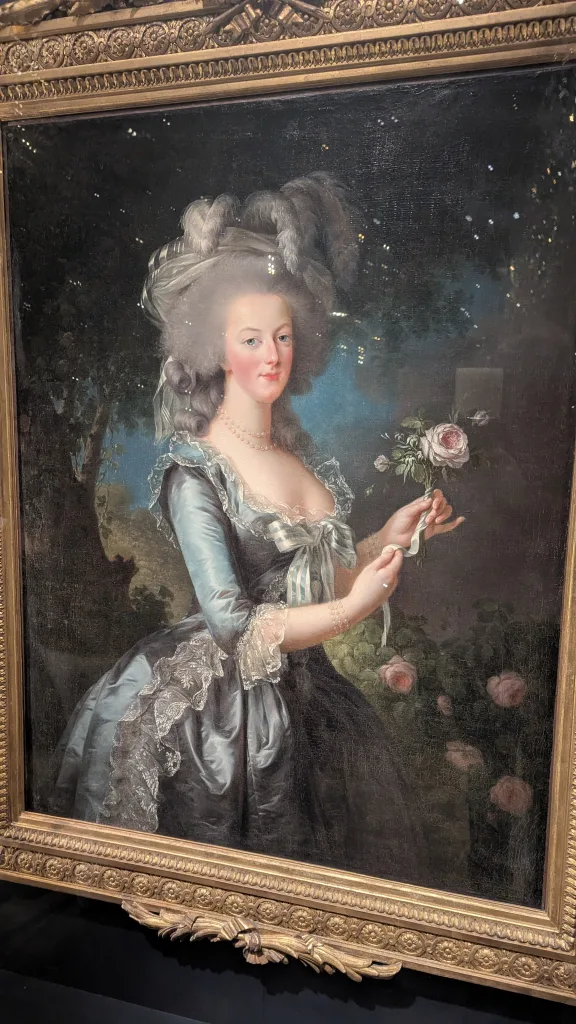
Marie Antoinette was about 28 when this portrait was made, She was about 10 years from her death by guillotine. The painting featured in the V&A’s exhibition about the Queen of France which has just finished. It was not my favourite V&A block-buster exhibition. I think mainly because I came out not knowing very much more about Marie, than when I went it. But I had seen countless extravagant dresses. Yes, she commissioned a lot of dresses, and as patron and model influenced French fashion. And, yes, she wasn’t the air-head of the ‘let them eat cake’ version of history. But I’m not much the wiser.
I’m more interested in the painter, Élisabeth Vigée Le Brun. This is what Wikipedia says about her:
‘She enjoyed the patronage of European aristocrats, actors, and writers, and was elected to art academies in ten cities. Some famous contemporary artists, such as Joshua Reynolds, viewed her as one of the greatest portraitists of her time, comparing her with the old Dutch masters.’
And I have never heard of her, I’m fairly sure nor have you! You might like to see my post on 17th female painter Mary Beale. My original shortlist for Object of the Day were these two items from the Exhibition:
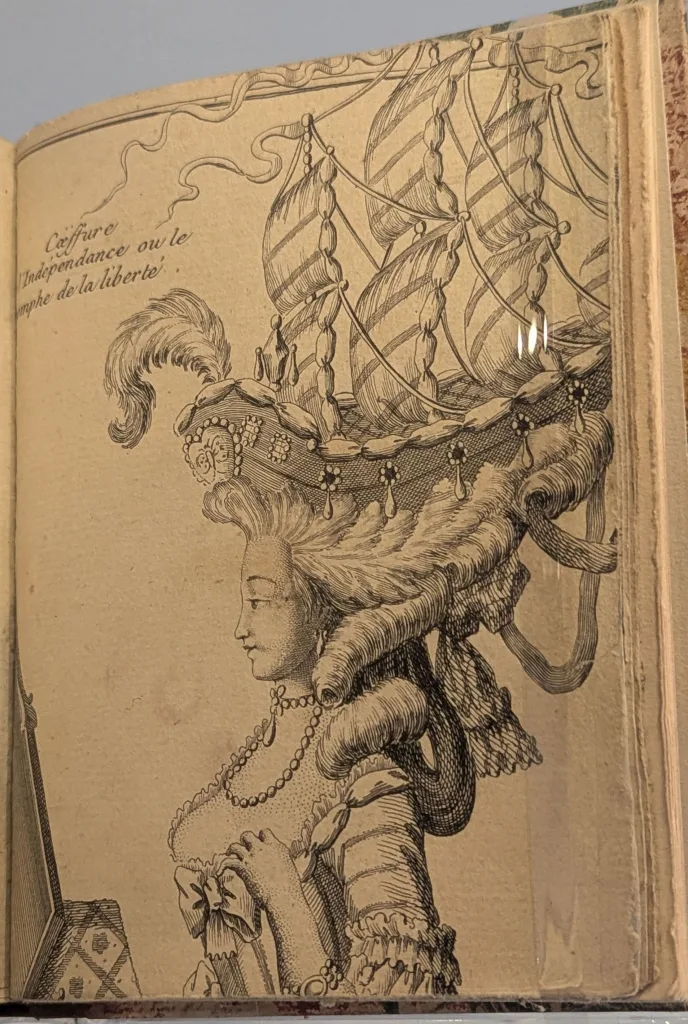
Guilotine blade from the French Revolution, purchased by the sons of Madame Tussaud as the blade that killed Marie Antoinette. Photo Kevin FludeSketch of the Triumph of Liberty Hairdress, associated with Marie Antoinette. It is her most famous headress. Created to celebrate the victory of the French over the British Navy in the American War of Independence.
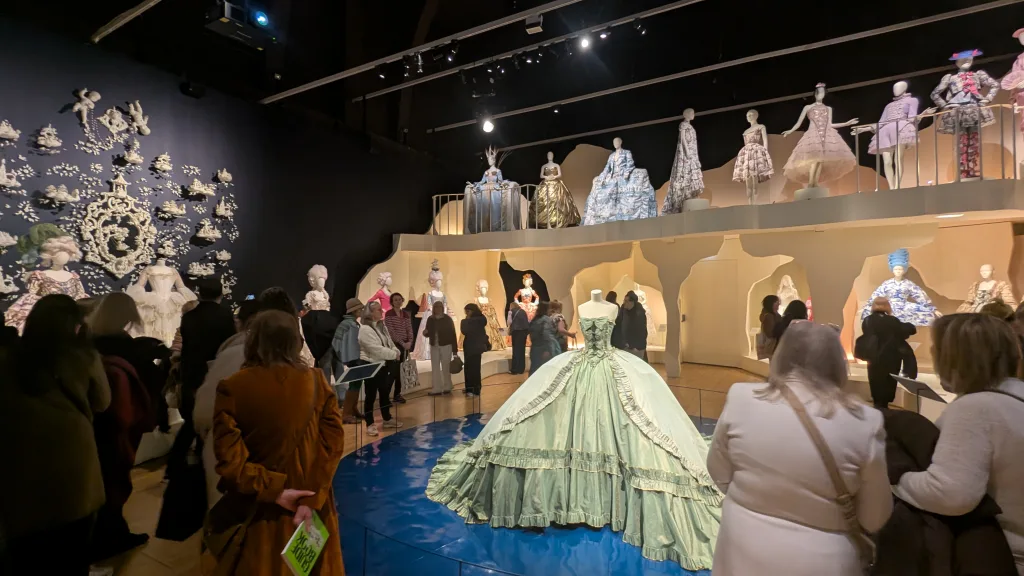
Both these objects did no favours to the Queen’s neck! And lastly, those a few of those dresses:
Centre piece of the V&A exhibition on Marie Antoinette, photo K Flude.
The Stormy Borrowing Days of March
Sir Walter Scott recorded that ‘the last three days of March are called the borrowing days; for as they are remarked to be unusually stormy, it is feigned that March has borrowed them from April to extend his sphere of his rougher sway.’
There are various traditions and poems that record the borrowing days, and this is in the Scotch dialect:
March borrowed from April Three Days, and they were ill: The first was frost, the second was snaw, The third was cauld as ever’t could blaw.
The Borrowing Days in Spain
There is a Spanish story which explains this a little more. A shepherd asked March to calm the winds to suit his flock of sheep, in return for a lamb. March compiled but, then, the Shepherd refused to hand over the lamb. So, March borrowed three days from April and made them fierce and stormy. Versions of this tale are known from Staffordshire, North England and Scotland. (Source ‘Weather Law’ by Richard Inwards 1994 (first published 1893).
Warm days at the end of March or the beginning of April bring the Blackthorns into bloom. This can be followed by a cold snap which is known as a ‘Blackthorn Winter.’
February 2023 in Haggerston Park, London showing early blossom (Blackthorn?) Photo K Flude
For more on blossom and Haggerston Park follow my link to haggerston-park/
On This Day.
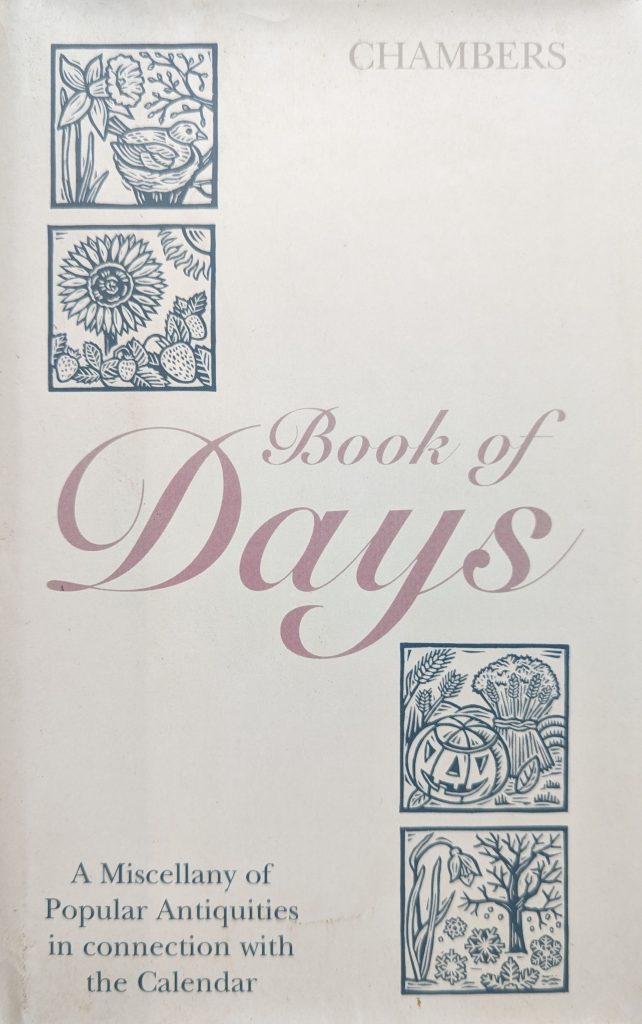
Photo of cover of Chambers Book of Days
2024– I purchased the Chamber’s Book of Days, updated from the original 1864 publication, and began adding occasional ‘On This Day’ epilogues to my posts.
1461– The Battle of Towton, England’s bloodiest battle, in which Edward IV defeated the Lancastrian forces of Queen Margaret, thus securing the throne for the Yorkists. Margaret, her husband, Henry VI, and son, fled to Scotland.
1871 – Official Opening of the Royal Albert Hall
1912 – Captain Scott’slast entry in his diary.
‘We shall stick it out to the end, but we are getting weaker, of course, and the end cannot be far, It seems a pity, but I do not think I can write more.’
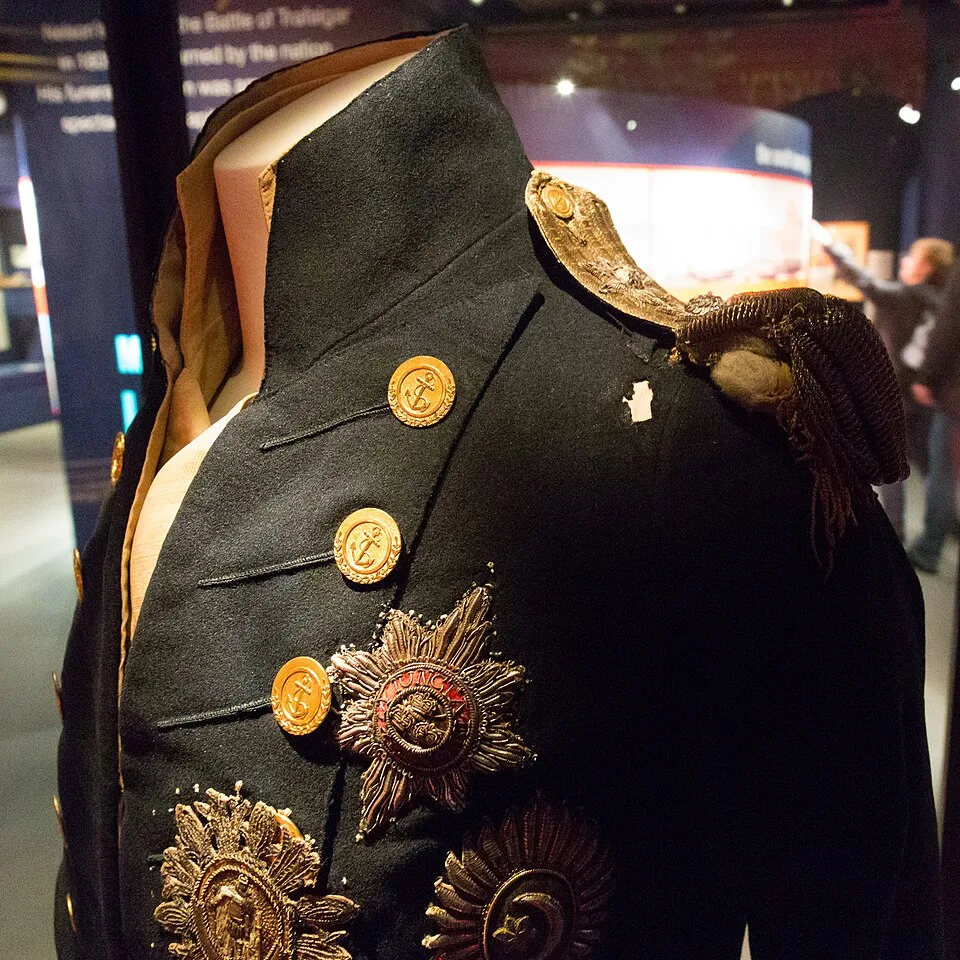
Uniform worn by Nelson at the Battle of Trafalgar (1805), his final engagement, showing the musket ball hole; now displayed at the National Maritime Museum, Greenwich By Morio – Own work, CC BY-SA 3.0,
Virginia Woolf In Greenwich
‘Where shall I spend the day? decided on Greenwich, arrived there at 1; lunched, everything fell out pat; smoked a cigarette on the pier promenade, saw the ships swinging up, one, two, three, out of the haze; adored it all; yes, even the lavatory keepers little dog; saw the grey Wren buildings fronting the river, & then another great ship, grey and orange; with a woman walking on deck; & then to the hospital; first to the museum, where I saw John Franklin’s pen and spoons (a spoon asks a good deal of imagination to consecrate it) – I played with my mind watching what it would do, and behold if I didn’t burst into tears over the coat Nelson wore at Trafalgar with the medal which he hid with his hand when they carried him down, dying, lest the sailors might see it was him.
There was too, his little fuzzy pigtail of golden greyish hair tied in black, & his long white stockings, one much stained, & his white breeches with the gold buckles, & his stock – all of which I suppose they must have undone & taken off as he lay dying. Kiss me Hardy, &c – Anchor, anchor, – I read it all when I came in, & could swear I was there on the Victory – So the charm worked in that case. Then it was raining a little, but I went into the Park, which is all prominence and radiating paths, then back on top of a Bus & so to tea. ‘
Virginia. Woolf, Diary, 1926, quoted from ‘A London Year’ Compiled by Travis Ellborough & Nick Bennison
Greenwich
It’s a lovely description of her day out. I think it is like most of our excursions to Greenwich, except she didn’t go to the Market, nor stop in one of the historic pubs, nor go the Royal Observatory. Cutty Sark was not there until 1954. The Museum she mentions is not the National Maritime Museum as that was not opened till 1937, although the idea dates from the year after Woolf’s visit. So, the Museum is a precursor. Nelson’s funeral was preceded by a lying-in-state for three days at the Royal Hospital for Seamen at Greenwich, (which is the Hospital Viriginia Woolf mentions). He was buried in St Pauls on 9 January 1806 , with his body taken by boat from Greenwich to St Pauls. So, there was a local Museum with maritime content in it. I assume associated with the Royal Hospital.
I hate to think what my, unforgiving, on-line grammar editor will make of those long sentences with so many sub-clauses! It is a problem for me as the tool rates the writing on various criteria and refuses to give you a green tick when you have long sentences, not enough headings, paragraphs too short or long, passive writing, etc. etc. And an on-line automated, probably AI assisted tool is not going to let it through just because it is by Virginia Woolf.
Cutty Sark
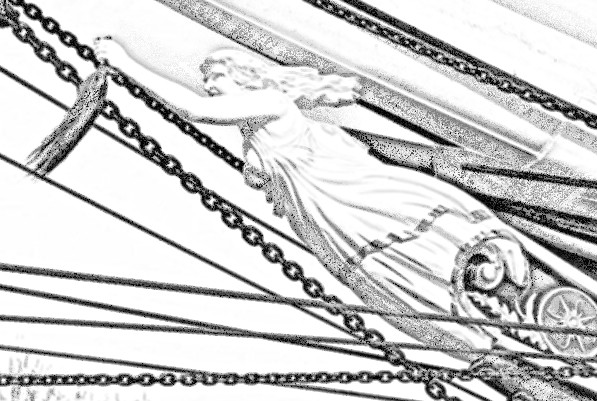
The Cutty Sark was one of the fastest Tea Clipper Ships. It was built in Dumbarton, Scotland in 1869. And is resting as a Tourist Attraction in Greenwich. She gets her name from Tam O’Shanter, one of Robert Burns’ greatest poems. written in 1791. The story of the name is told by the Figurehead.
Figureheads on the prow of ships are very often of a semi naked women with her torso breasting the water. The young witch, Nannie Dee, in Tam O’Shanter is identified as the one who is very ‘Vauntie’ and with a short shift that she wore as a child and so is now short and revealing. The poem names this garment as her ‘Cutty Sark. Sark is her shift. Cutty is dialect for short. The Cutty Sark’s figurehead shows Nannie in her shift holding the tail of Tam’s horse.
Tam O’Shanter
Her cutty sark, o’ Paisley harn, That while a lassie she had worn, In longitude tho’ sorely scanty, It was her best, and she was vauntie.— Ah! little kend thy reverend grannie, That sark she coft for her wee Nannie, Wi’ twa pund Scots, (’twas a’ her riches), Wad ever grac’d a dance of witches!
The story is that the drunken Tam on his steady horse Maggie is travelling home when he seems a devilish dance taking place in a graveyard, presided over by the devil himself. Tam is so excited when he sees the young beautiful witch that he bellows his approval and all of a sudden the merriment ends, and in deadly silence the witches turn on Tam and race to catch him.
Tam tint his reason a’ thegither, And roars out, ‘Weel done, Cutty-sark!’ And in an instant all was dark: And scarcely had he Maggie rallied. When out the hellish legion sallied.
As bees bizz out wi’ angry fyke, When plundering herds assail their byke; As open pussie’s mortal foes, When, pop! she starts before their nose; As eager runs the market-crowd, When ‘Catch the thief!’ resounds aloud; So Maggie runs, the witches follow, Wi’ mony an eldritch skreech and hollow.
Maggie
Tam and his horse have to get across a brook before the witches because the witches cannot cross the water. The witches must get him before the bridge over the brook or face burning at the stake. All depends on Maggie (Meg). The young witch in the Cutty Sark is catching up as they approach the bridge. Maggie makes a magnificent leap, the witch makes a despairing grab and only can reach Maggie’s tail but Tam and his horse make it to safety leaving the witch the tail.
Cutty Sark Figurehead
Ah, Tam! Ah, Tam! thou’ll get thy fairin! In hell they’ll roast thee like a herrin! In vain thy Kate awaits thy comin! Kate soon will be a woefu’ woman! Now, do thy speedy utmost, Meg, And win the key-stane of the brig; There at them thou thy tail may toss, A running stream they dare na cross. But ere the key-stane she could make, The fient a tail she had to shake! For Nannie, far before the rest, Hard upon noble Maggie prest, And flew at Tam wi’ furious ettle; But little wist she Maggie’s mettle— Ae spring brought off her master hale, But left behind her ain gray tail: The carlin claught her by the rump, And left poor Maggie scarce a stump.
Now, follow the link below and read the whole poem but read it out loud, standing up and with gusto. Don’t worry about the pronunciation, just enjoy it.
1802 – Treaty of Amiens brought peace between Revolutionary France and Britain. A Soho factory was lit up with gas lighting to celebrate, But it only lasted a year. Then began the Napoleonic Wars, which continued to 1815.
First Published on March 27th. 2026. Cutty Sark content transferred in from 2022.
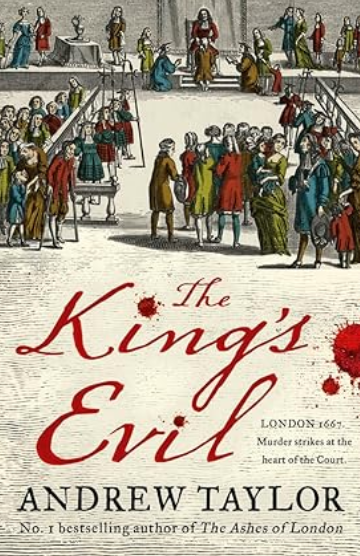
Fascinating read about the King’s Evil by Andrew Taylor
Aries & Noses
We have just entered Aries. Now according to astrology, Aries is associated with health issues of the face. This, according to ‘Skin and Astrology Signs‘ is because of the “level of heat in their bodies”. So Arians tend to have problems such as “flushing, heat rashes, skin eruptions, and rosacea”. They suggest using chilled cucumber for the eyes and forehead, and using beauty products with soothing aloe vera in them. ‘Touching’ by the King could also cure certain nose conditions, particularly if caused by ‘The King’s Evil’.
Charles Kightly, in his Perpetual Almanac enjoins us to ‘Observe the features of the face which are ruled by Aries and seek cures for ills of the nose’.
The first example, Kightly gives, is from The Shepherd’s Prognostication of 1729 which explains how to understand people by studying their noses:
Nose round with a sharpness at the end signifies one to be wavering of mind; the nose wholly crooked, to be sure unshamefaced and unstable; crooked like an eagle’s beak, to be bold. The nose flat, to be lecherous and hasty in wrath; the nostrils large, to be ireful.’
A Fungous Nose & the King’s Evil
The second rather revolting tale is from John Aubrey.
Arise Evans had a fungous Nose and said, it was revealed to him, that the King’s hand would cure him. At the first coming of Charles II into St James Park he kissed the king’s hand and rubbed his nose with it: which disturbed the king, but cured him.
Now, on the subject of revolting nose conditions, I have just been reading a review of a book ‘Civility and the Theatre in Early Modern England’. The author, Indira Ghose, is studying early self-help books of manners and conduct, and how they influence or appear in contemporary plays. One such manual by Giovanni Della Casa has the following advice:
‘when thou hast blowne thy nose, use not to open thy handkerchief, to glare uppon thy snot, as if thou hadst pearles and Rubies fallen from thy braynes’.
Galateo: The Rules of Polite Behaviour published in Venice in 1558. It was translated into French (1562), English (1576), Latin (1580), Spanish (1585), and German (1587), (Wikipedia). Galateo translates as etiquette.
There is no need to thank me for passing on such good advice! I bet “Miss Manners” Judith Martin didn’t pass this particular gem on, but Wikipedia claims that modern books of manners are influenced by Galateo.
Scofula and the King’s Touch
Sketch of Dr Johnson from a portrait.
People believed that Scrofula, could be cured by touching the Monarch. Tuberculous cervical lymphadenitis was, thus, known as the King’s Evil. So, the King or Queen would make herself, very reluctantly, available for his sick public to touch her. Dr Samuel Johnson suffered from Scofula and received the “royal touch” from Queen Anne on 30 March 1712 at St James’s Palace. He was given a ribbon, which he wore around his neck for the rest of his life (with a coin strung on it, I think see below). But it did not cure the disease, and he had to have an operation.
The Touching took place in the winter, between Michaelmas and Easter, when cold weather provoked the disease. The lucky few, who were allowed the Touch, would be touched or stroked by the King or Queen on the face or neck. Then a special gold coin, touched by the Monarch, was put around their neck. Readings from the bible and prayer finished the ceremony. Before Queen Elizabeth I, the Touch was said to cure many diseases such as Rheumatism, convulsions, fever and blindness, but after it was reserved for Scrofula.
Who Started touching for the King’s Evil?
It was only the French and the English who believed the King’s touch could cure people. The French claimed it began with Philip 1 in the 11th Century. The English claimed Edward the Confessor as the first. But this was denied by the French who claimed that the French King of England, Henry 1 introduced it to the English. The practice lasted until George 1 who resolutely refused to have anything to do with it.
For more on the King’s Evil have a look at this blogpost. Or read the book pictured at the top of the post.
On This Day
1312 – The Knights Templars are abolished by Pope Clement. King Philip of France had a massive debt owed to the Templars, following his war with England. He chose to avoid payment by accusing the Templars of impious acts, and homosexuality. Evidence was collected by torture and thus unreliable.
1622 – Jamestown massacre: 347 English settlers killed by Powhatan People of Tsenacommacah. This is estimated as a third of the colony’s population, during the Second Anglo-Powhatan War. Powhatan (Chief Wahunsunacawh) was the father of Pocahontas (aka Amonute, or Matoaka and Rebecca Rolfe). But it was Powhatan’s son, Opechancanough, who was in charge during the massacre. They were of the Algonquian peoples.
1888 – The English Football League was founded at Anderton’s Hotel, Fleet Street. Representatives from Aston Villa, Blackburn Rovers, Bolton Wanderers, Preston North End and West Bromwich Albion met. They discussed other teams that might join. Another meeting was called at the Royal Hotel in Manchester on 17 April 1888 to establish the league. The 12 founding members were: Accrington, Aston Villa, Blackburn Rovers, Bolton Wanderers, Burnley, Derby County, Everton, Notts County, Preston, Stoke City, West Bromwich Albion, Wolverhampton Wanderers. None from London. In season 1894–95 Woolwich Arsenal joined the 2nd Division of the Football League as the first London Team. For more information see: the-football-league-conceived-in-fleet-street-born-in-manchester/
First published in 2024, revised in 2025, Etiquette and On This Day added 2026
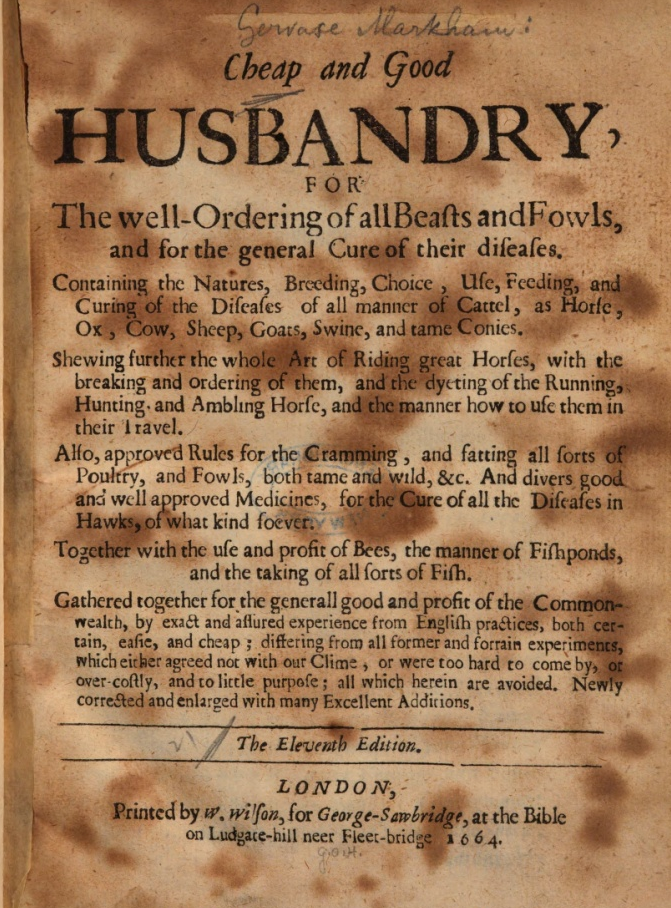
Spring Chickens appear in Cheap and Good Husbandry by Gervaise Markham London 1664
Of Setting Hens (and Spring Chickens)
Gervase Markham wrote a heap of farming and horticulture books in the 17th Century. In ‘Cheap and Good Husbandry’ he wrote about ‘Spring Chickens’. Spring Chickens are essentially March Chickens, March Hares and even March Cats are all special. Markham starts by suggesting this is the time to impregnate them for birth in March:
The best time to set Hens to have the best, largest, and most kindly Chickens;, is in February, in the increase of the Moon, so that they may hatch or disclose her Chickens; in the increase of the next new Moon, being in March; for one brood of March Chickens; is worth three broods of any other: You may set Hens from March; till October, and have good Chickens;, but not after by any means, for the Winter is a great enemy to their breeding….
The expression comes from the 17th Century when Spring/March Chickens were more profitable than old chickens that had gone through the winter. Commonly, it is used in the negative, as in ‘Kevin ain’t no spring chicken.’
Egyptian Book of the Dead goes on display at the Brooklyn Museum
After three years of conservation, the world’s most complete gilded Book of the Dead goes on display at the Brooklyn Museum. Have a look at their post here. The Book of the Dead was prepared to accompany the deceased on their journey in the afterlife. It is full of spells, prayers and incantations. There was no one fixed format, but some are incredibly complex and beautiful. My own feeling is that they confirm my opinion that the Egyptian way of death is totally OCD. There is so much an Egyptian has to do to get a good afterlife. Not only embalming but having models of food, slaves, boats, mummies of dead cats, anything you want to have. It feels like they must have been terrified of death.
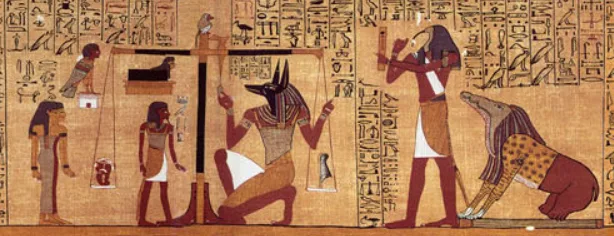
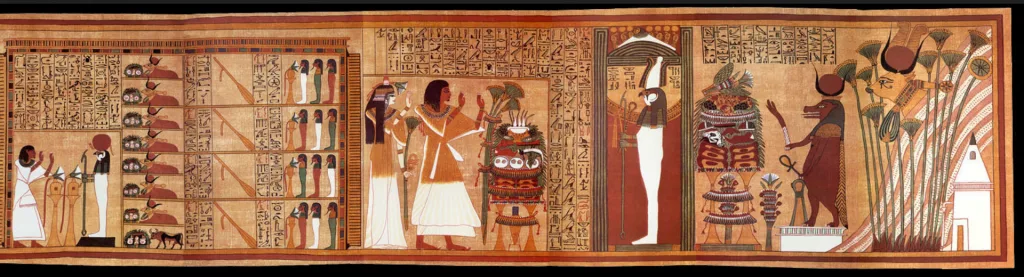
A scene from the Papyrus of Ani (British Museum) It shows the heart being weighed on the scale of Maat against the feather of truth. Doing the weighing is the jackal-headed Anubis The ibis-headed Thoth records the result. Behind Toth is Ammit part crocodile, lion, and hippopotamus. The facsimiles were produced by E. A. Wallis Budge; original artist unknown. Public Domain
One of the issues is that the deceased had to have their heart weighed against the feather of Truth (belonging to the Goddess of Truth, balance, law, morality, and justice, Maat) . If it was found deficient, the deceased would be eaten by Ammit who has the head of a crocodile, the shoulders of a lion, and the legs of a hippo.
Wikipedia has a tremendous scan of the facsimile of the Papyrus of Ani, it is a 78ft long scroll and wonderful to look at To see it click on the first picture and zoom in and look left and right! https://en.wikipedia.org/wiki/Papyrus_of_Ani.
The story of its acquisition is also gob-smacking. Budge acquired in it Luxor in 1888. The Egyptian Police came to investigate the house of the illegal dealers. Budge distracted the police while his people tunnelled into the house from the rear, and retrieved ‘his’purchases. He took them to the British Museum and was paid a gratuity of £150 for them!
On this day
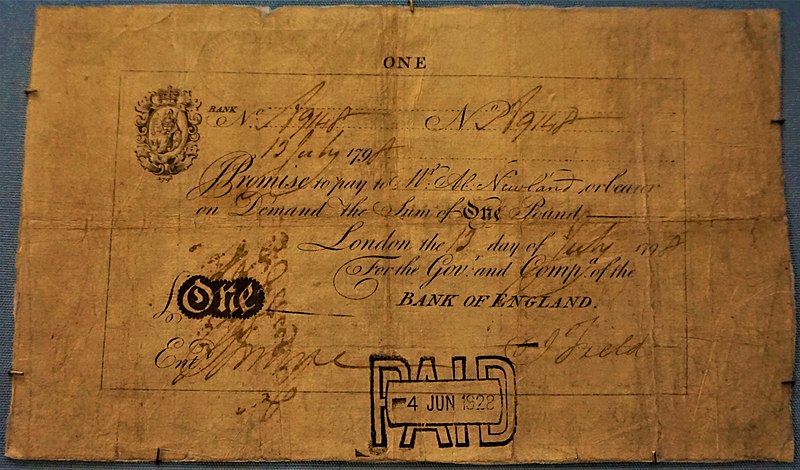
First £1 note of the Bank of England Museum 1797 Source Joy_of_Museums Public Domain (CC by sa 4.0)
February 26th 1797 First Pound Note:
The Bank of England issued it’s first ever one pound note (although some sources say March 1797). The Bank had been issuing paper notes since the late 17th Century, but this was the first £1 note. They still had to be signed by hand and allocated to a specific person. The hand signed white paper notes were withdrawn in 1820, and the pound note was, finally, withdrawn in 1988. The £1 in 1797 was worth the equivalent of £157.46 today, so quite a big note! (see here for the calculator.)
1815 – Bonaparte escapes from exile on the island of Elba. War begins all over again.
1995 – Barings Bank collapses after a rogue securities broker Nick Leeson loses $1.4 billion by speculating on futures contracts. Barings is the UK’s oldest investment banking institute,
Pound note first published 2024, Spring Chicken added February 26th 2025 Egyptian book of the Dead added February 26th 2026
Photo Mohammad Amiri from unsplash. Notice the crimson stigma and styles, called threads, Crocus is one of the characters in Ovid’s Metamorphoses
The story of Crocus and Smilax is in Ovid’s Metamorphoses. The book tells the story of myths which involve the metamorphosis of a person to a flower, or to a constellation, or to an echo or some supernatural change in being. This poem is one of the most famous in the world, written in about 6 AD. It influenced Dante, Bocaccio, Chaucer, Shakespeare, Keats, Bernard Shaw, and me. Seamus Heaney and Ted Hughes have translated modern versions of some of the tales.
The mechanicals in ‘The Midsummers Night Dream’ perform Ovid’s story of Pyramus and Thisbe, Titian painted Diana and Actaeon. Shaw wrote about Pygmalion, and we all know the story of Arachne. She claimed to be better than Athene at weaving. And then was turned into a spider.
The poem is about love, beauty, change, arrogance and is largely an Arcadian/rural poem. This is a contrast to Ovid’s ‘Art of Love’ which I use for illustrations of life in a Roman town. The stories are all about metamorphoses, mostly changes happening because of love. But it is also an epic as it tells the classical story of the universe from creation to Julius Caesar.
Ovid’s Metamorphoses and the Crocus
‘Crocus and his beloved Smilax were changed into tiny flowers.’ Ovid tell us, but chooses to give us no more details. So we have to look elsewhere. There are various versions. In the first, Crocus is a handsome mortal youth, beloved of the God Hermes (Mercury). They are playing with a discus which hits Crocus on the head and kills him. Hermes, distraught, turns the youth into a beautiful flower. Three drops of his blood form the stigma of the flower. In another version, Crocus and the nymph Smilax, fall in love. And are rewarded by immortality as a flower. One tale has Smilax turned into the Bindweed.
Morning Glory or Field Bindweed photo Leslie Saunders unsplash
Ovid’s Metamorphoses and Bindweed
It turns out that Smilax means ‘bindweed’ in Latin. Bindweed is from the Convolvulus family, and I have grown one very successfully in a pot for many years. But they have long roots. According to the RHS ‘Bindweed‘ refers to two similar trumpet-flowered weeds. Both of which twine around other plant stems, smothering them in the process. They are difficult to remove. This, could suggest that Smilax is either punished for spurning Crocus, or that she smothered him with love. Medically, Mrs Grieve’s Modern Herbal says all the bindweeds have strong purgative virtues, perhaps another insight into Smilax’s psychology?
The Metamorphosis of Data and the correct use of the plural
Apparently, in the UK some say crocuses and others use the correct Latin plural, croci. On an earlier version of this post I used the incorrect plural crocii.
On the subject of Roman plurals, the Financial Times editorial department made an earth-shattering decision, a couple of years ago. They updated their style guide to make the plural word data (datum is the singular form) metamorphise into the singular form.
So it is now wrong to say ‘data are’ but right to say ‘data is’. For example, it was correct to say: ‘the data are showing us that 63% of British speakers use crocuses as the plural’ but now, it is better to write ‘the data is showing us that 37% of British people prefer the correct Latin form of croci’.
Violets and Crocuses
Violets and crocuses are coming out. They often come out for St Valentine’s Day, and so obviously associated with Love. White croci usually represented truth, innocence, and purity. The purple variety imply success, pride and dignity. The yellow type is joy.’ according to www.icysedgwick.com/, which gives a fairly comprehensive look at the Crocus.
Crocus & Saffron
The autumn-flowering perennial plant Crocus sativus, is the one whose stigma gives us saffron. Roman civilisation spread the plants around Europe. They used it for medicine, as a dye, and a perfume. It was much sought after as a protection against the plague, and extensively grown in the UK. Saffron Walden was a particularly important production area in the 16th and 17th Centuries.
Saffron in London
Snowdrop, Crocus, Violet and Silver Birch circle in Haggerston Park. (Photo Kevin Flude, 2022)
The Bishop of Ely grew Saffrom in his beautiful Gardens just outside of the City of London. The area remembered by the London street name: Saffron Hill. It is home to the fictional Scrooge. This area became the London home of Christopher Hatton, the favourite of Queen Elizabeth 1. His garden was on the west bank of the River Fleet, in London EC1, in the area now known as Hatton Garden. (For more on Christopher Hatton see my post on nicknames Queen Elizabeth I gave to her favourites).
I found out more about Saffron from listening to BBC Radio 4’s Gardener’s Question time and James Wong.
Croydon (on the outskirts of London) means Crocus Valley. A place where Saffron was grown. The Saffron crops in Britain failed eventually because of the cost of harvesting, and it became cheaper to import it. So, we now import it from Spain, Iran, and India amongst other places. But it is being reintroduced in Norfolk, Suffolk, Kent, and Sussex. These are – the hot and dry counties. The plant enjoys a South-facing aspect. But it needs protection from squirrels and sparrows who love it. To grow it, look at this post from the Garden Doctor.
Saffron Photo by Vera De on Unsplash
Violets
Viola odorata CC BY-SA 2.5 Wikipedia
The Celts used Violets as cosmetics; the Athenians to moderate anger; the Iranians for insomnia, and are loved by all because of their beauty and fragrance. They have been symbols of death for the young, and used as garlands, nosegays posies, which Gerard says are ‘delightful’.
For more on Ovid, use the search facility (click on menu) or read my post here.
On This Day
197 – The Battle of Lugdunum sees the victory of Septimius Severus over Clodius Albinus reputedly the bloodiest battle between Roman armies. The previous emperor Pertinax died in 193 during the Year of the Five Emperors. Three main contenders emerged Severus who was African, Niger was from Central Italy, Albinus was the Governor of Britain.
1800 – Napoleon proclaims himself First Consul making him the dictator of France.
1846 – The Republic of Texas officially transfers power to the State of Texas government and becomes part of the United States.
1878 – Thomas Edison patents the phonograph.
1945 – Battle of Iwo Jima began with the landing of 30,000 US troops.
This year, February 17th is Shrove Tuesday, the end of the Carnival. Etymology-on line says the origins of the term Carnival are:
1540s, “time of merrymaking before Lent,” from French carnaval, from Italian carnevale “Shrove Tuesday,” from older Italian forms such as Milanese *carnelevale, Old Pisan carnelevare “to remove meat,” literally “raising flesh,” from Latin caro “flesh” (originally “a piece of flesh,” from PIE root *sker- (1) “to cut”) + levare “lighten, raise, remove” (from PIE root *legwh- “not heavy, having little weight”).
Folk etymology has it from Medieval Latin carne vale ” ‘flesh, farewell!’ ” Attested from 1590s in the figurative sense of “feasting or revelry in general.” The meaning “a circus or amusement fair” is attested by 1926 in American English.Related entries & more
Pancake Day is another name for Shrove Tuesday. It is the day we eat up all our surplus food. Then on Ash Wednesday we must begin our lenten fast and turn our mind to repentance. Pancake Day, in the UK, is celebrated with a simple pancake with lemon and sugar. Here is a recipe from the BBC. On the other hand, Shrove Tuesday can be a day of excess before the 40 days of restraint. Shrovetide was normally three days from the Sunday before Lent to Ash Wednesday, the beginning of Lent. (Here is my post on Ash Wednesday).
Mardi Gras
In France, it’s called Mardi Gras which means Fatty Tuesday, in Italy Martedi Grasso. In New Orleans it stretches from Twelfth Night to Shrove Tuesday. But as we saw, in my post on Fat or Lardy Thursday‘ the Carnival period was more normally a week. In most other places it is one to three days. In Anglo-Saxon times there was ‘Cheese Week’, ‘Butter Week’, ‘Cheesefare Sunday’ and ‘Collop Monday’, preceding Ash Wednesday.
Shrove Tuesday the Day to be Shriven
Shrove Tuesday is the day we should be ‘shriven’ which means to make confession. The Church has been leading up to Easter since Advent – before Christmas. (See more on Advent Sunday here). Easter is the date of the conception and, also, the date of the execution and apotheosis of Jesus Christ. So the pious should confess their sins, then undertake their lenten fast before entering the Holy Week purged and sin-free.
In the Anglo-Saxon Church, there was a custom called ‘locking the Alleluia.’ The Church stopped using the word Alleluia from 70 days before Easter. Alleluia represented the return from exile in Babylon. So, with the approach of the death of Christ it was not felt appropriate to be celebratory.
The sombre nature of this block of time was highlighted by Ælfric of Eynsham (c. 955 – c. 1010).
Now a pure and holy time draws near, in which we should atone for our neglect. Every Christian, therefore, should come to his confession and confess his hidden sins, and make amends according to the guidance of his teachers; and let everyone encourage each other to do good by good example.
Ælfric, Catholic Homilies Text Ed. Peter Clemoes quoted in ‘Winters in the World’ Eleanor Parker
Time for Football!
Shrove Tuesday was the traditional time for football games, in the days before football had any rules to speak of. It was a wild game. Teams tried to get a bladder from one end of town to the other, or one side of a field to the other. In Chester, the Shrove Tuesday football game was held on the Roodee island. It was so rowdy that the Mayor created the Chester Races specifically to provide a more sedate alterative to the violence of the ‘beautiful game.’
Here is a youtube video of Shrovetide Football at Royal Asbourne in Derbyshire. You will notice it seems chaotic but if you look at the participants directed the action you can see how involved they are in it.
Royal Asbourne Shrove Tueday Football
In London, Henry Fitzstephen wrote about Shrove Tuesday Games in London in the late 12th Century:
‘Every year also at Shrove Tuesday, that we may begin with children’s sport, seeing we all have been children, the school boys do bring cocks of the game to their master, and all the forenoon they delight themselves in cockfighting. After dinner all the youths go into the fields to play at the ball. The scholars of every school have their ball, or baston in their hands. The ancient and wealthy men of the City come forth on horseback to see the sport of the young men and to take part of the pleasure in beholding their agility.’
Fitzstephen was the first biographer of Thomas Becket.
Pancake Race
The City of London has an annual pancake race at the Guildhall Yard. It is an inter-livery company competition. The Livery Companies also known as medieval Guilds, have to run across the Guildhall while holding a frying pan and pancake. There is a zone marked out where they have to toss the pancake. Here is a youtube video of the 2023 race.
Pancake Day/Shrove Tuesday Pancake Race
First published on February 21st, 2023 republished on February 13th 2024, and March 4th 2025, February 17th 2026
John Constable. National Gallery of Art seascape with two sailboats. public domain
‘I am this morning, admitted a student at the Royal Academy; the figure which I drew for admittance was the torso. I‘m now comfortably settled in Cecil Street, Strand number 23. I shall begin painting as soon as I have the loan of a sweet little picture by Jacob Ruysdael to copy. Since I have been in town, I have seen some remarkably fine ones by him. …
Smith’s friend, Clanch has left off painting, at least for the present. His whole time and thoughts are occupied in exhibiting an old, rusty, fusty head with a spike in it, which he declares to be the real embalmed head of Oliver Cromwell. Where he got it, I know not.; ’tis to be seen in Bond Street at half a crown admittance.’
John Constable. Letter to John Dunthorne, 1799. From ‘A London Year. 365 Days of City Life in Diaries, Journals and Letters’ compiled by Travis Elborough and Nick Rennison.
John Constable in London
Constable would have had a short walk to the Royal Academy (in Piccadilly) from the Strand. As a painter, he subsequently spent his summers painting in Suffolk and his winters in London. When his wife became ill with Tuberculosis, they moved to Brighton. But he continued to return to London. Constable lived in a cottage in Hampstead, and is buried in the family tomb at the bottom of the graveyard of St John-at-Hampstead Church in Hampstead.
Royal Academy Photo KFlude
I don’t know what the Torso referred to was, but there was (and still is) a fine collection of plaster casts. The students used these for models.
A fine figure of the older man? Photo by K Flude of Zeus in the basement of the Royal AcademyPrint on display at the Royal Academy of students drawing the sculptures in the Collection. Photographed by K Flude.
Cromwell’s Head
As to the head, it is a fascinating tale, which I partly tell on my Martyrdom of Charles I post. here: But here is more details, relevant to the Constable quote. At the Restoration of Charles II Cromwell’s body was dug up. Then the head was stuck on a pole on top of Westminster Hall. It blew off probably in 1684. The head was on display at a museum, but then no one knows where it was until, in 1799 the Hughes brothers, bought ‘it’ for £230. It was exhibited in Bond Street. Entrance fee was 2 Shillings and 6p. Constable’s acquaintance Clanch who I think is actually John Cranch was the publicist for the event.
The display was not a success because the provenance was not clear. All Cranch could say was Cromwell’s head was the “the only instance of a head cut off and spiked that had before been embalmed; which is precisely the case with respect to the head in question”. But then Henry Ireton’s was also treated thus, and maybe others. A head is now in Cambridge, Sidney Sussex College, which Cromwell attended.
The Wikipedia page on Cromwell’s Head, here., has a very full description of its travels.
Weather Outlook
Feb fill the dyke Either black or white But if with white, ’tis the better to like
If February gives much snow A fine summer, it doth foreshow.
If in February there fall no rain. ‘Tis neither good for hay nor grain.
From The Perpetual Almanack of Folklore by Charles Kightly
On This Day
211 – Roman Emperor Septimius Severus dies at Eboracum (modern York, England). Leaving two sons, Caracalla and Geta, to dispute the succession. For several years York was the HQ for the Roman Emperor.
1555 – John Rogers, Vicar of the Holy Sepulchre Church in London and translator of the Bible, burned at the stake in Smithfield. The first of over 200 English Protestant martyrs condemned in the reign of Mary I. For more about Smithfield burnings see my post here.
1789 – George Washington unanimously elected as the first President of the United States. A great leader, who freed his slaves after his and his wife’s deaths, but who also evaded the rules against selling slaves. To consider the wrongs and rights of the issue look here.
1838 – ‘I walked with my daughter Charlotte across the Serpentine, much to my child’s delight, although I own I did not like to hear the ice cracking under the weight of thousands’.