Tiled wall in Guernica after Picasso’s famous painting. Photo By Tony Hisgett from Birmingham, UK – Guernica, CC BY 2.0, https://commons.wikimedia.org/w/index.php?curid=64155674
This day is the anniversary of the bombing of Guernica in the Spanish Civil War but first we find out the origins of the London Cocktail Party.
The first Cocktail Party
The brother of Evelyn Waugh, Alex put on the first Cocktail party in 1924, or so he claims. He organised it at the studio of celebrated war painter C. R. W. Nevinson, in Haverstock Hill. Waugh felt there was nothing much to do between 5 and 7 except tea parties where tea, crumpets and cake were eaten. As he said to the Newinsons:
“What one needs, is some kind of a party that starts at half-past five, that lasts ninety minutes, at which alcohol is served but not much food.”
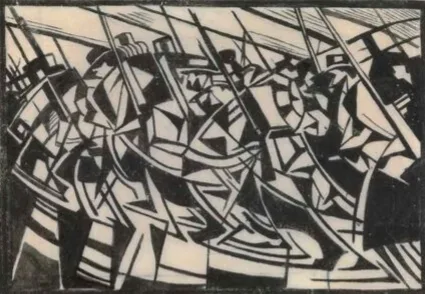
Study for Returning to the Trenches, drawn between 1914 and 1915. C.R.W. Newinson Public Domain (Wikipedia)
The first drink boded well:
‘I opted for rum. Jamaican rum had been blended with Rose’s (Newinson) lime juice and sharpened with Angostura. Large nuggets of ice kept the mixture cool. It was very potent. The first sip made me shiver, in the way that a dry martini does. It also sent a glow along my veins. “This,” I said, “is going to be a party.”‘
But it wasn’t as only one person turned up. So a year, later he tried again, but this time he disguised the event as a ‘Tea party’. But served, “A Daiquiri. It’s sweet, like a dessert, and very strong. It will produce the precise effect you need.” at the suggestion of a member of the US Embassy. As the drink tasted like sherbet, everyone drunk lots of them and the tea party went with a swing unlike any other. And thus, it caught on and became a part of the London scene.
Franco ordered the bombing as part of his campaign to overthrow the Basque Government. The Town was devasted and 1,654 civilians were killed. The bombing was undertaken by ‘the Condor Legion of Nazi Germany’s Luftwaffe and the Italian Aviazione Legionaria’ (Wikipedia). Picasso began his famous painting almost immediately after he heard an eyewitness account of the attack. The iconic painting was finished by 4 June 1937. The bombing showed the potential damage war from the air could do to crowded Cities. The painting became one of the most famous campaigning works of art.
The War from the Air
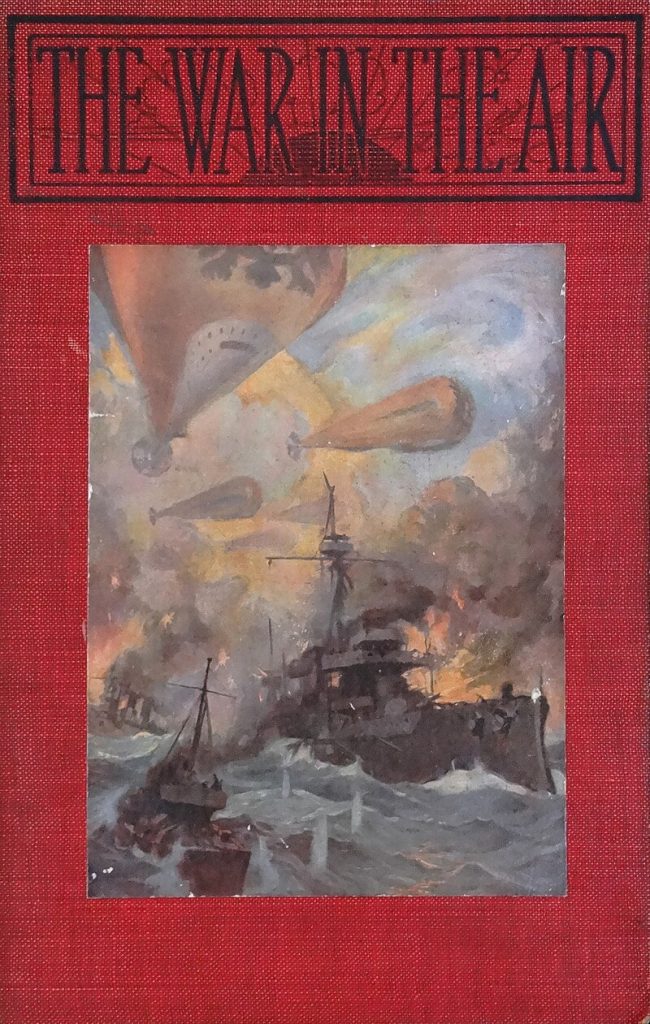
“The War in the Air” by H. G. Wells. London: George Bell & Sons, 1908. First Edition Illustration by A. C. Michael of Pall Mall Magazine –
Aerial warfare became a reality as soon as the Montgolfier Brothers flew the first Hot Air Balloon. (On 19 September 1783, they flew a balloon with a sheep called Montauciel (“Climb-to-the-sky”), a duck and a rooster in the basket). In the Revolutionary Wars, the French used hot air balloons for reconnaissance. Napoleon considered transporting troops by balloon in an invasion of Britain. With the arrival of planes and the development of the Zeppelin. Air warfare became a feature of speculative fiction, and began to absorb the planners.
H G Wells book, illustrated above, featured a war between Germany and the United States in which New York is obliterated by Aerial Bombing. This was written in 1908. In World War 1 London was the focus of a series of Zeppelin and Aeroplane raids. These killed over 500 people. (see my post on the London Zeppelin raid of Sept 8th 1916).
As planes developed in capacity, war departments created plans that seem now to have been exaggerated. It is thought that Appeasement was partly a response to the feared casualties from war in the air. The authorities were planning for 1 million killed in London and double that number of people deranged by fear. In the event, casualties were far less, some 43,000 killed. However, 2 million houses were destroyed. The scale of destruction was fairly accurately predicted but the casualties greatly exaggerated.
1564 – Shakespeare Baptised at Holy Trinity Church, Stratford on Avon.
1925 – World War 1 General von Hindenburg returned as the first directly elected President of the Weimar Republic. He played a crucial role in Hitler’s ascent to power. Hindenburg’s example is one of the main reasons I prefer an unelected powerless Royal Head of State, rather than an elected one.
1994 – The new South African constitution set up and democratic elections were held.
First Published on April 26th 2025, revised First Cocktail Party added 2026
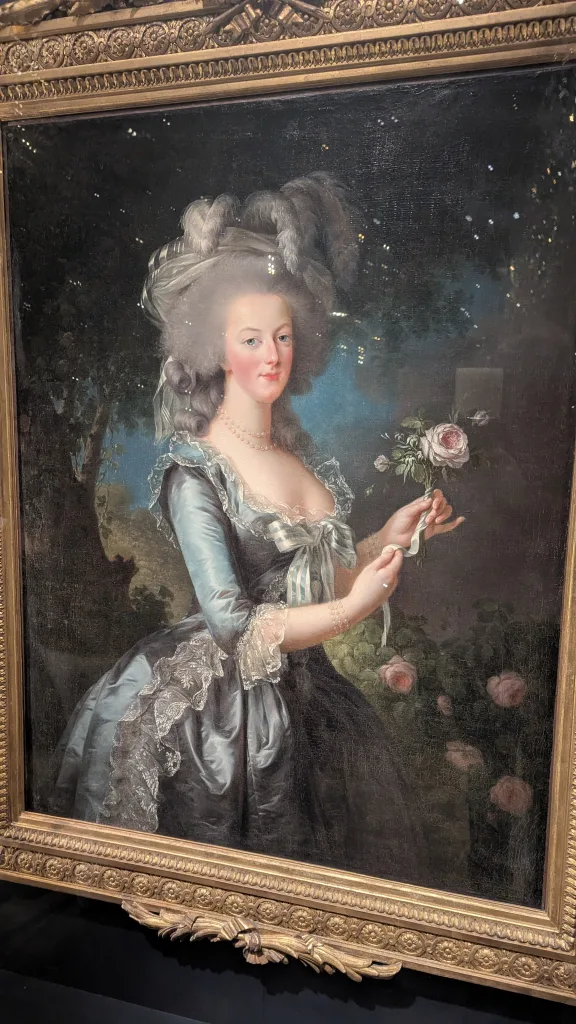
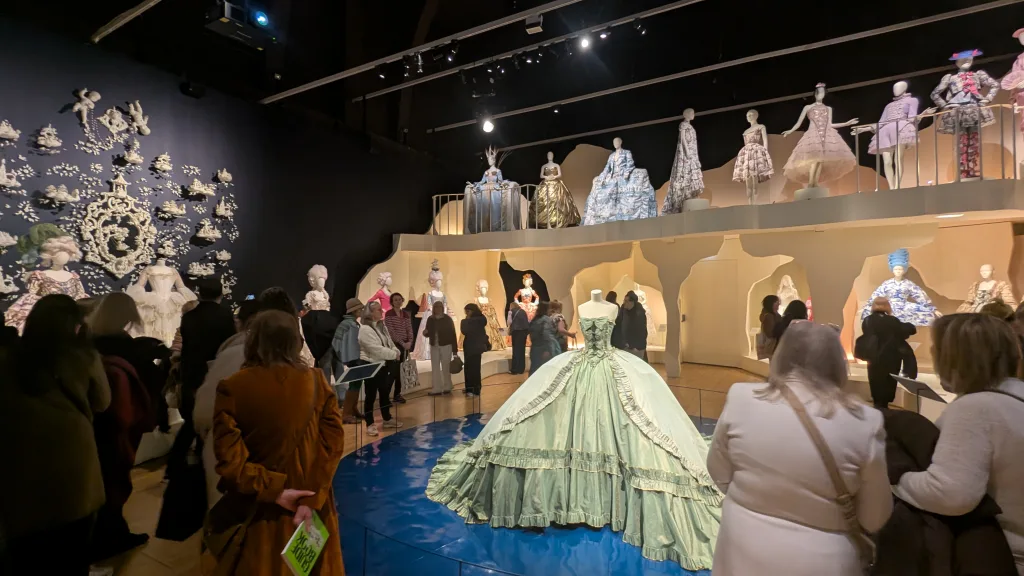
Marie Antoinette was about 28 when this portrait was made, She was about 10 years from her death by guillotine. The painting featured in the V&A’s exhibition about the Queen of France which has just finished. It was not my favourite V&A block-buster exhibition. I think mainly because I came out not knowing very much more about Marie, than when I went it. But I had seen countless extravagant dresses. Yes, she commissioned a lot of dresses, and as patron and model influenced French fashion. And, yes, she wasn’t the air-head of the ‘let them eat cake’ version of history. But I’m not much the wiser.
I’m more interested in the painter, Élisabeth Vigée Le Brun. This is what Wikipedia says about her:
‘She enjoyed the patronage of European aristocrats, actors, and writers, and was elected to art academies in ten cities. Some famous contemporary artists, such as Joshua Reynolds, viewed her as one of the greatest portraitists of her time, comparing her with the old Dutch masters.’
And I have never heard of her, I’m fairly sure nor have you! You might like to see my post on 17th female painter Mary Beale. My original shortlist for Object of the Day were these two items from the Exhibition:
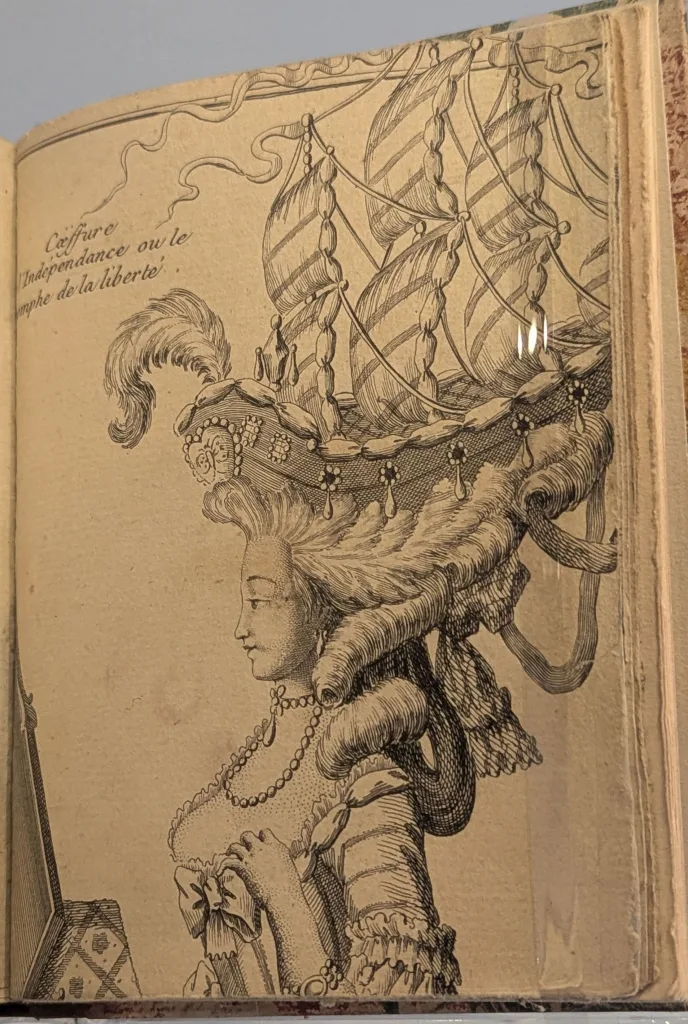
Guilotine blade from the French Revolution, purchased by the sons of Madame Tussaud as the blade that killed Marie Antoinette. Photo Kevin FludeSketch of the Triumph of Liberty Hairdress, associated with Marie Antoinette. It is her most famous headress. Created to celebrate the victory of the French over the British Navy in the American War of Independence.
Both these objects did no favours to the Queen’s neck! And lastly, those a few of those dresses:
Centre piece of the V&A exhibition on Marie Antoinette, photo K Flude.
The Stormy Borrowing Days of March
Sir Walter Scott recorded that ‘the last three days of March are called the borrowing days; for as they are remarked to be unusually stormy, it is feigned that March has borrowed them from April to extend his sphere of his rougher sway.’
There are various traditions and poems that record the borrowing days, and this is in the Scotch dialect:
March borrowed from April Three Days, and they were ill: The first was frost, the second was snaw, The third was cauld as ever’t could blaw.
The Borrowing Days in Spain
There is a Spanish story which explains this a little more. A shepherd asked March to calm the winds to suit his flock of sheep, in return for a lamb. March compiled but, then, the Shepherd refused to hand over the lamb. So, March borrowed three days from April and made them fierce and stormy. Versions of this tale are known from Staffordshire, North England and Scotland. (Source ‘Weather Law’ by Richard Inwards 1994 (first published 1893).
Warm days at the end of March or the beginning of April bring the Blackthorns into bloom. This can be followed by a cold snap which is known as a ‘Blackthorn Winter.’
February 2023 in Haggerston Park, London showing early blossom (Blackthorn?) Photo K Flude
For more on blossom and Haggerston Park follow my link to haggerston-park/
On This Day.
Photo of cover of Chambers Book of Days
2024– I purchased the Chamber’s Book of Days, updated from the original 1864 publication, and began adding occasional ‘On This Day’ epilogues to my posts.
1461– The Battle of Towton, England’s bloodiest battle, in which Edward IV defeated the Lancastrian forces of Queen Margaret, thus securing the throne for the Yorkists. Margaret, her husband, Henry VI, and son, fled to Scotland.
1871 – Official Opening of the Royal Albert Hall
1912 – Captain Scott’slast entry in his diary.
‘We shall stick it out to the end, but we are getting weaker, of course, and the end cannot be far, It seems a pity, but I do not think I can write more.’
Study for Lady Lilith, by Rossetti. 1866, in red chalk. Now in the Tel Aviv Museum of Art (Wikipedia) Lilith born at The Beginning of the Universe
This is now my most popular post. March 25th is the Annunciation—the day that the Archangel Gabriel tells Mary she is pregnant. (to see some very fine paintings of this meeting, look at my other March 25th post march-25th-feast-of-the-annunciation/). When I first wrote this post I was discovering how it all fitted together as I wrote. So I’m leaving it the way it was, proof reading and clarifying if necessary, but keeping the thrill of the discovery of the the significance of March 25th as the day that saw the Beginning of the Universe.
March 25th is also the anniversary of the birth of Adam and Eve (and Lilith); the death of Jesus Christ; the anniversary of the Immolation of Isaac; the Parting of the Red Sea; the Fall of Lucifer; and, (until 1752 in the UK) the beginning of the Year.
Of course, it isn’t. Or to put it another way, no one can, or ever could, prove any of these dates except 1752. So what they speak to is the way the Church saw the world as logically structured by God. Christian thinking about the year, the world, the universe, creation, developed over many years and took influences from many cultures. It is also very complicated to work out the sequence, so I’m going to summarise what I know (or at least what I think I know).
Happy Birthday, Dear Jesus.
Christians chose Christmas Day as the Birthday of Jesus, probably partly because it was a prominent birthday already shared with several Gods. Particularly, Attis, Mithras, Saturn and the Unconquered Sun. It was approximately at Solstice, the beginning of the Solar Year, and close to one of the main festivals of the Roman World, the Saturnalia. So it made it easier for new converts who could retain elements of their festivals after conversion.
December 25th might have been selected by the pagan religions because it is the time when the Sun begins to rise further north each day. The days stop shortening and start lengthening, light increases with the promise of warmer weather and budding plants. It was considered a rebirth of the Sun.
Solstice Anniversaries
So, Jesus was born on/or around the Solstice, so he must have been conceived approx. 9 months earlier. This is approximately at the Spring Equinox.
Ah, you are thinking! But today isn’t the equinox. It’s a few days after the equinox. Surely, God doesn’t do approximately?
I have always thought that the 4 or 5 days difference between the Solstice, the Equinox and the Christian festivals was down to the fact that the Calendars were not well coordinated with the actual movements of the Sun (because the Sun does not circle the earth in 365 days, or in 365 and a quarter days, but 365 days, 6 hours, 9 minutes. Unless corrected for this means dates slip from their proper place in the Solar Year. It also makes lunar Calendars difficult to align with the Sun cycles, and vice versa.
But when I first wrote this a sudden revelation dawned upon me which will be revealed in the next few paragraphs.
So, God sends his Son to save the human race. God is a logical being, so she would send her Son at an appropriate time? If Jesus is born at or near the Solstice, which is an appropriate time for the Son of the Creator, then conception 9 months earlier, March 25th, is near the Equinox. This is the beginning of Spring. For many people, Spring is a new beginning, for example, the Anglo-Saxons saw Winter as the death of the year, and Spring as the young Year. It all makes sense.
The Creation
So to the Creation. God, having a free choice, would have created the world at the beginning of Spring. In fact, if you think about it, God creates everything necessary for life at the creation in 6 days. As soon as it has all been created and put together, it is bound to immediately spring into new life. The first season must, therefore, be Spring? Right? So March 25th?
This gives a nice symmetry with Jesus’s Life. Conceived on March 25th, born December 25th, and died 30–40 years later, according to the Church, at Easter, on March 25th. (the only other famous person I know, born and died on the same day is William Shakespeare).
Easter
Easter, when Jesus is martyred, isn’t March 25th I hear you saying. But remember, Easter is a lunar festival, so its date varies each year. In fact the next time is 2035. Births and deaths, on the other hand, are fixed to the Solar Calendar. Therefore, the Church chooses March 25th as the most appropriate day to pin the death of Jesus, on the anniversary of his conception and the anniversary of the creation of the Earth. I am guessing that this is also the preferred date for the Day of Judgement.
It is also the Birthday of Adam, and his first wife Lilith (or so some say), and Eve. More about Lilith below. I hope this is all making sense?
Why was Adam born on March 25th?
I had thought this date was just one of the parallels that the Church liked, Jesus and Adam born on the same day. But, I have just worked out why Adam is born on March 25th, and why these dates are not the Equinox, March 20th/21 but March 25th, which has been bugging me.
Let’s go back to the beginning of Creation as described in Genesis. It has the following sequence of Seven Days, beginning with the Equinox March 20th. I have added dates to the 6/7 day sequence of Creation:
Day 1: Light – March 20th
Day 2: Atmosphere / Firmament – March 21st
Day 3: Dry ground & plants – March 22nd
Day 4: Sun, moon & stars – March 23rd
Day 5: Birds & sea creatures – March 24th
Day 6: Land animals & Adam, Lilith and Eve – March 25th
So there you have it! Adam, Eve (and Lilith) were created on Day 6 with the Land Animals – March 25th. Jesus conceived, also on this date, and so 9 months later is born on December 25th. It all makes sense, and aligns the Jesus’s Life, the Christian year fully with the Solar Year and the Creation!
And that, dear Reader, is the very first time anyone has been able to explain to me why Christmas is not at the Solstice, and why the Annunciation was not at the Equinox. Maybe you all know this, but it is very exciting to work this out for myself. And believe me, I have done a lot of reading about calendars and not spotted an explanation.
When was the Creation?
The Anno Munda‘s is a Jewish Calendar which begins counting from a year before the Creation – the Year of Emptiness. This was 5500 years plus 2026 years ago so 7526 Before the Present. And it was supposed to have ended in 600AD, 6000 years after the Creation. So, they got that wrong.
Dionysius Exiguus replaced the Anno Mundo year with the AD/BC system in the 6th Century AD). This became popular when the Venerable Bede used it in his writings in the 8th Century.
Beginnings of the year
The Celts chose October 31st, Julius Caesar chose January 1st, other cultures have other dates, and the Spring Equinox is another choice sometimes made. The Church and Dionysius Exiguus choose March 25th, although secular society also recognised the claims of January 1st. Britain kept to March 25th until 1752 when we adopted the Gregorian Calendar. But people like Samuel Pepys celebrated New Year’s Eve on 31st December. So January 1st was the secular New Year, but the Christian year number did not change until March 25th. So King Charles I thought his head was being cut off on January 30th 1648; while history books will tell you it was cut off on January 30th 1649. Same day, same head, different reckonings.
January 1st, the New Moon and New Year
December 31st/January 1st is essentially a Solstice New Year Festival. And I have, previously, used the difficulty of keeping calendars as to why these days has slipped out of alignment with the Solstice. But, today I realised that it is as likely that the reason is the Solar/Lunar nature of our time keeping. The year, and its festivals, is largely arranged around the Solar Cycle. But our weekly and monthly cycles are orginally derived from the Moon.
The first of a month, was called the Kalends by the Romans, the Nones the half moon, and the Ides signified the New Moon. The kalends of January is then, originally, the First New Moon after the Winter Solstice. So, January 1st is not a slightly misdated Solstice Festival it is a Festival celebrating the first New Moon of the New Year! Sorry, to seem excited but this is the first time I have realised this.
Over time societies give up trying to sync the lunar and solar calendars. Roman and Christian cultures gave up and fixed the moon months, completely abandoning any attempt to keep the months to the actual lunar cycle. This is our current system, in which only Easter and festivals that depend on Easter remain true to the movements of the moon festival, much to our perennial confusion.
Maybe you all know this, but it’s put many things into perspective for me!
Lilith
The April 2023 Issue of ‘History Today’ had a short piece called ‘The Liberation of Lilith’ which suggests that the story of Lilith, a figure from Jewish Folklore, is first attested in a Medieval satirical text called ‘The Alphabet of Ben Sira’. The story goes that Lilith is created from the same clay as Adam. Adam then demands she lies below him during sex. She refuses, saying that they are both made from the same stuff and, therefore, equal. Adam refuses to accept this, and so Lilith leaves the Garden of Eden. So the story goes.
The story of Lilith, Sarah Clegg suggests, is one of a series of similar stories found around Europe and Asia. And Clegg assumes that it is gradually modified to make Lilith a demon who will kill babies unless the names of three angels are spoken out loud.
The story survived as a charm to keep babies safe, and perhaps to remind people of equality among the sexes. But this causes problems for, OK, let’s call them out, the Patriarchy. Lilith cannot be equal to Adam so she is made into a monster, not made from the same clay as Adam but from the scum and waste left over from Adam’s creation. I imagine the story then went on to propose that God creates Eve from Adam’s rib, and so she is created from Adam, and is, therefore, not equal, but subservient to him, although not as bad as Lilith. Lilith is now a significant figure in feminist folklore circles.
Attached to the watercolour of Lilith by Rossetti (at the top of the page), was a label with a verse from Goethe‘s Faust as translated by Shelley. (Wikipedia)
“Beware of her fair hair, for she excells All women in the magic of her locks, And when she twines them round a young man’s neck she will not ever set him free again.”
The model is Fanny Cornforth, Rossetti’s mistress. He painted another version a few years later, but the model in that is Alexa Wilding. His models are arguably more interesting than the man himself and include: Elizabeth Siddall, Jane Morris and Fanny Cornforth. Christina Rossetti, his poet sister, modelled for Rossetti’s painting, Ecce Ancilla Domini which you can see here.
For more on the Annunciation, look at my other March 25th post here.
I think I might have enough material to begin my own Cult.
Blosson in Haggerston Park on 9th March 2025, photo by K Flude
Peak Blossom varies year by year. Two years ago, I declared it on March 19th, last year it was later. Normally, it is late March – Early April.However, walking around my local Park Haggerston Park today, Haggerston is whitewashed with amazing blossom. I thought it was Blackthorn, until I read that Blackthorn was the tree from which Sloes are grown.
My ‘Flora Incognita’ app tells me that it is Cherry Plum, Prunus cerasifera. This makes sense as in the summer, there were people collecting the small plums that were growing on the trees. The pink variety of cherry are not yet at peak blossom. I will post about peak blossom, later today.. To read about Cherry Blossom read my post here.
Local magnolia’s are beginning to come out, although I noticed a lot more in my Dad’s area which is 40 miles south. I bought a magnolia about 18 months ago, had quite a fine show in its first year, but this year the scaffolders managed to destroy all the buds, and the squirrels did further damage. So keeping my fingers crossed.
Haggerston Park
I am using this occasion to write about my local park which I have been saving up for a ‘vacant day’. (see my post of Ovid and Vacant days)
Haggerston Park was built on the site of derelict houses, a tile manufacturer and a Gas Works in the post war years. The Gas works was situated by the Regent’s Canal with its own basin for loading supplies. In the 80s the Park expanded to take in some areas which were formerly residential streets. All that really remains of the Gas works are the perimeter walls, and the outline of the canal basin.
The park is a well-loved local facility with green lawns, trees and flowers. It also has a great new playground for kids; astroturf football pitches; tennis courts, toilets, cafe, City farm, and a wild wooded area. This is dominated by the Cherry Plum trees and is a haven for squirrels. Rats loved it too, but I haven’t seen one for 2 years or so. I think they have been successfully ‘controlled’.
There are some strange parts of the design which, I hoped, were traces or inspired by industrial archaeology, but it turns out the designer wanted a maritime theme. So there are flagpoles, tripods and brick structures which are supposedly somewhat maritime.
Park Henges
The Gardeners obviously like the hengiform design because the Park has a lot of henges, and circles. I have my own name for most of them.
Snowdrop Henge
Snowdrop henge Haggerston Park, photo K Flude
Silver Birch & Crocus Circle
Silver Birch Circle Haggerston Park, Photo Kevin Flude
The beautiful crocuses are not so clear in this picture, but they are really lovely! (See my post on Croci here). Last year I got a better photo of the croci.
Haggerston Park, 2024 Photo K Flude
Oak Tree Cluster
Oak Tree Cluster, Haggerston Park photo by Kevin Flude
This wonderful Oak tree is surrounded by daffodils and crocuses.
Oak Tree and flowers, Haggerston Park Photo K Flude
Primula Patch
Primula Patch, Haggerston Park, Photo K Flude
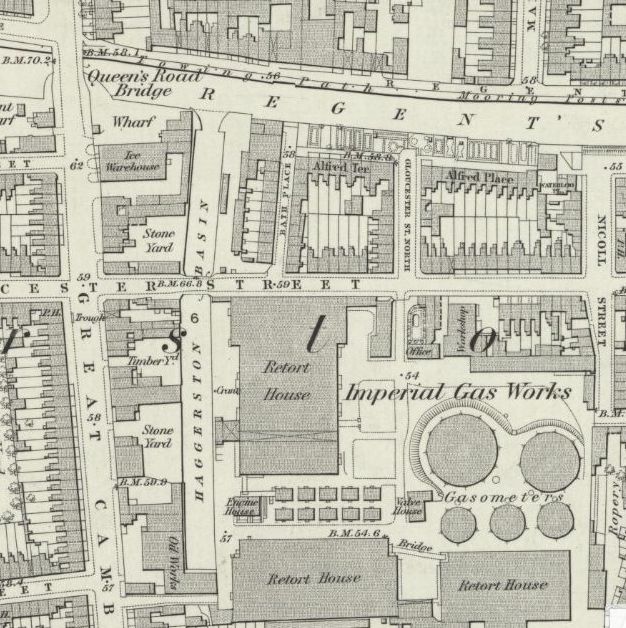
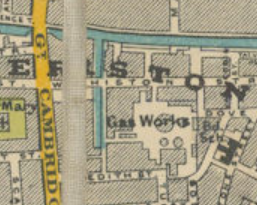
The circle is in the middle of the Basin that connected the Gas Works to the Regent’s Canal. Theh patch would have been in the middle of the water, and the stone and brick walls, are the edge of the Basin. See the map below. I do hope they flowers are primulas. If not viola’s, primroses or other winter, spring flowering plants.
Rose and Tripod Circle
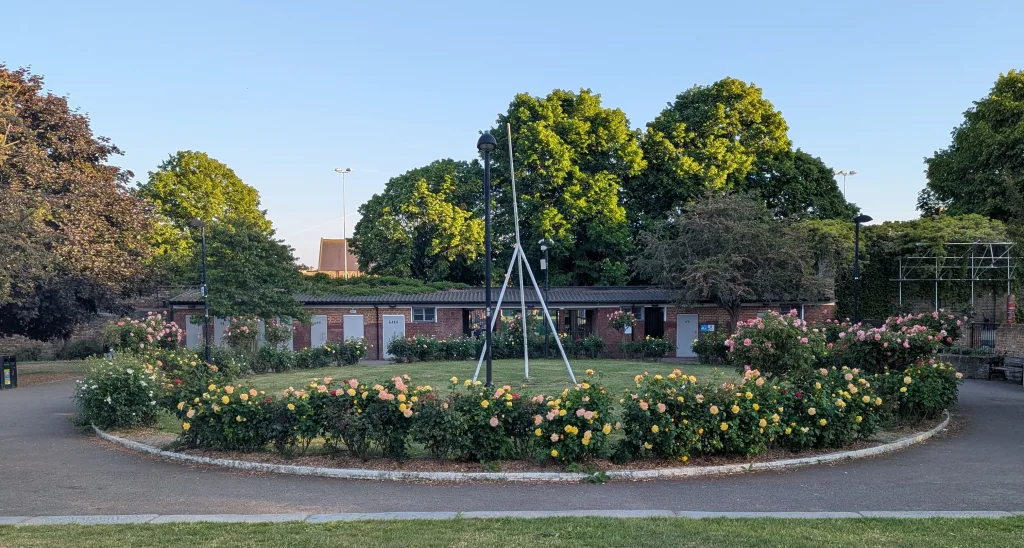
Rose and Tripod Circle. This becomes particularly beautiful at the height of summer.
The Avenue
The Avenue, Haggerston Park, photo Kevin Flude
City Farm
The City Farm was set up in 1984 on a site that was once a brewery. It provides a community and educational resource to give people experience of animals and growing plants. It has poultry, ducks, geese, sheep, pigs, goats, donkeys and bees. There is also a lovely cafe callled Frizzante and a shop that sells groceries without packaging. For more on the bluefaced Leicester Sheep at the farm see my post here, and on City Farm piglets here.
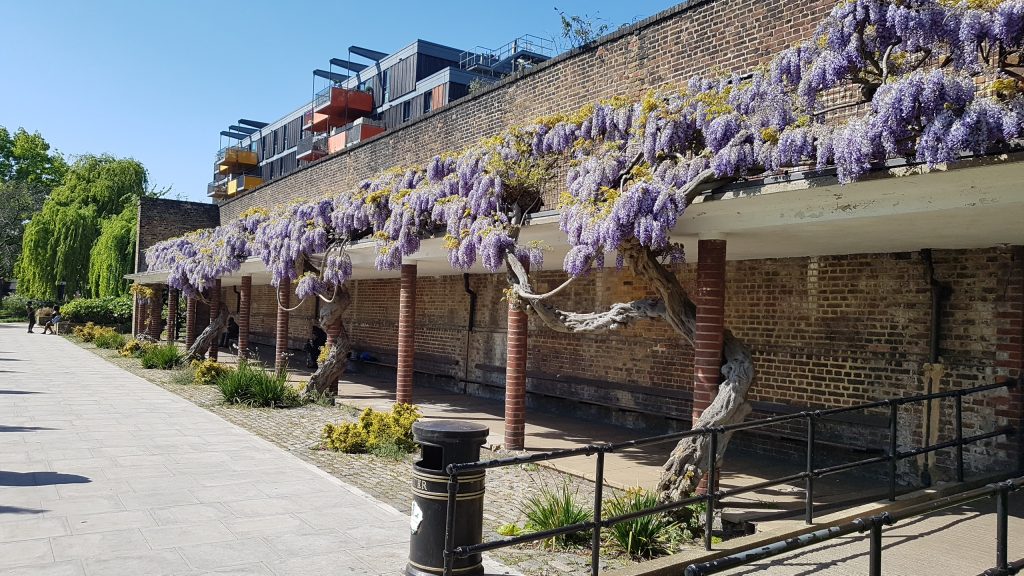
Heron in the Pond, Ancient Wisteria
HeronWisteria
Gas Works
Haggerston Park 1877 Ordance Survey Map
The Park covers the area of the Imperial Gas Works shown above. The photos above are in the area of the old Retort House (top left of the Gas works). The Haggerston Basin is to the left of that. To the left of the Basin are a series of Factories and Yards: Stone Yard, Timber Yard. North of the second Stone Yard is the Ice Warehouse. Near the top left. (for my post on Ice Houses please look here). The Regent’s Canal is just below the top of the map. It was constructed in 1820 or so. This stretch is now the ‘Haggerston Riviera’, and is trendy!). The Canal is the reason for the concentration of 19th Century Industry here. There were brick works, cigarette, breweries, gun, gunpowder, chemical, furniture and many other industries strung along the canal and connecting roads.
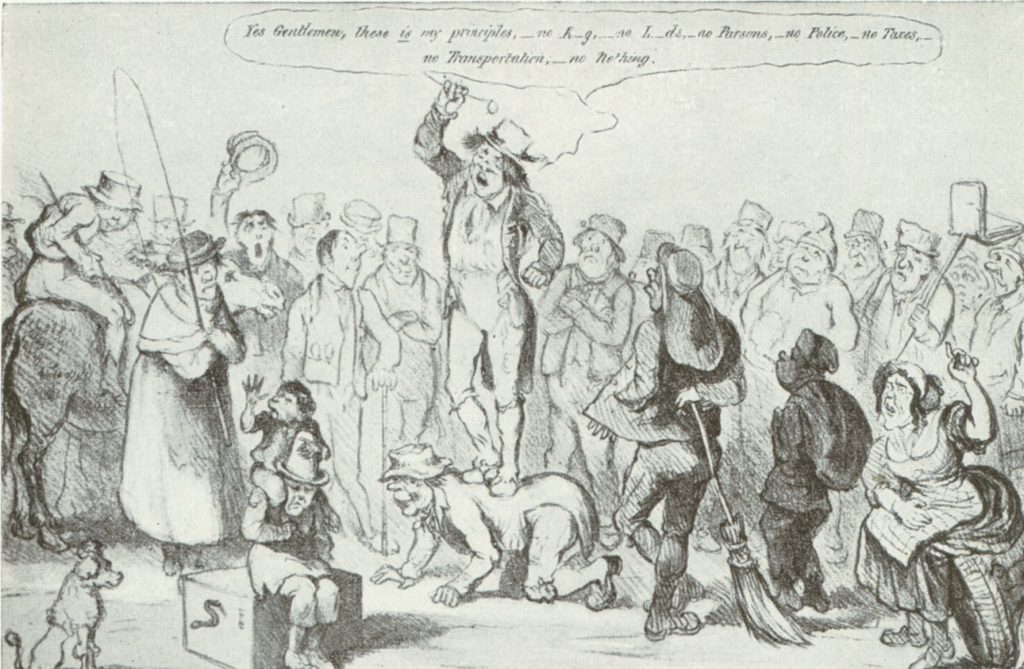
Victorian lampoon on Socialist Values ‘Yes Gentlemen, these is my principles, no King, no Lords, No Parsons, No Police, No Taxes, No Transportation, no No’thing.’
Walk of Socialists at St. Paul’s February 28th & London Socialism 1887
My French friend went yesterday to St. Paul’s and saw a large procession of socialists. It is a strange move of the socialists to visit all the Churches. The Archdeacon of London preached to them from: “the rich and poor meet together, and the Lord is the maker of them all.” A noble sermon, they behaved fairly well.
Helen G. McKenney, Diary, 1887 (source: A London Year. Compiled by Travis Eldborough and Nick Bennison)
The quotation is from the Bible, Proverbs 22, where it sits with a number of other wise sayings. Perhaps, number 16:
‘One who oppresses the poor to increase his wealth and one who gives gifts to the rich—both come to poverty‘
is most likely to stir a Socialist. I imagine the Archdeacon was also making a point that the Lord made the Rich and the Poor. So there is nothing wrong with being Rich, as long as you are generous to the Poor. Equally, nothing wrong with being Poor.
Bloody Sunday
It’s rather lovely to imagine the Walk of Socialists walking around Wren’s masterpieces in the City of London. However, later in 1887, things turned much worse. The Social Democratic Federation and the Irish National League organised a march against Unemployment and the Irish Coercion Acts. Among the 10 to 30 thousand citizens present were William Morris, Annie Besant , George Bernard Shaw and Eleanor Marx.
The Police had been trying to prevent the ever-increasing use of Trafalgar Square and Hyde Park as protest venues. So, on November 13th, Bloody Sunday, the Police Commissioner, Charles Warren, ordered a massive police presence. He backed this up with 400 Soldiers. He aimed to prevent the entry to Hyde Park. Warren was acting as a caretaker until a new Commissioner was in place. He had already resigned following criticism of the failure to find Jack the Ripper. By the end of the day there were 2 people dead, 100 seriously injured, and 45 arrests, as well as 75 accusations of police brutality. On the other hand there were many police casualties.
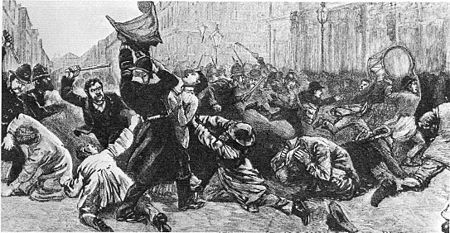
Engraving from The Graphic (published 19 November 1887). Wikipedia describes it as ‘depicting a policeman being clubbed by a demonstrator as he wrests a banner from “a Socialist woman leader, one Mrs. Taylor”, while other people are covering their heads to protect themselves from raised police batons.’ Pubic Domain
Progressive Politics
Before the Foundation of the Labour Party, progressive politics were in the lukewarm hands of the Liberal Party. This Party developed from the Restoration period Whig Party. Although, the Liberal Party had a radical wing, it had a reluctance to put forward working-class candidates. In the early 19th Century, much of the agitation was led by a movement called the Chartists. But as their goals became adopted by the main two parties, progressive politics was led by various reform, radical, socialist, marxist and anarchic groups.
I have not been able to find out who led the 1887 Walk of Socialists around the City Churches. However, William Morris’ presence suggests the Socialist League? In 1885, the Socialist League was an offshoot of the Social Democratic Federation. But it was not a harmonious group. Its most famous members were William Morris, and Eleanor Marx. It included Fabians, Christian Socialists and Anarchists. By 1887 it was split ideologically into three main factions, Anarchists, parliamentary orientated Socialists, and anti-parliamentary Socialists. William Morris was the editor of their newspaper, ‘the Commonweal’ but he was sacked and replaced by Frank Kitz as the Anarchists took over the organisation.
So, without going into a long history of Socialism in London, what happened was that the Socialist groups made very little impact until the Independent Labour Party was set up in Bradford 1893. And in 1900, Keir Hardie, who was already an independent MP in Parliament, set up the Labour Representation Committee in 1900. This was soon renamed the Labour Party. The Independent Labour Party joined, and Labour began to take over control of the working-class vote. It fought for this with the Liberal Party. The Liberal vote, declined after WW1 and Labour was able to secure minority Governments. After World War 2 the Labour Party replaced the Liberals as one of the two Political Parties which could win a majority in Parliament.
London ‘Soviets’
London was one of the places where the Party experimented with left wing policies. The East End areas of Poplar, Limehouse and Bermondsey were particularly important. Alfred and Ada Salter were ‘typical’ activists. She became the first female Mayor of a London Borough. She was Returning Officer when her husband was elected MP for Bermondsey. His medical practice gave free medical care for poor people. From this they established a free medical clinic, that was a forerunner to the formation of the National Health Service. The London Councils also led the way in promoting mass council housing and Trade Union reform.
Here is a part of a letter from Alfred to Ada:
“Oh, the cruel wickedness of our society today! To thrust down these people by means of low wages and chronic unemployment into hopeless despair, and then leave them in that condition with no organised or conscious effort to rehabilitate them. What can we do?”
“You and I feel we have the same mission in life… we are living and working for the same goal- to make the world, and in particular, this corner of the world, happier and holier for our joint lives.”
Fenner Brockway said that in his youth Salter was a “Settlement firebrand – militant Republican, militant Socialist, militant Agnostic, militant Teetotaller, militant Pacifist.” Alfred converted Ada to Socialism and she converted Alfred to Christianity. They became Quakers.
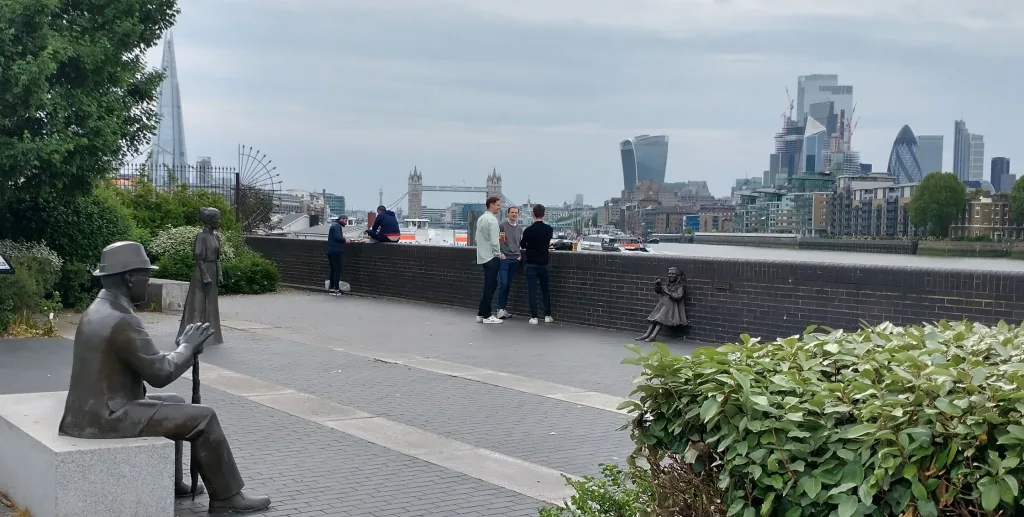
Statues of Alfred Salter (sitting down) Ada Salter (behind his walking stick) and their only daughter Joyce (leaning against the River wall) who died aged 8 of Scarlet Fever. Garden near the Angel Pub, Rotherhithe. Photo K Flude
Life-long Labour voter
My Grandma, who was born in Hoxton in 1902, voted for Labour all her life. I’m pretty sure it was out of class loyalty because I always thought her opinions were more traditional than progressive. But she would never dream of voting anything other than Labour. For more on Hoxton and revolution, you may want to see my post on Hoxton and the Gunpowder plot.
1931 – Oswald Moseley formed the New Party which became the British Union of Fascists. He was a promising and economically radical MP for the Labour Party but resigned in frustration with their reluctance to adopt his policies. And his egotism, led him to the dark side.
1975 – An underground train ran into the end wall having failed to stop at the Moorgate terminus. 43 people died and 74 were injured. An inquiry concluded, in the absence of any faults in the train, that it was a driver’s error.
First Published in February 2024, republished in 2025 The Salters & On This Day added February 2026
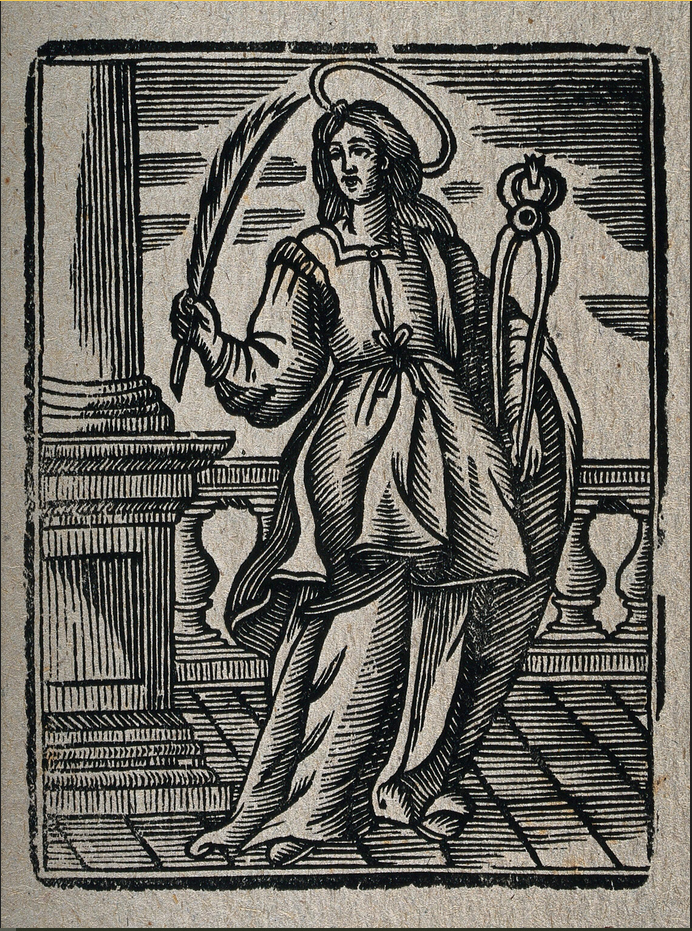
Saint Apollonia. Woodcut. Saint of Toothache Wellcome Collection. Public Domain Mark. She is shown with forceps, extracted tooth and the martyr’s palm.
The 9th of February is the Feast of St Apollonia. She was martyred at Alexandria in 249 AD during the persecution of Emperor Decius. (see also my post on St Agatha) She was attacked during an anti-Christian riot and struck around the face knocking her teeth out. Then, she was taken to a bonfire and told they would throw her in if she did not renounce her faith. So, without waiting, she spoke a prayer and walked into the fire. This information is recorded in a near-contemporary letter from St Dionysius of Alexandria. This is rare well documented martyrdom. Because her teeth were knocked out she is, therefore, Saint of Toothache.
Suicide or Martyrdom?
St Augustine of Hippo touches on this spat of martyrs, often young women, killing themselves rather than losing their virginity, or like St Apollonia embracing death in the face of violent persecution. His answer is that like Samson, they are commanded by God to take their own lives, which is ok. Elsewhere, he condemns suicide as it is against the commandment ‘Thou shalt not kill’. He explains that God did not add ‘thy neighbour’ to it so it also forbids killing oneself. By contrast, it was added to ‘Thou shalt not bear false witness against thy neighbour’. The rest of St Augustine’s argument comes from Plato’s Phaedo. The introduction to the book on the Project Gutenberg web site sums up the arguments:
According to one explanation, because man is a prisoner, who must not open the door of his prison and run away—this is the truth in a ‘mystery.’ Or (2) rather, because he is not his own property, but a possession of the gods, and has no right to make away with that which does not belong to him.
The Project Gutenberg EBook of Phaedo, by Plato translated by Benjamin Jowett
Cloves for Toothache
I can remember my Grandmother prescribing cloves for me when I had toothache. And this was, and is, a common remedy. In my case, we would keep a clove or two in the mouth close to the site of the pain. According to Natural Ways to Sooth an Toothache cloves contain
‘Eugenol, a natural form of anaesthetic and antiseptic that helps get rid of germs. Eugenol is still used in dental materials today’
Dr John Hall, Shakespeare’s son-in-law, tended to use a pill to soothe sore gums. He also used an oil from a wood called ‘Ol. Lig. Heraclei’ which may be oil from the Bay Tree. (‘John Hall and his Patients’ by Joan Lane). Most of his tooth cases seem to be sore gums. This suggests to me Dr John Hall did not generally do dental work.
Death by Toothache
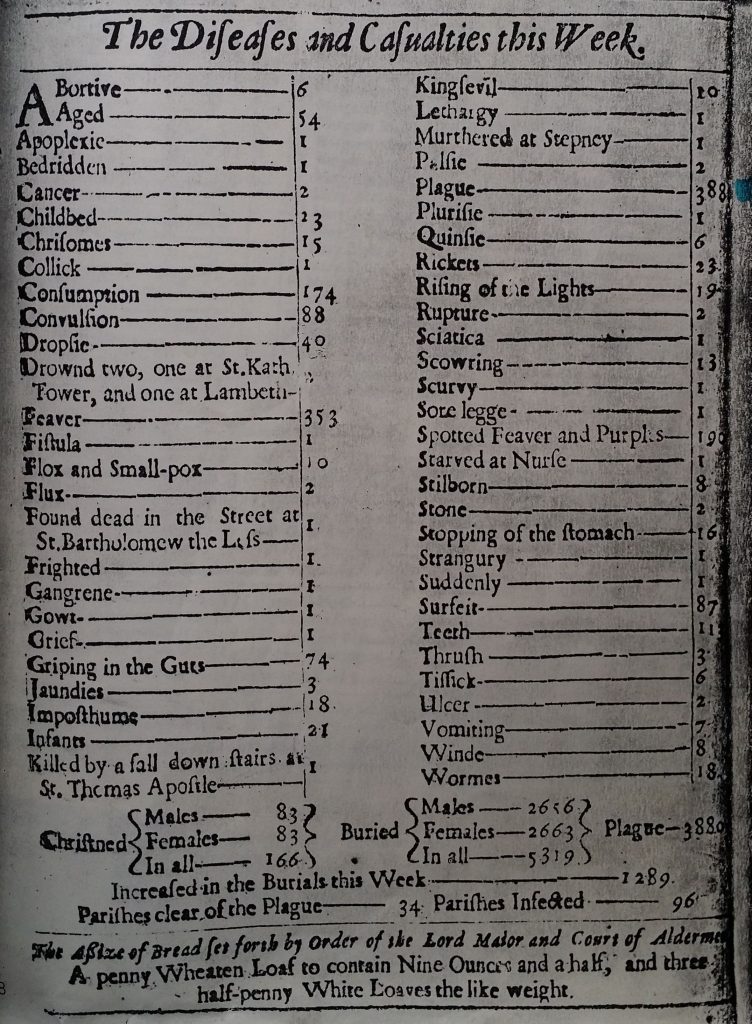
To get a tooth drawn you could go to a Barber Surgeon, a Blacksmiths or specialist Tooth Drawer. It would be terrifyingly painful. Probably only done when the pain was unbearable. Just think what a premium you would pay for a really competent drawer? The drawers would not have any formal training, but the skills would be passed on by the drawer to his apprentice or assistant. ‘Teeth’ was a common cause of death – most likely from infection or an abscess.
List of causes of death, London during the plague of 1665. Teeth killed 11 people
Magic and Toothache
John Aubrey, an erudite and educated 17th Century writer, reports on the use of Magick for tooth care. When he relates these unlikely cures he often provides information that the person who told him the story is worthy of belief. So he seems to give some credence to the efficacy of these magical ‘cures’. But, judge for yourself; this is what he wrote:
To Cure the Tooth-ach.
Take a new Nail, and make the Gum bleed with it, and then drive it into an Oak. This did Cure William Neal, Sir William Neal’s Son, a very stout Gentleman, when he was almost Mad with the Pain, and had a mind to have Pistoll’d himself.
To Cure the Tooth-ach, out of Mr. Ashmole’s Manuscript Writ with his own Hand.
Mars, hur, abursa, aburse. Iesu Christ for Marys sake, Take away this Tooth-ach.
Write the words, Three times; and as you say the Words, let the Party burn one Paper, then another, and then the last.
He says, he saw it experimented, and the Party immediately Cured
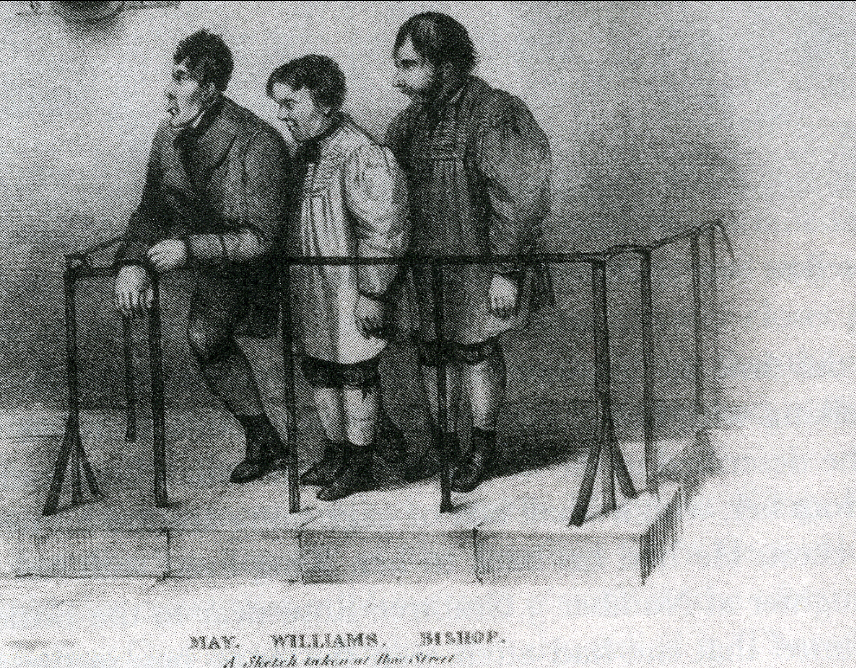
May, Williams and Bishop at the Old Bailey accused of murder in pursuit of bodysnatching
Teeth and the Body-Snatchers
In 1832, in London Bishop, Williams, and May were accused of body snatching. After killing the Italian Boy (wonderful book by Sarah Wise ‘The Italian Boy‘) they jemmied out his teeth. Then, took the teeth to a South London Dentist. with whom they bargained for a good price. (They used the term ‘cheapened’ – I cheap, you cheap, we are cheapening: meaning to barter). The dentist wanted to use the dead boy’s teeth for false teeth for his patients. If memory serves, he paid £1 for them.
The teeth were used as evidence in the trial of the murderers. When the trial was over and the accused punished, the dentist asked for the teeth back! Two of the murderers were hanged but the third freed for turning King’s Evidence. Thereafter, the teeth were released back to the Dentist. He promptly put them in the window of his surgery as an advert for his professional skills!
Earlier, one of the Borough Boys Resurrectionist gang (based in Southwark, London) toured the battlefields of the Peninsular Wars collecting teeth. He made a substantial sum selling them to dentists as false teeth. They became known as Waterloo Teeth.
When I first wrote this in I added ‘How things have changed!’ But in recent years there have been reports of people undertaking their own dental work, if they cannot get access to an NHS dentist. Effectively, it seems that the Conservative Government was allowing dentistry to slip out of the NHS just like it did with eye health. For a study in what has happened to Dentistry in the UK in recent years, please look at this report here.
On This Day
1907 – the National Union of Women’s Suffrage Societies (NUWSS or Suffragists) organised the so-called the Mud March. This was the ‘first large procession’ in support of votes for women. It was called the Mud March because of the downpour of rain on the day.
1916 – Conscription started in World War 1 with the call-up of unmarried men aged between 18 – 41.
1933 – The Oxford Union passed the resolution ‘the House will in no circumstances fight for King and Country.’
Bird of the Month The Blackbird. The common Blackbird is a true Thrush. The male is black with a yellow beak and the female is dark brown with a yellow beak. The Blackbird begins to sing as early as January, and is one of the birds who sing first early in the morning. British Blackbirds do not migrate, but Northern European Blackbirds often migrate to the UK in the winter for warmer weather. Viruses have put the species under some threat and they need help to get through the winter. ArkWildlife suggests this is what you should feed blackbirds:
‘Mealworms A top choice, mimicking their natural insect diet.
Is an 18th Century nursery rhyme which refers to the medieval habit of baking a pie crust, and putting it over a bowlful of live birds. When it was opened all the birds, well sing the song to remind yourself what they do?
Sing a song of sixpence A pocket full of rye Four and twenty blackbirds Baked in a pie When the pie was opened The birds began to sing Wasn’t that a dainty dish To set before the king?
The king was in his counting house Counting out his money The queen was in the parlor Eating bread and honey The maid was in the garden Hanging out the clothes When down came a blackbird And pecked off her nose
Sing a song of sixpence A pocket full of rye Four and twenty blackbirds Baked in a pie When the pie was opened The birds began to sing Wasn’t that a dainty dish To set before the king?
A stinging Cure for Lust
Another story told of the Blackbird is a similar tale I have told before about holymen and temptation. So St Benedict was pecked on the cheek by a Blackbird. Next day he finds himself assailed with lust. It was the Devil disguised as the Blackbird he decides that infected the Monk. Then Benedict did what a number of saints did in similar circumstances. He threw himself, naked, in a patch of nettles and brambles and rolled around, until his body was sore afflicted. But he had overcome his lust.
Then St Kevin held out his hand and a blackbird laid her eggs in it. So he stayed still for the two weeks it took the fledglings to hatch! (for more on St Kevin see my post here)
Icy Sedgwick has an excellent website on the folklore of Birds, containing a nice podcast, which for those who love a north-east accent will enjoy.
Every year the English Civil War Society commemorates the execution of King Charles I, Martyr, on the last Sunday in January. Charles was executed on January 30th. Please look at my post about the execution here.
This year, I went to the Parade for the second time, and include some photos below. The reenactors met at St James Palace and marched along the Mall to Horseguards Parade. There they assembled, and then a detachment went to the Banqueting House where Charles was lawfully executed/murdered/martyred, depending upon your attitude. Here they lay a wreath.
Charles I Martyr?
He was a tyrant who tried to subvert the rule of Magna Carta and undermined Parliament. Then started a Civil War which killed 85,000. For the numbers behind the Civil War look here. So I’m going for lawfully executed, and I might say good riddance, but I don’t believe in the death penalty. By the way, the legal arrangements made for the unprecedented trial of the Head of State, laid the foundations for trials such as those at Nuremberg, and Kosovo. The Prosecutor was a lawyer called John Cook. Please read about him in this excellent book . The Tyrannicide Brief: The story of the man who sent Charles I to the scaffold. By Robertson, Geoffrey (2005). Chatto & Windus/Vintage. ISBN978-0-09-945919-4. Cook is remembered on Wikipedia as ‘Regicide’. But he was a pioneer of legal action against Tyranny. Another hero.
Here is the official publicity for Sunday’s Parade, followed by some of my photos.
January 25th 2026 Reenactors commemorating the execution of Charles I in Westminster
If you are interested, then you must either come to my walk, this Friday or attend my Virtual Tour, on Friday 30th January, evening. And you will find I am far more even-handed that this post suggests!
Kevin Flude’s walks to commemorate the Martyrdom of Charles I
Charles I and the Civil War. Martyrdom Anniversary Walk 2.30pm Jan 30th 26 To book
The Civil War, Restoration, and the Great Fire of London Virtual Tour 7:30pm Fri 30th Jan26 To book
This was 5 years after his death. It is now celebrated around the world, making clear the importance of Robert Burns. Burns himself would have been astonished at the spread of Burn’s Night. He was modest about his attainments, saying, in his introduction to the Commonplace Book:
‘As he was but little indebted to scholastic education, and bred at a plough-tail, his performance must be strongly tinctured with his unpolished rustic way of life. ‘
Fair fa’ your honest, sonsie face, Great Chieftain o’ the Puddin-race! Aboon them a’ ye tak your place, Painch, tripe, or thairm: Weel are ye wordy of a grace As lang ‘s my arm.
The groaning trencher there ye fill, Your hurdies like a distant hill, Your pin wad help to mend a mill In time o’ need, While thro’ your pores the dews distil Like amber bead.
His knife see Rustic-labour dight, An’ cut ye up wi’ ready slight, Trenching your gushing entrails bright, Like onie ditch; And then, O what a glorious sight, Warm-reekin, rich!
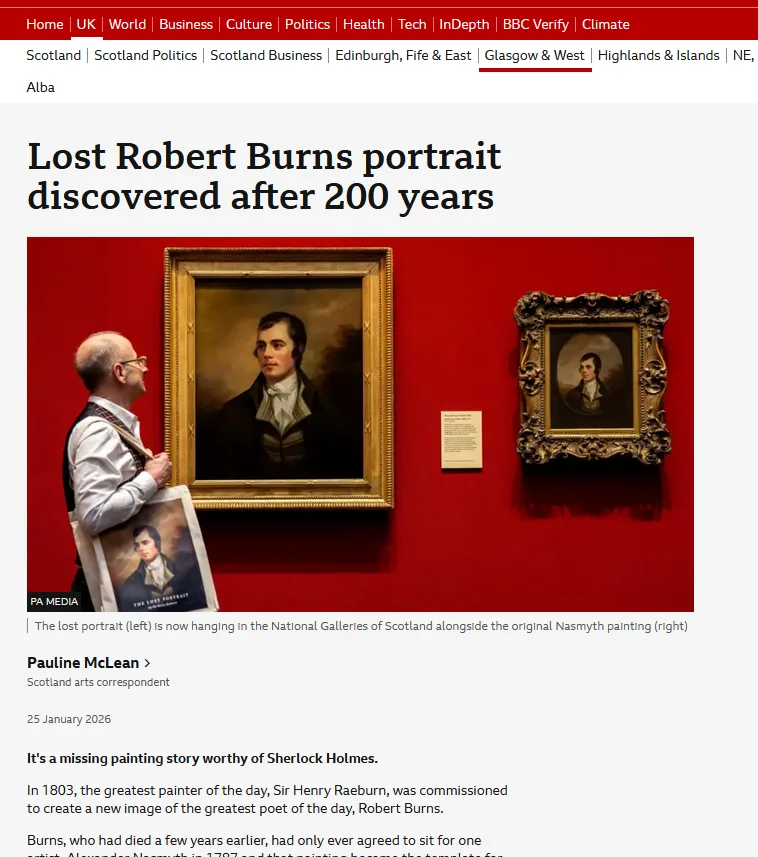
Recently, a long lost portrait of Burns turned up and it provides an image of the poet as a young man. The story is interesting and worth reading here:
Screenshot of BBC web page on the lost portrait of Robert Burns.
The Writer’s Museum
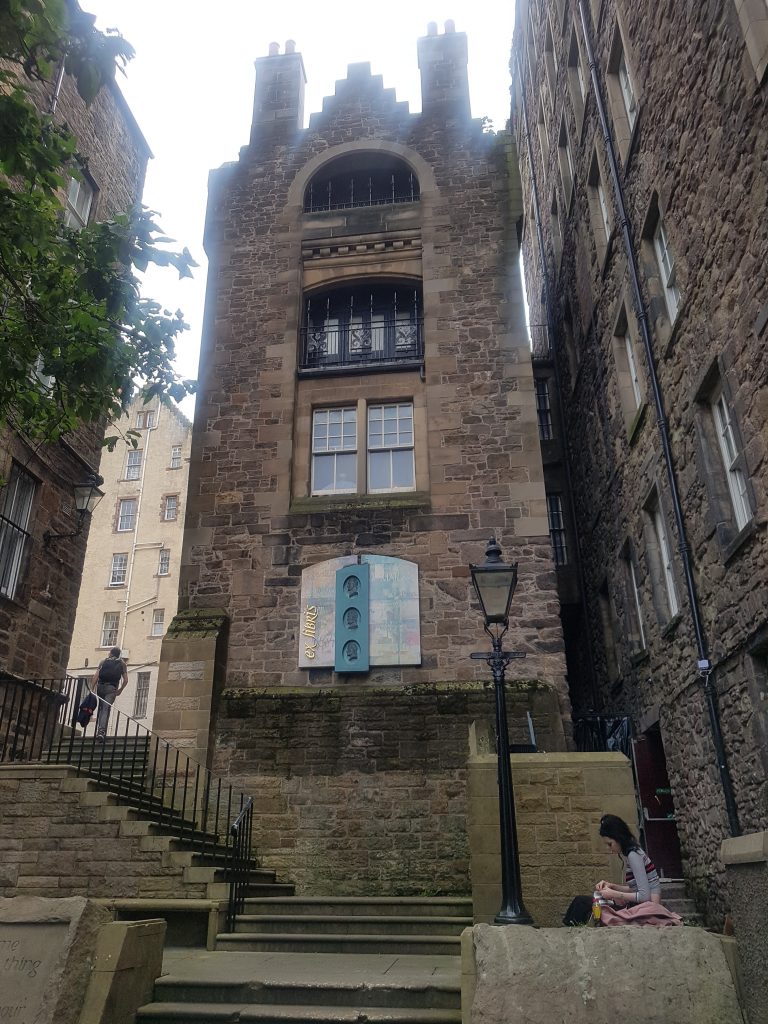
Writers’ Museum photo K. Flude
Often bypassed by the tourists on a visit to the wonderful City of Edinburgh is the Writer’s Museum. It is in one of those remarkable Tower houses which seem unique to the High Street in Edinburgh. Inside, it gives a great introduction to the great writers of Scotland.
‘Is it not strange’ wrote philosopher David Hume in 1757 ‘that a time when we have lost our Princes, our Parliament, Independent Government …..that we shou’d really be the people most distinguish’d for literature in Europe?’ (source: Museum display panel)
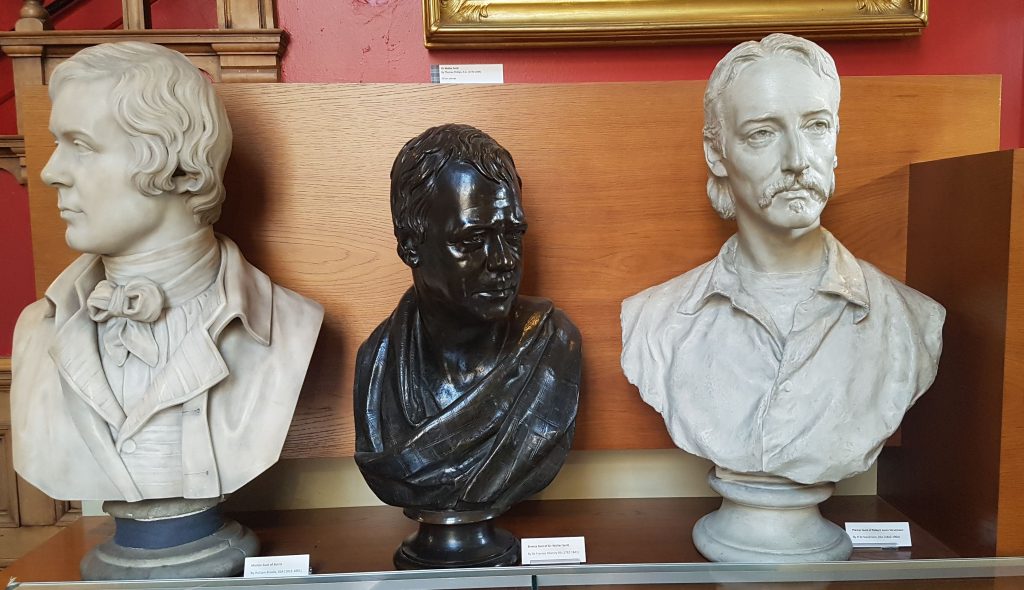
Edinburgh Writer’s Museum Burns, Scott, Stevenson.
A Visual for Burn’s Night ‘Window in the Writer’s Museum, Edinburgh’ Photo by K Flude
1784 – The death in Edinburgh of Alexander Webster, a writer and church minister who is best remembered for the country’s first census. The first UK census was in 1801.
1817 – The Scotsman newspaper publishes its first edition in Edinburgh.
2012 – First Minister Alex Salmond launches a consultation on the SNP Government’s proposals for a referendum on Scottish independence. on the question “Should Scotland be an independent country?”. The voters answered “No” 55.3% and 44.7% voting in favour. (for more on Scottish Independence, see my post here.)
‘The man born under Aquarius shall be lonely and ireful; he shall have silver at 32 years; he shall win wherever he goeth, or he shall be sore sick. He shall have fear on the water, and afterwards have good fortune, and shall go into divers strange countries. He shall live to be 75 years after nature.’
‘The woman shall be delicious, and have many noises for her children; she shall be in great peril at 24 years and thereafter in felicity. She shall have damage by beasts with four feet and shall live 77 years after nature.
The Kalendar of Shepherds, 1604 (quoted in the Perpetual Almanac by Charles Kightly)
Resolutions & Predictions
the Author sporting a Betsy Trotwood aphorism ‘Never be mean, never be false, never be cruel’
The Kalendar of Shepherds predictions for those born in Aquarius, (see above) are so specific they cannot help but be wrong for most people. Surely, the art of the prophecy, is to be vague, be general and to know human nature.
By the 21st of January, we should have an idea of whether we are going to keep to your resolutions or not. And perhaps we should now be tuning them or adapting them to fit our lives as actually lived, rather than on our pious hopes. (for more on prophecy, see my post here).
Wisdom in a Taxi Ride
In 2023, on January 21st after my Uncle Brian’s Funeral. I had a chat with a taxi driver on the way to the railway station . He told me that funerals make him wonder how his behaviour might influence those the people who will, one day, make that special effort to turn up at his funeral. As a young Asian guy, he was thinking ahead quite some way.
I replied that ‘Funerals make me reflect on how much time I have spoiled by not being fully engaged in the moment’. All those conversations where my mind wandered. Those radio programmes I only half heard as I tried to read a book at the same time. All those train journeys, walks in the woods or along the canal while listening to headphones. My visits to relatives where I rushed back to get home as quickly as possible. Being present in the moment was, maybe, the key to improving the quality of life and interactions with others.
Dickens’ solution to the woes of the world
We continued chatting through the short journey. As we arrived in the forecourt of the station he suggested we exchange a final word of wisdom. As we had been talking about history, I turned to Charles Dickens. I told him Betsy Trotwood’s words to David Copperfield:
“Never,” said my aunt, “be mean in anything; never be false; never be cruel. Avoid those three vices, Trot, and I can always be hopeful of you.”
I said that Betsy’s words stem from Charles Dickens’ belief that the key to progress in the world was to ignore the dogma of religion but to live by just one tenet.
‘Treat people as you want to be treated by others.’
In return, he told me of an Islamic teacher who responded to his enquiry. ‘How to ensure salvation given all the many (possibly conflicting) moral teachings and texts there were’. The answer was, if he lived wisely and considered his impact on others, he could be sure of salvation.
By this time, I had missed my train. But the two of us had had a moment of connection. There are plenty of trains from Guildford to Waterloo.
Dickens Philosophy
Dickens was a brilliant propagandist against the evils that are endemic in society. And yet, he was no socialist. He wrote ‘Hard Times’ which is a virulently anti-trade union story. But his recipe for improvement in society was based on implementing the broad understanding of religion, as expressed in these two quotations:
“Thou shalt love thy neighbour as thyself” (Matthew 22:37–39).
“Do to others as you would have them do to you” (Luke 6:31).
T-shirts & the Rolling Stones
Philosophy for life as told to St Patrick by a Druid
I have a lot of t-shirts with quotations from history on them. I suspect I am one of the very few people who store his t-shirts in chronological order. The selfie shows chronologically, the first, and the last is:
“You can’t always get what you want But if you try sometime you’ll find You get what you need”
by Mick Jagger and Keith Richards of The Rolling Stones.
As the Rolling Stones have a big part to play in the musical history of Lindon, here are the lyrics in full and a youtube video.
You can’t always get what you want
I saw her today at the reception A glass of wine in her hand I knew she would meet her connection At her feet was her footloose man
No, you can’t always get what you want You can’t always get what you want You can’t always get what you want But if you try sometime you’ll find You get what you need
repeat above
And I went down to the demonstration To get my fair share of abuse Singing, “We’re gonna vent our frustration If we don’t we’re gonna blow a fifty-amp fuse” Sing it to me, honey
You can’t always get what you want You can’t always get what you want You can’t always get what you want But if you try sometimes, well, you just might find You get what you need Ah baby, yeah Ah
I went down to the Chelsea drugstore To get your prescription filled I was standing in line with Mr. Jimmy And, man, did he look pretty ill We decided that we would have a soda My favorite flavor, cherry red I sung my song to Mr. Jimmy Yeah, and he said one word to me, and that was “dead” I said to him
You can’t always get what you want, well no You can’t always get what you want. I tell you, baby You can’t always get what you want, no But if you try sometimes you just might find, uh, mm You get what you need, oh yeah, woo! Ah, woo! You get what you need, yeah, oh baby Ah yeah
I saw her today at the reception In her glass was a bleeding man She was practiced at the art of deception Well, I could tell by her blood-stained hands, sing it
You can’t always get what you want, yeah You can’t always get what you want, ooh yeah, child You can’t always get what you want But if you try sometimes you just might find You just might find You get what you need, ah yeah Ah baby, woo!
Ah, you can’t always get what you want, no, no, baby You can’t always get what you want, you can’t now, now You can’t always get what you want But if you try sometimes you just might find You just might find that you You get what you need, oh yeah
And here is an early video of the band, with Brian Jones, playing the song. Sadly, it doesn’t have the sublime choir singing the chorus. Youtube will probably play an ad. I don’t make any money from that by the way!
First written on 21st January 2023, revised January 2024, and republished 2026
On this day
1793 Louis XVI of France was guillotined at the Place de la Révolution in Paris. The National Convention convicted him of high treason 4 days earlier
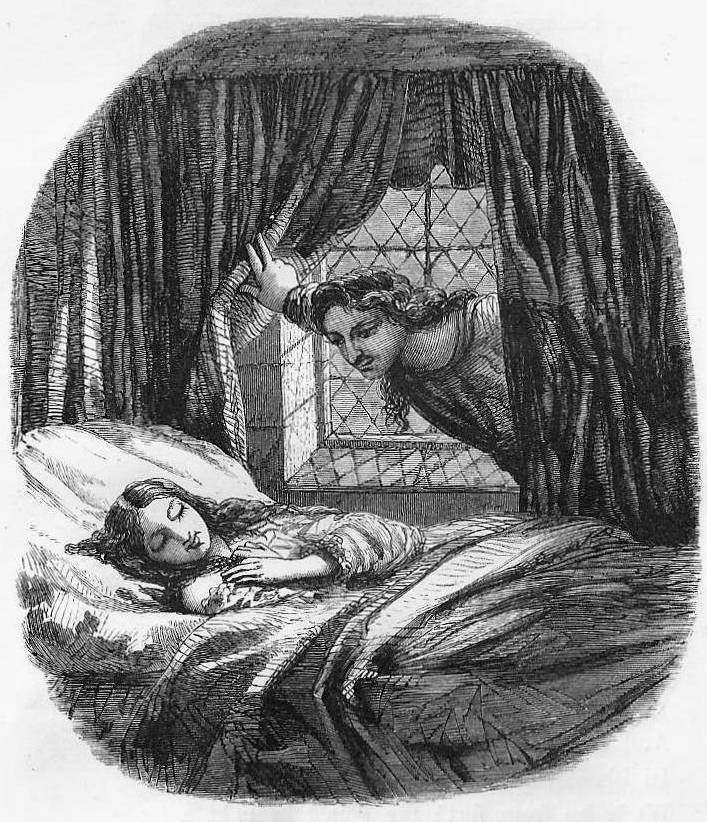
Scene from the Eve of St Agnes & Keats poem. Porphyro looking at the sleeping Madeline by Edward Henry Wehnert (1813-68) Scanned image and text by Simon Cooke https://victorianweb.org/art/illustration/wehnert/8.html
January 20th is the Eve of St Agnes & Keats wrote a poem on the subject. The poem is one of his most important and was written in 1819, published in 1820. Folklore held that a maid would dream of her future lover on St Agnes Eve if she took certain precautions. In particular, they had to go to bed without supper, and transfers pins from a pincushion to their sleeve while reciting the Lord’s Prayer. John Keats used this tradition in his epic poem.
St Agnes was a martyr who, at 13 years old, refused to marry a pagan. She was martyred by being stabbed in the throat. Agnes is well attested and on a list of martyrs dating to AD345. She is the patroness of young women and of chastity. Her feast day is January 21st. I wrote about St Agnes and the Fraternity of St Anne and St Agnes on Distaff Sunday.
The poem begins with a great description of winter.
St. Agnes’ Eve—Ah, bitter chill it was! The owl, for all his feathers, was a-cold; The hare limp’d trembling through the frozen grass, And silent was the flock in woolly fold: Numb were the Beadsman’s fingers, while he told His rosary, and while his frosted breath, Like pious incense from a censer old, Seem’d taking flight for heaven, without a death, Past the sweet Virgin’s picture, while his prayer he saith.
Keats sets up the drama with a poetic description of the folklore:
They told her how, upon St. Agnes’ Eve, Young virgins might have visions of delight, And soft adorings from their loves receive Upon the honey’d middle of the night, If ceremonies due they did aright; As, supperless to bed they must retire, And couch supine their beauties, lily white; Nor look behind, nor sideways, but require Of Heaven with upward eyes for all that they desire.
In the poem, the maid Madelaine goes to sleep to dream of her love Porphyro. He risks everything to visit the young girl, and watches her while she sleeps. She dreams of him. Waking up and seeing him, Madelaine lets him into her bed thinking she is still dreaming.
She realises her mistake and tells him she cannot blame him for taking advantage as she loves him so much. But if he leaves her, she will be like “A dove forlorn and lost / With sick unpruned wing”.
The two lovers escape and run away together.
Keats & TB
Keats was born in a livery inn in Moorgate, in the City of London. He lived in Cheapside, later in Hampstead, and was published in Welbeck Street in the West End. As a young man he trained as a surgeon at Guys Hospital, Southwark. But he never practised, although he did consider a post as a Ship’s Surgeon.
One wet, cold February he went home to Hampstead on the roof of a stage coach. But. he had forgotten his coat, so he got soaked and chilled to the bone. That night, he coughed up blood. His medical and family experience led him to believe it was a fatal sign of consumption. He had lived in a small house with his brother and mother, who both died of TB. Keats had helped nurse them.
Later on, however, he consulted a doctor. He was told his illness was psychosomatic. And his thwarted love for his next door neighbour, Fanny Brawne, was contributing to his illness. As his consumption advanced, he was advised to go to a warmer climate. So, he embarked at Tower Pier by the Tower of London. He transferred to a small sailing ship at Gravesend called the Maria Crowther. On the ship to Italy, he shared a cabin with another consumptive. The two consumptives, had opposite ideas as to whether the portholes needed to be open or closed for their health. Letters he wrote makes it clear he was desperate to stop himself thinking about Fanny Brawne. He got to Rome where he died, achieving, he felt, nothing worthwhile in his life. His memorial stone proclaimed:
“Here lies One Whose Name was writ in Water.”
On This Day
1265– The first English parliament to include not only Lords but also representatives of the Commons holds its first meeting in the Palace of Westminster.
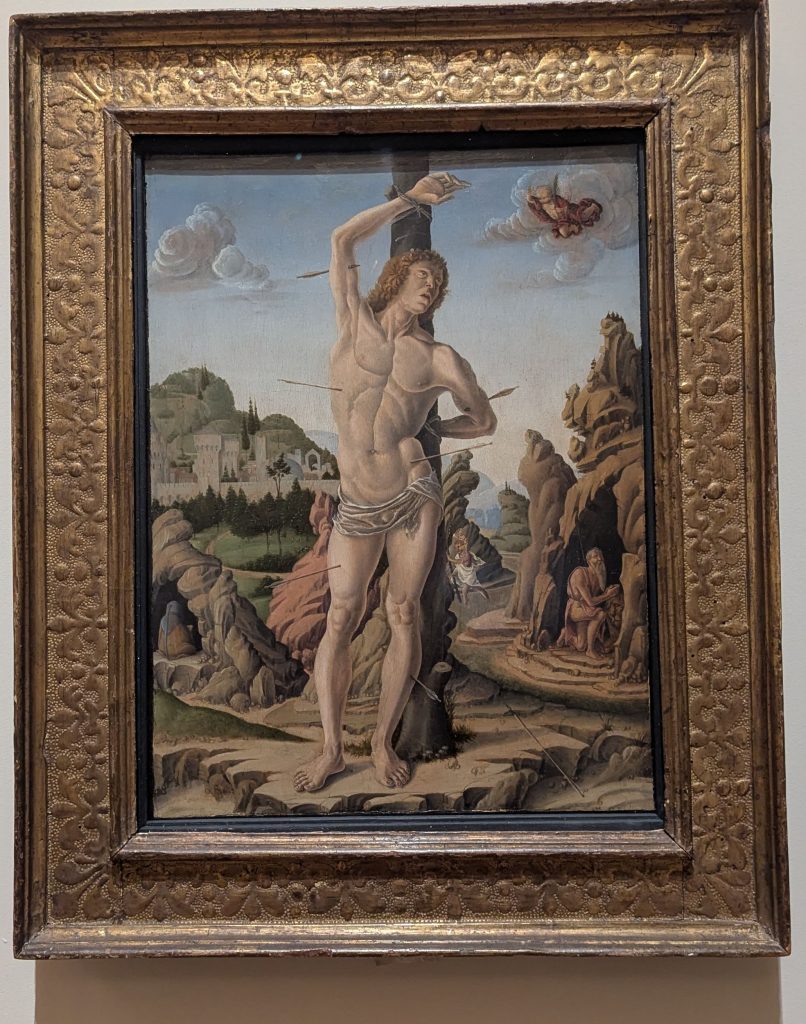
Today is also St Sebastian’s Feast Day. He has become a gay icon, and was celebrated in a Latin language film by Derek Jarman from 1976. (https://en.wikipedia.org/wiki/Sebastiane)
StSebastian by Marco Zoppo, Courtauld Gallery photo K Flude
A full version of the film is available on Youtube, but here are some scenes:
Events Coming up!
January 25th 2026 Reenactors commemorating the execution of Charles I in Westminster