Thank you very much to my subscriber for alerting me to St Kevin’s Day, which is my Saint’s Day. I was aware of St Kev and that the name meant ‘of noble birth’ but that was the extent of my knowledge.
But a little research on Wikipedia while on the train to visit my Dad, revealed that Kev lived to the grand old age of 120, born in 498 and died in 628. As my Dad is 98 and still going strong, maybe he and St Kevin will inspire my longevity?
Briefly, St Kevin met the great St. Columba; had a poemwritten about him by the marvelous Seamus Heaney (https://poetryarchive.org/poem/st-kevin-and-blackbird/); a song by the Dubliners; several mentions by James Joyce and a long-distance path, the St Kevin’s Way, part of the Camino de Santiago network, named after him. And St Kev can help us understand the weather for the rest of June :
‘The weather on St Kevin’s Day will last all month‘.
So that means, sadly. rain for the rest of June. At least in Edinburgh where I currently am.
Live recording of Dubliners’ Song about St Kevin
Coemgen, as he is known in Irish, was a hermit, living in a cave-like ledge above a lake. His piety attracted followers and a monastic settlement. He was known for his ascetic life and love for nature. So, a role model for all us Kevins?
His hagiography was written very late, so little of it can be confirmed. But, like other saintly hermits, he is associated with being tempted by women or the devil disguised as a woman. (St. Anthony the Great, St. Benedict of Nursia, Saint Chrysanthus, St. Vitus, St. Bernard of Clairvaux, St. Hilary etc.) Unfortunately, rather than just resisting his temptress, Coemgen is said to have drowned her. Not so good!
On the other hand, my sister sent me this photo of a souvenir from a shop in Northumberland.
That’s more like it! And oh so true! Clearly we, handsome, clever, positive, analytical Kevins have a lot going for us, despite the name.
For more on the Temptations of Hermits read this article:
Nechita, Andrea.“Offering Body, Pleasure, and Wealth: The Visual Representation of Women Tempting Saints (Fifteenth and Sixteenth Century).”Annual of Medieval Studies at CEU, 20 (2014): 96-112.
On This Day
1726 – Birth of James Hutton – Father of Geology. Today is his tercentenary. An observant farmer (but much more) he realised that ‘”a vast proportion of the present rocks are composed of materials afforded by the destruction of bodies, animal, vegetable and mineral, of more ancient formation” (John Playfair). For example, Sandstone is on hills, and erodes to sand which is taken down river to the delta where it is laid down in the sluggish water. Time changes it into Sandstone, which uplifted into hills, starts the cycle again. He realised that this process must take millions of years, and thought it was part of a never-ending cycle. Both showing that the Creation myth in the Bible was metaphorical at best. At Edinburgh, where he was born, he spotted a layer of Dolerite which once must have been molten and which had forced its way into an earlier strata of sedimentary Rocks. This was Salisbury Crags which takes its place as one of those places key to the development of modern science. For more on the Centenary look here.
First written in 2023. revised June 2024, 2025, On This Day added 2026
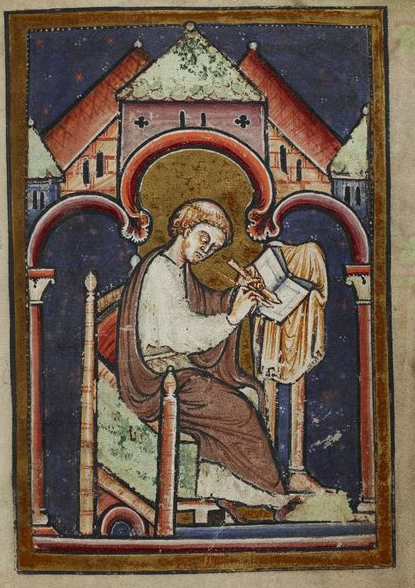
A Scribe – possibly the Venerable Bede. Late 12th Century from Lives of St Cuthbert.
He died on the evening of what we would call the 25th. In ancient times, the Day changed at dusk. So for his contemporaries, he died on 26th May. But, as he shares his day with St Augustine, some celebrate the Venerable Bede on May 27th!
Called the Father of English History, the Venerable Bede was an excellent historian. He set the tone and standard for many centuries of English Historiography. Mostly remembered for the ‘Ecclesiastical History of the English People’. This provides the most trusted account of the events of the Post Roman, Migration, and Anglo-Saxon periods. But he also wrote on time and bible commentaries. (see below). He is said to be the only Medieval Englishman, other than Chaucer to be read by every generation.
Dante’s Bede
So well regarded is he that he is the only Englishman mentioned in Dante’s Paradiso. (I have just discovered that there is another Englishman mentioned. But he is the murderer Guy de Montfort, who fled after the battle of Evesham. He then murdered his cousin in a church, and is in hell according to Dante.)
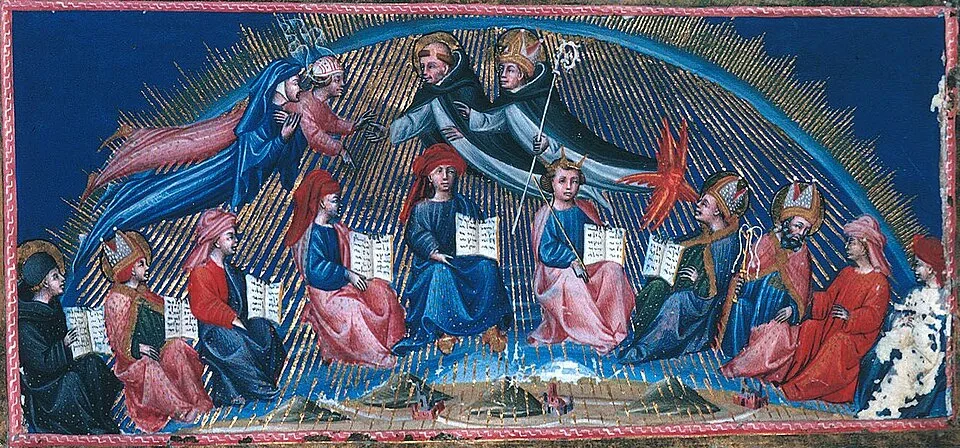
Bede is in Heaven and in the fourth sphere of Prudence. This is the Sun. Dante and Beatrice are surrounded by bright sparks which are the souls of 12 men. These the wise, who illuminate the earth intellectually.
Dante and Beatrice meet twelve wise men in the Sphere of the Sun (miniature by Giovanni di Paolo), Canto 10. (Public Doman via Wikipedia). Pictured are: Thomas Aquinas, Albertus Magnus, Gratian, Peter Lombard, King Solomon, Dionysius the Areopagite, Orosius, Boethius, Isidore of Seville, Bede, Richard of Saint Victor, Siger of Brabant.
‘Next, see the glowing breath of Isidore of Seville flame out, of Bede, and Richard of SaintVictor, who in contemplation exceeded Man. The one from whom your glance returns to me, is the light of a spirit, who, of profound thought, seemed to himself to reach death too slowly: it is the eternal light of Sigier, who, lecturing in the Rue du Fouarre, syllogised truths that brought him hatred.’
He is Venerable. But not only in the general sense of being wise, old and respected, but also in the technical Catholic sense:
‘ a title given to a deceased person who has attained a certain degree of sanctity but has not been fully beatified or canonized.‘ (Oxford Languages)
In 1899, the Catholic Church honoured him with the title of Doctor of the Church. This title is given to someone holy who has contributed to the theology of the Church.
He is considered by some to be the best historian in olden times, only equalled by Herodotus (said Thomas Carlyle). Thucydides surely says I! (Note: Herodotus is known as the ‘Father of History’ for his storytelling and breadth of the scope of his attention. While Thucydides didn’t tell tales, he concentrated on empirical evidence and so is known as the Father of Scientific History).
A Good Historian?
Bede is so good because he checked his sources and had access to a wide range of books. He even had a line to the Vatican so he could check his facts with Vatican records. This in the 8th Century! The Venerable Bede is the polar opposite of Geoffrey of Monmouth, (writing in the 12th Century). If Bede mentions a person or an event then they are accepted as part of the story of the English. By contrast, if Geoffrey of Monmouth mentions a person or event, without further corroboration, then historians tend to consider it a story, myth or simply made up by Geoffrey.
But, the truth is not so straightforward. Bede is not without his biases. Nor were his sources always reliable. And he is not above accepting myth, legends and miracles as fact. Geoffrey also has access to some, probably, oral traditions. So that some (but which?) of his many tales of the Kings of Britain may hold considerable historical information.
Bede’s Influence on English History
Bede followed Gildas (A British Monk writing in the 6th Century) in wondering why God allowed the native Christian Britons to be defeated by the foreign Pagan English. Gildas assumed God was punishing the Britons because of the evil deeds of their so-called Christian Kings. Bede extends this to argue that God is punishing the Britons for not trying to convert the English to Christianity. God knows that the English, when converted, will be much better Christians than the Britons seems to be Bede’s understanding.
This starts a histographical trend for the English to think of themselves as the chosen people. By contrast, the Britons (Welsh, Scots and Irish) are feckless Barbarians (they thought). Bede concentrates on the English. Countless generations of Historians have either left out the Britons, or demeaned them in their histories of England and indeed of Britain.
For example, most histories of Kings, deal only with England. They either begin with William the Conqueror or Alfred the Great and omit any British, Welsh, Scots or Irish Kings. Except, of course, for my book on the Kings and Queens of Britain. This starts with the largely legendary Kings of Britain, and includes some Welsh and Scottish Kings. To buy it, you will find details of it here.
So Bede is a great historian without whom we would have an even less clear idea about what happened in the centuries following the Roman Period. He also, contributed to an Anglo centric view of history. He was writing in Northumberland at the Monastery of Jarrow. So is more sympathetic to Northumbria than to Wessex, Mercia, and the British Kingdoms.
Bede’s Books
He wrote over 60 books. One was about the theological science of computus. In particular, the dating of Easter. The British Church had one method, the Catholic Church another. This contributed to a series of confrontations between the 2 Churches. And was only finally resolved at the Synod of Whitby in the favour of the Catholic Church.
Bede was instrumental in making Dionysius Exiguus idea of dating from the birth of Christ as the standard system. He also thought the Catholic calculation that Jesus was born 5000 years ago was wrong. He used the Bible to calculate the more ‘correct’ date was was 3952 BC. Archbishop Ussher in the 17th Century took Bede’s calculation and improved it and suggested the proper date was 4004 BC.
For more about Dionysius Exiguus and the division of time, see my post here.
First Written on May 26th 2025, revised and Dante expanded 2026
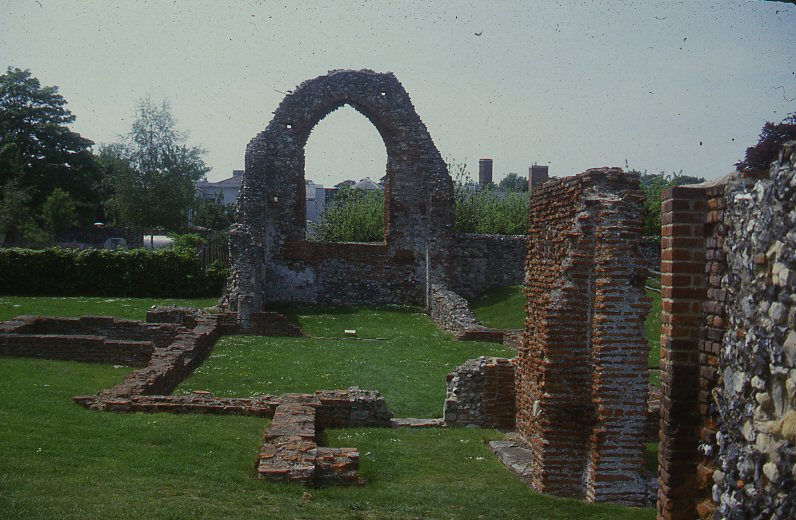
Ruins of St Pancras, Canterbury Photo: K Flude (note the reused Roman Bricks.)
St Pancras and the Ice Saints
It has been unusual cold in the last few days. You can blame this on the St Pancras and the Ice Saints. These are saints with feast days from May 11th to May 14th. They are: St. Mamertus, St. Pancras, and St. Servatius (and in some countries, Saint Boniface of Tarsus – Wikipedia). They represent a medieval belief that there was often a cold snap in early May. So the idea of the Ice Saints was probably to help persuade farmers to delay sowing until later in May. But modern statistics disprove this, but it is true that a late frost can cause havoc with crops.
St Pancras in Rome
He was a 14 year old who refused to give up his Christian Faith during the persecution of Christians by the Emperor Diocletian. He was beheaded on the Via Aurelia, in Rome, traditionally, on 12 May 303 AD. His body was buried in the Catacombs, but his head is kept in a reliquary in the Church of Saint Pancras in Rome.
Pancras means ‘all-powerful’ in Greek. His youth makes him the Patron Saint of children, but he is also the patron saint of jobs and health. He is ‘invoked’ against cramps, false witnesses, headaches, and perjury.
St Pancras in Canterbury
Pope Gregory is said to have given St Augustine relics from St Pancras when his mission came to Kent in 597AD. They built a church dedicated to St Pancras in Canterbury. The ruins still survive in the grounds of what is now St Augustine’s, Canterbury (see picture at top of this post).
St Pancras in London
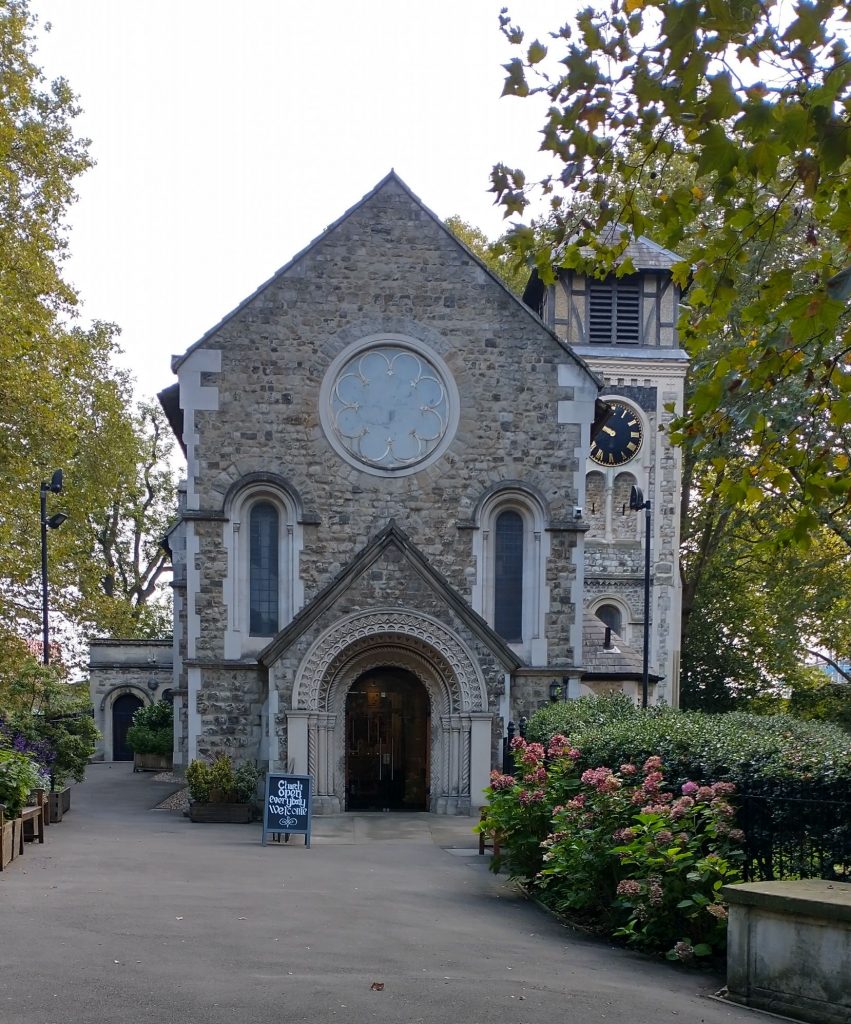
St Pancras, Old Church, London (Photo: Kevin Flude)
This story is partly responsible for the claims that St Pancras Old Church, in Camden (pictured above) is a very old foundation. It is claimed there was a late Roman place of worship here. But there is very little solid evidence for this. It is also argued that, if it isn’t late Roman, then it dates to just after 604AD. This is when St Mellitus, sent by St Augustine, established St Pauls Cathedral. It is suggested that Mellitus also founded St Pancras Church. St Pancras’ Church was a Prebend of St Pauls Cathedral (a Prebend provides the stipend (pay) to support a Canon of a Cathedral). But this is not evidence it was established as early as the Cathedral was, and there really isn’t any other credible evidence for a 604 date.
When the Church was restored, the architects said it was mostly Tudor work with traces of Norman architecture. However, it was reported that a Roman tile or two were reused in the fabric. This is about the only evidence, but it helps keep the legend going.
If you read the Wikipedia page, you will see evidence of two strands to the contributions. One is playing down the legends of its early foundation. The other trying to keep hold of its place as among the ‘earliest sites of Christian worship’. Read the wikipedia page here: https://en.wikipedia.org/wiki/St_Pancras_Old_Church to make up your own mind.
It is a lovely Church, on an impressive site, with links to Thomas Hardy, and Sir John Soane whose tomb is the design inspiration for the iconic Red Telephone Box.
As Patron Saint of Headaches, St Pancras Day is a good day to make worms come out of your head. Or so say the Fairfax Household Book of the 17th/18th Century as quoted in Charles Kightly’s ‘The Perpetual Almanac’:
‘To make a worm come out of the head. Take, in May, the marrow of a bull or cow, and put it warm into the ear, and the worm will come forth for sweetness of the marrow.’
Generally,willow bark was used for headaches. We know this would have worked as the bark contains salicin, which is converted by the body into salicylic acid. This is a precursor to aspirin (acetylsalicylic acid). But it is not as effective.
On This Day
113 – Trajan’s Column is finished in Rome. Reliefs sculptures on the Column celebrate his victory over the Dacians. There is a copy made of plaster on display at the V&A. The sculptures provide a prime document on the Roman army.
1593 – London playwright Thomas Kyd is arrested and tortured. He lived with Christopher Marlowe. In the search of their rooms, it was claimed they found evidence of atheism and blasphemous documents, including the claim that Jesus was homosexual. Kyd claimed the documents were Marlowe’s. Marlowe was awaiting news of whether he was going to prosecuted, when he was murdered in a tavern in Deptford, possibly by Government agents.
First Published in 2024, revised 2025 OnThis day added in 2026
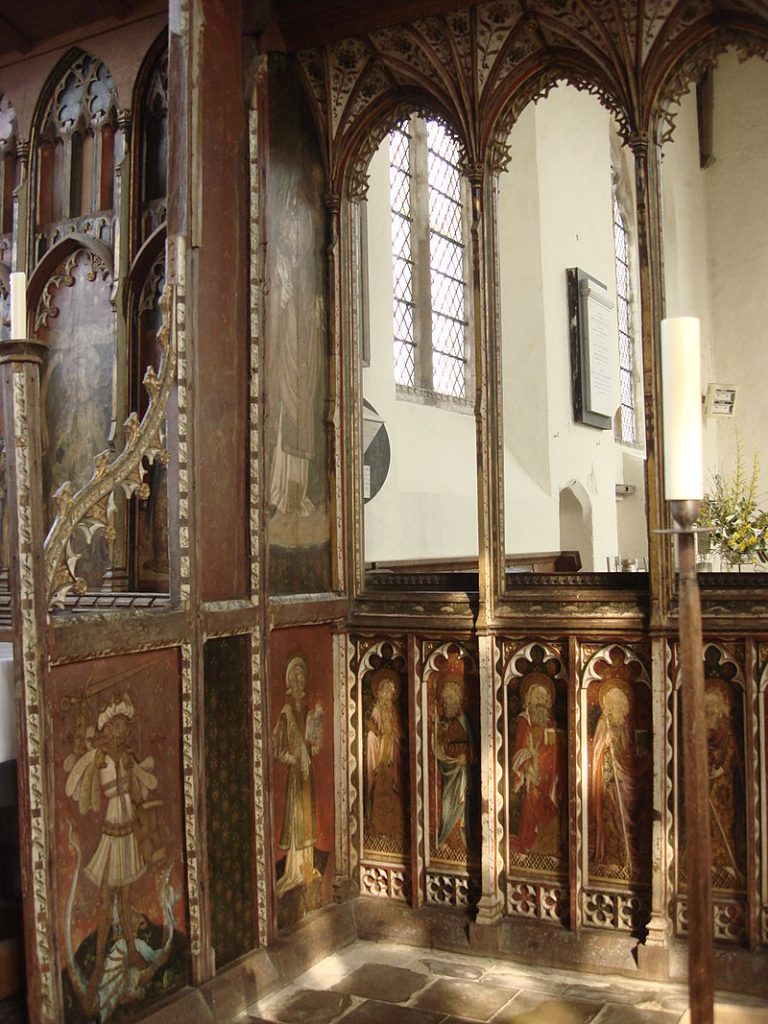
Rodmas – Rood screen in St. Helen’s church, Ranworth, Norfolk by Maria CC BY-SA 3.0
Rood is another word for the Cross. Parish Churches used to have a Rood Screen separating the holy Choir from the more secular Nave. This screen was topped with a statue of the Crucified Jesus nailed to a Rood. So, Roodmas, is the festival of the Holy Cross. Roodmas is celebrated on May 3rd and September 14th, although the Church of England aligned has itself with the Catholic Church’s main celebration on September 14th.
See my post on September 14th here for more on the True Cross.
Object of the Week
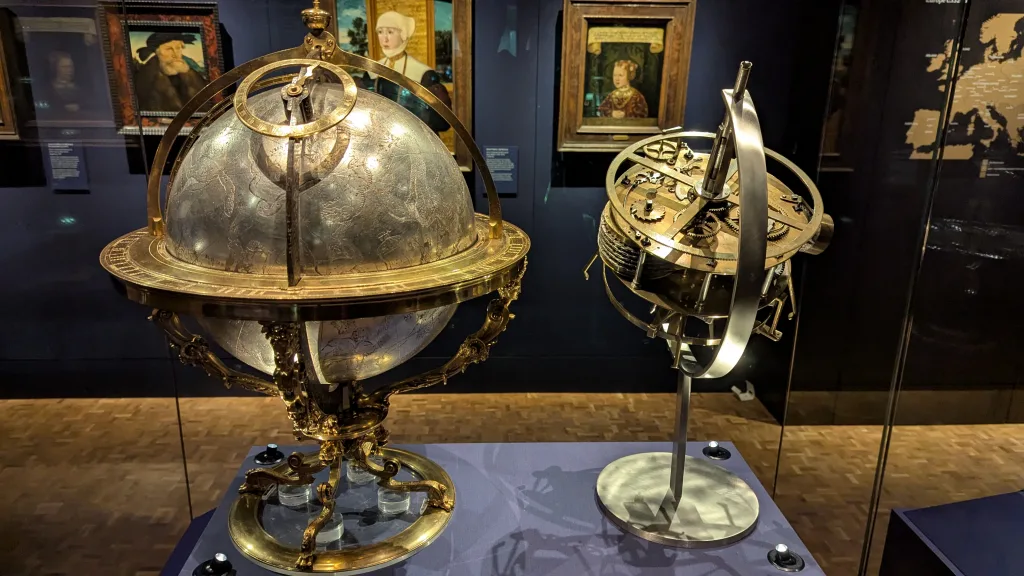
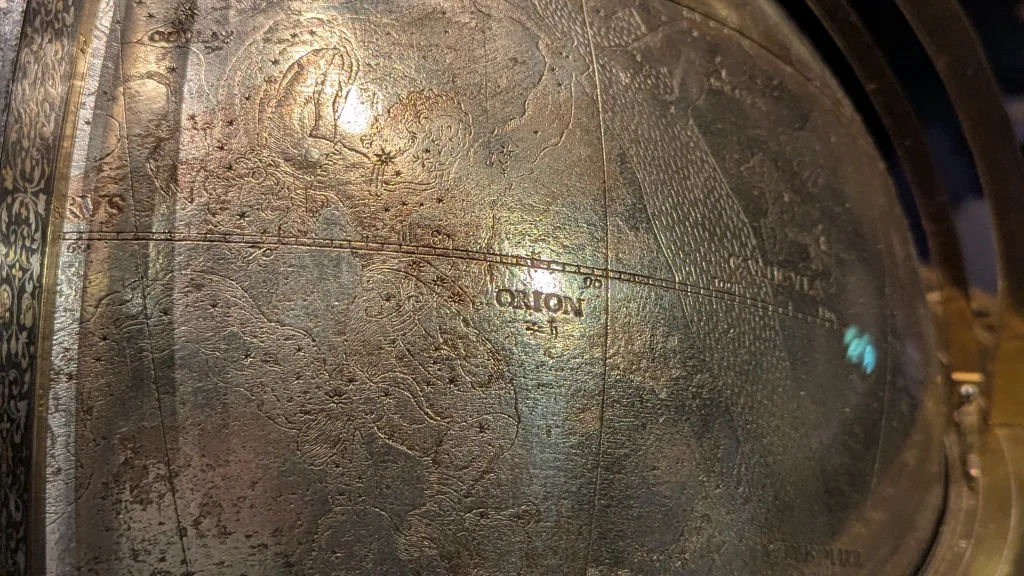
Mechanical Celestrial Globe, 1575 (Holburne Museum Bath) Photo K Flude
I spent a couple of days in Bath and revisited the Holburne Museum. Here I saw this amazing object from the 16th Century. The Globe is a model of the universe, and built to show the movement of the constellations, but it also tells the time and date. So the user can see when a constellation appears above the horizon and where it will be in real time. The mechanics are designed to be seen from inside the Globe, so reading it from the outside requires a mental adjustment to the mirror image of the stella sphere. It also show a pre-Copernican view as the stars were imagined as if on the inside of a huge sphere circulating around the earth. For more information please read the label below.
Museum Label for Celestial Globe.Close up of the surface of the Globe showing Orion. Photo K Flude
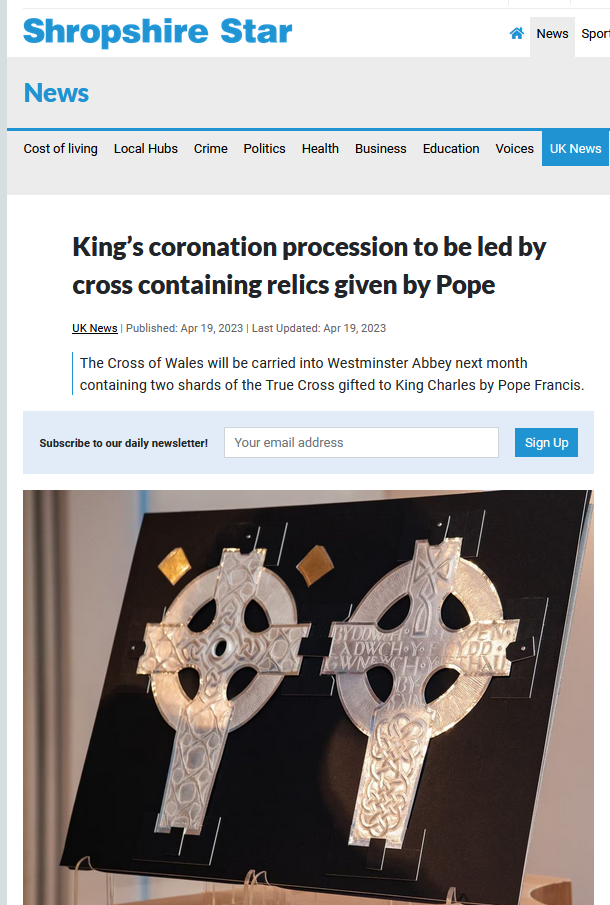
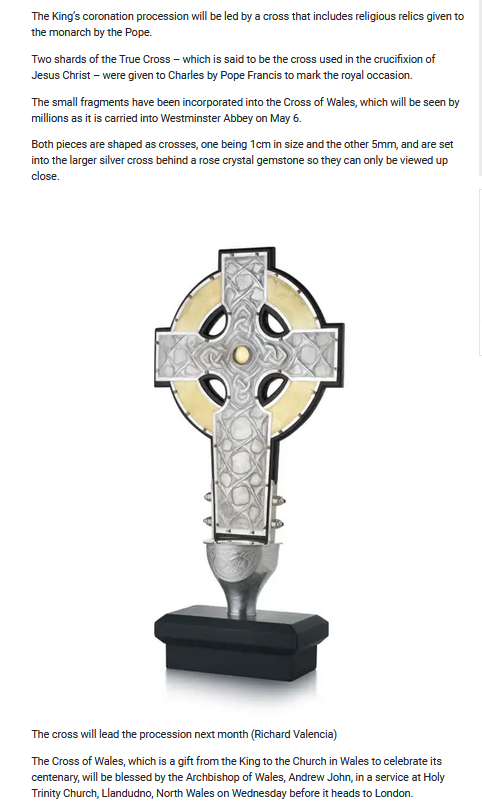
The Shropshire News reported that two pieces of the True Cross were given to Charles III by the Pope for the Coronation. They were installed into a cross called the Welsh Cross. This was part of the Coronation Procession. The King gave the Cross (I assume with the pieces of the Holy Cross) to the Church in Wales. Let the Shropshire News tell the story:
It is a clear reminder that we are subjects not citizens and news, as a nation, we still set store by superstitions.
The Duke of Buckingham and the True Cross
The Duke of Buckingham had a piece of the True Cross in his collection, which he kept at York House in the early 17th Century. How he got it, I don’t know. But I think he must have acquired it in the aftermath of the destruction of the Reformation. John Tradescant, who looked after the Duke’s collection until Buckingham was murdered, had a piece of the True Cross. Tradecant created Britain’s first Museum, Tradescant’s Ark. Again, I suspect (without any evidence) that he got the fragment from Buckingham. Was he gifted it? Did he acquire it after the murder? Or shiver off a timber fragment hoping no one would notice?
First Written on May 3rd 2023, revised 2024, 2025, Object of the Day added 2026
Flora (Floralia festival named after her) on a gold aureus of 43–39 BC Wikipedia photot by АНО Международный нумизматический клуб
On the 28th of April began the Floralia. It continued to the Kalends (15th) of May. According to Ovid in the ‘Fasti’ Book IV, the Romans celebrated Flora, the Goddess of Spring. The Floralia celebrated flowering, blossoming, budding, planting and fertility.
Flora was one of the 15 Roman Deities offered a state-financed Priest. Her home in Rome, was on the lower slopes of the Aventine Hill near the Circus Maximus.
The Circus Maximus is the large long arena in the middle of Rome. Model Musee Arte et Histoire, Brussels, photo K Flude
Celebrations began with theatrical performances, at the end of which the audience were pelted with beans and lupins. Then there were competitive games, and spectacles. The latter, in the reign of Galba, including a tight-rope walking animal. A monkey you might guess but no, it was a tight-rope walking elephant!
The Year of the Four Emperors
Incidentally, Galba only survived for 7 months as Emperor. A little longer than our Liz Truss’s 44 days. But then she was not murdered by a rampaging mob at the end of her reign. It was the year known to history as the year of the 4 Emperors. (great description by Tacitus here).
Spectacles and Battles
Juvenal records that prostitutes were included in the celebration of Floralia by dancing naked, and fighting in mock gladiatorial battles. There is a raging debate about the existence of female gladiators. A burial in Southwark has been said to be one such. To hear what Natalie Haynes has to say on the subject look here🙂
Fauns, Satyrs, Goats and Hares
Hares and goats were released as part of the ceremonies. These animals were both considered to be very fertile and have a ‘salacious’ reputation! (Satyrs or Fawns were, famously, obsessed with sex and were half man half goat. A man can still be referred to, normally behind his back, as an ‘old goat’). Fauns were Roman, Satyrs Greek. The one half man half goat, the other half man half horse. It all got a little mixed up and fauns became very similar to satyrs.
1792 – France invaded the Spanish Netherlands to begin the French Revolutionary Wars which begin a period of near continuous European War until the defeat of Buonaparte in 1815.
1945 – Mussolini and mistress are shot by the Italian Resistance.
1967 – Muhammed Ali refuses his induction into the US Army on moral grounds. ‘I ain’t got no quarrel with them Viet Cong’. He said.
Written in 2023 revised April 2024, 2025, On This Day 2026
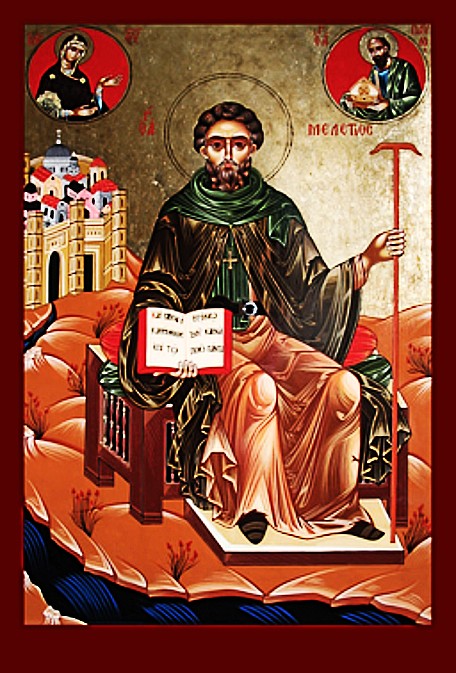
St Mellitus (Source: from saint-mellitus-of-canterbury-died-624
St Mellitus was the first Bishop of London (AD604) and the third Archbishop of Canterbury. But was he really? No, he was the first Bishop of London of the English Church. There were many before him. We know there were bishops of London from Britannia during the Roman period. And, according to John Stow, London’s first history. there were also post-Roman bishops. That line of Bishops ended, in 584 AD, when the 14th Bishop, Theanus, fled London. He headed for Wales to escape the Anglo-Saxon threat. However, even Stow was uncertain whether the list was genuine.
In 314 a Church Council or Synod was called at Arles, in France. Amongst those attending were three bishops from Britain, (and a Deacon and a presbyter) :
Adelfius “de civitate Colonia Londenensium” – that is, from the “colonia of the people of London”.
(Wikipedia)
The fact that two came from London suggests to some a mistake. Adelfus, perhaps, was either from Lincoln or Colchester which were Colonies. The Synod was called by the Emperor Constantine. Amongst its acts were to order that Easter should be held at the same time throughout the Empire. (See also my post on the Synod of Whitby which fixed the date of Easter in Britain as late as 684). They also banned Races, and Amphitheatre Games. and excommunicated all actors and charioteers. But it gives us our first certain facts about the origins of Christianity in Britain.
The Augustinian Mission and Mellitus
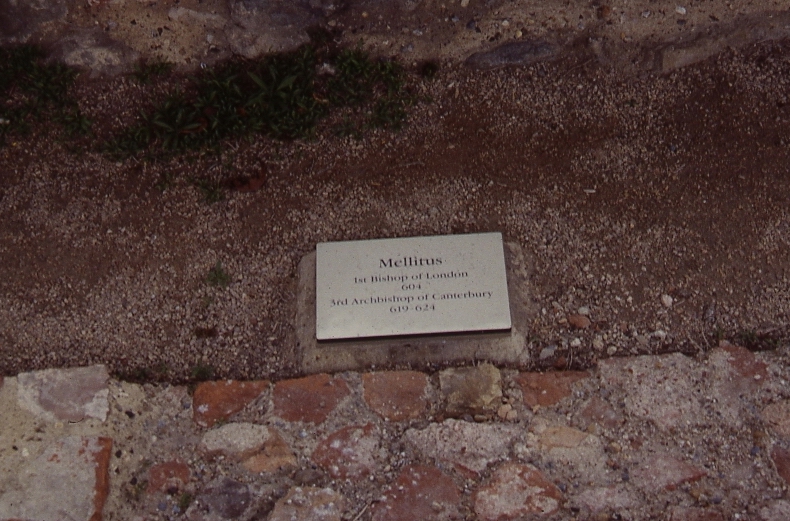
St Mellitus Burial Place, St Augustine’s Abbey, Canterbury. Photo K. Flude
In 597, the Augustinian Mission came to Kent. Mellitus was sent by Pope Gregory to join St Augustine’s mission in 601AD,. He was then sent to London to set up St Pauls and become its bishop (604). London was under the control of the Kingdom of Essex in those days. The King was Saberht, who was the nephew of St Ethelred, King of Kent. Saberht accepted Christianity but when he died. His heirs reverted to paganism and kicked Mellitus out. Mellitus went into exile in Gaul but came back to become the third Archbishop of Canterbury. He was buried in St Augustine’s Abbey in Canterbury. He is known as St Mellitus of Canterbury. St Mellitus had gout so is the go-to Saint for sufferers of gout.
London reverted to paganism until 654AD when St Cedd became its next Bishop.
1925 – McVitie’s Chocolate Digestive was created. There were made in Stockport and in Harlesden, London. I have moored my narrowboat outside the factory and been kept awake by the churning of chocolate in vast vats. News stories suggest that the Digestive was meant to be eaten with the chocolate on the bottom side. This is one of the most ridiculous things I have heard! But apparently it helps the chocolate get to your taste buds that bit quicker. But judge for yourself and read this page for the facts. And this one for more on the history of the Chocolate Digestive.
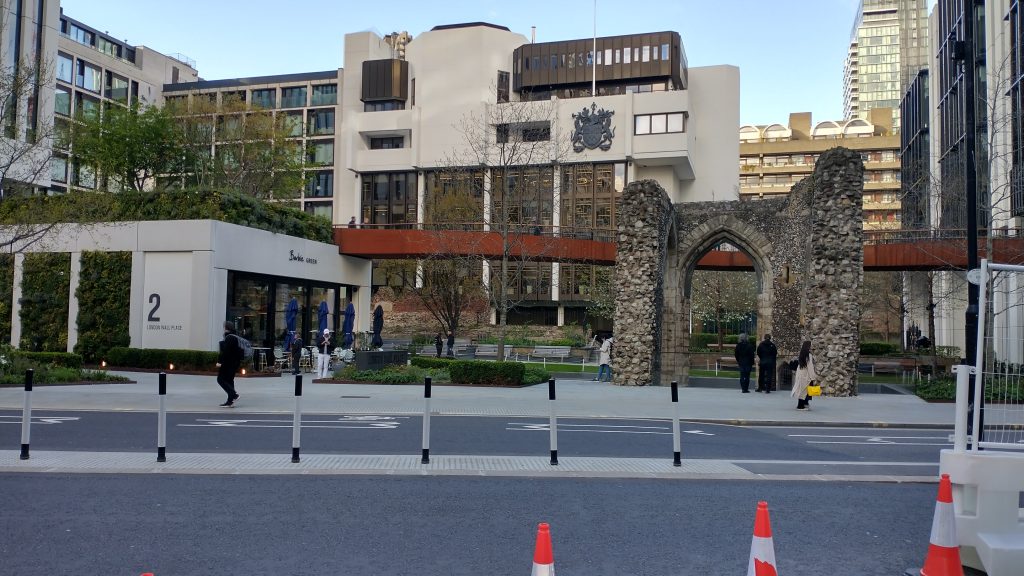
St Alphage. Church Tower on right, City Wall to left. Photo K Flude
I first came across St Alphage when I was working at the Museum of London. The Museum was built on the High Walk at London Wall. The raised Courbusian Walkway looked down on a ruin of a Gothic Church Tower, almost destroyed during the Blitz. This was St Alphage, a Church dedicated to the Saxon Archbishop of Canterbury. (Alphage is also spelt Alphege or Alfege or Ælfheah.)
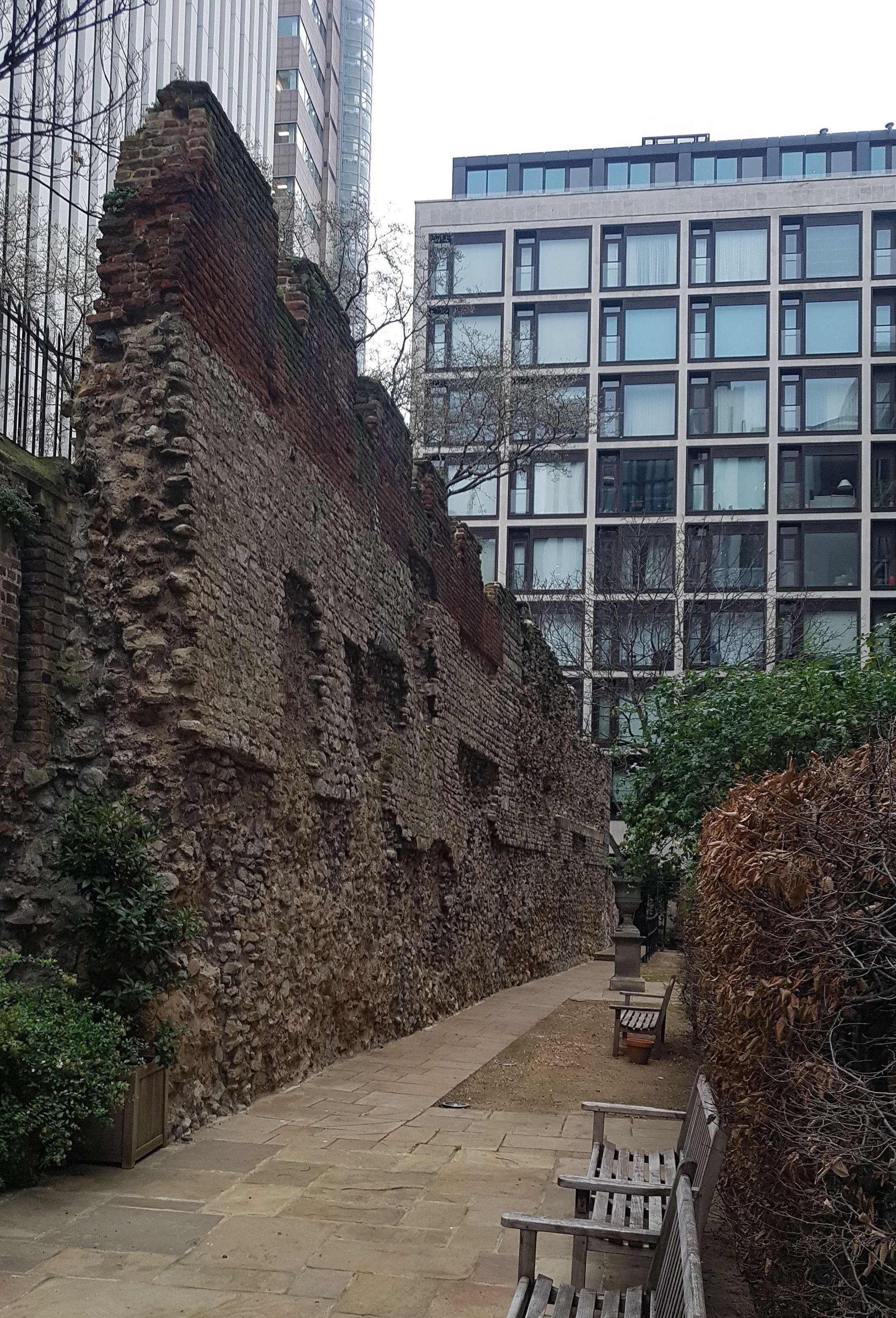
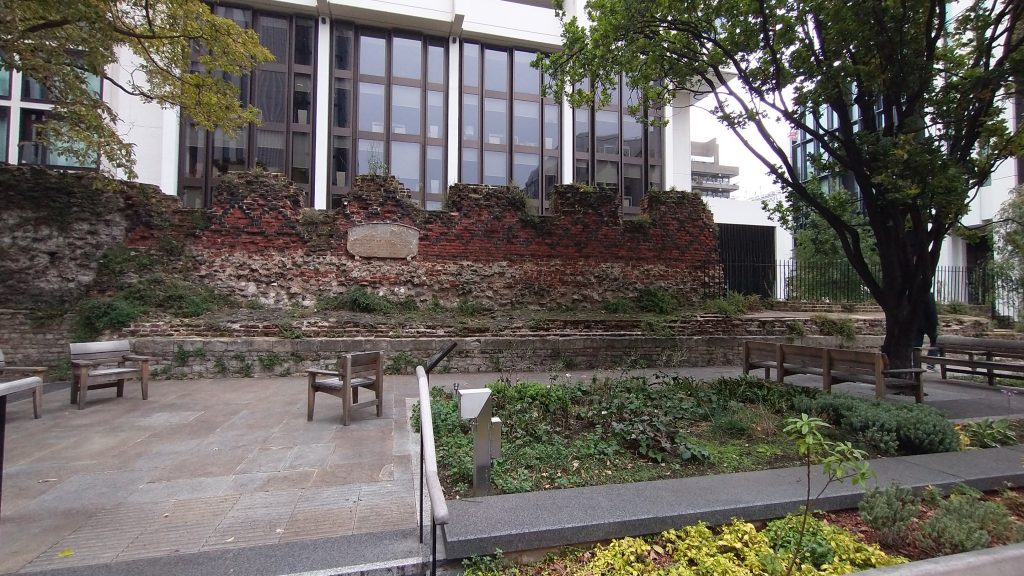
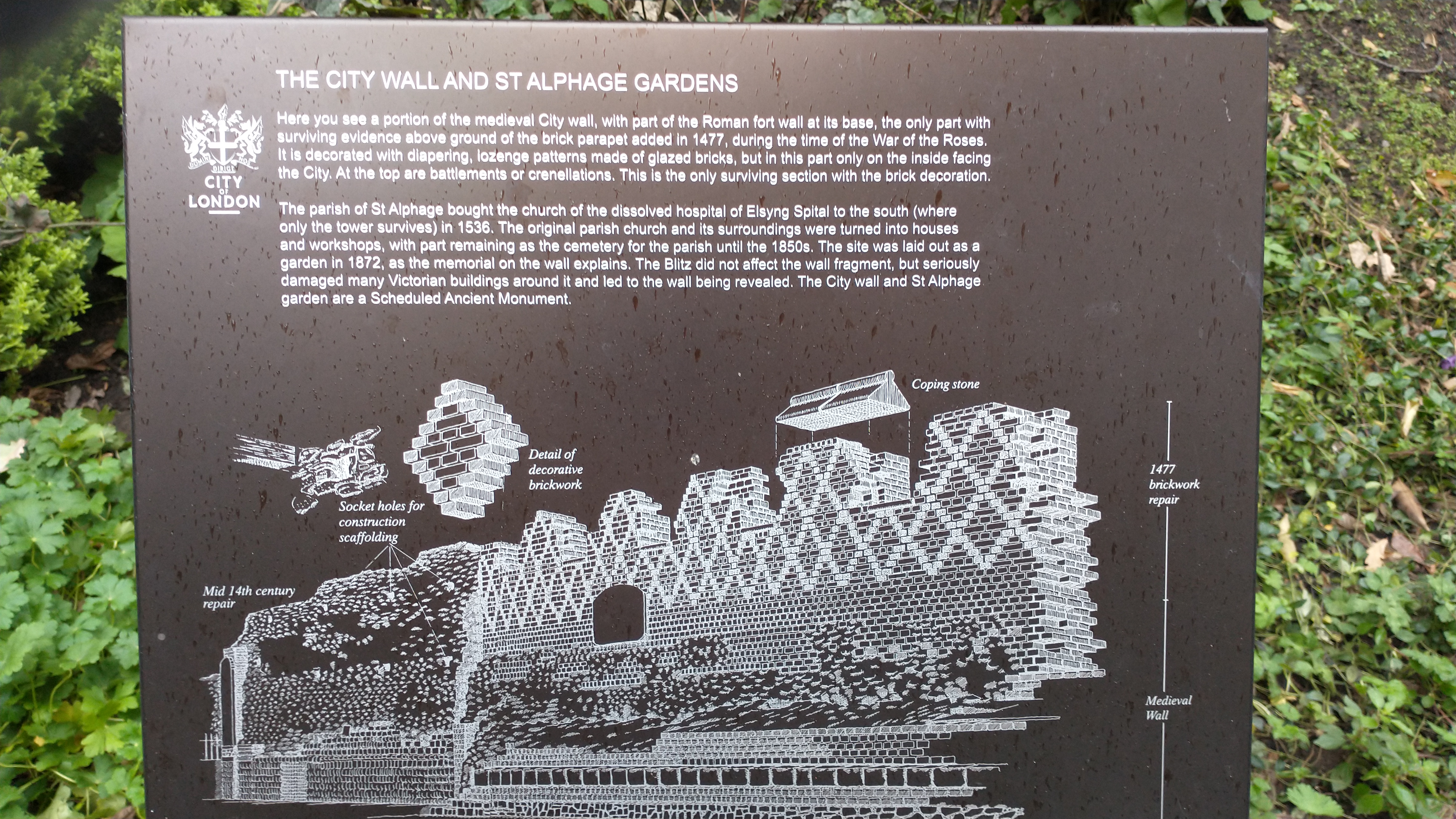
On the other side of the Walkway was the old graveyard of the Church. This preserved one of the very best sections of the old London Wall. Special because on one side its full height was displayed. On the other, the only crenelated bit of the City Wall survived. And the only surviving part of the Wall dating to the War of the Roses.
St Alphage Roman and Medieval WallThe Crennelated Red Brick Section dates to 1477, during the War of the RosesSt Alphage Wall explained on an information plaque.
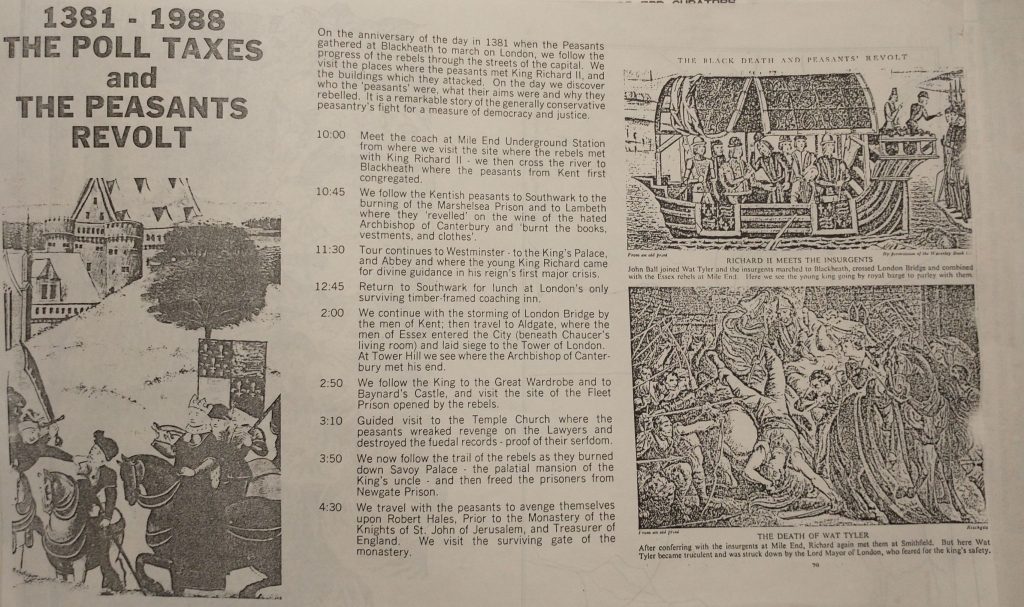
In the 1980s fellow Museum of London Archaeologist, Paul Herbert and I set up a Guided Walks company (Citisights of London). Our walks started from outside the Museum of London, and so St Alphage formed a big part of our success. It led to Guided Walks and tours being a big part of my life. So, St Alphage, thank you!
A Citisights Day Tour the Peasants Revolt (1980s)
St Alphage, Elsyng Spittle and St Mary
The Church was previously a monastic settlement called Elsyng Spittle (aka St Mary within Cripplegate). The Augustinian Canons looked after 100 blind men. It was refounded by Williain Elsing, and dissolved by Henry VIII in 1536. The Church was kept for a Parish Church. But the Puritans were not keen on dedications to St Mary. So, they renamed it after a London based Christian Martyr.
It remained a Parish Church until damaged in an air raid in World War One. (possibly on 8th September 1916 in a Zeppelin Raid – but I am speculating). The Church was partly demolished in 1923, leaving the Tower. The lower part of the Medieval Tower survived bombing in the Blitz. At 12.15 am on 25th Aug 1940, the first bombs on the City of London fell nearby in Fore Street. But the tower was hit in 1940. It was listed Grade 1 in 1950. Kept by the rebuilding of London Wall, and the Barbican area. Then substantially benefitting from a remodelling of the area in an excellent scheme of 2022.
St Ælfheah of Canterbury and Greenwich
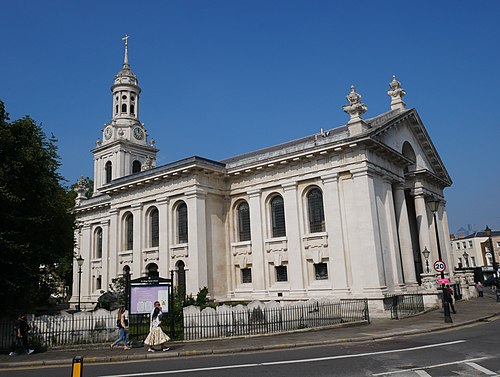
StAlfege Greewich – Doyle own work Wikipedia CC BY-SA 4.0
St Ælfheah was captured during a Viking attack on Canterbury. The Viking hoard relocated to Greenwich where they tried to negotiate a fat ransom for him. He was one of the richest men in the Kingdom. This is what the Anglo Saxon Chronicle says:
.. the raiding-army became much stirred up against the bishop because he did not want to offer them any money, and forbade that anything might be granted in return for him. Also they were very drunk, because there was wine brought from the south. Then they seized the bishop, led him to their “hustings” on the Saturday in the octave of Easter, and then pelted him there with bones and the heads of cattle; and one of them struck him on the head with the butt of an axe, so that with the blow he sank down and his holy blood fell on the earth, and sent forth his holy soul to God’s kingdom.
St Alfege Greenwich, which is now a lovely Hawksmoor Church is said to be on the site of St Ælfheah‘s death. Thorkell the Tall tried to save the Archbishop, but failed and subsequently changed sides and joined the English King. Thrum, who was converted by Alphage, ended his agony by hitting him on the head with the butt of an axe. This seems like a strangely Viking form of mercy!
St Alphage’s body was taken to St Pauls Cathedral where it became venerated and brought income to St Pauls. His remains were removed in suspicious and violent circumstances by soldiers of King Cnut who translated the Saint’s bones to Greenwich. It is suggested King Cnut was punishing London for their opposition to him.
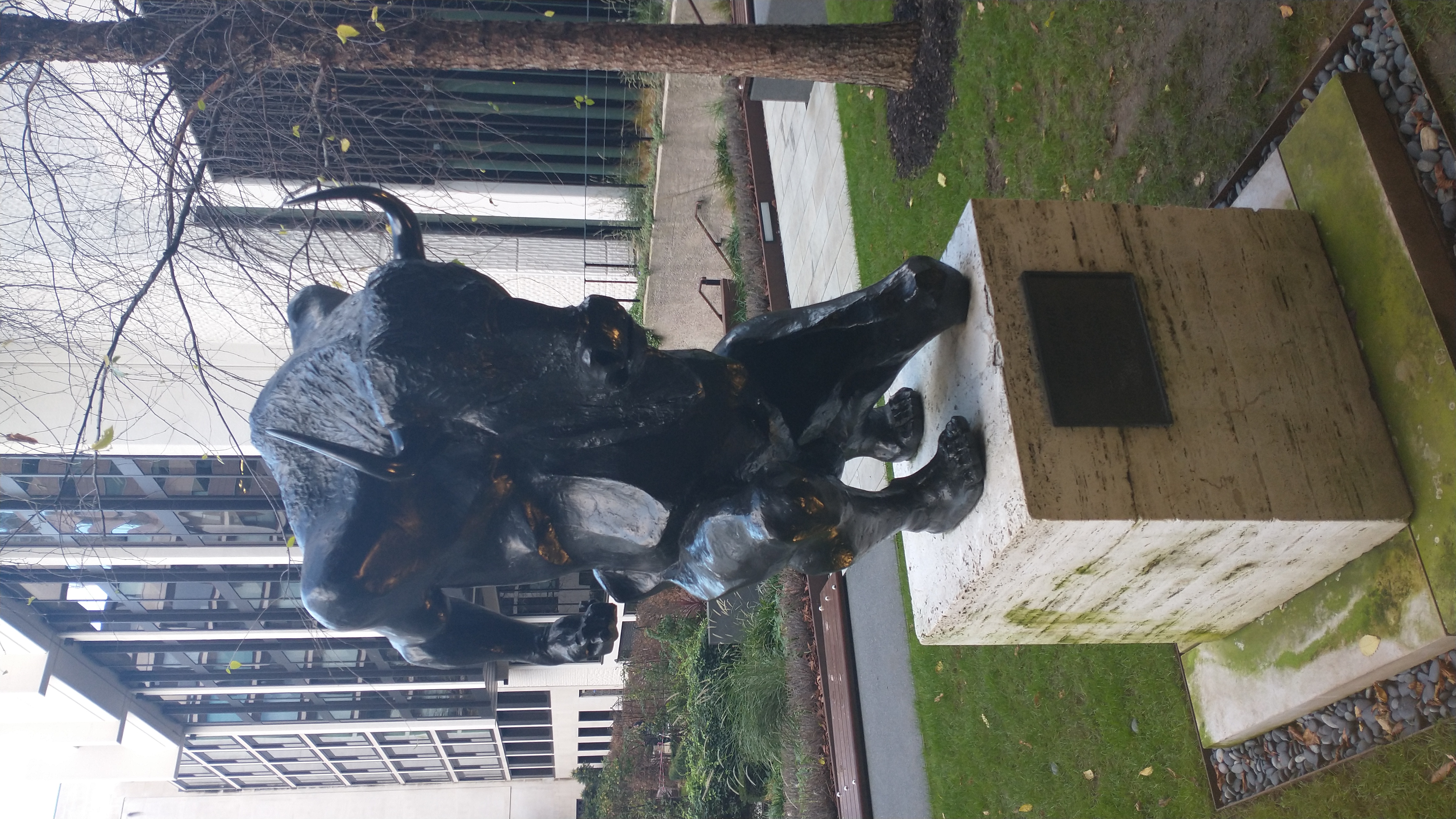
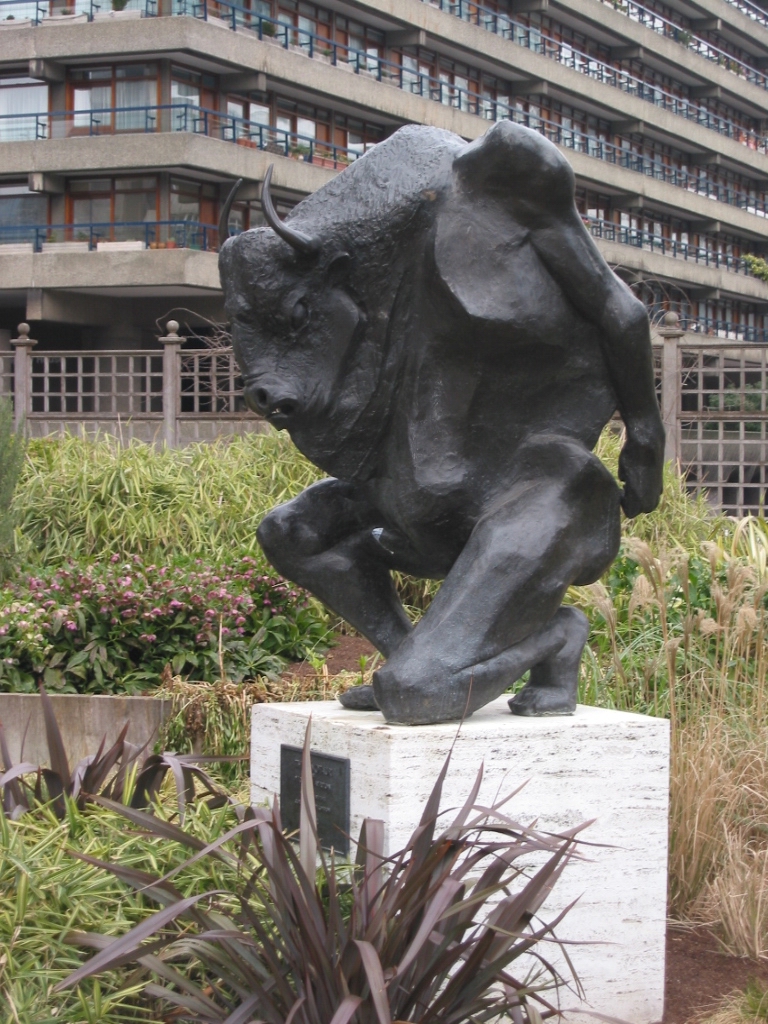
The Minotaur by Michael Ayrton
Also, part of the experience of visiting St Alphage from the High Walk was the statue of the Minotaur. I first came across this phallic Bull in Postman’s Park and am very fond of him. Then it disappeared and reappeared on the High Walk. Now it is on the ground level near the garden of St Alphage.
I understand that Michael Ayrton wanted to make a point about the destruction of London. He felt that the developers were more destructive than the Luftwaffe. They were like a Bull in a China Shop! So he created this statue of a very vigorous Bull (represented by the Minotaur). It is a very unusual work of art in that it sports a fully erect penis. Art History is full of naked women, but the erect male organ has largely not been seen to be a fit subject for art. For more about Ayrton follow this link.
The Minotaur in its present positionThe Minotaur on the High Walk
On This Day
1775 – Battles of Lexington and Concorde begin the American Revolutionary War.
Sketch from an old print. Francis Drake being knighted by Queen Elizabeth I. In fact, the Queen delegated the dubbing to a French Diplomat
The Queen’s half share in the profits of the Golden Hind’s circumnavigation of the world, amounted to more than her normal annual income. So it is no wonder she knighted the Captain, Sir Francis Drake. The ceremony took place in the dock in what is now South East London at Deptford.
The Spanish were furious that a Pirate should be so honoured. The Queen may have given a French man the honour of dubbing Sir Francis. She did this, perhaps to encourage the French to support the English against the Spanish?
The annual Royal Income for King Charles III is £86.3 million. This is paid in the Sovereign’s Grant. It gives you an idea of Drake’s booty. But I imagine she had a greater share of the nation’s wealth than Charles, as she was the Government not just a honorific cutter of ribbons.
Francis Drake. Hero or Bloodthirsty Pirate?
Francis Drake was one of the British heroes I read about as a child. I had a thick book with stories about people King Alfred the Great, Hereward the Wake, Robin Hood, Drake, Charles II, Bonny Prince Charlie, Flora MacDonald, Florence Nightingale, David Livingstone etc. Some of them horrifically Imperialist and racist!
Drake is remembered for being the first English person to sail around the world. And his exploits in ‘singeing the beard of the King of Spain’ on his piratical raids on the Spanish Main.
In the books I read, the Spanish were the bad guys, and we were on the side of the Angels. Drake was one of the swash-buckling heroes who turned Britain from a not very important country on the edge of Europe, to one of the World’s Great Powers.
Portrait of Francis Drake with Drake Jewel given to him by Queen Elizabeth I
On the other hand, he was also a pioneer of the Slave Trade, was involved in atrocities in Ireland and in the Spanish Territories. He summarily executed one of his crew in dubious circumstances. Perhaps more significantly, his contemporaries did not entirely trust him.
Francis Drake and the Spanish Armada
As the Spanish Armada sailed along the southern coast of England, the English Navy sniped at the heels of the Spanish ships. Drake was tasked with leading the nighttime harrying of the Armada up the Channel. The idea was to stop them landing and to drive them away and into the hostile waters of the North Sea. Drake in the Revenge was leading the pursuit, and the other ships were told to follow. He was to keep a single lantern alight in the stern of his ship. But the Lantern went out, and the British pursuit was disrupted.
The next morning, Drake comes back having captured the Spanish galleon Nuestra Señora del Rosario, flagship of Admiral Pedro de Valdés. The ship contained the gold to pay the Spanish Armada, which Drake seized. Was this a fortuitous accident which rebounded to Drake’s considerable financial advantage or something more deliberate?
In the end, the lantern incident did not stop the British forcing the Spanish to flee around the North of Scotland. On this perilous voyage only about 60 of their ships returned to Spain out of about 130. And Britain was saved from the Spanish Armada.
Nuestra Señora del Rosario and Agatha Christie
I used to lead an Agatha Christie program which included a visit to Torre Abbey in Devon. And it was here that the Spanish ship’s crew were imprisoned after Francis Drake took the ship.
The Abbey was a Premonstratensian Abbey. Its tithe barn was used to hold the prisoners of war from the ship of whom there were 397.
The Spanish Barn, Torre Abbey. Photo 2012 Kevin Flude
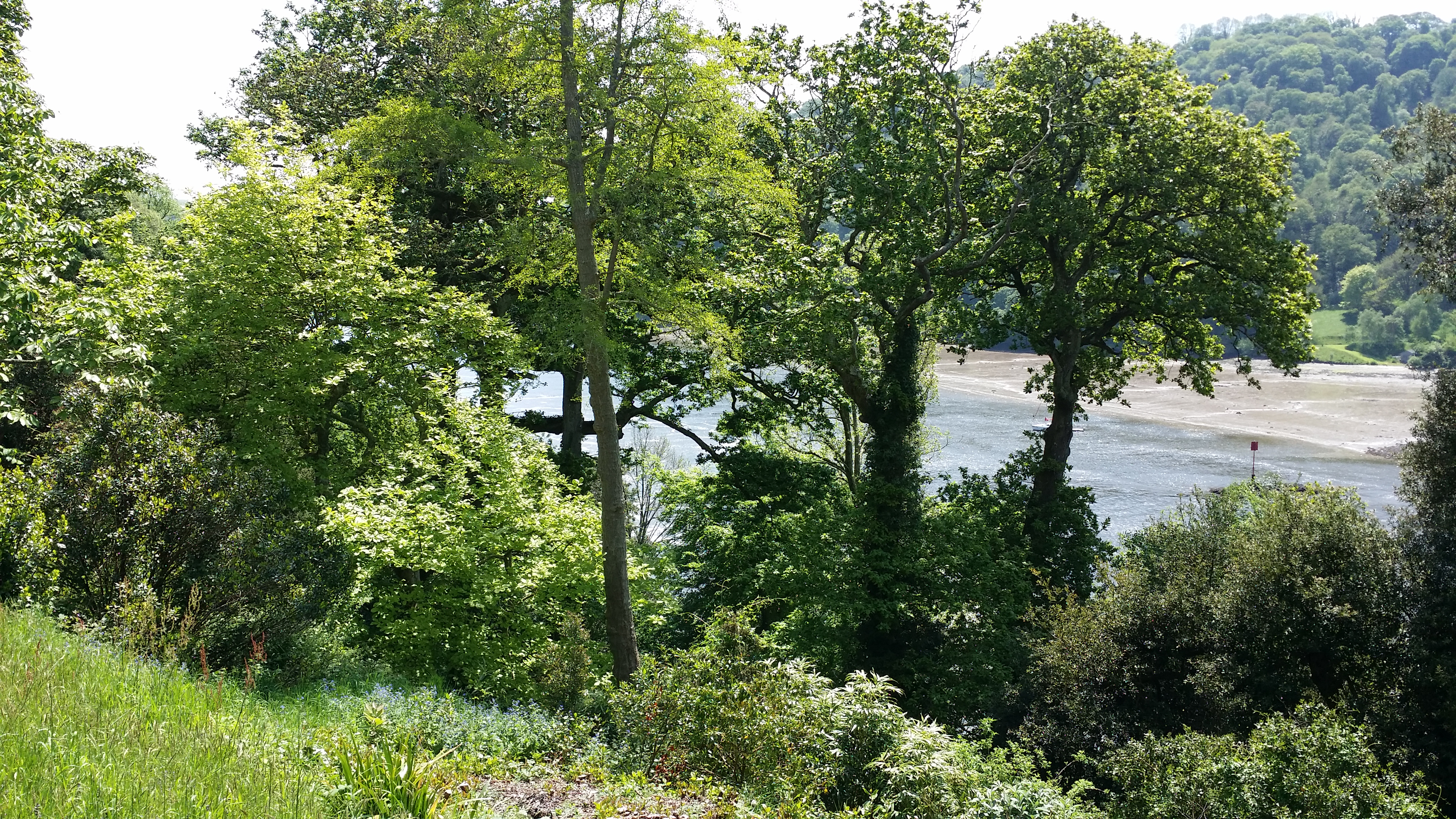
Sir John Gilbert, who was Sheriff of Devon at the time, used 160 Spanish Prisoners of War to develop his estate above the River Dart. The Estate is in a magnificent position, overlooking the drowned valley of the Dart. It is now enjoyed by those millions of visitors to what became the summer home of Agatha Christie (Greenway). The Poison Garden in the Garden of the Abbey is themed around poisons used in Agatha Christie’s books.
View of the River Dart from Greenway, photo KFludeView of Greenway from the River Dart. Photo KFlude
The Golden Hind & Deptford
Queen Elizabeth I decided that the Golden Hind should be permanently docked in Deptford. So the ship was placed in a ‘dry’ dock filled with soil. The ship decayed and by 1660 nothing much was left.
I remember as a young archaeologist that some of our team took time out to work with Peter Marsden. He is one of the great experts in Naval archaeology, and he led a search to find Drake’s ship. There was a huge fanfare in the London newspapers. ‘Find the Hind’ I think must have been the hopeful Headlines. But, rather embarrassingly, given the build up, they failed to find anything of significance.
Further exploratory excavations took place in 2012, with no greater success.
Panorama biew of the Spanish Army from an old history book
Golden Hind souvenirs
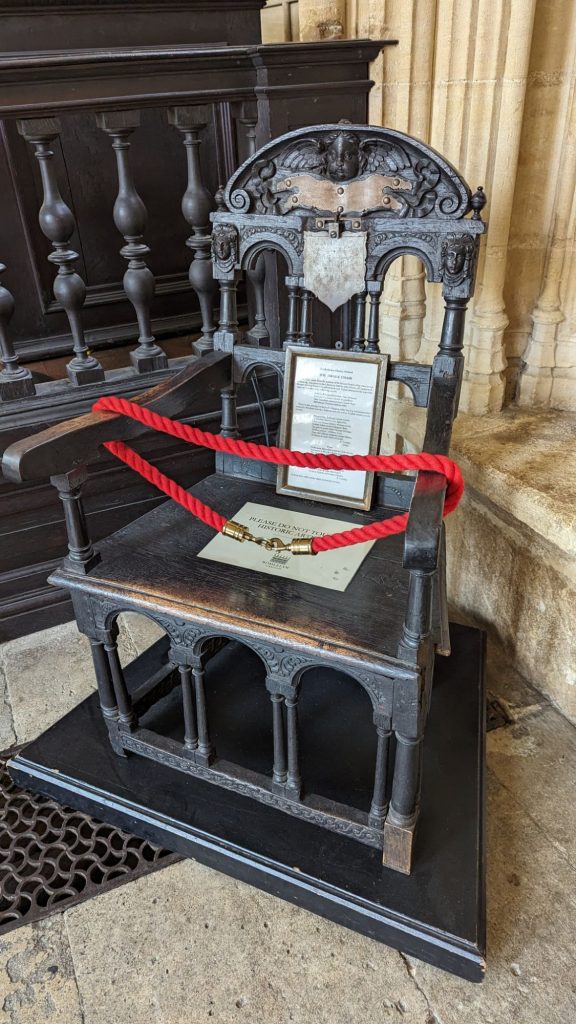
Chair made from timbers of the Golden Hind in the Dinity Hall, Oxford, photo K Flude
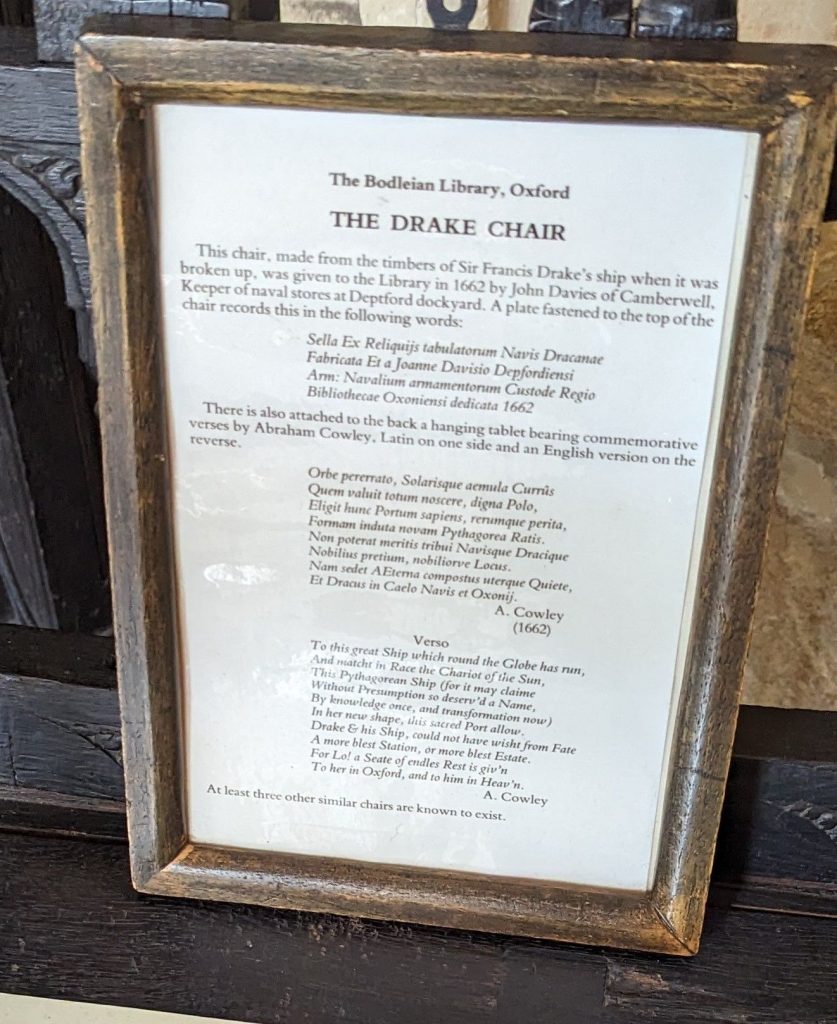
The Keeper of the Naval Stores at Deptford made chairs from the ruins of Drake’s ship, and one of them is on display at the Divinity Hall, Oxford.
Information panel on the Chair made from the ruins of the Golden Hind, photo K Flude
Sir Francis Drake and Middle Temple Hall
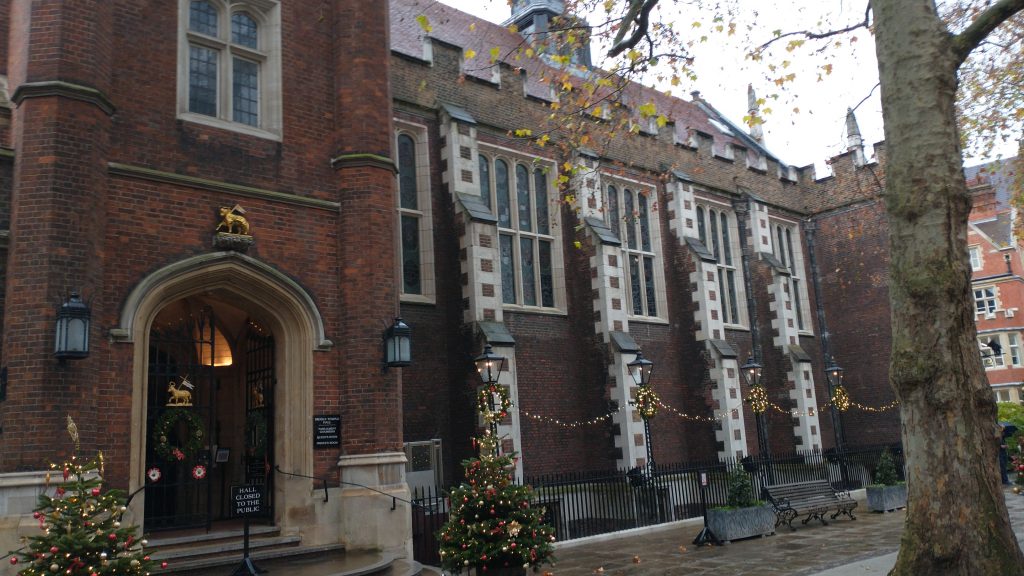
In London, Sir Francis Drake visited Middle Temple Hall, off of Fleet St regularly. A table (called the cupboard) is reputedly made from the hatch cover of the Golden Hind. This is where the newly qualified barristers stood to have their registration entered into the Inn’s books. Sadly, it did not survive the bombing of 1941.
Middle Temple Hall. Photo K Flude 2021
The lantern which hung in the entrance Hall allegedly came from the ship’s poop deck (so not the one he failed to keep lit!). Other famous mariners associated with the Middle Temple include Sir Martin Frobisher and Sir Walter Raleigh. Shakespeare’s company performed Twelfth Night in the Middle Temple Hall
The Romans celebrated the Great Mother, the Cybele in the festival of the Megalesia. To celebrate bringing a meteorite of Cybele to her temple in Rome in 204BC. Celebrated by the Games of the Great Mother
1660 – Declaration of Breda by King Charles II promises a general pardon to all royalists and opponents of the monarchy for crimes committed during the English Civil War. Excluded were the Regicides who signed Charles I’s death warrant.
1814 – Napoleon abdicated and on April 11 ordered into exile in Elbe.
1949 Twelve nations sign the North Atlantic Treaty creating NATO. They were the Western Union – ( France, UK, Belgium, Netherlands, and Luxembourg) and the United States, Canada, Portugal, Italy, Norway, Denmark, and Iceland
1968 – Martin Luther King Jr. assassinated by James Earl Ray in Memphis, Tennessee
First published 2024, revised 2025, On This Day added 2026
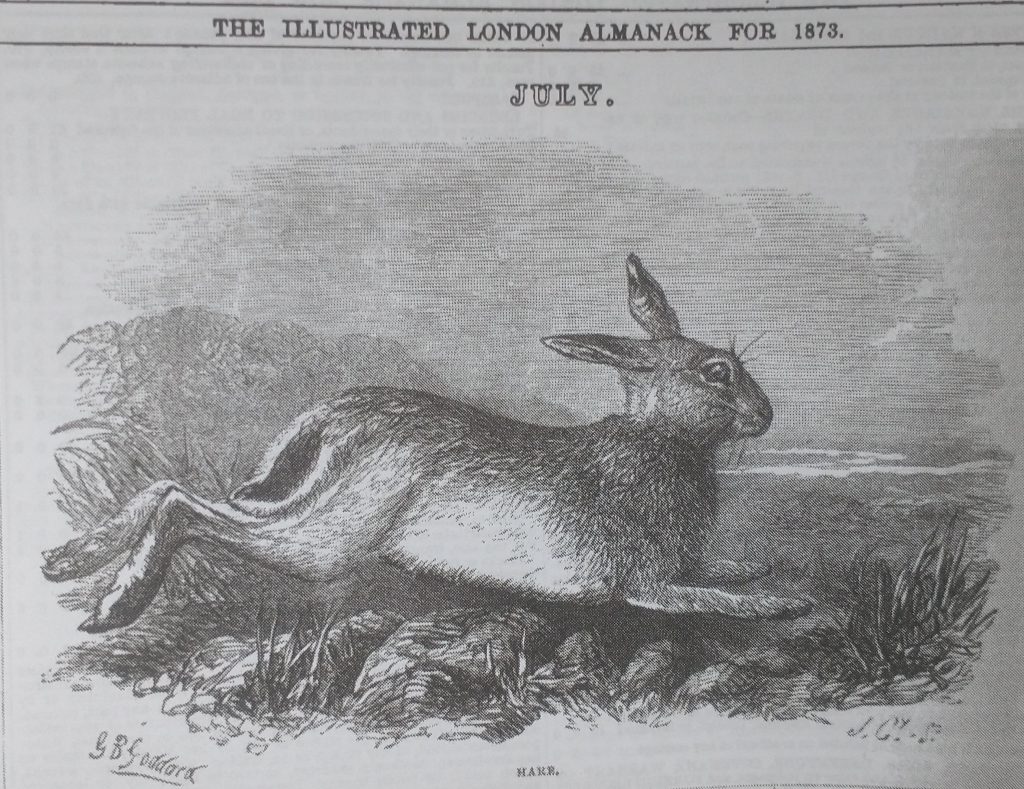
The expression ‘Mad as a March Hare’ comes from the displays of hare boxing that takes place as the Hare mating season begins. And no, it’s not the male March Hare fighting in the spirit of romantic rivalry. It is the female hares fighting off unwanted attention from the males. Hares are solitary creatures, and the mating season is, perhaps, particularly difficult for them. The Country File website has more on the subject. www.countryfile.com
Not only March Hares but March Kittens too
There are also March Kittens and March Chickens. Edward Topsell in his ‘History of Four-footed Beasts‘ 1607 says the best Kittens to keep are those born in March. ‘The Closet of Sir Kenelm Digby Opened‘ 1669 says:
‘Keep a black cock hatched in March as a protection against evil spirits: his crowing terrifies them.’
He also gives a recipe for Cock Ale:
Eight gallons of Ale, a boiled March Cock, four pounds of stoned Raisins, half a pound of dates, nutmegs, mace. Beat the ingredients in a mortar, add to two quarts of Sherry. Add to the ale. Stop it in a container for 6 or 7 days. Bottle it, drink after a month.
Very weird. I challenge my readers to try it and let me know how it goes?
Was the March Hare Sacred?
But it’s not only March Hares because the hare itself was a sacred animal. It was sacred to Aphrodite because of their prodigious ability to have offspring:
‘For you know, I imagine, what is said of the hare, that it possesses the gift of Aphrodite to an unusual degree. At any rate it is said of the female that while she suckles the young she has borne, she bears another litter to share the same milk; forthwith she conceives again, nor is there any time at all when she is not carrying young.’
Classical Texts Library. Philostratus the Elder, ‘Imagines’ Book 1.1-15 c 3rd Century AD. Translated by Arthur Fairbanks.
Divine Celtic & Neolithic Hares
Research reported by Exeter University suggests that hares were worshipped in pre-Roman Britain. Julius Caesar wrote:
“The Britons consider it contrary to divine law to eat the hare, the chicken, or the goose.”
‘The Battle for Gaul’ Translation by Wiseman, Anne, Wiseman, T. P. Published by Penguin Random House, 1980 ISBN 10: 0701125047 (TP Wiseman was my professor for Classical Studies at Leicester University).
Hares are thought to be the original Easter Bunny. But finding good evidence before Germany in the early modern period is difficult. There is a tradition that witches can be scared away at Easter. Exactly, how this works is not at all clear to me. But it has been said that witches could take on the form of a hare. So eating Hare Pie at Easter helps rid the land of the witches.
Jugged Hares
You could have a jugged hare. Jugging is cooking a whole animal in a container over water. Follow this link for a recipe for jugged wild hare. Remember, you are not allowed to shot or trap them on a Sunday or on Christmas Day! For a discussion of hares and folklore, click here:
Hare’s Feet Totems
A jointed hare’s foot was considered very lucky and a remedy against gout, stomach pains and insomnia. (The Perpetual Almanack of Folklore by Charles Kightly, which I have used several times in this piece.) You can buy one on eBay. (Don’t click the links, it’s not an advert but a picture of an advert). I remember friends having rabbit feet which they carried around with them for luck. The foot would often be on a key rings.
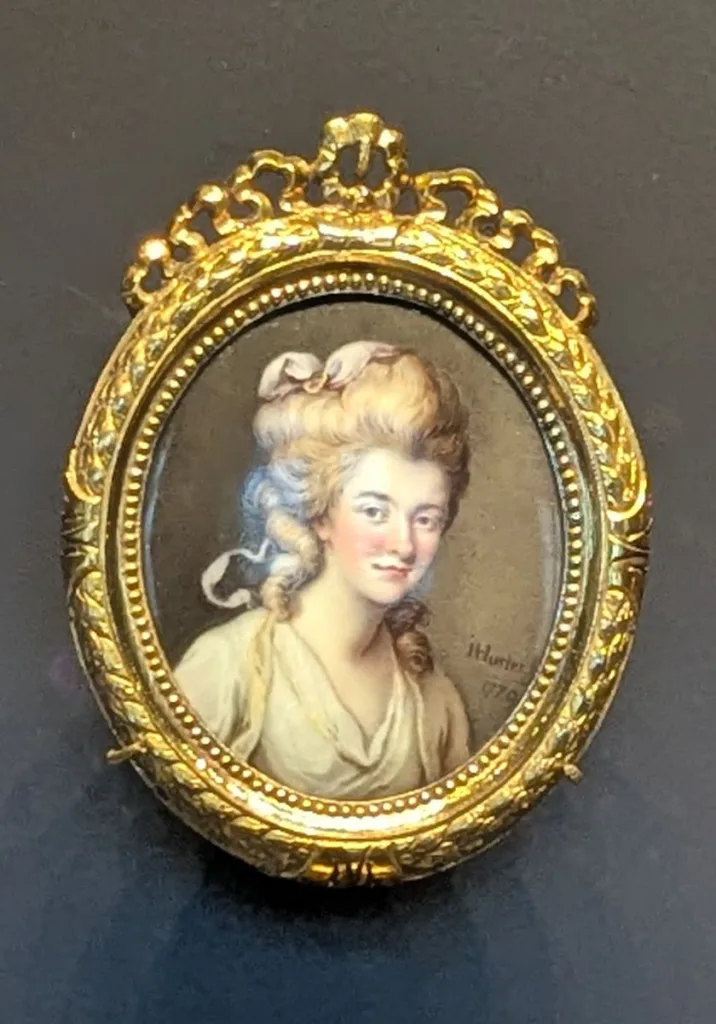
Georgiana, Duchess of Devonshire (Johann Heinrich Hurter after Angelica Kaufman). Photo by K Flude of the miniature at the Victoria and Albert Museum
The Gilbert Collection has been re-displayed in the V&A in London. It has just opened, and is one of the most opulent displays you could hope to see! But, I loved this miniature of Georgiana. She was one of the richest women in Britain, a compulsive gambler, and a powerful political force for the Whig Party. And despite the Georgian Hairstyle the artist has contrived to make a very down to earth portrait. I can imagine bumping into her at the local Overground Station! She became better known after the bio graphy by Amanda Foreman, followed by the Film starring Keira Knightly. The Museum label says the portrait is ‘after Angelica Kaufman’. But I cannot find a Kaufman of Georgiana, that has this charming informality.
I have just heard news that the Arts Council wants to charge overseas visitors to visit our wonderful free national Museums, while allowing British Citizens free entry. Now, there are lots of arguments to be made about it, particularly in a time where money is in short supply. But, one result will be longer waits to get into Museums and Galleries. I am not sure how we Brits, are going to be asked to prove our nationality. If they have to inspect our Electricity Bills, Drivers Licenses, Passports, Library Cards, or Bank Statements, expect chaos.
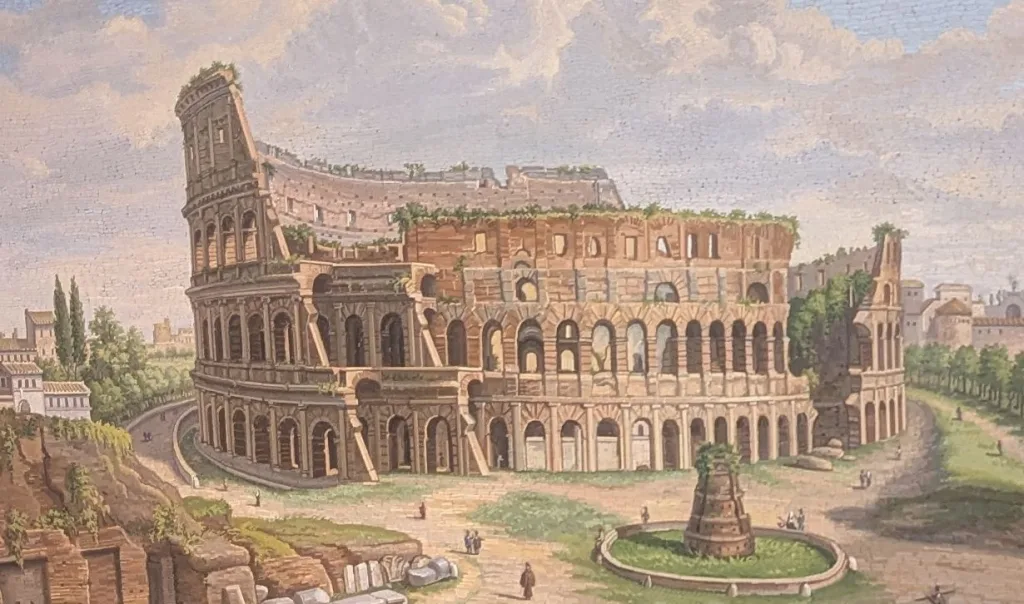
One more object from the Collection is made of minature mosaics, and the V&A has several, But I have chosen this fabulous image of the Colosseum in Rome:
Colosseum by Domenico Moglia c1851
First published March 28th 2023, revised 2024, 2025. 2026 Object of the Day added and post revised 2026
The day after the Equinox we look at the cardinal points of the compass:
“chief, pivotal,” early 14c., from Latin cardinalis “principal, chief, essential,” (online etymological dictionary).
The Importance of South
On its annual cycle, the Sun is always on the move. At the Equinox the Sun now rises due East, and sets due West. It then rises every day further towards the north and sets further to the South until the Solstice. The Solstices mark the extreme Northerly and Southerly rising and settings. Dawn and Dusk vary accordingly.
So, the only real fixed point in the Sun’s entire journey (as seen from Earth) is Noon. Every day of the year, every day of our lives, the Sun is at the highest point at Noon. And this is the definition of South. But the Sun never strays into the North. So the North is the polar opposite of the South- cold, remote, more mysterious.
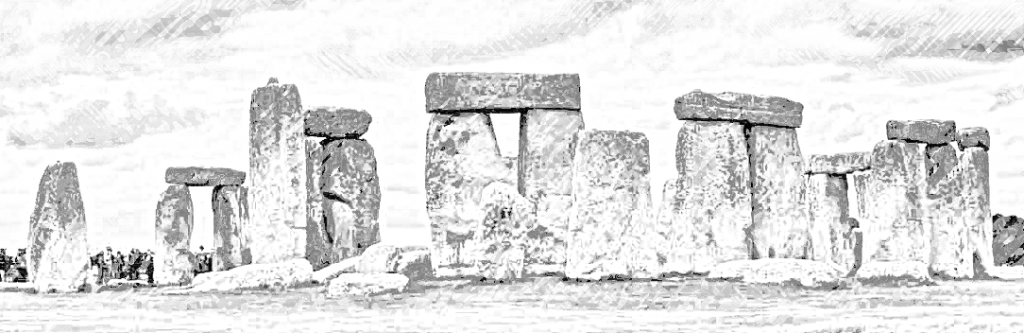
To my mind, it makes, of the Cardinal Points, the South very special. At Stonehenge, there are two exits. The biggest is aligned to the Midsummer Sunrise and Midwinter Sunset axis. But there is a smaller second entrance and this aligned due South. There is also a uniquely small standing stone in the main circle of Sarsens, which is aligned to the South. (Although we don’t know if this stone is original). However, there was some sort of corridor heading South through the mysterious wooden phase which precedent the stone Stonehenge. So, we can be sure South was important at Stonehenge.
Sketch of Stonehenge showing the smallest Sarsen stone near the Southern Entrance
Noon, derives from ‘nona hora’ in Latin and is ‘one of the seven fixed prayer times in traditional Christian denominations.’ (Wikipedia)
The Predominance of the North?
And yet, North, has come to be the principal of the cardinal points. It is shown on virtually all modern maps. It is the direction that people of my generation and hemisphere think of as being ‘up’.
The Google generation sees things differently. There are countless tourist maps on walls or plinths where North is no longer at the top. Up is shown as being the way you are facing. Users have to fight with Google Maps to put North at the top of the map. My children mock me when I say ‘Out of the Tube station, turn up the High street northwards.’ Their view of maps is completely contextual. They do not see any reason to know where the cardinal points are. I point out that the Tube probably has two exits on either side of the road. So, it doesn’t work to say ‘turn left out of the tube’.
There may also be an element of sexual difference, with men more likely to have a cardinal point view while women navigate more by landmarks. ‘Walk past the M&S, turn left to the Park and straight on’. One paper says: ‘during spatial navigation, women typically navigate an environment using a landmark strategy, whereas men typically use an orientation strategy.’
Although I see this decline of the north as being part of the Decline of the West. I also ‘things were better in my day’. But in fact it is simply returning to the way maps were produced in the past. Here is an example below, which has East at the top.
Representation of a Roman Map with the top being roughly East.
I have since looked further on this subject of North and Maps, particularly finding my answers on this web site: why-is-north-up-on-maps. It tells me that the earliest map the Turin Papyrus, has South at the top. This is probably because the Nile was the fount of all things in Egypt so it is in pride of place at the top of the Map. Other maps tend to have East at the top. The thinking is that the North was cold and who would want to go there?, The West was where the Sun went down, so the Sunrise direction should be at the Top. Often Jerusalem was in the middle with the East at the top. To this day, we talk about orienting ourselves, which means literally means finding your direction eastwards. But the 16th Century things flipped, and North became the top of the map. Was this because the Age of Exploration depended on the North Star? Maybe not because it was used for navigation for a long time before the 16th Century. Was it because of the use of the compass which pointed North? Perhaps not because the compass was first used in the 10th Century. The answer seems to be that Flemish geographer and mapmaker Gerardus Mercator in 1569 put North on top of the map. His projection became the most used map, and everyone started to follow suit.
Mercator projection of the world between 85°S and 85°N. Note the size comparison of Greenland and Africa, and the massive inflation of Antarctica’s landmass. CC BY-SA 3.0
The Magnetic Poles
Of course, there is another version of the cardinal points: the magnetic cardinal points. The magnetic North wanders over time. It does not necessarily coincide with geographic north. In recent times they are close enough. But in the past there have been huge variations. Occasionally, the earth has had geomagnetic reversals when the North Pole has pointed in different directions, including south. The last one was 780,000 years ago. On average, they take place very roughly every 500,000 years.
The magnetic pole is caused by the molten iron in the earth’s core and mantle, which creates a dipole. Fluctuations in the dynamo flow of the molten iron cause occasional reverses. The science is very complicated and, even now, not entirely understood. Is it a random consequence of flow dynamics? Or do external events, like sinking continents, or meteor strikes cause the reversal?
Since the first use of compasses for navigation in the 11th/12th Centuries, the magnetic pole hasn’t wandered enough to be of concern to navigation. It has wondered a few hundred miles over the last 500 years. Now, it is speeding up, from 9km a year to 52km (since 1970). This Wikipedia page is pretty good at an explanation.
My Job Tracking the Cardinal Points
My first proper job after university was as a technician then research assistant at Oxford University studying these phenomena. I say ‘proper’ because when I left University, I became an itinerant archaeologist. This led me to digs in Switzerland, Northampton, East Anglia and Nottingham. Then, I got the job at the Research Laboratory for Archaeology and the History of Art, at Keble College, Oxford.
I worked for Dr. Mike Barbetti who was an expert on the wanderings of the Magnetic Pole. His interest was firstly in the pure science of the subject. But he was keen to explore the applied uses in Archaeology as well. So, after being appointed as a Research Fellow at Oxford, he set up an epic journey from his native Australia to Oxford. It went via some of the iconic sites of Palaeolithic Archaeology, including Olduvai Gorge, Tanzania. The site of excavations by Mary and Louis Leakey.
To plot the movements of the magnetic north, scientists needed dated samples. Early human sites provided dated sites over a long time span. Also, archaeomagnetism, as the discipline became known, offered the possibility of dating sites. Another application was to determine whether deposits were fired or not. One of the sites Mike sampled was a candidate for the first evidence of fire in human existence.
Cutting up Samples
As I said, Mike’s interest was discovering how the magnetic field of the earth changed over time. And, more importantly, what was the mechanism. He shipped back to Oxford samples of soil cast in Plaster of Paris. My job was to cut the samples up. I cut them up with an electric saw in a shed in the backyard of the Laboratory. Then we measured the direction and intensity of the magnetic field in the samples.
Soil contains particles of iron, and they align randomly. So a sample of soil has a low magnetic intensity and a random direction of magnetic field. But once heated up, the iron particles align to the current direction of the magnetic pole. Its intensity is proportional to the intensity of the Earth’s magnetic field. These measurements provide a method of plotting the changes of the magnetic field over time. And from these data, models can be constructed explaining how the iron in the earth’s core worked as a giant magnet.
Once we had built a reference curve for the movements and intensity of the magnetic pole over time, we hoped to develop another dating method. Other methods such as radio carbon, thermoluminescence, and tree ring dating, were being developed at the Research Laboratory in Oxford at the same time.
My part in Digital Heritage Part 1
Having got the results, I took them to the Oxford University Computer Centre. There, I typed them up onto machine-readable cards. Added a copy on cards of our computer programme written in Fortran, and gave them to the Computing Staff. The program and data were run through the Centre’s mainframe computer. (probably an IBM or ICL computer, the size of a house!) 24 hours later, I received a print-out to proofread.
I located mistakes, ran an editing run of punched cards, essentially instructing the computer: ‘on card two replace 2.5 with 2.6, and run the programme again’. I would pick up the results 24 hours later. It seems extraordinarily primitive now, but then it was an enormous saving of time.
And that, patient reader, was my early contribution to Digital Heritage and pure science. Mike published many articles of which I was joint author of three articles, two in the prestigious Science Journal Nature. And it is annoying that my citations in the groves of academia are still dominated by articles I co-wrote in the late 1970s/80s!
Mike’s work was important in the development of the study of the earth’s magnetic field. However, the use of archaeomagnetism has never risen above strictly limited. Occasionally, in specific circumstances, it can be useful. But those circumstances tend to be times when no other methods have worked. Most often, it is used in attempting to date kilns.
These are the papers:
Barbetti. M and K. Flude, ‘Palaeomagnetic Field Strengths from Sediments baked by Lava flows of the Chaine des Puys, France.’ Nature, Vol. 278 No 5700. 1979
Barbetti M., Y. Taborin, B. Schmider and K. Flude ‘Archaeomagnetic Results from Late Pleistocene Hearths at Etoilles and Marsangy, France’. Archaeometry 22. 1980
More on my contribution to Digital Heritage in posts to come.
OnThis Day
630 – Emperor Heraclius returns the True Cross, one of the holiest Christian relics, to Jerusalem. (see my post on the True Cross and Roodmas)
1152 – Annulment of the marriage of King Louis VII of France and Queen Eleanor of Aquitaine. She went on to marry Henry II of England which makes this one of the most amazing events of the medieval period. The transfer of lands from French control to English control as a result was huge. She eventually was imprisoned by her new husband for supporting their children’s rebellion.
1556 – Former archbishop of Canterbury Thomas Cranmer executed for heresy in Oxford. He had recanted, but recanted his recantation when he discovered there were still going to burn him. By rights, he should have been reprieved, but Queen Mary was determined to make an example of the man who help Henry VIII and Thomas Cromwell make England a Protestant state. The fire was on Broad Street, and he is said to have thrust his arm that signed the recantation into the fire, calling it ‘that unworthy hand.’
1829 – Duel Day is celebrated at Kings College when the Duke of Wellington fought a duel against George Finch-Hatton, 10th Earl of Winchilsea, because of disagreement about Roman Catholic Emancipation. The duel took place in an asparagus fields which would later become Battersea Fields. Wellington shot first and either missed or deliberately shot wide, and Winchilsea aimed high. He then apologised to Wellington. For more details see www.kcl.ac.uk/duel-day.
First written March 2023, revised 21st March 2024, Revised and Mercator added 2026