I republished this two days ago, but I think it did not get distributed to subscribers. So I’m posting it again. On May 31st, 1915 Zeppelin LZ38 came into UK airspace over Margate. It proceeded to Stoke Newington in N London at 10.55. It was a dark, moonless night. No searchlights found the ship, no guns fired. 15 aeroplanes scrambled but only one got a sighting. Engine trouble ended the pursuit.
The Zeppelin sailed up to 10,000 feet above London unopposed.
16 Alkhan Road was hit first but with no injuries. In Cowper Road Samual Leggart’s house was hit. In the panic the family got the children out, but found one was missing, found later, burnt to death while hiding under the bed.
187 Balls Pond Road was next to be hit, the Zeppelin following the A10 South towards Central London. Thomas Sharpling and family escaped, but 2 lodgers were found dead, kneeling by their bed praying.
The next bombs landed in Southgate Road, Hoxton and Shoreditch. In Hoxton Street a Russian Nightwatchman was attacked coming out of a burning building, mistaken for a German saboteur. The following days, ‘German’ shops in the area were attacked.
The attack continued to Bishopsgate Goods Yard, Spitalfields, Whitechapel, as the Zeppelin began its journey home via Whitechapel and Commercial Street. A bomb in Christian Street injured 9 pedestrians and killed one 8 year old boy. Then to Stepney, Stratford, Leytonstone where 6 bombs were dropped.
The raid took 20 minutes to traverse Central London 7 premises were destroyed. 7 dead.£18,000 of property damage. 91 incendaries, and 28 High Explosive bombs were dropped plus 2 grenades.
Source London 1914-17 The Zeppelin Menace by Ian Castle.
Last year, on an archaeological reunion to Ferrara we attended the Ferrara Pallio. Museum of London archaeologists, in the 1980’s worked with Italian archaeologists excavating medieval town houses in the centre of the historic town of Ferrara. Here is a video of the history of Ferrara and the excavations which includes a picture of a young me. (I’m standing up in grey cap-sleeved t-shirt.)
The Pallio is a traditional event taking place since 1259. The town is divided into 8 contrade and each mounts a procession to the centre. Here there is some tremendous flag waving and hurling accompanied by drums and trumpets. Then the procession to the Piazza di Ariosto, where there is a stadium for a horse track. The procession marches around the stadium. Then there are foot races, a donkey race and finally a horse race. There is intense rivalry between the groups but a lovely atmosphere.
Spectators have to be patient during the events to allow the joy of the winners to be shared with the winning contrade. The final horse race takes an absolute age to begin because the horses will not settle. Apparently, there is some gamesmanship by trying to exhaust the other teams horses. It certainly exhausted me. And once they got started at very long last they were recalled almost immediately. I decided to go to bed.
But you can see edited highlights on the official Ferrara youtube post here.
The Cotswold Olimpicks take place on the Thursday and Friday of the week of Whitsun, normally between mid-May and mid-June. This year it was on May 29th. The Olimpicks were set up by Robert Dover on Dover’s Hill near Chipping Camden, in the early 17th Century. Inspired by the Greek Olympics, he felt the modern world could do with an infusion of the original spirit.
The Olimpicks has a collection of tradition sports such as the sack race, and the tug of war. But the one that receives the most attention is shin-kicking. Two contestants try to knock each other over by kicking each other in the shins! They are not supposed to pull or push their opponent over. Or use Judo style throws. Protective gear is supplied in the form of straw or hay packed down the socks.
70 – Siege of Jerusalem moves towards its end as the Roman legions breach the Outer Wall of Jerusalem. The Romans build a circumvallation, around the City cutting it off.
1381 – Beginning of the Peasants’ Revolt in England. John Bampton arrives in Brentwood demanding payment of unpaid Poll Tax. He interrogates Thomas Baker of Fobbing. Violence breaks out Bampton flees to London, three of his clerks and some townsfolk are killed. (see my post on the Peasants Revolt here.)
1431 – 19-year-old Joan of Arc is burned at the stake in Rouen. France (for her canonisation see my post here. Near the bottom under On This Day section).
1842 – Assassination attempt on Queen Victoria as she drives down Constitution Hill near Buckingham Palace in London. John Francis had tried to shoot her on the previous day near the Mall. His gun misfired and he escaped. On the 30th May, Queen Victoria deliberately went out again to try to encourage a second attempt. Francis shot his pistol, but didn’t hit anybody. He was arrested and sentenced to death (later commuted to life imprisonment).
First published 1 June 2025, Revised OnThis Day added May 30th 2026
A swarm in May Is worth a load of hay A swarm in June Is worth a silver spoon A swarm in July Is not worth a fly.‘
‘Five Hundred Points of Good Husbandry’ published 1573, suggests we should:
‘Take heed to thy Bees, that are ready to swarm, the loss thereof now, is a crown’s worth of harm.’
According to Hillman’s ‘Tusser Redivus’ of 1710, swarming in May produces particularly good honey. ‘Their hours of swarming are for the most part between the hours of ten and three, and they ought to be watched every day.’ He advises following the bees to retrieve them:
‘You are entitled by custom to follow them over anyone’s land and claim them … but only so long as you ‘ting-tang’ as you go, by beating some metal utensil – the sound whereof is also said to make your bees stop.’
Much of the above is quoted from The Perpetual Almanac of Folklore by Charles Kightly.
Queen Bee
Bees swarm when a new Queen Bee takes a proportion of the worker bees to form a new colony. They will latch unto a branch or a shrub, even a car’s wing mirror. Then sending worker bees out searching for a suitable new home, such as a hollow tree. There may be hundreds or even thousands in the new colony. This may be very alarming. But, at this point, they will not be aggressive as they do not have a hive to protect. Look here for more information on swarming.
Sweet, Long Distance Flyers
An average hive will produce 25 lbs of honey, and the bees will fly 1,375,000 miles to produce it. This is like flying 55 times around the world (according to the British beekeepers Association (and my maths)) https://www.bbka.org.uk/honey
Swarming in Hackney
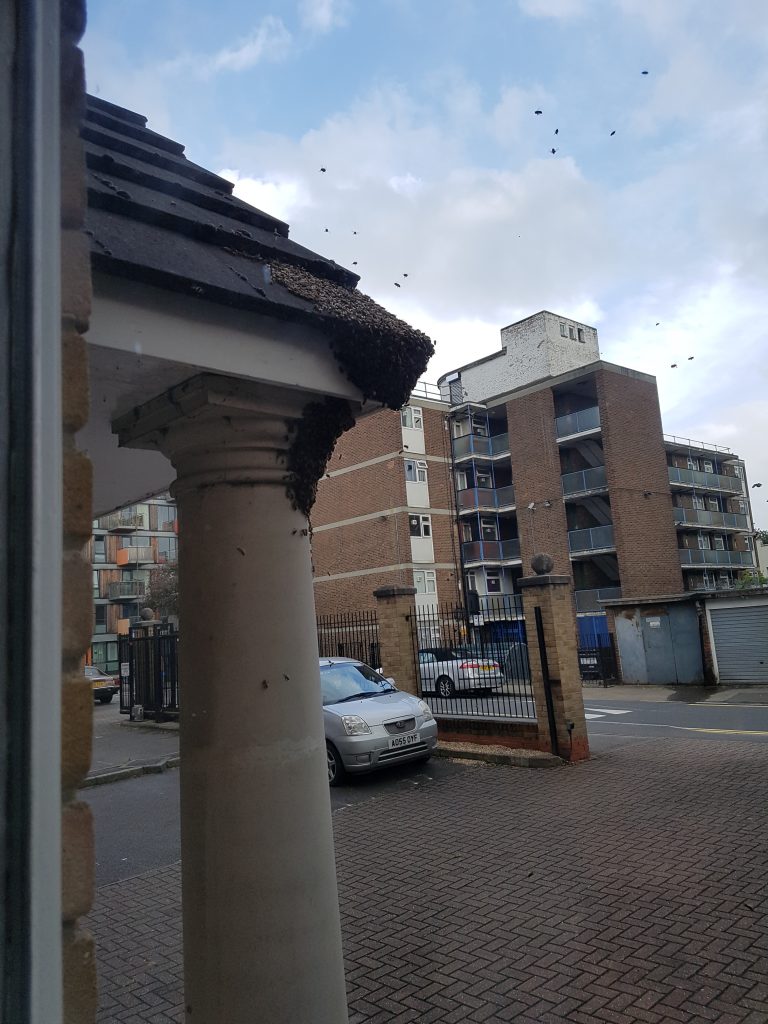
Swarm of Bees, Hackney (Photo Kevin Flude 30th May 2018). The Swarm is at the top of the Column and on the edge of the porch roof.
In 2018, on 30th May, I was perturbed to find a swarm of Bees hanging outside my front door. Frightened of leaving my house, I rang a local beekeeper, who came to take possession of the Bees and take them to a new home. By the time he came, they had moved 20 yards to a Buddleia bush.
Swarm of Bees, having moved 20 yards to a second perch, being ‘rescued’ by a bee keeper. You can see the swarm above his head.
Helping Bees
Bees are still having a hard time as their habitats are diminishing and threats increasing. In July, DEFRA hosts Bees’ Needs Week 2026: 13 to 19 July. This aims to increase public awareness of the importance of pollinators.
They suggest we can help by these 5 simple actions
Grow more nectar rich flowers, shrubs, and trees. Using window or balcony boxes are good options if you don’t have a garden.
Let patches of garden and land grow wild.
Cut grass less often.
Do not disturb insect nests and hibernation spots.
Think carefully about whether to use pesticides.
Patron Saints of Bees include: St. Ambrose, St. Gobnait, and St. Valentine. Click here to see my post of St Valentine.
On This Day
1821 – Napoleon dies in exile on the island of Saint Helena.
1835 – The first railway in continental Europe opens between Brussels and Mechelen, which is 36 kms.
1964 – Europe Day is launched by the Council of Europe but the European Union celebrates Peach and Unity in Europe on May 9th
First Published 2024, revised 2025, rearranged 2026
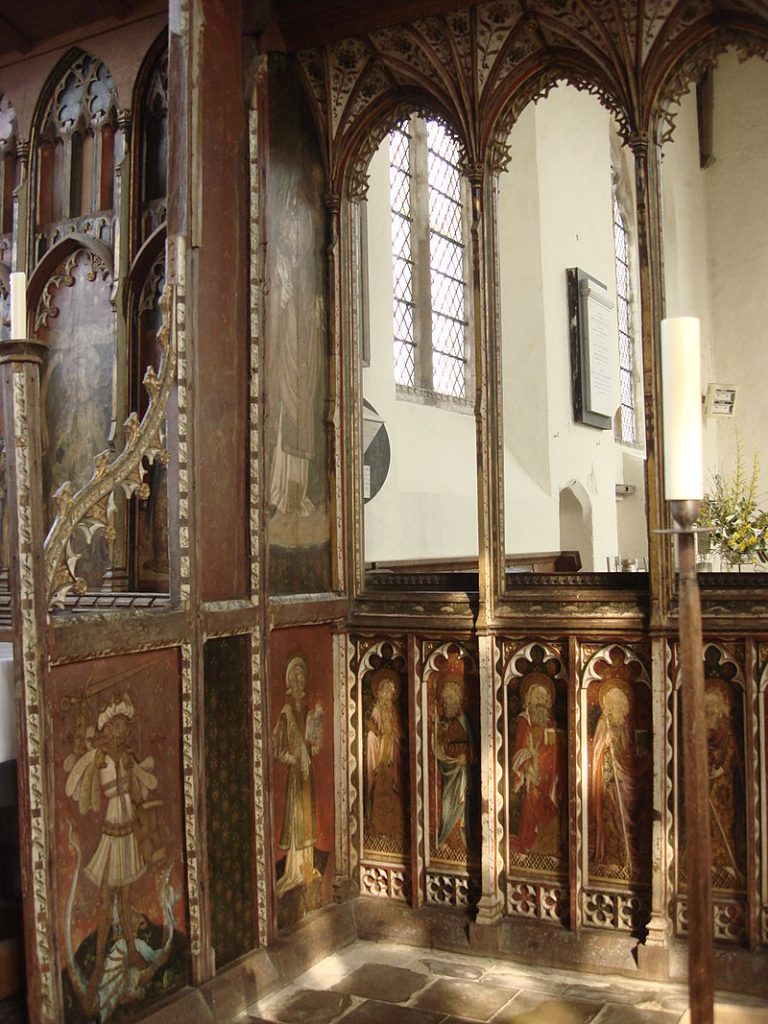
Rodmas – Rood screen in St. Helen’s church, Ranworth, Norfolk by Maria CC BY-SA 3.0
Rood is another word for the Cross. Parish Churches used to have a Rood Screen separating the holy Choir from the more secular Nave. This screen was topped with a statue of the Crucified Jesus nailed to a Rood. So, Roodmas, is the festival of the Holy Cross. Roodmas is celebrated on May 3rd and September 14th, although the Church of England aligned has itself with the Catholic Church’s main celebration on September 14th.
See my post on September 14th here for more on the True Cross.
Object of the Week
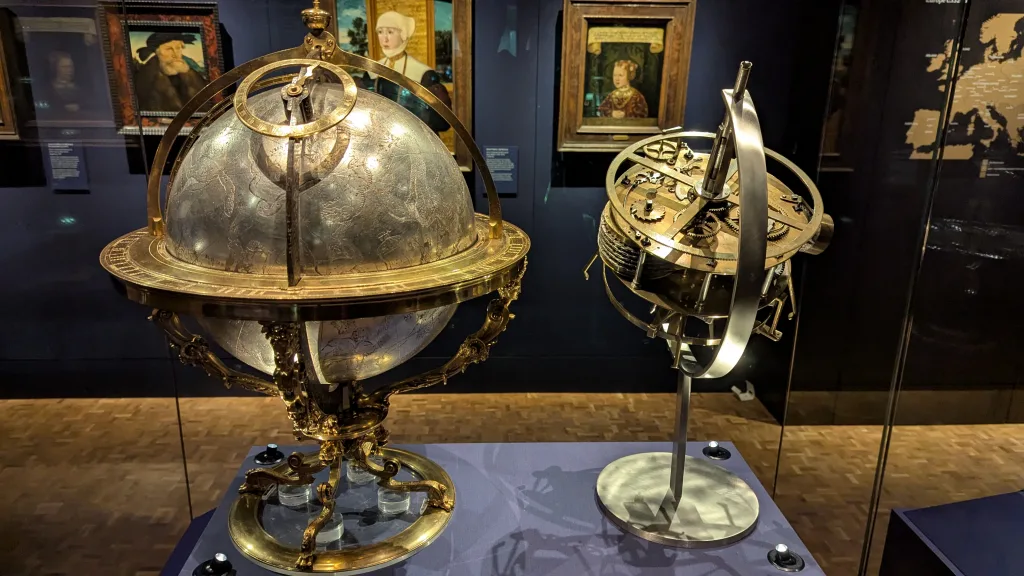
Mechanical Celestrial Globe, 1575 (Holburne Museum Bath) Photo K Flude
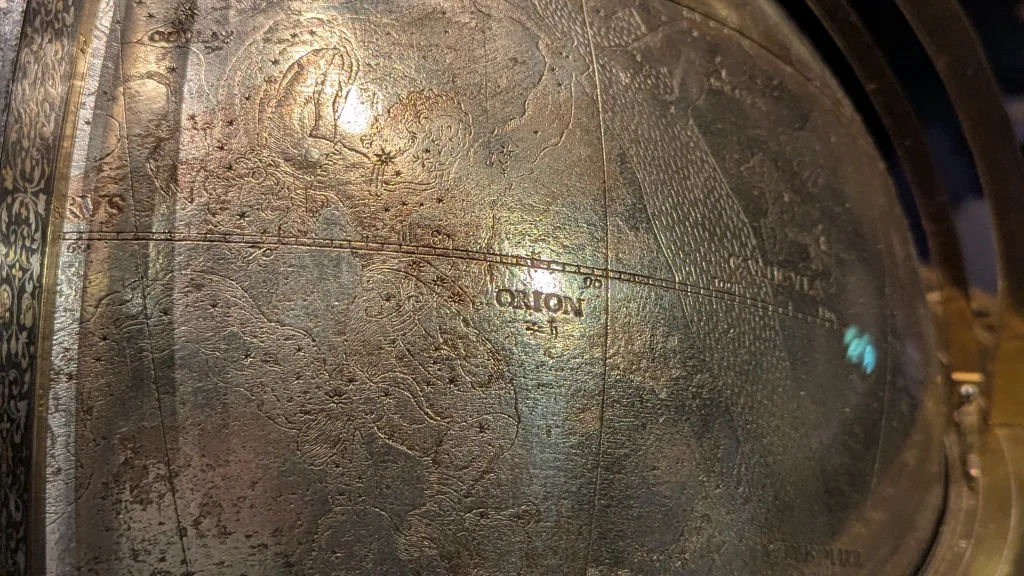
I spent a couple of days in Bath and revisited the Holburne Museum. Here I saw this amazing object from the 16th Century. The Globe is a model of the universe, and built to show the movement of the constellations, but it also tells the time and date. So the user can see when a constellation appears above the horizon and where it will be in real time. The mechanics are designed to be seen from inside the Globe, so reading it from the outside requires a mental adjustment to the mirror image of the stella sphere. It also show a pre-Copernican view as the stars were imagined as if on the inside of a huge sphere circulating around the earth. For more information please read the label below.
Museum Label for Celestial Globe.Close up of the surface of the Globe showing Orion. Photo K Flude
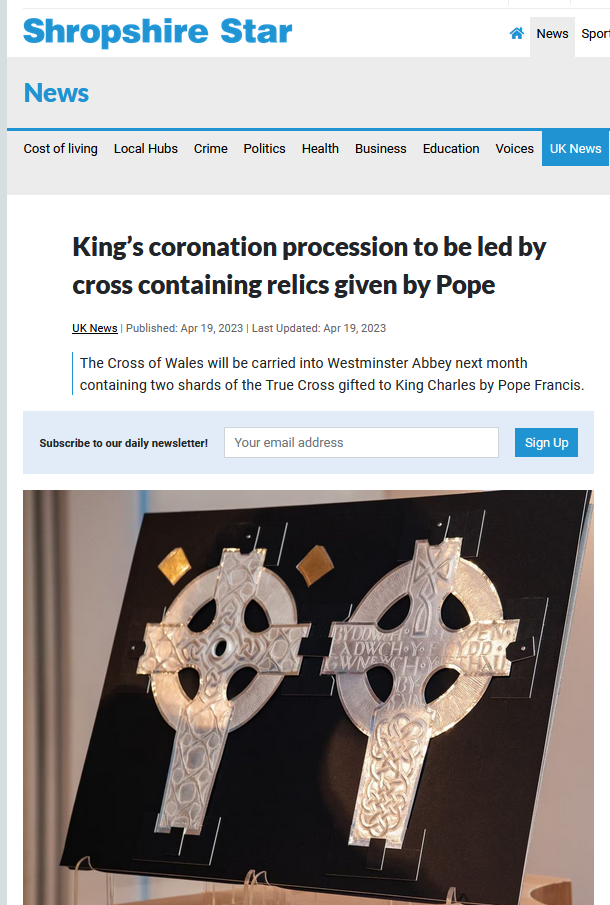
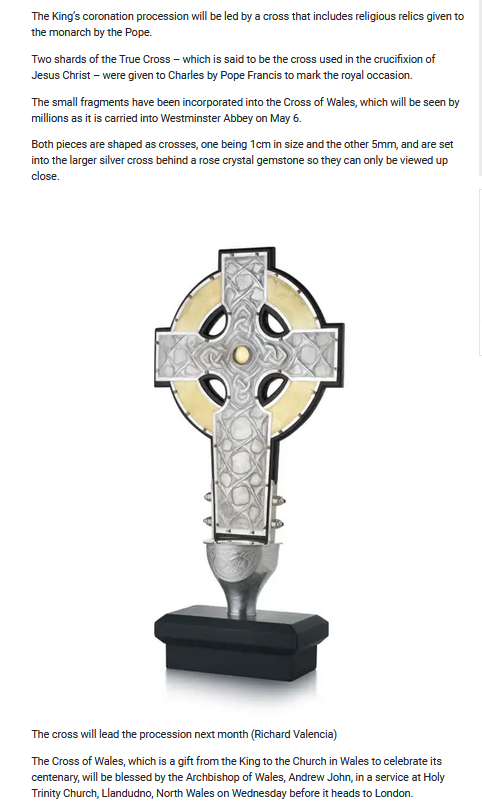
The Shropshire News reported that two pieces of the True Cross were given to Charles III by the Pope for the Coronation. They were installed into a cross called the Welsh Cross. This was part of the Coronation Procession. The King gave the Cross (I assume with the pieces of the Holy Cross) to the Church in Wales. Let the Shropshire News tell the story:
It is a clear reminder that we are subjects not citizens and news, as a nation, we still set store by superstitions.
The Duke of Buckingham and the True Cross
The Duke of Buckingham had a piece of the True Cross in his collection, which he kept at York House in the early 17th Century. How he got it, I don’t know. But I think he must have acquired it in the aftermath of the destruction of the Reformation. John Tradescant, who looked after the Duke’s collection until Buckingham was murdered, had a piece of the True Cross. Tradecant created Britain’s first Museum, Tradescant’s Ark. Again, I suspect (without any evidence) that he got the fragment from Buckingham. Was he gifted it? Did he acquire it after the murder? Or shiver off a timber fragment hoping no one would notice?
First Written on May 3rd 2023, revised 2024, 2025, Object of the Day added 2026
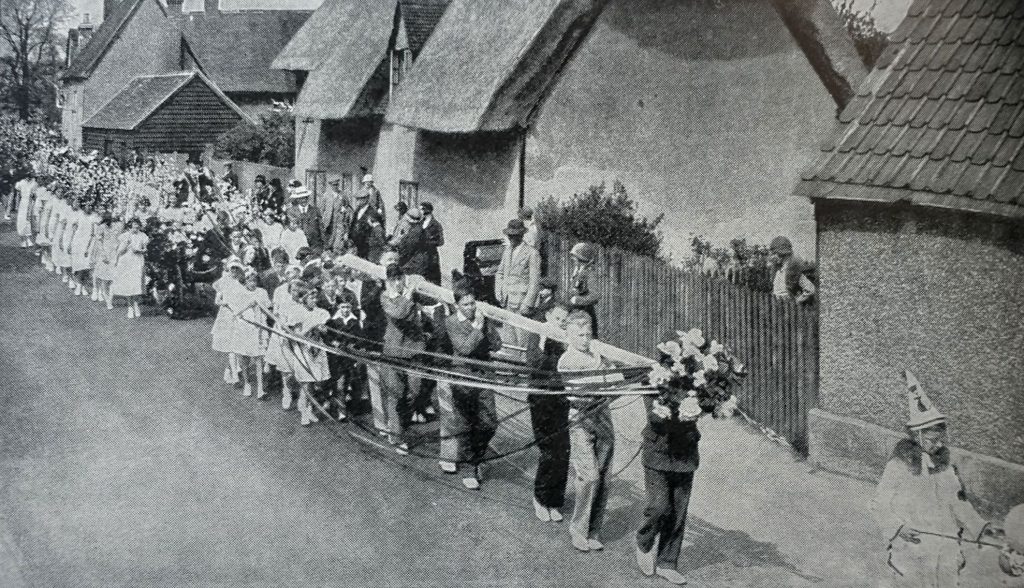
May Day – Bringing the Maypole, Bedfordshire. Image from ‘Romantic Britain’
May morning would commence with dancing around the Maypole, followed by feasting, and summer games. Maypoles were often stored during the year. A few days before May Day they were repainted, and bedecked with May Garlands – mostly made from Hawthorn. The Maypole used in London in 1660 was 134 feet high. Tall straight trees were used, sometimes of Larch, and they might be spliced together to get the requisite height. John Stow says that each parish in London had their own Maypole, or combined with a neighbouring Parish. The main Maypole was on the top of Cornhill, in Leadenhall Street. It was stored under the eves of St Andrew’s Church, which became known as St Andrew’s Undershaft as a result. For more about Maypoles and May Day see my post may-2nd-this-stinking-idol-the-end-of-may-day/.
Padstow May Day Festival
Padstow holds, perhaps, the most famous May Day festival on May 1st. It feels very ‘pagan’ or do I mean it is fuelled by an enormous amount of drink? Here is a video, watch until you see the ‘obby ‘orse and the teaser dancing.
Why May Eve?
The celebrations begin on May Eve because the Celtic calendar starts the day at Dusk. This seems strange to us who, perversely, ‘start’ our day at Midnight just after everyone has gone to bed! The other choice, and maybe the most logical is Dawn? But Dawn and Dusk are difficult to fix. Midnight was chosen by Julius Caesar when he created the Julian Calendar. Midnight has the virtue of being a fixed metric, being half way between Dawn and Dusk. From the Celtic point of view, the day ends when the Sun goes down over the western horizon. So the end of the old day, is the beginning of the new day. Makes sense?
Celebrations centred around the Bonfire. The day was sacred to the fire God Belenus (Gaulish: Belenos, Belinos, British Belinus, Bel, or Beli), and May Day was called Beltane. Bonfires continued to be a part of the celebration into the 16th Century, and in places until the 2st Century. According to folklore tradition, the bonfire should be made of nine types of wood. They must be collected by nine teams of married men (or first born men). They must not carry any metal with them. The fire has to be lit by rubbing oak sticks together or a wooden awl twisted in a wooden log.
Participants, have to run sunwise around the fire. Oatcakes are distributed, with one being marked with a black spot. The one who collects it has to jump through the fire three times. Bonfires would have been, by choice on the top of hills. But then they were also held in the streets in London. May celebrations have a similarity to Halloween. This was also a fire festival and both are uncanny times when sprites and spirits abound.
Hawthorn
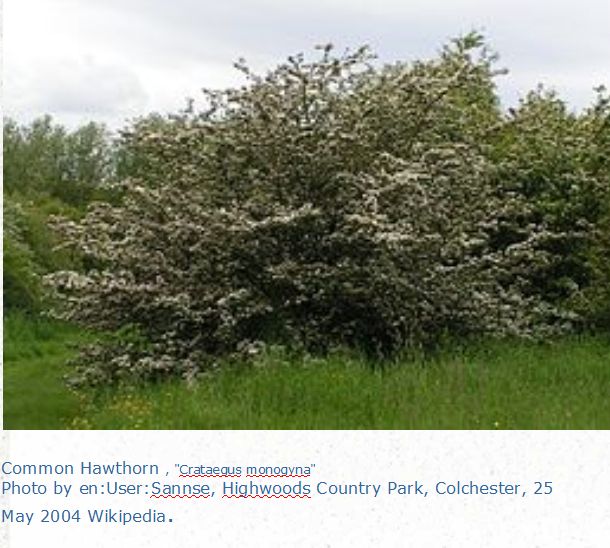
Hawthorn was a favoured wood not only because of its beautiful may flower. It was also said to be the wood the crown of thorns was made from. Hawthorn had the power of resisting supernatural forces. Therefore, it was used to protect doors, cribs, cow sheds and other places from witches.
Protecting Babies from Witches
Witches, it was said, got their power to fly from potions made from chopped up infants. The best protection was Christening. The custom was to have the christening as early as possible. Normally three days after birth. Shakespeare was baptised on 26th April 1564, so we celebrate his birthday on 23rd April. See my post for more on this subject. Cribs would be bedecked with Hawthorn and protection might be augmented by a bible, rowan, and garlic.
Special May Babies
Babies born between May 1 and 8 were thought to be special. They were destined to have power over man and beast. Weddings were frowned upon in Lent and in May, so April became a popular choice for marriage.
May Dew
After celebrations on May Eve (April 30th), women would go out in the woods to collect May, and other flowering plants. They would wash their faces in May Dew, preferably from the leaves of Hawthorn. If not from beneath an oak tree, or from a new-made grave. The dew was said to improve their complexion. It was also used for medical conditions such as gout and weak eyes.
Thinking Can Make it Happen?
Thinking of one’s lover on May Day might bring marriage within the year., it was thought This is a little like the modern woo-woo technique of ‘Manifesting’. Woo-woo or just woo is slang for something to do with crystals or other new age nonsense. Manifesting can either be a visualisation technique, whereby visualising the thing you want happening helps you concentrate on making it happen. The woo-woo part of it is that if you think it hard enough, you will get the universe to help make it happen. An analysis I heard on BBC Radio 4 showed that people who believe in the power of manifesting to alter the universe were more reckless in their endeavours and had a higher rate of bankruptcy and investment losses. It seemed they were more willing to take the risk. On the other hand, those who thought through the process of achieving their goals and the obstacles in the way of success were more successful.
Belenus
is a Celtic God of whom very little is clear and unambiguous. He was linked in Gaul with Apollo. The name, some people think, comes from ‘Shining’ but others disagree and think it means ‘Master of Power.’ His association with Irish mythology and the festival of Beltane suggests he was a powerful god in Celtic Europe. Geoffrey of Monmouth has a King called Belinus, and spins a yarn about Belinus and Billingsgate. Linguists prefer the idea that Billingsgate is named after some unknown Saxon called Billings. This may be a little more likely but far less interesting.
305 – Diocletian and Maximian retire from the office of Roman emperor. Diocletian was a systems man. and changed the Empire so there were 2 Emperors, 4 Caesars, a lot of Prefects, and a shed load of Governors. It was supposed to make the Empire more efficient and less liable to Civil War. He also introduced a Wages and Prices freeze. For more about this see my post on Diocletian’s reforms here.
1328 – Wars of Scottish Independence end: By the Treaty of Edinburgh–Northampton, England recognises Scotland as an independent state. (Wikipedia)
1707 – The Union of Scotland and England Proclaimed. In which Scotland voluntarily (aided by bribery and corruption) gave up its independence.
1851 – Opening of the Great Exhibition of All Nations in Hyde Park, inspired by Prince Albert and put into place by Henry Cole. See the V&A on the building of the V&A.
1945 – German Fascist Goebbels kills himself and his entire family
Bluebells, on average, bloom on April 9th, but can be seen through April and into May. Past their prime in London currently, although still thriving in my north-facing back garden. The Londonist has a great website on where to see them in London. And for the rest of the country, see the National Trust’s Bluebell walk page.
Hyacinthus
Our wild hyacinth is officially called Hyacinthoides non-scripta. Mrs Grieve, in her ‘Modern Herbal’ gives this charming account of the Linnean name:
‘Linnaeus first called it Hyacinthus, tradition associating the flower with the Hyacinth of the Ancients, the flower of grief and mourning. Hyacinthus was a charming youth whom both Apollo and Zephyrus loved, but Hyacinthus preferred the Sun-God to the God of the West Wind, who sought to be revenged, and one day when Apollo was playing quoits with the youth, a quoit (blown by Zephyrus out of its proper course) killed Hyacinthus. Apollo, stricken with grief, raised from his blood a purple flower, on which the letters Ai, Ai were traced, so that his cry of woe might for evermore have existence upon earth. As our native variety of Hyacinth had no trace of these mystic letters our older botanists called it Hyacinthus nonscriptus, or ‘not written on.”
Avoid the Spanish
The Spanish variety is causing havoc in some places. It is more robust and can interbreed with ours and endangers our beautiful bluebell walks. Native bluebells are therefore a protected species. We are not allowed to pick them, nor even tread on them.
Old Medical and Practical Uses of Bluebells
It was used as a diuretic and is styptic (Contracting the tissues or blood vessels; stopping blood flow). The bulbs are poisonous in the fresh state. But were used as a starch, much used when stiffs ruffs needed starching. Its gummy qualities led it to be used as a bookbinders gum, and to set feathers upon an arrow.
Tiled wall in Guernica after Picasso’s famous painting. Photo By Tony Hisgett from Birmingham, UK – Guernica, CC BY 2.0, https://commons.wikimedia.org/w/index.php?curid=64155674
This day is the anniversary of the bombing of Guernica in the Spanish Civil War but first we find out the origins of the London Cocktail Party.
The first Cocktail Party
The brother of Evelyn Waugh, Alex put on the first Cocktail party in 1924, or so he claims. He organised it at the studio of celebrated war painter C. R. W. Nevinson, in Haverstock Hill. Waugh felt there was nothing much to do between 5 and 7 except tea parties where tea, crumpets and cake were eaten. As he said to the Newinsons:
“What one needs, is some kind of a party that starts at half-past five, that lasts ninety minutes, at which alcohol is served but not much food.”
Study for Returning to the Trenches, drawn between 1914 and 1915. C.R.W. Newinson Public Domain (Wikipedia)
The first drink boded well:
‘I opted for rum. Jamaican rum had been blended with Rose’s (Newinson) lime juice and sharpened with Angostura. Large nuggets of ice kept the mixture cool. It was very potent. The first sip made me shiver, in the way that a dry martini does. It also sent a glow along my veins. “This,” I said, “is going to be a party.”‘
But it wasn’t as only one person turned up. So a year, later he tried again, but this time he disguised the event as a ‘Tea party’. But served, “A Daiquiri. It’s sweet, like a dessert, and very strong. It will produce the precise effect you need.” at the suggestion of a member of the US Embassy. As the drink tasted like sherbet, everyone drunk lots of them and the tea party went with a swing unlike any other. And thus, it caught on and became a part of the London scene.
Franco ordered the bombing as part of his campaign to overthrow the Basque Government. The Town was devasted and 1,654 civilians were killed. The bombing was undertaken by ‘the Condor Legion of Nazi Germany’s Luftwaffe and the Italian Aviazione Legionaria’ (Wikipedia). Picasso began his famous painting almost immediately after he heard an eyewitness account of the attack. The iconic painting was finished by 4 June 1937. The bombing showed the potential damage war from the air could do to crowded Cities. The painting became one of the most famous campaigning works of art.
The War from the Air
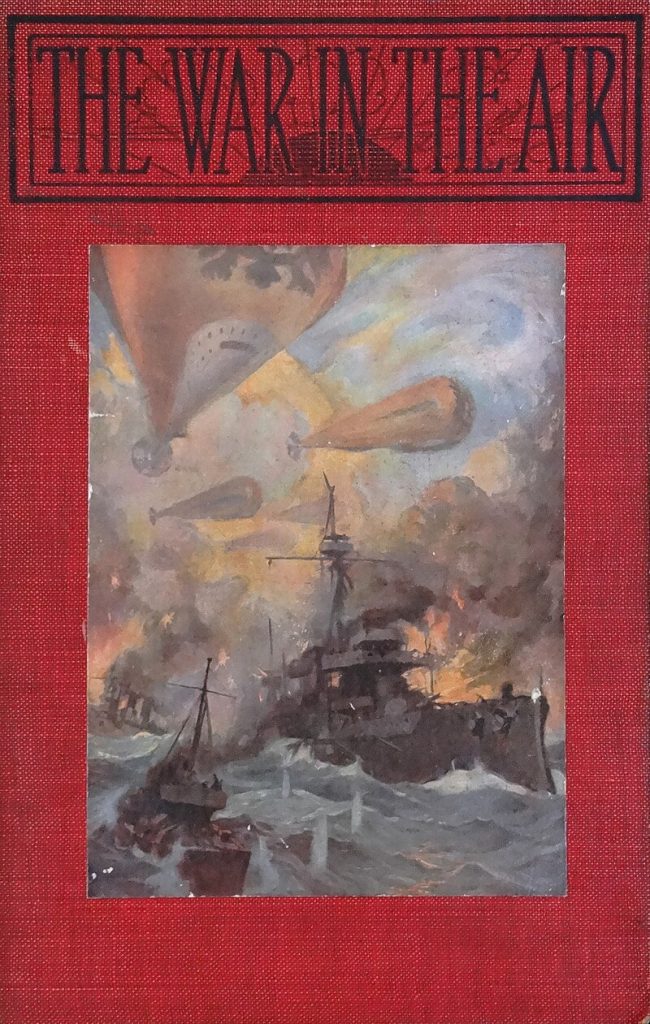
“The War in the Air” by H. G. Wells. London: George Bell & Sons, 1908. First Edition Illustration by A. C. Michael of Pall Mall Magazine –
Aerial warfare became a reality as soon as the Montgolfier Brothers flew the first Hot Air Balloon. (On 19 September 1783, they flew a balloon with a sheep called Montauciel (“Climb-to-the-sky”), a duck and a rooster in the basket). In the Revolutionary Wars, the French used hot air balloons for reconnaissance. Napoleon considered transporting troops by balloon in an invasion of Britain. With the arrival of planes and the development of the Zeppelin. Air warfare became a feature of speculative fiction, and began to absorb the planners.
H G Wells book, illustrated above, featured a war between Germany and the United States in which New York is obliterated by Aerial Bombing. This was written in 1908. In World War 1 London was the focus of a series of Zeppelin and Aeroplane raids. These killed over 500 people. (see my post on the London Zeppelin raid of Sept 8th 1916).
As planes developed in capacity, war departments created plans that seem now to have been exaggerated. It is thought that Appeasement was partly a response to the feared casualties from war in the air. The authorities were planning for 1 million killed in London and double that number of people deranged by fear. In the event, casualties were far less, some 43,000 killed. However, 2 million houses were destroyed. The scale of destruction was fairly accurately predicted but the casualties greatly exaggerated.
1564 – Shakespeare Baptised at Holy Trinity Church, Stratford on Avon.
1925 – World War 1 General von Hindenburg returned as the first directly elected President of the Weimar Republic. He played a crucial role in Hitler’s ascent to power. Hindenburg’s example is one of the main reasons I prefer an unelected powerless Royal Head of State, rather than an elected one.
1994 – The new South African constitution set up and democratic elections were held.
First Published on April 26th 2025, revised First Cocktail Party added 2026
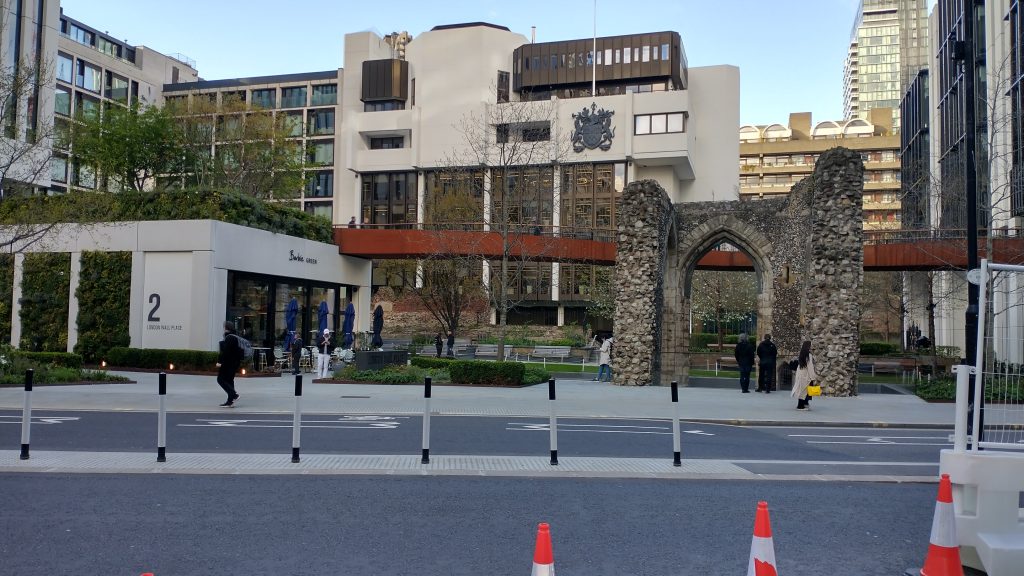
St Alphage. Church Tower on right, City Wall to left. Photo K Flude
I first came across St Alphage when I was working at the Museum of London. The Museum was built on the High Walk at London Wall. The raised Courbusian Walkway looked down on a ruin of a Gothic Church Tower, almost destroyed during the Blitz. This was St Alphage, a Church dedicated to the Saxon Archbishop of Canterbury. (Alphage is also spelt Alphege or Alfege or Ælfheah.)
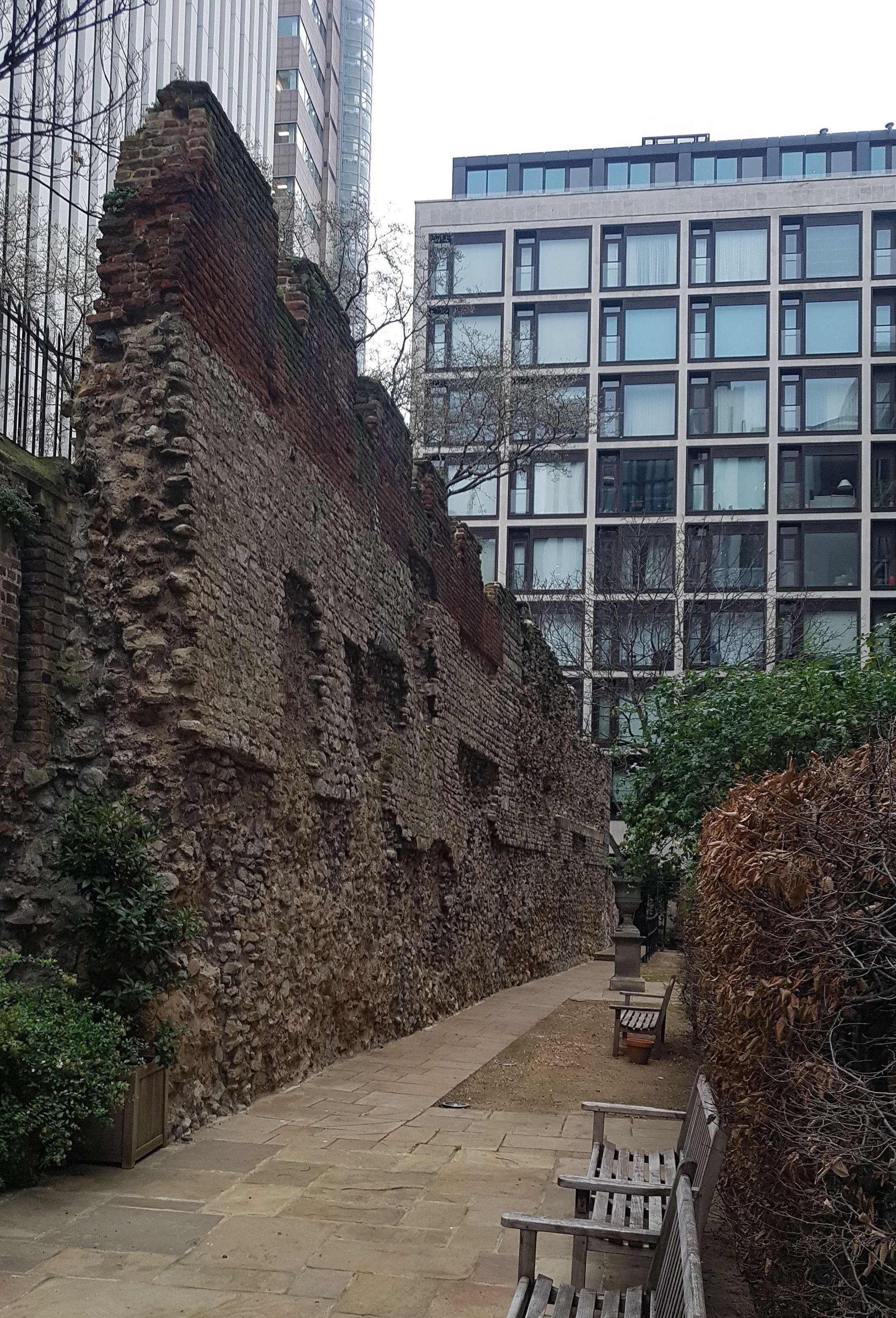
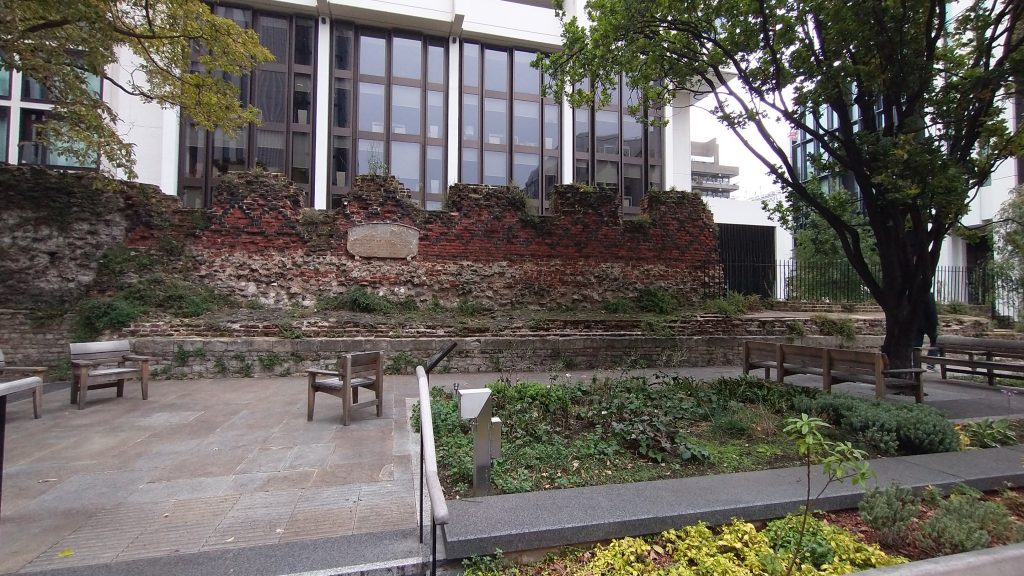
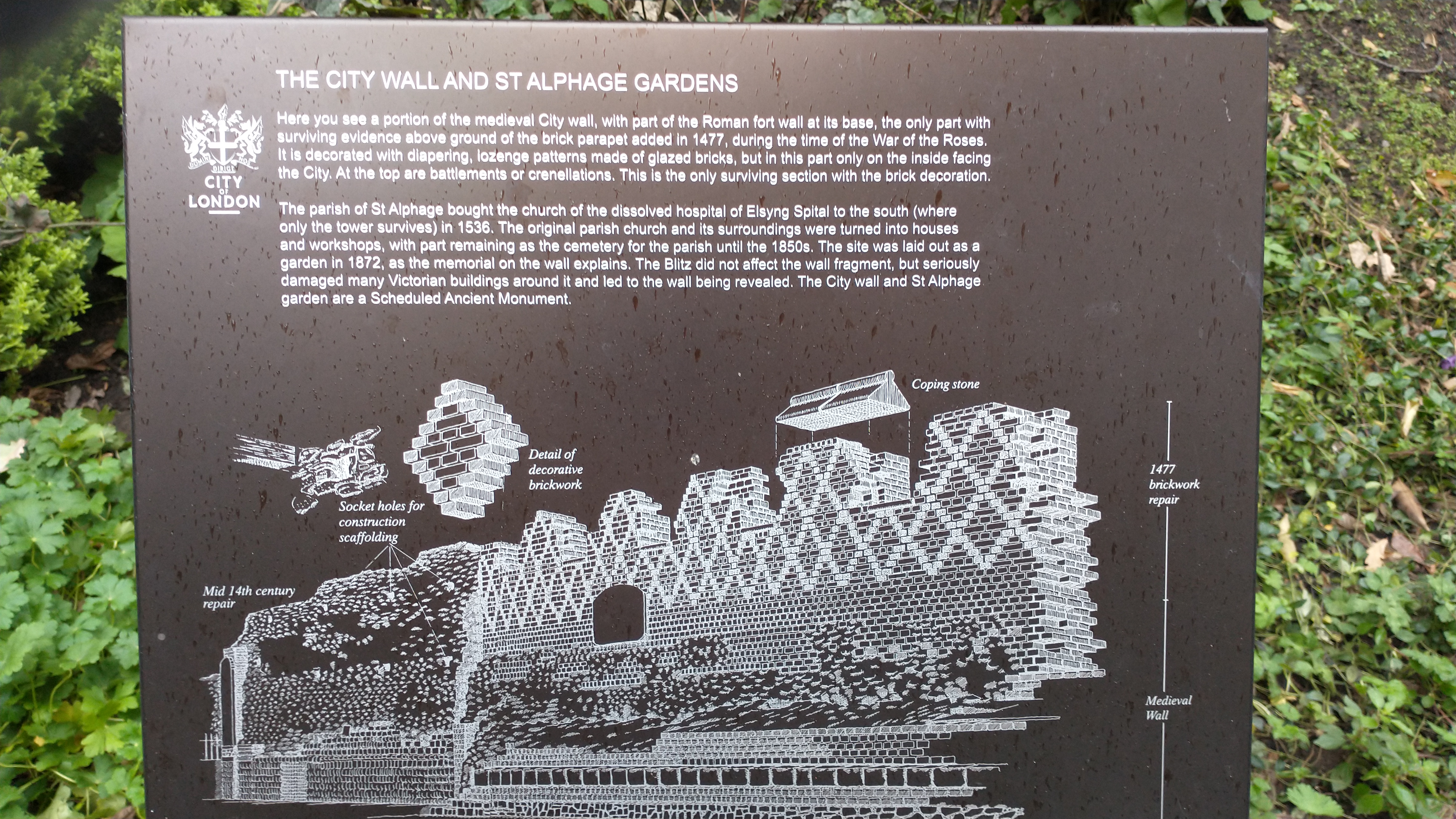
On the other side of the Walkway was the old graveyard of the Church. This preserved one of the very best sections of the old London Wall. Special because on one side its full height was displayed. On the other, the only crenelated bit of the City Wall survived. And the only surviving part of the Wall dating to the War of the Roses.
St Alphage Roman and Medieval WallThe Crennelated Red Brick Section dates to 1477, during the War of the RosesSt Alphage Wall explained on an information plaque.
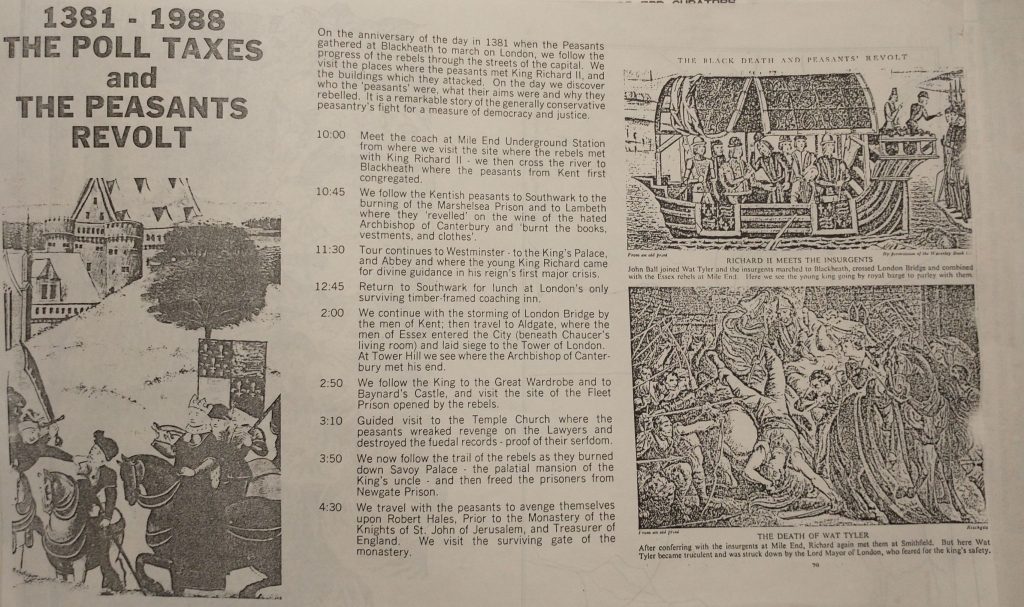
In the 1980s fellow Museum of London Archaeologist, Paul Herbert and I set up a Guided Walks company (Citisights of London). Our walks started from outside the Museum of London, and so St Alphage formed a big part of our success. It led to Guided Walks and tours being a big part of my life. So, St Alphage, thank you!
A Citisights Day Tour the Peasants Revolt (1980s)
St Alphage, Elsyng Spittle and St Mary
The Church was previously a monastic settlement called Elsyng Spittle (aka St Mary within Cripplegate). The Augustinian Canons looked after 100 blind men. It was refounded by Williain Elsing, and dissolved by Henry VIII in 1536. The Church was kept for a Parish Church. But the Puritans were not keen on dedications to St Mary. So, they renamed it after a London based Christian Martyr.
It remained a Parish Church until damaged in an air raid in World War One. (possibly on 8th September 1916 in a Zeppelin Raid – but I am speculating). The Church was partly demolished in 1923, leaving the Tower. The lower part of the Medieval Tower survived bombing in the Blitz. At 12.15 am on 25th Aug 1940, the first bombs on the City of London fell nearby in Fore Street. But the tower was hit in 1940. It was listed Grade 1 in 1950. Kept by the rebuilding of London Wall, and the Barbican area. Then substantially benefitting from a remodelling of the area in an excellent scheme of 2022.
St Ælfheah of Canterbury and Greenwich
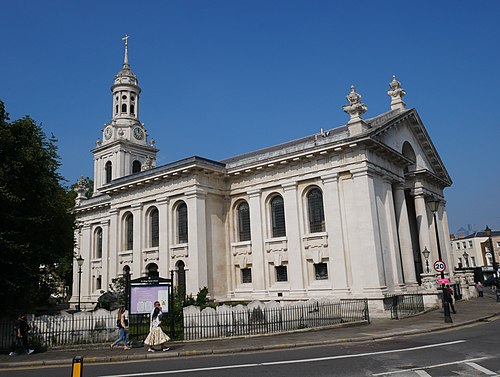
StAlfege Greewich – Doyle own work Wikipedia CC BY-SA 4.0
St Ælfheah was captured during a Viking attack on Canterbury. The Viking hoard relocated to Greenwich where they tried to negotiate a fat ransom for him. He was one of the richest men in the Kingdom. This is what the Anglo Saxon Chronicle says:
.. the raiding-army became much stirred up against the bishop because he did not want to offer them any money, and forbade that anything might be granted in return for him. Also they were very drunk, because there was wine brought from the south. Then they seized the bishop, led him to their “hustings” on the Saturday in the octave of Easter, and then pelted him there with bones and the heads of cattle; and one of them struck him on the head with the butt of an axe, so that with the blow he sank down and his holy blood fell on the earth, and sent forth his holy soul to God’s kingdom.
St Alfege Greenwich, which is now a lovely Hawksmoor Church is said to be on the site of St Ælfheah‘s death. Thorkell the Tall tried to save the Archbishop, but failed and subsequently changed sides and joined the English King. Thrum, who was converted by Alphage, ended his agony by hitting him on the head with the butt of an axe. This seems like a strangely Viking form of mercy!
St Alphage’s body was taken to St Pauls Cathedral where it became venerated and brought income to St Pauls. His remains were removed in suspicious and violent circumstances by soldiers of King Cnut who translated the Saint’s bones to Greenwich. It is suggested King Cnut was punishing London for their opposition to him.
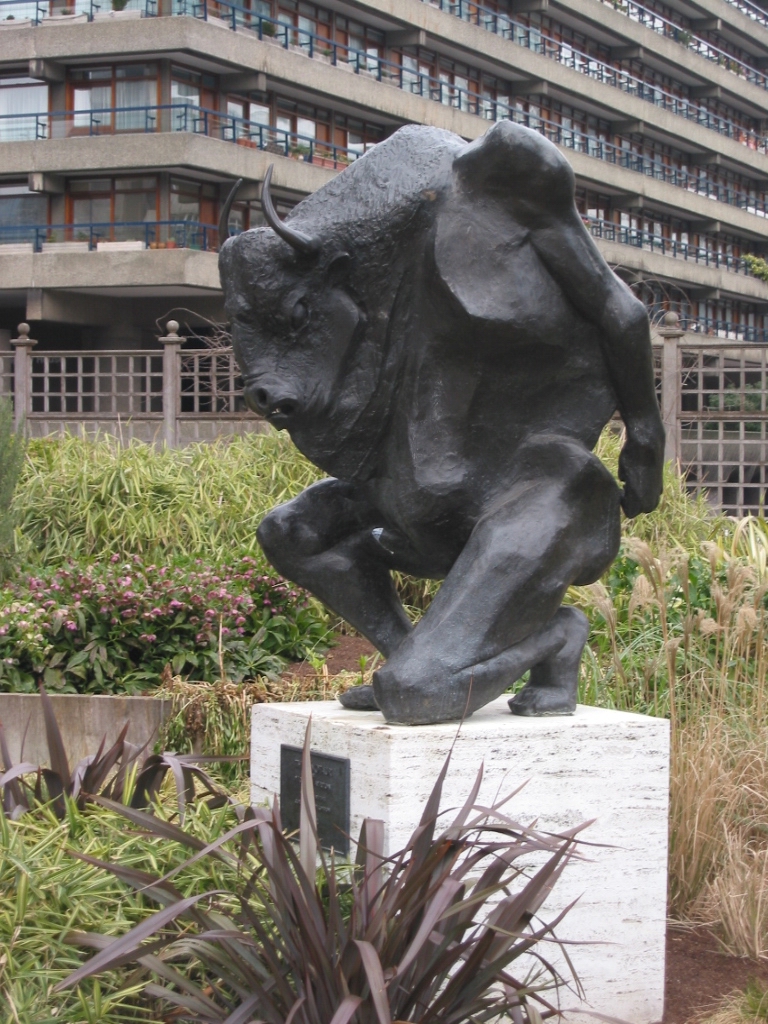
The Minotaur by Michael Ayrton
Also, part of the experience of visiting St Alphage from the High Walk was the statue of the Minotaur. I first came across this phallic Bull in Postman’s Park and am very fond of him. Then it disappeared and reappeared on the High Walk. Now it is on the ground level near the garden of St Alphage.
I understand that Michael Ayrton wanted to make a point about the destruction of London. He felt that the developers were more destructive than the Luftwaffe. They were like a Bull in a China Shop! So he created this statue of a very vigorous Bull (represented by the Minotaur). It is a very unusual work of art in that it sports a fully erect penis. Art History is full of naked women, but the erect male organ has largely not been seen to be a fit subject for art. For more about Ayrton follow this link.
The Minotaur in its present positionThe Minotaur on the High Walk
On This Day
1775 – Battles of Lexington and Concorde begin the American Revolutionary War.
Google Screenshot welcoming the Beginning of the Financial Year
Why is April 6th the Beginning of the Financial Year?
If you remember, in the medieval period, the official New Year was on March 25th. This was the Day of the Annunciation, the Day Mary conceived Jesus. (for much more on this see my post march-25th-feast-of-the-annunciation/). But in 1752, we followed belatedly, Pope Gregory’s reorganisation of the Julian Calendar. We had to put our days back in sync with the Sun. This had gone 11 days out of kilter since Julius Caesar’s reorganisation of the calendar (see my post here!). As we lost 11 days, we had to put them back. So the beginning of the Financial Year in 1753 was changed to April 5th. A further adjustment in 1800 was necessary, as this would have been a leap year. So the new Financial Year moved to April 6th. And it has remained so ever since. For more on the Gregorian Calendar look here.
Today, we breathe a sigh of relief if we have transferred money into our ISAs or briefed our investment advisers, or rue the day that we didn’t get around to any of it, yet again, or didn’t have any money to take advance of tax breaks.
Exploring Mayfair
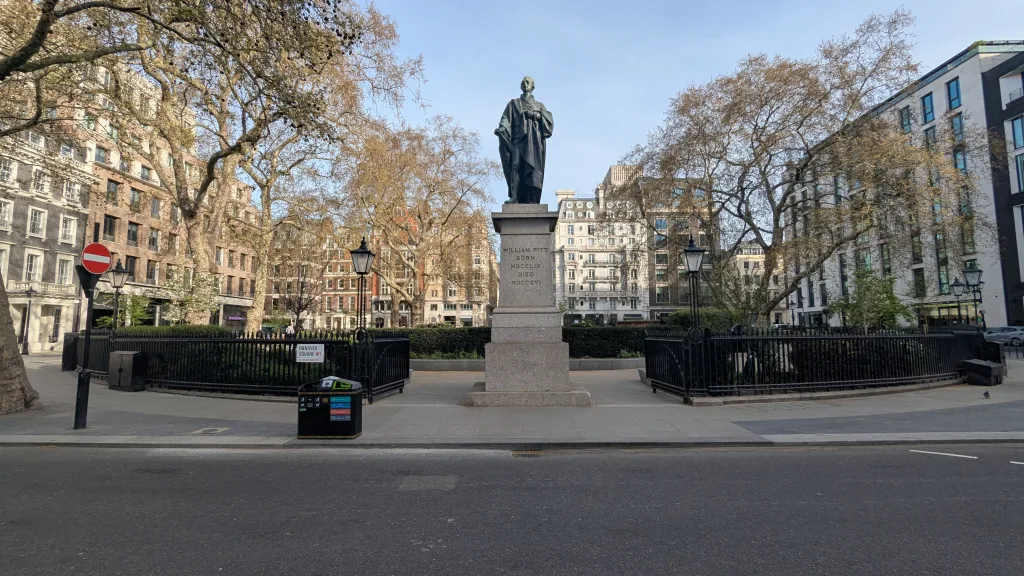
Hanover Square laid out in 1717. Statue of William Pitt the Younger.
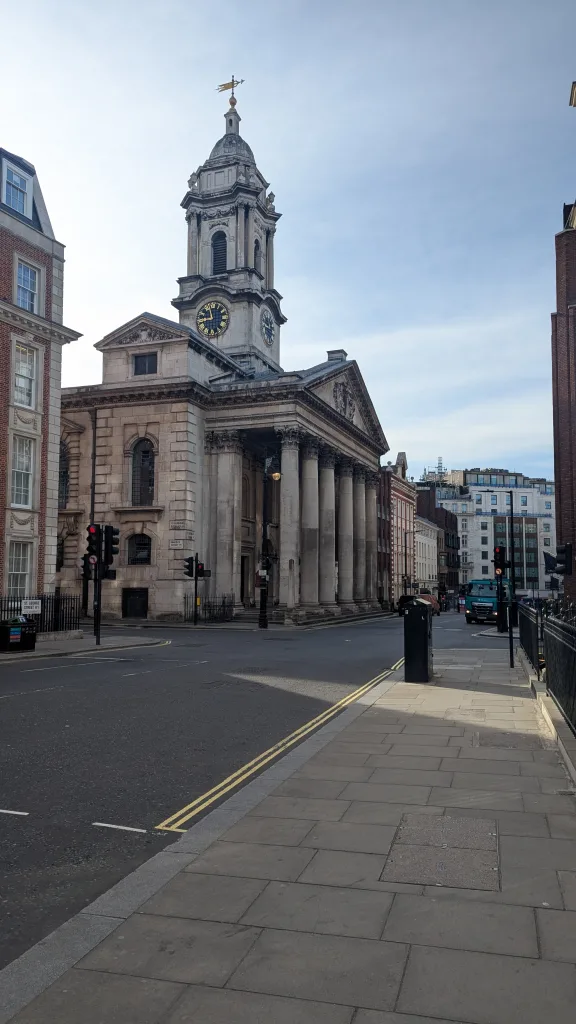
On April 6th 2025, and 2026. I did Jane Austen in Mayfair walks. Today, I met my client at Claridges, (£930 a night). Arriving early, I had a chance to look around, and work out some changes to my Jane Austen walk. I decided to start it at Bond Street, rather than Green Park. This gives a chance to look at Hanover Square, where the tedious Palmers fictionally live (Sense & Sensibility). It is also the location of St George’s Church where Henry Crawford is telling Fanny he will marry her (Mansfield Park). (He won’t).
St George’s Church – St George’s Street, Mayfair London.
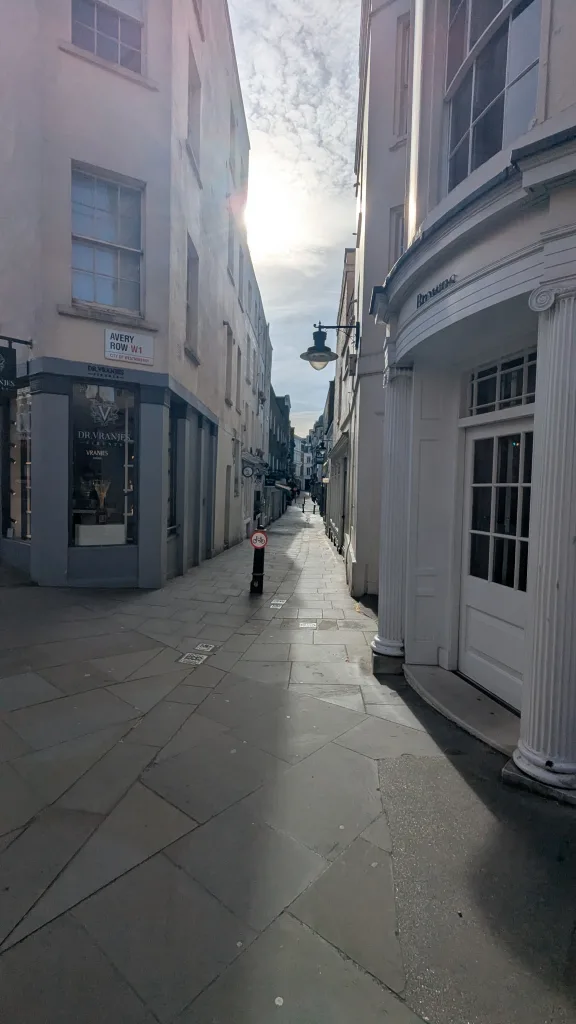
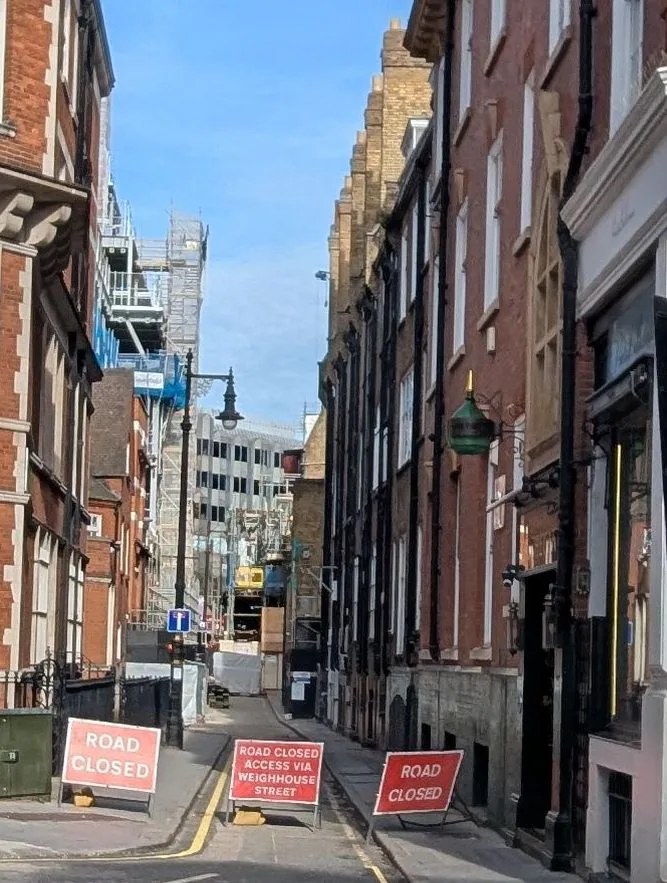
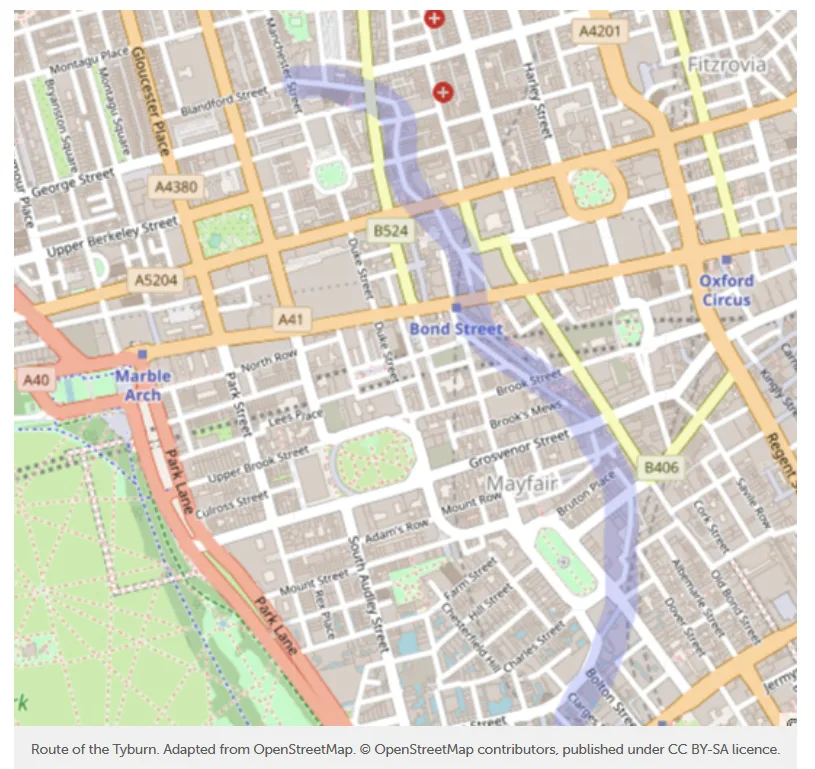
I really love exploring Cities, and here are a few reasons. I knew the Tyburn River used to flow near here. So, I was delighted to see a place where the road to the west rose in height and the road to the east also climbed a small hill. This was the valley of the Tyburn. As I reached the depression, looking left and right, instead of grand boulevards were two pokey little lanes, cutting at an angle in which you could imagine the babbling brook.
Avery LaneS Morton Lane
Post walk research confirmed the guess, this was the course of the Tyburn. Below is an open-source map from the Londonist. Look at their post for more on the Tyburn.
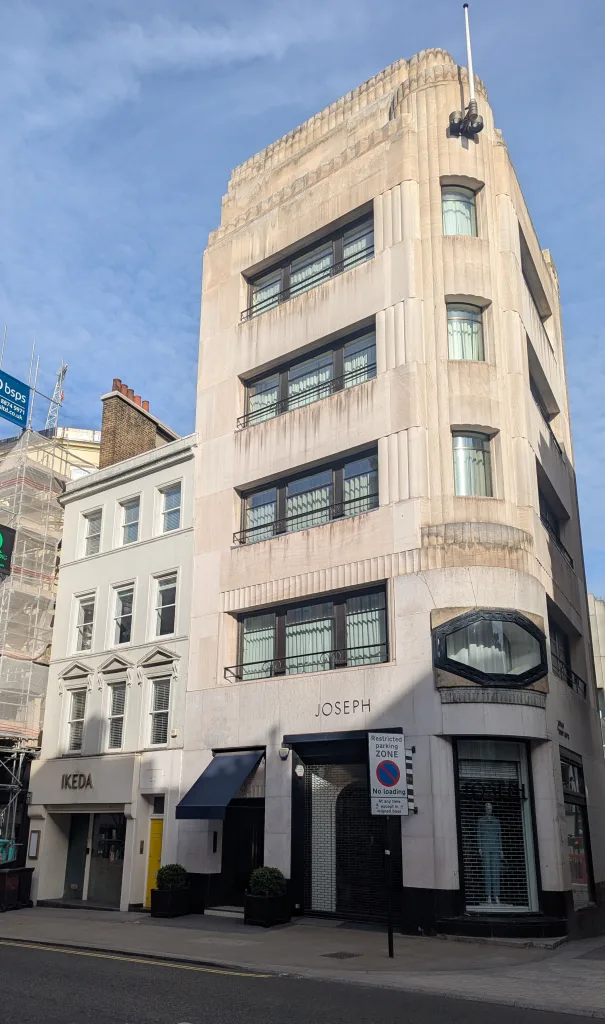
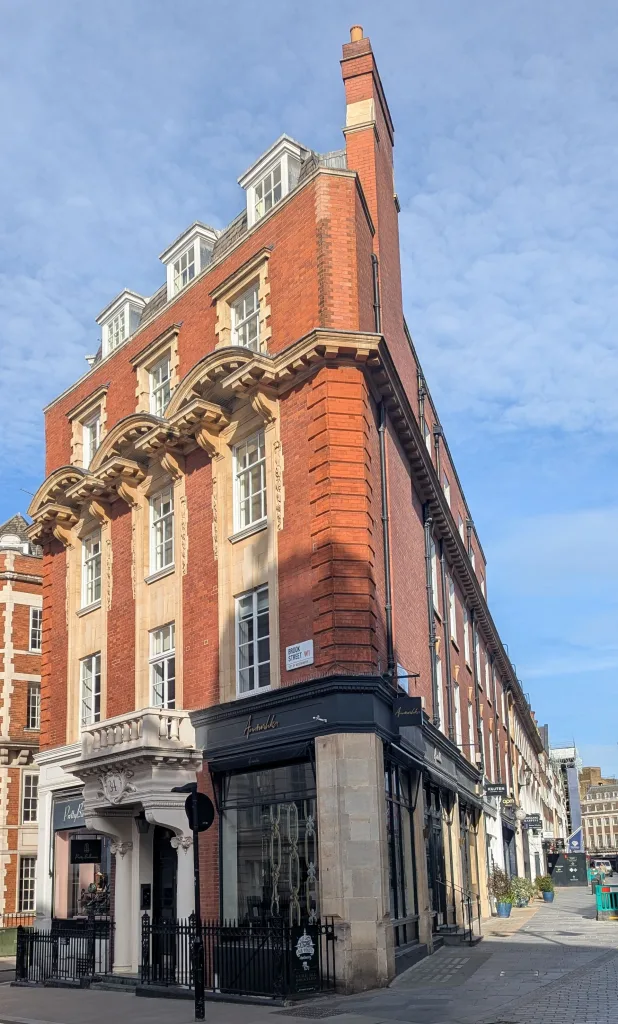
Further down Brook Street were a couple of delightful buildings. First a juxta-position of a Georgian town house with a fine brutalist tower, and then a fabulous triangular brick corner house.
Brook St, London, Photos K Flude
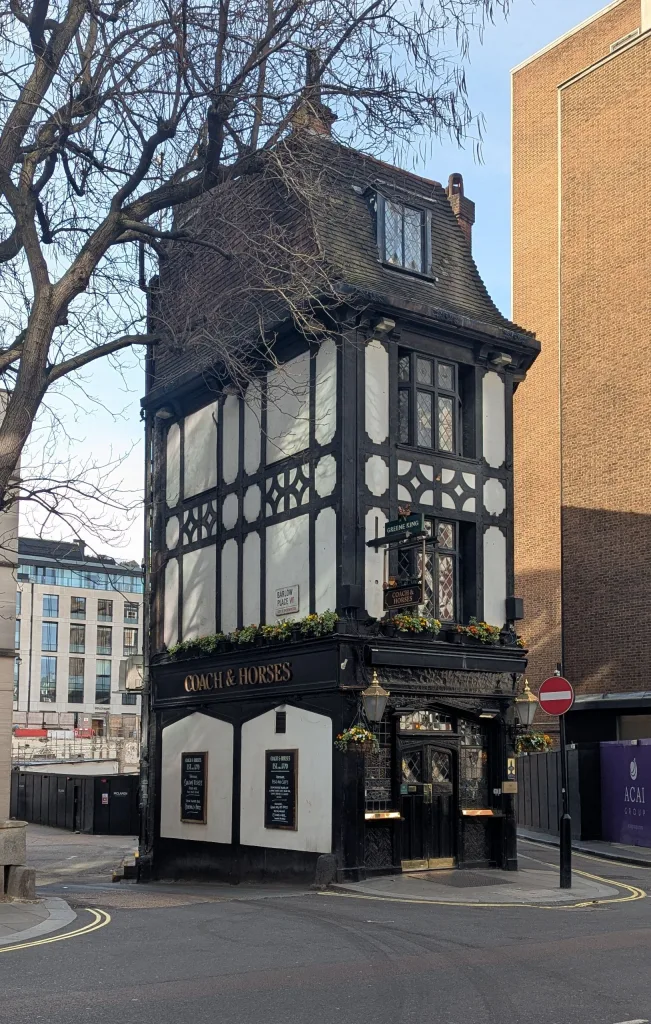
Finally, in Bruton Street just where the Tyburn would have crossed the road was the very epitome of an old inn – the Coach & Horses which survives since 1770, 5 years before the birth of Jane Austen! It is the ‘oldest surviving unreconstructed tavern in Mayfair.’ If you want to do my Jane Austen walk for London Walks, please follow this link.
Coach & Horses Bruton Street Photo K Flude
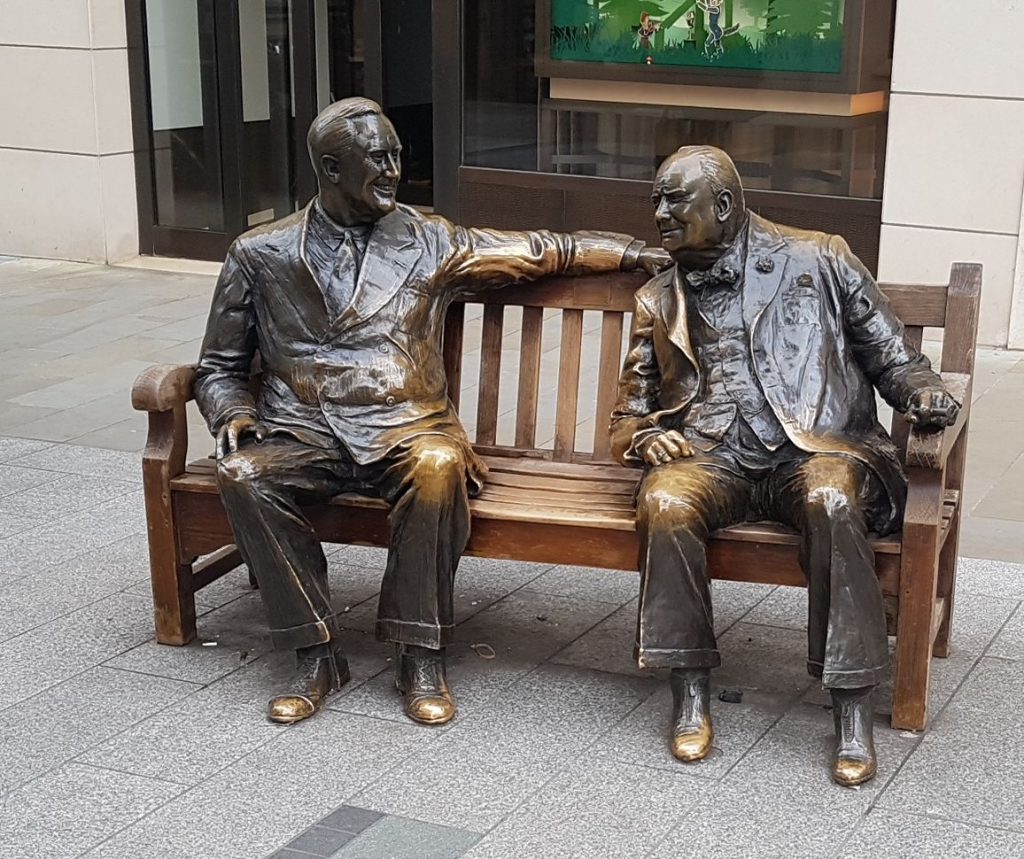
Object of the Day – Allies
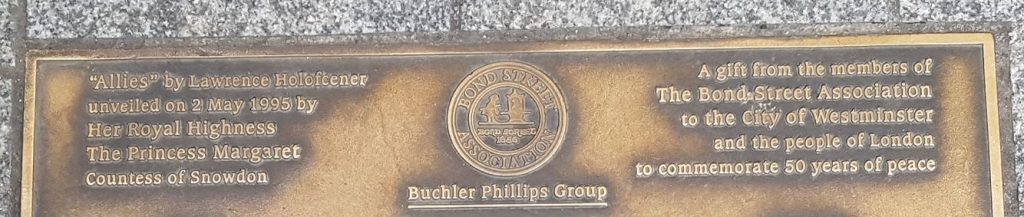
Allies by Lawence Holofcener. 2nd May 1995 to commemorate 50 years of Peace. Photo by K Flude
On my walk, like last year, we saw the statue of Churchill sitting on a park bench chatting with Roosevelt. Seemed like it was from a different world? Given President Trump’s recent statements on NATO?
Details of the Statue
Wise Words on Tariffs.
As it’s the end of the financial year I might be forgiven for keeping in this post words from last year when, coincidentally, I did the same walk. Last year the issue was Tariffs. This is what President Ronald Reagan said about high tariffs.
YouTube video of Ronald Reagan on Tariffs
First Published 6th April 2025, Mayfair content added and post revised 2026
This year, Good Friday is on Friday 3rd of April, and the day we eat Hot Cross Buns. The Hot Cross Bun is a simpler sort of bun than the Chelsea Bun, which was the bun to have at Easter in London in the 18th Century.
Hot Cross Buns Good Friday Traditions
There seem to be all sorts of dubious traditions around the origins of the Hot Cross Bun. It has been suggested that the Greeks knew how to put a cross on a bun. Also, that the Anglo-Saxons celebrated the Goddess Eostre with the crossed bun. It is suggested that the cross represents, not the cross, but the four quarters of the moon, the four seasons and the Wheel of the Year. But there is very little evidence for Eostre other than the Venerable Bede’s mentioning her name. Bede says:
‘‘Eosturmonath has a name which is now translated ‘Paschal month’, and which was once called after a goddess of [the English people] named Eostre, in whose honour feasts were celebrated in that month’ (quoted from florencehrs.substack.com/p/eostre-pagan-fertility-goddess)
So nothing is known about Eostra herself nor her rituals and customs. So her association with Hot Cross Buns cannot be known. However, the cross, and the association with Easter, makes the bun powerful, so there are many superstitions on record. A piece of an Easter Hot Cross Bun given to the sick may promote a cure. It was said that a bun cooked and served at Easter will not go off for a year. This might help explain the traditions that hanging them up on a string or ribbon is a good thing. One hung in a kitchen prevents fire. On a ship prevents sinking. In East London, the Widow’s Son Pub in East London has an old bun. This remembers a sailor-son who never returned to eat it on Good Friday.
Making and Eating Hot Cross Buns
The technology of putting a cross on a Bun requires nothing more complicated than a flour and water paste so it might well be an ancient tradition. A more impressive cross can be made with shortcrust pastry. The bun itself is simply flour, milk, butter, egg, salt, spices and mixed fruit. Here is a recipe from the BBC www.bbcgoodfood.com
In my opinion, they need to be purchased from a shop. Home-made Hot Cross Bun might be better but would be strangely disappointing. It’s normally eaten toasted and buttered although I prefer the soft doughy untoasted and unbuttered bun. But then I can get carried away and eat the entire pack of four.
‘RRRRRare Chelsea Buns’ as Jonathan Swift called them in a letter to Stella in 1711.
Fragrant as honey and sweeter in taste As flaky and white as if baked by the light As the flesh of an infant soft, doughy and slight.
The buns were made from eggs, butter, sugar, lemon and spices. The tradition was that, on Good Friday, 18th and 19th Century Londoners would go to Chelsea to buy Chelsea Buns. Thousands of people would turn up at the Five Fields. These stretched from Belgravia to what is now Royal Hospital Street. There were swings, drinking booths, nine pins and ‘vicious events that disgraced the metropolis’. The Bun House was on Jew’s Row as Royal Hospital Street was then called. As several King Georges visited the Bun House it became known as the Royal Chelsea Bun House. It was run by the Hands family. They were said to sell 50,000 Buns on the day. Stromboli tea garden was nearby.
Chelsea Cabinets of Curiosity
Inside the Chelsea Bun House was a collection of curiosities. Chelsea became known for its collection of curiosities in the 18th Century. Of course, there was the great Hans Sloane’s collection which was the founding collection of the British Museum. And then there was Don Saltero’s which was a coffee house that had curiosities on the wall. The Bun House displayed clocks, curiosities, models, paintings, and statues on display to attract a discerning Public.
Find me a Chelsea Bun! (Or make one yourself!)
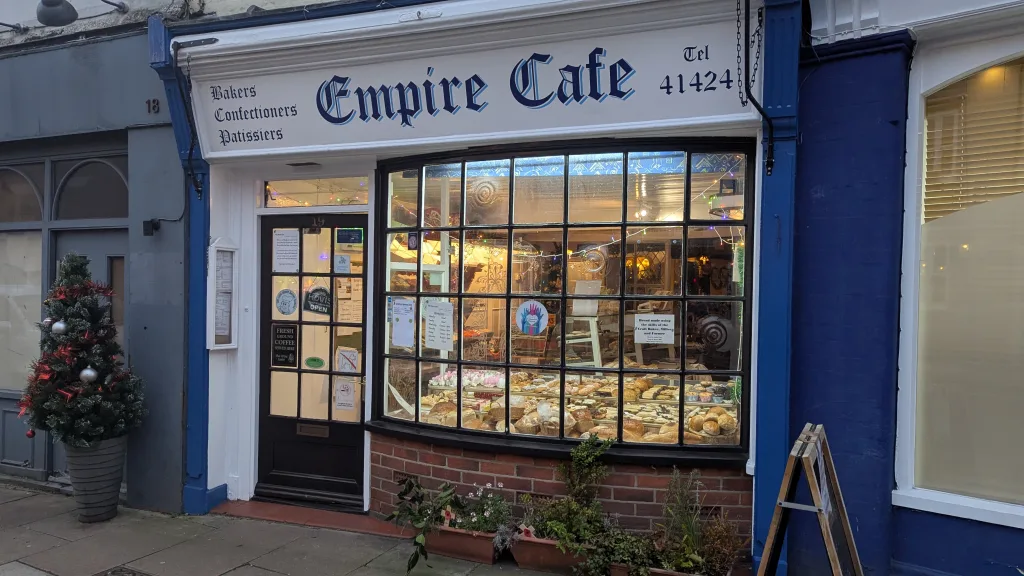
Me. I love a Chelsea Bun above all buns, But can you get them any more? The British Library Cafe was the last place I found that sold them. And that was 7 years ago. I did Chelsea Buns on sale in the Empire Cafe in Newbury but apart from that nada. Their place has been taken first by Danish Pastries and more recently the ubiquitous Cinnamon Bun. If you see any Chelsea Buns on sale please let me know.
Chelsea Buns, middle top row, next to the white cakesEmpire Cafe baking in Newbury since 1874
There is a tradition of Skipping on Good Friday. I can’t say I ever saw it – in my school skipping was a perennial activity, mostly enjoyed by the girls, but the boys would sometimes be intrigued enough to join in.