Thursday 1st January 2026 7.30pm . On this Virtual Walk we look at how London has celebrated the New Year over the past 2000 years.
The New Year has been a time of renewal and anticipation of the future from time immemorial. The Ancient Britons saw the Solstice as a symbol of a promise of renewal as the Sun was reborn. As the weather turns to bleak mid-winter, a festival or reflection and renewal cheers everyone up. This idea of renewal was followed by the Romans, and presided over by a two headed God called Janus. Janus looked both backwards and forwards. Dickens Christmas Carol was based on redemption. His second great Christmas Book ‘The Chimes’ on the renewal that the New Year encouraged.
We look at London’s past to see where and how the New Year was celebrated. Why did different societies have different New Years we use? How were their calendars arranged – the Pagan year, the Christian year, the Roman year, the Jewish year, the Financial year, the Academic year. We look at folk traditions and New Year London customs. Medieval Christmas Festivals, Boy Bishops, Lords of Misrule, Distaff Sunday and Plough Monday, and other Winter Festivals
At the end, we use ancient methods to divine what is in store for us in 2026..
The virtual walk finds interesting and historic places in the City of London to link to our stories of Past New Year’s Days. We begin, virtually, at Barbican Underground. Continue to the Museum of London, the Roman Fort; Noble Street, Goldsmiths Hall, Foster Lane, St Pauls, Doctors Commons, St. Nicholas Colechurch and on towards the River Thames.
On the seventh day of Christmas My true love sent to me: 7 Swans a Swimming; 6 Geese a Laying; 5 Golden Rings; 4 Calling Birds; 3 French Hens; 2 Turtle Doves and a Partridge in a Pear Tree
First Footing on New Year’s Eve
The first person to set foot into your house needs to be a ‘Tall, well-made man’. Dark-haired men are preferred to fair-haired, but he must not be dressed in black, nor be from the ‘professions’ (those people who can counter-sign your passport). He must not carry a knife, but he must bring gifts, particularly a loaf of bread, a bottle of whisky, a piece of coal or wood, and a silver coin. Silence is to welcome him to the house until he puts the coal on the fire, pours a glass of the whisky and greets the family.
He will bring in the luck through the front door on the stroke of midnight; the bread symbolising that you will be well-fed, the fuel that you will be warm and safe, the whisky that you will have fun and the coin will bring prosperity. Your first-footer will take the old year and its bad-luck out of the back door when he leaves.
An Irish tradition is that you should open your front door at Midnight to let the old year out and the New Year in. Perhaps, open the back door to let the old year out and the front door to let the New Year in.
Burn the Calendar First wind in nine Times round with red Wool and thread
Cast into the flames And say:
Burn, burn, burn Old Day Book, Burn! Old year’s troubles Never Return Ka!
Clean the house And do the first footing With silver, bread and a piece of coal or charchoal
Old Rhyme
Hogmanay – Holy Month or New Morning
Is the Scottish name for New Year’s Eve. There is no certain explanation of the word. But it has been suggested it comes from the Ancient Greek for Holy Month (or from the Anglo-Saxon for Holy Month). Or the Gaelic word for Oat Cakes or from the Middle French word for mistletoe (aguillanneuf = meaning “to the mistletoe be the new year”). Perhaps, it is named from the great giant Gogmagog. Or from Norse, or Scots. or any number of other possibilities. See Wikipedia for more guesses.
Hogmanay was celebrated all the way down to Richmond in North Yorkshire. (Remember that Northumbria used to control North Britain up to and including Edinburgh, and sometimes into Fife. ) The vividness of the Scottish Celebration, may simply stem from the Scottish temperament. But it is often proposed that it stems from a Presbyterian tradition in Lowland Scotland, which disapproved of the superstition that was Christmas. So all that Christmas Joy was transferred to the New Year Celebrations.
Wassail in the Orchard
On New Year’s Eve, wassailers went to the oldest tree in the apple orchard. There they poured a liberal dose of wassail over the roots of the tree. Then they pulled down the branches to dip the end of the branches in the punch. They decorated the tree, and then drank the cider based wassail themselves.
We wish you a merry Christmas, a Happy New Year A pocket full of money, and a cellar full of beer A good fat pig to last you all the year Please to give us a New Year’s Gift. (Radnorshire song)
For more on Wassail, see the bottom half of my post here.
New Year Weather Prophecy
The weather today will be reflected on the 7th month, according to Gervase Markham. First Day of the 12 Days of Christmas prefigures the weather in January and the 12th Day that in the following December. So we are going to have a cool, sunny winter, and a sunny June, July, August, by the looks of the weather forecast.
Or as a Scottish Rhyme has it (quoted in the Perpetual Almanac)
If New Year’s Eve night-wind blow south That betokens warmth and growth If west, much milk, and fish in the sea If North, much cold and storms will be If east, the tress will bear much fruit. If north-east, flee it, man and brute,
The wind is currently varying between West and West North West. So it would seem we are in for a year of much milk and fish in the sea, with the occasional cold storm? .
New Year Reflections
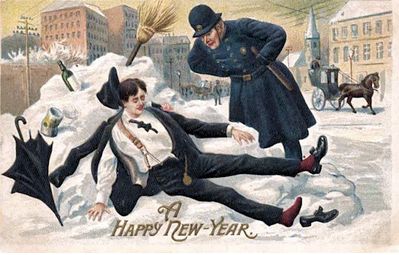
Victorian New Year’s Card
This is a day of preparation, and perhaps of anxiety. Have we got an invitation from anyone tonight? Is anyone going to come to our party? Can I take another blow-out feast, a belly full of alcohol and a very late night? I’ve just lost my Christmas weight, and you want me to come for a big feast?
My first memories of New Year’s Eve were spent with the parents watching some inexplicable variety show hosted in Scotland. Google has helped me remember that it was the ‘White Heather Club’ hosted by Andy Stewart. Up to 10 million people watched this between 1960 and 1968. I never understood the pleasure of it. To my rebellious teenage soul, it seemed a symbol of an old-fashioned world that was passing and irrelevant.
More recently, if not spent at a party, New Year’s Eve is often spent with Jools’ Annual Hootenanny, which is a music show masquerading as a live New Year’s Eve party. It features really excellent bands and singers. It is, however, recorded earlier in December (15th, 20th are dates I have seen) and hence a New Year’s fake. Here is a 2007 excerpt staring Madness’s ‘House of Fun’. The fun of this is to spot the stars grooving along to the music.
New Year’s Preparation
New Year’s Day needs a lot of preparation. Folklore suggests that this should include finishing off any unfinished work or projects, as a task carried forward is ill-omened. Your accounts for the year should be reconciled. As Charles Dickens suggests in the Chimes, his second Christmas Book, your moral account should also be addressed. So you can come into the New Year with a clean slate, good conscience and plans for a better new year. And don’t we all require that for 2025!
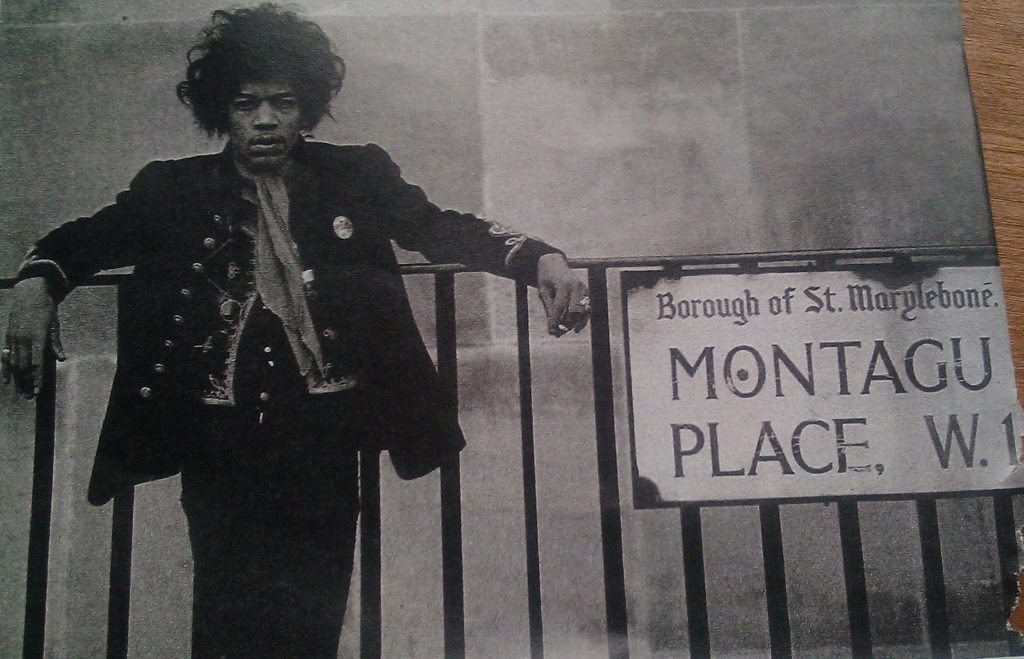
To my mind, THE genius of the electric guitar, and a great singer and songwriter.
Born Johnny Allen Hendrix in Seattle on 27th November 1942. He was spotted by ex-Animals Chas Chandler (bassist) when performing in small cafés In New York as Jimmy James. Chandler suggested he came to England. On the flight, they decided to change his name to Jimi. He arrived on September 24, 1966.
“It’s a different kind of atmosphere here. People are more mild-mannered. I like all the little streets and the boutiques. It’s like a kind of fairyland”
On his first day in London, he met Kathy Etchingham,. She found them a flat on the upper floors of 23 Brook Street, which is now part of Handel&Hendrix in London. This is a a small museum to the two musical giants who lived next door to each other (if they were time travellers that is!).
For the English middle class, it’s comforting to know that Jimi bought the furnishings of the flat from their favourite, the nearby John Lewis Department store. However, he got his swinging 60s look from Carnaby Street and Portobello Road Market.
The Blues and London
London wasn’t an arbitrary choice for a young American Bluesman. The wave of British Bands that came to international prominence in 1964, was based on the almost forgotten (by the mainstream media) Black American Blues legends such as Woody Guthrie and Ledbelly. Bands like the Rolling Stones, the Beatles, and the Animals loved this music, and began their careers playing cover versions in Clubs in London. (For more on the British Blues Revival, look here🙂
Hendrix’s younger brother, Leon, spoke about the importance of London to Hendrix
“He loved England ‘cos it was like Seattle. It was like home. It was the same climate, y’know? And this is where all the music was. This is where all of his friends were – Eric Clapton, The Beatles, the Rolling Stones, Brian Jones, everybody…”
He concluded: “After people played, they all went and jammed together. Like, when Jimi played a concert that was only the warm-up… After the concert, he was out and about lookin’ for somebody to play with and somebody’s studio to jam at. They’d just be jammin’ all night ’til, like, seven or eight in the morning. It was awesome.”
Chas Chandler was interested in managing bands, and thought Hey Joe, which he heard Hendrix play, could be a hit single. Hey Joe got to no 6, in January 1967 in the UK Top Ten, but failed to make an impression in the US.
Here is a YouTube film of Hendrix playing ‘Hey Joe’.
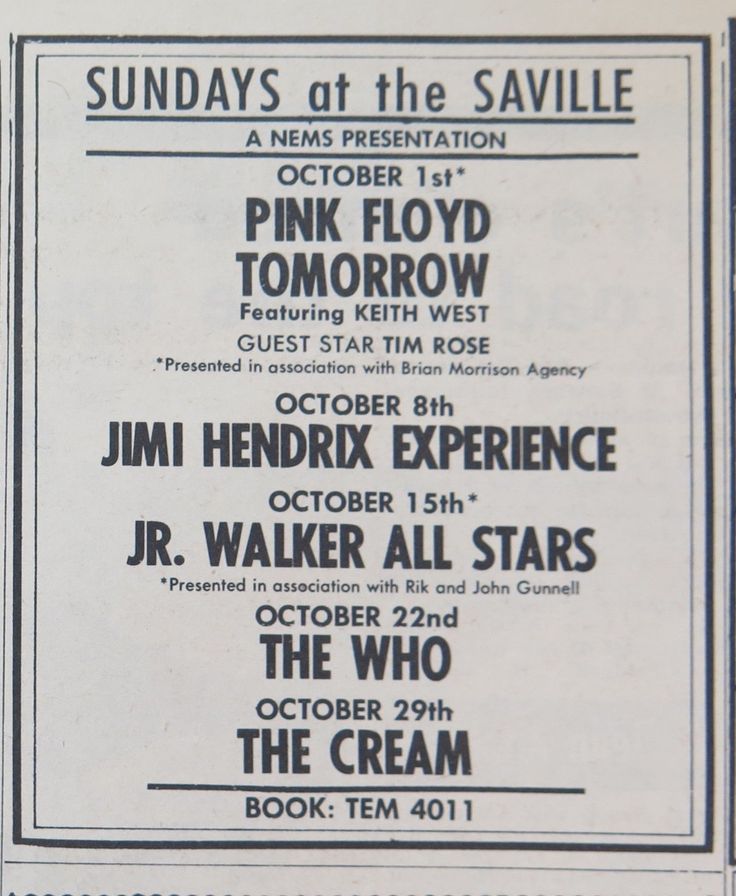
Finally, have a look at this bill for bands on at the Saville Theatre.
One month in 60s London!
For details of Hendix Gigs look at the Set list Web site, which shows he performed at the Saville Theatre in Jan,May and June 1967 on his First European Tour, and again in Aug and Oct on his 2nd European Tour.
The Independent website above gives a good guide to Hendrix in London. An excellent documentary on Hendrix was recently aired on BBC Sounds, Everything but the Guitar.
On this Day:
Eels are now in Season. (for Eels, Eel Pie Island, and its amazing musical heritage click here🙂
1703– The Great Storm
‘About one this morning, the terrible storm arose, which continued till past seven, the wind southwest, the light not known in the memory of man; blew down a vast number of the tops of houses, Chimneys, etc.; the damage incredible., the lady Nicholas and a great many people killed and many wounded: most of the boats and barges forced ashore; an East India ship cast away near Blackwall, besides several merchant ships and colliers; divers of the great trees in St James’s Park, Temple Grayes Inn, etc, blown down; and we are apprehensive we shall hear of great losses at sea.‘
From Narcissus Luttrell, diary, 1703, quoted from ‘A London Year’ compiled by Travis Elborough and Nick Rennison.
First published on Nov 27th 2022, as part of Stir Up Sunday! And revised onto its own page on the same day, 2023, and updated 2024 and 2025
According to the Kalendar of Shepherds 1604, women born on this day should marry at age 13, shall have many sons and live to 72 years old. Men born on November 22nd will be merciful, far-travelled, prosperous after early dangers and live to 72 years and 8 months. Can’t help feeling that prophecy this precise is heading for a fall. (see my post sliding-ducks-and-the-equivocation-of-prophecy/).
Martinmas Old Style and Pack-Rag Day
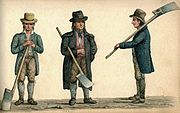
Pack-Rag Day, hiring of farm workers
Martinmas was the Festival of Winter’s Beginning and is celebrated on November 11. It was one of the most famous medieval festivals. In 1752, the calendar was transformed when Britain transferred from the Julian to the Gregorian Calendar, 11 days were lost from the Calendar, so the original date of the festival would be what we know as November 22nd. So this is Martinmas Old Style.
In the East Riding of Yorkshire, hiring fairs were held around this time. It was also called Pack-Rag Day as servants carried their clothes to their new place of work.
A hiring fair is how Gabriel Oak is hired by Batheseba Everdene in ‘Far From the Madding Crowd’ by Thomas Hardy. They were often also held at Michaelmas, and in Warwickshire are called Mops. See my post on the Mop here.
On this Day
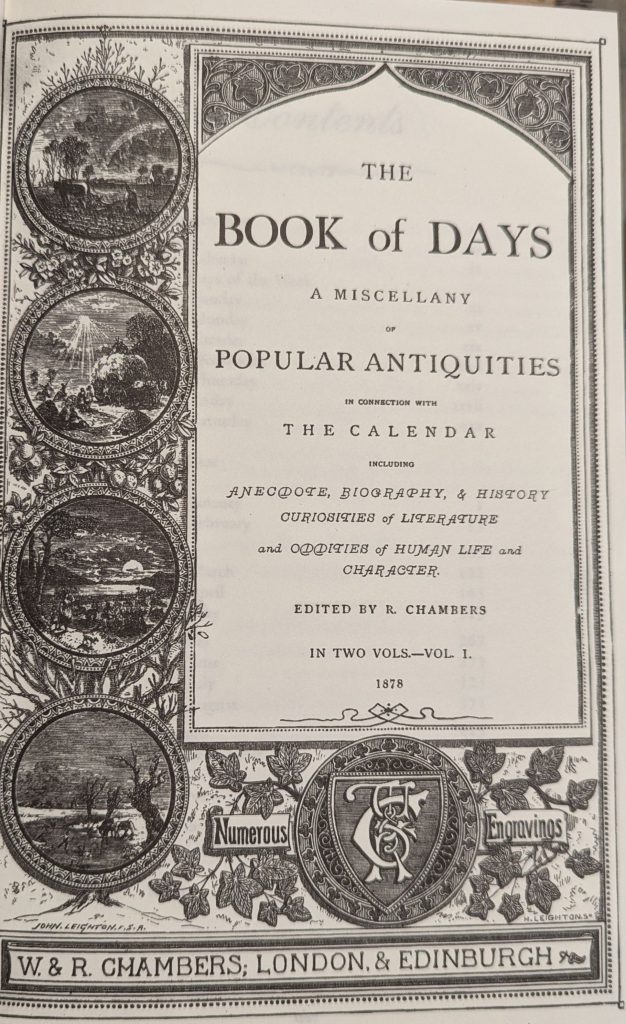
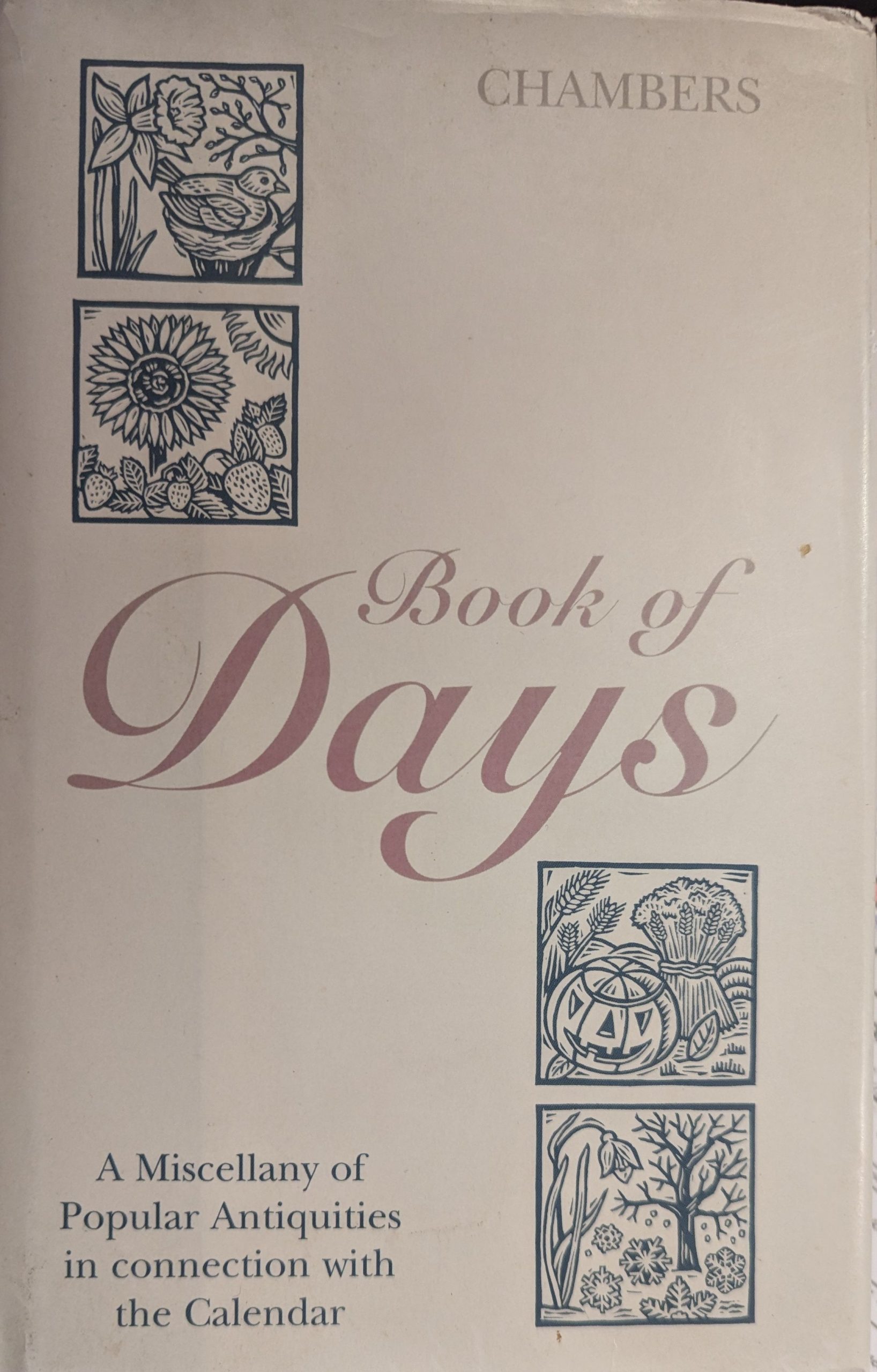
The original Book of Days 1878 title pageThe 2004 Chambers Book of Days
As you may have noticed, I have been adding a section called ‘On this Day’ which highlights some notable events that have happened on this day in history. In my quest to create an almanac of the past with a reasonable post for every day, my loyal subscribers will be getting a post they read last year. So, I am trying to add extra content to make it worthwhile. Hence, this ‘new’ section (one year old today).
So, I will either republish a previously published post. It should be better proofread (although I’m perfectly capable of adding extra embarrassing typos). The content should be improved or expanded. Or with an added ‘On this Day’ section. Therefore, if you find you have read the post before, just scroll down to the new content at the bottom.
One of my sources for the ‘On this Day’ section is Chambers’ ‘Book of Days A Miscellany of Popular Antiquities’in connection with the Calendar’. The original was published, in 1864, by Robert Chambers one of the original founders of Chambers Publishing. The new one takes is inspiration from the original. I found out about it from Sir Roy Strong and Julia Trevelyan Oman’s ‘The English Year, which is itself a personal selection from the Chambers Book of Days. Sir Roy was my boss when I was an Assistant Keeper at the V&A.
1963 President Kennedy and Governor John Connally were shot while part of a motorcade in Dallas.
1968 The Beatles White Album was released
1990 British Prime Minister Mrs Thatcher resigned.
Originally published as two separated posts on 22nd November 2022, republished on 22nd November 2023, merged 2024, and expanded 2025
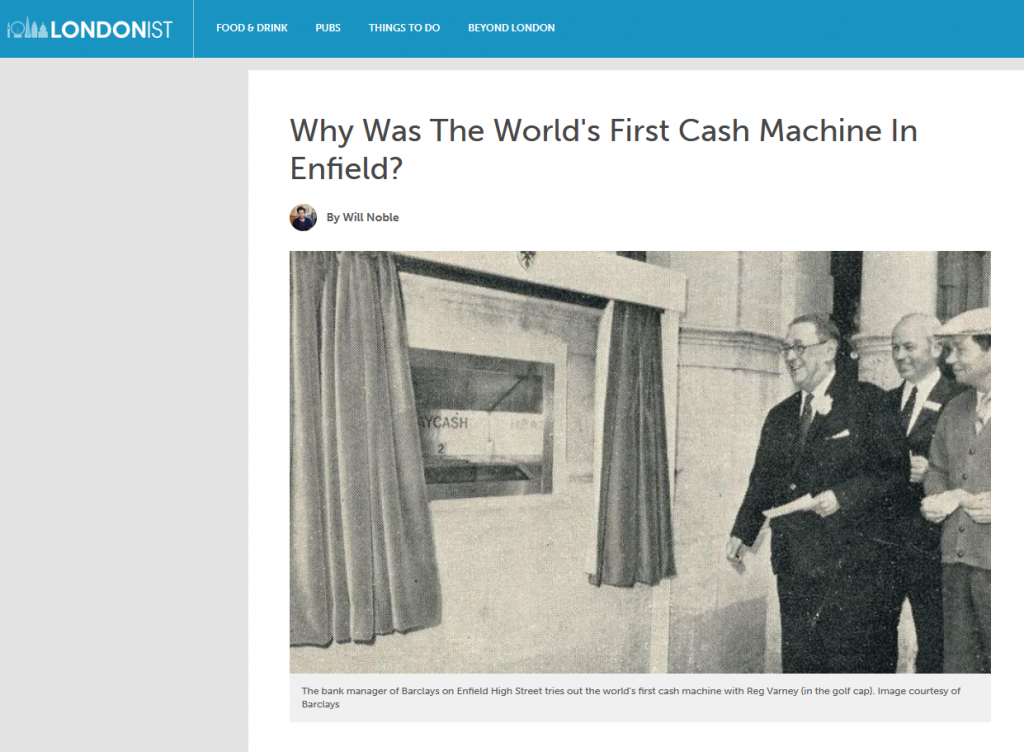
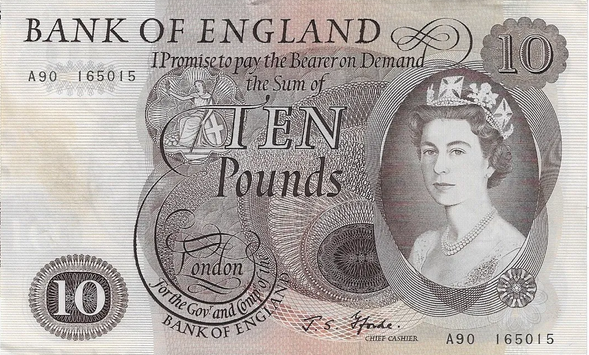
On the 10th April 2023, Heritage England announced on its webpage, that they had listed a Bank which contained the world’s first ATM Machine. On 27th June 1967 Barclays Bank open the first ATM at its Enfield Branch in London. Above, you will see local celebrity, Reg Varney (in hat), a star of a very popular and ‘corny’ sitcom called ‘On the Buses‘ opening the new machine. It miraculously delivered a £10 note without any human intervention, and offered access to money after banking hours.
1967 Ten pound note
Barclay’s had previously launched the UK’s first credit card, and selected Enfield to be the place where they launched an automatic machine to dispense money. They are nicknamed ‘money machines’ in the UK. The customer was issued a ‘punched card’ and had to enter a PIN for the magic to be initiated. Barclays were developing the idea of a magnetic strip on a card at the same time.
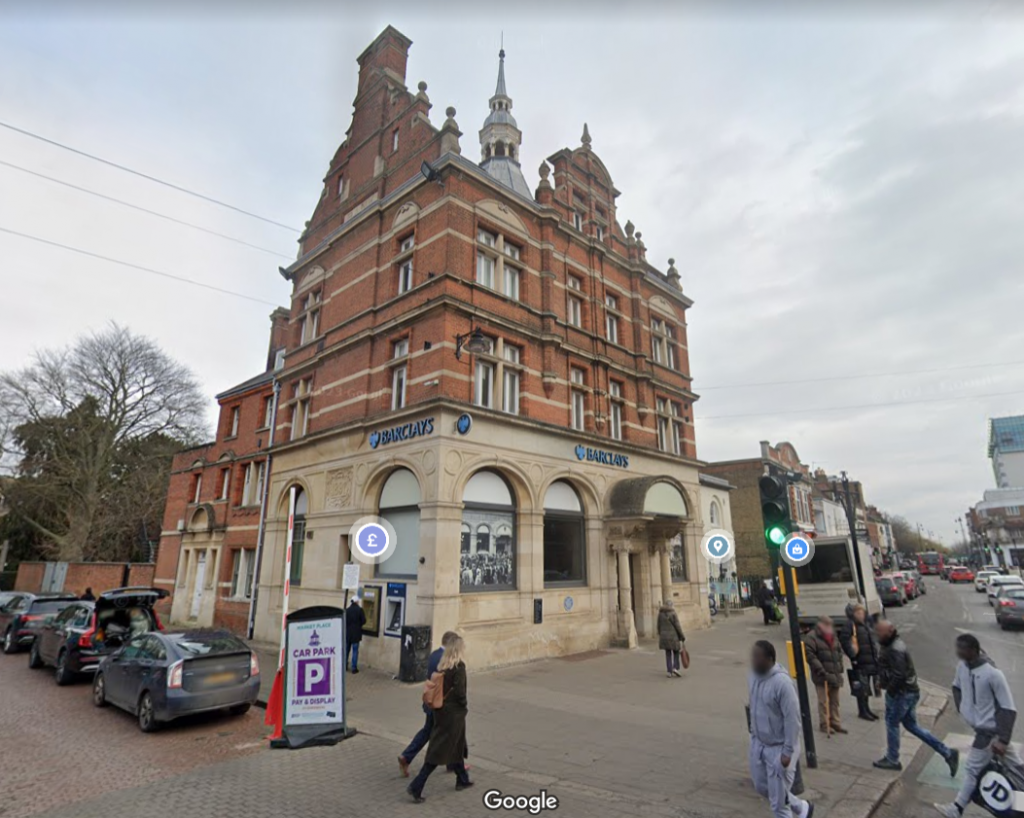
Google Street View image of the Enfield Barclays Bank (screenprinted 15/07/23)
The building, which now has a plaque and a gold-painted modern ATM, is Grade II listed and so should be protected from development in future. The building itself is an interesting, almost typical, late Victorian red brick commercial building, with fine details in the Flemish Renaissance style by William Gilbee Scott. Scott lived in Enfield.
I look forward to visiting it on my next visit to Enfield Lock on my narrow boat Mrs Towser.
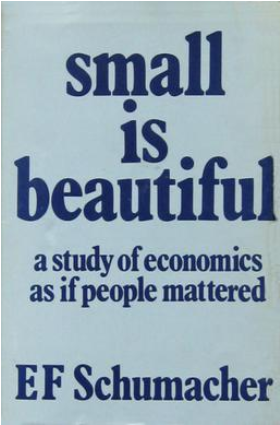
Dust jacket of fifth reprint of first edition, copyright 1973. Publisher Blond & Briggs. Jacket design by Andrew Sinc (wikipeidia)
It was, probably, mid 70s when I came across this book and, I think I can say, it had a lasting effect on my opinions. The book is about many things, but what it did for me was introduce sustainable development and the beauty of small scale innovation. Schumacher believed that resources were limited, that pollution represents an ever-increasing danger to society, and that appropriate scale innovation offered the best hope to create a fairer world.
He helped set up ‘the Intermediate Technology Development Group’, but found a better title in ‘Small is Beautiful’ for his book outlining his philosophy. ITDG became Practical Action, which is a charity that works around the world finding innovative solutions to real world problems.
To see Schumacher’s legacy have a look at the Practical Action web site or follow this link to see what it is doing, for example, in promoting ‘regenerative agriculture.’
I donate regularly, and maybe you might enjoy reading positive stories of human ingenuity in action around the world.