Harvest Moon October 7th

Harvest Moon (Oct 6th 25) over Canary Wharf from Wapping. (Photo K Flude).

The Harvest supermoon will rise at 6.20pm, today on October 7th 2025. It looked pretty full last night from my vantage point in a penthouse flat in Wapping. A supermoon is a full moon that occurs when the distance between the Earth and the Moon are at their minimum. So it is bigger and brighter and even more magical.

This one is known as the Harvest Moon or the Hunter’s moon for fairly obvious reasons.

It is definitely the time to play my favourite song.

To find out about the Moon Goddess Selena see my post on the Oak Moon in December and also here.

First Posting on October 7th, 2025

James Sadler & other Balloon Ascents October 4th 1784

Sketch of plaque to James Sadler, Balloonist. On wall of Deadman’s Walk, Merton College, the Meadows in Oxford

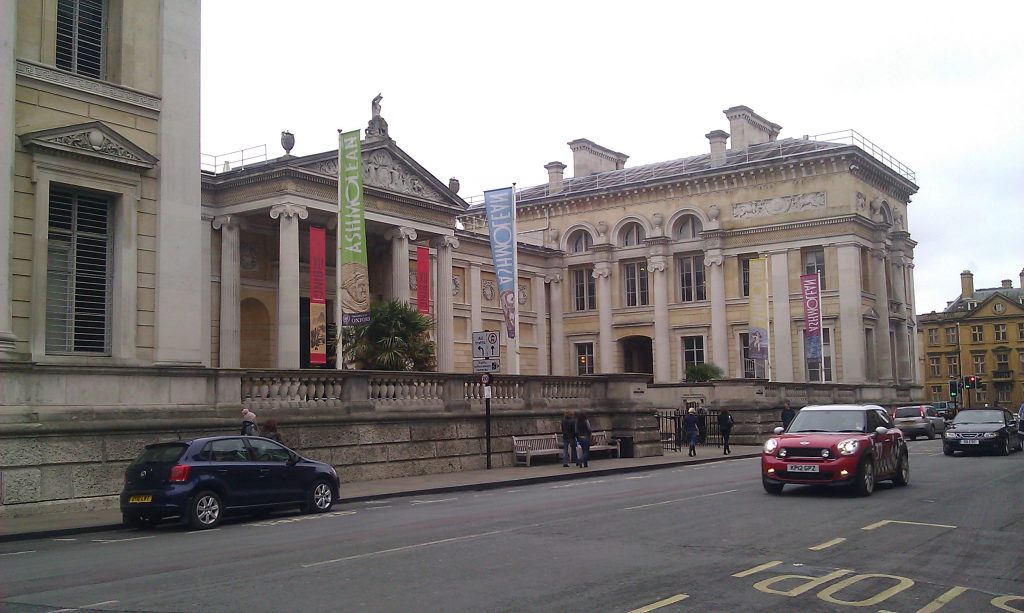
On February 9th, 1784 James Sadler launched an unmanned Hot Air Balloon, from what is now St Hilda’s College. The Balloon travelled all the way to Kent, 79 miles away. James Sadler was the son of a cook, but worked at the Ashmolean Museum, in Oxford. The launch place is an area of green which is bounded to the North by Merton College. To the South by the Meadows. To the West by Christ Church, and to the East the Oxford Botanical Garden, the first in Britain. Also a lovely place.

Later the same year, he hazarded his own life for the first Hot-air Balloon ascent by an Englishman. On the morning of October 4th, he lit the stove in the Balloon basket to create the hot air. He rose an estimated 3600 ft. On board he had a barometer and a thermometer. He used the Barometer to estimate height. The thermometer was not very useful because of the heat of the stove.

He reported that his elevated position caused no inconvenience, except that it was colder than on the ground. A wind drove him towards a wood as he put out the stove. He had ‘recourse to the Oars’ which he exercised with great Success’. I think the oars were used to poke the air out of the balloon to help his descent. He landed safely 6 miles away in Woodeaton.

Further Flights by Sadler

On the 17th November he ascended in a Hydrogen Balloon, which was also successful. He made further ascents, including one at Mermaid Theatre in Hackney. He survived into his 70s and died in 1828. Sadly, one of his sons died in a ballooning accident in 1824.

Note on the Hackney Balloon Ascent

I found no reference to the Mermaid Theatre in Hackney. But there was a Mermaid Tavern in Mare Street, originally just north of St Augustine’s Church. It was then rebuilt on the other side of the road in the 1740s. And this is where the Hackney flight ascended from.

‘View of Balloon of Mr Sadler’s ascending with him and Captain Paget of the Royal Navy from the Gardens of the Mermaid Theatre’ source Facebook post.

Flights but not by the English!

When it comes to ‘firsts’, there is a lot of jiggery-pokery as to who really has the precedence. The actual first balloon ascent was on November 21st, 1783 by de Rozier and d’Arlandes. Their hot-air balloon was designed by the Montgolfier Brothers.

The first ascent in England was Vincent Lunardi. His flight was a couple of weeks before Sadler’s on September 15th. But then he was from Tuscany. It took off from the Honourable Artillery Company grounds at Moorfields in London.

So Sadler wasn’t the first, but was the first Englishman to ascend in a hot-air balloon. But my antennae is twitched by the use of the term ‘Englishman’. Because, since 1707, and the Act of Union, England was now in the Kingdom: ‘The United Kingdom of Great Britain’. Something was wrong. So yes, I discovered that the British (and Scottish) first ascent was by James Tytler. This took place from Edinburgh on August 25th 1784. To see more on Tytler who was an Apothecary and the editor of the Second Edition of the Encyclopedia Brittania go here:

To read about Zeppelin attacks on Britain see my post here.

First published in October 2025

First & Last Coal-fired Power Stations September 30th 2024

Holborn Edison Electric Light Station First & Last Coal-fired Power Stations

On this day, last year, Britain’s last coal-powered power station generated its final watt of electricity.  Ratcliffe-on-Stour’s closure means Britain is the first country to meet its target of phasing out coal.

The Nottingham power station opened in 1968, and once employed over 3000 people.

For more details follow this link https://www.theguardian.com/business/2024/sep/30/end-of-an-era-as-britains-last-coal-fired-power-plant-shuts-down

Edison Electric Light Station

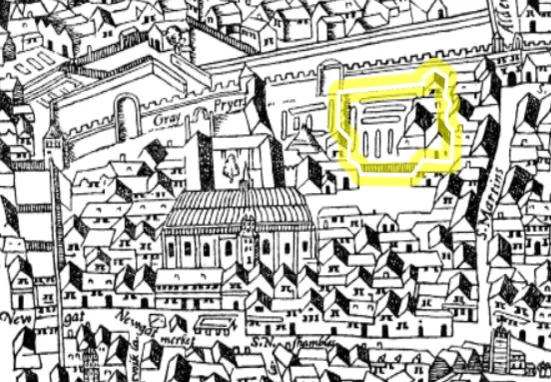
The first coal-fired power station in Britain was at Holborn Viaduct in London, opened as the Edison Electric Light Station on 12th January 1882.

The power was generated by a steam engine powered by coal.  The electricity powered incandescent electric carbon-filament lights which lit up 986 lights to illuminate the road from Holborn Viaduct to St Martin’s-le-Grande.  The light bulb was invented 3 years previously. 

The number of lights was soon increased to 3,000. But the Station made a loss and was closed down 2 years later. The lights converted to gas.  Sadly, the building was destroyed in the Blitz.

Shoreditch Electric Light Station

A couple of miles to the East, in 1895, the Shoreditch Electric Light Station was established.   It used waste to produce electricity and steam for the local public baths.  The generating and combustion chambers, now houses a Circus School which my children attended.

It was officially opened by Lord Kelvin, the famous physicist in 1897. The Consulting Engineer was Edward Manville who came up with a scheme for a ‘dust destructor’. This comprised: an electricity generating station; a public bath heated by the waste heat from the generator; a library and museum.  It cost 200,000 pounds.  In 1899, in nearby Nile Street, the Shoreditch Vestry Council set up the first municipal housing scheme powered by electricity.

This level of enterprise by a local council seems like a fantasy of a distant past but also, given the sustainability of the project, unbelievably modern.

The motto on the side of the Power Station was ‘Light and Power from Dust’. The scheme was run by the local vestry council which adopted the motto ‘More Light, More Power’. This was also adopted by the new municipal Borough of Shoreditch when it was formed as part of the new London County Council.  The Power Station was renamed as the rather wonderful: Shoreditch Borough Refuse Destructor and Generating Station and adorned with the motto: PULVERE LUX ET VIS ‘Out of the dust, light and power’.

The story of the dust destructor and the generating station is told in some detail here and well worth a read.

First Written 2024 and updated in 2025

Beware the Surfeits of Autumn September 23rd

Apples. Unsplash photo by Sydney Rae
A Surfeit of Apples. Unsplash photo by Sydney Rae

So, it may be a surprise that the Autumn is the time of plenty. I think, townies like me, would assume spring or summer. But in Autumn, not only is the Harvest in, but nuts and fruits are ripening and ready to pick. As we go deeper into Autumn, the livestock is culled to a level that can be sustained through the harsh winter. And so a lot of meat is also available. Truly a time of ‘mellow fruitfulness’.

A Surfeit of Autumn Peaches or Lamphreys

Anything with the word ‘surfeit’ in it must begin with the wonderful comic history of Britain called:1066 and All That: A Memorable History of England, Comprising All the Parts You Can Remember, Including 103 Good Things, 5 Bad Kings and 2 Genuine Dates

Here we find that King Henry I died of a ‘surfeit’ of lamphreys’, which he indulged in against his Doctors’ advice. This was in November,. While his Great Grandson, King John:

finally demonstrated his utter incompetence by losing the Crown and all his clothes in the wash and then dying of a surfeit of peaches and no cider; thus his awful reign came to an end.’

He is a fine example of a ‘Bad King’. He died on the night of October 18th — 19th. So another King to leave this mortal coil by the means of an autumnal surfeit. Other accounts say his ale was poisoned or the surfeit was of plums. But he did have dysentery shortly before he died.

If you haven’t already it got it you probably, at this point, need to buy my book ‘Divorced, Beheaded, Died’. This is the best selling book about the Kings and Queens of England, told in bite sized chunks. It is always on sale at the British Museum.

‘No surfeit so evil as the surfeit of eating naughty bread’

Andrew Boorde in ‘Dietary of Health’ 1547 says that Wheat Bread makes you fat, particularly when made from new wheat. He says’Evil Bakers’ will add half of Barley. This is no good, nor is bread made from beans or peas. He continues:

hot bread is unwholesome to any man, for it doth lie in the stomach like a sponge: yet the smell of new bread is comfortable to the head and the heart. Old or stale bread doth dry up the blood or natural moisture in man, and doth engender ill humours; and is evil and tardy of digestion: wherefore is no surfeit so evil as a surfeit of eating naughty bread.

Lavendar Caps

Now is the time to protect your head with Lavendar as winter approaches, or so says William Turner’s Herbal of 1568:

I judge that the flowers of lavender, quilted into a cap and daily worn, are good for all diseases of the head, that come of a cold cause, and that they comfort the brain very well, namely if it have any distemperature that cometh of moistness.

If you remember, I wrote about Turner’s medical education in Ferrara in Italy in June. You can read it here.

Apples and Pears & No Cider

The fate of King John (above) shows the danger of running out of cider. But the apple trees are now groaning with Apples and Pears. So production can begin. I have been at my Father’s House picking up all the pears that drop every night. We have been cutting them up and putting them in the freezer, making purée and crumbles. Also, giving them to anyone who enters the house. But still not able to keep up with the Pears! Lots of Apples too, infact a bumper crop, many more than in any previous year. Earlier there was a host of plums from which I made my very first plum jam. I am looking forward to making a batch of Quince Jam, for the third year running.

Storing a Surfeit of Apples

Picking up windfall is problematic, as it was thought they would soften and bruise much easier than those picked from the trees. They would also contaminate other apples if laid with them. So it is best to pick apples before they are completely ripe. Then you can use Gervase Markham’s apple storage advice, which I wrote about in January and you can see here:

But:

A Surfeit of unripe fruit is a danger:

Green fruits make sickness to abound
Use good advice to keep thee sound
Give not thy lusts what they do crave
Lest thou unawares step in to thy grave.

Ranger’s Almanack 1627

If you do succumb, you need a medicine of nettle-seeds and honey.

A Surfeit of Filberts

As a caution to persons at this season, when nuts are so very abundant, we state that the sudden death of Mr Nunn of Cley, Norfolk is generally attributed to eating a great quantity of filberts and drinking pork wine therewith.’

York Current, September 1794

I do hope you have found this post fruitful and not too nutty. Please consult a doctor if you are having head or brain issues. The Lavender in your Peaky Blinders Cap may not do the trick

Acknowledgement

Again, I am very dependent on fruity tales from Charles Kightly’s A Perpetual Almanac of Folklore. It is worth buying as it also has many pretty pictures.

John Goodricke and the Variable Star. September 17th 1764

John Goodricke and the Variable Star

Newton

What I really admire are people who, through their sheer brain power, can change our views of the world.  The first example that comes to mind is Newton’s insight that if the universe were infinite, the night sky would not be dark as everywhere there would be tiny pinpricks of starlight.  So, we don’t live in a infinite universe. Another one is Einstein’s thought experiment that proves that time is relative. But see below for a description of that.  But, now to John Goodricke and the Variable Star. (for Newton and the Maypole see my post here).

Goodricke

Last year in York, near the Minster, I saw the blue sign above. I thought, what on earth are ‘variable stars’?  Behind me, I heard two women say something like. ‘Here it is,”variable stars”‘.  I turned around and asked them what was a variable star?

‘Donno’ they said, ‘we’ve ‘just doing this escape room walk around York.’  They showed me a booklet they had received on the internet,. This is what I would call a treasure trail. Sadly, they showed no interest in finding out what a variable star is!

Aristotle and ancient philosophers held that the universe was unchanging and eternal. The first breach in that theory was the identification in 1638 of star Omicron Ceti. Johannes Holwarda discovered that the star pulsed on an 11-month cycle.  This and the discovery, of supernovae (first observed in 1572), proved that the ‘The starry sky was not eternally invariable’. But there was, as yet, no explanation for the phenomena.

John Goodricke was educated at Thomas Braidwood‘s Academy, school for deaf pupils in Edinburgh, and Warrington Academy. He returned to live with his parents, who rented an apartment at the Treasurer’s Hall. This is near the Minister in York. He used a friend’s personal observatory to look for variable stars. He found two of the first 10, and was the first to propose a solution. This was that two stars orbited each other causing eclipses between them and the observer. Thus creating a variation in the light emitted. To be able to extrapolate from a simple observation, and provide an explanation which necessitates a complete rethink about the nature of the universe seems, to me, to be awesome.

Einstein’s Thought Experiment

Back to Einstein, his thought experiment was something like this:

A train is travelling through a station. There is an observer on the train towards the front, another on the platform as the train goes through. There are two simultaneous lighting strikes at either end of the train. The observer on the platform sees the strikes as simultaneous. Why? Because she is in the middle between the two lighting strikes and light travels at the same speed. The observer on the train who is near the front of the train will see the lighting strike at the front of the train before the light from the strike at the back of the train can reach him. It has further to go.

This means that time is not a constant, it is relative to the observer. And yet, we think of time as a constant, something that remorselessly ticks forward and which we cannot alter. But it isn’t.

For a better explanation, see https://en.m.wikipedia.org/wiki/Relativity_of_simultaneity

First written 2024, revised 2025

World Wide Web goes World Wide August 23rd 1991

Title Page of publication Published 1 February 1980
Archaeometry

Today is the day that the World Wide Web was first introduced to the world. I was working as a freelancer helping set up computer systems for the Freud Museum, in London. The Freud Museum was funded by an American organisation who wanted to support the history of Freud and Psychoanalysis. They were early adopters of email, and one of the staff, Tony Clayton, I think, introduced me to this new thing called the World Wide Web. How soon it changed our lives!

So, this post is the first in an occasional series on my role in digital heritage. 

My use of computers began in 1975/6 when I worked in the Research Laboratory for Archaeology and the History of Art, Keble College, Oxford University. I was a Research Assistant working with Mike Barbetti. He was a Research Fellow from Australia and an expert on the science of the earth’s magnetic field, and a pioneer in archaeomagnetism.

So what was it all about? In short, the Magnetic Pole does not always point due north. From time to time,  it wanders around and sometimes reverses completely, pointing south. Also, the intensity of the magnetic field changes with time. Mike was interested in the science behind these reversals but also interested in the archaeological by-products of the findings.

We were using archaeology to get well dated samples to plot accurately magnetic fluctuations through time. It was hoped the changes in direction or intensity of the magnetic field would allow archaeological sites to be dated. Secondly, we could use the readings to determine whether clay deposits had been heated or not.  The iron particles in clay would, when heated, align to the contemporary magnetic field.  Mike had collected samples from Africa including the famous Olduvai Gorge, and we contributed to the discussions on the first use of fire by the genus homo.

It turned out that dating applications were severally limited, as it proved difficult to create an effective reference curve. But sporadically, a use for archaeomagnetism crops up in the literature.

Mike was kind enough to include me as joint author on 3 papers which were accepted by Nature and which remain my most cited papers.

When I thanked him, saying how kind it was for him to include me.  He made a point of telling me I had every right to have my name on the papers as I not only did a lot of the work, but I contributed ideas to the study. He taught me a lesson that you should always be generous acknowledging contributions.

The specimens he brought back, were encased in plaster of Paris, I went to a shed in the garden of the terrace house that was the Research Lab. There I cut them up with a saw.  We then measured the intensity and direction of the magnetic field in the samples.  The results were processed by a computer program written by Mike. I prepared the experimental results on magnetic cards and uploaded them for a data run on the main frame computer at the Oxford University Computer Centre. The Computers were the size of a house, but there was a Unix minicomputer in the basement of our lab. There was always mistakes on the first run and then you reran the programme with edit cards at the front which were coded to do things like: ‘change 127 on the first card to 172’.  The corrected results were rerun the next day. Seems very primitive and slow now but then it was cutting-edge technology.

After a couple of years, I began my career as a field archaeologist. Having seen how powerful computers could be, I decided, in the late 1970’s, that Archaeology needed computers. So I set out to find out how to use them for myself and where they might come in useful.  This took me on an exciting journey of exploration which began with signing up for a Part-time PhD at Birkbeck College in Computer Applications in Archaeology, while I continued working at the Museum of London as an archaeologist. The study consisted of creating a database structure to hold archaeological field records, and to link this to digitised copies of context plans. I was hoping to show that we could interrogate the data, asking questions like ‘Draw a site plan of all contexts which have pottery dating to the Flavian period’. This would, perhaps, speed up the post excavation work, and enable a more sophisticated analysis of data.

To be continued.

Stone of Destiny Attacked with a Hammer at Perth Museum July 13th 2025

Screenshot of BBC Webpage annoucing the attack on the Stone of Destiny

I just tried to book a visit to see the Stone of Destiny, at Perth Museum. But I was told it was closed until at least the end of August. The reason being that a case had been damaged. A quick search revealed this notice that an Australian had attacked the case containing the Stone with a hammer. They are now repairing the Case, and double checking the condition of the stone, which is thought to be undamaged. The Stone is well protected in a special room of the Museum. But, until now, those booking to see it are not searched. So I imagine that this will become more formal in future.

Below is my post of 2024, updated on March 30th 2025.

New Home for the Stone of Destiny

Old Photograph of the Stone of Destiny beneath the Coronation Chair.

Last year, the Stone of Destiny was set up in its new permanent place. The Stone was unveiled in a room at the centre of the redeveloped Perth Museum, in Scotland. This is near to its ‘original’ home at the Palace of Scone.

The Museums Association reported:

£27m development project ….funded by £10m UK government investment from the £700m Tay Cities Deal and by Perth & Kinross Council, the museum is a transformation of Perth’s former city hall by architects Mecanoo.’

As well as the Stone of Destiny, the Museum has Bonnie Prince Charlie’s sword and a rare Jacobite wine glass. Both on public display for the first time. This is the first time the sword has been in Scotland since it was made in Perth in 1739. https://perthmuseum.co.uk/the-stone-of-destiny/. Since I first wrote this I have visited about 5 times. Entry is free but needs to be booked. It is held in a separate structure in the open space at the heart of the Perth Museum. There is an excellent-animated introduction, and then the doors open and the Stone is revealed in a glass cabinet. It is very effective.

Webpage of the Perth Museum show a photo of the Stone of Destiny

The Stone of Destiny in the Modern Era

Before Perth, the Stone was in London for a brief visit for the Coronation of King Charles III (6 May 2023) . It was put back, temporarily under the Coronation Chair. Before that it was on display in Edinburgh Castle. Tony Blair’s Labour Government sent it back to Scotland as a symbol of the devolution of power from Westminster. This was on the occasion of the restoration of the Scottish Parliament in Edinburgh in November 1996. Until then the Stone was under the Coronation Chair, where Edward I put it after he stole it (1296) from Scone. Virtually every English and British King has been crowned upon the Stone of Scone.

However, the Stone had a brief holiday in Scotland in 1950/51.  Four Scottish students removed it from Westminster Abbey on Christmas Day 1950. After three months, it turned up at the high altar of Arbroath Abbey. It was briefly in a Prison Cell, then returned to Westminster for the Coronation of Elizabeth II.

Poor photograph of a press cutting on display at the Palace of Scone (Photo by me!)

Declaration of Arbroath

I’m guessing the-would-be liberators of the Stone, thought Arbroath was the most suitable place to return it. For it was the Declaration of Arbroath which is the supreme declaration of Scottish Independence from England.

Following the Battle of Bannockburn the Scots wrote to the Pope of their commitment to Scotland as an independent nation. They said:

“As long as a hundred of us remain alive, never will we on any conditions be subjected to the lordship of the English. It is in truth not for glory, nor riches, nor honours that we are fighting, but for freedom alone, which no honest man gives up but with life itself”

The Pope agreed and Scotland remained independent until voluntarily joining England in the United Kingdom in 1707.

For an analysis of the Stone of Scone please look at my post here.

The Stone of Destiny at Scone Palace

Before Edward 1 stole the Stone, it was at Scone Palace. Here most of the Kings of Scotland were crowned, including Macbeth (August 14, 1040).

Moot or Boot Hill where Scottish Kings were crowned. Palace of Scone Photo Kevin Flude)

Those who attended the coronation traditionally shook their feet of all the earth they had brought from their homelands.  This over the centuries, grew into Boot Hill, aka Moot Hill. So the mound represents the sacred land of Scotland. 42 Kings were crowned upon its soil on its Stone. (but not Mary Queen of Scots she and her son were crowned at the Chapel Royal of Stirling Castle).

Where was the Stone of Destiny before Scone?

Before Scone, it was, possibly, in Argyllshire where the Gaelic Kings were crowned. Their most famous King was Kenneth MacAlpin. He united the Scots, Gaelic people originally from Ireland, the Picts, and the British. And created a new Kingdom which was originally called Alba, but became Scotland.

MacAlpin was the first king to be crowned on the Stone at Scone in 841 or so. He made Scone the capital of his new Kingdom because it was a famous Monastery, associated with the Culdees, an early sect of monks. MacAlpin brought sacred relics from Iona to sanctify the new capital. And Scottish Kings were by tradition crowned at Scone and buried on the holy Island of Iona.

Legend has it that the Scots bought the Stone from Ireland when they began to settle in Western Scotland (c500AD). The Scots, it is said, got the Stone from the Holy Land. Jacob lay his head on the stone to sleep. He had a dream of Angels ascending and descending a ladder to Heaven. Jacob used the stone as a memorial, which was called Jacob’s Pillow (c1652 years BC).

Fake, Copy or Genuine?

But, questions about the Stone remain. Firstly, would the Monks of the Abbey meekly hand over the stone to a raging King Edward I?  Sacking the Abbey was one of the last events of Edward’s failed attempt to unite the two countries. Isn’t it more likely that they hide the original and gave him a fake?

Secondly, was the Stone brought to Scone from Western Scotland in the 9th Century? Or was it made in  Scone?

These questions of doubt are based on the assumption that the Stone is made of the local Scone sandstone. If it were brought to Scone from somewhere else, it would be in a different type of stone, surely? So, either it was made in Scone, possibly for MacAlpin’s Coronation or the Monks fooled the English into taking a copy. The English would then have been crowning their Monarchs on a forgery.

Ha! Silly English but then the Scots have spent £27m on the same forgery.

Before bringing the stone to Scone, Historic Environment Scotland undertook a new analysis  of the stone. This confirmed:

the Stone as being indistinguishable from sandstones of the Scone Sandstone Formation, which outcrop in the area around Scone Palace, near Perth‘.

It also found that different stone workers had worked on the stone in the past. It bore traces of a plaster cast being made. It had markings which have not yet been deciphered. There was copper staining suggesting something copper or bronze was put on the top of it at some point in its life.

So it seems the Stone of Destiny was made in Scone. The simplest explanation is that it was made for MacAlpin in the 9th Century. But it does not rule out that it is a copy given to Edward I. But if this is the case it is still an awesome relic of history as so many Kings and Queens, Scottish and English, have been crowned upon it.

For more about MacBeth and St Margaret of Scotland see my post here:


First published in 2024, republished in 2025

Eels, Pies, Islands, the deep Sargasso Sea & Rock and Roll July 23rd

 Photo by Natalia Gusakova on Unsplash
Photo by Natalia Gusakova on Unsplash, Eels

Summer is the best time to fish for Eels. Mid May to the end of July. But they can be caught all year around. Jellied Eels have been a staple of East End diets since the 18th Century. They were to be found in many stalls dotted around the East End, from vendors venturing into pubs and in Pie and Mash shops. Tubby Isaacs is perhaps, the most famous. Jellied eels are still sold in a diminishing number of places in the East End. Manze’s Eel, Pie, and Mash shop at 204 Deptford High Street, London was listed in December 2023. The shop opened in 1914 and was a pioneer of commercial branding. This is the fourth Manze’s shop to be listed: Tower Bridge Street, Chapel Market Islington, and Walthamstow High street. The current owner of the Deptford shop is retiring and so the shop will close.

There are three Pie and Mash shops near me in Hackney. The one in Dalston has become a bar. In Broadway Market it is now an optician. But the one in Hoxton Market is surviving, and all three have retained their distinctive interiors. On the River Lee Navigation is another piece of Eel history which is the excellent Fish and Eel Pub at Dobbs Weir.

Pie and Mash Shop. Established 1862, closed down 2021. Broadway Market, Hackney (photo, copyright the author)

My mum loved jellied eels. It took me until I was over 60 before I could bring myself to try them. And I have no wish to repeat, what for me, was a revolting experience.

By JanesDaddy (Ensglish User) - English Wikipedia - [1], CC BY-SA 3.0, https://commons.wikimedia.org/w/index.php?curid=1663124
By JanesDaddy (Ensglish User) – English Wikipedia – [1], CC BY-SA 3.0, https://commons.wikimedia.org/w/index.php?curid=1663124

Gervase Markham in his ‘The English Husbandman’ of 1635 provides instructions on how:

To take Eels in Winter, Make a long bottle or tube of Hay, wrapped about Willow boughs, and having guts or garbage in the middles. Which being soaked in the deep water by the river side, after two or three days the eels will be in it and you may tread them out with your feet.

And here is a fascinating article on Eel fishing.

Eel traps at Bray, on the River Thames (Henry Taught 1885)

Romans, Saxons and Eels

Eels have been eaten for thousands of years. Apicius, author of a famous collection of Roman Recipes tells us of two sauces for eels:

Sauce for Eel Ius in anguillam

Eel will be made more palatable by a sauce which has​ pepper, celery seed, lovage,​ anise, Syrian sumach,​ figdate wine,​ honey, vinegar, broth, oil, mustard, reduced must.

Another Sauce for Eel Aliter ius in anguillam

Pepper, lovage, Syrian sumach, dry mint, rue berries, hard yolks, mead, vinegar, broth, oil; cook it.

Bede’s Historia Ecclesiastica, which tells of Britain as a land with “the greatest plenty of eel and fish.” Several fish traps have been found in and around the Thames, one for example in Chelsea.

Aristotle, Freud and the Deep Sargasso Sea

But eels had a great mystery no one knew where they came from or how they reproduced. Aristotle thought they spontaneously emerged from the mud. Sigmund Freud dissected hundreds of Eels, hoping to find male sex organs. It was only on 19th October 2022 that an article in the science journal Nature disclosed the truth. The article was ‘First direct evidence of adult European eels migrating to their breeding place in the Sargasso Sea‘. Ir proved beyond doubt that the theory that Eels go to the sea near Bermuda to spawn was, incredibly, true.

Eel Pie Island

Eel Pie Island . Ordnance Survey In 1871 to 1882 map series (OS, 1st series at 1:10560: Surrey (Wikipedia)

But Eels also have their place in Rock and Roll History. Eel Pie island is on the Thames, near Twickenham and Richmond. It is famous for its Eels. But was home to an iconic music venue. The Eel Pie Hotel hosted most of the great English Bands of the 50s. 60s, and 70s. The roll call of bands here is awesome. The Stones, Cream, Rod Stewart, Pink Floyd, you name it, they were here:

David Bowie, Jeff Beck, Howlin’ Wolf, John Lee Hooker, Memphis Slim, Champion Jack Dupree. Buddy Guy, Geno Washington, Long John Baldry, Julie Driscoll and Brian Auger. John Mayall’s Bluesbreakers, Ten Years After, Chicken Shack, and one of my all-time favourite bands. the Savoy Brown Blues Band. And I have forgotten the Nice, the Crazy World of Arthur Brown, Joe Cocker, and the Who. And many more!

The Rolling Stones played at the Railway Tavern, Richmond on Sunday, February 24, 1963. Here they were spotted by people from the nearby Eel Pie Hotel. They were booked for a 6 month residency, which they began as virtually unknown and ended as famous.

Here is a recipe for Baked Eel pie from Richmond, near the famous Eel Pie Island.

This was first published as part of another post in 2022, and revised and republished on 28th November 2023, 2024.Moved from November 28th to July 23rd in 2025

(I moved it to make room for a post on Mrs Shakespeare. Also, because I cannot find anything to substantiate the opening statement that the Eel Season had its second day on November 28th. All evidence I find says the best fishing is in the Summer.

Haymaking time & the Wrong Time to Marry July 2nd

Haymaking. Hayricks Photo by Roman Synkevych 🇺🇦 on Unsplash

‘They that wive twixt sickle and scythe shall never thrive’

The time between haymaking and the corn harvest was such a busy period, that it was considered a bad time to marry. Haymaking was done by hand with a sickle, these were swung at an angle to cut the grass. It was easier if a good rhyme could be set up. The first man would step out in to the meadow but the next man had to leave a little gap to ensure he was safe from his fellows swinging sickle.

Apparently, the song ‘One Man went to mow, went to move a meadow’ gives the right gap, the second man would come in with the next line ‘Two Men went to mow, went to move a meadow’ and so on.

Once cut, the grass needed to be dried out in the fields, and turned every so often with a pitchfork. Once dried, it was taken to the farmyard and the hay built into a hayrick. The rick typically had a thatched roof. The hay, normally made of a mixture of grasses, was cut off from the rick by a hay knife to fed to animals in the winter.

Experiments at Rothamsted Park Grass, in Hertfordshire, have allowed scientists to study the effects of annual hay cutting. This study has been in continuous operation since 1856 which makes it the oldest continuous field experiment in the world. Among the many findings is the counterintuitive discovery that when fertiliser was evenly applied, the number of plant species declined from forty to fewer than five. Here is an article on Rothamsted Park Grass which gives interesting details.

If you wish to grow your lawn to increase biodiversity and to make it wildlife friendly, then read this is article. It is very important that we revive our battered wildlife. 97% of the UK’s semi-natural grassland has been destroyed over the last 80 years says ecologist Jack Marley.

July Haymaking from the Kalendar of Shepherds 15th Century

First published in June 2023, and republished in July 2024.

The most important weather forecast in History D Day June 6th

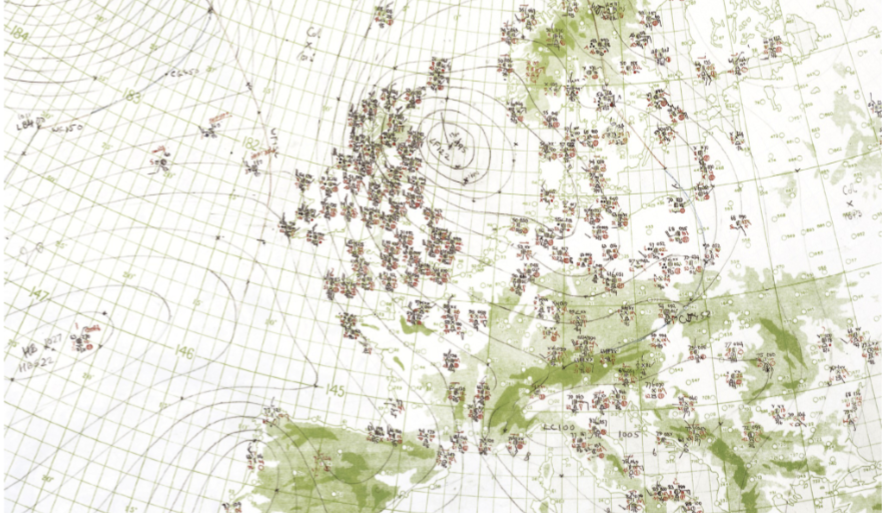
North Atlantic chart of weather for June 6th 1944.  D Day. Showing occupied Europe with observations obtained from the enigma machine

In 2014 or thereabouts I went to a play by David Haig which was based on the true story of a weather forecaster’s role in D Day. James Stagg’s advice was that the weather on June 5th, the intended day, was too volatile. He suggested the 6th June 1944 instead.

The play was called Pressure and was great because it really conveyed the enormity of the decision that Ike, Churchill and others had to make.  To go ahead in bad weather risked enormous casualties and the failure of the Landings.  To postpone, might mean Hitler discovered the location of the invasions and might lead to disaster.

Major characters portrayed in the play included Ike and his driver, Kay Summersby with whom he was very close. Also depicted was an American forecaster who disagreed with the British meteorologist James Stagg.  How much of the play was for dramatic effect and how much is true, I’m not entirely sure but it is a fascinating D Day story.

The maps were hand drawn and partially based on intercepted data decoded by the enigma machine.  Stagg recommended postponing the landings one day from the 5th to the 6th of June, when it was hoped the ideal combination of calm seas, low water at first light and a full moon would occur.

Maps used to present the data have recently been  up for sale and are discussed here https://www.bbc.co.uk/news/uk-england-somerset-68845546

I was reminded of the play by this article on the weather on D DAY on the BBC website https://www.bbc.co.uk/weather/articles/c2995n9wgz8o.

Please have a read.

First published 2024, republished 2025.