Walpurgis Nacht & St Erconwald’s Day April 30th

Walpurgis Nacht. Screen Shot of https://astromagicklounge.com/2021/04/30/celebrating-walpurgis-night-with-black-sabbath-aleister-crowley/

On April 30th, 870AD, St. Walpurga remains were ‘translated’ to Eichstätt. St Willibald had set up the town as the Diocesan centre of this part of Bavaria. So, in Germany today is known as Walpurgis Nacht. I wrote more on my page on St. Walpurga. Walpurga and her two brothers, Willibald and Winibald were Anglo-Saxon Saints who helped convert Germany to Christianity in the 8th Century.

The evening of April 30th is also the beginning of Beltane. Beltane is one of the principal Celtic Festivals, dedicated to the God Belinus. It is a Celtic Fire Ceremony, 6 months before Halloween, and the traditional beginning of Summer. (see my post of Halloween here.) Walpurgis Nacht is also halfway between the Spring equinox and the Summer solstice. So, a very important day in the Celtic Calendar. (see my post on May Day).

The Celtic Day began at Dusk, so May Day begins on 30th April. The Christian Church took over many local traditions and adapted them to the calendar of the Church. So a Saint’s Day, is preceded by an Eve. For example, All Hallows’ Day and Halloween, and May Day and May Eve.

In Sweden it is known as Valborg and as Čarodejnice in the Czech Republic.

A day of Uncanny Weirdness?

As May Day was an uncanny period dedicated to Pagan Deities, Walpurgis Nacht became a time when all the weird things are alive in the world. In response, the Christian Church associated a saint to the day to be a focus for defeating witchcraft. So, it is a popular tradition for this Night to see the burning of an effigy of a witch on a bonfire.

Walpurgis Nacht has really been taken over by Heavy Metal, and I refer you this page to begin your journey down a dark rabbit hole of head-banging rock. https://astromagicklounge.com/2021/04/30/celebrating-walpurgis-night-with-black-sabbath-aleister-crowley/

St Erconwald’s Day

Tomb of St Erconwald, destroyed by the Great Fire of London.
Tomb of St Erconwald, destroyed by the Great Fire of London. By Wenceslaus Hollar – Artwork from University of Toronto Wenceslaus Hollar Digital CollectionScanned by University of TorontoHigh-resolution version extracted using custom tool by User:Dcoetzee, Public Domain, https://commons.wikimedia.org/w/index.php?curid=6235771

It is also the Feast Day of St Erconwald. He was a Royal Prince who became one of the most famous Bishops of London (675 and 693). He set up Chertsey Abbey and Barking Abbey which his sister, St Ethelburga, became Abbess of. Not only that, but he was known as the light of London and was responsible for rebuilding St Pauls Cathedral. And helping completing the conversion of the Kingdom of Essex.

You might enjoy reading this alliterative poem of the 14th Century about his life. He is one of the patron saints of London, associated with early pilgrimage and many miracles.

First Published in 2024, revised in April 2025

Time to guard children against witches April 29th

Witches From ‘The Wonderful Discoveries of the Witchcrafts of Margaret and Phillip Flower’, London, 1618

As May Eve approached, which like Halloween, was considered a particularly uncanny time, people were warned to guard against witches stealing their babies:

He (the Devil) teacheth the witches to make ointments of the bowels and members of children, whereby they ride in the air and accomplish all their desires. So as, if they be any children unbaptized, or not guarded with the sign of the cross or orisons: then the witches may and do catch them from their mother’s side at night, or out of their cradles. …. and after burial steal them out of the graves, then seethe them in a cauldron until their flesh been made possible.

Reginald Scott ‘The Discovery of Witchcraft’ 1594 (from ‘The perpetual Almanack of Folklore’ by Charles Kightley). Please note that Reginald Scott’s book was actually against the idea of witchcraft, i.e. he was debunking it. (for more on Reginald Scott read my post here)

Keeping Witches away

Ways to keep witches away were various, but baptising your children early was the best method. As you will have seen in previous posts, children were normally baptised as soon as possible. Normally, three days after birth in the early modern period.) There were various ways of protecting against witches including saying prayers (orisons), hanging garlic, bread, rowan-leaves, around the cradle.

Witch marks

In archaeological surveys of timber framed buildings increasing numbers of reports of ‘witches’ marks have been discovered. They are now so ubiquitous that it seems most people felt the need to deploy them to secure their houses. Or was it the Carpenters and Builders who felt the need to protect their work? It was believed that witches gained entry where there was an inlet of wind. So doors, windows, chimneys, and anywhere there was a draft. These would be marked by pentagons, which represent the five wounds of Christ. Also used were a variety of other marks ‘chequerboards, mesh patterns, peltas (a type of knot work design) and circle’. https://theartssociety.org/arts-news-features/ancient-symbols-once-used-ward-away-witches is an excellent read and gives more detail.

Also this article makes the case that they are not specifically anti-witch marks, but general marks to ward off evil. This is worth reading. The illustration below comes from the article.

Tam O’Shanter

Robert Burns poem ‘Tam O’Shanter’ gives a graphic, fictional, account of a witches’ coven presided over by the Devil (auld Nick) himself which features ‘wee, unchristen’d bairns‘. Tam, drunk, has come upon a witches coven, presided over by the devil himself.

And, vow! Tam saw an unco sight!
Warlocks and witches in a dance;
Nae cotillion brent new frae France,
But hornpipes, jigs, strathspeys, and reels,
Put life and mettle in their heels.
A winnock-bunker in the east,
There sat auld Nick, in shape o’ beast;
A towzie tyke, black, grim, and large,
To gie them music was his charge:
He screw’d the pipes and gart them skirl,
Till roof and rafters a’ did dirl.—
Coffins stood round, like open presses,
That shaw’d the dead in their last dresses;
And by some devilish cantraip slight
Each in its cauld hand held a light.—
By which heroic Tam was able
To note upon the haly table,
A murderer’s banes in gibbet airns;
Twa span-lang, wee, unchristen’d bairns;
A thief, new-cutted frae a rape,
Wi’ his last gasp his gab did gape;
Five tomahawks, wi’ blude red-rusted;
Five scymitars, wi’ murder crusted;
A garter, which a babe had strangled;
A knife, a father’s throat had mangled,
Whom his ain son o’ life bereft,
The grey hairs yet stack to the heft;
Wi’ mair o’ horrible and awefu’,
Which even to name wad be unlawfu’.

I talked more about Tam O’Shanter and the Cutty Sark here and to read the whole poem see below. Please do have a look and when you read it read it quick. Loud and don’t worry about how to pronounce it or understand it, just enjoy the ride!

Have a look at my post on the Cutty Sark for more of Tam O’Shanter.

Written in 2023 revised April 2024, 2025

St George’s Day Again? April 28th

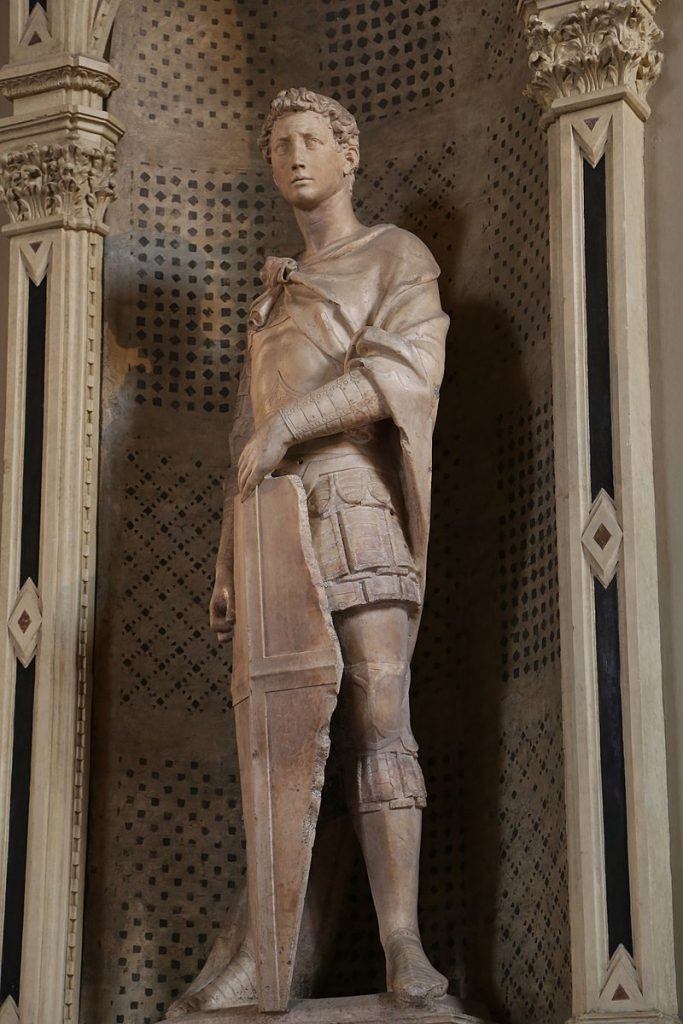
Picture for St George’s Day. St. George, Donatello, 1416-17, Bargello Florenz-03
By Rufus46 – Own work, CC BY-SA 3.0,
https://commons.wikimedia.org/w/index.php?curid=35346561

St George’s Day is normally on 23rd April but not this year!

When St George’s Day falls between Palm Sunday and the Second Sunday after Easter it is transferred to the Monday after the Second Sunday of Easter.

Got that? No, nor did I. Not many people know that. it seems. Last time it happened, Keir Starmer, Theresa May, and London Mayor Sadiq Khan all got it wrong in 2019. The first time I heard about this was 2025, when Keir Starmer appeared to have got it wrong again. A cleric fulminated about illiterate people who get it wrong!

But I think the Church should stop such silly practices. Either it is or it isn’t.

To see my post on St George’s Day please follow this link.

On this Day

1789 Fletcher Christian led the Mutiny on the Bounty. Captain Bligh is buried

1945 Populist, Fascist, Dictator Benito Mussolini captured by partisans and killed.

First Published on 2025 April 28th

Guernica & War from the Air April 26th 1937

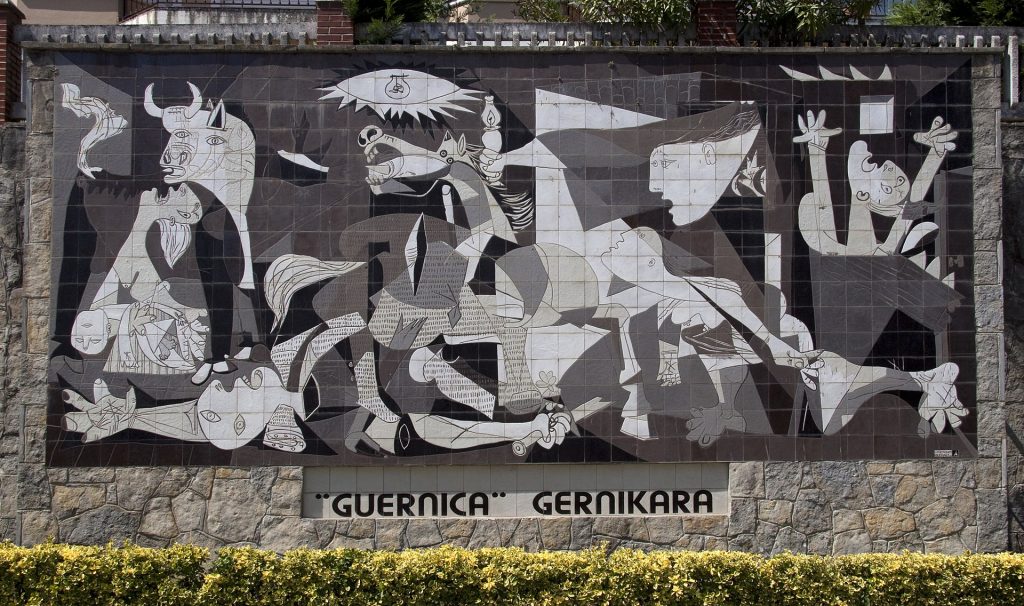
Tiled wall in Guernica after Picasso’s famous painting. Photo By Tony Hisgett from Birmingham, UK – Guernica, CC BY 2.0, https://commons.wikimedia.org/w/index.php?curid=64155674

Franco ordered the bombing as part of his campaign to overthrow the Basque Government. The Town was badly damaged and 1,654 civilians were killed. It was undertaken by ‘the Condor Legion of Nazi Germany‘s Luftwaffe and the Italian Aviazione Legionaria‘ (Wikipedia). Picasso began his famous painting almost immediately after he heard an eyewitness account of the attack. The iconic painting was finished by 4 June 1937. The bombing showed the potential damage war from the air could do to crowded Cities. The painting became one of the most famous campaigning works of art.

The War from the Air

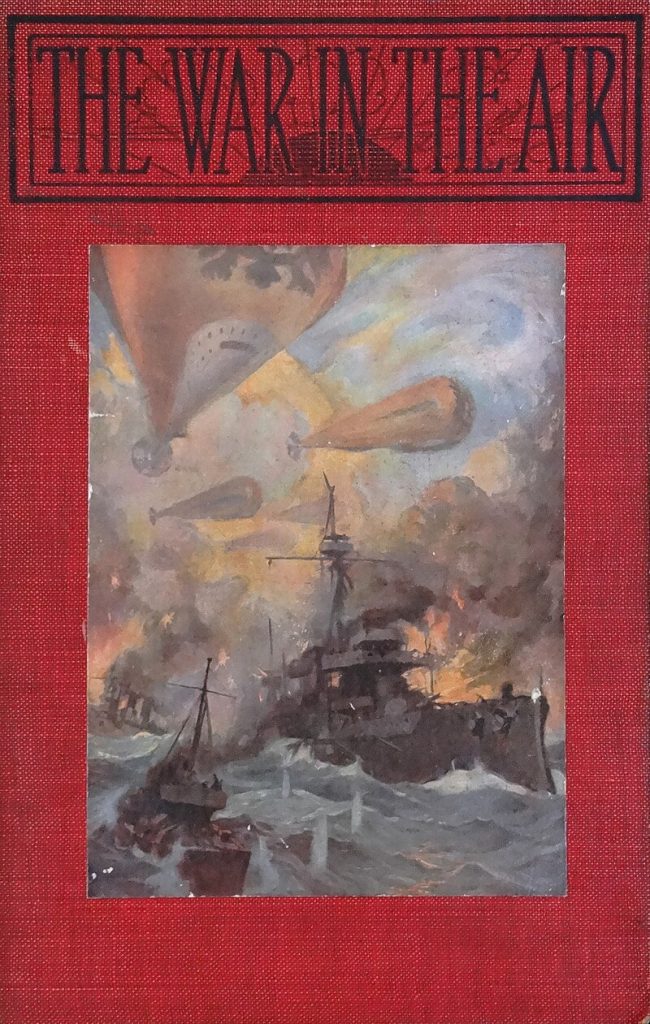
“The War in the Air” by H. G. Wells. London: George Bell & Sons, 1908. First Edition
Illustration by A. C. Michael of Pall Mall Magazine –

Aerial warfare became a reality as soon as the Montgolfier Brothers flew the first Hot Air Balloon. In the Revolutionary Wars, the French used them for reconnaissance. Napoleon considered transporting troops by balloon in an invasion of Britain. With the arrival of planes and the development of the Zeppelin. Air warfare became a feature of speculative fiction, and began to absorb the planners.

H G Wells book, illustrated above, featured a war between Germany and the United Statesin which New York is obliterated by Aerial Bombing. This was written in 1908

In World War 1 London was the focus of a series of Zeppelin and Aeroplane raids. These killed over 500 people. (see my post on the London Zeppelin raid of Sept 8th 1916). As planes developed in capacity, war departments created plans that seem now to have been exaggerated. It is thought that Appeasement was partly a response to the feared casualties from war in the air. Before the Blitz, the authorities were planning for 1 million killed in London and double that number of people deranged by fear. In the event, casualties were far less, some 43,000 killed. However, 2 million houses were destroyed. The scale of destruction was fairly accurately predicted but the casualties exaggerated.
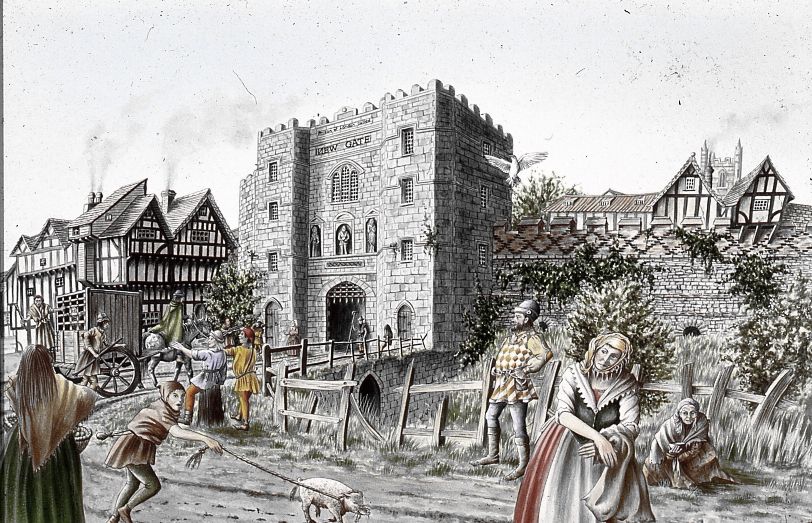
(see my post on the-ultimate-raf-london-blitz-story)

On this Day

1994 The new South African constitution came into force and democratic elections were held.

First Published on April 26th 2025

Vortigern April 2nd 1796

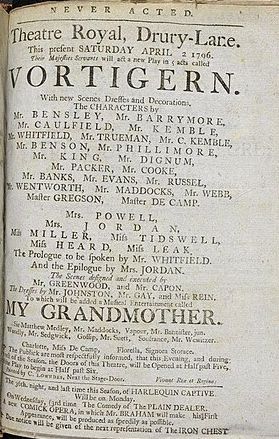
Bill for the 1796 play Vortigern and Rowena Public Domain Wikipedia

Content Move April 2nd 2026 to:

https://chr.org.uk/anddidthosefeet/?p=5187