I am working on a new season, and these are the walks for the first six months – but more to come.
The Archaeology Of London Walk Sunday 2nd April 2023 11:15 Exit 3 Bank Underground Station To book Jane Austen’s London Sat 2.30 pm 2nd April 2023 Green Park underground station, London (north exit, on the corner). To book Chaucer’s Medieval London Guided Walk Aldgate Tube Sunday 16 April 2023 11.30pm To book Chaucer’s London To Canterbury Virtual Pilgrimage Sunday 16th April 2023 7.30pm To book The Peasants Revolt Anniversary Guided Walk Aldgate Underground Sunday 11th June 2023 10.45am. To book The Peasants Revolt Anniversary Virtual Tour Sunday 11th June 2023 7.30pm To book
Me. Im nown to be the world’s worse prooofreader. And I quiet often only spot errors after i have prest the ‘publish’ button.
So, if you are reading this via the email, click on the title and this will take you to the blog in the cloud, and you are likely to have a version where I have got rid of some of the most horrifiable, embrasing igregious erors. But only, some obvs.
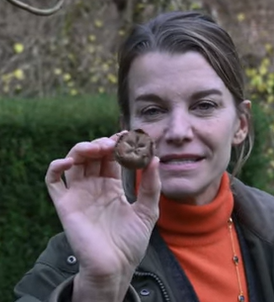
Detail of photo from the American Viscountess showing a medlar (link to the site below:)
Medlars were a very common and useful fruit particularly in the Medieval and Early Modern period. They are best harvested after the first frosts, although some say harvest in late October and store them because they can only be eaten when they are rotten and ‘bletted’. They also store well. They, therefore, provide a source of winter sweetness when there were few other fresh sources available.
They are from the Rosaceae family which includes apples, pears, rosehips and quinces. The English called them ‘open arses’ or ‘dog’s arses’ or ‘granny’s arses’ because of the way they looked until the more polite French name the Medlar caught on.
Shakespeare uses both words and uses their sexual connotations as they were thought also to look like female genitalia. A medlar was also a name for a prostitute. So in Romeo and Juliet this speech by Mercutio to Romeo and their mates contains some very bawdy thoughts:
If love be blind, love cannot hit the mark. Now will he sit under a medlar tree And wish his mistress were that kind of fruit As maids call medlars when they laugh alone. O, Romeo, that she were, O that she were An open-arse and thou a poppering pear!
RJ 2.1.33
I think you can also see how good Shakespeare was at making his allusions available to all classes. For the sophisticated he begins with the reference to the French medlar and in case the groundlings are missing out throws in the ‘open-arse’ so they know what he is alluding to.
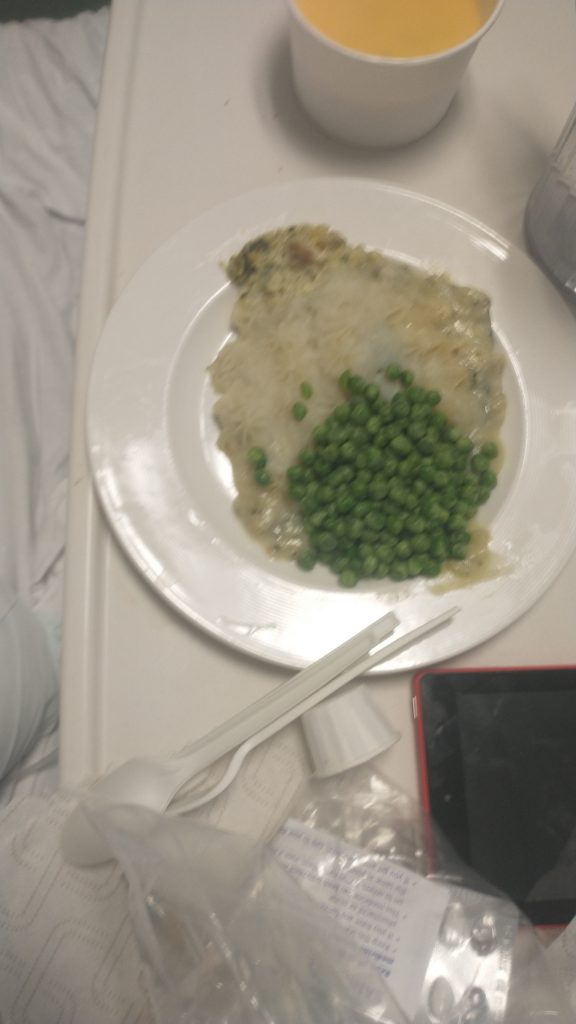
Nutritious National Health food, called Fish Pie. By contrast the apple crumble and custard was delicious.
The Guardian has recently written a piece on this subject which I am following as I recover from the hernia operation. I found publishing from my phone from the hospital bed surprisingly easy as it was the first time I had used the phone for writing the Almanac of the Past
My typing on the computer is fast but very, very inaccurate and clumsy and full of revision and cutting and pasting and rewriting and typos. So its quite hard work bashing it into shape. But I found it much easier on the phone, with the fingers of one hand being less prone to error and, in some strange way, more directly attached to the part of my head that composes the text into something vaguely readable. But it is more difficult to add the images. I have now been at home for 4 days and my phone is dying (I am well!) so back to normal methods.
Today, I have been completely revising the entry for February 3rd St Blaise’s day with a few thoughts as to why the stories of the Martyr Saints are so very gory.