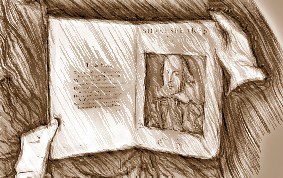
Droeshout Portrait of Shakespeare from the First Folio
Shakespeare was married at 18 years old. This was unusually young for the age. Young men generally entered into a 7-year apprenticeship followed by several years of wage labour as a journey man (from the french, jour, to denote being paid by the day.) At 18, he would have been unusual if he could afford a wife and household at this tender age. His wife was 26-year-old Anne Hathaway. This is slightly late for a woman to be married in the 16th Century, 22-23 would be more usual. Susanna, their daughter was baptised 26 May 1583, 6 months later. Twins, Hamnet and Judith, were baptised 2 February 1585.
The fact that Shakespeare was younger than Anne Hathaway, and that the baby was premature, has led many Shakespeare scholars to believe Shakespeare may have left Stratford to escape an unhappy marriage. This is often expressed in misogynist terms. But, there is an unstated assumption that Mrs Shakespeare stayed in Stratford while Shakespeare spent most of his life in London.
However, a new interpretation of a 1978 fragment has, for the first time, revealed evidence that, Mrs Shakespeare stayed with her husband in London. The piece is a request to Mrs Shakespeare in Trinity Lane (Little Trinity Lane today see map below) to pay the money her husband was holding on behalf of a young apprentice. Why Shakespeare was unable or unwilling to pay we have no idea. But perhaps the fact that it reveals that his wife was in London and seems to have independent means is more important.
How do we know this anything to do with our William Shakespeare? The answer is that the fragment was found in Hereford Cathedral’s Library as part of a binding of a book published by Richard Field. Field was from Stratford on Avon, and it was he who published Shakespeare’s ‘Venus and Adonis’ and ‘the Rape of Lucrece’. It seems unlikely it is about another couple of Shakespeares.
So, it really does change the view of the relationship. Little Trinity Lane is shown on the map below. It is near Southwark Bridge, and Mansion House Underground Station.
Map of the part of the City of London, Little Trinity Lane is in the ventre with an orange boomerang shape below it. Southwark and the Millenium Bridges can be seen at the bottom, and St Pauls top left corner.
I would recommend you read the original article, which discusses in detail all the evidence pertaining to these fragments. Here it is online for you to peruse.
On This Day
2003 My first edit on Wikipedia. As Director of the Old Operating Theatre Museum, I set about making sure the pages associated with the Museum, St Thomas Hospital and Guy’s Hospital were up to date. This is the latest version of the page I first updated. I updated the history of the Hospital. The earliest recovered wikipedia page was on January 15th 2001.
Droeshout Portrait of Shakespeare from the First Folio
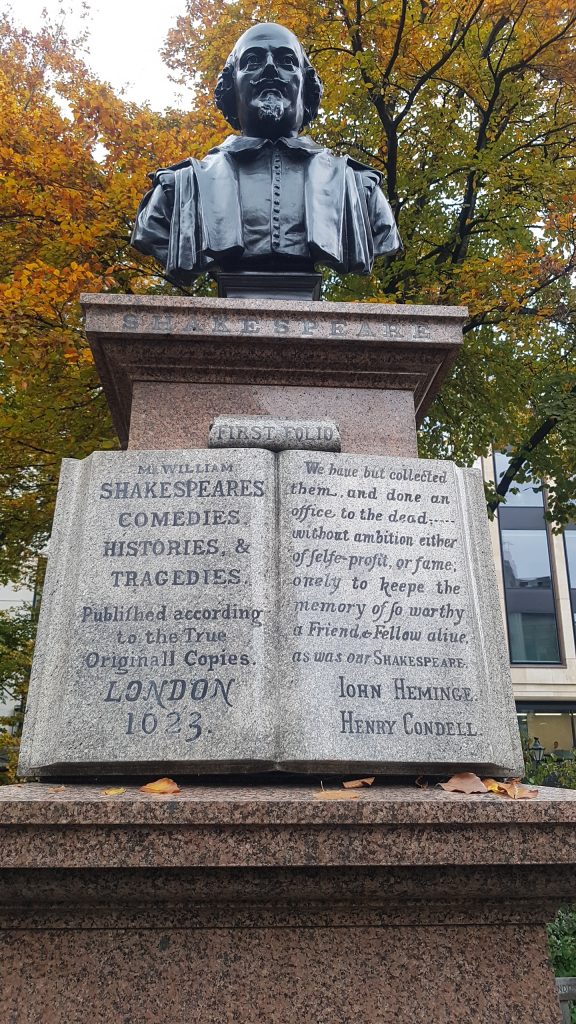
On November 8th in 1623, the First Folio was registered at Stationer’s Hall near the publishing district around St Pauls Cathedral in London. It was actually called:
Mr. William Shakespeare’s Comedies, Histories, & Tragedies
Sketch of the First Folio
It was put together by his actor friends, John Heminge and Henry Condell seven years after his death. They wanted to replace all the corrupt editions of his plays and poems that had been:
“stol’n and surreptitious copies, maimed and deformed by frauds and stealths of injurious impostors”
The true texts of his plays and poems “are now offer’d to your view cured, and perfect of their limbes; and all the rest, absolute in their numbers as he conceived them.” Wikipedia
Shakespeare at the Frankfurt Book Fair
In fact, the plays were ready earlier than 1623, as they entered into the catalogues for the Frankfurt Book festival to appear between April and October 1622. How amazing is it that the Frankfurt Book festival is still the dream of any aspirant writer? Wikipedia tells me that hand-written books were traded at the general trade fair in Frankfurt from the 12th Century. But 1462 is the date that appointed as being when the Book Fair was certainly established.
The First Folio offers plenty of proof that Shakespeare was the author of the plays. He left gold rings of remembrance to Heminge and Condell in his Will. They were part of his Players Company, and had worked together on many of the plays. The Folio has forewords by people extolling the virtues of the writer. Enough proof for any reasonable person.
Heminge and Condell
Heminge and Condell are commemorated in the Garden of St Mary Aldermary behind the Guildhall. They were Churchwardens of St Mary. A few streets away lived William Shakespeare in 1611. True friends, so don’t go telling me he didn’t write the plays!
St Mary Aldermany monument to Shakespeare, Heminge and Condell and the First Folio.
There was a wonderful BBC festival of Shakespeare on in 2023/24 to celebrate. If you look at this link, here. You will find great content. Much of it is available if you search BBC Sounds, or BBC iPlayer.
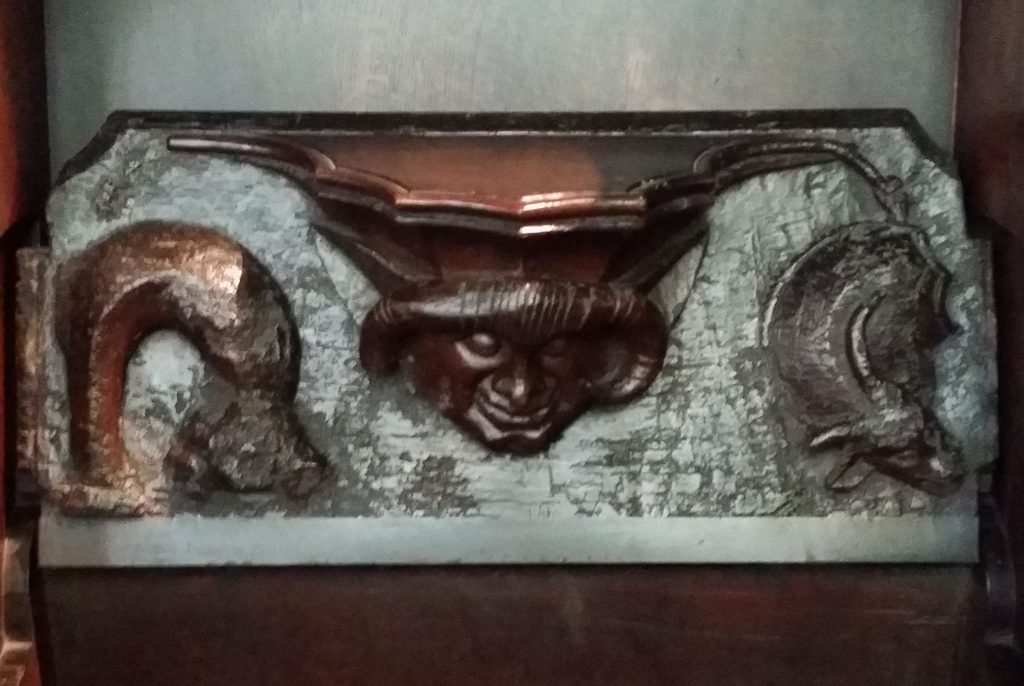
Horned God (with Ram’s Horn) at Stratford on Avon Holy Trinity Church) Photo: K Flude. Carving of a dolphin to the left (symbol of Christ) a goat to the right (symbol of the damned – as Christ divides the sheep from the goats who are going to hell)
Horned Gods
November 4th is dedicated to hunting gods such as Herne, the Horned God, Cernunnos, The Green Man and Pan.
Herne the Hunter appears in Shakespeare:
There is an old tale goes, that Herne the Hunter (sometime a keeper here in Windsor Forest) Doth all the winter-time, at still midnight Walk round about an oak, with great ragg’d horns; And there he blasts the tree, and takes the cattle, And makes milch-kine yield blood, and shakes a chain In a most hideous and dreadful manner. You have heard of such a spirit, and well you know The superstitious idle-headed eld Receiv’d, and did deliver to our age This tale of Herne the Hunter for a truth.
William Shakespeare, The Merry Wives of Windsor, Act 4, scene 4
I have recently seen a brilliant staging of the Merry Wives of Windsor at the Royal Shakespeare Company in Stratford. I saw it three times and think it one of the best Shakespeare productions I have seen. The lead actor, John Hodgkinson, with whom I used to play cricket, was a fantastic Falstaff.
Cernunnos
Cernunnos comes from karnon which means “horn” or “antler”. This may be the source of the name ‘Cerne’. (Please note that the Cerne Abbas Giant has just been redated from the Celtic to the Anglo-Saxon period.) Cerney and Cirencester in Gloucestershire might have similar origins for their names. The Cornovii is the name of three tribes in Britain. Cornwall, Shropshire and Caithness. It seems to mean people of the Horn, and the Horn thought to be stag’s horns. He is most often found in statues in the area around Paris, with an antler on his head, cross-legged and with a snake with him. He may be the god of the celtic underworld.
A Cernunnos-type figure on the Gundestrup cauldron (plate A). He sits cross-legged, wielding a torc in one hand and a ram-horned serpent in the other. Public Domain Wikipedia
Ginger cake is the traditional accompaniment to a cold night watching the Fireworks. There is a good recipe in Markham’s The English Housewife of 1683. But I’m suggesting you use this recipe from the Guardian for Parkin Cake. ‘Parkin is a gingerbread cake traditionally made with oatmeal and black treacle, which originated in Northern England.’ (Wikipedia).
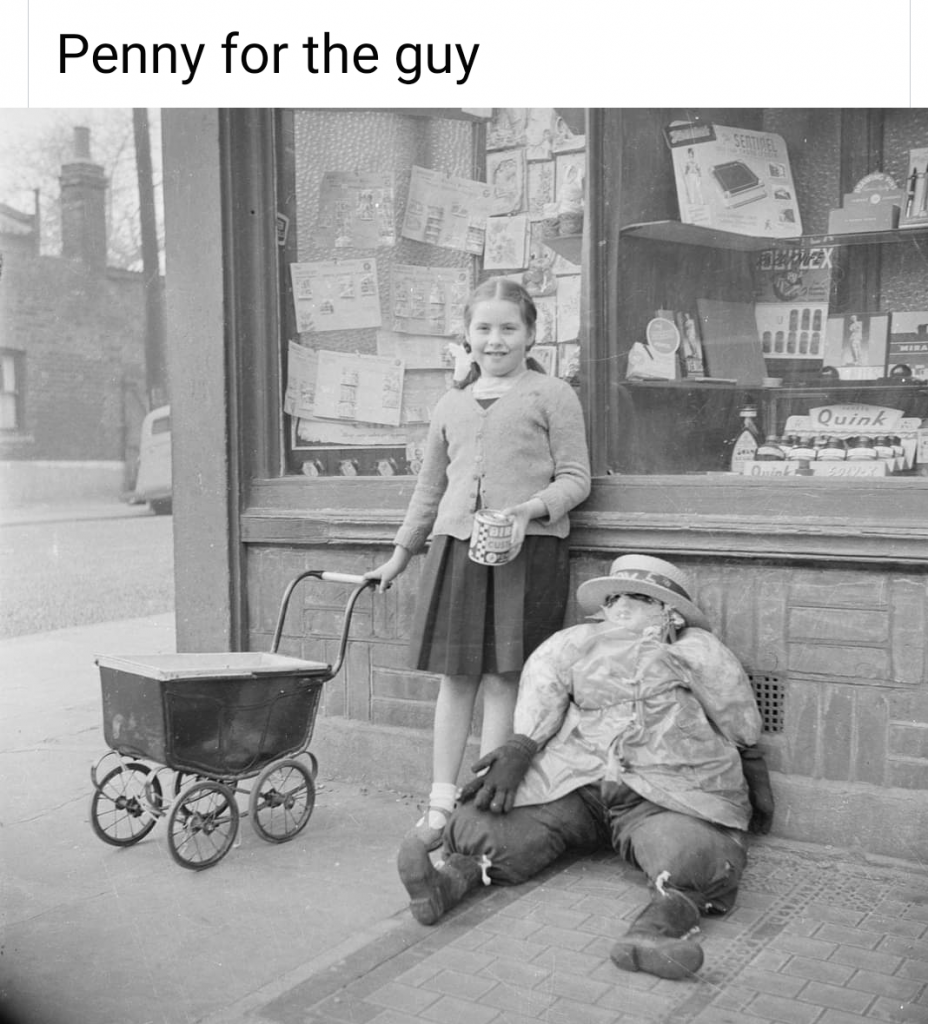
London picture Penny for the Guy on Guy Fawkes Day
I haven’t seen children asking for ‘a penny for the Guy’ for a while. But it was part of my childhood. We would create a ‘Guy’ out of old clothes and take it into the streets to raise money. The Guy is named after Guy Fawkes, who was discovered on 5th November 1605 in a cellar under Parliament. He was by a pile of barrels of gunpowder with a slow match. The plan was to blow up the King and Parliament, on the occasion of the Opening of Parliament on the 5th of November.
Once the plot had been broken and the plotters hanged, drawn and quartered, the King ordered that November 5th should be commemorated throughout the Country. Bonfires were a part of the seasonal celebrations at the time, used at Halloween, but this aspect was transferred to November 5th and continues as a major British event every year.
The money we raised, we spent exclusively on ‘bangers’ loud explosive fireworks not pretty fountains, Roman candles nor rockets. The bangers just made a horrendously loud bang. One stunt we experimented with was to cycle through the streets and to put a lit banger into the handle bars, which would act as a rocket launcher! Don’t try this at home.
Meanwhile, we would collect wood for the village bonfire:
A stick and a stake For King George’s sake Will you please to give us a faggot If you won’t give us one, we’ll steal you two The better for we and the worse for you.
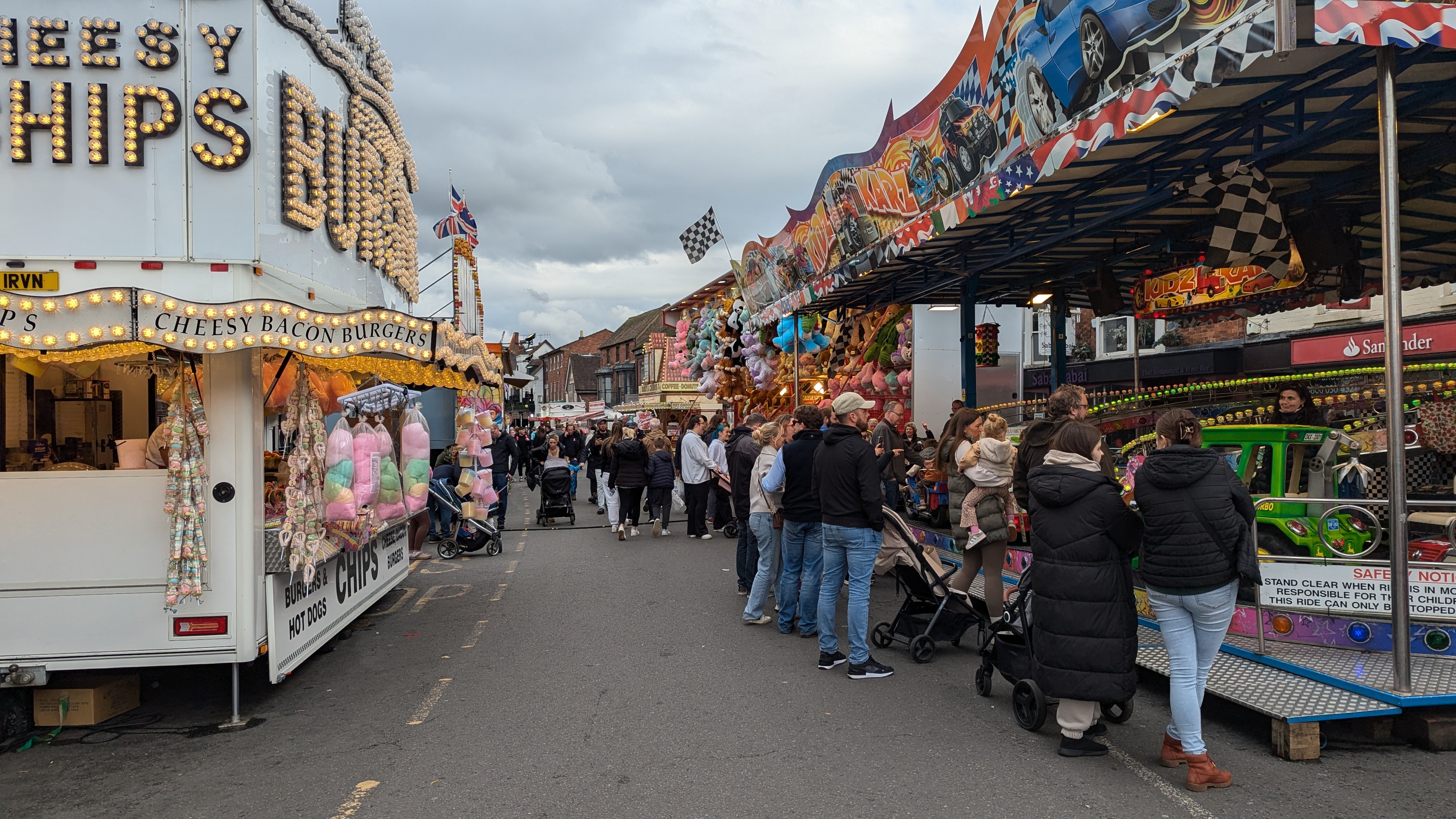
This year the Stratford Mop fair was on the 11th and 12th October, and I was there to see it!As I reposted a long post about the Mop a couple of days ago, I thought I should report back. To recap, the Mop began as a Michaelmas (Old Style) Hiring Fair, and has continued in Stratford ever since. But the modern incarnation is no longer a Hiring Fair and no shepherds were to be seen.
2024 Stratford on Avon Mop. Photo Kevin Flude
The centre of the Town was crowded with a cacophony of shooting galleries, games to win soft toys, stalls selling toffee apples, candy floss, burgers, and all things bad for you. And interspersed with the stalls were all sorts of rides, carousels and all the raucous fun of the fair.
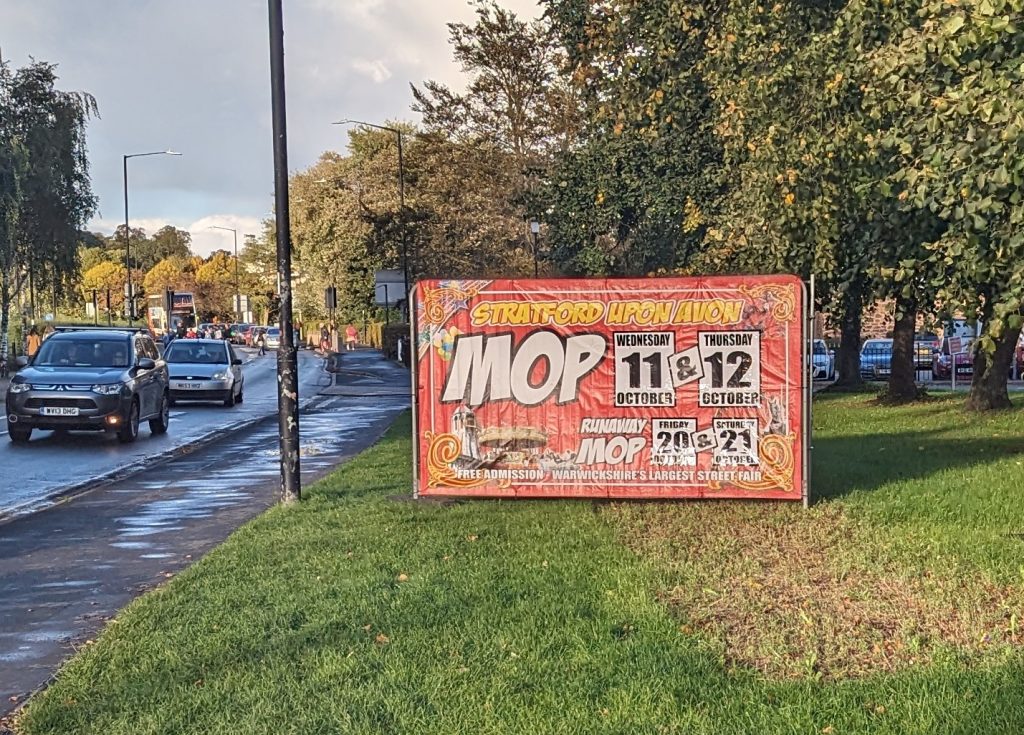
Stratford-upon-Avon Mop Festival (2023 sign)
You might have noticed I have labelled the photographs differently, one Stratford-upon-Avon, the other Stratford-on-Avon. Most prefer the ‘upon’ but I thought this wrong as the Council building in Church Street uses the simpler ‘on’. Having looked it up, I see that the answer is both are correct. Stratford-upon-Avon is used for the Town, and Stratford-on-Avon for the Town and area around the town. Now you know!
Now, I cannot find any reference in Shakespeare to a funfair, and all references to a Mop, are to the thing you mop the floor with. But he does mention St Bartholemew’s Fair obliquely, and certainly knew his friend, Ben Jonson’s Play ‘St Bartholemew’s Fair’. It is a great play based in London, at the annual fair in Smithfield. It was one of the great Wool fairs of England. It was held every year on St Bartholemew’s Day August 24th, and lasting sometimes weeks long. Please read my post on Bartlemas here.
This year the Stratford mop festival was on the 11th and 12th October. I am in Stratford. The the centre of town is a cacophany of shooting galleries, stalls selling toffee apples, candy floss, burgers and all things bad for you. And a fun fair.Nothing at all sophisticated, or literary or dramatic, or folkloric. Just a good old-fashioned fun fair in the middle of the town. Quite raucous, but they leave Henley Street, and Shakespeare’s’ Birthplace, free of it. Below I tell the story of my discovery of the Mop.
2024 Statford-upon-Avon Mop. Photo Kevin Flude2024 Stratford on Avon Mop. Photo Kevin Flude
In 2023, I was on my way to Stratford-upon-Avon Railway station, I saw the sign at the top of this page, but had no idea what on earth a Mop was. I put it to the back of my mind as I took the train to Henley-in-Arden. My interest in the town was that Shakespeare was born in Henley St. And his mother was called Mary of Arden. So, naturally, I wanted to find out about Henley-in-Arden. To turn curiosity to action, it took our Tour Coach Driver telling me he lived there and that it was a pretty but small town.
Mary Arden doesn’t live here any more!
I had a free afternoon from my duties as Course Director on the ‘Best of England’ Road Scholar trip. I got on the very slow train to Henley-in-Arden. One of the first stops was Wilmcote, where Mary Arden’s House is. I visited two years ago, when I was astonished to find it was a different building to the one I had visited in the 1990s! In 2000, they discovered they had been showing the wrong building to visitors for years! Mary Arden’s House was, in fact, her neighbour Adam Palmer’s. And her house was Glebe Farm.
On that visit, I walked from Stratford-upon-Avon to Anne Hathaway’s Cottage. Then to Mary Arden’s House and back to Stratford along the Stratford Canal. It is a lovely country walk if you are ever in the area.
The Forest of Arden
The train route to Henley is through what remains of the ancient forest of Arden. The forest features in, or inspired, the woody Arcadian idylls which feature in several of Shakespeare’s plays, particularly the Comedies. ‘As You Like It’, for example, is explicitly set in the Forest of Arden, as this quotation from AYL I.i.107 makes clear:
Oliver: Where will the old Duke live?
Charles. They say he is already in the Forest of Arden, and a many merry men with him; and there they live like the old Robin Hood of England: they say many young gentlemen flock to him every day, and fleet the time carelessly as they did in the golden world.
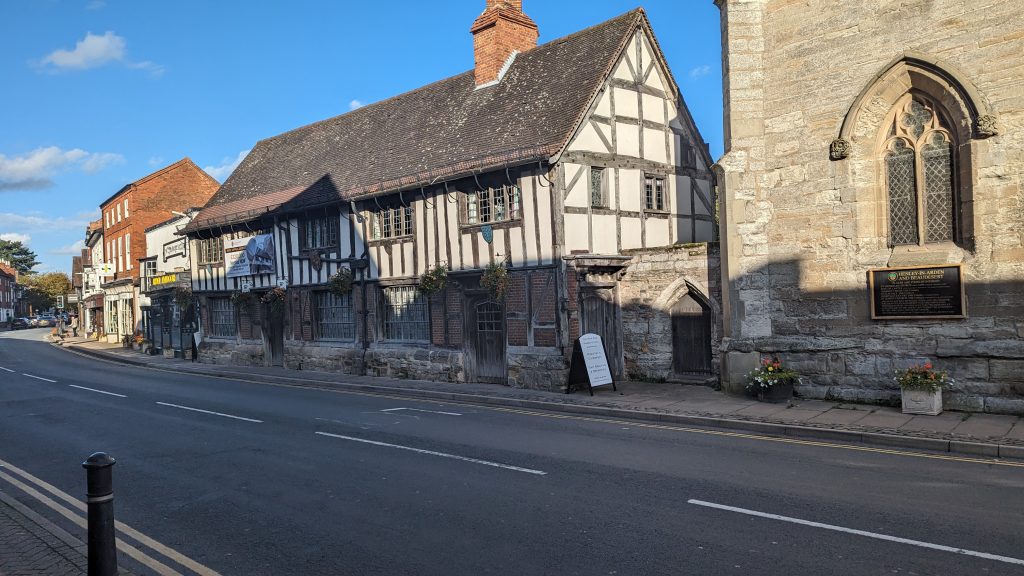
Guildhall, Henley-in-Arden
Henley-in-Arden
Not much remains of the old Forest. It was cut down to make timber-framed buildings and ships for the British Navy – the so-called Wooden Walls. Henley has a beautiful high street. Further down the road is a lovely Heritage Centre full of old-fashioned and DIY Information panels. And that is not a criticism, it provided a very enjoyable visit full of interesting stuff. And gave me a couple of snippets of information I have not seen anywhere else.
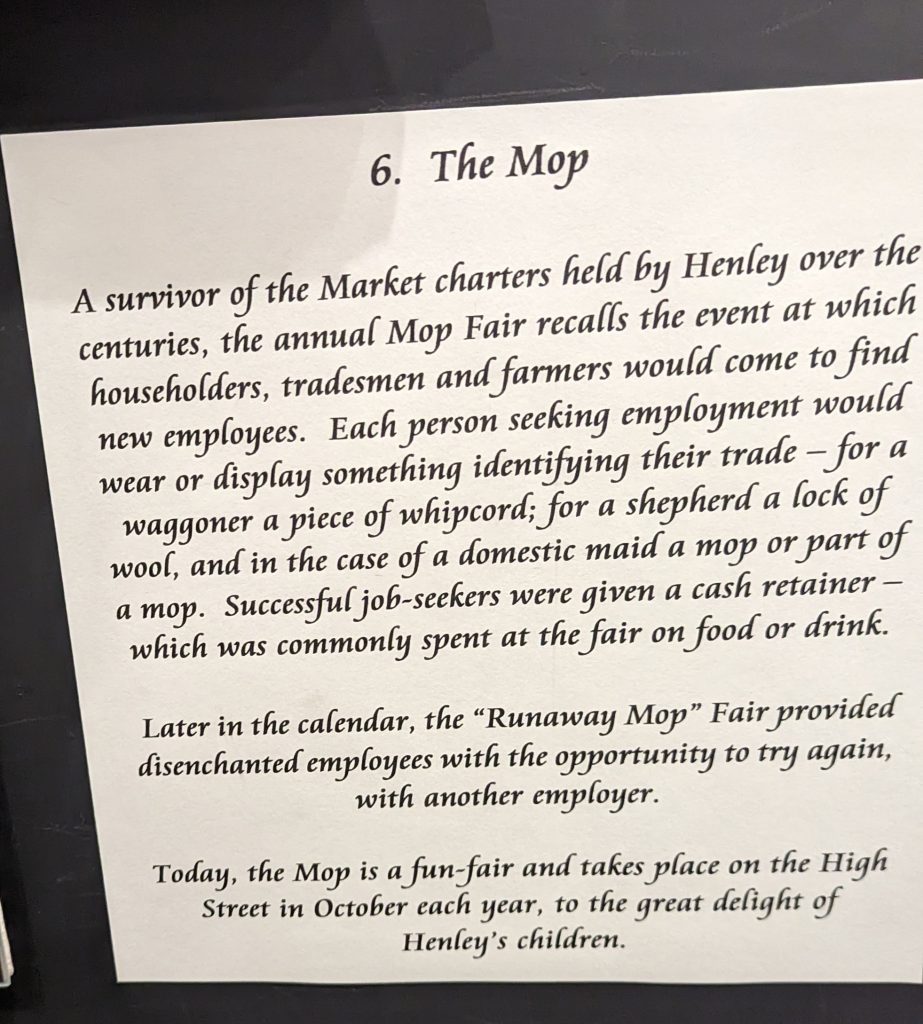
One, was a panel dedicated to the Henley Mop. A mop turns out to be a hiring fair. Think of Gabriel Oak in Hardy’s ‘Far from the Madding Crowd’. His attempt to become an independent farmer destroyed when his sheepdog runs amok. The dog sends his sheep over a cliff to their doom. So he takes his shepherd’s crock to the hiring fair or Mop as they are known in the Midlands. There, potential employers can size up possible employees and strike mutually agreeable terms and conditions. And Gabriel becomes the shepherd for the delightful and wilful Bathsheba Everdene.
So, a shepherd would take his staff, or a loop of wool. A cleaner her mop (hence the name of the fair). A waggoner a piece of whipcord. A shearer their shears etc. Similarly, in the Woodlanders (by Thomas Hardy) the cider-maker, Giles Winterborne, brings an apple tree in a tub to Sherborne, to advertise his wares.
The retainers thus employed would be given an advance and would be engaged, normally, for the year. So there was quite a widespread moving around of working people to new jobs and often new housing. Not quite how we imagine the past?
The perceptive among you will have noted the bottom of the sign in Stratford which advertised the ‘Runaway Mop’. This was held later in the year, so that employers could replace those who ran away from their contracts. And those who ran away could find a better, kinder or more generous boss. See also my post of Gabriel Oak and Pack Rag Day which is another hiring fair which was help on Martinmas Old Style.
Henley Mop – panel from the heritage centre
Court Leets and Barons
Also of interest to me was the panel about Court Leets and Barons. These were the ancient courts which dealt with, respectively, crime and disorder, and property and neighbourhood disputes. Henley still has its ancient manorial systems in use, at least ceremonially. The Centre shows a video of the installation of a new Lord of the Manor at the Guildhall. The title had been purchased by a cigar-smoking Stetson-wearing large rich American.
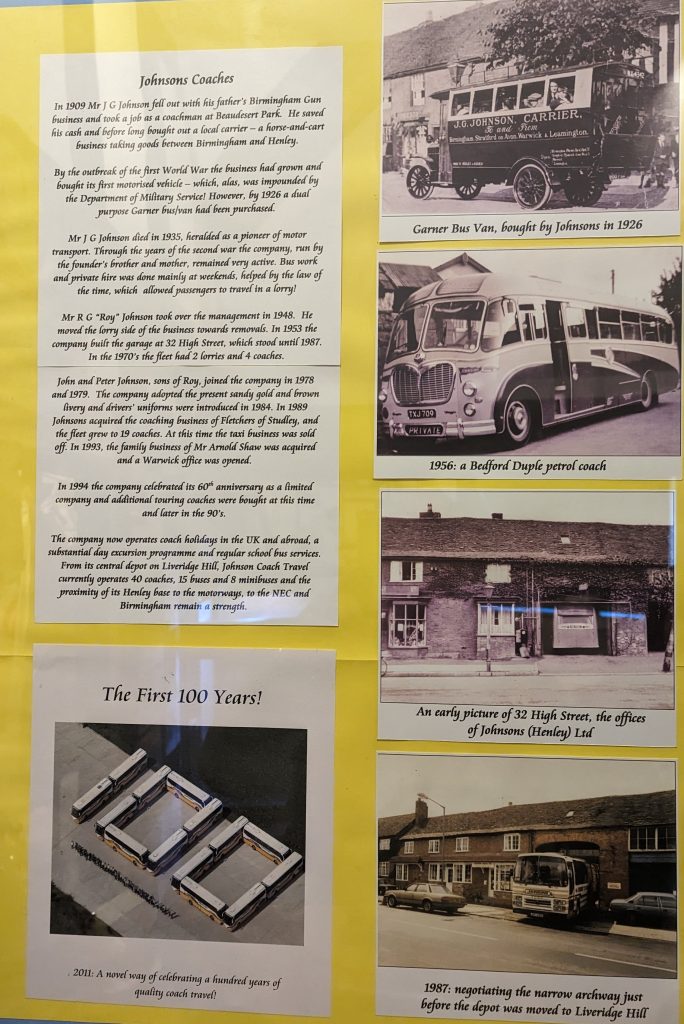
Johnson’s Coaches
Another panel was the story of a Coaching Company. When I lead the Best of England programme we are driven around by Johnson’s Coach Company. It was a delight to discover that it has a history that can be traced back to 1909 in Henley. I conveyed this information to our group on the next day as we toured the Cotswolds. Curtis, our driver, was able to update the panel. He told us that the family were still involved with the firm, which is still operating from the area. He said the two brothers who run the company come in every working day. They do everything they require of their drivers to do; i.e. they drive coaches, clean coaches, sweep the floors and generally treat their staff like part of a big family. I should have asked him whether he got his job at the Mop, while holding a steering wheel in his hands!
Johnson’s Coach Company -Panel from Henley Heritage Centre
Note: It seems that Johnson has now merged with another company. But it keeps its depot in Henley and maintains its connection with the town.
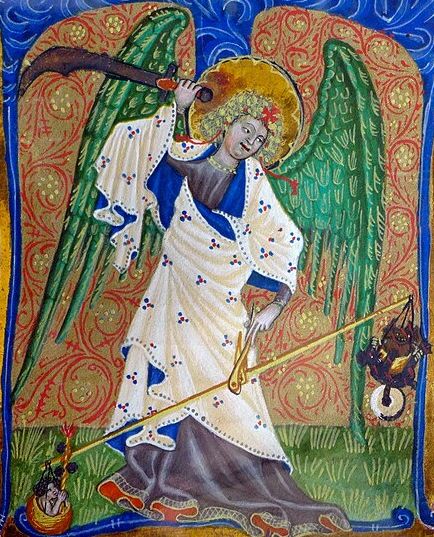
Michaelmas Old Style. St. Michael weighing souls during the Last Judgement, Antiphonale Cisterciense (15th century), Abbey Bibliotheca, Rein Abbey, Austria (Wikimedia by Dnalor_01 license (CC-BY-SA 3.0))
I am catching up as I have been away. So I’m a little behind in my days.
October 11th is the day that the Devil fell out of heaven and landed in a Blackberry Bush. So. you are, therefore, not wise to eat them after October 11th. St Michael’s Day is now celebrated on September 29th (see my post here). But before September 1752, it was celebrated on what is now October 11th, now styled ‘Michaelmas Old Style’. The change of date is due to the introduction in the UK of the Gregorian Calendar.
Saint Michael is the chief of the archangels. Saint Gabriel was celebrated on the eve of the Annunciation on 24 March (see my post here). St Raphael on the 24th October, But more recently the Churches celebrate all the Archangels at Michaelmas. It is now called the celebration of St Michael and All Angels.
Terms. Colleges, Lawyersand Quarterdays
Apart from its religious significance, St Michael’s Mass was an important date on the civic calendar. Terms began, rent fell due, and work contracts ran out. It was the end of the ploughman’s year, and the day when Hiring Festivals or Mop Festivals took place. Look at my post on the Stratford Mop festival
So in Oxford, the autumn term is called Michaelmas. The Spring Term Hilary on St Hilary’s Festival of January 14th. The third term is called Trinity, which takes place on Trinity Sundaythe first Sunday after Pentecost. The law courts also have a Michaelmas term.
It is one of the Quarter Day’s of the year, close to the Solstices and the Equinox into which the medieval and early modern world was divided:
It is probably too late to tell you this year. But “if you eat goose on Michaelmas Day you will never lack money all year“. Or as they said in Yorkshire: ‘He’at eateth goose on Michaelmas won’t find his pockets short of brass.’ Jane Austen wrote to Cassandra on Michaelmas 1813 ‘I dined upon goose today, which I hope with secure a good sale of my second edition.’ Pride and Prejudice was published in 1813.
St Michael is one of several archangels. He was protector of the Israel. He has four main roles in heaven. He is the leader of the heavenly host in its defeat of Satan. He is the Angel of Death, the Weigher of Souls, and the Guardian of the Church. For more on archangels, see the second half of my post on Michaelmas here.
On this day
The Romans celebrated ‘meditrinalia’ where they celebrated the new wine and the Gods that made it possible. They toasted the wine chanting:
‘I drink old and new wine to cure old and new disease.’
Shakespeare’s death date is given by the burial register at the Holy Trinity Church, Stratford on Avon where he was buried. His baptismal record also survives at the same church and is on April 26th 1564. So, we don’t actually know when he was born, but christening were held soon after birth for fear of the high infant mortality rates, so 23rd April, three days before, has been assigned to be Shakespeare’s birthday.
St George’s Day is normally on 23rd but not this year!
When St George’s Day falls between Palm Sunday and the Second Sunday after Easter it is transfered to the Monday after the Second Sunday of Easter. Soin 2025, It is on April 28th. Not many people know that including Keir Starmer, Theresa May, and London Mayor Sadiq Khan who all got it wrong the last time in happened in 2019. I got it wrong too! But I think the Church should stop such silly practices. Either it’s St George’s Day or it isn’t. Why does it matter?
Shakespeare’s Birthday, ‘taking to the chamber’
His mum, Anne Shakespeare would have ‘taken to her chamber’ about four weeks before the due date. The windows or shutters were fastened, as fresh air was thought to be bad for the birthing process. Female friends and relatives came to visit; the room was decorated with fine carpets, hangings, silver plates and fine ornaments. It was held that external events could influence the birth, any shocks or horrors might cause deformities and anomalies, so a calm lying-in room was clearly a good idea.
When labour began, female friends, relatives and the midwife were called to help out. A caudle of spiced wine or beer was given to the mother to strengthen her through the process. The maternal mortality rate for the 16th Century is estimated at 1500 per 100,000. Today, it’s 7 per 100,000. So most women would have heard of or attended the birth of a women who had died during or following children birth. There were also no forceps so if a baby were stuck and could not be manually manipulated out, then the only way forward was to get a surgeon to use hooks to dismember the baby to save the life of the mother. Doctors were not normally in attendance, but could be called in emergency,
Swaddling the Baby
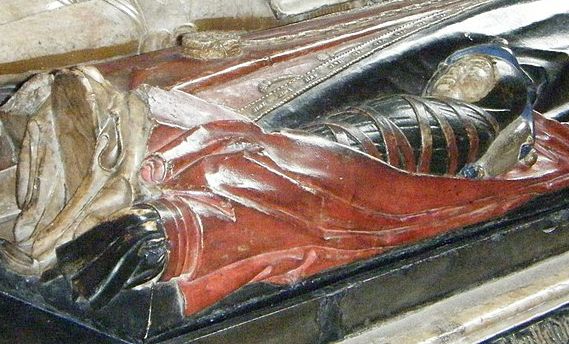
Immediately after washing, the baby was swaddled. The swaddling was often very tight and could affect the baby’s growth, and might have affected the learning process, as movement of hands and feet are now considered significant in the early learning process. Swaddling lasted eight to nine months, and only went out of fashion after Jean Jacques Rousseau wrote against the practice.
Detail of tomb of Alexander Denton and his first wife Anne Willison, and her baby dressed in swaddling clothes Photo Wikipedia Hugh Llewelyn
Dangers of Childbirth
Puerperal fever killed many women even after successful childbirth, for example Queen Jane Seymour who died after 5 days. During these dangerous early days, the mother was kept in a dark room, and then, perhaps three days after birth, friends were invited to celebrate ‘upsitting’ when the mother was no longer confined to bed. This is when christening would take place. Edward VI was christened to a huge audience in the chapel at Hampton Court three days after his birth.
Licensed midwives could baptise newborn babies provided they used the correct wording and informed the Church so that the registration could be properly reported. Thomas Cromwell was responsible for the law in 1538 which insisted on a parish register to record weddings, christenings, and funerals. The law was reaffirmed by Queen Elizabeth in 1558 and registers had to be stored in a locked chest in the Church. (In 1597, the records had to be on parchment not paper, and in 1603 the chest had to have three locks!).
If the christening were in the church, the mother might not be there as she was expected to stay in her chamber for another week or so.
Churching and Breastfeeding
A week or a few weeks later, the mother would be ‘churched.’ This was a thanks-giving ceremony, although Puritans did not like the idea as it might be confused with a purification ceremony.
Breastfeeding would last a year or so but many high status women choose to use a wet-nurse. There was a real concern to find a suitable wet nurse as it was believed that the breast milk was important for the babies’ development both physically and temperamentally. Poor children who lost their mothers were very unlikely to survive as, without breast milk, the baby would be fed pap – bread soaked in cow’s milk.
I went to New Place in Stratford-upon-Avon to see the First Folio Exhibition on the anniversary of its publication in 1623. It was a very small exhibition, and, at first sight quite disappointing. Almost everything in it I had seen before. But, I came away quite excited, because it had a much better explanation of the Signet Ring than the one in its previous display.
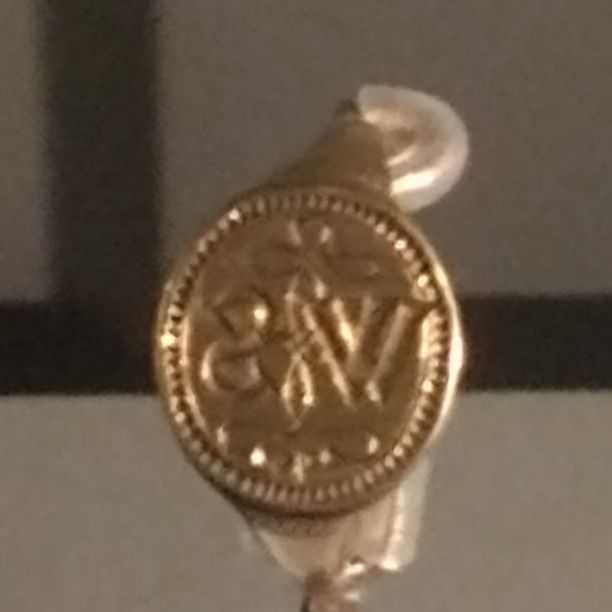
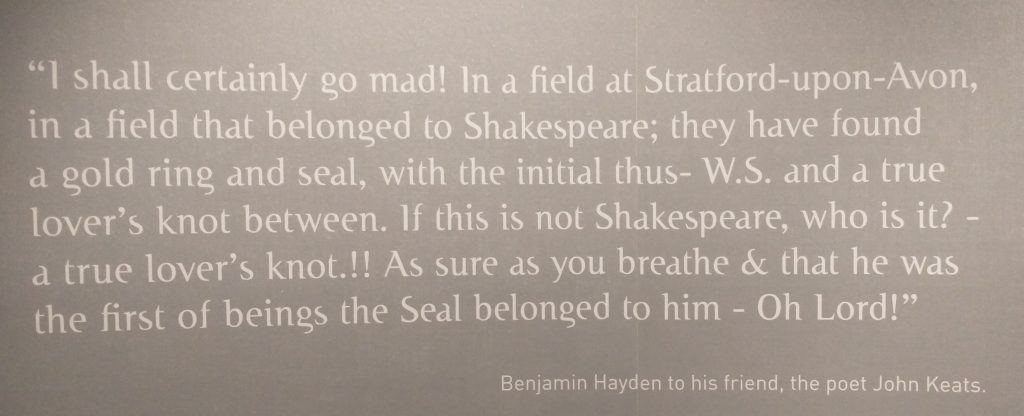
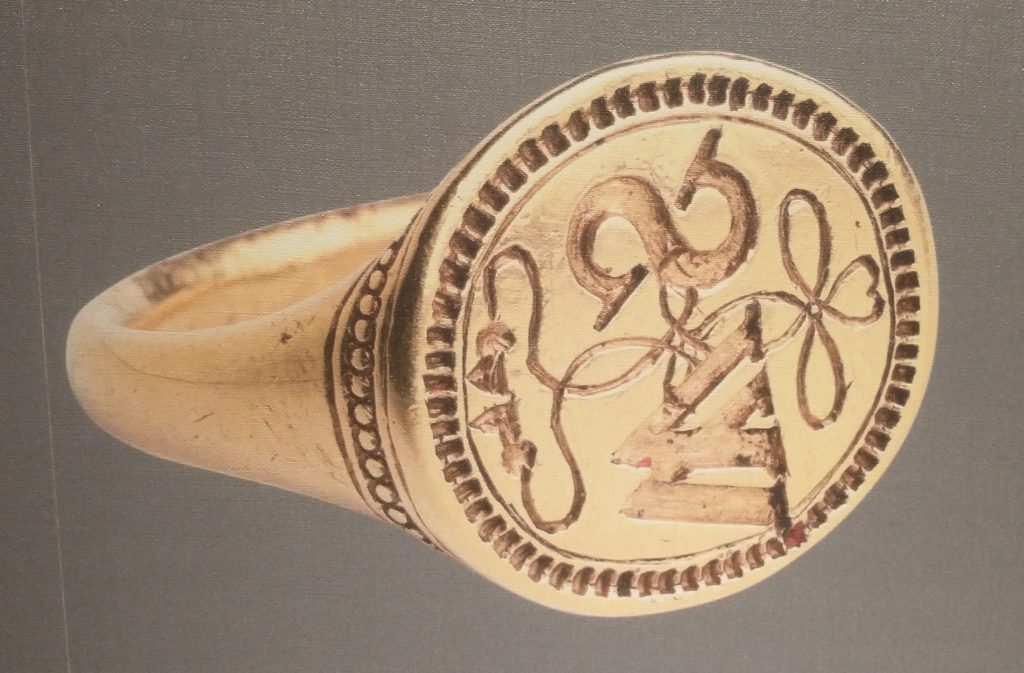
In 1810 someone found this gold ring in field near the Holy Trinity Church where Shakespeare was baptised and buried. It has a lover’s knot and the initials WS. It could ofcourse be anyone’s with those initials. But it certainly excited comment at the time as the display makes clear:
I did not know about the ring until New Place was refurbished a few years ago and the ring went on display. The new display gives more of an explanation as well as the delightful quotation above from Hayden to Keats.
Michael Wood suggested that Shakespeare might have lost the ring on the occassion of his daughter, Judith’s, marriage to Thomas Quiney in February 1616. Shakespeare made his Will a month later, and it is marked by three of his signatures. The Will says ‘whereof I have hereunto put my seale’. The word seale has been crossed out and the word ‘hand’ put in in its stead. So, he was intending to seale his approval of the Will, but changed his mind and put his signature instead? Why? Because he had recently lost his seal ring? Shakespeare died a month or so later.
Photo of the display photo of the Ring that maybe Shakespeare’s
Judith was the twin of Hamnet who died at age 11 and the Church has recently planted a couple of trees as a memorial to the twins, who are not buried, like their older sister, Suzanna, next to their mum and dad by the altar in the Church. Judith’s husband was a bit of a rogue, as he was called to the Bawdy Court and accused of debauchery with a local women who he made pregnant, and who died in childbirth. He is not mentioned in the Will.
But Shakespeare did leave money in his will to buy gold rings for his fellow actors, John Heminges and William Condell, who are buried in St Mary Aldermanbury in London. They outlived Shakespeare and collected his plays together in the First Folio. A Remembrance Ring is also in the display.
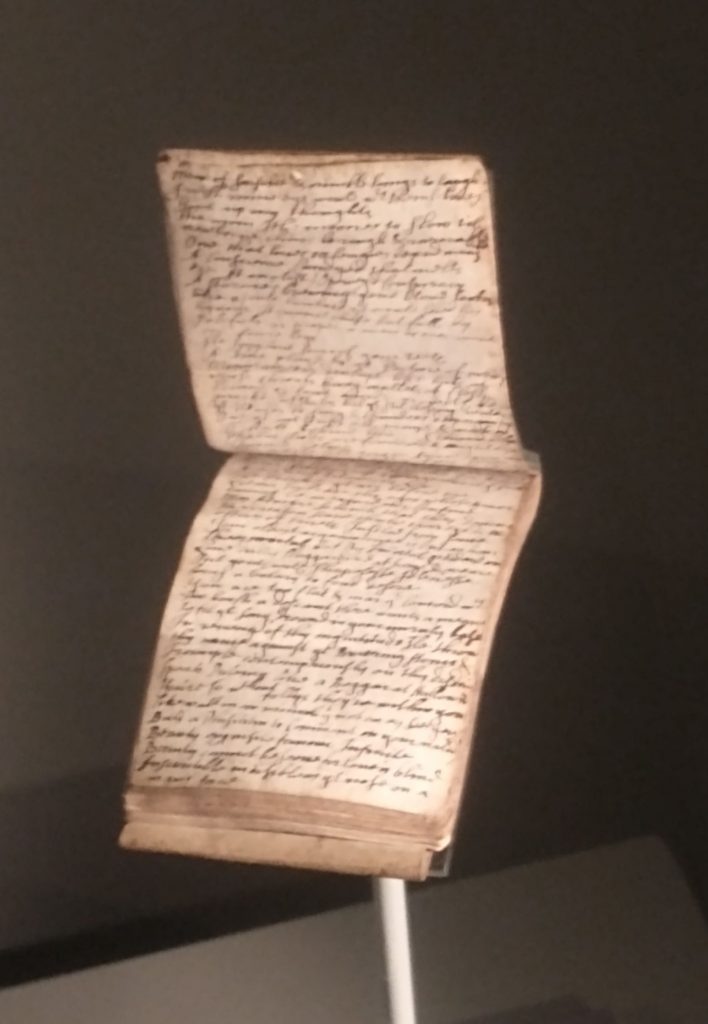
Handwritten notebook written in the 1620s full of quotations from the First Folio
The other main item in the display is this tiny 7.8 cm high notebook in which its unknown owner copied out his favourite quotes from the First Folio. It contains material from all 38 plays, and internal evidence shows it must have been made from the First Folio. It is about the size of the minature books the Brontes made. The tiny writing of the book must have been written with a quill from a small bird.
The display shows that a lot can be made of a few objects, if they are well chosen and with an excellent explanation.
By the way the rings and the Folio are clear evidence that Shakespeare wrote the plays as his friends put together his plays in a volume with introductory information which makes it absolutely clear he wrote them. Also in the Church the memorial to Shakespeare compares him to King Nestor in judgement, Socrates in wisdom, and Virgil in art. Nothing can be clearer, and why people continue to say Shakespeare was simply an actor who copied out the plays is beyond me.
Pylium is a reference to King Nestor of Pylos. Maronem is Virgil. The last line means ‘The earth buries him’ the people mourns him, Olympus posesses him’.