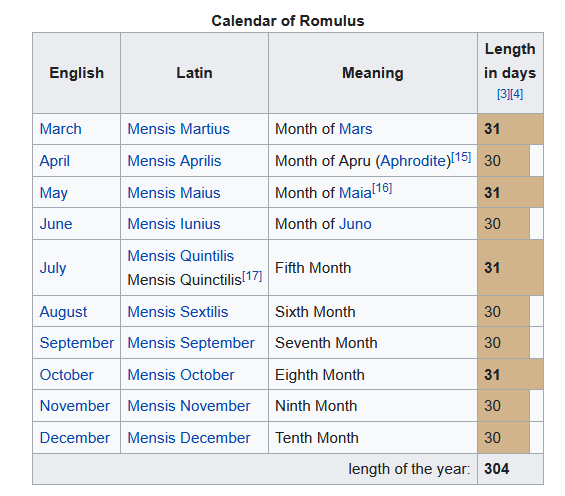
Roman Months, and April the Month of Love – Table from Wikipedia
April was Aphrodite’s month. The goddess of love and beauty. Hence, the month of love. It is also National Couple Appreciation Month! (‘National Couple Appreciation Month was founded in 2010 by Blissful Escapes to, in the words of the company, “encourage couples to do something special to re-enforce and celebrate their relationship.”’ Quote taken from this site.). But first, the new section of:
On This Day
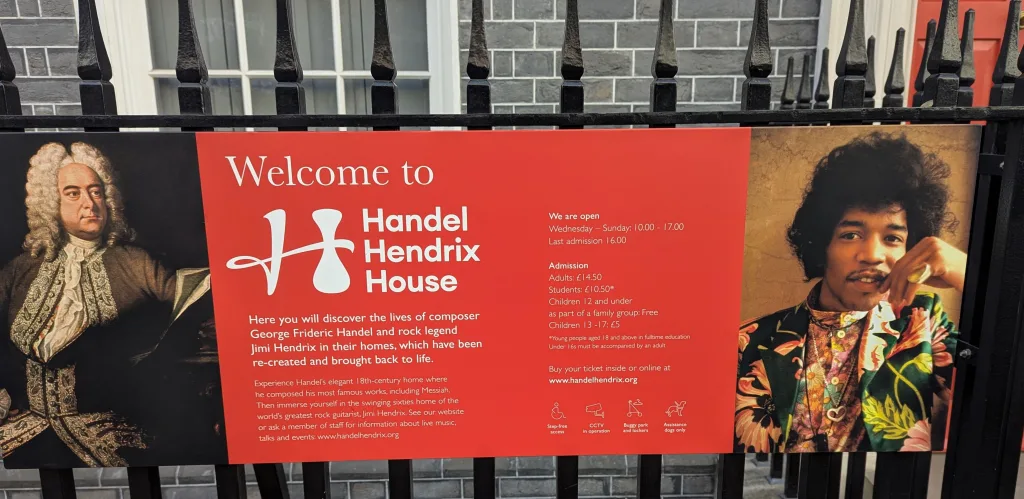
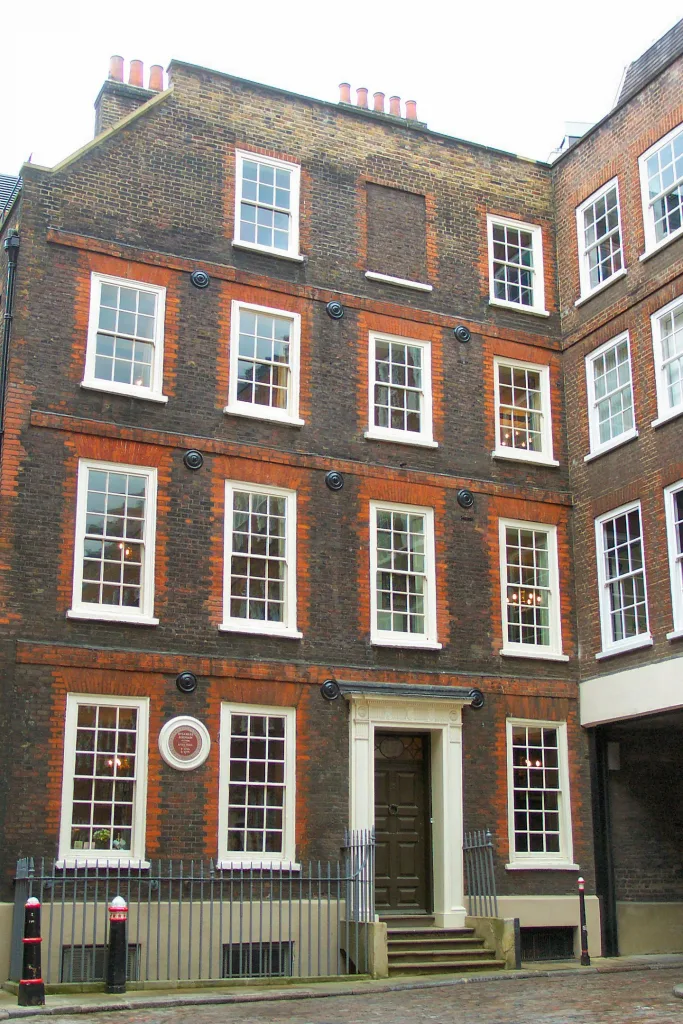
1738 –George Frideric Handel’s Serse, has its premiere performance in London, England. From 1723 Handel lived in a House at 23, Brook Street which is in Mayfair. The House became a museum. Jimi Hendrix lived next door. And so now it is the Handel Hendrix House.
1755 – Samuel Johnson published his famous ‘A Dictionary of the English Language’.
He had a team of clerks in his attic in Bolt Court. They wrote down his definitions and illustrations of their use. He was often quite naughty in including funny, rude or idiosyncratic definitions. For example, a lexicographer was ‘A writer of dictionaries. A harmless drudge.’ A Second Marriage was: ‘ A triumph of hope over experience.’ Oats. ”A grain which in England is generally given to horses, but in Scotland supports the people.’ The innovation of his dictionary was that the definitions came with copious illustrations of a word’s use from well-known authors. While researching he borrowed books from friends. When he eventually returned them they were marked with lots of underlining and annotation in the margins.
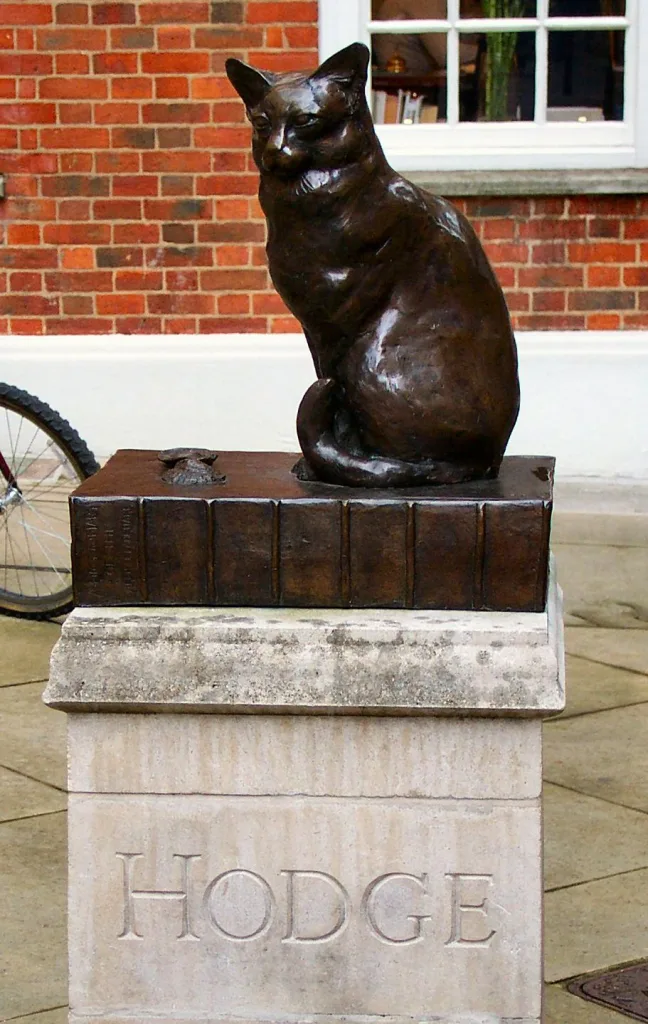
Dr Johnstone’s House in Bolt Court, Fleet Street, Photo K FludeStatue of Dr Johnstone, in Fleet Street Photo K FludeDr Johnstone’s famous Cat Photo K flude
1912 – Titanic sinks at 2:20 a.m. This was 2 hours and 40 minutes after she hit the iceberg. 1514 people were lost of 2,224.
1923 – Insulin becomes generally available for use by people with diabetes. Its development involved decades of work over 2 continents, but it was extracted by a team from the University of Toronto in 1921.
1945 – Bergen-Belsen concentration camp is liberated. The Imperial War Museum writes: ‘Thousands of bodies lay unburied around the camp and some 60,000 starving and mortally ill people were packed together without food, water or basic sanitation. Many were suffering from typhus, dysentery and starvation.… Nearly 14,000 died after the liberation.’
1989 – 97 Liverpool fans packed into the Hillsborough Stadium, were crushed to death watching the FA Cup Semi-final. 766 were injured. The Police tried to cover up the events, and the press blamed the Liverpool fans, particularly Rupert Murdoch’s the Sun.
Roman Months
I have spoken about the Roman Calendar in previous posts. Today, I’m concentrating on the Months. The Romans wrote about a ‘legendary’ calendar, set up by Romulus when he founded Rome. It consisted of 10 months of 30 and 31 days followed by a winter period not divided into months. This allowed them to extend the year so that it fitted into the Celestial cycle. The year began in March, suitable names were given to March, April, May and June.
Having given names to June the Romans gave up and the next 6 months were given numbers from 5th month to 10th month as in the diagram above. The Calendar was not well regulated and the months eventually began to lose their integration with the seasons, and needed reform.
Photo by Manasvita S on Unsplash
The Calendar was reformed several times. January and February were added by the legendary Numa Pompilius about 713 BC replacing the monthless winter period. But, Julius Caesar undertook the major reform in 46BC. This was the so-called ‘Year of Confusion’. This first year was 445 days long. This is how far out of sync the Calendar had got. The Julian Calendar realigned the calendar to the seasons.
The Year began on January 1st, with 365 days, 12 months and a 4 year leap year cycle. This held sway until the 16th Century when a further reform was ordered by Pope Gregory as the year is not exactly 365.25 days long. It was not adopted in the UK until 1752 when we lost 11 days to align ourselves with Europe.
Easter – Lullingstone Roman Mosaic representing Spring
The German name for Easter is Ostern. The English name is Easter which the Venerable Bede, in the 8th Century, derived from the Goddess Eostra. They probably have the same derivation. But this is all the evidence there is for the Goddess, despite many claims for the deep history of Easter traditions.
Easter, Estry and Canterbury
Philip A. Shaw has proposed that the name of Eastry in Kent might derive from a local goddess, called Eostra. Canterbury had a leading place in the development of the early Church both in England and Germany. So, perhaps, this led to the adoption of a local cult name in these two countries. Otherwise, the name for Easter in Europe derives from Pascha which comes from the Hebrew Passover and Latin. In French it’s Pâques, in Italian Pasqua, Spanish Pascua; Dutch Pasen, Swedish Påsk; Norwegian Påske and so on.
Eleanor Parker in her lovely book ‘Winter in the World’ gives a lyrical insight into how the dates were chosen. The Anglo-Saxons held the belief that God would only choose the perfect time for the Creation and the events of Easter. The Creation began with the birth of the Sun and the Moon. So it was fixed to the Equinox, when the days were of equal length, and the fruits of the earth were stirring into life. But Holy Week also needed to be in harmony with the Moon. Therefore, Easter was tied, like Passover, to the first full moon after the Equinox, which is also when the events take place in the Gospels.
Winters in the World by Eleano Parker
The quotations Parker uses from early English religious writing and poetry shows a profound interest in nature and the universe. It is a very appealing viewpoint. It seems to me that this is something the Church lost in later times, and replaced with a fixation with dogma and ‘worship’ of the Holy Trinity, rather than a spiritual sense of wonder at the Universe.
Celtic & Roman Churches in Conflict
At the time, fixing the date of Easter was very controversial as the Celtic Church in Britain had a different calendar to the Roman Catholic Church. Easter fell on a different day. The Anglian King of Northumberland, for example, celebrated Easter on a different day to that of his wife. King Oswiu was exiled to Ireland where he was influenced by Celtic Christianity. His wife, Eanflæd, from Northumberland, had been baptised by the Roman Catholic missionary, Paulinus.
Easter and the Synod of Whitby
Oswiu, became King of Northumberland and ‘Bretwalda’ (ruler of all Britain). He encouraged a reconciliation. This culminated at the Synod of Whitby (664AD), between the two churches. The Celtic Church finally agreed to follow the Catholic calendar and other controversial customs. The Abbess at Whitby during the Synod was Hilda of Whitby. The Celtic position was defended by Bishop Colmán and the Roman position by St Wilfred. Bishop Colmán resigned his position as Bishop of Lindisfarne, returned to Iona and then set up a monastery back in Ireland. Wilfrid studied at Lindisfarne, Canterbury, France and Rome. After her husband’s death, Queen Eanflaed became Abbess of Whitby,
The antagonism between the two churches went back to the time of St Augustine in the early 7th Century. In a meeting between St Augustine and Celtic churchmen, St Augustine was judged to have been arrogant, unwilling to listen. So agreement was not reached. Sometime afterwards, the Anglo-Saxons attacked the Celts at the Battle of Chester. Hundreds of monks from the Abbey at Bangor were slaughtered.
Days off at Easter & Rituals
Ælfric of Eynsham gives a powerful commentary on the rituals of the Church over Easter. They were full of drama and participation. These included Palm leaf processions on Palm Sunday, feet washing and giving offerings to the poor on Maundy Thursday. Then followed three ‘silent days’ with no preaching. Instead there were rituals and services aiming to encourage empathy for the ordeal of Jesus. This included the nighttime service of Tenebrae. All lights were extinguished in the Church while the choir sang ‘Lord Have Mercy’. The darkness represented the despair that covered the world after Jesus’ death. Good Friday was the day for the adoration of the Cross. The Cross would be decorated with treasures and symbolised turning a disaster into a triumph.
It seemed to me that I saw a wondrous tree Lifted up into the air, wrapped in light, brightest of beams. All that beacon was covered with gold; gems stood beautiful at the surface of the earth,….
The Dream of the Rood quoted in Eleanor Parker’s ‘Winter in the World’
The Harrowing of Hell
The days before Easter Sunday are known as the ‘Harrowing of Hell’. This was a very popular theme in the medieval period (featuring in Piers Plowman for example). Jesus went down to hell to free those, like John the Baptist, who had been trapped. Becauase when he died the world had no saviour until the first Easter. The name ‘Harrowing’ comes from ‘Old English word hergian ‘to harry, pillage, plunder’. The ‘Clerk of Oxford’ Blog provides more information on the Harrowing of Hell on this page,
The Clerk of Oxford Blog is written by Eleanor Parker. She started in 2008, whilst an undergraduate student at Oxford. The blog won the 2015 Longman-History Today award for Digital History‘.
The above is but a very poor précis of Eleanor Parker’s use of Anglo-saxon poetry and literature. She brings an Anglo-Saxon Easter to life. So if you are interested to know more please get a copy of her book.
Easter Days off
King Alfred’s law code gave labourers the week before and after Easter off work. This made it the main holiday of the year.
First Published in 2023 and republished in 2025, 2026
Sketch from an old print. Francis Drake being knighted by Queen Elizabeth I. In fact, the Queen delegated the dubbing to a French Diplomat
The Queen’s half share in the profits of the Golden Hind’s circumnavigation of the world, amounted to more than her normal annual income. So it is no wonder she knighted the Captain, Sir Francis Drake. The ceremony took place in the dock in what is now South East London at Deptford.
The Spanish were furious that a Pirate should be so honoured. The Queen may have given a French man the honour of dubbing Sir Francis. She did this, perhaps to encourage the French to support the English against the Spanish?
The annual Royal Income for King Charles III is £86.3 million. This is paid in the Sovereign’s Grant. It gives you an idea of Drake’s booty. But I imagine she had a greater share of the nation’s wealth than Charles, as she was the Government not just a honorific cutter of ribbons.
Francis Drake. Hero or Bloodthirsty Pirate?
Francis Drake was one of the British heroes I read about as a child. I had a thick book with stories about people King Alfred the Great, Hereward the Wake, Robin Hood, Drake, Charles II, Bonny Prince Charlie, Flora MacDonald, Florence Nightingale, David Livingstone etc. Some of them horrifically Imperialist and racist!
Drake is remembered for being the first English person to sail around the world. And his exploits in ‘singeing the beard of the King of Spain’ on his piratical raids on the Spanish Main.
In the books I read, the Spanish were the bad guys, and we were on the side of the Angels. Drake was one of the swash-buckling heroes who turned Britain from a not very important country on the edge of Europe, to one of the World’s Great Powers.
Portrait of Francis Drake with Drake Jewel given to him by Queen Elizabeth I
On the other hand, he was also a pioneer of the Slave Trade, was involved in atrocities in Ireland and in the Spanish Territories. He summarily executed one of his crew in dubious circumstances. Perhaps more significantly, his contemporaries did not entirely trust him.
Francis Drake and the Spanish Armada
As the Spanish Armada sailed along the southern coast of England, the English Navy sniped at the heels of the Spanish ships. Drake was tasked with leading the nighttime harrying of the Armada up the Channel. The idea was to stop them landing and to drive them away and into the hostile waters of the North Sea. Drake in the Revenge was leading the pursuit, and the other ships were told to follow. He was to keep a single lantern alight in the stern of his ship. But the Lantern went out, and the British pursuit was disrupted.
The next morning, Drake comes back having captured the Spanish galleon Nuestra Señora del Rosario, flagship of Admiral Pedro de Valdés. The ship contained the gold to pay the Spanish Armada, which Drake seized. Was this a fortuitous accident which rebounded to Drake’s considerable financial advantage or something more deliberate?
In the end, the lantern incident did not stop the British forcing the Spanish to flee around the North of Scotland. On this perilous voyage only about 60 of their ships returned to Spain out of about 130. And Britain was saved from the Spanish Armada.
Nuestra Señora del Rosario and Agatha Christie
I used to lead an Agatha Christie program which included a visit to Torre Abbey in Devon. And it was here that the Spanish ship’s crew were imprisoned after Francis Drake took the ship.
The Abbey was a Premonstratensian Abbey. Its tithe barn was used to hold the prisoners of war from the ship of whom there were 397.
The Spanish Barn, Torre Abbey. Photo 2012 Kevin Flude
Sir John Gilbert, who was Sheriff of Devon at the time, used 160 Spanish Prisoners of War to develop his estate above the River Dart. The Estate is in a magnificent position, overlooking the drowned valley of the Dart. It is now enjoyed by those millions of visitors to what became the summer home of Agatha Christie (Greenway). The Poison Garden in the Garden of the Abbey is themed around poisons used in Agatha Christie’s books.
View of the River Dart from Greenway, photo KFludeView of Greenway from the River Dart. Photo KFlude
The Golden Hind & Deptford
Queen Elizabeth I decided that the Golden Hind should be permanently docked in Deptford. So the ship was placed in a ‘dry’ dock filled with soil. The ship decayed and by 1660 nothing much was left.
I remember as a young archaeologist that some of our team took time out to work with Peter Marsden. He is one of the great experts in Naval archaeology, and he led a search to find Drake’s ship. There was a huge fanfare in the London newspapers. ‘Find the Hind’ I think must have been the hopeful Headlines. But, rather embarrassingly, given the build up, they failed to find anything of significance.
Further exploratory excavations took place in 2012, with no greater success.
Panorama biew of the Spanish Army from an old history book
Golden Hind souvenirs
Chair made from timbers of the Golden Hind in the Dinity Hall, Oxford, photo K Flude
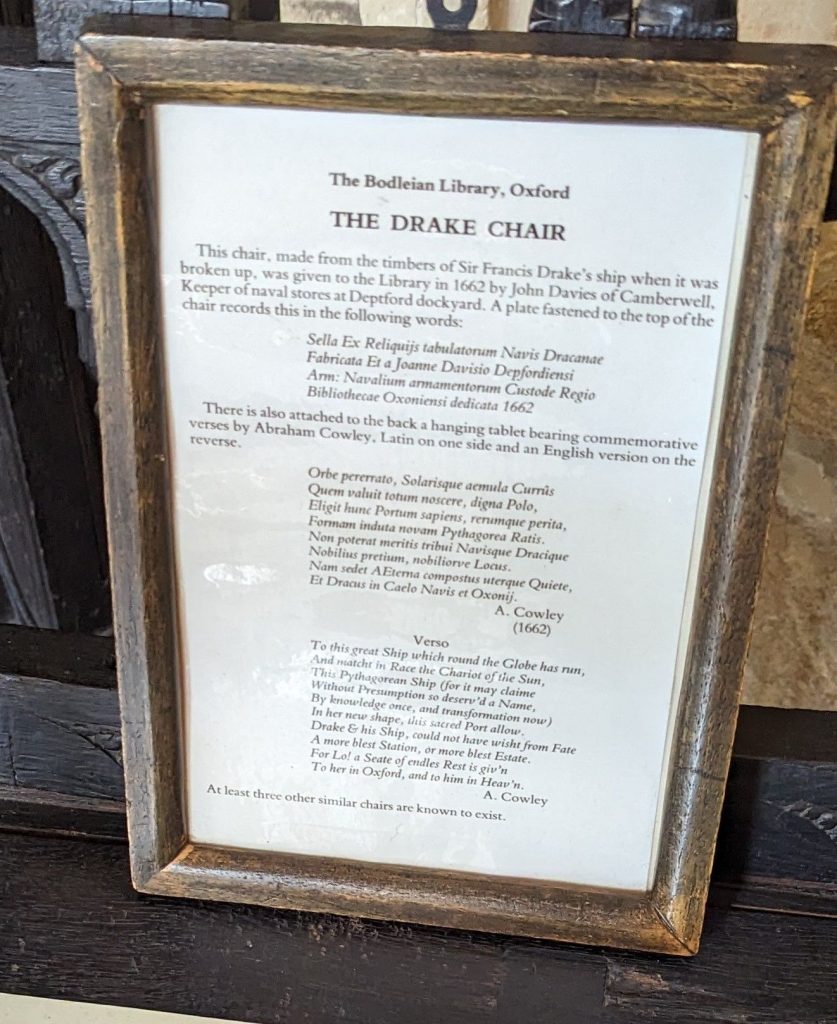
The Keeper of the Naval Stores at Deptford made chairs from the ruins of Drake’s ship, and one of them is on display at the Divinity Hall, Oxford.
Information panel on the Chair made from the ruins of the Golden Hind, photo K Flude
Sir Francis Drake and Middle Temple Hall
In London, Sir Francis Drake visited Middle Temple Hall, off of Fleet St regularly. A table (called the cupboard) is reputedly made from the hatch cover of the Golden Hind. This is where the newly qualified barristers stood to have their registration entered into the Inn’s books. Sadly, it did not survive the bombing of 1941.
Middle Temple Hall. Photo K Flude 2021
The lantern which hung in the entrance Hall allegedly came from the ship’s poop deck (so not the one he failed to keep lit!). Other famous mariners associated with the Middle Temple include Sir Martin Frobisher and Sir Walter Raleigh. Shakespeare’s company performed Twelfth Night in the Middle Temple Hall
The Romans celebrated the Great Mother, the Cybele in the festival of the Megalesia. To celebrate bringing a meteorite of Cybele to her temple in Rome in 204BC. Celebrated by the Games of the Great Mother
1660 – Declaration of Breda by King Charles II promises a general pardon to all royalists and opponents of the monarchy for crimes committed during the English Civil War. Excluded were the Regicides who signed Charles I’s death warrant.
1814 – Napoleon abdicated and on April 11 ordered into exile in Elbe.
1949 Twelve nations sign the North Atlantic Treaty creating NATO. They were the Western Union – ( France, UK, Belgium, Netherlands, and Luxembourg) and the United States, Canada, Portugal, Italy, Norway, Denmark, and Iceland
1968 – Martin Luther King Jr. assassinated by James Earl Ray in Memphis, Tennessee
First published 2024, revised 2025, On This Day added 2026
This year, Good Friday is on Friday 3rd of April, and the day we eat Hot Cross Buns. The Hot Cross Bun is a simpler sort of bun than the Chelsea Bun, which was the bun to have at Easter in London in the 18th Century.
Hot Cross Buns Good Friday Traditions
There seem to be all sorts of dubious traditions around the origins of the Hot Cross Bun. It has been suggested that the Greeks knew how to put a cross on a bun. Also, that the Anglo-Saxons celebrated the Goddess Eostre with the crossed bun. It is suggested that the cross represents, not the cross, but the four quarters of the moon, the four seasons and the Wheel of the Year. But there is very little evidence for Eostre other than the Venerable Bede’s mentioning her name. Bede says:
‘‘Eosturmonath has a name which is now translated ‘Paschal month’, and which was once called after a goddess of [the English people] named Eostre, in whose honour feasts were celebrated in that month’ (quoted from florencehrs.substack.com/p/eostre-pagan-fertility-goddess)
So nothing is known about Eostra herself nor her rituals and customs. So her association with Hot Cross Buns cannot be known. However, the cross, and the association with Easter, makes the bun powerful, so there are many superstitions on record. A piece of an Easter Hot Cross Bun given to the sick may promote a cure. It was said that a bun cooked and served at Easter will not go off for a year. This might help explain the traditions that hanging them up on a string or ribbon is a good thing. One hung in a kitchen prevents fire. On a ship prevents sinking. In East London, the Widow’s Son Pub in East London has an old bun. This remembers a sailor-son who never returned to eat it on Good Friday.
Making and Eating Hot Cross Buns
The technology of putting a cross on a Bun requires nothing more complicated than a flour and water paste so it might well be an ancient tradition. A more impressive cross can be made with shortcrust pastry. The bun itself is simply flour, milk, butter, egg, salt, spices and mixed fruit. Here is a recipe from the BBC www.bbcgoodfood.com
In my opinion, they need to be purchased from a shop. Home-made Hot Cross Bun might be better but would be strangely disappointing. It’s normally eaten toasted and buttered although I prefer the soft doughy untoasted and unbuttered bun. But then I can get carried away and eat the entire pack of four.
‘RRRRRare Chelsea Buns’ as Jonathan Swift called them in a letter to Stella in 1711.
Fragrant as honey and sweeter in taste As flaky and white as if baked by the light As the flesh of an infant soft, doughy and slight.
The buns were made from eggs, butter, sugar, lemon and spices. The tradition was that, on Good Friday, 18th and 19th Century Londoners would go to Chelsea to buy Chelsea Buns. Thousands of people would turn up at the Five Fields. These stretched from Belgravia to what is now Royal Hospital Street. There were swings, drinking booths, nine pins and ‘vicious events that disgraced the metropolis’. The Bun House was on Jew’s Row as Royal Hospital Street was then called. As several King Georges visited the Bun House it became known as the Royal Chelsea Bun House. It was run by the Hands family. They were said to sell 50,000 Buns on the day. Stromboli tea garden was nearby.
Chelsea Cabinets of Curiosity
Inside the Chelsea Bun House was a collection of curiosities. Chelsea became known for its collection of curiosities in the 18th Century. Of course, there was the great Hans Sloane’s collection which was the founding collection of the British Museum. And then there was Don Saltero’s which was a coffee house that had curiosities on the wall. The Bun House displayed clocks, curiosities, models, paintings, and statues on display to attract a discerning Public.
Find me a Chelsea Bun! (Or make one yourself!)
Me. I love a Chelsea Bun above all buns, But can you get them any more? The British Library Cafe was the last place I found that sold them. And that was 7 years ago. I did Chelsea Buns on sale in the Empire Cafe in Newbury but apart from that nada. Their place has been taken first by Danish Pastries and more recently the ubiquitous Cinnamon Bun. If you see any Chelsea Buns on sale please let me know.
Chelsea Buns, middle top row, next to the white cakesEmpire Cafe baking in Newbury since 1874
There is a tradition of Skipping on Good Friday. I can’t say I ever saw it – in my school skipping was a perennial activity, mostly enjoyed by the girls, but the boys would sometimes be intrigued enough to join in.
Regent’s Canal, London in the Month of April. Photo K Flude
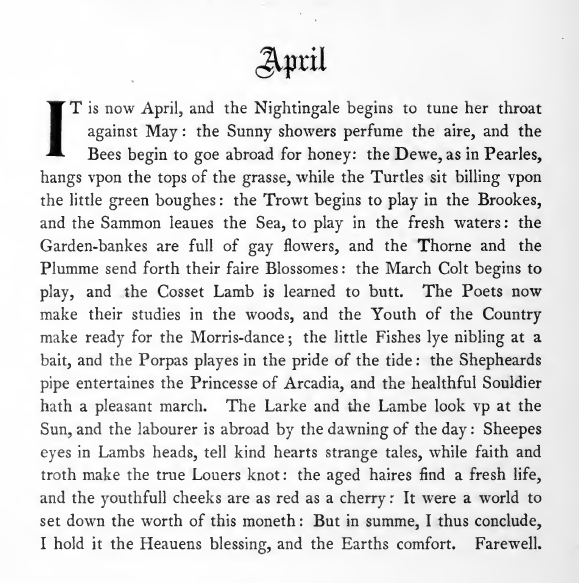
The name of the Month of April comes from Latin. From Aperilis from aperio meaning ‘to open’. This is the month when the Earth opens up, the blossoms bloom, buds budding, the flowers flowering.
In Anglo-Saxon times, the Venerable Bede mentioned that they called the month Eostremonath. But there really is no other evidence for the Goddess Eostre. But it is from her that we get our word ‘Easter’. In Gaelic it’s the Cuckoo’s month ‘Ceitein na h-oinsich’. In Welsh it is Ebrill which comes from the Latin.
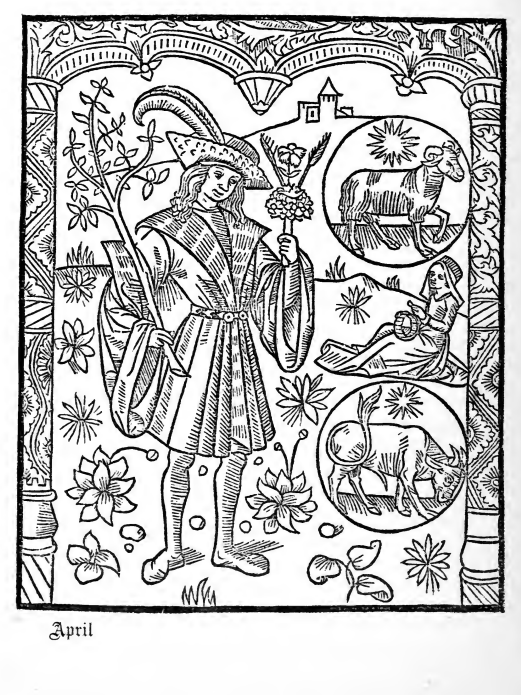
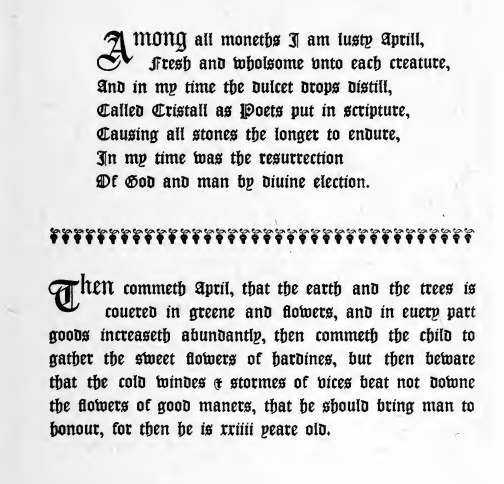
Title Page of the Kalendar of Shepherds for the Month of April
The image from the medieval Kalendar of Shepherds shows all the beautiful flowers blooming. The central figure is a rich man bearing bows of tree and flowers. Behind him is a female sitting on the grass embroidering. Love is in the air, and a castle on the hill. The star signs of the month are shown in the roundels.
Aries sign of the ZodiacTaurus sign of the zodiac
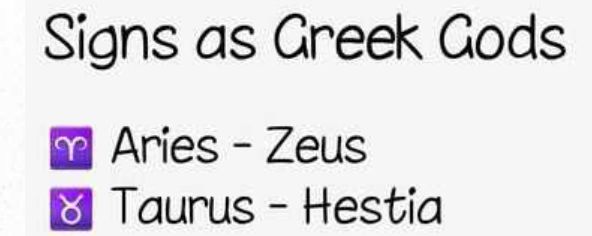
Star Signs as Greek Deities
Astrological signs and their associated Dieties.
I can’t remember where I found this illustration nor its justification. But, is it strange that the Greek God Ares is not the patron of the Star sign Aries? Of course, Ares/Mars has March named after him. Ares is a fire sign, its colour is red, and ruled by the planet Mars.
Aries is no ordinary Ram, he has wings and is called Chrysomallos. Ino the step-mother of Phrixus and Helle, wife of the King of Boeotia, hated her step-children, and plotted their death. But they were rescued by the flying Ram which had a Golden Fleece. Unfortunately, Helles fell off and drowned in what became known as the Hellespont, Phrixus came to safety in Colchis, and in an act of terrible piety, sacrificed the poor lamb to Zeus as a “Thank You”! The fleece was later taken by Jason and the Argonauts. (So, now we know why Zeus is the patron God of Aries!)
Hestia is the Goddess of the Heath. In other words, she is the Goddess of all those wonderful things that are encompassed by the word ‘Home’. (You’ll find more on Hestia in my reflections-on-the-solstice/)
The Month of April in the Kalendar of Shepherds
The Kalendar of Shepherds as usual gives a lyrical insight into the countryside in the month of April:
Kalendar of Shepherds description of nature and farming in April
It continues with a poem. Beneath the poem is text which describes what happens to the child in the fourth set of 6 years. January represents a child’s life from 0 – 6, February 6 – 12. So April represents the ages 18 – 24 – the spring time of Man. But also a time when the struggle between vice and virtue in the young mind.
For more about the Kalendar of Shepherds read my post.
First written on 7th April 2025, (some content was moved from its original April Fools Day post home). Revised and section on Aries added 2026
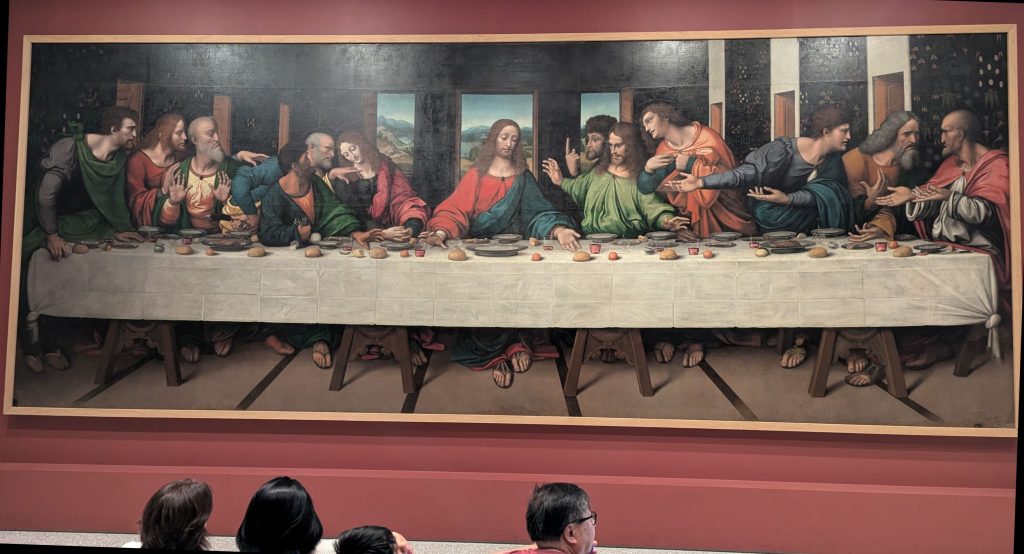
Copy of the Last Supper by Leonardo da Vinca at the Collection Gallery, Royal Academy, UK (Copy made 1515-1520, and was in the Carthusian Monsatery at Pavia in the 17th Century before being brought to the RA in the 19th Century) Photo K flude
April 2nd, 2026 is the day before Good Friday. It was on the Wednesday or the Thursday that the Last Supper took place. So I have relocated my ‘Sandals of the Saints’ post to here.
Whilst visiting Flaming June at the Royal Academy, it was nice to have another look at the RA’s copy of the Last Supper. What strikes me most is their sandals (and the beautifully pressed table cloth).
Detail of the RA Sandals in the copy of the Last Supper Photo Kflude
Details that bring the past to life. The shoes would surely sell today, while the table cloth really destroys the common idea that the past was dirty and smelly. It wasn’t. People took pride in their appearance and surroundings. Just look at the ironing!
Here, by way of contrast, is a medieval shoe from the 14th Century from the Museum of London. And this is a link to the Museum of London’s collections of medieval shoes, most have been collected from excavations, and it is one of the best collections.
On This Day
Today is St. Urban of Langres Day.
He is the patron of Langres; Dijon; vine-growers, vine-dressers, gardeners, vintners, and coopers. And invoked against blight, frost, storms, alcoholism, and faintness. (www.catholic.org/saints/) But is also called upon to make maid’s hair long and golden.
On the feast of St Urban, (forsooth) maids hang up some of their hair before the image of St Urban, because they would have the rest of their hair grow long and golden.
Reginald Scott, the Discovery of Witchcraft, 1584. (Thanks to the Perpetual Almanac by Charles Kightly.) For more on Reginald Scott and Witches see my post.
1744 – First Golf Tournament. No, not at St Andrews but at Leith Links, Edinburgh.
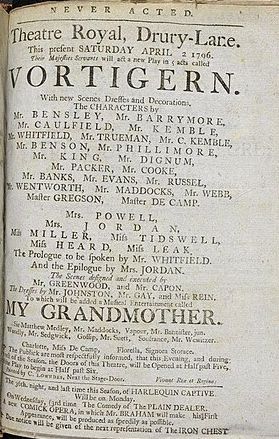
Bill for the 1796 play Vortigern and Rowena Public Domain Wikipedia
1796 – A great cast at the Drury Lane Theatre, owned and managed by Sheridan, put on a newly discovered play by William Shakespeare. The cast included Kemble, Barrymore, and Mrs Jordan, who was the mistress of Prince William (aka William III). Rumours swirled around about the authenticity of the play. Shakespeare was interested in Britain’s legendary history, having written Cymberline and King Lear. But critics thought it was too simple to be genuine. Eventually, William Henry Ireland admitted he was the author.
‘A London Year’ by Travis Elborough and Nick Rennison has a great quote from a visit to the play. It took place on April 2nd 1796 and is recorded in Joseph Farington’s diary. Compare this description to your last polite experience at the Theatre.
Shakespeare’s forgery staged
‘Island’s play of Vortigern, I went to. Prologue, spoken in 35 minutes past six, play over at 10. A strong party was evidently made to support it, which clapped without opposition frequently through near three acts. When some ridiculous passages caused a laugh, which infected the house during the remainder of the performance, mixed with groans. Kemble requested the audience to hear the play out about the end of the fourth act, and prevailed. The epilogue was spoken by Mrs. Jordan, who skipped over some lines which claimed the play as Shakespeare’s
Barrymore attempted to give the play out for Monday next, but was hooted off the stage. Kemble then came on. And after some time, was permitted to say that ‘School for Scandal’ would be given, which the house approved by clapping.
Sturt of Dorsetshire was a Stage Box drunk and exposed himself indecently to support the play. And when one of the stage attendants attempted to take up the green cloth, Sturt seized him roughly by the head. He was slightly pelted with oranges. Ireland, his wife, a son and a daughter and two others were in the centre box at the head of the Pitt. Ireland occasionally clapped. But towards the end of the fourth act, he came into the front row and for a little time, leaned his head on his arm. And then went out of the box and behind the scenes. The Playhouse contained an audience that amounted to £800 pounds.’
April 2nd 1796 from Joseph Farington’s Diary, (I have changed some of the punctuation.)
Who Was Vortigern?
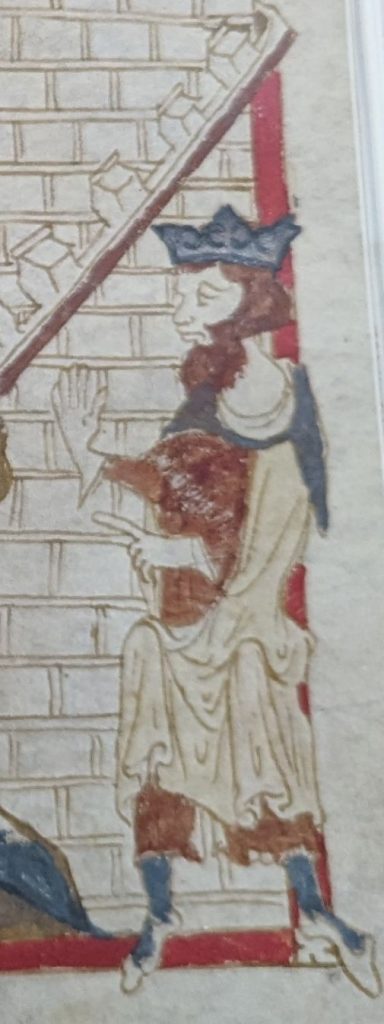
Vortigern’s history is shrouded in Myth. But he was chosen as leader of Britannia after the Romans withdrew in the early 5th Century AD. His name means Great Leader in Brittonic. He is one of the few leaders we know to be a real person in what used to be called the Dark Ages. We accept him as real, as he appears in the near contemporary source by the Monk Gildas.
However, very little is known of him except legends. He was associated with Merlin. Legend accuses him of betraying the British for the lust for Rowena. She was the daughter of the Saxon Leader Hengist. Whatever the truth of this, Vortigern continued the late Roman policy of hiring Germanic mercenaries. They defend Britannia against Picts, Irish, Scotti,and, of course the Saxons. The legends say that Hengist and Horsa were hired with their three ‘keels’ of Saxon mercenaries. In payment for services rendered, or for lust, Vortigern surrendered the sovereignty of Kent to the Saxons. Thus began the so-called ‘Adventus Saxonum’, and the destruction of the power of the Britons.
Kent and the Survival of pre-Saxon names
Medieval portrait of Vortigern
How much of this is ‘true’ we have no idea. But the name of Kent survives from the prehistoric, into the Roman, unlike most tribal names. And unlike most tribal names survives to the modern day. Who now has heard of the Trinovantes, the Catuvellauni, Regneses or the Atrebates. The pre-Roman tribe were called the Cantii, or the Cantiaci. Caesar says they had 4 Kings, and the Cante part of Canterbury comes from their name. Why did the name survive? Probably because it was the first Roman Civitas to be taken over by the Saxons. Most likely still largely a working political unit. So it kept its name. The other Roman political units mostly lost their names in the anarchy of this period. The political boundaries from the Prehistoric period survived through the Roman period. But the names at least do not survive the fall of Rome.
Maundy Thursday Money Pouches. and cover of the Order of Service for Royal Maundy service 1974 Photo Wehwalt
Maundy Thursday Meaning
Maundy Thursday is on April 2nd in 2026. This is the last day of Lent, and the day before the Passion. It’s also called Holy Thursday when Christians remember the Washing of the Feet, and the Last Supper. . Maundy is thought to be from the:
‘Latin word mandatum, or commandment, reflecting Jesus’ words “I give you a new commandment.’ (Wikipedia).
I much prefer the derivation of Maundy Thursday from the English Kings giving alms to poor people.
‘English name “Maundy Thursday” arose from “maundsor baskets” or “maundy purses” of alms which the king of England distributed to certain poor at Whitehall before attending Mass on that day. Thus, “maund” is connected to the Latin mendicare, and French mendier, to beg.‘
The monarch gives out money in special red and white pouches to old people. In modern times, the money is specially minted for the occasion. It is now more symbolic than a practical gesture. But It dates back to the 13th Century, when the money was a vital lifeline for its recipients.
Queen Elizabeth II and Prince Philip after the 2005 Royal Maundy Ceremony at Wakefield Cathedral. Photo Runner1928
In 1572 Queen Elizabeth 1 washed one foot of a group of poor women, then wiped, crossed and kissed them. In fact, the Queen was ‘protected ‘ as the women first had their feet washed by the laundress, then the sub-almoner, then the almoner. Only finally by the Queen. (The Perpetual Almanac of Folklore by Charles Kightley’)
When was The Last Supper?
One scholar, Prof Humphreys author of ‘The Mystery Of The Last Supper’, (2011) has reconciled differences between John and the other evangelists. He believes two calendars were in use, one from before the exile and the other using a Babylonian Calendar. This confusion means that there is too much going on between the Last Supper and the Crucifixion. He suggests that the solution is that Last Supper was on the Wednesday not the Thursday. He also calculates a date for the Last Supper as:
Wednesday, 1 April AD33.
Maundy Thursday at Chester Cathedral
Last year, I was in Chester Cathedral on Maundy Thursday where the Diocesan Eucharist was held. The Cathedral was awash with Clergy, (I counted at least 4 Bishops) and most of the priests in the area.
The Famous Spaghetti Tree April Fool’s Joke (from facebook)
First Reference to April Fools Day
The first unambiguous British reference to April Fools Day is by diarist John Aubrey’s “Fooles holy day” in 1686 – although he might have been referring to Germany.
‘We observe it on ye first of April… And so it is kept in Germany everywhere.’ For more details read hoaxes.org.
Chaucer and April Fools Day
But there is a possible earlier reference in Chaucer in the Nun’s Priest’s Tale. This I find quite compelling but most Chaucer scholars don’t. This is the text:
When that the monthe in which the world bigan That highte March, whan God first maked man, Was complet, and passed were also Syn March bigan thritty dayes and two
So, if you have been keeping up with me, you will know that the first lines are referring to March 25th. This was the day Adam and Eve were created. The day when the Church started the New Year and the year number moved one on. This was a major Church festival, usually followed by a week of holiness. The Roman New Year, January 1st, ended with a light-hearted festival called Saturnalia, and it is suggested that April 1st was, similarly, a day of release after the festival of the official Church ceremony of the New Year.
Chaucer’s last line says ‘Since March began thirty-two days have passed.’ A foolish person would not realise this is a reference to April 1st. Hence, this suggests a Fool’s Day already existed. Some scholars think that Chaucer was referring to May 2nd, counting the 32 days not from the beginning of March but from the end of March. I think they look at the second and third lines which read ‘That high March…. was complete’ and so add the 32 days to the end of March. Foolish in my opinion and not reading what actually Chaucer wrote which is ‘Since March began….’
Hunting the Gowk
Generally, in Britain, we play a prank and say ‘April Fool’ with great delight. But we are not allowed to continue beyond midday. The Scots used to call it ‘Hunting the Gowk’ and the main prank was to give someone a letter to deliver, and the person who opened the letter would read:
“Dinna laugh, dinna smile. Hunt the gowk another mile” and send the fool onto another leg of his or her’s fool’s errand. In Ireland the letter would read ‘send the fool further’.
April Fools Day and Spaghetti Growing on Trees
I nearly always forget to honour April Fool’s Day (or April Fish Day as the French call it). But in Britain, somewhere in our newspaper or TV station there is an April Fools Joke slipped in. The most remembered is the BBC piece showing film of Italian Farmers picking spaghetti from trees.
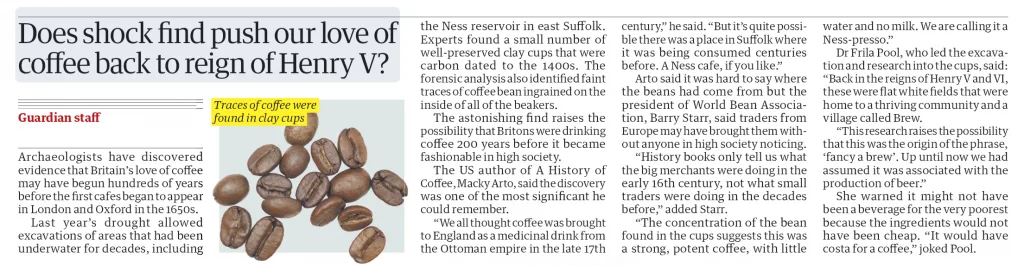
2026 – Introduction of Coffee to England 200 years earlier than previously thought!
I have had a quick look at the Guardian for their 2026 April Fools Day Story and I think it is this one:
Guardian April Fools Joke for 2026
The clues are the expert is called Macky Arto. The find was in Ness, allowing them to say ‘Ness Cafe’, and ‘Ness-presso’, and the use of a pun ‘It would have costa for a coffee.’ The final confirmation is this sentence: ‘Back in the reigns of Henry V and VI, these were flat white fields …. and a village called Brew.’ Allowing the journalist to make up an origin for the expression ‘Fancy a Brew?’ it goes on to say.
2025 – Coffee Cups as Haut Courture?
Guardian April Fools Day Joke article or the world gone mad?
‘Meghan Markle was criticised after it was revealed that when you put her lifestyle brand name – American Riviera Orchard – into the What3words location service, it points to a statue of Oliver Cromwell, who famously had a King Charles executed‘
2023 – “Megxit: Call of Duke-y”
In 2023, Harry and Megan proved irresistible and the Guardian reported that:
‘The Sun published a piece announcing the launch of Prince Harry and Meghan’s new video game “Megxit: Call of Duke-y” in which the royal couple try to reach California while dodging obstacles, including rival royals and the media, along the way.‘
This post is about April Fools Day. But it is also the anniversary of the formation of the RAF.
On This Day
1854 – Hard Times by Charles Dickens Serialised in Household Words. A recent study of Victorian Grave yards in Yorkshire highlights the grim reality for young children. For the article see: https://core.ac.uk/reader/220156990
1918 – Near the end of World War 1 the Royal Flying Corps (RFC) and the Royal Naval Air Service were merged to create the Royal Air Force (RAF). It was the world’s biggest air force, and went on to secure Britain from invasion by Hitler.
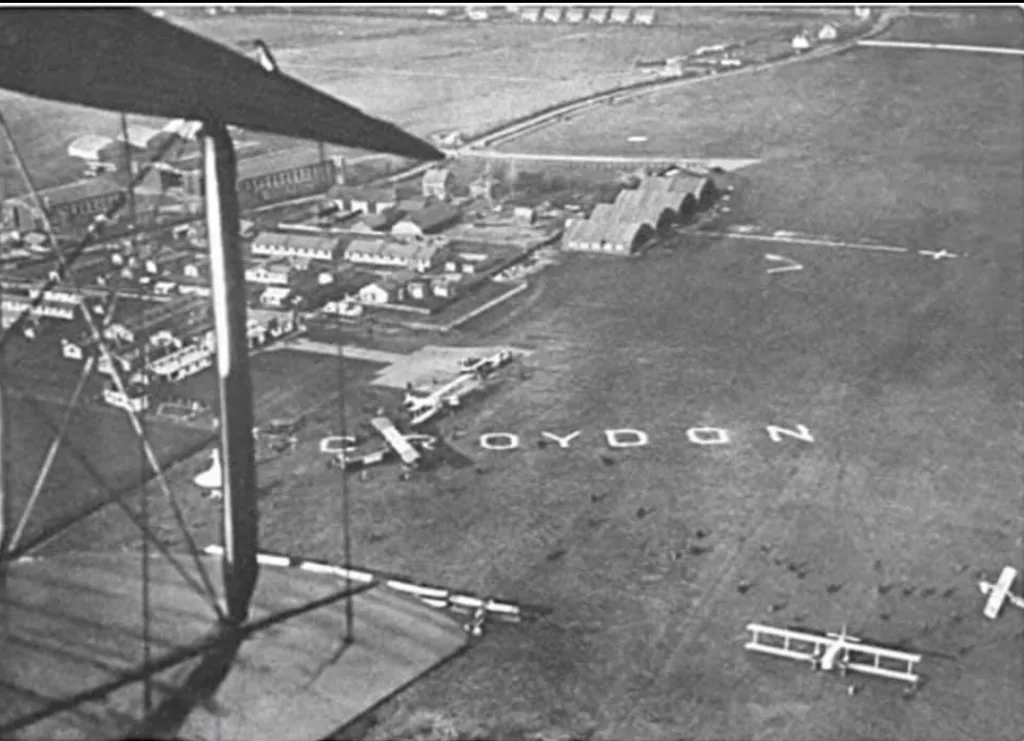
Croydon RFC/RAF base for anti-Zeppelin Raids in WW1 and one of the world’s first international airports.
RAF Rigger, Benjamin Flude
My Grandfather was in the RAF as a fitter. My father tells some of his story in his autobiography ‘A Boy from Haggerston’:
Benjamin Flude in RFC Uniform. My father, Ben Flude remembers a small model biplane hanging from the portrait.
‘I was 9 months old when he died, and he was just 28 years old. Everyone seemed to like him, and as a child, he was always my hero. In my imagination, I promoted him to being a brilliant and brave Ace RAF Pilot. But he was, in fact, a mechanic rather than a pilot in World War I. Following the war, he worked with Imperial Airways in Purley, Croydon. I don’t know the exact details and so have to piece the story together from the little information I have at my disposal.
My friend, Roy, tells me that the badge on his uniform in the oval picture is of the Royal Flying Corp. (RFC). But they were disbanded in 1916/17, and replaced by the RAF thereafter. As my dad was born in 1900, he must have joined up to fight in the war while underage at 16 or 17 as a volunteer. ‘
How a London lad became a Rigger for the RFC we don’t know, but the Fludes at that time were all employed as umbrella or walking stick makers in the East End of London. I think it is a case of transferable skills. WWI aeroplanes were made of wood, metal wire and fabric, which is precisely what an umbrella is made of.
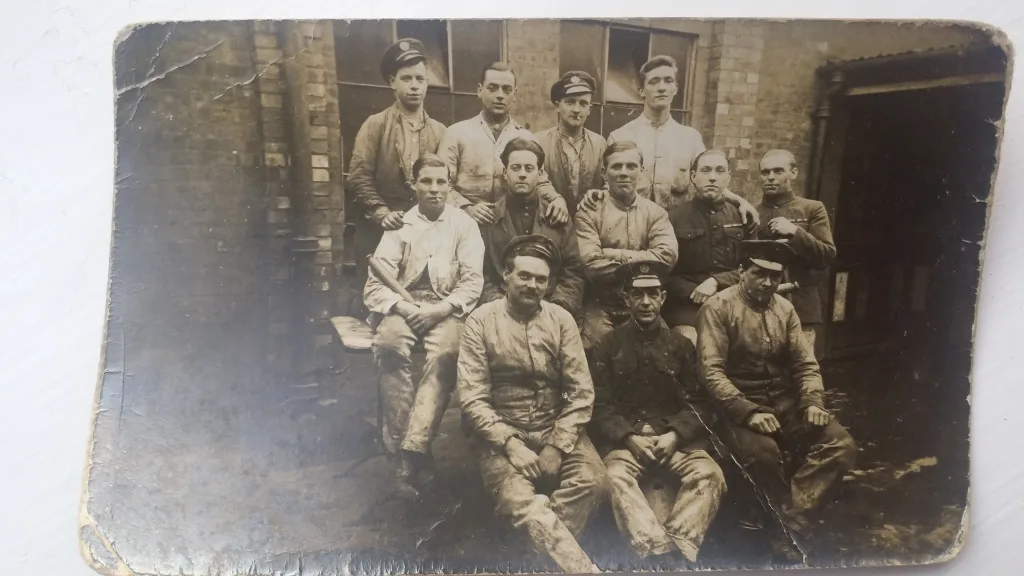
RAF/RFC mecanics c 1917 . My grandfather is the handsome man standing tall in the back row extreme right
RAF Mechanic Ben Flude
My father went on to serve in the RAF during his national service: He writes:
Ben Flude RAF Metfield. (dad is lying down at the bottom right. he is now 98)
‘Early in 1946 I received my call-up papers for the RAF. I was to report to the Recruitment Centre at Padgate in Lancashire. This is where I received my uniform after a medical examination, and then there were a number of intelligence/aptitude tests when they decided what trade I would join. I tried to get Air Crew and while there were no vacancies, I did have a wide group of trade offers open to me. The group that I was interested in was aircraft maintenance and repair, following in my Dad’s footsteps.’
‘However, before I could start, I had to do my basic training. This was designed to get you fit, and we did plenty of square-bashing or parade drills. For this, they sent me to Metfield in Suffolk, which had only very recently been made available to the RAF by the American Army Air Force. In fact, it was so recent a hand-over that whilst on picket duty, a coach rolled up packed with girls who were so disappointed by the lack of Americans that they got straight back on and returned to Ipswich! The motto of ‘overpaid, oversexed, over here’ certainly applied to these Americans in Suffolk.’
‘We found out that Metfield had been a US Army Air Force Base, where two squadrons of Flying Fortresses operated from. In all the Nissen Huts, those with the semicircular roofs, the ceilings were completely covered with pin-up pictures. My bed was just feet away from the huge Crocodile Stove, round which every evening we all clustered – as it was warm.‘
Interior of Nissan Hut 1944, Lasham
Dad specialised in the recovery of instruments from crashed planes, and was complimented by Air Chief Marshal Hugh Caswall Tremenheere Dowding, 1st Baron Dowding, GCB, GCVO, CMG on his ability to fix an instrument he had never seen before.
First published March 25th 4004 BC and republished yearly on every April Fool’s Day. The section on the meaning of April moved to my post on April 2025. On This Day added in 2026
The Moon rules the months: this month’s span ends With the worship of the Moon on the Aventine Hill.
Fasti by Ovid
Cycle of the Moon, sketched from photo.
The Aventine Hill is one of the seven hills of Rome, named after a mythical King Aventinus. It is the hill where Hercules pastured his cattle. They were stolen by Cacus. According to Virgil in his Aeneid, the monstrous Cacus lived in a cave on a rocky slope near the River Tiber. Cacus was the son of Vulcan, the artificer God. He was, also, a fire breathing Giant who eat human flesh and stuck their skulls on the door of his house. When Hercules wrestled with him, Hercules hugged him so tight Cacus’ eyes popped out of his head.
The worship of Minerva also took place on the Hill. You can take a Google Earth fly past if you follow this link – also some nice photos.
The Aventine Hill & Romulus
Aventine Hill in a detail of the ‘Panorama of Rome From the Janiculum Hill’ in miniature mosaics by Antonio Tesca 1800-25 , Gilbert Collection V&A Photo K Flude. You can see the Walls of Rome in the Background. The Tiber runs across the middle but is not clearly visible.
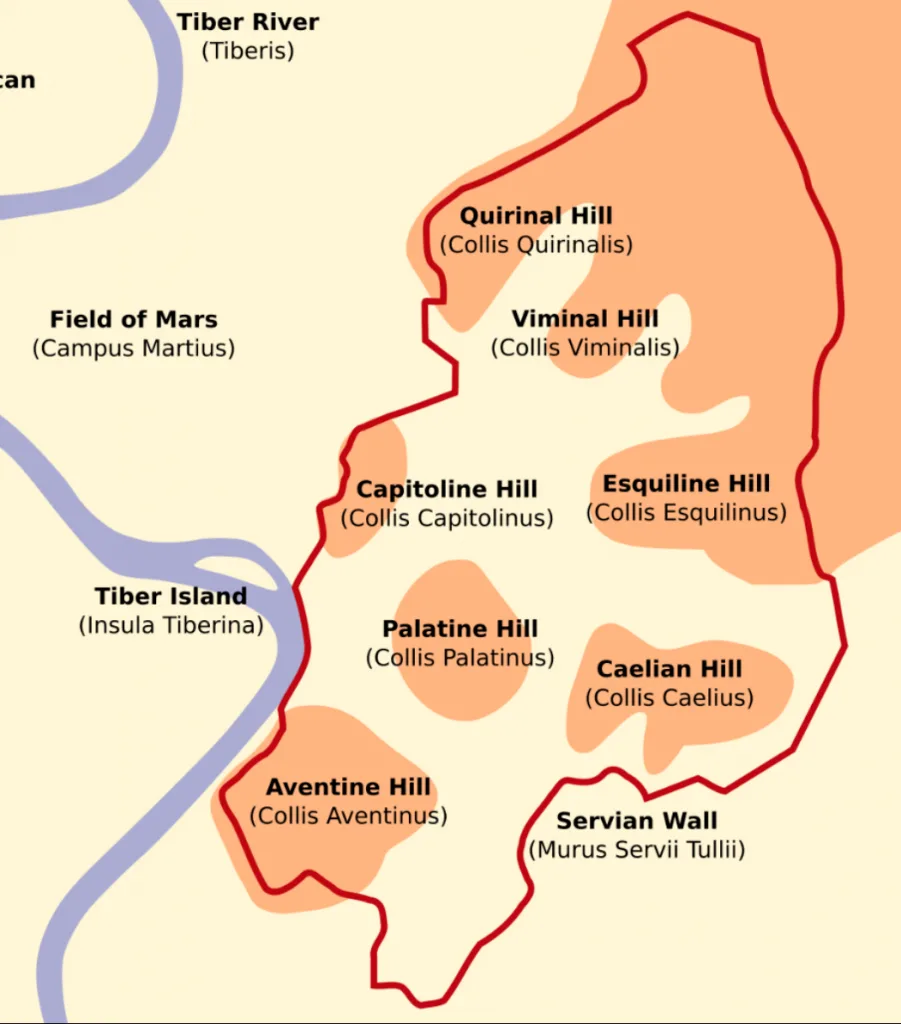
The Hill is famous in the mythology of Rome because it is associated with Romulus. He and his twin Brother Remus, were born to the vestal virgin, Rhea Silvia, in the pre-Roman City of Alba Longa, not far away. Rhea was the daughter of former King Numitor. Her uncle, killed Rhea’s brother and forced her to be a vestal Virgin. Thus ensuring Numitor’s line died out.
But, in her sacred grove she was put to sleep by Somnus dripping a sleeping draft into her eyes and then raped by the God Mars. This was a terrible breaking of the taboo for Vestal Virgins. Rhea gave birth to the twin boys. They had to be hidden from the wrath of their Granduncle.
The Palatine & the Lupercal
The Seven Hills of Room (Facebook)
The boys were saved by the River God Tiberinus and then by being suckled by a Wolf in a cave called the Lupercal, which is at the foot of the Palatine Hill in Rome. A ‘grotto’ under Augustus’ Palace on the Palatine, has been claimed as the original Lupercal, but it is disputed. (see www.digitalaugustanrome.org/records/lupercal/.
When the boys grew up, they helped their Grandfather (Numitor) reclaim the throne of Alba Longa. The boys, being the children of the War God, were obviously excellent at the art of war. Then they decided to found their own City, but they could not decide upon which hill to build it or whom to name it after (accounts vary!). Remus favoured the Aventine, Romulus the Palatine (some accounts say vice versa).
So they decided to let the Gods decide. Remus claimed to have won when he saw a flight of 6 auspicious birds. Romulus saw 12 and declared himself the winner. And Rome was named in his honour. It was on his choice of Hill – the Palatine Hill. The Aventine hill was, originally, outside the City boundary.
The two quarrelled. Remus was killed. This story was first written down in the Third Century BC. The traditional foundation date of Rome is 753BC. These mythical foundation stories continue are retold and celebrated. In Britain, we largely ignore our creation myths. Despite our legendary Founder, King Brutus, being a relative of Romulus and Remus.
The ‘Panorama of Rome From the Janiculum Hill’ in miniature mosaics by Antonio Tesca 1800-25 , Gilbert Collection V&A Photo K Flude. It took 20 years to make.
You didn’t think I’d leave you with just a detail of the superb map did you? And to see a much better photo of it look at the V&A’s photo. It is part of the Gilbert Collection which I introduced in this post.
First written in 2023 and revised March 30th 2024, 2025, Object of the Day added 2026
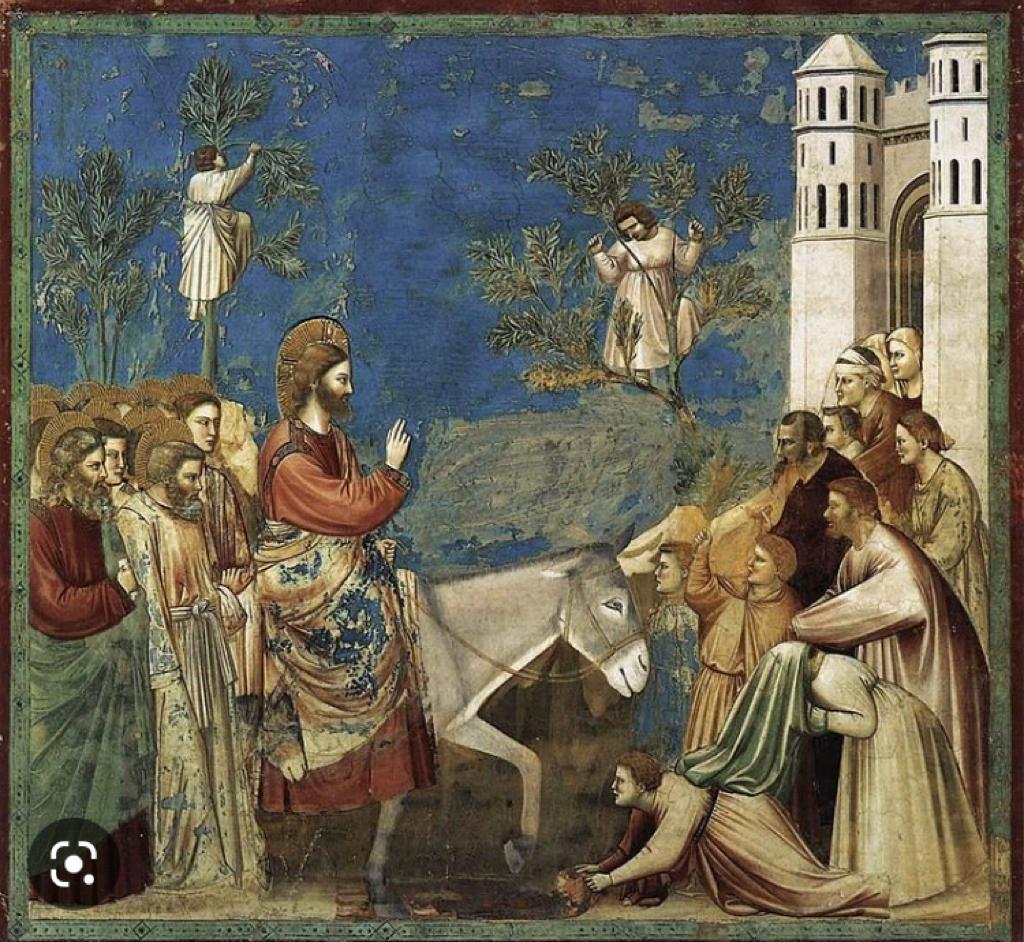
Palm Sunday (Yew Sunda) by Giotto. Entry into Jerusalem from the Cappella degli Scrovegni in Padova (sent to me by Lucia Granatella)
Yew Sunday (Domhnach an Iúir in Irish) is the medieval name for Palm Sunday. This is the day that Jesus entered Jerusalem in triumph on a donkey, with palm leaves being laid in front of him. It has always been very curious to me, this triumph preceded such heavy and heartbreaking tragedy. It is the Sunday before the Betrayal, which leads to the Crucifixion on Good Friday and the Resurrection on Sunday. A busy week for the Church.
I got a little insight into the powers of the procession when on a Field trip to Nice with Students from Central Saint Martins College. We set the Students the task of creating an ‘art intervention’. They came up with the idea of a Procession to the Mayor. It was extraordinary how deploying a few placards, saucepans as drums, and some chanting could create an instant event,. It made people smile and join in, even if clueless about the cause!!
Palms
Palm Sunday can be celebrated by making crosses out of palms, or with processions bearing palm branches or eating special cakes. There is always room in any ritual for cake). But in the North, where do you get your Palms from? So, it was often substituted by Box, or Olive or Willow and particularly, in Britain and Ireland, by Yew. Yew is evergreen and is so long-lived as to be a symbol of everlasting life. (I wrote more about the Yew here). See also my post on Ash Wednesday.
Giotto Bondone
Giotto was a Florentine painter of the 14th Century of whom Giorgio Vasari, in his essential guide to the artists of the Renaissance, ‘The Lives of the Artists‘ said of the 10 year old:
One day Cimabue, going on business from Florence to Vespignano, found Giotto, while his sheep were feeding, drawing a sheep from nature upon a smooth and solid rock with a pointed stone, having never learnt from any one but nature. Cimabue, marvelling at him, stopped and asked him if he would go and be with him. And the boy answered that if his father were content he would gladly go. Then Cimabue asked Bondone for him, and he gave him up to him, and was content that he should take him to Florence.
There in a little time, by the aid of nature and the teaching of Cimabue, the boy not only equalled his master, but freed himself from the rude manner of the Greeks, and brought back to life the true art of painting, introducing the drawing from nature of living persons, which had not been practised for two hundred years; or at least if some had tried it, they had not succeeded very happily.
Written in 1550.
Giotto & The Development of Perspective
If you look at the painting, above. you will see, even the faces of the people are rounded and, and at least somewhat, individual. The crowd scene, particularly, to the right, has some depth. The people further away seem to recede from the viewer. This contrasts with the Byzantine style of paintings, where figures either float or seem to stand on or support themselves on each other’s shoulders. The Gate into Jerusalem has been rendered by an arist who has seen something that he believes has the key to realistic scenes. One day it will be rediscovered, and named single-point perspective.
Yes, Giotto doesn’t know the secret but he is working to find out what the trick is. The people in the trees are also in the distance. These are the giant strides that Vasari is referring to in the quotation above. Realistic people, in spaces with depth. The donkey is quite sweet too! Cimabue, Giotto’s Master was particularly good at painting Crucifix scenes.
For more on early attempts at creating perspective, see my post on Duccio and the Annunciation here.
Digital tour of the Cappella degli Scrovegni
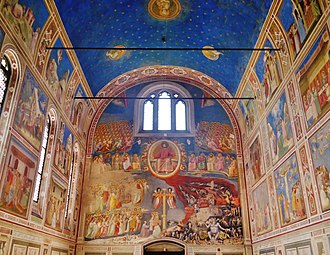
The Cappella degli Scrovegni in Padova is a World Heritage Site decorated by Giotto and his team. They covered all the walls and ceiling with frescos. Depicting the Life of Jesus, the Life of Mary, and the Last Judgement.
Giotto, The Last Judgement. Cappella degli Scrovegni, In Padova. Wikipedia
Here is a real Digital Heritage treat – a 360 Degree tour of the Chapel! Follow the link below. If it seems to be taking a long time to load press the information button. Once pressed will allow the panorama to load immediately.