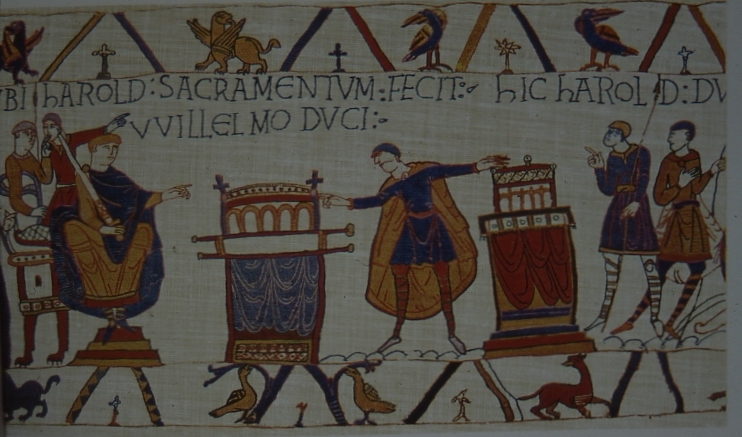
Bayeux Tapestry, Harold with moustache swearing an oath, William with pudding basin haircut sitting down at left.
Harold II was scurrying south after almost annihilating the Viking army of Harold Hardrada, when he heard news that the Normans had landed at Pevensey. (see my post (battle-of-stamford-bridge-september-25th-1066)
William was an unlikely Duke because it is very rare for illegitimate children to take the title of their father. It was normally not even considered as an option. A legitimate cousin or uncle would be chosen instead. But he not only got the title and survived many rebellions, but was known as the William the Bastard
He came to England in 1051 to see his distant cousin Edward the Confessor, who was the son of the English King Aethelred the Redeless (the ill advised – more often called ‘the Unready) and Emma of Normandy. Edward, whose marriage to Edith of Wessex was not great, insofar as both made claims to be holy virgins. So, Edward had no children. He, according to William, offered him the throne.
Did he, though? Well, the Pope agreed he did. William claimed that Harold of England accepted William as heir, too. And not only that, Harold, he said, agreed under Holy Oath.
The Bayeaux Tapestry, shows Harold making an oath with his hands on holy relics. But British Historians believe it may never have happened. And if it did, then it was an inadmissable endorsement as it was not freely given, Harold had been detained on a visit in 1064. He was probably never going to get home unless he took the oath.
But the clincher for the English viewpoint is that Harold was the legitimate King because he was elected as was traditional by the Witanagemote, the King’s Council.
But was he really the legitimate claimaint? He had no English Royal blood in him, only a distant touch of Danish royalty on his mum’s side. It is true, that in England, the King’s Council or Witan elected Kings and often did not choose the first in line but preferred the best suited candidate be he brother, cousin or uncle. But Harold was only the brother of the King’s wife, no royal blood there.
However, Harold was so powerful that he would have prepared the ground for his election irrespective of whether this was the freely given choice of the Witan. His father, Earl Godwin, had been a disloyal and over mighty subject of King Edward, but had prepared the way for Harold to be virtual ruler of the country long before the King died.
So, even if the Witan’s endorsement clearly choose Harold there was plenty of scope for a contested succession.
In late September 1066 Harold was the English King who had already defeated the Norwegian claimant. Now, he was rushing to put to rest the Norman claim.
William Prepares for Conquest
William had begun by getting Pope Alexander II’s blessing for his claim to the English throne. He spent 10 months planning the invasion. He recruited adventurers from Normandy, France, Brittany, and Flanders. His allies collected boats for the invasion, while William had hundreds of new boats built, using thousands of carpenters, metalworkers, carters etc and cutting down a vast number of trees.
The boats were ready by 12 August near Caen on the River Dives. They set sail, but contrary winds blew them into Saint Valery-sur-Seine. Winds in the summer are usually blowing south on that coast, and William had a long, frustrating wait for a north wind.
Meanwhile, Harold was waiting with his army and a 400 ship navy at his manor of Bosham, near Chichester, on the South Coast. Then he heard about the Norwegian invasion of the North. He probably hoped it was getting too late in the year for William to risk invasion. So, Harold decided, on September 18th, to go North with his army, which was the more immediate risk to his throne.
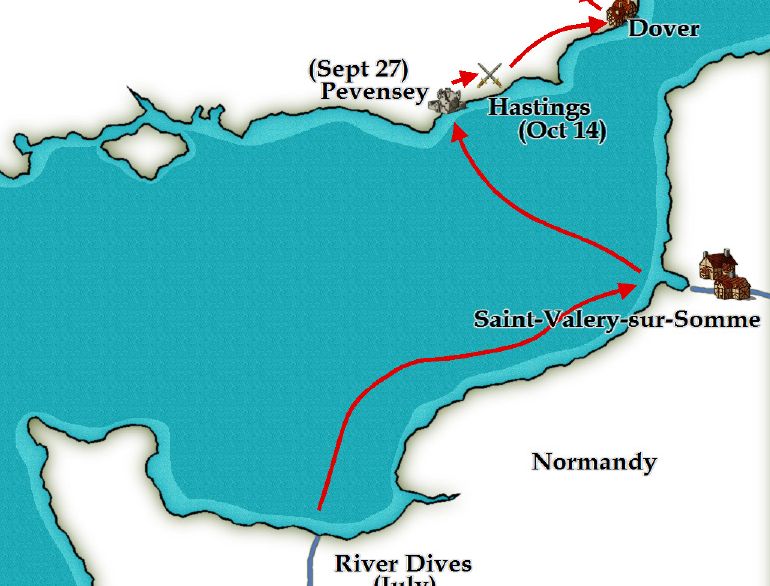
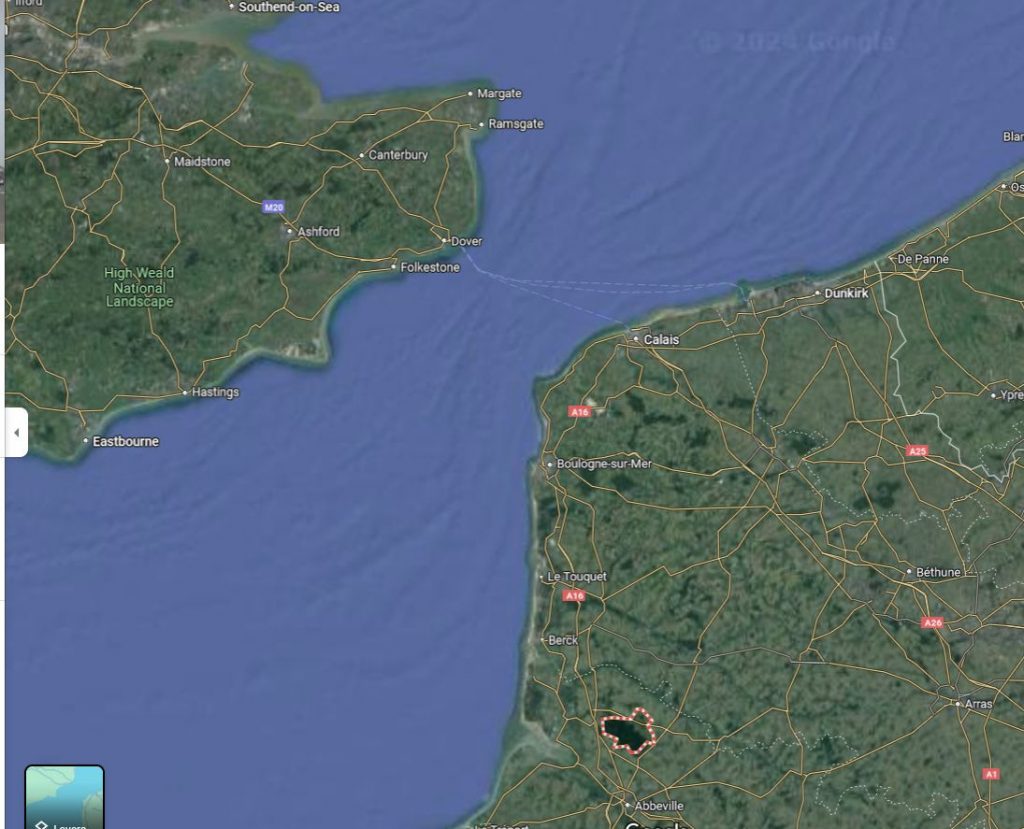
Map of the the progress of William;s fleet. Opinion suggests landing was on 28th September 1066
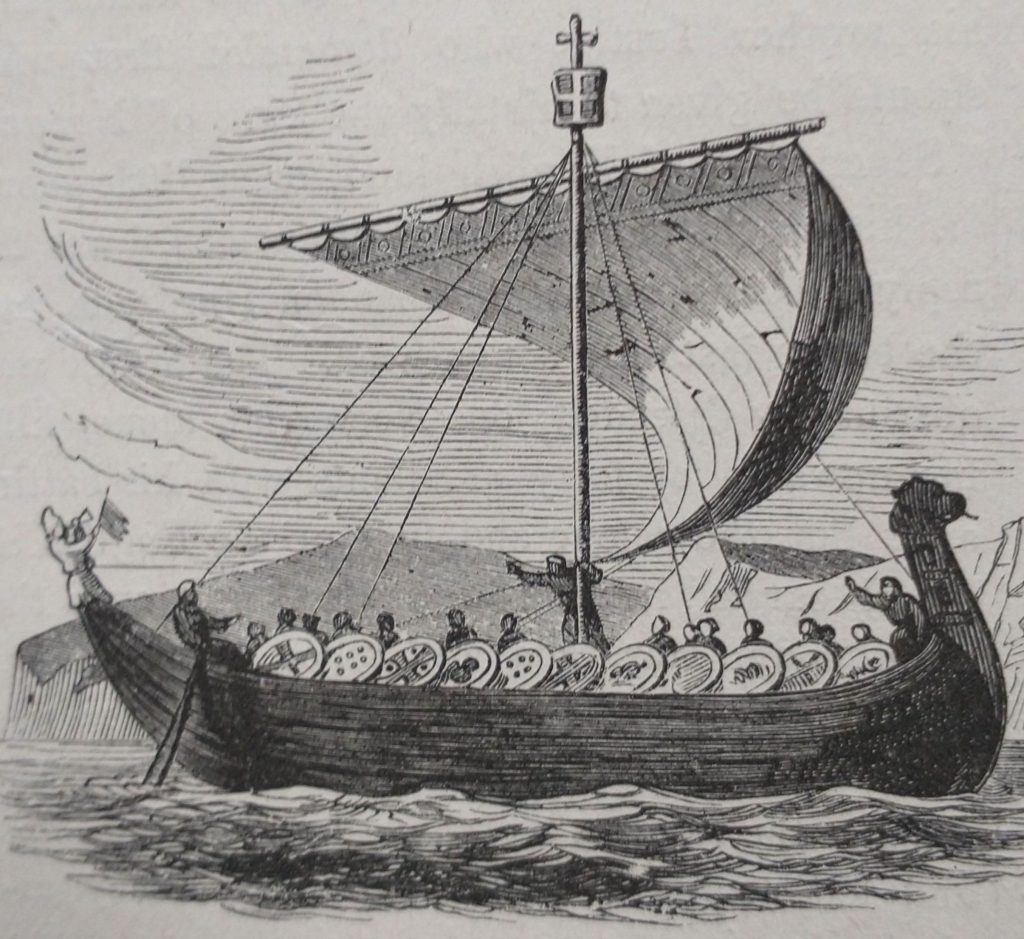
On September 27th, the north winds blew, the Normans embarked, and on the 28th of September William and his boat, given as a present to him by his wife, found themselves alone in the Channel off the English coast.
After an anxious wait, the rest of the fleet was spotted sailing towards William. They landed at Pevensey. Built a castle at Hastings and proceeded to ravage the land of Harold’s homeland. Harold had by now destroyed the Norwegian threat at Stamford Bridge on 25th September. He heard William had landed and rushed towards London
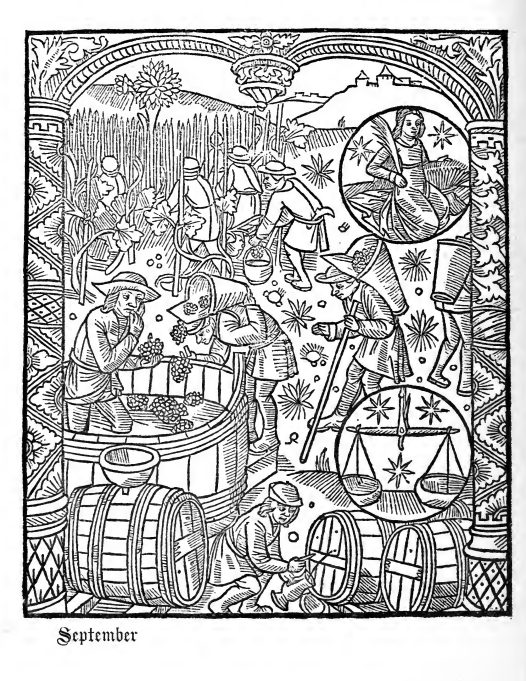
Kalendar of Shepherds illustration of September showing harvesting grapes and the astrological signs for Virgo (August 23 – September 22) and Libra (September 23 – October 22)
It is that time of the year when you say ‘Where has the Summer gone? It can’t be September already?’ But, meteorology, speaking, Autumn starts today. September 1st was chosen on a numerical basis for ease of measuring rather than any profound floral, agricultural or solar reason. So, there are three Gregorian Calendar months for each season, and each season starts on the first of the month. Autumn: September, November and December.
Autumn, Harvest, Fall
Autumn comes from Latin (autumnus) which went into French and then into English. The season was also called Harvest (which went into Dutch herfst, German Herbst, and Scots hairst -Wikipedia) or from the 16th Century: the ‘fall of the year’ or ‘fall of the leaf’ which spread to America as Fall.
Summer’s Ending
It still feels like summer. In England, we often have a glorious September, and what we can an ‘Indian’ Summer, an unexpectedly warm period in mid-September to October.
Solar Autumn
Of course, for the real Autumn, we have to wait for the Equinox, the beginning of Astronomical or Solar Autumn. This year, it is on Monday, September 22nd, 2025, 7:19 pm.
Astrological September
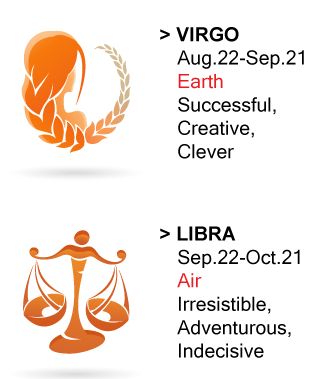
The star signs for astrological September are: Virgo which is linked to Aphrodite (Venus) the Goddess of Love and Libra which is linked to Artemis (Diana), virgin goddess of many things, including hunting, wild animals, children, and birth.
Star signs for September
September
September gets its name from the Romans, for whom it was the 7th Month of the year (septem is Latin for seven). Later, they added two new months so it became our 9th Month. (For more on the Roman year, look at my post here).
It is called Halegmonath in the early English language, or the holy month, named because it is the month of offerings, because of the harvest, and the mellow fruitfulness of September? Medi in Welsh is the month of reaping, and An Sultuine in Gaelic which means the month of plenty.
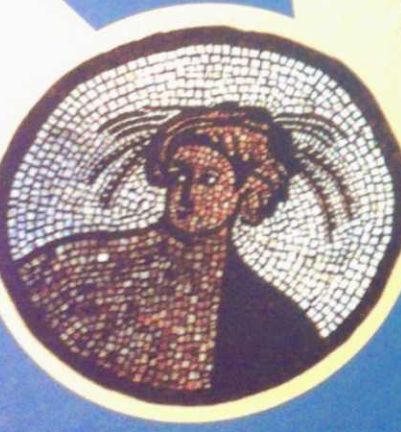
Roman personification of Autumn from Lullingstone mosaic
Early Modern September and the autumn of Life
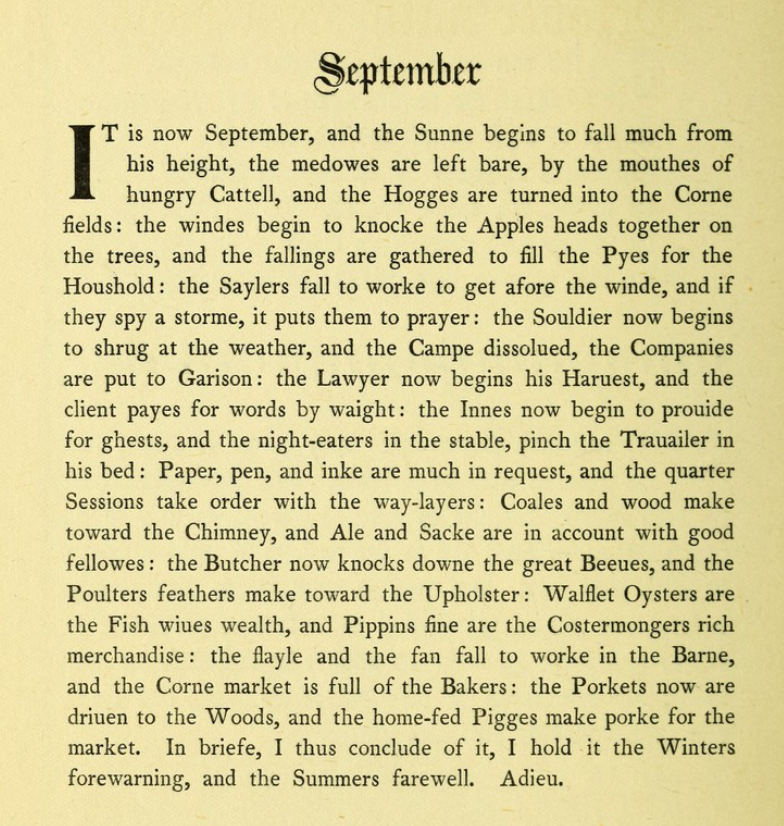
Here is an early 17th Century look at September from the Kalendar of Shepherds – for more on the Kalendar, look at my post here.
From the Kalendar of Shepherds
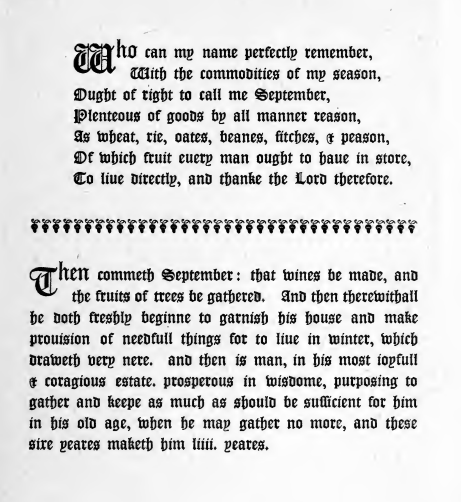
The Kalendar has an additional shorter look at September (see below). And it continues with its theme, linking the 12 months of the year with the lifespan of a man – 6 years for each month. So September is a metaphor for man at 56 years of age, in their prime and preparing for old age.
September from the Kalendar of Shepherds. The last sentence beginning ‘and then is man’ shows the link between September and the beginning of the autumn of life.
Season of ‘mists and mellow fruitfulness‘
John Keats (1795 – 1821) wrote a great poem called ‘To Autumn’:
Season of mists and mellow fruitfulness, Close bosom-friend of the maturing sun; Conspiring with him how to load and bless With fruit the vines that round the thatch-eves run; To bend with apples the moss’d cottage-trees, And fill all fruit with ripeness to the core; To swell the gourd, and plump the hazel shells With a sweet kernel; to set budding more, And still more, later flowers for the bees, Until they think warm days will never cease, For summer has o’er-brimm’d their clammy cells.
Who hath not seen thee oft amid thy store? Sometimes whoever seeks abroad may find Thee sitting careless on a granary floor, Thy hair soft-lifted by the winnowing wind; Or on a half-reap’d furrow sound asleep, Drowsed with the fume of poppies, while thy hook Spares the next swath and all its twined flowers: And sometimes like a gleaner thou dost keep Steady thy laden head across a brook; Or by a cider-press, with patient look, Thou watchest the last oozings, hours by hours.
Where are the songs of Spring? Ay, where are they? Think not of them, thou hast thy music too,— While barred clouds bloom the soft-dying day, And touch the stubble-plains with rosy hue; Then in a wailful choir the small gnats mourn Among the river sallows, borne aloft Or sinking as the light wind lives or dies; And full-grown lambs loud bleat from hilly bourn; Hedge-crickets sing; and now with treble soft The redbreast whistles from a garden-croft, And gathering swallows twitter in the skies.
Written September 19, 1819; first published in 1820. This poem is in the public domain and available here:
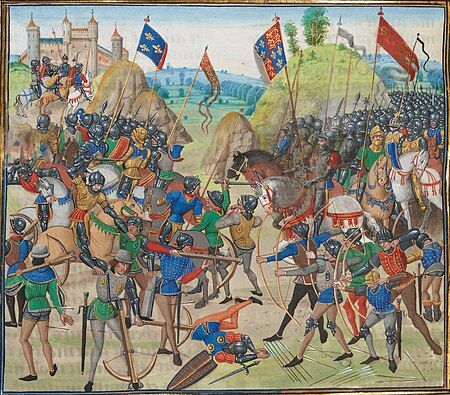
Battle of Crécy Jean Froissart’s Chronicles (Wikipedia)
The Battle of Crécy was one of the most decisive victories in the Middle Ages. Events began with King Philip VI of France declaring the English land in France forfeit. Henry, Earl of Derby made significant gains in Gascony for King Edward III but then was besieged by the French. He demanded support from the English King.
So King Edward gathered an army and landed in Normandy. It was the largest invasion force until D-Day.
Edward burnt his way to Paris. Within 2 miles of Paris Edward was confronted by superior forces and trapped on the wrong side of the Somme. His army was starved by the French scorched earth policy.
The English, only 6 miles away from the French Army forced their way across a defended tidal ford. Here they broke into an area which had not been scorched and were able to resupply. This success also restored English moral as the French defenders could not stand against the longbow men.
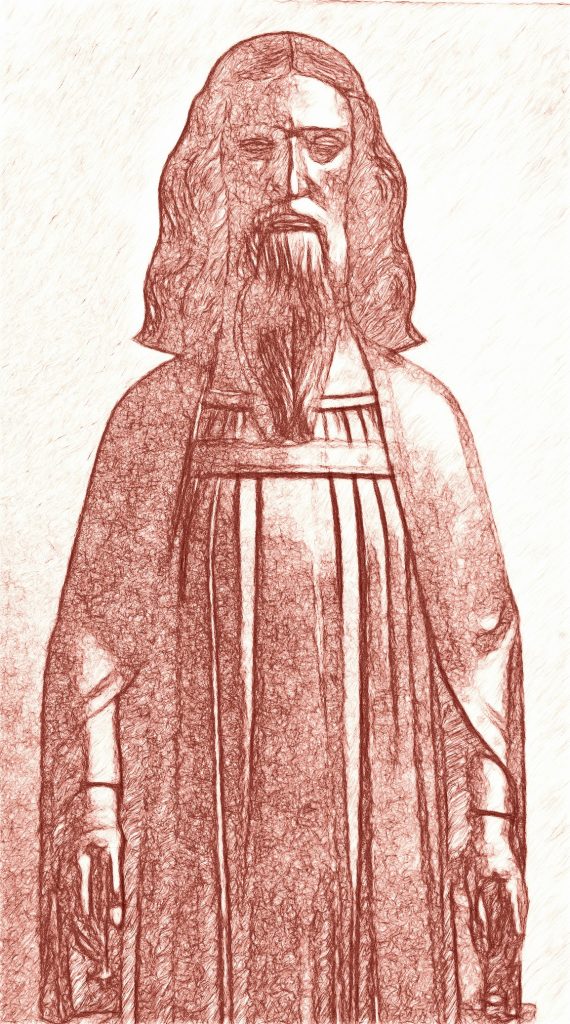
Sketch of statue of Edward III from Westminster Abbey
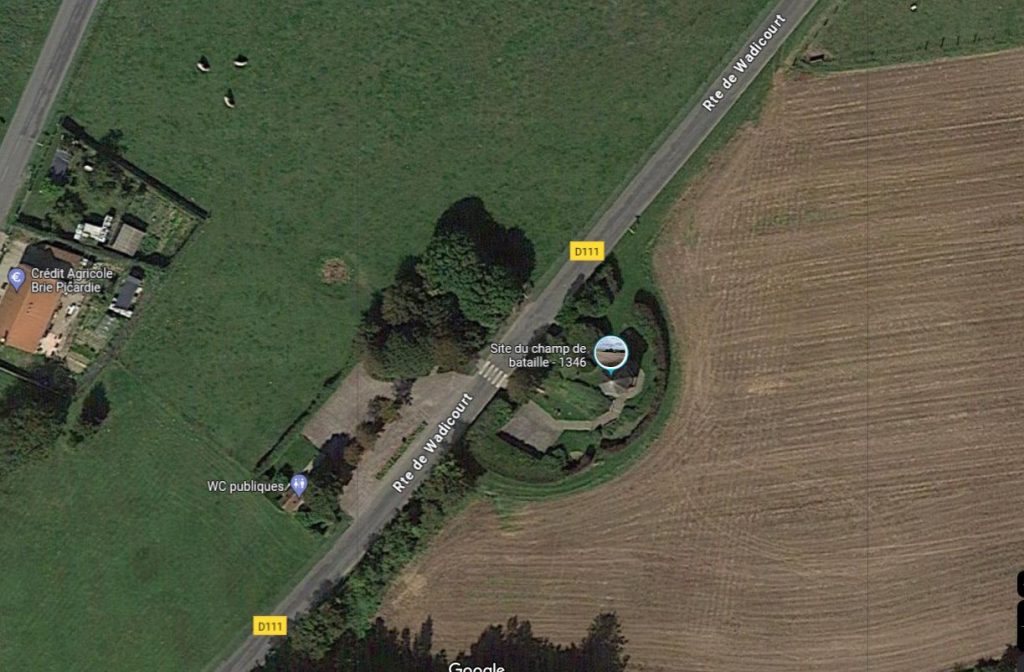
King Edward set up a defensive position at Crecy-en-Ponthieu, on land he owned. It offered protection from flanking attacks and an uphill struggle for the French attackers. The English dug pits to make French attacks more difficult. The English were badly outnumbered. Estimates vary but the French at least had double the number of troops. The English had about 15,000 troops, the French between 30,000 and 100,000.
Aerial view of the battle site according to Google.
The first attack came from Genoese crossbowmen but the English and Welsh longbow men had the advantage of range and the Italians soon retreated. French men-at-arms attacked in some confusion, killing Genoese as they attacked but were repulsed after terrible fighting. Wave after wave of French attacks followed. None succeeding. At the end of the two day battle very few English men were killed and many thousands of French, including the flower of the nobility.
English losses were 300 or less and the French lost are sometimes estimated as 30,000, but a third of that is probably more realistic.
The battle changed opinions about British fighting ability, and showed that heavily armoured wealthy knights could not stand against trained yeoman archers armed with long bows. The archers could shoot 3 arrows a minute with a range of up to 300 yards. There may have shot half a million arrows.
But it can also be argued that the victory lulled the English into the belief that they could hold France. This led to the fruitless slaughter of the 100 years war which England ultimately lost.
On the other hand Edward III captured Calais which remained an important and strategic asset until the 16th Century.
Google image with the Crecy in the orange bounded area bottom middle of the screen
August was originally ‘sextilis’ or the 6th Month of the ten-month Roman Calendar. It became the 8th Month when January and February were added to the calendar to make a 12 month year. By tradition, this happened during the reign of King Numa Pompilius. Originally set as a 29-day month but changed to a 31-day month in the reforms of Julius Caesar. It was subsequently renamed August by a sycophantic Senate trying to flatter the divine Octavian, Emperor Augustus. (more of my posts about the Roman Calendar here and here)
The Celtic August
In modern Irish, it is Lúnasa, which means the month of the festival of Lughnasa. It is a harvest festival, celebrating the ripening of wheat, barley, rye, and potatoes. In Ireland, it is the festival of the God Lugh, celebrated with games, fairs, and ceremonies. Lughnasa is 6 months after Imbolc. It marks the ending of lactation of lambs and the beginning of the tupping season. (impregnation of the ewes). It can be celebrated by climbing hills, visiting springs, wells, lakes and eating bilberries. (Myths and Legends of the Celts. James MacKillop).
In Welsh, it is Awst which comes from the Latin. Called Calan Awst in Wales, it is the festival of August. In Gaelic Scotland it is called Lunasuinn, and Laa Luanistyn in the Isle of Man.
Lughnasa is one of the Celtic quarter days,. They are halfway between the Solstices and Equinoxes. They are: Samhain (1 Nov) Imbolc (1 Feb), Beltane (1 May) and Lughnasa (1 Aug). All are, or can be seen to be, a turning point in the farming year.
The Gallic Coligny ‘Celtic’ Calendar records August as a ‘great festival month’. The stone-carved Calendar was found near Lyon, whose Roman name was Lugodunum. The town is named after the Gaulish God Lugos. It is thought he is related to the Irish God, Lugh and the Welsh Llew Llaw Gyffes. He has an unstoppable fiery spear, a sling stone, and a hound called Failinis. The Romans associate Lugos with Mercury, and the Church associated Lugh with St Michael.
Lughnasa was founded by Lugh himself to honour his foster mother Tailtiu at Brega Co. Meath. Tailtiu became one of Ireland’s greatest festivals, springing from the horse races and marital contests set up by Lugh.
Anglo Saxon August
In Anglo-Saxon: the Venerable Bede, writing in the 8th Century, says August is Wēodmōnaþ or the Weed Month. Named because of the proliferation of weeds. Why does that seem such an unsatisfactory name for August? An early Kentish source calls the month Rugern – perhaps the month of the harvest of Rye? (Winters in the World by Eleanor Parker).
Lammas
For the Anglo-Saxons, August brings in the harvest period. This is the most important months of the year. The Harvest brings in the bounty of the earth. It needs to be carefully collected, enjoyed but not wasted. It begins with the festival of Lammas, which derives from the English words for bread and mass. The Bread Mass when bread made from the first fruits of the harvest is blessed.
Kalendar of Shepherds
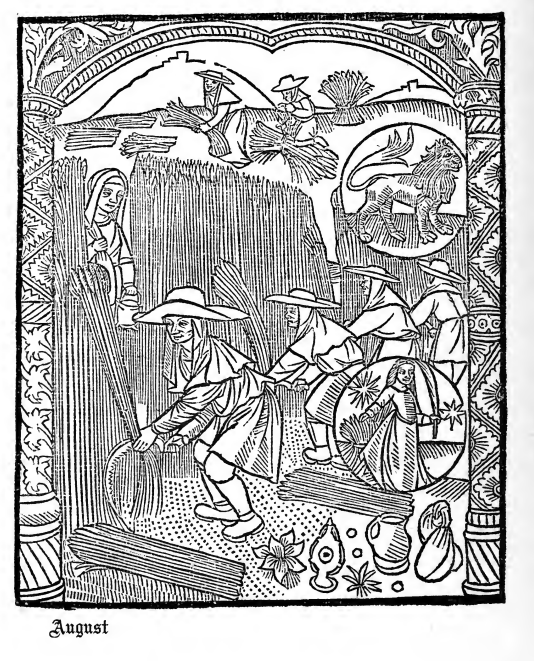
Kalendar of Shepherds, August
The 15th Century illustration in the Kalendar of Shepherds, above, shows that the Harvest is the main attribute of the Month, and the star signs, Leo and Virgo.
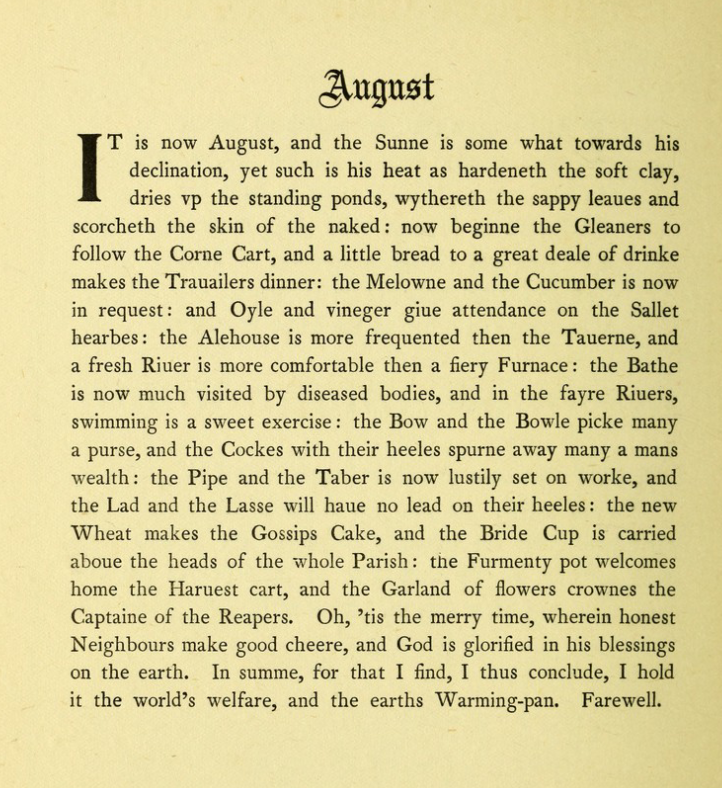
The 16th/17th Century text in the Kalendar of Shepherds gives an evocative insight into the month.
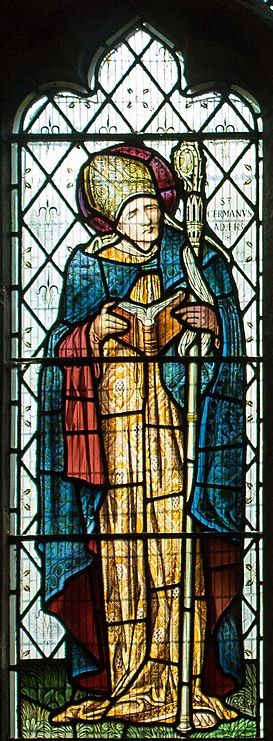
St Germanus of Auxerre, Window in St Paul’s parish church, Morton, Lincolnshire, made by Sir Edward Burne-Jones and William Morris in 1914. Photo by Jenny of Jules & Jenny from Lincoln, UK (CC BY 2.0 Wikimedia Photo by Jenny of Jules & Jenny from Lincoln, UK)
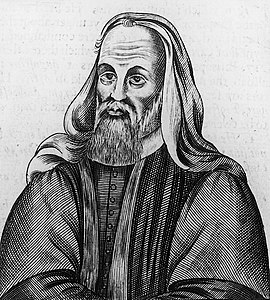
St Germanus is the source of one of the few contemporary references to Britain in the 5th Century (the Dark Ages). One of his followers wrote his life story. The Saint, a Bishop in France, was sent to Britain because the Pelagian Heresy was endangering the Catholic version of Christianity. Pelagius was a highly educated British (or possibly Irish) priest who moved to Rome in the late 4th Century. He lived by a strict moral code, attacking Catholic laxity and opposing St Augustine of Hippo’s theory of Divine Grace. By contrast, Pelagius promoted human choice in salvation and denied the doctrine of original sin. Wikipedia tells us that he:
considered it an insult to God that humans could be born inherently sinful or biased towards sin, and Pelagius believed that the soul was created by God at conception, and therefore could not be imbued with sin as it was solely the product of God’s creative agency.
17th Century print of Pelagius
Germanus was sent to Britain, where he confronted Pelagian converts in a public debate which is thought to have taken place in a disused Roman amphitheatre. The author is not interested in Britain, per se, so does not tell us which town it was, but, it is mostly assumed to be St Albans, although London is possible.
In the stadium, the Saint and his acolytes confound the heretics and, so, convert the town’s people sitting watching the debate. St Germanus goes to a nearby shrine of St Alban to thank God, falls asleep in a hut, and is miraculously saved from a fire. He then comes across a man called a Tribune, and helps defeat a Saxon army in the ‘Alleluia’ victory. The importance of all this is that it gives us a few glimpses of Britain, in about 429AD, two decades after the Romans have left.
The British Bishops were led in their heresy by someone called Agricola. The writer describes these bishops as ‘conspicuous for riches, brilliant in dress and surrounded by a fawning multitude’. The use of the title ‘Tribune’ in the story suggests Roman administrative titles are still in use 19 years after the date of the ‘formal’ end of Roman Britain, 410AD. The Alleluia victory over the Saxons also gives us an early date for Saxon presence in the country as an enemy.
St Albans is the favoured choice for the location of the event because, Bede tells us St Albans was born, martyred and commemorated in Verulamium, now called St Albans. Archaeology shows possible post Roman occupation of the town. And it has a famous Amphitheatre.
However, Gildas, who is writing 200 years or more before Bede, tells us St Alban was born in Verulamium but martyred in London. This makes sense as London was the late Roman Capital and more likely to be the site of a martyrdom. There is also a church dedicated to St Albans close to the Roman Amphitheatre, where Gildas tells us the execution took place. Unfortunately, the Church cannot be, archaeologically dated back to 429AD.
Bede’s account of the martyrdom of St Albans is also somewhat farcical, as God divides the waters of the River Ver for Alban to get to his martyrdom more quickly. The bridge was said to be full of people walking to witness Alban’s execution, and blocking Alban’s path to Heaven. But the Ver is but a piddle, and it would be easy to walk across without even needing wellington boats, let along a miracle. This story is much more impressive, in Gildas’ version who has the miraculous crossing over the River Thames.
Had Pelegius won, and the Roman Church had a more optimistic view of the human spirit, would it have made any difference? It’s a big question, but maybe it would have left less room for pessimism and guilt?
What were the effects of original sin? …. it damaged our relationship with God. He seemed distant, we became mistrustful. We lost sanctifying grace. The weakening of the will, making us more prone to temptation. The darkening of the intellect. Increased vulnerability to sickness and disease. Spiritual death.
Germanus died in Ravenna. The story of his life by The Life of St. Germanus, Bishop of Auxerre by Constantius of Lyon written shortly after his death is a crucial source for the study of the 5th Century in Western Europe. It is an epic period where Imperial and Barbarian groups are fighting for control of Britain, France, Spain, Africa and Italy. There are competing views of what Christianity is and should be. not only the heresy of Pelagians but also the Arian Heresy which the German people tended to support. There were also the Nestorian and Eutychian heresy. I’ve just read a 2020 article about the Life of St Germanus by Leon Mintz which you can read here:
For more on Nick Fuentes and his theories on St Germanus, St Patrick and King Arthur read my post here:
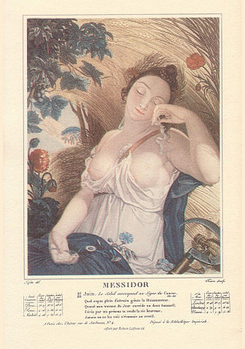
French Revolutionary Month of Messidor (June-July) Bastille Day
Today, is the French National Day, le Quatorze Juillet. Bastille Day, celebrating the storming of the infamous Bastille on 14 July 1789. It was a symbol of Royal oppression, but only held 7 relatively insignificant prisoners on the day it was stormed. 200 attackers and 1 defender were killed in the first round of the battle. Then the Commander, de Launay, surrendered to avoid more deaths. But the angry attackers dragged him from the Castle to the Hôtel de Ville. He was beaten and shouted “Enough! Let me die’, kicking a cook in the groin. He was killed with 7 of his soldiers. However, inglorious a victory it was symbolic of the collapse of the old order.
The French Revolutionary Calendar introduced a rational non-christian calendar to France. The months were given new names as reported, satirically in Britain in 1811, by John Brady as Wheezy, Sneezy and Freezy; Slippy, Drippy and Nippy; Showery, Flowery and Bowery; Hoppy, Croppy and Poppy. (starting with ‘October).
The official name of July was Messidor (or ‘hoppy’). You might like to have a look at my post on the fascinating details of the Revolutionary Calendar to celebrate the French National Day. The 14th July was the day named after Sage in the Month of Messidor.
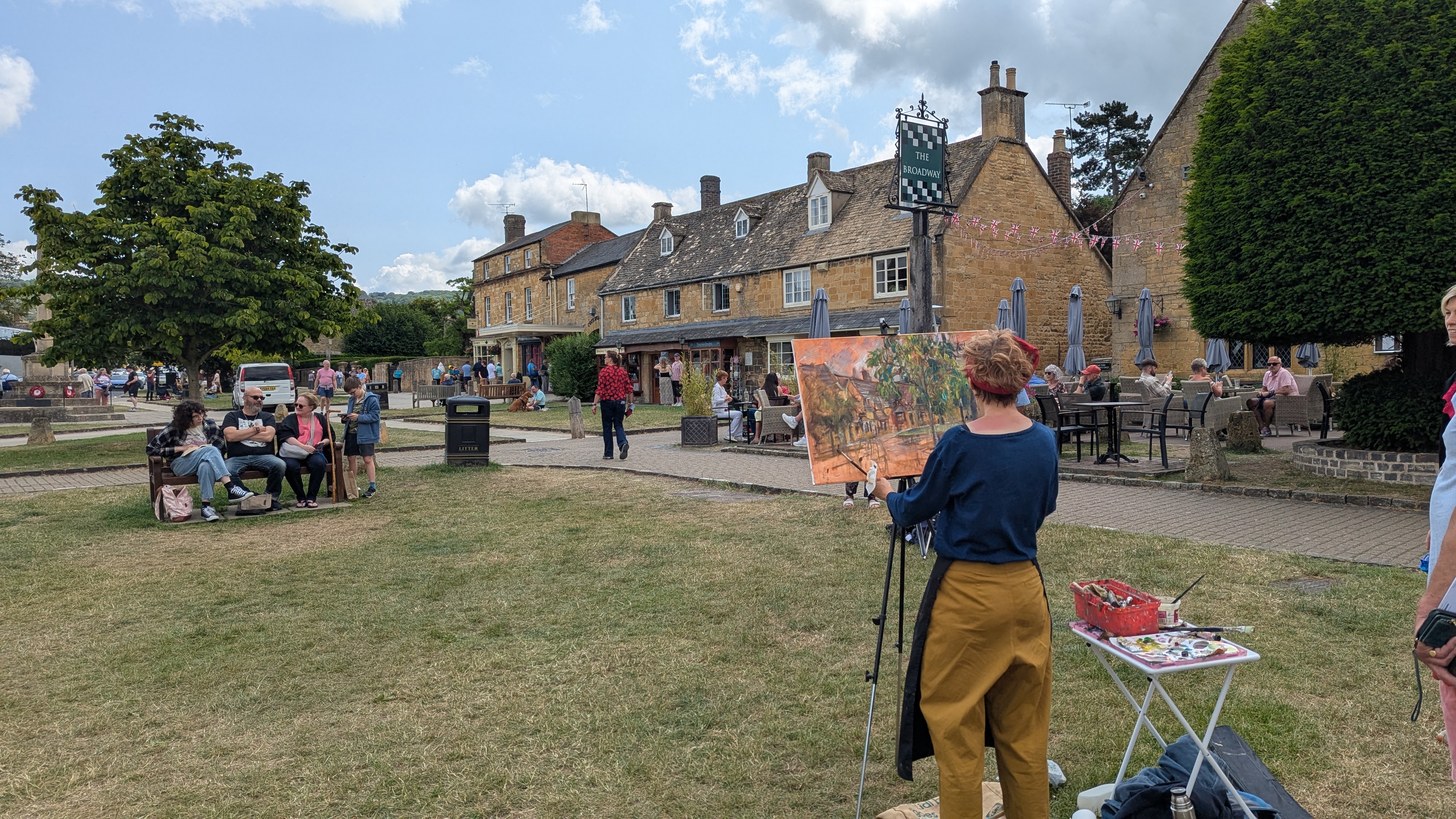
One of the joys of my Summer is revisiting places I know and love in my role as a Course Director for Road Scholar. I first came across the ‘en plein air’ in 2023. On Sunday, June 18th. I was in Broadway, once considered the most beautiful village in Britain. It was also the model for Riseholme in the wonderful Lucia books by E. F. Benson (made into a TV series by the BBC starring Prunella Scales, Geraldine McEwan and Nigel Hawthorne).
The day I visited, in 2025, was last Sunday, June 15th. I have added new photos and revised the texts.
How it Works
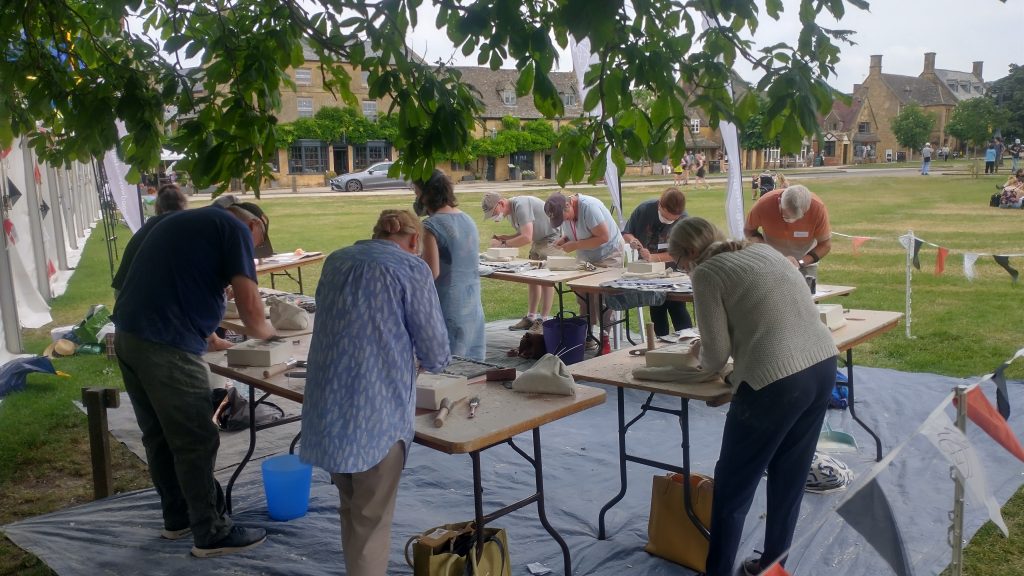
The artists register in the morning and have their paper or canvas stamped, or given a block of Maltese stone. This proves that they have done all the work on the day itself.
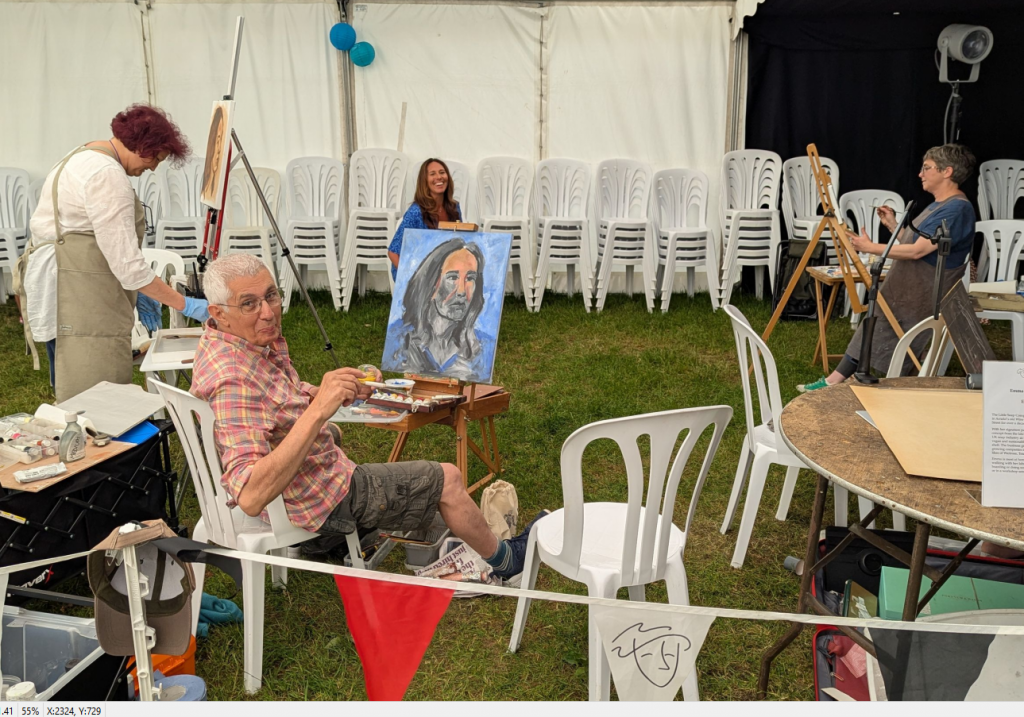
This year there were no sculptors. Instead, there were live models in the marquee being painted by portrait painters.
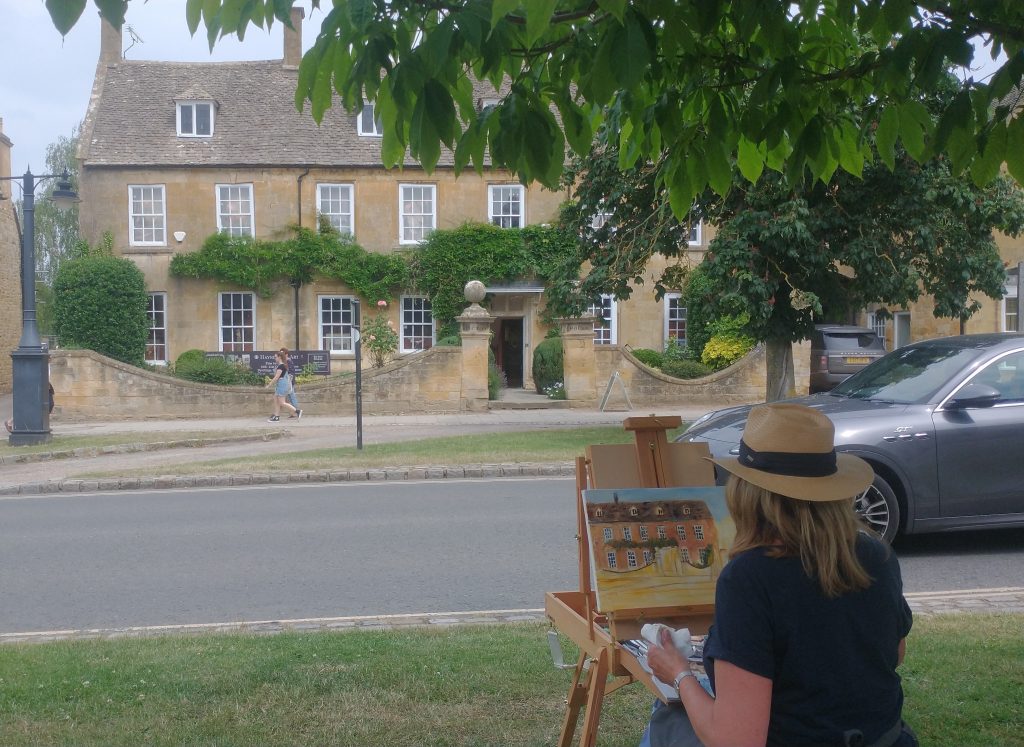
Broadway Paint off, Local Portraits. 2025 Photo K Flude
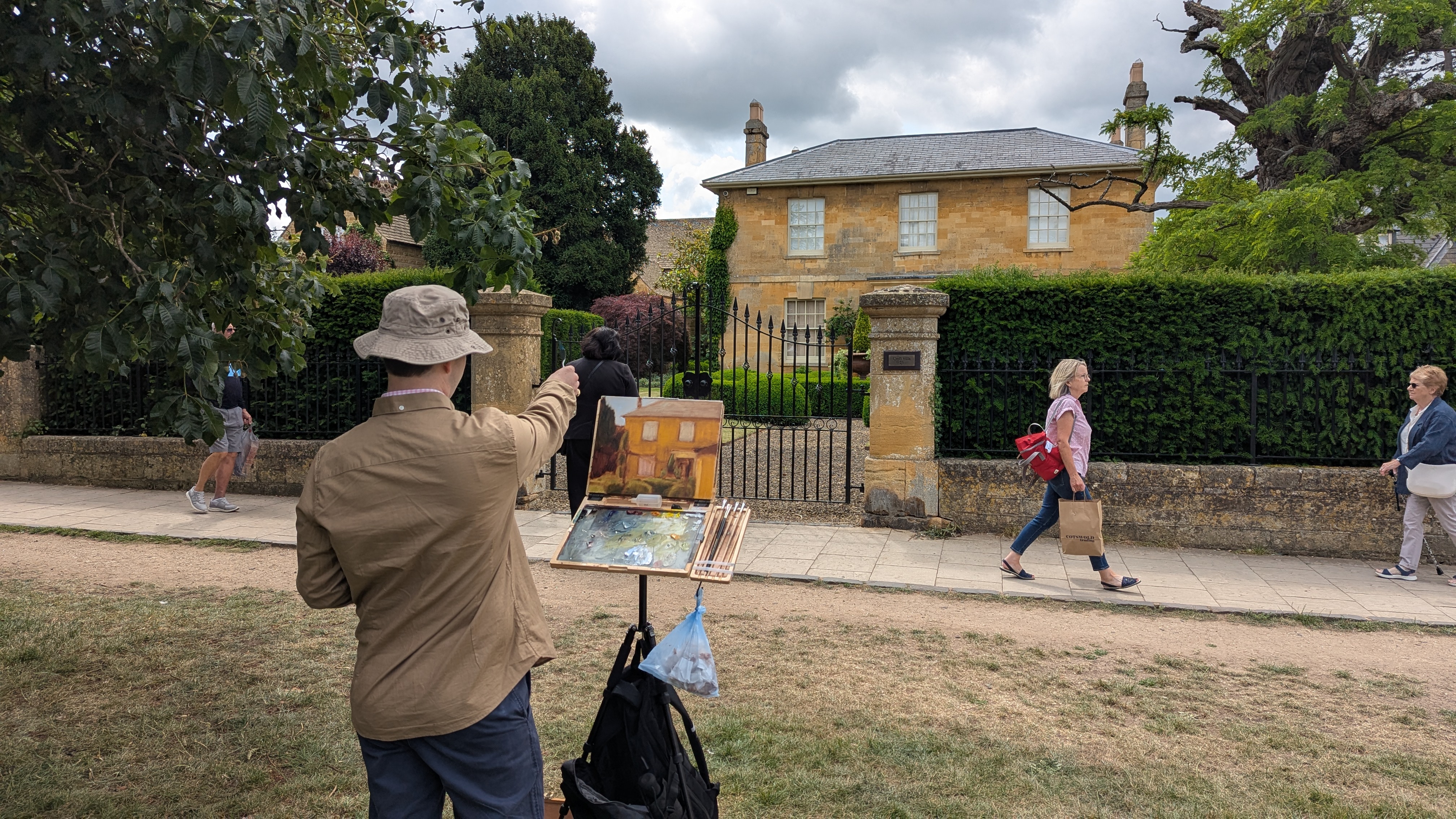
They take their blank canvases to create a work of art in the village. At 4pm or so, they are judged. At 5pm, the art works are exhibited and are on sale in the Marquee on the village green.
Broadway Arts Festival 2025, Photo K Flude
It’s always a delight walking around Broadway. Bun, but with an artist and easel every 50 yards or so even more enjoyable.
The Most Beautiful Village?
The appellation of most beautiful village, came in the late 19th Century. Broadway, once gained its wealth by selling wool. When that declined, the village became an important stop on the Toll Roads. It was on the stage coach route from Aberystwyth to Worcester, Oxford, and London. Fish Hill, nearly 1000 feet high, was an obstacle and coaches made a stop here to prepare or recover. Some coaches used up to 10 horses to get to the top. But with the arrival of Brunel’s Great Western Railway to the Cotswolds the village was nearly ruined. Half the village, the Broadway Museum says, moved away as their livelihood serving the coaching trade died.
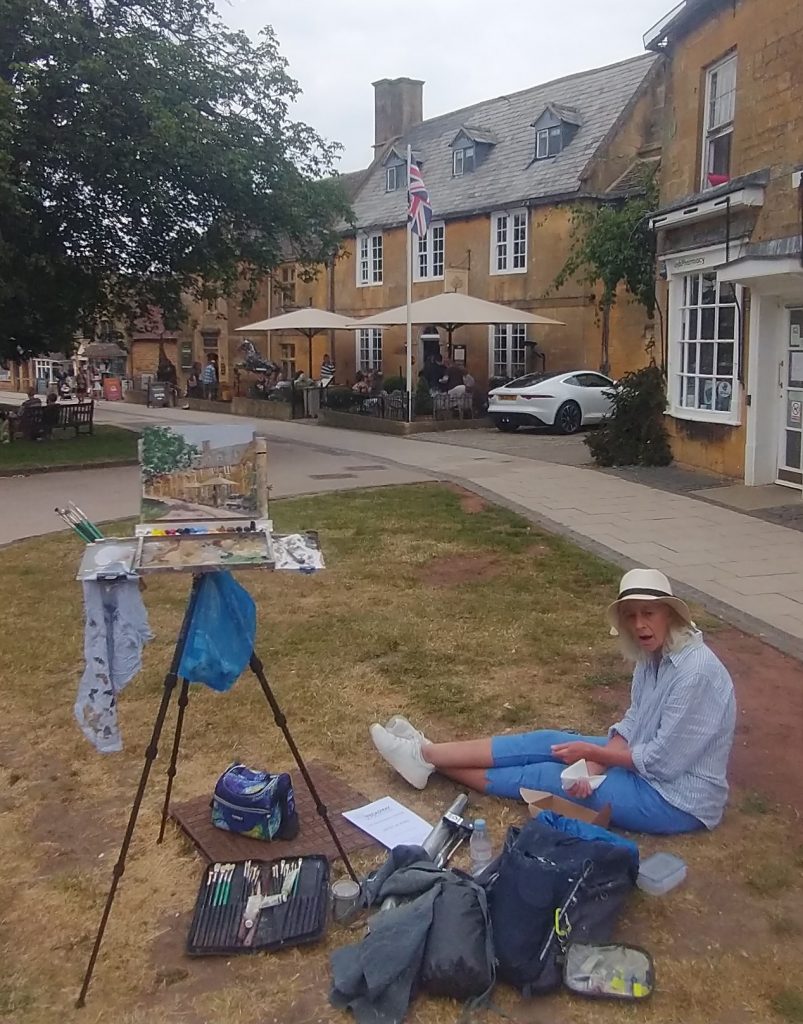
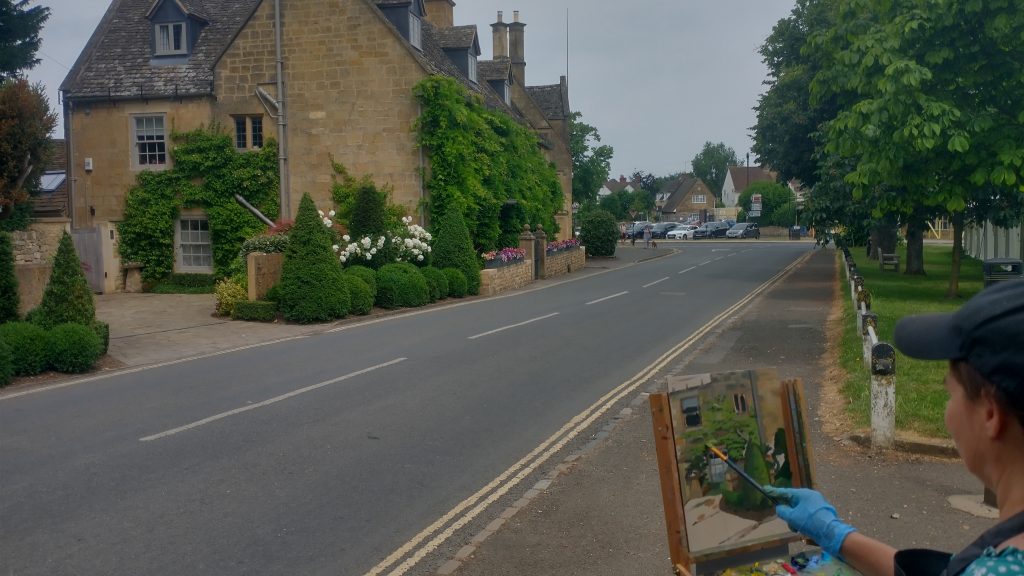
Artist painting in the ‘Great Broadway Paint off’ 2023 Photo K FludeAnother artist participating Artist in the ‘Great Broadway Paint off’ Photo K Flude 2023@dawnjordanart Great Broadway Paint off’ Photo K Flude 2023
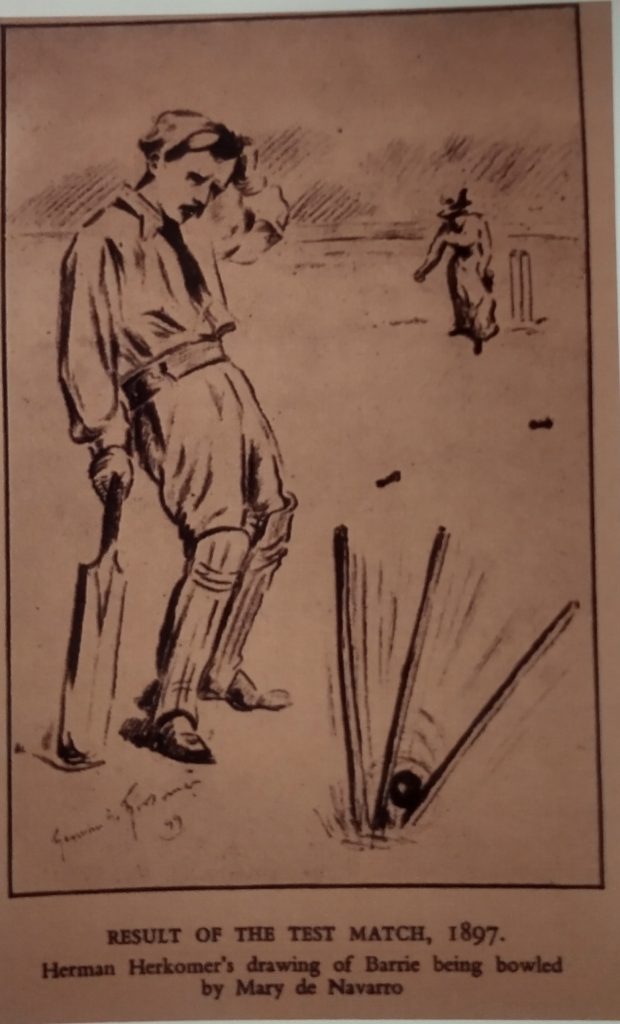
But artists and writers, led by Americans Frances Millet and Edwin Abbey, turned Broadway into a much sort-after country retreat. Visitors included Oscar Wilde, J. M. Barrie, Singer-Sargeant, William Morris, Edward Burne-Jones, Gabriel Dante Rossetti, American actress, Mary Anderson, Edward Elgar, E. F, Benson. Mark Twain visited for Millet’s marriage.
J.M. Barrie being bowled by Mary de Navarro. (aka Mary Anderson, who played many roles including Juliette at Stratford-on-Avon)
Gordon Russell & Henry T Ford
What made the visit particularly interesting was the story told by the volunteer at the Gordon Russell Museum in Broadway. This is the story as I understood it:
The Russells restored the Lygon Arms in Broadway using Arts And Crafts architects. They also restored antique furniture. The son, Gordon Russell, became a leading designer of modernist Furniture. He advertised to passengers on the Cunard Line in order to attract the attention of rich American visitors. One, Henry T Ford, was interested. He came to Broadway, staying at the Lygon arms. He was taken to nearby village Snowshill, where Ford bought a Cotswolds Farmhouse, complete with Blacksmith’s workshop. They were shipped stone by numbered stone to Brentford on the Thames. Then to the London Docks and across the Atlantic. Here. Ford set them up in a Museum in Michigan where they still are!
Sculptors at the Great Broadway Paint off (2023)
Research suggests it’s a little more complicated, in so far as Ford purchased his first Cottage before coming to Broadway. But it still leaves a delightful story about American ideas of Quintessential English village life. For pictures see my post here. And for another look at the story look at this web site here:
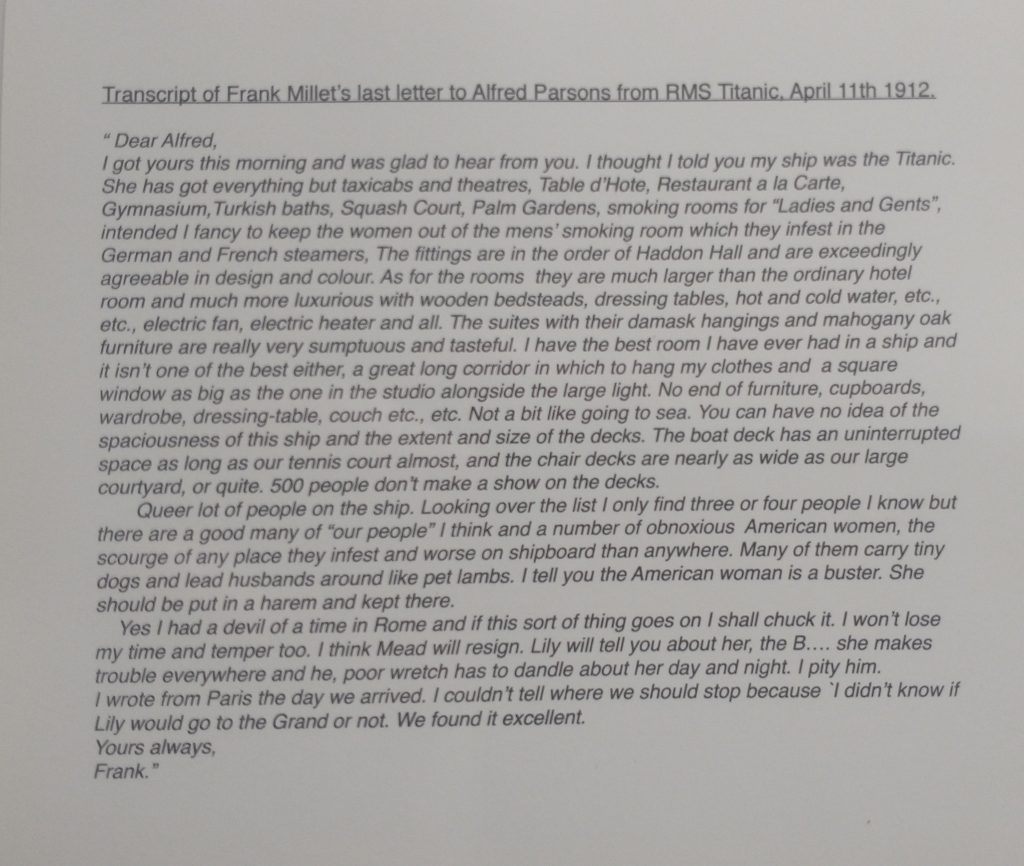
By the way, Frances Millet planned to return to the States on the Titanic. He was one of the 1500 who drowned. A letter he wrote while on the ship was posted, probably in France. It is on display in the Broadway Museum (2023).
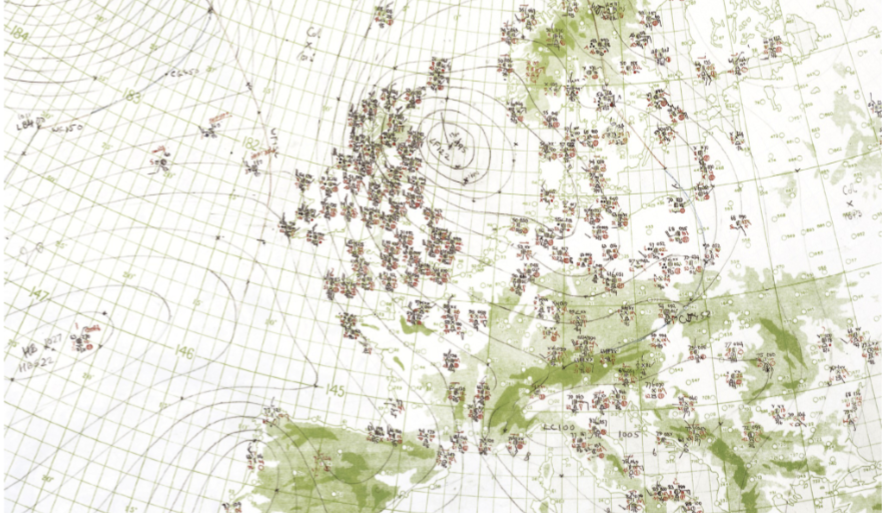
North Atlantic chart of weather for June 6th 1944. D Day. Showing occupied Europe with observations obtained from the enigma machine
In 2014 or thereabouts I went to a play by David Haig which was based on the true story of a weather forecaster’s role in D Day. James Stagg’s advice was that the weather on June 5th, the intended day, was too volatile. He suggested the 6th June 1944 instead.
The play was called Pressure and was great because it really conveyed the enormity of the decision that Ike, Churchill and others had to make. To go ahead in bad weather risked enormous casualties and the failure of the Landings. To postpone, might mean Hitler discovered the location of the invasions and might lead to disaster.
Major characters portrayed in the play included Ike and his driver, Kay Summersby with whom he was very close. Also depicted was an American forecaster who disagreed with the British meteorologist James Stagg. How much of the play was for dramatic effect and how much is true, I’m not entirely sure but it is a fascinating D Day story.
The maps were hand drawn and partially based on intercepted data decoded by the enigma machine. Stagg recommended postponing the landings one day from the 5th to the 6th of June, when it was hoped the ideal combination of calm seas, low water at first light and a full moon would occur.
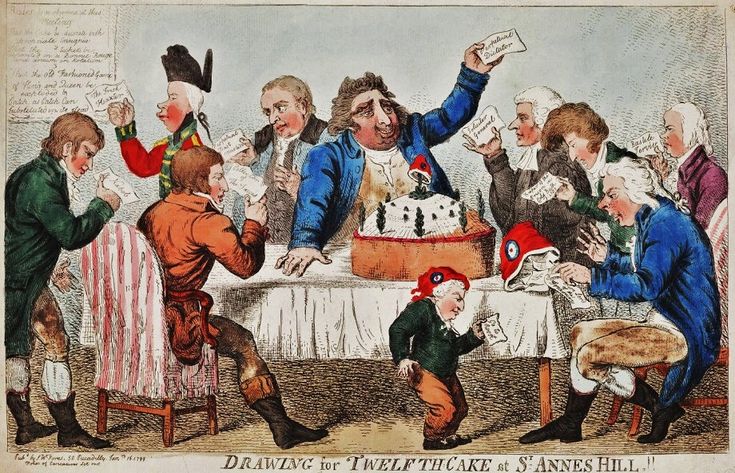
‘Drawing for Twelfth Cake’ at St. Annes Hill ’12th Night Cruikshank, Isaac, 1756-1811 printmaker. Published Janr. 10, 1807 by Thomas Tegg, 111 Cheapside’
Twelfth Night
Yesterday was Twelfth Night for the modern Church of England, but today is Twelfth Night for the Catholic Church and in England in former times. It is also Epiphany or Three Kings Day and because of calendrical differences, Christmas Eve for the Orthodox Church. In Ireland, it is Nollaig na mBan. This is Women’s Little Christmas; when Women get to rest and let men do the work. This is a typical Saturnalia-style reversal of roles.
I used the print above, three years ago for my post on New’s Day, then moved it to Twelth Night. I also use it for lectures on Christmas and Jane Austen. But the focus of my presentation is explaining the Twelfth Night Cake and the game that was played. But in fact, this is a very political satirical cartoon. More of that, later, let’s begin with the more trivial aspect of the print above.
Twelfth Night and Christmas Cake
It used to be the big party night, featuring the famous Twelfth Night Cake and theatrical entertainments; mumming and wassailing. The cake has disappeared from current Christmas celebration, probably because it transmuted into our present Christmas Cake. This, I regret. I have had a lifetime when a very heavy Christmas Dinner is followed first, by Christmas Pudding. Then, overloading with food, the Christmas Cake is brought out. No one, in their right mind, wants a slice of heavy Christmas Cake at that time. Many of my American friends disparage fruit cake, but they are mistaken. Good Christmas Cake is something to be thoroughly enjoyed, but on the days following Christmas Day.
I gave a recipe for the Twelfth Night Cake in another post, (here it is). But the important point is that it had a bean and a pea in it. The one who got the bean was selected as King for night and the pea the Queen. Traditionally, the women draw a card from a ‘reticule’ (bag) and the men’s from a hat. But there are no women at this satirical party. The cards detailed a role they were to play for the rest of the night. The card began with an introductory speech, or rhyme, for the person to speak. The King and Queen led the way, and for the rest of the evening the party members adopted their persona. They might be an aristocrat, a soldier, a cook, a parson, a dairy maid etc. The French do something similar with their Galette des Rois. The bean is called the feve, and may be replaced by a porcelain model. Other places have a King’s Cake for epiphany.
Twelfth Night Satire
So, as I was rushing to get the original Twelfth Night post done, I failed to examine it in any detail. I assumed the cards gave them satirical occupations which would be funny to the contemporary audience in 1807. But then, I noticed the title mentioned St Anne’s Hill. I looked it up and discovered myself down a deep and very enjoyable research rabbit hole.
St Anne’s Hill & Charles James Fox
Now, let’s go down that rabbit hole and look a little deeper.
The caption mentions St Anne’s Hill. I believe this refers to St Anne’s Hill, near Chertsey (SW of London on the River Thames). Here, there was a grand house which was owed by Charles James Fox. He was the leader of the Whigs, a persistent opponent of King George III. He was a supporter of the American and French Revolutions. This explains the red bonnet used to pull out the cards in the illustration.
The central figure is then, Fox. But he died in September,. 1806. The print is dated January 1807. Just before he died, his Foreign Slave Trade Bill of 1806 began the dismantling of this pernicious trade in the British Empire. He was Foreign Minister who assumed a couple of civil chats with the French would end the long-standing war. But he soon discovered that Napoleon was not to be trusted in negotiations. The war went on for another 9 or so years.
Charles James Fox was a mercurial figure with many radical views. He was also a notorious gambler and loved the high life. One of his many lovers was Georgiana, Duchess of Devonshire. He eventually married, Elizabeth Armistead, an ex-mistress of the Prince of Wales. St Anne’s Hill was her house. I am pleased to report that she is credited with calming his life-style. He now spent more time at St Anne’s where they would ‘read, garden, explore the countryside and entertain friends’ (Wikipedia).
Isaac Cruikshank’s ‘Drawing for Twelfth Cake’ at St. Annes Hill
Cruikshank’s illustration is, of course, not designed to document quaint Twelfth Night customs but is a political satire and I discovered that the British Museum has the original version of this print, and. It is dated to 1799 which makes much more sense!
At the back right of the print is a notice which says:
‘Rules to be observed at this Meeting 1. That the Cake be decorated with appropriate insignia 2 That the tickets be deposited in a Bonnet Rouge and drawn in Rotation 3 That the Old Fashioned Game of King and Queen be exploded & Catch as Catch can Substituted in its stead.’
The bonnet rouge is defined by the Collins Dictionary as a ‘redcap worn by ardent supporters of the French Revolution’ or ‘an extremist or revolutionary’. The last point relates to Fox’s opposition to the King, and the expression Catch as Catch Can refers to a free form of wrestling without rules.
The characters in the scene (all men) are all political figures. They are associated with the opposition to the very right-wing Government of William Pitt. During the war with France, the opposition was led by a supporter of the French Revolution. For those on the right, which included Pitt’s government, supporting the French Revolution was tantamount to treason. Pitt suspended many civil liberties in ‘Pitt’s Reign of Terror’. He arrested and indeed executed leading members of those demanding political change. The Government even suspended Habeas Corpus to make it easier to arrest their opponents,
Fox is seen drawing a 12th Night Game ticket which is marked ‘Perpetual Dictator’. To his right is Frances Burdett. He was a radical politician, who supported universal male suffrage, equal electoral districts, vote by ballot, and annual parliaments. Note that this is well before these aims became the core of the Chartists campaign for electoral reform. (for other people in the illustration look at the British Museum notes on the print. )
Frances Burdett, Edward and Catherine Despard
Burdett is shown holding a ticket saying ‘Keeper of the Prison in Cold Bath Fields’. This is a satirical reference to a serious political crisis. The Cold Baths Fields was the site of a medical spring in Clerkenwell, London. This was where a prison was situated where radicals were imprisoned. They were held in poor conditions despite the recent rebuilding under the aegis of the prison reformer, John Howard. Burdett exposed the scandalous conditions in the House of Commons. He began a campaign against the magistrates involved in the arrests.
One of the prisoners was Edward Despard who had associations with many radical groups. These included the London Corresponding Society, the United Irishmen and United Britons. Despard was married to Catherine, the daughter of a free black woman from Jamaica. She, with Burdett, led the campaign against these arrests without trial. Catherine wrote a letter to the Attorney General who replied in a demeaning manner:
‘it was a well-written letter, and the fair sex would pardon him, if he said it was a little beyond their style in general’
He did not comment on her colour. She described the imprisonment of her husband as being :
“in a dark cell, not seven feet square, without fire, or candle, chair, table, knife, fork, a glazed window, or even a book”
Execution of Edward Despard
Despard was freed in 1802, went to Ireland. But returned to London, where he was arrested again. But this time he was accused of a being the ringleader of a plot to assassinate the King. There was little real evidence. Horatio Nelson was a character witness, and appealed to the King for clemency. It was given. But only in so far as Despard was not disembowelled but ‘only ‘Hanged and Drawn’ at Horsemonger Lane Gaol (1803). This was the last time someone was drawn through the streets at the tail of a horse before execution for treason. These are his last words:
Fellow Citizens, I come here, as you see, after having served my Country faithfully, honourably and usefully, for thirty years and upwards, to suffer death upon a scaffold for a crime which I protest I am not guilty. I solemnly declare that I am no more guilty of it than any of you who may be now hearing me. But though His Majesty’s Ministers know as well as I do that I am not guilty, yet they avail themselves of a legal pretext to destroy a man because he has been a friend to truth, to liberty, and to justice
(a considerable huzzah from the crowd)
and because he has been a friend to the poor and to the oppressed. But, Citizens, I hope and trust, notwithstanding my fate, and the fate of those who no doubt will soon follow me, that the principles of freedom, of humanity, and of justice, will finally triumph over falsehood, tyranny and delusion, and every principle inimical to the interests of the human race.
(a warning from the Sheriff)
I have little more to add, except to wish you all health, happiness and freedom, which I have endeavoured, as far as was in my power, to procure for you, and for mankind in general.
https://en.wikipedia.org/wiki/Edward_Despard
After his death, his family denied that Catherine was his wife but merely his ‘house-keeper.’ I assume, was because they wanted the inheritance rather than, or perhaps, as well as naked prejudice.
Francis Burdett married into the fabulously rich banking family the Coutts. His daughter was the famous Angela Burdett Coutts who was a philanthropist who collaborated extensively with Charles Dickens.
@Phew! This is what I love about what I do, you find things out that link disparate parts of your knowledge, creating an ever-interwining web of history.
On this Day
Harold Godwinson was crowned King of England on January 6, 1066, the same day as the funeral of the previous king, Edward the Confessor. m.
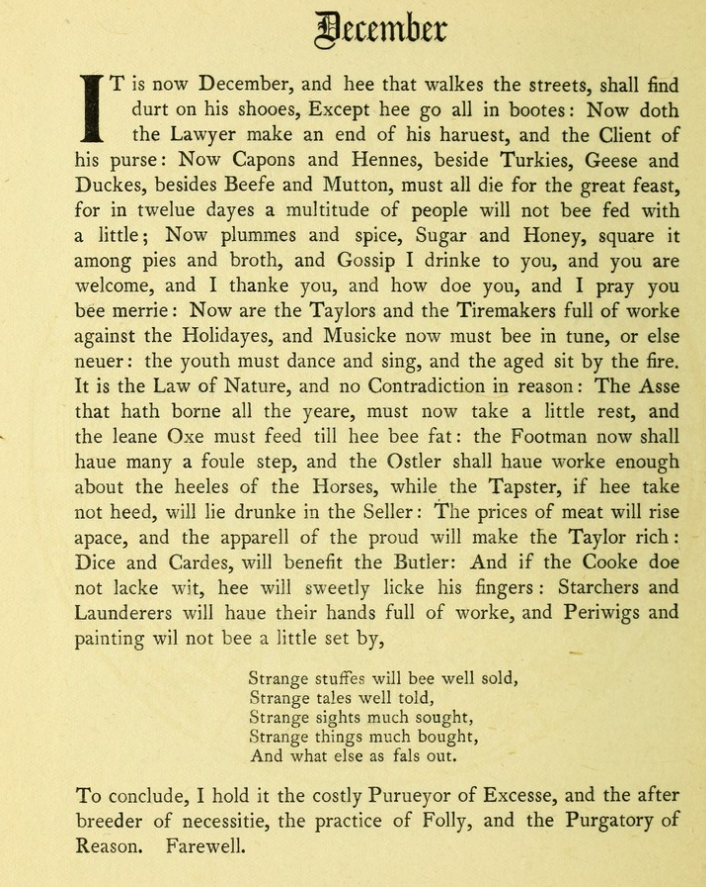
I am finishing my post on September, and using the Kalendar of Shepherds. As you may have noticed, I often use the Kalendar of Shepherds to provide an insight into how the seasons were seen in the past. Mostly, I use it for the posts at the beginning of each month. I have created this page as a placeholder to put information on the Kalendar for anyone who is eager to explore it more or to make use of it. Each month I will link to it, so I do not have to repeat the basic information about the Kalendar. Much of this text was contained in the December post, and I have used this month as my example. Tomorrow, you will get the September version.
About the Kalendar of Shepherds.
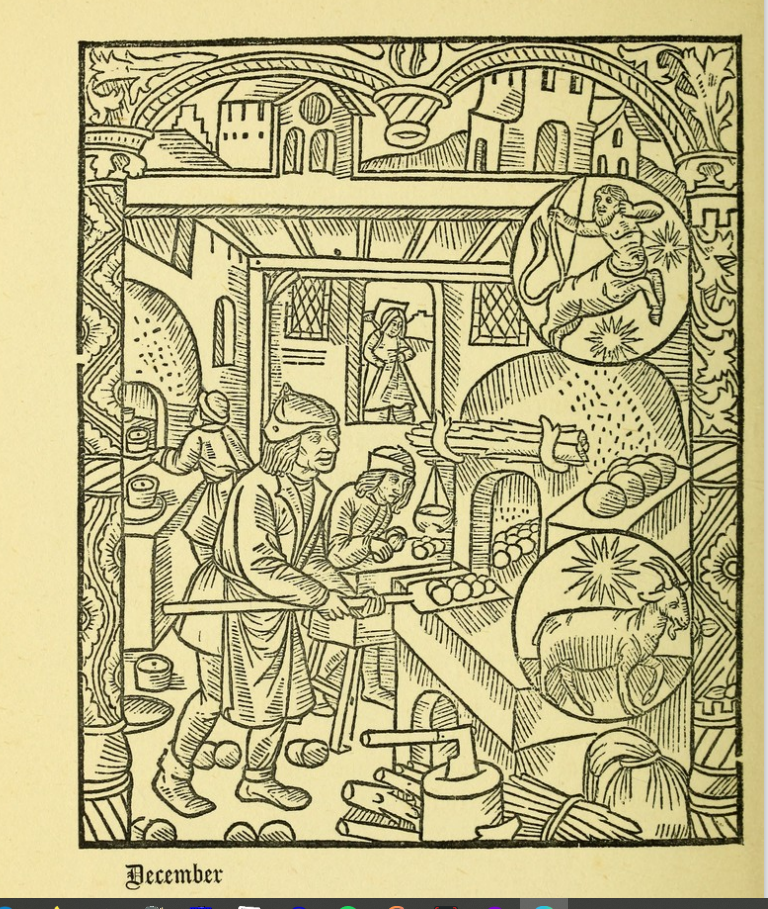
The Kalendar was printed in 1493 in Paris and provided ‘Devices for the 12 Months.’ The version I’m using is a modern (1908) reconstruction of it. It uses wood cuts from the original 15th Century version and adds various texts from 16th and 17th Century sources. (Couplets by Tusser ‘Five Hundred Parts of Good Husbandrie 1599. Text descriptions of the month from Nicholas Breton’s ‘Fantasticks of 1626.) This provides an interesting view of what was going on in the countryside every month.
The Kalendar of Shepherds has an illustration for each month (December above) which shows typical activities for the time of year, and has inserts to identify the astrological signs of the month. So, in December they are baking and collecting firewood. The star signs are Sagittarius (November 22 – December 21) and Capricorn(December 22 – January 19).
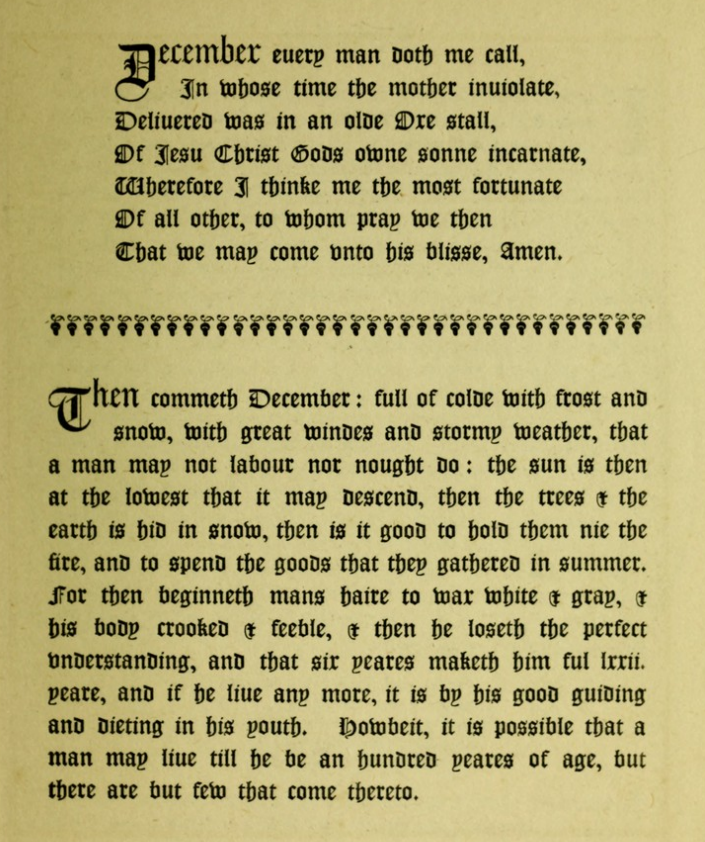
The text below gives a vivid description of December weather and then elaborates on the last six years of a man’s life, with hair going white, body ‘crooked and feeble’. The conceit here is that there are twelve months of the year, and a man’s lot of ‘Six score years and ten’ is allocated six years to each month. So December is not just about the 12th months of the Year but also the last six years of a person’s allotted span. The piece allows the option of living beyond 72, ‘and if he lives any more, it is by his good guiding and dieting in his youth.’ Good advice, as we now know. But living to 100 is open to but few.
Kalendar of Shepherds
The longer description of December (shown below) is by Breton (1626) and gives a detailed look at the excesses of Christmas, who is on holiday, and who working particularly hard. But it concludes it is a costly month.