Birthday Of The Sun December 25th

The First Day of Christmas, my true love sent to me a Partridge in a Pear Tree

Nebra Sun disc from Stonehenge Exhibition British Museum
Nebra Sun disc. Photo from Stonehenge Exhibition British Museum (photo Kevin Flude) The Disc shows the Sun, the Moon, the Pleides, and illustrates the Summer and Winter Solstice movements of the Sun.

Dies Natalis Solis Invicti

On the 25th December were born Jesus, Mithras, Attis, Saturn, Apollo, and the Invincible Sun.

The Sun Gods have quite a complicated interrelationship. Zeus, and Apollo are both also considered to be Sun Gods. Apollo is particularly interrelated to Helios, the Greek God who drives the Chariot that carries the Sun across the skies every day. The Romans had a God called Sol who some say was a deity but who declined to be of minor importance. Then Sol was championed by the transexual Emperor Elagabalas. Aurelian revived the cult in 274 AD. Sol Invictus was the focus of Constantine the Great. Sol has been suggested as a response of the Romans to a trend towards monotheism in the later Roman period. Sol for Constantine was a gateway God to Christianity.

It is also notable that early worship of Jesus is full of solar metaphors, Jesus being, for example, the light of the world. Churches are also virtually all orientated East West, aligned with the rising and setting suns. The Altar is always at the East End, and effigies on tombs face the rising sun.

First Christmas?

The first recorded Christmas Day is in AD336. It was in an almanac that lists Roman Holidays, officials and martyrs. The entry for December 25th says: ‘natus Christus in Betleem Judeae’. For more early Christian Dates have a look here.

Celtic Sun Gods?
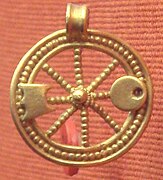
The Golden Wheel from Haute Marne in France

The Golden Wheel from Haute Marne in France, (Public Domain, Wikipedia)

Did the Celts have a sun-god? Belenos is a contender, but linguists are proposing his name does not come from words meaning bright but from strong. The God Lugh’s name is suggested to mean ‘shining’ but his attributes are more of a warrior than a sun god. Taranis is probably the best candidate, but he is more of a sky or thunder god than specifically a sun god. However, his symbol is a 8 spoked wheel is said to be symbolic of the Sun. It also represents the division of the year by the 4 quarterly sun festivals (Winter Solstice, Spring Equinox, Summer Solstice and Autumn Equinox) and the 4 cross-quarter festivals, (Samhain or Halloween, Imbolc or Candlemas, Beltane or May Day, Lughnasa or Harvest Festival).

December 25th is a few days after our reckoning of the Solstice. But, as we have previously seen, Christians believed the world was created on the Spring Equinox, and humans on the 4th day, so Adam was created on March 25th. Mary conceived on the same day, and therefore Jesus, after a perfect labour was born 9 Months later on December 25th. (See my post on March 25th and the Creation)

Christmas Cake

Today, you might be tucking into a Christmas Cake (originally eaten on Twelfth Night). Now, I know many Americans have a bizarre belief that fruit cake is the cake of the devil. Something you receive as a gift and give away to someone else, as most Americans hate it. More fool them for missing out on one of the delights of the Christmas period, that and cold turkey sandwiches. Christmas Cake is made on stir up Sunday, the last Sunday in November, to let the ingredients develop their flavour. They are then covered with marzipan and decorative icing.
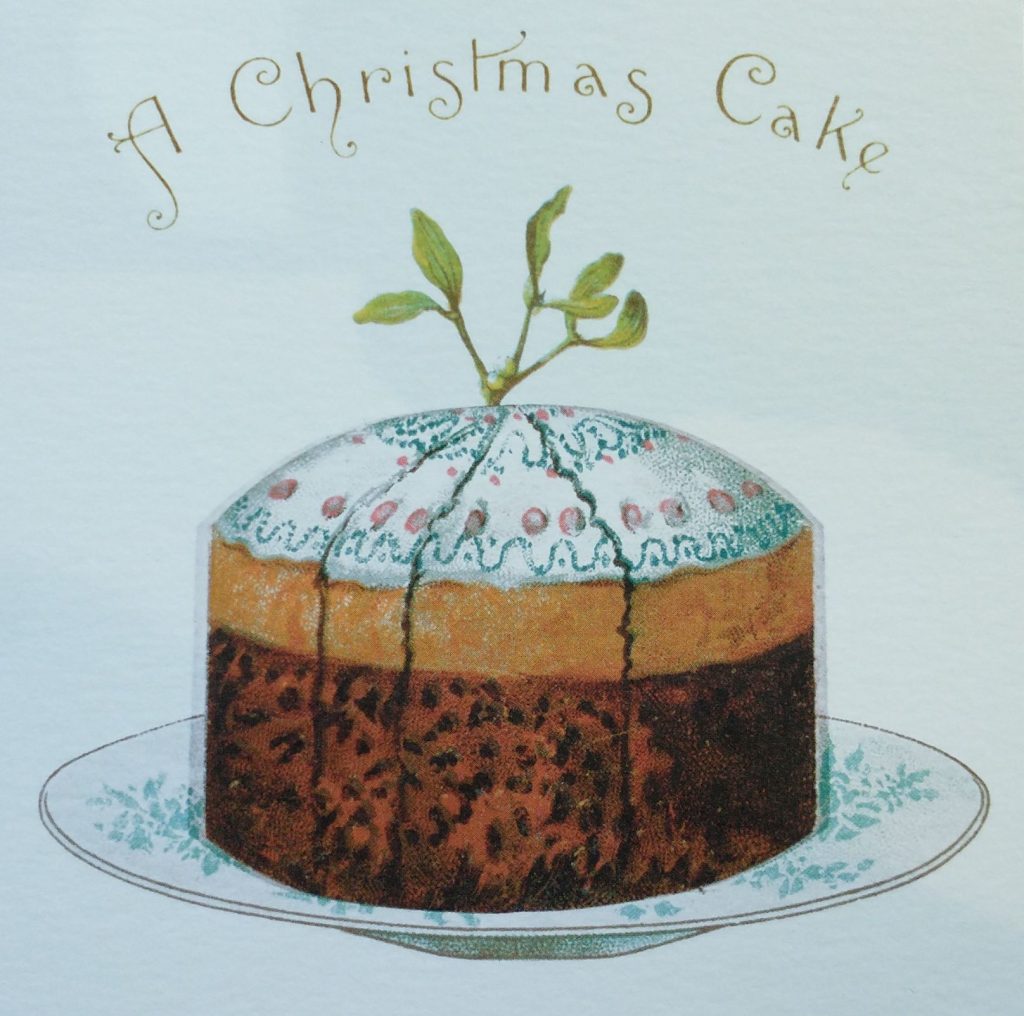
19th Century Christmas Cake, generally now the icing continues down the side of the cake.

In Germany, they also eat a fruit bread called Stollen or Weihnachtsstollen. The tradition is said to have been started in the 15th Century, when the Pope gave dispensation to allow the use of butter in the fasting period of Advent. Previously, the Germans had to use oil to replace the banned butter, but they could only make oil from turnips, so eventually the Pope allowed the use of butter, with which they made bread with added dried fruits.
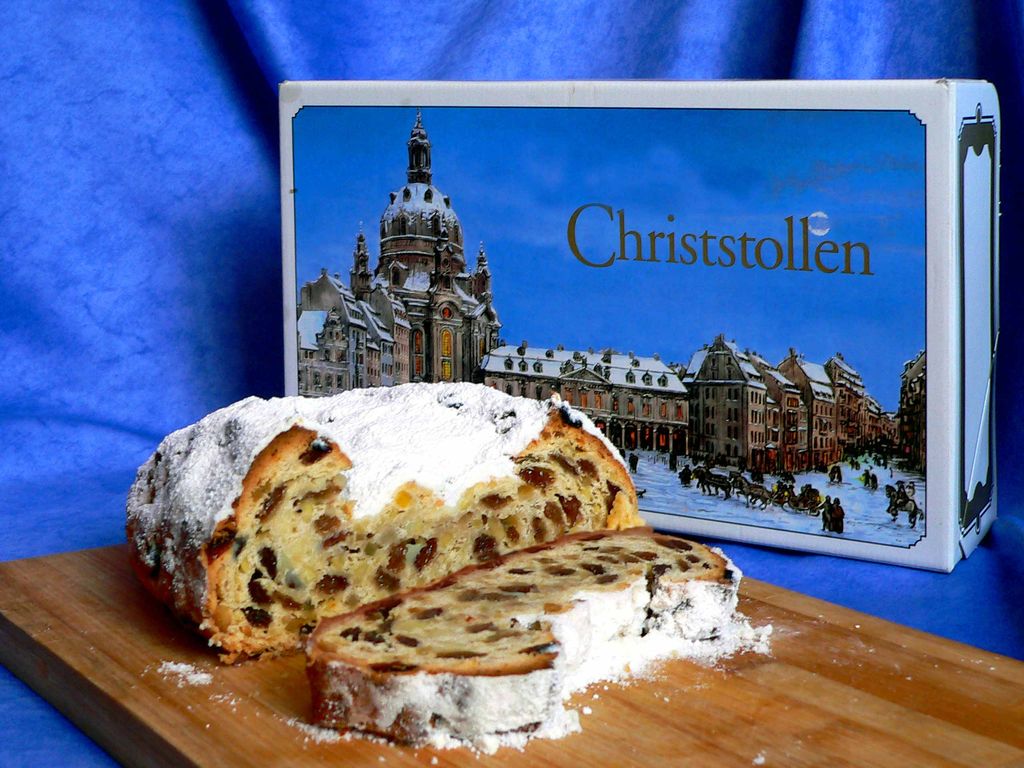
Stollen By Gürgi – Own work, Public Domain, https://commons.wikimedia.org/w/index.php?curid=3720379

In Italy, they eat Panettone, a fruit bread/cake. It is a sourdough, and a cross between a brioche and a cake. It often comes in a beautiful decorative tin, and is delicious. The centre of panettone production is Milan. Last year was the 200th Anniversary of Milan’s famous Marchesi 1824 which makes artisanal Panettone. It used ‘fine ingredients such as six-crown sultan as, naturally candied fruit, Bourbon vanilla from Madagascar, Italian honey and eggs from free-range hens, blended in a slow-rising dough with the exclusive use of Marchesi 1824 sourdough starter‘. Thank you, Mara from Milan, for the heads-up.

Screen shot from website – does not click through to sales!

Which is best? The only way to find out is to eat several slices of each. America, you don’t know what you are missing.

For stir up sunday see the second half of this post of mine.

First Published 24th December 2022, Republished 25th December 2023, 2024, 2025

Eve of the Birthday Of the Sun God December 24th

Helios, Colossus of Rhodes, artist's impression, 1880
Helios Colossus of Rhodes, artist’s impression, 1880

The Eve of the Day

Tomorrow is the Dies Natalis Solis Invicti – the birth of the Invincible Sun.  In some calendars, such as the Celtic & the Anglo Saxon, the day begins at dusk.  So Christmas Eve is not the evening before Christmas Day. It is the beginning of Christmas Day itself.

So some countries celebrate the eve as much or more than the day.  The Church would have encouraged this to accommodate former pagan belief into newly converted societies. (the most obvious example is Halloween see my post here).

But the Church also suggests celebration of the Eve derives from the Jewish tradition of the beginning of the day at dusk.  In Genesis are the words;

‘And there was evening, and there was morning—the first day.’

Christian tradition holds that Jesus was born on the holy night and thus is celebrated by the midnight mass.

When does the day begin?

This seems a silly question.  In our society, the day officially begins at midnight.  But it clearly begins at dawn. This was the normal start of day for Ancient Egypt,
Republican Romans, and Western Europe till the coming of clocks in about 1400. We have already seen there are calendars that start the day at Sunset: Muslim, Jews, Celts, and the
Saxons. In Britain, astronomers started the day at midday until an Act of Parliament reset it to midnight as recently as 1925.

Dawn seems the obvious choice, it’s called daybreak after all. But the problem is that the first light is so variable.  It is an opinion when the light arrives and will vary depending on clouds, hills and height above sea level etc. Midnight is halfway between dawn and dusk, and I assume can be determined mathematically and astronomically.  So Julius Caesar changed the Roman start of day to midnight when he reformed the Roman Calendar. (See my post on the Julian Calendar here).

Dusk is a counterintuitive choice, I think. The reasoning is that the Sun has gone down. It is finished for the day.   Sunset is the end of the day. So it is also the start of the next daily cycle. 

The Celts started their year at Halloween for similar reasons.  In autumn, the various harvests have been collected.  Most plants have ended their growing cycle and shed their leaves. Therefore, November 1st (or its eve) is the end of the growing year. On the ground, the seeds are ready and waiting to begin sprouting to bring new life. So, this is the new year.  Sort of makes sense?

Christmas Eve Celebrations

In Britain, among the general population, there are no special customs except for preparing for the arrival of Father Christmas, and perhaps going to Midnight Mass.  In Germany, Heiliger Abend is when Gifts are exchanged.  Afterwards, is a relatively light dinner, often consisting of potato salad and sausages. 

In my experience, Christmas Eve is a relaxing evening in front of the TV while wrapping presents.  (After the children have gone to bed of course). Sometimes in front of the first roaring fire of the winter.

Then the filling of pillow cases or stockings full of presents. Last thing is tip-toeing upstairs placing a plate in the hall upstairs with a mince pie, shot of brandy for Father Christmas and a carrot for the reindeer. Then the crinkle of the wrapping paper as the presents are placed on the children’s bed.  Now, the little darlings are finally fast asleep after an overexcited bedtime. These are the precious moments of family life.

Mothers of God’s Eve

December 24th is a day for Mothers, as tomorrow, the 25th, will be born Jesus, Mithras, Attis, Saturn, Apollo, and the Day of the Birth of the Invincible Sun, Solis Invictus. And so we think of Mary, Isis, Theia, the Three Mother Goddesses and mothers everywhere.

First Published 24th December 2022, Republished 2023,2024,2025

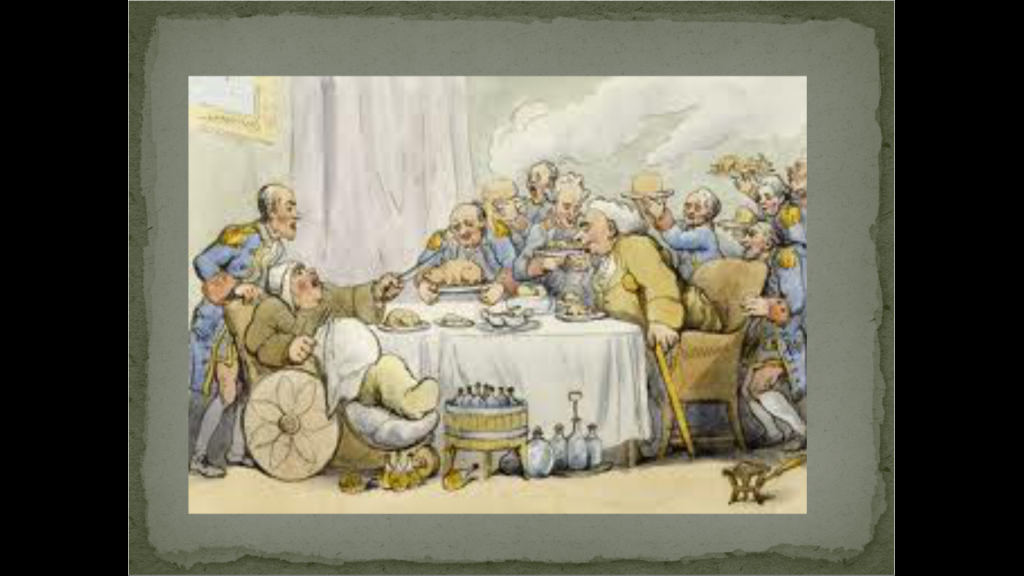
Drink at a Georgian Christmas December 23rd

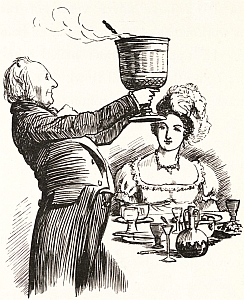
Wassail Bowl being brought in by a Servant into a dining hall on Christmas Day
From ‘Old Christmas’ by Washington Irving

Drink at a Georgian Christmas might well be port. Then the next favourites would brandy, claret, punch, rum, porter. So says my source Henry Jeffreys in his book ‘Empire of Booze’ and in this Guardian article:

Claret, probably, originally outsold port. But the wars against France and the difficulty of importing French wine, saw a transfer to wines from our ‘oldest ally’ Portugal. But the travel distance was longer, so the wine was fortified to help preserve it better. Hence, the British addiction to port. Sherry was also popular for similar reasons, being a fortified white wine. Shakespeare calls it ‘sack’ and sometimes ‘Canary’. (Toby Belch ‘says thou lack’st a cup of canary ‘ in ‘Twelfth Night’, which is a Christmas play.) See below for more on Sack and Shakespeare.

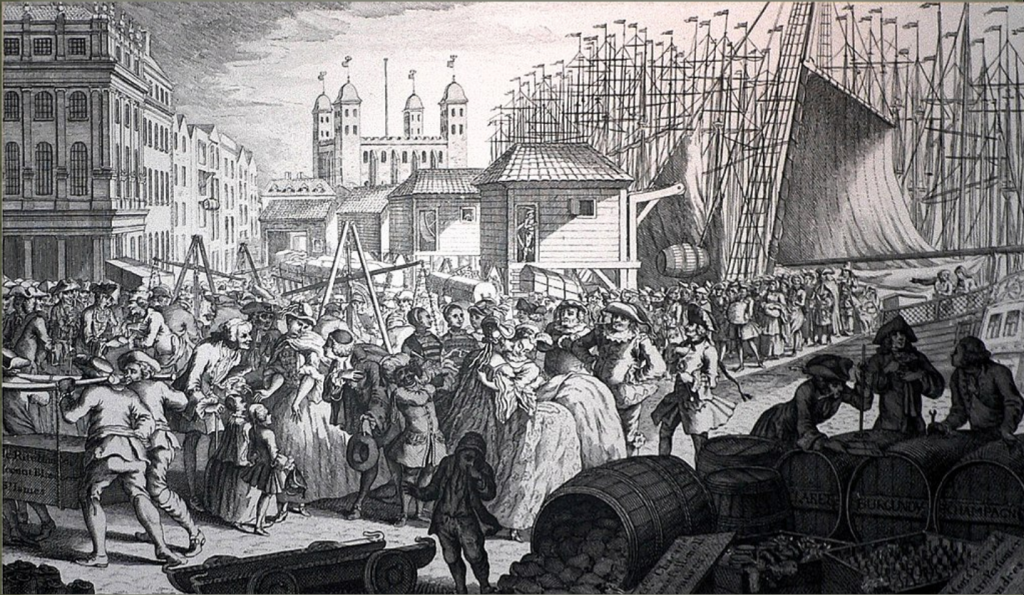
Louis Philippe Boitard  'Imports from France' Looking east towards the Tower of London. Barrels at the front right are marked Claret, Burgundy and Champagne
Louis Philippe Boitard‘s satirical engraving ‘Imports from France’ Looking east towards the Tower of London. Barrels at the front right are marked Claret, Burgundy and Champagne.

Georgian Alcohol consumption was prodigious. Samuel Johnson said, ‘All the decent people in Lichfield (where Johnson came from) got drunk every night and were not the worst thought of‘. The Prime Minister. William Pitt the Younger said, ‘I have drunk three bottles of port without being the worst for it. University College has witnessed this.’ He is referring to his college at the Oxford University. He might be considered to be another of our Prime Ministers who have first disgraced themselves at Oxbridge only to rise to rule the unfortunate British nation? However, in those days, Port was sold in pint measures (45cl) and was 16%, while now it is 20% and sold in 75cl bottles. So, maybe we are almost as bad?

Even so, three bottles is still a lot. A drunken population would have not only increased the death rate but also increased violence and abuse. Gout was one result of too much drinking and a rich diet.

However, this is Christmas so let’s end on a high note, so here are a couple of recipes!

To make ye best punch

“Put 1½ a pound of sugar in a quart of water, stir it well yn put in a pint of Brandy, a quarter of a pint of Lime Juice, & a nutmeg grated, yn put in yr tosts or Biskets well toasted.”

Katherine Windham’s Boke of Housekeeping, 1707

Gin

And Gin? The cheap gin panic had calmed down by the 1770s after no less than eight Gin Acts of Parliament. Booths and Gordon’s Gins were established in London during this period and Gin almost a respectable drink.

There appears to have been a shortage of Gin punch recipes in the 18th Century, but by the end of that century this recipe survives from London’s Garrick Club

half a pint of gin, lemon peel, lemon juice, sugar, maraschino, a pint and a quarter of water and two bottles of iced soda water.

You would not need many of these to become quite relaxed quite quickly!

Sack and Falstaff.

Sir John Falstaff in Henry IV eulogies on sack saying it not only makes for excellent wit but also the best soldiers:

A good sherris sack hath a two-fold operation in it. It ascends me into the brain, dries me there all the dull and crudy vapors which environ it, makes it apprehensive, quick, forgetive, full of nimble, fiery, and delectable shapes, which, delivered o’er to the voice, the tongue, which is the birth, becomes excellent wit“. 

The second your excellent sherris is the warming of the blood; which
cold and settled, left the liver white and pale, which is the
badge of pusillanimity and cowardice; but the sherris warms
and makes it course from the inwards to the parts extremes.
illumineth the face, which, as a beacon, gives warning to all
rest of this little kingdom, man, to arm; and then the vital
commoners and inland petty spirits muster me all to their
captain, the heart, who, great and puff’d up with this
doth any deed of courage—and this valour comes of sherris.
that skill in the weapon is nothing without sack, for that
it a-work; and learning, a mere hoard of gold kept by a devil
till sack commences it and sets it in act and use. Hereof
it that Prince Harry is valiant; for the cold blood he did
naturally inherit of his father, he hath, like lean, sterile,
bare land, manured, husbanded, and till’d, with excellent
endeavour of drinking good and good store of fertile sherris,
that he is become very hot and valiant. If I had a thousand
the first humane principle I would teach them should be to
forswear thin potations and to addict themselves to sack
.

Merry Wives of Windsor

In the Merry wives of Windsor Falstaff is still always drinking sack.  He asks Bardolph ‘Go fetch me a quart of sack; put a toast in’t.‘ Toast is thought to freshen up stale sack.  Also, it could be drunk hot as suggested by Falstaff asking for:

Go brew me a pottle of sack finely.’

Bardolph asks if he wants the sack with eggs but Falstaff refuses asking for his sack to be a

Simple of itself; I’ll have no pullet-sperm in my brewage.’

A simple is the opposite of a compound, so pure with no additions (apart from the toast!).  Pullet sperm is, in think, a dismissive reference to eggs. Sack posset was original a medicine but later a popular treat made with eggs, cream, spices and sack. Once concocted, the top would be a foamy or crusty cap, the middle a custard and the bottom a spicy hot alcohol.

First Published in 2022 and revised December 2023, 2024, 2025
Monday’s Child & St Budoc December 8th

a manger scene in which  one of the three kings says

~Just to be perfectly clear. These gifts are for you Birthday and Christmas

Monday’s child is fair of face,
Tuesday’s child is full of grace.
Wednesday’s child is full of woe,
Thursday’s child has far to go.
Friday’s child is loving and giving,
Saturday’s child works hard for a living.
And the child born on the Sabbath day Is bonny and blithe, good and gay.

Fortune-telling poems are a big part of folklore. It says something about the power of the rhyme that people can believe a random rhyme can shape someone’s whole life. Interesting that there are many versions of this rhyme. I chose one that had an optimistic Thursday. Two year’s ago, my second Grandson was born, on a Thursday, just like me. And I’ve still got far to go.

Tinker Tailor

The Tinker Tailor rhyme is another example of a fortune-telling rhyme. This is the extended version, I found on wikipedia.

When shall I marry? This year, next year, sometime, never.

What will my husband be? Tinker, tailor, soldier, sailor, rich-man, poor-man, beggar-man, thief.

What will I be? Lady, baby, gypsy, queen.

What shall I wear? Silk, satin, cotton, rags

How shall I get it? Given, borrowed, bought, stolen.

How shall I get to church? Coach, carriage, wheelbarrow, cart.

Where shall I live? Big house, little house, pig-sty, barn.

One person recites the power verse by verse. The subject of the fortune-telling does something like counting petals on a flower, counts bounces of a ball, or gives a number between one and four. The outcome determines the future.

To see another fortune-telling rhyme, read my post about Magpies.

St Budoc

Today, is St Budoc’s Feast Day. However, it’s held on the 9th if you are in Brittany. Boduc is a Celtic name which either means “saved from the waters” or more likely ‘Victory’ or ‘Victorious’.

This etymology is shared by Queen Boudicca. Budoc lived in the 5th Century, after the Fall of Roman Britain. His mother was a Princess whose evil step-mother (or mother-in-law), persuaded her son that she was unfaithful. The Prince ordered the pregnant Princess to be thrown into the sea in a wooden cask. They floated around for 5 months, until Budoc was born. (Saved by the intercession of St Bride?). So, they landed safely in Cornwall, and afterwards went to Ireland. (Or they landed in Ireland.)

Eventually, Budoc’s dad realised his wife was faithful. So he came to rescue his wife. Sadly, they soon both died. (Or the wife survived). Budoc became a monk, and then a famous Bishop in late 5th Century Brittany at Doll. St Budoc is worshipped in several place: Pembroke, Cornwall, Devon, Brittany, and Oxford. But we have very little reliable evidence about him.

Monday’s Child published in 2023. St Budoc added in 2024, Revised 2025.

December and Kalendar of Shepherds December 1st

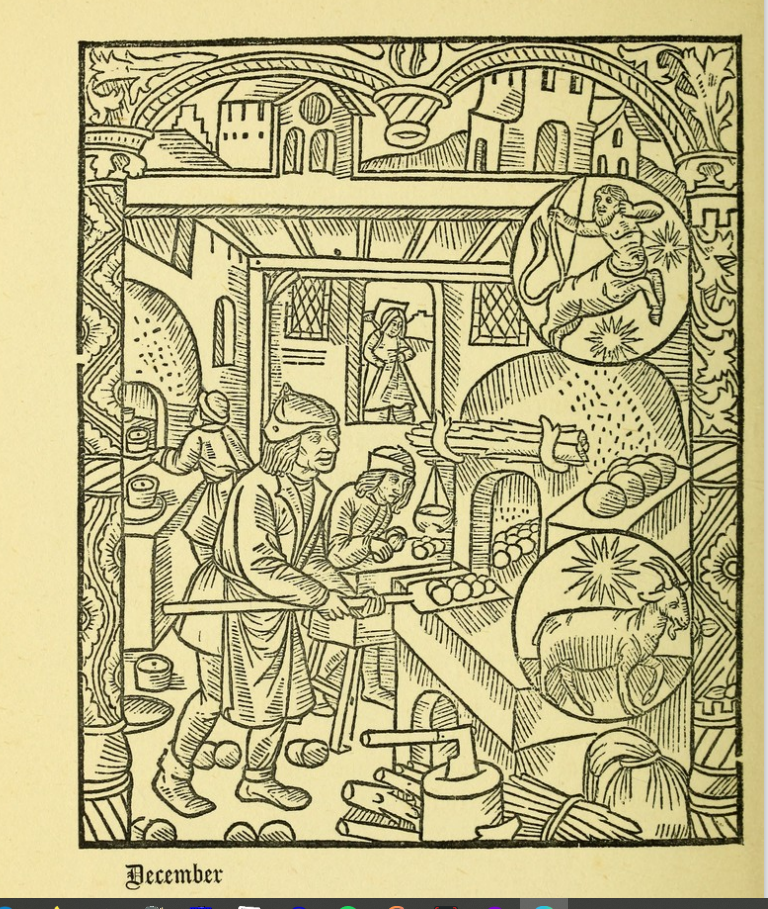
French 15th Century December and the ‘Kalendar of Shepherds’

December comes from the Latin for ten – meaning the tenth month. Of course, it is the twelfth month because the Romans added a couple of extra months especially to confuse us. For a discussion on this, look at an early blog post which explains the Roman Calendar.

In Anglo-Saxon it is ærra gēola which means the month before Yule. In Gaelic it is An Dùbhlachd – the Dark Days which is part of An Geamhrachd, meaning the winter. The word comes from an early Celtic term for cold, from an ‘ancient linguistic source for ‘stiff and rigid’’, which describes the hard frosty earth. (see here for a description of the Gaelic Year). In Welsh, Rhafgyr, the month of preparation (for the shortest day).

For the Christian Church, it’s the period preparing for the arrival of the Messiah into the World. (see my post on Advent Sunday which this year was yesterday November 30th).

For a closer look at the month, I’m turning to the 15th Century Kalendar of Shepherds. Its illustration (see above) for December shows an indoor scene, and is full of warmth as the bakers bake pies and cakes for Christmas. Firewood has been collected, and the Goodwife is bringing something in from the Garden. The stars signs are Sagittarius and Capricorn.

The Sparrow and the Warm Hall

The Venerable Bede has an interesting story (reported in ‘Winters in the World’ by Eleanor Parker) in which a Pagan, contemplating converting to Christianity, talks about a sparrow flying into a warm, convivial Great Hall, from the bitter cold winter landscape. The sparrow enjoys this warmth, but flies straight out, back into the cold Darkness. Human life, says the Pagan, is like this: a brief period in the light, warm hall, preceded and followed by cold, unknown darkness. If Christianity, he advises, can offer some certainty as to what happens in this darkness, then it’s worth considering.

This contrast between the warm inside and the cold exterior is mirrored in Neve’s Almanack of 1633 who sums up December thus:

This month, keep thy body and head from cold: let thy kitchen be thine Apothecary; warm clothing thy nurse; merry company thy keepers, and good hospitality, thine Exercise.

Quoted in ‘the Perpetual Almanack of Folklore’ by Charles Kightly

December in the ‘Kalendar of Shepherds’

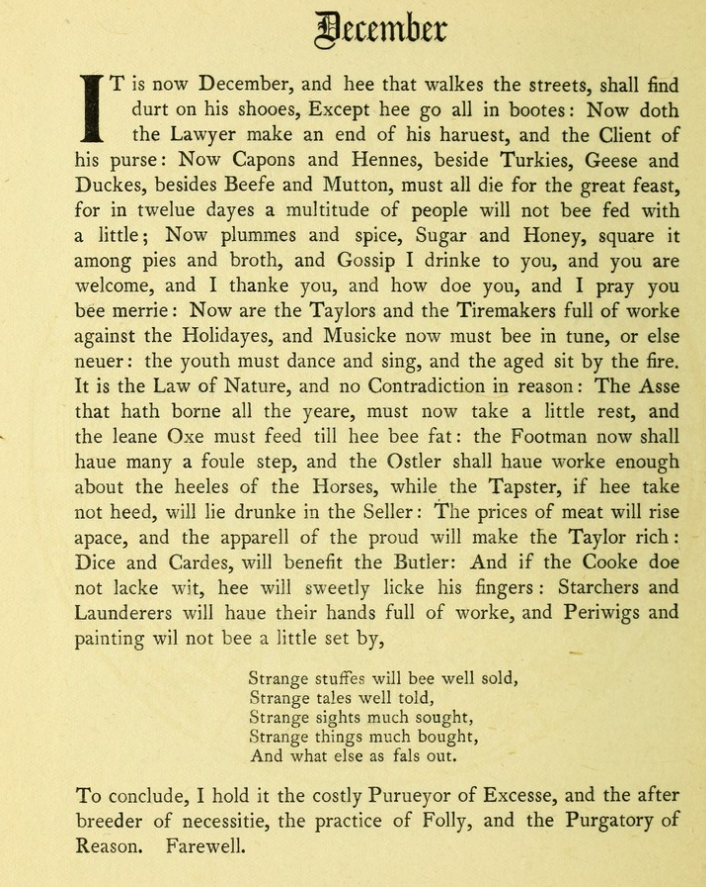
The Kalendar of Shepherds text below gives a vivid description of December weather. Dating from 1626 it gives a detailed look at the excesses of Christmas, which people are on holiday, and who is still working hard. But it concludes it is a costly month.

Nicholas Breton’s ‘Fantasticks of 1626 – December from the Kalendar of Shepherds

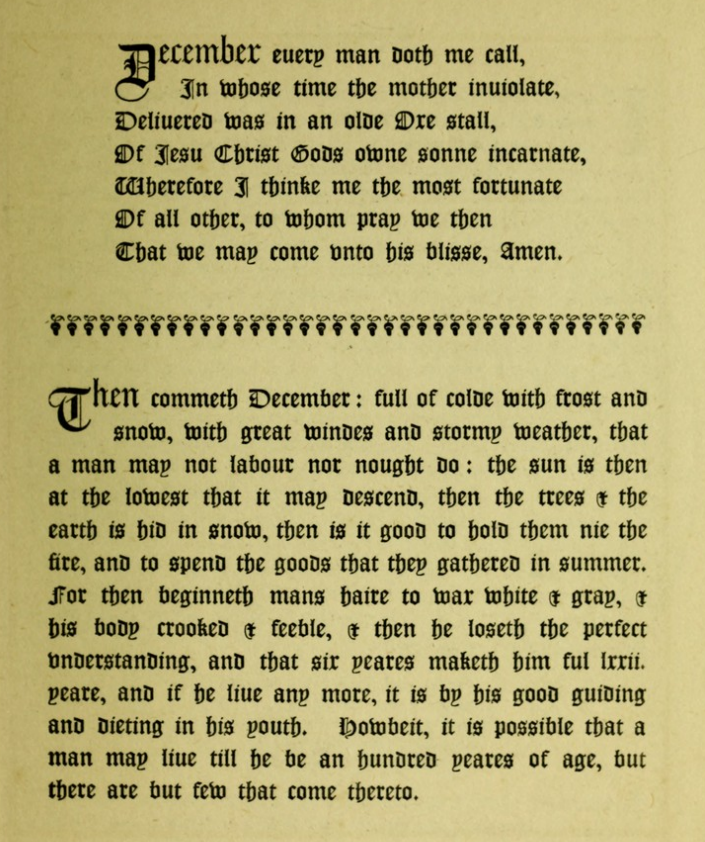
Six Dozen Years – a Lifespan

The other section of the Kalendar then elaborates on the last six years of a man’s life, with hair going white, body ‘crooked and feeble’. (from 66 to 72). The conceit here is that there are twelve months of the year, and a man’s lot of ‘Six score years and ten’ is allocated six years to each month. So December is not just about the 12th Month of the Year but also the last six years of a person’s allotted span. The piece allows the option of living beyond 72, ‘and if he lives any more, it is by his good guiding and dieting in his youth.’ Good advice, as we now know. But living to 100 is open to but few.

Kalendar of Shepherds

Interesting from my point of view as I have reached the end of my life span as suggested by the Calendar, and my father is 98 and approaching his hundred!

About the Kalendar of Shepherds.

The Kalendar was printed in 1493 in Paris and provided ‘Devices for the 12 Months.’ The version I’m using is a modern (1908) reconstruction of it. It uses wood cuts from the original 15th Century version and adds various texts from 16th and 17th Century sources. (Couplets by Tusser ‘Five Hundred Parts of Good Husbandrie 1599. Text descriptions of the month from Nicholas Breton’s ‘Fantasticks of 1626.) This provides an interesting view of what was going on in the countryside every month.

For more on the Kalendar look at my post here.

The original Kalendar can be read here: https://wellcomecollection.org/works/f4824s6t

To see the full Kalendar, go here:

On This Day

1981 – Launch of the BBC Micro

1990 The UK was rejoined to Europe for the first time for 8000 years, when the Channel Tunnellers breached the final wall of rock. French and British workers exchanged flags and shook hands. The Tunnel was opened to traffic in 1994 more than 10 years after work started and 200 years since Napoleon proposed the idea. Read what ICE has to say about the (ICE – Institute of Civil Engineers!).

Britain was connected to the Continent until about 6,100BC, the North Sea, the Channel, and the Irish Sea were all dry (or marshy lands). Water levels were rising and ice melting. the Storegga Slides in Norway saw huge cliffs of ice slipped into the sea. This caused a tsunami over 30ft high and penetrating 25 miles inland. Read the BBC here.

Since then, Britain has been an Island. Archaeologists have been exploring the flooded area which is known as Dogger Land, after the Dogger Bank. (for more on Dogger Land.)

First Published in 2024, republished 2025

Feast Day of St Margaret of Scotland November 16th

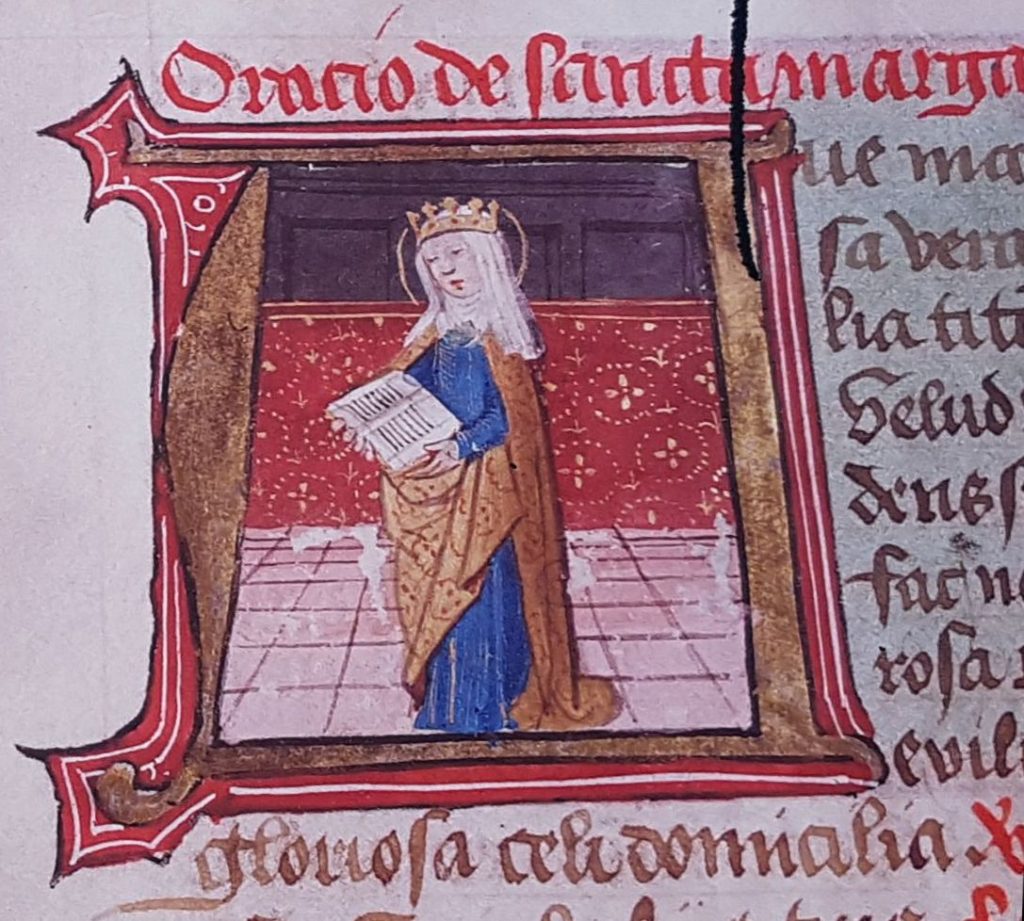
St Margaret (15th Century Prayer Book)

St Margaret should be better known in England because of her important rule in the bloodline of the English Monarchy. Her story is also of interest as it intertwines with the events of 1066 and of Macbeth.

She was the granddaughter of King Edmund Ironside. He was the last English King before the Danish Kings took over. He died after a peace treaty dividing England into an English and a Danish half.

This is what a draft of the text for my book on the Kings of Britain says about him:

Margaret’s Grandfather – King Edmund II 1016

Edmund was born in around 988AD and nicknamed Ironside. He was a formidable warrior who spent his short life fighting the Danes. In 1016, he was crowned in St Pauls Cathedral. Although he was defeated in battle by King Canute, the son of King Swein of Denmark, Edmund’s prowess won him a peace treaty in which England was divided between the two Kings. Unfortunately, Edmund died unexpectedly and Canute inherited the Kingdom. Edmund was buried in Glastonbury Abbey.

To buy ‘Divorced, Beheaded, Died – the history of the Kings of Britain in Bite-size Chunks’. click here.

Edmund’s wife Edith and her 2 children were exiled to Sweden and then, somehow, got to Hungary. Edmund’s eldest son was called Edward the Exile and was married to Agatha. Margaret was their third child. In 1056 Edward the Confessor invited the family back to England and soon made Margaret’s father the heir to the throne. Unfortunately, he died in 1057. He was buried in St Paul’s Cathedral.

Margaret’s Brother – Edgar the Atheling

The rest, as they say, is history. Edward the Exile’s son, Edgar the Atheling was only 6 or 7 and the throne was disputed between William of Normandy, Harald Hadarada of Norway, and Harold Godwinson.

In short, Margaret’s brother Edgar the Atheling was briefly chosen as King after the death of Harold. He was then forced to cede the throne to William the Conqueror. William was crowned King in December 1066.

Margaret’s brother Edgar the Atheling had an extraordinary life, living into his 70s. He continued to fight against the Norman rule of England, mostly from Scotland. Eventually, he reconciled with the Norman dynasty but was involved in any number of disputes, rebellions and dynastic fights.

Margaret’s Husband

Margaret was forced to flee and went to Scotland. In 1070, Margaret married the Scottish King Malcolm III ( Mael Column Mac Donnchada). Malcolm was the son of King Duncan (murdered by Macbeth – see my book Divorced, Beheaded, Died for a short biography!). In 1040, Malcolm fled to England, but returned with English help to defeat Macbeth at Dunsinane. (see my post on Macbeth and Equivocation of Phrophecy). After his first wife’s death he married the deeply pious Margaret. Their court was very influenced by Saxon and Norman ways. She helped aligned the Church more closely with the rest of Christendom, and brought up her children piously.

Margaret’s Son – David

The Royal couple had 6 sons and two daughters. Her son David became one of the most influential Kings of Scotland. He introduced Norman ideas of feudalism, and created Boroughs to strengthen the Scottish economy. He also encouraged ‘modern’ forms of monasticism, encouraging the Cistercians to come to Scotland. By these means, he hoped to turn Scotland a Feudal society with a thriving market economy based on towns and monasteries.

Margaret – the Moderniser?

So, in many ways, Margaret had an influential role in ‘modernising’ the Scottish Monarchy from its Gaelic clan-based structure to a more European style that was ruled from the Lowlands and spoke the Scots version of English, rather than the Gaelic version of the Celtic branch of languages.

She died on 16th November 1093 AD and is ‘particularly noted’ for concern for orphans and poor people. There is an annual procession to her altar, followed by Evensong at Durham Cathedral on the following day. She was buried at Dunfermline following the violent death of her husband. The Abbey has recently celebrated the 950th anniversary of Queen Margaret consecrating the site.

Margaret’s Daughter

Margaret’s daughter, Matilda, married the son of William the Conqueror, King Henry I. This marriage was important for the Normans because it added a strong dose of English Royal blood to the French Norman Royal line. Their daughter was the formidable Empress Matilda, designated heir to the throne of England and founder of the Plantagenet line of English Kings. She was an uncrowned monarch of England and mother of Henry II. She was never crowned because of the disruption caused by the usurpation of the throne by King Stephen.

To read my posts on the events of 1066:

You can read what happened, in my detail, in my posts on the three battles that decided England’s fate in 1066.

Battle-of-fulford-september-20th-1066/
Battle-of-stamford-bridge-september-25th-1066/
William-the-bastard-invades-england-september-28th-1066/
Battle-of-hastings-october-14th-1066/

Also around this time in November

Foul privies are now to be cleansed and fide,
let night be appointed such baggage to hide:
Which buried in garden,in trenches alowe,
shall make very many things better to growe.

The chimney all sootie should now be made cleene,
for feare of mischances, too oftentimes seene:
Old chimney and sootie, if fier once take,
by burning and breaking, soone mischeefe will make.

Five Hundred Points of Good Husbandry. 1573 by Thomas Tusser

Full copy of 1580 edition available online.

First Published on November 19th 2021. Revised on Nov 15th, 2023, 2024, 2025
All Hallows Day – November 1st

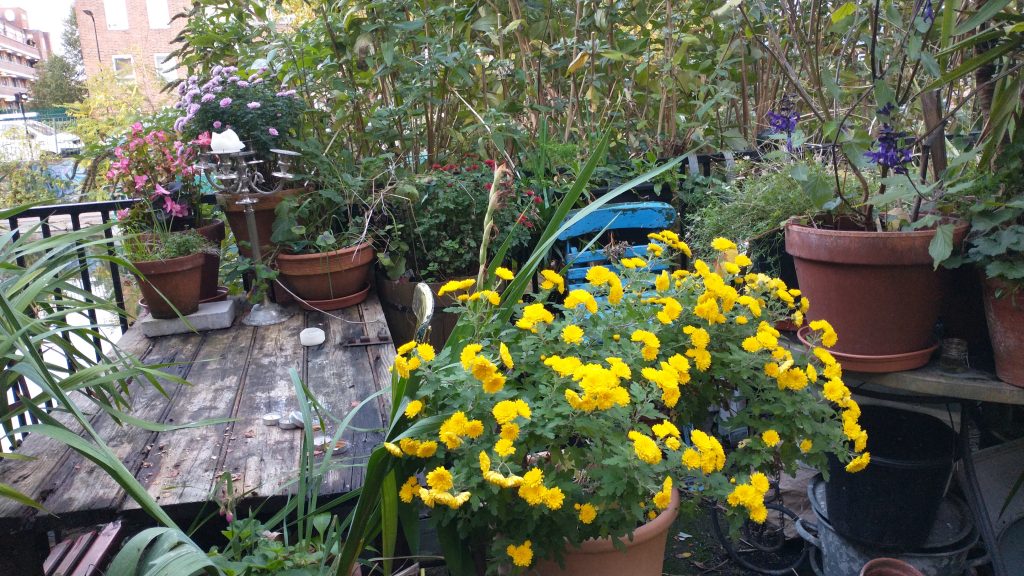
 chrysanthemums
Chrysanthemums Flowers for the Dead (the author’s back garden)

How the Celtic festival that marked the beginning of Winter became All Hallows is not clear. Some say the Church set up its own festival independent of the Northern European traditions. But it is as likely that the Church adopted existing pagan festivals, and gave them a Christian spin.

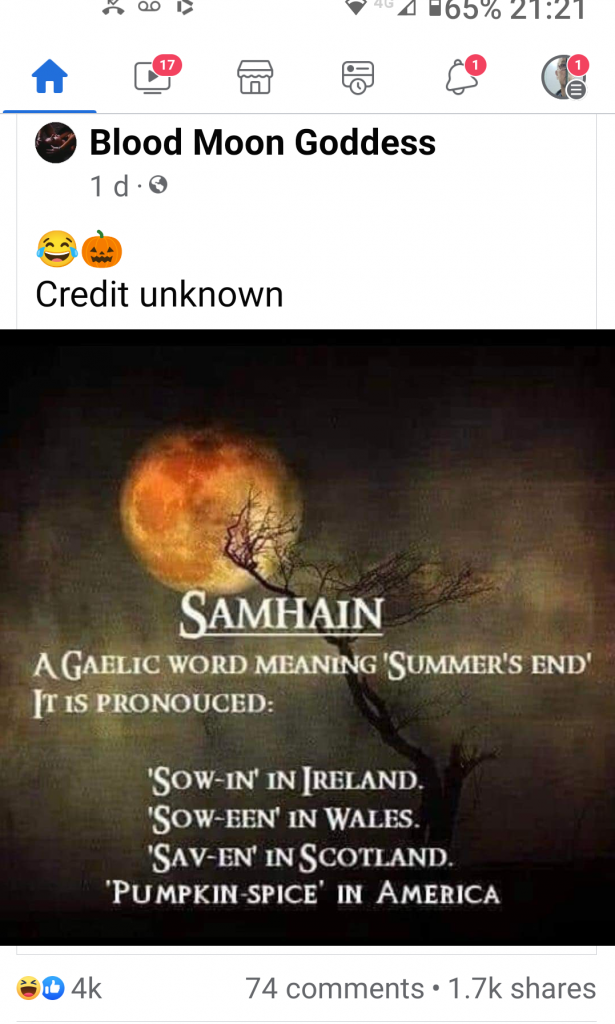
Samhain, on October 31st, was, for Celtic religions, not only the beginning of Winter but also the beginning of the Year. As I noted on my Halloween post the Festivities began in the evening before the day because Celtic and Germanic traditions began their day at Dusk. So Halloween is not, in fact, the evening before, it is the start of the day of the festival.

Facebook Image giving the words for Samhain in Celtic languages

The Church adopted the Roman tradition of the day beginning not at Dusk but at Midnight. So the festival of All Hallows is on November 1st not October 31st. But the Church mimicked the old ways of doing things by celebrating the evening before as the Vigil of All Hallows’ Day. This was called All Hallows Evening or Halloween.

All Hallows by the Tower, London

Engraving of All Hallows Barking

In London, there is a Church called All Hallows, on Tower Hill. It is associated with Barking Abbey, founded in the 9th Century. Therefore, it is known as All Hallows Barking or All Hallows by the Tower. The Church has a prominent position on Tower Hill, which would have been visible from boats coming up the Thames. Also in the Church is the earliest Post-Roman arch in a Church in the City of London. This is made of reused Roman bricks. Moreover, in the crypt are Roman tessellated floors.

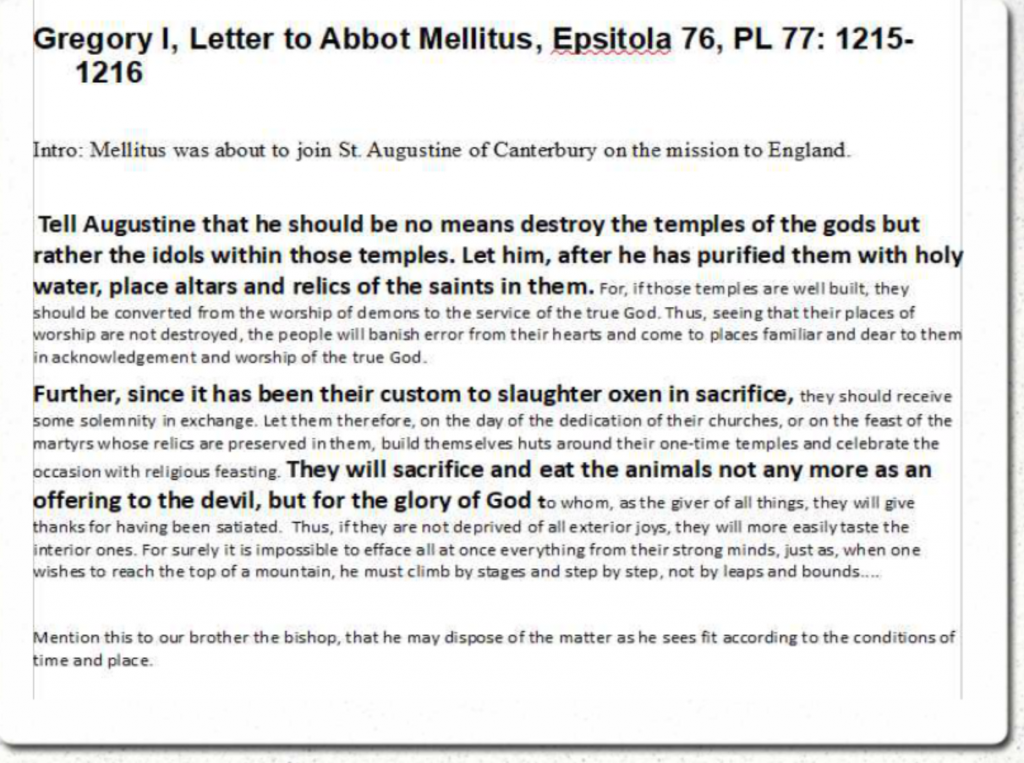
Letter from Pope Gregory to St Augustine

Now, I don’t want to be shot down in flames because there is no evidence that there was a Roman Temple here. Nor indeed a Roman or immediately Post-Roman Church. But it is one of the earliest Churches in the City of London. There must have been Christian Churches in Roman London, and this would be on my list of candidates. It is simply that the attribution to All Hallows provides a possible link to Celtic festivals. So speculation rather than anything else. The letter above, gives a context for the conversion of a pagan Temple to a Christian Place of Worship.

An Uncanny Day to Hallowed Day

For the Celts, Samhain was an uncanny day when all the sprites and spirits are alive and in the world. The Church took that, and span in on its head. So it became a ‘hallowed’ holy day when all Saints are celebrated and alive to us. Celebrated on October 31st and November 1st.

A celebration of All Saints was originally in May in the Church but was changed to the 1st November in the 7th Century by Pope Boniface. Later it was swapped back to May. But fixed again on the 1st November in the 9th Century. It is followed on the 2nd by All Souls’ Day. (see my post on All Souls Day here.

So on the 1st November, those celebrating the pagan festival would be in full swing after a hard night of celebration. The embers of the Fire would be still burning, stones left around the fire would be inspected for the prophecy they told of the future. Each person had a stone, and if it was still intact it was good luck, if it had disappeared the future was not good.

La Toussaint et Dia de Todo Los Santos

In France, All Hallows or All Saints is called La Toussaint, and flowers such as Chrysanthemums, which blossom in late October, were put on the graves. In Spain, it is Dia de Todo Los Santos and is a national holiday upon which people put flowers on the graves of the dead.

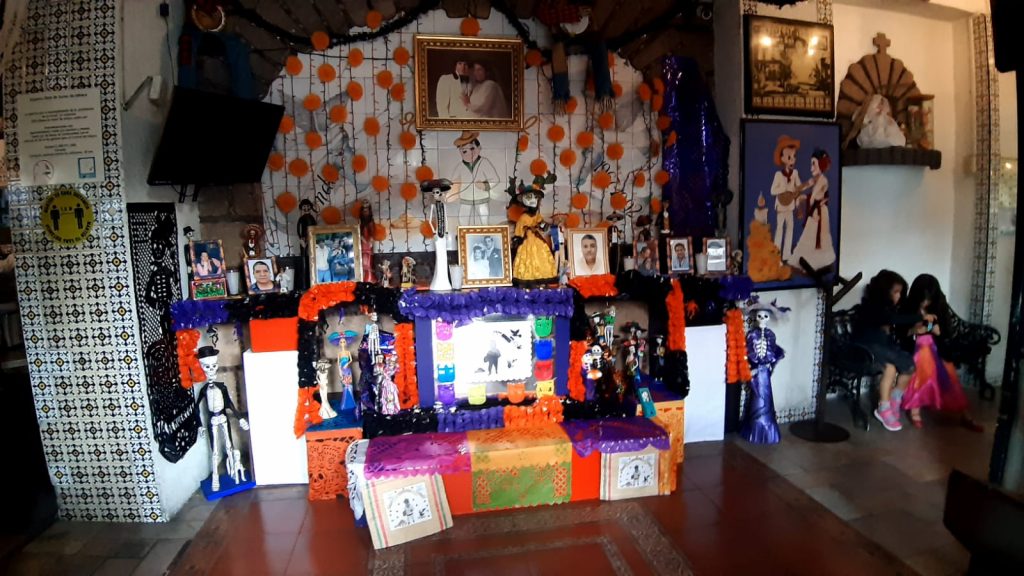
In Mexico, Dia de los Muertos celebrates Holy Innocents on the 1st. People create altars to the lost ones, with their favourite flowers, toys, food stuffs,, photographs. People argue about the pre-colombian aspects of the festival as there are similarities to European All Saints Days celebrations. But Quecholli, was a celebration of the dead that honoured Mixcóatl – the god of war. It was celebrated between October 20th and November 8th.

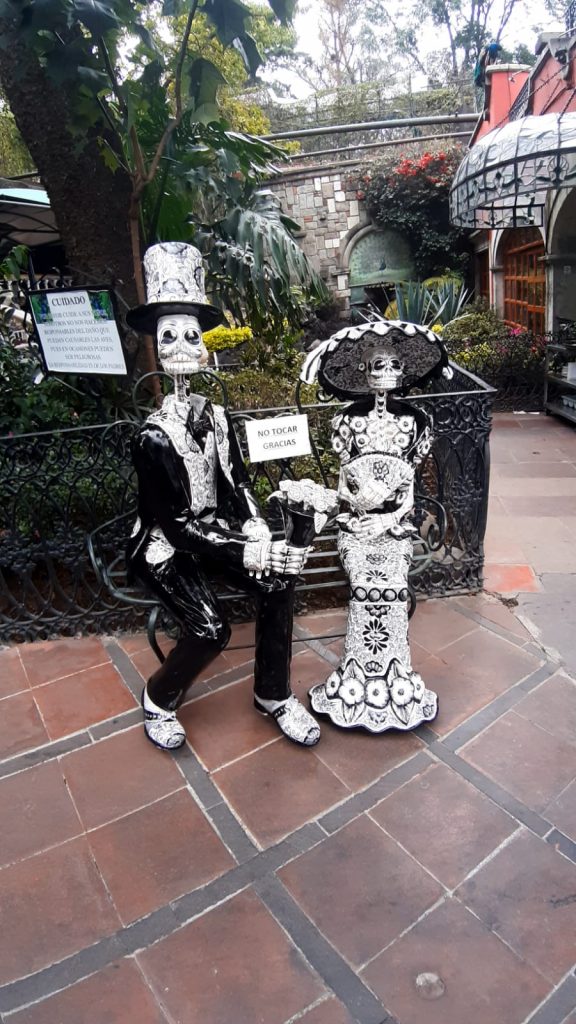
A correspondent in Mexico has sent back these pictures of the festivities in Mexico.

The female figure to the left is La Catrina. This image was popularised by an early 20th Century design by José Guadalupe Posada and developed in a mural by Diego Rivera. For more details click here.

A Day Off for the English

In the Laws of King Alfred the Great, this day was a day off for freemen. See my post on Days off in the Anglo Saxon Calender on August 15th.

First published in 2022, revised in 2023, 2024, 2025
Douai Martyrs Saints Day October 29th

Thomas Bilney martyred in Smithfield. Black and white engraving
Thomas Bilney martyred in Smithfield.

Today, is the feast day of 158 English Martyrs from the English School at Douai. They were killed by the English state between 1577 and 1680.

On the accession of the Protestant Queen Elizabeth, Catholics who preferred exile gathered in Douai (125 Kilometres South of Calais). An English School was set up, which was in essence a Catholic Oxford College in Exile. Its mission became to train priests to re-enter England and minister to the many Catholics who wanted to continue to practice their faith despite official intolerance.

Catholic worshippers were fined if they did not attend Church of England services in their local churches. Catholic Priests re-entering England could be charged with High Treason and, if found guilty, hanged, drawn and quartered. This was often at Tyburn (at the west end of Oxford Street in London).

In the short reign of Mary I, nicknamed ‘Bloody Mary’, over 250 protestants were burned at the stake for heresy. In the long reign of her sister, Elizabeth I, over 300 Catholics were executed for Treason by being Hanged, Drawn and Quartered. Elizabeth is known as ‘Good Queen Bess’. There is no value in balancing evil, but pro-rata Mary’s reign was much more bloody. Elizabeth would probably also suggest that she did not execute Catholics because of their belief, but because the policy of the Catholic Church was to destroy Elizabeth’s regime. So, the Priests were not executed for heresy but for treason. However, this is a fine distinction to be made, in such horrendous blood-letting.

The number of martyrdoms from one institution shows incredible bravery in the face of intolerance, and the Douai Martyrs were a remarkable group of people. Most have been beatified by the church, some have been made ‘venerable’, twenty have been canonised. A few remain simply as ‘martyrs’

In London in Ely Place is St Etheldreda’s Church, which has memorials to Catholic Martyrs, and no mention of Protestant Martyrs. A few hundred yards away in Smithfield is a plaque to the Protestant Martyrs under Queen Mary and no mention of the Catholic Martyrs. Personally, I think it is about time the two traditions made it clear that both groups of martyrs are worthy of equal distinction, and the authorities who allowed such toxic intolerance to triumph deserve our contempt.

Two examples of martyrs in Smithfield:

John Forest, a Franciscan Monk was burnt at the stake at Smithfield and commemorated in St Etheldreda’s Church. He was Catherine of Aragon’s Confessor, and refused to accept King Henry VIII as head of the Church of England.

John Rogers was a scholar and worked to continue William Tyndale’s work in translating the bible into English. He was the Vicar of the Holy Sepulchre Church, which is halfway between Smithfield and St Etheldreda. He was the first person to be burned during Queen Mary I’s reign, and mentioned on the memorial in Smithfield.

Thanks to my friend Derek, who suggested I cover this topic. His children went to a school in London named after the 158 English Martyrs,

For a longer look at the Protestant Martyrs at Smithfield have a look at my post which deals with the martyrdom of Thomas Thompkins a simple honest man burnt at the stake.

For more on St Etheldreda look at my post here.

First published in 2024, revised 2025

Battle of Hastings October 14th 1066

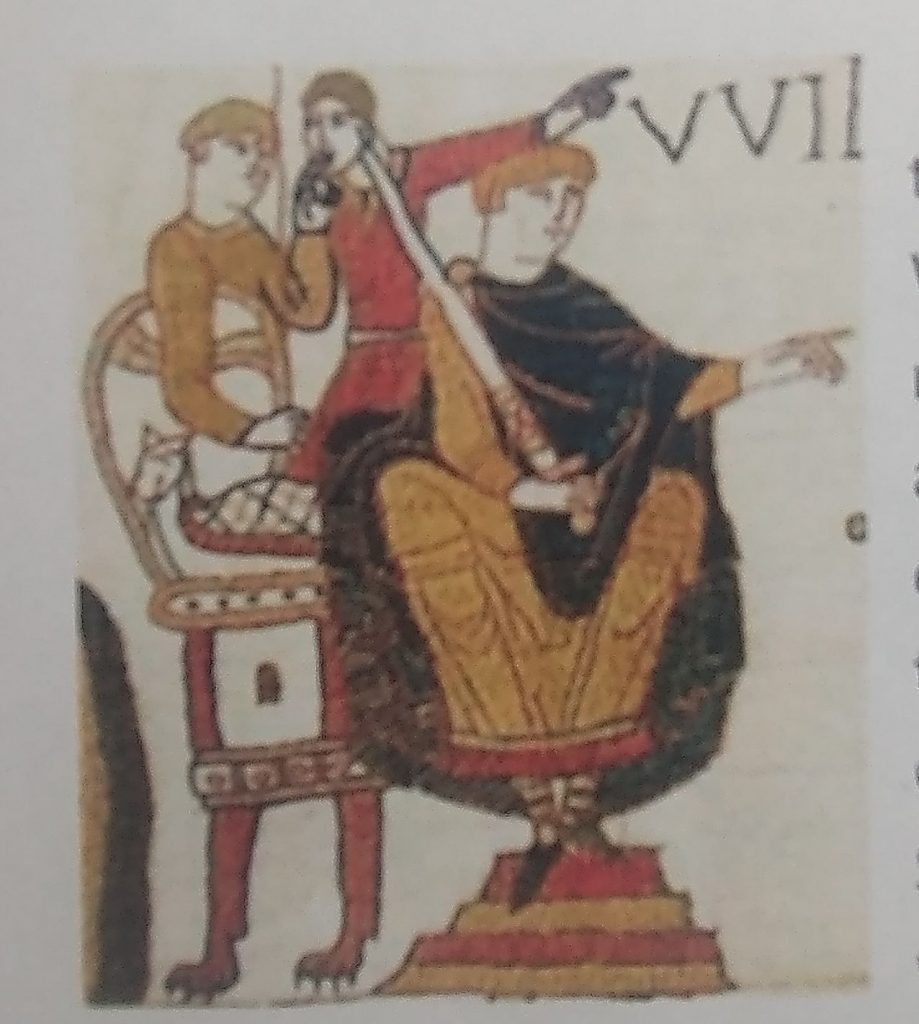
William the Conqueror before hte Battle of Hastings sitting on his throne with his pudding basin haircut and shaven face

Today is the anniversary of the most fateful battle in British History.  The victory by William the Bastard led to over 300 years or so of control of England by a French aristocratic elite. 

French replaced English as the language of the ruling elite which, over the long term, changed the English language to a powerful, nuanced hybrid language.

Arguably, it also established a class system in which the ruling class was separated from the ruled by language, education, culture, and wealth.  And which has reverberations down to the present time.

It pivoted England from a North Sea power to a European state.  And it may have contributed to England becoming a less community-based society.  To put it briefly, if England had remained focussed on the North Sea region, might we now have a society more like the Scandinavian Countries? – more willing to spend money on the public realm, a more equal and a happier society? A society in which the elite are less willing to educate their children in fee paying schools separate from the people of the country?

Harold’s Strategic Errors

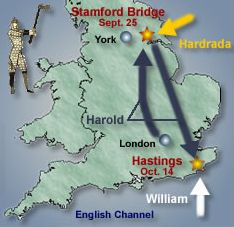
Map of 1066

Personally, I’m quite angry with King Harold II.  He should have won the Battle of Hastings, or at the very least made sure that defeat at that battle did not mean conquest by the Normans.

Harold was in a strong position following the astounding victory over Harold Hadarada at Stamford Bridge, in Yorkshire.  Particularly, if Harold Had not rushed to confront William, but rested and gathered his troops.  This would have allowed his troops to recover and give time for fresh troops to join him .See my posts on the Battle of Stamford Bridge and the Battle of Fulford.

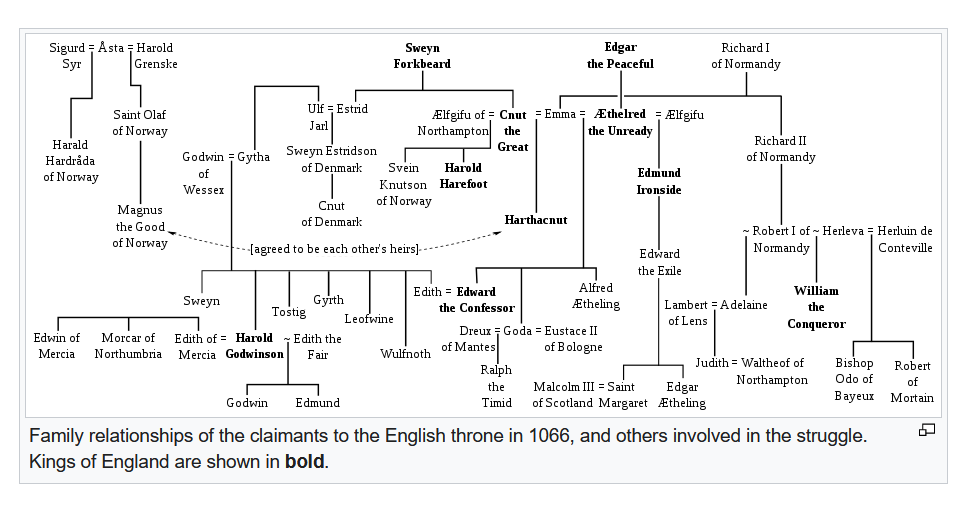
The 1066 claimants to the Throne of England

While waiting, Harold could have arranged the harrying of William’s army. Attacked their supply lines, increasing their anxiety, and sapping their resolution.  When Harold had reached maximum strength, then would be the time to take on the weakened Norman Army.

But also, he should have had a succession plan. What would happen if he lost the battle?  Who was to succeed him?  As it was, he took his two brothers with him to the Battle, where all three of them died, leaving no clear adult heir to the throne.  The English soon surrendered to William after the Battle of Hastings, precisely because there was no clear adult successor, unless that person was William himself. 

Why did the English surrender to William?

Given the catastrophe for the English ruling class that William inaugurated, it’s difficult to understand why the English magnates decided to accept William as King.  But let’s have a shot at looking at it from their perspective, they remembered that the reign of King Cnut, a Dane, created a successful fusion of English and Danish culture that was more stable than that of the weak English King Edward the Confessor.  So, recent history taught: better a strong foreign King than a weak English King.

They were not to know that William would ensure that virtually all English nobles, church leaders, language and culture, would be swept aside and replaced by Norman and French alternatives. England would never be the same.

The Battle of Hastings

As to the Battle itself, there is no definitive account of what happened.  We don’t know the composition of the armies nor their number.  Estimates vary from 7,000 to over 20,000. But it was a ferocious battle which lasted all day and was often in the balance. 

Harold fought the battle early, probably for 2 main reasons.  Firstly, he had won the Battle of Stamford Bridge with the same tactics of fighting immediately after a long march, surprising the enemy and winning an overwhelming victory.  Secondly, William had landed on Harold’s own personal land and Harold would not have easily borne a foreign power devastating his people. 

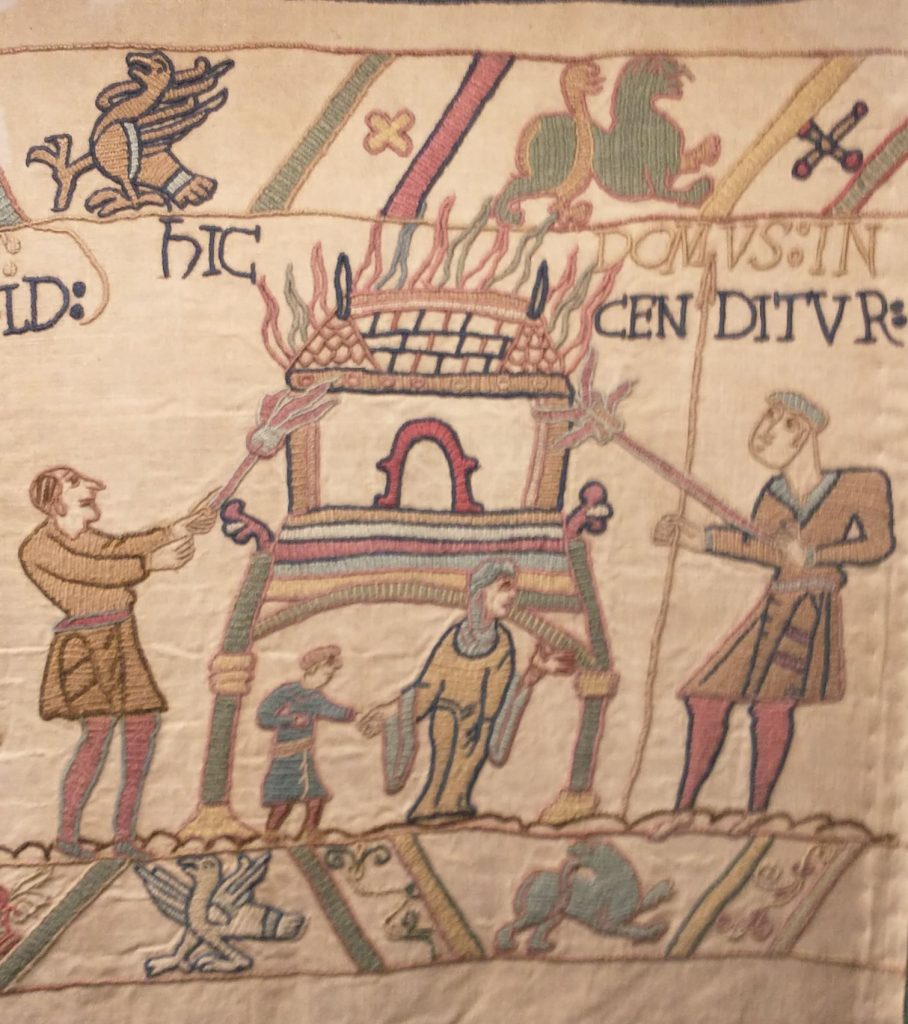
Normans burning English houses.
Reading Museum copy of the Bayeaux Tapestry Photo Kevin Flude

So, he matched as quickly as he could from London to Senlac near Hastings, where Battle Abbey would be later sited.  He chose the top of a ridge, with a stream or ditch in front of it.  William accepted battle and fighting began early in the day.  Troops were still arriving to reinforce Harold.  All he needed to do was hold his ground till dark and reinforcements would probably have made William’s position untenable.

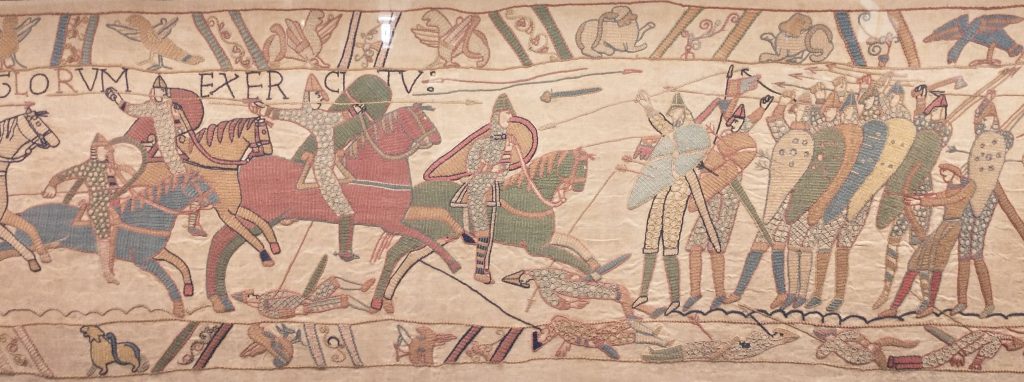
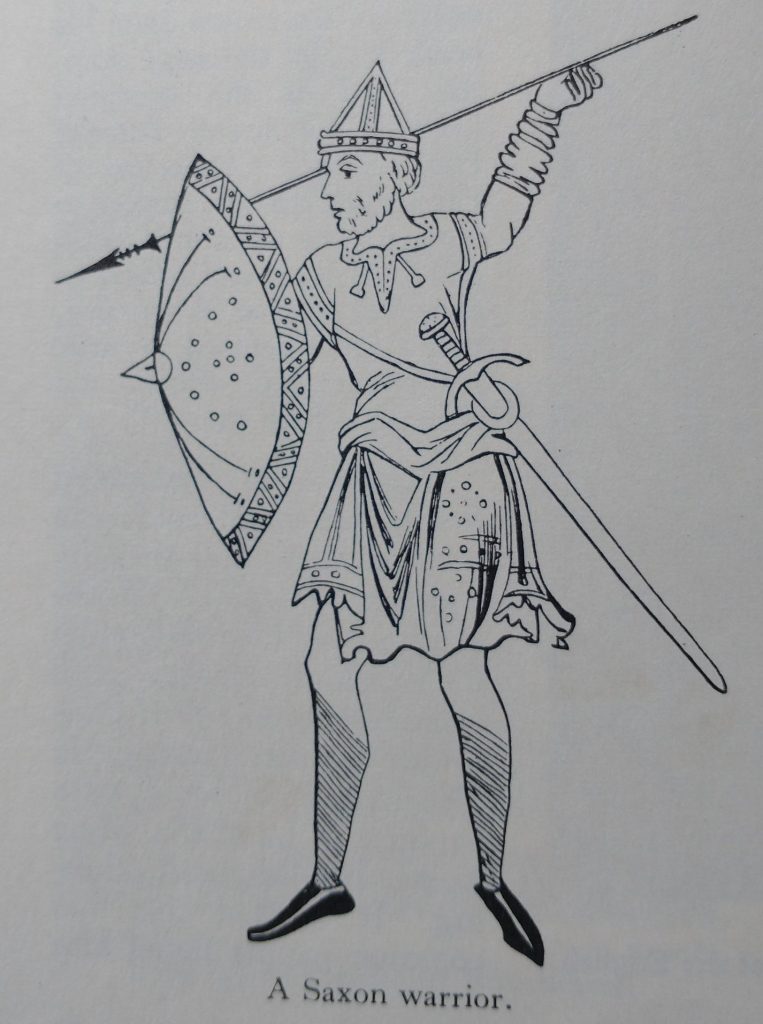
Harold would have established his shield wall, although there are suggestions this was done while the Normans attached. 

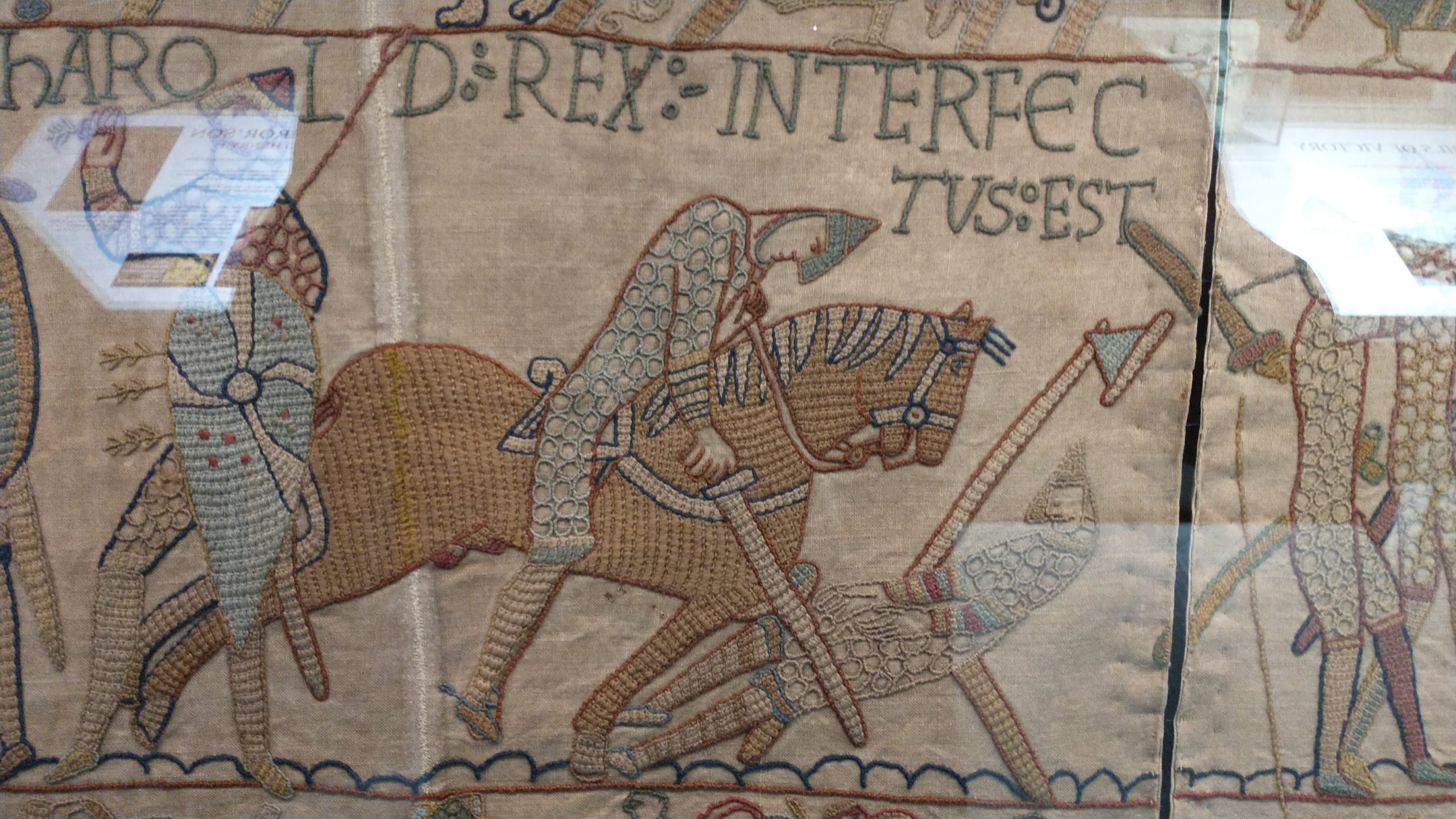
Mounted Normans confront the Saxon Shield Wall. 
Reading Museum copy of the Bayeaux Tapestry Photo Kevin Flude

Harold seems to have held the ground until late afternoon.  There are suggestions that his army was weakened by their rash pursuit of the retreating Normans down the hill.  The Normans thought William was killed but he showed his face to reassure his troops, rallied his troops and turned on the English who, without the protection of their shield wall and the high ground, were badly mauled.  The Normans renewed their attack.

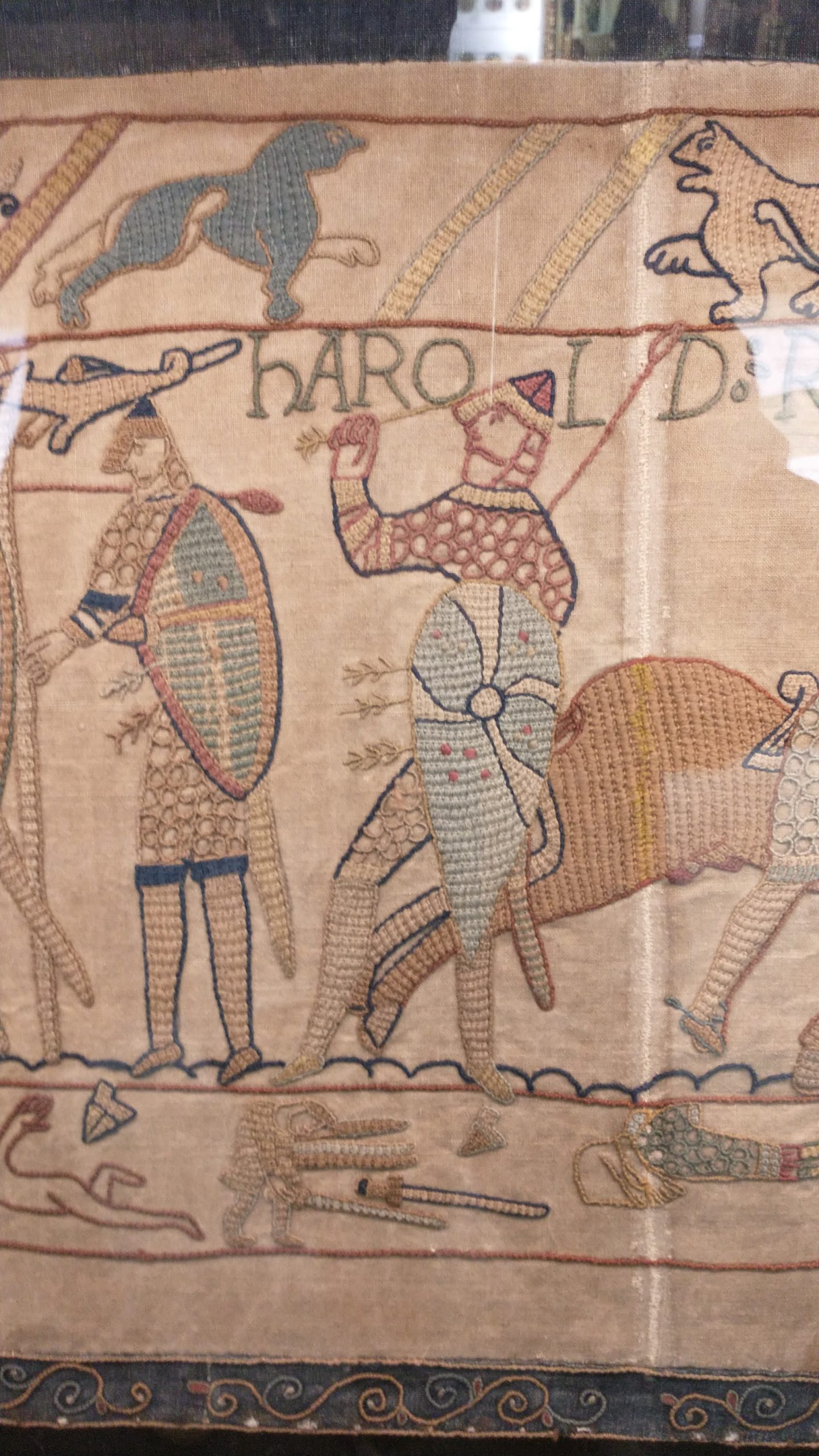
At some point Harold’s brothers were killed, followed by Harold himself, possibly after being injured in the face by an arrow, but that is not proven. 

As darkness fell the English retreated, pursued by the Normans.  The English fled back to London.  In the following days, the Normans attached London Bridge, but Londoners stoutly defended the Bridge. They were led by the  Portreeve Ansgar. He h ad been wounded at Hastings and was carried in a litter during the siege. The Portreeve was the King’s official in London, similar to a Shire Reeve.  He also had the Danish title of ‘Staller’.  The next day the Witangemote met in London and elected Edgar the Atheling as King. He was a nephew of Edward the Confessor, but only about 14 years old.

The Normans retreated from London and proceeded to harry the South, trying to find a crossing point over the Thames. We will return to the story in the following weeks.

Charlie Watts and the Bayeaux Tapestry

Charlie Watts owned a 19th Century reproduction of the Bayeaux Tapestry and this has recently been sold. It was photographed by a V&A photographer. ( To see more follow the link below.

https://www.theguardian.com/world/2024/jan/29/bayeux-museum-lands-19th-century-reproduction-of-tapestry-for-16000?utm_term=65b730e6db0a371ac9c15f2aed7f9cf8&utm_campaign=GuardianTodayUK&utm_source=esp&utm_medium=Email&CMP=GTUK_email

The Tapestry is also coming to the UK on exhibition at the BM in 2026

On This Day

1586 Mary, Queen of Scots put on trial accused of Treason

1964 Martin Luther King wins Nobel Peace Prize. (see also my page on his visit to St Pauls Cathedral)

First Published in 2024, revised 2025

James Sadler & other Balloon Ascents October 4th 1784

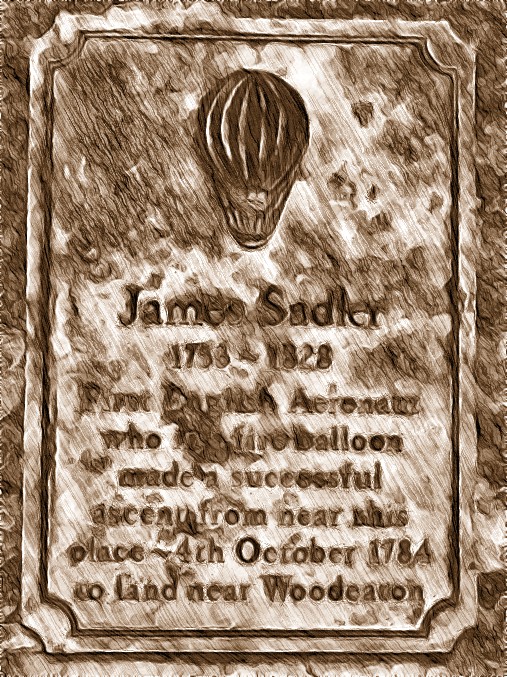
Sketch of plaque to James Sadler, Balloonist. On wall of Deadman’s Walk, Merton College, the Meadows in Oxford

On February 9th, 1784 James Sadler launched an unmanned Hot Air Balloon, from what is now St Hilda’s College. The Balloon travelled all the way to Kent, 79 miles away. James Sadler was the son of a cook, but worked at the Ashmolean Museum, in Oxford. The launch place is an area of green which is bounded to the North by Merton College. To the South by the Meadows. To the West by Christ Church, and to the East the Oxford Botanical Garden, the first in Britain. Also a lovely place.

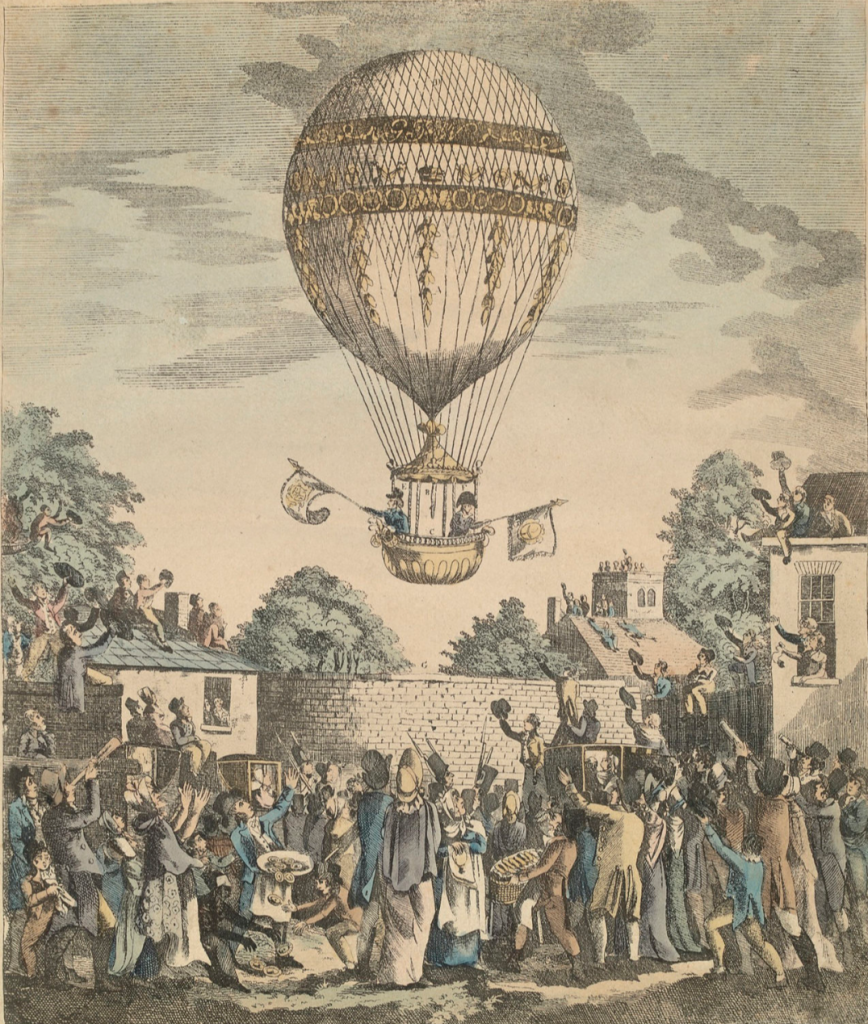
Later the same year, he hazarded his own life for the first Hot-air Balloon ascent by an Englishman. On the morning of October 4th, he lit the stove in the Balloon basket to create the hot air. He rose an estimated 3600 ft. On board he had a barometer and a thermometer. He used the Barometer to estimate height. The thermometer was not very useful because of the heat of the stove.

He reported that his elevated position caused no inconvenience, except that it was colder than on the ground. A wind drove him towards a wood as he put out the stove. He had ‘recourse to the Oars’ which he exercised with great Success’. I think the oars were used to poke the air out of the balloon to help his descent. He landed safely 6 miles away in Woodeaton.

Further Flights by Sadler

On the 17th November he ascended in a Hydrogen Balloon, which was also successful. He made further ascents, including one at Mermaid Theatre in Hackney. He survived into his 70s and died in 1828. Sadly, one of his sons died in a ballooning accident in 1824.

Note on the Hackney Balloon Ascent

I found no reference to the Mermaid Theatre in Hackney. But there was a Mermaid Tavern in Mare Street, originally just north of St Augustine’s Church. It was then rebuilt on the other side of the road in the 1740s. And this is where the Hackney flight ascended from.

‘View of Balloon of Mr Sadler’s ascending with him and Captain Paget of the Royal Navy from the Gardens of the Mermaid Theatre’ source Facebook post.

Flights but not by the English!

When it comes to ‘firsts’, there is a lot of jiggery-pokery as to who really has the precedence. The actual first balloon ascent was on November 21st, 1783 by de Rozier and d’Arlandes. Their hot-air balloon was designed by the Montgolfier Brothers.

The first ascent in England was Vincent Lunardi. His flight was a couple of weeks before Sadler’s on September 15th. But then he was from Tuscany. It took off from the Honourable Artillery Company grounds at Moorfields in London.

So Sadler wasn’t the first, but was the first Englishman to ascend in a hot-air balloon. But my antennae is twitched by the use of the term ‘Englishman’. Because, since 1707, and the Act of Union, England was now in the Kingdom: ‘The United Kingdom of Great Britain’. Something was wrong. So yes, I discovered that the British (and Scottish) first ascent was by James Tytler. This took place from Edinburgh on August 25th 1784. To see more on Tytler who was an Apothecary and the editor of the Second Edition of the Encyclopedia Brittania go here:

To read about Zeppelin attacks on Britain see my post here.

On This Day

1226 – Death of St Francis

First published in October 2025