
Battle of Hastings October 14th 1066

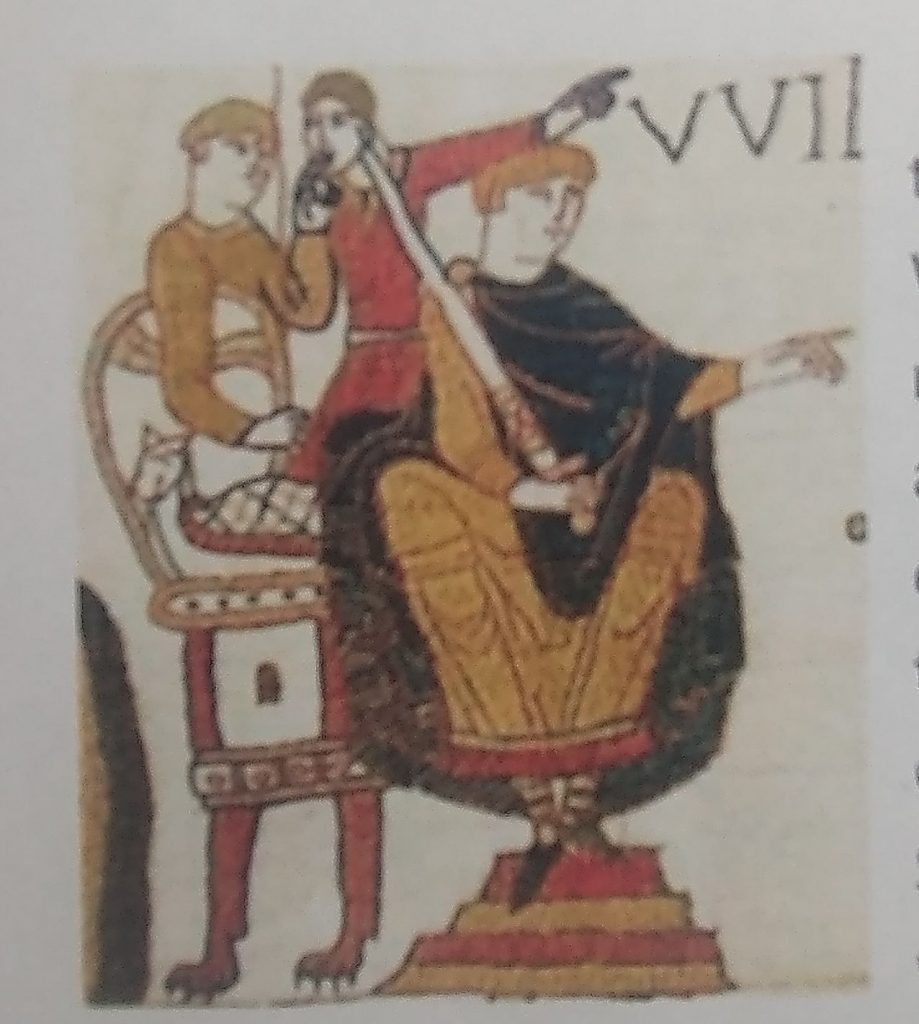
William the Conqueror before hte Battle of Hastings sitting on his throne with his pudding basin haircut and shaven face

Today is the anniversary of the most fateful battle in British History.  The victory by William the Bastard led to over 300 years or so of control of England by a French aristocratic elite. 

French replaced English as the language of the ruling elite which, over the long term, changed the English language to a powerful, nuanced hybrid language.

Arguably, it also established a class system in which the ruling class was separated from the ruled by language, education, culture, and wealth.  And which has reverberations down to the present time.

It pivoted England from a North Sea power to a European state.  And it may have contributed to England becoming a less community-based society.  To put it briefly, if England had remained focussed on the North Sea region, might we now have a society more like the Scandinavian Countries? – more willing to spend money on the public realm, a more equal and a happier society? A society in which the elite are less willing to educate their children in fee paying schools separate from the people of the country?

Harold’s Strategic Errors

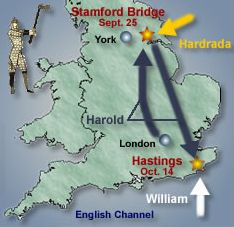
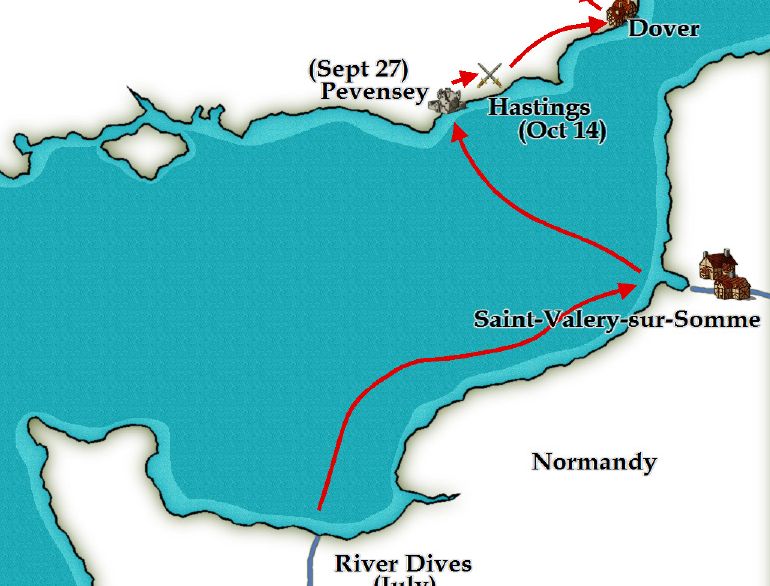
Map of 1066

Personally, I’m quite angry with King Harold II.  He should have won the Battle of Hastings, or at the very least made sure that defeat at that battle did not mean conquest by the Normans.

Harold was in a strong position following the astounding victory over Harold Hadarada at Stamford Bridge, in Yorkshire.  Particularly, if Harold Had not rushed to confront William, but rested and gathered his troops.  This would have allowed his troops to recover and give time for fresh troops to join him .See my posts on the Battle of Stamford Bridge and the Battle of Fulford.

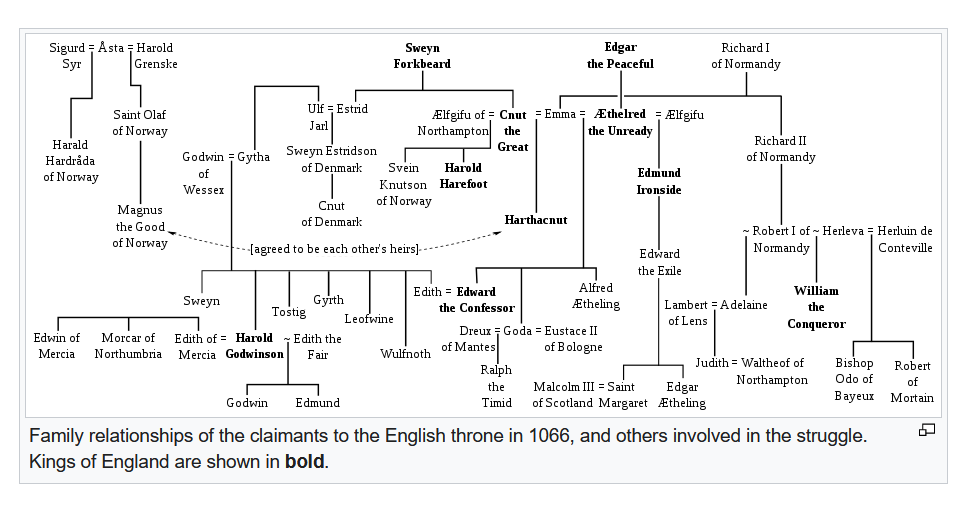
The 1066 claimants to the Throne of England

While waiting, Harold could have arranged the harrying of William’s army. Attacked their supply lines, increasing their anxiety, and sapping their resolution.  When Harold had reached maximum strength, then would be the time to take on the weakened Norman Army.

But also, he should have had a succession plan. What would happen if he lost the battle?  Who was to succeed him?  As it was, he took his two brothers with him to the Battle, where all three of them died, leaving no clear adult heir to the throne.  The English soon surrendered to William after the Battle of Hastings, precisely because there was no clear adult successor, unless that person was William himself. 

Why did the English surrender to William?

Given the catastrophe for the English ruling class that William inaugurated, it’s difficult to understand why the English magnates decided to accept William as King.  But let’s have a shot at looking at it from their perspective, they remembered that the reign of King Cnut, a Dane, created a successful fusion of English and Danish culture that was more stable than that of the weak English King Edward the Confessor.  So, recent history taught: better a strong foreign King than a weak English King.

They were not to know that William would ensure that virtually all English nobles, church leaders, language and culture, would be swept aside and replaced by Norman and French alternatives. England would never be the same.

The Battle of Hastings

As to the Battle itself, there is no definitive account of what happened.  We don’t know the composition of the armies nor their number.  Estimates vary from 7,000 to over 20,000. But it was a ferocious battle which lasted all day and was often in the balance. 

Harold fought the battle early, probably for 2 main reasons.  Firstly, he had won the Battle of Stamford Bridge with the same tactics of fighting immediately after a long march, surprising the enemy and winning an overwhelming victory.  Secondly, William had landed on Harold’s own personal land and Harold would not have easily borne a foreign power devastating his people. 

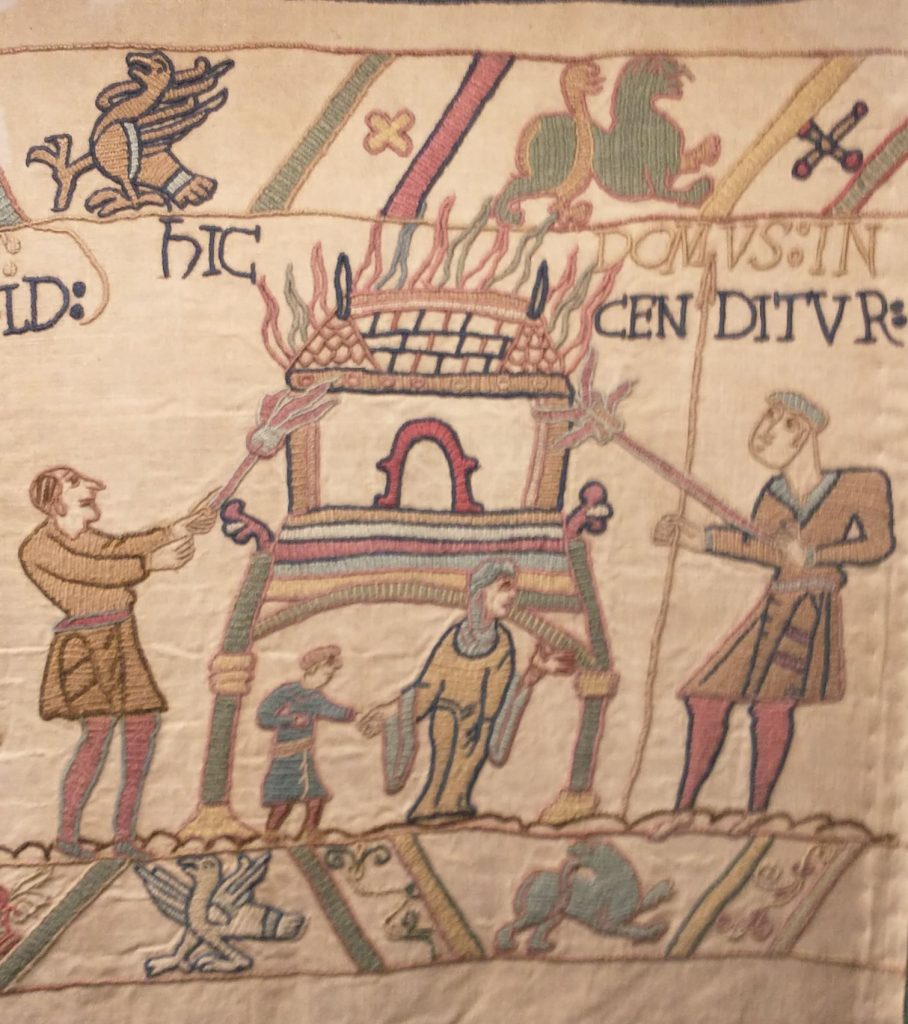
Normans burning English houses.
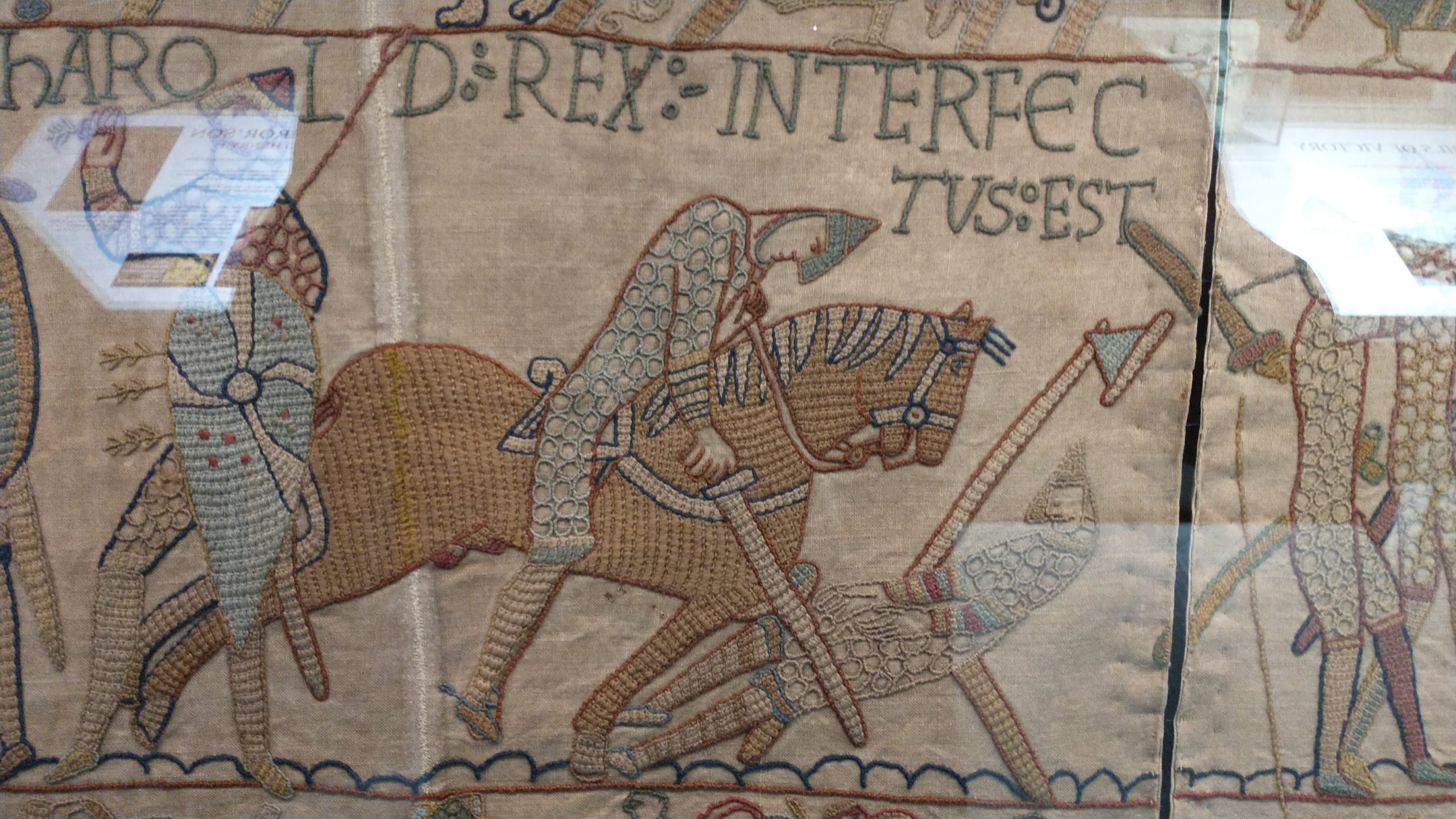
Reading Museum copy of the Bayeaux Tapestry Photo Kevin Flude

So, he matched as quickly as he could from London to Senlac near Hastings, where Battle Abbey would be later sited.  He chose the top of a ridge, with a stream or ditch in front of it.  William accepted battle and fighting began early in the day.  Troops were still arriving to reinforce Harold.  All he needed to do was hold his ground till dark and reinforcements would probably have made William’s position untenable.

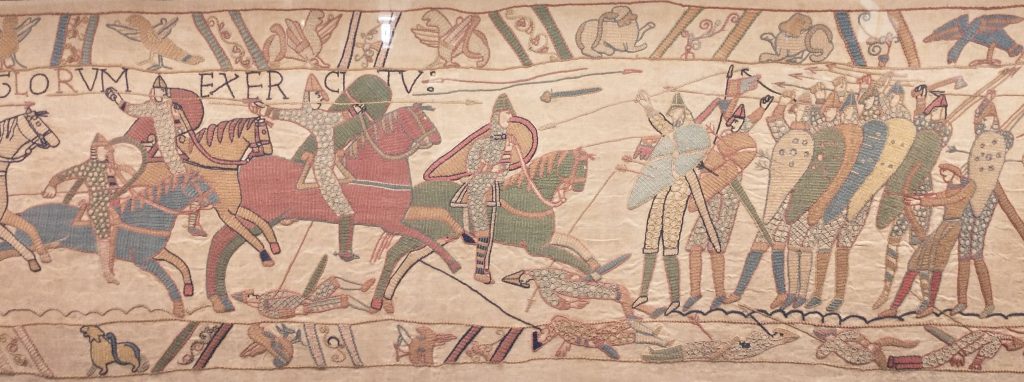
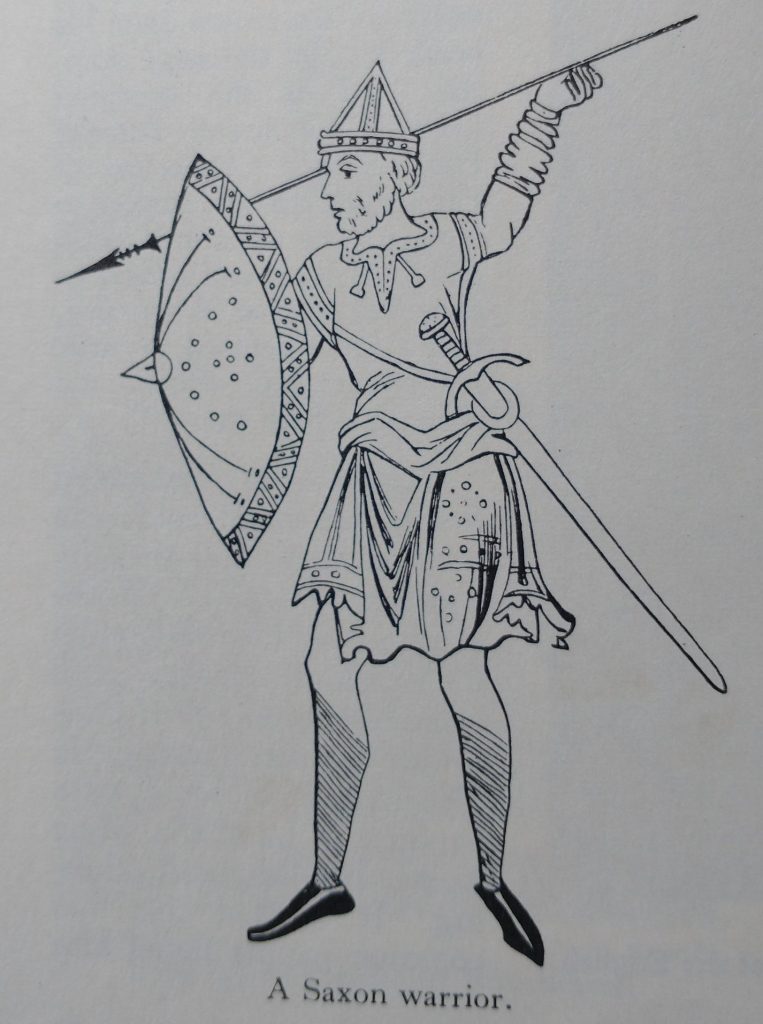
Harold would have established his shield wall, although there are suggestions this was done while the Normans attached. 

Mounted Normans confront the Saxon Shield Wall. 
Reading Museum copy of the Bayeaux Tapestry Photo Kevin Flude

Harold seems to have held the ground until late afternoon.  There are suggestions that his army was weakened by their rash pursuit of the retreating Normans down the hill.  The Normans thought William was killed but he showed his face to reassure his troops, rallied his troops and turned on the English who, without the protection of their shield wall and the high ground, were badly mauled.  The Normans renewed their attack.

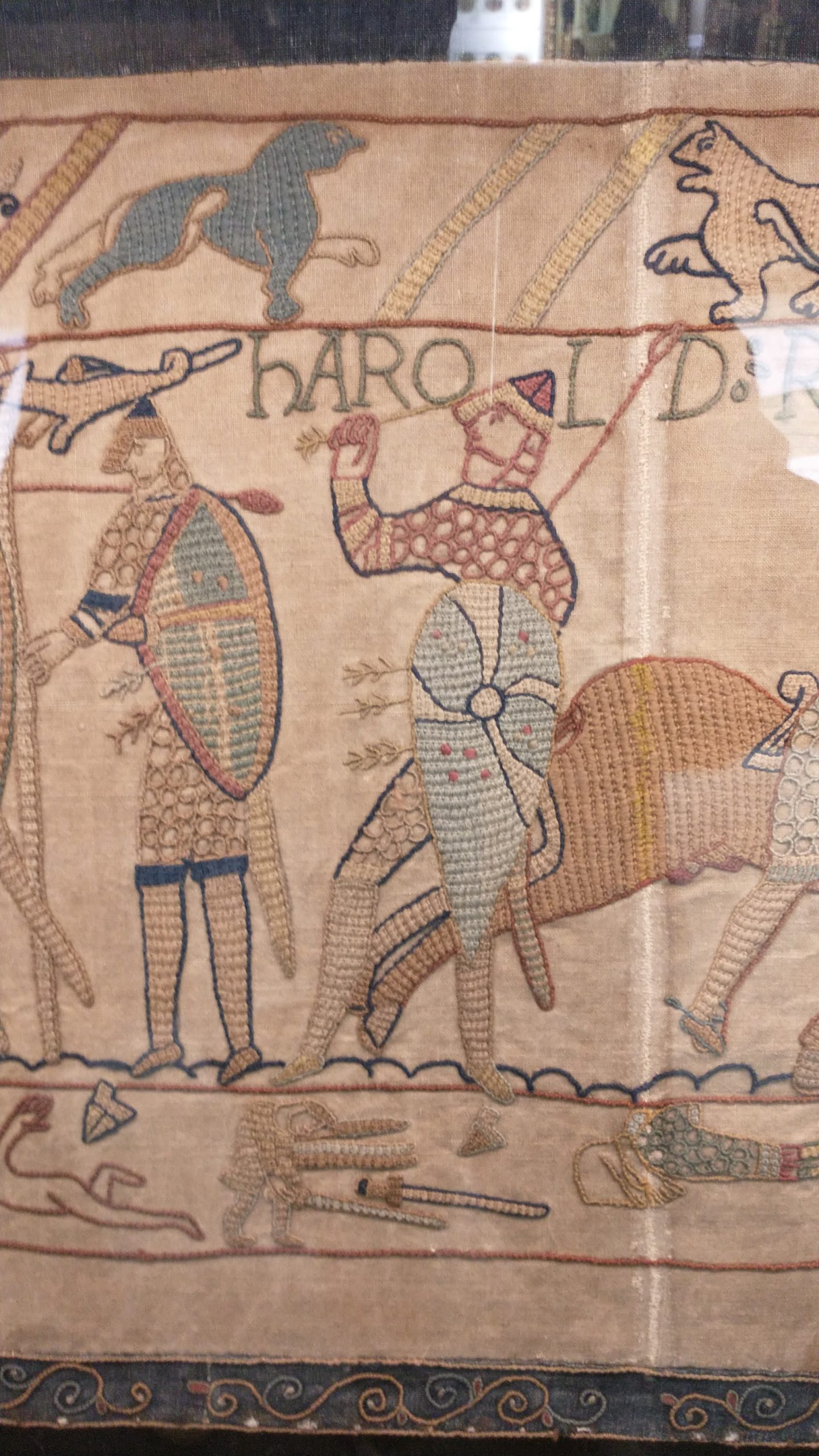
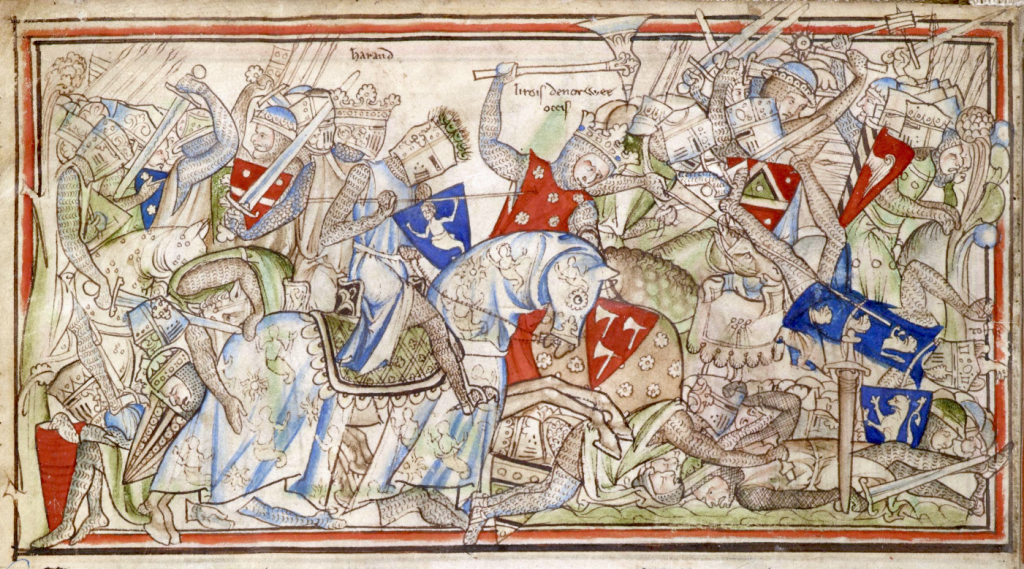
At some point Harold’s brothers were killed, followed by Harold himself, possibly after being injured in the face by an arrow, but that is not proven. 

As darkness fell the English retreated, pursued by the Normans.  The English fled back to London.  In the following days, the Normans attached London Bridge, but Londoners stoutly defended the Bridge. They were led by the  Portreeve Ansgar. He h ad been wounded at Hastings and was carried in a litter during the siege. The Portreeve was the King’s official in London, similar to a Shire Reeve.  He also had the Danish title of ‘Staller’.  The next day the Witangemote met in London and elected Edgar the Atheling as King. He was a nephew of Edward the Confessor, but only about 14 years old.

The Normans retreated from London and proceeded to harry the South, trying to find a crossing point over the Thames. We will return to the story in the following weeks.

Charlie Watts and the Bayeaux Tapestry

Charlie Watts owned a 19th Century reproduction of the Bayeaux Tapestry and this has recently been sold. It was photographed by a V&A photographer. ( To see more follow the link below.

https://www.theguardian.com/world/2024/jan/29/bayeux-museum-lands-19th-century-reproduction-of-tapestry-for-16000?utm_term=65b730e6db0a371ac9c15f2aed7f9cf8&utm_campaign=GuardianTodayUK&utm_source=esp&utm_medium=Email&CMP=GTUK_email

The Tapestry is also coming to the UK on exhibition at the BM in 2026

On This Day

1586 Mary, Queen of Scots put on trial accused of Treason

1964 Martin Luther King wins Nobel Peace Prize. (see also my page on his visit to St Pauls Cathedral)

First Published in 2024, revised 2025

Michaelmas Old Style – October 11th

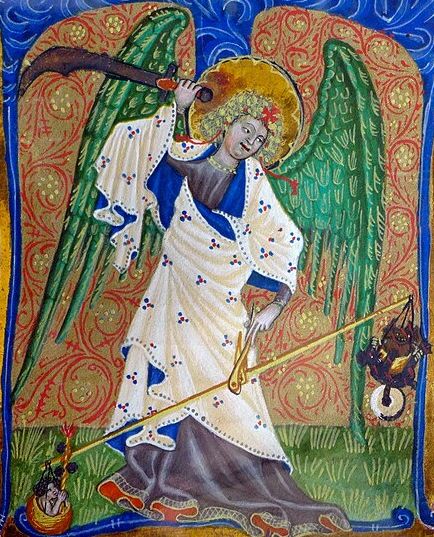
Michaelmas Old Style. St. Michael weighing souls during the Last Judgement, Antiphonale Cisterciense (15th century), Abbey Bibliotheca, Rein Abbey, Austria (Wikimedia by Dnalor_01 license (CC-BY-SA 3.0))

I am catching up as I have been away. So I’m a little behind in my days.

October 11th is the day that the Devil fell out of heaven and landed in a Blackberry Bush. So. you are, therefore, not wise to eat them after October 11th. St Michael’s Day is now celebrated on September 29th (see my post here). But before September 1752, it was celebrated on what is now October 11th, now styled ‘Michaelmas Old Style’. The change of date is due to the introduction in the UK of the Gregorian Calendar.

Saint Michael is the chief of the archangels. Saint Gabriel was celebrated on the eve of the Annunciation on 24 March (see my post here). St Raphael on the 24th October, But more recently the Churches celebrate all the Archangels at Michaelmas. It is now called the celebration of St Michael and All Angels.

Terms. Colleges, Lawyers and Quarterdays

Apart from its religious significance, St Michael’s Mass was an important date on the civic calendar. Terms began, rent fell due, and work contracts ran out. It was the end of the ploughman’s year, and the day when Hiring Festivals or Mop Festivals took place. Look at my post on the Stratford Mop festival

So in Oxford, the autumn term is called Michaelmas. The Spring Term Hilary on St Hilary’s Festival of January 14th. The third term is called Trinity, which takes place on Trinity Sunday the first Sunday after Pentecost. The law courts also have a Michaelmas term.

It is one of the Quarter Day’s of the year, close to the Solstices and the Equinox into which the medieval and early modern world was divided:

(The above list is copied from Wikipedia).

Eat a Goose for Good luck at Michaelmas

It is probably too late to tell you this year. But “if you eat goose on Michaelmas Day you will never lack money all year“. Or as they said in Yorkshire: ‘He’at eateth goose on Michaelmas won’t find his pockets short of brass.’ Jane Austen wrote to Cassandra on Michaelmas 1813 ‘I dined upon goose today, which I hope with secure a good sale of my second edition.’ Pride and Prejudice was published in 1813.

St Michael is one of several archangels. He was protector of the Israel. He has four main roles in heaven. He is the leader of the heavenly host in its defeat of Satan. He is the Angel of Death, the Weigher of Souls, and the Guardian of the Church. For more on archangels, see the second half of my post on Michaelmas here.

On this day

The Romans celebrated ‘meditrinalia’ where they celebrated the new wine and the Gods that made it possible. They toasted the wine chanting:

‘I drink old and new wine to cure old and new disease.’

First Published in 2024, revised in 2025

October – Winterfylleth, Hydref, or Deireadh Fómhair

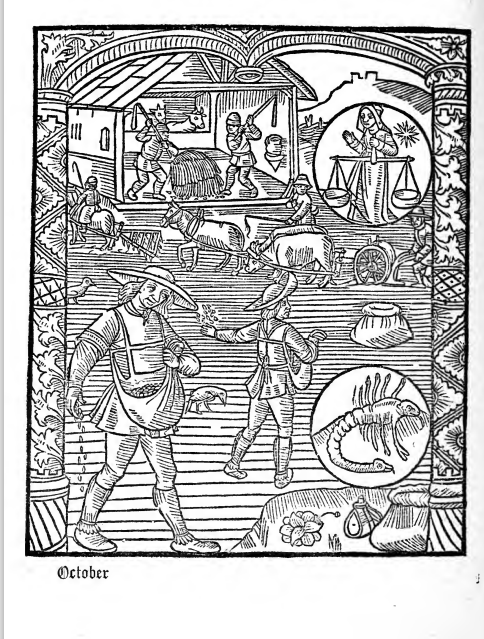
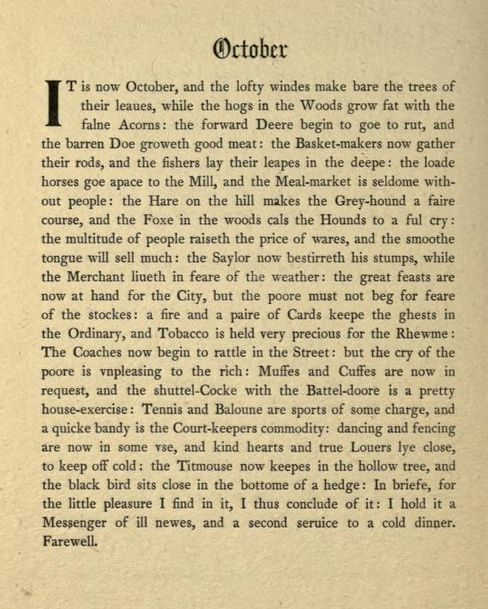
October from the Kalendar of Shepherds

Kalendar of Shepherds

The 15th Century French illustration in the Kalendar of Shepherds shows October as a busy month. It is the time when the cereals are being flailed, the fields ploughed and sown. Perhaps winter wheat or barley or peas and beans?

The 16th Century English text of the Kalendar of Shepherds (read the illustration) shows what a busy month it was, but the writer comes down hard against the month as ‘a messenger of ill news’ the harbinger of cold dark nights.

About the Kalendar of Shepherds.

The Kalendar was printed in 1493 in Paris and provided ‘Devices for the 12 Months.’ I’m using a modern (1908) reconstruction of it using wood cuts from the original 15th Century version. It includes various text from 16th and 17th Century sources. (Couplets by Tusser ‘Five Hundred Parts of Good Husbandrie 1599. Text descriptions of the month from Nicholas Breton’s ‘Fantasticks of 1626. This provides an interesting view of what was going on in the countryside every month.

https://wellcomecollection.org/works/f4824s6t To see the full Kalendar, go here:

Astrological October

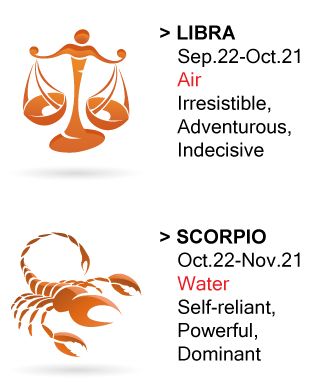
The star signs of October are the Scales of Libra and the Scorpion of Scorpio.

The star signs of October

Angelic October

Michael is the Angel of Autumn, the Angel of Judgement Day, and the Weigher of Souls. Uriel is the Angel of Libra and was sent by God sent to warn Noah. So the protector against, floods, fire and natural disasters. Scorpio’s Angel is Barbiel, he looks over health, genitalia and doubtful things. (‘An Angel Treasury’, Jacky Newcomb).

You might like to look at my post on Michaelmas here.

Roman October

In the Roman world it was, originally, the 8th Month (octo=8) but then they added January and February to the year. So it became the 10th Month. It was their time to celebrate the new wines of the Harvest. In Britain, the wine harvest is late September to October, but in hotter climes can be from July. But the grapes need to be processed, and the Romans thought that new wine was health giving and celebrated it in October.

Rustic October

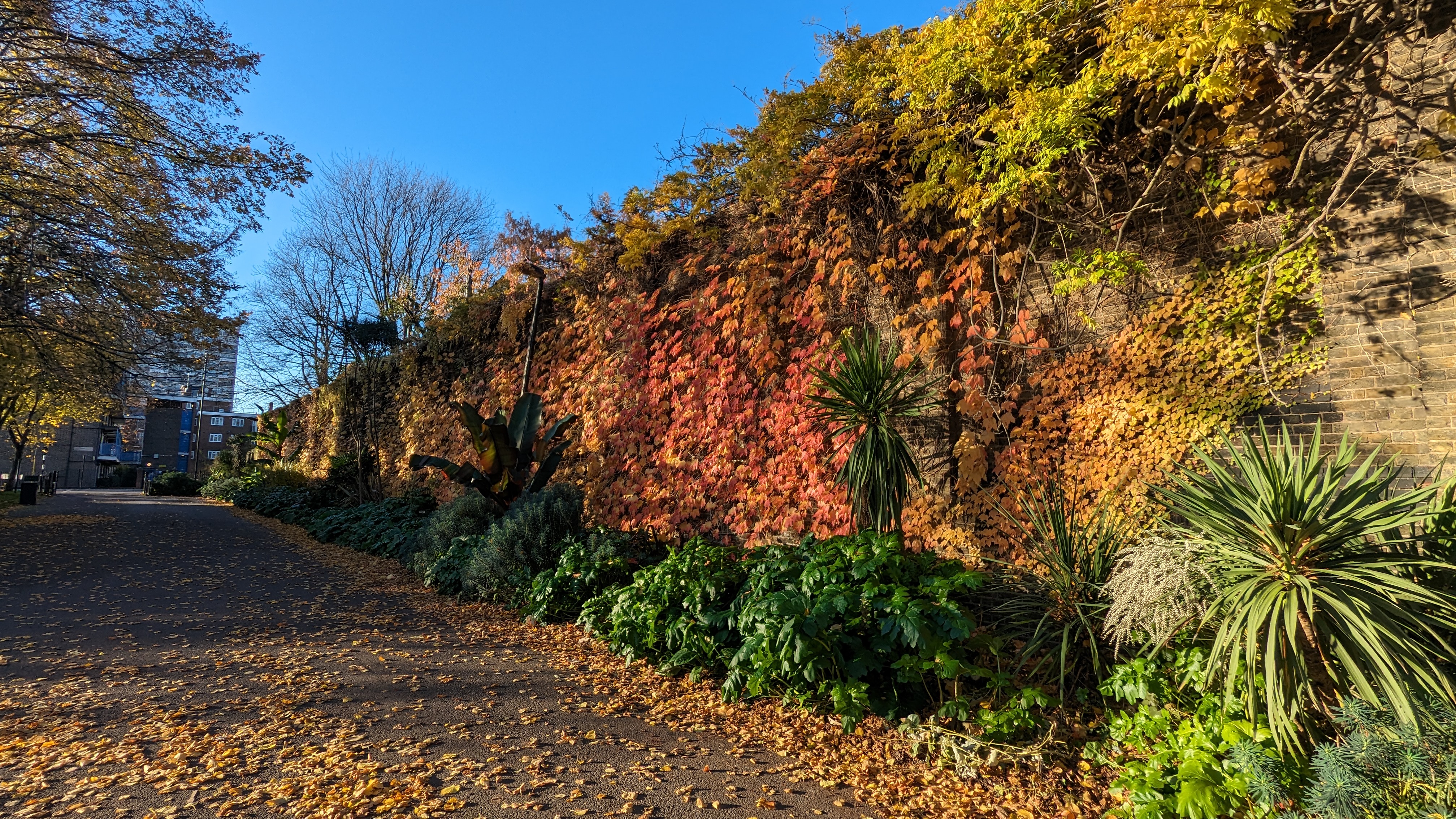
But for many people, October is a beautiful month. The dying leaves bring a sophisticated array of rustic colours, which makes the wooded countryside exceptionally beautiful.

Autumn in Haggerston Park, London (photo Kevin Flude)

It can still be warm enough to go for pleasant walks. And the surfeit of the harvest and the culling of animals meant there was plenty to eat before winter austerity begins.

Anglo-Saxon Winter Fall

The Venerable Bede tells us that the month was called Winterfylleth, in the 8th Century. The English divided the year into Summer and Winter. And Winter began for the Anglo-Saxons on the first full moon of October. This means that this year winter begins on 7th October. This is the Harvest or Hunter’s Moon, which is also a supermoon, the first of 3 ending the year.

Celtic October

In Welsh, it is Hydref, which also means Autumn. For the Welsh it was the last month of Autumn and the last month of the year. The Celtic new year, and winter starts on 1st November. The same is true of the Irish Calendar. Autumn is called Fómhair, and October Deireadh Fómhair which means ‘End of Autumn’.

Astronomical & Meteorological Autumn

Astronomically, autumn ends at the Winter Solstice and meteorologically at the end of November. So the Celtic Autumn ends a whole month or more earlier than the other measures. My very personal view is that Winter begins on November 5th more often than not. This is an evening we often spend outside watching the fireworks displays to celebrate Guy Fawkes’ Night. It always seems to be the first time that you feel cold enough to need hat, gloves, and scarves.

First Published in Autumn 2024, revised 2025

The Archaeology of London Walk

Roman layer opus signinum,

This is Kevin Flude’s Walk for London Walks. It normally starts in the early evening and from Exit 3 Bank Underground Station To See if the walk is running soon follow this link.

Legend says that London was founded as New Troy. Historians believed it was founded as Londinium after the Bridge was built by the legionaries of the Emperor Claudius in AD 43.   Archaeologists in the 1970s and 1980s discovered that London was refounded as Lundenwic in the 7th Century and again in the 9th Century when it was called Lundeburg.

This walk tells the epic tale of the uncovering of London’s past by Archaeologists. And provides an insight into the dramatic history of the Capital of Britannia, and how it survived revolts, fires, plagues, and reacted to the decline and fall of the Roman Empire.  It became the foremost English City but with periods under Viking and Norman control.

We tell the story in the streets of the City of London, beginning in the valley of the River Walbrook by the Temple of Mithras, and visit many sites where important archaeological discoveries were made.

See my Roman London

Updated 7th October

William the Bastard invades England September 28th 1066

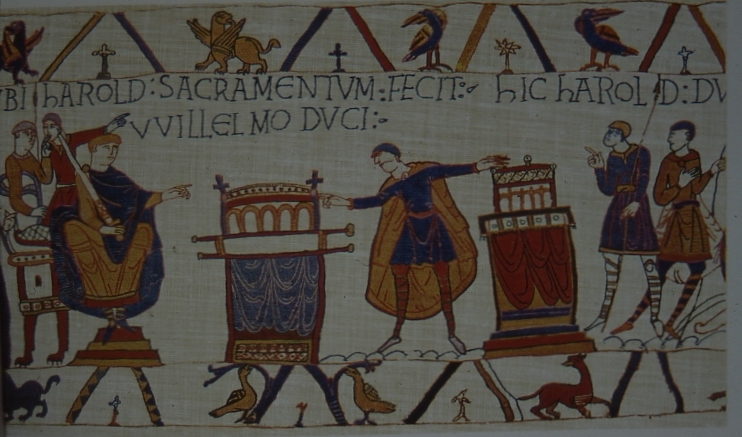
Bayeux Tapestry, Harold with moustache swearing an oath, William with pudding basin haircut sitting down at left.

Harold II was scurrying south after almost annihilating the Viking army of Harold Hardrada, when he heard news that the Normans had landed at Pevensey. (see my post (battle-of-stamford-bridge-september-25th-1066)

William was an unlikely Duke because it is very rare for illegitimate children to take the title of their father. It was normally not even considered as an option. A legitimate cousin or uncle would be chosen instead.  But he not only got the title and survived many rebellions, but was known as the William the Bastard

He came to England in 1051 to see his distant cousin Edward the Confessor, who was the son of the English King Aethelred the Redeless (the ill advised – more often called ‘the Unready) and Emma of Normandy.  Edward, whose marriage to Edith of Wessex was not great, insofar as both made claims to be holy virgins.  So, Edward had no children. He, according to William, offered him the throne.

Did he, though? Well, the Pope agreed he did.  William claimed that Harold of England accepted William as heir, too. And not only that, Harold, he said, agreed under Holy Oath.

The Bayeaux Tapestry, shows Harold making an oath with his hands on holy relics. But British Historians believe it may never have happened.  And if it did, then it was an inadmissable endorsement as it was not freely given, Harold had been detained on a visit in 1064. He was probably never going to get home unless he took the oath.

But the clincher for the English viewpoint is that Harold was the legitimate King because he was elected as was traditional by the Witanagemote, the King’s Council.

But was he really the legitimate claimaint? He had no English Royal blood in him, only a distant touch of Danish royalty on his mum’s side.  It is true, that in England, the King’s Council or Witan elected Kings and often did not choose the first in line but preferred the best suited candidate be he brother, cousin or uncle. But Harold was only the brother of the King’s wife, no royal blood there. 

However, Harold was so powerful that he would have prepared the ground for his election irrespective of whether this was the freely given choice of the Witan. His father, Earl Godwin, had been a disloyal and over mighty subject of King Edward, but had prepared the way for Harold to be virtual ruler of the country long before the King died.

So, even if the Witan’s endorsement clearly choose Harold there was plenty of scope for a contested succession.

In late September 1066 Harold was the English King  who had already defeated the Norwegian claimant. Now, he was rushing to put to rest the Norman claim.

William Prepares for Conquest

William had begun by getting Pope Alexander II’s blessing for his claim to the English throne. He spent 10 months planning the invasion. He recruited adventurers from Normandy, France, Brittany, and Flanders. His allies collected boats for the invasion, while William had hundreds of new boats built, using thousands of carpenters, metalworkers, carters etc and cutting down a vast number of trees. 

The boats were ready by 12 August near Caen on the River Dives.  They set sail, but contrary winds blew them into Saint Valery-sur-Seine.  Winds in the summer are usually blowing south on that coast, and William had a long, frustrating wait for a north wind.

Meanwhile, Harold was waiting with his army and a 400 ship navy at his manor of Bosham, near Chichester, on the South Coast.  Then he heard about the Norwegian invasion of the North. He probably hoped it was getting too late in the year for William to risk invasion. So, Harold decided, on September 18th, to go North with his army, which was the more immediate risk to his throne.

Map of the the progress of William;s fleet. Opinion suggests landing was on 28th September 1066

On September 27th, the north winds blew, the Normans embarked, and on the 28th of September William and his boat, given as a present to him by his wife, found themselves alone in the Channel off the English coast.

After an anxious wait, the rest of the fleet was spotted sailing towards William.  They landed at Pevensey.  Built a castle at Hastings and proceeded to ravage the land of Harold’s homeland. Harold had by now destroyed the Norwegian threat at Stamford Bridge on 25th September. He heard William had landed and rushed towards London

To be continued

Battle of Stamford Bridge September 25th 1066

Battle of Stamford Bridge by Matthew Paris

Following the Viking victory at the Battle of Fulford Bridge, York, on September 20th the Viking army camped at Stamford Bridge.This was on the River Derwent. Here they intended to rest and celebrate the defeat of the English Earls of Mercia and Northumbria. They were unaware that King Harold I of England had left London for the north on September 18th. (See my post on the Battle of Fulford Bridge here.)

Five days later, on September 25th, Harold’s army surprised the Vikings by marching towards the bridge over the Derwent.  It is said that Harold’s army marched 185 miles from London in 4 days which is a scarcely believable 46 miles a day. But if they left on 18th and battle was 25th that’s as much as 7 days. This still means 26 miles a day which is still very quick for an army carrying weapons and armour. So no wonder the Vikings were surprised!

According to tradition, a large Viking held the English army as he blocked the narrow wooden bridge across the river.  No one could defeat him. But an enterprising English soldier found a boat, floated under the bridge and killed the Viking by pushing his spear through the bridge timbers, killing the Viking.

According to the 13th Century Icelandic historian, Snorri Sturlson, the fight began only after a rider approached the Viking Army. He offered Harold’s Brother, Tostig back his Earldom if he would withdraw from the fight.  Tostig asked what would be in it for his ally, the King of Norway? The reply was ‘Seven feet of English ground, as he is taller than other men’.  The offer was refused. It was said that the rider was King Harold himself.

Once over the Bridge, the English found the Vikings had formed a defensive formation.  However, they had left their armour behind at their boats.   The battle lasted all day but ended with the slaughter of most of the Vikings. King Harold Hardrada, one of the greatest warriors of his age and Tostig were both killed.  The extent of the slaughter is shown by the fact that of the 300 boats of the Viking army, only 24 returned to Norway.

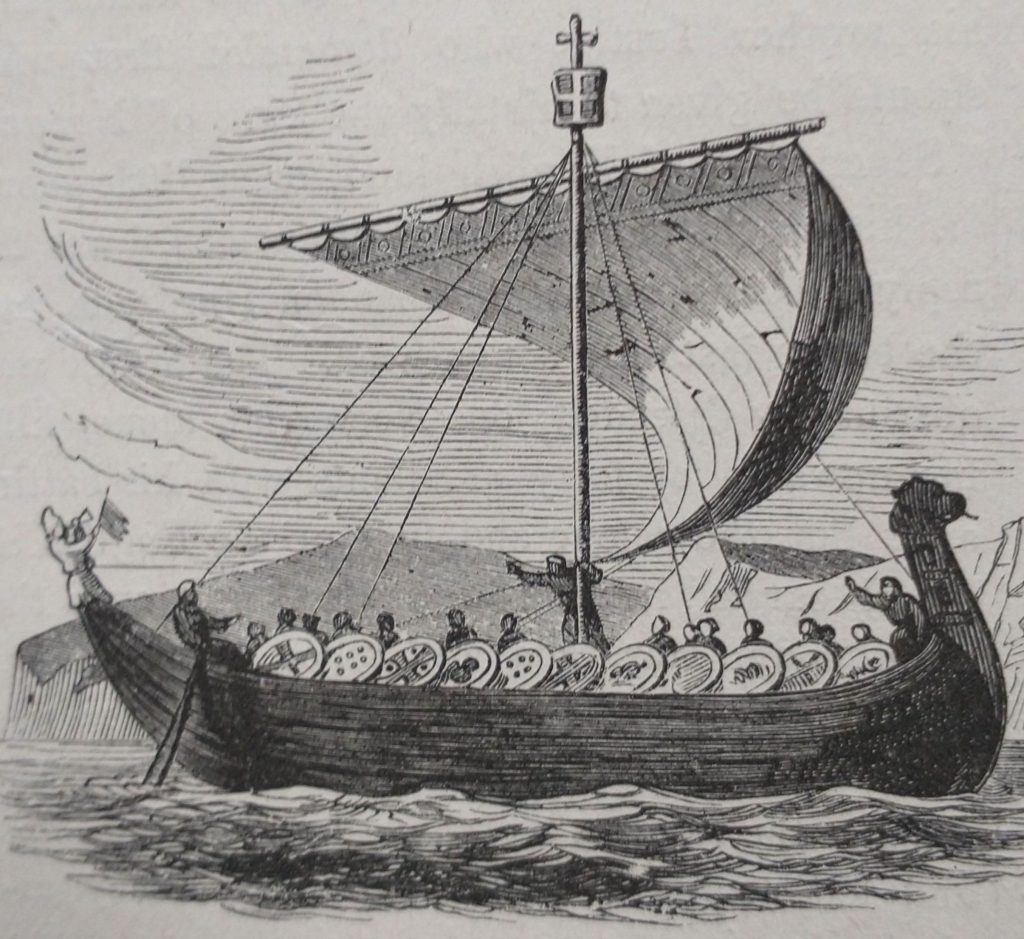
A boat of the period, derived from the Bayeaux Tapestry

A stunning victory for Harold I. But, the English had suffered terrible losses at the battle of Fulford. Harold had also left the South Coast unguarded  And three days later, on September 28th, William, Duke of Normandy landed with his army at Pevensey. 256 miles south.

First published in 2024 revised 2025

St Giles Day and Cripplegate September 1st

Public domainThe Master of St Giles, National Gallery. ‘St Giles and the Hind’
This work is in the public domain in its country of origin and other countries and areas where the copyright term is the author’s life plus 100 years or fewer.

St Giles

Today, is St Giles’ Feast Day. His story is mostly unknown, but his legend holds that he was a hermit who had a pet Hind in the Arles District of France sometime after the fall of the Roman Empire. The hounds of King Wamba (a Visigothic King) were chasing the deer, and shot an arrow into the undergrowth. The King and his men followed to discover Giles wounded by the arrow, protecting the hind, who he held in his arms. The hounds were miraculously stayed motionless as they leaped towards the hind. Wamba, which apparently means ‘Big paunch’ in Gothic, also had a Roman name: Flavius. Giles was injured in the leg, although the image above shows the arrow hit his hand. Wamba set him up as an Abbot of a Benedictine Monastery.

St Giles is, therefore, the patron saint of disabled people. He is also also invoked for childhood fears, convulsions and depression. He was very popular in medieval Britain, with over 150 churches dedicated to him, including four in London. Perhaps the two most famous are St Giles Without Cripplegate in London and St Giles Cathedral in Edinburgh.

St Giles Cripplegate, photographed by the Author at night from the Barbican Centre.

St Giles Cripplegate

St Giles was built in the 11th Century, rebuilt in the 14th Century and again in 1545-50 after nearly being destroyed by fire. It survived the Great Fire of London, being just beyond the extent of the Fire. But it was badly damaged in the Blitz, although the Tower and the outer walls survived.

Oliver Cromwell married Elizabeth Bourchier here. John Foxe of the Book of Martyrs, John Speed, the Cartographer, Martin Frobisher, the explorer and John Milton, the Poet were buried here.

Shenanigans with Milton’s Coffin

Milton’s coffin was opened in 1793 and he was said to have looked as if he had just been buried. One of those present, then, had a go at pulling Milton’s teeth out. A bystander helped by hitting his jaw with a stone. The few teeth Milton had left in his head were divided between the men, who also took a rib bone and locks of his hair. The Caretaker then opened the coffin for anyone who wanted to see the corpse!

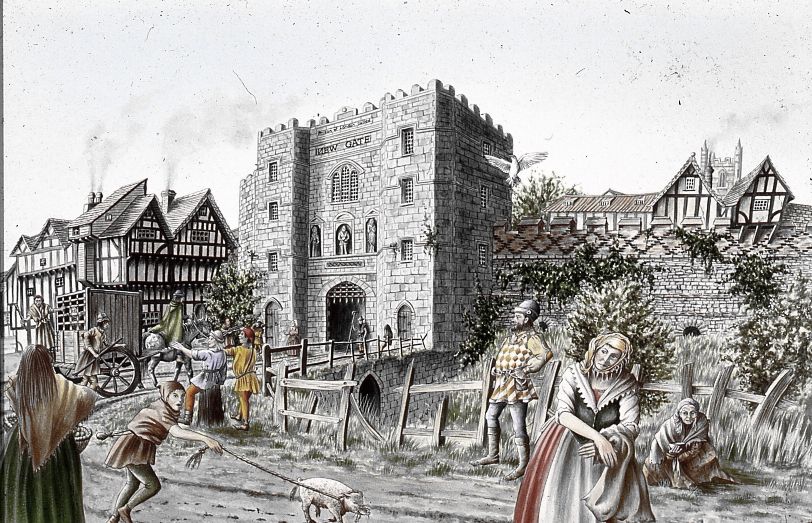
From the London City Wall Trail.

Cripplegate

St Giles is without Cripplegate. It is one of the Gates in the City Wall (originally the North Gate of the Roman Fort). It may be named because St Giles made it agood place to gather for those trying to beg alms for their disabilities. An alternative explanation it from the Anglo Saxon crepel, which is an underground tunnel which is said to have run from the Gate’s Barbican to the Gate. Or perhaps because of the cure of cripples when Edmund the Martyr’s remains passed through the Gate in 1010.

The Corner Tower of the London City Wall, the Barbican in the background, and the tower of St Giles’ Church behind the Tower. Photo by the author

First Published in September 2024, and revised in 2025.

September – ‘Winter’s Forewarning and Summer’s Farewell’

Kalendar of Shepherds illustration of September showing harvesting grapes and the astrological signs for Virgo (August 23 – September 22) and Libra (September 23 – October 22)

It is that time of the year when you say ‘Where has the Summer gone? It can’t be September already?’ But, meteorology, speaking, Autumn starts today. September 1st was chosen on a numerical basis for ease of measuring rather than any profound floral, agricultural or solar reason. So, there are three Gregorian Calendar months for each season, and each season starts on the first of the month. Autumn: September, November and December.

Autumn, Harvest, Fall

Autumn comes from Latin (autumnus) which went into French and then into English. The season was also called Harvest (which went into Dutch herfst, German Herbst, and Scots hairst -Wikipedia) or from the 16th Century: the ‘fall of the year’ or ‘fall of the leaf’ which spread to America as Fall.

Summer’s Ending

It still feels like summer. In England, we often have a glorious September, and what we can an ‘Indian’ Summer, an unexpectedly warm period in mid-September to October.

Solar Autumn

Of course, for the real Autumn, we have to wait for the Equinox, the beginning of Astronomical or Solar Autumn. This year, it is on Monday, September 22nd, 2025, 7:19 pm.

Astrological September

The star signs for astrological September are: Virgo which is linked to Aphrodite (Venus) the Goddess of Love and Libra which is linked to Artemis (Diana), virgin goddess of many things, including hunting, wild animals, children, and birth.

Star signs for September

September

September gets its name from the Romans, for whom it was the 7th Month of the year (septem is Latin for seven). Later, they added two new months so it became our 9th Month. (For more on the Roman year, look at my post here).

It is called Halegmonath in the early English language, or the holy month, named because it is the month of offerings, because of the harvest, and the mellow fruitfulness of September? Medi in Welsh is the month of reaping, and An Sultuine in Gaelic which means the month of plenty.

Roman personification of Autumn from Lullingstone mosaic

Early Modern September and the autumn of Life

Here is an early 17th Century look at September from the Kalendar of Shepherds – for more on the Kalendar, look at my post here.

From the Kalendar of Shepherds

The Kalendar has an additional shorter look at September (see below). And it continues with its theme, linking the 12 months of the year with the lifespan of a man – 6 years for each month. So September is a metaphor for man at 56 years of age, in their prime and preparing for old age.

September from the Kalendar of Shepherds. The last sentence beginning ‘and then is man’ shows the link between September and the beginning of the autumn of life.

Season of ‘mists and mellow fruitfulness

John Keats (1795 – 1821) wrote a great poem called ‘To Autumn’:

Season of mists and mellow fruitfulness,
  Close bosom-friend of the maturing sun;
Conspiring with him how to load and bless
  With fruit the vines that round the thatch-eves run;
To bend with apples the moss’d cottage-trees,
  And fill all fruit with ripeness to the core;
    To swell the gourd, and plump the hazel shells
  With a sweet kernel; to set budding more,
And still more, later flowers for the bees,
Until they think warm days will never cease,
    For summer has o’er-brimm’d their clammy cells.

Who hath not seen thee oft amid thy store?
  Sometimes whoever seeks abroad may find
Thee sitting careless on a granary floor,
  Thy hair soft-lifted by the winnowing wind;
Or on a half-reap’d furrow sound asleep,
  Drowsed with the fume of poppies, while thy hook
    Spares the next swath and all its twined flowers:
And sometimes like a gleaner thou dost keep
  Steady thy laden head across a brook;
  Or by a cider-press, with patient look,
    Thou watchest the last oozings, hours by hours.

Where are the songs of Spring? Ay, where are they?
  Think not of them, thou hast thy music too,—
While barred clouds bloom the soft-dying day,
  And touch the stubble-plains with rosy hue;
Then in a wailful choir the small gnats mourn
  Among the river sallows, borne aloft
    Or sinking as the light wind lives or dies;
And full-grown lambs loud bleat from hilly bourn;
  Hedge-crickets sing; and now with treble soft
  The redbreast whistles from a garden-croft,
    And gathering swallows twitter in the skies.

Written September 19, 1819; first published in 1820. This poem is in the public domain and available here:

First published September 2024, revised 2025

Feast of St Mary & Days off in Anglo-Saxon England August 15th

Titian’s Assumption of the Virgin Mary (Wikipedia)

August 15th is the date of the celebration of the Assumption of St Mary.  This is the day she went to heaven.  Opinion is divided as to whether she died and went straight to heaven. Or did she go directly to heaven without having to pass go?  The stories about the Virgin Mary were a big part of the controversy in the Reformation. Protestants did not find evidence in the Bible supporting many of the tales they had been told by the clergy.  Once they could read the Bible in their own language they were able to assess the evidence for themselves.

August 15th was taken as a day off in the Medieval oeriod.  My post is inspired by Octavia Randolph who has an excellent web site with a fine post on Anglo Saxon Slavery. You can read the post here: https://octavia.net/slavery-in-anglo-saxon-england.  But what particularly caught my attention was the excerpt from King Alfred the Great’s laws.  It lays down the law on the days off which should be given to freemen.

These days are to be given to all free men, but not to slaves and unfree labourers: twelve days at Christmas; and the day on which Christ overcame the devil (15 February); and the anniversary of St Gregory (12 March); and the seven days before Easter and the seven after; and one day at the feast of St Peter and St Paul (29 June); and in harvest-time the whole week before the feast of St Mary (15 August); and one day at the feast of All Saints (1 November). And the four Wednesdays in the four Ember weeks are to be given to all slaves, to sell to whomsoever they please anything of what anyone has given them in God’s name, or of what they can earn in any of their spare time.
Translated by Simon Keynes and Michael Lapidge and taken from Octavia.net

That comes to 38 days by my reckoning.  In the UK 4 weeks off is a good average holiday entitlement.  If we add 8 bank holidays in England and Wales  that gives us 36 days off a year.  So 1500 years of ‘progress’ has given us minus 2 days, and a lot less in the USA!

How depressing!  Of course, most of these days off were lost during the Industrial Revolution and only clawed back by Trade Unions.

The days off are interesting, obviously Christmas and Easter. Harvest is more of a surprise in that one would expect to be working very hard bringing in the harvest.  But, maybe the 7 days off were given after it was brought in?

The individual days make sense as they are the feasts of major saints or festivals – so St Gregory’s Day – he being the Pope who ordered the mission to convert the English to Christianity in 597AD.  (See my post on St Gregory here).

Saints Peter and Pauls Day. St Mary and All Saints Day. I’m surprised there is no Candlemas or Michelmas.(More information about celebration of St Peter and St Paul in London in my post here)

Slaves holidays

Slaves seem to only have 4 days however.  These are the Wednesday in Ember Weeks.  Ember Days and Ember Weeks were Fasting Days, either named after a latin phrase for fasting or from Ymbren which is the Anglo-Saxon for circuit or revolution.  It is thought that the days were originally tied to the ‘cycle of life’ that it part of each year.  But later on became more liturgical and based on fasting.

They may have been founded in Roman roots. There only seems to be 3  in the days of the early church, rising to 4 ember weeks by the late 5th Century. They were brought to Britain by the mission of St Augustine, under Pope Gregory.  These seem to be the dates:

December the week starting after St Lucy’s Day (Dec 13th)

March between 1st and 2nd Sunday

June between Pentecost and Trinity Sunday

September 3rd Week ending at Michaelmas.

So, the poor old slaves get 4 Wednesdays off in the year!  This is presumably because the work of the household continues throughout the year, irrespective of season or festival.  Maybe they are given a day off on the fasting days because household work can be put off as everyone is fasting?

But the laws make it clear: this is the time the poor slaves can work for themselves and make a little on the side.

Do have a look at Octavia’s web site which for more on slaves in the Anglo-Saxon period.

First published in August 2025

August – Octavian’s Month

The Roman month

August was originally ‘sextilis’ or the 6th Month of the ten-month Roman Calendar. It became the 8th Month when January and February were added to the calendar to make a 12 month year.  By tradition, this happened during the reign of King Numa Pompilius. Originally set as a 29-day month but changed to a 31-day month in the reforms of Julius Caesar. It was subsequently renamed August by a sycophantic Senate trying to flatter the divine Octavian, Emperor Augustus. (more of my posts about the Roman Calendar here and here)

The Celtic August

In modern Irish, it is Lúnasa, which means the month of the festival of Lughnasa. It is a harvest festival, celebrating the ripening of wheat, barley, rye, and potatoes. In Ireland, it is the festival of the God Lugh, celebrated with games, fairs, and ceremonies. Lughnasa is 6 months after Imbolc. It marks the ending of lactation of lambs and the beginning of the tupping season. (impregnation of the ewes). It can be celebrated by climbing hills, visiting springs, wells, lakes and eating bilberries. (Myths and Legends of the Celts. James MacKillop).

In Welsh, it is Awst which comes from the Latin.  Called Calan Awst in Wales, it is the festival of August. In Gaelic Scotland it is called Lunasuinn, and Laa Luanistyn in the Isle of Man.

Lughnasa is one of the Celtic quarter days,. They are halfway between the Solstices and Equinoxes. They are: Samhain (1 Nov) Imbolc (1 Feb), Beltane (1 May) and Lughnasa (1 Aug). All are, or can be seen to be, a turning point in the farming year.

The Gallic Coligny ‘Celtic’ Calendar records August as a ‘great festival month’. The stone-carved Calendar was found near Lyon, whose Roman name was Lugodunum. The town is named after the Gaulish God Lugos. It is thought he is related to the Irish God, Lugh and the Welsh Llew Llaw Gyffes. He has an unstoppable fiery spear, a sling stone, and a hound called Failinis. The Romans associate Lugos with Mercury, and the Church associated Lugh with St Michael.

Lughnasa was founded by Lugh himself to honour his foster mother Tailtiu at Brega Co. Meath. Tailtiu became one of Ireland’s greatest festivals, springing from the horse races and marital contests set up by Lugh.

Anglo Saxon August

In Anglo-Saxon: the Venerable Bede, writing in the 8th Century, says August is Wēodmōnaþ or the Weed Month. Named because of the proliferation of weeds. Why does that seem such an unsatisfactory name for August? An early Kentish source calls the month Rugern – perhaps the month of the harvest of Rye? (Winters in the World by Eleanor Parker).

Lammas

For the Anglo-Saxons, August brings in the harvest period. This is the most important months of the year. The Harvest brings in the bounty of the earth. It needs to be carefully collected, enjoyed but not wasted. It begins with the festival of Lammas, which derives from the English words for bread and mass. The Bread Mass when bread made from the first fruits of the harvest is blessed.

Kalendar of Shepherds

Kalendar of Shepherds, August

The 15th Century illustration in the Kalendar of Shepherds, above, shows that the Harvest is the main attribute of the Month, and the star signs, Leo and Virgo.

The 16th/17th Century text in the Kalendar of Shepherds gives an evocative insight into the month.

(For more about the Kalendar)

First Published in 2024, revised in August 2025