St Germanus Day & Original Sin July 31st

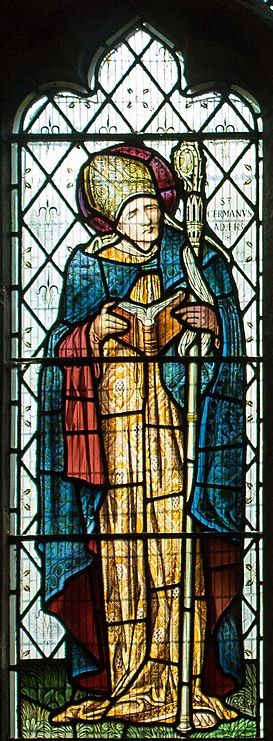
St Germanus of Auxerre, Window in St Paul’s parish church, Morton, Lincolnshire, made by Sir Edward Burne-Jones and William Morris in 1914. Photo by Jenny of Jules & Jenny from Lincoln, UK (CC BY 2.0 Wikimedia Photo by Jenny of Jules & Jenny from Lincoln, UK)

St Germanus is the source of one of the few contemporary references to Britain in the 5th Century (the Dark Ages). One of his followers wrote his life story. The Saint, a Bishop in France, was sent to Britain because the Pelagian Heresy was endangering the Catholic version of Christianity. Pelagius was a highly educated British (or possibly Irish) priest who moved to Rome in the late 4th Century. He lived by a strict moral code, attacking Catholic laxity and opposing St Augustine of Hippo’s theory of Divine Grace. By contrast, Pelagius promoted human choice in salvation and denied the doctrine of original sin. Wikipedia tells us that he:

considered it an insult to God that humans could be born inherently sinful or biased towards sin, and Pelagius believed that the soul was created by God at conception, and therefore could not be imbued with sin as it was solely the product of God’s creative agency.

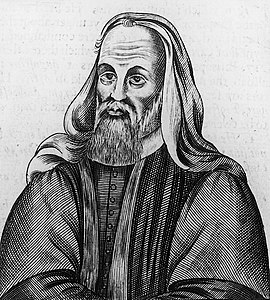
17th Century print of Pelagius

Germanus was sent to Britain, where he confronted Pelagian converts in a public debate which is thought to have taken place in a disused Roman amphitheatre. The author is not interested in Britain, per se, so does not tell us which town it was, but, it is mostly assumed to be St Albans, although London is possible.

In the stadium, the Saint and his acolytes confound the heretics and, so, convert the town’s people sitting watching the debate. St Germanus goes to a nearby shrine of St Alban to thank God, falls asleep in a hut, and is miraculously saved from a fire. He then comes across a man called a Tribune, and helps defeat a Saxon army in the ‘Alleluia’ victory. The importance of all this is that it gives us a few glimpses of Britain, in about 429AD, two decades after the Romans have left.

The British Bishops were led in their heresy by someone called Agricola. The writer describes these bishops as ‘conspicuous for riches, brilliant in dress and surrounded by a fawning multitude’. The use of the title ‘Tribune’ in the story suggests Roman administrative titles are still in use 19 years after the date of the ‘formal’ end of Roman Britain, 410AD. The Alleluia victory over the Saxons also gives us an early date for Saxon presence in the country as an enemy.

St Albans is the favoured choice for the location of the event because, Bede tells us St Albans was born, martyred and commemorated in Verulamium, now called St Albans. Archaeology shows possible post Roman occupation of the town. And it has a famous Amphitheatre.

However, Gildas, who is writing 200 years or more before Bede, tells us St Alban was born in Verulamium but martyred in London. This makes sense as London was the late Roman Capital and more likely to be the site of a martyrdom. There is also a church dedicated to St Albans close to the Roman Amphitheatre, where Gildas tells us the execution took place. Unfortunately, the Church cannot be, archaeologically dated back to 429AD.

Bede’s account of the martyrdom of St Albans is also somewhat farcical, as God divides the waters of the River Ver for Alban to get to his martyrdom more quickly. The bridge was said to be full of people walking to witness Alban’s execution, and blocking Alban’s path to Heaven. But the Ver is but a piddle, and it would be easy to walk across without even needing wellington boats, let along a miracle. This story is much more impressive, in Gildas’ version who has the miraculous crossing over the River Thames.

Had Pelegius won, and the Roman Church had a more optimistic view of the human spirit, would it have made any difference? It’s a big question, but maybe it would have left less room for pessimism and guilt?

Frances Marsden on Quora wrote:

What were the effects of original sin? …. it damaged our relationship with God. He seemed distant, we became mistrustful. We lost sanctifying grace. The weakening of the will, making us more prone to temptation. The darkening of the intellect. Increased vulnerability to sickness and disease. Spiritual death.

Germanus died in Ravenna. The story of his life by The Life of St. Germanus, Bishop of Auxerre by Constantius of Lyon written shortly after his death is a crucial source for the study of the 5th Century in Western Europe. It is an epic period where Imperial and Barbarian groups are fighting for control of Britain, France, Spain, Africa and Italy. There are competing views of what Christianity is and should be. not only the heresy of Pelagians but also the Arian Heresy which the German people tended to support. There were also the Nestorian and Eutychian heresy. I’ve just read a 2020 article about the Life of St Germanus by Leon Mintz which you can read here:

For more on Nick Fuentes and his theories on St Germanus, St Patrick and King Arthur read my post here:

For St Germanus and St Genevieve click here:

First written in January 2023, copied to its own page in July 2024, and republished 2025

Stone of Destiny Attacked with a Hammer at Perth Museum July 13th 2025

Screenshot of BBC Webpage annoucing the attack on the Stone of Destiny

I just tried to book a visit to see the Stone of Destiny, at Perth Museum. But I was told it was closed until at least the end of August. The reason being that a case had been damaged. A quick search revealed this notice that an Australian had attacked the case containing the Stone with a hammer. They are now repairing the Case, and double checking the condition of the stone, which is thought to be undamaged. The Stone is well protected in a special room of the Museum. But, until now, those booking to see it are not searched. So I imagine that this will become more formal in future.

Below is my post of 2024, updated on March 30th 2025.

New Home for the Stone of Destiny

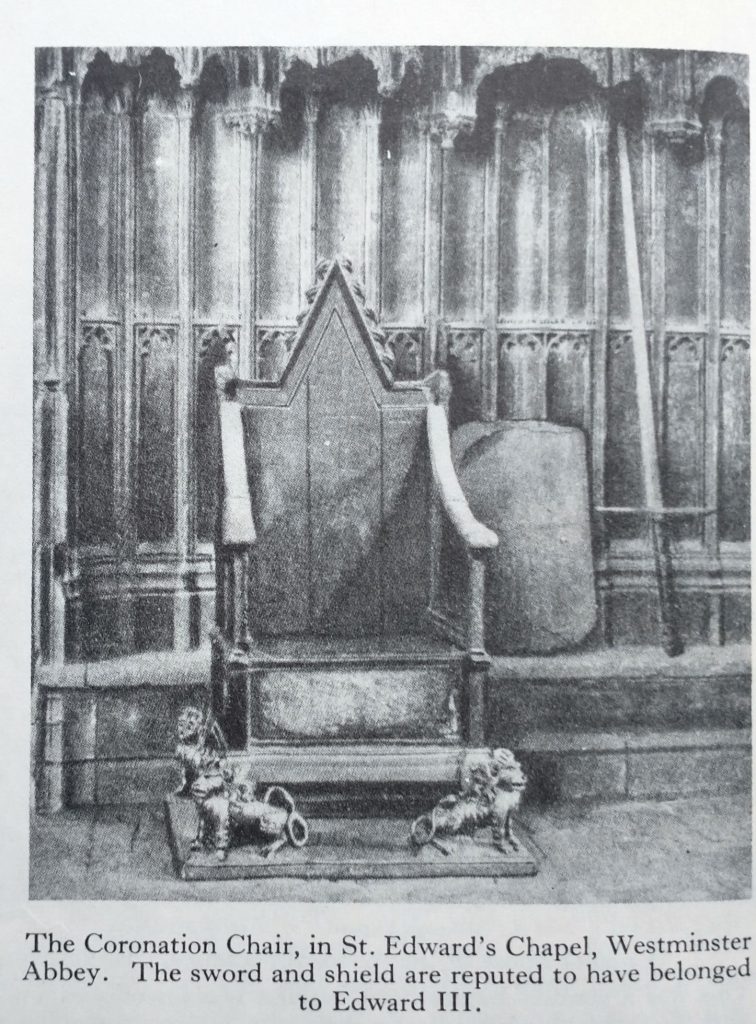
Old Photograph of the Stone of Destiny beneath the Coronation Chair.

Last year, the Stone of Destiny was set up in its new permanent place. The Stone was unveiled in a room at the centre of the redeveloped Perth Museum, in Scotland. This is near to its ‘original’ home at the Palace of Scone.

The Museums Association reported:

£27m development project ….funded by £10m UK government investment from the £700m Tay Cities Deal and by Perth & Kinross Council, the museum is a transformation of Perth’s former city hall by architects Mecanoo.’

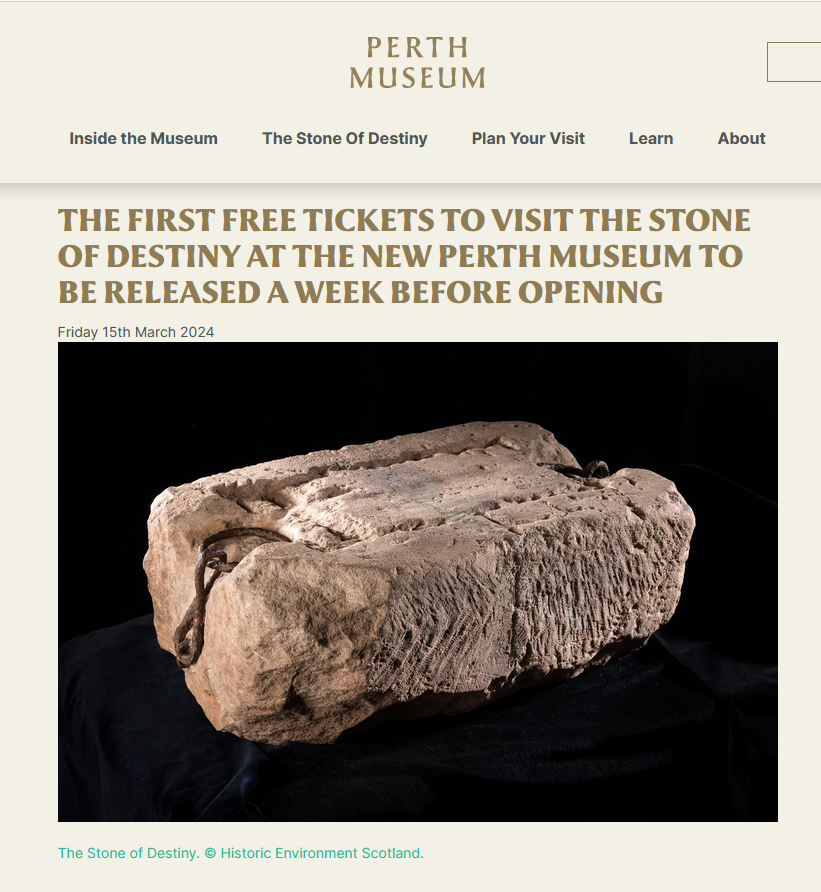
As well as the Stone of Destiny, the Museum has Bonnie Prince Charlie’s sword and a rare Jacobite wine glass. Both on public display for the first time. This is the first time the sword has been in Scotland since it was made in Perth in 1739. https://perthmuseum.co.uk/the-stone-of-destiny/. Since I first wrote this I have visited about 5 times. Entry is free but needs to be booked. It is held in a separate structure in the open space at the heart of the Perth Museum. There is an excellent-animated introduction, and then the doors open and the Stone is revealed in a glass cabinet. It is very effective.

Webpage of the Perth Museum show a photo of the Stone of Destiny

The Stone of Destiny in the Modern Era

Before Perth, the Stone was in London for a brief visit for the Coronation of King Charles III (6 May 2023) . It was put back, temporarily under the Coronation Chair. Before that it was on display in Edinburgh Castle. Tony Blair’s Labour Government sent it back to Scotland as a symbol of the devolution of power from Westminster. This was on the occasion of the restoration of the Scottish Parliament in Edinburgh in November 1996. Until then the Stone was under the Coronation Chair, where Edward I put it after he stole it (1296) from Scone. Virtually every English and British King has been crowned upon the Stone of Scone.

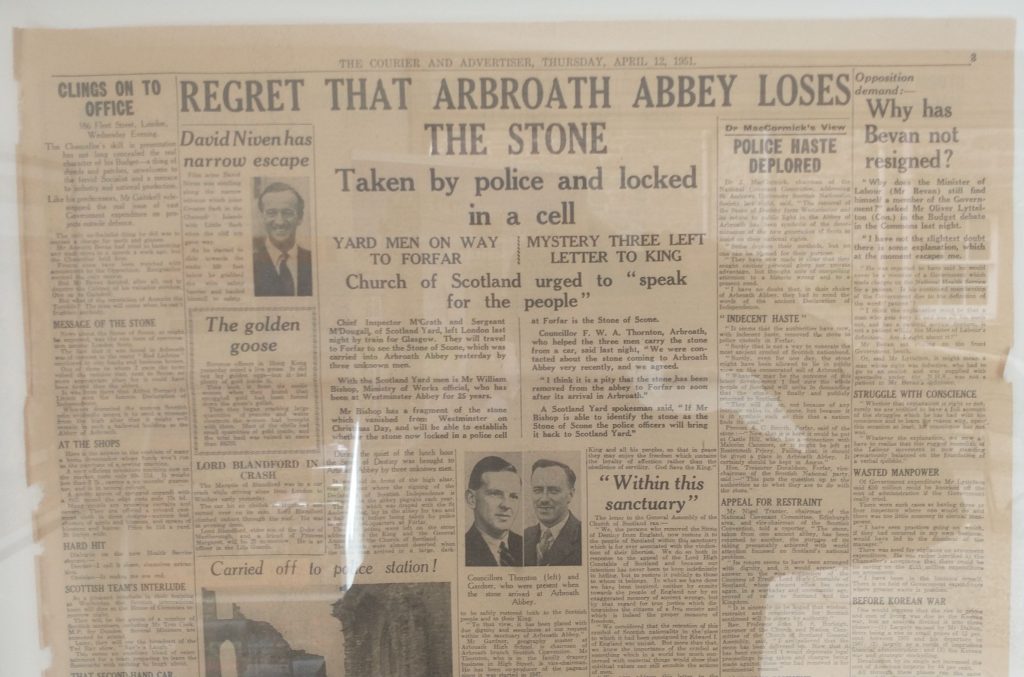
However, the Stone had a brief holiday in Scotland in 1950/51.  Four Scottish students removed it from Westminster Abbey on Christmas Day 1950. After three months, it turned up at the high altar of Arbroath Abbey. It was briefly in a Prison Cell, then returned to Westminster for the Coronation of Elizabeth II.

Poor photograph of a press cutting on display at the Palace of Scone (Photo by me!)

Declaration of Arbroath

I’m guessing the-would-be liberators of the Stone, thought Arbroath was the most suitable place to return it. For it was the Declaration of Arbroath which is the supreme declaration of Scottish Independence from England.

Following the Battle of Bannockburn the Scots wrote to the Pope of their commitment to Scotland as an independent nation. They said:

“As long as a hundred of us remain alive, never will we on any conditions be subjected to the lordship of the English. It is in truth not for glory, nor riches, nor honours that we are fighting, but for freedom alone, which no honest man gives up but with life itself”

The Pope agreed and Scotland remained independent until voluntarily joining England in the United Kingdom in 1707.

For an analysis of the Stone of Scone please look at my post here.

The Stone of Destiny at Scone Palace

Before Edward 1 stole the Stone, it was at Scone Palace. Here most of the Kings of Scotland were crowned, including Macbeth (August 14, 1040).

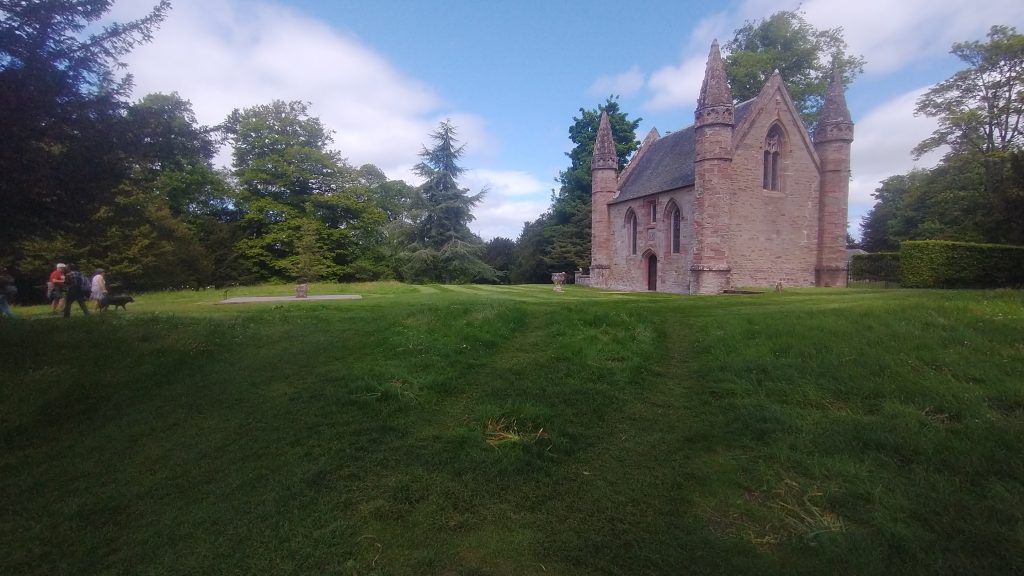
Moot or Boot Hill where Scottish Kings were crowned. Palace of Scone Photo Kevin Flude)

Those who attended the coronation traditionally shook their feet of all the earth they had brought from their homelands.  This over the centuries, grew into Boot Hill, aka Moot Hill. So the mound represents the sacred land of Scotland. 42 Kings were crowned upon its soil on its Stone. (but not Mary Queen of Scots she and her son were crowned at the Chapel Royal of Stirling Castle).

Where was the Stone of Destiny before Scone?

Before Scone, it was, possibly, in Argyllshire where the Gaelic Kings were crowned. Their most famous King was Kenneth MacAlpin. He united the Scots, Gaelic people originally from Ireland, the Picts, and the British. And created a new Kingdom which was originally called Alba, but became Scotland.

MacAlpin was the first king to be crowned on the Stone at Scone in 841 or so. He made Scone the capital of his new Kingdom because it was a famous Monastery, associated with the Culdees, an early sect of monks. MacAlpin brought sacred relics from Iona to sanctify the new capital. And Scottish Kings were by tradition crowned at Scone and buried on the holy Island of Iona.

Legend has it that the Scots bought the Stone from Ireland when they began to settle in Western Scotland (c500AD). The Scots, it is said, got the Stone from the Holy Land. Jacob lay his head on the stone to sleep. He had a dream of Angels ascending and descending a ladder to Heaven. Jacob used the stone as a memorial, which was called Jacob’s Pillow (c1652 years BC).

Fake, Copy or Genuine?

But, questions about the Stone remain. Firstly, would the Monks of the Abbey meekly hand over the stone to a raging King Edward I?  Sacking the Abbey was one of the last events of Edward’s failed attempt to unite the two countries. Isn’t it more likely that they hide the original and gave him a fake?

Secondly, was the Stone brought to Scone from Western Scotland in the 9th Century? Or was it made in  Scone?

These questions of doubt are based on the assumption that the Stone is made of the local Scone sandstone. If it were brought to Scone from somewhere else, it would be in a different type of stone, surely? So, either it was made in Scone, possibly for MacAlpin’s Coronation or the Monks fooled the English into taking a copy. The English would then have been crowning their Monarchs on a forgery.

Ha! Silly English but then the Scots have spent £27m on the same forgery.

Before bringing the stone to Scone, Historic Environment Scotland undertook a new analysis  of the stone. This confirmed:

the Stone as being indistinguishable from sandstones of the Scone Sandstone Formation, which outcrop in the area around Scone Palace, near Perth‘.

It also found that different stone workers had worked on the stone in the past. It bore traces of a plaster cast being made. It had markings which have not yet been deciphered. There was copper staining suggesting something copper or bronze was put on the top of it at some point in its life.

So it seems the Stone of Destiny was made in Scone. The simplest explanation is that it was made for MacAlpin in the 9th Century. But it does not rule out that it is a copy given to Edward I. But if this is the case it is still an awesome relic of history as so many Kings and Queens, Scottish and English, have been crowned upon it.

For more about MacBeth and St Margaret of Scotland see my post here:


First published in 2024, republished in 2025

July Julius Caesar’s Month

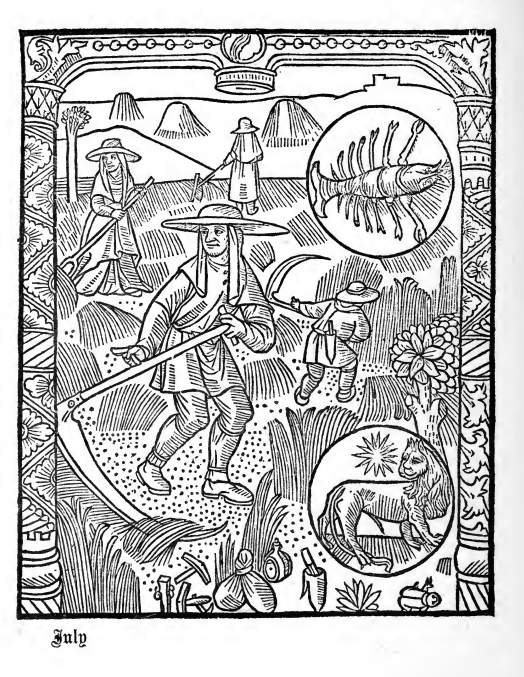
July – Kalendar of Shepherds 15th Century

July is named for Julius Caesar. Originally, the Roman Month was called Quintilis, as it was the fifth month of the Roman calendar, which originally started in March. Caesar reformed the calendar in 44BC and the Senate renamed the month after him. For more on Roman Months, see my post here.

The 7th month is called Lúil in Irish and Gorffennaf in Welsh. In Anglo Saxon it was Æfteraliða, or “after-mild;”, Liða, means “mild” or “gentle,” or the period of warm weather around Midsummer. June is Arraliða, or “before-mild”.

It is on average the warmest month in most of the Northern Hemisphere, where it is the second month of summer. The star signs are: Cancer (until July 22) and Leo (July 23 onwards),

July is the month of Haymaking, as you can see from the image (above from Kalendar of Shepherds). To find out more about haymaking, wait for the next post.

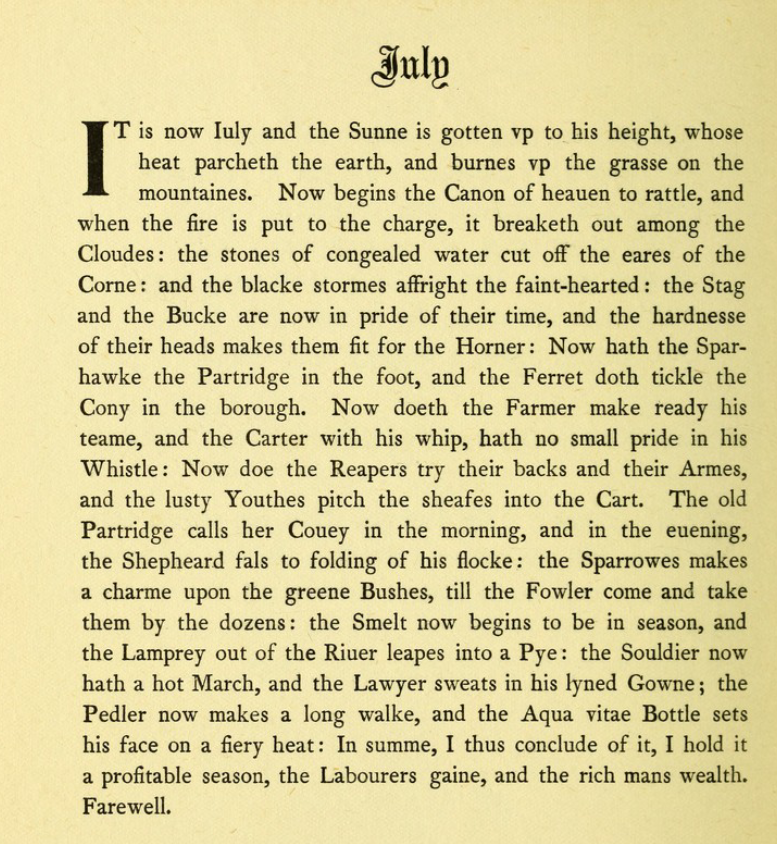
From the Kalendar of Shepherds comes this description of the month.

First published, in 2023 and republished in 2024, 2025

St Columba (St Colmcille) Day June 9th

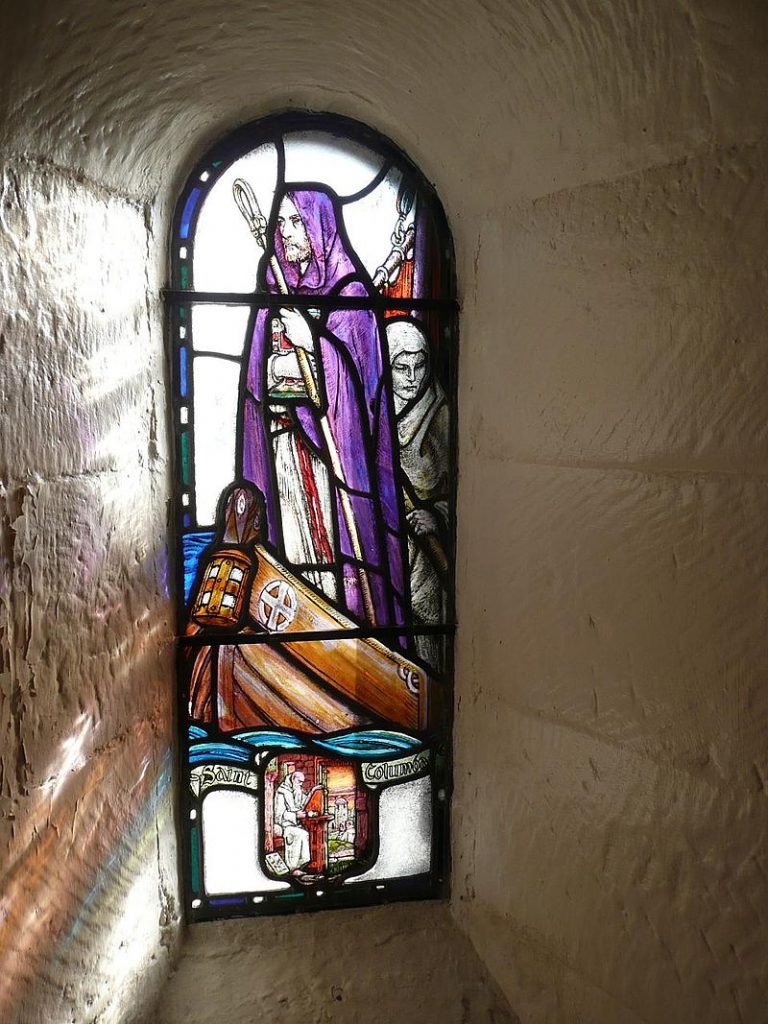
St Columba st margarets chapel by Graham van der Wielen  Edinburgh  Lead glass
St Columba Stained Glass window in St Margaret’s Chapel Edinburgh Castle Photo by Graham van der Wielen Wikipedia CC BY 2.0

St Columba, or Colmcille is one of the most important saints for the early transmission of Christianity. He was born in 521 and said to be a descendant of the possibly legendary Irish King Niall of the Nine Hostages. (The Hostages were a token of Niall’s power over Ireland as they came from the five provinces of Ireland. These are Ulster, Connacht, Leinster, Munster, and Meath. The other four hostages represented Scotland, the Saxons, the Britons, and the Franks.)

St. Columba was sent at an early age to be brought up as a Monk, and went on to set up Monasteries in Ireland at Derry and Durrow. In 563, he left Ireland, possibly because he got involved in a dispute that had a deadly outcome. He went into exile to Scotland and set up the famous Monastery on the island of Iona, Inner Hebrides. This is off the coast of what would one day be called Scotland. At the time, it was under the control of the Kingdom of Dál Riata, which was, Gaelic, nominally Christian, and controlled parts of Ulster and Western Scotland.

From Iona, Columba led the conversion of the Picts to Christianity. The Picts were Britons, speaking a different dialect of Celtic than the Gaels of Ireland and Dál Riata. Their name is said to have been given by the Romans and meant Painted Men. A shared religion, which St Columba brought from Ireland, helped towards the eventual union of the Gaels, the Picts and other British groups into the Kingdom of Alba. Alba is the Gaelic name for Scotland – meaning white, and from which we also get Albion. Alba became Scotland, which is derived from the Roman word for the area which in Latin was “Scotia”. Iona became the traditional burial place of early Scottish Kings such as Macbeth (Mac Bethad mac Findlaích). These Kings were crowned at Scone and buried in Iona. Alba was also able to take territory from the Anglian Kingdom of Northumbria, namely, the Scots-speaking areas South of the Firth of Forth. (Scots being a dialect of English). There were also Norse settlers in the Ireland so Scotland was made of a coalition of Gaelic, Brittonic, Norse and English speakers.

St Columba and the Loch Ness Monster

Much of the events of this part of Columba’s life are recorded by St. Adamnan in The Life of Saint Columba. This was written in the 7th Century, much of which is apocryphal. One notable story tells how he came across a group of pagan Picts who were mourning a child killed by a monster in the River Ness. St Columba revived the child. He then sent one of the Brothers to swim across the Loch to fetch a boat. The “water beast” pursued the Monk and was about to attack him when St Columba told the monster to stop. So it did, retreating to the depths of Loch Ness. Thus began the legend of the Loch Ness monster.

St Columba died in 597AD. Iona continued to prosper and in, 634 sent St Aidan from Iona to found the Monastery at Lindisfarne. The island is on the Eastern coast of Britain in the Anglo-Saxon Kingdom of Northumbria. This Kingdom of the North Angles, was one of the most powerful at the time and Lindisfarne was instrumental in its conversion. The tradition of evangelism took hold in the British Isles, and it was from here that much of the German-speaking world was converted to Christianity.

This is St Columba’s legacy.

Northumbria’s Contribution to the development of Christianity

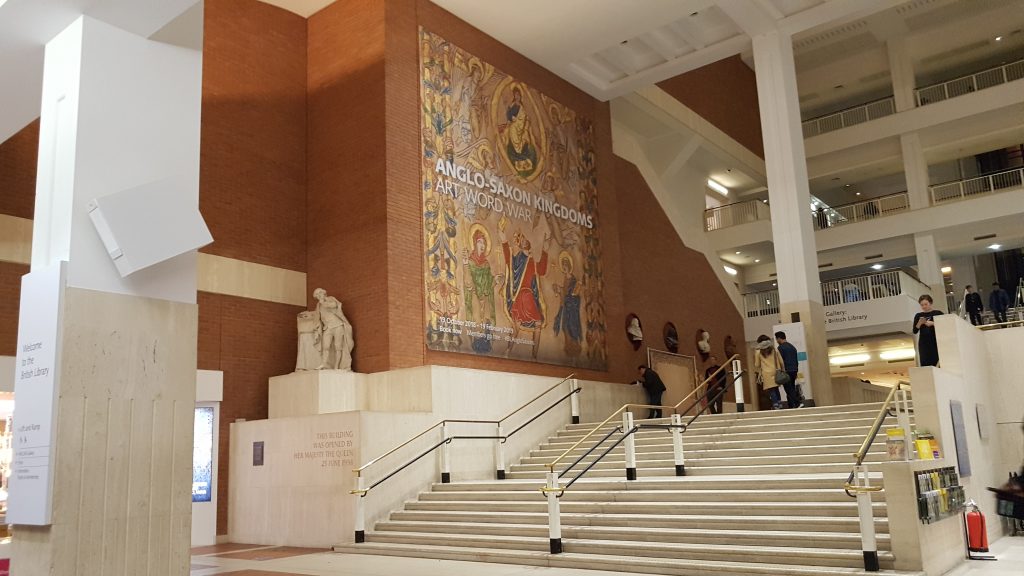
There is a developing understanding among scholars that this Irish inspired form of Christianity, fused with the Anglo-Saxon Northumbria took a leading role in ritual, art, scholarship in the Roman Catholic world. Just stop and think about that sentence for a moment. The northern parts of an out of the way set of islands off the edge of Europe took a leading role in the development of Western Christianity. This was highlighted in a recent exhibition of Anglo-Saxon art at the British Library.

British Library with Poster for Anglo-Saxons Kingdoms Exhibition, Photo K Flude

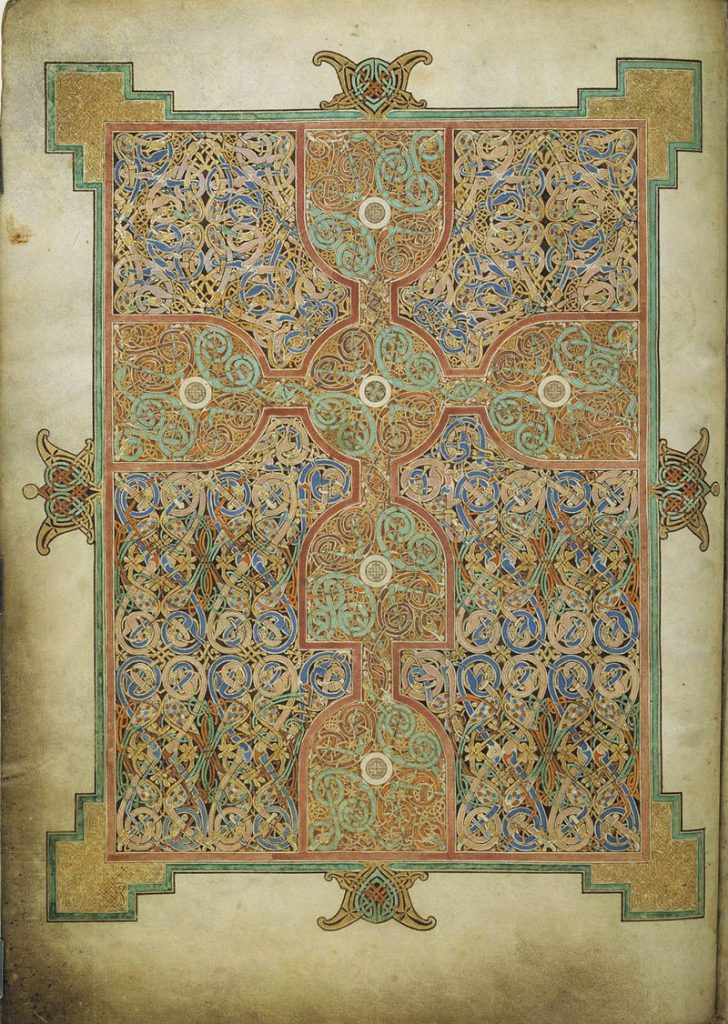
A look at the Lindisfarne Gospel and the Book of Kells showcases the amazing art of this period. For a real treat, look through this scrollable virtual copy of the Lindisfarne Gospel. (Currently this is unavailable, I suspect since the BL was hacked. So instead, here is a slightly breathless online introductory video of the Gospel.)

The Book itself has been missing from the displays of the British Library for a couple of years, but was on display in Northumberland in 2022. I’m not sure whether it is yet back on display at the British Library. I think not. You can see the Book of Kells at Trinity College, Dublin or look at their online offering here: Not quite as joyous an experience as the online Lindisfarne but beautiful enough.

Carpet Page from the Lindisfarne Gospel
Carpet Page from the Lindisfarne Gospel Photo Wikiepedia Eadfrith –
Lindisfarne evangeliarium, tapijtbladzijde op f26v, Matteüsevangelie

Click here to read my post on Scone and the emergence of Alba.

Here is a virtual tour of Iona

Here is a 360-degree panoramic photo tour of Lindisfarne Abbey

First Published in 2023, revised, 2024 and improved 2025

St Kevin’s Day June 3rd

St Kevin of Glendalough (Wikipedia)

Thank you very much to my subscriber for alerting me to St Kevin’s Day which is my Saint’s Day. I was aware of St Kev and that the name meant ‘of noble birth’ but that’s was the extent of my knowledge.

But a little research on Wikipedia while on the train to visit my Dad, revealed that Kev lived to the grand old age of 120, born in 498 and died in 628.  As my Dad is 97 and still going strong, maybe he and St Kevin will inspire my longevity?

Briefly, St Kevin met the great St. Columba; had a poem written about him by the marvelous Seamus Heaney (https://poetryarchive.org/poem/st-kevin-and-blackbird/); a song by the Dubliners; several mentions by James Joyce and a long distance path, the St Kevin’s Way, part of the Camino de Santiago network, named after him. And St Kev can help us understand the weather for the rest of June :

The weather on St Kevin’s Day will last all month‘. 

So that means uninterrupted sun.  At least in Ravenna where I currently am.

Live recording of Dubliners’ Song about St Kevin

Coemgen, as he is known in Irish, was a hermit, living in a cave-like ledge above a lake.  His piety attracted followers and a monastic settlement.  He was known for his ascetic life and love for nature.  So, a role model for all us Kevins?

His hagiography was written very late, so little of it can be confirmed. But, like other saintly hermits, he is associated with being tempted by women or the devil disguised as a woman.  (St. Anthony the Great, St. Benedict of Nursia, Saint Chrysanthus, St. Vitus,  St. Bernard of Clairvaux, St. Hilary etc.)  Unfortunately, rather than just resisting his temptress, Coemgen is said to have drowned her. Not so good!

On the other hand, my sister sent me this photo of a souvenir from a shop in Northumberland.

That’s more like it! And oh so true! Clearly we, handsome, clever, positive, analytical Kevins have a lot going for us, despite the name.

For more on the Temptations of Hermits read this article:

Nechita, Andrea.“Offering Body, Pleasure, and Wealth: The Visual Representation of Women Tempting Saints (Fifteenth and Sixteenth Century).” Annual of Medieval Studies at CEU, 20 (2014): 96-112. For a summary, and some tempting illustrations, look here.

First written in 2023. revised June 2024, 2025

The Venerable Bede Died – May 26th 735AD

A Scribe – possibly the Venerable Bede. Late 12th Century from Lives of St Cuthbert.

He died on the evening of what we would call the 25th, but in ancient times, the Day changed at dusk. So for his contemporaries, he died on 26th May. But, as he shares his day with St Augustine, some celebrate the Venerable Bede on May 27th!

Called the Father of English History, the Venerable Bede was an excellent historian, who set the tone and standard for many centuries of English Historiography.  He is mostly remembered for the ‘Ecclesiastical History of the English People’ which provides the most trusted account of the events of the Post Roman, Migration, and Anglo-Saxon periods.

So well regarded is he that he is the only Englishman mentioned in Dante’s Paradiso.  This is the third part of the Divine Comedy.  The other parts are about the bad people in Hell and Purgatory.  Bede is with the Angels in Heaven.

He is Venerable not only in the general sense of being wise, old and respected, but also in the technical sense:

(in the Roman Catholic Church) a title given to a deceased person who has attained a certain degree of sanctity but has not been fully beatified or canonized.‘ (Oxford Languages)

In 1899, the Catholic Church honoured him with the title of Doctor of the Church – someone holy who had contributed to the theology of the Church.

He is considered by some to be the best historian in olden times, only equalled by Herodotus (said Thomas Carlyle). Thucydides surely says I! (Note: Herodotus is known as the ‘Father of History’ for his storytelling and breadth of the scope of his attention. While Thucydides didn’t tell tales, he concentrated on empirical evidence and so is known as the Father of Scientific History)

Bede is so good because he checked his sources and had access to a wide range of books. He even had a line to the Vatican so he could check his facts with Vatican records. This in the 8th Century! The Venerable Bede is the polar opposite of Geoffrey of Monmouth, (writing in the 12th Century). If Bede mentions a person or an event then they are accepted as part of the story of the English. By contrast, if Geoffrey of Monmouth mentions a person or event, without further corroboration, then historians tend to consider it a story, myth or simply made up by Geoffrey.

But, the truth is not so straightforward. Bede is not without his biases and his sources were not themselves always reliable, nor above accepting myth, legends and miracles as fact.  Geoffrey also has access to some, probably, oral traditions so that some (but which?) of his many tales of the Kings of Britain may hold considerable historical information.

Bede’s Influence on English History

Bede followed Gildas (A British Monk writing in the 6th Century) in wondering why God allowed the native Christian Britons to be defeated by the foreign Pagan English.  Gildas assumed God was punishing the Britons because of the evil deeds of their so-called Christian Kings.  Bede extends this to argue that God is punishing the Britons for not trying to convert the English to Christianity AND by being generally not a great bunch of Christians. God knows that the English, when converted, will be much better Christians than the Britons.

This starts a histographical trend for the English to think of themselves as the chosen people. By contrast, the Britons (Welsh, Scots and Irish) are feckless Barbarians (they thought).  Bede concentrates on the English and countless generations of Historians have either left out the Britons, or demeaned them in their histories of England and indeed of Britain.

For example, most histories of Kings, deal only with England and start either with William the Conqueror or Alfred the Great and omit any British, Welsh, Scots or Irish Kings. Except for my book on the Kings and Queens of Britain, which starts with the largely legendary Kings of Britain, and includes some Welsh and Scottish Kings.  To buy it, you will find details of it here.

So Bede is a great historian without whom we would have an even less clear idea about what happened in the centuries following the Roman Period.  But also, contributed to an Anglo centric view of history. He was writing in Northumberland at the Monastery of Jarrow, and is more sympathetic to Northumbria than to Wessex, Mercia, and the British Kingdoms.

Bede’s Books

He wrote over 60 books. One was about the theological science of computus. In particular, the dating of Easter. The British Church had one method, the Catholic Church another. This contributed to a series of confrontations between the 2 Churches. And was only finally resolved at the Synod of Whitby in the favour of the Catholic Church.

Bede was instrumental in making Dionysius Exiguus idea of dating from the birth of Christ as the standard AD /BC system. He also thought the Catholic calculation that Jesus was born 5000 years ago was wrong and used the Bible to calculate the more ‘correct’ date was 3952 BC.  Archbishop Ussher in the 17th Century took Bede’s calculation and improved it and suggested the proper date was 4004 BC.

For more about Dionysius Exiguus and the division of time, see my post here.

First Written on May 26th 2025

St Pancras May 12th

Ruins of St Pancras, Canterbury Photo: K Flude (note the reused Roman Bricks.)

Pancras means ‘all-powerful’ in Greek. St Pancras was a 14 year old who refused to give up his Christian Faith during the persecution of Christians by the Emperor Diocletian. He was beheaded on the Via Aurelia, traditionally, on 12 May 303 AD. His youth makes him the Patron Saint of children, but he is also the patron saint of jobs and health. He is ‘invoked’ against cramps, false witnesses, headaches, and perjury. His body was buried in the Catacombs, but his head is kept in a reliquary in the Church of Saint Pancras in Rome, where he was buried.

Ice Saints

He is also one of the Ice Saints.  These are saints with feast days from May 11th to May 14th.  They are: St. Mamertus, St. Pancras, and St. Servatius (and in some countries, Saint Boniface of Tarsus – Wikipedia). They represent a belief that there was often a cold snap in early May.  Although modern statistics disprove this, it is however true that a late frost can cause havoc with crops.  So  the Ice Saints help persuade farmers to delay sowing.

In England, we have a saving ‘never cast  a clout while may is out’.  Which suggest you keep a coat at hand while the May flowers (Hawthorn) are still out, as it can be cold even in May. For more on the Folklore of Hawthorn -see my post here.

St Pancras in England

St Pancras, Old Church, London (Photo: Kevin Flude)

Pope Gregory is said to have given St Augustine relics from St Pancras when his mission came to Kent in 597AD. They built a church dedicated to St Pancras. The ruins still survive in the grounds of what is now St Augustine’s, Canterbury (see picture at tope of post).

This story is partly responsible for the claims that St Pancras Old Church, in Camden (pictured above) is a very old foundation. The idea being that there was a late Roman place of worship here. But there is very little solid evidence for this. It is also argued that, if it isn’t late Roman, then it dates to just after 604AD. This is when St Mellitus, sent by St Augustine, established St Pauls Cathedral. It is suggested that he also founded St Pancras Church. St Pancras’ Church was a Prebend of St Pauls Cathedral (a Prebend provides the stipend (pay) to support a Canon of a Cathedral). But this is not evidence it was established as early as the Cathedral was, and there really isn’t any other credible evidence for a 604 date.

When the Church was restored, the architects said it was mostly Tudor work with traces of Norman architecture. However, the suggested finding of a Roman tile or two, reused in the fabric, is used as evidence to keep the legend going.

If you read the Wikipedia page, you will see evidence of two strands to the contributions. One is playing down the legends of its early foundation. The other trying to keep hold of its place as among the ‘earliest sites of Christian worship’. Read the wikipedia page here: https://en.wikipedia.org/wiki/St_Pancras_Old_Church to make up your own mind.

It is a lovely Church, on an impressive site, with links to Thomas Hardy, and Sir John Soane whose tomb is the design inspiration for the iconic Red Telephone Box.

Headaches

As Patron Saint of Headaches, St Pancras Day is a good day to make worms come out of your head. Or so say the Fairfax Household Book of the 17th/18th Century as quoted in Charles Kightly’s ‘The Perpetual Almanac’:

‘To make a worm come out of the head. Take, in May, the marrow of a bull or cow, and put it warm into the ear, and the worm will come forth for sweetness of the marrow.’

Generally, willowbark was used for headaches. We know this would have worked as the bark contains salicin, which is converted by the body into salicylic acid. This is a precursor to aspirin (acetylsalicylic acid). But it is not as effective.

First Published in 2024, revised 2025

Walpurgis Nacht & St Erconwald’s Day April 30th

Walpurgis Nacht. Screen Shot of https://astromagicklounge.com/2021/04/30/celebrating-walpurgis-night-with-black-sabbath-aleister-crowley/

On April 30th, 870AD, St. Walpurga remains were ‘translated’ to Eichstätt. St Willibald had set up the town as the Diocesan centre of this part of Bavaria. So, in Germany today is known as Walpurgis Nacht. I wrote more on my page on St. Walpurga. Walpurga and her two brothers, Willibald and Winibald were Anglo-Saxon Saints who helped convert Germany to Christianity in the 8th Century.

The evening of April 30th is also the beginning of Beltane. Beltane is one of the principal Celtic Festivals, dedicated to the God Belinus. It is a Celtic Fire Ceremony, 6 months before Halloween, and the traditional beginning of Summer. (see my post of Halloween here.) Walpurgis Nacht is also halfway between the Spring equinox and the Summer solstice. So, a very important day in the Celtic Calendar. (see my post on May Day).

The Celtic Day began at Dusk, so May Day begins on 30th April. The Christian Church took over many local traditions and adapted them to the calendar of the Church. So a Saint’s Day, is preceded by an Eve. For example, All Hallows’ Day and Halloween, and May Day and May Eve.

In Sweden it is known as Valborg and as Čarodejnice in the Czech Republic.

A day of Uncanny Weirdness?

As May Day was an uncanny period dedicated to Pagan Deities, Walpurgis Nacht became a time when all the weird things are alive in the world. In response, the Christian Church associated a saint to the day to be a focus for defeating witchcraft. So, it is a popular tradition for this Night to see the burning of an effigy of a witch on a bonfire.

Walpurgis Nacht has really been taken over by Heavy Metal, and I refer you this page to begin your journey down a dark rabbit hole of head-banging rock. https://astromagicklounge.com/2021/04/30/celebrating-walpurgis-night-with-black-sabbath-aleister-crowley/

St Erconwald’s Day

Tomb of St Erconwald, destroyed by the Great Fire of London.
Tomb of St Erconwald, destroyed by the Great Fire of London. By Wenceslaus Hollar – Artwork from University of Toronto Wenceslaus Hollar Digital CollectionScanned by University of TorontoHigh-resolution version extracted using custom tool by User:Dcoetzee, Public Domain, https://commons.wikimedia.org/w/index.php?curid=6235771

It is also the Feast Day of St Erconwald. He was a Royal Prince who became one of the most famous Bishops of London (675 and 693). He set up Chertsey Abbey and Barking Abbey which his sister, St Ethelburga, became Abbess of. Not only that, but he was known as the light of London and was responsible for rebuilding St Pauls Cathedral. And helping completing the conversion of the Kingdom of Essex.

You might enjoy reading this alliterative poem of the 14th Century about his life. He is one of the patron saints of London, associated with early pilgrimage and many miracles.

First Published in 2024, revised in April 2025

St Mellitus Day And the Birth of the Chocolate Digestive April 24th

St Mellitus (Source: from saint-mellitus-of-canterbury-died-624

St Mellitus was the first Bishop of London (AD604) and the third Archbishop of Canterbury. But was he really? No, he was the first Bishop of London of the English Church. There were many before him. We know there were bishops of London from Britannia during the Roman period. And, according to John Stow, London’s first history. there were also post-Roman bishops. That line of Bishops ended, in 584 AD, when the 14th Bishop, Theanus, fled London. He headed for Wales to escape the Anglo-Saxon threat. However, even Stow was uncertain whether the list was genuine.

I tell this story in my post on St Lucius.

The Synod of Arles

In 314 a Church Council or Synod was called at Arles, in France. Amongst those attending were three bishops from Britain, (and a Deacon and a presbyter) :

  • Eborius “de civitate Eboracensi” – from the city of Eboracum (York);
  • Restitutus “de civitate Londenensi” – from the city of Londinium (London);
  • Adelfius “de civitate Colonia Londenensium” – that is, from the “colonia of the people of London”.

(Wikipedia)

The fact that two came from London suggests to some a mistake. Adelfus, perhaps, was either from Lincoln or Colchester which were Colonies. The Synod was called by the Emperor Constantine. Amongst its acts were to order that Easter should be held at the same time throughout the Empire. (See also my post on the Synod of Whitby which fixed the date of Easter in Britain as late as 684). They also banned Races, and Games. and excommunicated all actors and charioteers. (Synod_of_Arles). But it gives us our first certain facts about the origins of Christianity in Britain.

The Augustinian Mission and Mellitus

St Mellitus Burial Place, St Augustine’s Abbey, Canterbury. Photo K. Flude

In 597, the Augustinian Mission came to Kent. Mellitus was sent by Pope Gregory to join St Augustine’s mission in 601AD,. He was then sent to London to set up St Pauls and become its bishop (604). But he was kicked out in 618AD when King Sæberht of Essex died and was replaced by a pagan son. Mellitus went into exile in Gaul but came back to become the third Archbishop of Canterbury. He was buried in St Augustine’s Abbey in Canterbury. He is known as St Mellitus of Canterbury. London reverted to paganism until 654AD when St Cedd became its next Bishop.

I tell the story of the Augustinian misson in my post here

St Mellitus had gout so is the go-to Saint for sufferers of gout.

Also on this day

1925 – McVitie’s Chocolate Digestive was created. There were made in Stockport and in Harlesden, London. I have moored my narrowboat outside the factory and been kept awake by the churning of chocolate in vast vats. Or so I imagine. News stories suggest that the Digestive was meant to be eaten with the chocolate on the bottom side. This is one of the most ridiculous things I have heard! But you can read this page for the facts. And this one for more on the history of the Chocolate Digestive.

First published in April 2025

St Beuno and a Poem to the Vagina April 20th


Drawing of a Stained glass window depicting Saint Beuno. D A R C 12345 – Own work

Today is St Beuno’s Day. St Beuno is also known as St Bono. He was an 8th Century Welsh Abbot of some power. The grandson of a prince of Powys in Wales who was descended from Vortigern. (see my post on Vortigern here.) Vortigern was a predecessor to King Arthur. Beuno was educated in Bangor Monastery, one of the foremost Celtic monasteries in Wales. During his ministry he restored 7 dead people to life including St Winifred (or Winefred).

Winifred & St Beuno

St Winifred’s Holywell, from Facebook.

She was Beuno’s niece, a virgin who refused the advances of a certain Caradog. Furious at her taking vows, Caradog tried to seduce her, but she refused. So, he chopped her head off.

Where her head landed a spring sprung amd became a holy spring.  The spot, in Flintshire is still called Holywell. It has been described as the Lourdes of Wales and one of my tours go past it that is how I heard about St Beuno.

Anyway the story goes that Beuno put his niece’s head back on her shoulders and restored her to life. How he did that, is a mystery or is that a miracle?

From Facebook

She lived a full life with a brilliant Church career. Of course she is the patron of those who have suffered unwanted advances (but believe me there are many other candidates for that particular honour amongst the female Saints! Have a look at my post on St Agatha for another example of male sexual abuse).

Stained glass depiction of St Winifred, designed by William Burges, at Castell Coch, Cardiff. Wikipedia Hchc2009 – Own work

More on St Winefride’s on her feast day on 3rd November.

Medieval Powys, & Neglected Parts of the Female Anatomy

I drafted this in January 2025, when I came across a reference to St Beuno in a fabulous exhibition at the British Library.  The show was called ‘Medieval Women – In their own Words’.

On display amongst the many wonderful manuscripts and books of the 11th – 15th Century was a Welsh poem.  The author was Gwerful Mechain (1460–1502), the only female medieval Welsh poet with a surviving and a substantial body of work. She is known for her erotic poetry, in which she praised the vulva among other things.

What is extraordinary is that I should, by complete chance, be publishing this the day after posting about the statue of the erect Minotaur! So, you can see how even-handed I am? Erect penises one day, love poem to the Vagina the next!

Here it is in full, in a modern translation:

To the Vagina by Gwerful Mechain

Every poet, drunken fool
Thinks he’s just the king of cool,
(Every one is such a boor,
He makes me sick, I’m so demure),
He always declaims fruitless praise
Of all the girls in his male gaze.
He’s at it all day long, by God,
Omitting the best bit, silly sod:
He praises the hair, gown of fine love,
And all the girl’s bits up above,
Even lower down he praises merrily
The eyes which glance so sexily;
Daring more, he extols the lovely shape
Of the soft breasts which leave him all agape,
And the beauty’s arms, bright drape,
Even her perfect hands do not escape.
Then with his finest magic
Before night falls, it’s tragic,
He pays homage to God’s might,
An empty eulogy: it’s not quite right:
For he’s left the girl’s middle unpraised,
That place where children are upraised,
The warm bright quim he does not sing,
That tender, plump, pulsating broken ring,
That’s the place I love, the place I bless,
The hidden quim below the dress.
You female body, you’re strong and fair,
A faultless, fleshy court plumed with hair.
I proclaim that the quim is fine,
Circle of broad-edged lips divine,
It’s a valley, longer than a spoon or hand,
A cwm to hold a penis strong and grand;
A vagina there by the swelling bum,
Two lines of red to song must come.
And the churchmen all, the radiant saints,
When they get the chance, have no restraints,
They never fail their chance to steal,
By Saint Beuno, to give it a good feel.
So I hope you feel well and truly told off,
All you proud male poets, you dare not scoff,
Let songs to the quim grow and thrive
Find their due reward and survive.
For it is silky soft, the sultan of an ode,
A little seam, a curtain on a hole bestowed,
Neat flaps in a place of meeting,
The sour grove, circle of greeting,
Superb forest, faultless gift to squeeze,
Fur for a fine pair of balls, tender frieze,
A girl’s thick glade, it is full of love,
Lovely bush, blessed be it by God above.

From: Gramich, Katie, Orality and Morality: Early Welsh Women’s Poetry, 2005, Cardiff University: Cardiff, pp. 8-9.
(http://www2.lingue.unibo.it/acume/acumedvd/Essays%20ACUME/AcumeGramichfinal.pdf)

Date: c1480 (original in Welsh); 2003 (translation in English) By: Gwerful Mechain (1462-1500) Translated by: Katie Gramich

For more about St Beuno https://en.wikipedia.org/wiki/Beuno

First published on April 20th 2025, revised 2026