eBay advert screenshot for Old Moore’s Almanac 2024
This week I received my copy of Old Moore’s Almanac. This is probably the best known Almanac in the Uk. It follows the format of Alamancs which have been published since the medieval period as I discussed in an earlier post about the Kalendar of Shepherds of the 15th Century. Almanacs became the third most popular book published in London.
Old Moore’s, which claims ancestry back to 1697, begins with a large tranche of predictions both for the world and for celebrities, based on astrology. 2024, Frances Moore says, is the ‘Year of Hope’. He says, ‘we may have a good time, [but] a severe money problem from elsewhere may surface to worry us’. Hedging his bets or what?!
He predicts astonishing advances in technology, and thinks that Britain is in a good place to profit from these advances in healthcare, IT, and Robotics.
We need good, old-fashioned leadership to get through challenging times, with Pluto in Aquarius and Saturn through Pisces, we should be steered to ‘safe management.’
Wokery will lead us down a spiral to weakness. However, the Tories will remain disorganised with the country receptive to caring Socialism, with an upsurge in local power. The UK will become a more caring society.
Old Moore hints that Putin might be indicted. The US will have deep financial and social problems. The election might be close, but he also suggests Trump’s support might be on the wane.
There is a page for each month, noting the calendar events such as Epiphany, Burns Night, Australia Day, and other days filled with very random notable events chosen to represent that day through history- 2nd Jan Conquest of Granada 1462. 9th Jan Duchess of Cambridge b. 1982, 13th Jan Trump impeached 2021 etc. It also gives a forecast for the Month. January is likely to see constitutional change, Old Moore predicts which seems very unlikely.
Next are columns for Sun rise and set, high water at London Bridge, moon at London. And a weather column. (Early cold spell followed by normal rainy pattern), which isn’t wrong yet.
It has pages of predictions for celebrities such as King Charles III, which suggests ‘communication problems’ in the family. Who could have guessed that! Anton Du Beke, Adele. Zelenskyy, whose entry suggests success will be achieved only by diplomacy; otherwise the stubbornness predicted by the stars will lead to a long stalemate.
Then there are charts for each star sign. Towards the back are astrological help for winning on Horse Racing, Greyhound Racing, Football pools, Bingo, Lottery, Lucky Lotto, Euro Millions and pages for sowing and planting times for gardening by the moon, and a Guide for Anglers.
£5.41 good value, or is it just cheap? It was £3.50 in 2022.
360 degree Image of the Herb Garret (4th December 2000) at the Old Operating Theatre Museum. Click on the VR label to go full screen, and use the mouse to navigate.
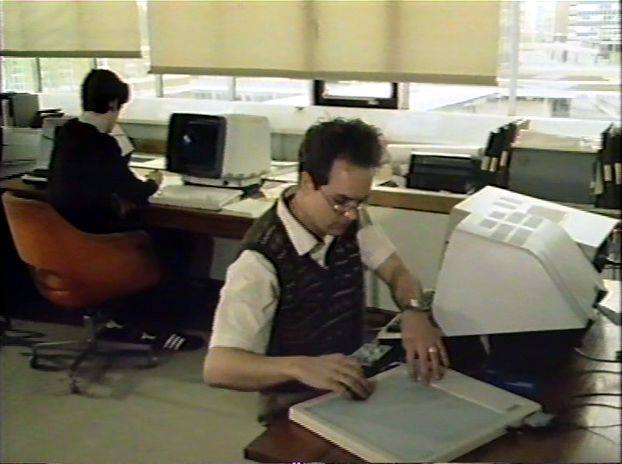
Digital Heritage Is a subject I had a very early interest in. My, very minor claim to fame, is that I set up the Museum of London’s and the Victoria and Albert’s first computer systems. I then co-authored one of the earliest hyperlinked digital histories (on the history of London), and set up the first web sites for various museums and organisations such as the Old Operating Theatre Museum, Brunel Engine House, Garden History Museum, Royal Bethlem Museum etc..
But that was a long time ago so long that most of the Museums have changed their names! Despite the desire to do so, I have not had the time to keep up with developments.
So, I’m going to spend a little time investigating online heritage sites, and at the same time, maybe, look back at my part in the history of digital heritage.
Firstly, the principles of the study. Early on I came to the conclusion that the Internet should allow access to Museums for all those people who could not afford, or did not have the time, to visit in person. So, I’m looking for online/virtual visits that have something about them almost as good as a physical visit. Secondly, I’m looking for online exhibitions that provide an enjoyable experience that works in a similar way to a real exhibition. This means for me that the technology does not get in the way, and is not too complex to access and use. I also have an interested in digital guided walking tours.
I must admit that 40 years after I began to see the potential in digital I rarely see virtual visits or exhibitions that I want to spend time with. When I use websites for data and information, which I do all the time. I search, I find, I read but I don’t often linger for pleasure and. I rarely go back.
Yes we have Virtual Reality, Augmented Reality and the Metaverse, but they don’t really impact positively on my experience of heritage, history and museums. This might well be because I haven’t looked very hard, or spent much time on the subject in recent years, or because I don’t enjoy digital experiences that much, But, I’m going to have a good look around to see what is on offer, and I hope you will join me.
My starting point is the Old Operating Theatre Museum web site. I was in charge of the Museum for 30 years from the mid 80s onwards. In the early days of my management of the Museum I set up a very early web site designed to give those who could not visit a real idea of the Museum. This was achieved by the usual set of information pages but also with 360 degree annotated panoramic photos of the museum spaces linked together. This gave a simple and informative tour of the museum. which was easy to use, did not take long to see and did not depend on complicated technology on the part of the user. Later we added an online database of the collection to give access to the collection.
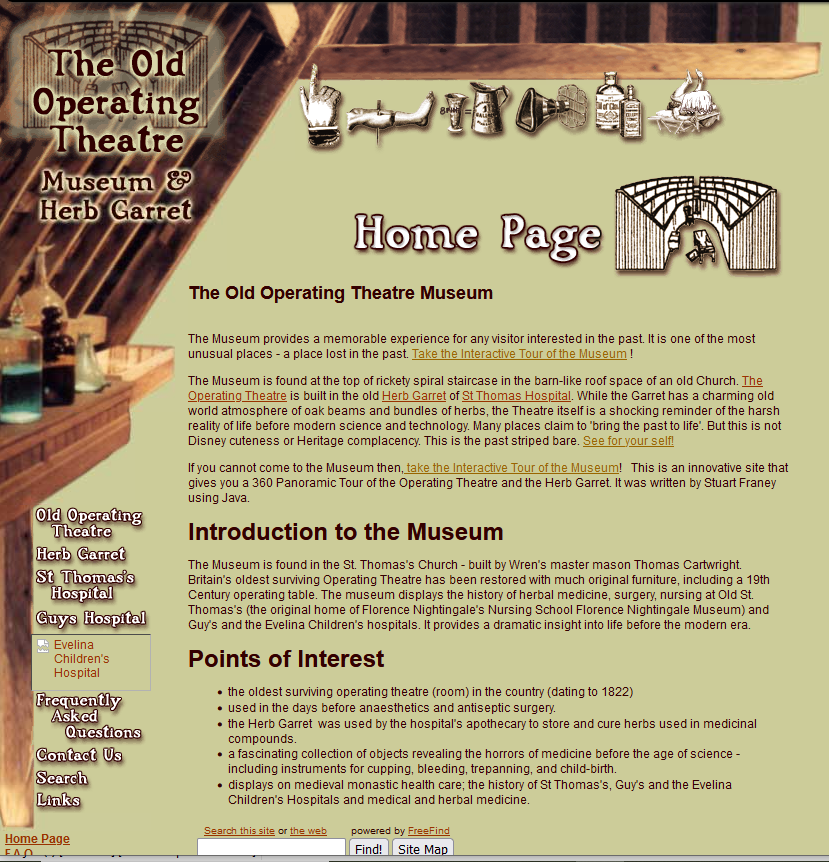
Thanks to the Wayback Machine – which is an amazing internet archive, no the internet archive, which archives old web sites, I have been able to retrieve a version of the site, dated to 2000AD so you can have a look at it. As you will see below it is very wordy but I think a really nice design by Highway 57 and Chris Sansom, who is also a composer, and now heading up an innovative jazz band called ‘Perfect Stranger’ .
Unfortunately, good though the Wayback Machine might be it does not have the technology to show the 360degree panoramas. So to get an idea of how they worked please have a look at the image at the top of the page, and imagine the addition of ‘hotspots’ which you could click to see further information or click through to the next panoramic view. Please note this is the second iteration of the site and so far I have been unable to find my original self-designed site.
The Old Operating Theatre Museum – www.thegarret.org.uk in 2000, retrieved from the Wayback Machine
So, I think the interactive tour of the museum gave a pretty good, simple and enjoyable tour of the Museum. I should say that the Old Operating Theatre Museum is one of the most amazing Museums. It is in the roof space of a Church and was a store for herbal medicines, and an operating theatre/emergency room for female surgical patients used before anaesthesia and antiseptic surgery.
Its now 23 years later. The website has been completely redesigned since I left, and it opens with a very good video that gives an excellent introduction to the museum. Click on the link to have a look at the video on the home page @ https://oldoperatingtheatre.com/
Inside the website is a huge amount of information, some very good videos, there is a ‘virtual tour’ which does not work on my browser for some reason, interactive games and a clickable image to explore the Old Operating Theatre itself. Its use of media is much, much better than in the 2000s, and the information is composed now into interesting stories rather than dry information. So a pretty good job of putting the Museum’s stories to the public in an engaging way. I would say however, that perhaps it was a little easier to find out the basic information about the Museum, the Operating Theatre, and the Herb Garret before than it now is. But you can ignore that as my vanity.
I have chosen one of the stories to include here and this is an object that I bought at an auction for the Museum. I remember the excitement well, and the great interest in the medicines that were included in the medical chest.
Sat 2.30 pm Green Park underground station, London (north exit, on the corner)
on the following dates in 2023: 2 April. 11 June. 9 September. 12 November.
And a Special Christmas version on 23 December 2023
An exploration of Mayfair, the centre of the London section of Sense & Sensibility and where Jane came to visit her brother
“It is a truth universally acknowledged, that a Jane Austen devotee in possession of the good fortune of a couple of free hours today must be in want of this walk.”
People associate Jane Austen and her characters with a rural setting. But London is central to both Jane Austen’s real life and her literary life. So, this tour will explore Jane’s connections with London and give the background to Sense and Sensibility, a good part of which is based in this very area. We begin with the place Jane’s coach would arrive from Hampshire, and then walk the streets haunted by Willougby; past shops visited by the Palmers, the Ferrars; visit the location of Jane Austen’s brother’s bank and see the publisher of Jane’s Books. The area around Old Bond Street was the home of the Regency elite and many buildings and a surprising number of the shops remain as they were in Jane Austen’s day.
This is a London Walk Guided Walk lead by Kevin Flude
We look at how Jane Austen spent Christmas and at Georgian Christmas traditions and amusements.
“It is a truth universally acknowledged, that a Jane Austen devotee in possession of the good fortune of a couple of free hours must be in want of this virtual walk.”
This is a special walk, which looks at the traditions of Christmas during the Regency period and how Jane Austen might have celebrated it. It will give some background to Jane Austen’s life and her knowledge of London. We used her novels and her letters to find out what she might have done at Christmas, but also at how Christmas was kept in this period, and the range of ‘Curiosities, Amusements, Exhibitions, Public Establishments, and Remarkable Objects in and near London available to enjoy.
This is a London Walks Guided Walk by Kevin Flude, Museum Curator and Lecturer.
Review: ‘Thanks, again, Kevin. These talks are magnificent!’
Now here is the sort of thing you find out about yourself only if you
a. google yourself b. go down to page 8
And there I find that thebookbag had my book as no 4 in its top ten history books of 2015, with Mary Beard at no 2.
And this is their review:
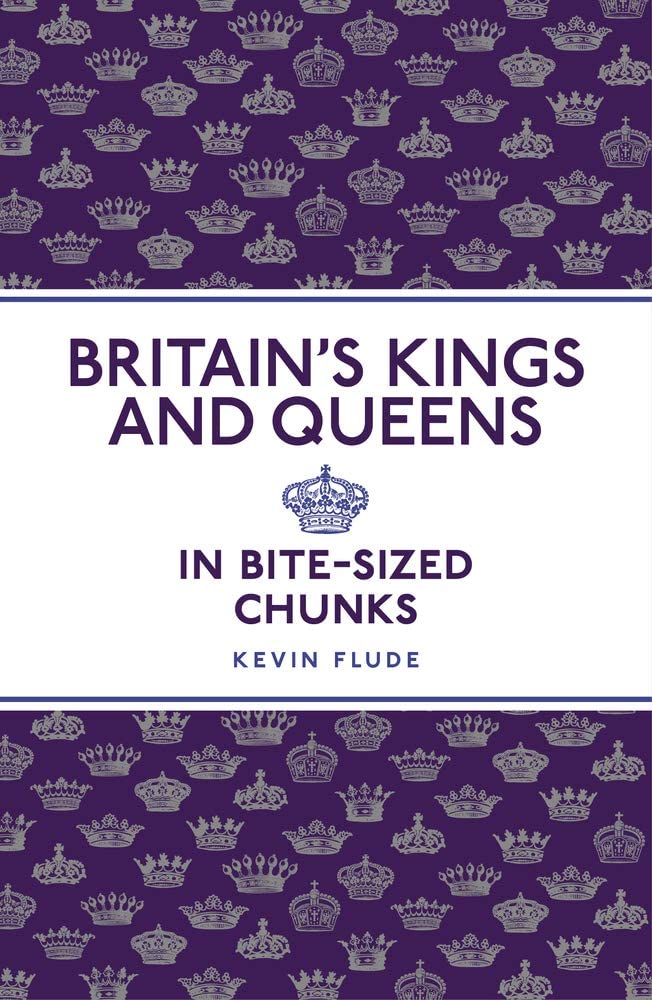
‘Divorced, Beheaded, Died…: The History of Britain’s Kings and Queens in Bite-Sized Chunks by Kevin Flude
4.5star.jpg
History lives. Proof of that sweeping statement can be had in this book, and in the fact that while it only reached the grand old age of six, it has had the dust brushed off it and has been reprinted – and while the present royal incumbent it ends its main narrative with has not changed, other things have. This has quietly been updated to include the reburial of Richard III in Leicester, and seems to have been re-released at a perfectly apposite time, as only the week before I write these words the Queen has surpassed all those who came before her as our longest serving ruler. Such details may be trivia to some – especially those of us of a more royalist bent – and important facts to others. The perfect balance of that coupling – trivia and detail – is what makes this book so worthwhile.’
135,000 copies to date in 7 editions and formats. I did suggest a new updated edition to add a section on King Charles III but they said ‘they had no plans.’
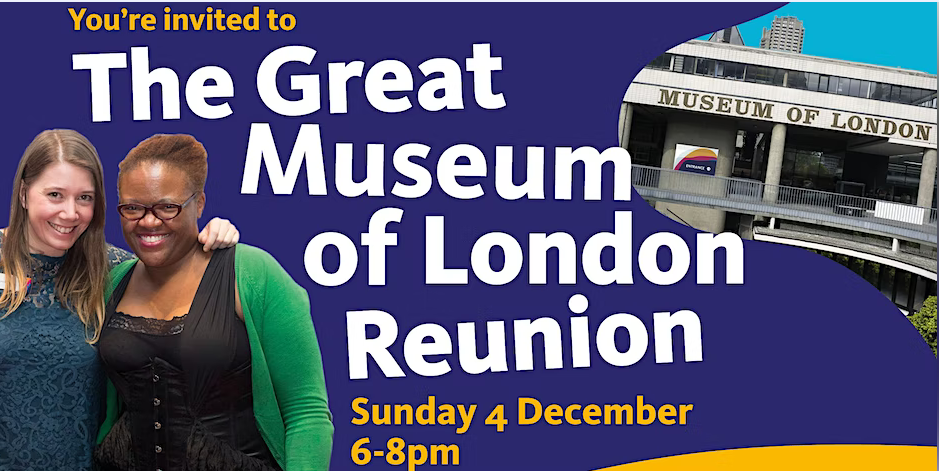
The Museum of London is reverting to its ‘original name’ the London Museum and moving to Smithfield. The problem is that they have decided to close the old Museum while they build the new one, which I think, sucks. To my mind a Museum’s job is to present its collection to the public: some of the objects are unique and need to be seen. To hide them all for four years because of convenience and cost savings is, I think, an abrogation of its duty. Of course, the Museum also runs the Museum of London in Docklands which is some compensation but all the same – four whole years!
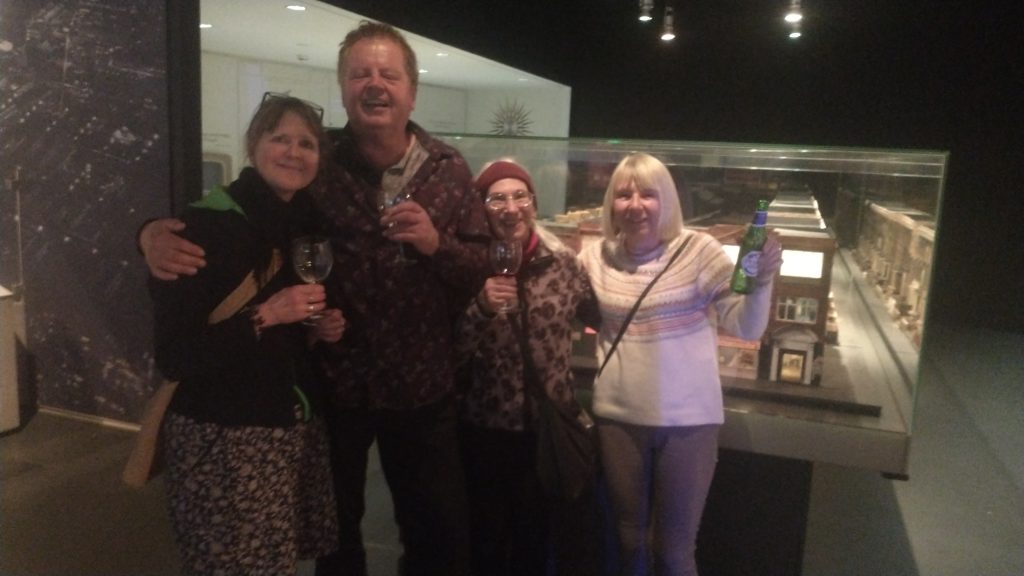
So, today, it closes its doors. Then in the evening it hosts, what I imagine will be a ravening hoard of archaeologists and museum staff, for the greatest of all reunions. I’m very excited. I will be looking out for 2 wives, several ex-girlfriends and loads of old friends and colleagues many of whom I have not met for a very long time. I split up with Julie, my first wife, in our first few months as archaeologists at the Museum and a few years later met Poppy, the mother of our children, who worked as a Conservator at the Museum.
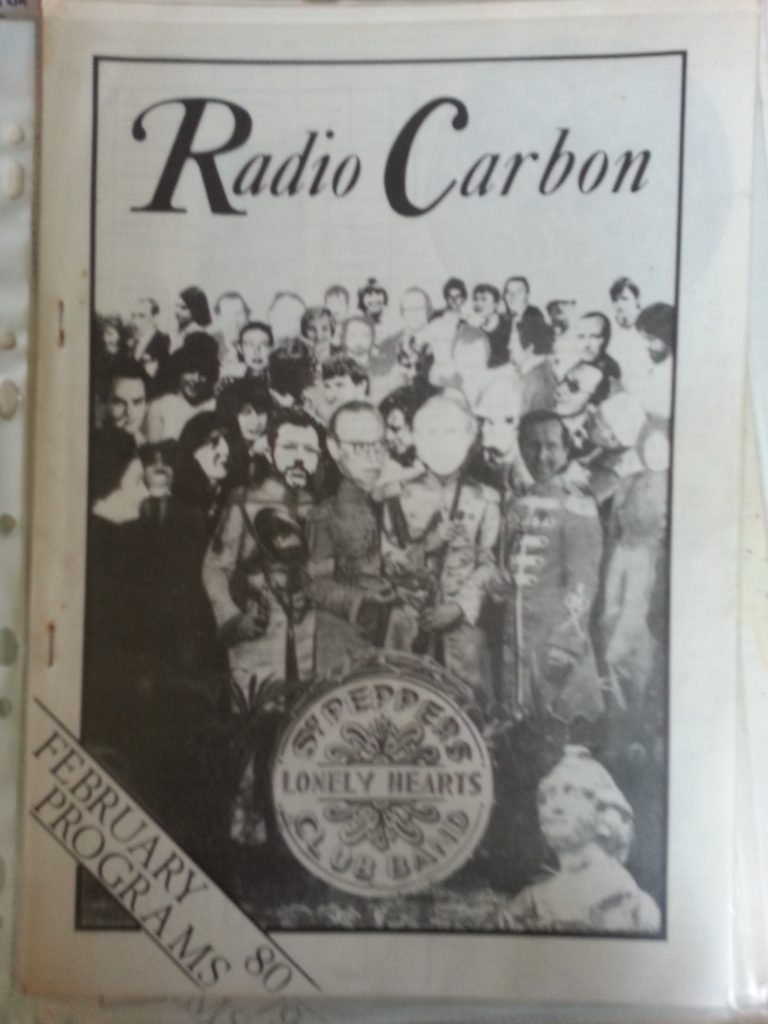
As I was a trade union representative while at the Museum, and co-edited the scurrilous archaeological ‘fanzine’ called ‘Radio Carbon’ I was, therefore, more often than most archaeologists to be found at the Museum. There I got to know quite a few of the Museum staff. So its going to be a blast. The original invitation was for a 2 hour event, which was then increased to 3 hours, and yesterday it was increased to 4 hours with live showing of England’s world cup game.
Radio Carbon (the author is to the left with finger up his nose)
Photos: Left: Kevin Flude in the Museum’s Library, One of my few claims to fame is that I introduced computers to the Museum of London (and the V&A)
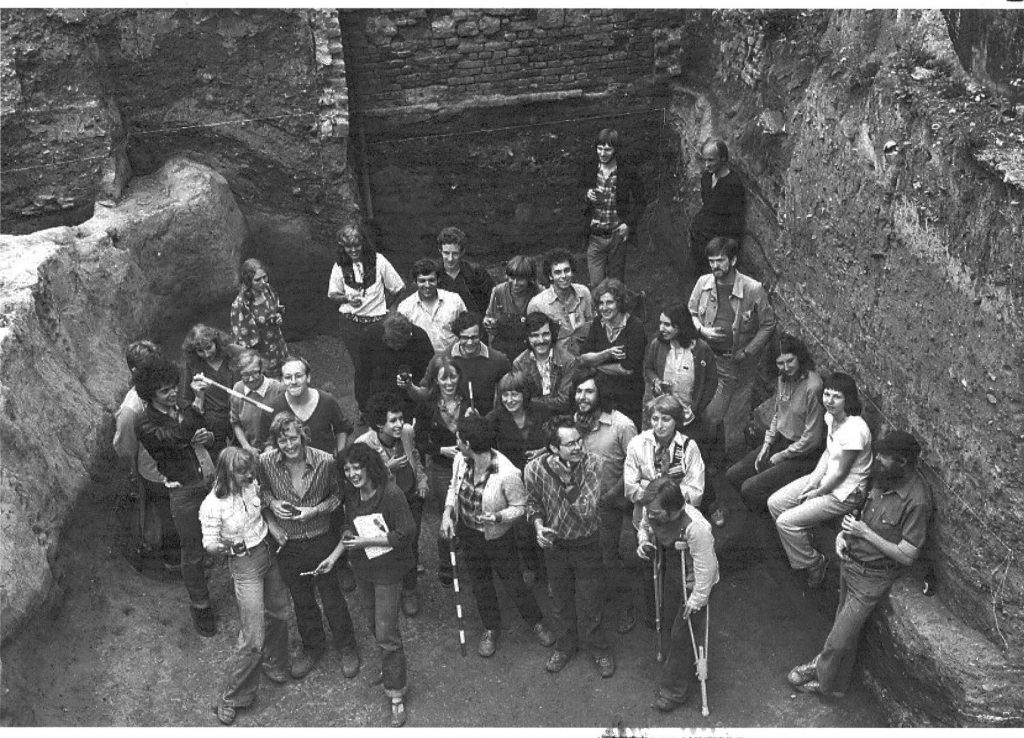
Centre: Archaeologists at the GPO site (near St Pauls) the author in the front row with glasses surrounded by so many friends!
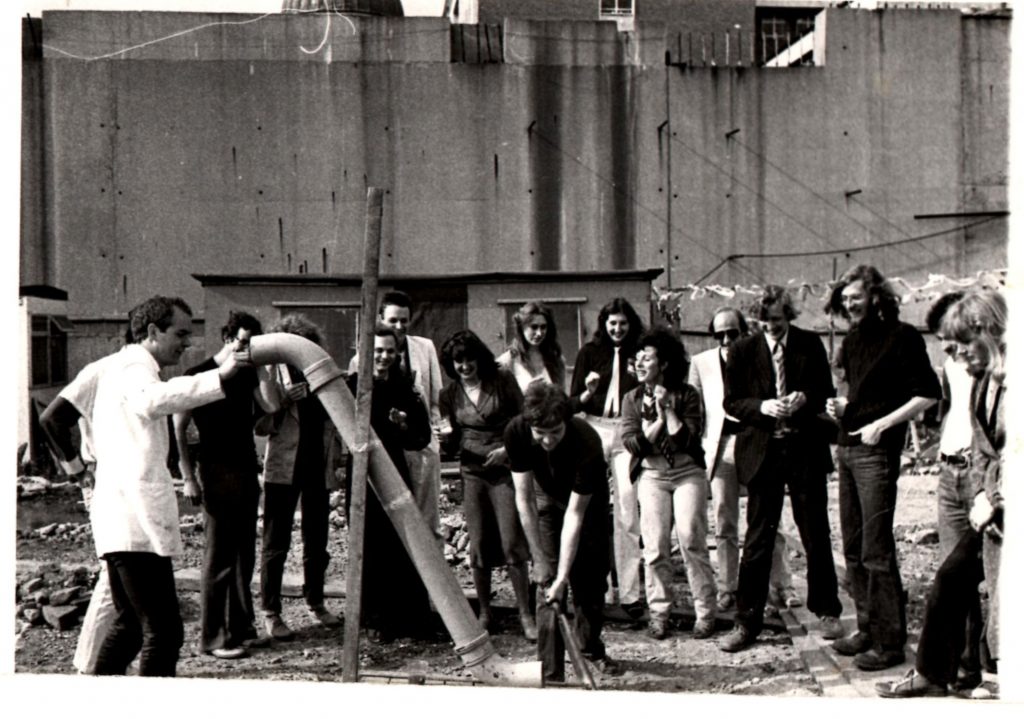
Right: Dig Party held at Trig Lane with home made fairground attractions and cocktails such as the Portaloo Flush (as I remember it vodka dyed blue with added raisins.) The author is in the foreground to the left. (photo Derek Gadd)
The original museum for London was called the Guildhall Museum, founded in 1826 and the repository for treasures found in the ‘City of London and suburbs’, and founded by the City Corporation. The foundation of the London County Council changed the balance of power in the metropolis and in 1912, the ‘suburbs’ struck out on their own and the London Museum was founded as a museum of the whole of London. It was encouraged by the Royal Family, particularly Queen Mary, and found a home in the Royal Palace of Kensington.
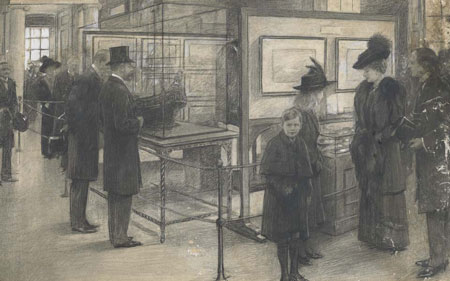
the London Museum (I think!)
In 1965 an Act of Parliament merged the two museums from which emerged the Museum of London which was purpose built, and it was to be funded one third each by the Government, the City and the Greater London Council. This was changed when Mrs Thatcher abolished the London Council and the funding was swapped to 50% City and 50% the Government.
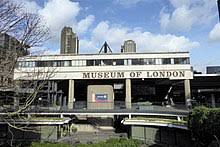
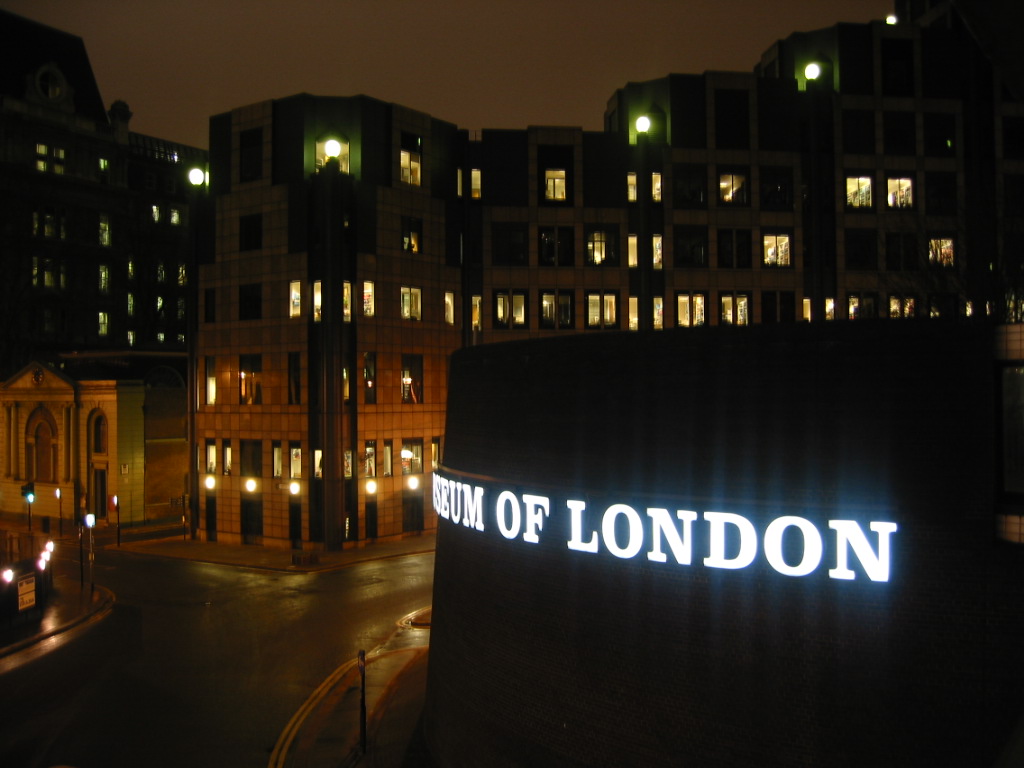
The Museum of LondonThe Museum of London at night (photo K Flude)
In the interim before the new museum was built, the Guildhall Museum set up a temporary display at the Royal Exchange, and then moved into a building on the new Barbican High Walk. (thanks John Clark for information on the information on the merger.) The new museum was opened in December 1976, in a brand new building designed by Philip Powell and Hidalgo Moya. Instead of rooms with multiple exits, it was designed to allow only one route through – from the Prehistoric, through to the Romans, and then through a dark tunnel to the Dark Ages, and medieval, then downstairs down a ramp with a ceiling that echoed the Crystal Palace into Modern London. Its ethos was always to tell the story of London rather than highlight the ‘treasures’ and had people friendly, narrative driven displays of great clarity.
It will be much missed.
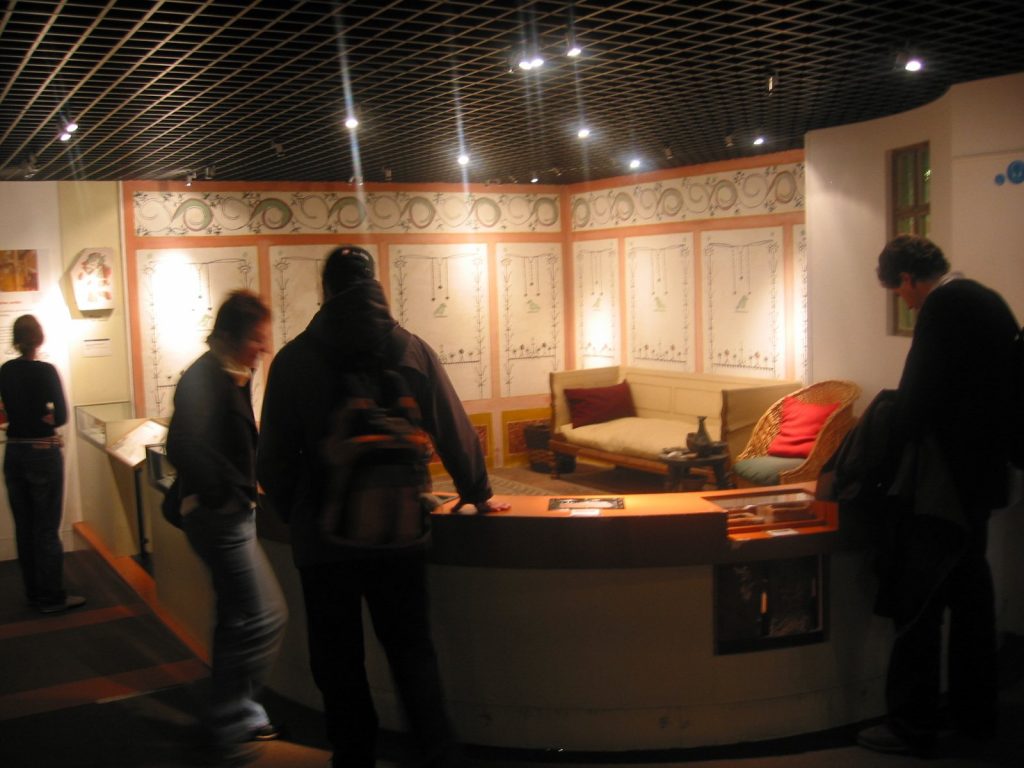
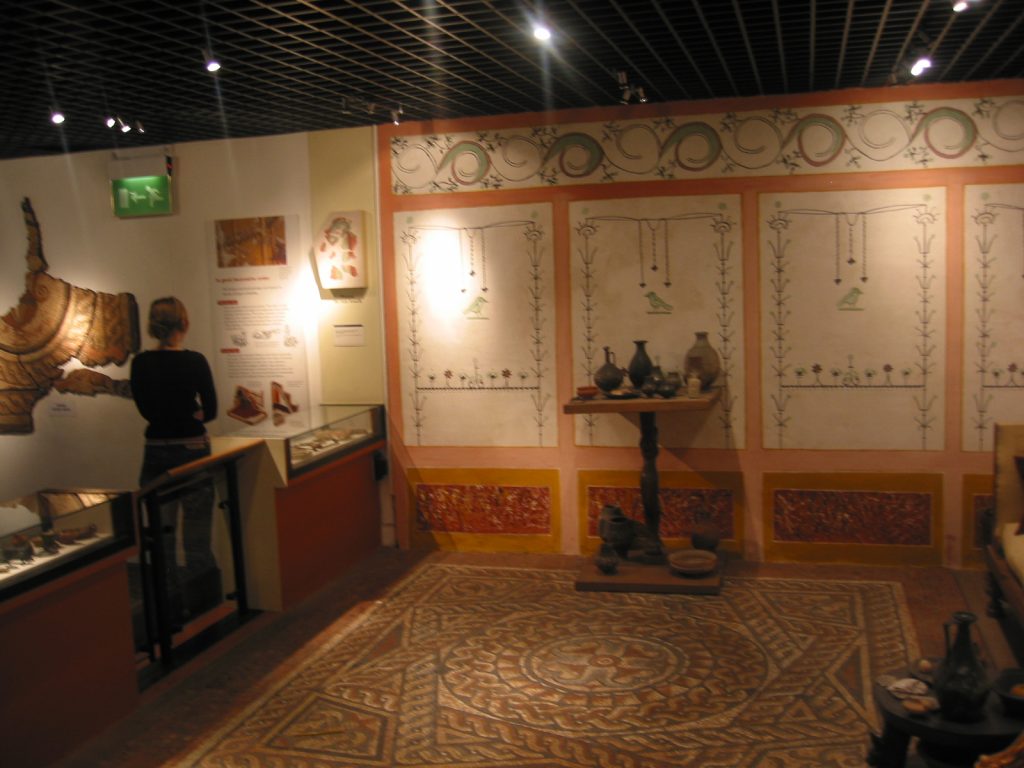
Roman Gallery, Museum of LondonRoman Gallery, Museum of London. Mosaic to the left was excavated with the help of the author.
Aftermath
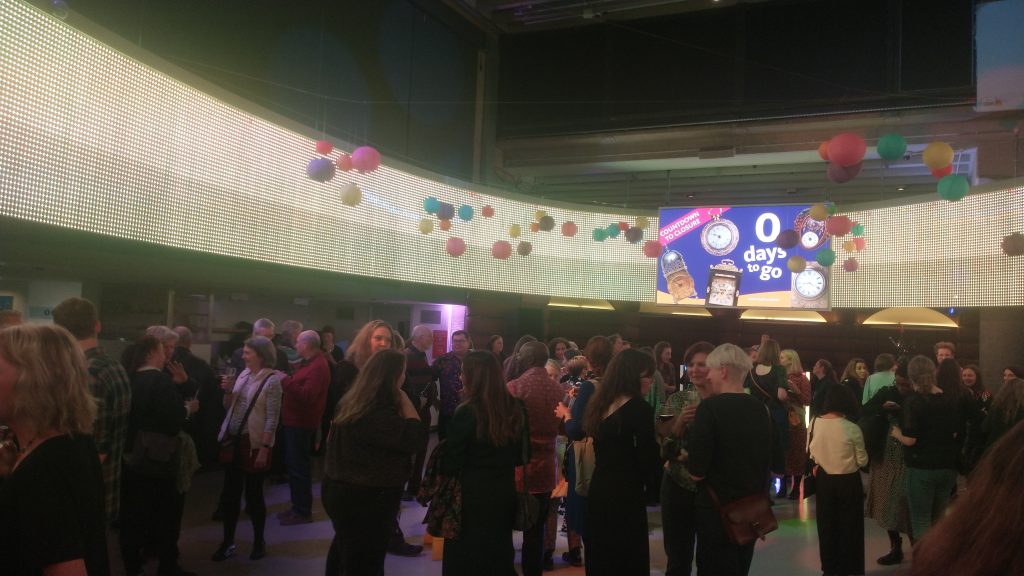
The Great Reunion was very noisy with competing sound systems and was very jolly. So great to see so many old faces (and still recognise them!) and sorry to miss so many who could not, for one reason or another, attend.
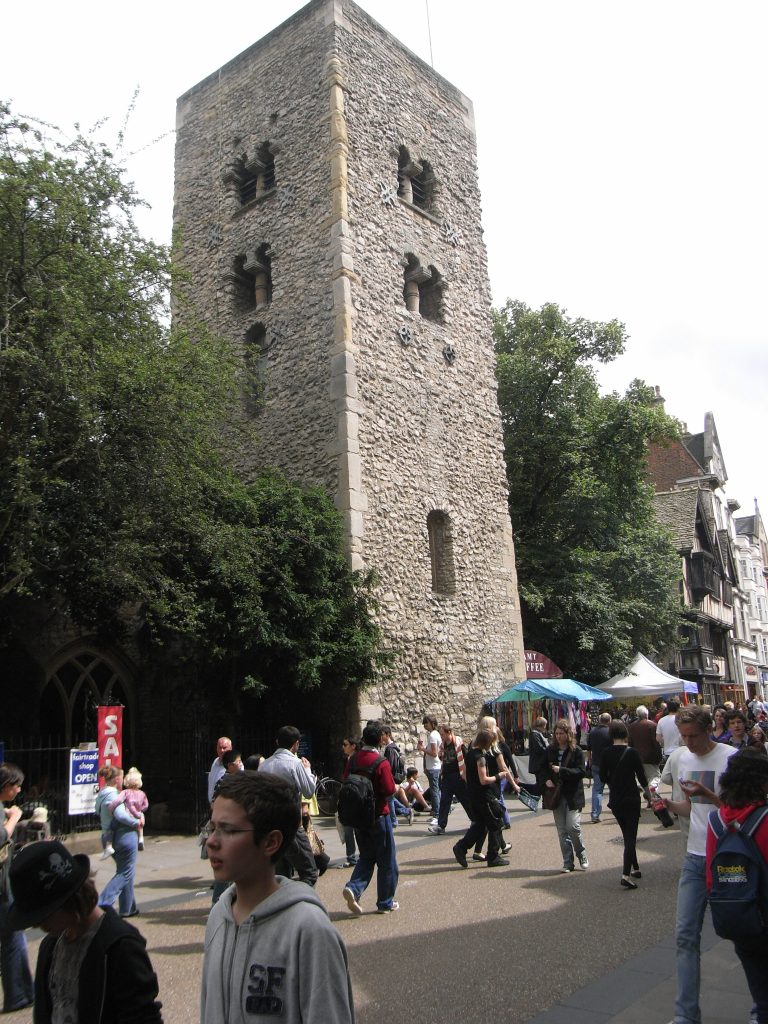
I lived and worked in Oxford for three years, working at Keble College as a Research Assistant in an archaeological science Laboratory. I lived first in a farmhouse in the Oxfordshire countryside and then right in the centre of Oxford in a room formerly lived in by Benazir Bhutto. The flat was in St Michael’s Street just by the Anglo-Saxon Church of St Michael’s Church. This where the North Gate used to be and where Archbishop Thomas Cranmer was imprisoned before being burnt at the stake. My room overlooked the Oxford Union where so many politicians have cut their teeth in debate.
St Michael’s Church, Cornmarket, Oxford
Now, from time to time I moor my narrow boat in Oxford either on the Thames or on the Oxford Canal; and take occasional groups of Road Scholars around the City of Dreaming Spires. Sometimes, people ask me for a booklist. So, this is my shortlist of books.
And it must begin with Evelyn Waugh’s ‘Brideshead Revisited: The Sacred & Profane Memories Of Captain Charles Ryder ‘ published in 1945, it is a beautifully written book, and, so, a pleasure to read. But it also gives a vivid insight into the English ruling classes attending Oxford University. The narrator, Charles Ryder is at Trinity College while the beautiful Sebastian Flyte is at Christ Church. It has, of course, been filmed in several versions but perhaps most notably is the 11-part mini-series by Granada Television in1981.
Once you understand a little about the Oxford experience and the English class system you might begin to have an insight into Boris Johnson. So it is time to dive straight into Simon Kuper’s ‘Chums: How A Tiny Caste Of Oxford Tories Took Over The UK’‘ 2022. As you consider the power of the English public schools, and Oxbridge to propel a talentless privileged elite to run(down) this once great country (if you will forgive a personal opinion), you might like to remember Prime Minister Asquith’s belief that his Oxford education gave him the ‘consciousness of effortless superiority’. For a more balanced view of this great University you might like to read Lawrence Brockliss’ ‘University Of Oxford: A Brief History, ‘ 2018
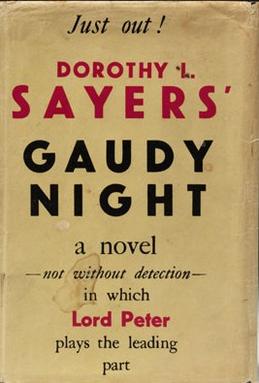
But its time to get off my high horse and wallow in the joys of a good read. So if you really enjoy the murder mystery, my suggestion is that you spend your time in Oxford with Dorothy L. Sayers and ‘Gaudy Night’ 1935 which is set in one of the early Colleges for female students. Harriet Vane has invited Lord Peter Wimsey’s to investigate strange goings on in Harriet’s alma mater, the all-female Shrewsbury College, Oxford (based on Sayers’ own Somerville College). The events centre around the annual Gaudy celebrations which is the Oxford name for a College festivity.
This brings us to Inspector Morse. My best advice is to stick to the ground-breaking TV series staring the sublime John Thaw, or one of the post-Thaw TV series. Because, frankly, I have been reading Colin Dexter for the first time for this reading list, and am surprised how one-dimensional and dated the novels are. Having said that, Dexter does have the skill to put together a murder mystery which is enjoyable to escape into and reminds us that the writer’s art is not about all about beautiful writing but is grounded in the ability to keep the reader’s nose in a book while lost in an engaging story.
So, you can safely ignore my disdain and enjoy a guilty read of: ‘The Daughters Of Cain‘ 1994, where Morse investigates the death of a College academic. Its a good one to choose as it gives an introduction to 1990s life in an Oxford College with most of the action in the centre of Oxford. Although, surely, even Dexter must think its not a good idea for the investigating Detective to have a (reciprocated) crush on one of the suspects?
As a lover of the Canal system, my second choice is ‘The Wench Is Dead‘ 1990 where Morse is in hospital (where all the nurses, the Sister, and a young female visitor inexplicably fall for the unhealthy, sick and close to retirement Detective). Morse amuses himself by solving an historic case where a woman is found murdered on the Victorian Oxford Canal, and the climax comes on a trip where he can both solve the crime and enjoy a one-night stand with the Sister. She is one of those characters who shakes her hair loose, takes off her metaphorical glasses and is transformed from a harridan into a beautiful woman.
Better written are my next two choices: Max Beerbohm’s ‘Zuleika Dobson: Or, An Oxford Love Story’ 1911 where the devastatingly attractive Zuleika leads an Edwardian satire of Oxford University life in the early 20th Century. A good example of an Oxford mystery is Iain Pears delightful ‘An Instance Of The Fingerpost‘ 1998 based in post Civil War Oxford.
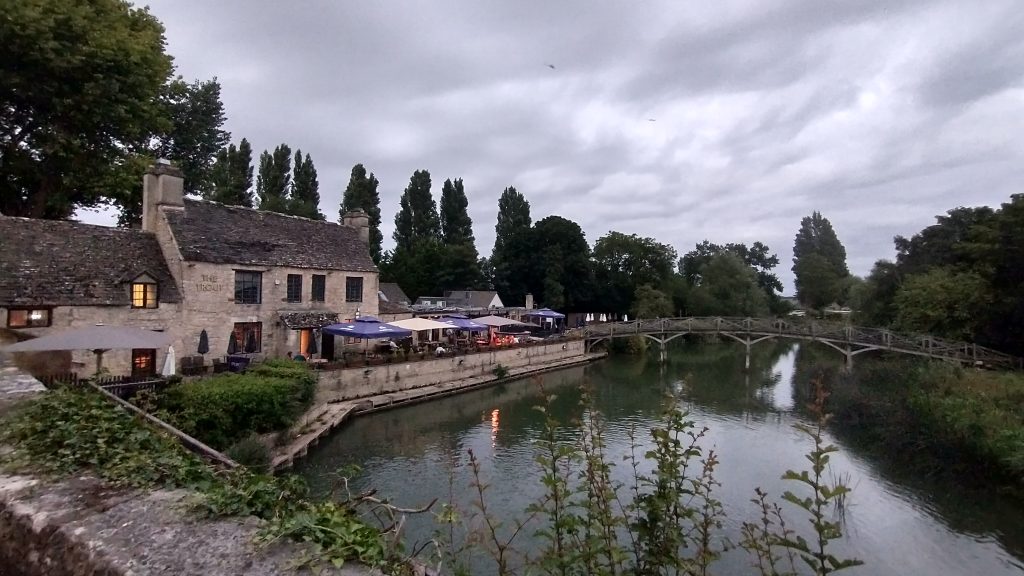
A real treat is to read Philip Pullman’s books ‘His Dark Materials’ trilogy and ‘The Book of Dust’ trilogy. At the centre of the alternative universes is a curious steam punk Oxford, where a dictatorial Church oppresses the people. Perhaps the best to read for Oxford content are ‘Northern Lights‘ 1995 (retitled The Golden Compass in the US) where we are first introduced to Lara from Jordan College (based on Exeter College which Pullman attended) and ‘La Belle Sauvage’ (2017) where the baby Lara is rescued by Malcolm who lives at the Trout (a real pub on the river Thames, mentioned in Brideshead, frequented by Morse and Lewis and outside which I love to moor by boat).
The Trout, River Thames. Oxford
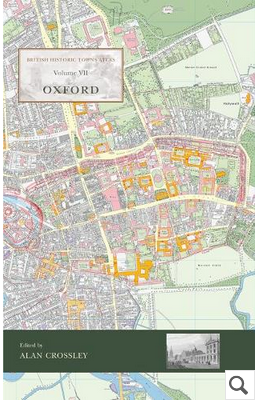
Finally, for a birthday treat buy or to borrow from your library Alan Crossley’s sumptuous volume of maps illustrating the history of Oxford., ‘British Historic Towns Atlas Volume VII: Oxford [hardback] ‘ Historic Towns Trust : 2021
Front Cover, British Historic Towns Atlas Volume VII
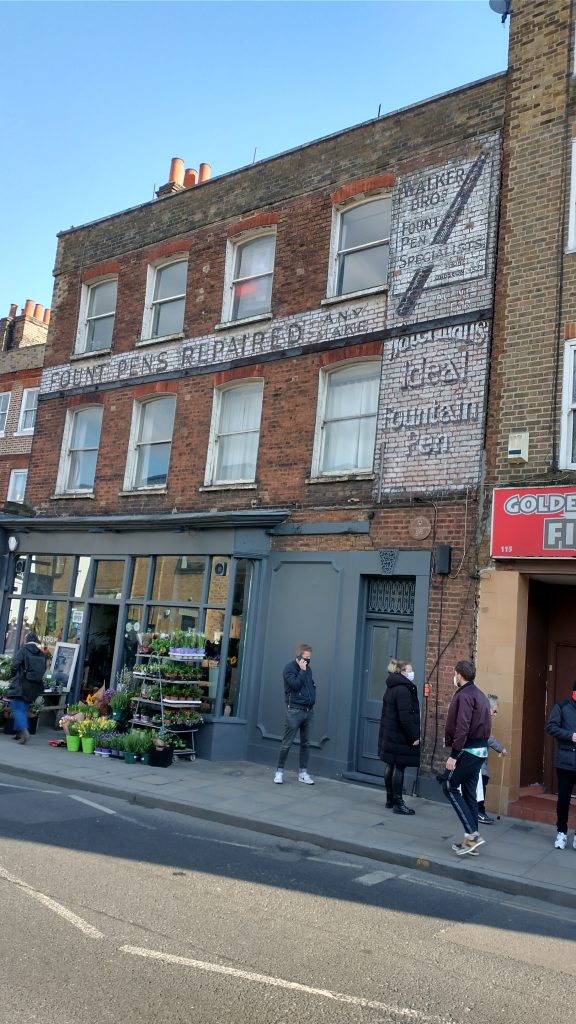
Ghost Sign. Church Street, Stoke Newington photo K Flude
This is a graph by Flourish who make superb business graphics. Just watch as you see the composition of the Stoke Newington Church Street change year by year before your eyes.
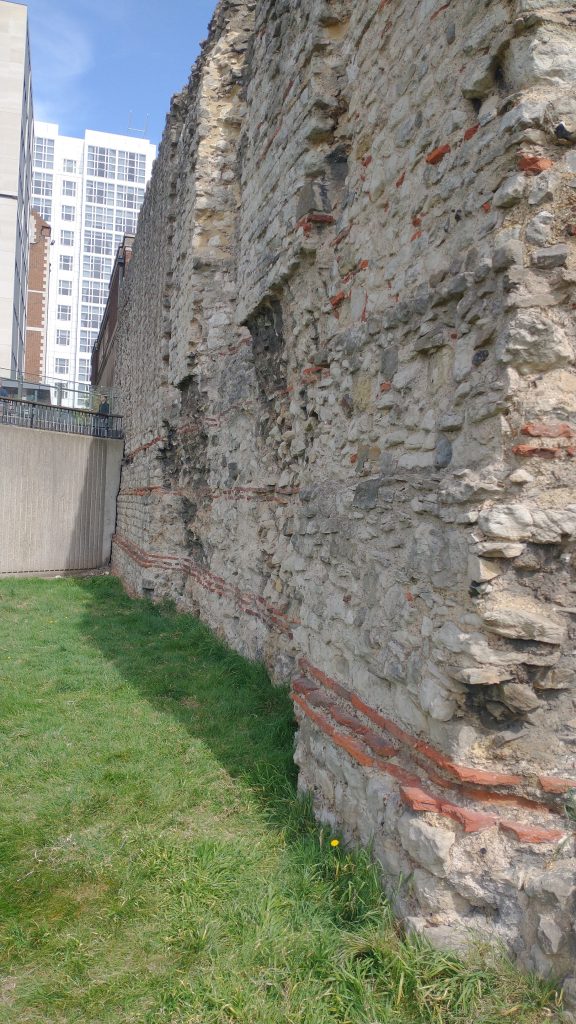
Roman and Medieval Town Wall at Tower Hill, London
Yesterday I had a meeting with a couple of archaeologists at Tower Hill to discuss my recent letter to the London Archaeologist which suggests a piece of conservation of the wall was wrong and based on an misunderstanding of the physical remains. To my relief they agreed with my assessment of the wall and we agreed to follow it up.
It is a complex issue and I will try to upload a copy of the report at the bottom of this page. But briefly. at some point in the past the inner face of part of the wall collapsed (the piece closest to the camera). You can see that only the bottom Roman tile courses continue to the camera end of the wall – the ones above were swept away in the collapse on the inner face, they survived on the outer face.
The section just visible at the front used to show this collapse graphically because only half of the width of the tile courses survived (i.e. on the outer face not the inner face.) At some point someone in the 1980s picked up some fragments of the tile and stuck them superficially on the wall to complete the tile courses. This shows a complete lack of understanding of the archaeology of the wall and ignores the collapse. You can just see the end of that false tile course a few feet above the bottom genuine Roman tile course.
Not a great nor important bit of history but the Wall Walk plaque is wrong on this matter too so it would be good to get that changed.
Its difficult to date the original collapse but the wall at the top looks clearly medieval.
What was even more exciting is that while waiting for the archaeologists to turn up I was looking from afar at the section above. If you look very carefully at the wall nearest the camera you will see a few feet above the bottom of the wall a string of stones which are aligned to the Roman tile course and it seems that whoever recreated this section of the Roman wall after the collapse tried to copy the Roman wall but did not have any tiles so did it in stone. This part of the ‘repair’ is clearly different in style to the medieval repair above (although I had not noticed the difference in 40 years of looking at this wall).
I was very excited about this and thought maybe this is Post Roman work, because it is different to the section above which is medieval, and mimicking or continuing the Roman design the Roman. Identifying a pre-Medieval repair to the wall would be, I think, unique.
I pointed it out to Jane Sidell and Jenny Hall, and they were also interested in this finding. Jane pointed out that it seems that whoever did this seems to have been copying the Roman core of the wall just to the left, rather than copying the original Roman inner face which you can see at the end of the wall away from the camera. She thought it was more likely to have been a 19th or 20th Century repair. But we are following it up.
Here is the letter as published in London Archaeologist Vol.16 No. 2 / Autumn 2020
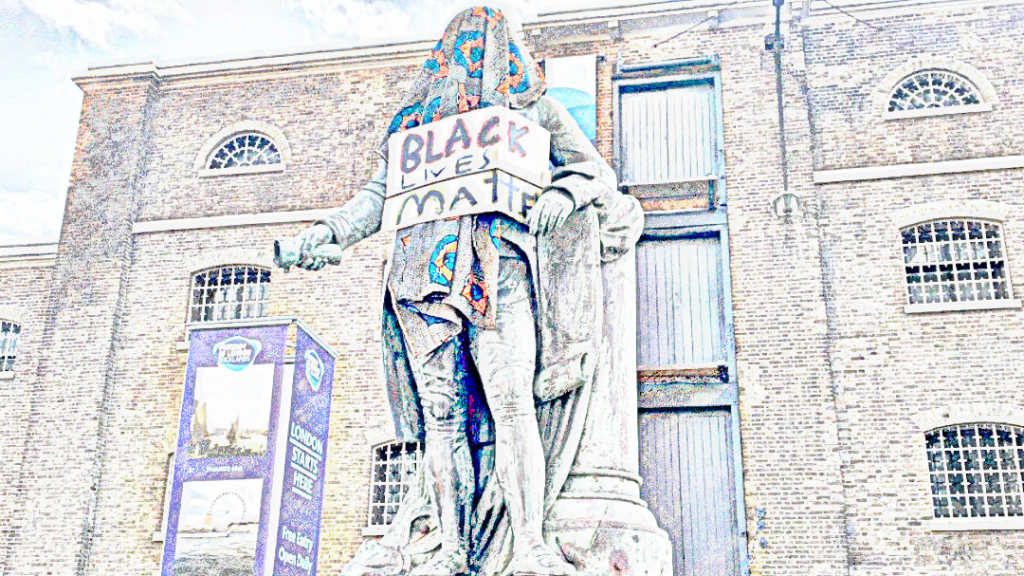
Robert Milligan once reigned supreme outside the Museum of London in Docklands as a representative of the West Indies merchants who proudly set up the West Indies docks. Now he has been removed from his prestigious position and acquired by the Museum of London. Their Docklands Museum can be seen behind the statue in this sketch. According to a statement by the Museums Association he will be ‘fully contextualised’ in the museum. The docks were set up to to maximise profits from the slave driven sugar plantations in the West Indies. Milligan was the Deputy Chairman of the project.
The museum has an excellent display on the slave trade.
Sorry for gap in posts as I’m recovering from surgery following an accident whereby a taxi driver opened his door and knocked me off my push bike so typing one handed and dealing with images is quite difficult at present. Please adopt the ‘Dutch Reach’ when opening car doors and be careful.