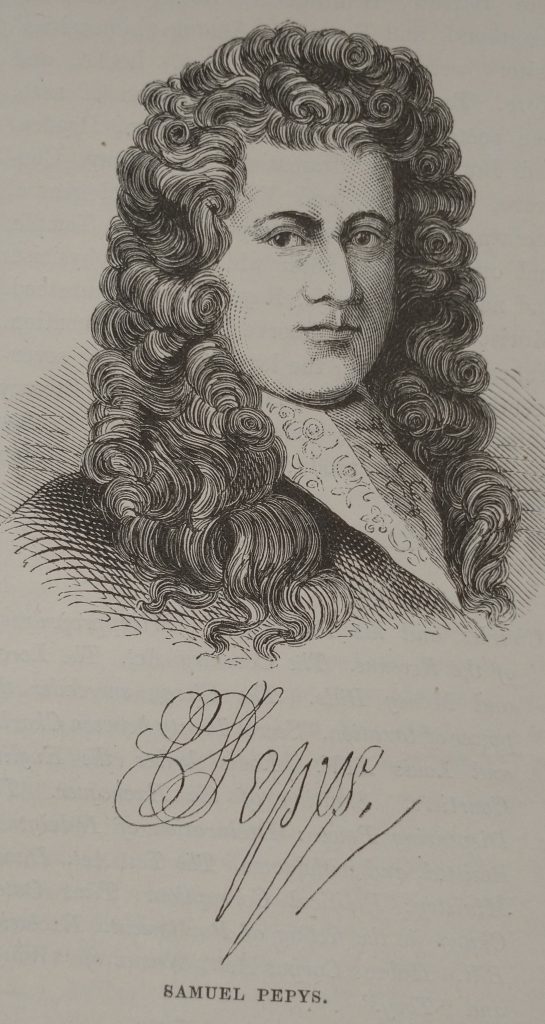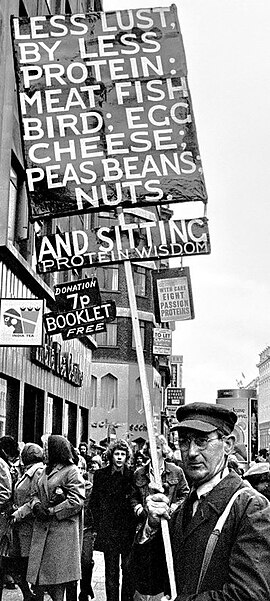
This post sprang from something that my grandson said to in the middle of the park. He was curious as to why I was concerned that the park toilets were out of action. He told me I could, like him, just pull down my trousers and wee, right here, right then, up against the tree in the park. My attempt at explanation drew a perplexed, ‘What?’ ‘What?’ is his new word. After an explanation, his next word is invariable another ‘What?’.Hopefully the relevance of this will become apparent.
May and June are the most prolific months for dandelions, which used to be known as ‘piss-a-beds’. They are diuretic and were often eaten, and so might well have consequences for the young trainee child.
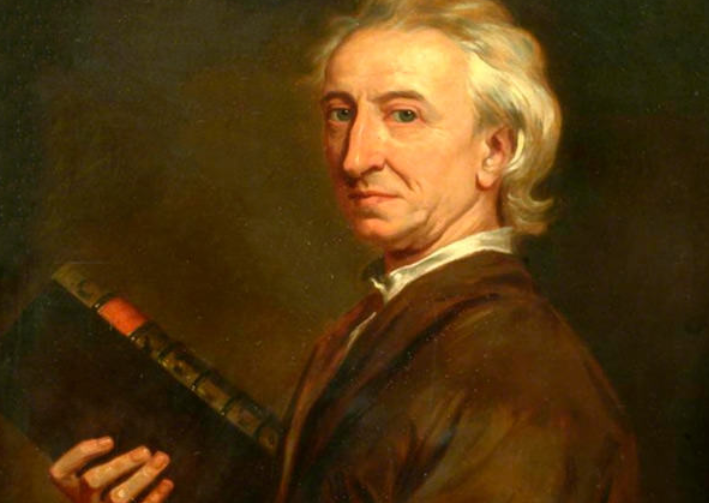
John Hollybush in his 1561 ‘The Homish Apothecary’ says:
‘When a young body does piss in his bed either oft or seldom: if ye will help him take the bladder of a goat and dry it to powder, and get him to drink with wine, or else take the beans or hinder fallings of a goat, and give him of the powder in his meat morning and evening, a quarter ounce at every time.’
(quoted in ‘The Perpetual Almanac by Charles Kightley)
Hinder fallings are what falls out of the hind-quarters of a goat. I’m not sure even an indulgent Grandparent is allowed to give droppings and wine to the little ones. Nor can I find any mention of goat products in modern medical recommendations. So I won’t be recommending this as a practical aid.
Medically, dandelions were very well regarded. Mrs Grieve’s ‘Modern Herbal’ reports that it are diuretic and a general stimulant to the system but particularly the urinary system. They were good for liver and kidney complaints; gall-stones; and piles. They were considered excellent to eat and drink. Particularly, dandelion sandwiches using young leaves, with salt, pepper, and lemon juice. They were also taken in salads, teas, and beers.
We used to blow the seeds from the dandelion seed head saying ‘She loves me. She loves me not’ at each blow, until the truth was revealed.
First written in June 2023, revised june 2024,2025. Rewritten 2025
Swarm of Bees, Hackney (Photo Kevin Flude 30th May 2018). The Swarm is at the top of the Column and on the edge of the porch roof.
In 2018, on 30th May, I was perturbed to find a swarm of Bees hanging outside my front door. Frightened of leaving my house, I rang a local beekeeper, who came to take possession of the Bees and take them to a new home. By the time he came, they had moved 20 yards to a Buddleia bush.
Swarm of Bees, having moved 20 yards to a second perch, being ‘rescued’ by a bee keeper. You can see the swarm above his head.
A Swarm of Bees in May
‘Five Hundred Points of Good Husbandry’ published 1573, suggests we should:
‘Take heed to thy Bees, that are ready to swarm, the loss thereof now, is a crown’s worth of harm.’ The loss was particularly hard in May or June as the country verse tells us:
A swarm in May Is worth a load of hay A swarm in June Is worth a silver spoon A swarm in July Is not worth a fly.‘
According to Hillman’s ‘Tusser Redivus’ of 1710, swarming in May produces particularly good honey. He advises following the bees to retrieve them:
‘You are entitled by custom to follow them over anyone’s land and claim them … but only so long as you ‘ting-tang’ as you go, by beating some metal utensil – the sound whereof is also said to make your bees stop.’
Much of the above is quoted from The Perpetual Almanac of Folklore by Charles Kightly.
Queen Bee
Bees swarm when a new Queen Bee takes a proportion of the worker bees to form a new colony. They will latch unto a branch or a shrub, even a car’s wing mirror. Then sending worker bees out searching for a suitable new home, such as a hollow tree. There may be hundreds or even thousands in the new colony. This may be very alarming, as I found, as I could not go out without walking through a cloud of bees. But, at this point, they will not be aggressive as they do not have a hive to protect. Look here for more information on swarming.
Sweet, Long Distance Flyers
An average hive will produce 25 lbs of honey, and the bees will fly 1,375,000 miles to produce it. This is like flying 55 times around the world (according to the British beekeepers Association (and my maths)) https://www.bbka.org.uk/honey
Helping Bees
Bees are still having a hard time as their habitats are diminishing and threats increasing. In July, DEFRA hosts ‘Bees Needs Week’ which aims to increase public awareness of the importance of pollinators.
They suggest we can help by these 5 simple actions
Grow more nectar rich flowers, shrubs and trees. Using window or balcony boxes are good options if you don’t have a garden.
Let patches of garden and land grow wild.
Cut grass less often.
Do not disturb insect nests and hibernation spots.
The Stinking Idol : An Imagined Scene at the Maypole at St Andrew Undershaft
Philip Stubbes, wrote a vitriolic attack on pagan practices in his ‘Anatomy of Abuses in 1583’. He fired a broadside at the tradition of dancing around the Maypole. He said they had: ‘as Superintendent and Lord ouer their pastimes and sportes: namely, Sathan Prince of Hell‘ as they erected ‘this stinking Idoll’. By which he meant the Maypole. Stubbes suggested that of the maids that went out to the woods on May Eve less than one-third returned ‘undefiled‘.
Evil May Day Riots
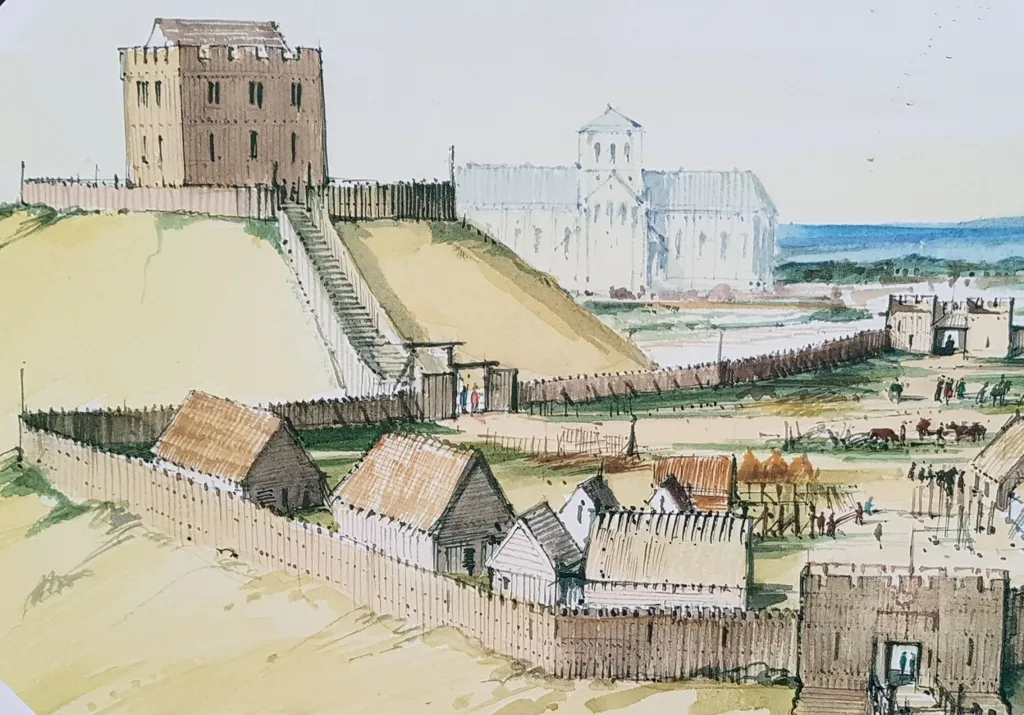
The Maypole was stored at St Andrew Cornhill, which became known as St Andrew Undershaft. In 1517, it was attacked during the ‘Evil May Day riots’. The main focus of the riot was foreign workers. The Under Sheriff of the time, Thomas More, tried to quell it. But 5,000 troops commanded by the Duke of Northfolk was necessary to regain control of the City. 300 rioters were arrested. One hanged, drawn and quartered, 13 hanged and nearly 300 pardoned after the intercession of Woseley and/or Katherine of Aragon. The shaft was returned to its place under the eves of the houses in Shaft Alley. But apparently banned from being raised again.
1549 May Day Riots
But in 1549, the curate of nearby St Katharine Cree Church made an inflammatory speech. This incited a Puritan mob who cut the shaft into pieces and burnt it. I always imagine the Curate’s sermons to be along the same lines as Phillip Stubbes attack on the Maypole.
Maypole: this Stinking Idol, Rather
Here is a longer description of the May Day Celebrations by Stubbes.
‘But their chiefest iewel they bring from thence is the Maie-poale, which they bring home with great veneration, as thus: They haue twentie, or fourtie yoake of Oxen, euery Oxe hauing a sweete Nosegaie of flowers tyed on the tip of his homes, and these Oxen drawe home this Maie-poale (this stinking ldoll rather) which is couered all ouer with Flowers and Hearbes, bound round about with strings from the top to the bottome, and sometimes painted with variable collours, with two or three hundred men, women and children following it, with great deuotion.
And thus being rearedvp, with handkerchiefes and flagges streaming on the top, they strawe the ground round about, bind green boughes about it, set vp Summer Haules, Bowers, and Arbours hard by it. And then fa! they to banquet and feast, to leape and daunce about it, as the a Heathen people did, at the dedication of their ldolles, whereof this is a perfect patteme, or rather the thing it selfe. I haue heard it crediblie reported (and that viua voce) by men of great grauity, credite, and reputation, that of fourtie, threescore, or a hundred Maides, going to the wood ouemight, there haue scarcely the third part of them returned home againe vndefiled.‘
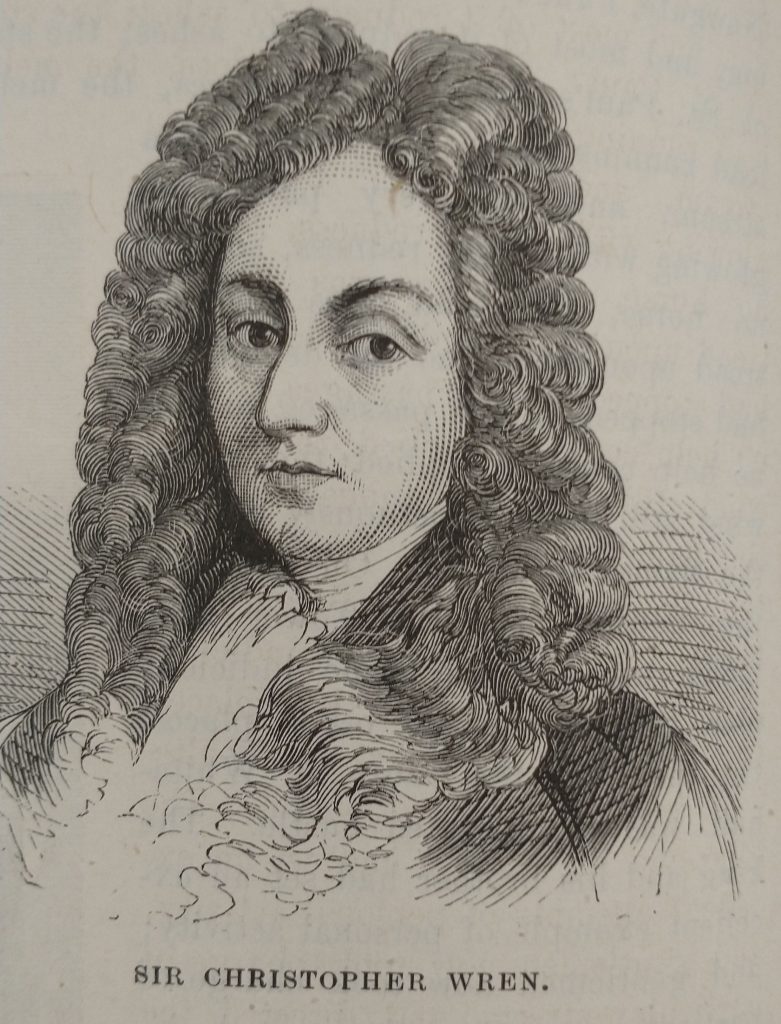
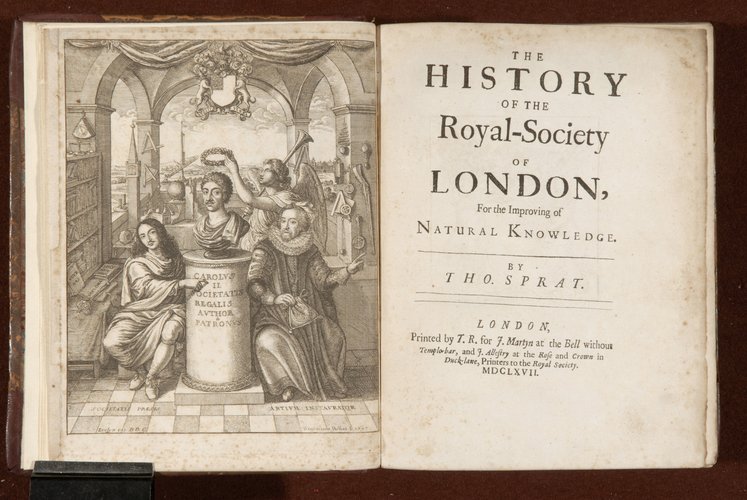
The unraised pole seems to have survived until the beginning of the Civil War, (1644) when it was destroyed. But at the Restoration of Charles II a new and huge Maypole was ordered. It was joyously erected 134 ft high (41 metres) in the Strand. This one was danced around till 1713 when it was replaced. The original was sold to one Isaac Newton. He used it to support the biggest telescope in Europe which was erected in Wanstead by a friend.
And that, my friends, is how you get from Superstition to Science in one easy story.
Old Print of Isaac Newton
Postscript.
I have always told people that the sermon leading to the destruction of the Shaft in 1549 was made at St Paul. I cannot remember where I read this. The suggestion that the Maypole in Cornhill was not used after 1517 seems strange. Why then would an unused maypole rouse a crowd to riot in 1549? Of the sources I have at hand, the London Encyclopedia mentions the riot of 1517 in its entry on St Andrew Undershaft but doesn’t elaborate more. ‘Layers of London‘ says ‘It was last raised in 1517 when ensuing riots led to the celebration being banned.’ which is definitive sounding. But is it? I wonder if it was banned for a year or two, then allowed again, and finally stopped in 1549?
‘Allies’ Roosevelt and Churchill by by Lawrence Holofcener, unveiled on May 2nd 1995 by Princess Margaret and Lord Snowdon
1995 Allies Statue Statue of Churchill and Roosevelt set up to commemorate 50 years of peace. 30 years later what is the state of the Allies relationship? Topical or what? https://www.iwm.org.uk/memorials/item/memorial/11351
First written in 2023 and revised on May 2nd 2024 and 2025.
Shakespeare’s death date is given by the burial register at the Holy Trinity Church, Stratford on Avon where he was buried. His baptismal record also survives at the same church and is on April 26th 1564. So, we don’t actually know when he was born, but christening were held soon after birth for fear of the high infant mortality rates, so 23rd April, three days before, has been assigned to be Shakespeare’s birthday.
St George’s Day is normally on 23rd but not this year!
When St George’s Day falls between Palm Sunday and the Second Sunday after Easter it is transfered to the Monday after the Second Sunday of Easter. Soin 2025, It is on April 28th. Not many people know that including Keir Starmer, Theresa May, and London Mayor Sadiq Khan who all got it wrong the last time in happened in 2019. I got it wrong too! But I think the Church should stop such silly practices. Either it’s St George’s Day or it isn’t. Why does it matter?
Shakespeare’s Birthday, ‘taking to the chamber’
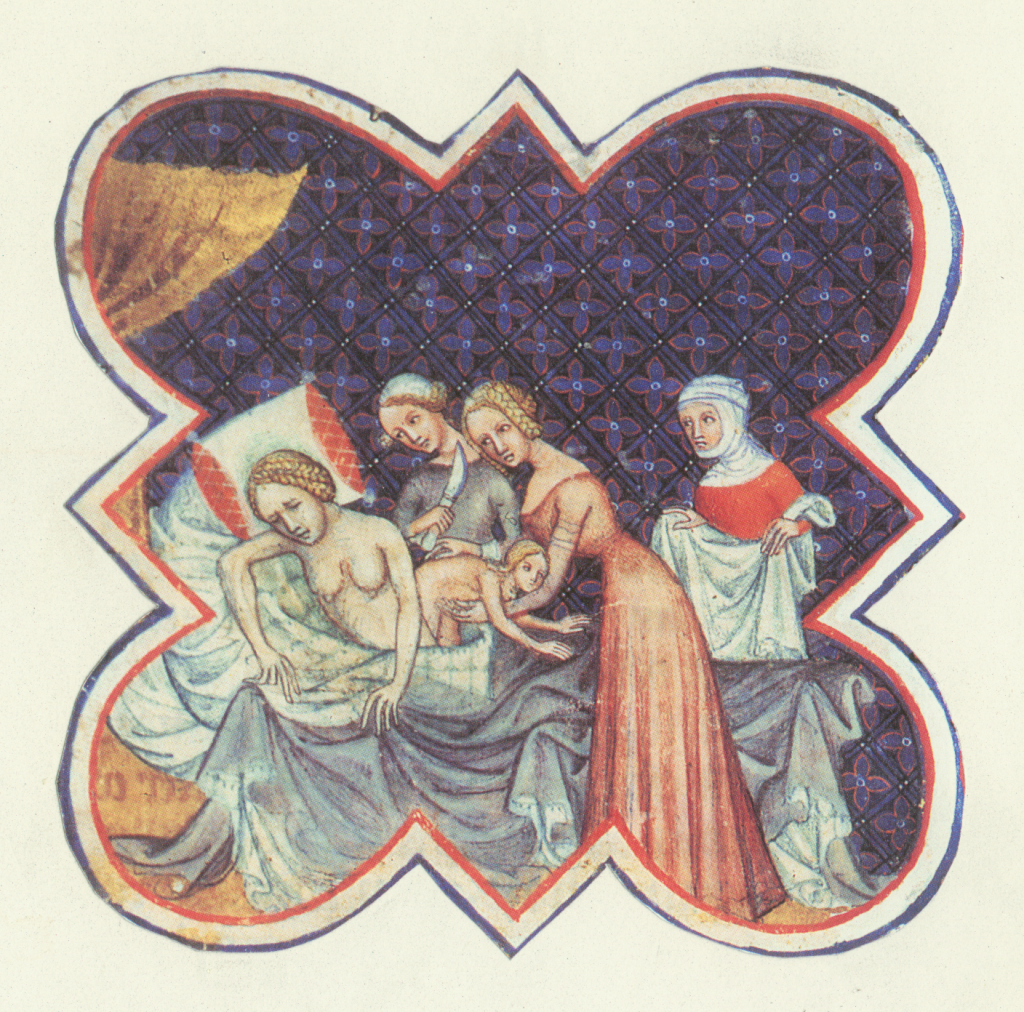
His mum, Anne Shakespeare would have ‘taken to her chamber’ about four weeks before the due date. The windows or shutters were fastened, as fresh air was thought to be bad for the birthing process. Female friends and relatives came to visit; the room was decorated with fine carpets, hangings, silver plates and fine ornaments. It was held that external events could influence the birth, any shocks or horrors might cause deformities and anomalies, so a calm lying-in room was clearly a good idea.
When labour began, female friends, relatives and the midwife were called to help out. A caudle of spiced wine or beer was given to the mother to strengthen her through the process. The maternal mortality rate for the 16th Century is estimated at 1500 per 100,000. Today, it’s 7 per 100,000. So most women would have heard of or attended the birth of a women who had died during or following children birth. There were also no forceps so if a baby were stuck and could not be manually manipulated out, then the only way forward was to get a surgeon to use hooks to dismember the baby to save the life of the mother. Doctors were not normally in attendance, but could be called in emergency,
Swaddling the Baby
Immediately after washing, the baby was swaddled. The swaddling was often very tight and could affect the baby’s growth, and might have affected the learning process, as movement of hands and feet are now considered significant in the early learning process. Swaddling lasted eight to nine months, and only went out of fashion after Jean Jacques Rousseau wrote against the practice.
Detail of tomb of Alexander Denton and his first wife Anne Willison, and her baby dressed in swaddling clothes Photo Wikipedia Hugh Llewelyn
Dangers of Childbirth
Puerperal fever killed many women even after successful childbirth, for example Queen Jane Seymour who died after 5 days. During these dangerous early days, the mother was kept in a dark room, and then, perhaps three days after birth, friends were invited to celebrate ‘upsitting’ when the mother was no longer confined to bed. This is when christening would take place. Edward VI was christened to a huge audience in the chapel at Hampton Court three days after his birth.
Licensed midwives could baptise newborn babies provided they used the correct wording and informed the Church so that the registration could be properly reported. Thomas Cromwell was responsible for the law in 1538 which insisted on a parish register to record weddings, christenings, and funerals. The law was reaffirmed by Queen Elizabeth in 1558 and registers had to be stored in a locked chest in the Church. (In 1597, the records had to be on parchment not paper, and in 1603 the chest had to have three locks!).
If the christening were in the church, the mother might not be there as she was expected to stay in her chamber for another week or so.
Churching and Breastfeeding
A week or a few weeks later, the mother would be ‘churched.’ This was a thanks-giving ceremony, although Puritans did not like the idea as it might be confused with a purification ceremony.
Breastfeeding would last a year or so but many high status women choose to use a wet-nurse. There was a real concern to find a suitable wet nurse as it was believed that the breast milk was important for the babies’ development both physically and temperamentally. Poor children who lost their mothers were very unlikely to survive as, without breast milk, the baby would be fed pap – bread soaked in cow’s milk.
Pilgrims leaving the Tabard for the Canterbury Pilgrimage
Canterbury Pilgrimage
Tonight, I am leading my annual Canterbury Tales Virtual Pilgrimage. This is the day Chaucer’s pilgrims leave London to ride to Canterbury. (For more details or to book look here.)
At the beginning of the prologue, Chaucer gives clues as to the date. They go when April showers and Zephyrus’s wind is causing sap to rise in plants, engendering flowers. It is also when Aries course across the sky is half run.
The pilgrims are accompanied by Harry Bailly who is the landlord of the Tabard Inn in Southwark. He was a real person and a fellow Member of Parliament of Chaucer.
He is jolly and quite knowledgeable. In the Man of Law’s prologue we get a glimpse of Harry time telling in the days before clocks.
A mass clock at Steventon Church. Hampshire
Telling the Time
Chaucer mentions ‘artificial day’ and this is a reference to the way days were divided into hours. There were twelve hours in the daylight part of the day, and twelve hours in the dark night. So in the winter daylight hours were short, and in the summer long.
Romans used water clocks. King Alfred used candles marked into hours. Harry Bailly knows how to tell the time by the height of the Sun. Harry tells the pilgrims it’s about time they got underway. Here is an extract:
Essentially, he is telling the time by the length of the shadows. The illustration of the mass clock at Jane Austen’s Church at Steventon shows how easy it was to tell the time by the sun.
The first mass clock I noticed was at St James’ Cooling in Kent. Dickens used this in Great Expectations, where Pip’s brothers and sisters were buried. Once you find one mass clock, you suddenly discover them everywhere!
Telling the time, before mechanical clocks, was not complicated. The basic unit is the day and the night, and we can all tell when the dawn has broken. The Moon provides another simple unit of time. The month’s orbit around the Earth is roughly every 29 days. The new, the crescents and full moons provide a quartering of the month. For longer units, the Earth orbits around the Sun on a yearly basic. But it is easily divided into four, the winter solstice; the spring equinox, the summer solstice and the autumn equinox.
Nature’s Way of Time Telling
But there were other ways of marking days in the calendar, with natural time markers marked by, for example, migrating birds, lambing, and any number of budding and flowering plants such as snowdrops, daffodils and elm leaves:
When the Elmen leaf is as big as a mouse’s ear, Then to sow barley never fear; When the Elmen leaf is as big as an ox’s eye, Then says I, ‘Hie, boys” Hie!’ When elm leaves are as big as a shilling, Plant, kidney beans, if to plant ’em you’re willing; When elm leaves are as big as a penny, You must plant kidney beans if you mean to have any.’
In my north-facing garden, I have my very own solar time marker. All through the winter, the sun never shines directly on my garden. Spring comes appreciably later than the front, which is a sun trap facing south. But in early April, just after 12 o’clock the sun peeks over the block of flats to the south of me. It finds a gap between my building and the converted warehouse next door. For a short window of time, a shaft of a sunbeam brings a belated and welcome spring.
New Light on Thomas Becket’s Window at Canterbury
Recent research has revealed the true story behind stained glass windows at Canterbury which had been reassembled wrongly.
Sir Walter Scott recorded that ‘the last three days of March are called the borrowing days; for as they are remarked to be unusually stormy, it is feigned that March has borrowed them from April to extend his sphere of his rougher sway.’
There are various traditions and poems that record the borrowing days, and this is in the Scotch dialect:
March borrowed from April Three Days, and they were ill: The first was frost, the second was snaw, The third was cauld as ever’t could blaw.
The Borrowing Days in Spain
There is a Spanish story which explains this a little more. A shepherd asked March to calm the winds to suit his flock of sheep, in return for a lamb. March compiled but, then, the Shepherd refused to hand over the lamb. So, March borrowed three days from April and made them fierce and stormy. Versions of this tale are known from Staffordshire, North England and Scotland. (Source ‘Weather Law’ by Richard Inwards 1994 (first published 1893).
Last year was windy with sunny spells followed by cold rain and fierce gusts. This year has been sunny and warm, but today there was a pretty fierce wind.
Warm days at the end of March or the beginning of April bring the Blackthorns into bloom. This often followed by a cold snap which is known as a ‘Backthorn Winter.’
February 2023 in Haggerston Park, London showing early blossom (Blackthorn?) Photo K Flude
For more on blossom and Haggerston Park follow my link to haggerston-park/
Nature in Art
For a glimpse of Nature in art, follow this link to the ‘Ny Carlsberg Glyptotek’ in Denmark. This is a Museum with ‘a vast collection of art and sculpture.’ The link will take you to the ‘After Nature’ Special Exhibition page. Here, you can see a few of the Spring paintings, including a Gauguin and a Van Gogh. But, you can see more, including the ‘After Nature’ exhibition if you download the app. Another excuse to visit the wonderful City of Copenhagen. On my first visit I stayed in a cabin on an historic Wooden Ship in the harbour.
Screenshot of webpage Glyptotek Museum
On This Day.
Photo of cover of Chambers Book of Days
2024 – I purchased the Chamber’s Book of Days, updated from the original 1864 publication, and began adding occasional ‘On This Day’ epilogues to my posts.
1461 – The Battle of Towton, England’s bloodiest battle. Part of the Wars of the Roses.
1871 – Official Opening of the Royal Albert Hall
1912 – Captain Scott’slast entry in his diary.
‘We shall stick it out to the end, but we are getting weaker, of course, and the end cannot be far, It seems a pity, but I do not think I can write more.’
Fascinating read about the King’s Evil by Andrew Taylor
Here is a post on the King’s Evil, that I forgot to post yesterday.
Aries & Noses
We have just entered Aries. Now according to astrology, Aries is associated with health issues of the face. This, according to ‘Skin and Astrology Signs‘ is because of the “level of heat in their bodies”. So Arians tend to have problems such as “flushing, heat rashes, skin eruptions, and rosacea”. They suggest using chilled cucumber for the eyes and forehead, and using beauty products with soothing aloe vera in them.
Charles Kightly, in his Perpetual Almanac enjoins us to ‘Observe the features of the face which are ruled by Aries and seek cures for ills of the nose’.
The first example, Kightly gives is from an 18th Century publication which explains how to understand people by studying their noses:
Nose round with a sharpness at the end signifies one to be wavering of mind; the nose wholly crooked, to be sure unshamefaced and unstable; crooked like an eagle’s beak, to be bold. The nose flat, to be lecherous and hasty in wrath; the nostrils large, to be ireful.’
The Shepherd’s Prognostication 1729
A Fungous Nose & the King’s Evil
The second rather revolting tale is from John Aubrey.
Arise Evans had a fungous Nose and said, it was revealed to him, that the king’s hand would cure him At the first coming of Charles II into St James Park he kissed the king’s hand and rubbed his nose with it: which disturbed the king, but cured him.
People believed that Scrofula, could be cured by touching the Monarch. Tuberculous cervical lymphadenitis was, thus, known as the King’s Evil. So, the King or Queen would make herself, very reluctantly, available for his sick public to touch her.
Scofula and the King’s Touch
Sketch of Dr Johnson from a portrait.
Dr Samuel Johnson suffered from Scofula and received the “royal touch” from Queen Anne on 30 March 1712 at St James’s Palace. He was given a ribbon, which he wore around his neck for the rest of his life. But it did not cure the disease, and he had to have an operation.
It took place in the winter, between Michaelmas and Easter, when cold weather provoked the disease. The lucky few who were allowed the Touch, would be touched or stroked by the King or Queen on the face or neck. Then a special gold coin, touched by the Monarch, was put around their neck. Readings from the bible and prayer finished the ceremony. Before Queen Elizabeth, the Touch was said to cure many diseases such as Rheumatism, convulsions, fever and blindness, but after it was reserved for Scrofula.
Who Started touching for the King’s Evil?
It was only the French and the English who believed the King’s touch could cure people. The French claimed it began with Philip 1 in the 11th Century. The English claimed Edward the Confessor as the first. But this was denied by the French who claimed that the French King of England, Henry 1 introduced it to the English. The practice lasted until George 1 who resolutely refused to have anything to do with it.
For more on the King’s Evil have a look at this blogpost. Or read the book pictured at the top of the post.
The day after the Equinox we look at the cardinal points of the compass:
“chief, pivotal,” early 14c., from Latin cardinalis “principal, chief, essential,” (online etymological dictionary).
The Importance of South
On its annual cycle, the Sun is always on the move. At the Equinox the Sun now rises due East, and sets due West. It then rises every day further towards the north and sets further to the South until the Solstice. The Solstices mark the extreme Northerly and Southerly rising and settings. Dawn and Dusk vary accordingly.
So, the only real fixed point in the Sun’s entire journey (as seen from Earth) is Noon. Every day of the year, every day of our lives, the Sun is at the highest point at Noon. And this is the definition of South. But the Sun never strays into the North. So the North is the polar opposite of the South- cold, remote, more mysterious, unknowable almost.
To my mind, it makes, of the Cardinal Points, the South very special. At Stonehenge, there are two exits. The biggest is aligned to the Midsummer Sunrise and Midwinter Sunset axis. But there is a smaller second entrance and this aligned due South. There is also a uniquely small standing stone in the main circle of Sarsens, which is aligned to the South. (Although we don’t know if this stone is original). However, there was some sort of corridor heading South through the mysterious wooden phase which precedent the stone Stonehenge. So, we can be fairly sure South was important at Stonehenge.
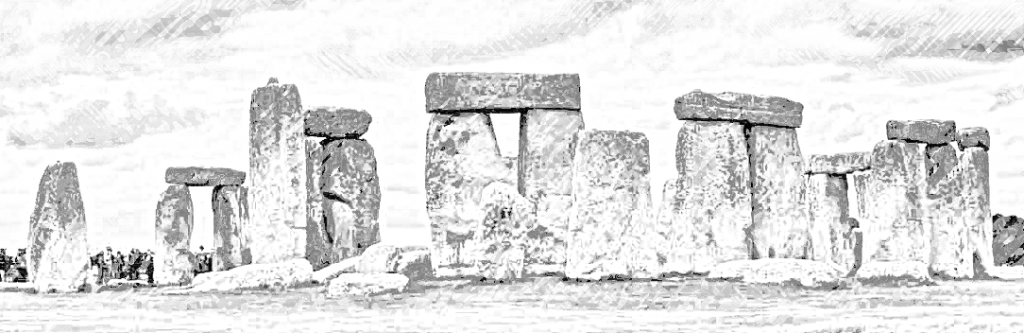
Sketch of Stonehenge showing the smallest Sarsen stone to the North of the Southern Entrance
Noon, derives from ‘nona hora’ in Latin and is ‘one of the seven fixed prayer times in traditional Christian denominations.’ (Wikipedia)
The Predominance of the North?
And yet, North, has come to be the principal of the cardinal points. It is shown on virtually all modern maps. It is the direction that people of my generation and hemisphere think of as being ‘up’.
The Google generation sees things differently. There are countless tourist maps on walls or plinths where North is no longer at the top. Up is shown as being the way you are facing. Users have to fight with Google Maps to put North at the top of the map. My children mock me when I say ‘Out of the Tube station, turn up the High street northwards.’ Their view of maps is completely contextual. They do not see any reason to know where the cardinal points are. I point out that the Tube probably has two exits on either side of the road. So, it doesn’t work to say ‘turn left out of the tube’.
There may also be an element of sexual difference, with men more likely to have a cardinal point view while women navigate more by landmarks. ‘Walk past the M&S, turn left to the Park and straight on’. One paper says: ‘during spatial navigation, women typically navigate an environment using a landmark strategy, whereas men typically use an orientation strategy.’
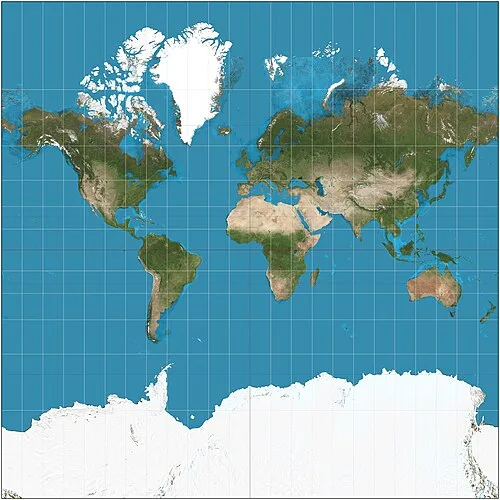
Although I see this decline of the north as being part of the Decline of the West. I also ‘things were better in my day’. But in fact it is simply returning to the way maps were produced in the past. Here is an example below.
Representation of a Roman Map with the top being roughly East.
The Magnetic Poles
Of course, there is another version of the cardinal points: the magnetic cardinal points. The magnetic North wanders over time. It does not necessarily coincide with geographic north. In recent times they are close enough. But in the past there have been huge variations. Occasionally, the earth has had geomagnetic reversals when the North Pole has pointed in different directions, including south. The last one was 780,000 years ago. On average, they take place very roughly every 500,000 years.
The magnetic pole is caused by the molten iron in the earth’s core and mantle, which creates a dipole. Fluctuations in the dynamo flow of the molten iron cause occasional reverses. The science is very complicated and, even now, not entirely understood. Is it a random consequence of flow dynamics? Or do external events, like sinking continents, or meteor strikes cause the reversal?
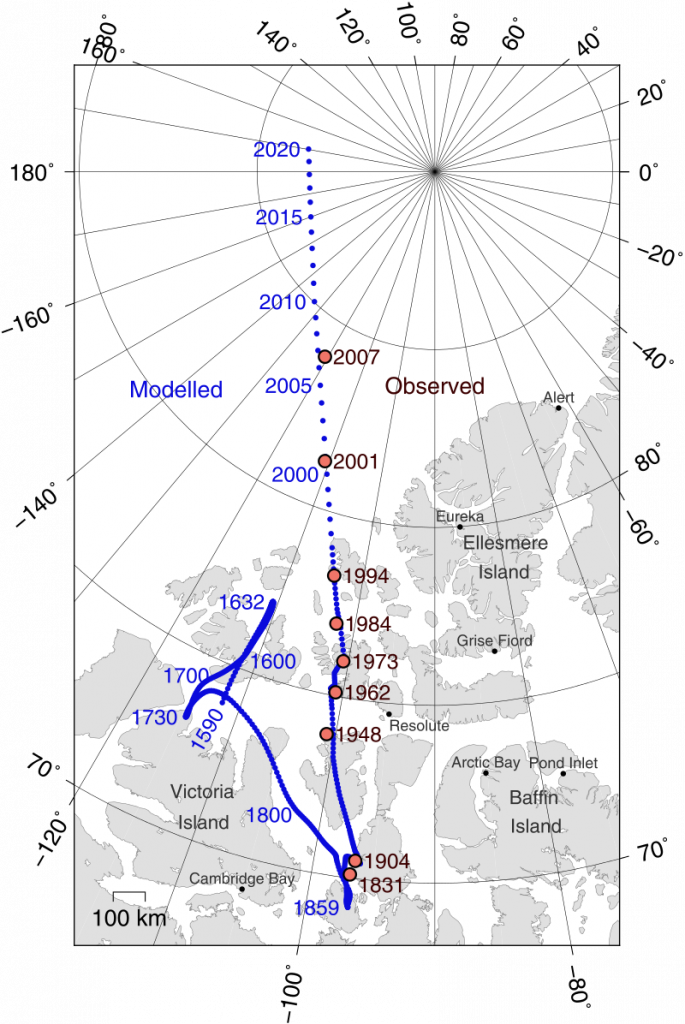
Since the first use of compasses for navigation in the 11th/12th Centuries, the magnetic pole hasn’t wandered enough to be of concern to navigation. It has wondered a few hundred miles over the last 500 years. Now, it is speeding up, from 9km a year to 52km (since 1970). This Wikipedia page is pretty good at an explanation.
My Job Tracking the Cardinal Points
My first proper job after university was as a technician then research assistant at Oxford University studying these phenomena. I say ‘proper’ because when I left University, I became an itinerant archaeologist. This led me to digs in Switzerland, Northampton, East Anglia and Nottingham. Then, I got the job at the Research Laboratory for Archaeology and the History of Art, at Keble College, Oxford.
I worked for Dr. Mike Barbetti who was an expert on the wanderings of the Magnetic Pole. His interest was firstly in the pure science of the subject. But he was keen to explore the applied uses in Archaeology as well. So, after being appointed as a Research Fellow at Oxford, he set up an epic journey from his native Australia to Oxford. It went via some of the iconic sites of Palaeolithic Archaeology, including Olduvai Gorge, Tanzania. The site of excavations by Mary and Louis Leakey.
To plot the movements of the magnetic north, scientists needed dated samples. Early human sites provided dated sites over a long time span. Also, archaeomagnetism, as the discipline became known, offered the possibility of dating sites. Another application was to determine whether deposits were fired or not. One of the sites Mike sampled was a candidate for the first evidence of fire in human existence.
Cutting up Samples
As I said, Mike’s interest was discovering how the magnetic field of the earth changed over time. And, more importantly, what was the mechanism. He shipped back to Oxford samples of soil cast in Plaster of Paris. My job was to cut the samples up. I cut them up with an electric saw in a shed in the backyard of the Laboratory. Then we measured the direction and intensity of the magnetic field in the samples.
Soil contains particles of iron, and they align randomly. So a sample of soil has a low magnetic intensity and a random direction of magnetic field. But once heated up, the iron particles align to the current direction of the magnetic pole. Its intensity is proportional to the intensity of the Earth’s magnetic field. These measurements provide a method of plotting the changes of the magnetic field over time. And from these data, models can be constructed explaining how the iron in the earth’s core worked as a giant magnet.
Once we had built a reference curve for the movements and intensity of the magnetic pole over time, we hoped to develop another dating method. Other methods such as radio carbon, thermoluminescence, and tree ring dating, were being developed at the Research Laboratory in Oxford.
My part in Digital Heritage Part 1
Having got the results, I took them to the Oxford University Computer Centre. There, I typed them up onto machine-readable cards. Added a copy on cards of our computer programme written in Fortran, and gave them to the Computing Staff. The program and data were run through the Centre’s mainframe computer. (probably an IBM or ICL computer, the size of a house!). 24 hours later, I received a print-out to proofread.
I located mistakes, ran an editing run of punched cards, essentially instructing the computer: ‘on card two replace 2.5 with 2.6, and run the programme again’. I would pick up the results 24 hours later. It seems extraordinarily primitive now, but then it was an enormous saving of time.
And that, patient reader, was my early contribution to Digital Heritage and pure science. Mike published many articles of which I was joint author of three articles, two in the prestigious Science Journal Nature. And it is annoying that my citations in the groves of academia are still dominated by articles I co-wrote in the late 1970s/80s!
Mike’s work was important in the development of the study of the earth’s magnetic field. However, the use of archaeomagnetism has never risen above strictly limited. Occasionally, in specific circumstances, it can be useful. But those circumstances tend to be times when no other methods have worked. Most often, it is used in attempting to date kilns.
These are the papers:
Barbetti. M and K. Flude, ‘Palaeomagnetic Field Strengths from Sediments baked by Lava flows of the Chaine des Puys, France.’ Nature, Vol. 278 No 5700. 1979
Barbetti M., Y. Taborin, B. Schmider and K. Flude ‘Archaeomagnetic Results from Late Pleistocene Hearths at Etoilles and Marsangy, France’. Archaeometry 22. 1980
More on my contribution to Digital Heritage in posts to come.
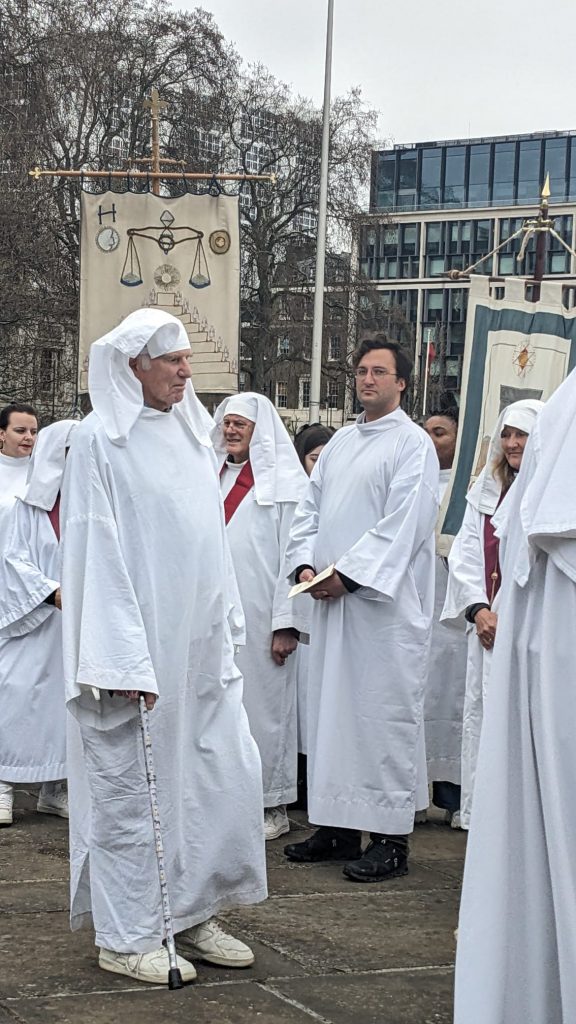
Video by Heike Herbert of Druids at the Spring Equinox at Tower Hill, London
So, Spring has sprung, not only meteorologically speaking but also astronomically. We are 20 days into the meteorological Spring which started on 1 March (see my post here.) Today, we are starting the astronomical or solar Spring.
The 20th of March is the Spring Equinox, or Vernal Equinox, midway between the Winter Solstice and the Summer Solstice. The sun has been rising further north each day since December 21st. Today it rises due East, and sets due West. The day and night are roughly equal in length (although by no means exactly). At 9.00am today, the Sun was directly overhead at the Equator.
The term vernal comes from the Latin for Spring, and today is the primavera, the first day of Spring. The Anglo-Saxons originally used the word lencthen (Lent) for Spring. But later adopted the idea of the ‘springing’ of the year when the plants bud. In Middle English, the word Spring is also used for sunrise, the waxing of the moon and the rising tides. These are called spring tides. But also for the sprouting of the beard and the first appearance of pubic hair! Happy Spring Time!
Up to the 15th Century, the English also used the French term ‘prime-temps’ in the sense of ‘first times’. This follows the idea that the year is young, while Winter represents old age. As we shall see, on March 25th, there was also a belief that the world was created in Spring at the Equinox. Jesus was also conceived at this point of the annual cycle. (see my post /march-25th-the-beginning-of-the-universe-as-we-know-it-birthday-of-adam-lilith-eve-conception-of-jesus-start-of-the-year)
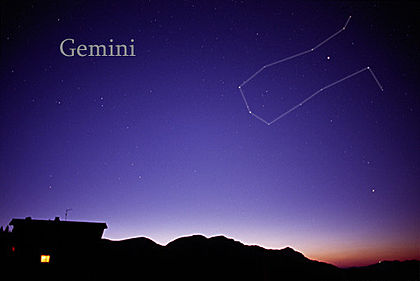
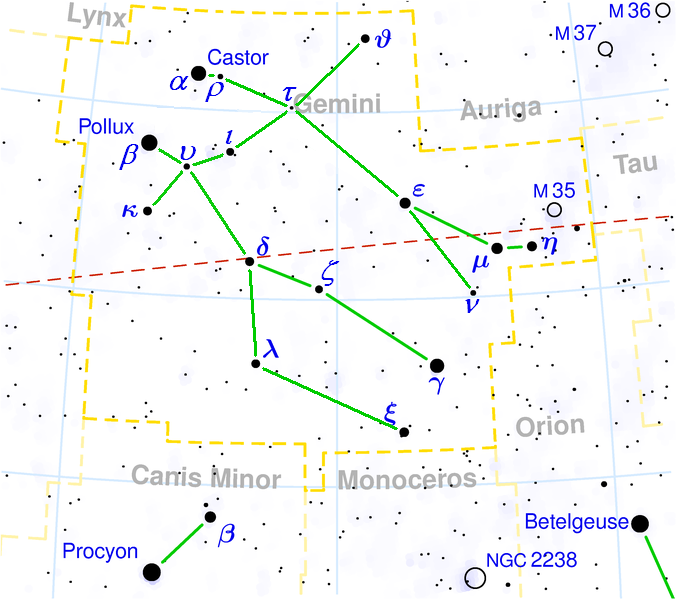
Zodiacally, if that is a word, Spring is Aries (brave and impulsive); Taurus (sensual and stubborn), and Gemini (dynamic and talented).
Druids at Tower Hill
Druids at the Spring Equinox Tower Hill London, Photo by Heike Herbert
The Druids have a ceremony at Tower Hill every year on the Spring Equinox. When I last attended I remember the druid costumes were often made with nylon sheets, and their footware was mostly tennis shoes. I see from the photos the nylon has at least been replaced with cotton, and the plimsolls with trainers. Not quite sure what that pair of black trainers are doing in the picture!
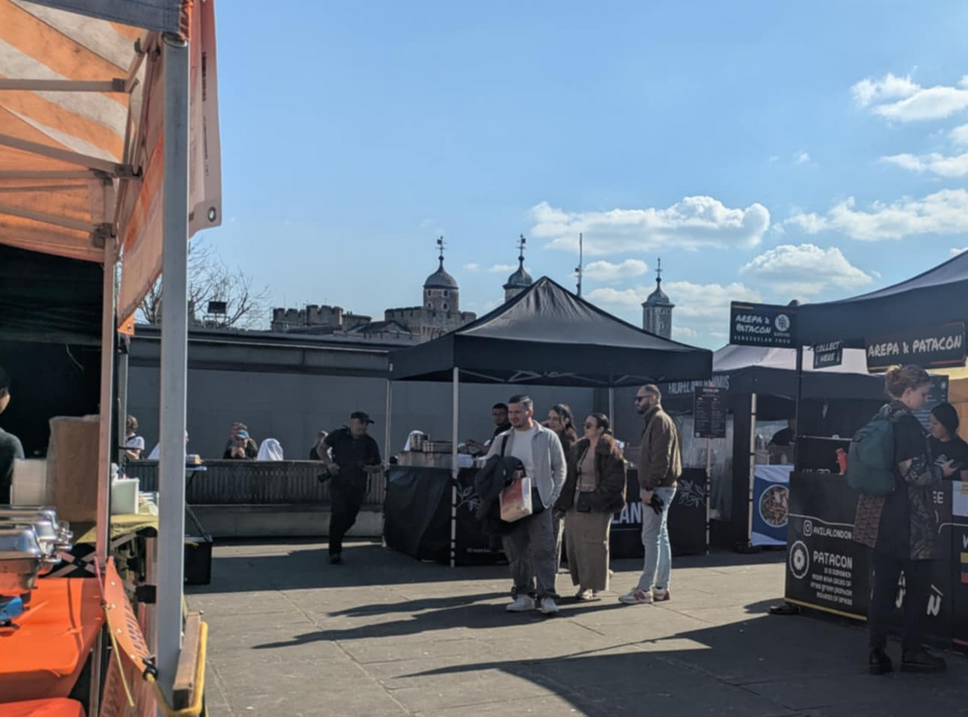
As my photos are getting long in the teeth, I have used photos by Heike Herbert. She attends most years. The ones above from 2 years ago. She has also been there today. However, she reports that the atmosphere has been affected by a street food market,. This restricted the space for the Druid Circle. The food stalls are there every Thursday, so it only impacts the Druid assembly once every 7 years! I wonder if anything similar happened at Stonehenge?
Tower Hill, Spring Equinox, 2025 and street food, Photo by Heike Herbert
Modern Druids
I say modern druids because there is no convincing evidence that the modern fellowships of Druids can trace their origins back to prehistory. Druidry was reinvented in the 18th Century — for example, the Ancient Order of Druids was formed in 1781. They were set up as societies in the tradition of the Freemasons. They held to belief in the fundamental importance of nature. However, one group, the British Circle of the Universal Bond, claim descent from a group persecuted by the Bishop of Oxford in 1166. Look at their website for more details and for an idea of their beliefs.
Prehistoric Spring Equinox
When did the Equinox first had importance for human society? The answer is, probably, at least as long as we have been reasoning creatures. On January 14th, I draw attention to a recent discovery by an amateur ‘citizen scientist’. He suggested there was evidence in Cave Painting for the use of a Palaeolithic Calendar. Follow this link to see the post.
Stonehenge and the Sun
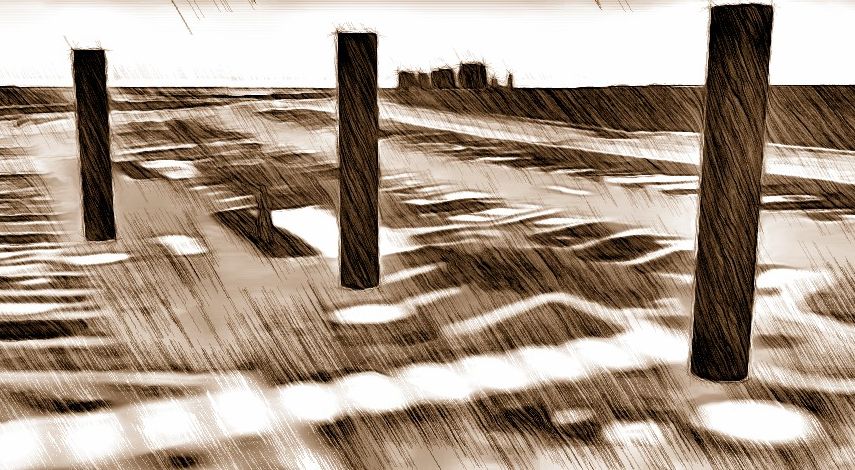
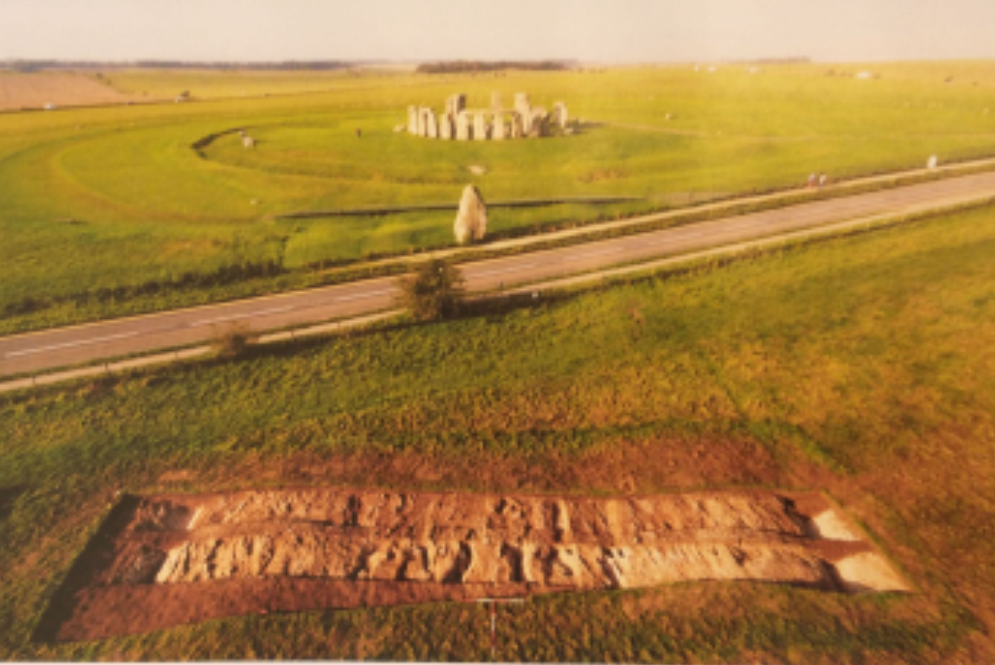
At Stonehenge, in the old Car Park, they found three huge Pine post-holes in a line. Dating evidence shows they were erected in the Mesolithic period, thousand of years before Stonehenge. They align to the direction of the Mid-Summer Sunrise and Mid-Winter Sunset (NNE/SSW). If, and it’s a big if, you were sighting from Stonehenge itself, which was built some 5000 years in the future.
Imaginary reconstruction of the Carpark Postholes
It is a bit of a stretch using two pieces of evidence so far apart in time. But recent excavations have revealed that there are natural periglacial striations in the soft chalk bedrock at Stonehenge. These lines point to the Solstices. They not only predate Stonehenge but also the three post holes. The striations may well have been visible from the time they were created when the glaciers melted.
Around 12,000 years ago (date from my memory so approximate), the climate changed and the glaciers melted. This left a lot of water rushing around the landscape. At Stonehenge, it gouged out striations in the chalk. By chance, or as ordered by the Gods/Goddesses/Divine Nature, the striations pointed to the Solstice Axis. Richard Jacques excavations in the Stonehenge area revealed that the aurochs came to the Stonehenge area for grazing and water. Aurochs are huge wild cows with enough meat on them to feed 200 people. So, the solar axis is near a place where the Gods/Goddesses/Divine Nature provided super-abundance in the guise of herds of Aurochs.
Foreground shows the periglacial striations aligned on the Solstice. Source Current Archaeology?
Burial Mounds aligned to the Equinox
This is confirmed by the alignment of many megalithic monuments dating from 3,600 BC onwards, including, of course, Stonehenge. Also, all around the UK are long barrows and other burial mounds, many of which are indeed sited/sited E-W to the Equinoxes. Many are fairly approximate. But at Loughcrew, County Meath in Ireland the Vernal Equinox shines right into the burial chamber. The sun’s light shines onto a stone marked by stone carvings. Similar alignments exist at Knowth and Dowth in the Boyne Valley. More about Loughcrew in my post here)
Harmony & the Spring Equinox.
The Equinox also has another role, which is to be the anchor of the cardinal points. The world is orientated to North, South, East, West. The Equinox is a time when there is a harmony, a balance in the universe. Therefore, it is a fortunate, a lucky time, a time to fall in love or undertake notable undertakings. But, in the Christian world marriage traditionally had to wait a little longer, until after the commemoration of the death of the Messiah,
First Written in March 2023, and revised in March 2024, 2025
Display of Antarctic Explorer’s Kit 1912 (reconstruction) at Gilbert White’s House in Hampshire
Last year, I went to Gilbert White’s House in Selborne. The naturalist’s House also houses the Oates Museum for Lawrence ‘Titus Oates’ and his uncle Frank. Oates was one of the ‘heroes’ I read about as a child. He epitomised what was sold as the British virtues of pluck, self-sacrifice, restraint.
Here is part of the story of Oates self-sacrifice over the days from February 29th to March 16th as told by the commander of the expedition Captain Scott:
Wednesday, February 29th 1912
Lunch. Cold night. Minimum Temp. -37.5°; -30° with north-west wind, force 4, when we got up. Frightfully cold starting; luckily Bowers and Oates in their last new finnesko; keeping my old ones for present. Expected awful march and for first hour got it. Then things improved and we camped after 5 1/2 hours marching close to lunch camp—22 1/2. Next camp is our depot and it is exactly 13 miles. It ought not to take more than 1 1/2 days; we pray for another fine one. The oil will just about spin out in that event, and we arrive 3 clear days’ food in hand. The increase of ration has had an enormously beneficial result. Mountains now looking small. Wind still very light from west—cannot understand this wind.
A finnesko is ‘a boot of tannedreindeer skin with the hair on the outside’.
Monday, March 5th 1912
Lunch. Regret to say going from bad to worse. We got a slant of wind yesterday afternoon, and going on 5 hours we converted our wretched morning run of 3 1/2 miles into something over 9. We went to bed on a cup of cocoa and pemmican solid with the chill off. (R. 47.) The result is telling on all, but mainly on Oates, whose feet are in a wretched condition. One swelled up tremendously last night and he is very lame this morning. We started march on tea and pemmican as last night—we pretend to prefer the pemmican this way. Marched for 5 hours this morning over a slightly better surface covered with high moundy sastrugi. Sledge capsized twice; we pulled on foot, covering about 5 1/2 miles. We are two pony marches and 4 miles about from our depot. Our fuel dreadfully low and the poor Soldier nearly done. It is pathetic enough because we can do nothing for him; more hot food might do a little, but only a little, I fear. We none of us expected these terribly low temperatures, and of the rest of us Wilson is feeling them most; mainly, I fear, from his self-sacrificing devotion in doctoring Oates’ feet. We cannot help each other, each has enough to do to take care of himself. We get cold on the march when the trudging is heavy, and the wind pierces our warm garments. The others, all of them, are unendingly cheerful when in the tent. We mean to see the game through with a proper spirit, but it’s tough work to be pulling harder than we ever pulled in our lives for long hours, and to feel that the progress is so slow. One can only say ‘God help us!’ and plod on our weary way, cold and very miserable, though outwardly cheerful. We talk of all sorts of subjects in the tent, not much of food now, since we decided to take the risk of running a full ration. We simply couldn’t go hungry at this time.
Pemmican is made of tallow, dried meat and dried berries. It is a calorie rich food stuff created by native American groups and used by expedition like Scotts. The name says Wikipedia ‘comes from the Cree word ᐱᒦᐦᑳᓐ (pimîhkân), which and adopted is derived from the word ᐱᒥᕀ (pimî), ‘fat, grease”. Sastrugi is a Russian word which are ripples or craters in the surface of the snow caused by strong winds. They make progressing through the terrain much more difficult.
Scott begins his March 16th entry unsure what the actual date is.
Friday March 16th
Lost track of dates, but think the last correct. Tragedy all along the line. At lunch, the day before yesterday, poor Titus Oates said he couldn’t go on; he proposed we should leave him in his sleeping-bag. That we could not do, and induced him to come on, on the afternoon march. In spite of its awful nature for him he struggled on and we made a few miles. At night he was worse and we knew the end had come.
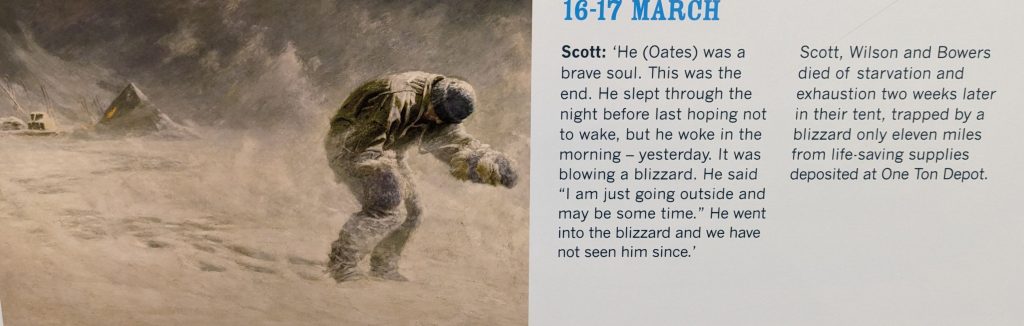
Should this be found I want these facts recorded. Oates’ last thoughts were of his Mother, but immediately before he took pride in thinking that his regiment would be pleased with the bold way in which he met his death. We can testify to his bravery. He has borne intense suffering for weeks without complaint, and to the very last was able and willing to discuss outside subjects. He did not – would not – give up hope to the very end. He was a brave soul. This was the end. He slept through the night before last, hoping not to wake; but he woke in the morning – yesterday. It was blowing a blizzard. He said, ‘I am just going outside and may be some time.’ He went out into the blizzard and we have not seen him since.
I take this opportunity of saying that we have stuck to our sick companions to the last. In case of Edgar Evans, when absolutely out of food and he lay insensible, the safety of the remainder seemed to demand his abandonment, but Providence mercifully removed him at this critical moment. He died a natural death, and we did not leave him till two hours after his death. We knew that poor Oates was walking to his death, but though we tried to dissuade him, we knew it was the act of a brave man and an English gentleman. We all hope to meet the end with a similar spirit, and assuredly the end is not far.
I can only write at lunch and then only occasionally. The cold is intense, -40º at midday. My companions are unendingly cheerful, but we are all on the verge of serious frostbites, and though we constantly talk of fetching through I don’t think anyone of us believes it in his heart.
We are cold on the march now, and at all times except meals. Yesterday we had to lay up for a blizzard and to-day we move dreadfully slowly. We are at No. 14 pony camp, only two pony marches from One Ton Depot. We leave here our theodolite, a camera, and Oates’ sleeping-bags. Diaries, &c., and geological specimens carried at Wilson’s special request, will be found with us or on our sledge.
From the display at Gilbert White’s House, in Selborne Hampshire
How much Oates story is tarnished by discoveries published in 2002, I will leave you to read here.