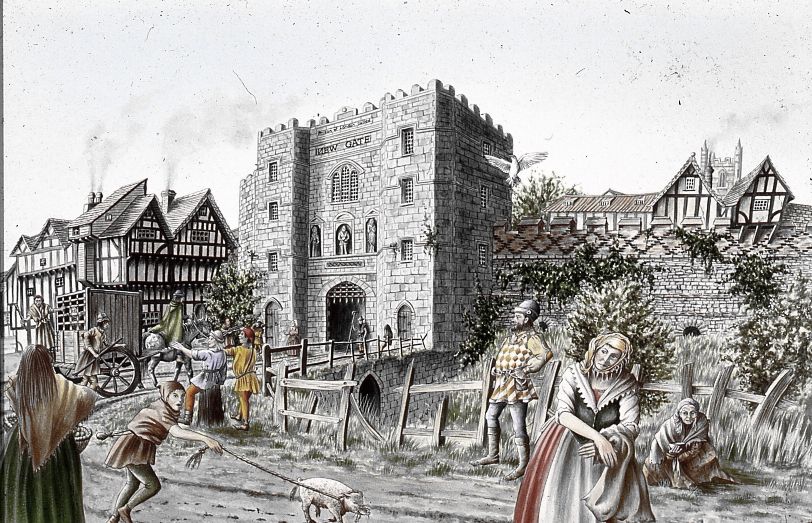
Archive of Guided Walks/Events for 2025

Every year I keep a list of my guided walks, and tours on my blog the ‘Almanac of the Past’. Here are the walks I have so far done in 2025.

Here is my ‘Almost Complete List of Guided Walks, Study Tours, Lectures’

Ring in the New Year Virtual Guided Walk
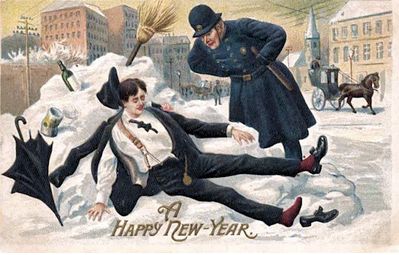
Old New Year Card

Monday 1st January 2025 7.00 pm
On this Virtual Walk we look at how London has celebrated the New Year over the past 2000 years.

The New Year has been a time of review, renewal, and anticipation of the future from time immemorial. The Ancient Britons saw the Solstice as a symbol of a promise of renewal as the Sun was reborn. As the weather turns to bleak mid winter, a festival or reflection and renewal cheers everyone up. This idea of renewal was followed by the Romans, and presided over by a two headed God called Janus who looked both backwards and forwards. Dickens Christmas Carol was based on redemption and his second great Christmas Book ‘The Chimes’ on the renewal that the New Year encouraged.

We look at London’s past to see where and how the New Year was celebrated. We also explore the different New Years we use and their associated Calendars – the Pagan year, the Christian year, the Roman year, the Jewish year, the Financial year, the Academic year and we reveal how these began. We look at folk traditions, Medieval Christmas Festivals, Boy Bishops, Distaff Sunday and Plough Monday, and other Winter Festival and New Year London traditions and folklore.

At the end, we use ancient methods to divine what is in store for us in 2023.

The virtual walk finds interesting and historic places in the City of London to link to our stories of Past New Year’s Days. We begin, virtually, at the Barbican Underground and continue to the Museum of London, the Roman Fort; Noble Street, Goldsmiths Hall, Foster Lane, St Pauls, Doctors Commons, St. Nicholas Colechurch and on towards the River Thames.

The Civil War, Restoration and the Great Fire of London Virtual Tour
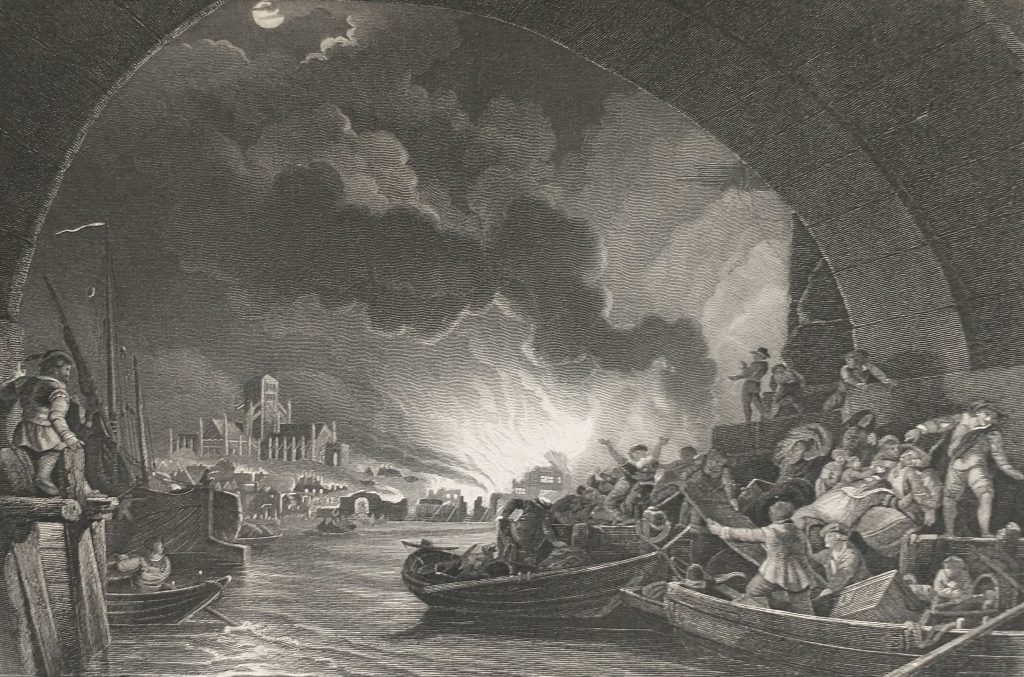
The Great Fire of London looking towards StPauls Cathedral from an old print


7:30pm Fri 30th January 2025


January 30th is the Anniversary of the execution of Charles I and to commemorate it we explore the events and the aftermath of the Civil War in London.

Along with the Norman Conquest of 1066 and winning the World Cup in 1966 the Great Fire in 1666 are the only dates the British can remember!

And we remember the Great Fire because it destroyed one of the great medieval Cities in an epic conflagration that shocked the world.

But it wasn’t just the Great Fire that made the 17th Century an epic period in English History. There was a Civil War, beheading of the King, a Republic, a peaceful Restoration of the Monarch, the last great plague outbreak in the UK, the Glorious Revolution and the Great Wind.

The Virtual Walk puts the Great Fire in the context of the time – Civil War, anti-catholicism, plague, and the commercial development of London.
The walk brings to life 17th Century London. It starts with the events that lead up to the Civil War concentrating on Westminster and ends with a vivid recreation of the drama of the Fire as experienced by eye-witnesses. Route includes: Westminster, Fish Street Hill, Pudding Lane, Monument, Royal Exchange, Guildhall, Cheapside, St Pauls, Amen Corner, Newgate Street, Smithfield.


Roman London – Literary & Archaeology Walk

11.30 am Sun 9th Feb 2025 Monument Underground Station

also on 11.30am Sun 27th Apr 25 but starting from Moorgate
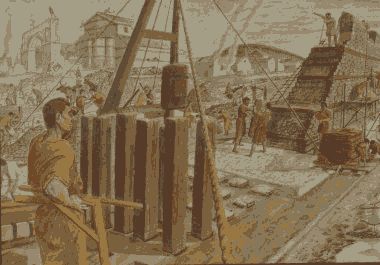
Roman Riverside Wall being built
London Roman Riverside Wall o


This is a walking tour features the amazing archaeological discoveries of Roman London, and looks at life in the provincial Roman capital of Londinium.

This is a walking tour that features the amazing archaeological discoveries of Roman London, and looks at life in the provincial Roman capital of Londinium.

Our Guides will be Publius Ovidius Naso and Marcus Valerius Martialis who will be helped by Kevin Flude, former Museum of London Archaeologist, Museum Curator and Lecturer.

We disembark at the Roman Waterfront by the Roman Bridge, and then explore the lives of the citizens as we walk up to the site of the Roman Town Hall, and discuss Roman politics. We proceed through the streets of Roman London, with its vivid and cosmopolitan street life via the Temple of Mithras to finish with Bread and Circus at the Roman Amphitheatre.

Zinger Read: Talk about a high-quality one-two punch. This walk investigates the groundbreaking archaeological discoveries of Roman London. And then it reconstructs life in a provincial Roman capital using archaeological and literary sources. Discoveries – insights – like flashes of lightning in a cloud. We begin at the site of the Roman bridge. We might be decent young Roman citizens in togas, having this and that bit of
explained to us as we make our way towards the Roman Town Hall. From there we head to the site of the excavation called ‘the Pompeii of the North.’ Followed by the Temple of Mithras. We finish with a walk along the Roman High Street in order to end at the site of the Roman Amphitheatre. So, yes, welcome to London as it was 2,000, 1,900, 1,800, 1,700 and 1,600 years ago. And, yes, the walk’s guided by a real expert, the distinguished emeritus Museum of London archaeologist Kevin Flude. That means you’ll see things other people don’t get to see, delve into London via fissures that aren’t visible, let alone accessible, to non-specialists.

REVIEWS
“Kevin, I just wanted to drop you a quick email to thank you ever so much for your archaeological tours of London! I am so thrilled to have stumbled upon your tours! I look forward to them more than you can imagine! They’re the best 2 hours of my week! 🙂 Best, Sue

Jane Austen’s London Anniversary Guided Walk

Georgian female engraving

2.30 pm Sunday 9th Feb 2025

Green Park underground station, Green Park exit, by the fountain To book

Also
9 February 2025Sunday2.30 pm4.30 pm
8 March 2025Saturday2.30 pm4.30 pm
6 April 2025Sunday11.30 am1.30 pm

2025 is the 250th Anniversary of Jane Austen’s Birth in Steventon, Hampshire. We celebrate her fictional and real life visits to Mayfair, the centre of the London section of Sense & Sensibility and where Jane came to visit her brother

“It is a truth universally acknowledged, that a Jane Austen devotee in possession of the good fortune of a couple of free hours today must be in want of this walk.”

People associate Jane Austen and her characters with a rural setting. But London is central to both Jane Austen’s real life and her literary life. So, this tour will explore Jane’s connections with London and give the background to Sense and Sensibility, a good part of which is based in this very area. We begin with the place Jane’s coach would arrive from Hampshire, and then walk the streets haunted by Willougby; past shops visited by the Palmers, the Ferrars; visit the location of Jane Austen’s brother’s bank and see the publisher of Jane’s Books. The area around Old Bond Street was the home of the Regency elite and many buildings and a surprising number of the shops remain as they were in Jane Austen’s day.


Jane Austen’s ‘A Picture of London’ in 1809 Virtual Walk
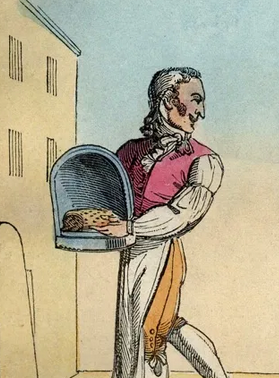
sam_syntax-cries-of-london-1820s_gentle-author_03-hot-plum-pudding-seller


7.30 27th January 2025

With the help of a contemporary Guide Book, Jane Austen’s letters, and works we explore London in 1809.

‘The Picture of London for 1809 Being a CORRECT GUIDE to all the Curiosities, Amusements, Exhibitions, Public Establishments, and Remarkable Objects in and near London.’

This Guide Book to London might have been on Henry Austen’s shelf when his sister, Jane, came to visit him in London. But it enables us to tour the London that Jane Austen knew in some detail. We will look at the Curiosities as well as the shopping, residential, theatres areas as well as the Port, the Parks and the Palaces.

The guided walk is a thank you to Alix Gronau, who, having been to one of my lectures in 1994, wanted the book to come to me. I have had the book restored and am using it to explore London in 1809.

Jane Austen’s London Anniversary Walk

Jane Austen’s London Anniversary Walk 2.30 pm Sunday 9th February 25 To book


A Virtual Tour of Jane Austen’s Bath
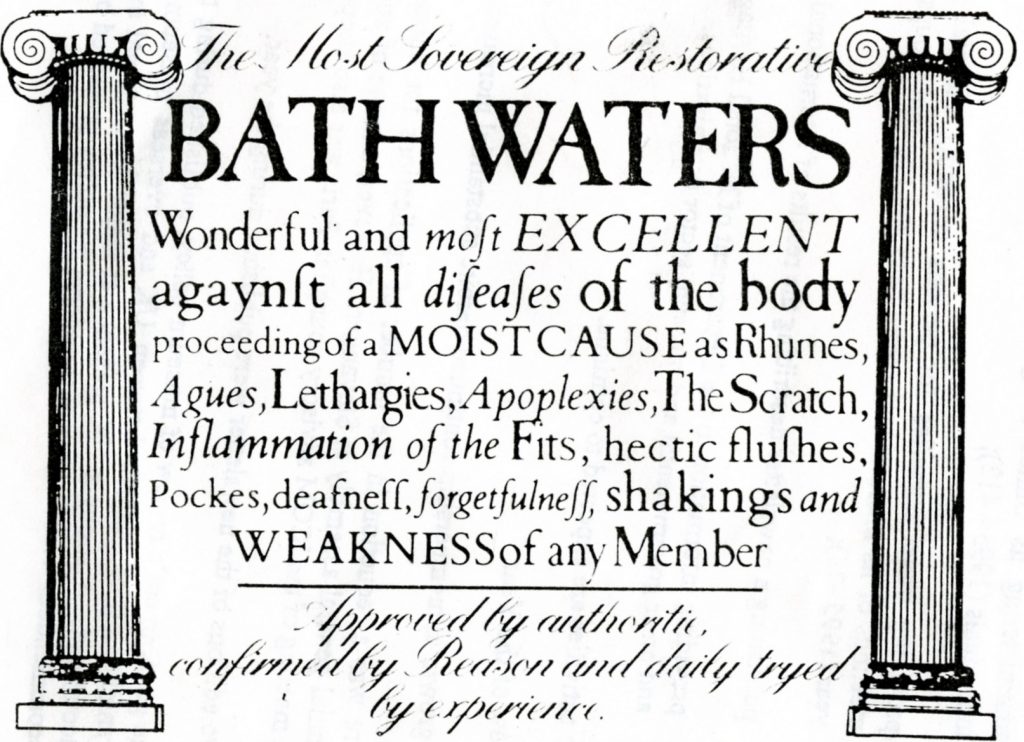
Poster for the most socereign restorative Bath Water

7.30pm 10th February 2025


Tudor London – The City of Wolf Hall 11.30am Sat 22nd Feb 25


Myths, Legends, Archaeology and the Origins of London
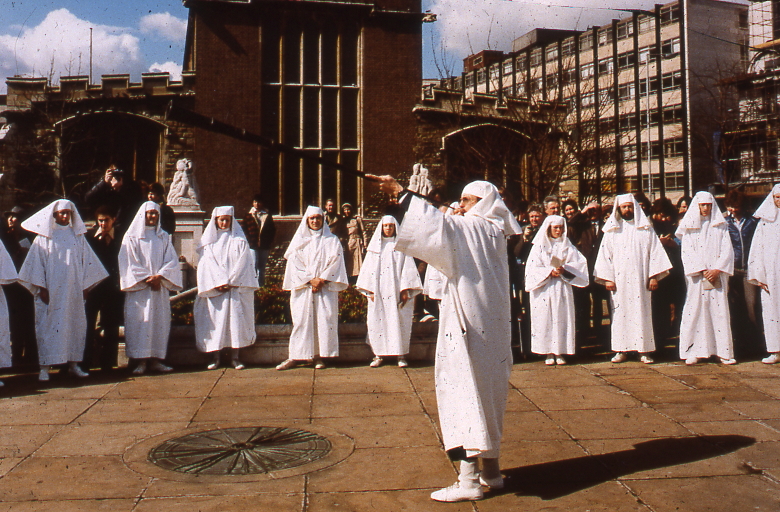
Druids at All Hallows, by the Tower

2.30pm Sat 22nd February 2025 Tower Hill Underground

The walk tells the stories of our changing ideas about the origins of London during the Prehistoric, Roman and Saxon periods.

The walk is led by Kevin Flude, a former archaeologist at the Museum of London, who has an interest both in myths, legends and London’s Archaeology.

The walk will tell the story of the legendary origins of London which record that it was founded in the Bronze Age by an exiled Trojan and was called New Troy, which became corrupted to Trinovantum. This name was recorded in the words of Julius Caesar; and, then, according to Legend, the town was renamed after King Ludd and called Lud’s Dun. Antiquarians and Archaeologists have taken centuries to demolish this idea, and became convinced London was founded by the Romans. Recently, dramatic evidence of a Bronze Age presence in London was found.

When the Roman system broke down in 410 AD, historical records were almost non-existent, until the Venerable Bede recorded the building of St Pauls Cathedral in 604 AD. The two hundred year gap, has another rich selection of legends. which the paucity of archaeological remains struggles to debunk.

The walk will explore these stories and compare the myths and legends with Archaeological discoveries.

The route starts at Tower Hill, then down to the River at Billingsgate, London Bridge, and into the centre of Roman London.

Roman London – Literary & Archaeology Walk 11.30am Sat Mar 8th 25
Jane Austen’s London Anniversary Walk 2.30pm Sat 8th Mar 25

The Decline And Fall Of Roman London Walk 11.30 Sat 22nd March 2025
London. 1066 and All That Walk Sat 2.30pm 22nd March 2025

Jane Austen’s London Anniversary Walk 11.30am Sun 6th Apr 25


Chaucer’s Medieval London Guided Walk 2:30pm Sun 6th Apr 25

and

Chaucer’s London To Canterbury Virtual Pilgrimage 7.30pm Friday 18th April 25 To book
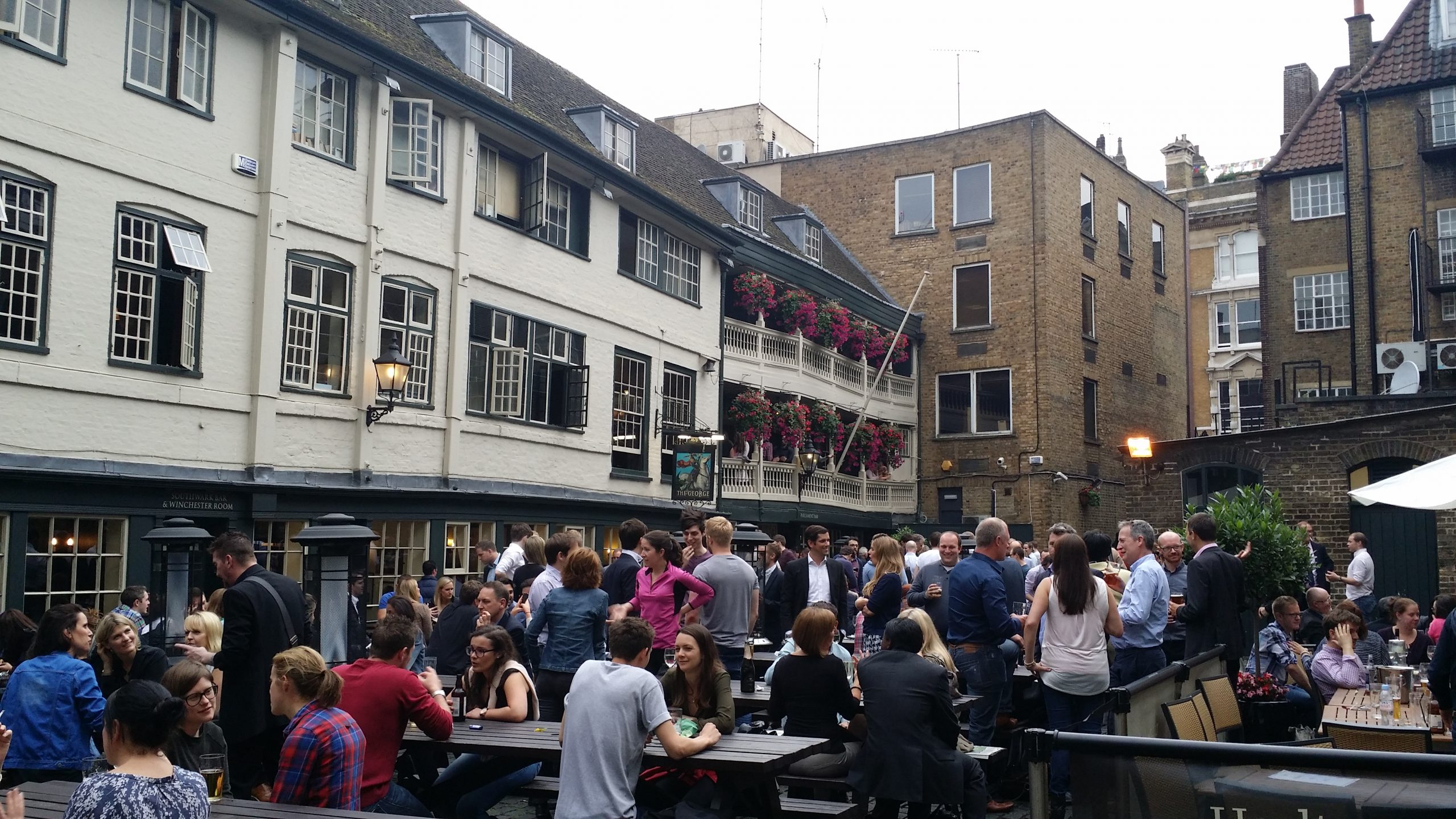

George Inn,Southwark


A Walk around Medieval London following in the footsteps of its resident medieval poet – Geoffrey Chaucer

One of the spectators at the Peasants Revolt was Geoffrey Chaucer, born in the Vintry area of London, who rose to be a diplomat, a Courtier and London’s Customs Officer. He lived with his wife in the Chamber above the Gate in the City Wall at Aldgate. His poetry shows a rugged, joyous medieval England including many scenes reflecting life in London. His stories document the ending of the feudal system, growing dissatisfaction with the corruption in the Church, and shows the robust independence with which the English led their lives.

His work helped change the fashion from poetry in French or Latin to acceptance of the English language as suitable literary language. This was helped by the growth of literacy in London as its Merchants and Guildsmen became increasingly successful. In 1422, for example, the Brewers decided to keep their records in English ‘as there are many of our craft who have the knowledge of reading and writing in the English idiom.’

Chaucer and other poets such as Langland give a vivid portrait of Medieval London which was dynamic, successful but also torn by crisis such as the Lollard challenge to Catholic hegemony, and the Peasants who revolted against oppression as the ruling classes struggled to resist the increased independence of the working people following the Black Death.

A walk which explores London in the Middle Ages, We begin at Aldgate, and follow Chaucer from his home to his place of work at the Customs House, and then to St Thomas Chapel on London Bridge, and across the River to where the Canterbury Tales start – at the Tabard Inn.

This is a London Walks event by Kevin Flude

Roman London – Literary & Archaeology Walk 11.30am Sun 27th Apr 25

Roman layer opus signinum,


Tudor London – The City of Wolf Hall 3:00pm Sun 27th Apr 25
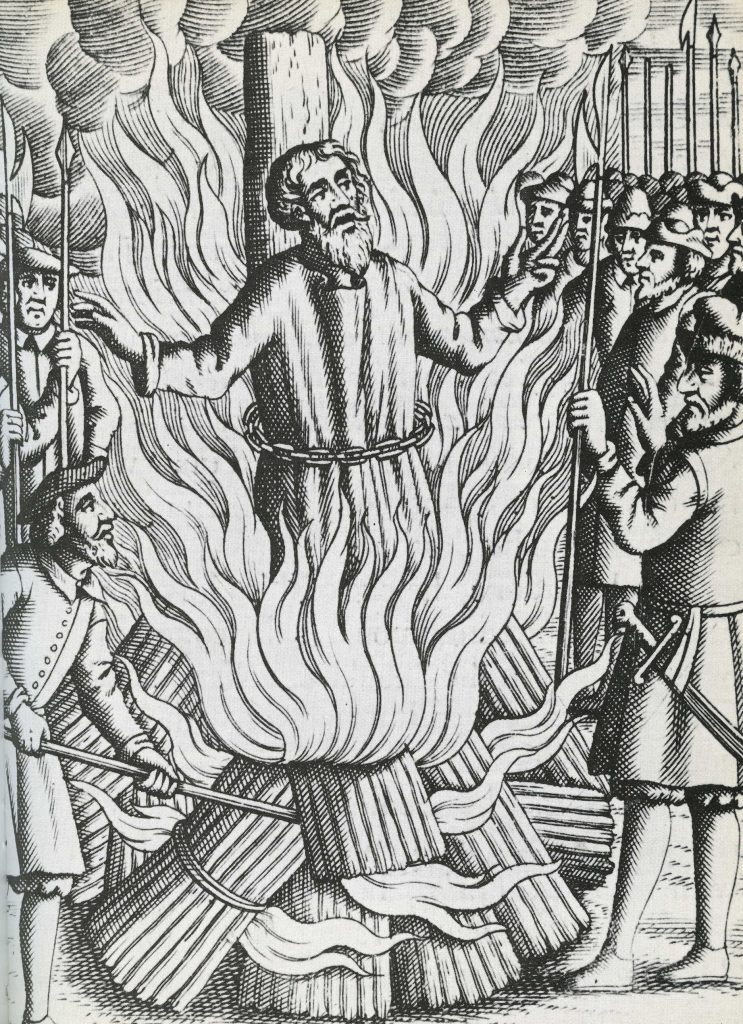
Thomas Bilney martyred in Smithfield. Black and white engraving
Thomas Bilney martyred in Smithfield.


The Walk creates a portrait of London in the early 16th Century, with particular emphasis on the life and times of Thomas Cromwell and Thomas More during the Anne Boleyn years.


More and Cromwell had much in common, both lawyers, commoners, who rose to be Lord Chancellor to Henry VIII, and ended their careers on the block at Tower Hill.

The walk starts with an exploration of Smithfield – site of the stake where heretics were burnt alive and of St Bartholomew’s Monastery – given to Richard Rich after his decisive role in the downfall of Thomas More. We continue to St Paul where Martin Luther’s books were burnt, and later, where Puritans preached against dancing round the Maypole.

We walk along the main markets streets of London, to Thomas More’s birthplace, and to the site of More’s and Cromwell’s townhouses before, if time allows, finishing at the site of the Scaffold where More and Cromwell met their ends, overlooking where Anne Boleyn was incarcerated in the Tower of London

To Book:
https://www.walks.com/our-walks/tudor-london-the-city-of-wolf-hall/

A Boy From Haggerston before the War. 6pm 1st May 2025 Shoreditch Library.


Myths, Legends, Archaeology and the Origins of London 11.30am Sun 25th May 25 To book


The Decline And Fall Of Roman London Walk 3pm Sun May 25 To book

The Peasants Revolt Anniversary Guided Walk
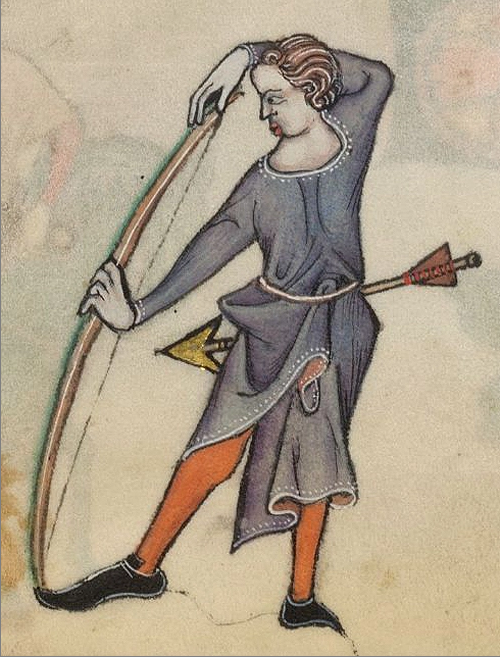
Medieval drawing of an archer

6.30pm Wed 11th June 2025 Aldgate Underground To book

An Anniversary Walk tracking the progress of the Peasants as they take control of London in June of 1381

Short read: The Summer of Blood

Long read: The Peasants’ Revolt. The greatest popular rising in English history. This is the anniversary walk. The London Walk that heads back to 1381, back to the Peasants’ Revolt. You want a metaphor, think stations of the cross. This is the stations of the Peasants’ Revolt walk. We go over the ground, literally and metaphorically. Where it took place. Why it took place. Why it took place at these places. What happened. The walk is guided by the distinguished Museum of London Archaeologist
His expertise means you’ll see the invisible. And understand the inscrutable.

On the anniversary of the Peasants Revolt we reconstruct the events that shook the medieval world. In June 1381, following the introduction of the iniquitous Poll Tax, England’s government nearly fell, shaken to the core by a revolt led by working men. This dramatic tour follows the events of the Revolt as the Peasants move through London in June 1381.

We met up with the Peasants at Aldgate, force our way into the City. We march on the Tower of London as the King makes concessions by ending serfdom, at Mile End. But the leaders take the mighty Tower of London and behead the leaders of Richard’s government. Attacks follow on the lawyers in the Temple, the Prior at St. John’s of Jerusalem, Flemish Londoners, and on Lambeth and Savoy Palaces.

The climax of the Revolt comes at Smithfield where a small Royal party confront the 30,000 peasants.

Tudor London – The City of Wolf Hall 11.30am 13th July 2025 To Book
Jane Austen’s London Anniversary Walk 3pm Sunday 13th July 25 To book
Roman London – Literary & Archaeology Walk 11.30 am Sat 2nd Aug 2025 ToBook
Chaucer’s Medieval London Guided Walk 2:30pm Sat 2nd Aug 2025 To Book
Myths, Legends, Archaeology and the Origins of London 11.00am Sat 16th Aug25 to Book
Roman London – Literary & Archaeology Walk 6:30pm Wed 24th Sept 2025 To book
The Archaeology of London Walk 6.30pm Fri 3rd October 2025 To Book
Chaucer’s Medieval London Guided Walk 11:30pm Sat 4th Oct 25 To book
The Decline And Fall Of Roman London Walk 11.30pm Sat 8th Nov 25 To book
Jane Austen’s London Anniversary Walk 2.00pm Sat 23rd Nov25 To book
Rebirth of Saxon London 23rd Nov 25
Roman London – Literary & Archaeology Walk sat 11am 6th Dec 2025 To book
Cromwell’s and More’s Tudor London Walk 2pm 7th Dec25 To book
Jane Austen’s London Anniversary Walk 2.30pm Sun 14 Dec25 To book
Christmas With Jane Austen Virtual London Tour 7.30pmTues 16 Dec25 To book
The London Equinox and Solstice Walk 11:30pm Sun 21st Dec 25To book
The London Winter Solstice Virtual Tour 7.30pm Sun 21 Dec 25 To book

Previous Years Archives

Here are previous archive of guided walks and events

Archive of Events/Walks 2024
Archive of events/Walks 2023
Archive of Events/Walks 2022
Archive of Recent Walks (2021)
Archive of Resent Walks (2019-2020)
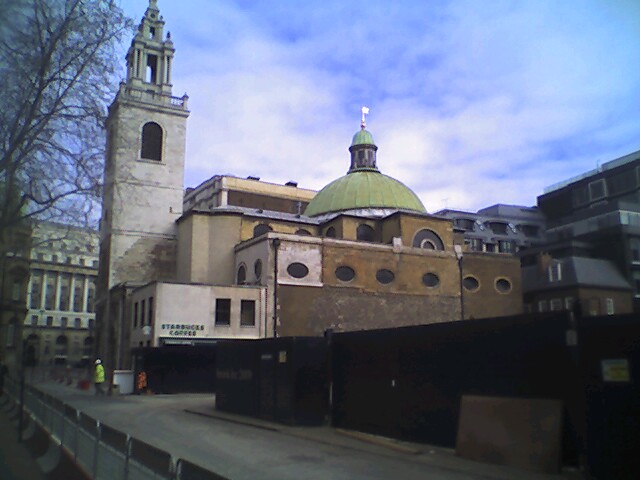

Boxing Day & St Stephens Day December 26th

St Stephens, Walbrook. This view of the Church is not normally visible. The brown brick area to the right is much ‘cruder’ than the left. Christopher Wren was saving money by not ‘finishing off’ parts that were not visible from the public thoroughfare. Photo by the Author in 2008

On the second day of Christmas
my true love sent to me:
2 Turtle Doves
and a Partridge in a Pear Tree

Feast Day of St Stephens

It is the Feast day of St Stephen. He was the first Christian Martyr and was stoned to death not long after Jesus’ apotheosis. He was a deacon in the early Church, brought before the Sanhedrin for blasphemy. At the trial, he made a long speech outraging the audience. St Paul was in the audience (also known as Saul).

Stephen attacked the importance of the Temple to Judaism, making parallels with idolatry. Perhaps, I wonder, this explains why there are so few early Christian Churches identified in the archaeological record? Were they consciously avoiding large Temple Basilican structures to differentiate themselves from pagan religions?

Wrens & Presents

The 26th is the day when Wrens could be hunted. Read my post about Robins and Wrens and their seasonal importance here. Also, the day, people gave presents (Boxes) to servants and working people. Other days for presents included St Nicholas’s Day (December 6th), Christmas Eve, Christmas Day, New Year’s Day, and Twelfth Night.

St Stephens Walbrook

Wren’s most beautiful Parish Church is dedicated to St Stephen. It is one of the first Parish Churches to have a dome. There is also a splendid Altar designed by Henry Moore. I took a Swedish Choir around the City of London on a guided walk. St Stephen’s was open, and, once inside, they just fancied the acoustics. So, they sang. I recorded. Listen below:

Swedish Choir singing in St Stephen’s London

If you wish to read the post on St Lucy click here:

Picture of Christmas greenery on a gift box
by Tjana Drndarski-via unsplash

Victorian Boxing Day

In 1858, James Ewing Richie wrote about ‘Boxing Night’ in ‘The Night Side of London’. I’ve mixed it up with another source. So here is a list of the people who might come knocking at the door for their traditional Boxing Day Box.

Richie’s advice was to tie up your knocker to avoid paying these people:

The Chimney sweep.  Then varlets playing French Horns pretending to be the Waits – {The Waits were licensed musical beggars}

Then came the Turncock, who switched the water supply to your side of the street on alternative days. Followed by the Postman, the Dustman; the Road Waterer in summer, and the Road Scrapper in Winter. After this, the real Waits turned up for a musical turn. Then the Lamplighter, the Grocer’s Boy and the Butcher’s Boy.

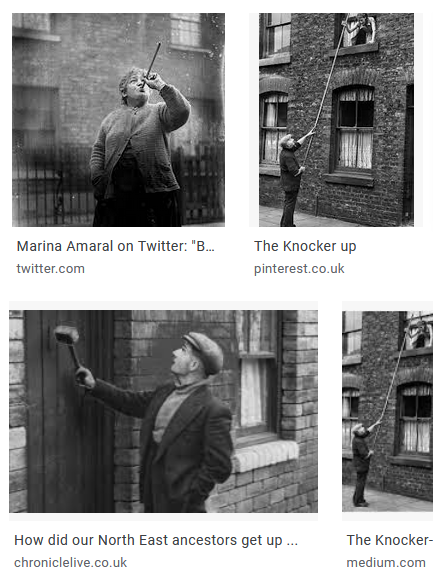
I imagine the Knocker-upper also got a Box. My grandmother told me about the knocker-upper in Old Street in the early Twentieth Century. He would tap on the window with his long stick to wake up those people without a reliable clock.

Google search image 'knocker-upper', the lady at top left worked in Limehouse
Google search image of the ‘knocker-upper’, the lady at top left worked in Limehouse and is using a pea-shooter.

Richie records that he had to give a tip to 6 people who wished him a Happy Christmas on his way to work. The tip he gave was half a crown each. He thought his wife would be lucky to get away with a shilling per person for the trade men listed above. Strange that he gave more than twice as much to random strangers than his wife gave to people who served them all year. Perhaps this reflects his belief that the size of his tip reflected his position in society. It is all curmudgeonly. This is probably because he believed it would be spent on drink, leading to the miseries of drunkenness.

The Drunkards Children by Cruikshank  1848.
The Drunkards Children by Cruikshank 1848. Cruikshank was a famous illustrator from a dynasty of visual satirists and one of Dickens illustrators. The story shows the effect of alcoholism on a family. It ends with the suicide from London Bridge of the mother.

First Published on Dec 26th 2022, Republished December 2023, 2024, 2025

.

Birthday Of The Sun December 25th

The First Day of Christmas, my true love sent to me a Partridge in a Pear Tree

Nebra Sun disc from Stonehenge Exhibition British Museum
Nebra Sun disc. Photo from Stonehenge Exhibition British Museum (photo Kevin Flude) The Disc shows the Sun, the Moon, the Pleides, and illustrates the Summer and Winter Solstice movements of the Sun.

Dies Natalis Solis Invicti

On the 25th December were born Jesus, Mithras, Attis, Saturn, Apollo, and the Invincible Sun.

The Sun Gods have quite a complicated interrelationship. Zeus, and Apollo are both also considered to be Sun Gods. Apollo is particularly interrelated to Helios, the Greek God who drives the Chariot that carries the Sun across the skies every day. The Romans had a God called Sol who some say was a deity but who declined to be of minor importance. Then Sol was championed by the transexual Emperor Elagabalas. Aurelian revived the cult in 274 AD. Sol Invictus was the focus of Constantine the Great. Sol has been suggested as a response of the Romans to a trend towards monotheism in the later Roman period. Sol for Constantine was a gateway God to Christianity.

It is also notable that early worship of Jesus is full of solar metaphors, Jesus being, for example, the light of the world. Churches are also virtually all orientated East West, aligned with the rising and setting suns. The Altar is always at the East End, and effigies on tombs face the rising sun.

First Christmas?

The first recorded Christmas Day is in AD336. It was in an almanac that lists Roman Holidays, officials and martyrs. The entry for December 25th says: ‘natus Christus in Betleem Judeae’. For more early Christian Dates have a look here.

Celtic Sun Gods?

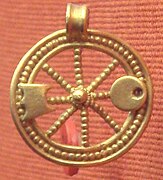
The Golden Wheel from Haute Marne in France

The Golden Wheel from Haute Marne in France, (Public Domain, Wikipedia)

Did the Celts have a sun-god? Belenos is a contender, but linguists are proposing his name does not come from words meaning bright but from strong. The God Lugh’s name is suggested to mean ‘shining’ but his attributes are more of a warrior than a sun god. Taranis is probably the best candidate, but he is more of a sky or thunder god than specifically a sun god. However, his symbol is a 8 spoked wheel is said to be symbolic of the Sun. It also represents the division of the year by the 4 quarterly sun festivals (Winter Solstice, Spring Equinox, Summer Solstice and Autumn Equinox) and the 4 cross-quarter festivals, (Samhain or Halloween, Imbolc or Candlemas, Beltane or May Day, Lughnasa or Harvest Festival).

December 25th is a few days after our reckoning of the Solstice. But, as we have previously seen, Christians believed the world was created on the Spring Equinox, and humans on the 4th day, so Adam was created on March 25th. Mary conceived on the same day, and therefore Jesus, after a perfect labour was born 9 Months later on December 25th. (See my post on March 25th and the Creation)

Christmas Cake

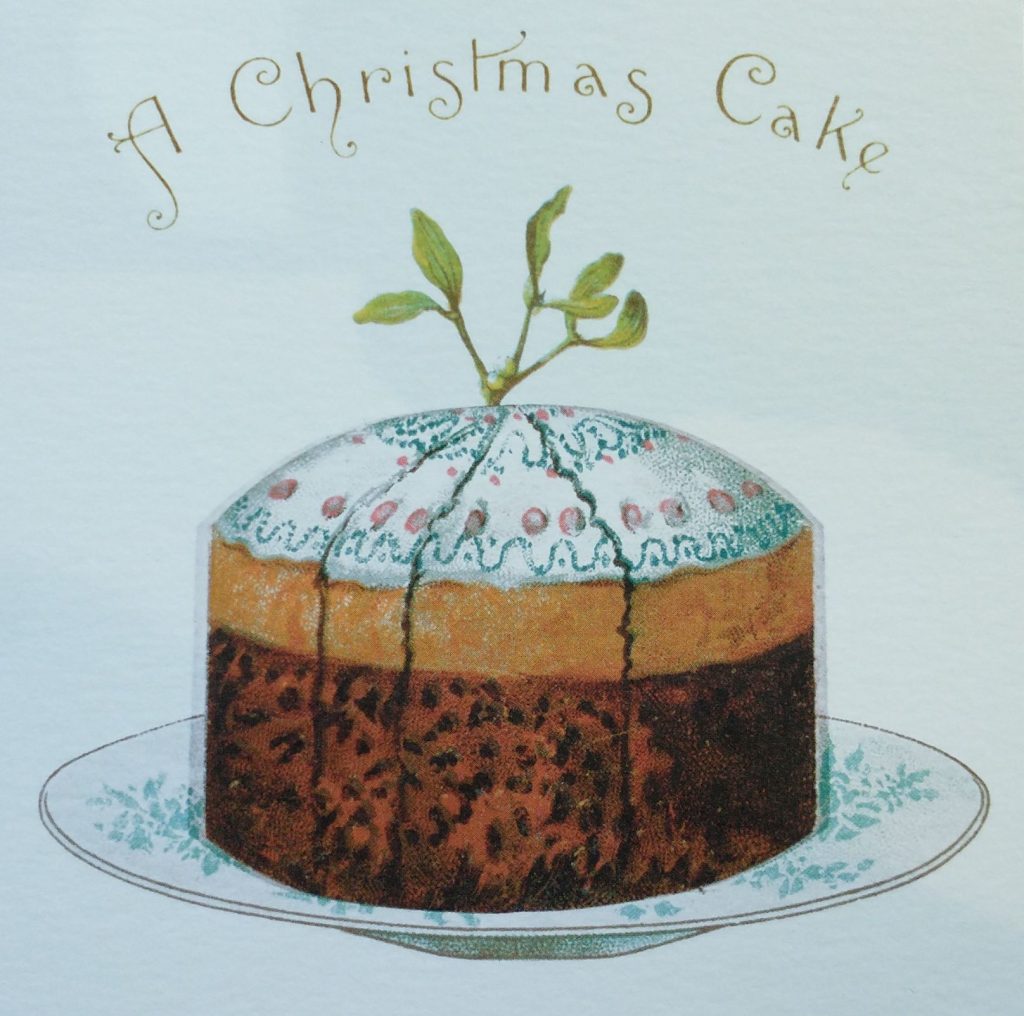
Today, you might be tucking into a Christmas Cake (originally eaten on Twelfth Night). Now, I know many Americans have a bizarre belief that fruit cake is the cake of the devil. Something you receive as a gift and give away to someone else, as most Americans hate it. More fool them for missing out on one of the delights of the Christmas period, that and cold turkey sandwiches. Christmas Cake is made on stir up Sunday, the last Sunday in November, to let the ingredients develop their flavour. They are then covered with marzipan and decorative icing.

19th Century Christmas Cake, generally now the icing continues down the side of the cake.

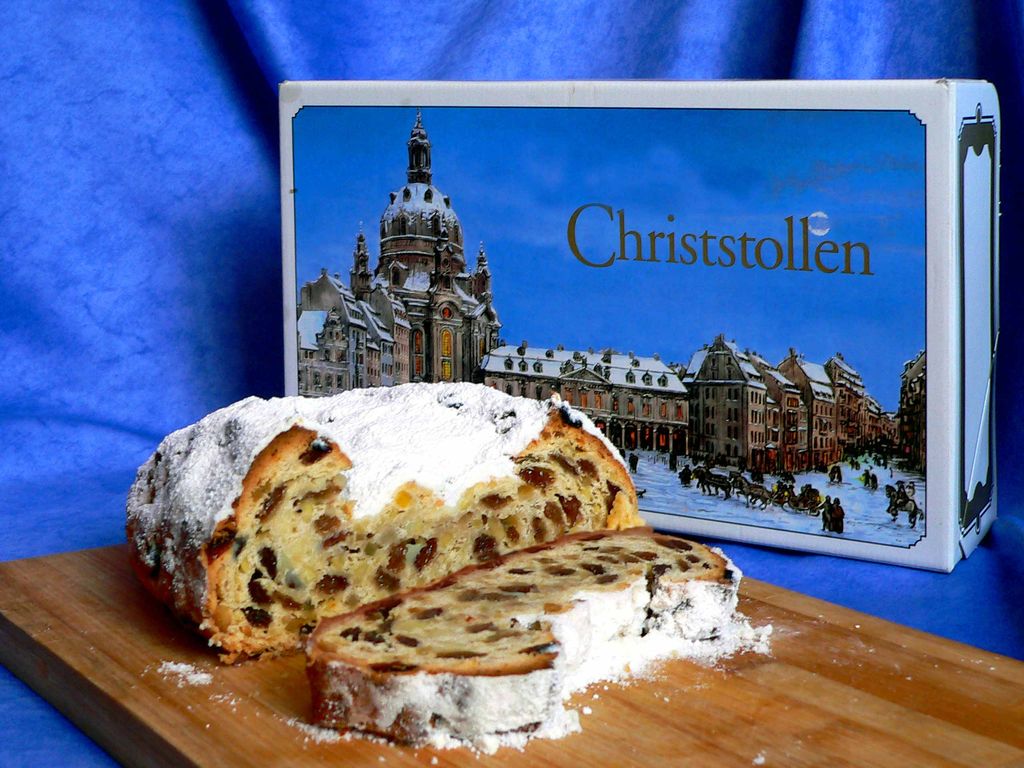
In Germany, they also eat a fruit bread called Stollen or Weihnachtsstollen. The tradition is said to have been started in the 15th Century, when the Pope gave dispensation to allow the use of butter in the fasting period of Advent. Previously, the Germans had to use oil to replace the banned butter, but they could only make oil from turnips, so eventually the Pope allowed the use of butter, with which they made bread with added dried fruits.

Stollen By Gürgi – Own work, Public Domain, https://commons.wikimedia.org/w/index.php?curid=3720379

In Italy, they eat Panettone, a fruit bread/cake. It is a sourdough, and a cross between a brioche and a cake. It often comes in a beautiful decorative tin, and is delicious. The centre of panettone production is Milan. Last year was the 200th Anniversary of Milan’s famous Marchesi 1824 which makes artisanal Panettone. It used ‘fine ingredients such as six-crown sultan as, naturally candied fruit, Bourbon vanilla from Madagascar, Italian honey and eggs from free-range hens, blended in a slow-rising dough with the exclusive use of Marchesi 1824 sourdough starter‘. Thank you, Mara from Milan, for the heads-up.

Screen shot from website – does not click through to sales!

Which is best? The only way to find out is to eat several slices of each. America, you don’t know what you are missing.

For stir up sunday see the second half of this post of mine.

First Published 24th December 2022, Republished 25th December 2023, 2024, 2025

Eve of the Birthday Of the Sun God December 24th

Helios, Colossus of Rhodes, artist's impression, 1880
Helios Colossus of Rhodes, artist’s impression, 1880

The Eve of the Day

Tomorrow is the Dies Natalis Solis Invicti – the birth of the Invincible Sun.  In some calendars, such as the Celtic & the Anglo Saxon, the day begins at dusk.  So Christmas Eve is not the evening before Christmas Day. It is the beginning of Christmas Day itself.

So some countries celebrate the eve as much or more than the day.  The Church would have encouraged this to accommodate former pagan belief into newly converted societies. (the most obvious example is Halloween see my post here).

But the Church also suggests celebration of the Eve derives from the Jewish tradition of the beginning of the day at dusk.  In Genesis are the words;

‘And there was evening, and there was morning—the first day.’

Christian tradition holds that Jesus was born on the holy night and thus is celebrated by the midnight mass.

When does the day begin?

This seems a silly question.  In our society, the day officially begins at midnight.  But it clearly begins at dawn. This was the normal start of day for Ancient Egypt,
Republican Romans, and Western Europe till the coming of clocks in about 1400. We have already seen there are calendars that start the day at Sunset: Muslim, Jews, Celts, and the
Saxons. In Britain, astronomers started the day at midday until an Act of Parliament reset it to midnight as recently as 1925.

Dawn seems the obvious choice, it’s called daybreak after all. But the problem is that the first light is so variable.  It is an opinion when the light arrives and will vary depending on clouds, hills and height above sea level etc. Midnight is halfway between dawn and dusk, and I assume can be determined mathematically and astronomically.  So Julius Caesar changed the Roman start of day to midnight when he reformed the Roman Calendar. (See my post on the Julian Calendar here).

Dusk is a counterintuitive choice, I think. The reasoning is that the Sun has gone down. It is finished for the day.   Sunset is the end of the day. So it is also the start of the next daily cycle. 

The Celts started their year at Halloween for similar reasons.  In autumn, the various harvests have been collected.  Most plants have ended their growing cycle and shed their leaves. Therefore, November 1st (or its eve) is the end of the growing year. On the ground, the seeds are ready and waiting to begin sprouting to bring new life. So, this is the new year.  Sort of makes sense?

Christmas Eve Celebrations

In Britain, among the general population, there are no special customs except for preparing for the arrival of Father Christmas, and perhaps going to Midnight Mass.  In Germany, Heiliger Abend is when Gifts are exchanged.  Afterwards, is a relatively light dinner, often consisting of potato salad and sausages. 

In my experience, Christmas Eve is a relaxing evening in front of the TV while wrapping presents.  (After the children have gone to bed of course). Sometimes in front of the first roaring fire of the winter.

Then the filling of pillow cases or stockings full of presents. Last thing is tip-toeing upstairs placing a plate in the hall upstairs with a mince pie, shot of brandy for Father Christmas and a carrot for the reindeer. Then the crinkle of the wrapping paper as the presents are placed on the children’s bed.  Now, the little darlings are finally fast asleep after an overexcited bedtime. These are the precious moments of family life.

Mothers of God’s Eve

December 24th is a day for Mothers, as tomorrow, the 25th, will be born Jesus, Mithras, Attis, Saturn, Apollo, and the Day of the Birth of the Invincible Sun, Solis Invictus. And so we think of Mary, Isis, Theia, the Three Mother Goddesses and mothers everywhere.

First Published 24th December 2022, Republished 2023,2024,2025

Winter Solstice, December 21st

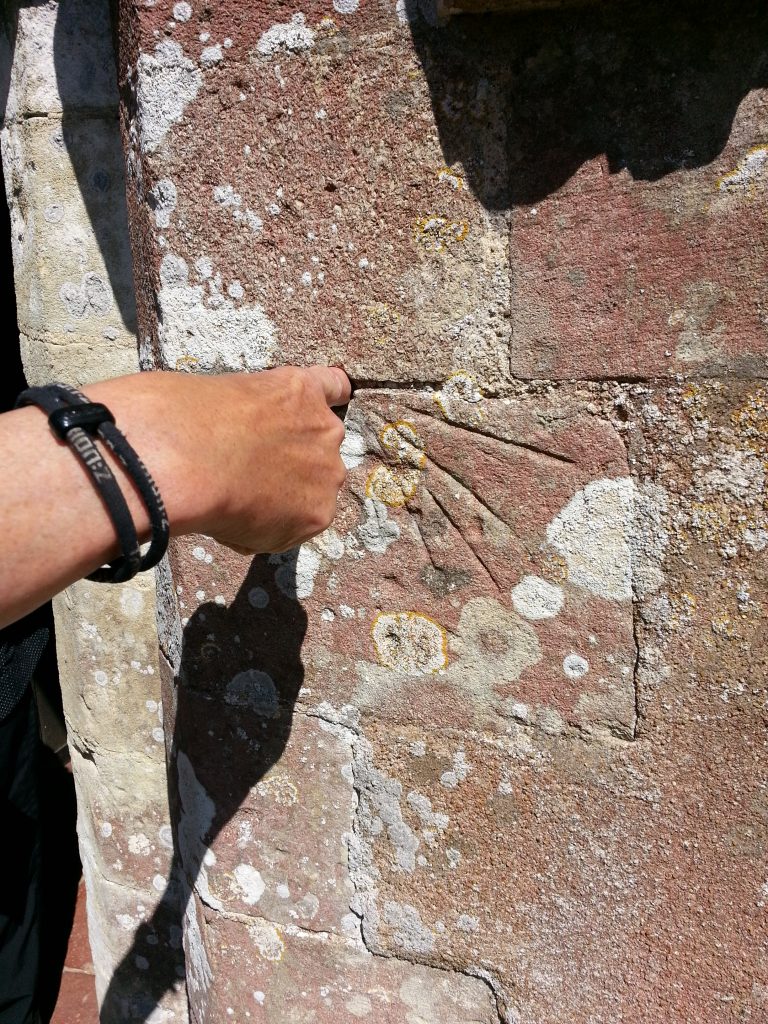
Mass Clock Steventon Church Hampshire

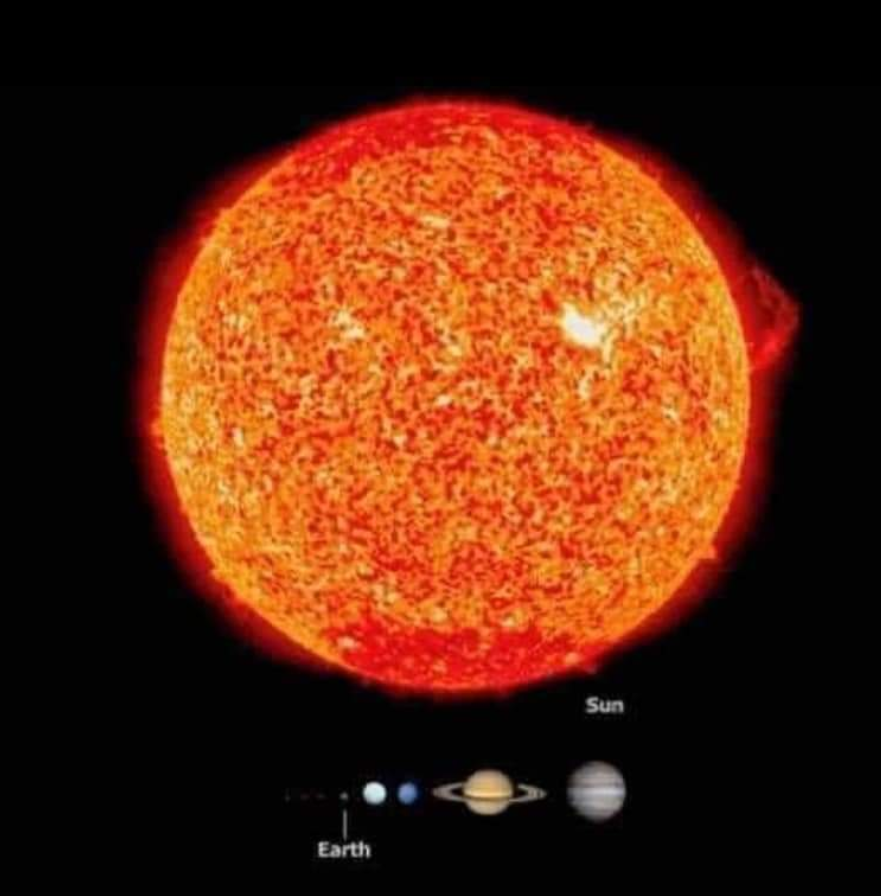
The Winter Solstice this year is: Sunday, December 21, at 3.03pm GMT in the UK. according to the Royal Museums Greenwich. Today, the Sun is at its lowest midday height of the year.  This morning was the most southerly rising of the Sun this year. If the southward diminishing of the Sun everyday were to continue, life will be extinguished on earth. The world would have no light and no heat. So, societies all round the world, made a point of honouring their Sun Gods and Goddesses on this day.

And so on this day, or so it was thought, our Deities renew their promises as the Sun begins its rebirth. It begins to rise further north each day, the Sun at noon is higher, and it sets further north. So the days are longer, brighter, eventually warmer. Thank God(s)!

For some, it’s just the turn in the cycle of life. For others, it’s the death of the old Sun and the birth of a brand-new Sun.  The Egyptians believed that the sun was reborn every day as a dung beetle.

Symbolically, the winter solstice is an ending as well as a beginning. It is a turning point and a promise by the Deity that the world will continue. It will turn, the wheel will turn. Warmth and growth will return. Buds already growing in the earth will break out and bring new growth.

The Winter Solstice – time for a party!

Culturally, it’s a time to have a party before the weather gets really cold. It is a time to evaluate your life; look back at the lessons from the last year. A time to begin, like the Sun, a new and hopefully better cycle.

Note. So if the Sun is at its shortest and weakest, why isn’t it the coldest time of the year? That is because the earth and particularly the oceans retain the heat of the Sun, and so the coldest time is at the end of January.

For a discussion, on the Solstice and the Parthenon Marbles look at my post:

First published on Dec 21st 2021, revised and republished on Dec 22nd 2023, Dec 21st 2024,2025

Collect your Holly & Ivy December 18th

Picture of Christmas greenery on a gift box
Holly and Ivy by Tjana Drndarski-via unsplash

So, the old Sun is dying, and if the Sun keeps going down we are all going to die. With all of nature dying or hibernating, evergreens are a symbol of a promise/proof that life will continue through the dark days. So, with its bright-green leaves and its luminous berries, Holly is the ideal evergreen for the Solstice. And as the prickles symbolise Christ’s Crown of Thorns, and the berries the red blood of Jesus, the symbolism works, too, for Christians.

Henry Mayhew (editor of Punch) in his ‘London Labour and London Poor’ (1851–62) talks of Christmasing for Laurel, Ivy, Holly, and Mistletoe. He calculated that 250,000 branches of Holly were purchased from street coster mongers every Christmas. He says that every housekeeper will expend something from 2d to 1s 6d, while the poor buy a pennyworth or halfpennyworth each. He says that every room will have the cheery decoration of holly. St Pauls Cathedral would take 50 to a 100 shillings worth.

He also calculates that 100,000 plum puddings are eaten. Mistletoe he believes is less often used than it used to be, and he hopes that ‘No Popery’ campaigners will not attack Christmassing again.

Hot plum pudding seller from Sam Syntax Cries of London 1820s
from the Gentle Author Spitalfields Life web site
Hot plum pudding seller from Sam Syntax Cries of London, 1820s
from the Gentle Author Spitalfields Life website

Culpeper on Ivy (1814 edition):

‘Ivy’ says Culpeper in his Herbal of 1653, its winter-ripening berries are useful to drink before you ‘set to drink hard’ because it will ‘preserve from drunkenness’. And, moreover, the leaves (bruised and boiled) and dropped into the same wine you had a ‘surfeit’ of the night before provides the ‘speediest cure’. (The Perpetual Almanac of Charles Kightly)

It is so well known to every child almost, to grow in woods upon the trees, and upon the stone walls of churches, houses, &c. and sometimes to grow alone of itself, though but seldom.

Time. It flowers not until July, and the berries are not ripe until Christmas, when they have felt Winter frosts.

Government and virtues. It is under the dominion of Saturn. A pugil of the flowers, which may be about a dram, (saith Dioscorides) drank twice a day in red wine, helps the lask, and bloody flux. It is an enemy to the nerves and sinews, being much taken inwardly, out very helpful to them, being outwardly applied. Pliny saith, the yellow berries are good against the jaundice; and taken before one be set to drink hard, preserves from drunkenness, and helps those that spit blood; and that the white berries being taken inwardly, or applied outwardly, kills the worms in the belly. The berries are a singular remedy to prevent the plague, as also to free them from it that have got it, by drinking the berries thereof made into a powder, for two or three days together. They being taken in wine, do certainly help to break the stone, provoke urine, and women’s courses. The fresh leaves of Ivy, boiled in vinegar, and applied warm to the sides of those that are troubled with the spleen, ache, or stitch in the sides, do give much ease. The same applied with some Rosewater, and oil of Roses, to the temples and forehead, eases the head-ache, though it be of long continuance. The fresh leaves boiled in wine, and old filthy ulcers hard to be cured washed therewith, do wonderfully help to cleanse them. It also quickly heals green wounds, and is effectual to heal all burnings and scaldings, and all kinds of exulcerations coming thereby, or by salt phlegm or humours in other parts of the body. The juice of the berries or leaves snuffed up into the nose, purges the head and brain of thin rheum that makes defluxions into the eyes and nose, and curing the ulcers and stench therein; the same dropped into the ears helps the old and running sores of them; those that are troubled with the spleen shall find much ease by continual drinking out of a cup made of Ivy, so as the drink may stand some small time therein before it be drank. Cato saith, That wine put into such a cup, will soak through it, by reason of the antipathy that is between them.

https://www.complete-herbal.com/culpepper/ivy.htm

Happy Eponalia

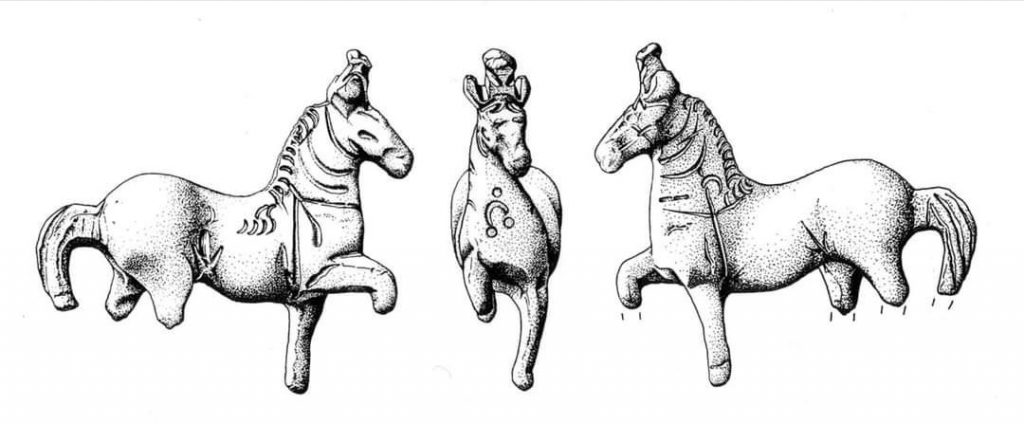
Roman Horse from Bunwell, Norfolk. Illustration by Sue Walker.

In 2021 I posted about Eponalia for the 18th Dec but I have now added the text to this page.

I’ve been too busy working on my Jane Austen and Christmas Virtual Tour ) to post over the last few days. And I have, therefore, shamelessly stolen this post off my Facebook friend Sue Walker, who is a talented archaeological illustrator, artist and a very good photographer.

She wrote: ‘the 18th December is the festival of the Celtic goddess Epona, the protector of horses, she was adopted by the Romans and became a favourite with the cavalry. This finely sculpted bronze horse with a head dress and symbol on its chest is 37mm high – found in Bunwell #Norfolk #Archaeology’

First published on December 17th 2022, Revised and republished December 2023

Robin Redbreast – the Oak King of the New Sun December 9th

Photo by Donald Healy on Unsplash of a robin on a tree branch with red berries
Robin Rebreast – the Oak King Photo by Donald Healy on Unsplash

Robins brought water to relieve tormented souls in Hell and, so, got their breasts scorched; their breasts were stained with Jesus’ blood; they fanned, with their wings, the flames of a fire to keep baby Jesus warm and got scorched. All these associations with Jesus make their association with Christmas and Christmas cards perfect sense.

They are the Celtic Oak King of the New Sun.  The Wren is the bird of the Old Sun. The Robin is the son of the Wren. The Robin kills his father. So the New Sun takes over from the Old Sun at the Winter Solstice. And the Robin takes over from the Wren. 

The blood of the father Wren stains the Robin’s breast. In Celtic Folklore, Robins are said to shelter in Holly trees. Robins appear when loved ones are near. If a Robin comes into your house, a death will follow.

Perhaps this gives a context for Shakespeare’s mention of a robin (a ruddock he called it) which he grants the power of censure. In the play Cymberline, Innogen has been found dead, and amidst the floral tributes mentioned is the following (cors is corpse):

the ruddock would with charitable bill (Oh bill sore shaming those rich-left-heirs, that let their Father’s lie without a Monument) – bring thee all this; Yea, and furr’d Mosse besides. When Flowres are none To winter-ground thy cors

(Cymbeline, Act 4 scene 2)

Robin’s Habits

They are one of the few birds to be seen all year round, and they sing all year too. But they have different songs for autumn and spring. Robins sing from concealed spaces in trees or bushes. They are the first to sing in the morning, the last to stop at night, and can be triggered by street lights turning on. A Robin can sing all the notes on the scale and can sing for half an hour without repeating a melody.

They eat worms, seeds, fruits, insects and other invertebrates. Robins are aggressively territorial, and are our favourite birds. (RSPB)

On this Day

1554 – ‘the same day at after-noon was a bear bitten on the Bank side, and broke loose and in running away he caught a serving man by the calf of the leg, and bit a great piece away and after by the ‘hokyl-bone’ within 3 days after he died.’

Henry Machyn’s Diary quoted in ‘A London Year’ complied by Travis Elborough & Nick Rennison.

Hokyl-bone might be the holbourne stream inn what we now call holborn. Or it might be another name for the tarsus bone, the heel bone.  But it doesn’t really make sense if it’s a bone.  But the bear dying 3 days later by the steam makes some sort of sense.

Written December 9th 2024, revised and the Bank side incident with the Bear added 2025

Monday’s Child & St Budoc December 8th

a manger scene in which  one of the three kings says

~Just to be perfectly clear. These gifts are for you Birthday and Christmas

Monday’s child is fair of face,
Tuesday’s child is full of grace.
Wednesday’s child is full of woe,
Thursday’s child has far to go.
Friday’s child is loving and giving,
Saturday’s child works hard for a living.
And the child born on the Sabbath day Is bonny and blithe, good and gay.

Fortune-telling poems are a big part of folklore. It says something about the power of the rhyme that people can believe a random rhyme can shape someone’s whole life. Interesting that there are many versions of this rhyme. I chose one that had an optimistic Thursday. Two year’s ago, my second Grandson was born, on a Thursday, just like me. And I’ve still got far to go.

Tinker Tailor

The Tinker Tailor rhyme is another example of a fortune-telling rhyme. This is the extended version, I found on wikipedia.

When shall I marry? This year, next year, sometime, never.

What will my husband be? Tinker, tailor, soldier, sailor, rich-man, poor-man, beggar-man, thief.

What will I be? Lady, baby, gypsy, queen.

What shall I wear? Silk, satin, cotton, rags

How shall I get it? Given, borrowed, bought, stolen.

How shall I get to church? Coach, carriage, wheelbarrow, cart.

Where shall I live? Big house, little house, pig-sty, barn.

One person recites the power verse by verse. The subject of the fortune-telling does something like counting petals on a flower, counts bounces of a ball, or gives a number between one and four. The outcome determines the future.

To see another fortune-telling rhyme, read my post about Magpies.

St Budoc

Today, is St Budoc’s Feast Day. However, it’s held on the 9th if you are in Brittany. Boduc is a Celtic name which either means “saved from the waters” or more likely ‘Victory’ or ‘Victorious’.

This etymology is shared by Queen Boudicca. Budoc lived in the 5th Century, after the Fall of Roman Britain. His mother was a Princess whose evil step-mother (or mother-in-law), persuaded her son that she was unfaithful. The Prince ordered the pregnant Princess to be thrown into the sea in a wooden cask. They floated around for 5 months, until Budoc was born. (Saved by the intercession of St Bride?). So, they landed safely in Cornwall, and afterwards went to Ireland. (Or they landed in Ireland.)

Eventually, Budoc’s dad realised his wife was faithful. So he came to rescue his wife. Sadly, they soon both died. (Or the wife survived). Budoc became a monk, and then a famous Bishop in late 5th Century Brittany at Doll. St Budoc is worshipped in several place: Pembroke, Cornwall, Devon, Brittany, and Oxford. But we have very little reliable evidence about him.

Monday’s Child published in 2023. St Budoc added in 2024, Revised 2025.

Feast Day Of King Lucius – First Christian King Of Britain? December 3rd

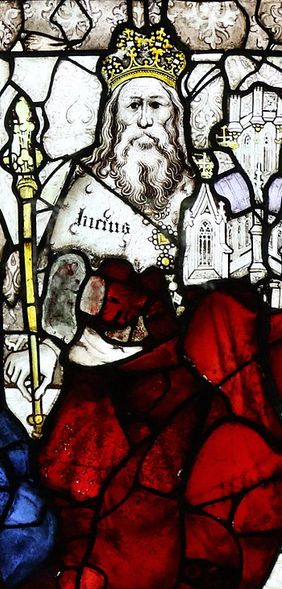
King Lucius York Minster Window

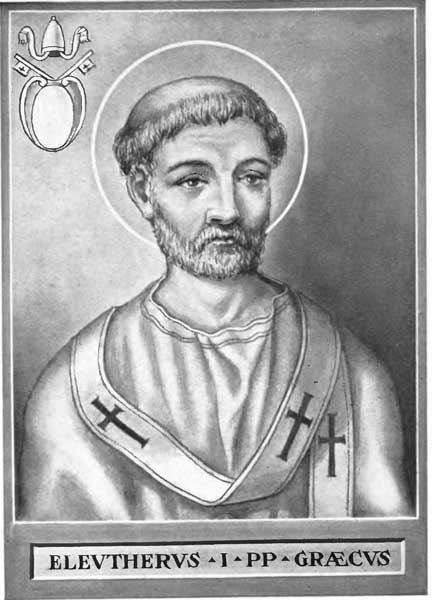
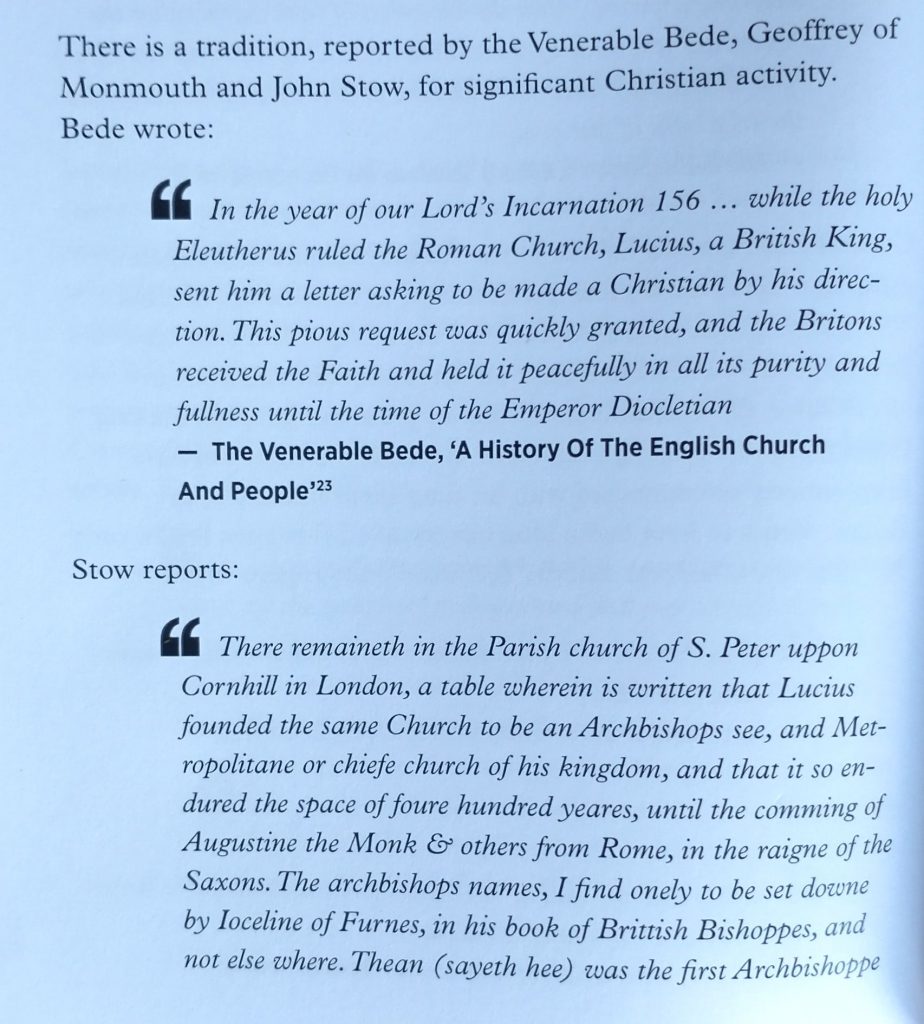
The Venerable Bede tells us that King Lucius converted to Christianity in around 180AD. He says that the King asked Pope Eleutherius to send teachers to instruct him. The Venerable Bede (died 735 AD) got this from the Liber Pontificalis of c 590. There is also a tradition that St Peter’s Cornhill in London was set up by King Lucius, and that St Peter’s is the oldest Church in London.

13th Pope Eleutherius

What to make of this? Bede is considered to be a reliable historian and got his information, in this case, from the Vatican. Pope Eleutherius is held to be a real Pope. He reigned at the right time, from perhaps as early as c. 171, and to his death which may be as late as AD 193. (Wikipedia). But the tradition of Lucius has been written off as a legend.

But to my mind there are questions that need asking. Not the least of the questions to ask about the veracity of this legend is: ‘What does it mean to be called the King of Britain in the middle of the Roman occupation?’

St Peters Church First Cathedral in Britain?

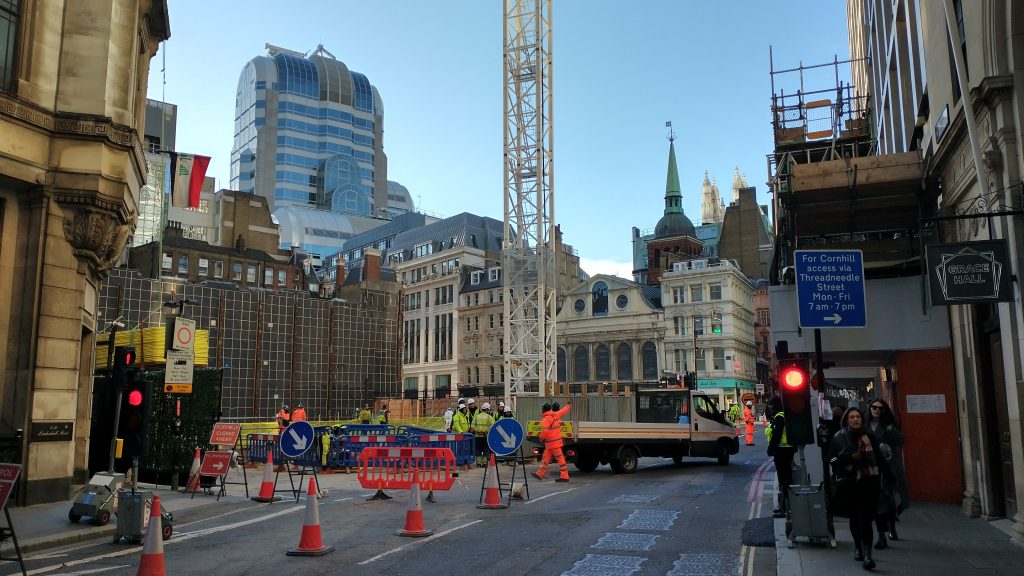
As to the early origin of St Peters Church, archaeologists dismissed the tradition of a Roman St Peters Church because it is built over the Roman Forum. So how can it have been the site of a Christian Church?

St. Peter’s seen from Cornhill in a rarely seen view as there is normally a building in the way. (Photo K Flude)

But the balance of possibilities, arguably, changed in the 1980s, when archaeologists led by Gustav Milne showed that the Basilica of the Forum was pulled down in about 300AD. So from being practically an impossibility, there is now a possibility that this subsequently became the site of a Roman Church. It doesn’t make it true but it makes it more of a possibility.

We know London sent at least one Bishop to Constantine the Great’s Council of Arles in AD 314. So a Christian community in London must have predated this time. There must have been Churches, here. And a site at the prestigious centre of the Capital of Londinium, makes a lot of sense. There are, in fact, three Churches on the site of the Roman Forum: St Peters, St Michael and St Edmund the Martyr.

Constantine the Great

In AD 306, Constantine was acclaimed Emperor on the death of his Father, Constantius Chlorus. Constantius’s wife was Helena, a Christian. He and his mother were in York when his father died. He was recognised as Caesar, (but not Augustus) by Emperor Galerius and ruled the province for a while. Then he moved to Trier, then moved on Rome, where he accepted the Christian God’s help to win the Battle of Milvian Bridge. This led him to supreme power in the Roman Empire. And might give a context for the demolished Basilica to be replaced by a Church.

There is, however, no archaeological evidence for St Peters being Roman in origin apart from the demolition of the Basilica and the legends. And there is certainly no evidence of the Basilica being turned into a Church as early as the 2nd Century.

Early Christianity in Britain

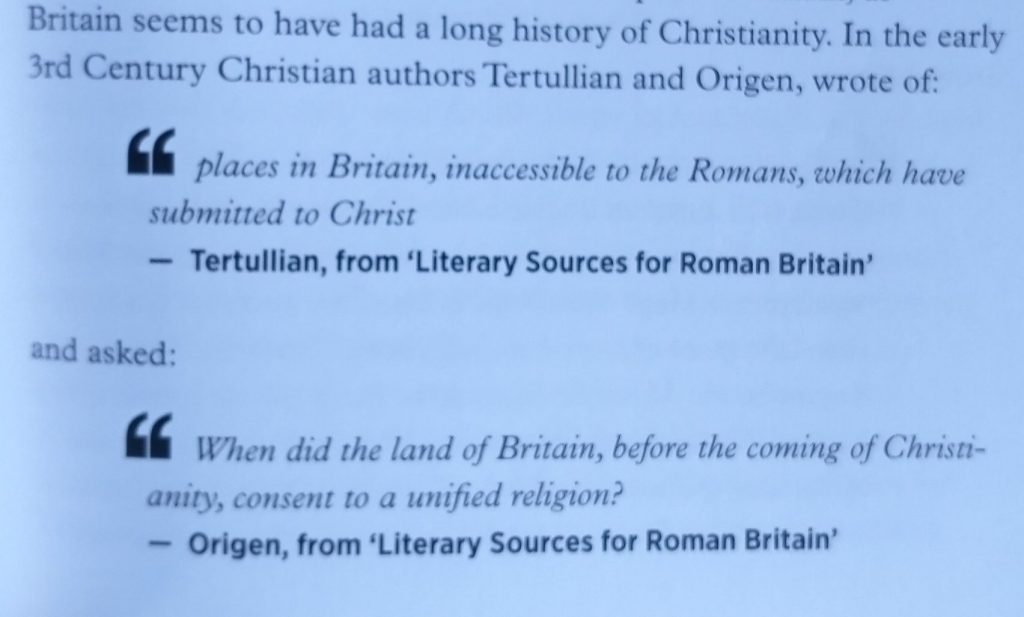
Where does that leave King Lucius? There are well attested Christian traditions that Britain was an early convert to Christianity. (The following quotes are from my book ‘In Their Own Words – A Literary Companion To The Origins Of London‘ D A Horizons, 2009 by Kevin Flude and available here.)

In Their Own Words – A Literary Companion To The Origins Of London‘ D A Horizons, 2009

So, an early date for an active Christian community is likely. A Church, replacing the Basilica, is plausible, particularly, after Constantine the Great probably passed through London on his way to seize the Roman Empire. So an early date for St Peters in possible. But there is no evidence for its origin as early as the late 2nd Century, the time of King Lucius.

A King of Britain in the Roman Era?

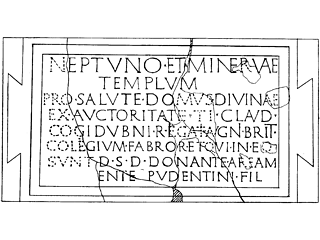
And could anyone, claim to be the ‘King of Britain’ at this date? We do know that King Togidubnus was called Great King of Britain in a Roman Temple inscription in Chichester in the First Century.

Altar Dedication, Chichester

To Neptune and Minerva, for the welfare of the Divine House by the authority of Tiberius Claudius Togidubnus, Great King of Britain, the Guild of Smiths and those therein gave this Temple from their resources, Pudens, son of Pudentinus, presenting the site.

https://romaninscriptionsofbritain.org/inscriptions/91

Togidubnos seems to have been placed in control of a large part of Southern England, centred around Chichester, after the invasion of 43AD. He is thought to have been the successor to Verica, who was exiled and called on the Romans to restore his throne. Tactitus says that Togidubnos remained loyal down ‘to our own times’ that is to the 70s AD. So he presumably held the line for the Romans against the Boudiccan revolt in 60AD.

The Romans had used Verica’s fall as their excuse for invasion, and so an honorific of Great King to him and his successors makes sense. It is assumed that after Togidubnos’s death after 80AD, the title lapsed. But it might have stayed with the family as an empty honour? Furthermore, we know that Britain had a plethora of Kings and Queens before the Roman period. Also, the Romans never conquered the whole of Britain. There were, therefore, many British Kings all the way through the period of Roman control, not least beyond Hadrian’s Wall.

So, it is possible there was someone in Britain who had, or made, a claim to be ‘King’. Whether he was ‘a’ or ‘the’ or merely descended from a King of Britain, we don’t know. And that that someone, perhaps converted to Christianity, possibly in the time of Pope Eleutherius. He may have taken the Roman name Lucius. Who knows? Its possible.

Confusing Luci?

It has been suggested that King Lucius of Britain was confused with King Lucius of Edessa, but this is considered unsatisfactory. Also, the link to London and St Peters, need not be a contemporary one. It might be two traditions that are linked together at a later period. But, of course, there is a faint possibility that the Basilica shrine room, above which St Peter’s is built, was converted for Christian use at the earlier time necessary to make sense of the King Lucius story.

King Lucius may not be a proper saint, but he has a feast day. This is because of his connections to Chur in Switzerland. There is a tradition that Lucius was martyred here. This got him an entry in the Roman Martyrology. David Knight proposes that the Chur connection comes from the transplanting of rebellious Brigantes to the Raetia frontier in the 2nd Century AD. He suggests that the Brigantes brought the story of Lucius to Chur. At the end of the King’s life, is it possible he travelled to join his people in exile in Switzerland. Here he met his unknown end. If true, this would base the story of Lucius in the North rather than London. For further reading, see ‘King Lucius of Britain’ by David J Knight.

Early Bishops of London

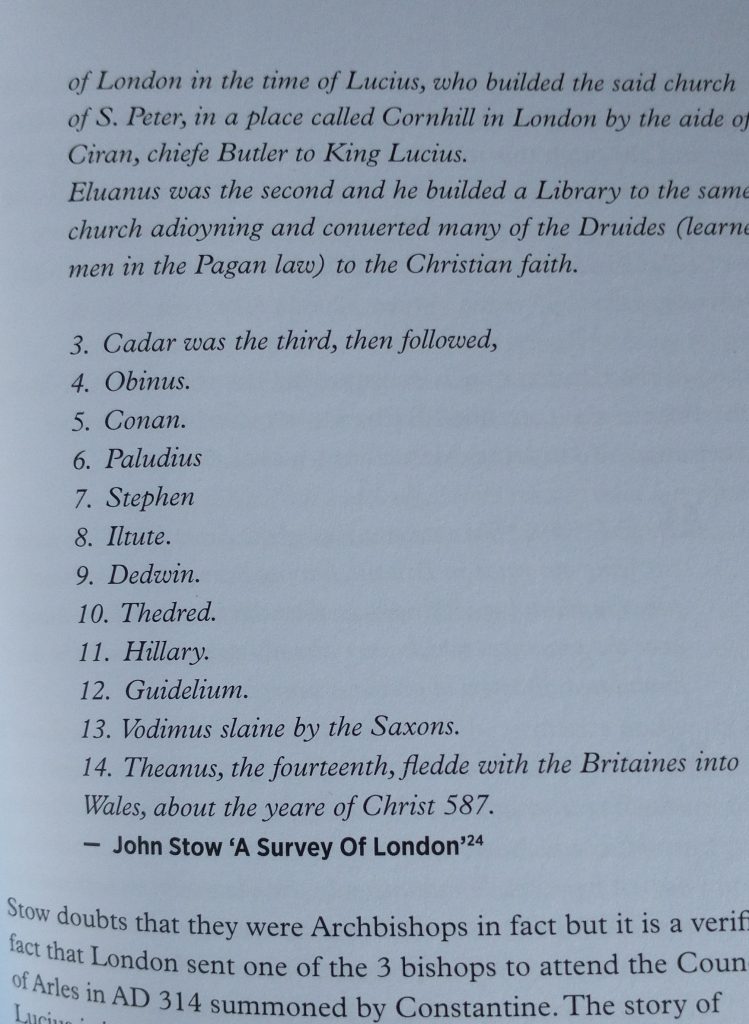
John Stow in the 16th Century records the tradition of King Lucius, which comes with a list of early British Bishops of London. These he finds are recorded in Jocelin of Furness’s ‘Book of British Bishops’. This book is discussed by Helen Birkett ‘Plausible Fictions: John Stow, Jocelin of Furness and the Book of British Bishops’. In Downham C (ed) /Medieval Furness: Texts and Contexts/, Stamford: Paul Watkins, 2013.

Her analysis concludes that the book is a ’12th-century confection in support of moving the archbishopric from Canterbury ‘back’ to its proper place in London. (This information was included in a comment to the original post by John Clark, Emeritus Curator of the Museum of London.)

To sum up. We can’t bring King Lucius out of legend, nor find any credible source linking him him with St Peters Cornhill. But the site of St Peters is a plausible, though unproven, location for a Roman Church from the 4th Century onwards. It also makes sense of the choice of the Saxons, to name their Church St Pauls. St Peter is more common as a dedication for important Churches and perhaps they chose St Paul as they knew of the ruins of St Peters the old Cathedral.

Any other early Cathedrals?

Archaeologists have also tentatively identified a masonry building in Pepys Street on Tower Hill as the Episcopal Church of late Roman London. The foundations suggest a large aisled building. Its identification as a Cathedral springs from multiplying the found foundations symmetrically by a factor of four and comparing the result to Santa Tecla in Milan. The discovery of Marble and window glass doesn’t sit so well with the alternative suggestion that it is a granary. But, to my mind, it’s not very convincing, although Dominic Perring in his recent book ”London in the Roman World’ makes the most of the case for it being a Cathedral.

And Finally?

If you look at the two maps above. The one on the left shows the Forum, the white lines are the Roman Road system. You might just be able to see the modern road system super-imposed. What this shows is that the Forum is on a different axis than the modern day road system. Cornhill cuts right across the North Western corner of the Forum. Where the letter L is, and to the left is under the modern road. So, that shows that this part of the Forum must have been knocked down before Cornhill was built. On the right hand side you can see the dark grey east-west road which is Cornhill. To the South of it you can see a dark area (above the green of St Peter’s Churchyard). This grey area is St Peters. What the Google map shows clearly, is that the orientation of St Peters, is clearly on a different orientation to that of the modern road of Cornhill. And that orientation is closer to the orientation of the Roman Forum. This makes it more likely that the axis upon which St Peters was originally built (assuming Wren followed the original axis when he rebuilt it after the Great Fire) conformed to the Roman grid pattern. This is by no means proof, and can only be proved by excavation. But, its interesting.

On This Day

1660 – Margaret Hughes became the first woman (we know about) to act on the English Stage. She played Desdemona in Shakespeare’s Othello. It was staged in a converted tennis court called the Vere Street Theatre, which was in Lincoln’s Inn Fields. In 1660 Charles II was restored to the throne, and had got used to watching female actors perform while he was in exile in France. So when he returned, he licensed two theatre managers, Thomas Killigrew and Sir William Davenant to run theatre. Davenant claimed to be the natural son of William Shakespeare, suggesting that Shakespeare stayed in his parents’ Inn, the Crown, in Cornmarket, Oxford on his way home to Stratford-upon-Avon.

First Published on December 3rd, 2022. Revised in December, 2023, 2024 and 2025

Winter December 2nd

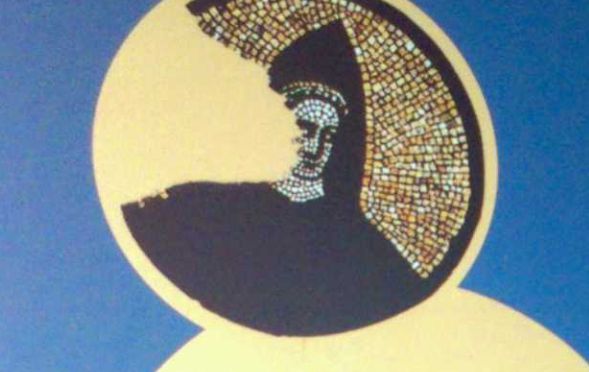
lullingstone mosaic for winter
Roman Mosaic from Lullingstone Villa, Kent representing winter

This is the second day of Winter. Winter is hiems in Latin; Gaeaf in Welsh. Geimhreadh in Old Irish; Wintar in Anglo-Saxon. The Anglo-Saxons counted years by winters, so a child might be said to be 4 winters old.

Winter, meteorologically speaking, is described in the Northern Hemisphere as being December, January, and February, which is, of course, a convention rather than a fact. There is nothing about December 1st that makes it more ‘wintery’ than November 30th or December 2nd. Astronomically, winter starts with the Winter Solstice when the sun is at its lowest and so stretches from around December 21st to the Equinox around March 21st.

Logically, the solstice, when the Sun is at its weakest, should be the coldest day, and a midpoint of winter rather than the beginning of it. With 6 weeks of winter on either side of it. This is roughly what the Celtic year does, winter starts at dusk on 31st October (Halloween/Samhain) and continues to the evening of 31st January (Candlemas/Imbolc). So a Celtic Winter is November, December, and January.

As far as the Sun goes, this is logically correct. In fact, because of the presence of the oceans (and to a lesser extent) the earth, the coldest time is not the Solstice when the Sun is at its weakest. But a few weeks later in January. Heat is retained by oceans (and the landmass), and so the coldest (and the warmest) periods are offset. Therefore, January 13th is probably the coldest day, not December 21st.

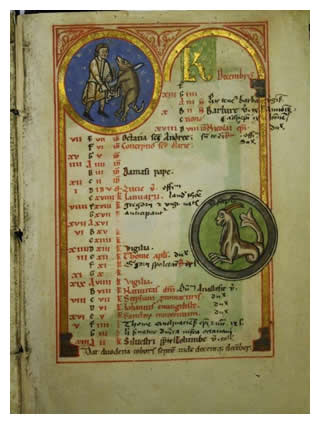
Medieval Liturgical Calendar for December. Note the image at the top which suggests this is the month for hunting bears.

My Own Winter

My personal calendar suggests that winter begins on November 5th because this is the day I generally notice how cold it has suddenly become. The house smart meter also identifies the week of November 4th being the day when the heating bill goes through the roof. However, this was not true this year, where in the London area we had a warm spell.

A final thought about Winter. Isn’t it strange that a small change in the axis of the planet should create such opposites? Cold and little growth, then hot and an explosion of flowers. Opposites just with a little tilt of the Globe towards the Sun. This, in the vastness of space, with unimaginably cold and unbelievable hot places and spaces. These make tiny the little difference between Summer and Winter seem insignificant. And yet to us, they are opposites and central facts to our existence as a species. In places, temperature ‘extremes’ make it hard to survive in. Some think this is because God made the Universe just for us. But, just think, we are completely adapted to our lives on our very own, blue planet.

A Roman View of Winter

Ovid, the great Roman poet wrote this poem on his exile from Rome to Tomis, on the Black Sea in what is now Romania. We don’t know why he was exiled, but he felt it bitterly. And winter is used to effect to show his pain.

Winter in Tomis

Harsh lands lie before him
As he struggles to keep his wit
Malicious thoughts infecting-
Crippling the morale of his spirit
Shattered visions of the fallen begin to transpire..
An awful nostalgia consumes him.
A crooked smile forms..exalting the dead

So began the fall of a mastermind.

Realizing as his mind falls to pieces
They are but catalysts – parts of a puzzle to a different plan
As the images surfaced, his virtue descends
Living amongst those barbarians
Though a fierce complication
Their tact was that of a wounded creature
And they were overrun

“I remain in exile
My bones grow weak like the sun
Descending into the trees
To end this daily affliction
As winter shows its pallid face
And the earth veiled with marbled frost
Forsaken –  this gradual madness consumes my mind
Perdition in Tomis

Undead armies of Tomis
Commanded only by the presence of my absense
Brought to life by the death of myself
Risen to ease this torment
Sacrilege; The second chance to formulate a reason
The relapse crucifixion forthwith to go into effect
Casting him away; instead insuring their demise.

I remain in exile
My bones grow weak like the sun
Descending into the trees
To end this daily affliction
As winter shows its pallid face
And the earth veiled with marbled frost
Forsaken –  this gradual madness consumes my mind
Perdition in Tomis

Each day passing now I beg for some remorse
Desperately grasping at what I feel to be my last bit of life
But unlike the cycle of the attic
I feel as though there is no recourse
I’ve withered to nothing.”

“Save me from drowning, and death will be a blessing.”
Hope for his designed tomb
“Rescue my weary spirit from annihilation
If one already lost may be un-lost”

Ovid abandoned writing his almanac poem because of his exile, so it never got beyond the Summer. To read about this see my post here or search for Ovid from the menu.

On this day

1859 – John Brown was hanged, following his raid on Harpers Ferry, violently opposing slavery.

1954 – Joseph McCarthy was formally censured by the Senate for the methods used in his anti-communist campaigns.

Published in 2024, and revised adding Ovid in 2025