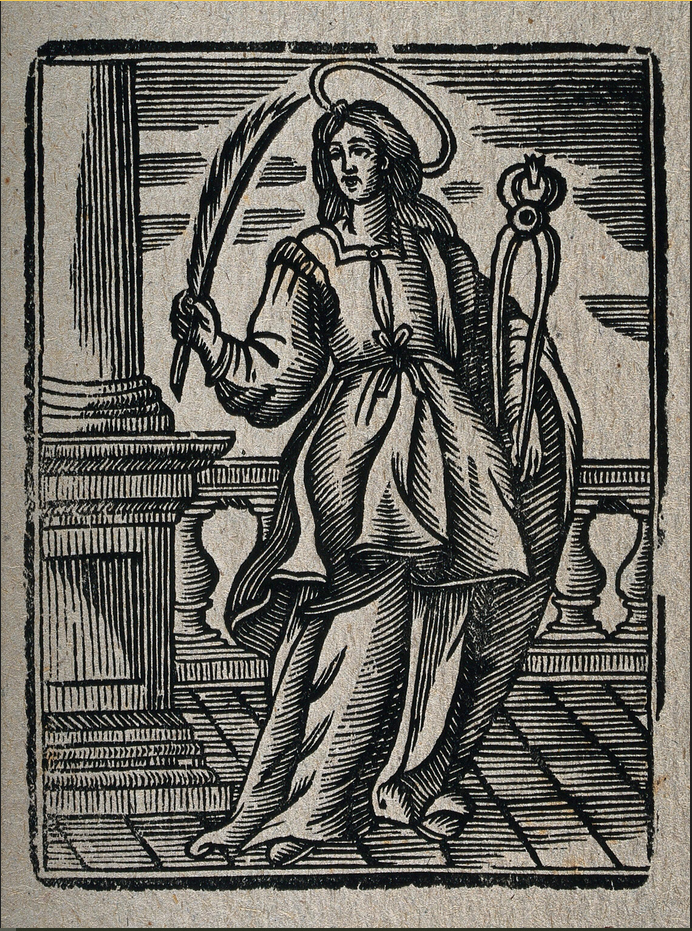
St Apollonia Day. A Day to Cure the Toothache February 9th

Saint Apollonia. Woodcut. Saint of Toothache Wellcome Collection. Public Domain Mark. She is shown with forceps, extracted tooth and the martyr’s palm.

The 9th of February is the Feast of St Apollonia. She was martyred at Alexandria in 249 AD during the persecution of Emperor Decius. (see also my post on St Agatha) She was attacked during an anti-Christian riot and struck around the face knocking her teeth out. Then, she was taken to a bonfire and told they would throw her in if she did not renounce her faith. So, without waiting, she spoke a prayer and walked into the fire. This information is recorded in a near-contemporary letter from St Dionysius of Alexandria. This is rare well documented martyrdom. Because her teeth were knocked out she is, therefore, Saint of Toothache.

Suicide or Martyrdom?

St Augustine of Hippo touches on this spat of martyrs, often young women, killing themselves rather than losing their virginity, or like St Apollonia embracing death in the face of violent persecution. His answer is that like Samson, they are commanded by God to take their own lives, which is ok. Elsewhere, he condemns suicide as it is against the commandment ‘Thou shalt not kill’. He explains that God did not add ‘thy neighbour’ to it so it also forbids killing oneself. By contrast, it was added to ‘Thou shalt not bear false witness against thy neighbour’. The rest of St Augustine’s argument comes from Plato’s Phaedo. The introduction to the book on the Project Gutenberg web site sums up the arguments:

According to one explanation, because man is a prisoner, who must not open the door of his prison and run away—this is the truth in a ‘mystery.’ Or (2) rather, because he is not his own property, but a possession of the gods, and has no right to make away with that which does not belong to him.

The Project Gutenberg EBook of Phaedo, by Plato translated by  Benjamin Jowett 

Cloves for Toothache

I can remember my Grandmother prescribing cloves for me when I had toothache. And this was, and is, a common remedy. In my case, we would keep a clove or two in the mouth close to the site of the pain. According to Natural Ways to Sooth an Toothache cloves contain

‘Eugenol, a natural form of anaesthetic and antiseptic that helps get rid of germs. Eugenol is still used in dental materials today’

Dr John Hall, Shakespeare’s son-in-law, tended to use a pill to soothe sore gums. He also used an oil from a wood called ‘Ol. Lig. Heraclei’ which may be oil from the Bay Tree. (‘John Hall and his Patients’ by Joan Lane). Most of his tooth cases seem to be sore gums. This suggests to me Dr John Hall did not generally do dental work.

Death by Toothache

To get a tooth drawn you could go to a Barber Surgeon, a Blacksmiths or specialist Tooth Drawer. It would be terrifyingly painful. Probably only done when the pain was unbearable. Just think what a premium you would pay for a really competent drawer? The drawers would not have any formal training, but the skills would be passed on by the drawer to his apprentice or assistant. ‘Teeth’ was a common cause of death – most likely from infection or an abscess.
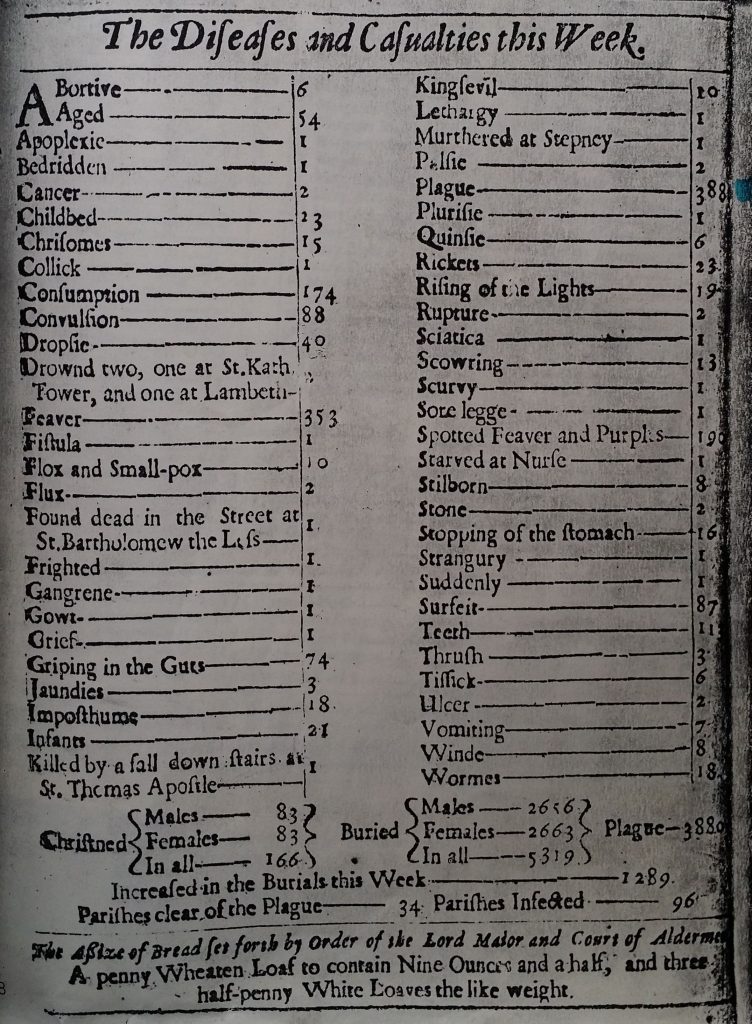
A bill of mortality for London 1665, showing 11 deaths caused by 'teeth' (as opposed to 353 for 'feaver'
List of causes of death, London during the plague of 1665. Teeth killed 11 people

Magic and Toothache

John Aubrey, an erudite and educated 17th Century writer, reports on the use of Magick for tooth care. When he relates these unlikely cures he often provides information that the person who told him the story is worthy of belief. So he seems to give some credence to the efficacy of these magical ‘cures’. But, judge for yourself; this is what he wrote:

To Cure the Tooth-ach.

Take a new Nail, and make the Gum bleed with it, and then drive it into an Oak. This did Cure William Neal, Sir William Neal’s Son, a very stout Gentleman, when he was almost Mad with the Pain, and had a mind to have Pistoll’d himself.

To Cure the Tooth-ach, out of Mr. Ashmole’s Manuscript Writ with his own Hand.

Mars, hur, abursa, aburse.
Iesu Christ for Marys sake,
Take away this Tooth-ach.

Write the words, Three times; and as you say the Words, let the Party burn one Paper, then another, and then the last.

He says, he saw it experimented, and the Party immediately Cured
John Aubrey’s Miscellanies 1695

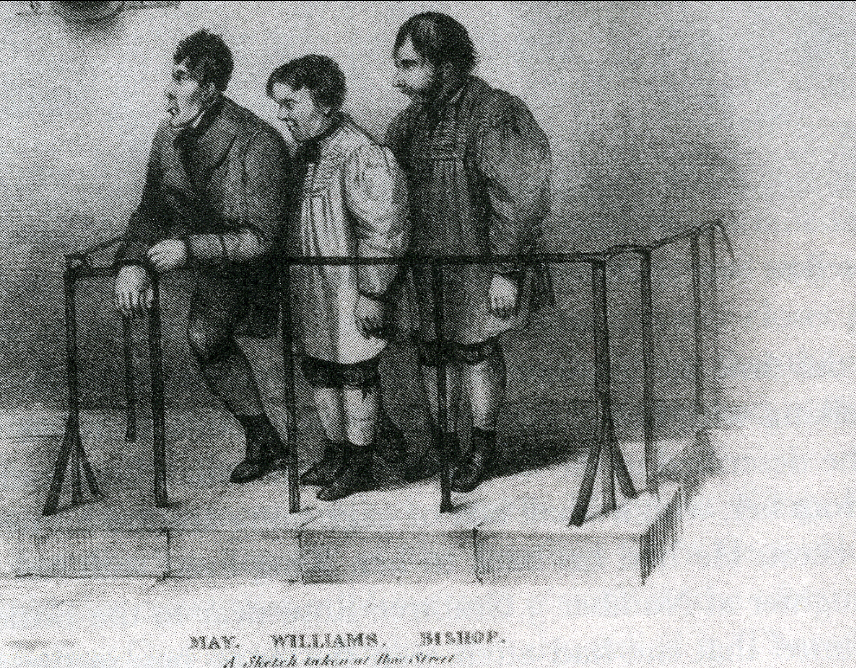
May, Williams and Bishop at the Old Bailey accused of murder in pursuit of bodysnatching

Teeth and the Body-Snatchers

In 1832, in London Bishop, Williams, and May were accused of body snatching. After killing the Italian Boy (wonderful book by Sarah Wise ‘The Italian Boy‘) they jemmied out his teeth. Then, took the teeth to a South London Dentist. with whom they bargained for a good price. (They used the term ‘cheapened’ – I cheap, you cheap, we are cheapening: meaning to barter). The dentist wanted to use the dead boy’s teeth for false teeth for his patients. If memory serves, he paid £1 for them.

The teeth were used as evidence in the trial of the murderers. When the trial was over and the accused punished, the dentist asked for the teeth back! Two of the murderers were hanged but the third freed for turning King’s Evidence. Thereafter, the teeth were released back to the Dentist. He promptly put them in the window of his surgery as an advert for his professional skills!

Earlier, one of the Borough Boys Resurrectionist gang (based in Southwark, London) toured the battlefields of the Peninsular Wars collecting teeth. He made a substantial sum selling them to dentists as false teeth. They became known as Waterloo Teeth.

When I first wrote this in I added ‘How things have changed!’ But in recent years there have been reports of people undertaking their own dental work, if they cannot get access to an NHS dentist. Effectively, it seems that the Conservative Government was allowing dentistry to slip out of the NHS just like it did with eye health. For a study in what has happened to Dentistry in the UK in recent years, please look at this report here.

On This Day

1907 – the National Union of Women’s Suffrage Societies (NUWSS or Suffragists) organised the so-called the Mud March. This was the ‘first large procession’ in support of votes for women. It was called the Mud March because of the downpour of rain on the day.

1916 – Conscription started in World War 1 with the call-up of unmarried men aged between 18 – 41.

1933 – The Oxford Union passed the resolution ‘the House will in no circumstances fight for King and Country.’

Bird of the Month The Blackbird. The common Blackbird is a true Thrush. The male is black with a yellow beak and the female is dark brown with a yellow beak. The Blackbird begins to sing as early as January, and is one of the birds who sing first early in the morning. British Blackbirds do not migrate, but Northern European Blackbirds often migrate to the UK in the winter for warmer weather. Viruses have put the species under some threat and they need help to get through the winter. ArkWildlife suggests this is what you should feed blackbirds:

For more bird advice see https://www.arkwildlife.co.uk/ from which the above feeding advice is taken.

Here is a blackbird song, royalty free, from https://creazilla.com/search/audio/blackbird.

Four and Twenty Blackbirds backed in a pie

Is an 18th Century nursery rhyme which refers to the medieval habit of baking a pie crust, and putting it over a bowlful of live birds. When it was opened all the birds, well sing the song to remind yourself what they do?

Sing a song of sixpence
A pocket full of rye
Four and twenty blackbirds
Baked in a pie
When the pie was opened
The birds began to sing
Wasn’t that a dainty dish
To set before the king?

The king was in his counting house
Counting out his money
The queen was in the parlor
Eating bread and honey
The maid was in the garden
Hanging out the clothes
When down came a blackbird
And pecked off her nose

Sing a song of sixpence
A pocket full of rye
Four and twenty blackbirds
Baked in a pie
When the pie was opened
The birds began to sing
Wasn’t that a dainty dish
To set before the king?

A stinging Cure for Lust

Another story told of the Blackbird is a similar tale I have told before about holymen and temptation. So St Benedict was pecked on the cheek by a Blackbird. Next day he finds himself assailed with lust. It was the Devil disguised as the Blackbird he decides that infected the Monk. Then Benedict did what a number of saints did in similar circumstances. He threw himself, naked, in a patch of nettles and brambles and rolled around, until his body was sore afflicted. But he had overcome his lust.

Then St Kevin held out his hand and a blackbird laid her eggs in it. So he stayed still for the two weeks it took the fledglings to hatch! (for more on St Kevin see my post here)

Icy Sedgwick has an excellent website on the folklore of Birds, containing a nice podcast, which for those who love a north-east accent will enjoy.

For my post on Robins and Wrens look here.

First written February 2023, revised February 2024, 2025. On This Day, Bird of the Month were added 2026

New Irish Bank Holiday for St Bridget/Imbolc! Ist Monday in February

The celtic year shown as a circle
The Celtic Year showing Imbolc, the new Irish Bank Holiday

I just came across this which I published last in 2023. I should have republished it last weekend. But here it is. The Irish created a brand new Bank Holiday for St Bridget. The first one was Monday 6th February 2023. It followed a public holiday given in 2022 for Health Workers in March. The timing of the Bank Holiday is explained by the Irish Post:

St Brigid’s Day itself falls on February 1 each year but going forward the Imbolc/St Brigid’s Day public holiday will fall on the first Monday in February, unless February 1st falls on a Friday.

This means that Ireland now has a public holiday on the 4 Celtic festivals of Samain (Halloween), Imbolc (St Bridget’s Day), Beltane (May Day) and Lughnasa (Lammas Day). These festivals are quarter-days, which mean they fall halfway between the Solstices and Equinoxes.

The Independent wrote that ‘then-Tánaiste, Leo Varadkar, said‘ ….“This will be the first Irish public holiday named after a woman.”  He also is quoted as saying:

“It marks the half-way point between the winter solstice and the equinox, the beginning of spring and the Celtic New Year.”

Extra Bank Holidays in the UK?

There are occasional calls for a new Bank Holiday in the UK. It’s often a Conservative MP calling for a National Day for the British. More often than not they suggest Trafalgar Day 21st October would be a suitable date. This commemorates the great Naval battle in 1805 in which Nelson was fatally wounded. It has several virtues in their eyes. Firstly, it is a day that confirmed Britain’s mastery of the Seas , an ideal day for celebrating patriotism. Secondly, it is the school half-term, and gives a much-needed day off between summer and Christmas. Thirdly, they can propose the day should be taken from the May Day Bank holiday. This coincides with the International Worker’s Day, which is obviously ‘a bad thing’.

Here is an example: the MP for Portsmouth MP’s supported a call for Trafalgar Day here: . The report says: ‘there are currently no bank holidays in the UK which celebrate battles or war victories’. (Portsmouth News 2016).

This, I think, leaves the rest of us thinking: ‘What planet do these people live on?’ Yes, Trafalgar Day would have been a great day for a Bank Holiday, if this were 1839. Maybe even 1939. But now Trafalgar is just not on any ordinary person’s radar. We don’t think so very much about the Napoleonic War or Nelson. Nor do we often sing ‘Heart of Oaks, are our Men’ any more. In short, it is a reminder how distant from the rest of us some MPs are. By contrast, how progressive Ireland seems.

Productivity

The Trade Union Congress proposed the need for more bank holidays. We only have the usual eight annual bank holidays for workers in England and Wales. Scotland has nine or ten; the average for the EU is ‘12.3 bank holidays a year. Finland and Romania get 15, while workers in Japan have 16 public holidays in total’.

A radio programme ‘The Bottom Line’ compared productivity in Britain and France. It revealed that Britain is now 20% less productive than France, (10% worse since Brexit). And how do we make up that productivity deficit? Yes, indeed, by working longer hours for lower wages. It appears that the French high tax, high workers’ protection regime, means they have to find ways of getting more out of their workers in their working hours. While we can just hire and fire, and are happy to make people work in a more inefficient way. Strange isn’t we are told that the French economy is a victim of socialism. Turns out Socialism is more productive.

Here is my recent post about St Bridget’s Day

First Published February 2023, Republished 2026

Candlemas February 2nd

February From the Illustrated London Almanac 0f 1873 for Candalmas

Candlemas is an important festival of the Church, celebrated throughout the Christian world. It is the day Jesus was presented to the Temple as a young boy and prophesied to be ‘a light to lighten the Gentiles’. The day is therefore celebrated by lighting candles. Hence its name.

It is also called the Feast of the Purification of the Blessed Virgin Mary. It is 40 days after the birth of Jesus which was fixed as the 25th December by Pope Liberius by AD 354. So it is the end of the postpartum period ‘as the mother’s body, including hormone levels and uterus size, returns to a non-pregnant state’. Mary went to the Temple to be ritually cleansed. This later became known as ‘churching’.

Candlemas a Cross Quarter Day.

It is also one of the cross quarter days of the Celtic tradition, that is halfway between Winter Solstice and May Day. The candles also suggest a light festival marking the lengthening days. It is probably another of those festivals where the Christian Church has taken on aspects of the pagan rituals, so Brigantia’s (celebrated at Imbolc on February 1st) role in fertility is aligned with the Virgin Mary’s.

Weather Lore for Candlemas

Folklore prophecies for today: ‘If it is cold and icy, the worst of the winter is over, if it is clear and fine, the worst of the winter is to come.’ Looking overhead I can see a little blue sky but I can’t say it is ‘clear and fine’. But it is certainly not ‘cold and icy’. So, for what it is worth, we are in for some cold weather.

Candlemas – the Last day of medieval Christmas and the Lords of Misrule.

It’s also the official end of all things Christmas. For most of us Christmas decorations were supposed to be pulled down on January 5th, but, the Church itself puts an end to Christmas officially at Candlemas so Cribs and Nativity tableaux need to be removed today.

John Stow, in the 16th Century describes the period between Halloween and Candlemas as the time when London was ruled by various Lords of Misrule and Boy Bishops (see my post here). In the piece below, Stow also talks about a terrible storm that took place in February 1444.

Against the feast of Christmas every man’s house, as also the parish churches, were decked with holm, ivy, bays, and whatsoever the season of the year afforded to be green. The conduits and standards in the streets were likewise garnished; amongst the which I read, in the year 1444, that by tempest of thunder and lightning, on the 1st of February, at night, Powle’s steeple was fired, but with great labour quenched; and towards the morning of Candlemas day, at the Leaden hall in Cornhill, a standard of tree being set up in midst of the pavement, fast in the ground, nailed full of holm and ivy, for disport of Christmas to the people, was torn up, and cast down by the malignant spirit (as was thought), and the stones of the pavement all about were cast in the streets, and into divers houses, so that the people were sore aghast of the great tempests.’

Robert Herrick has a 17th Century poem about Candlemas:

Ceremony Upon Candlemas Eve

Down with the rosemary, and so
Down with the bays and misletoe;
Down with the holly, ivy, all
Wherewith ye dress’d the Christmas hall;
That so the superstitious find
No one least branch there left behind;
For look, how many leaves there be
Neglected there, maids, trust to me,
So many goblins you shall see.

https://www.catholicculture.org

On This Day

1602Twelfth Night by William Shakespeare performed for the first time.

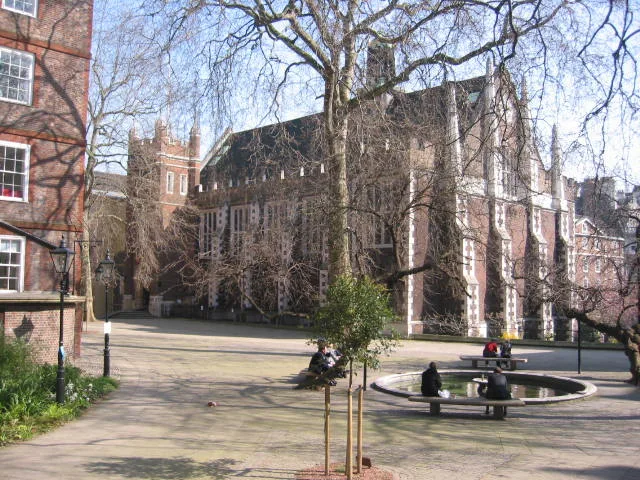
Middle Temple Hall. Photo K Flude.

This play was commissioned by the Lawyers of Middle Temple, in Fleet Street London for the end of the Christmas Season. It was written by Shakespeare and first performed in Middle Temple Hall which is still standing. For the folklore of Twelfth Night see my post here.

1880 – First shipment of frozen meat arrives in London from Australia. It was in excellent condition despite a leaving Melbourne in Dec 1879. Hay’s Gallerie in London was one of the world’s first warehouses with refrigeration.

1943 – German Army surrenders ending the Battle of Stalingrad, marking the beginning of the end of the WW2.

Today is Groundhog Day in the USA. This is when the groundhog comes out to see what the weather is like. If it is dull and wet he stays up because winter will be soon over, if it is sunny and bright he goes back to his burrow to hibernate for another 6 weeks. Originally, a German custom associated with the badger. A groundhog is a woodchuck which is a marmot. Does this workas a forecast method? Not being in America I don’t know but what I do know is:

How much wood could a woodchuck chuck
If a woodchuck could chuck wood?
As much wood as a woodchuck could chuck,
If a woodchuck could chuck wood.

https://www.poetryfoundation.org/poems/42904/how-much-wood-could-a-woodchuck-chuck-

First published 2022, revised 2023, 2024, 2025 On This day added February 2026

Festival of Imbolc, St. Bridget’s Day February 1st

Imbolc and St Bridget’s Day

Today is Imbolc, one of the four Celtic Fire Festivals. It corresponds with St Bridget’s Day, which is a Christian festival for the Irish Saint, and is the eve of Candlemas. Bridget is the patron saint of all things to do with brides, marriage, fertility, and midwifery (amongst many other things, see below). And in Ireland, 2026 was the third St Bridget’s/ Imbolc Day Bank Holiday.

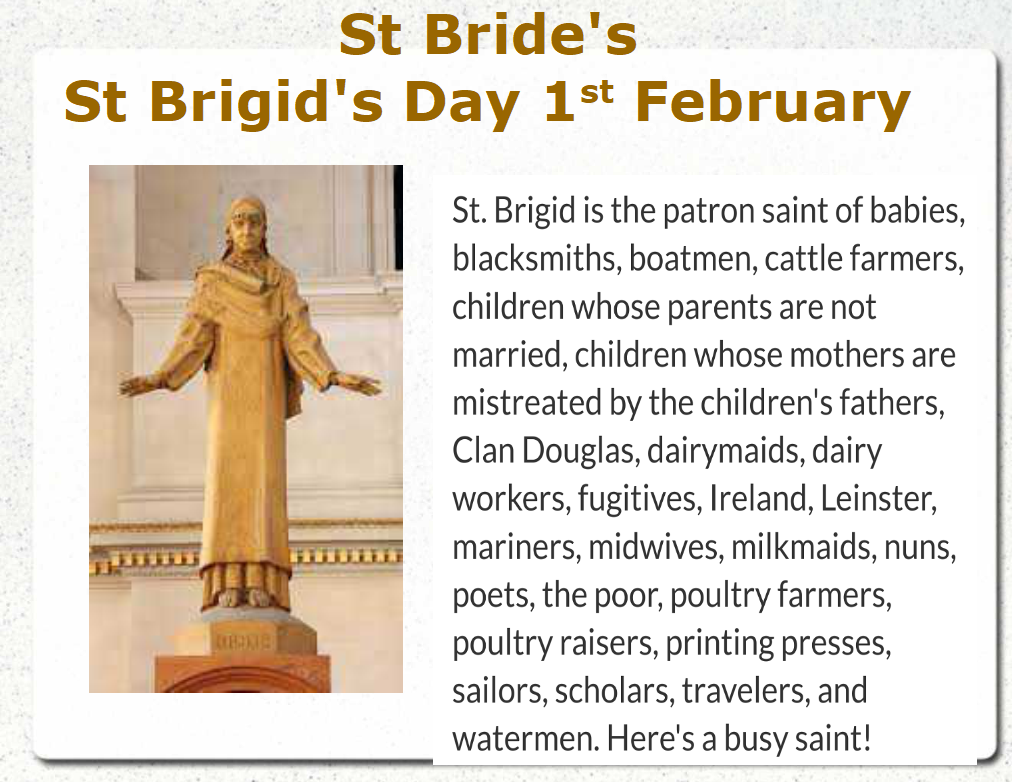
St Bride,s Statue St Bride's Church. Fleet Street
St Briget or St Bride’s Statue, St Bride’s Church. Fleet Street from K.Flude’s virtual tour on Imbolc

St Bridget, aka Briddy or Bride, converted the Irish to Christianity along with St Patrick in the 5th Century AD. Despite being a Christian, she appears to have taken on the attributes of a Celtic fertility Goddess. Her name was Brigantia, and it is difficult to disentangle the real person from the myth.

Brigantia

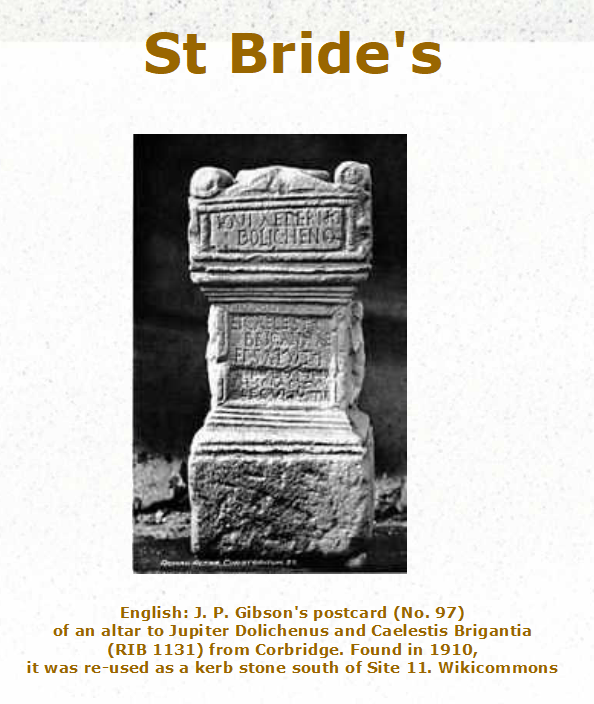
Archaeologists have found various Roman altars dedicated to Brigantia. The Brigantes tribe in the North are named after the Goddess (probably). They were on the front line against the invading Romans in the 1st Century AD, and led by Queen Cartimandua.  The Queen tried to keep her tribe’s independence by cooperating with the Romans. A few years later, Boudica took the opposite strategy. But both women had executive power as leaders of their tribes. This suggests a very different attitude to woman to the misogyny of the Romans.

altar to Brigantia
Altar to Brigantia from K Flude’s virtual tour on Imbolc

Wells dedicated to St Bridget

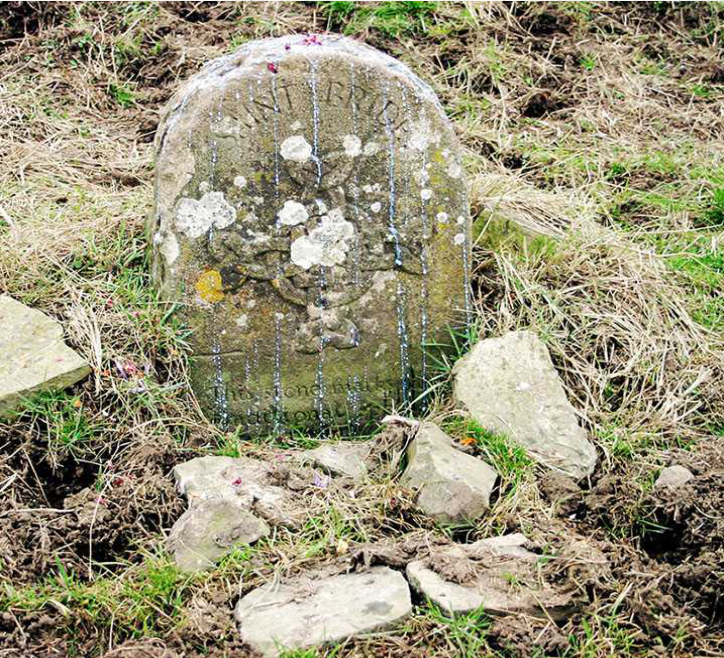
St Bridget's Well Glastonbury
St Bridget’s Well, Glastonbury

St Bride is honoured by many wells dedicated to her. Often they are associated with rituals and dances concerned with fertility and healthy babies. And perhaps, the most famous, was near Fleet Street. This was Bridewell, which became the name of Henry VIII’s Palace, and later converted into an infamous prison. St Bride’s Church, built near to the Well, has long been a candidate as an early Christian Church. Sadly, the post World War Two excavations found nothing to suggest an early Church. But, they did find an early well near the site of the later altar of the Church, and remains of a Roman building, possibly a mausoleum. Perhaps the Church may have been built on the site of an ancient, arguably holy, well. However, this is only a guess.

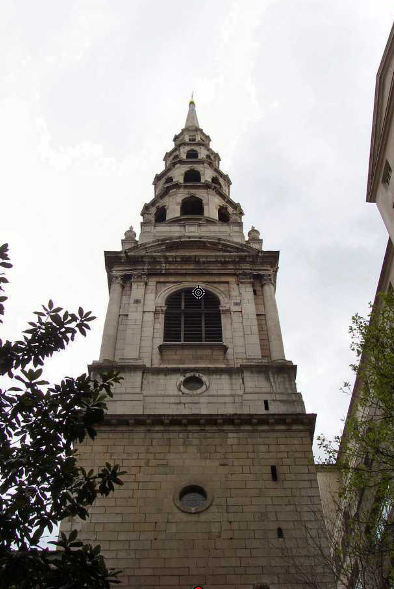
Steeple of St Brides Fleet Street
Steeple of St Brides Fleet Street, photo K Flude

The steeple of St Brides is the origin of the tiered Wedding Cake, which, in 1812, inspired a local baker to bake for his daughter’s wedding.

February signs of life

Imbolc and St Bridget’s Day are the time to celebrate the return of fertility to the earth as spring approaches. In my garden and my local park, the first snowdrops are out. Below the bare earth, there is a frenzy of bulbs and seeds budding, and beginning to poke their shoots up above the earth, ready for the Spring. In the meadows, ewes are lactating, and the first lambs are being born.

Violets, bulbs, and my first Daffodil of the year. Hackney (2022), London by K Flude

And let’s end with the Saint Brigid Hearth Keeper Prayer Courtesy of SaintBrigids.org

Brigid of the Mantle, encompass us,
Lady of the Lambs, protect us,
Keeper of the Hearth, kindle us.
Beneath your mantle, gather us,
And restore us to memory.
Mothers of our mother, Foremothers strong.
Guide our hands in yours,
Remind us how to kindle the hearth.
To keep it bright, to preserve the flame.
Your hands upon ours, Our hands within yours,
To kindle the light, Both day and night.
The Mantle of Brigid about us,
The Memory of Brigid within us,
The Protection of Brigid keeping us
From harm, from ignorance, from heartlessness.
This day and night,
From dawn till dark, From dark till dawn.

For more about go to this webpage St Bridget. To read my post on Mary Musgrove’s Candlemas Letter in Jane Austen’s Persuasion follow this link.

Imbolc and Myths and Legends Walks

I give walks about Imbolc and other Celtic festivals, and at May Eve, the Solstices, Equinoxes, Halloween and Christmas (when I have time). You might like to attend these walks or virtual tours. The following are currently in my calendar. I will be adding other walks to the calendar as the year progresses.

The Spring Equinox London Virtual Tour 7.30pm Fri 20th March26 To book

The London Equinox and Solstice Walk 2:30pm Sat 21st March26 To book

For more of my walks see the walks page of this blog here: https://www.chr.org.uk/anddidthosefeet/walks

First published in 2023, revised and republished Feb 2024, 2025, 2026

British Exceptionalism Brexit Day January 31st

Today is the Anniversary of the day Britain left the European Union in 2020. It is possible to argue the case that one of the reasons so many people were willing to vote to leave the Union was English or British Exceptionalism. I think most people would be thinking of Winston Churchill and World War 2, and the British Empire. But you can argue a case that there has long been important distinctions between Britain and Europe.

I find it amusing that we left Europe at 11pm on January 31st 2020, which was midnight in the European Union. See the BBC round up on Britain and Europe.

This Island Story

When I was at school, there was a lot of emphasis on Great Britain being an Island. This is rarely emphasised in the 21st Century. But it was part of the Imperial story of the British Empire and helped distance ourselves from ‘the Continent’.

That Island story didn’t begin until the Mesolithic period. Before that, Britain was physically part of Europe, and the Thames was but a tributary of the Rhine. Then the land bridge that is now called Doggerland was swept away by rising meltwater. By 8,000 years BP. Britain was an Island.

Around 4000BC, the so-called Neolithic Revolution spread farming throughout Europe. But, the Channel acted as a barrier. So, it took an extra hundred years or so for farming to begin to penetrate Britain. The early farmers brought with them not only the domestic animals, crops, pottery and ground axes but also a new form of housing consisting of long, rectangular wooden houses. The DNA of the people of Britain, was radically changed and the so-called Western Neolithic DNA mostly took over. Strangely, the long house did not survive very long as a popular design. Britain while accepting the new farming technology, seem to have reverted to their own form of housing

Post Roman divergence?

While most major style and technology changes over the next 4 millenia were shared with Europe, Britain often had its own versions. Britain shared with Europe the adoption of the Celtic Languages and eventual integration into the Roman Empire. But, when the western part of the Roman Empire fell in the 5th Century, Britain had a different experience to much of Europe. On the face of it, a similar sequence happened. The Western Empire was taken over by Germanic Kings. The Franks in France and Germany; the Anglo Saxons in England; the Lombards in Italy and Goths, Visigoths, Vandals in Spain (and N. Africa). A similar sequence on the surface.

But on the mainland the German Kings allowed the local cultures to continue and adopted the Latin language, and Christian religion as their own. They maintained a strong tradition of Roman law and culture. French, Italian, Spanish, Rumanian are all romance languages based on Latin.

But across the Channel to England, it was different. Our German Kings didn’t adopt the Latin language and the native Celtic dialects died out (except of course in Cornwall, Wales, Scotland and Ireland ), They also maintained their pagan beliefs. So English culture is Germanic and not Roman. We do not have a foundation in Latin culture and Roman law. This is very different to western Europe.

Napoleon founder of modern Western Europe

Of course the Anglo-Saxons eventually soon adopted Christianity. In the 16th Century Britain turned against the universal Catholic Church. This was a rupture that had a similar impact to Brexit. But the next really significant difference was the changes instituted by Napoleon. He subdued then rationalised and liberalised the continent. He had dreams of a United Europe of Nations (in contrast to the Empires that held sway (such as the Holy Roman Empire, and the Austro-Hungarian Empirehttps://www.napoleon-series.org/research/napoleon/c_unification).

Most legal systems in Europe are based on Roman Law as amended by the Napoleonic code. England by contrast is based on the Common Law.

So these differences combined with our arrogance derived from Empire, the Industrial Revolution and belief we won World War 2. And our cultural pride based on our perception of the preeminence of people such as Shakespeare, Newton and Darwin etc etc). All this probably lay behind ‘British Exceptionalism’. This helped a nationalistic and misguided belief that we are held back by Europe despite all the evidence to the contrary.

And the future?

Opinion polls make it clear that most people think Brexit was a mistake, and they blame it on the Conservatives, Boris Johnson and Nigel Farage. Economists are clear the damage it has done to Britain’s financial position. And yet the main parties have been very reluctant to consider a return to Europe. Instead, Sunak and Starmer have tried to sort problems out on a case by case basis, without suggesting we go back into the European Union.

However, there is a dawning awareness that Europe cannot depend upon the US playing its usual leading role in maintaining the international status quo, and this may accelerate our move back towards Europe. Canadian Prime Minster Carney is proposed the formation of an alternative economic alliance to replace dependence on the US, and this may be our route back into the European Single Market.

Advice for Lambs

From ‘ FIUE HUNDRED POINTES OF GOOD HUSBANDRIE. BY THOMAS TUSSER.

The Edition of 1580 collated with those of 1573 and 1577.

Januaries husbandrie.

Yoong broome or good pasture thy ewes doo require,warme barth and in safetie their lambes doo desire.Looke often well to them, for foxes and dogs,for pits and for brembles, for vermin and hogs.

More daintie the lambe, the more woorth to be sold, the sooner the better for eaw that is old. But if ye doo minde to haue milke of the dame, till Maie doo not seuer the lambe fro the same.

Ewes yeerly by twinning rich maisters doo make, the lamb of such twinners for breeders go take. For twinlings be twiggers, encrease for to bring, though som for their twigging Peccantem may sing.

Note ewes who had twin lambs were thought to be better and fetched more at market. They were called twinlings.

On This Day

1606 – Guy Fawkes and fellow conspirators are hanged, drawn and quartered for plotting to blow up Parliament and King James. See my post on the Gunpowder Plot.

1865 – Congress passes the Thirteenth Amendment to the United States Constitution, abolishing slavery.

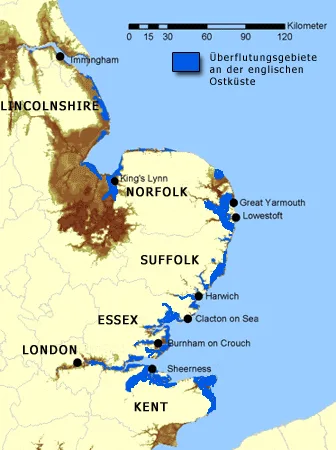
1953 – The North Sea Flood assail the east coast of Britain killing 280 people. ‘The combination of wind, high tide, and low pressure caused the sea to flood land up to 5.6 metres (18 ft 4 in) above mean sea level.’ (Wikipedia).

Map of
Map illustrating the extent of the Great Flood of 1953 in the United Kingdom
Deutsch: Sturmflut von 1953 Date 25 September 2008 Source: Draco. GNU Free Documentation License

You might like to see some great pictures of the floods here.

First Published 2025, revised and OnThis Day added 2026

St Cadoc Day January 24th

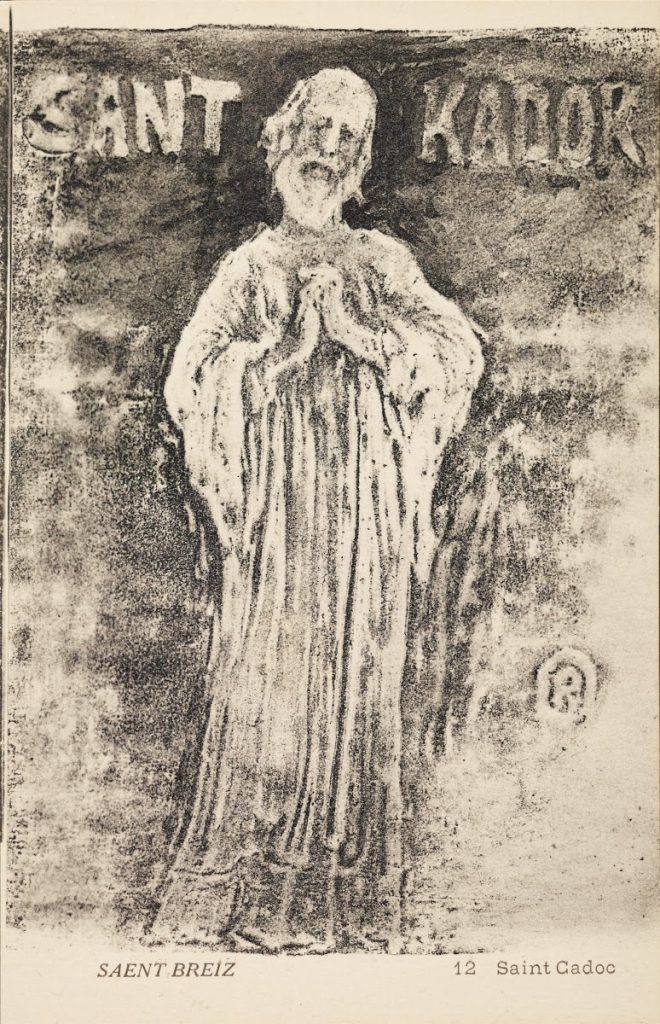
S Cadoc of Llancarfan
Image of St Cadoc

St Cadoc was born in 497 AD, a Saint, and Martyr, who founded a monastery at Llancarfan, near Cowbridge, Glamorgan, Wales. He also has associations with Scotland, Brittany, and England. His story is not written down until the 11th Century. But it is fascinating and, in its own way, a charming story. The gentle son of a savage, robber King, he was educated in Latin under an Irish priest, and refused his father’s orders to fight. But he lived to convert his parents . He is known as Cattwg Ddoeth, “the Wise”, although his sayings are mired in the forgeries of Iolo Morganwg. (aka Edward Williams, collector of Medieval Welsh literature and forger.)

Cadoc comes into conflict with King Arthur. In Welsh literature, King Arthur is a brave but wilful King. He demanded Cadoc give him compensation after the Saint sheltered a man who had killed three of Arthur’s men. The compensation was delivered as a herd of cows, but as soon as Arthur took charge of them they turned into ferns.

Cadoc and the Saxons

Cadoc was forced out of Britain by the pagan Anglo-Saxons, but eventually, he felt he had to return despite the grave danger he would face. He wanted to obey his own maxim:

Would you find glory? Then march to the grave.

He therefore moved to the Saxon settlements to give spiritual succour to the native British Christians, survivors of Saxon massacres. His martyrdom took place at Weedon in Northamptonshire. Here his Service was interrupted by Saxon horsemen, and Cadoc was slain as he served the Eucharist. He lived, probably, in the later 5th Century/Early 6th Century.

The Catholic Church celebrates him in September, elsewhere on the 24th January.

For more, look at https://celticsaints.org or Wikipedia.

On This Day

41 – Claudius found hiding behind a curtain and proclaimed Emperor after Caligula assassinated

1536 -Henry VIII falls off his horse while jousting, sustains brain injuries that some say explain his worsening behaviour? Or what is just that he was a narcissistic, privileged individual with too much power?

1972 – Japanese Sgt. Shoichi Yokoi discovered in a Guam jungle, where he had been hiding since the end of World War II.

1984 – Macintosh personal computer put on sale by Apple in the United States.

First published in January 2023, republished in January 2024, 2026

News from the Almanac of the Past January 22nd 2026

May Day Bedfordshire

This has become the day in which I update readers on the purpose and future plans for the Almanac of the Past.

What is the Almanac of the Past?

The nature of an almanac is to be a pot-pourri. They are about seasons, time, folklore, history, important events, and anniversaries. I also like to cover history, famous people and discoveries. Gods, Goddesses, Saints, sinners, and archaeology. What I want it to be is something that makes us more mindful about the passing of the year. How seasons and time change the way people see their world. My focus is mostly on the UK, but also on Rome and Greece. With occasional excursions to other ages, places and universes. I am also trying to find more content that is London-based.

What is the plan for the Almanac of the Past?

I plan to have one entry for each day. The problem with this, is that as I fill in the empty days, I will be republishing the already filled days. So subscribers will be seeing content they have seen before. Currently, I am trying to improve and extend existing content so it is worth reading again. And I am groping towards a final format for each day.

This is what I think it is. Each page will have the following sections:

Seasonal content: folklore about the day in question. Including historic texts about gardening, farming, cooking, witchcraft superstitions etc.

Saint or God/Goddess of the day

Calendar content: about epochs, ages, years, months, days, hours, and everything calendrical

Major article about something that happened on this day in history

On This Day section where other things that have happened on this day have happened.

I guess rather than a post it will be more like a newsletter of the day?

The almanac of the Past Publication

If I get the formula right, I will attempt to get a publication from it. Otherwise, it will remain online. So:

How’s it doin’?

The first graph, above, shows a steady growth from 2,000 views in 2020 to 26,000 views for 2025. Although encouraging, it has not gone ‘Kardashian viral’ as yet. 75% increase last year. This was partly achieved by taking more care of SEO – search engine optimisation. I’ve been doing a lot more of this. But if you are interested in this read last year’s ‘News from the Almanac of the Past’.

Screenshot from Jetpack showing the geographic reach of the Almanac of the Past from 2020 – 2025

The second graphic shows where the readers come from: mostly from the UK and the US, followed by France and Germany. It shows vast stretches of the world not registering as converts to the Almanac of the Past, including Greenland (or do I mean Iceland?).

Next up ‘Favourite pages, and referrers

Screenshot from Jetpack showing the most viewed pages (left and Referrers (Right)

The Skimmity Ride is way out ahead, the most popular post. The page is about a procession ‘designed to humiliate a member of the community.’ Why is it top? I think because hardly anyone else posts about it, so if you want to know what Thomas Hardy was writing about in the Mayor of Casterbridge my site is the go-to place.

Next is the ‘Beginning of the Universe‘ Post. This pleases me because it is something I discovered myself while writing the blog. It explains the beginning of the universe, the beginning of the year, the beginning of spring, and the Birthdays of Adam, Lilith, & Eve; the conception of Jesus, and why the year began in the medieval period on March 25th. So again, you won’t find this information easily in any one other place. The Almanac of the Past explains it all.

Queen Elisabeth I’s Nicknames are third. She is always popular and the nicknames she gave to her advisers are fun, and either flattering or rude.

Then we have the post on Antarctic explorer Lawrence Oates. It is an interesting post, of course, but why it rates highly I have no idea. Maybe people know this expression ‘I am just going outside and may be some time’ and want to track it down?

The last one I shall mention is the Miracle of the Testicles. This is one of my favourite posts! (I just typed: ‘because it’s nuts’ without realising the pun, so please forgive me!) But, really, it shows the often risible ways the early Saints became famous. And yet beneath that there is a real need in the community for spiritual help which the origin stories touch. Its high ranking must be down to the word ‘testicles?’ No?

The other side of the graphic shows referrers, which are mostly the obvious ones like search engines and facebook. But there is also a fansite for Damien Lewis, the actor who was in Band of Brothers and Henry VIII in Wolf Hall. One of his pages mentioned my page.

Screenshot from Jetpack showing the posting ativity for the past year. Grey means no posts, Dark green 2 or more, light green one post a day.

Posting Activity shows you how far I am from achieving one Almanac post a day. Not far in the winter, more to do in the summer.

So how can you help?

If you have a website or a blog or a social media page, post a reference to one of my pages, and encourage people to have a look. If you receive the email as a subscriber, occasionally visit the site, and like it? Send a WhatApp group a link to my page. Help me go properly viral, then, I can get a publishing deal, publish my Almanac and then my novels …… do it before you forget!

Any problems for the Almanac of the Past?

Please continue to forgive my wretched proofreading.

First Published in 2026

St Distaff Day & the Triple Goddesses, January 7th

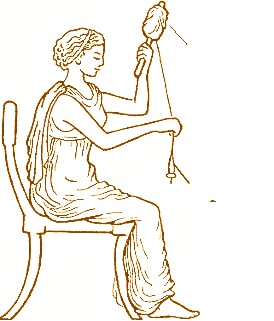
Spinning
St Distaff Day. Spinning—showing the distaff in the left hand and the spindle or rock in the right hand

I’m not sure what the Three Kings were doing on the day after Epiphany. But, the shepherds, if they were like medieval English farmworkers, would still be on holiday. They went back to work, traditionally, next Monday, which is Plough Monday – (See my post here). This year, January 12th. By contrast, the women, according to folk customs, went back to work on St. Distaff Day, the day after Epiphany. Today, January 7th. In an ideal world, St Distaff’s Day is the Sunday after Epiphany (January 11th), and Plough Monday is the next day. Of course, it doesn’t always work out that way. I am not sure the woman going back to work on the 7th January, would be happy with the men lounging about until Plough Monday? An extra 4 days off! Maybe, St Distaff Day was normally on the Sunday before Plough Monday?

Distaffs and Women’s Work

A distaff is ‘a stick or spindle on to which wool or flax is wound for spinning’. Because of its importance in the medieval and early modern economy, it became a synecdoche for women. St Distaff is a ‘canonisation’ of this use of the word. So, a day to celebrate working women.

We know that medieval and early modern women were a vital part of the workforce, despite the demands of childcare. Many women took on apprenticeships, even more continued their husband’s work after he died. Some professions like silk became a female speciality. Many taverns were run by the Alewife. Plus, London was full of female servants and nurses. Many women had several jobs.

The exhibition at the British Library on Medieval Women. In Their Own Words, indicated that most of the sex workers had two or more other jobs. But even if a woman remained solely in the domestic realm, the wife had to be mistress of a formidable range of technologies. Baking, Brewing, Cooking, Laundry, Gardening, Dairy, Medicine (including distillation), horticulture, spinning, sewing and embroidery. Even, aristocratic women did embroidery of the finest quality, and it often made an important financial contribution to the household. They also ran the household, which means they had to have a formidable range of managerial skills. Dealing with servants, managing the accounts etc.

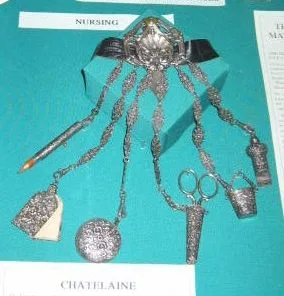
Chatelaine.

The other symbol of ‘women’s work’ was the Chatelaine. The word also means keeper of the Castle. But women who controlled households had a clasp that hung from the waist. It was a bit like a Swiss Knife as it had the keys, and all sorts of other useful items. Here is an old photo of the Chatelaine from the collection of the Old Operating Theatre Museum, of which I was the Director for 25 years. From left to right it has a pencil, a little notepad, a pill dispenser, a pair of scissors, a little bucket that held a dose of medicine, a whistle to summon urgent assistance. These were not only useful but a symbol of authority for the Matron. 19th Century.

St Distaff Day and Plough Monday

Robert Herrick (1591–1674), born in Cheapside, London, a Goldsmith, priest, Royalist and Poet wrote in ‘Hesperides’.

Partly work and partly play
You must on St. Distaff’s Day:
From the plough, soon free your team;
Then come home and fother them;
If the maids a-spinning go,
Burn the flax and fire the tow.
Bring in pails of water then,
Let the maids bewash the men.
Give St. Distaff all the right;
Then bid Christmas sport good night,
And next morrow every one
To his own vocation.

Herrick, I think is suggesting fun and games are to be had. The men burning the flax and firing the tow, The women soaking the men with pails of water. In this piece, he links the plough team with St Distaff Day. This implies that the ploughs would be out on the next day. So as St Distaff’s Day is not always on a Sunday, perhaps Plough Monday is not always on a Monday? He certainly suggests everyone goes back to work either on St Distaff Day or on the day after,

This image has an empty alt attribute; its file name is Screenshot-2022-01-07-18.53.35.png
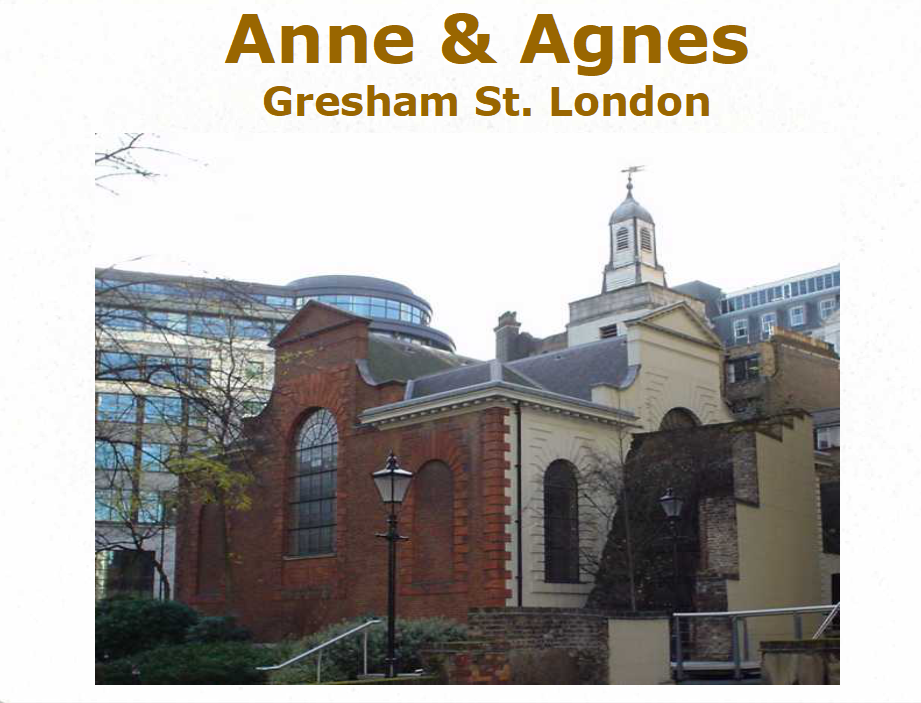
St Anne & St Agnes Church in London, Saints of the Distaff. Photo K Flude

Saints & Goddesses of the Distaff Side

In London, the Fraternity of St Anne and St Agnes met at the Church dedicated to the Saints. It is by a corner of the Roman Wall on the junction of Gresham Street and Noble Street. St Agnes is the patron saint of young girls, abused women and Girl Scouts. St Anne is the mother of the mother of the Son of God. So, together they represent the three generations of women: maidens, mothers, and grandmothers.

This image has an empty alt attribute; its file name is romanmoreb0029.jpg
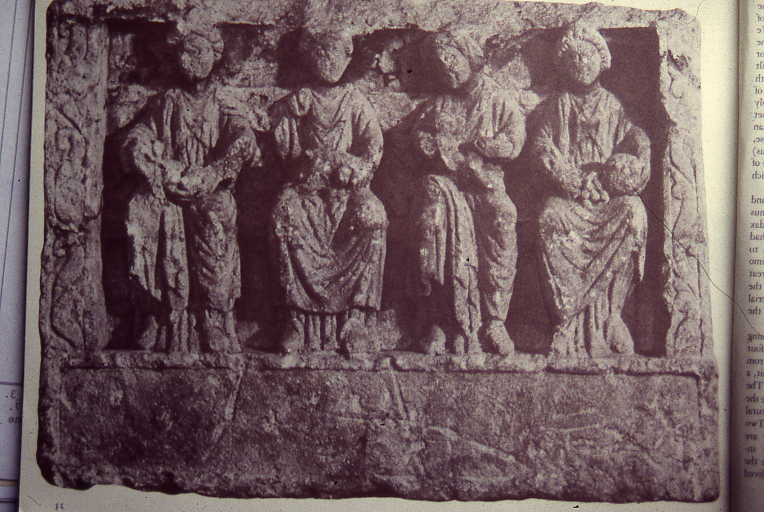
The Three Mother Goddesses (and someone else) “Limestone relief depicting four female figures sitting on a bench holding bread and fruit, a suckling baby, a dog and a basket of fruit’ the Museum of London

This trinity of women were worshipped by the Celts. Archaeologists discovered the sculpture above while investigating the Roman Wall a few hundred yards away at Blackfriars. Scholars believe it depicts the Celtic Three Mother Goddesses. The fourth person is a mystery, maybe the patron of a nearby temple? The relief sculpture was removed perhaps from a temple, or the temple was trashed at some point. Then the sculpture was used as rubble and became part of the defences of London.

The idea of triple goddesses is a common one. In Folklore and History they have been referred to as Maiden, Mother, and Crone, or even Maiden, Mother and Hag. They come in Roman, Greek, Celtic, Irish, and Germanic forms. Their names include the Norns, the Three Fates, the Weird Sisters, the Mórrígan and many more. The Three Fates, the Goddess Book of Days says, were celebrated during the Gamelia. This is the Greco/Roman January Festival to the marriage of Zeus and Juno. The Festival also gives its name to the Athenian month of January.

The Importance of the Grandma

The use of the terms Hag and Crone for the third Goddess is rare now, but was common. It does a great disservice to the importance of the Grandmother figure. (Although the original meaning of the words were less pejorative. For example, Hag may have meant diviner, soothsayer.) The three phases of womanhood are equally important to the continuation of the species. They provide love, support, and experience through the generations. Compare these three generations of supportive deities with Ouranos (Uranus), Cronus (Saturn) and Zeus (Jupiter). Saturn castrated and deposed his father, Uranus. Later, he tried to eat his son, Jupiter. But then, Jupiter is nobody’s idea of an ideal father. As one example, he eats his lover, Metis, to avoid her giving birth to his daughter, Athene. (See my post on the birth of Athena.)

Recent work on human evolution has suggested that the role of the Grandmother is crucial to our species’ ability to live beyond the age of fertility. Because, in evolutionary terms, once an individual cannot procreate, their usefulness for the survival of the genes is finished. So what’s the point of putting resources into grandma’s survival? The theory is the Grandmother has such an impact on the survival of the next generation, that longevity. for the female, beyond fertility makes evolutionary sense. Grandfathers less so.

Have a look at this site for more information.

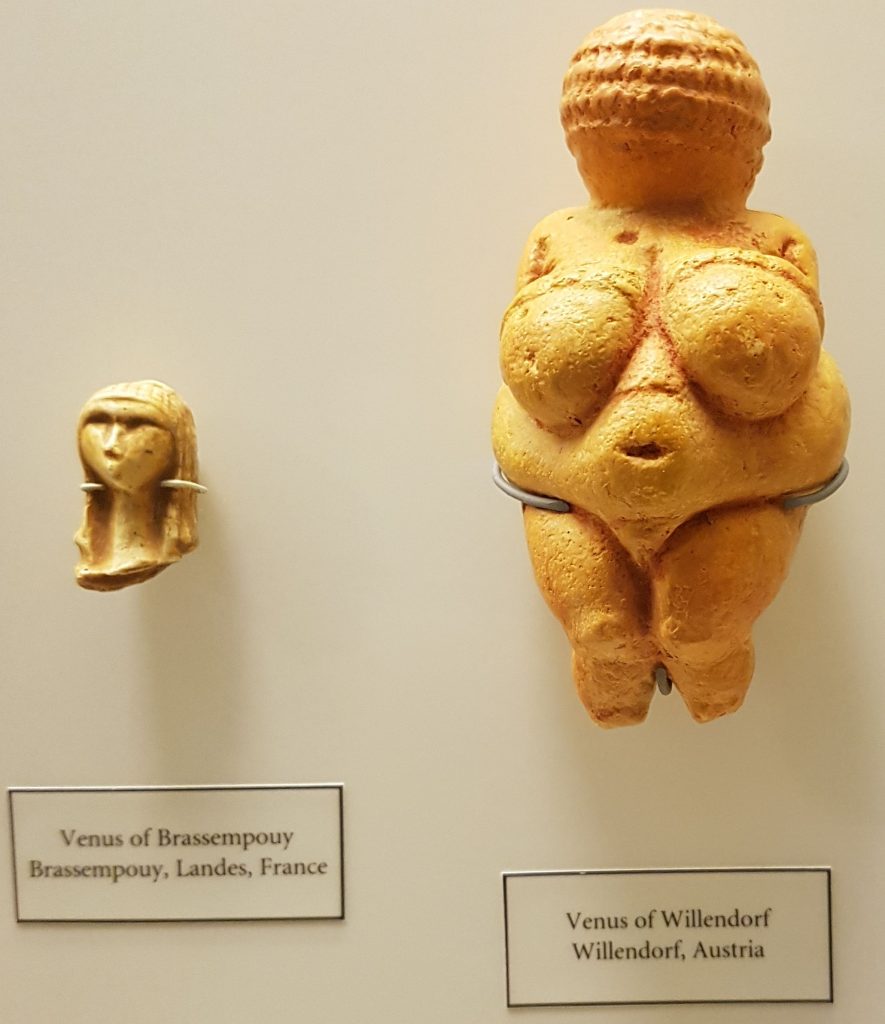
Natural History Museum, Oxford, K Flude photo.

Venus of Willendorf

There was a theory widely held that the original Deities, dating before the spread of farming, were mother goddesses. The idea is that the hunter-gatherer goddesses (perhaps like the Venus of Willendorf) were overthrown by the coming of farmers. These patriarchal societies worshipped the male gods, which destroyed the ancient Matriarchy. Jane Ellen Harrison proposed an ancient matriarchal civilization. Robert Graves wrote some interesting, but no longer thought to be very scientific studies, on the idea. Neopaganism has taken these ideas forward.

More information on St Agnes look at my post on St Agnes and Keats.

One This Day

1451 Glasgow University was founded (and you wonder why the Scots made such an impact on the world.)

1789 The USA held its first national presidential election. (Long may that fine democratic tradition survive and prosper!)

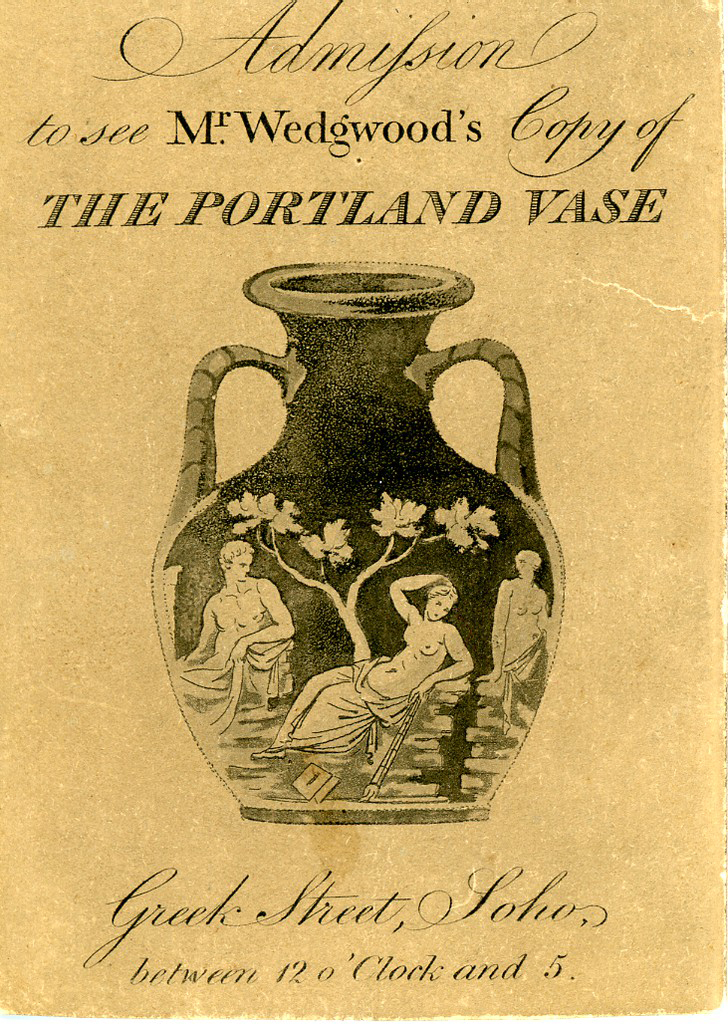
1845. Today is the anniversary of the breaking of the fabulous Portland Vase by a drunken visitor to the British Museum. It looks immaculate despite being smashed into myriad pieces, a wonder of the conservator’s art. To see the vase and read its story, go to the BM web site here:

wedgwood catalogue of its copy of the portland vase

Today in the orthodox church, дед Мороз  (Ded Moroz= father of frost), accompanied by Cнегурочка (Snieguroshka= fairy of the snow) brings gifts on New Year’s Eve, (which is on January 7th). He travels with a horse-drawn troika.

Today’s Interesting link

The pointy-shoed corruption of medieval London — for details, read the BBC’s interesting article.

First Published in 2022, and revised in January 2024, 2025, 2026

St. Genevieve Day January 3rd

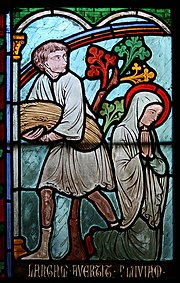
St Genevieve stained glass windown.  réalisé au XIXe siècle par Alfred Gérente pour orner le corridor de la nouvelle sacristie de Notre-Dame de Paris.
Saint Geneviève praying for the end of the rain. 19th Century by Alfred Gérente Notre-Dame de Paris.

St Genevieve of Nanterre (c. 419/422 AD – 502/512 AD) has her feast day today. Nanterre is an ancient settlement swallowed up by modern Paris. Genevieve was a most remarkable woman who met St Germanus of Auxerre on his way to Britain. She was only 7 when she met Germanus. He encouraged her piety. She became a consecrated virgin (someone who made vows of chastity to be a ‘bride of Christ’). Thereby living an aesthetic life of fasting and prayer. Hence, miracles soon became associated with her, (including changing the weather) and the ‘usual’ medical miracles. After moving to Paris, she encouraged the women of the City to stay in the City for prayer and fasting to prevent the Huns capturing the City in 451. Attila and the Huns abandoned the siege.

St Genevieve saved the City on other occasions too, helped build two large Church projects, including St Dennis. She intervened fearlessly in public affairs, and was a brave and resolute woman who challenged the male hierarchy with some success. And what makes me like her even more was that she is not a martyred teenager Saint tortured to death to gain her sainthood. But she did great works and lived to old age of 82 still ‘full of virtue’. In the medieval period, she became the Patron Saint of Paris. She is patron to: Paris, shepherds, winemakers, wax-chandlers, hatmakers; against eye complaints, fever, plagues, drought, and war.

St Germanus

St Germanus played a significant role in Genevieve’s life, protecting her from slander and attack. He is one of the most significant figures in post Roman studies in Britain. Accounts of his visits to Britain in the early 5th Century are among the very few descriptions of post-Roman life. He was sent to Britain to counter the Pelagian Heresy, which was endangering the Catholic version of Christianity.

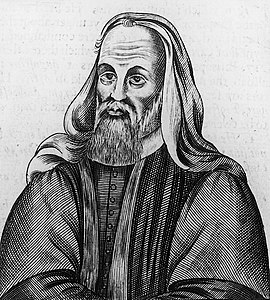
17th Century print of Pelagius

He took part in a public debate about heresy which took place in a disused Roman amphitheatre. For much more about Pelagius, Germanus and his visit to Britain read my post here.

More on Nanterre

Incidentally, Nanterre has an interesting prehistory. The name in Celtic means ‘enduring sacred site’. A large cemetery has been found, which helps support the possibility that it is the original site of Paris. Julius Caesar attended an assembly with local Gallic leaders in the area. The topography of Nanterre fits as well for the location of the assembly as the island in the Seine (Île de la Cité) which is an alternative location.

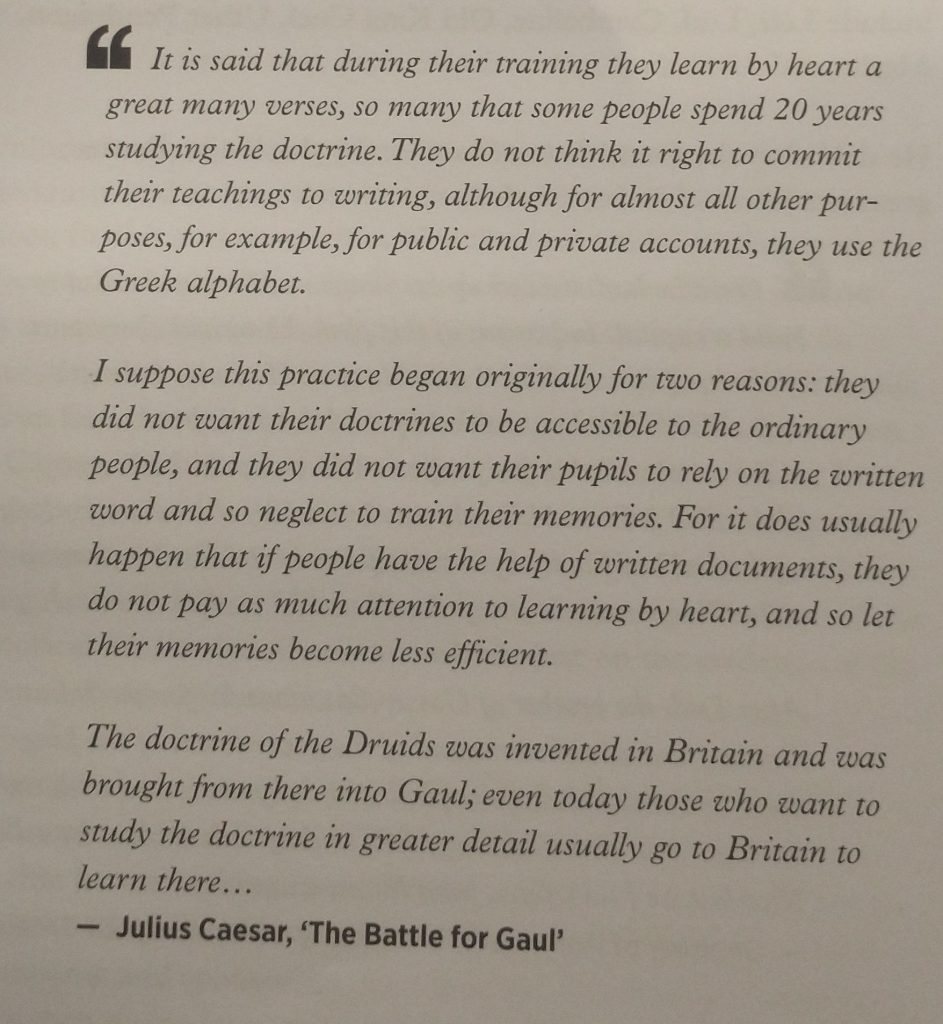
In Their Own Words

This is an excerpt from Julius’s Caesar book concerned with training druids. (It is photographed from my book ‘In Their Own Words- details below).

Cover of Kevin Flude's 'In their Own Words'

In Their Own Words – A Literary Companion To The Origins Of London‘ by Kevin Flude

It brings together contemporary quotations about the Prehistoric, Roman and Dark Ages with a commentary by the author.  It’s an enjoyable read!  To buy the Kindle (£2.40) or a paperback version (£5.99), click here.

If you have read it, please go here and write a review! It is sadly devoid of any!


On This Day

1521 Martin Luther excommunicated by Pope Leo X. (our present Pope is the XIV)

1661 Samuel Pepys saw the Beggar’s Bush at the Theatre in Gibbon’s Tennis Court, Vere Street, near Lincoln’s Inn Fields. He records it was ‘the first time that ever I saw women come upon the stage’. The Restoration of Charles II to the throne allowed, for the first time, women to appear on the professional stage.

1777 George Washington defeats Cornwallis at the Battle of Princeton

Today: keep bird feeders well stocked. Check houseplants for mealybugs, mites and other pests. (Gardeners’s Year The Metroplitan Museum of Art).

The Full Moon today falls in Cancer in a conjunction with Jupiter and an exact opposition to Mars and Venus. Thus, the mood of the times is divided between those supporters of individual liberties. And the Government’s right to control personal behaviours’. That, ast least is what Old Moore’s Almanack for 2026 says. And that’s probably enough Astrology for the year!

First written in January 2023, revised and republished January 2024, 2025, 2026

Next Guided Walks

Jane Austen’s London Walk 2.30pm Sun 31st May 2026 To Book
The First Blitz – Zeppelin London New Walk! 6pm Sun 31 May 2026 To Book
Roman London – Literary & Archaeology Walk 3pm Sat 6th June 2026 Tobook
The Rebirth Of Saxon London Archaeology Walk 11am Sun 7th June 2026 To book
Tudor London – The City of Wolf Hall 3pm 4th July 2026 To Book
Jane Austen’s London Walk 2:30pm Sun 5th July 2026 To book
London. 1066 and All That Walk 11.30am Sun 12th July 26 Tobook
Bloody, Flaming, Poxy London 3pm Sun 12th July 26 To book
Myths, Legends, Archaeology and the Origins of London 3pm Sat 1 Aug 2026 Tower Hill Underground To book
The Decline And Fall Of Roman London Walk 11:15am 2nd Aug 26 To book
Jane Austen’s London Walk 2:30pm Sun 2nd Aug 26 To book
Chaucer’s Medieval London Guided Walk 11.00am Sat 5th Sept 2026 To book
Jane Austen’s London Walk 2:30pm Sun 5th Sept 2026 To book
Jane Austen’s London Walk 2:30pm Sat 24th Oct 2026 To book

For a complete list of my guided walks for London Walks in 2026 look here