John Constable in Bond Street February 4th 1799

John Constable. National Gallery of Art seascape with two sailboats. public domain

I am this morning, admitted a student at the Royal Academy; the figure which I drew for admittance was the torso. Im now comfortably settled in Cecil Street, Strand number 23. I shall begin painting as soon as I have the loan of a sweet little picture by Jacob Ruysdael to copy. Since I have been in town, I have seen some remarkably fine ones by him. …

Smith’s friend, Clanch has left off painting, at least for the present. His whole time and thoughts are occupied in exhibiting an old, rusty, fusty head with a spike in it, which he declares to be the real embalmed head of Oliver Cromwell. Where he got it, I know not.; ’tis to be seen in Bond Street at half a crown admittance.’

John Constable. Letter to John Dunthorne, 1799.
From ‘A London Year. 365 Days of City Life in Diaries, Journals and Letters’ compiled by Travis Elborough and Nick Rennison.

John Constable in London

Constable would have had a short walk to the Royal Academy (in Piccadilly) from the Strand. As a painter, he subsequently spent his summers painting in Suffolk and his winters in London. When his wife became ill with Tuberculosis, they moved to Brighton. But he continued to return to London. Constable lived in a cottage in Hampstead, and is buried in the family tomb at the bottom of the graveyard of St John-at-Hampstead Church in Hampstead.

Royal Academy Photo KFlude

I don’t know what the Torso referred to was, but there was (and still is) a fine collection of plaster casts. The students used these for models.

A fine figure of the older man? Photo by K Flude of Zeus in the basement of the Royal Academy
Print on display at the Royal Academy of students drawing the sculptures in the Collection. Photographed by K Flude.

Cromwell’s Head

As to the head, it is a fascinating tale, which I partly tell on my Martyrdom of Charles I post. here: But here is more details, relevant to the Constable quote. At the Restoration of Charles II Cromwell’s body was dug up. Then the head was stuck on a pole on top of Westminster Hall. It blew off probably in 1684. The head was on display at a museum, but then no one knows where it was until, in 1799 the Hughes brothers, bought ‘it’ for £230. It was exhibited in Bond Street. Entrance fee was 2 Shillings and 6p. Constable’s acquaintance Clanch who I think is actually John Cranch was the publicist for the event.

The display was not a success because the provenance was not clear. All Cranch could say was Cromwell’s head was the “the only instance of a head cut off and spiked that had before been embalmed; which is precisely the case with respect to the head in question”. But then Henry Ireton’s was also treated thus, and maybe others. A head is now in Cambridge, Sidney Sussex College, which Cromwell attended.

The Wikipedia page on Cromwell’s Head, here., has a very full description of its travels.

Weather Outlook

Feb fill the dyke
Either black or white
But if with white, ’tis the better to like

If February gives much snow
A fine summer, it doth foreshow.

If in February there fall no rain.
‘Tis neither good for hay nor grain.

From The Perpetual Almanack of Folklore by Charles Kightly

On This Day

211 – Roman Emperor Septimius Severus dies at Eboracum (modern York, England). Leaving two sons, Caracalla and Geta, to dispute the succession. For several years York was the HQ for the Roman Emperor.

1555 – John Rogers, Vicar of the Holy Sepulchre Church in London and translator of the Bible, burned at the stake in Smithfield. The first of over 200 English Protestant martyrs condemned in the reign of Mary I. For more about Smithfield burnings see my post here.

1789 – George Washington unanimously elected as the first President of the United States. A great leader, who freed his slaves after his and his wife’s deaths, but who also evaded the rules against selling slaves. To consider the wrongs and rights of the issue look here.

1838 – ‘I walked with my daughter Charlotte across the Serpentine, much to my child’s delight, although I own I did not like to hear the ice cracking under the weight of thousands’.

John Cam Hobhouse, Diary, 1838. From ‘A London Year. 365 Days of City Life in Diaries, Journals and Letters’ compiled by Travis Elborough and Nick Rennison. See my post on the Great Freeze of 1895 with a picture of skating on the Serpentine.

1992 – Hugo Chávez ousts Venezuelan President Carlos Andrés Pérez in coup.

First Published February 4th 2026

The Martyrdom of Charles I & ‘Get Back’ January 30th

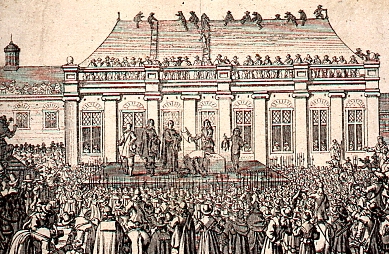
Banqueting Hall and Execution of Charles I
Banqueting Hall and the Martyrdom of Charles I

January 30th is the anniversary of the execution of King Charles I. Today, he was beheaded as a murderer and traitor. Or as a Royalist would see it, it is the anniversary of the Martyrdom of Charles I.

Thousands came to see the execution, amongst them Samuel Pepys. They crowded around the scaffold outside a window of Inigo Jones’s magnificent Banqueting Hall, in Whitehall, London. Charles was brought into the Banqueting House. There he must have looked up at the magnificent Peter Paul Reubens’ ceiling. Charles had commissioned the painting to depict of the Apotheosis of his father, James I. It was the symbol of the Divine Right of the King to rule.

Scaffold to Heaven?

I doubt he saw the irony. I suspect he thought he was going to heaven to join his father, in glory as a Martyr to his religion. He walked outside, through the window, into the cold January air. Two of his bloodstained shirts still exist, probably to stop him shivering. He wanted to be seen as going fearless to his death not shivering with fear. Then, he made a short speech exonerating himself. He spoke without stammering for the first time in his public life. The Rooftops around were lined with spectators. Black cloth framed the scaffold. As the executioner axe fell, there was a dull grown from the crowd (most could not see the axe falling).

This was on January 30th, 1648. But, if you look at a history book, it will tell you it was in 1649. This was before our conversation to the Gregorian calendar. Then the year number changed not as we do on January 1st but on March 25th. This was the day the Archangel Gabriel revealed to the Virgin Mary that she was pregnant. For more on the importance of March 25th look at my Almanac entry here:

Oh the stupendous, and inscrutable Judgements of God’

On the same day, twelve years later, in 1661 Oliver Cromwell and his chief henchmen were dug up from their splendid Westminster Abbey tombs. Their bodies were abused by official command. Cromwell’s head was stuck on the top of Westminster Hall. There it remained until blown off in the Great Fire of 1703 (or 1672, or 1684). Then, it taken to Cambridge, Sidney Sussex College, which Cromwell attended. Only the Head Porter knew where. (According to someone who came on my Oliver Cromwell Walk last year.) Whether it is his head or not is disputed. The tale of the head is told in detail here.

The Royalist, John Evelyn, said in his diary:

This day (oh the stupendous, and inscrutable Judgements of God) were the Carkasses of that arch-rebel Cromwel1, Bradshaw, the Judge who condemned his Majestie and Ireton, sonn in law to the usurper, dragged out of their superb Tombs (in Westminster among the Kings) to Tybourne, and hanged on the Gallows there from 9 in the morning till 6 at night, and then buried under that fatal and ignominious Monument in a deep pit. Thousands of people (who had seen them in all their pride and pompous insults) being spectators .

Samuel Pepys records by contrast:

…do trouble me that a man of so great courage as he was should have that dishonour, though otherwise he might deserve it enough…

Pepys served the Parliamentary side before the restoration of Charles II, when he adroitly, swapped over to the Royalist side.

Every year, I do a Guided Walk and a Virtual Tour on Charles I and the Civil War on this day or the last Sunday in January. Look here for details.

On This Day

1661 – Oliver Cromwell’s corpse disinterred and ritually executed

1826 – The Menai Suspension Bridge, is opened. Designed byThomas Telford. It is considered the world’s first modern suspension bridge.

1933 – Hitler appointed Chancellor of Germany

1969Get Back to Where you Once Belonged – the anniversary of the rooftop concert in Saville Row where the Beatles played ‘Get Back’.

YouTube Clip with scenes from the Roof Top Concert

First published in 2023, revised on January 29th 2024,2025, 2026

Pax, the Concordia Peace Festival, Elagabalus, and Carausius January 29th

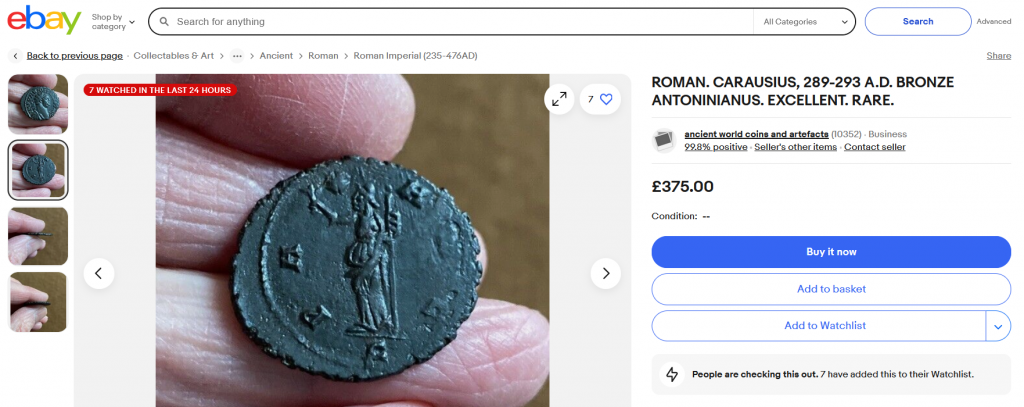
Photo from ebay sale of coin of Carausius, showing the reverse with image of the Roman Goddess Pax.

The Goddess Book of Days (Diane Stein) lists today as the birthday of Pax and her Greek equivalent Irene. She is the Goddess of Peace and the daughter of Jupiter and the Justitia, Goddess of Justice. This suggests that a lasting peace can only be assured by strength and justice. The usurping Emperor Carausius (whose coin you can see above) had good reason to use Pax on his coins. He took control of Britain and some of Gaul from the Roman Empire. But he hoped he might rule alongside the Tetrachy of Emperors set up by Diocletian.

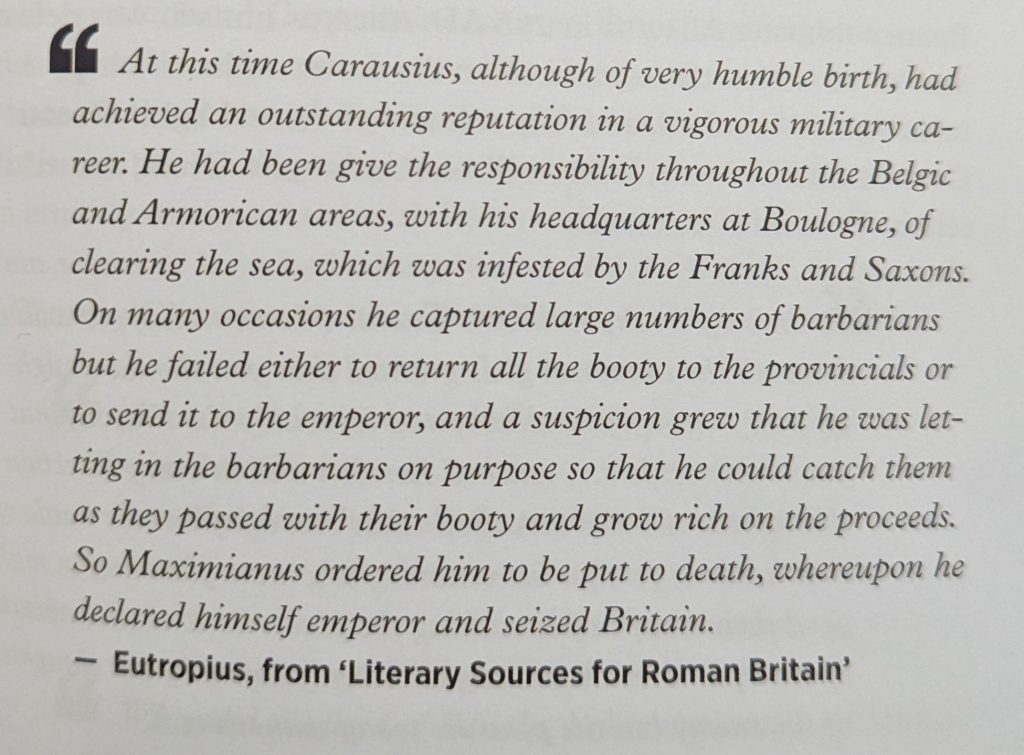
This is what Eutropius wrote:

Image of a quotation by Eutropius translation from 'Literary Sources for Roman Britain.' and from
Page from ‘In Their Own Words’ by Kevin Flude

He was murdered by Allectus, his financial minister in 296AD. Text above taken from my book In Their Own Words where you can read the rest of Carausius’ story.

Concordia

The Goddess book also says this is the day of the Concordia Peace Festival in Rome. Concordia is the Goddess of agreement, in war, marriage and in civic society. Harmonia is the Greek equivalent. Ovid has special days to Concordia on January 17th and January 30th. I’m led to the idea that much of January was dedicated to Concordia and Pax. For more on Concordia, look at my January 17th post here.

Pax in Ovid

Pax had her festival on the 30th January. Ovid in Fasti writes:

Book I: January 30
My song has led to the altar of Peace itself.
This day is the second from the month’s end.
Come, Peace, your graceful tresses wreathed
With laurel of Actium: stay gently in this world.
While we lack enemies, or cause for triumphs:
You’ll be a greater glory to our leaders than war.
May the soldier be armed to defend against arms,
And the trumpet blare only for processions.
May the world far and near fear the sons of Aeneas,
And let any land that feared Rome too little, love her.
Priests, add incense to the peaceful flames,
Let a shining sacrifice fall, brow wet with wine,
And ask the gods who favour pious prayer
That the house that brings peace, may so endure.
Now the first part of my labour is complete,
And as its month ends, so does this book.

Translated by A. S. Kline 2004 (Tony has a lovely site here: where he makes his translations freely available.)

Concordia, Julia Aquilia Severa & Elagabalus

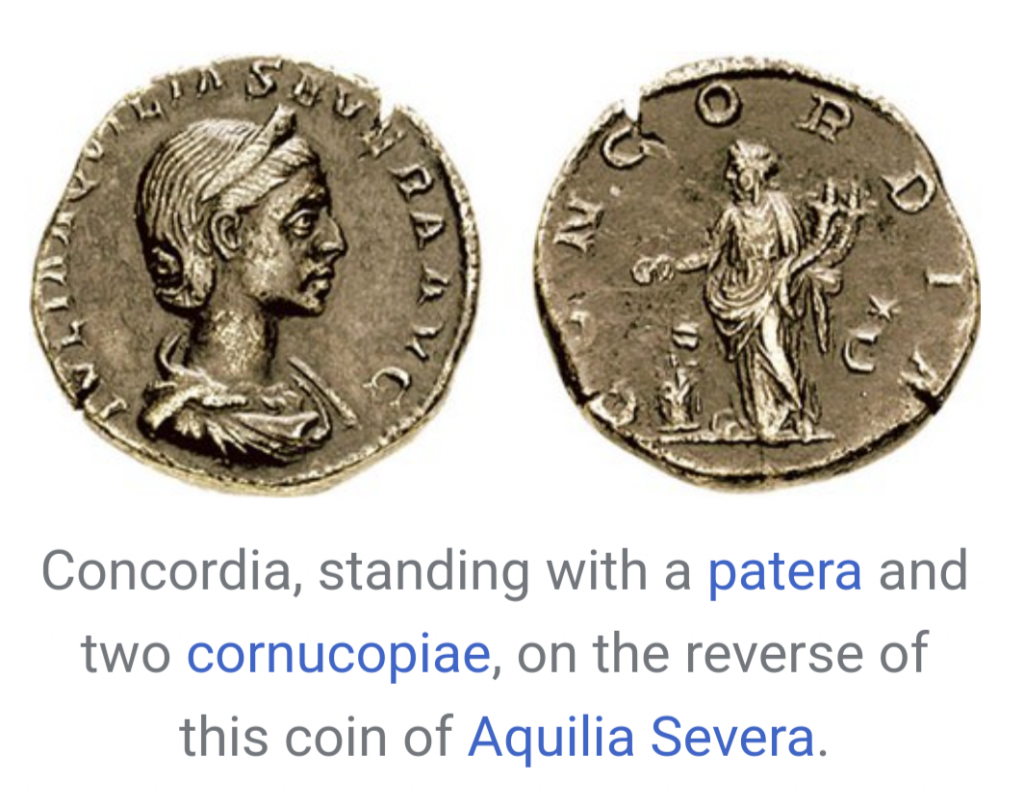
Roman coin, showing both sides, of the Goddess Concordia
A patera is a sacrificial bowl, and a cornucopia is a horn of plenty (Image from Wikipedia)

The coin above is of Empress Julia Aquilia Severa. She was a vestal virgin, who married the Emperor Elagabalus (c. 204 – 11/12 March 222). She was his 2nd and 4th wife. Normally, the punishment for a vestal Virgin losing their virginity was to be buried alive.

The Trouble with Pronouns

But I could have said ‘her 2nd and 4th wife’. Some sources suggest Elgabalus wanted to be known as a woman. The Wikipedia page of his wife has Elagabalus with the pronoun, ‘Her’. While the Emperor’s own web page uses ‘him’ throughout. He or she married several women. And also married to several men. They were also accused of prostituting himself in Taverns and Brothels. Clear? Confusing pronouns? Sorry to hedge my bets, but we don’t know what Elagabalus would want us to use? Wikipedia says:

‘In November 2023, the North Hertfordshire Museum in Hitchin, United Kingdom, announced that Elagabalus would be considered as transgender and hence referred to with female pronouns in its exhibits due to claims that the emperor had said “call me not Lord, for I am a Lady”‘

Elagabalus was born Sextus Varius Avitus Bassianus. He adopted the name of Elagabalus as he was a supporter of the Syrian Sun God Elagabal. He, a Syrian, wanted to promote the God to the top of the Roman Pantheon of Gods. Elagabalus rose to power partly because of his strong Grandmother, Julia Maesa. She was the sister of Julia Domna, the wife of African Emperor Septimus Severus (who lived for some time in York). Their children are the Emperors in Gladiator II starring Paul Mescal. Caracalla was Elagabalus’s cousin.

Elagabalus’s reign was fairly chaotic. He lost power, when his Grandmother transferred support to his cousin, Alexander. Elagabalus and his mother were assassinated.

Here, is a fascinating article in the Guardian about the Pax Romana. ‘Their heads were nailed to trees.’

Pax & Tagging

Posh boys in England, playing tagging games, used to shout ‘Pax’ to claim immunity or to call a temporary halt in the contest. I remember my childhood friends using the word ‘vainites’ as well as pax. But we were not by any means posh. There are many other ‘truce’ terms in tagging games. See them in this fascinating. Wikipedia page. From which I discover that Vainites comes from the medieval period and means: ‘to make excuses, hang back or back out of battle’.

First Published in January 2024, and revised, expanded and retitled in January 2025. Republished 2026
Sementivae Dies—the Days of Sowing January 24–26th

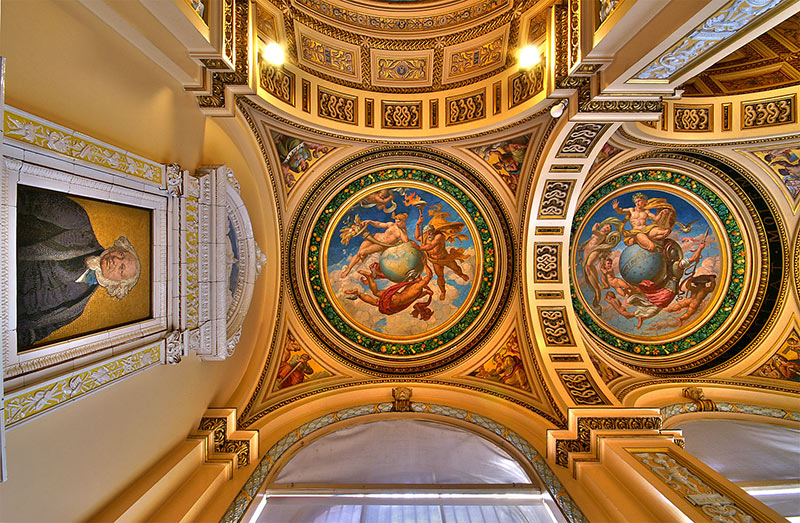
Victoria and Albert Museum” by Nick Garrod, licensed under CC BY-NC-ND 2.0. First V&A Director, Sir Henry Cole, to the left of the picture. Greek Deities in the roundells

Sementivae, was a festival dedicated to seed and to Ceres. Ceres is the Corn Goddess who gives her name to our word cereal. The festival was also called. Paganalia. The Mediterranean world had many names for the Earth Goddess. Tellus, Demeter, Cybele, Gaia, Rhea etc. who is celebrated around this time of the year with Ceres.

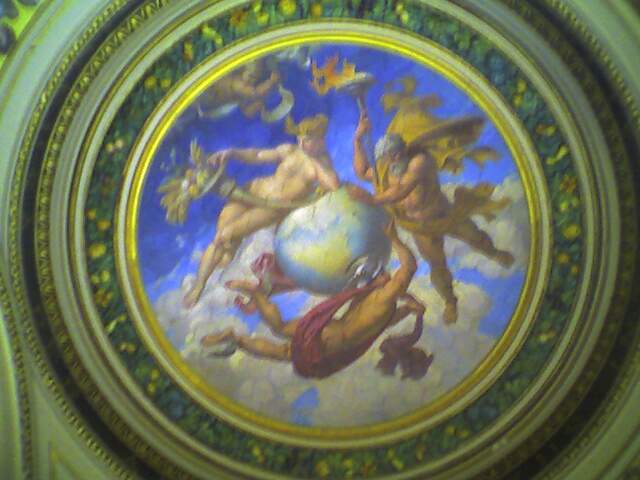
Ceres can be seen on the top left roundel resting on the Globe on the marvellous Ceramic Staircase at the V&A (photo above). And in my slightly out of focus photograph below. (To be honest, in real life, it looks a little more like my photo than the gorgeous photo above!)

Ceres represented Agriculture, Mercury Commerce, and Vulcan Industry.  Old Photo by the Author.  T
Ceres represented Agriculture, Mercury Commerce, and Vulcan Industry. Old Photo by the Author.

Sementivae Dies – a moveable feast.

To create life, we need earth and water to nurture and seeds for their fertility. And so into the cold dead world of January the Romans created a festival of sowing. It had two parts, one presided over by Mother Earth (Tellus) and the other by Ceres, the Goddess of Corn. The actual day of the festival was chosen not by rote on a set day of the calendar but by the priests, in accordance with the weather. This seems very sensible, as there is no point sowing seeds in terrible weather conditions. I’m assuming the Priests took professional advice!

On the 24th-26th January Tellus prepared the soil, and in early February seeds were sown under the aegis of Ceres. Tellus Mater (also Terra Mater) was known as Gaia to the Greeks.

Gaia

Gaia was selected by James Lovelock & Lynn Margulis in the 1970s as the face of their Gaia hypothesis. To me, the importance of the idea is not the scientific principle that environments co-evolve with the organisms within them. But, rather in Gaia as a personification of our world as a complex living ecosystem. One that we have to care for. Gaia exists as a series of feedback loops. Lovelock hypotheses is that she will spit us out unless we can live in balance with our alma mater. I cannot believe he was not knighted. However, he is one of my heros.

Photo of James Lovelock with Greenery behind him and a statue of a female who may be the earth goddess Gaia,
James Lovelock. The original uploader was Bruno Comby at English Wikipedia. – Transferred from en.wikipedia to Commons., CC BY-SA 1.0, https://commons.wikimedia.org/w/index.php?curid=3873472. I hope the Goddess in the background is Gaia

Here is a tribute to Lovelock by his friend Bryan Appleyard. In it. He claims that work done by Lovelock ‘saved the world’. Lovelock invented a device that enabled the detection (and eventual eradication) of DDT and CFCs. If you remember, CFCs were destroying the Ozone layer until international agreement phased them out. Lovelock also worked for MI5. Appleyard, writing in The Sunday Times, described Lovelock as “basically Q in the James Bond films”.

Ovid and Sementivae

Ovid allocated January 24th to Sementivae but explains it is a variable date. But let’s let the Roman Poet Ovid has to say in his poetic Almanac known as ‘Fasti’ (www.poetryintranslation.com)

Book I: January 24

I have searched the calendar three or four times,
But nowhere found the Day of Sowing:
Seeing this, the Muse said: That day is set by the priests,
Why are you looking for moveable days in the calendar?
Though the day of the feast ís uncertain, its time is known,
When the seed has been sown and the land ís productive.
You bullocks, crowned with garlands, stand at the full
trough,
Your labour will return with the warmth of spring.
Let the farmer hang the toil-worn plough on its post:
The wintry earth dreaded its every wound.

Steward, let the soil rest when the sowing is done,
And let the men who worked the soil rest too.
Let the village keep festival: farmers, purify the village,
And offer the yearly cakes on the village hearths.
Propitiate Earth and Ceres, the mothers of the crops,
With their own corn, and a pregnant sow ís entrails.
Ceres and Earth fulfil a common function:
One supplies the chance to bear, the other the soil.
Partners in toil, you who improved on ancient days
Replacing acorns with more useful foods,
Satisfy the eager farmers with full harvest,
So they reap a worthy prize from their efforts.
Grant the tender seeds perpetual fruitfulness,
Don’t let new shoots be scorched by cold snows.
When we sow, let the sky be clear with calm breezes,
Sprinkle the buried seed with heavenly rain.
Forbid the birds, that prey on cultivated land,
To ruin the cornfields in destructive crowds.
You too, spare the sown seed, you ants,
So you’ll win a greater prize from the harvest.

For more on Ovid look at my post on Ovid and Juno here. Or you can search for Ovid in the Search box for other my posts on the Roman poet.

On This Day

1788 – Foundation of the first colony of European Settlers at Port Jackson, now Sydney. It is now Australia Day, a public holiday.

1841 – Hong Kong became a British Sovereign Territory

1926 – The first Public demonstration of a TV image given by Scottish electrical engineer John Logie Baird (1888-1946) (see https://bairdtelevision.com/firstdemo.html)

1998 – ‘I did not have sexual relations with that woman’ or so said Bill Clinton, lying through his teeth. (although I guess it depends on your definition of lying?) For more, look at the Time article here.

First Published in January 2023, republished in January 2024, 2025, 2026


News from the Almanac of the Past January 22nd 2026

May Day Bedfordshire

This has become the day in which I update readers on the purpose and future plans for the Almanac of the Past.

What is the Almanac of the Past?

The nature of an almanac is to be a pot-pourri. They are about seasons, time, folklore, history, important events, and anniversaries. I also like to cover history, famous people and discoveries. Gods, Goddesses, Saints, sinners, and archaeology. What I want it to be is something that makes us more mindful about the passing of the year. How seasons and time change the way people see their world. My focus is mostly on the UK, but also on Rome and Greece. With occasional excursions to other ages, places and universes. I am also trying to find more content that is London-based.

What is the plan for the Almanac of the Past?

I plan to have one entry for each day. The problem with this, is that as I fill in the empty days, I will be republishing the already filled days. So subscribers will be seeing content they have seen before. Currently, I am trying to improve and extend existing content so it is worth reading again. And I am groping towards a final format for each day.

This is what I think it is. Each page will have the following sections:

Seasonal content: folklore about the day in question. Including historic texts about gardening, farming, cooking, witchcraft superstitions etc.

Saint or God/Goddess of the day

Calendar content: about epochs, ages, years, months, days, hours, and everything calendrical

Major article about something that happened on this day in history

On This Day section where other things that have happened on this day have happened.

I guess rather than a post it will be more like a newsletter of the day?

The almanac of the Past Publication

If I get the formula right, I will attempt to get a publication from it. Otherwise, it will remain online. So:

How’s it doin’?

The first graph, above, shows a steady growth from 2,000 views in 2020 to 26,000 views for 2025. Although encouraging, it has not gone ‘Kardashian viral’ as yet. 75% increase last year. This was partly achieved by taking more care of SEO – search engine optimisation. I’ve been doing a lot more of this. But if you are interested in this read last year’s ‘News from the Almanac of the Past’.

Screenshot from Jetpack showing the geographic reach of the Almanac of the Past from 2020 – 2025

The second graphic shows where the readers come from: mostly from the UK and the US, followed by France and Germany. It shows vast stretches of the world not registering as converts to the Almanac of the Past, including Greenland (or do I mean Iceland?).

Next up ‘Favourite pages, and referrers

Screenshot from Jetpack showing the most viewed pages (left and Referrers (Right)

The Skimmity Ride is way out ahead, the most popular post. The page is about a procession ‘designed to humiliate a member of the community.’ Why is it top? I think because hardly anyone else posts about it, so if you want to know what Thomas Hardy was writing about in the Mayor of Casterbridge my site is the go-to place.

Next is the ‘Beginning of the Universe‘ Post. This pleases me because it is something I discovered myself while writing the blog. It explains the beginning of the universe, the beginning of the year, the beginning of spring, and the Birthdays of Adam, Lilith, & Eve; the conception of Jesus, and why the year began in the medieval period on March 25th. So again, you won’t find this information easily in any one other place. The Almanac of the Past explains it all.

Queen Elisabeth I’s Nicknames are third. She is always popular and the nicknames she gave to her advisers are fun, and either flattering or rude.

Then we have the post on Antarctic explorer Lawrence Oates. It is an interesting post, of course, but why it rates highly I have no idea. Maybe people know this expression ‘I am just going outside and may be some time’ and want to track it down?

The last one I shall mention is the Miracle of the Testicles. This is one of my favourite posts! (I just typed: ‘because it’s nuts’ without realising the pun, so please forgive me!) But, really, it shows the often risible ways the early Saints became famous. And yet beneath that there is a real need in the community for spiritual help which the origin stories touch. Its high ranking must be down to the word ‘testicles?’ No?

The other side of the graphic shows referrers, which are mostly the obvious ones like search engines and facebook. But there is also a fansite for Damien Lewis, the actor who was in Band of Brothers and Henry VIII in Wolf Hall. One of his pages mentioned my page.

Screenshot from Jetpack showing the posting ativity for the past year. Grey means no posts, Dark green 2 or more, light green one post a day.

Posting Activity shows you how far I am from achieving one Almanac post a day. Not far in the winter, more to do in the summer.

So how can you help?

If you have a website or a blog or a social media page, post a reference to one of my pages, and encourage people to have a look. If you receive the email as a subscriber, occasionally visit the site, and like it? Send a WhatApp group a link to my page. Help me go properly viral, then, I can get a publishing deal, publish my Almanac and then my novels …… do it before you forget!

Any problems for the Almanac of the Past?

Please continue to forgive my wretched proofreading.

First Published in 2026
Greater Cycles & the Ages of Man December 19th

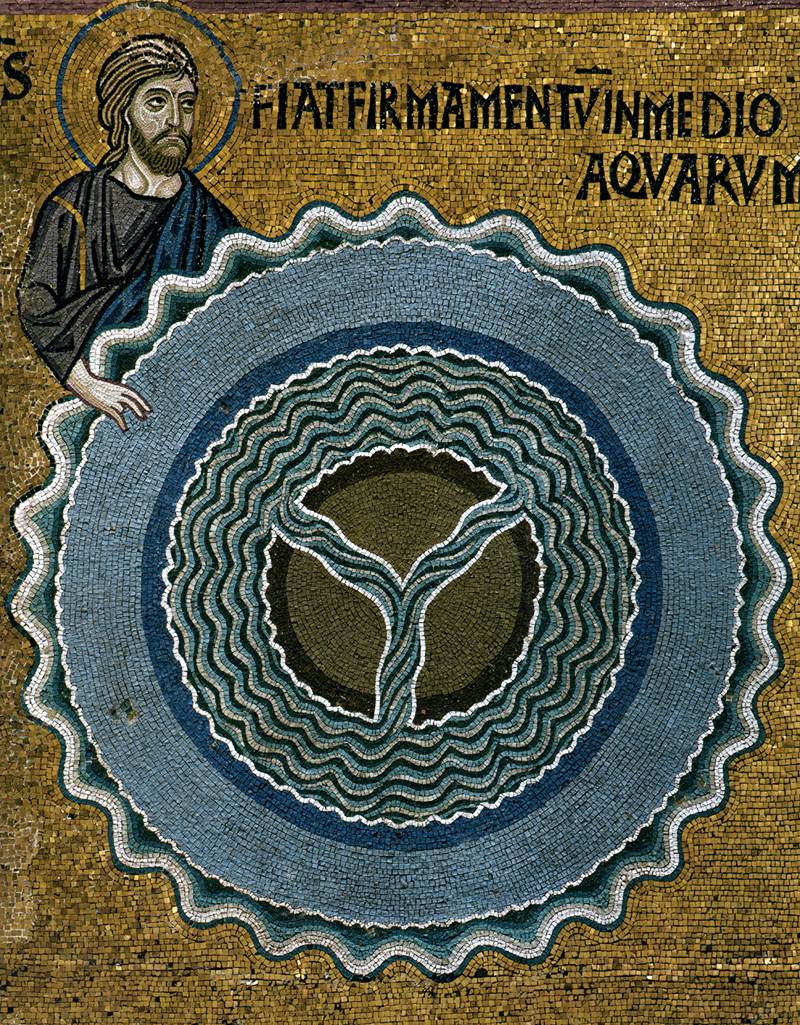
Capella Palatina Palermo 12th Century Mosaics God is shown creating the firmament. ‘And God said, Let there be a firmament in the midst of the waters, and let it divide the waters from the waters’

We are coming up to the key days in the year. And so will be looking at calendars and counting days. But what about ages, epochs and aeons?

‘Practical Magic in the Northern Tradition’ reports that there are seven ages of the world:

This is how they calculate it: the life of a yew tree is 729 years, and there are seven ages from the creation of the world until its doom. So the world will last 5103 years.

‘Practical Magic’ divides ages up as follows:

A wattle has a life of 3 years (1*3)
Three wattles are the life of a hound – 9 years (3*3)
Three hounds are the life of a steed – 27 years (9*3)
Three steeds are the life of a man – 81 years (27*3)
Three men are the life of an eagle – 243 years (81*3)
Three Eagles are the life of a yew. – 729 years (243*3)

How Old is a Yew Tree/Eagle

A comment by a reader has prompted me to write the following about the ages given above:

‘Practical magic’ says the poem is ‘Ancient’. So it’s folklore and not science, and the ages are opinion not scientific fact.

As I understand it Yew trees live a long time but not quite as long as many people think. I base this on the Yew Tree at Steventon, Hampshire where Jane Austen was born. The tree has/had a plague on it saying it was 1200 years old. I used to visit it regularly. On one visit, I was told that an expert opinion suggested it was more like 700 years old. (ifmy memory serves). I do not have the details, but my source would have been one of the people associated with the Church.

The Woodland Trust (says Yew Trees get old at 900 years. They cite a few which are ‘said to be’ over 2000 years old. But are they? The scientific sites I have looked at suggest that Yew Trees should be described as ‘ancient’ from 400 not 900 years. There are problems with dendrochronology dating of yew trees, and so most methods depend upon an estimation from the width of the tree trunk. But that, itself, depends upon how much you believe in the claims of the ancient trees. So, I think it’s best to take the extreme cases with a very large pitch of salt. So 729 years is probably not so far off the mark for a Yew tree.

As to Eagles, this website on eagles says they can live to 30ish in the wild and 68 years in captivity. So the claim for 243 years is way off the mark! Wattles what are they? I have searched, but not found any reference. My guess is a short-lived bird.

The End Was Nigh

Archbishop Usher of Armagh (1581 – 1656) calculated that the world was created in 4004 BC. He counted the begettings in the Bible. If we accept his date, and apply the seven yew tree ages rule (5,103), then the world should have ended in AD 1099 (give or take a year). But it didn’t end then, did it? We are in the 9th Age and counting.

It doesn’t make sense to me to have a factor of 3 for the smaller divisions, and then to switch to a factor of seven. Surely, far more logical is to have a factor of 3*3 years. So, if there were nine ages of the world, then it would survive for 6561 years, which will end in approx. 535 years time (cAD2557). This calculation has the massive advantage of not yet being proved wrong! (Please note, cult owners, I have copyright on this date).

It’s notable that when a Cult declares the imminent end of the world, and they trudge up to the top of a high eminence to observe it (normally by Hampstead Pond in London). They seem quite happy to trudge back down again. Soon they are up and running again with the same enthusiasm for the next ‘end of the world’ date.

Of course, the world was created around 4.54 ± 0.05 billion years ago according to Wikipedia. According to the Doomsday Clock the world will end at 12 O’clock and we are 89 seconds away from it. This is based on a catastrophic end for our civilisation. If we avoid this then other scientists have suggested mammals will be wiped out in approximately 250 million years.

Abrahamic Ages

The Jewish tradition was for six or seven ages of 1000 years. The seventh didn’t really count because it was the age of the messiah when there was a 1000-year sort of super sabbath. Or another idea is that it was an age that ran parallel with the other six. So the world was to be 6000 years long.

With the coming of Christianity, dating the Creation, and (therefore the Day of Judgement) became more important. The Romans dated from the foundation of Rome, and the Greeks from the First Olympiad. But beyond that they had a whole mythology and creation myths about an Age of Gold. Followed by a Bronze Age (Troy and all that) followed by their very own base Iron age. You can read about this in my post about Hesiod.

The Anno Munda

An early Christian attempt to tell the age of creation was the Anno Munda‘s arrangement of the Year. This is pretty complicated and is based on a Talmudic tradition. A late Roman version uses ‘the Diocletian Years’, which is when the persecution of Christians began. It held that the world was created 5500 years before the Birth of Christ. So we are 5500BC plus 2025 years since the date of the creation. And it was supposed to have ended in 500AD. 6000 years after the Creation. so we have outlived Creation by 1525 years.

St Augustine of Hippo took the tradition of six ages and brought it into the Christian canon. These are the six ages:

  • The First Age “is from the beginning of the human race. That is, from Adam, who was the first man that was made. Down to Noah, who constructed the ark at the time of the flood“, i.e. the Antediluvian period.
  • The Second Age “extends from that period on to Abraham, who was called the father indeed of all nations”.
  • The Third Age “extends from Abraham on to David the king”.
  • The Fourth Age is “from David on to that captivity whereby the people of God passed over into Babylonia”.
  • The Fifth Age is “from that transmigration down to the advent of our Lord Jesus Christ
  • The Sixth Age: “With His [Jesus Christ’s] coming, the sixth age has entered on its process.”

Wikipedia.

As each age is 1000 years, then you can see why so many people were worried as 1000 AD approached.

The Seven Ages of Man

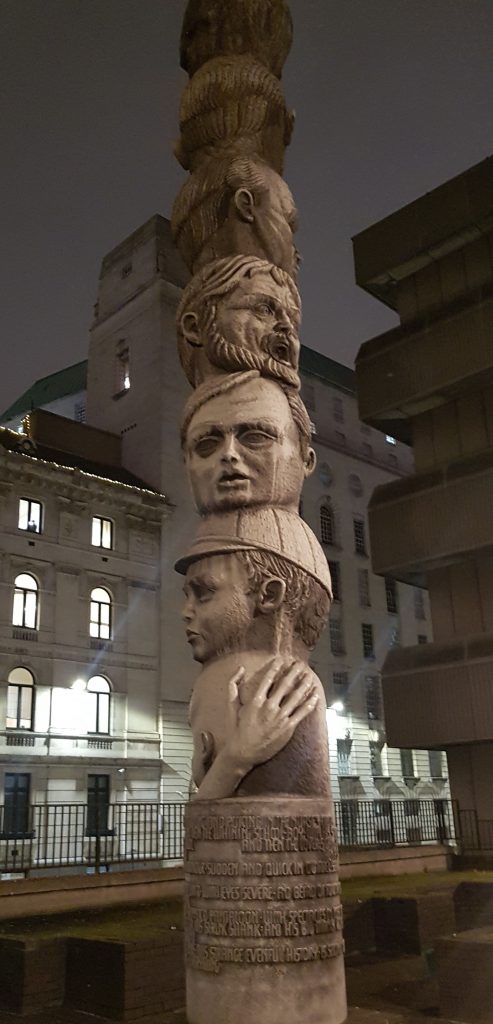
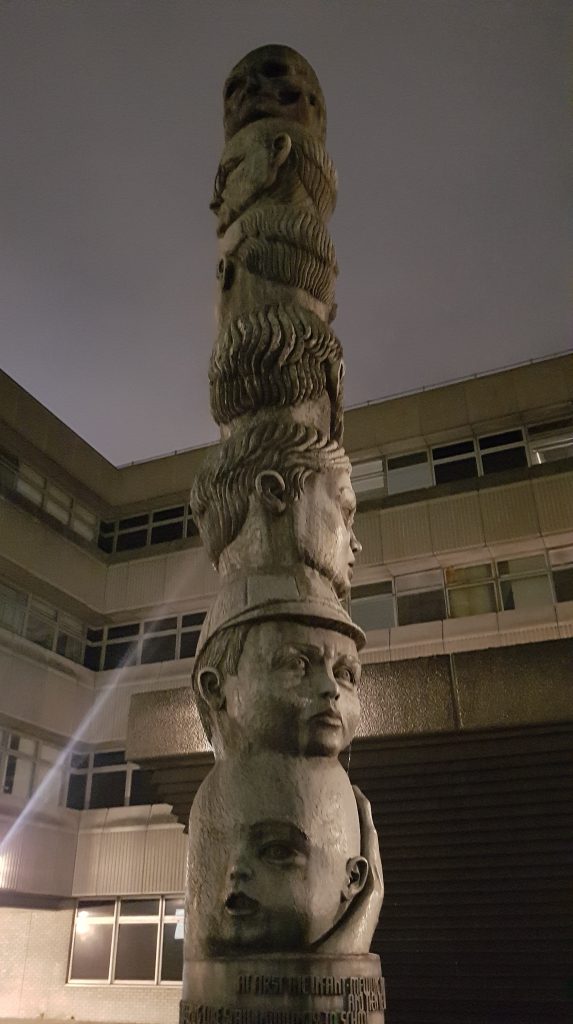
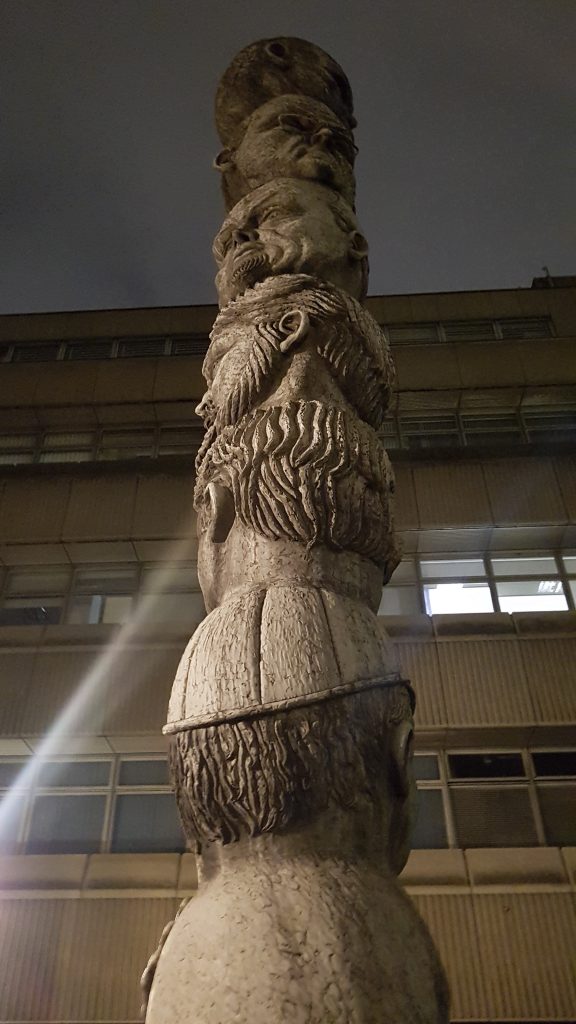
The Age of Man can also relate to the average age of a human lifespan. Of course, six is not such a magical number as seven, and so Shakespeare ran with the idea in the Seven Ages of Man spoken by Jacques in ‘As you like it’. If there are seven ages of human life, and we have a span of six score and ten, then each age is ten years.

All the world’s a stage,
And all the men and women merely players;
They have their exits and their entrances,
And one man in his time plays many parts,
His acts being seven ages. At first, the infant,
Mewling and puking in the nurse’s arms.
Then, the whining school-boy with his satchel
And shining morning face, creeping like snail
Unwillingly to school. And then the lover,
Sighing like furnace, with a woeful ballad
Made to his mistress’ eyebrow. Then, a soldier,
Full of strange oaths, and bearded like the pard,
Jealous in honour, sudden, and quick in quarrel,
Seeking the bubble reputation
Even in the cannon’s mouth.

And then, the justice,
In fair round belly, with a good capon lined,
With eyes severe, and beard of formal cut,
Full of wise saws, and modern instances,
And so he plays his part. The sixth age shifts
Into the lean and slippered pantaloon,
With spectacles on nose and pouch on side,
His youthful hose, well saved, a world too wide
For his shrunk shank, and his big manly voice,
Turning again toward childish treble, pipes
And whistles in his sound. Last scene of all,
That ends this strange eventful history,
Is second childishness and mere oblivion,
Sans teeth, sans eyes, sans taste, sans everything.


(Jacques, Act 2, Scene 7)

The Kalendar of Shepherds

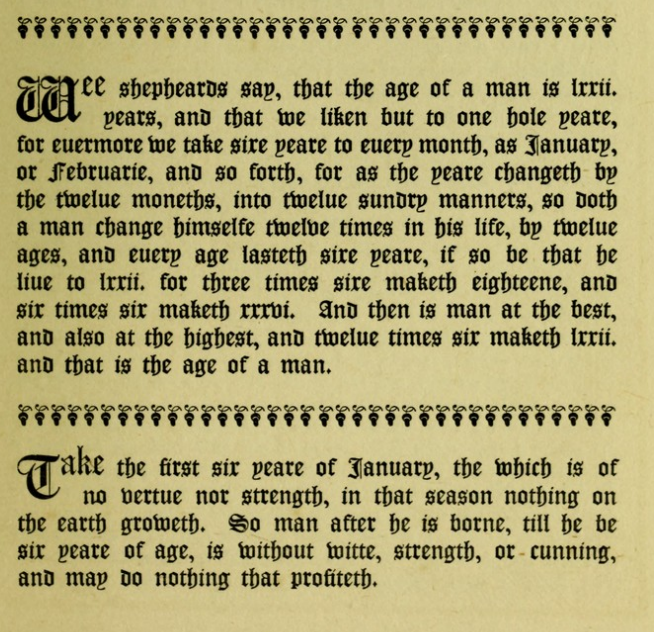
Now, the Kalendar of Shepherds has a similar idea, but it calculates it differently. The Kalendar, based on a 15th Century French original, says there are 12 ages of man, corresponding with the 12 months of the year. Each age is 6 years long, and so our likely lifespan is 72.

Kalendar of Shepherds

Each month is allocated to one of the ages, and has an insight into human life for that span. In January, the first 6 years of a human life are mapped out. If you read above you will see we have no ‘wit, strength or cunning. Nor ‘may do nothing that profiteth’ in those first years. A little harsh, and as a fond grandfather, it, I refute it. In December, the last 6 years are prefigured.

Our alloted span, says Practical Magic is 81 years, Kalendar of Shepherds say 72, and Shakespeare offers us 70.

The Office of National Statistics says:

In 2022 to 2024:

  • Life expectancy at birth in the UK was 83.0 years for females and 79.1 years for males. This is an increase of 18 weeks from 82.7 years for females and 21 weeks from 78.7 years for males since 2019 to 2021.

Capella Palatina, Sicily

By the way, the Capella Palatina, illustrated at the top of this post, is a marvel of gold mosaics. It is absolutely stunning. It makes a trip to Palermo a must.

On This Day

1843 – Charles Dickens published ‘A Christmas Carol’

First Published on December 18th 2022, revised and republished in December 2023, 2024,2025

St Lucy: Festival of Light December 13th

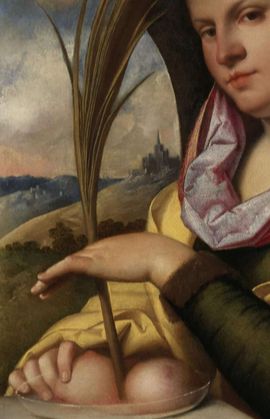
St Lucy, by Francesco del Cossa (c. 1430 – c. 1477) (Wikipedia User:Postdlf)

I reposted my two posts on St Lucy, and the follow-up email on eye-care, on the appropriate days. But the email to subscribers was not sent. So here it is again. The name Lucy is from the same Latin origin (Lucidus) as lucent, lux, and lucid. It means to be bright, to shine or be clear. It is similar to the Ancient Greek λευκός (leukós, “white, blank, light, bright, clear”. Luke has the same origins (bright one, bringer of light and light of the sacred flame) and is very appropriate for the most literate of the evangelists.

St Lucy of Syracuse

St Lucy is from Syracuse in Sicily. She was a victim of the Diocletian Persecution of Christians in the early 4th Century. She is an authentic early martyr. But details of her story cannot be relied upon as true. She was a virgin, denounced as a Christian by her rejected suitor. Then, miraculously saved from serving in a brothel.; destruction by fire, but did not escape having her eyes gouged out. Finally, her throat was cut with a sword.

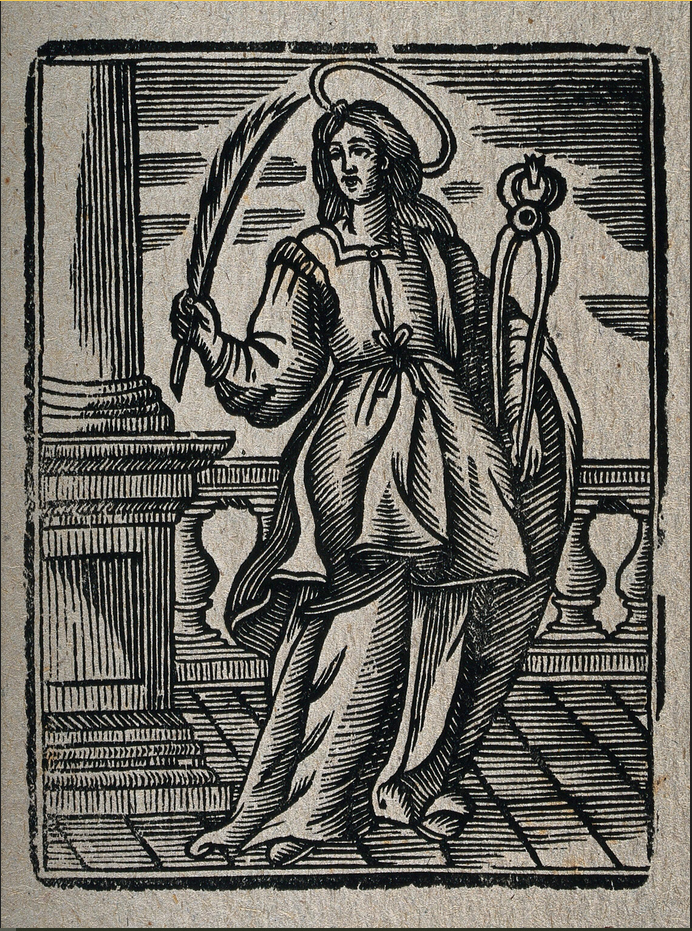
Her connection to light (and the eye gouging) makes her the protectress against eye disease. So she is depicted holding two eyes as you can see in the picture at the top of the page. Other symbols include a palm branch which represents martyrdom and victory over evil. Other symbols are lamp, dagger, sword or two oxen.

She appears in Dante’s Divine Comedy, as the messenger to Beatrice whose job is to get Virgil to help Dante explore Heaven, Hell and Heaven.

St. Aldhelm (died in 709) puts St Lucy in the list of the main venerated saints of the early English Church, confirmed by the Venerable Bede (died in 735). Her festival was an important celebration one in England. It was views ‘as a holy day of the second rank in which no work but tillage or the like was allowed’.

Dimming of the Light

This year is a glorious sunny St Lucy’s Day.  But, the afternoons soon dim. So, at this time of the year, we are in need of a festival with bright lights to cheer us up! And St Lucy’s Day is the beginning of the winter festival that culminates with the Solstice, where the old sun dies, and the new one is born. December the 13th was the Solstice until Pope Gregory reformed the Calendar in the 16th Century, as nine days were lopped off the year of transition.

Sankta Lucia in Sweden

The festival of Sankta Lucia is particularly popular in Sweden, where December 13th is thought to be the darkest night. In recent years, the Swedish community in the UK has had a service to Lucia in St Pauls. But the last couple of years has been in Westminster Cathedral.  This year on the 5th December.  And a Santa Lucia Carol Concert on 12 December at St Paul’s. But every year it has either been and gone or  sold out by the time I get around to thinking of going!

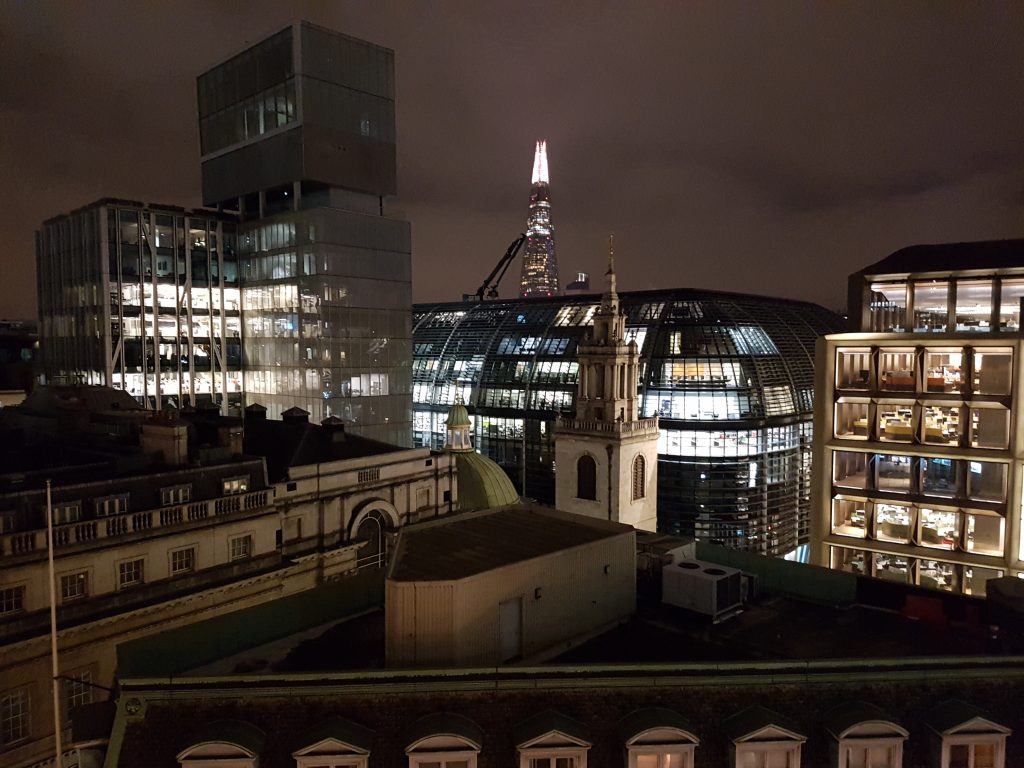
St Stephens Church by Christopher Wren (Photo K Flude) a rare view during building work.

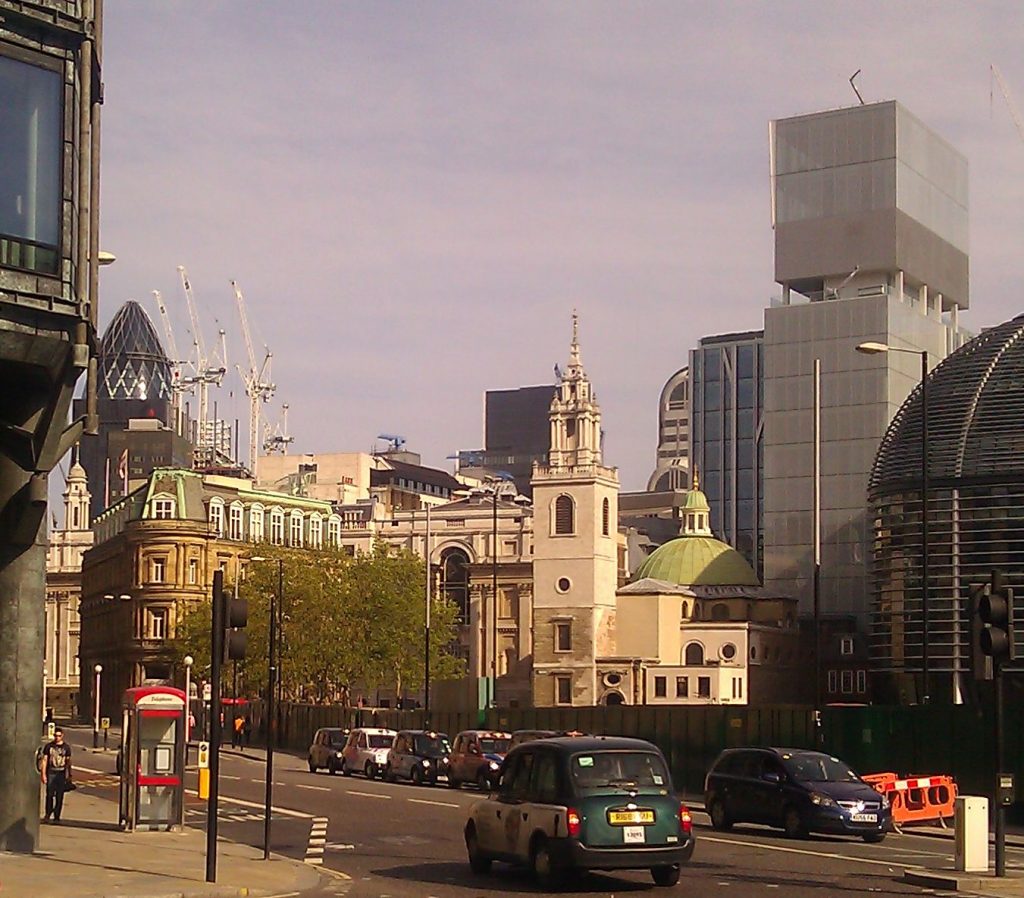
I found out about Sankta Lucia from a Swedish choir who hired me to do a tour of the City of London some years ago. We went into Christopher Wren’s marvellous St Stephen’s Church.  Under the magnificent Dome, the choir fancied the acoustics and spontaneously sang. I recorded a snatch of it, which you can hear below

Swedish Choir singing in St Stephen’s London
St Stephens Church in the middle foreground of the photo. (Photo K Flude)

You can watch the Sankta Lucia service in Westminster Cathedral below:

The Importance of Light

Recent medical research has shown the importance of light, not only to our mental health but to our sleep health.  Work places need to have a decent light level with ‘blue light’ as a component of the lighting. It is also an excellent idea to help your circadian rhymes by going for a morning walk, or morning sun bathing, even on cloudy days. This will help you sleep better. And so St Lucy remains relevant as an inspiration

To see my post on Roman and Medieval eye care and St Lucy click this link.

First Posted on December 13th, 2022, updated on December 13th 2023, 2024 and 2025.

Ashmolean Advent Calendar, William Burges & the Singing Pierides December 12th

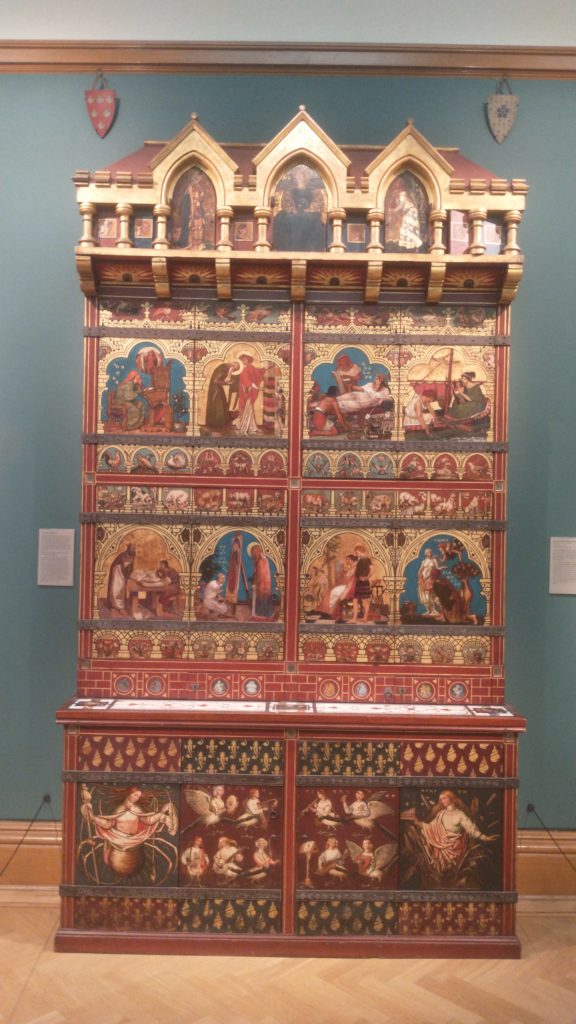
The Great Bookcase by William Burges Ashmolean Museum (Photo K. Flude)

The Ashmolean posts, every year, an online Advent Calendar with gorgeous items behind each ‘flap’. The choice seems to be, mostly, a random selection. But their collection is so wonderful, they are all interesting.

The Great Bookcase by William Burges & the Singing Pierides

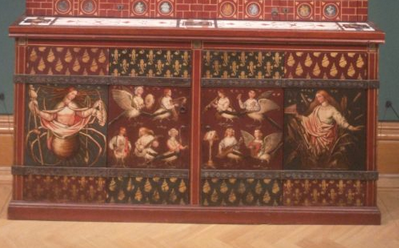
In 2022 The Ashmolean featured the Great Bookcase by William Burges. Burges is one of the great Gothic Revival architects and a designer in the Arts & Crafts Movement with an affinity for Pre-Raphaelite painters. He asked 14 of them to paint panels on his bookcase. The decorative scheme was to represent the Pagan and Christian Arts (Museum label).At the bottom of the Wardrobe are the Singing Pierides painted by Henry Stacy Marks. The Pierides were a sort of classical Greek Von Trapp singers, 9 daughters who foolishly challenged the Muses to a singing competition. Of course, the Goddesses of the Arts — the Muses won., As punishment for their vanity, they turned the Pierides into songbirds. Let this be a warning to all those who overrate their own talents!

‘Whenever the daughters of Pierus began to sing, all creation went dark and no one would give an ear to their choral performance. But when the Muses sang, heaven, the stars, the sea and rivers stood still, while Mount Helicon, beguiled by the pleasure of it all, swelled skywards tilI, by the will of Poseidon, Pegasus checked it by striking the summit with his hoof.

Since these mortals had taken upon themselves to strive with goddesses, the Muses changed them into nine birds. To this day people refer to them as the grebe, the wryneck, the ortolan, the jay, the greenfinch, the goldfinch, the duck, the woodpecker and the dracontis pigeon.’

Antoninus LiberalisMetamorphoses (wikipedia)

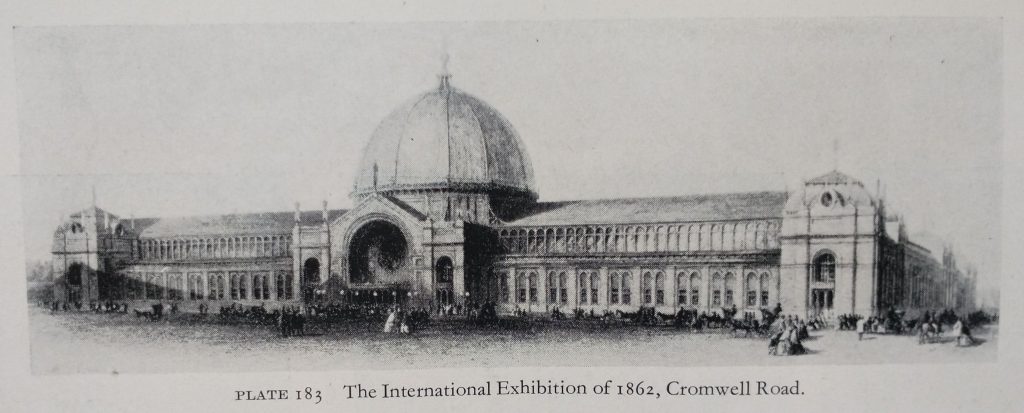
Burges & the International Exhibition of 1862

Engraving of the International exhibition of 1862, Cromwell Road
Print of the International Exhibition of 1862, South Kensington

The bookcase by William Burges was originally displayed as the centre point of the ‘Medieval Court’ of the 1862 International Exhibition, South Kensington, London. The Exhibition was almost as successful as the more famous Great Exhibition of 1851. Both got about 6m visitors. The 1862 Exhibition was just south of the site of the 1851 (on the south side of Hyde Park) and in what were then the Royal Horticultural Society’s gardens (now the Science, Natural History Museum, Imperial College etc.)

Raphael

This year, they posted a Raphael drawing of an angle. I show a screen shot below. But to have a real look click here.

The Nuragi

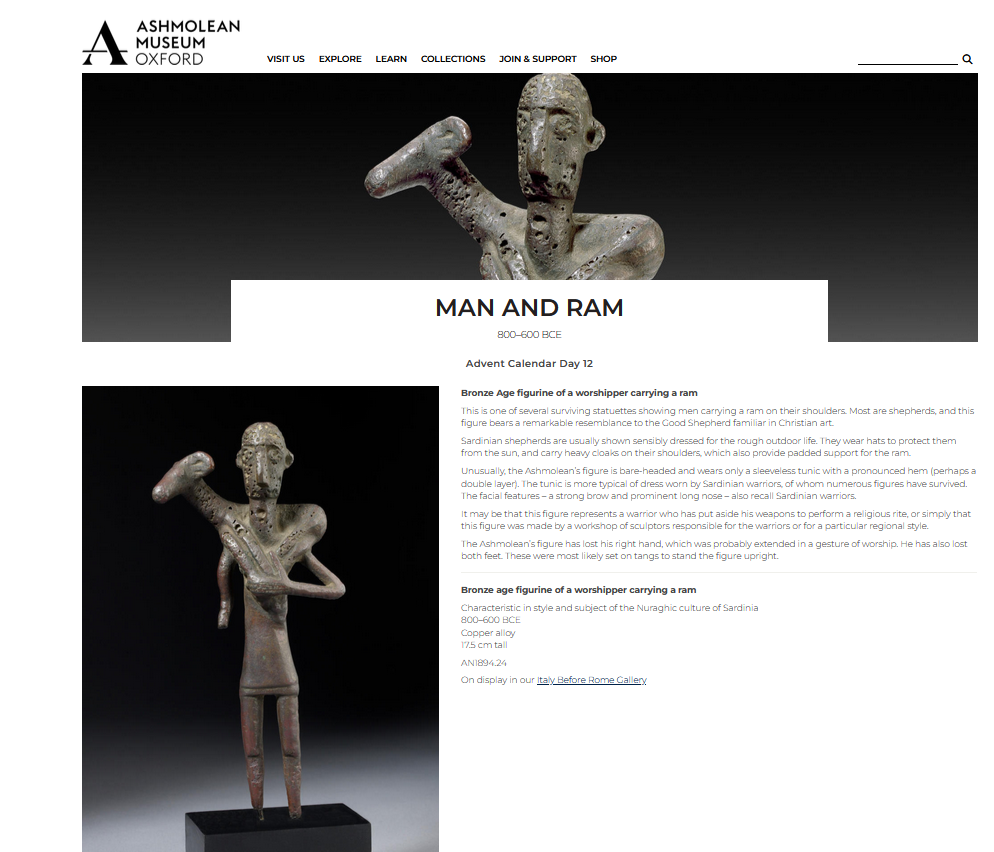
Last year it was a nuragi bronze age stature of a shepherd, a screen shot of which I show below. 2023 December 12th’s choice was a netsuke.

Nuragi statue of a Shepberd

I discovered the Nuragi on a University Field trip, with my students, to the Capital of Sardinia, Cagliari. The Nuragic culture is not well known. However they have amazing Bronze sculptures which give the viewer a really vivid view of their lives and fashions in the Bronze Age. They lived in round towers called nuraghe, which are a little like the Brochs of Scotland. They were around during the time of the Mycenaean Culture in Greece. But their origins and indeed their history are argued about. They may be part of the ‘Sea People’ who brought the end to the Bronze Age cultures of the Eastern Mediterranean, or they may not.

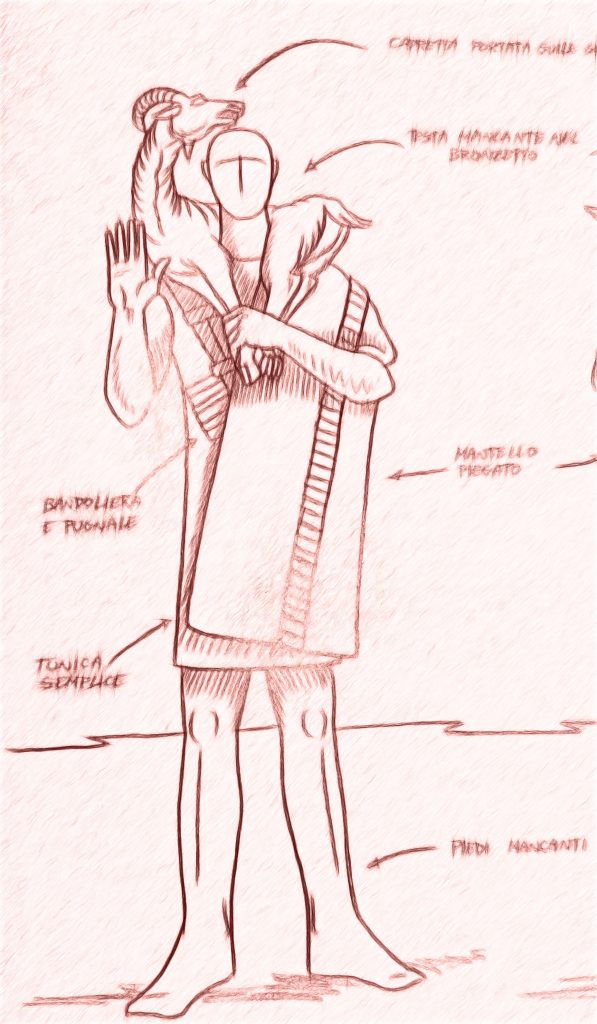
Here, in Britain, the Bronze Age is dominated by discussions of henges, barrows, metal axes and swords. But with very little sense of what life was like to live in those days. However, go to the Cagliari Museum, look at these wonderful statues, and it becomes possible to picture the people. Particularly with a copy of ‘Il Popolo di Bronzo’ by Angela Demontis to hand. It is a catalogue of Nuragi statures with interpretative drawings. It really brings the people to life depicted in the statues. They are mostly warriors, but also there are ‘normal trades’ such as shepherds and bakers which are depicted as well.

Here is my slight adaption of one of the drawings. It is of a shepherd similar to the one photo’d above.

A sketch drawing of a Nuragi sculpture derived from ‘Il Popolo di bronzo’ by Angela Demontis

What you can see is some detail of the clothes and the knife belt around the torso. Not to mention the sheep around his neck! The drawing brings a living person from the Bronze Age before you, not just a lump of bronze. Wikipedia has a long article on the nuragic culture. You can see a wonderful collection of nuragi bronzes and their homes on this website.here.

Originally written for December 12, 2022, revised and republished December 2023, and the Nuragi added in 2024 and Raphael added in 2025

‘There’s Rosemary, that’s for Remembrance’ December 7th

Flowering Rosemary
Flowering Rosemary in the author’s garden

According to the Perpetual Almanac by Charles Kightly, this is the time when Robins are much to be seen singing their winter song, and when it is time to protect plants, particularly Rosemary, against winter frosts.

In December, rosemary flowers with a delicate blue flower. Rosemary was one of the most important plants, metaphorically and medically. Mrs Grieve, in her ‘Modern Herbal’ says it is used in medicine for illnesses of the brain and was thought to strengthen the memory. And as rosemary helps the memory, they are symbolically/metaphorically associated with friendship, love, worship and mourning. A branch of Rosemary was given as a gift to wedding guests, so they would remember the love shown at the ceremony. It was also entwined in the Bride’s wreath.

Shakespeare uses Rosemary in his plant lore in Hamlet.

OPHELIA: There’s rosemary, that’s for remembrance.
Pray you, love, remember. And there is pansies, that’s
for thoughts.

LAERTES: A document in madness:
thoughts and remembrance fitted.

OPHELIA: There’s fennel for you, and columbines.
There’s rue for you, and here’s some for me.
We may call it herb of grace o’ Sundays.
O, you must wear your rue with a difference.

There’s a daisy. I would give you some violets,
but they withered all when my father died. They
say ‘a made a good end.

(sings) For bonny sweet Robin is all my joy.

Ham IV.v.176

Rue is the herb of grace and has the sense of ‘regret’. Pansies are also for remembrance, and their heart shaped flowers are for love and affection. Fennel represents infidelity and Columbines insincerity or flattery. Daisies are for innocence. Violets are associated with death, particularly of the young. As to how Orphelia means them all to be understood is not entirely clear, particularly Fennel and Columbine. Some think they are directed towards Claudius and/or Gertrude.

https://study.com/learn/lesson/flower-symbolism-hamlet-william-shakespeare-overview-examples.html

Being evergreen, Rosemary was associated with religion and everlasting life. It was called the rose of the Virgin Mary. Lying on a bed of rosemary, the Virgin’s cloak was said to have been dyed blue.  Indeed, Mary is mostly depicted in a blue cloak in Renaissance paintings.

And so Rosemary is especially important for Christmas. At Christmas, it was used to bedeck the house and used at funerals to remember the dead.

The Virgin Mary Googled.

Its strong aroma means it was used as an incense and also used in magic spells

Thomas More let rosemary ‘runne all over my garden walls’ because bees love it and as sacred to remembrance, therefore to friendship.

Rosemary flowering in december
Rosemary flowering in December

I mostly use Rosemary for the very rare occasions when I cook lamb, but it is much more versatile than that, or so the SpruceEats website tells me:

‘Rosemary is used as a seasoning in various dishes, such as soups, casseroles, salads, and stews. Use rosemary with chicken and other poultry, game, lamb, pork, steaks, and fish, especially oily fish. It also goes well with grains, mushrooms, onions, peas, potatoes, and spinach. ‘

https://www.thespruceeats.com/all-about-rosemary-3050513

On this Day

1917- End of the Battle of Cambrai in which Tanks were first used. The tanks had initial success when over 400 hundred of them were used by the British on the first day of the battle. Because the British Army did not precede the attack with the usual artillery barrage, the attack was a complete surprise and the British penetrated deep into the German Lines. But the army had too few troops to exploit the breakthrough and by early December the Germans had mostly recaptured the territory the tanks had won. So the battle was indecisive, but successfully showed the role of the tank in future battles. Casualties amounted to about 45,000 on each side.

1941 – Pearl Harbour bombed. The Japanese attack killed more than 2,300 U.S. military personnel were killed. Another 1,100 at least were wounded, and eight battleships were damaged or destroyed.

On December 8th, Congress approved Roosevelt’s request for a declaration of war on Japan. In the Senate, the vote was 82 – 0 and 388–1 in the House.

On 11 December 1941. Germany declared war on the US, in line with the Tripartite Pact between the two countries and Italy. Later that same day, the US declared war on Germany, with no dissenters from the vote.

First published Dec 7th 2023, revised 2024, 2025

St Catherine, Torture Victim & Patroness of the Catherine Wheel, November 25th

Icon of Saint Catherine of Alexandria, with scenes from her martyrdom (Wikipedia)

In the pantheon of horror that is the Saints’ martyrs’ calendar, St Catherine of Alexandria is very appropriate for, today, the UN’s International Day for the Elimination of Violence against Women.

Catherine was high-born, beautiful and learned. She disputed with pagan learned men against the worship of idols. She wiped the floor with them, and Emperor Maxentius had 50 of the learned men burnt alive for their failure to answer adequately.

Catherine was imprisoned, where many people came to visit her and were converted to Christianity. The most illustrious visitor was the Emperor’s wife, Valeria Maximilla who was, herself, martyred. Then, the Emperor offered to marry Catherine, but she refused to abandon her faith. So he had her tortured. In prison, she was fed by the holy dove and had visions of Christ.

Her gaolers then tried to break her on a wheel, although the wheel broke, killing spectators with the splinters, she stood steadfast. Two hundred soldiers were converted to the faith on the spot. They were then beheaded, followed by Catherine herself. Milk, not blood, flowed from her severed veins.

The persecution in the early 4th Century was real, but it wasn’t driven by Maxentius, who came to power promising religious tolerance. But, following the accession of Constantine the Great, Maxentius’s reputation was blackened. There is no contemporary evidence for the events of Catherine’s life. There is a modern theory that her tale was conflated with the remarkable story of Hypatia of Alexandria (d. 415), a pagan and a real learned woman; The first female Mathematician we know any facts about. She was murdered by a rampaging mob of xenophobic Christians.

Catherine is remembered by the firework: the Catherine Wheel and is, of course, the patron of Philosophers, Theologians, and Royal women; young women, students, spinsters, and anyone who lives by working with a wheel: carters, potters, wheelwrights, spinners, millers. And, I imagine, Formula 1 drivers.

St Catherine in London

St Catherine Coleman
(Wikipedia: Robert William Billings and John Le Keux: The Churches of London by George Godwin (1839))

There are several Churches in London dedicated to St Catherine or St Katherine, dedicated to St Catherine of Alexandria. The one in Coleman Street, rebuilt by Christopher Wren and his team, was demolished in the 1920s. There was a Chapel to St Catherine at Westminster Abbey (c1160), the ruins of which are visible in St Catherine’s Garden. I am sure that St Katherine’s Dock and St Katherine’s Cree Church are also so dedicated, but cannot as yet find a dedication for either. Katherine of Aragorn was patron of the Royal Foundation of St Katherines’ which gives its name to the Dock.

Ruins of Chapel of St Catherine, Westminster Abbey

There are customs that have attached themselves to St Catherine including the baking and eating of Catten Cakes. These are really a biscuit (or cookie) made of dough, and cinnamon and dried fruit. Carraway seeds are also suggested. Here is a recipe.

It’s considered a good day for rituals and prayers to summon a husband. Katherine of Aragorn was also commemorated on this day. Lace makers would play ‘jump the candlestick’. If they put the candle out they had bad luck. Katherine of Aragorn is said to have introduced lace making to England.

Finally, for my thoughts why female saints martydrom stories are so violent, extreme and often downright bizarre. Have a look at my post on St Margaret. She is the Saint who suffered probably the most torture in her convoluted route to Martyrdom.

My post which includes a link to an article about medieval attitudes to these terrifying stories of martyrdom, illustrated by a reredos on display at the V&A, in Kensington, London here.

Gladiators Exhibition Touring Britain

Exhibition post of the British Museum Exhibition ‘Gladiators of Britain’

I was just reading an article about the British Museum touring exhibition: ‘Gladiators of Britain’ exhibition. And so updated my August 12th post on St Lawrence who is remembered in a Church in London on the site of the Roman Amphitheatre. But the Exhibition will be closed by August, so here is what I wrote, in time to go to see the Exhibition.

The exhibition is currently at the Grosvenor Museum in Chester – until 25th January 2026.It then moves to Tullie House Museum & Art Gallery, Carlisle from 7th February to 19th April 2026. Recent research has shown that a young man buried in what seems to be a Gladiators Cemetary near Michelgate in York has lion’s teeth marks on his pelvis. When talking about Gladiators I was always reticent about whether animals as exotic as Lions would have been used in the distance province of Britannia. Now we know they were. The Exhibition has a marble relief from Ephesus showing a venetor (beast fighter), taking on a lion. We also know one Roman legionary in Britain had the title of Bear Keeper.

Displayed on the poster above is the Colchester vase which shows an actual gladiatorial combat. The gladiators are named as Secundus, Marius, Memnon, and Valentinus. Secundus and Marius are fighting a bear, while Memmon is fighting Valentinus. Memmon is a secutor and Valentinus, a retiarius. The secutor is the chaser and lightly armed with a heavy shield and short sword. The retiarius has a net and trident. Memmon is described as a 9th time victor, and Valentinus, a legionary of the Legio XXX Ulpia Victrix raises his finger to acknowledge defeat.

Although death and life threatening injuries were often the result, the competition was also not, necessarily, a fight to the death, it was a fight until one or other was defeated. So they could be ended by surrender. Gladiators tombstones, often announce the number of fights a gladiator was involved in such as fighting 25 fights of which he was victorious in 22. The chairman of the show would be given the duty of deciding whether the defeated deserved to be spared, or hit over the head with a big hammer, or decapitated. The Gladiatorial cemetery in Driffield Terrace, York has a high proportion of decapitated corpses. The normal ratio of normal burials is 5% or less of decapitated skulls. Of the 80 burials in Driffield Street 46 were decapitated. Many of the young men in the cemetery have healed wounds. One had leg irons one which showed evidence of being put on while still red hot from the blacksmiths forge. For more on the Cemetery follow this link.

On this Day

1471 – the Thames froze over strongly enough to hold a Frost Fair upon it.

In the year 1434 a great frost began on the 24th of November, and held till the 10th of February, following ; whereby the River Thames was so strongly frozen, that all sorts of merchandizes and provisions brought into the mouth of the said river were unladen, and brought by land to the city.’

1715 – the Thames froze again 281 years later

‘The Thames seems now a solid rock of ice; and booths for sale of brandy, wine, ale, and other exhilarating liquors, have been for some time fixed thereon; but now it is in a manner like a town; thousands of people cross it, and with wonder view the mountainous heaps of water that now lie congealed into ice. On Thursday, a great cook’s-shop was erected, and gentlemen went as frequently to dine there as at any ordinary. Over against Westminster, Whitehall, and Whitefriars, printing presses are kept on the ice.(description of 14th January 1716 of the remaining ice by Dawkes’ News Letter.

Both quotes are from a list of times the Thames froze you can see here: https://thames.me.uk/s00051.htm. I have no idea where the evidence comes from for the Roman and Saxon era freezing, but the author says the source of it is:

The earliest chronology is given by Charles Mackay in “The Thames and its Tributaries”, 1840. He omits to mention how he knows!

1952 Agatha Christie’s the ‘Mousetrap’ opened in London, so it has now been continuously running for 73 years if my maths are correct.

First published on 25th November 2022. Revised and republished 25th November 23, 24, 25