Newark & the Penny Loaf Day March 11th

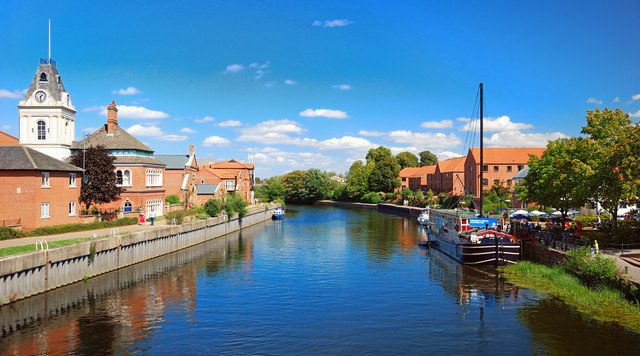
River Trent from Trent Bridge, Newark on Trent by Peter Tarleton WIKIPEDIA -CC BY-SA 2.0
Newark on Trent by Peter Tarleton Wikipedia CC BY-SA 2.0 Newark & the Penny Loaf Day

This post is about Newark & the Penny Loaf, but as it is still Women’s Week, I’d like to share with you a discovery I have just made:

Dorothy Thurtle
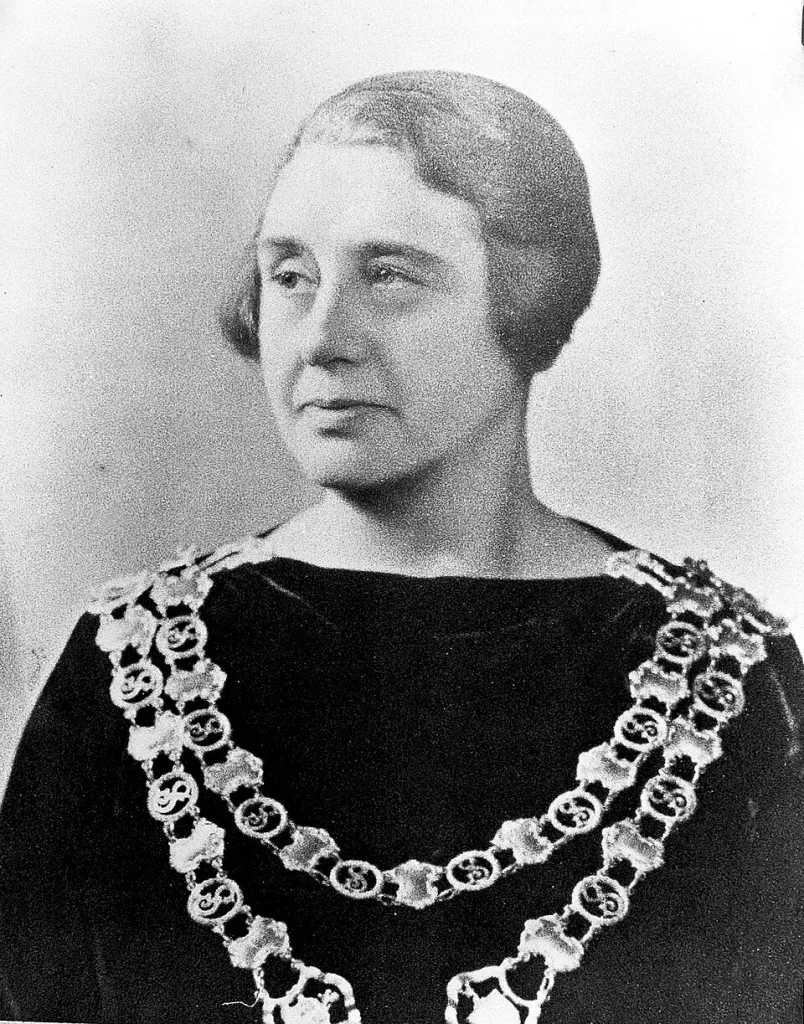
Dorothy Thurtle. By https://wellcomeimages.org/indexplus/obf_images/b5/be/a6cfe553603c25fd36627e6c24d4.jpgGallery: https://wellcomeimages.org/indexplus/image/L0026656.html, CC BY 4.0, https://commons.wikimedia.org/w/index.php?curid=36012910

By chance, a few days after International Women’s Day, I was reading the Hackney Society’s Newsletter and read about some canon bollards in Shoreditch Park, in the Dorothy Thurtle Memorial Garden. Well, my nearest Bus Stop is Thurtle Street, which always seemed a strange turtle-like name. So, I looked her up!

Turns out she was a pioneer of the Labour Party. Also, daughter of the great George Lansbury. And a redoubtable pioneer of contraception, and abortion rights. Her opinion was that the Labour Party’s commitment to equality between the sexes made no sense unless it supported contraception and legal abortion. She and her husband, Ernest, founded the Workers’ Birth Control Group. Dorothy was general secretary of Shoreditch Trades Council and Labour Party, became a councillor and eventually Mayor of Shoreditch. She was the only supporter of Abortion Law reform on the Birkett Committee, and issued an influential dissenting report. In her report, she ‘argued that because many married women would face pregnancy every one or two years until their menopause, withholding access to fertility advice and birth control was “a form of class discrimination and penalisation”‘ (Wikipedia). World War 2 delayed any reform.

Right on my doorstep! For more read: https://en.wikipedia.org/wiki/Dorothy_Thurtle

George Lansbury
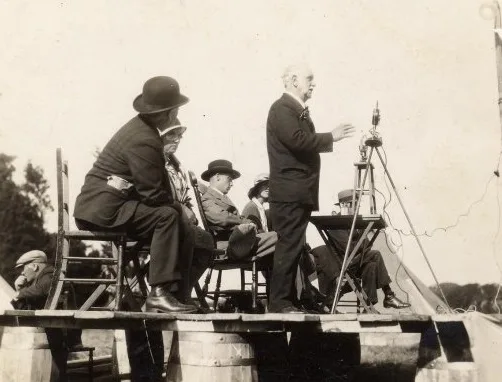
George Lansbury making a speech. By LSE Library – Flickr: George Lansbury, c1935, Public Domain, https://commons.wikimedia.org/w/index.php?curid=31131566

Dorothy’s father was originally a Radical Liberal Party member. He then joined the Labour Party and became an MP for Bow and Bromley in 1910. During the struggle for Women’s Suffrage he was imprisoned. He was also imprisoned in the Poplar Rates Revolt of 1921. (He was the first labour Mayor of Poplar). After Ramsay MacDonald joined the National Government, Lansbury replaced MacDonald. He lead the few remaining ‘loyal’ Labour Party members who would not join a Conservative dominated Government. He was elected leader from 1932 to 1935, with Clement Atlee as his deputy. Lansbury was a life long Pacifist and so stood down in 1935, as he was out of step with the need for rearming with the rise of Fascism. Atlee became leader.

Canon Bollards

Canon Bollards are made of repurposed canons from the British Navy. They are sometimes hard to distinguish from those made from repurposed canon moulds, or bollards that are designed to look like canons.

Newark in the Civil War

I will move the Dorothy Thurtle content to International Women’s Day, by next year. Which leaves us with an abrupt change of subject! On the 11th March 1644, the Parliamentary forces were besieging the Royalist-held Newark-on-Trent. Newark was a strategic centre as it was on the River Trent and on a major road junction.  Here, the Great North Road (A1 from London to the North) and the Fosse Way (from Exeter, via the Cotswolds to Leicester) meet. It was vital for the King, as the roads linked Chester and York to Oxford.  Oxford was the King’s HQ; Chester was the key to Wales and the North West. York controlled access to the North East.

Newark withheld three sieges and only ‘fell’ when King Charles I surrendered. The Castle and other military defences were slighted.

Newark & the Penny Loaf & Hercules Clay,

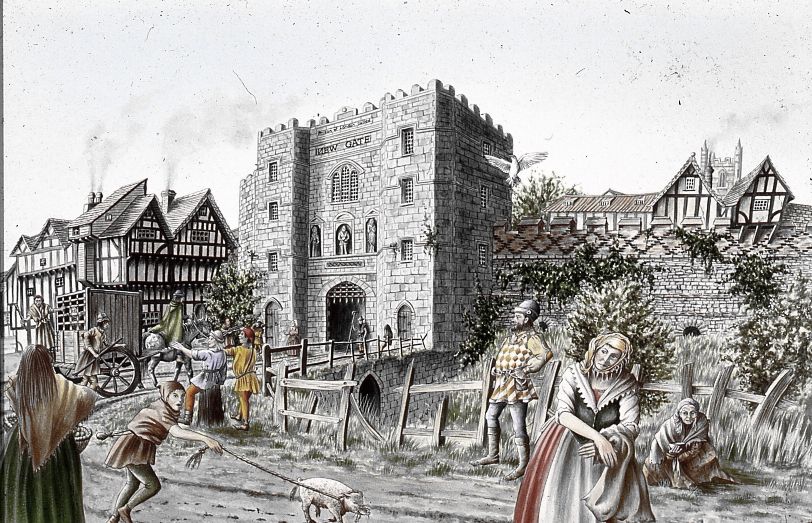
During the second siege, in 1644, Hercules Clay dreamt that his house was on fire. He ignored the dream at first. Then it repeated, so he took his family out of the house (next door to the Town Hall).

Shortly after, a ‘bombshell’ hit his house, fired by the Parliamentary side.  Because of his miraculous delivery, he left £100 in his will for a distribution of ‘penny loaves’ to the poor of Newark. His Will said:

‘Upon the 11th day of March yearly forever upon which day it pleased God of his infinite mercy wonderfully to preserve me and my wife from a fearful destruction by a terrible blow of a granado in the time of the last siege’

And also he left £100 for a commemorative sermon to be read on the anniversary of the incident. The service is normally held on the closest Sunday to the 11th March. The Church is being refurbished, so instead they had an event in the Town Hall and a procession.

Clay was a Mercer and a Royalist. After his death he was fined for lending £600 for the maintenance of the Royalist Garrison. It was paid by his brother.

At the time Churches had poor or bread boxes into which the women of the Parish would place loaves for the poor.
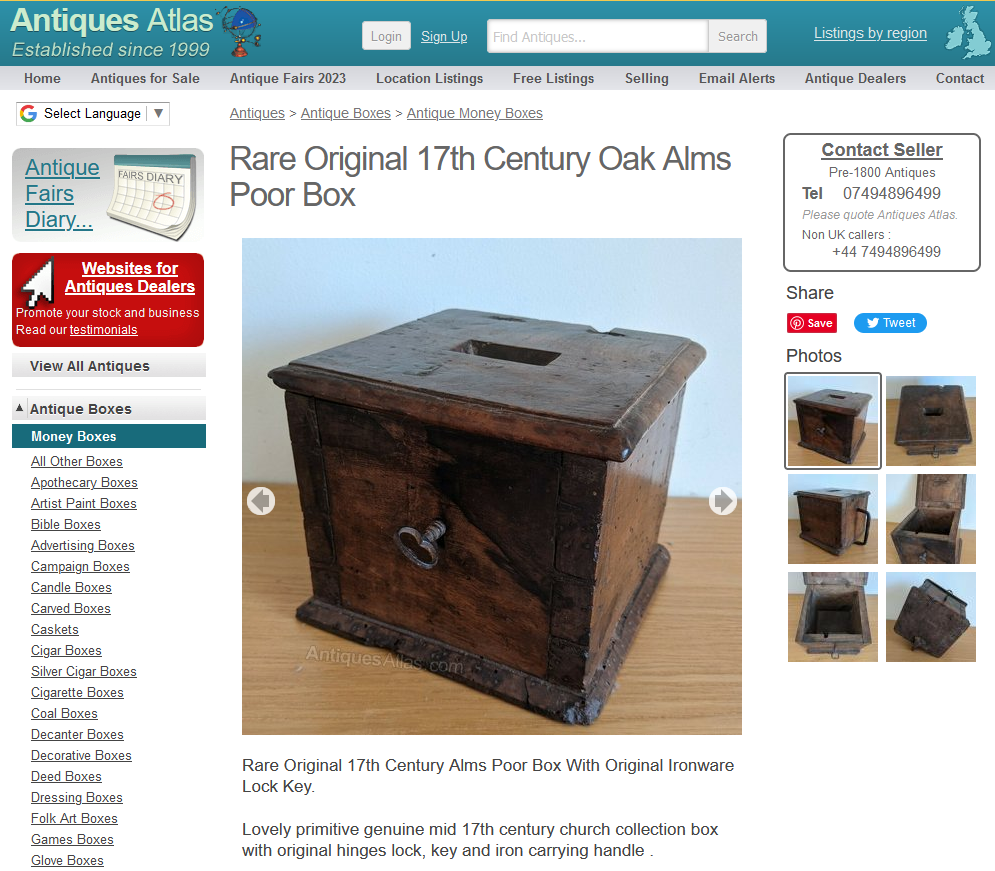
Auction Web site showing 17th Century Poor Box used for holding loaves for the poor

For more information on Hercules Clay see https://www.clayofderbyshire.co.uk/mayors. And thanks to the Clays for the research.

Penny loaf day see https://calendarcustoms.com/articles/newark-penny-loaf-day/

For my post on the execution of Charles 1 look here https://www.chr.org.uk/anddidthosefeet/january-28th-31st-charles-i-martyrdom-get-back/

On This Day

1702 – Elizabeth Mallet published the first English daily newspaper the Daily Courant, on Fleet Bridge, next to the King’s Arms. She, previously, dominated the publishing of ‘last dying speeches’ of people executed at Tyburn.
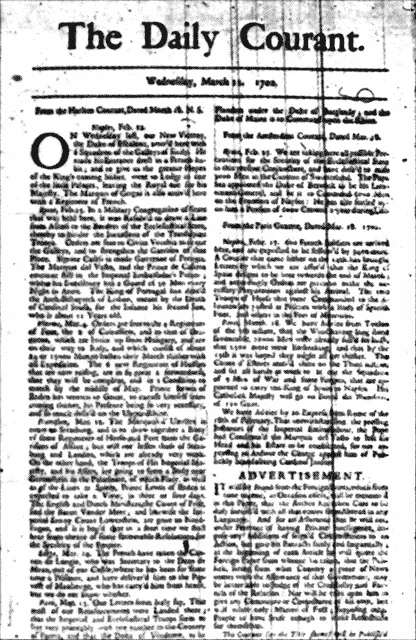
The Daily Courant By Edward Mallet from rooms above the White Hart pub in Fleet Street – The Daily Courant, Public Domain, https://commons.wikimedia.org/w/index.php?curid=880402. Elizabeth Mallet published under a male name.

1941 – Roosevelt signed the Lend-Lease Bill – this was a life-line to the UK as it enabled the supply of war materials to flow to Britain who stood alone, in Europe, against fascism. see my post for Roosevelt’s 4 freedoms.

1985 – Mikhail Gorbachev, appointed General Secretary of the USSR

First written in 2024, revised 2025, Thurtle and Lansbury and On This Day added in 2026

5th of Lide St Piran’s Day March 5th

Lide 5th is St Piran’s Day. Photo of St Piran’s Oratory at Trézilidé, Finistère (wikipedia) By Kieffer92 – Own work, CC BY-SA 4.0,

March is named after the Roman War God Mars, whose Month it was. But in England it had, until recent times, a dialect name which survived in the South west of England. This was ‘Lide’.

Lide was still used in the 17th Century, and then survived into the 19th Century only in Cornwall.  The Cornish named the first Friday in March ‘Friday in Lide’. They had a proverb.

Ducks won’t lay till they’ve drunk Lide water’.

Daffodils were called Lide-lillies. Eleanor Parker, who is a Lecturer in Medieval Literature at Brasenose College, Oxford, wrote an interesting article in History Today. She called March the loudest month of the year. The early English names for March were Hlyda or Lide monath meaning stormy or loud month. Other names include Hraed monath (rugged month) and Lentmonath (month of lent).

The ‘loudness’ comes from the March winds, which were noisy – as described in this rhyme. (thanks to Millie Thom for the rhyme and all things March. )

March brings breezes loud and shrill,
Stirs the dancing daffodil.

Sara Coleridge (1802–1852), “The Months,” Pretty Lessons In Verse, For Good Children; With Some Lessons in Latin, In Easy Rhyme, 1834

There are many references to the changeable weather in March. Sometimes lovely spring days, and at others raging storms, and frosts. Parker quotes a proverb which says that March comes in:

like a lion and goes out like a lamb’.

In 2026, the 5th of Lide has been a beautiful spring like day, with, over the last few days a outburst of Hawthorn and Plum blossom.

St Piran

Lide 5th was a holiday for Miners, probably because it was St Piran’s Day. Very little is clear about St Piran. But he is thought to have been an Irish Missionary who founded an Abbey in Cornwall in the 5th Century. His legend says he was tied to a millstone by the Irish, who rolled the stone over a cliff. The sea was stormy, but calmed as soon as he fell into it. He floated on his stone to Perranzabuloe in Cornwall. Here he landed and got his first converts: a badger, a fox, and a bear. Then, he founded the Abbey of Llanpirran.

He is said to have reintroduced smelting to Cornwall, hence his attribution as patron Saint of Miners. Piran was martyred by Theodoric or Tador, King of Cornwall in 480. His bones scattered in reliquaries in the South West and in Brittany. He is the patron saint of Cornwall, so the week before the 5th of March is known as Pirrantide. And there are events and parades to commemorate him. People dress in black white and gold, carrying daffodils and walk across the dunes to St Piran’s Cross.

Screenshot from the Cornish Guide showing St Piran’s Cross. https://www.cornwalls.co.uk/history/sites/st_pirrans_cross.htm

For more about March look at my post https://www.chr.org.uk/anddidthosefeet/march-1st-the-month-of-new-life

On This Day

1702 – Queen Anne becomes Queen – the last of the Stuarts. She had 18 pregnancies. The eldest survived to 11 and then died. Of the other 17, 8 miscarried, 5 were stillborn. 4 were born alive but died soon after. She had poor health, gout and drank a lot, but she might well have had an autoimmune deficiency and her body rejected the offspring. The fact that the eldest was the only one to survive might suggest rhesus disease, which can now be prevented with an injection of a medication called anti-D immunoglobulin. The problem occurs when a woman with RhD negative blood is exposed to RhD positive blood and develops an immune response to it. The first child is not affected, subsequent ones risk miscarriage.

1936 – The Spitfire makes its maiden test flight. By 1947 over 20,000 had been made and it had been in continuous production throughout the war, unlike most other aircraft.

1946 – Churchill makes his”Sinews of Peace” Speech in which he coins the phrase ‘Iron Curtain. President Trueman invited the unemployed Statesman to Fulton Missouri to make the speech. In 1961, the proposal was made to commemorate the speech by reconstructing the blitzed City Christopher Wren Church, St Mary Aldermanbury in Fulton, Missouri. The Church was shipped to the States, rebuilt and rededicated on the 7 May 1969.

First published in 2024, rewritten March 2025 Revised, On This Day added 2026.

Dung, Time to Manure your Garden March 4th

Hen’s Dung. Image by Anja from Pixabay

John Worlidge knew all about dung. And it is all spread out in his ‘Worlidge Systema Agriculurae’ of 1697 brought to my attention by Charles Kightly’s Perpetual Almanac.

Worlidge tells us that although it used not be esteemed, but Hens and Pigeons’s Dung is the best if mixed with common earth or sand, and let to rot. He says:

Pigeons or Hens dung is incomparable, one Load is worth ten Load of other Dung, and therefore it’s usually sown on Wheat (or Barly) that lieth afar off, and not easily to be helped; it’s extraordinary likewise on a Hop-garden.

… It’s generally little set by, because our Fore-fathers did not make any great matter of it, and because they understand not the strength and power of it; for when they take it out of the houses it’s of a very hot nature, and must needs injure some things, if laid thereon; but if it be mixed well with common Earth, Sand, or such-like, and let lie till it rot well together, you will finde it a very rich Manure, and of value to answer a great part of your Poultreys expence.

I have known a Quince-tree whereon Poultrey always pearched, that by reason of the Rain washing to its Roots the salt and fatness of the Dung, did bear yearly an incredible number of very excellent Quinces.

To read the Systems see https://quod.lib.umich.edu. For more on Worlidge wisdom see my post on Hawthorn.

Before we turn to the sweet Quincwe I’ve found a poem about dung:

Dilbert Dung Beetles Delicacy

Mr. Camel is fascinated by his friend Dilbert Dung Beetle’s diet.
He thinks eating up excrement, feces and manure is a riot.
It is tasty! Delicious! You should try a salty elephant pie!
Dilbert Dung Beetle says. You would love it if you gave it a try!

Mr. Camel watches Dilbert dig in, gulping down gobs of the stuff.
He thinks it must have a weird smell, but Dilbert can’t get enough.
You might sample a tiny bit Dilbert says, it is delicious you see!
Mr. Camel shakes his head and says “Sorry, it does not appeal to me.”

© Caren Krutsinger

All things Quince

I made quince jam this winter for the third year running from my Father’s Tree. Likely to be the last year as he is 98 and has just gone into a lovely home. It’s very easy to make (although very hard to cut up the fruit) and delicious because it is not too sweet. Here is a recipe (not necessarily the one I used}. Indeed, my most successful year was when I didn’t use a recipe, just boiled the fruit with sugar to taste. Beginner’s Luck, I expect.

Quince is mentioned once in Shakespeare, when the Nurse says the pastry makers are calling for Quince and Dates. (Here is a recipe for Tudor Quince Pie) And of course, the mechanicals theatre director is Peter Quince the Carpenter. But the most famous reference is in the Owl and the Pussycat by Edward Lear.

They dined on mince, and slices of quince
Which they ate with a runcible spoon;
And hand in hand, on the edge of the sand,
They danced by the light of the moon.

Quinces are native to the Caspian Seas, and Wikipedia says spread to England when planted at the Tower of London at the order of Edward I. Quinces were sacred to Aphrodite. and taste great with Cheese (dulce de membrillo) if you are in Span. The Balkans have an aqua vita called rakija. Quince is considered old-fashioned and not grown very much in gardens in the UK.

First published on March 4th, 2026

The Feast Day of St Winnold March 3rd

Portrait of Saint Guénolé (St Winnold) after a bust in silver on a reliquary from the Church Saint-Guénolé in Locquénolé.Public Domain Abgrall Jean-Marie (1846-1926) – Bibliothèque nationale de France

Here is a weather poem in which St Winnold appears

First comes David, then comes Chad.
And comes Winnold, roaring like mad.
White or black.
Or old house thack.

St David’s Day was March 1st. St Chad, the 2nd. St Winnold’s Day is the third of March. Winnold is his English name, and Winneral, or Winwaloe or Guénolé his Celtic names.

The poem suggests that snow, rain or wind is going to come on these three days. When the wind roars, it will threaten the thatch of houses. If the storms do not come in the first 3 days, then they will come on the last three days of March, which were called ‘the Borrowing Days’. Or so it is said.

St Winnold was around 50 years (460 – 3 March 532) after the end of Roman Britain. His family was from Cornwall. He was the son of a Prince Fragan of Dumnonia, and St Gwen the Three-Breasted, His mother’s Feast day is October 3rd. She is a Saint of fertility, because of God’s Gift of an extra breast. They moved to Brittany to escape a British Plague. Their son grew up to be holy and was the founder and first abbot of Landévennec Abbey (the Monastery of Winwaloe). It is south of Brest.

Winwaloe became what is known as a ‘phallic saint’ because he was associated with fertility. Wikipedia says this came about because of confusion about the origin of his name:

his name was thought to derive from gignere (French engendrer, “to beget”)’

St Winnold’s Breton name is Guénolé. How this etymology works is not clear to me! But surely, he as likely to have got a reputation for helping people with fertility problems from his mother? Supplicants would make a wax phallus to persuade the Saint to help them conceive. There are several churches/ chapels dedicated to him in Wales, and a Priory in East Anglia.

You might like to read my post about St Blaise Day & The Tadpole Revels February 3rd, or on St Chad.

On This Day

March 3rd 1847 Alexander Graham Bell was born. He was born in Edinburgh, and lived Scotland, in London, Canada and the US.

First written August 2024, republished MArch 2026

St Chad & Roman Weeks March 2nd

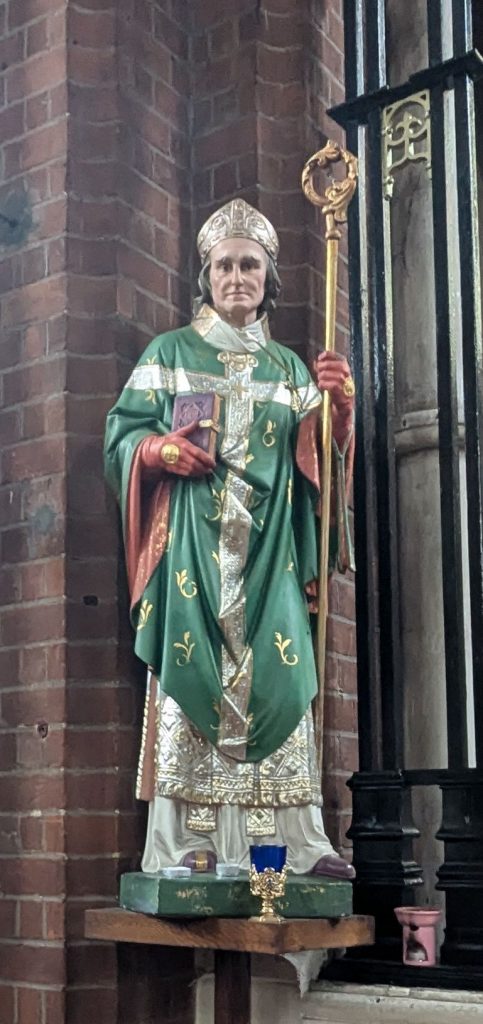
St Chad’s Church, Hackney. Statue of Bishop (I’m guessing St Chad!) Photo K Flude

St Chad

Today, is the Feast Day of St Chad who died on 2nd March 672. St Chad’s Church, Hackney is 400 yards from my house. It is a massive late 19th Century Church. Grade 1 listed built by James Brooks in 1869 in ‘his austere and muscular red-brick Gothic.’

Chad is the patron saint of medicinal springs,[37] although other listings[38] do not mention this patronage.

St. Chad's Day (2 March) is traditionally considered the most propitious day to sow broad beans in England.
photo of
St Chad’s Church Haggerston, London. Photo K Flude

Chad was possibly of Celtic origins but associated with the Anglian nobility in Northumberland. He was a pupil of St Aidan who set up the Holy Island of Lindisfarne. As a young man, he spent time in Ireland, then became an Abbot, Bishop to the Northumbrians at York, and to the Mercians at Lichfield. His brother was St Cedd, who was important in early Christian Essex and Yorkshire.

Chad was very humble, refusing to ride around his diocese, preferring to walk, Whenever there was a violent storm, he would prostrate himself to pray to save his people. The weather, he believed, was one of the ways God communicated. This might reflect Chad’s Celtic origins. Chad is the patron saint of medicinal springs according to one source. St. Chad’s Day (2 March) is said to be the best time to sow broad beans in England. You see he is a humble man.

March & Pisces

Attributes of Pisceans selfless, mystical compassionate imaginative sensitive
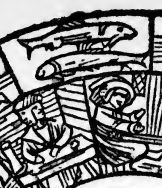
pisces from the zodiac from kalendar of shepherds
From the zodiac from kalendar of shepherds

Roman Months, Weeks (hours, minutes and 24/7, 60/360)

I have been discussing the way the Roman Calendar used to work.  Now it is our turn to look at the week.  A week is a division of a month. 

Oxford Languages says that the month derives from:

Old English mōnath, of Germanic origin; related to Dutch maand and German Monat, also to Moon.

Its length is roughly the length the moon takes to complete its cycle. So the obvious division of the month is into the phases of the Moon.  The early Romans chose to keep the lunar associations with their division of the month.  Their month was divided according to the Moon’s phases into the Kalends, the Nones and the Ides, as I describe in my Ides of March post here. Note that these Roman divisions divide only half the cycle. That is from new moon to full moon. The next 15 days are one block ‘before the Kalends’. So, not weeks as we know them! Although alongside Kalends, nones and ides, the Romans had 8 day market ‘weeks’.

Julius Caesar’s successful calendar reforms, restored the Calendar to alignment with the Sun, but stopped any pretence that months were linked to actual movements of the moon. So, I’m not sure why he kept the moon based Kalends system.

For more on Roman months, see my post on the Ides of March.

Constantine and the Week

In the 4th Century, after re-uniting the Roman Empire, supreme leader, Constantine the Great, wanted to make his own contribution to the rationalisation of the calendar. So, he got rid of the moon based Kalends, Ides and Nones, and established the week as the main subdivision of the month.

To please the Christians, he swopped the day of leisure from old man Saturn’s Day to the Son of God’s Day, Sunday.  This is the day Jesus ascended to heaven, but it was also the day for Mithras and the Unconquered Sun, so keeping some pagans happy. He then established the 7 day week.  7 was a sacred number and the number of the ‘planets’ in the Solar System as the Romans understood it (5 planets plus the sun and moon).

In Britain, we clung to some of our pagan names for the weeks. So Saturday, Sunday and Monday are Roman in origin. The Latin origins of the days of the week are obvious in the Romance languages, French, Spanish and Italian.  Lundi from the moon, Mardi from Mars, Mecredi from Mercury, Jeudi from Jupiter, and Vendredi from Venus.   Samedi came from  Saturn. Dimanche from dies Dominica which means the Lord’s Day.

Tuesday – Friday are Anglo Saxon, named after the deities: Tiv, Woden, Thor, and Freya. Thank God its Freya’s Day, they probably didn’t say! (because they worked on Saturn’s Day.)

The Heavens and the Zodiac

The order of the days comes from their position in the sky. Not in their position  around the Sun but their position in the zodiac. Babylon created the scheme of a division of the sky into 24 hour long sections, a god presided over each division.  This is where we get our hours from. And half of 24 is 12 so the 12 signs of the Zodiac.

It is too complicated to explain but there were 7 deities and 24 divisions, so the  deities rotated and did more than one shift. Babylon used the numerical base of 60.  So we have 60 seconds in a minute, 60 minutes in an hour, 360 degrees in a circumference.  

Other societies ignored hours until we had clocks to measure them.  In Chaucer’s time, hours were a 12th of the Day and a 12th of the Night, so in summer, day time hours were longer, and nighttime hours shorter, and vice versa in winter. Those hours were called ‘artificial hours’. This makes a sort of sense – in winter, daytime hours are precious, so you get a shift on to get essential work done in the short hours of daylight. In summer, you have a long day, long hours, so you can take it a little easier. Therefore, your productivity in a winter hour might be similar to your productivity in a longer summer hour? Anglo-Saxons divided days by tides; morningtide, eventide and nighttide.

Ages of man

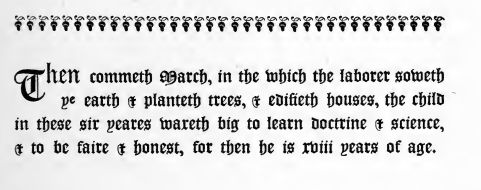
As I have mentioned before, prophecy often sees a connection between the yearly calendar and future events.  For example, if it rains on the fourth day of the twelve days of Christmas, then it will rain during the fourth month (they say).  The Kalendar of Shepherds illustrates this method, giving a comparison between the ages of man and the months of the year. Twelve months in a year, Twelve ages of man in six year blocks. So March represents ages twelve to eighteen, as it says, below, this is the ‘time to learn doctrine and science’.

Kalendar of Shepherds (translation from French 15th Century original)

On This Day

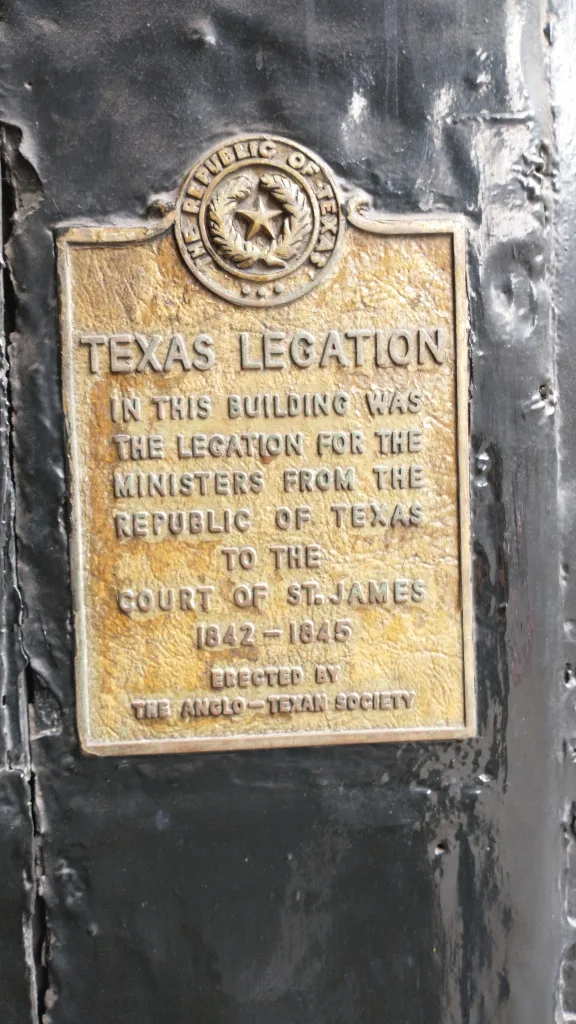
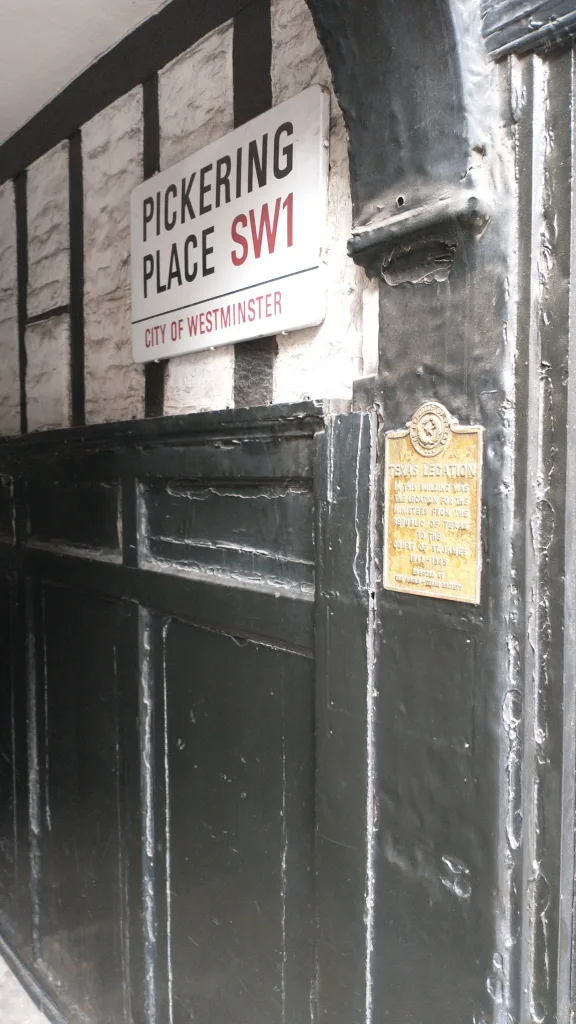
1836 – The Republic of Texas is set up as an independent State. The Alamo fell on March 6, 1836, but the Texans soon defeated the Mexicans and made the Republic a reality. It was annexed by the United States on December 29, 1845 and soon made a State.

While researching my Jane Austen’s London Walk I was delighted to find this plaque on a wall in Mayfair.

1969 – First flight of the Concorde, first supersonic aeroplane

1970 – the Republic of Rhodesia was set up by the Southern Rhodesian colonial government of Ian Smith. They declared a Unilateral Declaration of Independence (UDI) in 1965 in order to stop the transition to Black Majority Rule. The Republic of Zimbabwe took over on April 18th, 1980, after a bloody war.

First written in March 2023 revised on 2nd March 2024, St Chad added 2025, On This Day added 2026

St Totteringham’s Day

I newspaper heading about St Totteringham’s Day

In 2025 April 3rd was St Totteringham’s Day.  In 2024, it was the 28th April. This year, if results go as predicted, it is today.  Quite a sad day for some of us. The prediction comes from https://whenissttotteringhamsday.com/.

St Totteringham, the mythical Saint, born in North London in 1911. He has a variable feast day, but normally, it is in March or April. In some glorious but rare years, there is no feast day for the Saint.  My own hope is that a miracle will take place next year and St Totteringham is denied his customary outing.  But it looks unlikely.

Scholars find that the best predictor of the Saint’s Day is not the Moon but the results of Premier league results in North London. Arch North London rival football teams, Tottenham Hotspur (Spurs) and Arsenal (the Gunners) compete bitterly for bragging rights. So, what is St Totteringham’s Day? It is the day that Arsenal are so far ahead of Spurs in the Premier League Table that Spurs cannot possibly overtake them.   If Tottenham draw or lose against Fulham today, or Arsenal beat Chelsea then Spurs cede St. Totteringham’s Day to Arsenal. Mathematically, even if Arsenal lose all their remaining matches and Spurs win all theirs, Spurs cannot beat Arsenal.

https://www.chiark.greenend.org.uk/~mikepitt/totteringham.html tells me the myth began in 1911, since when there have been 55 St Totteringhams Days.  The earliest being the 9th of March. 33 have been in April. So, if today is the day it will be the earliest St Totteringham’s Day in history! No! Don’t cheer! Weep.

Being ‘Spursy’

Another neologism from North London is to be ‘Spursy’.   Espn.co.uk defines it as: (and it breaks my heart to tell you this).

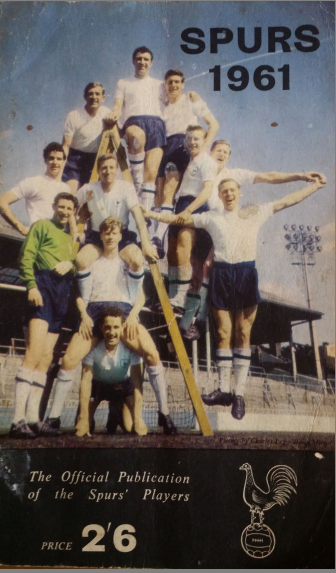
The Year Spurs Won the League Champtionship.

‘The more modern meaning is to snatch defeat from the jaws of victory or to fall short with the prize in sight. This is because, over time, the club’s lack of silverware has come to influence the meaning of “Spursy.” That original 2014 entry reads: “To consistently and inevitably fail to live up to expectations.’ The last time Spurs won the League Championship was in 1961.

Next year, it will be different.

First Published 2024, revised 2025, 2026

Walk of Socialists 28th February 1887

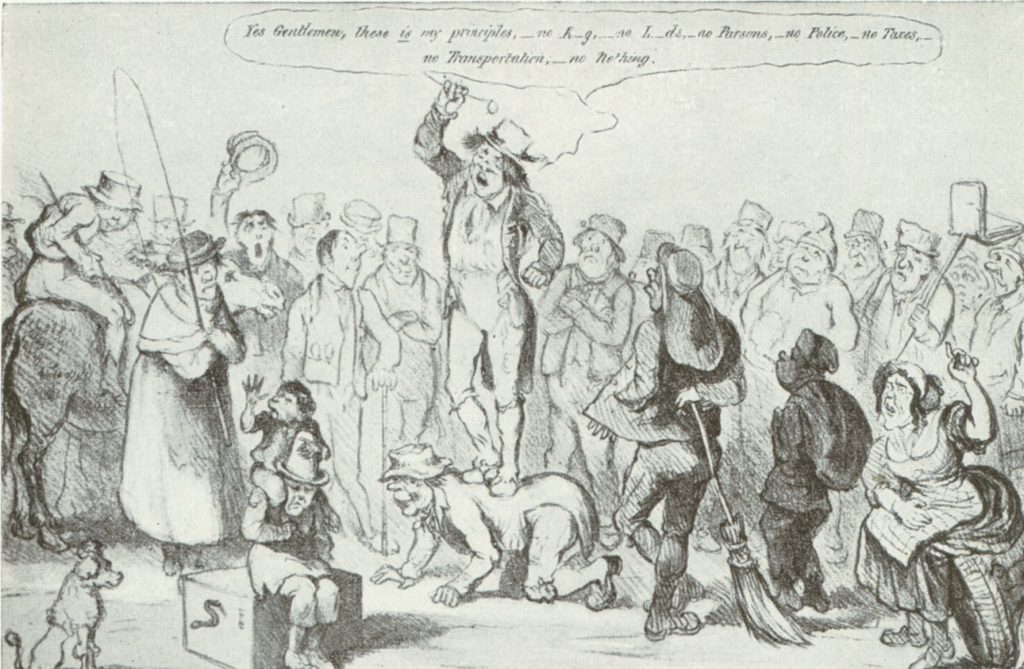
Victorian lampoon on Socialist Values 'Yes Gentlemen, these is my principles, no King, no Lords, No Parsons, No Police, No Taxes, No Transportation,  no No'thing.'
Victorian lampoon on Socialist Values ‘Yes Gentlemen, these is my principles, no King, no Lords, No Parsons, No Police, No Taxes, No Transportation, no No’thing.’

Walk of Socialists at St. Paul’s February 28th & London Socialism 1887

My French friend went yesterday to St. Paul’s and saw a large procession of socialists. It is a strange move of the socialists to visit all the Churches. The Archdeacon of London preached to them from: “the rich and poor meet together, and the Lord is the maker of them all.” A noble sermon, they behaved fairly well.

Helen G. McKenney, Diary, 1887 (source: A London Year. Compiled by Travis Eldborough and Nick Bennison)

The quotation is from the Bible, Proverbs 22, where it sits with a number of other wise sayings. Perhaps, number 16:

One who oppresses the poor to increase his wealth and one who gives gifts to the rich—both come to poverty

is most likely to stir a Socialist. I imagine the Archdeacon was also making a point that the Lord made the Rich and the Poor. So there is nothing wrong with being Rich, as long as you are generous to the Poor. Equally, nothing wrong with being Poor.

Bloody Sunday

It’s rather lovely to imagine the Walk of Socialists walking around Wren’s masterpieces in the City of London. However, later in 1887, things turned much worse. The Social Democratic Federation and the Irish National League organised a march against Unemployment and the Irish Coercion Acts. Among the 10 to 30 thousand citizens present were William Morris, Annie Besant , George Bernard Shaw and Eleanor Marx.

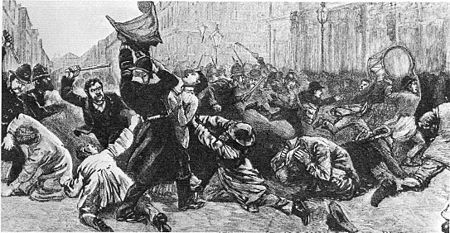
The Police had been trying to prevent the ever-increasing use of Trafalgar Square and Hyde Park as protest venues. So, on November 13th, Bloody Sunday, the Police Commissioner, Charles Warren, ordered a massive police presence. He backed this up with 400 Soldiers. He aimed to prevent the entry to Hyde Park. Warren was acting as a caretaker until a new Commissioner was in place. He had already resigned following criticism of the failure to find Jack the Ripper. By the end of the day there were 2 people dead, 100 seriously injured, and 45 arrests, as well as 75 accusations of police brutality. On the other hand there were many police casualties.

Engraving from The Graphic (published 19 November 1887). Wikipedia describes it as ‘depicting a policeman being clubbed by a demonstrator as he wrests a banner from “a Socialist woman leader, one Mrs. Taylor”, while other people are covering their heads to protect themselves from raised police batons.’ Pubic Domain

Progressive Politics

Before the Foundation of the Labour Party, progressive politics were in the lukewarm hands of the Liberal Party. This Party developed from the Restoration period Whig Party. Although, the Liberal Party had a radical wing, it had a reluctance to put forward working-class candidates. In the early 19th Century, much of the agitation was led by a movement called the Chartists. But as their goals became adopted by the main two parties, progressive politics was led by various reform, radical, socialist, marxist and anarchic groups.

I have not been able to find out who led the 1887 Walk of Socialists around the City Churches. However, William Morris’ presence suggests the Socialist League? In 1885, the Socialist League was an offshoot of the Social Democratic Federation. But it was not a harmonious group. Its most famous members were William Morris, and Eleanor Marx. It included Fabians, Christian Socialists and Anarchists. By 1887 it was split ideologically into three main factions, Anarchists, parliamentary orientated Socialists, and anti-parliamentary Socialists. William Morris was the editor of their newspaper, ‘the Commonweal’ but he was sacked and replaced by Frank Kitz as the Anarchists took over the organisation.

So, without going into a long history of Socialism in London, what happened was that the Socialist groups made very little impact until the Independent Labour Party was set up in Bradford 1893. And in 1900, Keir Hardie, who was already an independent MP in Parliament, set up the Labour Representation Committee in 1900. This was soon renamed the Labour Party. The Independent Labour Party joined, and Labour began to take over control of the working-class vote. It fought for this with the Liberal Party. The Liberal vote, declined after WW1 and Labour was able to secure minority Governments. After World War 2 the Labour Party replaced the Liberals as one of the two Political Parties which could win a majority in Parliament.

London ‘Soviets’

London was one of the places where the Party experimented with left wing policies. The East End areas of Poplar, Limehouse and Bermondsey were particularly important. Alfred and Ada Salter were ‘typical’ activists. She became the first female Mayor of a London Borough. She was Returning Officer when her husband was elected MP for Bermondsey. His medical practice gave free medical care for poor people. From this they established a free medical clinic, that was a forerunner to the formation of the National Health Service. The London Councils also led the way in promoting mass council housing and Trade Union reform.

Here is a part of a letter from Alfred to Ada:

Oh, the cruel wickedness of our society today! To thrust down these people by means of low wages and chronic unemployment into hopeless despair, and then leave them in that condition with no organised or conscious effort to rehabilitate them. What can we do?”

“You and I feel we have the same mission in life… we are living and working for the same goal- to make the world, and in particular, this corner of the world, happier and holier for our joint lives.”

Taken from this excellent blog post of Dr Alfred Salter.

Fenner Brockway said that in his youth Salter was a “Settlement firebrand – militant Republican, militant Socialist, militant Agnostic, militant Teetotaller, militant Pacifist.” Alfred converted Ada to Socialism and she converted Alfred to Christianity. They became Quakers.

Statues of Alfred Salter (sitting down) Ada Salter (behind his walking stick) and their only daughter Joyce (leaning against the River wall) who died aged 8 of Scarlet Fever. Garden near the Angel Pub, Rotherhithe. Photo K Flude

Life-long Labour voter

My Grandma, who was born in Hoxton in 1902, voted for Labour all her life. I’m pretty sure it was out of class loyalty because I always thought her opinions were more traditional than progressive. But she would never dream of voting anything other than Labour. For more on Hoxton and revolution, you may want to see my post on Hoxton and the Gunpowder plot.

Tomorrow isn’t the 29th but if it were you would want to see my post on leap year and the Roman Calendar – February 29th.

On This Day

1931 – Oswald Moseley formed the New Party which became the British Union of Fascists. He was a promising and economically radical MP for the Labour Party but resigned in frustration with their reluctance to adopt his policies. And his egotism, led him to the dark side.

1975 – An underground train ran into the end wall having failed to stop at the Moorgate terminus. 43 people died and 74 were injured. An inquiry concluded, in the absence of any faults in the train, that it was a driver’s error.

First Published in February 2024, republished in 2025 The Salters & On This Day added February 2026

St. Walburga and St. Ethelbert of Kent’s Day February 25th

engraving of St Walburga
St. Walburga
(public domain)

Today is the Feast day of two significant Saints, St. Walpurga and St. Ethelbert.

St. Walpurga

St. Walpurga was a nun at Wimborne in Dorset.  She, and her brothers St Willibald and St Winebald, accompanied their uncle, St Boniface of Crediton (in Devon) on his mission to convert the Germans to Christianity. They all became leading figures in the new German Church. Willibald set up the Monastery at Heidenheim, which was a duel monastery housing both Monks and Nuns. His sister, St Walpurga, became Abbess of the Monastery in 761. She died on 25 February 777 or 779 (the records are unclear),

In 870, St. Walpurga remains were ‘translated’ to Eichstätt, which St Willibald had set up as the Diocesan centre of this part of Bavaria. The date of the transfer was the night of April 30th/May 1st. This was her feast day. But the Church moved it to February 25th, to commemorate her death. However, May Eve is now ‘notorious’ as Walpurgis Night. This is the night of May Eve when witches are abroad up to all sorts of mischief, May Day being one of the main pagan festival days. Her body was placed in a rock-cut niche and her bones started exuding an oil called Walpurgis Oil which was said to have medical properties. She was also involved in a miracle of a boat saved in a storm-tossed sea.

For these reasons, Walpurgis is the Saint for battling pests, rabies, whooping cough, storms and sailors. She is also associated with witchcraft but not because of any actual association with it. Her remains were moved again in 1035 when she was enshrined at the Benedictine Abbey of St. Walburga which was named after her.

Walpurgis Nacht

Terrible things happen on Walpurgis Night in Dracula by Bram Stoker. So, the night has now become a trope for Heavy Metal Bands, doyens of horror stories and the Satanic. For more on this read my piece on Walpurgis Nacht.

Coincidently, I was reading about the fuss made about a Heavy Metal Band, called a Plague of Angels, playing in the glorious York Minster. A member of the band tried to calm down the controversy, saying people should just chill out. But other group members used to be in a band called ‘The Cradle of Filth’. Among their claims for Heavy Metal Fame is that they wore the most controversial t-shirt in heavy metal history. This has a visual of a nun in a compromising position and a slogan saying ‘Jesus is a ……..’ (add your favourite swear word here). All very silly. But it struck a cord with me, as I have a scene in my novel (unpublished) which is based on extreme forms of Heavy Metal Bands. I thought I might have gone over the top, but this story reassures me that extreme Metal can be extremely offensive!

To read more read the Guardian page. To publish my novel, email me!

St. Ethelbert.

Ethelbert is responsible for welcoming the Augustinian Mission to the Angles sent by the Pope, St Gregory. This re-established Christianity in Eastern Britain, and set up the Anglican Church or the Church of England as it became known.

I tell this story in this post.

On This Day

1308 – Edward II crowned King of England. His reign ended disastrously, with his Queen having an affair with Lord Mortimer and Edward losing control of the country (and Scotland). He was forced to abdicate, and died/was murdered/killed with red-hot pokers/or escaped to live a life as a hermit on the continent. Choose your favourite or read my History of the Kings and Queens of Britain.

1507 – Queen Elizabeth I excommunicated by Pope Pius and declared usurper of the throne, leading to the Spanish Armada and various plots against her life. (my post on Queen Elizabeth’s nicknames is here)

1836 – The Colt Revolver awarded a United States patent. Previously, he had obtained a UK Patent. It created the classic ‘Western’ Revolver’, much later called the Colt 45. It was a revolving-breech loading, folding trigger hand gun.

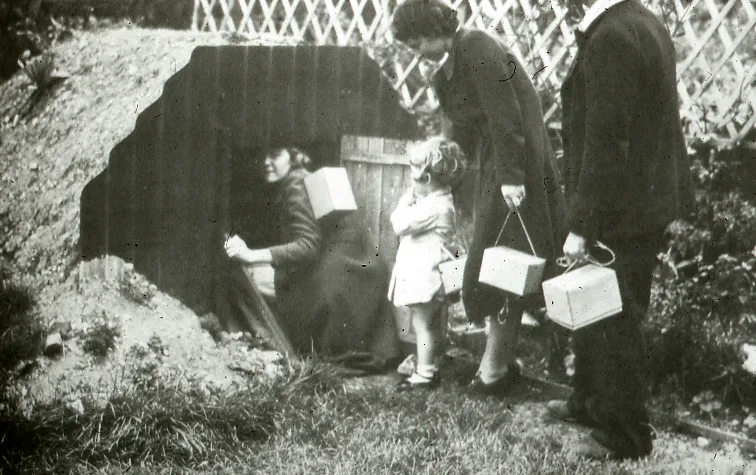
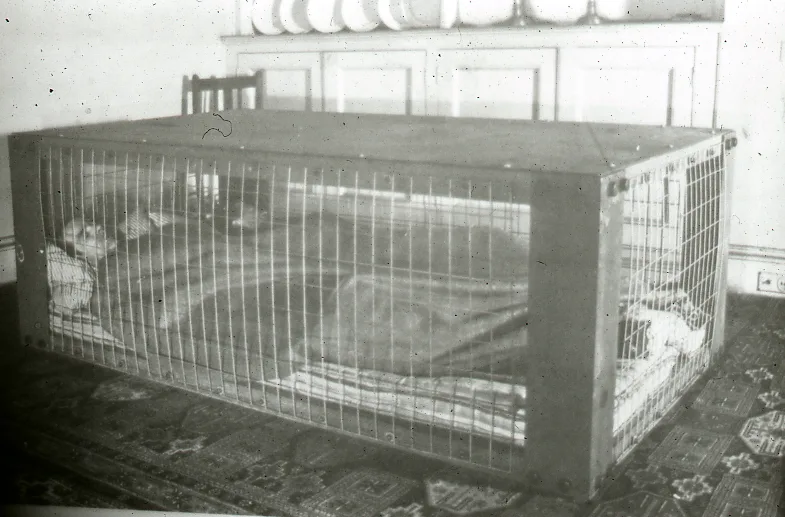
1939 – The first Anderson shelter built in a garden in Islington, London. They were named after the Home Secretary, and were dug in a trench with soil piled over the corrugated iron domed roof. Inside were bunks for the occupants to sleep in. They were 6 ft high, 4.5 ft wide, and 6.5 ft long. 2.5 million were built. The next shelter was the Morrison Shelter named after Herbert Morrison, who succeeded Anderson as Home Secretary. The Morrison Shelter was like a massive table that would protect the shelterers if the house collapsed above it. It allowed the family to sleep inside. London also had public shelters made of brick in many streets, or used cellars and brick arches as shelters. A small proportion of the population preferred to sleep in the Underground. Many stayed in their beds, unless planes were directly overhead. Photos from ‘The British People at War’ published during the war.

1956 – Nikita Khrushchev denounces Stalin.

First Written February 2024, revised February 2025. On This Day added in 2026

Terminalia God of the Boundary February 23rd

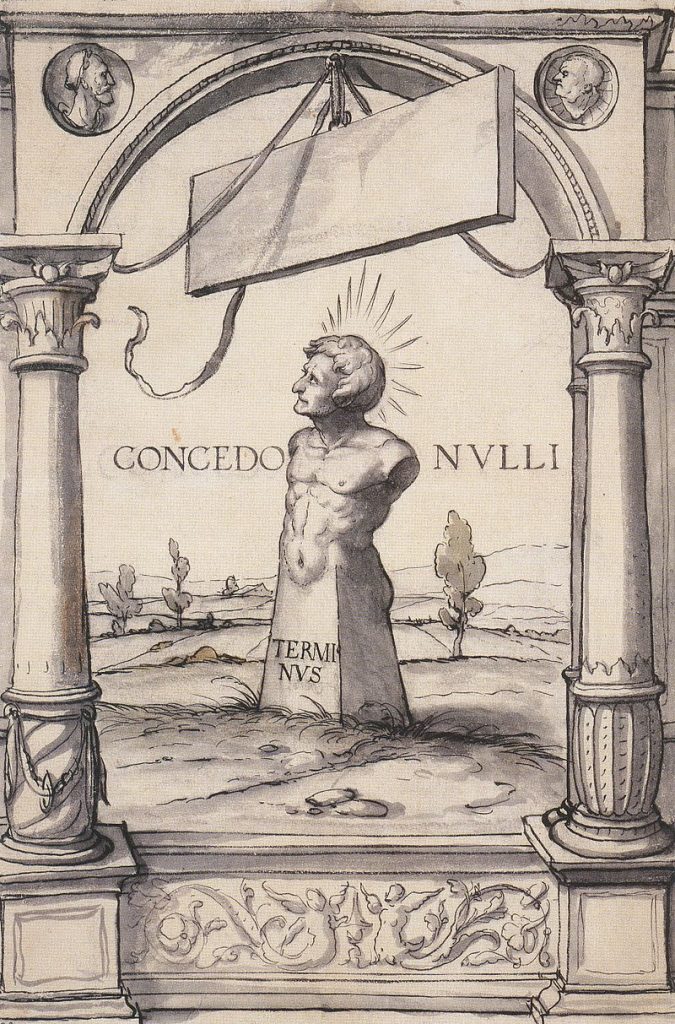
Hans Holbein the Younger Design for a Stained Glass Window with Terminus. Pen and ink and brush, grey wash, watercolour, over preliminary chalk drawing, 31.5 × 25 cm, Kunstmuseum Basel.
‘Terminus is often pictured as a bust on a boundary stone, His festival is ‘Terminalia’

Today is Terminalia, the Roman day for setting land boundaries. The festival of Terminus was a pastoral outdoor festival marking the boundaries of towns and villages. It resembles the Beating the Bounds tradition that we have in Britain. This is recorded, in the UK, from Anglo-Saxon times, and still continues in some parishes. I will talk about this on Ascension Day in May.

Terminus was an old ancient God who was the God of the boundary, the border, the edge, the liminal God. Ovid says King Tarquinus swept away the old Gods on the Capital Hill and Jupiter became the Great God. All the old temples were taken down, except for that of Terminus. Instead, Jupiter’s Temple was built around Terminus’ temple. They put a hole in the roof because Terminus had to be worshipped in the open air.

Terminus’s motto was “concedo nulli” which means “I yield to no one”. This was adopted by Erasmus as his personal motto in 1509.

Terminalia and the Roman Year

The Terminalia was celebrated on the last day of the old Roman year. February was the last month of the year. The rulers of Rome added an intercalary month called Mercedonius in an attempt to keep the Solar year in tune with the seasons. And when the intercalary month was added, the last five days of February were given to the month Mercedonius. The resulting ‘leap year‘ was either 377 or 378 days long. So, in those years, the 23rd of February was the Terminus of the year.

The intercalary months were added at the direction of the Pontiffs, supposedly every two or three years. But the Pontiffs were often swayed by political of financial advantage and delayed the decision. By the time of Julius Caesar, the seasons were wildly out of sync with the calendar year. The Dictator, responded by instituting a reform of the Calendar. It began with ‘the Year of Confusion’, over 400 days long.

The reforms introduced the Julian Calendar which realigned the calendar back in line with the seasons. It resolved the problem by adding leap day every four years. This was based on the almost correct calculation of a solar year being 365.25 days. It took another 1500 years before that inaccuracy was corrected. Then the year was another 11 days out of kilter, and the Julian Year was replaced by the Gregorian Year,

For more on Leap Years and the Roman Year look at my post here. For my post on the Gregorian calendar, look here.

Ovid & Terminalia

Here is what Ovid, in ‘Fasti’ says about Terminalis


When night has passed, let the god be celebrated
With customary honour, who separates the fields with his
sign.
Terminus, whether a stone or a stump buried in the earth,
You have been a god since ancient times.
You are crowned from either side by two landowners,
Who bring two garlands and two cakes in offering.
An altar’s made: here the farmer’s wife herself
Brings coals from the warm hearth on a broken pot.
The old man cuts wood and piles the logs with skill,
And works at setting branches in the solid earth.
Then he nurses the first flames with dry bark,
While a boy stands by and holds the wide basket.
When he’s thrown grain three times into the fire


The little daughter offers the sliced honeycombs.
Others carry wine: part of each is offered to the flames:
The crowd, dressed in white, watch silently.
Terminus, at the boundary, is sprinkled with lamb’s blood,
And doesn’t grumble when a sucking pig is granted him.
Neighbours gather sincerely, and hold a feast,
And sing your praises, sacred Terminus:
You set bounds to peoples, cities, great kingdoms:
Without you every field would be disputed.
You curry no favour: you aren’t bribed with gold,
Guarding the land entrusted to you in good faith.
If you’d once marked the bounds of Thyrean lands,
Three hundred men would not have died,
Nor Othryadesí name be seen on the pile of weapons.
O how he made his fatherland bleed!
What happened when the new Capitol was built?
The whole throng of gods yielded to Jupiter and made
room:


But as the ancients tell, Terminus remained in the shrine
Where he was found, and shares the temple with great
Jupiter.

Even now there’s a small hole in the temple roof,
So he can see nothing above him but stars.
Since then, Terminus, you’ve not been free to wander:
Stay there, in the place where you’ve been put,
And yield not an inch to your neighbour’s prayers,
Lest you seem to set men above Jupiter:
And whether they beat you with rakes, or ploughshares,
Call out: This is your field, and that is his!
There’s a track that takes people to the Laurentine fields,
The kingdom once sought by Aeneas, the Trojan leader:
The sixth milestone from the City, there, bears witness
To the sacrifice of a sheep’s entrails to you, Terminus.
The lands of other races have fixed boundaries:
The extent of the City of Rome and the world is one

Book II: February 23: The Terminalia

Translated by A. S. Kline copyright 2004

See the following posts for the Roman Year:

Romulus’s 10 month year here
Roman Months here
More on the Ides of March here
Leap Years and the Roman Year

Feralia – the Roman Festival of the Dead February 21st

To illustrate rainwear in the Roman period and to illustrate winter showing Philu from Cirencester
Tombstone of Philus from Cirencester (Corinium Dobunnorum) showing his rain cloak

Feralia & Parentalia

Feralia is the last day of Parentalia a 9-Day Festival for the spirits of the Dead. It is described in some detail by the Roman Poet, Ovid, in his Almanac of the year called the ‘Fasti’. Here, he describes how to honour a parent:

And the grave must be honoured. Appease your father’s
Spirits, and bring little gifts to the tombs you built.
Their shades ask little, piety they prefer to costly
Offerings: no greedy deities haunt the Stygian depths.
A tile wreathed round with garlands offered is enough,
A scattering of meal, and a few grains of salt,
And bread soaked in wine, and loose violets:
Set them on a brick left in the middle of the path.
Not that I veto larger gifts, but these please the shades:
Add prayers and proper words to the fixed fires.

There is much more Ovid says about Feralia, and you can read it for free, in translation by A. S. Kline (which I used above, at www.poetryintranslation.com)

For more about Parentalia look at my earlier post about the February festivals of the Romans.

Roman Cemeteries in London

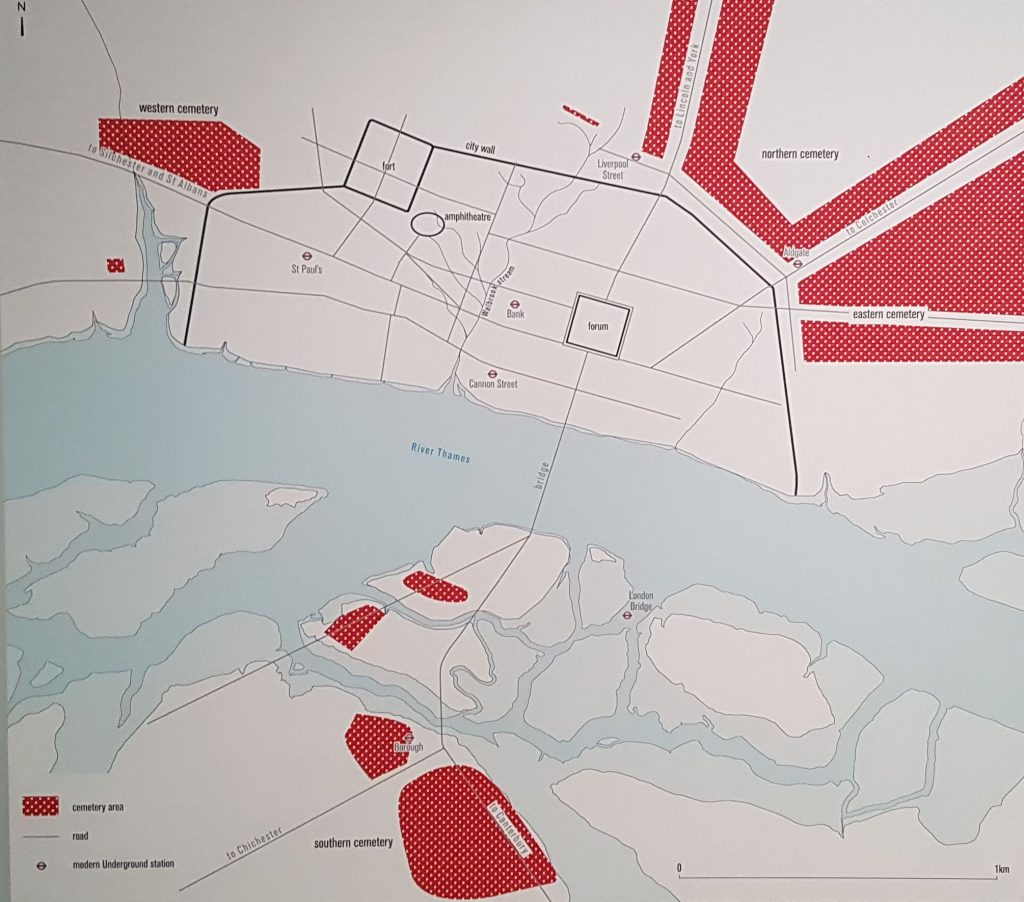
In London, archaeologists have found many Roman cemeteries around the City of London. The Romans forbade burial inside the City limits. So, the dead were buried alongside the main roads out of the City Gates. Aldgate towards Colchester, Bishopsgate to the North. Ludgate along Fleet Street to the West. Newgate to Holborn and the North West. From London Bridge to Southwark and the South. These are the places that parents would be remembered at Feralia.

Map of Roman Cemetaries from Museum of London exhibition on the Roman Dead
Map of Roman Cemeteries from the Museum of London exhibition on the Roman Dead, showing the River Thames and River Fleet. Holborn is to the left, marked ‘Western Cemetery’.

Roman Burials

Roman Mortaria

Various rites have been observed. Both inhumation and cremation were practised. I remember excavating a Roman mortaria with a hole in the bottom with the ashes of the dead in it. These large bowls were used as a mortar for grinding foodstuffs. The bottom was deliberated gritted, but they often wore through, and sometimes were reused to hold cremation ashes. I like to imagine, granny being buried in her favourite cooking vessel (or maybe a grandad who baked?).

Many bodies were covered in chalk, perhaps to help preserve the body. A surprising number of bodies are found with the head by the knees. The large number of cases fuels speculation that this was a burial rite, of whom only a percentage were beheaded as a punishment. In York, near Micklegate archaeologists found a large number of beheaded graves in a cemetery thought to be of gladiators. Other graves shown signs of a funeral pyre.

Author’s photograph of a skeleton displayed at the Roman Dead Exhibition, Museum of London, She was between 26 and 35 years old, who lived a hard life, and possibly had anaemia. Her head was severed either: before and causing death, or shortly after death, and placed between her legs as shown.

Procurator Classicianus.

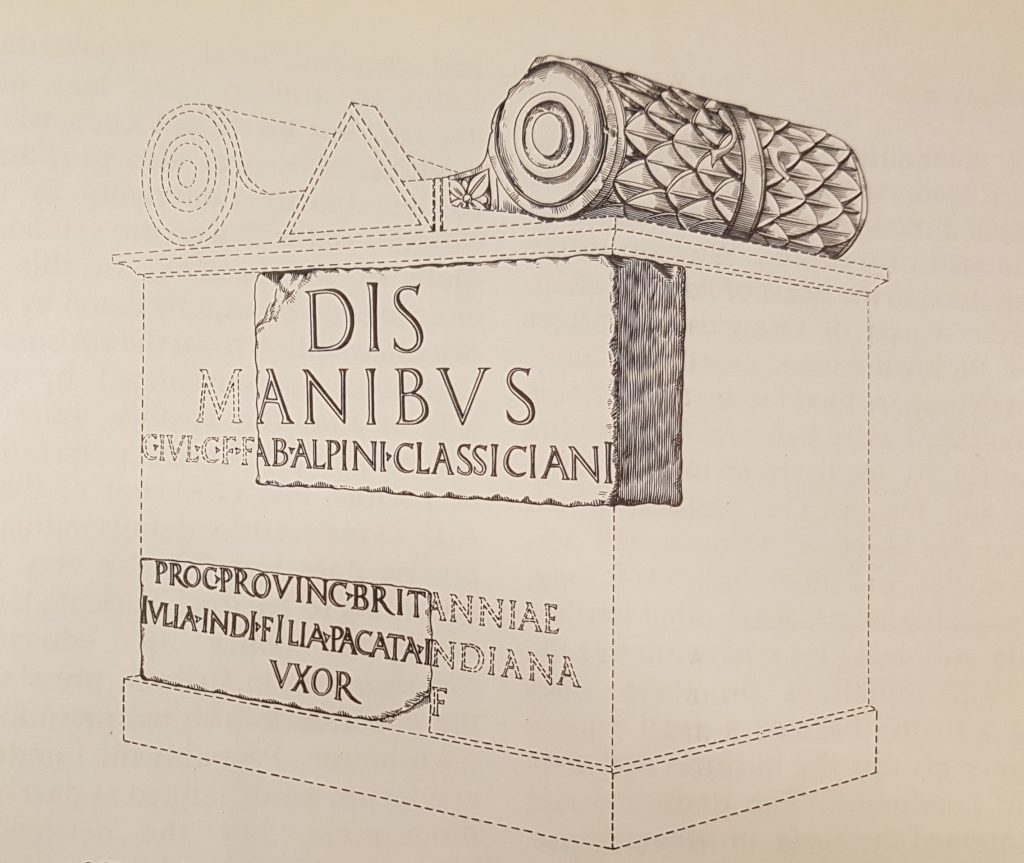
The rich and powerful were remembered with huge monuments, prominently sited along the main roads. The most famous are the burial stones found at Tower Hill of the Procurator Classicianus. What makes this special is that he is mentioned in Roman accounts of the Boudiccan Revolt of AD 60-61. He suggested to Nero that the Province would only be saved if the revenge against the British was de-escalated. Nero wisely withdrew the vengeful Roman Governor Suetonius Paulinus and replaced him with someone ready to conciliate. The Romans held the province successfully for 350 years or so more.

Reconstruction drawing of two stones found while building Tower Hill Underground Station. They read, something like, ‘To the Spirits of the Dear Departed Fabius Alpini Classicianius, Procurator of the Province of Britannia.Julia, Indi (his wife) Daughter of Pacata of the Indiana voting tribe. Had This Set up.
Sketch of a stone Eagle found in 2013 at an excavation at the Minories just outside the eastern side of the Roman Wall in the City of London.

A beautiful carved eagle which adorned a tombstone was found in the Cemetery in Tower Hamlets. Recently, a very grand mausoleum was excavated in Southwark. To find out more, have a look at the BBC website here:

Funerary Bed in Holborn

Finally, a couple of years ago an excavation ran by MOLA discovered a ‘funerary bed’ just outside Newgate in Holborn. It was on the banks of the River Fleet, a tributary to the River Thames. The fluvial location meant that there were extraordinary levels of preservation, which included this bed. It was dismantled and buried in the grave. It may have been a bed used as a grave good, perhaps for use in the hereafter. Or it might have been the bed upon which the deceased was carried to the funeral. (Or both?)

sketch of Roman 'Funerary' Bed found dismantled in Holborn, London
Reconstruction of a Roman ‘Funerary’ Bed found dismantled in Holborn, London (Sketch from a MOLA reconstruction drawing)

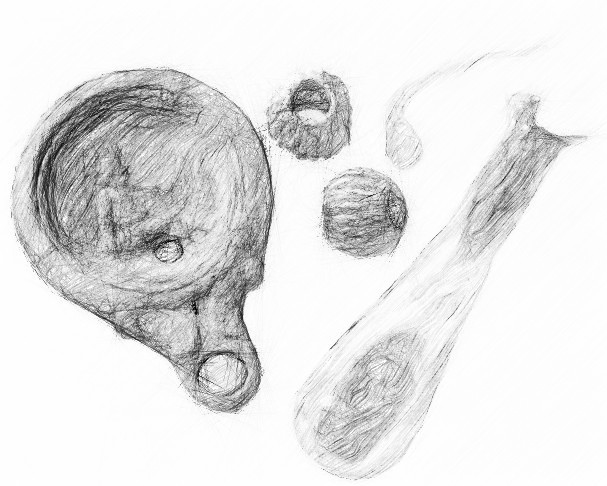
They found other grave goods. These included an olive oil lamp decorated with an image of a gladiator; jet and amber beads and a glass phial.

Sketch of Roman burial goods from Holborn 2024
Sketch of Roman burial goods from Holborn, London

For more look at www.mola.org.uk/discoveries

On This Day

1804 – Richard Trevithick‘s steam locomotive is put on wheels at the Pen-y-Darren Ironworks in Wales. and shows its capability for pulling heavy loads. Unfortunately, the Engine weighs so much it breaks the rails, so the wheels are taken off.

Toad, Frogs & Newts Migration – as the weather warms up a little, later in February is when the amphibians wake up from hibernation, and begin their annual migration to their home pond for spawning. They may walk/hop/slither up to 2 kilometres. The kind people at www,froglife.org coordinate Toad Patrols to help toads across the roads that have sprung up along their traditional migration paths.

In the Garden – prune deciduous shrubs such as Buddleia and Spiraea. Sow seeds indoors. Order lots of compost.

First Published in February 2024, revised 2025, On this Day added 2026