The Sun Enters the House of Pisces February 20th

Attributes of Pisceans selfless, mystical compassionate imaginative sensitive

pisces from the zodiac from kalendar of shepherds
Pisces from Kalendar of Shepherds

A man born in Pisces shall be a great goer, a fornicator, a mocker and covetous: he will say one thing and do another. He shall trust is his sapience, he shall have good fortune: He will be a defender of widows and orphans. He shall be fearful on water: he shall soon pass all adversities and live 72 years after nature.

The woman shall be delicious, familiar in jests, pleasant of courage, fervent, a great drinker. She shall have sickness of her eyes and be sorrowful by shame, needlessly. Her husband will leave her and she shall have much trouble with strangers. She shall travel much, have pain in his stomach and live seventy-seven years.

Both man and woman shall live faithfully.

Kalendar of Shepherds, 1604 (from the Perpetual Almanac by Charles Kightly)

What surprises me about the fortune-telling above is that it has to be nearly always wrong as the predictions are way too specific. The art of the fortune-telling is about being vague, with subtle predictions that can be interpreted in different ways.

Here is Old Moore’s Prediction for Pisceans this week:

Innovation and originality flow freely as your unique perspective solves problems that stump others. Social consciousness drives you toward meaningful causes or community involvement. While your independent streak is strong, collaboration with like-minded individuals amplifies your impact. An unexpected insight arrives through friendship.

oldmooresalmanac-com-pisces-horoscope

Now, the Old Moore’s 2023 Almanac had a page on Liz Truss of all people, written before she became Prime Minister. It is clear they thought she had a real chance of being PM. They say she has ‘an almost steely determination and plenty of apparent ambition. …. She has every astrological requirement necessary to keep her nose clean and at this moment in time is certainly among the main contenders.‘. So yes, they are right about her being among the main contenders, but absolutely no hint of the epic disaster that her PMship was.

London Stone as a Palladium

OLD ENGRAVING OF London stone
Old Engraving of London Stone, Cannon Street

On February 18th, I revised a post about Ravens, King Bran’s Head and other Palladiums that protected Britain (or London) from invasion. If you missed it, look here. A possible palladium I missed out is London Stone. To remind you, a palladium is something that stops your country or City being harmed or invaded.

London Stone is an eponymous stone found in Cannon Street, in the heart of the City of London, It is first mentioned in the 12th Century, and no one knows why it was famous. In 1862, an ‘ancient proverb’ surfaced:

“So long as the Stone of Brutus is safe, so long shall London flourish”

It was made anonymously in the journal Notes and Queries. In Welsh, it was “Tra maen Prydain, Tra lled Llyndain’. This verse, if genuine, would link the Stone to Brutus of Troy, the legendary founder of London. To be precise: by genuine, I don’t mean it would prove the stone was linked to King Brutus, or that Brutus was a real person. I mean, if genuine, it would prove that in the medieval period the stone was linked to Brutus.

Richard Williams Morgan

However, the writer has been identified as Richard Williams Morgan, who was a passionate Welsh Nationalist and prolific author. He was, also, not very scrupulous with his analysis of sources. As no earlier source can be found, it is thought Morgan made it up.

He lived in London in the 1850s and was very struck by the London Stone. Archaeologists prefer the idea that London Stone is, likely, a milestone from which the Romans measured distance. For Shakespeare, it was the stone on which rebel Jack Cade claimed lordship of London. For the romantic, it was a coronation stone; a stone of power; the sword in the stone, stone; or an ancient megalith. The truth is, we have no idea. But it has been called the London Stone since the 12th Century.  Why was it so named, and what was it ‘for’ or symbolic of?
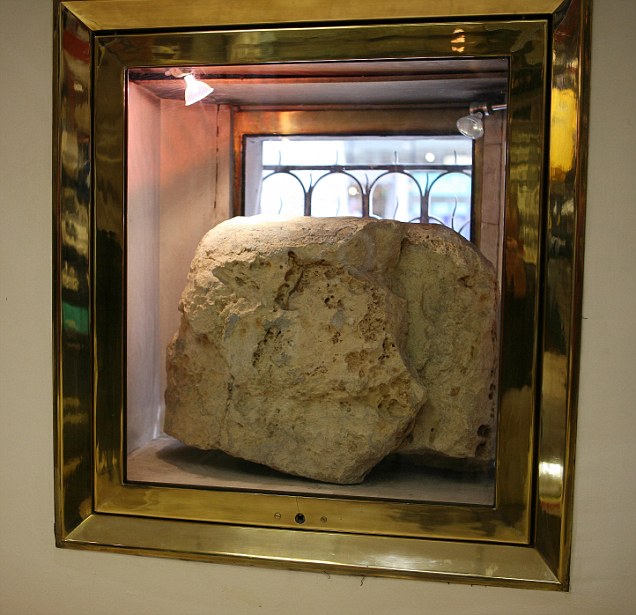
picture of london stone from the inside
Pic by Graham Hussey pic shows the LONDON STONE which is in Canon Street, London .pic taken inside the Tech Sports shop

Morgan came to the conclusion it was the stone plinth on which the original Trojan palladium had stood. This was a wooden statue of Pallas Athene, that protected Troy from invasion.  It was stolen by Odysseus and Diomedes shortly before the successful Trojan Horse plot. It was then taken to Italy.

Morgan’s idea was that King Brutus brought it from Rome when he sailed into Exile in Britain. Brutus, was a descendant of Aeneas. Aeneas was the only Trojan leader to escape from the destruction of Troy. He found his way to Rome, after leaving Dido in Carthage. He was the ancestor of Romulus who founded Rome, and the ancestor of King Brutus.

According to legend, Brutus gathered all the Trojan slaves and exiles in the Mediterranean. He then sailed to found a new Troy in our green and pleasant lands. His new capital he called Troia Nova (New Troy), which became Trinovantum, then Lud’s Dun, and finally London. Or so the Myths say.

Morgan’s theory held that the Stone was used as the altar stone of the Temple of Diana. Folklorist contend that the temple was originally on the site of St Pauls Cathedral. Morgan (in the 19th Century) was the first person to link London Stone with Brutus, or so people thought and still think (see Wikipedia). That was until 2018.

Picture of the plinth in which London stone is rehoused recently
London Stone as recently rehoused.(Photo K Flude)

John Clark

John Clark, Emeritus Curator at the Museum of London, found a reference to a narrative poem of the 14th Century. This links London Stone to Brutus and to the future prosperity of London. Just as Morgan did. So, it makes it possible, at least, that Morgan did not just make the connection but drew on a medieval ‘tradition.’

Brutus set up London Stone
And these words he said anon:
‘If each king that comes after me
Makes this city wide and roomy  
As I have in my day,
Still hereafter men may say 
That Troy was never so fair a city  
As this city shall be.’

From Burnley & Wiggins 2003b, lines 457–64(John Clark’s modern English version)

For the full story, see John Clark’s article.

London Stone & the Neolithic

Recent archaeological discoveries reveal that London was the site of Late Neolithic feasting on a possibly large scale (discussed here:). This increases the possibility that the London stone is a ‘ritual’ stone from prehistory. But, of course, there is still no evidence that London Stone is prehistoric, and even less that Brutus actually existed. 

On This Day

1472 – Orkney and Shetland are given to Scotland by Norway in lieu of  dowry for Margaret of Denmark.

1933 – Adolf Hitler meets with German industrialists to arrange for financing of the Nazi Party’s election campaign. Democracy is doomed.

Written in 2023 and revised in February 2024 and 2025 Pisces and London Stone joined into one page 2026


Ovid’s Metamorphoses, Crocus and Saffron February 19th

Photo Mohammad Amiri from unsplash. Notice the crimson stigma and styles, called threads, Crocus is one of the characters in Ovid’s Metamorphoses

The story of Crocus and Smilax is in Ovid’s Metamorphoses. The book tells the  story of myths which involve the metamorphosis of a person to a flower, or to a constellation, or to an echo or some supernatural change in being. This poem is one of the most famous in the world, written in about 6 AD. It influenced Dante, Bocaccio, Chaucer, Shakespeare, Keats, Bernard Shaw, and me.  Seamus Heaney and Ted Hughes have translated modern versions of some of the tales.

The mechanicals in ‘The Midsummers Night Dream’ perform Ovid’s story of Pyramus and Thisbe, Titian painted Diana and Actaeon. Shaw wrote about Pygmalion, and we all know the story of Arachne. She claimed to be better than Athene at weaving. And then was turned into a spider.

The poem is about love, beauty, change, arrogance and is largely an Arcadian/rural poem. This is a contrast to Ovid’s ‘Art of Love’ which I use for illustrations of life in a Roman town. The stories are all about metamorphoses, mostly changes happening because of love. But it is also an epic as it tells the classical story of the universe from creation to Julius Caesar.

Ovid’s Metamorphoses and the Crocus

Crocus and his beloved Smilax were changed into tiny flowers.’ Ovid tell us, but chooses to give us no more details. So we have to look elsewhere. There are various versions. In the first, Crocus is a handsome mortal youth, beloved of the God Hermes (Mercury). They are playing with a discus which hits Crocus on the head and kills him. Hermes, distraught, turns the youth into a beautiful flower. Three drops of his blood form the stigma of the flower.  In another version, Crocus and the nymph Smilax, fall in love. And are rewarded by immortality as a flower. One tale has Smilax turned into the Bindweed. 

Morning Glory or Field Bindweed photo Leslie Saunders unsplash

Ovid’s Metamorphoses and Bindweed

It turns out that Smilax means ‘bindweed’ in Latin. Bindweed is from the Convolvulus family, and I have grown one very successfully in a pot for many years. But they have long roots. According to the RHS ‘Bindweed‘ refers to two similar trumpet-flowered weeds. Both of which twine around other plant stems, smothering them in the process. They are difficult to remove. This, could suggest that Smilax is either punished for spurning Crocus, or that she smothered him with love. Medically, Mrs Grieve’s Modern Herbal says all the bindweeds have strong purgative virtues, perhaps another insight into Smilax’s psychology?

The Metamorphosis of Data and the correct use of the plural

Apparently, in the UK some say crocuses and others use the correct Latin plural, croci. On an earlier version of this post I used the incorrect plural crocii.

On the subject of Roman plurals, the Financial Times editorial department made an earth-shattering decision, a couple of years ago. They updated their style guide to make the plural word data (datum is the singular form) metamorphise into the singular form.

So it is now wrong to say ‘data are’ but right to say ‘data is’. For example, it was correct to say:  ‘the data are showing us that 63% of British speakers use crocuses as the plural’ but now, it is better to write ‘the data is showing us that 37% of British people prefer the correct Latin form of croci’.

Violets and Crocuses

Violets and crocuses are coming out. They often come out for St Valentine’s Day, and so obviously associated with Love. White croci usually represented truth, innocence, and purity. The purple variety imply success, pride and dignity. The yellow type is joy.’ according to www.icysedgwick.com/, which gives a fairly comprehensive look at the Crocus.

Crocus & Saffron

The autumn-flowering perennial plant Crocus sativus, is the one whose stigma gives us saffron. Roman civilisation spread the plants around Europe.   They used it for medicine, as a dye, and a perfume. It was much sought after as a protection against the plague, and extensively grown in the UK.  Saffron Walden was a particularly important production area in the 16th and 17th Centuries.

Saffron in London

Snowdrop, Crocus, Violet and Silver Birch circle in Haggerston Park. (Photo Kevin Flude, 2022)

The Bishop of Ely grew Saffrom in his beautiful Gardens just outside of the City of London. The area remembered by the London street name: Saffron Hill.  It is home to the fictional Scrooge. This area became the London home of Christopher Hatton, the favourite of Queen Elizabeth 1. His garden was on the west bank of the River Fleet, in London EC1, in the area now known as Hatton Garden. (For more on Christopher Hatton see my post on nicknames Queen Elizabeth I gave to her favourites).

I found out more about Saffron from listening to BBC Radio 4’s Gardener’s Question time and James Wong.

Croydon (on the outskirts of London) means Crocus Valley. A place where Saffron was grown. The Saffron crops in Britain failed eventually because of the cost of harvesting, and it became cheaper to import it. So, we now import it from Spain, Iran, and India amongst other places. But it is being reintroduced in Norfolk, Suffolk, Kent, and Sussex. These are – the hot and dry counties. The plant enjoys a South-facing aspect. But it needs protection from squirrels and sparrows who love it. To grow it, look at this post from the Garden Doctor.

Saffron Photo by Vera De on Unsplash

Violets

Viola odorata CC BY-SA 2.5 Wikipedia

The Celts used Violets as cosmetics; the Athenians to moderate anger; the Iranians for insomnia, and are loved by all because of their beauty and fragrance. They have been symbols of death for the young, and used as garlands, nosegays posies, which Gerard says are ‘delightful’.

For more on Ovid, use the search facility (click on menu) or read my post here.

On This Day

197 – The Battle of Lugdunum sees the victory of Septimius Severus over Clodius Albinus reputedly the bloodiest battle between Roman armies. The previous emperor Pertinax died in 193 during the Year of the Five Emperors. Three main contenders emerged Severus who was African, Niger was from Central Italy, Albinus was the Governor of Britain.

1800 – Napoleon proclaims himself First Consul making him the dictator of France.

1846 – The Republic of Texas officially transfers power to the State of Texas government and becomes part of the United States.

1878 – Thomas Edison patents the phonograph.

1945 – Battle of Iwo Jima began with the landing of 30,000 US troops.

First written 2023, revised 2024, 2025 and 2026

British Recapture trenches near St Eloi February 15th 1915

The Prioress with her Rosary Beads from the Canterbury Tales by Geoffrey Chaucer from the Ellesmere manuscript
The Prioress from the Canterbury Tales by Geoffrey Chaucer from the Ellesmere manuscript. Her only oath is ‘By St Eloi’

When I read a reference to a Battle at St Eloi, it struck a chord as he is mentioned in the Canterbury Tales. It is an oath sworn by the delicate Prioress:

There was also a nun, a prioress,
Who, in her smiling, modest was and coy;
Her greatest oath was but “By Saint Eloy!”
And she was known as Madam Eglantine.
Full well she sang the services divine(5)
Intoning through her nose, becomingly;
And fair she spoke her French, and fluently.
At table she had been well taught withal,
And never from her lips let morsels fall,
Nor dipped her fingers deep in sauce, but ate(10)
With so much care the food upon her plate
That never driblet fell upon her breast.

General Prologue Canterbury Tales. Full Text here.

The reason is sticks in my mind is that the Prioress is shown as a cultured, well-mannered, delicate woman. And yet, she tells the most tremendously anti-Semitic tale. I hope that Chaucer meant this contrast. Someone who knows the forms of good behaviour without a clue in her hand that the most important of the Commandments is ‘Love Thy Neighbour like thyself.’ Another irony is that St Eloy was noted for refusing to swear an oath, and yet, the Prioress swears, by St Eloy.

St Eloi

Anyway, St Eloi was a very popular saint in the medieval period. According to legend, he was was having trouble shoeing a horse, which he thought was possessed. So he cut the horse’s leg off, re-shoed the amputated leg and then reattached the leg back on the horse. The horse trotted off, none the worse for the experience.

Properly called St. Eligius he is the patron saint of horses and cattle, farriers, blacksmiths, metalworkers, goldsmiths. The Saint was also responsible for converting Flanders to Christianity in the 7th Century. His Saint’s Day is 1 December. To look at the charge of rape against Chaucer look at my post here.

St Eloy in London

I have just discovered that there is a Holy Well dedicated to St Eloy in Tottenham London! To find out more look at this page.

Trenches at St Eloi

The Ypres Salient. St Eloi is just behind the ‘line’ above HOLLEBEKE
. Downloaded from http://www.gutenberg.org/ebooks/15480 wikipedia

St Eloi is also the patron saint of mechanics in general (including the Royal Electrical and Mechanical Engineers, (forerunners of whom fought at Ypres). This brings me to what happened on this day in 1915, the British retook trenches at St Eloi. St Eloi was just behind the Southern edge of the Ypres Salient, a bulge of allied territory surrounded on three sides by German forces and the site of the five battles of Ypres. St Eloi had a mound which provided a perfect position for machine-guns to dominate the area and so became the focus of fierce fighting from 1914 through into 1918 when the Germans were finally pushed out of the Salient.

World War I destruction in Ypres (wikipedia)

Bravery at St Eloi

Here is a citation from a medal for bravery:

´For gallant behaviour on the morning of the 15th February 1915 at St. Eloi. A party of six stretcher bearers carrying wounded men from the firing line came under a heavy and sustained rifle fire. The bearers left their stretchers and ran to cover leaving Private Wright, D.C.L.I. (shot through the knee) and Private A. Stevenson, D.C.L.I. (shot through stomach) lying in open under heavy fire.

7679 Lance Sergeant T. Spanton, 6170 Rifleman E. Largen, and 1126 Company Sergeant Major S.M. Clay [together with Captain Brady] rushed some 50 yards across the exposed fire zone and carried in to cover the stretcher bearing Private Wright, whilst under heavy rifle fire. Private Stevenson, who was lying beside Wright, was found to be dead, and so was not carried in until dark. Lance Sergeant Spanton, Company Sergeant Major Clay, and Rifleman Largen have on several occasions done noticeably good work, showing fearlessness, resource, and devotion to duty.´

For details of the medals follow this link.

Fighting continued here from 1914 through into 1918 when the Germans were finally pushed out of the Salient.

War in Winter

I wanted to find something about the winter as experienced in World War 1. Why? Because I watched a very moving film about World War 1 by Derek Jarman called ‘War Requiem’. It put images to the requiem by Benjamin Britten. I also listened to a radio piece on ‘Spring Offensives’ to give a long view on what was happening in Ukraine.

I found this war poem which vividly sets a winter war scene:

Searchlight
F. S. Flint

There has been no sound of guns,
No roar of exploding bombs;
But the darkness has an edge
That grits the nerves of the sleeper.

He awakens;
Nothing disturbs the stillness,
Save perhaps the light, slow flap,
Once only, of the curtain
Dim in the darkness.

Yet there is something else
That drags him from his bed;
And he stands in the darkness
With his feet cold against the floor
And the cold air round his ankles.
He does not know why,
But he goes to the window and sees
A beam of light, miles high,
Dividing the night into two before him,
Still, stark and throbbing.

The houses and gardens beneath
Lie under the snow
Quiet and tinged with purple.

There has been no sound of guns,
No roar of exploding bombs;
Only that watchfulness hidden among the snow-covered houses,
And that great beam thrusting back into heaven
The light taken from it.

Published 2025, Revised February 2026

St Valentine’s Day & Magpies February 14th

Picture of a magpie in a field.  Photo by Rossano D'Angelo on Unsplash
Magpie – A Bird for St Valentine’s Day? Photo by Rossano D’Angelo on Unsplash

St Valentine’s Day in a Poem by Chaucer

For this was on Seynt Valentynes day,
Whan every foul cometh ther to chese his make,
Of every kinde, that men thynke may;
And that so huge a noyse gan they make,
That erthe and see, and tree, and every lake
So ful was, that unnethe was ther space
For me to stonde, so ful was al the place.
Parliament of Fowls, Geoffrey Chaucer

This is my ‘translation’

For this was St. Valentine’s Day
When every bird came there to chose their mate.
Of every type, that men think may
And that so huge a noise did they make
That earth and sea and tree and every lake
So full was, that hardly was there space
For to stand so full was the place.

St Valentine’s Patronage

This is the first reference to St Valentine’s as a romantic day. And some people charge Chaucer with making the whole thing up! St Valentine, is supposed to have been martyred in the 3rd Century (290AD) on the Via Flaminia on February 14. He refused to stop marrying people in the Christian rites. Therefore, he is the patron Saint of lovers. Valentine is also the patron Saint of epileptics, fainting and beekeepers. According to legend, he taught a young blind girl how to look after Bees, and, sometime later, her eyesight was restored. He also is said to have treated a young man of epilepsy. Epilepsy was sometimes called the Falling Sickness, and so he is also the Saint of Fainting.

But until Chaucer, there was no particular link with romance. In fact, there are at least three Saint Valentines who were martyred in the Roman period. Their relics are scattered around Europe (have a look at this National Geographic article for the full S.P.). These include bones in Glasgow and his heart in Dublin. There are in total 11 Saints called Valentine in the list of Catholic Saints.

Another theory is that St Valentine has taken over the aspect of the God Cupid, as a Christian attempt to create a holy festival to replace the Lupercalia. See my post on the Lupercalia here.

St Valentine’s Day and Birds

Chaucer’s poem suggests one possible route to the link with romance. Early February is about the time when birds pair off. If they want to have their chicks at the optimal time, then they need to get going before spring has really sprung.

When I think of love, I don’t think of birds. Maybe, this is because I live by a Canal. Outside my garden, I frequently see and hear a Coot chasing his pair across the water before violently mounting her. But then they are fiercely monogamous and defend their nest, fearlessly, against much bigger birds. And swans glide by in beautiful family groups. But Magpies are my favourite lovebird because you see one, and then look around, and you very often see the partner. I have adopted an old tradition that you are supposed to say:

‘Hello, Mr Magpie! Where’s Mrs Magpie?’

And look for the mate. It is good luck if you see her and bad luck if you don’t. (Please feel free to assign your own favourite gender!)

‘One for Sorrow’ is a well-known nursery rhyme found in many variations, and is an example of ‘ornithomancy superstition’ whereby the number of Magpies you see determines some aspect of your future. Magpies normally mate for life, and are not gregarious during the nesting season, but thereafter, they ‘join together in large wintering flocks of more than 20 or so birds.‘. So, perhaps we need at least another seven lines for the rhyme? So, far I have never seen a flock of them. If you have a photo of a flock, please send it to me!

One for sorrow,
Two for joy,
Three for a girl,
Four for a boy,
Five for silver,
Six for gold,
Seven for a secret,
Never to be told.
Eight for a wish,
Nine for a kiss,
Ten a surprise you should be careful not to miss,
Eleven for health,
Twelve for wealth,
Thirteen beware it’s the devil himself.

As to the likelihood of seeing thirteen magpies together – well I have seen them often in pairs, occasionally in threes and often alone.

Here is another, more dangerous version of the rhyme (you are more likely to see the Devil)

One for sorrow,
Two for mirth
Three for a funeral,
Four for birth
Five for heaven
Six for hell
Seven for the devil, his own self

For details of the history of versions of this poem, click here:

Bad Birds

Magpies don’t have a good reputation, traditionally being regarded as thieves and scavengers with untidy nests and eating habits. They are supposed to be attracted to shiny things, but Exeter University did some research which found that they have the normal Corvid’s curiosity for objects. But they are as happy to snatch a dull object as a shiny one. So, we can see they are very intelligent as well as faithful lovers. For me, a good-omened bird (as long as I see the two of them).

More on Chaucer in my post for April 18th. For my post on Blackbirds see here.

On This Day

44BC – Julius Caesar was appointed dictator in perpetuum. Or perpetual dictator of the Roman Republic. Coins were issued with the phrase DICT PERPETVO.

1400 -Richard II died shortly after Epiphany Rising, a failed plot to restore him to the throne. Some think he was starved to death in captivity in Pontefract Castle. Or he starved himself. His body was taken to London and put on display in St Paul’s Cathedral on 17 February. His remains were taken to one of his favourite palaces at King’s Langley Priory on 6 March. Henry V had his remains ‘translated’ to Westminster Abbey. King’s Langley was a Royal Palace lived in by Eleanor of Aquitaine and Edward II, as well as Richard II. It is near Slough.

Jan-Marie Knights author of The Plantagenet Socialite lists possible scenarios:

‘The accepted tale of the king’s death is that in despair and grief at the death of his friends, King Richard refused to eat or drink, although a few say he was purposely starved to ensure he died as if from a natural death. Another rumour is that when an esquire mentioned the words ‘King Henry’ while he was eating dinner, Richard struck him with the knife he was using. Guards charged in and the king, pushing the table away, took a bill out of one man’s hand and managed to slay four of them but one leapt onto the chair he had vacated and felled him with a stroke of his poleaxe.’

1876 – Alexander Graham Bell applies for a patent for the telephone

1895 – The Importance of Being Earnest, first produced at the St James’s Theatre, London

1918 – Russia finally adopts the Gregorian calendar. see my post here.

First Published in February 2023, revised and updated in February 2024, 2025 On This Day added 2026

Friday the Thirteenth

Photo by Polina M on Unsplash illustrating Friday the Thirteenth

On the other hand, ‘Thank God It’s Friday!’. In fact, the belief that Friday the Thirteenth is a very bad luck days is not that old. Researchers can only trace it back to the 19th Century in France. Have a look at this BBC site for details. However, 13 has long been an ill-omened number. Judas Iscariot was the 13th to arrive at the Last Supper, And that didn’t turn out well. 13 was an unlucky day for the Romans too.

Copy of the Last Supper at the Royal Academy
Copy of the Last Supper at the Royal Academy showing 13 participlants

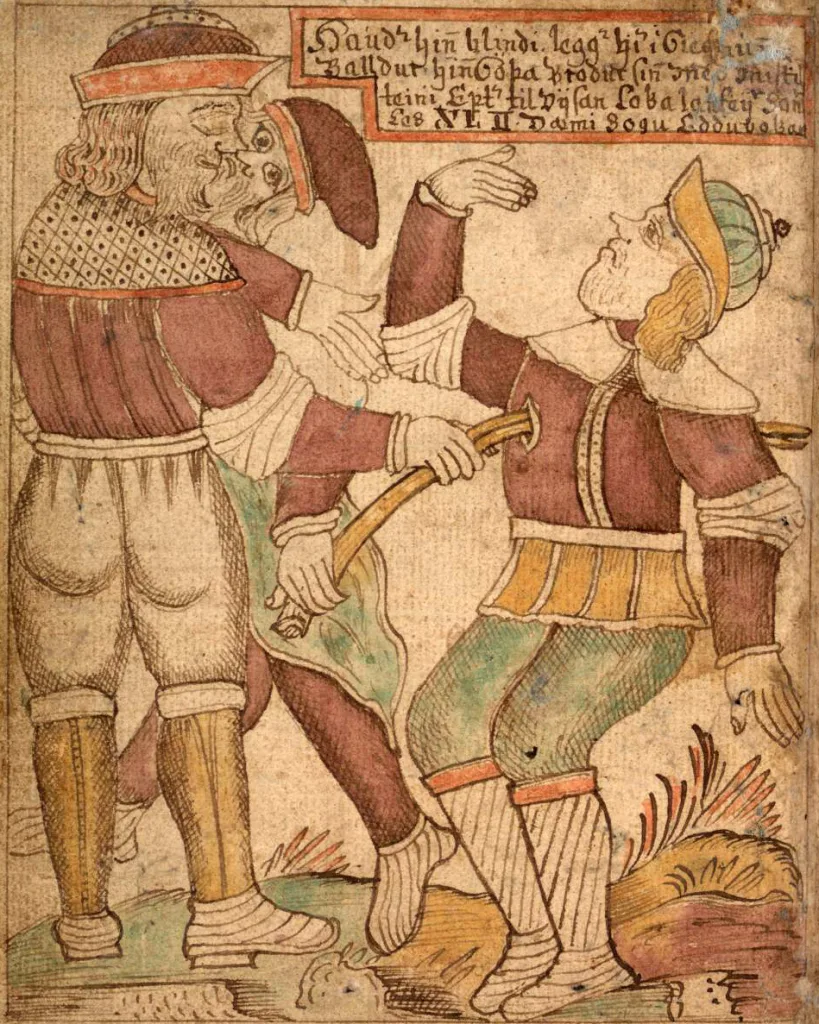
Baldur and Loki

In Norse Mythology, Baldur, the son of Odin who was a bright and cheerful God, was having premonitions of doom. Odin sought the advice of a dead seer who told him, Baldur was doomed. Baldur’s mother, the Goddess Frigg, was determined to save him. So got every entity in the cosmos live or dead to swear they would not harm Baldur.

Thereafter, the Gods enjoyed themselves at banquets by throwing missiles at Baldur who was now immune to all threats. The mischievous God, Loki, saw an opportunity for his evil skills. He spoke, in disguise, to Frigg asking if she had really got every single entity to swear? She said yes except the Mistletoe as it was so innocuous. So, ofcourse, Loki went to make a spear out of the mistletoe.

With the weapon, Loki attended a Banquet of twelve gods to which he was not invited, being therefore the 13th. When the Gods began their now customary game of throwing things at Baldur, Loki asked the slayer God Hodr to throw the mistletoe spear. It killed Baldur, and despite many attempts the Gods could not get Baldur out of Hell, Much of the joy of the world died with him. For more detail see norse-mythology.org.

By Jakob Sigurðsson[2] – SÁM 66, 75v. Digitized version available from http://sagnanet.is/saganet/?MIval=/SinglePage&Manuscript=1109&Page=150&language=english. Image processing (crop, rotate, color-levels) by Skadinaujo (talk · contribs)ou Jakob Sigurðsson. The Death of Baldr. From: Reykjavik: Stofnun Árna Magnússonar í íslenskum fræðum. SÁM 66. 1765. 75v. Hand copied paper manuscript. MyNDIR: My Norse Digital Image Repository. Ed. P. A. Baer. 2023. Edition 2.5.1. Victoria, B. C.: Humanities Computing and Media Centre, University of Victoria. 2023., Public Domain, https://commons.wikimedia.org/w/index.php?curid=6029049

Unlucky Friday?

Friday was often an unlucky day in the Bible. In particular, it was the day Adam and Eve ate of the Tree of Knowledge. Below you can see the human-headed snake beguiling Eve who hands the fruit of knowledge to Adam.

Detail from The Creation and Fall of Man by Mariotto Albertinelli Courtauld Institute photo by KFlude

It was the day when Noah’s premonition was proven correct. In the Canterbury Tales, Chaucer writes that “And on a Friday fell all this mischance. O Venus, sweet goddess of love’s chance”. (Nun’s Priest’s Tale). And Friday was the normal Hangman’s Day in England.

But no one seems to have put the two together until the 19th Century. In 1834 a French play had a line

“I was born on a Friday, December 13th, 1813 from which come all of my misfortunes.”

There is one Friday 13th a year, and often three. They insist on appearing only in a month that starts on a Sunday. The compound word for fear of Friday 13th is paraskevidekatriaphobia.

On This Day (Friday 13th)

1307 – On Friday 13 October, King Philip IV of France arrested leading members of the Knight’s Templars. One of the most powerful monastic orders in Europe to whom many of the leading Knights belonged. They had basically become the bankers to the Royalty of Europe, But they had become too powerful, and were destroyed very violently.

First Published on Friday the 13th of February 2026

The Great Freeze February 12th 1895

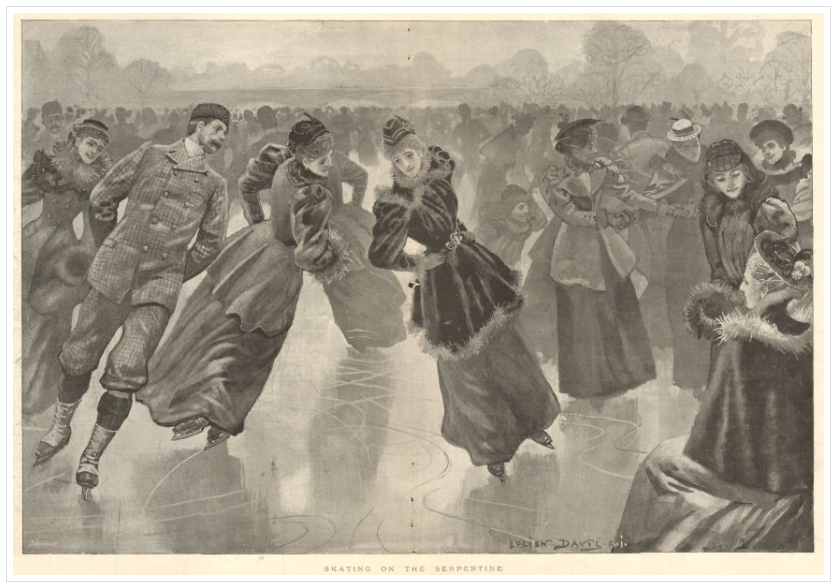
The Greeat Freeze. ‘Skating on the Serpentine’ by Lucien Davis
Antique wood-engraved print. Illustrated London News double page from 2 March 1895 (print owned by K Flude)

The Great Freeze

London, February 12, (1895). There is no abatement of the abnormally cold weather which has prevailed in northern Europe for the last week. The Upper Thames is frozen over, and huge blocks of ice breaking away from the mass are floating down the river, causing much damage to the smaller shipping craft. Water traffic is consequently at a complete standstill.

Many cases of death from cold and exposure are reported, the privation and distress in the East End of the city being particularly severe. The cold is so intense that birds are found frozen to death on the branches of the trees, and thousands are perishing. The severe weather has also directly caused considerable mortality, a number of deaths from exposure having been reported among postmen, omnibus drivers, cabmen, and labourers.

Contemporary Newspaper quotation on February 12th 1895 quoted by Isle of Dogs Life blog

Winter of 1895 Limehouse to left, Tower of London to right. Images from Isle of Dogs blog.

The year 1895 was the culmination of a decade of particularly cold winters (and for some the end of the so-called Little Ice Age). On the 11th February, the coldest day in British History was recorded at Braemar at −27.2 °C. February 1895 was the second coldest on record, with the lowest minimum temperatures on record. Shipping in the biggest port in the world was stopped. Therefore, many workers were laid off, and had to resort to what were then called ‘soup kitchens’ and now ‘food banks’. Winter death rates were said to be doubled, with people dying in the street and in unheated homes.

Record minima were set for these dates in February 1895:

  • 7th: −21.7 °C or −7.1 °F
  • 8th: −25.0 °C or −13.0 °F
  • 9th: −23.9 °C or −11.0 °F
  • 10th: −25.6 °C or −14.1 °F
  • 11th: −27.2 °C or −17.0 °F
  • 12th: −20.6 °C or −5.1 °F
  • 13th: −21.9 °C or −7.4 °F
  • 14th: −21.7 °C or −7.1 °F
  • 16th: −23.9 °C or −11.0 °F
  • 17th: −23.9 °C or −11.0 °F
  • 18th: −23.9 °C or −11.0 °F
  • 19th: −22.2 °C or −8.0 °F

Source Wikipedia.

On the flip side people resorted to ponds around London particularly the Serpentine which had 6 inches of ice and 50,000 skaters, with speed skating competitions.

For more details and contemporary newspaper accounts of the Great Freeze, read the Isle of Dogs blog. See also my post on the Cold Winter January 28th 1776. The next coldest winter was January 23rd 1940, when the Thames froze over for the first time since 1880. Lovely photo here of skaters on the Serpentine.

On This Day

1554 – Lady Jane Grey was executed after a trial at the Guildhall. Her husband was executed on the same day. Her adoption as heir to the throne was ordered by her cousin Edward VI. His minister, John Dudley, Duke of Northumberland, (and Jane’s Father-in-Law) arranged for the Privy Council to accept Jane as the next monarch. They were trying to prevent Henry VIII’s Catholic daughter, Mary taking the throne. Jane was Queen for 9 Days. The Privy Council swapped sides as support for Jane collapsed. Jane was the Great-granddaughter of Henry VII and cousins to Mary, Elizabeth and Edward VI.

1993 – The South African Government agrees with the African National Congress to form an elected interim government comprised of both black and white members.

Published February 12th 2024, and republished 2025, 2026

Fat Thursday Last Thursday before Lent

plate of doughnuts called pączki for  tłusty czwartek (Fat Thursday)
A plate of Polish pączki for tłusty czwartek (Fat Thursday)

Fat Thursday

Today is El Jueves Lardero in Spain, Giovedì grasso in Italy, Weiberfastnach in the Rhineland, Tłusty Czwartek (Fat Thursday) in Poland and Tsiknopempti in Greece.

Please read out that sentence loud, attempting the accents because it’s very therapeutic!

Fat Thursday is the last Thursday before Lent. It is the first day of the Carnival season which reaches a climax on Mardi Gras, or Shrove Tuesday. This is the day before Ash Wednesday, when the 40 days of fasting before Easter begins.

In Poland, the tradition is to eat pączki which we call doughnuts and the Germans call Berliners. I remember when President Kennedy made a famous speech in Berlin and said ‘Ich bin ein Berliner’. He was cheered to the echo but was actually saying ‘I am a doughnut! Doughnuts traditionally should be made with red jam. But now people can use cream, or almost any sort of sugary nonsense.

Zofia’s Doughnuts (pączki) all cooked on Feb 12th 2026. Fat Friday Tłusty Czwartek. Zofia makes them for a whole host of relatives and neighbours.

Spain is more savoury on Greasy Thursday, where tortilla are eaten. They also eat sausages, bacon, and pork. In Catalonia, they eat tortilla with butifarra.(which are sausages in the Roman tradition). Here is a recipe for butifarra.

In Italy giovedì grasso (Fat Thursday) is when:

“the fooling and the mumming, the dancing, shrieking, and screaming would be at its height.”

This is recorded by the English writer Marie Corelli in her book Vendetta (1886). Look at these sites for more on Fat Thursday and El Jueves Lardero.

Lardy Thursday? Butter Week & Lardy Cake

There are indications that the week before Shrove Tuesday, in the Anglo Saxon period, was one of merriment and feasting. Eating the things that were not allowed in Lent. So in Old English this week is Cheese Week or Butter Week, and there was a Cheesefare Sunday. (‘Winters in the World’ by Eleanor Parker).

But I cannot find any references to traditions of a fat Thursday or a Lardy Thursday in the UK. But we do have the fabulous Lardy Cake. It is a cake that drips with sugar and lard (pig fat). It is one of my very favourite cakes. The main ingredients are rendered lard, flour, sugar, spices, currants and raisins. I was brought up on Lardy Cake, Chelsea Buns, Spotted Dick, and Sticky Willies (iced buns). Every day was Fat Thursday! I am surprised I wasn’t an overweight child!

It is by no means a countrywide cake. My own theory is that it was a delicacy of the West Saxons. And I fondly imagine King Alfred tending to the Lardy Cake when musing about defeating the Vikings. I have bought lardy cake in Woking and Guildford in Surrey. There is a great Lardy Cake to be eaten in the centre of Winchester (Alfred’s Capital). Along the Thames Valley in Reading, but best were sold in Cornmarket in Oxford, in, the since closed, Woolworths. These are all in areas controlled by Wessex in the 9th Century.

Worcester Dripping Cake

When lecturing at Worcester I found a variant of it which is called Worcester Dripping Cake. Worcester is in the Kingdom of Mercia. Dripping is melted fat, often from Beef. Many Londoners were brought up on Bread and Dripping.

Wikipedia says Lardy Cake is from: ‘southern counties of England, including Sussex, Surrey, Hampshire, Berkshire, Wiltshire, Dorset and Gloucestershire.’ But I have never found it myself around Stonehenge, or in Dorchester, nor in the Cotswolds. So I would say Sussex, Surrey, Hampshire, Berkshire and Oxfordshire are the lardy cake heartlands. It is said to have been originally for special occasions, so maybe there once was a Lardy Thursday tradition. It feels like there should be one!

A slice of lardy cake from The Indulgent Baker at 32d Church Street, Caversham, Reading, Berkshire, England, UK.Photo Wikipedia.SmuconlawCC BY-SA 4.0

And here, courtesy of the BBC and the handsome (but possibly, dare I say it, a little ‘lardy’) Paul Hollywood of Bake-off fame, is a recipe for Lardy Cake. Please make it and feel that wonderful English Pudding feeling of a lead weight in your stomach.

https://www.bbc.co.uk/food/recipes/lardy_cake_80839

The recipe says ‘This recipe has a generous amount of dried fruit in a rich dough that’s lighter and less sweet than most shop-bought lardy cakes‘. So, it’s not going to be entirely authentic!

I did try making Lardy cake and I put it in that category of food which is best left for the professionals to do, along with Croissants and Chelsea Buns.

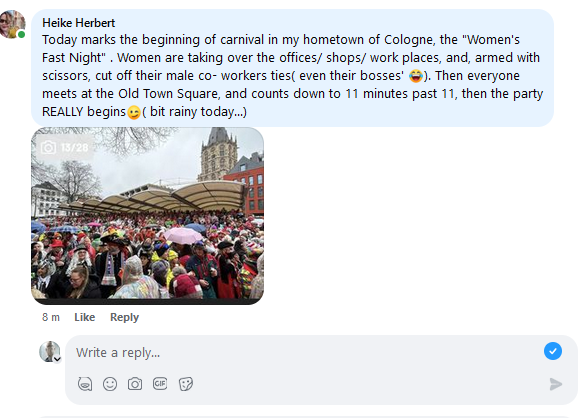
Following posting this page on Facebook, Heike Herbert posted this response concerning ‘Women’s Fast Night on February 8th in Cologne or Koln:

Screenshot of Facebook post about Women's Fast night in Cologne on 8th February.

Aristotelis Psitos emailed me to say that the Greek Orthodox ‘Fat Thursday’ is on a different date.

Making Lardy Cake

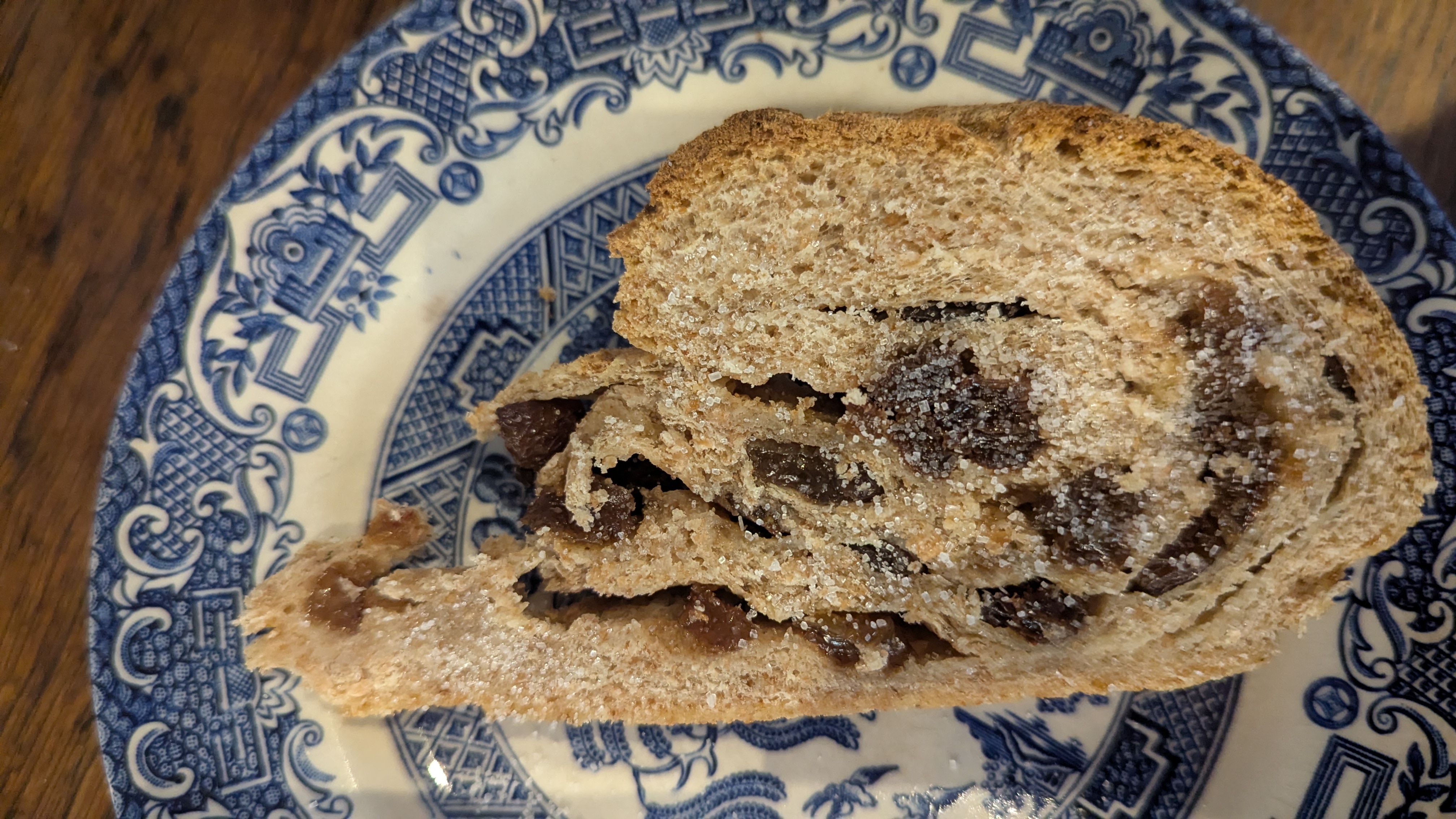
After last year’s post I decided to try to bake Lardy Cake .

Ok, so my first error was pretty fundamental.I forget to put the sugar in! Secondly, I was distracted so did not put the timer on. It was therefore a little overcooked, but not disastrously. I also used Wholemeal flour rather than Strong White flour, which Paul Hollywood suggested. I sprinkled caster sugar on it. I’ve had about 4 slices, last night and this morning. I have now washed the utensils 4 times, and they are still covered in lard! But at least it’s less fat ingested. Verdict: Quite Good. To be honest, it is more like a fruit bread than a lardy cake. And next time, I’ll buy it rather than make it.

First Published 2024, revised 2025, Making Lardy Cake moved from February 27th 2026

New Irish Bank Holiday for St Bridget/Imbolc! Ist Monday in February

The celtic year shown as a circle
The Celtic Year showing Imbolc, the new Irish Bank Holiday

I just came across this which I published last in 2023. I should have republished it last weekend. But here it is. The Irish created a brand new Bank Holiday for St Bridget. The first one was Monday 6th February 2023. It followed a public holiday given in 2022 for Health Workers in March. The timing of the Bank Holiday is explained by the Irish Post:

St Brigid’s Day itself falls on February 1 each year but going forward the Imbolc/St Brigid’s Day public holiday will fall on the first Monday in February, unless February 1st falls on a Friday.

This means that Ireland now has a public holiday on the 4 Celtic festivals of Samain (Halloween), Imbolc (St Bridget’s Day), Beltane (May Day) and Lughnasa (Lammas Day). These festivals are quarter-days, which mean they fall halfway between the Solstices and Equinoxes.

The Independent wrote that ‘then-Tánaiste, Leo Varadkar, said‘ ….“This will be the first Irish public holiday named after a woman.”  He also is quoted as saying:

“It marks the half-way point between the winter solstice and the equinox, the beginning of spring and the Celtic New Year.”

Extra Bank Holidays in the UK?

There are occasional calls for a new Bank Holiday in the UK. It’s often a Conservative MP calling for a National Day for the British. More often than not they suggest Trafalgar Day 21st October would be a suitable date. This commemorates the great Naval battle in 1805 in which Nelson was fatally wounded. It has several virtues in their eyes. Firstly, it is a day that confirmed Britain’s mastery of the Seas , an ideal day for celebrating patriotism. Secondly, it is the school half-term, and gives a much-needed day off between summer and Christmas. Thirdly, they can propose the day should be taken from the May Day Bank holiday. This coincides with the International Worker’s Day, which is obviously ‘a bad thing’.

Here is an example: the MP for Portsmouth MP’s supported a call for Trafalgar Day here: . The report says: ‘there are currently no bank holidays in the UK which celebrate battles or war victories’. (Portsmouth News 2016).

This, I think, leaves the rest of us thinking: ‘What planet do these people live on?’ Yes, Trafalgar Day would have been a great day for a Bank Holiday, if this were 1839. Maybe even 1939. But now Trafalgar is just not on any ordinary person’s radar. We don’t think so very much about the Napoleonic War or Nelson. Nor do we often sing ‘Heart of Oaks, are our Men’ any more. In short, it is a reminder how distant from the rest of us some MPs are. By contrast, how progressive Ireland seems.

Productivity

The Trade Union Congress proposed the need for more bank holidays. We only have the usual eight annual bank holidays for workers in England and Wales. Scotland has nine or ten; the average for the EU is ‘12.3 bank holidays a year. Finland and Romania get 15, while workers in Japan have 16 public holidays in total’.

A radio programme ‘The Bottom Line’ compared productivity in Britain and France. It revealed that Britain is now 20% less productive than France, (10% worse since Brexit). And how do we make up that productivity deficit? Yes, indeed, by working longer hours for lower wages. It appears that the French high tax, high workers’ protection regime, means they have to find ways of getting more out of their workers in their working hours. While we can just hire and fire, and are happy to make people work in a more inefficient way. Strange isn’t we are told that the French economy is a victim of socialism. Turns out Socialism is more productive.

Here is my recent post about St Bridget’s Day

First Published February 2023, Republished 2026

John Constable in Bond Street February 4th 1799

John Constable. National Gallery of Art seascape with two sailboats. public domain

I am this morning, admitted a student at the Royal Academy; the figure which I drew for admittance was the torso. Im now comfortably settled in Cecil Street, Strand number 23. I shall begin painting as soon as I have the loan of a sweet little picture by Jacob Ruysdael to copy. Since I have been in town, I have seen some remarkably fine ones by him. …

Smith’s friend, Clanch has left off painting, at least for the present. His whole time and thoughts are occupied in exhibiting an old, rusty, fusty head with a spike in it, which he declares to be the real embalmed head of Oliver Cromwell. Where he got it, I know not.; ’tis to be seen in Bond Street at half a crown admittance.’

John Constable. Letter to John Dunthorne, 1799.
From ‘A London Year. 365 Days of City Life in Diaries, Journals and Letters’ compiled by Travis Elborough and Nick Rennison.

John Constable in London

Constable would have had a short walk to the Royal Academy (in Piccadilly) from the Strand. As a painter, he subsequently spent his summers painting in Suffolk and his winters in London. When his wife became ill with Tuberculosis, they moved to Brighton. But he continued to return to London. Constable lived in a cottage in Hampstead, and is buried in the family tomb at the bottom of the graveyard of St John-at-Hampstead Church in Hampstead.

Royal Academy Photo KFlude

I don’t know what the Torso referred to was, but there was (and still is) a fine collection of plaster casts. The students used these for models.

A fine figure of the older man? Photo by K Flude of Zeus in the basement of the Royal Academy
Print on display at the Royal Academy of students drawing the sculptures in the Collection. Photographed by K Flude.

Cromwell’s Head

As to the head, it is a fascinating tale, which I partly tell on my Martyrdom of Charles I post. here: But here is more details, relevant to the Constable quote. At the Restoration of Charles II Cromwell’s body was dug up. Then the head was stuck on a pole on top of Westminster Hall. It blew off probably in 1684. The head was on display at a museum, but then no one knows where it was until, in 1799 the Hughes brothers, bought ‘it’ for £230. It was exhibited in Bond Street. Entrance fee was 2 Shillings and 6p. Constable’s acquaintance Clanch who I think is actually John Cranch was the publicist for the event.

The display was not a success because the provenance was not clear. All Cranch could say was Cromwell’s head was the “the only instance of a head cut off and spiked that had before been embalmed; which is precisely the case with respect to the head in question”. But then Henry Ireton’s was also treated thus, and maybe others. A head is now in Cambridge, Sidney Sussex College, which Cromwell attended.

The Wikipedia page on Cromwell’s Head, here., has a very full description of its travels.

Weather Outlook

Feb fill the dyke
Either black or white
But if with white, ’tis the better to like

If February gives much snow
A fine summer, it doth foreshow.

If in February there fall no rain.
‘Tis neither good for hay nor grain.

From The Perpetual Almanack of Folklore by Charles Kightly

On This Day

211 – Roman Emperor Septimius Severus dies at Eboracum (modern York, England). Leaving two sons, Caracalla and Geta, to dispute the succession. For several years York was the HQ for the Roman Emperor.

1555 – John Rogers, Vicar of the Holy Sepulchre Church in London and translator of the Bible, burned at the stake in Smithfield. The first of over 200 English Protestant martyrs condemned in the reign of Mary I. For more about Smithfield burnings see my post here.

1789 – George Washington unanimously elected as the first President of the United States. A great leader, who freed his slaves after his and his wife’s deaths, but who also evaded the rules against selling slaves. To consider the wrongs and rights of the issue look here.

1838 – ‘I walked with my daughter Charlotte across the Serpentine, much to my child’s delight, although I own I did not like to hear the ice cracking under the weight of thousands’.

John Cam Hobhouse, Diary, 1838. From ‘A London Year. 365 Days of City Life in Diaries, Journals and Letters’ compiled by Travis Elborough and Nick Rennison. See my post on the Great Freeze of 1895 with a picture of skating on the Serpentine.

1992 – Hugo Chávez ousts Venezuelan President Carlos Andrés Pérez in coup.

First Published February 4th 2026

Annual Grimaldi Memorial Service, All Saints, Haggerston. First Sunday in February

Annual Grimaldi Memorial Service at All Saints Church, Haggerston.

Today, was the Annual Grimaldi Memorial Service in Haggerston, Hackney, London. It began as a memorial service for the famous Regency Clown Joseph Grimaldi. But it has become a service to celebrate Clowns. The service takes place on the first Sunday in February. The service used to be at Holy Trinity Church, but has switched to Haggerston.

Joseph Grimaldi

Grimaldi as Clown, showing his own make-up design. George Cruikshankhttp://www.vam.ac.uk/content/people-pages/grimaldi-the-clown/ Public Domain

Grimaldi was born on 18 December 1778. He died in poverty on 31 May 1837. In between, he was the most famous clown. He transformed the Harlequin role and made the white-faced clown the central part of the British Pantomime. The part became known as a Joey after Grimaldi. He performed at the Theatre Royal, Drury Lane, the Sadler’s Wells and Covent Garden theatres.

All Saints Church, Haggerston

Video by K Flude of Annual Grimaldi Clown Service in Haggerston

All Saints Church, Haggerston is 5 minutes walk from where I live and 2 minutes from where my Dad was born. (see my post here). So I popped in today and took this video. The service, which has been held since the 1940s, attracts clown performers from all over the world who attend the service in full clown costume. The Spitalfield’s Life blog has a very full description of the service, and lots of very good pictures. Follow the link below:

First Published February 1st 2026