The Oak Moon December 27th

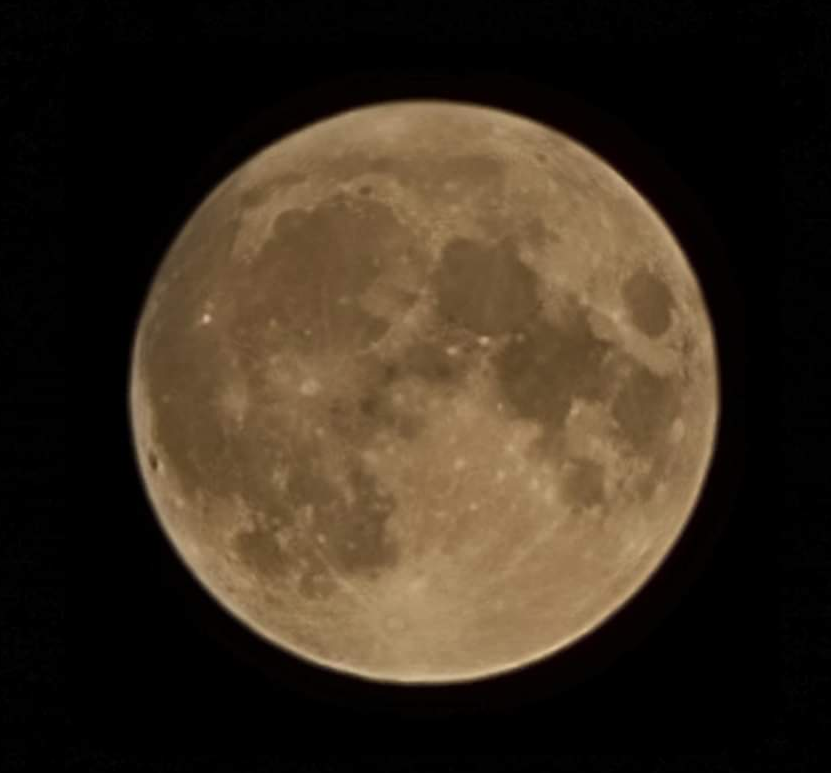
Full Moon Photo with thanks to Natalie Tobart

The 27th December is the full moon and has various names including Moon after Yule, Oak Moon, Full Cold Moon.

The Greco/Roman goddess of the Moon is Selena/Luna. She is the Goddess who carries the moon across the Sky most nights. Sometimes conflated with Artemis, Selena is the equivalent of Helios, the personification of the Sun who is her brother. They are, along with the dawn goddess Eos, the offspring of the Titans Hyperion and Theia. (Wikipedia).
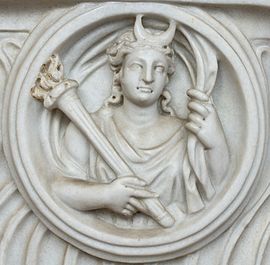
Bust of Selene in a clipeus, detail from a strigillated lenos sarcophagus. Roman artwork.

Selena is the Goddess of beauty, of monthly cycles, of tides, menstruation, of intuition. She was the lover of Zeus, Pan and the mortal Endymion who inspired Keats to write his poem of the same name.

Here is a small piece of ‘Endymion‘ (Cynthia is another name for Selene, from her place of birth, Mount Cynthus.) Endymion deserts Cynthia for another lover, but ultimately, it turns out that the lover is Cynthia in disguise.

O Moon! The oldest shades ‘mong oldest trees
Feel palpitations when thou lookest in:
O Moon! old boughs lisp forth a holier din
The while they feel thine airy fellowship.
Thou dost bless every where, with silver lip
Kissing dead things to life. The sleeping kine,
Couched in thy brightness, dream of fields divine:
Innumerable mountains rise, and rise,
Ambitious for the hallowing of thine eyes;
And yet thy benediction passeth not
One obscure hiding-place, one little spot
Where pleasure may be sent: the nested wren
Has thy fair face within its tranquil ken,
And from beneath a sheltering ivy leaf
Takes glimpses of thee; thou art a relief
To the poor patient oyster, where it sleeps
Within its pearly house.–The mighty deeps,
The monstrous sea is thine–the myriad sea!
O Moon! far-spooming Ocean bows to thee,
And Tellus feels his forehead’s cumbrous load.

Cynthia! where art thou now? What far abode
Of green or silvery bower doth enshrine
Such utmost beauty? Alas, thou dost pine
For one as sorrowful: thy cheek is pale
For one whose cheek is pale: thou dost bewail
His tears, who weeps for thee. Where dost thou sigh?
Ah! surely that light peeps from Vesper’s eye,
Or what a thing is love! ‘Tis She, but lo!
How chang’d, how full of ache, how gone in woe!
She dies at the thinnest cloud; her loveliness
Is wan on Neptune’s blue: yet there’s a stress
Of love-spangles, just off yon cape of trees,
Dancing upon the waves, as if to please
The curly foam with amorous influence.
O, not so idle: for down-glancing thence
She fathoms eddies, and runs wild about
O’erwhelming water-courses; scaring out
The thorny sharks from hiding-holes, and fright’ning
Their savage eyes with unaccustomed lightning.
Where will the splendor be content to reach?
O love! how potent hast thou been to teach
Strange journeyings! Wherever beauty dwells,
In gulf or aerie, mountains or deep dells,
In light, in gloom, in star or blazing sun,
Thou pointest out the way, and straight ’tis won.
Amid his toil thou gav’st Leander breath;
Thou leddest Orpheus through the gleams of death;
Thou madest Pluto bear thin element;
And now, O winged Chieftain! them hast sent
A moon-beam to the deep, deep water-world,
To fin Endymon.

On gold sand impearl’d With lily shells, and pebbles milky white,
Poor Cynthia greeted him, and sooth’d her light
Against his pallid face: he felt the charm
To breathlessness, and suddenly a warm
Of his heart’s blood: ’twas very sweet; he stay’d
His wandering steps, and half-entranced laid
His head upon a tuft of straggling weeds,
To taste the gentle moon, and freshening beads,
Lashed from the crystal roof by fishes’ tails.
And so he kept, until the rosy veils
Mantling the east, by Aurora’s peering hand
Were lifted from the water’s breast, and faun’d
Into sweet air; and sober’d morning came
Meekly through billows:–when like taper-flame
Left sudden by a dallying breath of air,
He rose in silence, and once more ‘gan fare
Along his fated way.

First Published December 8th 2022, Republished on December 27th 2023
Midwinter Links: Edo in Winter & Society & Santa Claus’ Elitist Origins

Here are some fascinating links with a seasonal theme, and at the end of the post the December posts I have reviewed, revised and reposted. And to remind you, I have a Winter Solstice Virtual Tour on Friday, and a Jane Austen Virtual Tour taking place on Saturday.. Follow the links on the www.chr.org.uk to find out more or book.

The wintery landscapes of Utagawa Hiroshige | with Alfred Haft |

This is a short video of an event held for British Museum members. It’s on YouTube, so it should be available for non-members. It shows, with some animation, beautiful snowy landscapes by the great Hiroshige. It is 12 minutes long.

Santa Claus’ Elitist Origins

I came across Ben Tumin’s conversation with Professor Stephen Nissenbaum on Santa Claus’ Elitist Origins in Tumin’s Skipped History Substack posts. Nissebnaum wrote a highly rated book called the ‘Battle for Christmas’, which pointed out that, before the 19th Century, Christmas was largely outdoors, and a riotous time of debauchery, gluttony, and drunkenness. The ruling classes managed in the 19th Century to change this for a quieter, indoor, family-based experience. Well worth a listen.

https://skippedhistory.substack.com/p/professor-stephen-nissenbaum-on-santa?utm_source=substack&utm_medium=email

Almanac of the Past December Posts:

Here are the posts I have reviewed and republished since the last email for subscribers:

A History of the Roman Empire in 21 women

Below, I give links to the Late November and early December Posts I have revised and republished. But, first, I would like to tell you about a great lecture I heard at the British Museum, this evening. It was given by Dr Emma Southon on her book about women in the Roman Empire. Her viewpoint was that a study of women in the Roman Empire gives a radically different insight into the Roman world than the traditional. One full of humanity rather than normal evidence which is, generally, about wars, and Empires and bravery and horrific cruelty and ambition and honour. She started with the story of Turia, whose extraordinary epitaph on her tombstone miraculous survived and gave her husband’s view of his extraordinary wife, and his utter sorrow at his loss on her death. Below, is a review of the book and a link to a podcast with the Author.

So, here are the December posts. December 1st and 2nd give an overview of December and the meaning of Winter. December 3rd is about Advent and the fact that you were not allowed to marry during Advent. December 4 gives a Shakespearean view of a cold winter’s day, and a composition by Vaughan Williams.

And late November posts, November 28th tells some interesting tales, both ancient and modern, about Eels, Pies, Rock ‘n’ Roll and my horror of Jellied Eels. November 29th, tells you how to make a ‘dish of snow’ and introduces Ice Houses. November 30th is about Scotland and St Andrews. Like them if you like them! And share them if you want to share them.

Wild Winter Foraging & Chestnuts December 3rd

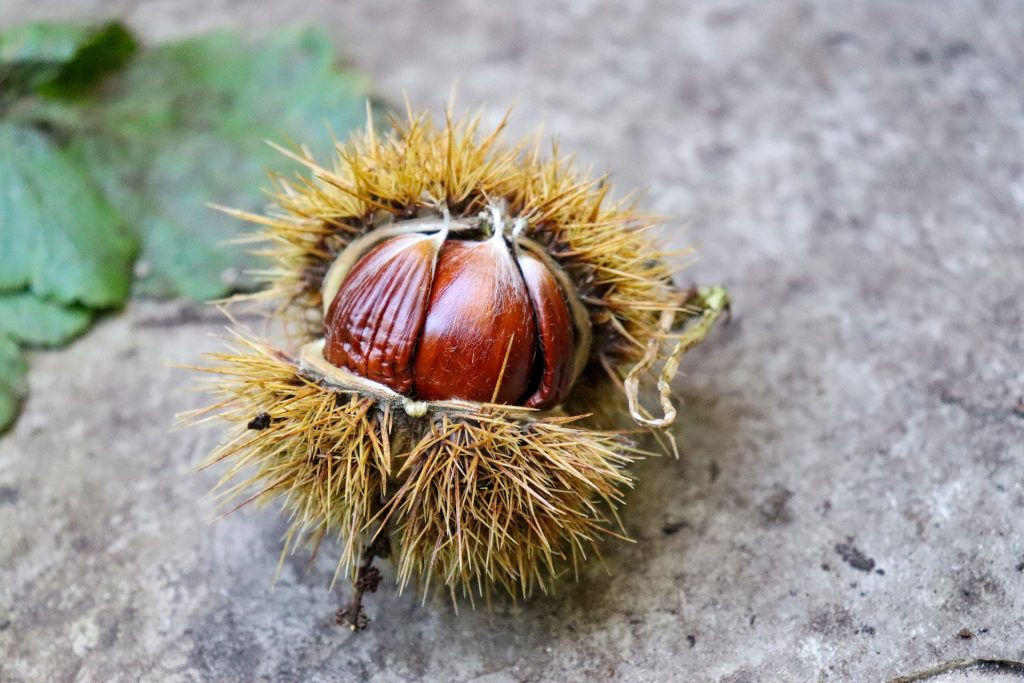
Chestnut. Image by Angela from Pixabay

In Lia Leendertz’ lovely ‘The Almanac – A Seasonal Guide to 2022’ she lists the following as in season for foraging:

Crab Apples and sweet chestnuts
Roots: Dandelion, horseradish, Jerusalem Artichokes, and wild garlic
Wild Greens: chickweed, dandelion, and wintercress
Game: Hare, rabbit, pheasant, and venison

Sweet Chestnuts were introduced by the Romans and have long been a feature of Christmas. They can be ‘baked, roasted, boiled or microwaved’. You need to prepare them by scoring a cross in them; otherwise they will explode when cooked. They are often sold by street vendors (there is often a seller on the Millennium Bridge on the way to Tate Modern in London) and, in my family, are always a part of the stuffing for the Turkey. They can also be candied, puréed or stored in syrup. (The Woodland Trust Foraging in November and December).

John Evelyn, the 17th Century Diarist and author of a book on trees (Sylva, or A Discourse of Forest-Trees and the Propagation of Timber) wrote that the nuts were:

‘delicacies for princes and a lusty and masculine food for rusticks, and able to make women well-complexioned’

He complained that in England they are chiefly given to pigs to eat.

Chestnut meal was also used for whitening linen and for making starch. Marones, imported from Italy, France, Switzerland, and S. Germany contain 15% sugar and so were used to make a thick syrup and a ‘very usable’ sugar, from which Marons Glacés are made.

The wood of the chestnut is very useful and is/was used for building, pit props, furniture, poles for hops etc. but is nowhere near as long-lasting as oak.

Medically, they were used for treating convulsive coughs such as whooping-cough, where the leaves were infused in a pint of boiling water. (A Modern Herbal by Mrs M Grieve)

First Published on 3rd December 2022, Revised and republished in December 2023

International Day for the Elimination of Violence against Women November 25th

Poster from the UN promoting #noexcuse campaign, 'protecting women and girls isn't an expense. It's an investment.'
#noexcuse

Almost ‘one in three women have been subjected to physical and/or sexual violence at least once in their life.’ says the UN on its page Ending Violence Against Women Day.

In writing my Almanac of the Past, I have been struck by how violent are most of the stories of the Saints of the early Catholic Church. At the bottom of this post, you will find an essay touching upon this thorny subject. And click here for research on violence against women. Their results are not good news countries that speak English. South Africa is the worst, the USA 7th, Australia 11th, UK 12th, and New Zealand 15th. They admit the figures are difficult to interpret as what is being counted is reported crimes. It is likely that the worst countries are those where women do not feel free to report sexual violence.

Today is St Catherine of Alexandria’s Day, which makes an appropriate Saint for the UN Day. So I have updated this very interesting story and republished it today. Have a read.

Also, buffed up and republished are the following seasonal posts:

Elsyng Palace, Enfield Society Excavations

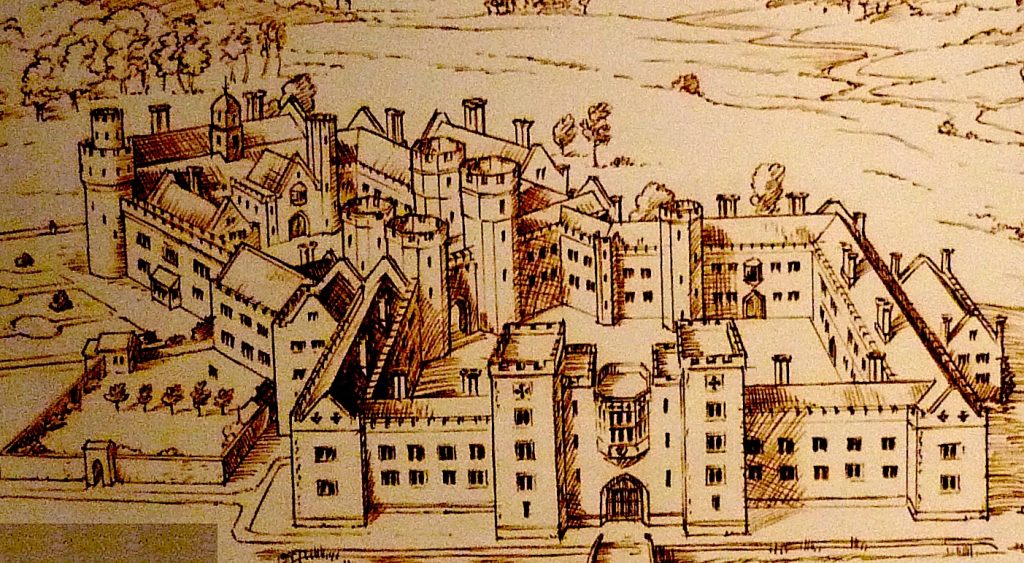
Elsynge Palace

I was interested in this site because it was one of the many palaces owned by Henry VIII, and it began as a moated manor house before a transition into a small red brick courtyarded Palace, as seen above. Henry had, if my memory serves me well, approximately 57 Palaces and Manor Houses. 16 in the London area and 11 along the River Thames

But what I really liked when I visited the website was the charm of this lovely video by the Enfield Archaeology Society. Now those who know the wonderful TV Sitcom called the ‘Detectorists’ starring Toby Jones, Mackenzie Crook, Diana Rigg and others, will recognise the styling of the amateur archaeologists – all looking like rumpled would be Indiana Jones’s! Very English.

https://www.enfarchsoc.org/elsyng/

The good news is that the show is having an extended Christmas Special outing this year.

I have revised and republished the following Almanac of the Past posts.

Martinmas Old Style – Pack-Rag Day November 22nd

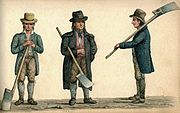
Three men for hire (wikipedia)

Content moved to:

Time to Gather Yarrow – November 13th

Yarrow
(achillea millefolium) – image by CongerDesign

Traditionally, Yarrow has a myriad of uses (see thefreedictionary for a comprehensive list). It was used for wounds (aka ‘Soldier’s Woundwort’); staunches nose bleeds (aka ‘Nosebleed’); inflammations …. THE PAGE HAS BEEN TRANSFERRED TO A NEW NOVEMBER 13TH PAGE HERE.

Post First published on 14 November 2022, revised 13 November 2023 and transferred to new page on 13th November 2024

Fury in France at Destruction of 7,000 Year-Old Standing Stones June 2023

Salon IF reported a shocking destruction in France – this is the report, verbatim from Salon IF issue 514.

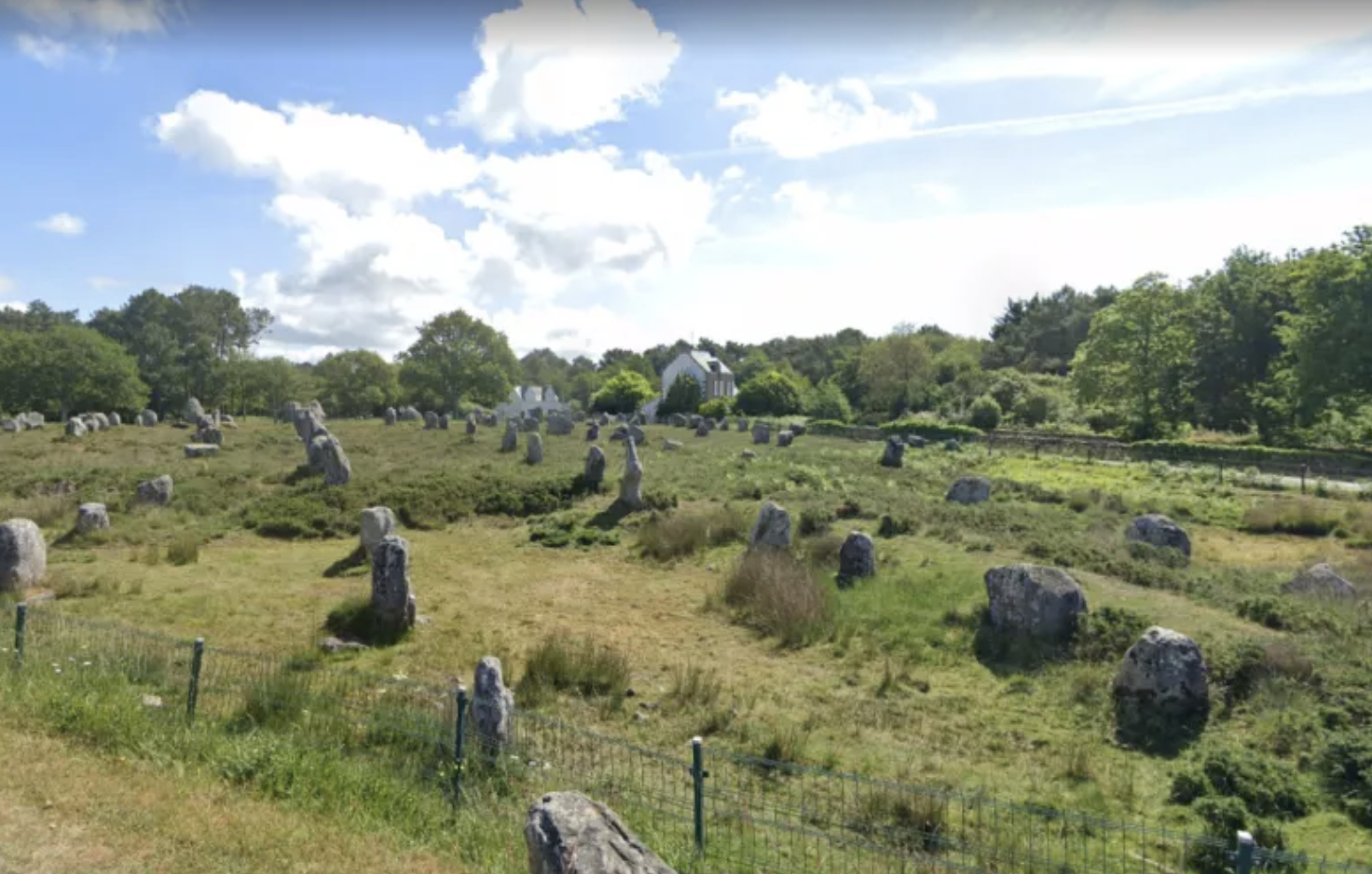
Dozens of standing stones, erected over 7,000 years ago, have been demolished to make way for a DIY store near Carnac, in Brittany, in North West France. Some 37 stones, measuring between 0.5 – 1.5m tall, were removed despite the fact the site had long been on France’s National Archaeological Map. The stones, moreover, had been submitted to the tentative list of UNESCO World Heritage Sites (although the application had not yet been approved).

The region of Carnac is famous for its ancient ‘menhir’ – heavy, raised standing stones. Indeed, the area is often described as ‘the French Stonehenge’, with over 3,000 stone megaliths at the two sites of Menec and Kermario. There, the stone columns are arranged in long, straight rows and, according to the Carnac Tourist Office, it is the largest gathering of this type of standing stone in the world.

The land at the centre of the recent controversy, along the Montauban activity zone, had been granted a building permit by the local mayor’s office in August 2022 and construction of the new store, ‘Mr Bricolage’, was already underway. According to local amateur archaeologist, Christian Obeltz, who had originally raised concerns about the ‘brutal developments’, a bulldozer destroyed the stones overnight.

The Regional Office of Cultural Affairs for Brittany, the body responsible for the protection of the monument, said ‘Given the uncertain and in any case non-major character of the remains, as revealed by

checks, damage to a site of archaeological value has not been established’, but Obeltz maintains that archaeological investigation into the area had not been sufficient.

‘The Chemin de Montauban site included two intersecting rows of small granite stelae, each spreading out over fifty meters in length. One had been exactly in its original place for 7,000 years,’ according to Obletz. ‘The small menhirs of the Chemin de Montauban were undoubtedly one of the oldest sets of stelae in the town of Carnac’ believed to date between 5480 and 5320 BC, ‘the highest dating obtained for a menhir in the west of France’.

May Gifts & New Brooms

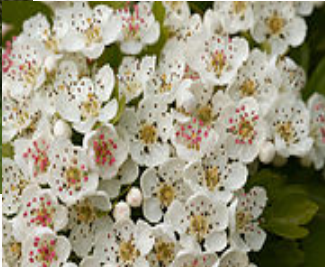
May – Hawthorn Flowers

It’s bad luck to buy, make or use a new broom in May because:

Sweep with a broom that is cut in May
You’ll sweep the head of the house away.

But you can give good luck to a friend by leaving a branch of hawthorn flowers on the doorstep. But other woody messages were not so friendly according to traditional verses:

Alder for a scrowler; pear for the fair
Nut for a Slut; plum for the glum
Bramble if she ramble; gorse for the whores

It is basically rhyming slang, so no great wisdom involved, also I’m not sure quite how some of the rhymes work, and it does seem rather at the expense of women.