St Beuno and a Poem to the Vagina April 20th


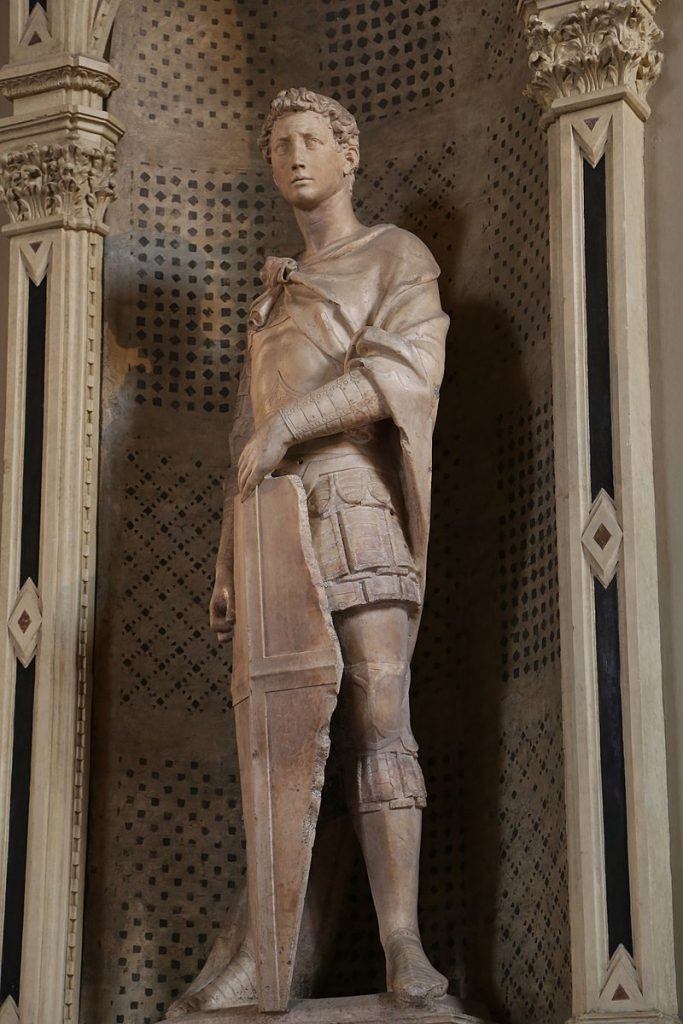
Drawing of a Stained glass window depicting Saint Beuno. D A R C 12345 – Own work

Today is St Beuno’s Day. St Beuno is also known as St Bono. He was an 8th Century Welsh Abbot of some power. The grandson of a prince of Powys in Wales who was descended from Vortigern. (see my post on Vortigern here.) Vortigern was a predecessor to King Arthur. Beuno was educated in Bangor Monastery, one of the foremost Celtic monasteries in Wales. During his ministry he restored 7 dead people to life including St Winifred (or Winefred).

Winifred & St Beuno

St Winifred’s Holywell, from Facebook.

She was Beuno’s niece, a virgin who refused the advances of a certain Caradog. Furious at her taking vows, Caradog tried to seduce her, but she refused. So, he chopped her head off.

Where her head landed a spring sprung amd became a holy spring.  The spot, in Flintshire is still called Holywell. It has been described as the Lourdes of Wales and one of my tours go past it that is how I heard about St Beuno.

Anyway the story goes that Beuno put his niece’s head back on her shoulders and restored her to life. How he did that, is a mystery or is that a miracle?

From Facebook

She lived a full life with a brilliant Church career. Of course she is the patron of those who have suffered unwanted advances (but believe me there are many other candidates for that particular honour amongst the female Saints! Have a look at my post on St Agatha for another example of male sexual abuse).

Stained glass depiction of St Winifred, designed by William Burges, at Castell Coch, Cardiff. Wikipedia Hchc2009 – Own work

More on St Winefride’s on her feast day on 3rd November.

Medieval Powys, & Neglected Parts of the Female Anatomy

I drafted this in January 2025, when I came across a reference to St Beuno in a fabulous exhibition at the British Library.  The show was called ‘Medieval Women – In their own Words’.

On display amongst the many wonderful manuscripts and books of the 11th – 15th Century was a Welsh poem.  The author was Gwerful Mechain (1460–1502), the only female medieval Welsh poet with a surviving and a substantial body of work. She is known for her erotic poetry, in which she praised the vulva among other things.

What is extraordinary is that I should, by complete chance, be publishing this the day after posting about the statue of the erect Minotaur! So, you can see how even-handed I am? Erect penises one day, love poem to the Vagina the next!

Here it is in full, in a modern translation:

To the Vagina by Gwerful Mechain

Every poet, drunken fool
Thinks he’s just the king of cool,
(Every one is such a boor,
He makes me sick, I’m so demure),
He always declaims fruitless praise
Of all the girls in his male gaze.
He’s at it all day long, by God,
Omitting the best bit, silly sod:
He praises the hair, gown of fine love,
And all the girl’s bits up above,
Even lower down he praises merrily
The eyes which glance so sexily;
Daring more, he extols the lovely shape
Of the soft breasts which leave him all agape,
And the beauty’s arms, bright drape,
Even her perfect hands do not escape.
Then with his finest magic
Before night falls, it’s tragic,
He pays homage to God’s might,
An empty eulogy: it’s not quite right:
For he’s left the girl’s middle unpraised,
That place where children are upraised,
The warm bright quim he does not sing,
That tender, plump, pulsating broken ring,
That’s the place I love, the place I bless,
The hidden quim below the dress.
You female body, you’re strong and fair,
A faultless, fleshy court plumed with hair.
I proclaim that the quim is fine,
Circle of broad-edged lips divine,
It’s a valley, longer than a spoon or hand,
A cwm to hold a penis strong and grand;
A vagina there by the swelling bum,
Two lines of red to song must come.
And the churchmen all, the radiant saints,
When they get the chance, have no restraints,
They never fail their chance to steal,
By Saint Beuno, to give it a good feel.
So I hope you feel well and truly told off,
All you proud male poets, you dare not scoff,
Let songs to the quim grow and thrive
Find their due reward and survive.
For it is silky soft, the sultan of an ode,
A little seam, a curtain on a hole bestowed,
Neat flaps in a place of meeting,
The sour grove, circle of greeting,
Superb forest, faultless gift to squeeze,
Fur for a fine pair of balls, tender frieze,
A girl’s thick glade, it is full of love,
Lovely bush, blessed be it by God above.

From: Gramich, Katie, Orality and Morality: Early Welsh Women’s Poetry, 2005, Cardiff University: Cardiff, pp. 8-9.
(http://www2.lingue.unibo.it/acume/acumedvd/Essays%20ACUME/AcumeGramichfinal.pdf)

Date: c1480 (original in Welsh); 2003 (translation in English) By: Gwerful Mechain (1462-1500) Translated by: Katie Gramich

For more about St Beuno https://en.wikipedia.org/wiki/Beuno

First published on April 20th 2025, revised 2026

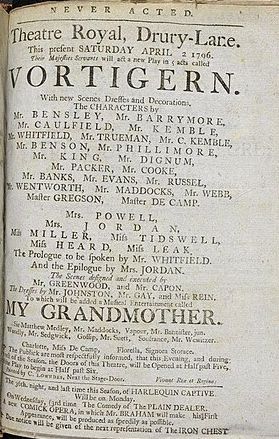
Vortigern April 2nd 1796

Bill for the 1796 play Vortigern and Rowena Public Domain Wikipedia

Content Move April 2nd 2026 to:

https://chr.org.uk/anddidthosefeet/?p=5187

Not Archaeology Day 10th February

Yesterday was Almanac of the Past Misinformation Day! I have just found out that you received a post which was not only empty of content but also wrong! Details of that below. But, here are a couple of interesting archaeology projects I have been planning to post about.

Lost Books from the Ancient World

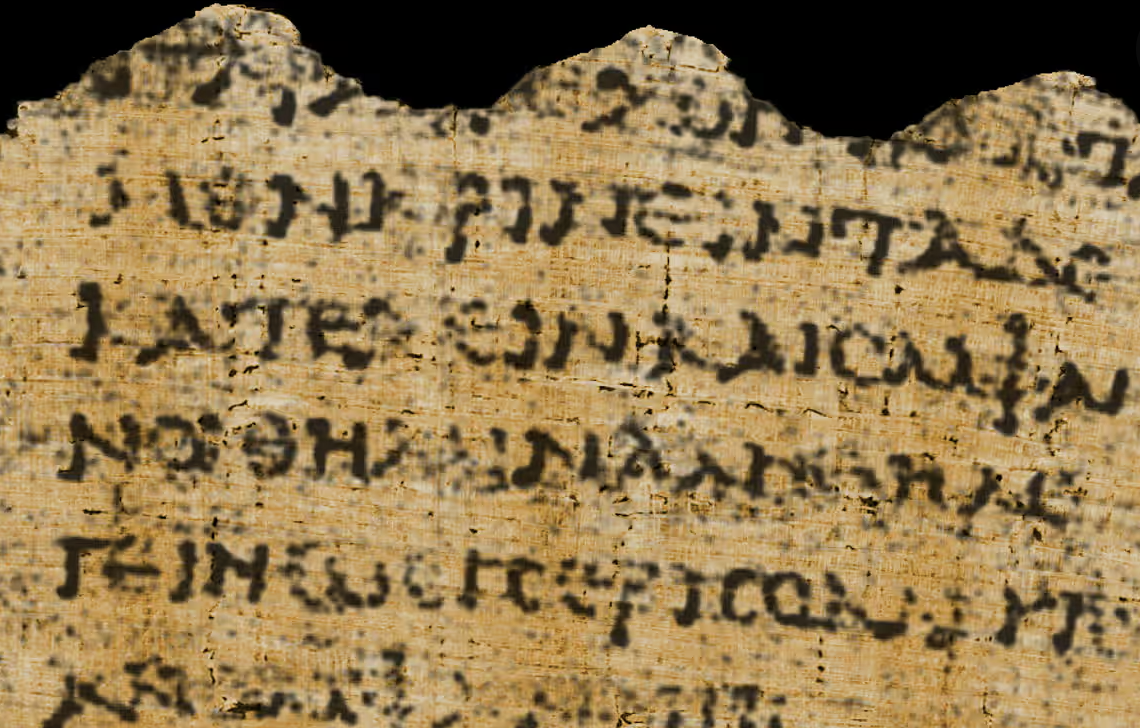
What has excited me most is the news that burnt scrolls from Heraculeum have been digitally unrolled. Then ‘read’ using AI. The scroll was in the library of Julius Caeser’s father in law it is thought. There are over 1,000 carbonised scrolls found in 1750 in the Villa of the Papyri. And this one reveals details of Plato’s last hours. But more than that, the technology opens the possibility of other lost books being discovered. Of the ‘known unknowns’ I would like to see are the lost history books of Tacitus. But perhaps the ‘unknown unknowns’ are even more exciting. What might we find out?

Here is an excellent introduction to the discoveries:

https://www.theguardian.com/science/2024/feb/05/ai-helps-scholars-read-scroll-buried-when-vesuvius-erupted-in-ad79

Cerne Abbas Giant

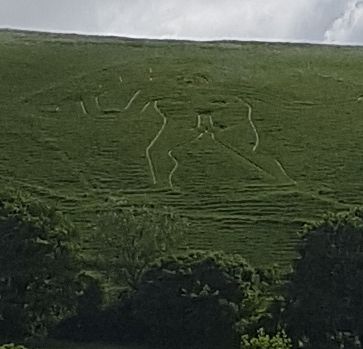
Cerne Abbas Giant 2017 photo by K Flude

The giant is one of the icons of Hardy’s Dorchester. It is ‘drawn’ or sculpted by cutting the turf to reveal the white chalk below. Chalk Cut figures appear particularly in the South West. The Vale of the White Horse chalk cut figures has been dated to the Late Bronze Age. Most people thought the Cerne Abbas Giant was in the Romano-Celtic tradition so was either pre-Roman, or perhaps Hercules and Roman.

Some dissenters believed the lack of references to the Giant showed that it could not have been cut until the 17th Century. Some even thought it might be a ‘cartoon’ of Oliver Cromwell!

How we laughed!

The National Trust embarked on a project to get the Giant properly dated. They used Optically Stimulated Luminescence (OSL) dating which had also been used on the White Horse. But the results came back were shocking. It appears to have been cut in the Late Saxon period.

I do admit to a certain amount of scepticism. The art style is similar to British Art of the Iron Age, part of the Celtic Art tradition. Also, how reliable is OSL dating? The process depends on taking soil samples from the soil nearest the chalk, and OSL measures the time since the soil was last exposed to light. It’s a relatively new technology although based on Thermoluminescence dating of pottery which has been around since the 1970s. There was also some corroboration in the form of snails which were not indigenous to the UK?. So a date of 700-1100AD is suggested. And I have nothing other than a gut reaction to the date they propose. Maybe I’m just disappointed by a Saxon date as I have no way of understanding the context.

https://www.nationaltrust.org.uk/visit/dorset/cerne-giant/history-of-the-cerne-giant

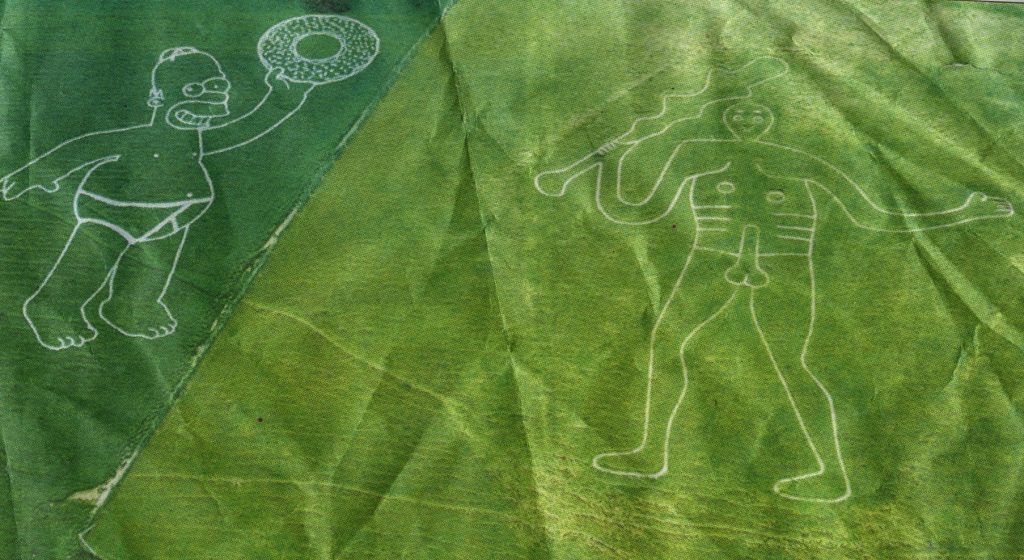
Here is a cartoon I really like:

Homer and the Cerne Abbas Giant, Image from Facebook of unknown origin.

Not the Archaeology Day but the Festival of Archaeology?

So, yesterday was not Archaeology Day. But it was last year and run on February 10th by the Council for British Archaeology. This year (2025) they are running their normal Festival of Archaeology from the 19th July to the 3rd of August. It is nationwide, and they have numerous local events which you can check out on their website here.

So how did this happen? I must have seen a reference to an archaeology Day on February 10th, assumed it would be an annual event. So, I added a ‘stub’ post to remind me about it. These, normally are stored in the ‘drafts’ folder, which I will then develop and post. But for some reason, this one got in the ‘Scheduled Posts’ Folder. And as I was working flat out preparing my ‘Jane Austen’s Bath’ Virtual Tour, I did not spot it. So, it was automatically posted. (The VT went very well, thank you very much).

Today, I looked up ‘Archaeology Day 10th February’ and found my post was the number one google source. In normal circumstances, this would be a matter of chest beating. I have been putting significant effort into improving my ‘SEO’ (search engine optimisation). Sadly, I got to the top of Google only because there are only two posts referring to an Archaeology Day on the 10th of February. Mine and a Council of British Archaeology, post who ran the event in York.

So, today is the Not Archaeology Day.

First published on February 10th 2025, and republished on February 11th 2025, text copied to Gemini Post on February 10th, 2026

The Jorvik Viking Festival February 2025

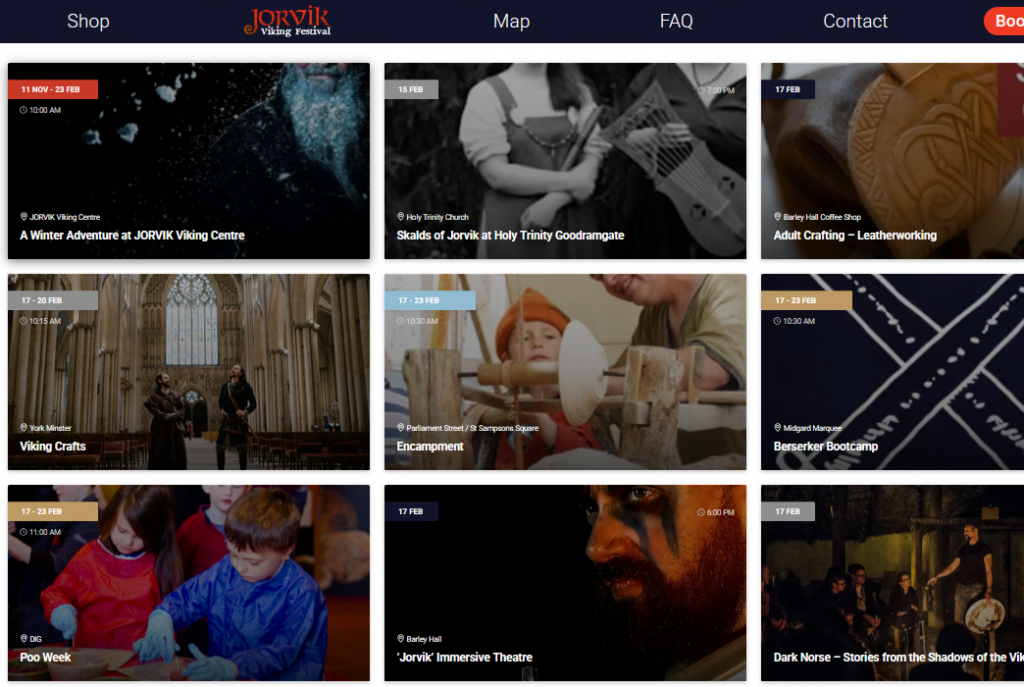
Screen shot from the Jorvik Viking Festival Site showing all the fun to be had if the Vikings invade your town!

The annual Jorvik Viking Festival is on from Monday 17th – Sunday 23rd February 2025 in York. The illustration above show there are Viking Trails, Feasts, Crafting, Berzerkering and encamping. And more! Visit the web site here.

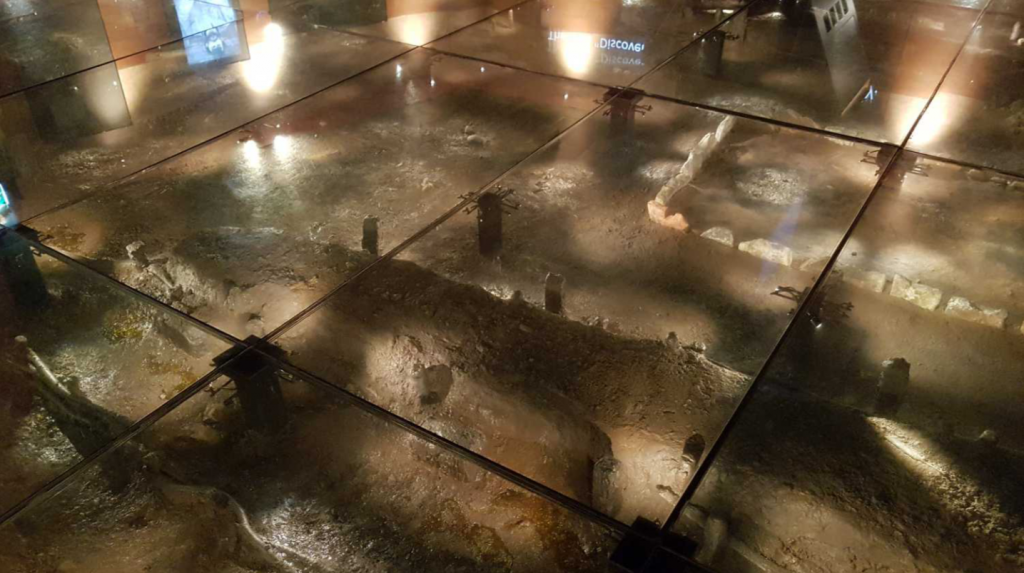
The excavations under the floor of the Jorvik Centre. Photo K. Flude

York or Jorvik as the Vikings knew it as, has become the centre of all things Viking in the UK. Viking York came to the fore with the Coppergate Excavations in the 1980s. Underneath what is now a shopping mall and Primark, were the streets of Viking York in all its waterlogged glory. The waterlogging allowed the survival of organic material that rarely survives.

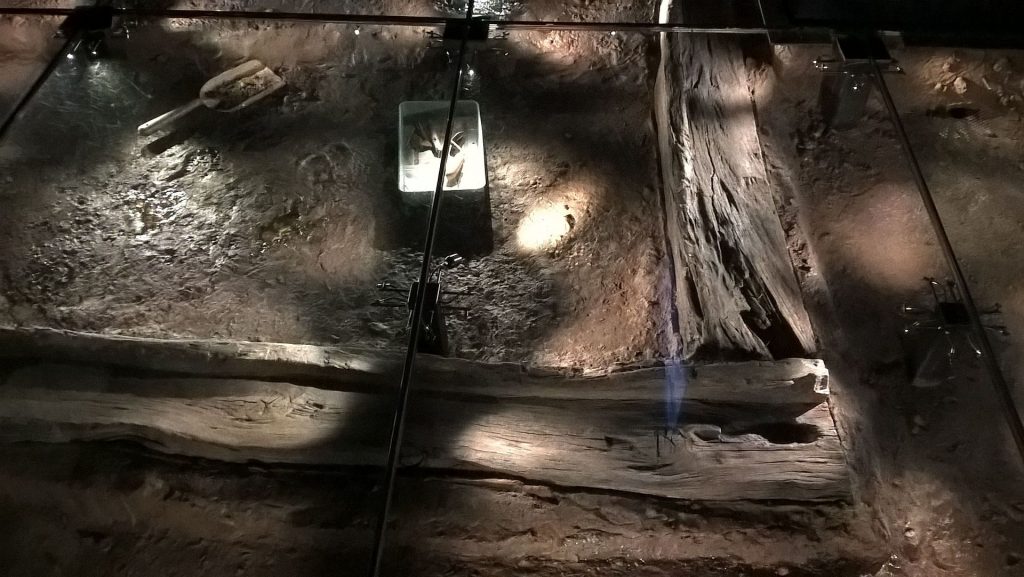
Excavation of Jorvik visible under the floor of the Museum. Photo By Chemical Engineer – Own work, CC BY-SA 4.0, https://commons.wikimedia.org/w/index.php?curid=58524883

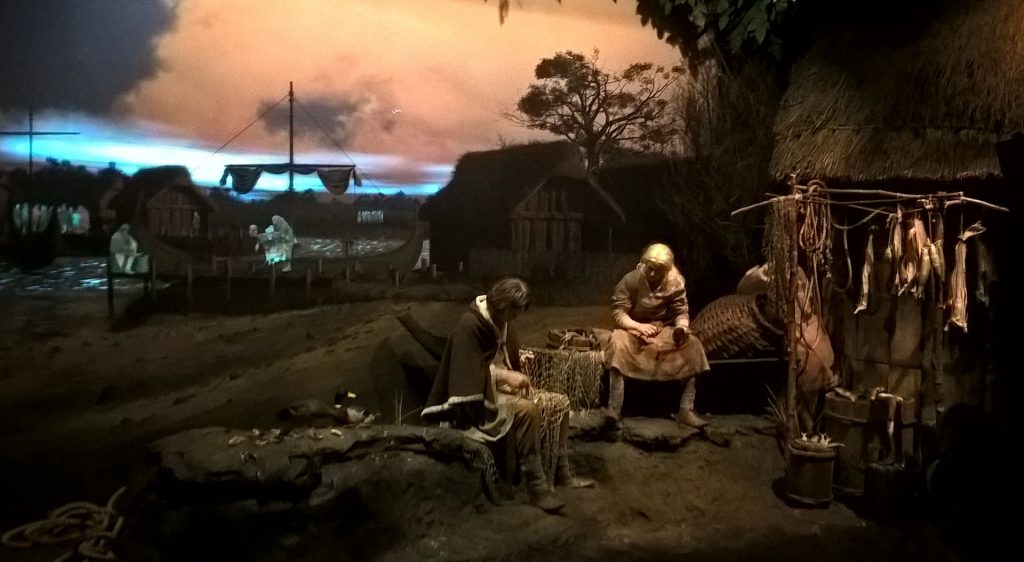
At the time, the excavations were a sensation. York Archaeological Trust made a bold decision to turn part of the site into a ‘Dark Ride Experience’. The remnants of the excavation were preserved under glass, and nearby a replica of the townscape was created. Tourists sat in ‘cars’ with an audio guide and given a guided tour. It was very successful. The extensive profits were used for other York Archaeological Trust projects such as the reconstruction of medieval Barley Hall. Other historic towns followed suit and soon there were Dark Rides in Canterbury, London, Oxford and others. All, as far as I know have died a death except for the Jorvik Centre which continues to enthral visitors to York.

Tableau from the Jorvik Centre with Fishermen working. Photo By Chemical Engineer – Own work, CC BY-SA 4.0, https://commons.wikimedia.org/w/index.php?curid=58524883

The next best thing about Vikings are their colourfull names. Jorvik history vibrates with the deeds of ‘Ivan the Boneless’, Sihtric ‘the Squinty-eyed’and Erik Bloodaxe. For more on nicknames read my post!

First Published in February 2025

News of Virtual Tours

Sorry to send an additional post but coming up are a couple of fascinating Virtual Tours which I would like to remind you of!

Tonight is an exploration of early 19th Century London. It is based on the 1809 Picture of London Guide book. An original copy was given to me by someone grateful to have attended one of my lectures at the Old Operating Theatre Museum. It is a tour of what Jane Austen could have visited on her walks around London. There are Austen associations, but mainly we are looking at London in 1809.

Jane Austen’s ‘A Picture of London in 1809’ Virtual Walk Mon 7.30 27th Jan25 To book

Yesterday, I was asked to give a Cromwell’s London walk as a 75th Birthday present. I haven’t done one for at least 25 years. But I really enjoyed the research. So added a guided walk and a virtual tour to my programme. This is the first time I have done this VT and it is a cracking story.


The Civil War, Restoration and the Great Fire of London Virtual Tour 7:30pm Thurs 30th Jan25To book

Finally, April is the month we go on pilgrimages, as Chaucer said (in Old English). So, in addition to my Chaucer Walks, I have added a Virtual tour so we can go all the way to Canterbury.


Chaucer’s London To Canterbury Virtual Pilgrimage 7.30pm Friday 18th April 25 To book

I may add one or two more before the Sun comes back

To see all my walks see this page.

Sementivae Dies—the Days of Sowing January 24–26

Victoria and Albert Museum” by Nick Garrod, licensed under CC BY-NC-ND 2.0. First V&A Director, Sir Henry Cole, to the left of the picture. Greek Deities in the roundells

Sementivae, was a festival dedicated to seed and to Ceres. Ceres is an Earth Goddess who gives her name to our word cereal. The festival was also called. Paganalia. The Mediterranean world had many names for the Earth Goddess. Tellus, Demeter, Cybele, Gaia, Rhea etc..

Ceres can be seen on the top left roundel resting on the Globe on the marvellous Ceramic Staircase at the V&A (photo above). And in my slightly out of focus photograph below. (To be honest, in real life, it looks a little more like my photo than the gorgeous photo above!)

Ceres represented Agriculture, Mercury Commerce, and Vulcan Industry.  Old Photo by the Author.  T
Ceres represented Agriculture, Mercury Commerce, and Vulcan Industry. Old Photo by the Author.

Sementivae Dies – a moveable feast.

To create life, we need earth and water to nurture and seeds for fertility. And so into the cold dead world of January the Romans created a festival of sowing. It had two parts, one presided over by Mother Earth (Tellus) and the other by Ceres, the Goddess of Corn. The actual day of the festival was chosen not by rote on a set day of the calendar but by the priests, in accordance with the weather. This seems very sensible, as there is no point sowing seeds in terrible weather conditions. I’m assuming the Priests took professional advice!

On the 24th-26th January Tellus prepared the soil, and in early February seeds were sown under the aegis of Ceres. Tellus Mater (also Terra Mater) was known as Gaia to the Greeks.

Gaia

Gaia was selected by James Lovelock & Lynn Margulis in the 1970s as the face of their Gaia hypothesis. To me, the importance of the idea is not the scientific principle that environments co-evolve with the organisms within them. But, rather in Gaia as a personification of our world as a complex living ecosystem. One that we have to care for. Gaia exists as a series of feedback loops. Lovelock hypotheses that she will spit us out unless we can live in balance with our alma mater.

Ovid and Sementivae

This is what the Roman Poet Ovid has to say in his poetic Almanac known as ‘Fasti’ (www.poetryintranslation.com)

Book I: January 24

I have searched the calendar three or four times,
But nowhere found the Day of Sowing:
Seeing this, the Muse said: That day is set by the priests,
Why are you looking for moveable days in the calendar?
Though the day of the feast ís uncertain, its time is known,
When the seed has been sown and the land ís productive.
You bullocks, crowned with garlands, stand at the full
trough,
Your labour will return with the warmth of spring.
Let the farmer hang the toil-worn plough on its post:
The wintry earth dreaded its every wound.

Steward, let the soil rest when the sowing is done,
And let the men who worked the soil rest too.
Let the village keep festival: farmers, purify the village,
And offer the yearly cakes on the village hearths.
Propitiate Earth and Ceres, the mothers of the crops,
With their own corn, and a pregnant sow ís entrails.
Ceres and Earth fulfil a common function:
One supplies the chance to bear, the other the soil.
Partners in toil, you who improved on ancient days
Replacing acorns with more useful foods,
Satisfy the eager farmers with full harvest,
So they reap a worthy prize from their efforts.
Grant the tender seeds perpetual fruitfulness,
Don’t let new shoots be scorched by cold snows.
When we sow, let the sky be clear with calm breezes,
Sprinkle the buried seed with heavenly rain.
Forbid the birds, that prey on cultivated land,
To ruin the cornfields in destructive crowds.
You too, spare the sown seed, you ants,
So you’ll win a greater prize from the harvest.

For more on Ovid look at my post on Ovid and Juno here. Or you can search for Ovid in the Search box.

First Published in January 2023, republished in January 2024, 2025


Burn’s Night January 25th

Edinburgh Writer’s Museum ‘Burn’s Monument from Campbell’s Close Canongate’ by John Bell. The Burn’s Monument is is on the hill in the background.

Burn’s Night is an increasingly important date on the calendar of Scotland’s Cultural Heritage. Wikipedia says it began:

at Burn’s Cottage in Ayrshire by Burns’s friends, on 21 July 1801

This was 5 years after his death. It is now celebrated around the world, making clear the importance of Robert Burns.

Burns himself would have been astonished at the spread of Burn’s Night. He was modest about his attainments, saying, in his introduction to the Commonplace Book:

‘As he was but little indebted to scholastic education, and bred at a plough-tail, his performance must be strongly tinctured with his unpolished rustic way of life. ‘

To celebrate Burn’s Night here is one of his most famous works. Also have a look at my post on his great narrative poem, Tam O’Shanter and the Cutty Shark.

Address to a Haggis

Fair fa’ your honest, sonsie face,
Great Chieftain o’ the Puddin-race!
Aboon them a’ ye tak your place,
Painch, tripe, or thairm:
Weel are ye wordy of a grace
As lang ‘s my arm.

The groaning trencher there ye fill,
Your hurdies like a distant hill,
Your pin wad help to mend a mill
In time o’ need,
While thro’ your pores the dews distil
Like amber bead.

His knife see Rustic-labour dight,
An’ cut ye up wi’ ready slight,
Trenching your gushing entrails bright,
Like onie ditch;
And then, O what a glorious sight,
Warm-reekin, rich!

(for the other five verses have a wee lookie here)

The Writer’s Museum

Often bypassed by the tourists on a visit to the wonderful City of Edinburgh is the Writer’s Museum. It is in one of those remarkable Tower houses which seem unique to the High Street in Edinburgh. Inside, it gives a great introduction to the great writers of Scotland.

Is it not strange’ wrote philosopher David Hume in 1757 ‘that a time when we have lost our Princes, our Parliament, Independent Government …..that we shou’d really be the people most distinguish’d for literature in Europe?’ (source: Museum display panel)

Edinburgh Writer’s Museum Burns, Scott, Stevenson.
A Visual for Burn’s Night ‘Window in the Writer’s Museum, Edinburgh’ Photo by K Flude
Writer’s Museum photo K. Flude

First published Jan 2023, republished Jan 2024, 2025

News from the Almanac of the Past January 22nd

News from the Almanac showing readership/viewership of the site.

I have been waiting for a day when I haven’ t got a post to publish. Why? To update readers about the Almanac of the Past. And with a bit of manoeuvring today is the day.

What is the News from the Almanac of the Past?

The plan is to have a post for each day. I am virtually there for November to March, but a way away for the warmer months.

In the winter months, I have been revising, improving, developing and adding content to previously published pages. For those of you who have been here a while, you will have been receiving posts you have seen before. Next year, you might be seeing some for the third time. I’m not sure what to do about this except improve posts and add content. But I am considering stopping automatically posting repeated posts to subscribers. Maybe from next November? Feed back would be good – please email me at kpflude at chr . org . uk (I’ve slightly scrambled the email to stop the robots).

What is the planned content for the Almanac of the Past?

The nature of an almanac is to be a pot-pourri. They are about seasons, time, folklore, history, important events, and anniversaries. I also like to cover history, famous people and discoveries. Gods, Goddesses, Saints, sinners, and archaeology. What I want it to be is something that makes us more mindful about the passing of the year. How seasons and time change the way people see their world. My focus is mostly on the UK, but also on Rome and Greece. With occasional excursions to other places. I am trying to find more content that is London-based, but not to the exclusion of everything else. I also have an ambition to add more important news of discoveries that change our view of the past. If I get the formula right, I will attempt to get a publication from it, otherwise it will remain online.

Developments for the Almanac

It takes quite a lot of time for me to keep it up. You will see, from the graph above, that the readership is yearly making progress. Particularly, last year. But then it’s a steady progress from a small base, rather than Kardashian viral.

This is, at least, partially because I would rather not spend my time marketing. I want to be writing. But, I have decided I need to spend a little more time marketing the site. When I ran the Old Operating Theatre Museum, I had the skills to get our web site to first place on google searches. But this was in the pioneering days of the World Wide Web. Now, it’s more difficult, but I am taking a ‘Search Engine Optimisation’ (SEO) course. I have also loaded some ‘plugins’ to WordPress which help with SEO. I thought you might be interested in some of the consequences.

The plugins ‘parse’ the site and give recommendations for improvements. This should, get the site further up the Google landing page. I have no doubt that it involves or will involve AI. The ‘Yoast’ plugin I am using as I type this, tells me words like ‘however’ are a ‘complex’ word and so they down grade my ‘readability’ quotient. It also tells me that that last sentence was too long. So, it wants simple sentences, and words that join sentences together. And not too many sentences in a paragraph and a proper scattering of headings.

It also assesses the SEOness of the text. So I have to tell it what the main subject of the page is. And it wants that word or phrase in:

the title:
the first paragraph
the image
the meta description tag
and scattered, but not too densely (because Google will punish the site for playing the algorithm) through the text.

Hence, you will see the phrase ‘News from the Almanac’ scattered more than I would normally like through this text. Of course, I know no one really will be searching for ‘News from the Almanac. So I should change the SEO phrase just to Almanac. But, then I’m not really interested in attracting non-readers to this page. I see this as between me and my email subscribers!

After writing that paragraph I realised that I would want people to land up here if they typed in ‘Almanac of the Past’. So you will see, I’ve editing the text scattering that phrase here and thereabouts.

In effect, I am being trained by a slightly stupid tutor who has no particular understanding of the needs of a writer of history! And you can’t answer back, you just get downgraded!

And it seems to be working as my numbers are getting better more quickly.

Any problems for the Almanac of the Past?

Obviously, my terrible proofreading is a concern! Maybe that’s one-way republishing helps. A year later, it’s easier to see the typos, the ugly writing, and issues with the content.

But there is another issue with the emails, which I have been trying to solve for about 6 months. The links in the emailed posts don’t work. But they do work if you visit the almanac on the web. This is nuts as I always use the full URL. For example: https://www.chr.org.uk/anddidthosefeet/december-29th-st-thomas-wassailing/.

So, this is very much a technical issue, one might say a bug in the system. I think it stems from the fact that my blog was stored not in https:/public_html/ but in https://public_html/anddidthosefeet. This seemed a logical choice at the time, as the blog shared space with other things. I haven’t managed to convince the tech guys at either the internet provider or WordPress that this is a bug. So, the alternative is to move the blog. But I am reluctant to do this in case it completely messes everything up.

Change the content of the newsletter, you might think. But I can find nothing that allows me to alter or add anything to the email version of the post. As I write this, I think I will temporarily add a line at the bottom of the post which says:

if the links are not working, copy and paste this URL https://www.chr.org.uk/anddidthosefeet/whateverkevinsalmanacpageiscalled

to your browser. This, will get you to the Almanac of the Past on the web where all the links will work.

And this will allow you to easily copy or link to the webpage and send the Almanac of the Past to your friends and followers. (I’m hoping you are Taylor Swift). You willalso be able to comment easily and maybe even like the post?

Another advantage of visiting the web version is that you get a better version to read. This is because I often find howling typos when I read the emailed post. I correct them, with a red embarrassed face.

If you are reading this on the web, then all the above must have been very annoying to read! Maybe I will move it down to the bottom of the post! (which I did).

Trying new things on the Blog

Do you want to make a comment?

Please leave me a comment – its great to hear what you think.

First Written and Published on 22nd January 2025

Mulled WIne and Blue Monday Posts

In order to clear January 22nd I moved the previous January 22nd post to December 10th. As its all about Mulled Wine, Glugg, and Gluwein., its better at the beginning of the Christmas Season than in late January.

To see it click here: or cut and past this url https://www.chr.org.uk/anddidthosefeet/january-22-22-time-to-mull-it-over/

I also didn't tell you Monday was Blue Monday because I had already sent you one post on the 20th. So this is the Blue Monday Post. https://www.chr.org.uk/anddidthosefeet/january-13th-18th-blue-monday-wolf-moon-start-of-lambing-and-twelfth-night-old-style/

If the links are not working on the email version of this post then:

copy and paste this URL https://www.chr.org.uk/anddidthosefeet/news-from-the-almanac-of-the-past-january-22nd/

To your browser. This, will get you to the Almanac of the Past on the web where all the links will work. (I hope).

First Written and Published on 22nd January 2025

January & Rabbiting January 19th

January from Nicholas Breton’s ‘Fantasticks 1626 from the Kalendar of Shepherds (digitised by Internet Archive)

The Kalendar of Shepherds was printed in 1493 in Paris and provided ‘Devices for the 12 Months.’ I use a modern (1908) reconstruction of it using wood cuts from the original French and adding various text from English 16th and 17th Century sources. The text of the month (as shown above) is provided from a 17th Century source. It gives an interesting view of the countryside in January. To see the full Kalendar, look here:

Nicholas Breton, the writer of the text above, concludes that January:

‘is a time of little comfort, the rich man’s charge, and the poore man’s misery.’

The rich man is burdened by having to help out all the poor people who depending upon him to get through the shortages of winter. The image for January shows that January is best spent indoors by a roaring fire, eating pies.

January from the Kalendar of Shepherds 15th Century French

The Kalendar introduces a ‘conceit’ which is that the year mirrors our lives, and we can forecast what will happen in our lives by looking at the months.

Kalendar of Shepherds January text
Kalendar of Shepherds, January text

So our lives, which are of 72 years, can be divided into 12 ages of man, each of 6 years. So, January represents the first 6 years of a person’s life. And as you can see, that during these first 6 years, the child is ‘without witte, strength, or cunning, and may do nothing that profiteth‘. As the year changes every month, so, ‘a man change himself twelve times in his life’. At three times 6 (18 or March) a child becomes a man, and 6 times 6 (36 or June) man is at his best and highest. And at 12 times 6 (72 or December) man is at the end of his allotted span.

Shakespeare numbered the Ages of Man as seven, in the great speech of Jacques in ‘As You Like it’ I dealt with this and other Ages of the World in my post:

January & Rabbits

Bereton tells us that, in January, the ‘coney is so ferreted that she cannot keep in her borough’. To put that is modern speech, ‘the rabbit is so hunted with the aid of ferrets that she cannot keep in her burrow’. The London Illustrated Almanac of 1873 chose the Rabbit as its wild animal of the month.

London Illustrated Almanac of 1873
January from London Illustrated Almanac of 1873

To have luck for a month, you are supposed to say ‘Rabbit, Rabbit’. No less a person than FD Roosevelt used to say this. No one knows why. Rabbit’s feet are lucky too. I remember some of my friends had them in our Surrey village in the early 60s. Some of Dad’s nieghbours kept ferrets, and I remember dead Rabbits hanging from walls. The history.com website gives an idea, possibly exaggerated view, of the merits of the feet which depended upon how they were collected:

“A 1908 British account reports rabbits’ feet imported from America being advertised as ‘the left hind foot of a rabbit killed in a country churchyard at midnight, during the dark of the moon, on Friday the 13th of the month, by a cross-eyed, left-handed, red-headed bow-legged Negro riding a white horse,’

https://www.history.com/news/

As to why, no one really knows. But Pliny the Elder in 71AD reported that cutting off the foot of a live hare could cure gout. There are European traditions of rabbit and other animal’s feet amulets curing all sorts of ailments. There are associations with witches, who could shape-shift into a rabbit. So a rabbit’s foot would be witchy and therefore powerful. In March, I reported on the Hare, and their, similar, associations with witches:

Rabbit, Rabbit

For lovers of Music, Chas and Dave’s hit song ‘Rabbit’ has a chorus of ‘Rabbit, Rabbit’.According to the Cockney’s singers (they do love a Knee’s Up) it comes from the Cockney Rhyming Slang expression: Rabbit and Pork. This means ‘Talk’ because it rhymes with ‘Talk’. To hear the song, its gestation and Royal connections, click here.

Now, I must stop rabbiting on. Time to get things done.

First, published in 2023, revised in January 2024, 2025

Queen Elizabeth 1 Coronation January 15th

Queen Elizabeth 1 Coronation. Litter at her royal entry, accompanied by footmen and Gentlemen Pensioners. Unidentified engraver. (Wikipedia)

Queen Elizabeth 1 Accession

Queen Elizabeth 1 ascended the throne on 17 Nov 1558. Her accession was greeted with an outbreak of joy by the Protestant population. But the supporters of her dead sister Mary 1 did not want a Protestant monarch. On hearing the news of the death, Elizabeth rushed to occupy the Tower of London. She even risked shooting London Bridge, such was her haste. (see my post of the accession of Queen Elizabeth I)

She consulted lawyers about the legal position. Elizabeth, and her sister Mary, were declared bastards by two Succession Acts passed during Henry VIII’s ‘troubled’ married life. The Third Succession Act of 1543/44, following Henry’s marriage to Katherine Parr, restored Mary and Elizabeth to the Royal line. But it did not restore their legitimacy. Rather than tackle the complex legislation, Sir Nicholas Bacon, the Lord Keeper of the Great Seal, advised:

“the English laws have long since pronounced, that the Crown once worn quite taketh away all Defects whatsoever“. (Wikipedia)

Which, when you think about it, basically legitimises any successful ‘coup’! And, from a legal perspective, she was still, arguably, illegitimate.

Queen Elizabeth 1 Coronation

Her courtiers immediately began work on the Coronation, scheduled for January 15th 1559. In terms of Coronations, this was rushed. The precise date was, in fact, chosen by the Royal Astrologer. John Dee, a famous mathematician and credulous astrologer, found a date that the celestial bodies deemed propitious. But it needed to be sooner rather than later because Elizabeth’s position was so insecure.

Queen Elizabeth 1 Coronation Procession

The Coronation began with a procession from the Whitehall Palace in Westminster. Then back to the Tower of London for the Vigil. Followed by a Royal Procession through the City of London to Westminster Abbey for the Coronation service. After the Coronation, there was the traditional Coronation Banquet at Westminster Hall.

The Vigil Procession was on the Thames where she was escorted to the Tower by ‘ships, galleys, brigantines‘ sumptuously decorated. The Royal Entry consisted of 5 Pageants and 11 Triumphal Arches.

The first pageant showed the Queen’s descent from Henry VII and his marriage to Elizabeth of York. This marriage effectively ended the Wars of the Roses by linking the House of York and the House of Lancaster. The pageant also emphasised her ‘Englishness’ as opposed to the Spanish affiliations of Mary. The second pageant demonstrated that the Queen would rule by the four virtues of True Religion, Love of Subjects, Wisdom and Justice. At the same time she was shown trampling on Superstition, Ignorance and other vices.

The Procession at Cheapside

The third pageant, at the upper end of Cheapside near the Guildhall, provided the opportunity for the City to give Elizabeth a handsome present. This was a crimson purse with 1000 marks of gold, showing the closeness of the City and the Crown. The fourth pageant, contrasted a decaying country during the time of Mary with a thriving one under Elizabeth. It featured the figure of Truth, who was carrying a Bible written in English and entitled ‘the Word of Truth’. The Bible was lowered on a silken thread to the Queen. The Queen kissed it and laid it on her breast to the cheers of the crowd. She promised to read it diligently. The final pageant was Elizabeth portrayed as Deborah, the Old Testament prophet. Deborah rescued Israel and ruled for 40 years. So she was an ideal role model for Elizabeth. (For more details, look here.)

‘All the houses in Cheapside were dressed with banners and streamers, and the richest carpets, stuffs and cloth of gold tapestried the streets’.

British History.ac.uk Vol 1 pp315 -332

Queen Elizabeth 1 Coronation in Westminster Abbey

The Coronation was traditional – in Latin and presided by a Catholic Bishop, but there were significant innovations. Important passages were read both in Latin and in English. The Queen added to the Coronation Oath the promise that she would rule according to the:

‘true profession of the Gospel established in this Kingdom.’

This showed the path Queen Elizabeth was going to take. She would introduce innovation gradually into tradition, but emphasizing that the fundamentals had indeed changed. This was going to be a Protestant reign.

See also tomorrow’s post on the Nicknames the Queen gave to her advisors.

Can I remind you that I wrote a best-selling book on the Kings and Queens of Britain? It has sold over 130,000 copies, has been reprinted several times and in several editions and is available here.

First published in January 2023, republished January 2024, 2025