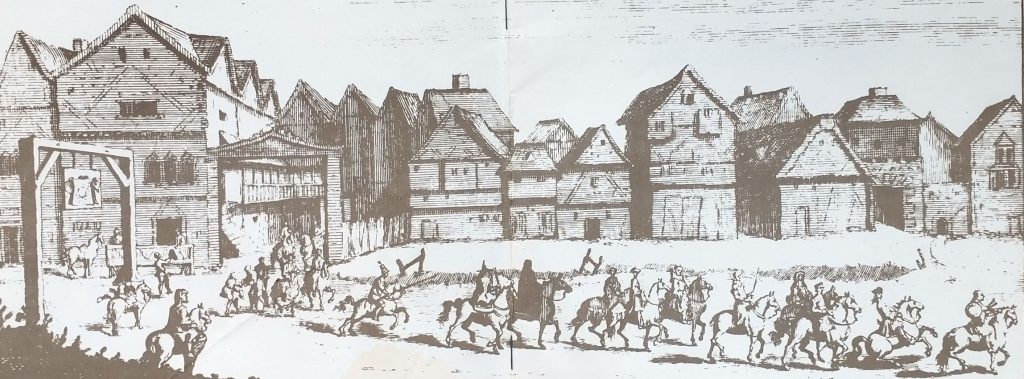
Subscribe to continue reading
Subscribe to get access to the rest of this post and other subscriber-only content.

The Past brought to Life
Subscribe to get access to the rest of this post and other subscriber-only content.

When I read a reference to a Battle at St Eloi, it struck a chord as he is mentioned in the Canterbury Tales. It is an oath sworn by the delicate Prioress:
There was also a nun, a prioress,
Who, in her smiling, modest was and coy;
Her greatest oath was but “By Saint Eloy!”
And she was known as Madam Eglantine.
Full well she sang the services divine(5)
Intoning through her nose, becomingly;
And fair she spoke her French, and fluently.
At table she had been well taught withal,
And never from her lips let morsels fall,
Nor dipped her fingers deep in sauce, but ate(10)
With so much care the food upon her plate
That never driblet fell upon her breast.
General Prologue Canterbury Tales. Full Text here.
The reason is sticks in my mind is that the Prioress is shown as a cultured, well-mannered, delicate woman. And yet, she tells the most tremendously anti-Semitic tale. I hope that Chaucer meant this contrast. Someone who knows the forms of good behaviour without a clue in her hand that the most important of the Commandments is ‘Love Thy Neighbour like thyself.’ Another irony is that St Eloy was noted for refusing to swear an oath, and yet, the Prioress swears, by St Eloy.
Anyway, St Eloi was a very popular saint in the medieval period. According to legend, he was was having trouble shoeing a horse, which he thought was possessed. So he cut the horse’s leg off, re-shoed the amputated leg and then reattached the leg back on the horse. The horse trotted off, none the worse for the experience.
Properly called St. Eligius he is the patron saint of horses and cattle, farriers, blacksmiths, metalworkers, goldsmiths. The Saint was also responsible for converting Flanders to Christianity in the 7th Century. His Saint’s Day is 1 December. To look at the charge of rape against Chaucer look at my post here.
St Eloy in London
I have just discovered that there is a Holy Well dedicated to St Eloy in Tottenham London! To find out more look at this page.

St Eloi is also the patron saint of mechanics in general (including the Royal Electrical and Mechanical Engineers, (forerunners of whom fought at Ypres). This brings me to what happened on this day in 1915, the British retook trenches at St Eloi. St Eloi was just behind the Southern edge of the Ypres Salient, a bulge of allied territory surrounded on three sides by German forces and the site of the five battles of Ypres. St Eloi had a mound which provided a perfect position for machine-guns to dominate the area and so became the focus of fierce fighting from 1914 through into 1918 when the Germans were finally pushed out of the Salient.

Here is a citation from a medal for bravery:
´For gallant behaviour on the morning of the 15th February 1915 at St. Eloi. A party of six stretcher bearers carrying wounded men from the firing line came under a heavy and sustained rifle fire. The bearers left their stretchers and ran to cover leaving Private Wright, D.C.L.I. (shot through the knee) and Private A. Stevenson, D.C.L.I. (shot through stomach) lying in open under heavy fire.
7679 Lance Sergeant T. Spanton, 6170 Rifleman E. Largen, and 1126 Company Sergeant Major S.M. Clay [together with Captain Brady] rushed some 50 yards across the exposed fire zone and carried in to cover the stretcher bearing Private Wright, whilst under heavy rifle fire. Private Stevenson, who was lying beside Wright, was found to be dead, and so was not carried in until dark. Lance Sergeant Spanton, Company Sergeant Major Clay, and Rifleman Largen have on several occasions done noticeably good work, showing fearlessness, resource, and devotion to duty.´
For details of the medals follow this link.
Fighting continued here from 1914 through into 1918 when the Germans were finally pushed out of the Salient.
I wanted to find something about the winter as experienced in World War 1. Why? Because I watched a very moving film about World War 1 by Derek Jarman called ‘War Requiem’. It put images to the requiem by Benjamin Britten. I also listened to a radio piece on ‘Spring Offensives’ to give a long view on what was happening in Ukraine.
I found this war poem which vividly sets a winter war scene:
There has been no sound of guns,
No roar of exploding bombs;
But the darkness has an edge
That grits the nerves of the sleeper.
He awakens;
Nothing disturbs the stillness,
Save perhaps the light, slow flap,
Once only, of the curtain
Dim in the darkness.
Yet there is something else
That drags him from his bed;
And he stands in the darkness
With his feet cold against the floor
And the cold air round his ankles.
He does not know why,
But he goes to the window and sees
A beam of light, miles high,
Dividing the night into two before him,
Still, stark and throbbing.
The houses and gardens beneath
Lie under the snow
Quiet and tinged with purple.
There has been no sound of guns,
No roar of exploding bombs;
Only that watchfulness hidden among the snow-covered houses,
And that great beam thrusting back into heaven
The light taken from it.
Published 2025, Revised February 2026

Lupercalia was a Roman feast of purification. It was dedicated to the she-wolf who saved Romulus and Remus, the traditional founders of the City of Rome. The centre of the festivities in Rome was a cave called the Lupercal. This was, supposedly, where the wolf suckled the twin brothers until they were rescued by Faustulus, a shepherd.
The Lupercalia was also called dies Februatus. The word seems to be derived from proto-italic word februum for purification by making an offering. The purification instruments were called februa. This is the basis for the Roman month named Februarius and our February. For more about February see my post here.
The deity of the month was Neptune.
We are also in the middle of the Parentalia, which began on the 13th February and lasted nine days. It honoured parents and family ancestors. People would visit the family tombs found along the roadsides outside of the City. Here they would honour the ancestors by making offerings.
There would be a family banquet and offerings made to the Lares – the household deities. Romans had a household altar for their worship. The Greek Goddess Hestia was the Goddess of the Hearth – the centre of any household, and Vestal was the Roman equivalent. Dickens borrowed the concept of the Household Gods in his Christmas book ‘the Chimes’.
According to Wikipedia the Codex-Calendar of 354, shows that 13 February had become the holiday Virgo Vestalis parentat. This was a public holiday which by then appears to have replaced the older Parentalia.
For more on Roman Burials and the Festivals of the dead look at my post here:
29 – The Day that Christ overcame the devil. February 15th was the date chosen for this festival, which was called Sarum Rite. But it is long obsolete in the Church calendars, and no one seems to know what it was about. Although it seems obvious to me, it must be when the Devil tried to tempt Jesus in the Wilderness. I have just found this site which is equally unsure. But feast-of-the-triumph-of-christ-over-the-devil suggests that Jesus was baptised on 6th January and 40 days later takes us to February 15th when the Devil:
‘took him up into the holy city, and set him upon the pinnacle of the temple,
And said to him: If thou be the Son of God, cast thyself down, for it is written: That he hath given his angels charge over thee, and in their hands shall they bear thee up, lest perhaps thou dash thy foot against a stone.
Jesus said to him: It is written again: Thou shalt not tempt the Lord thy God.‘
The story continues, but you get the gist of it. As to the date of AD 29. Dates about Jesus are very uncertain.
898 – In the Laws of King Alfred the Great, February 15th, the day Christ overcame the devil, was a day off for freemen. This is about the date of the first day in Lent. Lent of course varies with the date of Easter. In 2026 Lent starts on February 18th. But the law code says the 15th is the day off. I delve more into Days off in the Anglo Saxon Calender on August 15th.
1748 – Jeremy Bentham was born. He was a utilitarian philosopher, who believed ethics consisted on contributing to the great good of humanity. He was also involved in the foundation of the London University and founded University College, London – London’s first university. Founded in 1826.

My part in his story is that the mother of my children is a textile conservator and one of her first projects was to sort Jeremy Bentham out. He was an atheist and did not believe humans survive death. In order to encourage free thought, he ordered that his body should be publicly dissected (after his death!). His skeleton was then dressed in a suit, stuffed with straw, adorned with a cast of his head, Hat put on, and seated on a chair. Then placed in a cupboard, only to be brought out on ceremonial occasions. He’d got a bit dusty over the years, and a little frayed at the edges. So his clothes were repaired and cleaned, and restuffed with acid-free stuffing. Then put back in the cupboard, where you can still see him.
1915 – British Troops retake trenches near St Eloi – for more on this read my post here:
Revised February 15th 2026

St Valentine’s Day in a Poem by Chaucer
| For this was on Seynt Valentynes day, | |
| Whan every foul cometh ther to chese his make, | |
| Of every kinde, that men thynke may; | |
| And that so huge a noyse gan they make, | |
| That erthe and see, and tree, and every lake | |
| So ful was, that unnethe was ther space | |
| For me to stonde, so ful was al the place. |
This is my ‘translation’
For this was St. Valentine’s Day
When every bird came there to chose their mate.
Of every type, that men think may
And that so huge a noise did they make
That earth and sea and tree and every lake
So full was, that hardly was there space
For to stand so full was the place.
This is the first reference to St Valentine’s as a romantic day. And some people charge Chaucer with making the whole thing up! St Valentine, is supposed to have been martyred in the 3rd Century (290AD) on the Via Flaminia on February 14. He refused to stop marrying people in the Christian rites. Therefore, he is the patron Saint of lovers. Valentine is also the patron Saint of epileptics, fainting and beekeepers. According to legend, he taught a young blind girl how to look after Bees, and, sometime later, her eyesight was restored. He also is said to have treated a young man of epilepsy. Epilepsy was sometimes called the Falling Sickness, and so he is also the Saint of Fainting.
But until Chaucer, there was no particular link with romance. In fact, there are at least three Saint Valentines who were martyred in the Roman period. Their relics are scattered around Europe (have a look at this National Geographic article for the full S.P.). These include bones in Glasgow and his heart in Dublin. There are in total 11 Saints called Valentine in the list of Catholic Saints.
Another theory is that St Valentine has taken over the aspect of the God Cupid, as a Christian attempt to create a holy festival to replace the Lupercalia. See my post on the Lupercalia here.
Chaucer’s poem suggests one possible route to the link with romance. Early February is about the time when birds pair off. If they want to have their chicks at the optimal time, then they need to get going before spring has really sprung.
When I think of love, I don’t think of birds. Maybe, this is because I live by a Canal. Outside my garden, I frequently see and hear a Coot chasing his pair across the water before violently mounting her. But then they are fiercely monogamous and defend their nest, fearlessly, against much bigger birds. And swans glide by in beautiful family groups. But Magpies are my favourite lovebird because you see one, and then look around, and you very often see the partner. I have adopted an old tradition that you are supposed to say:
And look for the mate. It is good luck if you see her and bad luck if you don’t. (Please feel free to assign your own favourite gender!)
‘One for Sorrow’ is a well-known nursery rhyme found in many variations, and is an example of ‘ornithomancy superstition’ whereby the number of Magpies you see determines some aspect of your future. Magpies normally mate for life, and are not gregarious during the nesting season, but thereafter, they ‘join together in large wintering flocks of more than 20 or so birds.‘. So, perhaps we need at least another seven lines for the rhyme? So, far I have never seen a flock of them. If you have a photo of a flock, please send it to me!
One for sorrow,
Two for joy,
Three for a girl,
Four for a boy,
Five for silver,
Six for gold,
Seven for a secret,
Never to be told.
Eight for a wish,
Nine for a kiss,
Ten a surprise you should be careful not to miss,
Eleven for health,
Twelve for wealth,
Thirteen beware it’s the devil himself.
As to the likelihood of seeing thirteen magpies together – well I have seen them often in pairs, occasionally in threes and often alone.
Here is another, more dangerous version of the rhyme (you are more likely to see the Devil)
One for sorrow,
Two for mirth
Three for a funeral,
Four for birth
Five for heaven
Six for hell
Seven for the devil, his own self
For details of the history of versions of this poem, click here:
Magpies don’t have a good reputation, traditionally being regarded as thieves and scavengers with untidy nests and eating habits. They are supposed to be attracted to shiny things, but Exeter University did some research which found that they have the normal Corvid’s curiosity for objects. But they are as happy to snatch a dull object as a shiny one. So, we can see they are very intelligent as well as faithful lovers. For me, a good-omened bird (as long as I see the two of them).
More on Chaucer in my post for April 18th. For my post on Blackbirds see here.
44BC – Julius Caesar was appointed dictator in perpetuum. Or perpetual dictator of the Roman Republic. Coins were issued with the phrase DICT PERPETVO.
1400 -Richard II died shortly after Epiphany Rising, a failed plot to restore him to the throne. Some think he was starved to death in captivity in Pontefract Castle. Or he starved himself. His body was taken to London and put on display in St Paul’s Cathedral on 17 February. His remains were taken to one of his favourite palaces at King’s Langley Priory on 6 March. Henry V had his remains ‘translated’ to Westminster Abbey. King’s Langley was a Royal Palace lived in by Eleanor of Aquitaine and Edward II, as well as Richard II. It is near Slough.
Jan-Marie Knights author of The Plantagenet Socialite lists possible scenarios:
‘The accepted tale of the king’s death is that in despair and grief at the death of his friends, King Richard refused to eat or drink, although a few say he was purposely starved to ensure he died as if from a natural death. Another rumour is that when an esquire mentioned the words ‘King Henry’ while he was eating dinner, Richard struck him with the knife he was using. Guards charged in and the king, pushing the table away, took a bill out of one man’s hand and managed to slay four of them but one leapt onto the chair he had vacated and felled him with a stroke of his poleaxe.’
1876 – Alexander Graham Bell applies for a patent for the telephone
1895 – The Importance of Being Earnest, first produced at the St James’s Theatre, London
1918 – Russia finally adopts the Gregorian calendar. see my post here.
First Published in February 2023, revised and updated in February 2024, 2025 On This Day added 2026

On the other hand, ‘Thank God It’s Friday!’. In fact, the belief that Friday the Thirteenth is a very bad luck days is not that old. Researchers can only trace it back to the 19th Century in France. Have a look at this BBC site for details. However, 13 has long been an ill-omened number. Judas Iscariot was the 13th to arrive at the Last Supper, And that didn’t turn out well. 13 was an unlucky day for the Romans too.

In Norse Mythology, Baldur, the son of Odin who was a bright and cheerful God, was having premonitions of doom. Odin sought the advice of a dead seer who told him, Baldur was doomed. Baldur’s mother, the Goddess Frigg, was determined to save him. So got every entity in the cosmos live or dead to swear they would not harm Baldur.
Thereafter, the Gods enjoyed themselves at banquets by throwing missiles at Baldur who was now immune to all threats. The mischievous God, Loki, saw an opportunity for his evil skills. He spoke, in disguise, to Frigg asking if she had really got every single entity to swear? She said yes except the Mistletoe as it was so innocuous. So, ofcourse, Loki went to make a spear out of the mistletoe.
With the weapon, Loki attended a Banquet of twelve gods to which he was not invited, being therefore the 13th. When the Gods began their now customary game of throwing things at Baldur, Loki asked the slayer God Hodr to throw the mistletoe spear. It killed Baldur, and despite many attempts the Gods could not get Baldur out of Hell, Much of the joy of the world died with him. For more detail see norse-mythology.org.

Friday was often an unlucky day in the Bible. In particular, it was the day Adam and Eve ate of the Tree of Knowledge. Below you can see the human-headed snake beguiling Eve who hands the fruit of knowledge to Adam.

It was the day when Noah’s premonition was proven correct. In the Canterbury Tales, Chaucer writes that “And on a Friday fell all this mischance. O Venus, sweet goddess of love’s chance”. (Nun’s Priest’s Tale). And Friday was the normal Hangman’s Day in England.
But no one seems to have put the two together until the 19th Century. In 1834 a French play had a line
“I was born on a Friday, December 13th, 1813 from which come all of my misfortunes.”
There is one Friday 13th a year, and often three. They insist on appearing only in a month that starts on a Sunday. The compound word for fear of Friday 13th is paraskevidekatriaphobia.
1307 – On Friday 13 October, King Philip IV of France arrested leading members of the Knight’s Templars. One of the most powerful monastic orders in Europe to whom many of the leading Knights belonged. They had basically become the bankers to the Royalty of Europe, But they had become too powerful, and were destroyed very violently.
First Published on Friday the 13th of February 2026

London, February 12, (1895). There is no abatement of the abnormally cold weather which has prevailed in northern Europe for the last week. The Upper Thames is frozen over, and huge blocks of ice breaking away from the mass are floating down the river, causing much damage to the smaller shipping craft. Water traffic is consequently at a complete standstill.
Many cases of death from cold and exposure are reported, the privation and distress in the East End of the city being particularly severe. The cold is so intense that birds are found frozen to death on the branches of the trees, and thousands are perishing. The severe weather has also directly caused considerable mortality, a number of deaths from exposure having been reported among postmen, omnibus drivers, cabmen, and labourers.
Contemporary Newspaper quotation on February 12th 1895 quoted by Isle of Dogs Life blog


Winter of 1895 Limehouse to left, Tower of London to right. Images from Isle of Dogs blog.
The year 1895 was the culmination of a decade of particularly cold winters (and for some the end of the so-called Little Ice Age). On the 11th February, the coldest day in British History was recorded at Braemar at −27.2 °C. February 1895 was the second coldest on record, with the lowest minimum temperatures on record. Shipping in the biggest port in the world was stopped. Therefore, many workers were laid off, and had to resort to what were then called ‘soup kitchens’ and now ‘food banks’. Winter death rates were said to be doubled, with people dying in the street and in unheated homes.
Record minima were set for these dates in February 1895:
Source Wikipedia.
On the flip side people resorted to ponds around London particularly the Serpentine which had 6 inches of ice and 50,000 skaters, with speed skating competitions.
For more details and contemporary newspaper accounts of the Great Freeze, read the Isle of Dogs blog. See also my post on the Cold Winter January 28th 1776. The next coldest winter was January 23rd 1940, when the Thames froze over for the first time since 1880. Lovely photo here of skaters on the Serpentine.
1554 – Lady Jane Grey was executed after a trial at the Guildhall. Her husband was executed on the same day. Her adoption as heir to the throne was ordered by her cousin Edward VI. His minister, John Dudley, Duke of Northumberland, (and Jane’s Father-in-Law) arranged for the Privy Council to accept Jane as the next monarch. They were trying to prevent Henry VIII’s Catholic daughter, Mary taking the throne. Jane was Queen for 9 Days. The Privy Council swapped sides as support for Jane collapsed. Jane was the Great-granddaughter of Henry VII and cousins to Mary, Elizabeth and Edward VI.
1993 – The South African Government agrees with the African National Congress to form an elected interim government comprised of both black and white members.
Published February 12th 2024, and republished 2025, 2026
Today is El Jueves Lardero in Spain, Giovedì grasso in Italy, Weiberfastnach in the Rhineland, Tłusty Czwartek (Fat Thursday) in Poland and Tsiknopempti in Greece.
Please read out that sentence loud, attempting the accents because it’s very therapeutic!
Fat Thursday is the last Thursday before Lent. It is the first day of the Carnival season which reaches a climax on Mardi Gras, or Shrove Tuesday. This is the day before Ash Wednesday, when the 40 days of fasting before Easter begins.
In Poland, the tradition is to eat pączki which we call doughnuts and the Germans call Berliners. I remember when President Kennedy made a famous speech in Berlin and said ‘Ich bin ein Berliner’. He was cheered to the echo but was actually saying ‘I am a doughnut! Doughnuts traditionally should be made with red jam. But now people can use cream, or almost any sort of sugary nonsense.

Spain is more savoury on Greasy Thursday, where tortilla are eaten. They also eat sausages, bacon, and pork. In Catalonia, they eat tortilla with butifarra.(which are sausages in the Roman tradition). Here is a recipe for butifarra.
In Italy giovedì grasso (Fat Thursday) is when:
“the fooling and the mumming, the dancing, shrieking, and screaming would be at its height.”
This is recorded by the English writer Marie Corelli in her book Vendetta (1886). Look at these sites for more on Fat Thursday and El Jueves Lardero.
There are indications that the week before Shrove Tuesday, in the Anglo Saxon period, was one of merriment and feasting. Eating the things that were not allowed in Lent. So in Old English this week is Cheese Week or Butter Week, and there was a Cheesefare Sunday. (‘Winters in the World’ by Eleanor Parker).
But I cannot find any references to traditions of a fat Thursday or a Lardy Thursday in the UK. But we do have the fabulous Lardy Cake. It is a cake that drips with sugar and lard (pig fat). It is one of my very favourite cakes. The main ingredients are rendered lard, flour, sugar, spices, currants and raisins. I was brought up on Lardy Cake, Chelsea Buns, Spotted Dick, and Sticky Willies (iced buns). Every day was Fat Thursday! I am surprised I wasn’t an overweight child!
It is by no means a countrywide cake. My own theory is that it was a delicacy of the West Saxons. And I fondly imagine King Alfred tending to the Lardy Cake when musing about defeating the Vikings. I have bought lardy cake in Woking and Guildford in Surrey. There is a great Lardy Cake to be eaten in the centre of Winchester (Alfred’s Capital). Along the Thames Valley in Reading, but best were sold in Cornmarket in Oxford, in, the since closed, Woolworths. These are all in areas controlled by Wessex in the 9th Century.
When lecturing at Worcester I found a variant of it which is called Worcester Dripping Cake. Worcester is in the Kingdom of Mercia. Dripping is melted fat, often from Beef. Many Londoners were brought up on Bread and Dripping.
Wikipedia says Lardy Cake is from: ‘southern counties of England, including Sussex, Surrey, Hampshire, Berkshire, Wiltshire, Dorset and Gloucestershire.’ But I have never found it myself around Stonehenge, or in Dorchester, nor in the Cotswolds. So I would say Sussex, Surrey, Hampshire, Berkshire and Oxfordshire are the lardy cake heartlands. It is said to have been originally for special occasions, so maybe there once was a Lardy Thursday tradition. It feels like there should be one!

And here, courtesy of the BBC and the handsome (but possibly, dare I say it, a little ‘lardy’) Paul Hollywood of Bake-off fame, is a recipe for Lardy Cake. Please make it and feel that wonderful English Pudding feeling of a lead weight in your stomach.
https://www.bbc.co.uk/food/recipes/lardy_cake_80839
The recipe says ‘This recipe has a generous amount of dried fruit in a rich dough that’s lighter and less sweet than most shop-bought lardy cakes‘. So, it’s not going to be entirely authentic!
I did try making Lardy cake and I put it in that category of food which is best left for the professionals to do, along with Croissants and Chelsea Buns.
Following posting this page on Facebook, Heike Herbert posted this response concerning ‘Women’s Fast Night on February 8th in Cologne or Koln:

Aristotelis Psitos emailed me to say that the Greek Orthodox ‘Fat Thursday’ is on a different date.
After last year’s post I decided to try to bake Lardy Cake .


Ok, so my first error was pretty fundamental.I forget to put the sugar in! Secondly, I was distracted so did not put the timer on. It was therefore a little overcooked, but not disastrously. I also used Wholemeal flour rather than Strong White flour, which Paul Hollywood suggested. I sprinkled caster sugar on it. I’ve had about 4 slices, last night and this morning. I have now washed the utensils 4 times, and they are still covered in lard! But at least it’s less fat ingested. Verdict: Quite Good. To be honest, it is more like a fruit bread than a lardy cake. And next time, I’ll buy it rather than make it.
First Published 2024, revised 2025, Making Lardy Cake moved from February 27th 2026

Daffodils & Narcissus. In 2023, I saw my first Daffodil in Hackney in a Council Estate on 12 January. My first daffodil in 2024 was outside my first floor window in early February. On February 11th, 2025, I saw the shoots of Daffodils in my garden but nothing blooming. However, there were daffodils on another Council Estate. In 2026, my first daffodil came out in early January. And the Estates and Parks around have been showing daffodils since late January. They bring such joy and hope for the return of the Sun.

Their formal name is Narcissus. The Roman natural historian, Pliny tells us that the plant was:
‘named Narcissus from narkē not from the fabulous boy.’
Narkē is the Greek word from which we derive the word narcotic. It is a reference to the narcotic properties of the narcissus. An extract of the bulb applied to open wounds produced numbness of the whole nervous system and paralysis of the heart. The flowers are also slightly poisonous. So, they were used as an emetic. They brought on vomiting when it was felt necessary that the stomach be emptied. It was used to treat hysteria and epilepsy. They treated children with bronchial catarrh or epidemic dysentery. Among Arabian doctors, it was used to cure baldness and as an aphrodisiac. (Source: A Modern Herbal by Mrs M Grieve.) Please remember these are not recommendations for use medicinally, but are historic uses and may be dangerous.
The fabulous boy, mentioned by Pliny, was Narcissus. He, according to the Roman Poet Ovid, met the nymph Echo, and she fell in love with the beautiful boy. He spurned her, and she faded until all that remained of her was her voice – the echo we hear.
Nemesis, the Goddess of Revenge (the one with the fiery sword) decided on revenge upon the handsome boy. She lured the thirsty youth to a fountain, where, in the pool around the fountain, he saw an image of a breathtakingly handsome boy. He fell instantly in love with such beauty. But it was an image of himself. Realising he would never meet anyone as fabulous as himself, he faded from life. He eventually metamorphised into a white and yellow flower, which was named after him.

Daffodils are mentioned in a list of Spring Flowers by Shakespeare in the pastoral play The Winter’s Tale:
(Please note that as you read Shakespeare’s words below that Prosperpina is the wife of Pluto, the God of the Underworld, Dis, is another name for him, Cytherea is the Goddess of Beauty and Love. Phoebus is the Sun God. And the Spring Flowers are Daffodils, violets, primroses, oxlips (primula), Crown Imperial (Fritillaria imperialis), Lilies, flower-De-luce (Iris)
Perdita to Camillo
Out, alas!
You’d be so lean that blasts of January
Would blow you through and through.
(To Florizel)
I would I had some flowers o’th’ spring, that might
Become your time of day –
(to the Shepherdesses)
That wear upon your virgin branches yet
Your maidenheads growing. O Proserpina,
For the flowers now that, frighted, thou let’st fall
From Dis’s waggon! Daffodils,
That come before the swallow dares, and take
The winds of March with beauty; violets, dim,
But sweeter than the lids of Juno’s eyes
Or Cytherea’s breath; pale primroses,
That die unmarried ere they can behold
Bright Phoebus in his strength – a malady
Most incident to maids; bold oxlips and
The crown imperial; lilies of all kinds,
The flower-de-luce being one: O, these I lack
To make you garlands of, and my sweet friend
To strew him o’er and o’er!WT IV.iv.110.2
The reference to Daffodils suggests that for Shakespeare they are around to withstand the March Winds before the Swallows arrive in April. With selective breeding, early flowering species have been developed. Now February and even January are within the scope of the glorious bulb. (here is a post on winter flowering varieties). For my post on Shakespeare & Winter see here.
Below is the text of Ovid’s Echo and NarcissusTranslated by Brookes Moore
Once a noisy Nymph, (who never held her tongue when others spoke, who never spoke till others had begun) mocking Echo, spied him as he drove, in his delusive nets, some timid stags.—For Echo was a Nymph, in olden time,—and, more than vapid sound,—possessed a form: and she was then deprived the use of speech, except to babble and repeat the words, once spoken, over and over. Juno confused her silly tongue, because she often held that glorious goddess with her endless tales, till many a hapless Nymph, from Jove’s embrace, had made escape adown a mountain.
But for this, the goddess might have caught them. Thus the glorious Juno, when she knew her guile; “Your tongue, so freely wagged at my expense, shall be of little use; your endless voice, much shorter than your tongue.” At once the Nymph was stricken as the goddess had decreed;—and, ever since, she only mocks the sounds of others’ voices, or, perchance, returns their final words.
One day, when she observed Narcissus wandering in the pathless woods, she loved him and she followed him, with soft and stealthy tread.—The more she followed him the hotter did she burn, as when the flame flares upward from the sulphur on the torch. Oh, how she longed to make her passion known! To plead in soft entreaty! to implore his love! But now, till others have begun, a mute of Nature she must be. She cannot choose but wait the moment when his voice may give to her an answer. Presently the youth, by chance divided from his trusted friends, cries loudly, “Who is here?” and Echo, “Here!” Replies. Amazed, he casts his eyes around, and calls with louder voice, “Come here!” “Come here!” She calls the youth who calls.—He turns to see who calls him and, beholding naught exclaims, “Avoid me not!” “Avoid me not!” returns. He tries again, again, and is deceived by this alternate voice, and calls aloud; “Oh let us come together!” Echo cries, “Oh let us come together!” Never sound seemed sweeter to the Nymph, and from the woods she hastens in accordance with her words, and strives to wind her arms around his neck.
He flies from her and as he leaves her says, “Take off your hands! you shall not fold your arms around me. Better death than such a one should ever caress me!” Naught she answers save, “Caress me!” Thus rejected she lies hid in the deep woods, hiding her blushing face with the green leaves; and ever after lives concealed in lonely caverns in the hills. But her great love increases with neglect; her miserable body wastes away, wakeful with sorrows; leanness shrivels up her skin, and all her lovely features melt, as if dissolved upon the wafting winds—nothing remains except her bones and voice—her voice continues, in the wilderness; her bones have turned to stone. She lies concealed in the wild woods, nor is she ever seen on lonely mountain range; for, though we hear her calling in the hills, ’tis but a voice, a voice that lives, that lives among the hills.
Thus he deceived the Nymph and many more, sprung from the mountains or the sparkling waves; and thus he slighted many an amorous youth.—and therefore, some one whom he once despised, lifting his hands to Heaven, implored the Gods, “If he should love deny him what he loves!” and as the prayer was uttered it was heard by Nemesis, who granted her assent.
There was a fountain silver-clear and bright, which neither shepherds nor the wild she-goats, that range the hills, nor any cattle’s mouth had touched—its waters were unsullied—birds disturbed it not; nor animals, nor boughs that fall so often from the trees. Around sweet grasses nourished by the stream grew; trees that shaded from the sun let balmy airs temper its waters. Here Narcissus, tired of hunting and the heated noon, lay down, attracted by the peaceful solitudes and by the glassy spring.
There as he stooped to quench his thirst another thirst increased. While he is drinking he beholds himself reflected in the mirrored pool—and loves; loves an imagined body which contains no substance, for he deems the mirrored shade a thing of life to love. He cannot move, for so he marvels at himself, and lies with countenance unchanged, as if indeed a statue carved of Parian marble. Long, supine upon the bank, his gaze is fixed on his own eyes, twin stars; his fingers shaped as Bacchus might desire, his flowing hair as glorious as Apollo’s, and his cheeks youthful and smooth; his ivory neck, his mouth dreaming in sweetness, his complexion fair and blushing as the rose in snow-drift white. All that is lovely in himself he loves, and in his witless way he wants himself:—he who approves is equally approved; he seeks, is sought, he burns and he is burnt.
And how he kisses the deceitful fount; and how he thrusts his arms to catch the neck that’s pictured in the middle of the stream! Yet never may he wreathe his arms around that image of himself. He knows not what he there beholds, but what he sees inflames his longing, and the error that deceives allures his eyes. But why, O foolish boy, so vainly catching at this flitting form? The cheat that you are seeking has no place. Avert your gaze and you will lose your love, for this that holds your eyes is nothing save the image of yourself reflected back to you. It comes and waits with you; it has no life; it will depart if you will only go.
Nor food nor rest can draw him thence—outstretched upon the overshadowed green, his eyes fixed on the mirrored image never may know their longings satisfied, and by their sight he is himself undone. Raising himself a moment, he extends his arms around, and, beckoning to the murmuring forest; “Oh, ye aisled wood was ever man in love more fatally than I? Your silent paths have sheltered many a one whose love was told, and ye have heard their voices. Ages vast have rolled away since your forgotten birth, but who is he through all those weary years that ever pined away as I?
Alas, this fatal image wins my love, as I behold it. But I cannot press my arms around the form I see, the form that gives me joy. What strange mistake has intervened betwixt us and our love? It grieves me more that neither lands nor seas nor mountains, no, nor walls with closed gates deny our loves, but only a little water keeps us far asunder. Surely he desires my love and my embraces, for as oft I strive to kiss him, bending to the limpid stream my lips, so often does he hold his face fondly to me, and vainly struggles up. It seems that I could touch him. ‘Tis a strange delusion that is keeping us apart. Whoever thou art, Come up! Deceive me not! Oh, whither when I fain pursue art thou? Ah, surely I am young and fair, the Nymphs have loved me; and when I behold thy smiles I cannot tell thee what sweet hopes arise. When I extend my loving arms to thee thine also are extended me—thy smiles return my own.
When I was weeping, I have seen thy tears, and every sign I make thou cost return; and often thy sweet lips have seemed to move, that, peradventure words, which I have never heard, thou hast returned. No more my shade deceives me, I perceive ‘Tis I in thee—I love myself—the flame arises in my breast and burns my heart—what shall I do? Shall I at once implore? Or should I linger till my love is sought? What is it I implore? The thing that I desire is mine—abundance makes me poor. Oh, I am tortured by a strange desire unknown to me before, for I would fain put off this mortal form; which only means I wish the object of my love away. Grief saps my strength, the sands of life are run, and in my early youth am I cut off; but death is not my bane—it ends my woe.—I would not death for this that is my love, as two united in a single soul would die as one.”
He spoke; and crazed with love, returned to view the same face in the pool; and as he grieved his tears disturbed the stream, and ripples on the surface, glassy clear, defaced his mirrored form. And thus the youth, when he beheld that lovely shadow go; “Ah whither cost thou fly? Oh, I entreat thee leave me not. Alas, thou cruel boy thus to forsake thy lover. Stay with me that I may see thy lovely form, for though I may not touch thee I shall feed my eyes and soothe my wretched pains.” And while he spoke he rent his garment from the upper edge, and beating on his naked breast, all white as marble, every stroke produced a tint as lovely as the apple streaked with red, or as the glowing grape when purple bloom touches the ripening clusters.
When as glass again the rippling waters smoothed, and when such beauty in the stream the youth observed, no more could he endure. As in the flame the yellow wax, or as the hoar-frost melts in early morning ‘neath the genial sun; so did he pine away, by love consumed, and slowly wasted by a hidden flame. No vermeil bloom now mingled in the white of his complexion fair; no strength has he, no vigor, nor the comeliness that wrought for love so long: alas, that handsome form by Echo fondly loved may please no more.
But when she saw him in his hapless plight, though angry at his scorn, she only grieved. As often as the love-lore boy complained, “Alas!” “Alas!” her echoing voice returned; and as he struck his hands against his arms, she ever answered with her echoing sounds. And as he gazed upon the mirrored pool he said at last, “Ah, youth beloved in vain!” “In vain, in vain!” the spot returned his words; and when he breathed a sad “farewell!” “Farewell!” sighed Echo too. He laid his wearied head, and rested on the verdant grass; and those bright eyes, which had so loved to gaze, entranced, on their own master’s beauty, sad Night closed. And now although among the nether shades his sad sprite roams, he ever loves to gaze on his reflection in the Stygian wave. His Naiad sisters mourned, and having clipped their shining tresses laid them on his corpse: and all the Dryads mourned: and Echo made lament anew. And these would have upraised his funeral pyre, and waved the flaming torch, and made his bier; but as they turned their eyes where he had been, alas he was not there! And in his body’s place a sweet flower grew, golden and white, the white around the gold.
See my post On Ovid’s Metamorphosis & crocus & saffron/
1531 – King Henry VIII is recognised as ‘Supreme Head of the Church of England’ sundering England from the Universal Catholic Church.
1812 – Massachusetts governor Elbridge Gerry is accused of “gerrymandering” for the first time.
Elbridge signed a bill which created a voting district packed with voters for the Democratric-Republican Party. It was said to be shaped like a salamander, and so by joining his name to the last part of salamander the name gerrymandering was created. Gerry was Vice-President under Madison. Please, could someone tell me how gerrymandering is at all compatible with Democracy and the Constitution of the United States? And why it is tolerated in so brazen a fashion?
1826 – University College London was founded.
It was originally called London University. Until this time, England only had Oxford and Cambridge as Universities. In order to attend or teach, the candidates had to belong to the Church of England. ‘No Catholics, No Jews, no Hindus’. But UCL was created to be open to all faiths. This alarmed conservatives so much that they founded King’s College in London as a counterweight. This created a collegiate University of London, which now has 17 constituent colleges. Imperial College left the federation to become a separate University in 2007. It now brands itself as ‘A world-leading university. 2nd in the world, 1st in the UK and Europe’. Here is a promo for the 200th Anniversary of UCL. I’m proud to have been an honorary lecturer for a few years.
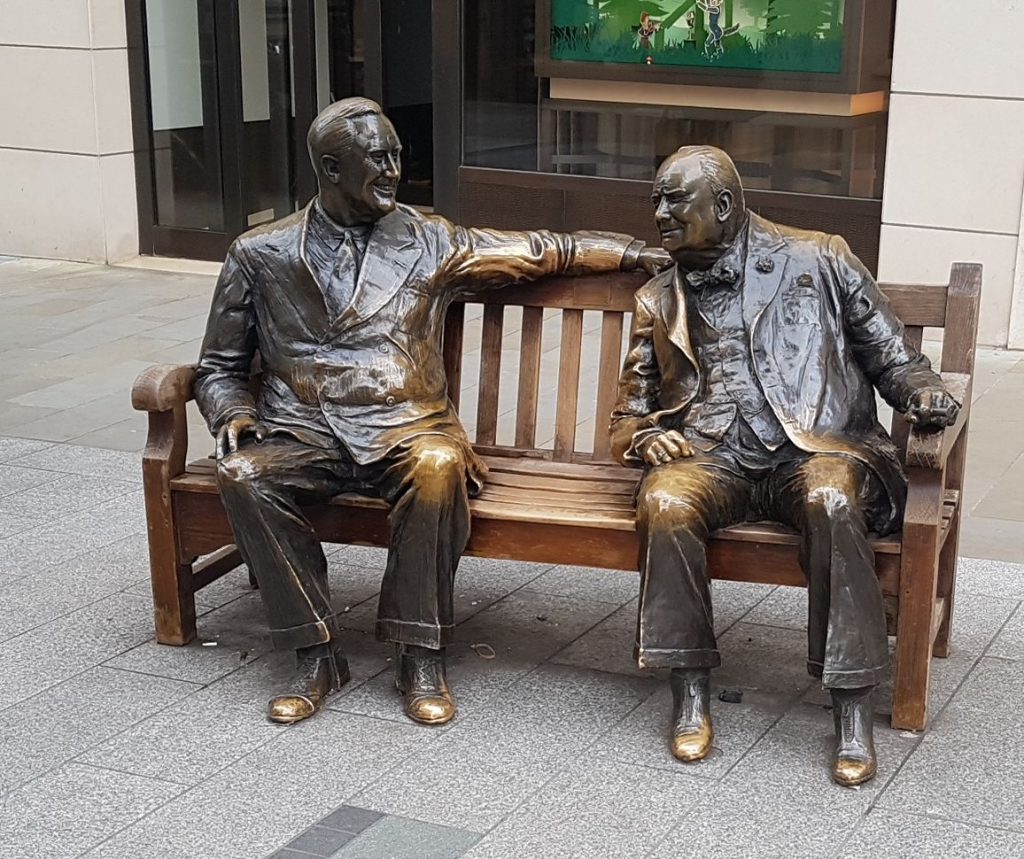
1945 – Yalta Conference agrees to set up the United Nations to help prevent future World Wars.
1975 – Mrs Thatcher defeats Ted Heath to become leader of the Conservative Party.
First published in February 2023, revise and republished in February 2024, 2025, 2026

Gemini should be almost overhead in the Northern Hemisphere, and can be picked out by its two brightest starts, Castor and Pollux. The constellation can be seen from September to May. But between September to November it is only visible in the morning before sunrise. It is best viewed from January to March. For evening viewing it is possible from December to May In February it should best visible at 9.00pm.
The Divine Twins, the Dioscuri, were horsemen, patrons of calvary, athletes, and sailors. Pollux is the son of Zeus and Leda (raped by Zeus in the guise of a swan). His twin brother has a different and mortal father, the King of Sparta and the same mother, Leda. So they are examples of heteropaternal superfecundation.
One is therefore immortal and the other isn’t. They had many adventures including sailing with Jason as Argonauts.
According to some versions of the story, Castor was mortally wounded, and Zeus gave his twin brother the option of letting Castor die while Pollux spends eternity on Mount Olympus. Or sharing his immortality with his brother. He agreed to the latter, and the twins spend half their year as the Constellation of Gemini and the rest, immortal, on Mount Olympus. Thus, they are the epitome of brotherly love.
Their sisters were, no less than Helen of Troy, and Clytemnestra. But more about them in read my post on the brothers and sisters here.

For some obscure reason, the email excluding a couple of paragraphs which were in the online version.
This is what you missed:
John Aubrey, an erudite and educated 17th Century writer, reports on the use of Magick for tooth care. When he relates these unlikely cures he often provides information that the person who told him the story is worthy of belief. So he seems to give some credence to the efficacy of these magical ‘cures’. But, judge for yourself; this is what he wrote:
To Cure the Tooth-ach.
Take a new Nail, and make the Gum bleed with it, and then drive it into an Oak. This did Cure William Neal, Sir William Neal’s Son, a very stout Gentleman, when he was almost Mad with the Pain, and had a mind to have Pistoll’d himself.
To Cure the Tooth-ach, out of Mr. Ashmole’s Manuscript Writ with his own Hand.
Mars, hur, abursa, aburse.
Iesu Christ for Marys sake,
Take away this Tooth-ach.
Write the words, Three times; and as you say the Words, let the Party burn one Paper, then another, and then the last.
He says, he saw it experimented, and the Party immediately Cured
John Aubrey’s Miscellanies 1695

On February 3rd, 2026 the National Trust announced that it had received £330,000 in 60 days to purchase land around the infamous Cerne Abbot Giant. This was on top of £2m in grants previously received. This means they can buy the ‘138‑hectare (340‑acre) site – equivalent to 190 football pitches – surrounding the famous Cerne Abbas Giant in Dorset.’ (National Trusts Press Release).

The giant is one of the icons of Hardy’s Dorchester. It is ‘drawn’ or sculpted by cutting the turf to reveal the white chalk below. Chalk Cut figures appear particularly in the South West. The Vale of the White Horse chalk cut figures has been dated to the Late Bronze Age. Most people thought the Cerne Abbas Giant was in the Romano-Celtic tradition so was either pre-Roman, or perhaps Hercules and, therefore, Roman. The name of the village and Abbey are named after the Celtic Horned God Cernunnos. For more about him read my Almanac of the Past Page here.
Some dissenters believed the lack of references to the Giant showed that it could not have been cut until the 17th Century. Some even thought it might be a ‘cartoon’ of Oliver Cromwell! They could not believe that the Monks of Cerne Abbey would allow a giant erect phallus to overlook their holy site for all those centuries.
How we laughed!
But the National Trust embarked on a project to get the Giant properly dated. They used Optically Stimulated Luminescence (OSL) dating, which had also been used on the White Horse. But the results which came back were shocking. It appears to have been cut in the Late Saxon period.
I do admit to a certain amount of scepticism. The art style is similar to British Art of the Iron Age, part of the Celtic Art tradition. Also, how reliable is OSL dating? The process depends on taking soil samples from the soil nearest the chalk, and OSL measures the time since the soil was last exposed to light. It’s a relatively new technology, although based on Thermoluminescence dating of pottery, which has been around since the 1970s. So,, if they are analysing soil that does not represent the first cutting of the figure then the dating would be wrong.
However, there was also some corroboration in the form of snails which were not indigenous to the UK? So a date of 700-1100AD is suggested. And I have nothing other than a gut reaction to the date they propose. Maybe I’m just disappointed by a Saxon date as I have no way of understanding the context?
For more about the Giant look at the www.nationaltrust.org.uk/visit/dorset/cerne-giant/history-of-the-cerne-giant.
Here is a cartoon I really like:

The first Coach Trip I ever led was in the 1980s. An American College Professor asked my friend and I to lead a tour of Arthur’s Britain and Hardy’s Wessex. The group included his wife and about 10 students. We drove a mini bus around and stayed in Bed and Breakfast in places like Avebury and Cerne Abbas.
Following the Tour, the professor wrote to tell us that he had been successful in one of his, unstated, aims for the tour. He revealed that this was to get his wife pregnant. He was a bit of a romantic and thought it would be fun to try for the baby while staying in such mystical places. Apparently, they had heeded our tales of the fertility rites that used to take place on and around the Giant, and had gone out for a moonlight walk, and ‘rested’ on one of the Giant’s testicles.
Lost Books from the Ancient World

Last year, one of the most exciting discoveries was made. This was the news that burnt scrolls from Herculaneum have been digitally unrolled. Then ‘read’ using AI. The scroll was in the library of Julius Caeser’s father in law it is thought. There are over 1,000 carbonised scrolls found in 1750 in the Villa of the Papyri. And this one reveals details of Plato’s last hours. But more than that, the technology opens the possibility of other lost books being discovered. Of the ‘known unknowns’ I would like to see are the lost history books of Tacitus. But perhaps the ‘unknown unknowns’ are even more exciting. What might we find out?
Here is an excellent introduction to the discoveries:
1306 – This is the day that Robert the Bruce killed his rival for the Crown of Scotland. He murdered John ‘Red’ Comyn, In front of the high altar of Greyfriars Church in Dumfries. Somehow he got away with this most impious act, to confirm Scotland’s independence from England.
1567 – the first Gunpowder plot saw the Kirk o’ Field house in Canongate, Edinburgh, blown up. Outside the house was found the corpse of Lord Darnley. But he was strangled not burnt. He was the second husband of Mary, Queen of Scots. Darnley was thought to be responsible for the brutal murder of the Queen’s Private Secretary, David Rizzio. He was Italian and was often in close proximity to Mary. Darnley didn’t like the rumours of an illicit affair. So recruited a gang of Scottish Noblemen. On 9 March 1566They went up the stairs of Holy Rood Palace where they tore Rizzio from the protection of the Queen. They stabbed him 57 times in front of her and her ladies in waiting. (Julius Caesar was stabbed 23 times).
Darnley’s murder it was thought was the Queen’s way of getting rid of a, frankly, stupid, and nasty husband. Albeit, very good-looking and charming. Her third husband, Earl Bothwell, is frequently blamed, and whether she was part of it we don’t know.
1616 – Judith Shakespeare married Thomas Quiney. See my post https://chr.org.uk/anddidthosefeet/object-of-the-day-shakespeares-signet-ring/
Two February 10th posts were brought together to create this post, which was republished in 2026

The 9th of February is the Feast of St Apollonia. She was martyred at Alexandria in 249 AD during the persecution of Emperor Decius. (see also my post on St Agatha) She was attacked during an anti-Christian riot and struck around the face knocking her teeth out. Then, she was taken to a bonfire and told they would throw her in if she did not renounce her faith. So, without waiting, she spoke a prayer and walked into the fire. This information is recorded in a near-contemporary letter from St Dionysius of Alexandria. This is rare well documented martyrdom. Because her teeth were knocked out she is, therefore, Saint of Toothache.
St Augustine of Hippo touches on this spat of martyrs, often young women, killing themselves rather than losing their virginity, or like St Apollonia embracing death in the face of violent persecution. His answer is that like Samson, they are commanded by God to take their own lives, which is ok. Elsewhere, he condemns suicide as it is against the commandment ‘Thou shalt not kill’. He explains that God did not add ‘thy neighbour’ to it so it also forbids killing oneself. By contrast, it was added to ‘Thou shalt not bear false witness against thy neighbour’. The rest of St Augustine’s argument comes from Plato’s Phaedo. The introduction to the book on the Project Gutenberg web site sums up the arguments:
According to one explanation, because man is a prisoner, who must not open the door of his prison and run away—this is the truth in a ‘mystery.’ Or (2) rather, because he is not his own property, but a possession of the gods, and has no right to make away with that which does not belong to him.
The Project Gutenberg EBook of Phaedo, by Plato translated by Benjamin Jowett
I can remember my Grandmother prescribing cloves for me when I had toothache. And this was, and is, a common remedy. In my case, we would keep a clove or two in the mouth close to the site of the pain. According to Natural Ways to Sooth an Toothache cloves contain
‘Eugenol, a natural form of anaesthetic and antiseptic that helps get rid of germs. Eugenol is still used in dental materials today’
Dr John Hall, Shakespeare’s son-in-law, tended to use a pill to soothe sore gums. He also used an oil from a wood called ‘Ol. Lig. Heraclei’ which may be oil from the Bay Tree. (‘John Hall and his Patients’ by Joan Lane). Most of his tooth cases seem to be sore gums. This suggests to me Dr John Hall did not generally do dental work.
To get a tooth drawn you could go to a Barber Surgeon, a Blacksmiths or specialist Tooth Drawer. It would be terrifyingly painful. Probably only done when the pain was unbearable. Just think what a premium you would pay for a really competent drawer? The drawers would not have any formal training, but the skills would be passed on by the drawer to his apprentice or assistant. ‘Teeth’ was a common cause of death – most likely from infection or an abscess.

John Aubrey, an erudite and educated 17th Century writer, reports on the use of Magick for tooth care. When he relates these unlikely cures he often provides information that the person who told him the story is worthy of belief. So he seems to give some credence to the efficacy of these magical ‘cures’. But, judge for yourself; this is what he wrote:
To Cure the Tooth-ach.
Take a new Nail, and make the Gum bleed with it, and then drive it into an Oak. This did Cure William Neal, Sir William Neal’s Son, a very stout Gentleman, when he was almost Mad with the Pain, and had a mind to have Pistoll’d himself.
To Cure the Tooth-ach, out of Mr. Ashmole’s Manuscript Writ with his own Hand.
Mars, hur, abursa, aburse.
Iesu Christ for Marys sake,
Take away this Tooth-ach.Write the words, Three times; and as you say the Words, let the Party burn one Paper, then another, and then the last.
He says, he saw it experimented, and the Party immediately Cured

In 1832, in London Bishop, Williams, and May were accused of body snatching. After killing the Italian Boy (wonderful book by Sarah Wise ‘The Italian Boy‘) they jemmied out his teeth. Then, took the teeth to a South London Dentist. with whom they bargained for a good price. (They used the term ‘cheapened’ – I cheap, you cheap, we are cheapening: meaning to barter). The dentist wanted to use the dead boy’s teeth for false teeth for his patients. If memory serves, he paid £1 for them.
The teeth were used as evidence in the trial of the murderers. When the trial was over and the accused punished, the dentist asked for the teeth back! Two of the murderers were hanged but the third freed for turning King’s Evidence. Thereafter, the teeth were released back to the Dentist. He promptly put them in the window of his surgery as an advert for his professional skills!
Earlier, one of the Borough Boys Resurrectionist gang (based in Southwark, London) toured the battlefields of the Peninsular Wars collecting teeth. He made a substantial sum selling them to dentists as false teeth. They became known as Waterloo Teeth.
When I first wrote this in I added ‘How things have changed!’ But in recent years there have been reports of people undertaking their own dental work, if they cannot get access to an NHS dentist. Effectively, it seems that the Conservative Government was allowing dentistry to slip out of the NHS just like it did with eye health. For a study in what has happened to Dentistry in the UK in recent years, please look at this report here.
1907 – the National Union of Women’s Suffrage Societies (NUWSS or Suffragists) organised the so-called the Mud March. This was the ‘first large procession’ in support of votes for women. It was called the Mud March because of the downpour of rain on the day.
1916 – Conscription started in World War 1 with the call-up of unmarried men aged between 18 – 41.
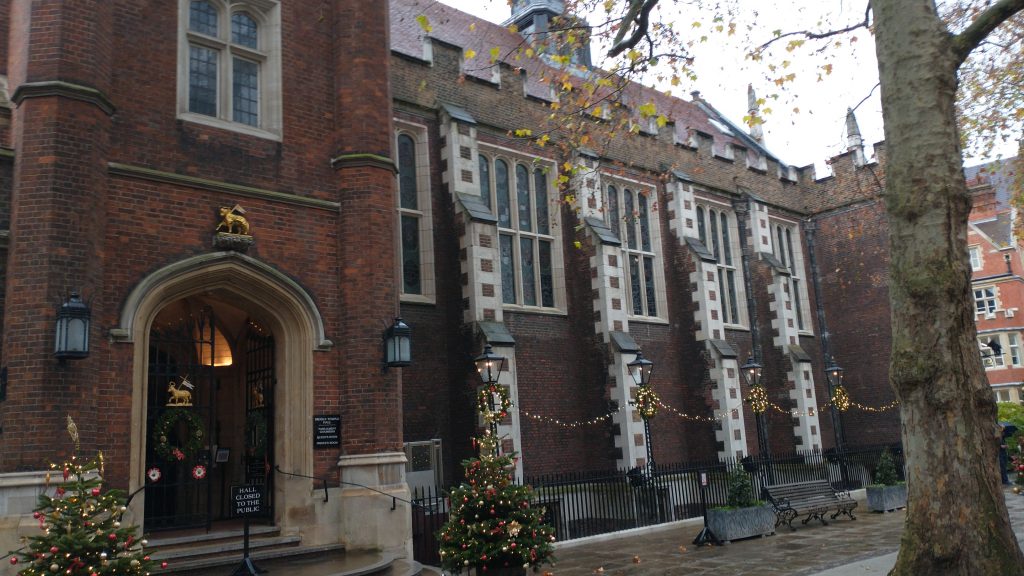
1933 – The Oxford Union passed the resolution ‘the House will in no circumstances fight for King and Country.’
Bird of the Month The Blackbird. The common Blackbird is a true Thrush. The male is black with a yellow beak and the female is dark brown with a yellow beak. The Blackbird begins to sing as early as January, and is one of the birds who sing first early in the morning. British Blackbirds do not migrate, but Northern European Blackbirds often migrate to the UK in the winter for warmer weather. Viruses have put the species under some threat and they need help to get through the winter. ArkWildlife suggests this is what you should feed blackbirds:
For more bird advice see https://www.arkwildlife.co.uk/ from which the above feeding advice is taken.
Here is a blackbird song, royalty free, from https://creazilla.com/search/audio/blackbird.
Is an 18th Century nursery rhyme which refers to the medieval habit of baking a pie crust, and putting it over a bowlful of live birds. When it was opened all the birds, well sing the song to remind yourself what they do?
Sing a song of sixpence
A pocket full of rye
Four and twenty blackbirds
Baked in a pie
When the pie was opened
The birds began to sing
Wasn’t that a dainty dish
To set before the king?
The king was in his counting house
Counting out his money
The queen was in the parlor
Eating bread and honey
The maid was in the garden
Hanging out the clothes
When down came a blackbird
And pecked off her nose
Sing a song of sixpence
A pocket full of rye
Four and twenty blackbirds
Baked in a pie
When the pie was opened
The birds began to sing
Wasn’t that a dainty dish
To set before the king?
Another story told of the Blackbird is a similar tale I have told before about holymen and temptation. So St Benedict was pecked on the cheek by a Blackbird. Next day he finds himself assailed with lust. It was the Devil disguised as the Blackbird he decides that infected the Monk. Then Benedict did what a number of saints did in similar circumstances. He threw himself, naked, in a patch of nettles and brambles and rolled around, until his body was sore afflicted. But he had overcome his lust.
Then St Kevin held out his hand and a blackbird laid her eggs in it. So he stayed still for the two weeks it took the fledglings to hatch! (for more on St Kevin see my post here)
Icy Sedgwick has an excellent website on the folklore of Birds, containing a nice podcast, which for those who love a north-east accent will enjoy.
For my post on Robins and Wrens look here.
First written February 2023, revised February 2024, 2025. On This Day, Bird of the Month were added 2026