
In 2025 April 3rd was St Totteringham’s Day. In 2024, it was the 28th April. This year, if results go as predicted, it is today. Quite a sad day for some of us. The prediction comes from https://whenissttotteringhamsday.com/.
St Totteringham, the mythical Saint, born in North London in 1911. He has a variable feast day, but normally, it is in March or April. In some glorious but rare years, there is no feast day for the Saint. My own hope is that a miracle will take place next year and St Totteringham is denied his customary outing. But it looks unlikely.
Scholars find that the best predictor of the Saint’s Day is not the Moon but the results of Premier league results in North London. Arch North London rival football teams, Tottenham Hotspur (Spurs) and Arsenal (the Gunners) compete bitterly for bragging rights. So, what is St Totteringham’s Day? It is the day that Arsenal are so far ahead of Spurs in the Premier League Table that Spurs cannot possibly overtake them. If Tottenham draw or lose against Fulham today, or Arsenal beat Chelsea then Spurs cede St. Totteringham’s Day to Arsenal. Mathematically, even if Arsenal lose all their remaining matches and Spurs win all theirs, Spurs cannot beat Arsenal.
https://www.chiark.greenend.org.uk/~mikepitt/totteringham.html tells me the myth began in 1911, since when there have been 55 St Totteringhams Days. The earliest being the 9th of March. 33 have been in April. So, if today is the day it will be the earliest St Totteringham’s Day in history! No! Don’t cheer! Weep.
Being ‘Spursy’
Another neologism from North London is to be ‘Spursy’. Espn.co.uk defines it as: (and it breaks my heart to tell you this).
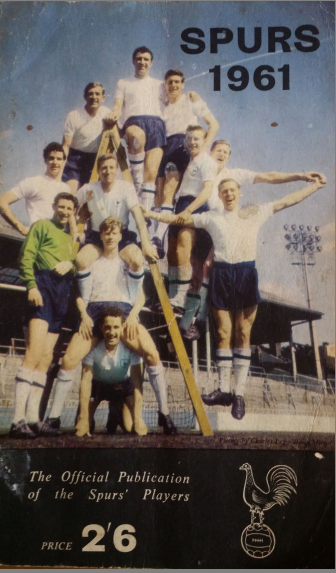
‘The more modern meaning is to snatch defeat from the jaws of victory or to fall short with the prize in sight. This is because, over time, the club’s lack of silverware has come to influence the meaning of “Spursy.” That original 2014 entry reads: “To consistently and inevitably fail to live up to expectations.’ The last time Spurs won the League Championship was in 1961.
Next year, it will be different.
First Published 2024, revised 2025, 2026