Anglo-Saxon Easter

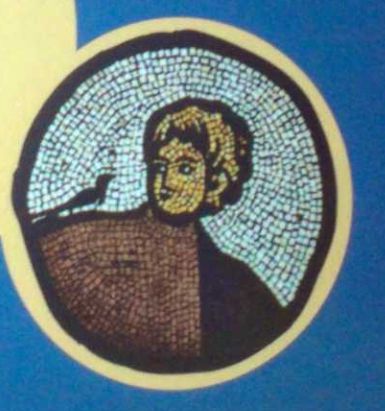
Lullingstone Mosaic representing Spring
Easter – Lullingstone Roman Mosaic representing Spring

The German name for Easter is Ostern. The English name is Easter which the Venerable Bede, in the 8th Century, derived from the Goddess Eostra. They probably have the same derivation. But this is all the evidence there is for the Goddess, despite many claims for the deep history of Easter traditions.

Easter, Estry and Canterbury

Philip A. Shaw has proposed that the name of Eastry in Kent might derive from a local goddess, called Eostra. Canterbury had a leading place in the development of the early Church both in England and Germany. So, perhaps, this led to the adoption of a local cult name in these two countries. Otherwise, the name for Easter in Europe derives from Pascha which comes from the Hebrew Passover and Latin. In French it’s Pâques, in Italian Pasqua, Spanish Pascua; Dutch Pasen, Swedish Påsk; Norwegian Påske and so on.

The Church’s Choice for the Date of Easter

The timing of Easter is the first full moon after the Spring Equinox. I have already explained that Spring was the time the Church set for the Creation, the Crucifixion and other key points in the Christian Calendar. See my post the-beginning-of-the-universe-as-we-know-it-birthday-of-adam-lilith-eve-conception-of-jesus-start-of-the-year.

Eleanor Parker in her lovely book ‘Winter in the World’ gives a lyrical insight into how the dates were chosen. The Anglo-Saxons held the belief that God would only choose the perfect time for the Creation and the events of Easter. The Creation began with the birth of the Sun and the Moon. So it was fixed to the Equinox, when the days were of equal length, and the fruits of the earth were stirring into life. But Holy Week also needed to be in harmony with the Moon. Therefore, Easter was tied, like Passover, to the first full moon after the Equinox, which is also when the events take place in the Gospels.

Winters in the World by Eleano Parker

The quotations Parker uses from early English religious writing and poetry shows a profound interest in nature and the universe. It is a very appealing viewpoint. It seems to me that this is something the Church lost in later times, and replaced with a fixation with dogma and ‘worship’ of the Holy Trinity, rather than a spiritual sense of wonder at the Universe.

Celtic & Roman Churches in Conflict

At the time, fixing the date of Easter was very controversial as the Celtic Church in Britain had a different calendar to the Roman Catholic Church. Easter fell on a different day. The Anglian King of Northumberland, for example, celebrated Easter on a different day to that of his wife. King Oswiu was exiled to Ireland where he was influenced by Celtic Christianity. His wife, Eanflæd, from Northumberland, had been baptised by the Roman Catholic missionary, Paulinus.

Easter and the Synod of Whitby

Oswiu, became King of Northumberland and ‘Bretwalda’ (ruler of all Britain). He encouraged a reconciliation. This culminated at the Synod of Whitby (664AD), between the two churches. The Celtic Church finally agreed to follow the Catholic calendar and other controversial customs. The Abbess at Whitby during the Synod was Hilda of Whitby. The Celtic position was defended by Bishop Colmán and the Roman position by St Wilfred. Bishop Colmán resigned his position as Bishop of Lindisfarne, returned to Iona and then set up a monastery back in Ireland. Wilfrid studied at Lindisfarne, Canterbury, France and Rome. After her husband’s death, Queen Eanflaed became Abbess of Whitby,

The antagonism between the two churches went back to the time of St Augustine in the early 7th Century. In a meeting between St Augustine and Celtic churchmen, St Augustine was judged to have been arrogant, unwilling to listen. So agreement was not reached. Sometime afterwards, the Anglo-Saxons attacked the Celts at the Battle of Chester. Hundreds of monks from the Abbey at Bangor were slaughtered.

Days off at Easter & Rituals

Ælfric of Eynsham gives a powerful commentary on the rituals of the Church over Easter. They were full of drama and participation. These included Palm leaf processions on Palm Sunday, feet washing and giving offerings to the poor on Maundy Thursday. Then followed three ‘silent days’ with no preaching. Instead there were rituals and services aiming to encourage empathy for the ordeal of Jesus. This included the nighttime service of Tenebrae. All lights were extinguished in the Church while the choir sang ‘Lord Have Mercy’. The darkness represented the despair that covered the world after Jesus’ death. Good Friday was the day for the adoration of the Cross. The Cross would be decorated with treasures and symbolised turning a disaster into a triumph.

It seemed to me that I saw a wondrous tree
Lifted up into the air, wrapped in light,
brightest of beams. All that beacon was
covered with gold; gems stood
beautiful at the surface of the earth,….

The Dream of the Rood quoted in Eleanor Parker’s ‘Winter in the World’

The Harrowing of Hell

The days before Easter Sunday are known as the ‘Harrowing of Hell’. This was a very popular theme in the medieval period (featuring in Piers Plowman for example). Jesus went down to hell to free those, like John the Baptist, who had been trapped. Becauase when he died the world had no saviour until the first Easter. The name ‘Harrowing’ comes from ‘Old English word hergian ‘to harry, pillage, plunder’. The ‘Clerk of Oxford’ Blog provides more information on the Harrowing of Hell on this page,

The Clerk of Oxford Blog is written by Eleanor Parker. She started in 2008, whilst an undergraduate student at Oxford. The blog won the 2015 Longman-History Today award for Digital History‘.

The above is but a very poor précis of Eleanor Parker’s use of Anglo-saxon poetry and literature. She brings an Anglo-Saxon Easter to life. So if you are interested to know more please get a copy of her book.

Easter Days off

King Alfred’s law code gave labourers the week before and after Easter off work. This made it the main holiday of the year.

First Published in 2023 and republished in 2025, 2026

The Beginning of the Universe as We Know It; Birthdays of Adam, Lilith, & Eve; Conception of Jesus, Start of the Year March 25th

Lilith is shown coming her hair and looking in a mirror
Study for Lady Lilith, by Rossetti. 1866, in red chalk. Now in the Tel Aviv Museum of Art (Wikipedia
Study for Lady Lilith, by Rossetti. 1866, in red chalk. Now in the Tel Aviv Museum of Art (Wikipedia) Lilith born at The Beginning of the Universe

This is now my most popular post. March 25th is the Annunciation—the day that the Archangel Gabriel tells Mary she is pregnant. (to see some very fine paintings of this meeting, look at my other March 25th post march-25th-feast-of-the-annunciation/). When I first wrote this post I was discovering how it all fitted together as I wrote.  So I’m leaving it the way it was, proof reading and clarifying if necessary, but keeping the thrill of the discovery of the the significance of March 25th as the day that saw the Beginning of the Universe.

March 25th is also the anniversary of the birth of Adam and Eve (and Lilith); the death of Jesus Christ; the anniversary of the Immolation of Isaac; the Parting of the Red Sea; the Fall of Lucifer; and, (until 1752 in the UK) the beginning of the Year. 

Of course, it isn’t. Or to put it another way, no one can, or ever could, prove any of these dates except 1752. So what they speak to is the way the Church saw the world as logically structured by God. Christian thinking about the year, the world, the universe, creation, developed over many years and took influences from many cultures. It is also very complicated to work out the sequence, so I’m going to summarise what I know (or at least what I think I know).

Happy Birthday, Dear Jesus.

Christians chose Christmas Day as the Birthday of Jesus, probably partly because it was a prominent birthday already shared with several Gods.  Particularly, Attis, Mithras,  Saturn and the Unconquered Sun. It was approximately at Solstice, the beginning of the Solar Year, and close to one of the main festivals of the Roman World, the Saturnalia. So it made it easier for new converts who could retain elements of their festivals after conversion.

December 25th might have been selected by the pagan religions because it is the time when the Sun begins to rise further north each day.  The days stop shortening and start lengthening, light increases with the promise of warmer weather and budding plants. It was considered a rebirth of the Sun.

Solstice Anniversaries

So, Jesus was born on/or around the Solstice, so he must have been conceived approx. 9 months earlier.  This is approximately at the Spring Equinox.

Ah, you are thinking!  But today isn’t the equinox. It’s a few days after the equinox. Surely, God doesn’t do approximately?

I have always thought that the 4 or 5 days difference between the Solstice, the Equinox and the Christian festivals was down to the fact that the Calendars were not well coordinated with the actual movements of the Sun (because the Sun does not circle the earth in 365 days, or in 365 and a quarter days, but 365 days, 6 hours, 9 minutes. Unless corrected for this means dates slip from their proper place in the Solar Year. It also makes lunar Calendars difficult to align with the Sun cycles, and vice versa.

But when I first wrote this a sudden revelation dawned upon me which will be revealed in the next few paragraphs.

So, God sends his Son to save the human race. God is a logical being, so she would send her Son at an appropriate time? If Jesus is born at or near the Solstice, which is an appropriate time for the Son of the Creator, then conception 9 months earlier, March 25th, is near the Equinox.  This is the beginning of Spring. For many people, Spring is a new beginning, for example, the Anglo-Saxons saw Winter as the death of the year, and Spring as the young Year. It all makes sense.

The Creation

So to the Creation. God, having a free choice, would have created the world at the beginning of Spring. In fact, if you think about it, God creates everything necessary for life at the creation in 6 days. As soon as it has all been created and put together, it is bound to immediately spring into new life. The first season must, therefore, be Spring? Right? So March 25th?

This gives a nice symmetry with Jesus’s Life. Conceived on March 25th, born December 25th, and died 30–40 years later, according to the Church, at Easter, on March 25th. (the only other famous person I know, born and died on the same day is William Shakespeare).

Easter

Easter, when Jesus is martyred, isn’t March 25th I hear you saying. But remember, Easter is a lunar festival, so its date varies each year. In fact the next time is 2035. Births and deaths, on the other hand, are fixed to the Solar Calendar. Therefore, the Church chooses March 25th as the most appropriate day to pin the death of Jesus, on the anniversary of his conception and the anniversary of the creation of the Earth. I am guessing that this is also the preferred date for the Day of Judgement.

It is also the Birthday of Adam, and his first wife Lilith (or so some say), and Eve. More about Lilith below. I hope this is all making sense?

Why was Adam born on March 25th?

I had thought this date was just one of the parallels that the Church liked, Jesus and Adam born on the same day. But, I have just worked out why Adam is born on March 25th, and why these dates are not the Equinox, March 20th/21 but March 25th, which has been bugging me.

Let’s go back to the beginning of Creation as described in Genesis. It has the following sequence of Seven Days, beginning with the Equinox March 20th. I have added dates to the 6/7 day sequence of Creation:

  • Day 1: Light – March 20th
  • Day 2: Atmosphere / Firmament – March 21st
  • Day 3: Dry ground & plants – March 22nd
  • Day 4: Sun, moon & stars – March 23rd
  • Day 5: Birds & sea creatures – March 24th
  • Day 6: Land animals & Adam, Lilith and Eve – March 25th
  • Day 7: The Sabbath of rest – March 26th
  • For more information www.bibleinfo.com

So there you have it! Adam, Eve (and Lilith) were created on Day 6 with the Land Animals – March 25th. Jesus conceived, also on this date, and so 9 months later is born on December 25th. It all makes sense, and aligns the Jesus’s Life, the Christian year fully with the Solar Year and the Creation!

And that, dear Reader, is the very first time anyone has been able to explain to me why Christmas is not at the Solstice, and why the Annunciation was not at the Equinox. Maybe you all know this, but it is very exciting to work this out for myself. And believe me, I have done a lot of reading about calendars and not spotted an explanation.

When was the Creation?

The Anno Munda‘s is a Jewish Calendar which begins counting from a year before the Creation – the Year of Emptiness. This was 5500 years plus 2026 years ago so 7526 Before the Present. And it was supposed to have ended in 600AD, 6000 years after the Creation. So, they got that wrong.

Dionysius Exiguus replaced the Anno Mundo year with the AD/BC system in the 6th Century AD). This became popular when the Venerable Bede used it in his writings in the 8th Century.

Beginnings of the year

The Celts chose October 31st, Julius Caesar chose January 1st, other cultures have other dates, and the Spring Equinox is another choice sometimes made. The Church and Dionysius Exiguus choose March 25th, although secular society also recognised the claims of January 1st. Britain kept to March 25th until 1752 when we adopted the Gregorian Calendar. But people like Samuel Pepys celebrated New Year’s Eve on 31st December. So January 1st was the secular New Year, but the Christian year number did not change until March 25th. So King Charles I thought his head was being cut off on January 30th 1648; while history books will tell you it was cut off on January 30th 1649. Same day, same head, different reckonings.

January 1st, the New Moon and New Year

December 31st/January 1st is essentially a Solstice New Year Festival. And I have, previously, used the difficulty of keeping calendars as to why these days has slipped out of alignment with the Solstice. But, today I realised that it is as likely that the reason is the Solar/Lunar nature of our time keeping. The year, and its festivals, is largely arranged around the Solar Cycle. But our weekly and monthly cycles are orginally derived from the Moon.

The first of a month, was called the Kalends by the Romans, the Nones the half moon, and the Ides signified the New Moon. The kalends of January is then, originally, the First New Moon after the Winter Solstice. So, January 1st is not a slightly misdated Solstice Festival it is a Festival celebrating the first New Moon of the New Year! Sorry, to seem excited but this is the first time I have realised this.

Over time societies give up trying to sync the lunar and solar calendars. Roman and Christian cultures gave up and fixed the moon months, completely abandoning any attempt to keep the months to the actual lunar cycle. This is our current system, in which only Easter and festivals that depend on Easter remain  true to the movements of the moon festival, much to our perennial confusion.

Maybe you all know this, but it’s put many things into perspective for me!

Lilith

The April 2023 Issue of ‘History Today’ had a short piece called ‘The Liberation of Lilith’ which suggests that the story of Lilith, a figure from Jewish Folklore, is first attested in a Medieval satirical text called ‘The Alphabet of Ben Sira’. The story goes that Lilith is created from the same clay as Adam. Adam then demands she lies below him during sex. She refuses, saying that they are both made from the same stuff and, therefore, equal. Adam refuses to accept this, and so Lilith leaves the Garden of Eden. So the story goes.

The story of Lilith, Sarah Clegg suggests, is one of a series of similar stories found around Europe and Asia. And Clegg assumes that it is gradually modified to make Lilith a demon who will kill babies unless the names of three angels are spoken out loud.

The story survived as a charm to keep babies safe, and perhaps to remind people of equality among the sexes. But this causes problems for, OK, let’s call them out, the Patriarchy. Lilith cannot be equal to Adam so she is made into a monster, not made from the same clay as Adam but from the scum and waste left over from Adam’s creation. I imagine the story then went on to propose that God creates Eve from Adam’s rib, and so she is created from Adam, and is, therefore, not equal, but subservient to him, although not as bad as Lilith. Lilith is now a significant figure in feminist folklore circles.

I wrote about more about eras and ages in my post which you can see her: Greater Cycles and the Six or Seven Ages

Lilith by Rossetti

Attached to the watercolour of Lilith by Rossetti (at the top of the page), was a label with a verse from Goethe‘s Faust as translated by Shelley. (Wikipedia)

“Beware of her fair hair, for she excells
All women in the magic of her locks,
And when she twines them round a young man’s neck
she will not ever set him free again.”

The model is Fanny Cornforth, Rossetti’s mistress. He painted another version a few years later, but the model in that is Alexa Wilding. His models are arguably more interesting than the man himself and include: Elizabeth Siddall, Jane Morris and Fanny Cornforth. Christina Rossetti, his poet sister, modelled for Rossetti’s painting, Ecce Ancilla Domini which you can see here.

For more on the Annunciation, look at my other March 25th post here.

I think I might have enough material to begin my own Cult.

First Written 25th March 2024, revised 2025, 2026

The Wandering Cardinal Points & Digital Heritage March 21st

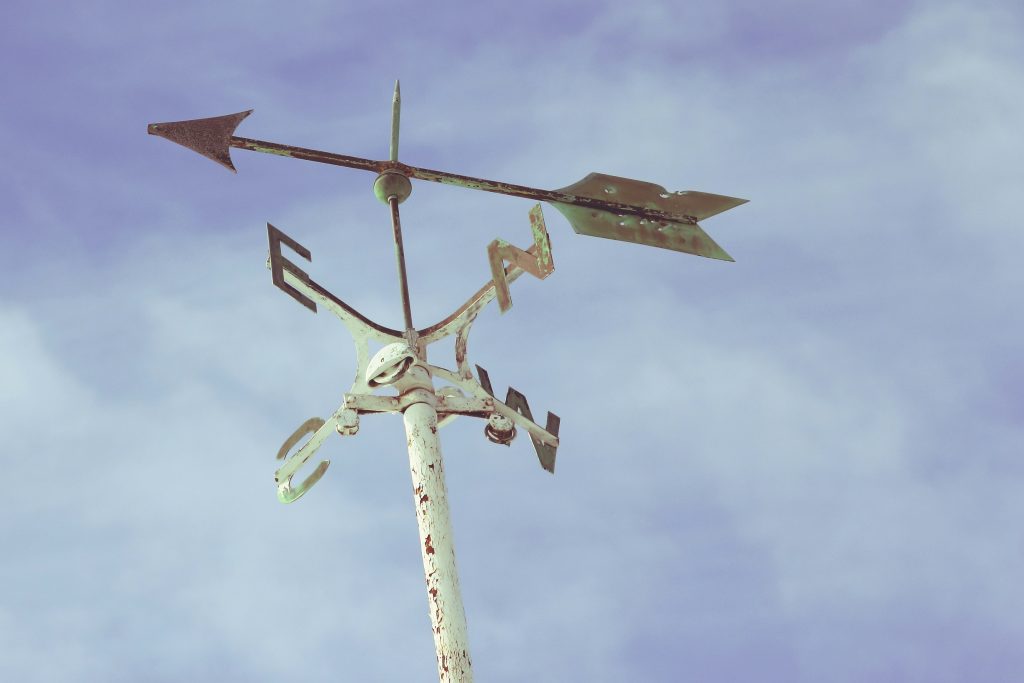
Photo  by Jordan Ladikos on Unsplash of a weather vane showing the cardinal points
The Cardinal Points shown on a weather vane. Photo by Jordan Ladikos on Unsplash

The day after the Equinox we look at the cardinal points of the compass:

“chief, pivotal,” early 14c., from Latin cardinalis “principal, chief, essential,” (online etymological dictionary).

The Importance of South

On its annual cycle, the Sun is always on the move. At the Equinox the Sun now rises due East, and sets due West. It then rises every day further towards the north and sets further to the South until the Solstice. The Solstices mark the extreme Northerly and Southerly rising and settings. Dawn and Dusk vary accordingly.

So, the only real fixed point in the Sun’s entire journey (as seen from Earth) is Noon. Every day of the year, every day of our lives, the Sun is at the highest point at Noon. And this is the definition of South. But the Sun never strays into the North. So the North is the polar opposite of the South- cold, remote, more mysterious.

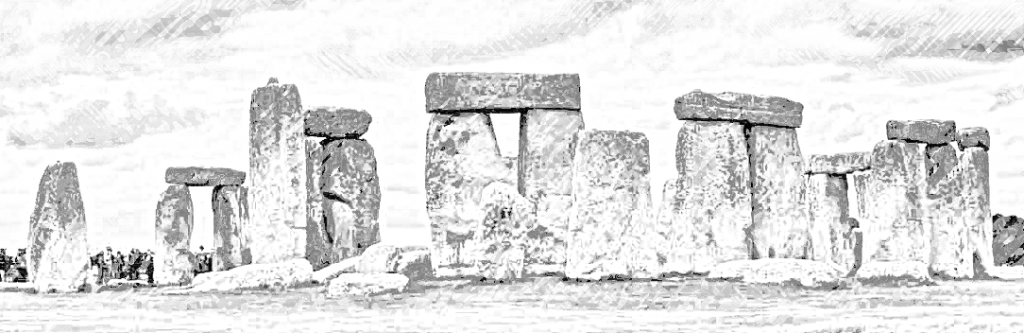
To my mind, it makes, of the Cardinal Points, the South very special. At Stonehenge, there are two exits. The biggest is aligned to the Midsummer Sunrise and Midwinter Sunset axis. But there is a smaller second entrance and this aligned due South. There is also a uniquely small standing stone in the main circle of Sarsens, which is aligned to the South. (Although we don’t know if this stone is original). However, there was some sort of corridor heading South through the mysterious wooden phase which precedent the stone Stonehenge. So, we can be sure South was important at Stonehenge.

Sketch of Stonehenge showing the smallest Sarsen stone near the Southern Entrance

Noon, derives from ‘nona hora’ in Latin and is ‘one of the seven fixed prayer times in traditional Christian denominations.’ (Wikipedia)

The Predominance of the North?

And yet, North, has come to be the principal of the cardinal points. It is shown on virtually all modern maps. It is the direction that people of my generation and hemisphere think of as being ‘up’.

The Google generation sees things differently. There are countless tourist maps on walls or plinths where North is no longer at the top. Up is shown as being the way you are facing. Users have to fight with Google Maps to put North at the top of the map. My children mock me when I say ‘Out of the Tube station, turn up the High street northwards.’ Their view of maps is completely contextual. They do not see any reason to know where the cardinal points are. I point out that the Tube probably has two exits on either side of the road. So, it doesn’t work to say ‘turn left out of the tube’.

There may also be an element of sexual difference, with men more likely to have a cardinal point view while women navigate more by landmarks. ‘Walk past the M&S, turn left to the Park and straight on’. One paper says: ‘during spatial navigation, women typically navigate an environment using a landmark strategy, whereas men typically use an orientation strategy.’

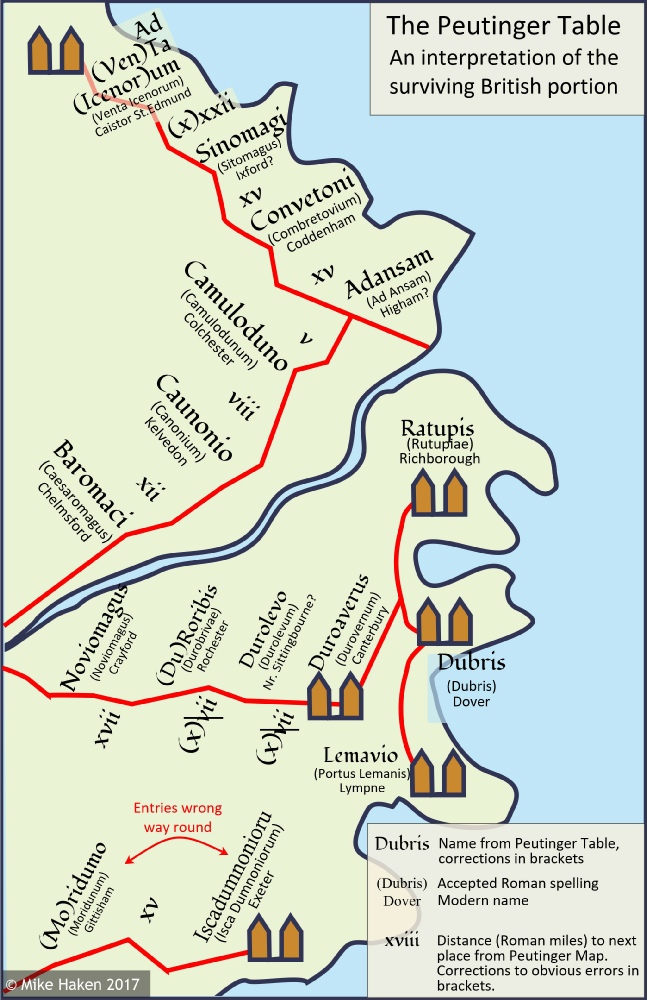
Although I see this decline of the north as being part of the Decline of the West. I also ‘things were better in my day’. But in fact it is simply returning to the way maps were produced in the past. Here is an example below, which has East at the top.

Representation of a Roman Map with the top being roughly East.

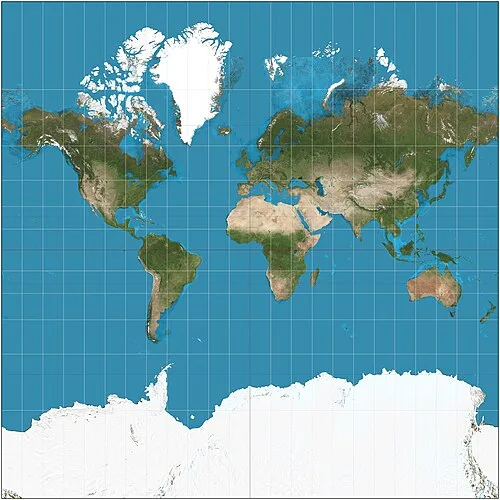
I have since looked further on this subject of North and Maps, particularly finding my answers on this web site: why-is-north-up-on-maps. It tells me that the earliest map the Turin Papyrus, has South at the top. This is probably because the Nile was the fount of all things in Egypt so it is in pride of place at the top of the Map. Other maps tend to have East at the top. The thinking is that the North was cold and who would want to go there?, The West was where the Sun went down, so the Sunrise direction should be at the Top. Often Jerusalem was in the middle with the East at the top. To this day, we talk about orienting ourselves, which means literally means finding your direction eastwards. But the 16th Century things flipped, and North became the top of the map. Was this because the Age of Exploration depended on the North Star? Maybe not because it was used for navigation for a long time before the 16th Century. Was it because of the use of the compass which pointed North? Perhaps not because the compass was first used in the 10th Century. The answer seems to be that Flemish geographer and mapmaker Gerardus Mercator in 1569 put North on top of the map. His projection became the most used map, and everyone started to follow suit.

Mercator projection of the world between 85°S and 85°N. Note the size comparison of Greenland and Africa, and the massive inflation of Antarctica’s landmass. CC BY-SA 3.0

The Magnetic Poles

Of course, there is another version of the cardinal points: the magnetic cardinal points. The magnetic North wanders over time. It does not necessarily coincide with geographic north. In recent times they are close enough. But in the past there have been huge variations. Occasionally, the earth has had geomagnetic reversals when the North Pole has pointed in different directions, including south. The last one was 780,000 years ago. On average, they take place very roughly every 500,000 years.

The magnetic pole is caused by the molten iron in the earth’s core and mantle, which creates a dipole. Fluctuations in the dynamo flow of the molten iron cause occasional reverses. The science is very complicated and, even now, not entirely understood. Is it a random consequence of flow dynamics? Or do external events, like sinking continents, or meteor strikes cause the reversal?

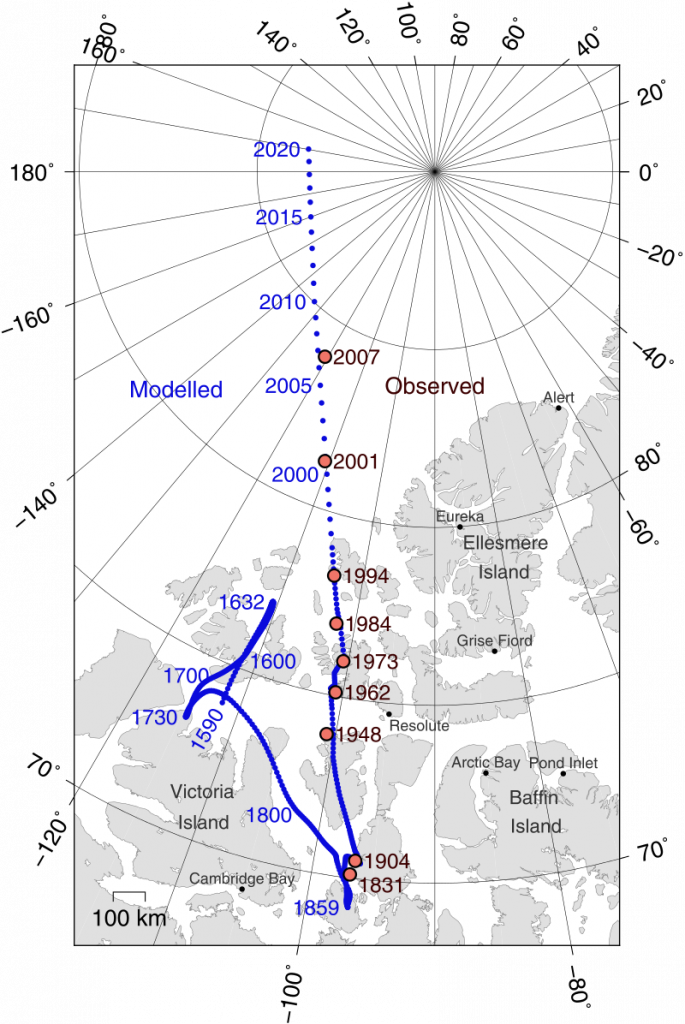
Wanderings of the Cardinal Points. Observed pole positions taken from Newitt et al., “Location of the North Magnetic Pole in April 2007“. Earth Planets Space, 61, 703–710, 2009 Modelled pole positions taken from the National Geophysical Data Center. “Wandering of the Geomagnetic Poles” Map created with GMT Wiipedia CC BY 4.0

Since the first use of compasses for navigation in the 11th/12th Centuries, the magnetic pole hasn’t wandered enough to be of concern to navigation. It has wondered a few hundred miles over the last 500 years. Now, it is speeding up, from 9km a year to 52km (since 1970). This Wikipedia page is pretty good at an explanation.

My Job Tracking the Cardinal Points

My first proper job after university was as a technician then research assistant at Oxford University studying these phenomena. I say ‘proper’ because when I left University, I became an itinerant archaeologist. This led me to digs in Switzerland, Northampton, East Anglia and Nottingham. Then, I got the job at the Research Laboratory for Archaeology and the History of Art, at Keble College, Oxford.

I worked for Dr. Mike Barbetti who was an expert on the wanderings of the Magnetic Pole. His interest was firstly in the pure science of the subject. But he was keen to explore the applied uses in Archaeology as well. So, after being appointed as a Research Fellow at Oxford, he set up an epic journey from his native Australia to Oxford. It went via some of the iconic sites of Palaeolithic Archaeology, including Olduvai Gorge, Tanzania. The site of excavations by Mary and Louis Leakey.

To plot the movements of the magnetic north, scientists needed dated samples. Early human sites provided dated sites over a long time span. Also, archaeomagnetism, as the discipline became known, offered the possibility of dating sites. Another application was to determine whether deposits were fired or not. One of the sites Mike sampled was a candidate for the first evidence of fire in human existence.

Cutting up Samples

As I said, Mike’s interest was discovering how the magnetic field of the earth changed over time. And, more importantly, what was the mechanism. He shipped back to Oxford samples of soil cast in Plaster of Paris. My job was to cut the samples up. I cut them up with an electric saw in a shed in the backyard of the Laboratory. Then we measured the direction and intensity of the magnetic field in the samples.

Soil contains particles of iron, and they align randomly. So a sample of soil has a low magnetic intensity and a random direction of magnetic field. But once heated up, the iron particles align to the current direction of the magnetic pole. Its intensity is proportional to the intensity of the Earth’s magnetic field. These measurements provide a method of plotting the changes of the magnetic field over time. And from these data, models can be constructed explaining how the iron in the earth’s core worked as a giant magnet.

Once we had built a reference curve for the movements and intensity of the magnetic pole over time, we hoped to develop another dating method. Other methods such as radio carbon, thermoluminescence, and tree ring dating, were being developed at the Research Laboratory in Oxford at the same time.

My part in Digital Heritage Part 1

Having got the results, I took them to the Oxford University Computer Centre. There, I typed them up onto machine-readable cards. Added a copy on cards of our computer programme written in Fortran, and gave them to the Computing Staff. The program and data were run through the Centre’s mainframe computer. (probably an IBM or ICL computer, the size of a house!) 24 hours later, I received a print-out to proofread.

I located mistakes, ran an editing run of punched cards, essentially instructing the computer: ‘on card two replace 2.5 with 2.6, and run the programme again’. I would pick up the results 24 hours later. It seems extraordinarily primitive now, but then it was an enormous saving of time.

And that, patient reader, was my early contribution to Digital Heritage and pure science. Mike published many articles of which I was joint author of three articles, two in the prestigious Science Journal Nature. And it is annoying that my citations in the groves of academia are still dominated by articles I co-wrote in the late 1970s/80s!

Mike’s work was important in the development of the study of the earth’s magnetic field. However, the use of archaeomagnetism has never risen above strictly limited. Occasionally, in specific circumstances, it can be useful. But those circumstances tend to be times when no other methods have worked. Most often, it is used in attempting to date kilns.

These are the papers:

Barbetti. M and K. Flude, ‘Palaeomagnetic Field Strengths from Sediments baked by Lava flows of the Chaine des Puys, France.’ Nature, Vol. 278 No 5700. 1979

Barbetti. M and K. Flude, ‘Geomagnetic Variation during the Late Pleistocene Period and changes in the radiocarbon time scale.’ Nature, Vol. 279 No 5710. 1979

Barbetti M., Y. Taborin, B. Schmider and K. Flude ‘Archaeomagnetic Results from Late Pleistocene Hearths at Etoilles and Marsangy, France’. Archaeometry 22. 1980

More on my contribution to Digital Heritage in posts to come.

OnThis Day

630 – Emperor Heraclius returns the True Cross, one of the holiest Christian relics, to Jerusalem. (see my post on the True Cross and Roodmas)

1152 – Annulment of the marriage of King Louis VII of France and Queen Eleanor of Aquitaine. She went on to marry Henry II of England which makes this one of the most amazing events of the medieval period. The transfer of lands from French control to English control as a result was huge. She eventually was imprisoned by her new husband for supporting their children’s rebellion.

1556 – Former archbishop of Canterbury Thomas Cranmer executed for heresy in Oxford. He had recanted, but recanted his recantation when he discovered there were still going to burn him. By rights, he should have been reprieved, but Queen Mary was determined to make an example of the man who help Henry VIII and Thomas Cromwell make England a Protestant state. The fire was on Broad Street, and he is said to have thrust his arm that signed the recantation into the fire, calling it ‘that unworthy hand.’

1829 – Duel Day is celebrated at Kings College when the Duke of Wellington fought a duel against George Finch-Hatton, 10th Earl of Winchilsea, because of disagreement about Roman Catholic Emancipation. The duel took place in an asparagus fields which would later become Battersea Fields. Wellington shot first and either missed or deliberately shot wide, and Winchilsea aimed high. He then apologised to Wellington. For more details see www.kcl.ac.uk/duel-day.

First written March 2023, revised 21st March 2024, Revised and Mercator added 2026

The Spring Equinox March 20th

Video by Heike Herbert of Druids at the Spring Equinox at Tower Hill, London

New content will be found at the bottom in the ‘On This Day section.’ So, Spring has sprung, not only meteorologically speaking but also astronomically. We are 20 days into the meteorological Spring which started on 1 March (see my post here.) Today, we are starting the astronomical or solar Spring.

The 20th of March is the Spring Equinox, or Vernal Equinox, midway between the Winter Solstice and the Summer Solstice. The sun has been rising further north each day since December 21st. Today it rises due East, and sets due West. The day and night are roughly equal in length (although by no means exactly). At 14:45 today, the Sun is directly overhead at the Equator.

The term vernal comes from the Latin for Spring, and today is the Primavera, the first day of Spring. The Anglo-Saxons originally used the word lencthen (Lent) for Spring. But later adopted the idea of the ‘springing’ of the year when the plants bud. In Middle English, the word Spring is also used for sunrise, the waxing of the moon and the rising tides. These are called spring tides. But also for the sprouting of the beard and the first appearance of pubic hair! Happy Spring Time!

Printemps

Up to the 15th Century, the English also used the French term ‘prime-temps’ in the sense of ‘first times’. This follows the idea that the year is young, while Winter represents old age. As we shall see, on March 25th, there was also a belief that the world was created in Spring at the Equinox. Jesus was also conceived at this point of the annual cycle. (see my post /march-25th-the-beginning-of-the-universe-as-we-know-it-birthday-of-adam-lilith-eve-conception-of-jesus-start-of-the-year)

Zodiacally, if that is a word, Spring is Aries (brave and impulsive); Taurus (sensual and stubborn), and Gemini (dynamic and talented).

Druids at Tower Hill

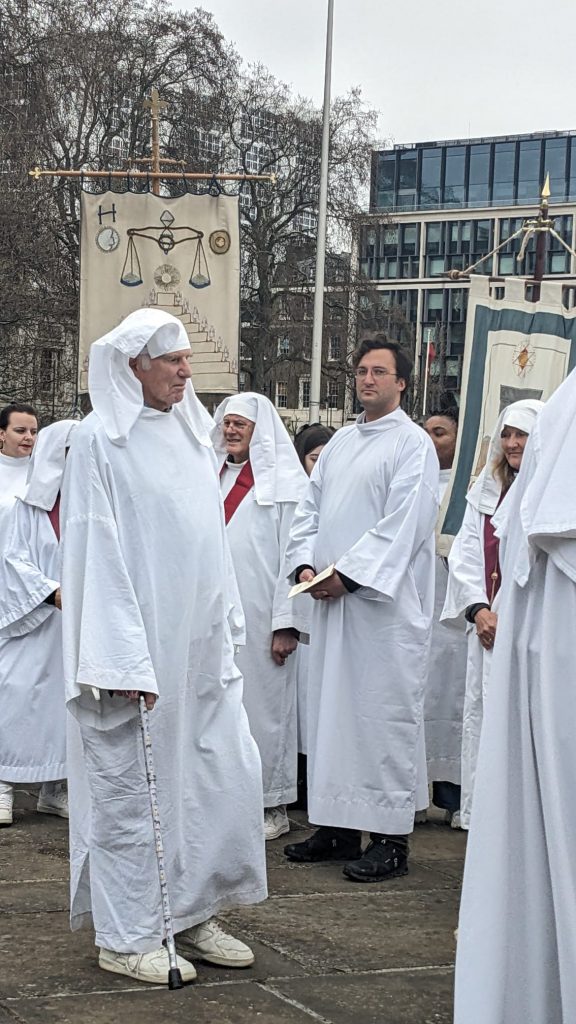
Druids at the Spring Equinox Tower Hill London, Photo by Heike Herbert

The Druids have a ceremony at Tower Hill every year on the Spring Equinox. When I last attended I remember the druid costumes were often made with nylon sheets, and their footware was mostly tennis shoes. I see from the photos the nylon has at least been replaced with cotton, and the plimsolls with trainers. Not quite sure what that pair of black trainers are doing in the picture!

As my photos are getting long in the teeth, I have used photos by Heike Herbert. She attends most years. The ones above from 3 years ago. In 2025, she reported that the atmosphere has been affected by a street food market,. This restricted the space for the Druid Circle. The food stalls are there every Thursday, so it only impacts the Druid assembly once every 7 years! In 2026 the Druids meet at Tower Hill at 12 noon.

Tower Hill, Spring Equinox, 2025 and street food, Photo by Heike Herbert

Modern Druids

I say modern druids because there is no convincing evidence that the modern fellowships of Druids can trace their origins back to prehistory. Druidry was reinvented in the 18th Century — for example, the Ancient Order of Druids was formed in 1781. They were set up as societies in the tradition of the Freemasons. They held to belief in the fundamental importance of nature. However, one group, the British Circle of the Universal Bond, claim descent from a group persecuted by the Bishop of Oxford in 1166. Look at their website for more details and for an idea of their beliefs.

Prehistoric Spring Equinox

When did the Equinox first had importance for human society? The answer is, probably, at least as long as we have been reasoning creatures. On January 14th, I draw attention to a recent discovery by an amateur ‘citizen scientist’. He suggested there was evidence in Cave Painting for the use of a Palaeolithic Calendar. Follow this link to see the post.

Stonehenge and the Sun

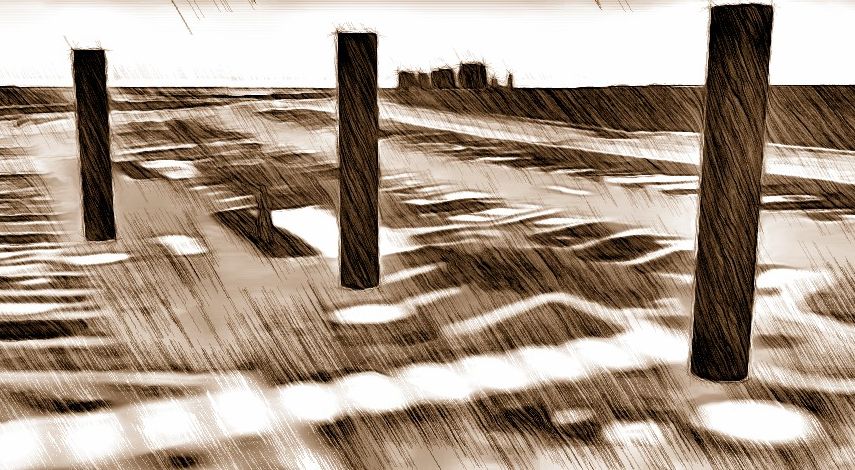
At Stonehenge, in the old Car Park, they found three huge Pine post-holes in a line. Dating evidence shows they were erected in the Mesolithic period, thousand of years before Stonehenge. They align to the direction of the Mid-Summer Sunrise and Mid-Winter Sunset (NNE/SSW). If, and it’s a big if, you were sighting from Stonehenge itself, which was built some 5000 years in the future.

Imaginary reconstruction of the Carpark Postholes

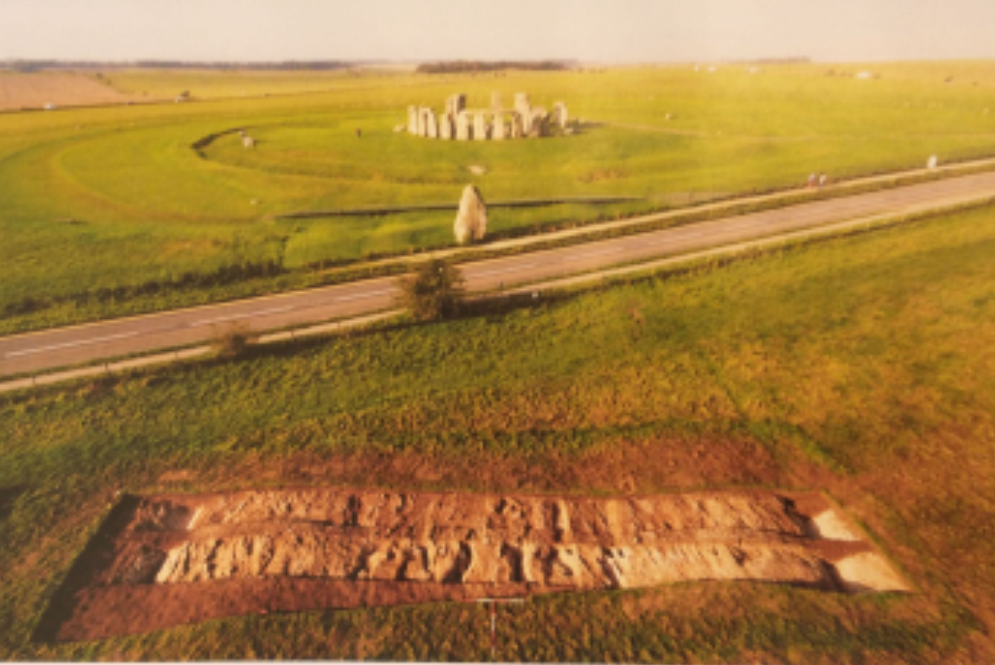
It is a bit of a stretch using two pieces of evidence so far apart in time. But recent excavations have revealed that there are natural periglacial striations in the soft chalk bedrock at Stonehenge. These lines point to the Solstices. They not only predate Stonehenge but also the three post holes. The striations may well have been visible from the time they were created when the glaciers melted.

Around 12,000 years ago (date from my memory so approximate), the climate changed and the glaciers melted. This left a lot of water rushing around the landscape. At Stonehenge, it gouged out striations in the chalk. By chance, or as ordered by the Gods/Goddesses/Divine Nature, the striations pointed to the Solstice Axis. Richard Jacques excavations in the Stonehenge area revealed that the aurochs came to the Stonehenge area for grazing and water. Aurochs are huge wild cows with enough meat on them to feed 200 people. So, the solar axis is near a place where the Gods/Goddesses/Divine Nature provided super-abundance in the guise of herds of Aurochs.

Foreground shows the periglacial striations aligned on the Solstice. Source Current Archaeology?

Burial Mounds aligned to the Equinox

That the major movements of the Sun were of interest to Neolithic and Bronze Age society is confirmed by the alignment of many megalithic monuments dating from 3,600 BC onwards, including, of course, Stonehenge. All around the UK are long barrows and other burial mounds, many of which are indeed sited/sited E-W to the Equinoxes. Many are fairly approximate. But at Loughcrew, County Meath in Ireland the Vernal Equinox shines right into the burial chamber. The sun’s light shines onto a stone marked by stone carvings. Similar alignments exist at Knowth and Dowth in the Boyne Valley. More about Loughcrew in my post here)

Harmony & the Spring Equinox.

The Equinox also has another role, which is to be the anchor of the cardinal points. The world is orientated to North, South, East, West. The Equinox is a time when there is a harmony, a balance in the universe. Therefore, it is a fortunate, a lucky time, a time to fall in love or undertake notable undertakings. But, in the Christian world marriage traditionally had to wait a little longer, until after the commemoration of the death of the Messiah,

On This Day

Today, is The International Day of Happiness. This was set up by the UN on 28 June 2012. This year’s theme:

explores the relationship between social media and happiness, highlighting the potential challenges for our wellbeing as well as ways we can all use tech for good.

Go to the web site for more information. But these are the three steps they suggest: (I’ve cut and pasted them from the site)

Step 1: Choose

Be mindful of if, when and how much you are on social media.

  • Pause and ask yourself, “What do I really want to do right now?” Keep a list of analogue activities you can do instead, like playing music, drawing, gardening or going outside for a walk.
  • Set a timer so scrolling is a short snack rather than a wormhole.
  • Give your mind space to think, keep the bedroom phone free, try a ‘digital sabbath’.

Step 2: Connect

Don’t let scrolling be a substitute for real connection.

  • Phone a friend for a chat, or send some voice notes, instead of scrolling.
  • Make plans offline, get excited about your next adventure with loved ones.
  • Use social media to connect with supportive friends and communities that are meaningful to you.

Step 3: Curate

Personalise your experience to support your wellbeing.

  • Follow plenty of positive accounts – bloom scroll, don’t doom scroll.
  • Share and amplify uplifting stories, messages and ideas, be aware of misinformation.
  • Be kind in the comments, it matters more than you think.

If you have found this useful, spread the word and encourage others to do the same. Use the hashtag #InternationalDayOfHappiness.

The World Happiness Report

This is published annually by the Wellbeing Research Centre at the University of Oxford. More details here. Finland is top for the 9th year in a row. US is 23rd, UK is 29th. These are the top 25 happy countries:

  1. Finland
  2. Iceland
  3. Denmark
  4. Costa Rica
  5. Sweden
  6. Norway
  7. Netherlands
  8. Israel
  9. Luxembourg
  10. Switzerland
  11. New Zealand
  12. Mexico
  13. Ireland
  14. Belgium
  15. Australia
  16. Kosovo
  17. Germany
  18. Slovenia
  19. Austria
  20. Czechia
  21. United Arab Emirates
  22. Saudi Arabia
  23. United States
  24. Poland
  25. Canada

I’m going out for a walk, to phone a friend and to move my narrow boat as it’s a beautiful sunny day. Winter Solstice in Helsinki? Happy Days!

First Written in March 2023, and revised in March 2024, 2025, OnThis Day added in 2026

Nettle. Tea, Beer, Pudding & Flagellation March 10th

Nettle – photo by Paul Morley Unsplash

Nettle Tea

The store cupboards are getting denuded of the fruits, nuts, preserves, pickles, salted and dried foods saved from the summer and autumnal abundance. Of course, this is alleviated by the reduced consumption of the Lenten fast.  (I’m continuing my lenten practice of giving up, giving up things for Lent). But nettles are budding. I take a regular cup of nettle tea. Normally, provided by the excellent Cowan’s tea emporium in the Covered Market in Oxford. But I’m running out and not due to visit Oxford for a month or so. So Charles Kightley in his Perpetual Almanac tells me that young stinging nettles are appearing and this is the time to collect own young, juicy nettles.

Here is a video about collecting them.

YouTube Video on making Nettle Tea

Nettle Beer

Or better still, change up the tea for a nettle beer:

Take a gallon measure of freshly gathered young nettles washed well dried and well packed down. Boil them in a gallon of water for at least a quarter of an hour. Then strain them, press them and put the juice in an earthenware pot with a pound of brown sugar and the juice and grated skin of a lemon. Stir well, and before it grows cool put in an ounce of yeast dissolved in some of the liquid. Cover with a cloth and leave in a warm place for four or five days and strain again and bottle it, stopping the bottles well.  It’ll be ready after a week, but better if left longer.

Nettle Beer was brewed for old people against ‘gouty and rheumatic pains’.

Nettle: Detecting Virgins

A more sinister use is provided by William Coles who gives a method of detecting virginity.

Nettle tops are usually boiled in pottage in the Springtime, to consume the Phlegmatic superfluities in the body of man, that the coldness and moistness of the winter have left behind. And it is said that if the juice of the roots of nettles be mixed with ale and beer, and given to one that suspected to have lost her maidenhood, if it remain with her, she is a maid, But if she’s spews forth, she is not.

William Cole’s Adam in Eden 1657.

Flagellation with Nettles?

William Camden reported that Roman soldiers used nettles to heat up their legs in the cold of a British winter. (from Mrs Greaves’ ‘A Modern Herbal). Perhaps, I should have sent that idea to PM Keir Starmer? He might have suggested the method to Senior Citizens to alleviate the loss of their Winter Fuel Allowance? (which he has now restored). Flogging with nettles was a cure for rheumatism and the loss of muscle power in the early modern period. Nettles were also added to horse feed to make their coats shine. It was used as a hair tonic for humans. 

Nettle Fabrics

The 18th century poet Thomas Campbell is quoted on the virtues of nettles:

“I have slept in nettle sheets, and I have dined off a nettle tablecloth. The young and tender nettle is an excellent potherb. The stalks of the old nettle are as good as flax for making cloth. I have heard my mother say that she thought nettle cloth more durable than any other linen.”

In 2012, a Danish Bronze Age Burial was found to be dressed in a shroud made of Nettle. Strangely, the nettle was not local, perhaps being made in Austria where other objects in the rich burial came from. However, the person was thought to be Scandinavian. For more have a look at this article on www.nbcnews.com.

In the Irong Age, also in Denmark, Huldremose Woman was found buried in a bog. She had a severed arm and was buried in elaborate sheep and goat skin clothes, but underneath:

she wore a white inner garment made from plant fibres that reached from the shoulders to below the knees. The type of plant fiber is unclear but other evidence from the time period suggests that it could have been made of nettle.’

To find out more: the-woman-from-huldremose/the-huldremose-woman-clothes/

World War 1 use of Nettle cloth

Greaves tells us that the German and Austrians had a shortage of cotton during the blockade of World War 1. They turned to nettles to replace cotton production believing it to be the only effective substitute.  It was also substituted for sugar, starch, protein, paper and ethyl alcohol. 

YouTube Video on making fabric from nettles

Nettle Pudding

Pepys ate Nettle Pudding in February 1661 and pronounced it ‘very good’.  Here is more on Nettles in history AND a recipe for Nettle Pudding! I can see I’m going to have to get out there and carefully pick myself some nettles! ( For Folklore of Nettles look here).

Nettles Photo by Les Argonautes on Unsplash

Remember, none of the above is necessarily good advice as far as medicine is concerned. For smoking herbs see my post coltsfoot-smoking-cholera

March Weather

In the early modern almanacs there is much weather and horticultural advice to be had (Weather Lore. Richard Inwards).

March damp and warm
Will do farmer much  harm

or

‘In March much snow
to plants and trees much woe

On This Day

March 10th is St Kessog Day. He is associated with Luss on Loch Lomond, and was Robert the Bruce’s rallying cry. St Kessog and Scotland!

241 BC – The Battle of the Aegates in which the Carthaginian fleet is sunk, and the First Punic War ends. Carthage was destroyed in the Third Punic War in 146BC. Rebuilt as a Roman City 100 years later.

1629 – Parliament is dissolved by Charles I. This was followed by a Royal dictatorship which lasted 11 years, and then led to Civil War.

1906 – Bakerloo Line Opened. The name originated from the Baker Street and Waterloo Railway. It goes from Harrow &Wealdstone in the NW to Elephant & Castle in the South East, via the Central London section which goes from Bakers Street to Waterloo, Sherlock Holmes didn’t use the Tube very much (see this post here for those times he did). There is a proposed extension from Elephant & Castle to Lewisham.

1969 – James Earl Ray sentenced to 99 years in jail for murdering Martin Luther King. While Ray was a segrationalist and a supporter of George Wallace, he maintained he was set up as the scapegoat. He died in prison in 1998.

Written 2024, revised 2025, the content on Hesiod and a Grecian Spring moved to: march-13th-hesiod-and-a-grecian-spring/. On this Day added 2026.

My trip (in March 2022) to the British Museum with my 20 month year old Grandson is posted here:

Spring & the Month of New Life March 1st

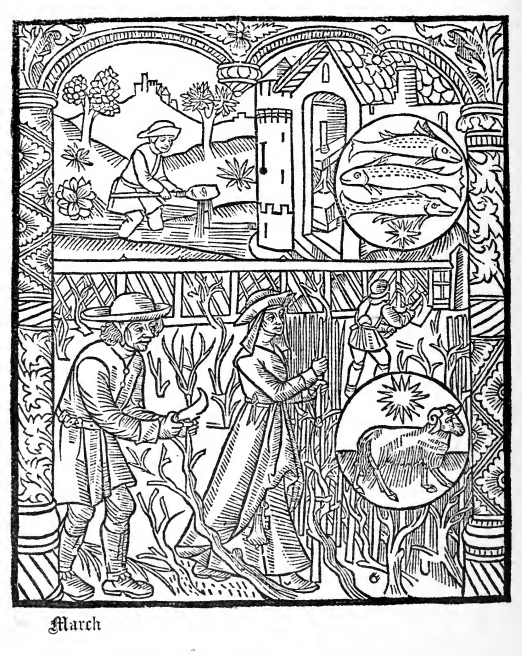
March from the Kalendar of Shepherds – French 15th Century

Spring & March

This is the beginning of Spring, meteorologically speaking. There is nothing magical about this day that makes it in any sense actually the start of Spring. It is a convenience determined by meteorologists. They divide the year up into 4 blocks of three months based on average temperature, and the convenience of keeping statistics to months. It could be that spring starts on 2nd March. 14th February.  Or the 1st of February as the Celts favoured.

The Venerable Bede in his ‘The Reckoning of Time’, written in 725 AD, quotes more diversity of dates:

However, different people place the beginnings of the seasons at
different times. Bishop Isidore the Spaniard said …, spring [starts] on the 8th kalends of
March [22 February],…

But the Greeks and Romans, whose authority on these matters, rather than that of the
Spaniards, it is generally preferable to follow, deem that spring [begins] on the 7th ides of February [7 February],…

Noting that summer and winter begin with
the evening or morning rising and setting of the Pleiades, they place the
commencement of spring and autumn when the Pleiades rise and set
around the middle of the night.

There is nothing that says we have to have 4 seasons. Egypt had three seasons, the tropics have two. Celts divided the year into 8. Plants have been blooming, sprouting and budding since January, and some will wait until later in the year. Lambs have been born since January. But scientists and society find it easiest to keep statistics on a monthly basis so March 1st it is.

Astronomically, the seasons are more rationally divided by the movement of the Sun. So Spring begins on the spring or vernal equinox, 20th or 21st of March. For my Spring Equinox post go here.

Anglo-Saxon March

In Anglo-Saxon ‘Hrethamonath’ is the month of the Goddess Hretha. Bede gives no further information on who she was and nothing else is known about her. Her name is Latinised to Rheda. J R. R. Tolkein used the Anglo-Saxon calendar as the calendar for the Shire where the third month is called Rethe.

For the Anglo-Saxon, spring was looked forward to with great joy after the bleakness of winter. Christian Anglo-Saxons also saw this as the pivotal month in the year. It was in March that the world was created, and the Messiah conceived, revealed, executed, and ascended to heaven. See my post:

In Welsh the month is called Mawrth, (derived it is thought from the Latin Martius). Gaelic Mart or Earrach Geamraidth – which means the ‘winter spring’.

Medieval/Early Modern March

The illustration (above), from the Kalendar of Shepherds, shows that in Pisces and early Ares preparation was still the main order of the farming day, clearing out the moats, and preparing the fruit trees. Lambing is also increasing in number. And the early modern text below from the Kalendar gives a fine description of the joys of spring.

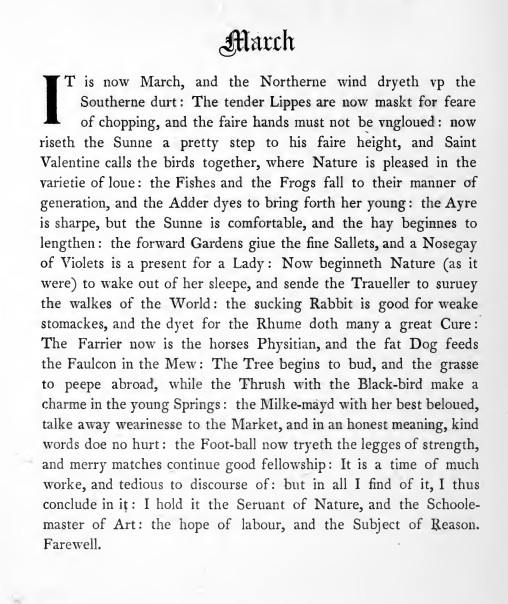
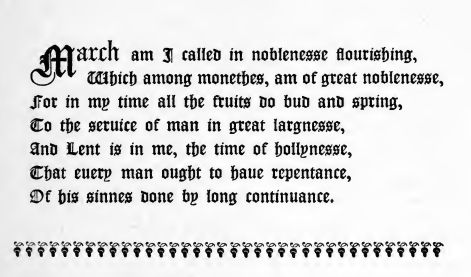
Kalendary of Shepherds- Description of March.
March in the Kalendar of Shepherds.

For more details of the Kalendar of Shepherds look at my post on December.

Roman March

March the 1st was the beginning of the Roman year in Rome’s early days. The Month was named after Mars, the God of War, as Mars was the patron God of the Rome. March was also the beginning of the campaign season, and the army was prepared, and ceremonies held to Mars. The Salii, twelve youths dressed in archaic fighting costumes led a procession singing the Carmen Saliare. March 1 was also the Matronalia a festival celebrating childbirth motherhood. Dedicated to the Mother Juno Lucina,

Ovid & March & Kalends, Nones & Ides

Ovid says the year started on the Kalends of March. Here is what Britannica says about their strange system of dividing months:

‘In a 31-day month such as March, the Kalends was day 1, with days 2–6 being counted as simply “before the Nones.” The Nones fell on day 7, with days 8–14 “before the Ides” and the 15th as the Ides. After this the days were counted as “before the Kalends” of the next month’.

More about this if you read my post on the Ides of March and Julius Caesar.

At the beginning of his book, Fasti, Ovid provides the story of Rome’s foundation. Mars took Silvia the Vestal while she slept. She later gave birth to Romulus and Remus. He also gives details of how Rome was organised. In the piece of the long text I have chosen below he discusses Romulus’ arrangement of the year. It is a year that began on the 1st March, and had only 10 months. 10 is the number of digits we have and the length of pregnancy (so Ovid says).

Ovid wrote in his almanac poem the Fasti:

So, untaught and lacking in science, each five-year lustre
That they calculated was short by two whole months.
A year was when the moon returned to full for the tenth
time:
And that was a number that was held in high honour:
Because it’s the number of fingers we usually count with,
Or because a woman produces in ten months,
Or because the numerals ascend from one to ten,
And from that point we begin a fresh interval.

So Romulus divided the hundred Senators into ten groups,
And instituted ten companies of men with spears,
And as many front-rank and javelin men,
And also those who officially merited horses.
He even divided the tribes the same way, the Titienses,
The Ramnes, as they are called, and the Luceres.
And so he reserved the same number for his year,

It ís the time for which the sad widow mourns her man.
If you doubt that the Kalends of March began the year,
You can refer to the following evidence.
The priest’s laurel branch that remained all year,
Was removed then, and fresh leaves honoured.
Then the king’s door is green with Phoebus’ bough,
Set there, and at your doors too, ancient wards.
And the withered laurel is taken from the Trojan hearth,
So Vesta may be brightly dressed with new leaves.
Also, it’s said, a new fire is lit at her secret shrine,
And the rekindled flame acquires new strength.
And to me it’s no less a sign that past years began so,
That in this month worship of Anna Perenna begins.
Then too it’s recorded public offices commenced,
Until the time of your wars, faithless Carthaginian.

Lastly Quintilis is the fifth (TXLQWXV) month from March,
And begins those that take their names from numerals.
Numa Pompilius, led to Rome from the lands of olives,
Was the first to realise the year lacked two months,
Learning it from Pythagoras of Samos, who believed
We could be reborn, or was taught it by his own Egeria.
But the calendar was still erratic down to the time
When Caesar took it, and many other things, in hand.
That god, the founder of a mighty house, did not
Regard the matter as beneath his attention,
And wished to have prescience of those heavens
Promised him, not be an unknown god entering a strange
house.

He is said to have drawn up an exact table
Of the periods in which the sun returns to its previous
signs.
He added sixty-five days to three hundred,
And then added a fifth part of a whole day.
That’s the measure of the year: one day
The sum of the five part-days is added to each lustre.

Translated by A. S. Kline online here:

For much more about the Roman Year (and leap years) look at my post here.

On This Day

St David’s Day – It is also the Feast of St David, (or Dewi) the patron saint of Wales, who lived in the sixth century AD. Little that is known about him is contemporary but he was an abbot-bishop. His hagiography was written in the 11th Century and not very trustworthy, but the aim was to show the independence of the Welsh Church from Canterbury. His association with the leek is unexplained.

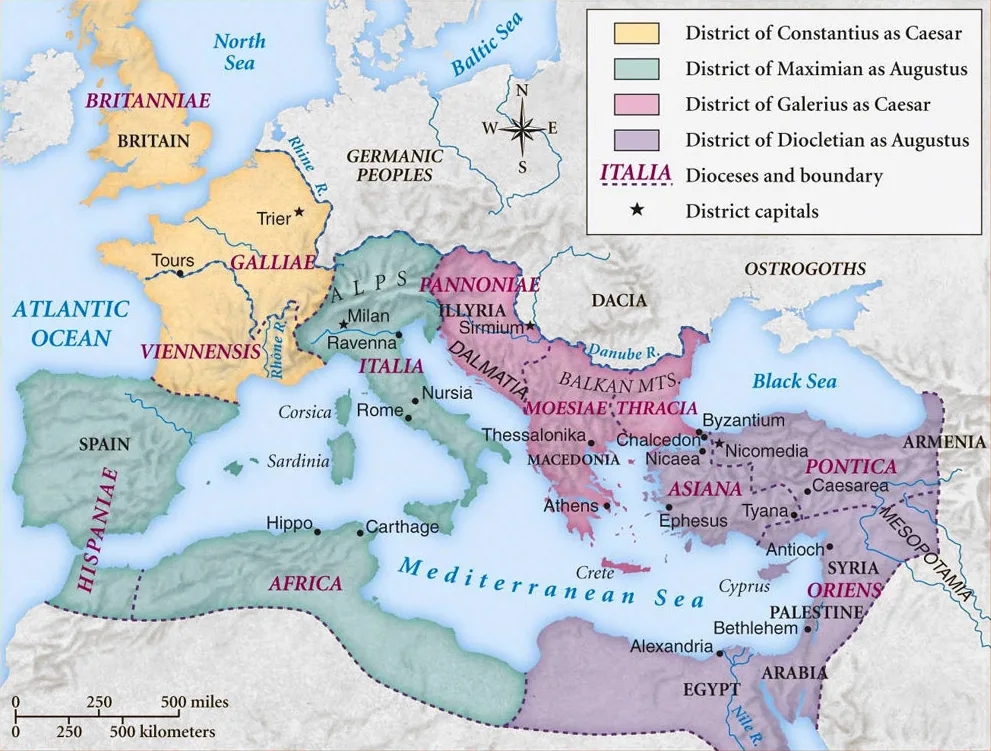
293 – Inauguration of the Tetrarchy

Diocletian reorganises the Roman Empire to be a Tetrarchy with himself and Maximian the Augusti, one in the East the other in the West. Below them were Constantius Chlorus and Galerius the Caesars.

Coppermine Photo Gallery - Coppermine Photo Gallery; Bishop, Aubrey. Imperial Imagery of the Tetrarchy. Rhodes College. Archived from the original on 15 September 2024.

Historic map of Roman Empire during the first tetrarchy
Coppermine Photo Gallery – Coppermine Photo Gallery; Bishop, Aubrey. Imperial Imagery of the Tetrarchy. Rhodes College. Archived from the original on 15 September 2024. Historic map of Roman Empire during the first tetrarchy CC BY-SA 3.0

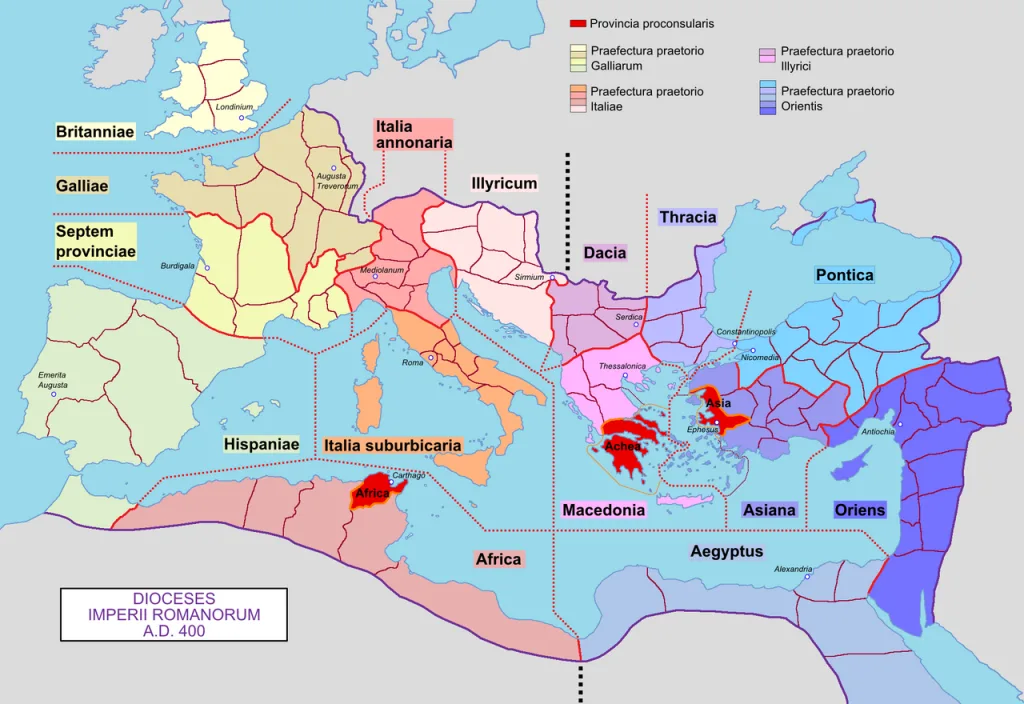
Below them were Prefectures run by Prefects, who controlled officials called the Vicarious. Britannia, was a Diocese ruled by the Vicarious in London. The Diocese was divided into 4 Provinces,. In charge of those were the Governors, who were now civilians rather than military figures.

Later dioceses of the Roman Empire, around 400 AD By Mandrak – Own work, Public Domain, https://commons.wikimedia.org/w/index.php?curid=6088363

The reorganisation was designed to provide a peaceful career path for ambitious men, but in that it failed.

1562 – Massacre in Wassy France, when sixty-three Huguenots were killed and the French Wars of Religion began. Many Huguenots came to Britain, and many settled in Spitalfields, London. My family believe we are Huguenots from the East End.

1628 – Charles I decrees that the ship tax should be extended to every county. This was not put to a Parliament, and illegal impositions like this eventually lead to the English Civil War in 1642. (see my post on the beginning of the Civil War here:

First Published in 2024, and revised in 2025


Ash Wednesday

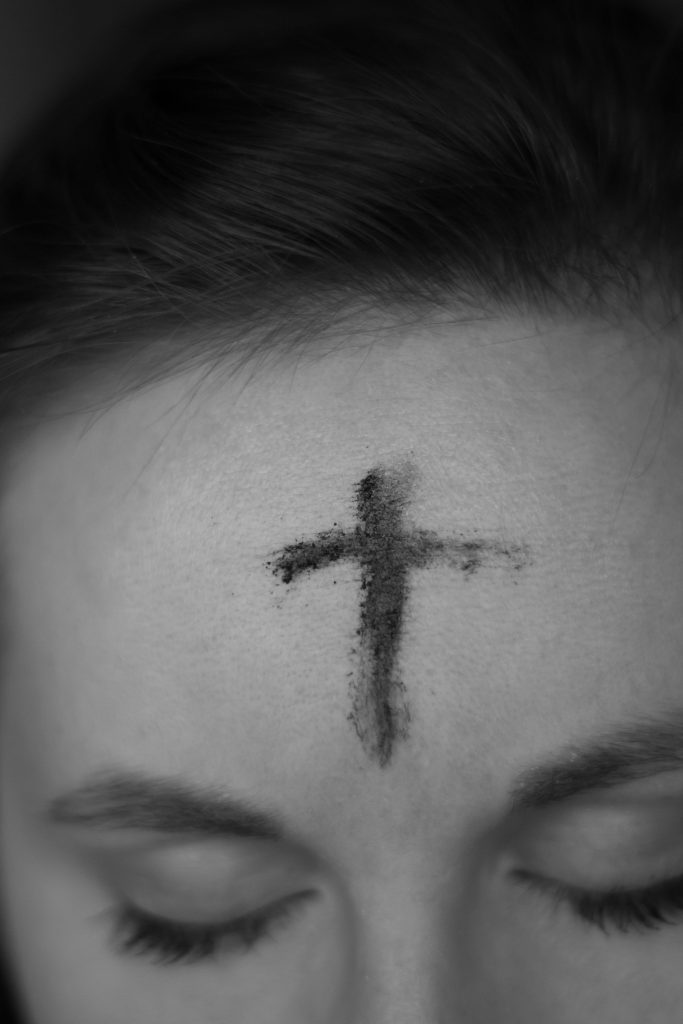
Ash Wednesday Forehead Ash Cross.  Photo by Ahna Ziegler on Unsplash

Lent & Ash Wednesday

Ash Wednesday this year is early and on 18th February.  It is the First Day of Lent, the solemn time which runs up to Easter, and is symbolic of Jesus’ 40 days in the wilderness.

In Anglo Saxon the name for the season of Spring was ‘lencthen’. It is thought to derive from the idea of the lengthening days. Days do suddenly seem to have got longer. These are the official times for the evening:

Sunset: 17:21

Dusk (Civil twilight ends) : 17:55

Nightfall (Nautical twilight ends) :18:34

Full Darkness starts (Astronomical twilight ends) : 19:13

Did you know it was that complicated? But https://www.thetimeandplace.info/uk/london-city-of-london does.

Quadragesima

So strictly, Lent means Spring. The Romance languages use the term which derives from the Latin ‘Quadragesima’ which means the 40 days of Fast. Spanish (Cuaresma), French (Carême), and Italian Quaresima). For Germans, it is the fasting time: fastenzeit. In England, Lent became a specialised word for the fast period. And Spring took over as the name of the season.

A time of fasting? Time for reflection? Maybe once upon a time. When I was young, it was 40 days when you were supposed to give something up. Smoking, or drinking, or chocolate. An idea taken up by a new generation, as, for example, Dry January? A time of reflection? No, never did that.

Dust to Dust and Stardust

Ash Wednesday is named after the ashes smeared on the heads of worshippers to remind us that we are dust. I’ve never seen this done either. My footballing Vicar friend Andrew missed our Wednesday Game so that he could mark foreheads with ash crosses. The ashes were traditionally made from palms used for Palm Sunday decorations, which is indeed what Andrew did. Look here to see my post on Palm Sunday.

In the midst of life we are in death, earth to earth, ashes to ashes, dust to dust, in sure and certain hope of the Resurrection.

Thomas Cranmer

On the subject of dust, here are some spiritual lyrics by Joni Mitchell. Something profound in the true idea that we are all stardust.

We are stardust
We are golden
And we’ve got to get ourselves
Back to the garden

Woodstock by Joni Mitchell

40 Days

We all know that there are 40 days in Lent, except there are not. It’s 46 this year. This was pointed out by Tim Harford who presents a BBC radio programme called ‘More or Less’. It is a programe about statistics, or more widely about Fact Checking statistics in the news. Last year he discussed the 40 days. One answer proposed was to take away Sunday. But, my mathematics tells me this still leaves 42. The answer Tim Harford came up with is that 40 days just means a long time.

It is the length of time of Lent, but also:

The duration of the Great Flood
The time Moses was on Mt Sinai
The time the Israelites spy on Canaan
Goliath trails Saul
Elijah Walks
Jesus is tempted n the Desert
The time from Resurrection to Ascension

In other words, a long time to be doing any one thing. As Hartford says, it’s like our word ‘umpteenth’. As in ‘Kevin this is the umpteenth time I’ve told you to tidy your bedroom’. That’s what my mother said to me as she threw my clothes out of the window.

Read about Shrove Tuesday in my post here. To read about the ‘Month of Purification’ in Latin.

First published 2024, revised 2025, 2026