Feralia – the Roman Festival of the Dead February 21st

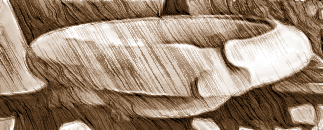
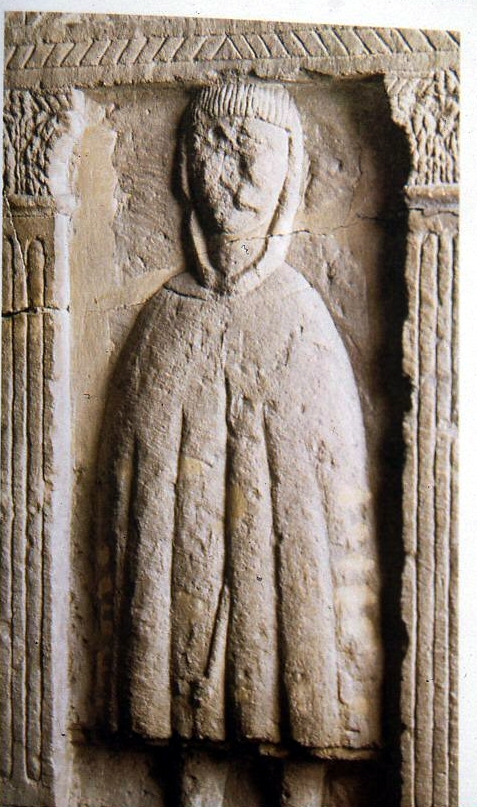
To illustrate rainwear in the Roman period and to illustrate winter showing Philu from Cirencester
Tombstone of Philus from Cirencester (Corinium Dobunnorum) showing his rain cloak

Feralia & Parentalia

Feralia is the last day of Parentalia a 9-Day Festival for the spirits of the Dead. It is described in some detail by the Roman Poet, Ovid, in his Almanac of the year called the ‘Fasti’. Here, he describes how to honour a parent:

And the grave must be honoured. Appease your father’s
Spirits, and bring little gifts to the tombs you built.
Their shades ask little, piety they prefer to costly
Offerings: no greedy deities haunt the Stygian depths.
A tile wreathed round with garlands offered is enough,
A scattering of meal, and a few grains of salt,
And bread soaked in wine, and loose violets:
Set them on a brick left in the middle of the path.
Not that I veto larger gifts, but these please the shades:
Add prayers and proper words to the fixed fires.

There is much more Ovid says about Feralia, and you can read it for free, in translation by A. S. Kline (which I used above, at www.poetryintranslation.com)

For more about Parentalia look at my earlier post about the February festivals of the Romans.

Roman Cemeteries in London

In London, archaeologists have found many Roman cemeteries around the City of London. The Romans forbade burial inside the City limits. So, the dead were buried alongside the main roads out of the City Gates. Aldgate towards Colchester, Bishopsgate to the North. Ludgate along Fleet Street to the West. Newgate to Holborn and the North West. From London Bridge to Southwark and the South. These are the places that parents would be remembered at Feralia.
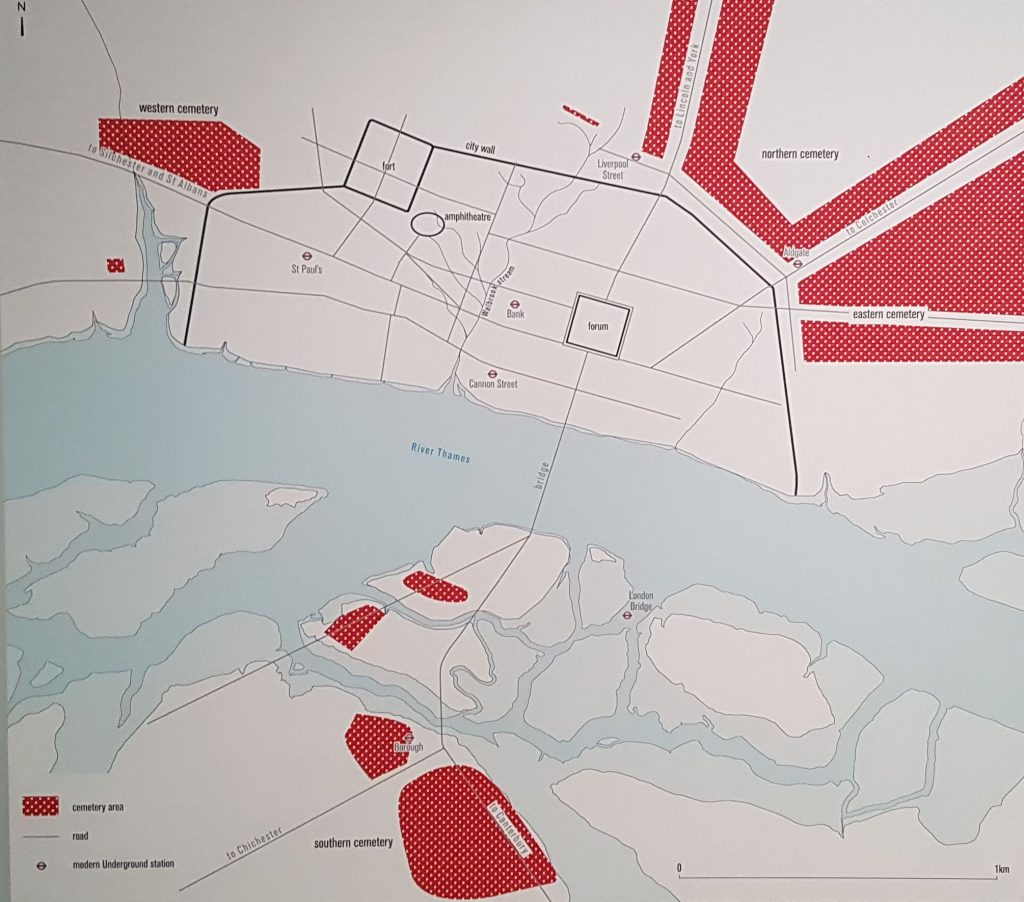
Map of Roman Cemetaries from Museum of London exhibition on the Roman Dead
Map of Roman Cemeteries from the Museum of London exhibition on the Roman Dead, showing the River Thames and River Fleet. Holborn is to the left, marked ‘Western Cemetery’.

Roman Burials

Roman Mortaria

Various rites have been observed. Both inhumation and cremation were practised. I remember excavating a Roman mortaria with a hole in the bottom with the ashes of the dead in it. These large bowls were used as a mortar for grinding foodstuffs. The bottom was deliberated gritted, but they often wore through, and sometimes were reused to hold cremation ashes. I like to imagine, granny being buried in her favourite cooking vessel (or maybe a grandad who baked?).

Many bodies were covered in chalk, perhaps to help preserve the body. A surprising number of bodies are found with the head by the knees. The large number of cases fuels speculation that this was a burial rite, of whom only a percentage were beheaded as a punishment. In York, near Micklegate archaeologists found a large number of beheaded graves in a cemetery thought to be of gladiators. Other graves shown signs of a funeral pyre.
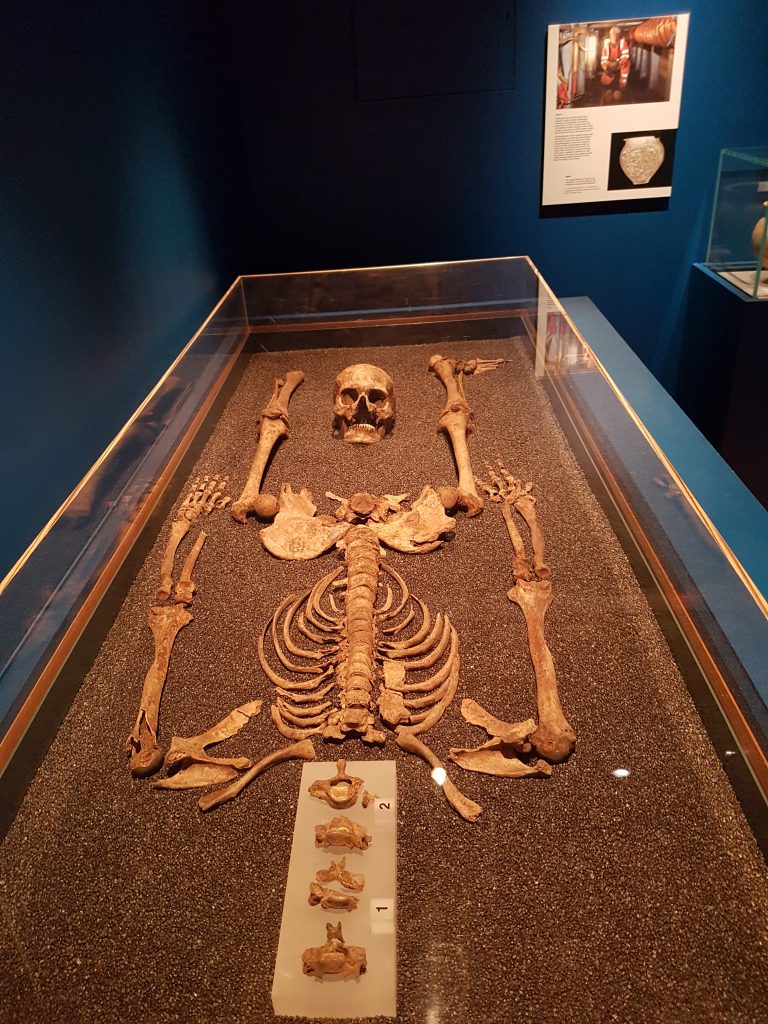
Author’s photograph of a skeleton displayed at the Roman Dead Exhibition, Museum of London, She was between 26 and 35 years old, who lived a hard life, and possibly had anaemia. Her head was severed either: before and causing death, or shortly after death, and placed between her legs as shown.

Procurator Classicianus.

The rich and powerful were remembered with huge monuments, prominently sited along the main roads. The most famous are the burial stones found at Tower Hill of the Procurator Classicianus. What makes this special is that he is mentioned in Roman accounts of the Boudiccan Revolt of AD 60-61. He suggested to Nero that the Province would only be saved if the revenge against the British was de-escalated. Nero wisely withdrew the vengeful Roman Governor Suetonius Paulinus and replaced him with someone ready to conciliate. The Romans held the province successfully for 350 years or so more.
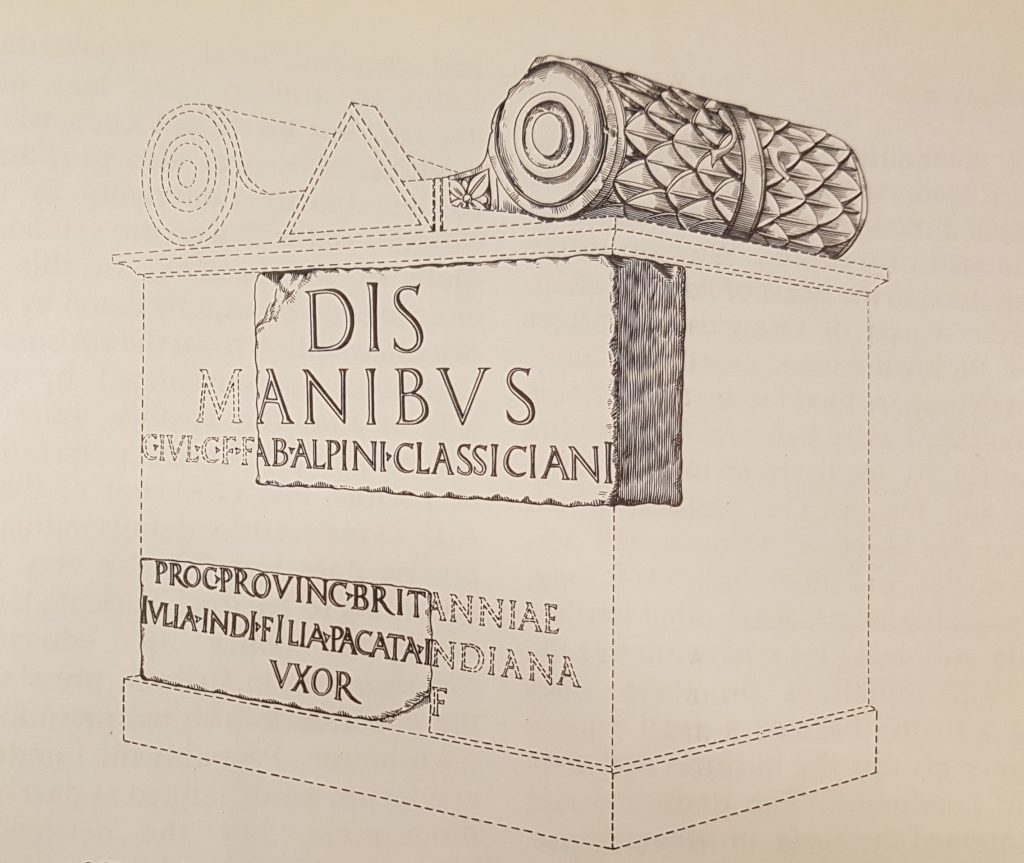
Reconstruction drawing of two stones found while building Tower Hill Underground Station. They read, something like, ‘To the Spirits of the Dear Departed Fabius Alpini Classicianius, Procurator of the Province of Britannia.Julia, Indi (his wife) Daughter of Pacata of the Indiana voting tribe. Had This Set up.
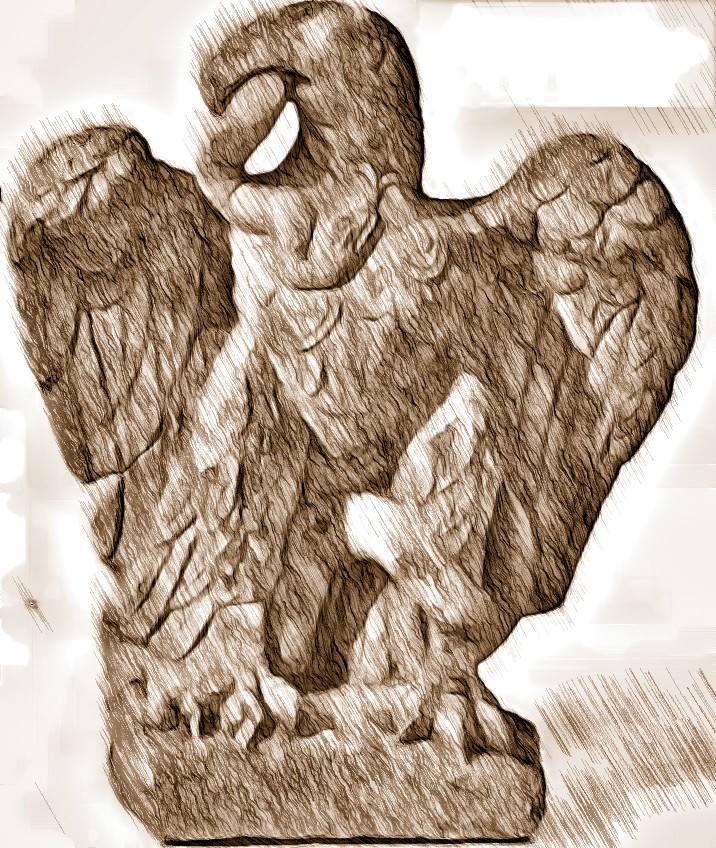
Sketch of a stone Eagle found in 2013 at an excavation at the Minories just outside the eastern side of the Roman Wall in the City of London.

A beautiful carved eagle which adorned a tombstone was found in the Cemetery in Tower Hamlets. Recently, a very grand mausoleum was excavated in Southwark. To find out more, have a look at the BBC website here:

Funerary Bed in Holborn

Finally, a couple of years ago an excavation ran by MOLA discovered a ‘funerary bed’ just outside Newgate in Holborn. It was on the banks of the River Fleet, a tributary to the River Thames. The fluvial location meant that there were extraordinary levels of preservation, which included this bed. It was dismantled and buried in the grave. It may have been a bed used as a grave good, perhaps for use in the hereafter. Or it might have been the bed upon which the deceased was carried to the funeral. (Or both?)
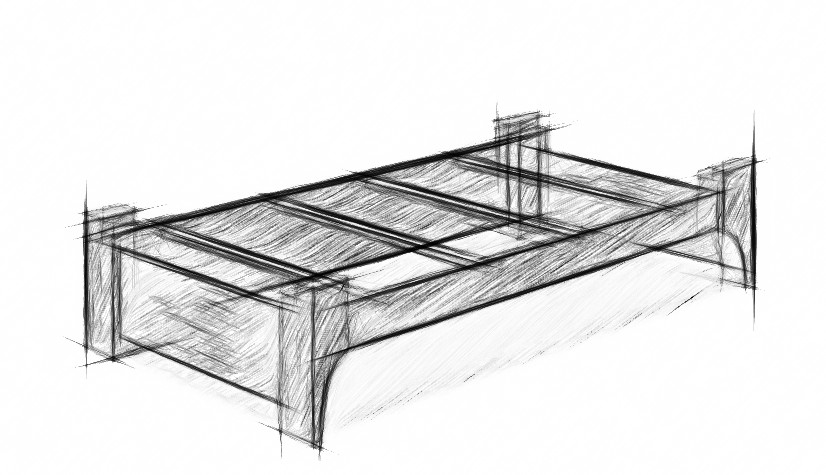
sketch of Roman 'Funerary' Bed found dismantled in Holborn, London
Reconstruction of a Roman ‘Funerary’ Bed found dismantled in Holborn, London (Sketch from a MOLA reconstruction drawing)

They found other grave goods. These included an olive oil lamp decorated with an image of a gladiator; jet and amber beads and a glass phial.
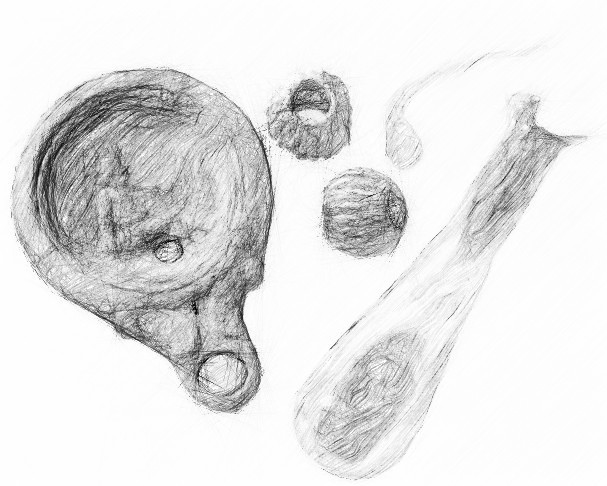
Sketch of Roman burial goods from Holborn 2024
Sketch of Roman burial goods from Holborn, London

For more look at www.mola.org.uk/discoveries

On This Day

1804 – Richard Trevithick‘s steam locomotive is put on wheels at the Pen-y-Darren Ironworks in Wales. and shows its capability for pulling heavy loads. Unfortunately, the Engine weighs so much it breaks the rails, so the wheels are taken off.

Toad, Frogs & Newts Migration – as the weather warms up a little, later in February is when the amphibians wake up from hibernation, and begin their annual migration to their home pond for spawning. They may walk/hop/slither up to 2 kilometres. The kind people at www,froglife.org coordinate Toad Patrols to help toads across the roads that have sprung up along their traditional migration paths.

In the Garden – prune deciduous shrubs such as Buddleia and Spiraea. Sow seeds indoors. Order lots of compost.

First Published in February 2024, revised 2025, On this Day added 2026
Lupercalia, Parentalia and Februarius February 15th

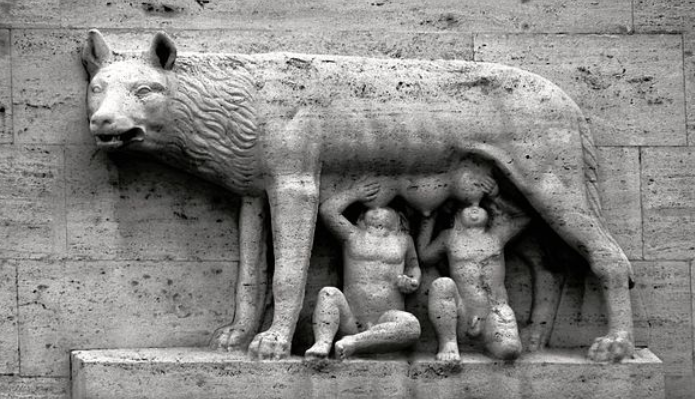
Relief sculpture of Romulus and remus suckling from a wolf
Romulus and Remus suckling from a wolf. The event was celebrated by the festival of Lupercalia

Lupercalia was a Roman feast of purification. It was dedicated to the she-wolf who saved Romulus and Remus, the traditional founders of the City of Rome. The centre of the festivities in Rome was a cave called the Lupercal. This was, supposedly, where the wolf suckled the twin brothers until they were rescued by Faustulus, a shepherd.

The Lupercalia was also called dies Februatus. The word seems to be derived from proto-italic word februum for purification by making an offering. The purification instruments were called februa. This is the basis for the Roman month named Februarius and our February. For more about February see my post here.

The deity of the month was Neptune.

Parentalia

We are also in the middle of the Parentalia, which began on the 13th February and lasted nine days. It honoured parents and family ancestors. People would visit the family tombs found along the roadsides outside of the City. Here they would honour the ancestors by making offerings.

Goddesses of the Family Heath

There would be a family banquet and offerings made to the Lares – the household deities.  Romans had a household altar for their worship. The Greek Goddess Hestia was the Goddess of the Hearth – the centre of any household, and Vestal was the Roman equivalent. Dickens borrowed the concept of the Household Gods in his Christmas book ‘the Chimes’.

According to Wikipedia the Codex-Calendar of 354, shows that 13 February had become the holiday Virgo Vestalis parentat. This was a public holiday which by then appears to have replaced the older Parentalia.

For more on Roman Burials and the Festivals of the dead look at my post here:

On This Day

29The Day that Christ overcame the devil. February 15th was the date chosen for this festival, which was called Sarum Rite. But it is long obsolete in the Church calendars, and no one seems to know what it was about. Although it seems obvious to me, it must be when the Devil tried to tempt Jesus in the Wilderness. I have just found this site which is equally unsure. But feast-of-the-triumph-of-christ-over-the-devil suggests that Jesus was baptised on 6th January and 40 days later takes us to February 15th when the Devil:

took him up into the holy city, and set him upon the pinnacle of the temple,

And said to him: If thou be the Son of God, cast thyself down, for it is written: That he hath given his angels charge over thee, and in their hands shall they bear thee up, lest perhaps thou dash thy foot against a stone.

Jesus said to him: It is written again: Thou shalt not tempt the Lord thy God.

The story continues, but you get the gist of it. As to the date of AD 29. Dates about Jesus are very uncertain.

898 – In the Laws of King Alfred the Great, February 15th, the day Christ overcame the devil, was a day off for freemen.  This is about the date of the first day in Lent. Lent of course varies with the date of Easter. In 2026 Lent starts on February 18th. But the law code says the 15th is the day off.  I delve more into Days off in the Anglo Saxon Calender on August 15th.

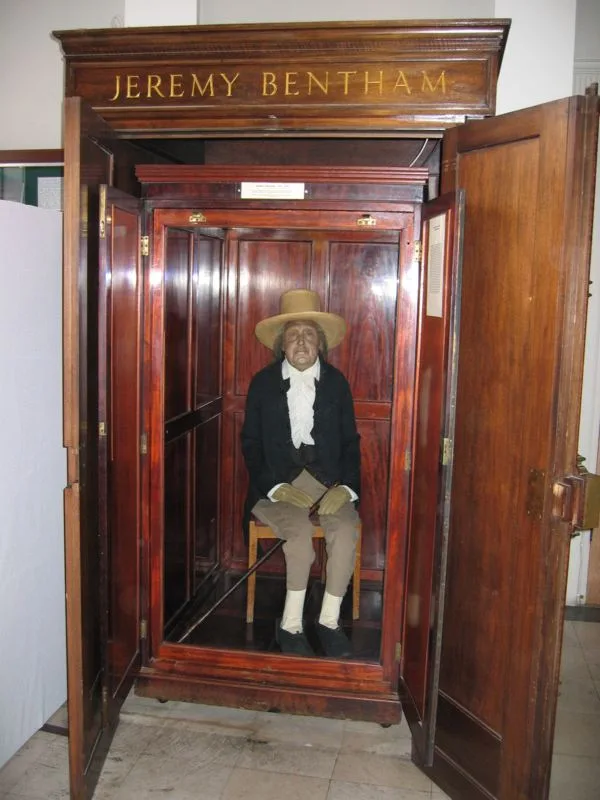
1748 Jeremy Bentham was born. He was a utilitarian philosopher, who believed ethics consisted on contributing to the great good of humanity. He was also involved in the foundation of the London University and founded University College, London – London’s first university. Founded in 1826.

Jeremy Bentham’s “Auto-Icon” at University College London. Photo Michael Reeve. Licensed by author under GNU Free Documentation License

My part in his story is that the mother of my children is a textile conservator and one of her first projects was to sort Jeremy Bentham out. He was an atheist and did not believe humans survive death. In order to encourage free thought, he ordered that his body should be publicly dissected (after his death!). His skeleton was then dressed in a suit, stuffed with straw, adorned with a cast of his head, Hat put on, and seated on a chair. Then placed in a cupboard, only to be brought out on ceremonial occasions. He’d got a bit dusty over the years, and a little frayed at the edges. So his clothes were repaired and cleaned, and restuffed with acid-free stuffing. Then put back in the cupboard, where you can still see him.

1915 – British Troops retake trenches near St Eloi – for more on this read my post here:

Revised February 15th 2026

Ovid abandons the ‘Fasti’ June 30th

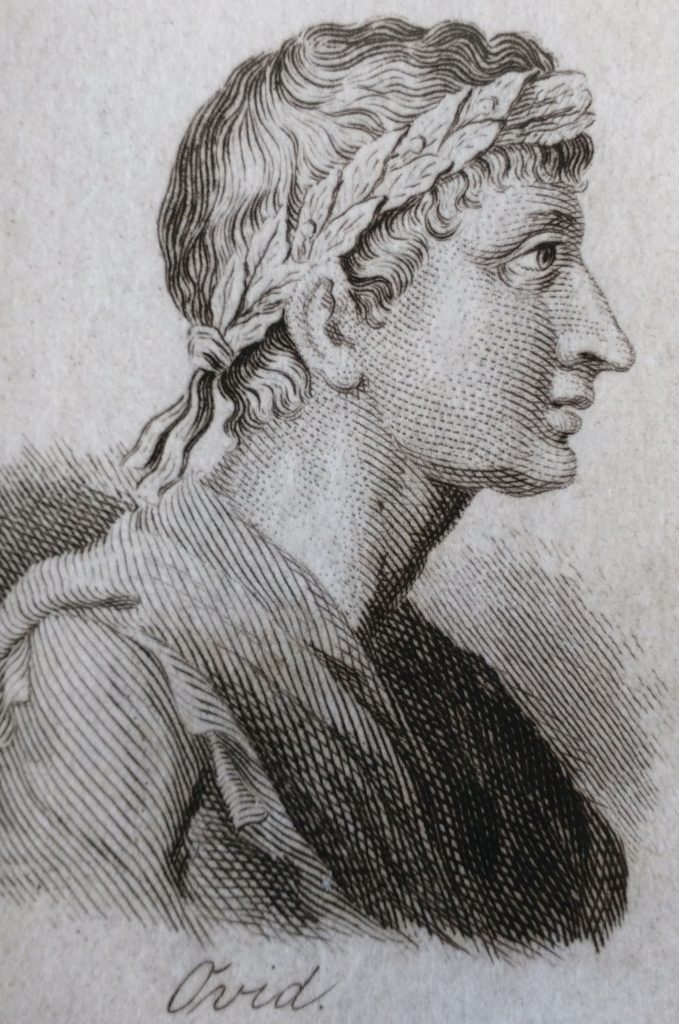
OVID 19TH CENTURY ENGRAVING BY j w cOK
OVID 19TH CENTURY ENGRAVING BY J W COOK

If you want to read Ovid’s almanac of the year, the ‘Fasti’, for yourself, this is the translation I am using. Fasti is very valuable because it tells the stories of the main religious and folk festivals of the Roman year. It also tells the story of the Gods and Goddesses behind the festivals,

Fasti is sadly unfinished because Pūblius Ovidius Nāsō was exiled by the Emperor Augustus. The last entry is for 30th June where Ovid writes: ‘put the last touches to my undertaking’. It suggests he knew he was finished, despite only being halfway through the year.

He was exiled to the Black Sea at Tomis where he died ten years later. It is not clear exactly why he was exiled. Ostensibly it was for the immorality of his book ‘The Art of Love’. But that was published almost a decade earlier. So, it seems a strange, delayed, cause for exile.

Was he involved with a plot against Augustus that saw the Emperor’s own daughter exiled? Her lover was Lullus Antonius, son of Mark Antony. Unlike Julia’s other lovers, he was forced to commit suicide.

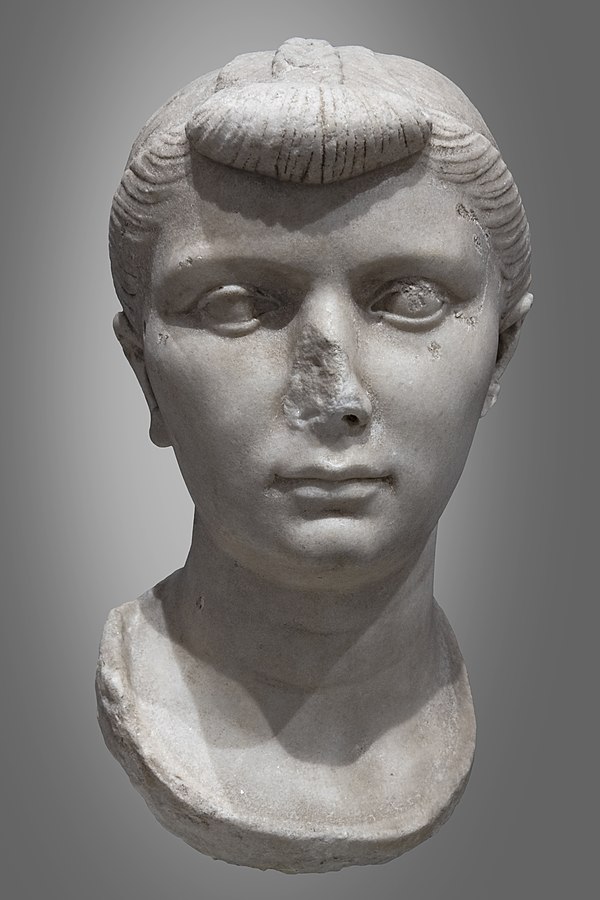
Sculpture of Julia the Elder, daughter of Augustus, divorced wife of Tiberius Public Domain . Musée Saint-Raymond in Béziers

But this also happened years before Ovid’s exile. Julia’s daughter, Julia the Younger, was herself exiled closer to the time of Ovid’s exile. Her husband, Lucius Aemilius Paullus, was executed for treason. So, might this be the context of his exile? No one knows. Ovid said the reason for his exile was a ‘poem and a mistake’. The nature of that mistake is not recorded, but he said the crime was worse than murder and more harmful than poetry.

Here is one of my favourite Ovid quotations. Here he recommends how the aspiring male should dress for a night out on the town:

Don’t torture your hair, though, with curling-iron: don’t pumice
Your legs into smoothness. Leave that
To Mother Cybele’s votaries, ululating in chorus
With their Phrygian modes. Real men
Shouldn’t primp their good looks

… Keep pleasantly clean, take exercise, work up an outdoor
Tan; make quite sure that your toga fits
And doesn’t show spots; don’t lace your shoes too tightly,
Or ignore any rusty buckles, or slop
Around in too large a fitting. Don’t let some incompetent barber
Ruin you looks: both hair and beard demand
Expert attention. Keep your nails pared, and dirt-free;
Don’t let those long hairs sprout
In your nostrils, make sure your breath is never offensive.

Avoid the rank male stench
That wrinkles noses. Beyond this is for wanton women –
Or any half-man who wants to attract men.

Ovid, The Art of Love i

The translation is from Green, Peter (Trans) ‘Ovid The Erotic Poems’ Penguin Classics, London 1982‘

Mother Cybele’s votaries were castrati, hence their high-pitched voices. The Cybele, the Mother Goddess, fell in love with Attys, who made her jealous. She made him mad, whereupon he castrated himself and bled to death. The Goddess had him resurrected body and soul. They enjoyed divine bliss ever after. A Cybelian castration device, dredged out of the Thames, can be seen in the Roman Gallery of the British Museum.

photo of  Castration Device from the River Thames at London Bridge British Museum Photo kevin flude
British Museum Castration Device from the River Thames at London Bridge Photo: K Flude

The paragraph above is a quotation from In Their Own Words – A Literary Companion To The Origins Of London‘ D A Horizons, 2009.  by Kevin Flude. To buy the Kindle or Paperback version click here.

To read my post on Ovid’s Metamorphosis-crocus-and-saffron/

On This Day

1381 – King revokes abolition of Serfdom. This had been ‘forced’ upon the Government at Mile End during the Peasants Revolt. The royal charter was revoked July 2nd

First Published in 2024 and revised in 2025