Hawthorn January 23rd

 Photo by Timo C. Dinger on Unsplash
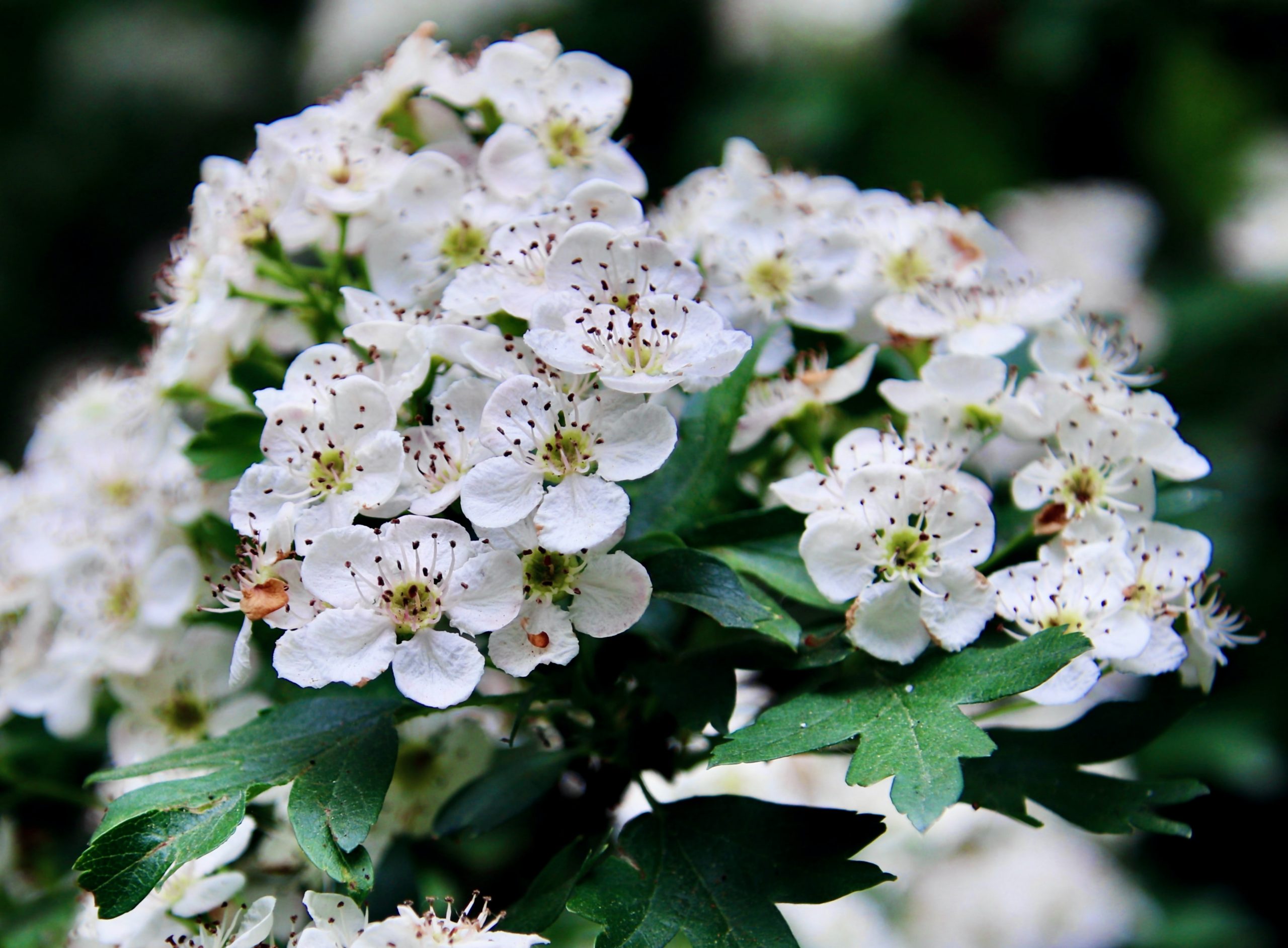
photo of hawthorn flowers
Photo by Timo C. Dinger on Unsplash Hawthorn hedge flowers

Hawthorn Hedges

Many plants can be used for hedges, but hawthorn is the most common. It can be planted as bare-root from Autumn to Spring, so January is as good a time as any. It can also be grown from the seeds from its red berries. But this takes 18 months to achieve. Interspersed along the hedge line are often other trees—either trees for timber, or fruit trees perhaps crab-apples or pear-stocks. Trees were also useful as markers. Before modern surveys, property would be delineated by ancient trees. Hedges could be removed. Trees were more difficult to eradicate.

Hawthorn hedges are an oasis for insects, mammals and migrating birds (who eat the berries). It is a lovely plant for May. In fact, it is also called May, or the May Flower or May Tree and also whitethorn. The berries are called ‘haws’ hence hawthorn. For more on this, look at https://whisperingearth.co.uk.

Hawthorns & Folklore

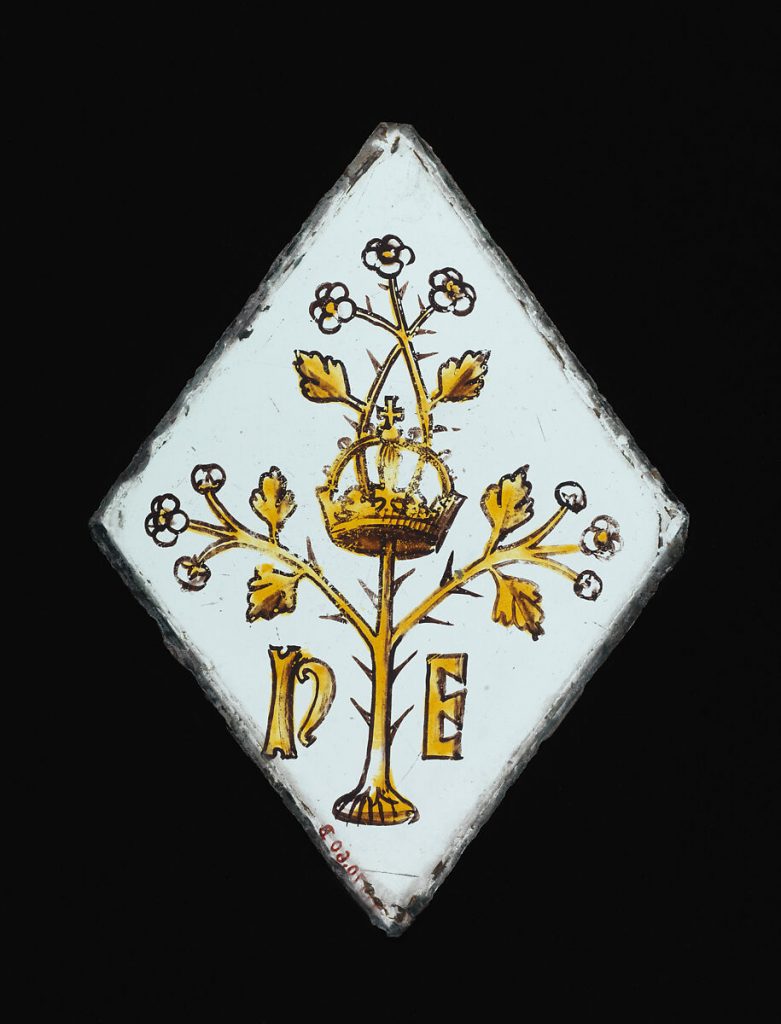
a triangle of stained glass on a black background.
A 'Quarry' of Stained Glass showing the Crown, a hawthorn Bush and initials representing Henry VII and his, Queen, Elizabeth of York.  Possibly from Surrey. Early 16th Century and from the Metropolitan Museum of Art (Public Domain).
A ‘Quarry’ of Stained Glass showing the Crown, a hawthorn Bush and initials representing Henry VII and his, Queen, Elizabeth of York. Possibly from Surrey. Early 16th Century and from the Metropolitan Museum of Art (Public Domain).

Hawthorn produces white flowers in Spring. So, it is one of the great pagan fertility plants, its flowers forming the garlands on May Eve. One of the chemicals in the plant is the same as one given out in decay of flesh. It is, therefore, associated with death in folklore, and not to be brought into the house.

It was also said to be the thorn in the Crown of Thorns, so sacred. A crown from the helmet of the dead King Richard III was found on a hawthorn bush at the Battle of Bosworth Field. The victorious Henry VII adopted it for a symbol. . For more on the plant, https://www.woodlandtrust.org.uk

The virtues of Hawthorn

John Worlidge, wrote in 1697

‘And first, the White-thorn is esteemed the best for fencing; it is raised either of Seeds or Plants; by Plants is the speediest way, but by Seeds where the place will admit of delay, is less charge, and as successful, though it require longer time, they being till the Spring come twelvemonth ere they spring out of the Earth; but when they have past two or three years, they flourish to admiration.’

Systema Agriculturae 1697

Hawthorn is an excellent wood for burning, better than oak. It has the hottest fire so that its charcoal could melt pig-iron without the need of a blast. It is also good for making small objects such as boxes, combs, and tool-handles. The wood takes a fine polish, so also used for veneers and cabinets. For advice on the best wood to burn read my post here.

Hawthorn has many medicinal benefits according to herbalists. Mrs Grieve’s Herbal suggests it was used as a cardiac tonic, to cure sore throats and as a diuretic. (But don’t try any of these ancient remedies without medical advice!)

What to plant in late January

This is the time, according to Moon Gardeners, to plant and sow plants that develop below ground. So rhubarb and garlic, fruit trees, bushes, bare-root plants and hedging plants.

On This Day

1571 – The Royal Exchange opens in London. London first Business centre since the Roman Forum, creating the first Bourse in the UK

1785 – ‘Boys play on the Plestor at marbles & peg-top. Thrushes sing in the Coppices. Thrushes & blackbirds are much reduced.’ From the Garden Calendar in Gilbert White’s Year. the Plestor is the village green; peg-top is a spinning top game. For more on Gilbert White,the inspirer of Darwin, see my post.

1940 – The coldest day since the Great Freeze of February 12th 1895. The Thames froze over for the first time since 1880. Lovely photo here of skaters on the Serpentine.

1973 – Ceasefire in Vietnam agreed in negotiations in Paris

First Published in January 2023, revised 24, 25, 26

Floralia. Old Goats and an extraordinary Elephant April 28th

Flora (Floralia festival named after her) on a gold aureus of 43–39 BC Wikipedia photot by АНО Международный нумизматический клуб

This post got forgotten because April 28th was unexpectedly St George’s Day.  But it’s still relevant as the Roman festival of Floralia continued to May 15th.

On the 28th of April began the Floralia.  It continued to the Kalends (15th) of May. According to Ovid in the ‘Fasti’ Book IV, the Romans celebrated Flora, the Goddess of Spring.  The Floralia celebrated flowering, blossoming, budding, planting and fertility.

Flora was one of the 15 Roman Deities offered a state-financed Priest. Her home in Rome, was on the lower slopes of the Aventine Hill near the Circus Maximus.

The Circus Maximus is the large long arena in the middle of Rome. Model Musee Arte et Histoire, Brussels, photo Kevin Flude

Celebrations began with theatrical performances, at the end of which the audience were pelted with beans and lupins. Then there were competitive games, and spectacles. The latter, in the reign of Galba, including a tight-rope walking animal. A monkey you might guess but no, it was a tight-rope walking elephant!

The Year of the Four Emperors

Incidentally, Galba only survived for 7 months as Emperor.  A little longer than our Liz Truss’s 44 days. But then she was not murdered by a rampaging mob at the end of her reign. It was the year known to history as the year of the 4 Emperors. (great description by Tacitus here:)

Spectacles and Battles

Juvenal records that prostitutes were included in the celebration of Floralia by dancing naked, and fighting in mock gladiatorial battles. There is a raging debate about the existence of female gladiators. A burial in Southwark has been said to be one such.  To hear what Natalie Haynes has to say on the subject look here🙂

Fauns, Satyrs, Goats and Hares

Hares and goats were released as part of the ceremonies. These animals were both considered to be very fertile and have a ‘salacious’ reputation! (Satyrs or Fawns were, famously, obsessed with sex and were half man half goat. A man can still be referred to, normally behind his back, as an ‘old goat’). Fauns were Roman, Satyrs Greek. The one half man half goat, the other half man half horse. It all got a little mixed up and fauns became very similar to satyrs.

To read about the myths of hare see my post march-28th-as-mad-as-a-march-hare/

Written in 2023 revised April 2024, 2025

May Gifts & New Brooms

May – Hawthorn Flowers

It’s bad luck to buy, make or use a new broom in May because:

Sweep with a broom that is cut in May
You’ll sweep the head of the house away.

But you can give good luck to a friend by leaving a branch of hawthorn flowers on the doorstep. But other woody messages were not so friendly according to traditional verses:

Alder for a scrowler; pear for the fair
Nut for a Slut; plum for the glum
Bramble if she ramble; gorse for the whores

It is basically rhyming slang, so no great wisdom involved, also I’m not sure quite how some of the rhymes work, and it does seem rather at the expense of women.