The Month of Love Roman Months April 15th

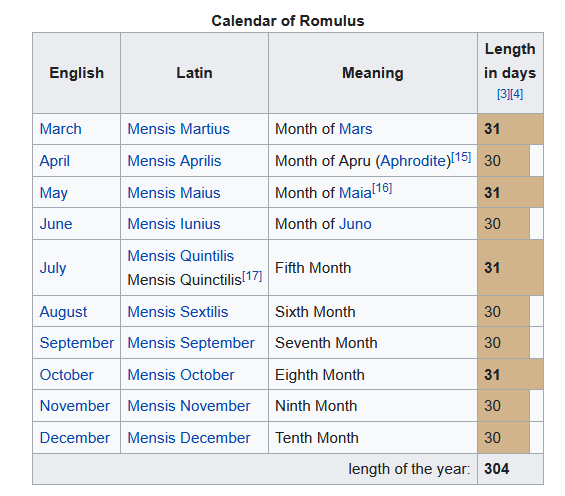
Roman Months, and April the Month of Love – Table from Wikipedia

April was Aphrodite’s month.  The goddess of love and beauty.  Hence, the month of love.  It is also National Couple Appreciation Month! (‘National Couple Appreciation Month was founded in 2010 by Blissful Escapes to, in the words of the company, “encourage couples to do something special to re-enforce and celebrate their relationship.”’ Quote taken from this site.). But first, the new section of:

On This Day

1738 –George Frideric Handel’s Serse, has its premiere performance in London, England. From 1723 Handel lived in a House at 23, Brook Street which is in Mayfair. The House became a museum. Jimi Hendrix lived next door. And so now it is the Handel Hendrix House.


Handel Hendrix Museum Photo by K Flude

See my post on Hendrix in London.

1755 – Samuel Johnson published his famous ‘A Dictionary of the English Language’.

He had a team of clerks in his attic in Bolt Court. They wrote down his definitions and illustrations of their use. He was often quite naughty in including funny, rude or idiosyncratic definitions. For example, a lexicographer was ‘A writer of dictionaries. A harmless drudge.’ A Second Marriage was: ‘ A triumph of hope over experience.’ Oats. ”A grain which in England is generally given to horses, but in Scotland supports the people.’ The innovation of his dictionary was that the definitions came with copious illustrations of a word’s use from well-known authors. While researching he borrowed books from friends. When he eventually returned them they were marked with lots of underlining and annotation in the margins.


Dr Johnstone’s House in Bolt Court, Fleet Street, Photo K Flude

1912 –  Titanic sinks at 2:20 a.m. This was 2 hours and 40 minutes after she hit the iceberg. 1514 people were lost of 2,224.

1923 – Insulin becomes generally available for use by people with diabetes. Its development involved decades of work over 2 continents, but it was extracted by a team from the University of Toronto in 1921.

1945 – Bergen-Belsen concentration camp is liberated. The Imperial War Museum writes: ‘Thousands of bodies lay unburied around the camp and some 60,000 starving and mortally ill people were packed together without food, water or basic sanitation. Many were suffering from typhus, dysentery and starvation.Nearly 14,000 died after the liberation.’

1989 – 97 Liverpool fans packed into the Hillsborough Stadium, were crushed to death watching the FA Cup Semi-final. 766 were injured. The Police tried to cover up the events, and the press blamed the Liverpool fans, particularly Rupert Murdoch’s the Sun.

Roman Months

I have spoken about the Roman Calendar in previous posts. Today, I’m concentrating on the Months. The Romans wrote about a ‘legendary’ calendar, set up by Romulus when he founded Rome. It consisted of 10 months of 30 and 31 days followed by a winter period not divided into months. This allowed them to extend the year so that it fitted into the Celestial cycle. The year began in March, suitable names were given to March, April, May and June.

Having given names to June the Romans gave up and the next 6 months were given numbers from 5th month to 10th month as in the diagram above. The Calendar was not well regulated and the months eventually began to lose their integration with the seasons, and needed reform.

photo of november calendar
Photo by Manasvita S on Unsplash

The Calendar was reformed several times. January and February were added by the legendary Numa Pompilius about 713 BC replacing the monthless winter period. But, Julius Caesar undertook the major reform in 46BC. This was the so-called ‘Year of Confusion’. This first year was 445 days long. This is how far out of sync the Calendar had got. The Julian Calendar realigned the calendar to the seasons.

The Year began on January 1st, with 365 days, 12 months and a 4 year leap year cycle. This held sway until the 16th Century when a further reform was ordered by Pope Gregory as the year is not exactly 365.25 days long. It was not adopted in the UK until 1752 when we lost 11 days to align ourselves with Europe.

More on the Ides and the Kalendes of the month here. For more on Numa Pompilius or see my post.

First published in November 2022.  Republished April 2025, and 2026 when On This Day was added.
New Year’s Eve Old Style, Witchcraft & Carmentalia January 11th

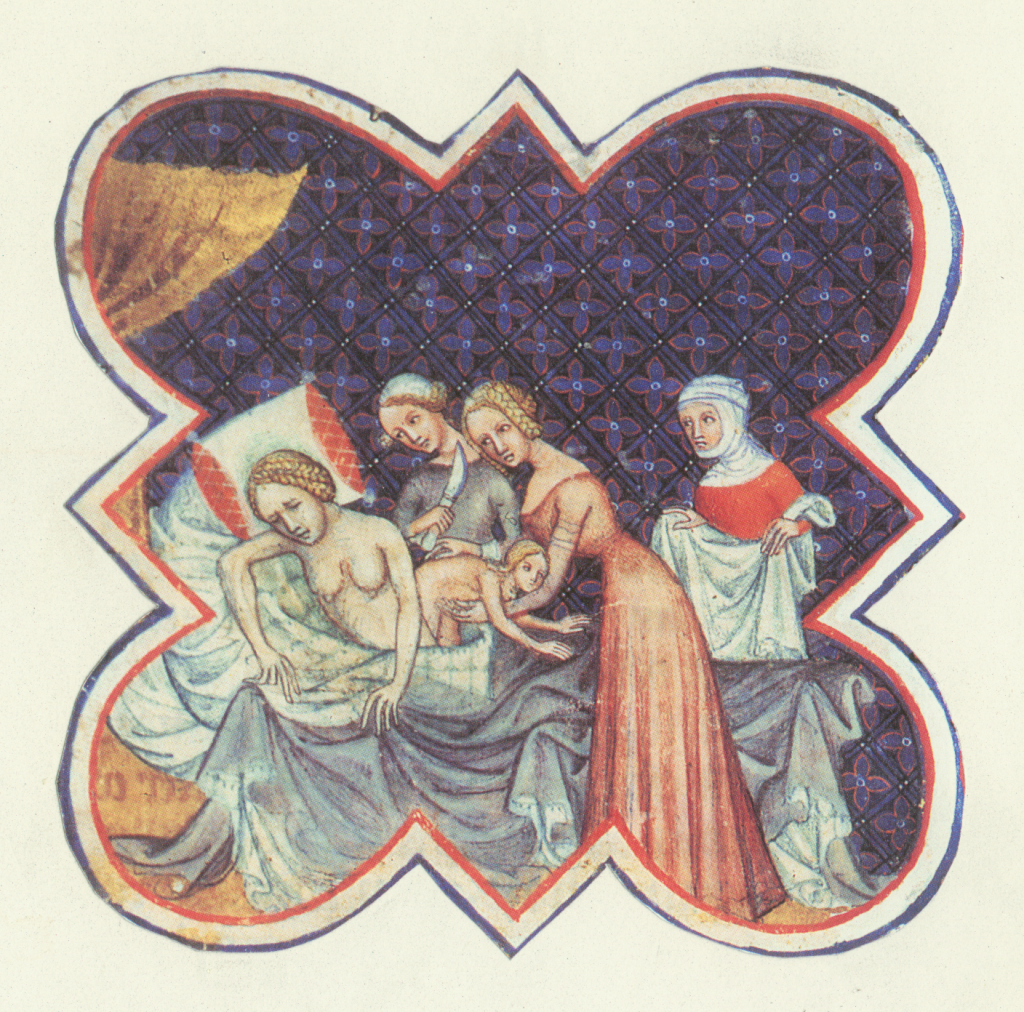
1375, French Caesarian Birth, (caesarians at this time would have killed the mother or be performed when she was already dead or dying.)

When Britain reluctantly joined the Gregorian Calendar, in 1752, we lost 11 days. So if you add 11 to 31st December you get to New Year’s Eve Old Style. You can do this with any festival date, and when celebrating, feel you are being really authentic.

So, anything you did on the New Year’s Eve New Style (31st Dec), you can do today New Year’s Eve Old Style. Except, of course, when you call in sick because of a hangover, you will need to convince your boss of the illegitimacy of the Gregorian Calendar! In case you have forgotten what you should be doing on New Year’s Eve you can look at my post here to find out.

Witchy New Year’s Eve Old Style

It’s a particularly ‘witchy’ evening because it is the traditional Eve, not the newfangled Gregorian one. Reginald Scot in his ‘Discovery of Witchcraft’ first published in 1584 reports on a way to find witches:

a charm to find who has bewitched your cattle. Put a pair of breeches upon the cow’s head, and beat her out of the pasture with a good cudgel upon a Friday and she will run right to the witch’s door and strike it with her horns

Reginald Scott’s book is available here and is a fascinating read. But, perhaps I need to say: don’t try this at home, as scientific research does not support it as a valid method!

Campaign against the slaughter of ‘poor, aged and the infirm’ as Witches

When I first posted this, I did not, to my shame, know the background to the book. I assumed the book was advocating this sort of nonsense. On the contrary. Reginald Scot was trying to debunk the absurd claims for witchcraft and magic. His book tries to prove that witchcraft and magic were rejected both by reason and religion. He believed that manifestations of either were ‘wilful impostures or illusions due to mental disturbance in the observers’.

The book is evidence that the large number of people who were executed as witches in the 16th and 17th Century, were the victims of a QAnon-style conspiracy, which was rejected by many educated and rational people. Please have a read of the cover of this 17th Century edition of Reginald Scot’s book. It gives a good idea of what he was setting out to counteract. Scot was a member of Parliament for New Romney, in Kent.

This is some of the text in the image below, which makes clear the prejudices at play in the campaign to execute witches:

‘For the preservation of poor, aged, deformed, ignorant people, frequently taken, arraigned, condemned and executed for witches, when, according to a right understanding and a good conscience, physic, food and necessaries should be administered to them.’

Frontispiece of Scots Discovery of Witchcraft.

Carmentalia

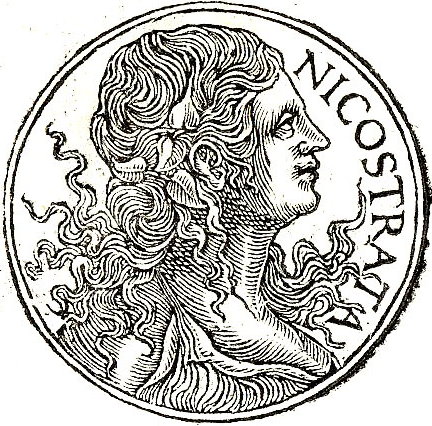
Carmenta or Nicostrata, black and white medallion of the Goddess of Childbirth
Carmenta or Nicostrata , Goddess of Prophecy, Childbirth, Midwives and Technical Innovations. Published by Guillaume Rouille (1518?-1589) – “Promptuarii Iconum Insigniorum”

It is also Carmentalia, the festival for Carmenta, the Roman Goddess of prophecy and childbirth. She was a much loved Goddess in the Roman pantheon. But little is known about her, perhaps because she has no clear match in the Greek pantheon? However, she was thought to be a nymph of the Arcadians, called Themis.

She has a long history in the story of Rome. She was the mother of Evander. Who is he? I hear you shouting! Well, he is the founder of Pallantium. Where on earth is that? You cry! It is the City on the site of Rome (on the Palatine Hill) that predated Rome! Who knew that? (The people at Vindolanda Roman Fort know, and they have a great page on Carmentalia here). The City was supposed to be of Greek origin, founded 60 years before the fall of Troy. Later, it was absorbed into Rome.

Carmenta

Carmenta had two sidekicks who were her sisters and attendants. Postvorta and Antevorta, They might be explained by Past and Future. (or, After and Before) as part of her role in prophecy. Or the two figures could represent babies that are either born head or legs first. She was an important enough Deity to command one of the fifteen flamens. These were priests of the state-sponsored religions. One of Carmenta’s flamen’s jobs was to ensure no one came to the temple wearing anything of leather. Leather was created from death, and not suitable for the Goddess of Childbirth, who was all about life.

The Vindolanda post makes the point that 2% of pre-modern births are likely to have caused the death of the mother. Because there was a high child mortality, the Roman Mother would have to have 5 children on average to keep the population stable. With a 2% death rate, and 5 children, they estimate that each mother had a 12% chance of death by giving birth. Good reason to have a Goddess on the Mum’s side. She is also the Goddess of Midwives.

Nicostrata

Carmenta was originally known as Nicostrata (which is Greek and means “victory-army”). She was credited with creating the Latin Alphabet by adding additional letters to the Greek one. So, she is also the Goddess of Technological Innovation. Some Goddess! . When she left Arcadia in Greece for Italy she took 15/16 letters of the Greek Alphabet, and joined them with local letters forming the original Latin alphabet. Later other letters were added. For more on Nicostrata see here. Her name was changed to Carmenta which comes from the word for song or spell or prophecy.

Old Archaic Latin Alphabet, founded by Nicostrata aka Carmenta from Wikipedia

On This Day

1869 The Anglo-Zulu War began

1963 Whisky-A-Go-Go, the first discotheque opened in Los Angeles or so says my copy of the Chambers Book of Days. But research suggest there was an earlier Whisky-A-Go-Go opened in 1958 in Chicago. And that the name sprang from the Whisky à Gogo, established in Paris in 1947. It got its name from the famous Ealing Comedy Film Whisky Galore which was marketed in Paris as ‘Whisky a Gogo‘. (à gogo, meaning, in French, “in abundance”, “galore”) (Wikipedia)

You can rent the film on YouTube but here is a little excerpt from Whisky Galore! where the Islanders start to sample the Whisky they have rescued from a War time ship wreck.

First published in Jan 2022, revised January 2024, 2025. Nicostrata and Whisky Galore! added 2026

Leap Day & and the Roman Calendar February 29th

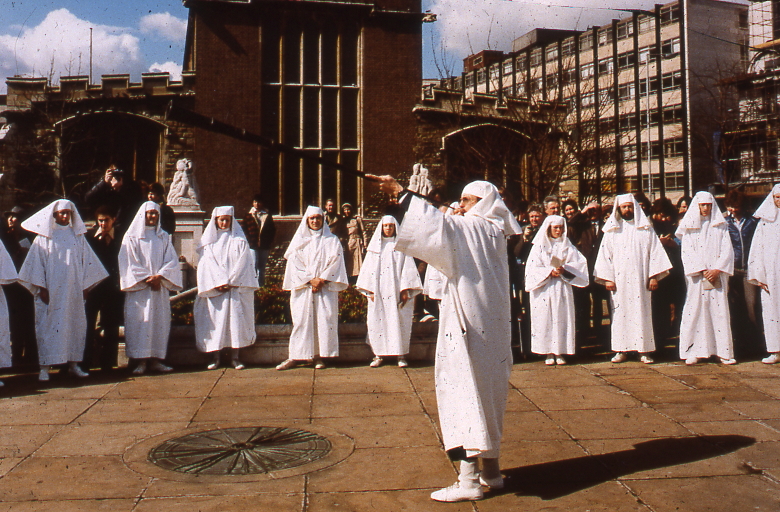
Druids at All Hallows, by the Tower

I have just come back from my very first Leap Year Walk, which I gave tonight for London Walks. It was one of a series of my walks, which are about the year through London’s History. So far, I have done, a New Year Walk, an Imbolc Walk (1 February, St Brigid’s Day), a Spring Equinox Walk, a May Day Walk, a Summer Solstice Walk, an Autumn Equinox Walk, a Halloween Walk, and a Winter Solstice Walk. All, at their core, have the subject of the year, how it is arranged, and celebrated in different cultures and different times in London.

I hoped to get this post done, today, but on arrival at home my burglar alarm was ringing, so had to get an emergency electrician out to pacify my neighbours, and tracking down the fault meant turning my house upside down. I rushed it out, with many bad proof reading errors and ommissions, And have now, on the dawn of a new month, and a new Season, updated it. Probably, knowing me, it still has a far few errors! Now, I am rushing to look after my Grandson!

So, the reason there is a leap year, is that the Sun and the Moon have different cycles, which cannot be easily aligned. And secondly, the solar year is not a fixed number, it is not 365 days, but 365 days and a bit.

Originally though, probably, most cultures lived their lives with time keeping controlled by time markers from their everyday environment, days and nights, the waning and waxing of the moon, the seasons, and the changes in the rising and setting of the Sun. Budding nature would have provided other markers as to when to sow, to harvest, to prune, to slaughter, to worship and marry.

The months were given by the cycle of the Moon, which also gave us tides and menstrual cycles. The months were given names, which were often associated with the weather. The trouble was that the Solar year did not align with the Moon, soon the months would get out of kilter with the seasons. So over time, the society would find it was winter in June, or summer in December. (which is OK if you live in Australia).

Society dealt with this in a number of ways. It could be ignored, why shouldn’t it be cold in June, why should June always be in Summer? Another way was to add in extra days, or months, every so often to make sure June remained in the Summer. This is what Egypt, the early Romans and the Celts did. They kept their months aligned to the actual movements of the Moon, and aligned their Solar Year with it by the addition of extra days or a month or two. or a combination of both.

I reported on this in my post on the Terminalia for February 23rd. As I wrote:

Terminus was an old ancient God who was the God of the boundary, the border, the edge, the liminal God. February was the last month of the original Roman year, but the rulers of Rome added an intercalary month every so often, called Mercedonius in an attempt to keep the Solar year in tune with the seasons. And when the intercalary month was added, the last five days of February were given to Mercedonius and the resulting leap year was either 377 or 378 days long.. So, in those years, the 23rd of February was the Terminus of the year. (For more on Terminalia look at my post for February 23rd on Terminalia-god-of-the-boundary)

Now, as the Roman Republic became more sophisticated, the intercalary months were added at the direction of the Pontiffs, supposedly every two and sometimes every three years. But the Pontiffs were often swayed by political advantage, and by the time of Julius Caesar the seasons had got wildly out of sync with the calendar year. The Dictator, therefore, instituted ‘the Year of Confusion’ which was over 400 days long and brought in the Julian Calendar which realigned the calendar back in line with the seasons.

Caesar spent time with Egyptian Astronomers, trying to understand their solution to the problem. They identified that the year was not 365 days long but 356.25 days, so JC ‘fixed’the issue with a leap day every four years. Based on the almost correct calculation of a solar year being 365.25 days. The new calendar was inaugurated on the Kalends of Januarius 709 AUC, or as we would call it I January 45 BC. It became, in time, something the Romans were very proud of – rationalising, measuring, time itself. Romans counted their dates from the time their City was founded by Romulus in what we call 753 BC or 753 BCE. So, 45 BCE in our reckoning is 709 ab urbe condita (AUC ‘from the founding of the City) as the Romans saw it.

I prefer not to use BCE because it seems ‘dishonest’ to me. The idea of AD BC was made up based on a guess as to when Jesus was born. Changing BC to BCE may rid the date of an explicit Christian identification but masks the fact that there is no such thing as the ‘Common Era. What the Common Era is, is the idea made up in the Late Roman period guessing when Jesus was born/ So I think call a spade a spade, even if it’s a broken meaningless spade that is not fit for purpose, either replace it with something rational, or real or call it what it is.

The interesting thing is that Caesar put the leap year in on the 24th February. Why? Because February, being the month of death, was the end of the year. March 25th was originally the beginning of the Roman year (Caesar moved it to January 1st). Why March 25th? Because it was the Spring Equinox. If you look at my post for March 25th you will find out it is the date of the creation of Humanity, the Birthday of Adam, the conception of Jesus, and until 1752, the day the year number changed in Britain.

The other strange thing about the new leap day was that it was not called February 25th. It was not given a number. Rather, February 24th was two days long. This continued in Britain until the date February 29th started appearing in calendars in the 15th Century, although the legendary Lawyer, Edward Coke (1552 – 1634), refers to the two days of February 24th, but the two day 24th was completely replaced by February 29th in the 16th Century.

One slight complication to the story of February 29th was that February 29th did exist before the Julian reforms. When February was not interrupted by the intercalary month, as described above, it was 29 days long. Julius Caesar made the months alternate 30 and 31 except for February which was 29 days long. When the Senate gave Julius the honour of having the 7th Month named after him, things were OK, but then Augustus wanted the same thing. The Senate duly gave him the next month, which became known as August, but it only had 30 days. This could not be allowed! So they made it up to 31 and stole the 29th from February and made February only 28 days long. This change also meant that there were now three 31 days months in a row, so they reduced September from 31 to 30, boosted October to 31, reduced November to 30 and boosted December to 31,

Hence, we can no longer remember Caesar rational allotment of days in the month, and we need to hum to ourselves:

Thirty days have September
April, June, and November
February has twenty-eight alone.
All the rest have thirty-one.
Excepting leap year – that’s the time
When February’s days are twenty-nine.

But Caesar had not solved the problem of the shifting year, he had just minimised it. By the Council of Nicea in the early 4th Century (and not yet called AD!) the small error had changed the date of the Spring Equinox, from March 25th to March 21st. So, when Constantine convened the Council to bang the heads together of the Church leaders to unify their religion, particularly in regard to the date of Easter, and whether Jesus was equal to God. They fudged the complex issue of the date of Christ’s death, and used March 21st as the foundation of their calculation on the moon-based festival of Easter (more of which at Easter!)

It wasn’t until the 16th Century that Pope Gregory, solved the problem of the inaccuracy of Caesar’s solution, by introducting the Gregorian Calendar, for which see my post here.

See the following posts for the Roman Year:

Romulus’s 10 month year here

Roman Months here and more on the Ides of March here