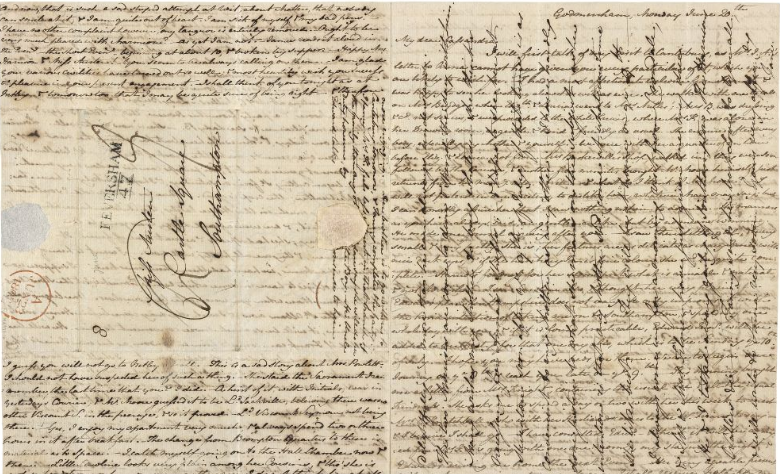
Fanny Austen Knight was the daughter of Jane Austen’s rich older brother Edward. He, rather strangely to our modern minds, was adopted by distant relatives who were childless. ‘Hey! We have enough boys to be going on with – happy for you to take one, particularly as you own two stately homes!’ as Mr and Mrs George Austen probably never said.
One of those homes was Godmersham Park in Kent, the other was in Chawton, a lovely Hampshire Village where Jane, Cassandra and Mum Cassandra lived, and is now a Museum dedicated to Jane Austen.
Fanny also rather cruelly remembers Jane and Cassandra as being unfashionably dressed and not up with upper-class etiquette. She wrote this when she was an old woman. When she was a teenager and being well brought up, she wrote letters to friends of the family and relatives. Here are extracts from her Christmas letters.
Christmas Games
1811 to 1812 Fanny writing to a friend, Miss Dorothy Chapman
‘I don’t know whether I told you that Misss Morris’s are at home for the Christmas holidays. They are very nice girls and have contributed a good deal to our entertainment. None of us caught the whooping cough and have been very well the whole time. We have, in general, had cards, snapdragons, bullet pudding etc on any particular evening and Whist, Commerce and others and tickets were the favourite games. I think when cards fail the boys played every evening at draughts, chess, and backgammon.‘
Commerce is a three card poker type game played with counters. Tickets was Lydia Bennett’s favourite game, which is a gambling game based on luck. It is called, in Pride and Prejudice, ‘Lottery Tickets.’ One imagines it is not a compliment to Lydia’s intelligence that she prefers a game of pure chance.
Bullet Pudding
Bullet Pudding is explained by Fanny in another letter
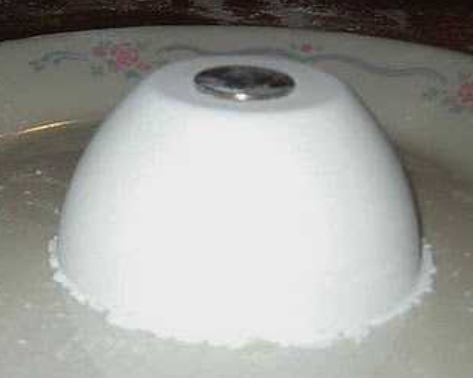
‘You must have a large pewter dish filled with flour which you must pile up into a sort of pudding with a peak at the top, you must then lay a Bullet at the top & everybody cuts a slice of it & the person who is cutting it when the Bullet falls must poke about with their noise & chins until they find it & then take it out with their mouths which makes them strange figures all covered with flour, but the worst is that you must not laugh for fear of the flour getting up your nose & mouth & choking you. You must not use your hands in taking the bullet out.’
I used to play this as a child at Christmas. We used a coin, not a bullet. The contestants walk around the table with the flour pudding on which has a knife ready for cutting the pudding. When the music stops, the one the knife is pointing at cuts off a slice of the flour pudding. They hope not to make the flour collapse and the coin fall. In my family, we pushed the winner’s head into the flour to maximise the fun. Snapdragons is a lively game, you put some brandy in a tray or flat dish, add a few raisins, light the brandy and the game is to pick up and eat the raisins without getting burnt!
Other games mentioned by Fanny
Hunt the Slipper, Oranges and Lemons, Wind the Jack; Lighting a Candle in Haste; Spare Old Noll.
Another niece Anna received Jane Austen’s advice on writing a novel:
‘You are now collecting your people delightfully, getting them exactly into such a spot as is the delight of my life. Three or four families in a country village is the very thing to work on, and I hope you will do a great deal more, and make full use of them while they are so very favourably arranged.’
So, the old Sun is dying, and if the Sun keeps going down we are all going to die. With all of nature dying or hibernating, evergreens are a symbol of a promise/proof that life will continue through the dark days. So, with its bright-green leaves and its luminous berries, Holly is the ideal evergreen for the Solstice. And as the prickles symbolise Christ’s Crown of Thorns, and the berries the red blood of Jesus, the symbolism works, too, for Christians.
Henry Mayhew (editor of Punch) in his ‘London Labour and London Poor’ (1851–62) talks of Christmasing for Laurel, Ivy, Holly, and Mistletoe. He calculated that 250,000 branches of Holly were purchased from street coster mongers every Christmas. He says that every housekeeper will expend something from 2d to 1s 6d, while the poor buy a pennyworth or halfpennyworth each. He says that every room will have the cheery decoration of holly. St Pauls Cathedral would take 50 to a 100 shillings worth.
He also calculates that 100,000 plum puddings are eaten. Mistletoe he believes is less often used than it used to be, and he hopes that ‘No Popery’ campaigners will not attack Christmassing again.
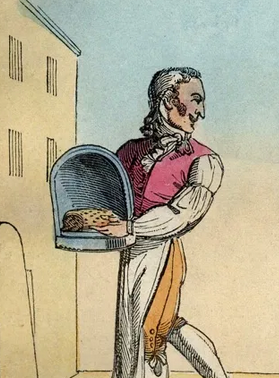
Hot plum pudding seller from Sam Syntax Cries of London, 1820s from the Gentle Author Spitalfields Life website
Culpeper on Ivy (1814 edition):
‘Ivy’ says Culpeper in his Herbal of 1653, its winter-ripening berries are useful to drink before you ‘set to drink hard’ because it will ‘preserve from drunkenness’. And, moreover, the leaves (bruised and boiled) and dropped into the same wine you had a ‘surfeit’ of the night before provides the ‘speediest cure’. (The Perpetual Almanac of Charles Kightly)
It is so well known to every child almost, to grow in woods upon the trees, and upon the stone walls of churches, houses, &c. and sometimes to grow alone of itself, though but seldom.
Time. It flowers not until July, and the berries are not ripe until Christmas, when they have felt Winter frosts.
Government and virtues. It is under the dominion of Saturn. A pugil of the flowers, which may be about a dram, (saith Dioscorides) drank twice a day in red wine, helps the lask, and bloody flux. It is an enemy to the nerves and sinews, being much taken inwardly, out very helpful to them, being outwardly applied. Pliny saith, the yellow berries are good against the jaundice; and taken before one be set to drink hard, preserves from drunkenness, and helps those that spit blood; and that the white berries being taken inwardly, or applied outwardly, kills the worms in the belly. The berries are a singular remedy to prevent the plague, as also to free them from it that have got it, by drinking the berries thereof made into a powder, for two or three days together. They being taken in wine, do certainly help to break the stone, provoke urine, and women’s courses. The fresh leaves of Ivy, boiled in vinegar, and applied warm to the sides of those that are troubled with the spleen, ache, or stitch in the sides, do give much ease. The same applied with some Rosewater, and oil of Roses, to the temples and forehead, eases the head-ache, though it be of long continuance. The fresh leaves boiled in wine, and old filthy ulcers hard to be cured washed therewith, do wonderfully help to cleanse them. It also quickly heals green wounds, and is effectual to heal all burnings and scaldings, and all kinds of exulcerations coming thereby, or by salt phlegm or humours in other parts of the body. The juice of the berries or leaves snuffed up into the nose, purges the head and brain of thin rheum that makes defluxions into the eyes and nose, and curing the ulcers and stench therein; the same dropped into the ears helps the old and running sores of them; those that are troubled with the spleen shall find much ease by continual drinking out of a cup made of Ivy, so as the drink may stand some small time therein before it be drank. Cato saith, That wine put into such a cup, will soak through it, by reason of the antipathy that is between them.
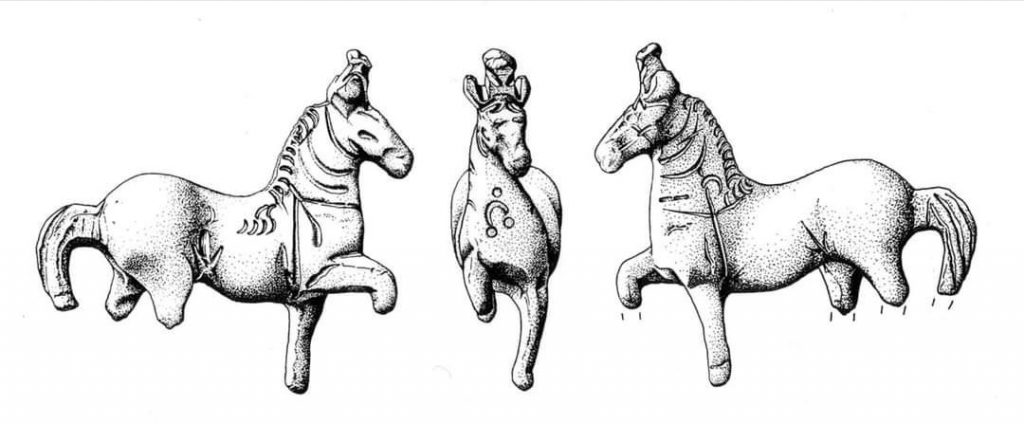
Roman Horse from Bunwell, Norfolk. Illustration by Sue Walker.
In 2021 I posted about Eponalia for the 18th Dec but I have now added the text to this page.
I’ve been too busy working on my Jane Austen and Christmas Virtual Tour ) to post over the last few days. And I have, therefore, shamelessly stolen this post off my Facebook friend Sue Walker, who is a talented archaeological illustrator, artist and a very good photographer.
She wrote: ‘the 18th December is the festival of the Celtic goddess Epona, the protector of horses, she was adopted by the Romans and became a favourite with the cavalry. This finely sculpted bronze horse with a head dress and symbol on its chest is 37mm high – found in Bunwell #Norfolk #Archaeology’
First published on December 17th 2022, Revised and republished December 2023
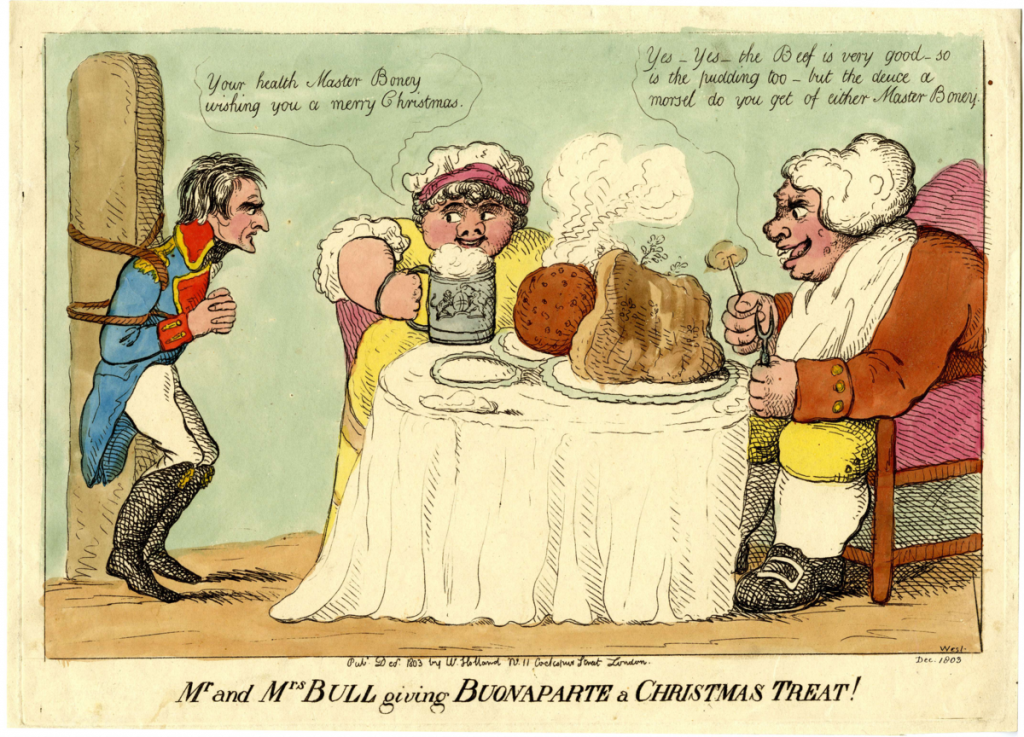
By William Holland, 1803 showing plum pudding probably stirred-up on Stir-up Sunday.
Stir-up Sunday is the last Sunday before advent and the day for stirring the Christmas Pudding. And I missed it! Last year it was on the 24th November. This year, November 23rd. Stir-up Sunday gets its name from the Book of Common Prayer, which has a verse:
“Stir-up, we beseech thee, O Lord, the wills of thy faithful people; that they, plenteously bringing forth the fruit of good works, may of thee be plenteously rewarded, through Jesus Christ, our Lord. Amen.’
So, the Christmas pudding was made with dried fruit and had 13 ingredients for Jesus and the Disciples. It is stirred from west to east, in honour of the Three Wise Men, and stirred by every member of the household who get to make a secret wish.
Ingredients 225g/8oz golden caster sugar 225g/8oz vegetarian suet 340g/12oz sultanas 340g/12oz raisins 225g/8oz currants 120g/4oz chopped candied peel 120g/4oz plain flour 120g/4oz fresh white breadcrumbs 60g/2oz flaked almonds Zest of 1 lemon 5 eggs, beaten 1level tsp ground cinnamon 1level tsp mixed spice 1 level tsp freshly grated nutmeg Pinch of salt 150ml/5fl oz brandy or rum
Add a Silver Joey to Stir-up Sunday Christmas Pudding.
Normally, a coin in put in the pudding for the lucky one to get. My grandma, a Londoner, used to put in a couple of ‘silver joeys’, long out of legal tender even when I was young. She would watch us like a hawk while we ate, and claim the coins back as soon as we found them! She would then put them in an old folded brown envelope and put them away for next year.
MJ Hughes Coins website gives the following excellent history of the Silver Joey:
‘Originally a Joey was the nickname given to a groat (4 pence) but when that went out of circulation in 1855 the silver 3 pence inherited the name. The name came about due to the reintroduction of 4 pence coins in the 1830s by the politician Joseph Hume, MP (1777-1855).‘
For some great, coin-based facts! Look no further.
A Digression on Nicknames: Toad Testicles, Foul-Beard and Broad-Arse’
Joey is a nickname. This digression is prompted by my ‘rediscovery’ of a History Today essay from March 2023. It is by PhD student Tristan Alphey. entitled ‘Toad Testicles, Foul-Beard and Broad-Arse’ Tristan is researching nicknames before 1000. It’s a tough gig but someone had to do it!
I have long had an interest in nicknames, since a school bully, when I was about 7, decided he was going to call me Acid. He explained his logic. Flude sounds like fluid and acid is a fluid. It never caught on perhaps because chanting ‘Fludey is a rudey’ in the playground was more fun! In my dad’s day, anyone called Clarke was nicknamed Nobby, and anyone small ‘Lofty’. Why Clerks are ‘nobby’ no one really knows. But the best bet is because clerks were well educated, and with a public facing role had to be smarter that the average member of the public. So clerks were posh. Posh people were called ‘nobs’. Hence, Nobby Clark. (for more on nobby look here.
Generally, only a few people got themselves primarily identified by nicknames. This will, of course, be the meat of Tristan’s PhD. The social significance of the nicknames.
The Border Reivers
My interest was revived when reading a book about the Border Reivers, (by Allistair Moffet). These clans terrorised the borders between Northumberland and Scotland, particularly in the 13th – 17th Century. The people were controlled by a clan leader of ‘Heidsman’ and all his followers being in the same clan had the same surname. And the Names were many Armstrongs, Batesons, Bells, Croziers, Elliots, Glendinnings, Hendersons, Irvines, Johnstones, Scots, Moffets, Nixons, Routledges, Thomsons, Maxwells, Kers, And not to forget the Carletons, Fenwicks, Forsters, Robsons, Turnballs, Selbys, Storeys, Guthries.
The problem arose because there were so many with the same surname, and with the restricted use of a small number of first names (John being by far the most popular) a way of differentiating people was necessary. As I am short of time, I will cut and past from the Wikipedia page:
‘Some Border Reiver nicknames referred to physical injuries or impairments, such as “Fingerless,” “Gleyed” (blind in one eye), “Burnt Hand,” “Half-Lugs,” or “Lugless” (missing ears). Others followed a tradition similar to Highland naming customs, where the father’s (and occasionally the mother’s) name was added to the son. Many nicknames described physical appearance, such as “Black Heid,” “Hen-Heid,” “Sweet Milk” (meaning beautiful), or “Fergus the Plump.” Some appear to reference mental health or emotional states, including “Unhappy Anthone” and “Jock Unhappy.”‘
‘A number of nicknames seem metonymic or ironic, reflecting professions or roles, such as “The Sheriff,” “The Lawyer,” or “The Priest.” Intriguingly, certain names may hint at queer or LGBT identities, including “Buggerback,” “The Lady Elliot,” “The Lady Scott,” “The Lady Kerr,” “Bang-tail,”[108] and “Sym ‘the Lady’.” Other nicknames defy easy interpretation, such as “Hob-Wait-About-Him,” “Laird-Give-Me-Little,” “Bide Him Jock,” “the Pleg,” “Dog-Pyntle” (Dog Penis),[109] “Geordie Go Wi Him,” and “Cheesebelly,” illustrating the creative and often enigmatic nature of Border Reiver culture.’ Wikipedia entry
By the way ‘Buggerback’ Elliot was related to ‘the Lady Elliot’, and also, if I recall correctly, to Dog pyntle.
Tristan Alphey’s study takes the study back before 1100, wwhere wecan find King’s nicknames such as
Edward the Confessor, Alfred the Great, Edmund Ironsides, and Aethelred the Ill-advised (redeless). Further down the scale he presents: Alfred ‘Toad-Testicles from Winchester, where were also Alwin ‘Pebbles, Aelfstan ‘Broad-Arse’, Aelfstan ‘the Bald’, Thurstand ‘Buttock’, Aethelstan ‘The fat’, Osferth ‘Blackbeard’, Aelfstan ‘Limping’. Elsewhere we have Alvin ‘Sardine’, Wulfric ‘Large Pole’, Eadwig ‘the Wholly Drunk’, Wulfwiug ‘Wild’, Aelfric ‘Foul-Beard’.
Women are less frequently given nicknames, but we have Athelgifu ‘the Good’ and King Harold’s first wife, the beautiful Edith ‘Swan-Neck’.
To finish my look at nicknames, we go to Viking York among whom are the peerless warriors: ‘Ivarr the Boneless’, Sihtric ‘the Squinty-eyed’and Erik Bloodaxe. Other Vikings include Thorkell the Tall and Thorkell Thorfinn. An archaeologist believes he has found the burial place of Ivar the Boneless – have a look here for more details.
First Published Nov 27th 2022. The Jimi Hendrix content transferred to its own page, and this post republished Nov 26th 2023, revised with a section on nicknames in 2024,2025
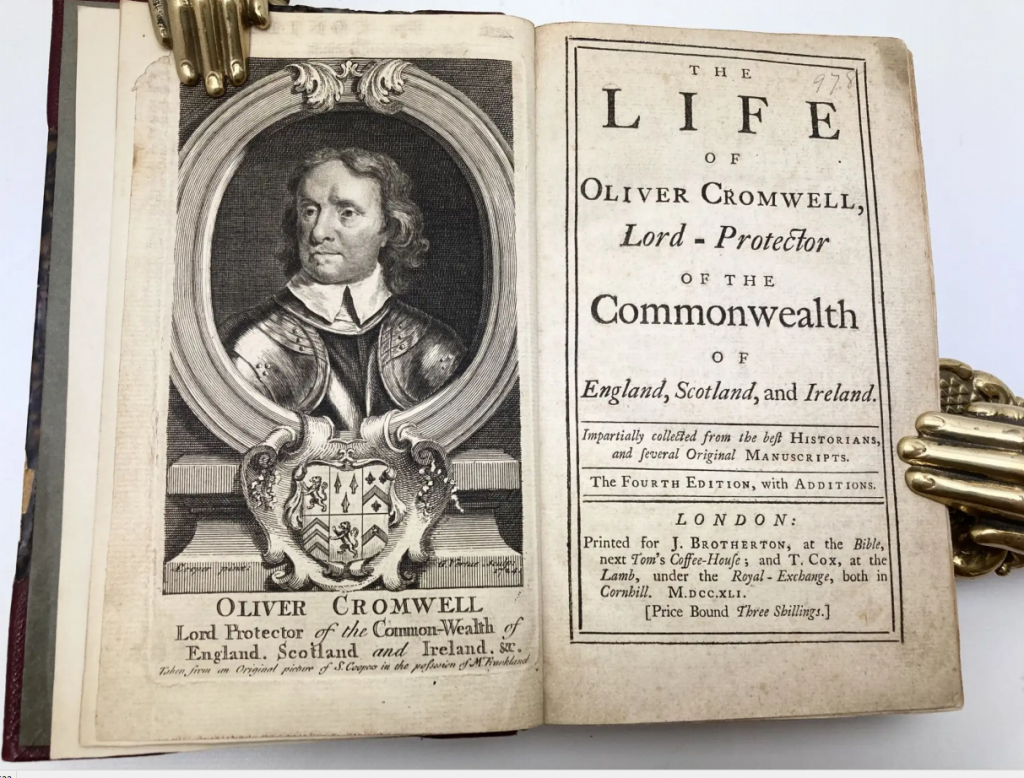
September 3rd was Cromwell’s Lucky Day. This was because it was the date of two of his most famous victories. On September 3rd 1658 he refused to accept that he was dying because it was his lucky day. Unluckily, he was wrong.
The Battle of Dunbar September 3rd 1650
Engraving of Charles I
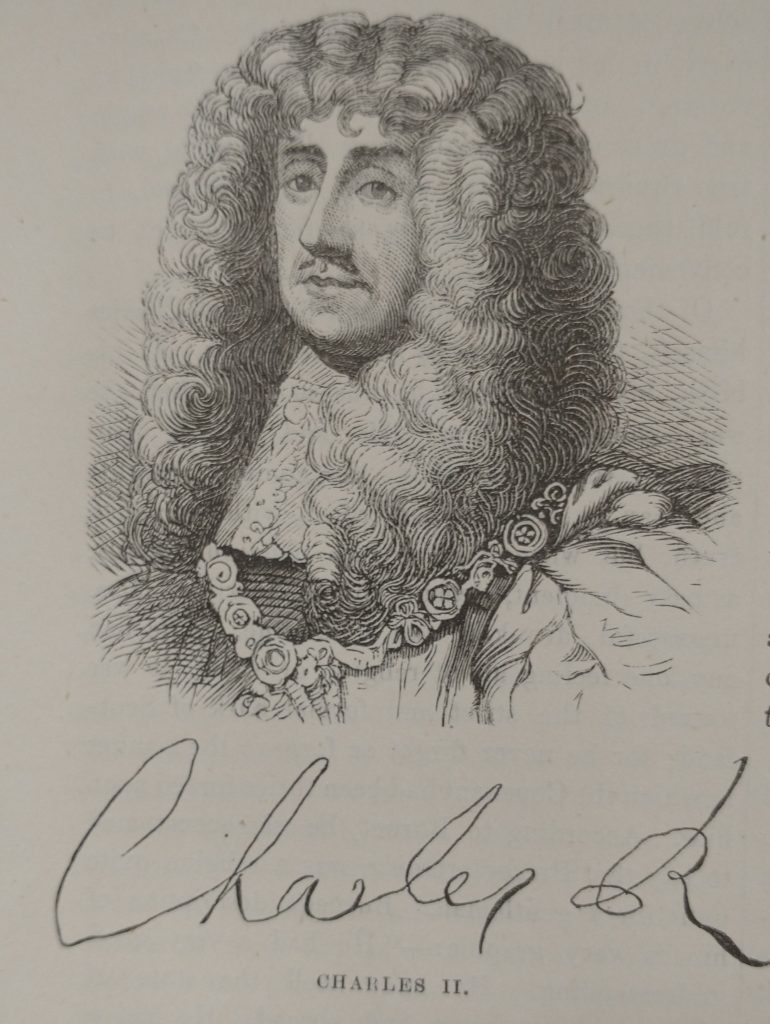
After the execution of King Charles I, the Scots chose Charles II as their King. This changed the Scots from allies of the English Parliament to enemies. The Lord General of the New Model Army, Thomas Fairfax, refused to lead an attack on their erstwhile allies. So Oliver Cromwell was promoted to command. He launched a preemptive attack but the army was ill prepared, and the campaign seemed in danger of failing. They took Arthur’s seat and bombarded Edinburgh and Leith from its heights. But they could not take Edinburgh.
In need of supplies, Cromwell retreated to Dunbar, which is on the North Sea, close to the Firth of Forth. The Scots advanced on Dunbar, and Cromwell came out to meet them. After a hard battle, the English Calvary outflanked the Scots and the Battle was won. Pride, Monk, Lilburne and Lambert were all involved in the Battle. Cromwell claimed to have killed 4,000 Scots and captured 10,000. Scottish sources suggested over 1,000 Scottish casualties and 5,000 prisoners.
The Battle enabled Cromwell to seize control of Edinburgh, and Leith. So he could then cross the First of Forth and attack Fife, where he was also successful.
Cromwell interpreted the overwhelming victory as a
“A high act of the Lord’s Providence to us [and] one of the most signal mercies God hath done for England and His people”.[ (Wikipedia)
Meanwhile, the Scottish Army marched South in to England. in an attempt to raise the support of English Royalists. King Charles II was now with them, They hoped Cromwell would be held up in Fife, but he wasn’t. He secured Perth and put General Monck in charge in Scotland. Lambert was sent to harrass the Scottish Army as they marched south. Meanwhile, Cromwell forced marched his way to the Tyne. General Harrison had collected fresh troops from Newcastle and joined Cromwell. Thomas Fairfax came out of retirement and raised troops in Yorkshire. The Southern troops were collected at Banbury by General Fleetwood. 14,000 militia men from the trained bands of London joined the march to intercept the Scottish Invasion.
The Battle of Worcester September 3rd 1651
The decisive battle took place at Worcester, which the Royalist occupied. It was an unusual battle in that it took place on both sides of the River Severn. Cromwell delayed the start of the battle to build two pontoon bridges. This meant he could reinforce his troops on either side of the River. It also delayed the start of the battle to his lucky day.
The pontoon bridges proved decisive. The Parliamentary side had over 30,000 troops while the Royalists only 16,000. Cromwell could shore up besieged formation with troops from the other side of the River. The Royalists were pushed back to the High Street. Here, they rallied to allow King Charles II to escape. And that was the end of the Second English Civil War. (The first being the defeat of Charles I, the second the defeat of Charles II).
Charles II made a hair-raising escape from England, hiding in an Oak Tree. Eventually, finding a ship on the South Coast at Shoreham, in Dorset to take him into a long exile. (see my post on Charles’ escape here🙂
Of the Scottish army, perhaps 3,000 men were killed and 10,000 taken prisoners. Some prisoners were conscripted into the New Model Army and sent to fight in Ireland. Many of the rest (perhaps up to 8,000) were forced into indentured labour. They were sent to New England, Bermuda, the West Indies or the Fens. Others were taken to London and detained in prison camps. One of which was at Tothill Fields in Westminster. Conditions were often appalling, leading to death by disease and malnutrition.
American Presidents pay their respects to the ‘famous’ Battlefield.
John Adams and Thomas Jefferson visited the site of the Battle in 1786. Adams reported:
‘The people in the neighborhood appeared so ignorant and careless at Worcester that I was provoked and asked “And do Englishmen so soon forget the ground where liberty was fought for? Tell your neighbors and your children that this is holy ground, much holier than that on which your churches stand. All England should come in pilgrimage to this hill, once a year”‘
And indeed will now only see the battle as one of the many battles of the Civil War. Generally, we are not aware of its special significance.
Cromwell’s Death September 3rd 1658.
By now, the Monarch in all but name, Cromwell, the Lord Protector fell ill, probably of malaria. Then, when weakened, his kidney stone infection turned to septicemia. On August 30th, there was a mighty storm, the like Europe had not seen for hundreds of years. And there was talk of the Lord taking him away in the furious storm. As he weakened he was asked to name his successor. He appeared to affirm when the name of his son Richard was spoken to him. But, it wasn’t very clear. He rallied, perhaps hoping that if he could survive to September 3rd, he would overcome his illness.
On the day, he said to his doctors ‘I tell you I shall not die this hour; I am sure on’t …. I speak the Words of Truth upon surer grounds than Galen and Hippocrates furnish you with.’
But he died on his lucky day. He was given a splendid funeral and was buried in state among the Kings and Queens in Westminster Abbey. And then in 1660 dug up, executed posthumously at Tyburn and buried under the Gibbet.
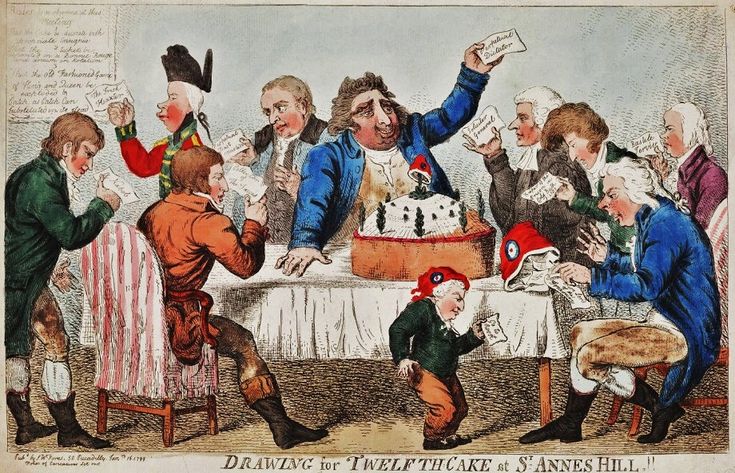
‘Drawing for Twelfth Cake’ at St. Annes Hill ’12th Night Cruikshank, Isaac, 1756-1811 printmaker. Published Janr. 10, 1807 by Thomas Tegg, 111 Cheapside’
Twelfth Night
Yesterday was Twelfth Night for the modern Church of England, but today is Twelfth Night for the Catholic Church and in England in former times. It is also Epiphany or Three Kings Day and because of calendrical differences, Christmas Eve for the Orthodox Church. In Ireland, it is Nollaig na mBan. This is Women’s Little Christmas; when Women get to rest and let men do the work. This is a typical Saturnalia-style reversal of roles.
I used the print above, three years ago for my post on New’s Day, then moved it to Twelth Night. I also use it for lectures on Christmas and Jane Austen. But the focus of my presentation is explaining the Twelfth Night Cake and the game that was played. But in fact, this is a very political satirical cartoon. More of that, later, let’s begin with the more trivial aspect of the print above.
Twelfth Night and Christmas Cake
It used to be the big party night, featuring the famous Twelfth Night Cake and theatrical entertainments; mumming and wassailing. The cake has disappeared from current Christmas celebration, probably because it transmuted into our present Christmas Cake. This, I regret. I have had a lifetime when a very heavy Christmas Dinner is followed first, by Christmas Pudding. Then, overloading with food, the Christmas Cake is brought out. No one, in their right mind, wants a slice of heavy Christmas Cake at that time. Many of my American friends disparage fruit cake, but they are mistaken. Good Christmas Cake is something to be thoroughly enjoyed, but on the days following Christmas Day.
I gave a recipe for the Twelfth Night Cake in another post, (here it is). But the important point is that it had a bean and a pea in it. The one who got the bean was selected as King for night and the pea the Queen. Traditionally, the women draw a card from a ‘reticule’ (bag) and the men’s from a hat. But there are no women at this satirical party. The cards detailed a role they were to play for the rest of the night. The card began with an introductory speech, or rhyme, for the person to speak. The King and Queen led the way, and for the rest of the evening the party members adopted their persona. They might be an aristocrat, a soldier, a cook, a parson, a dairy maid etc. The French do something similar with their Galette des Rois. The bean is called the feve, and may be replaced by a porcelain model. Other places have a King’s Cake for epiphany.
Twelfth Night Satire
So, as I was rushing to get the original Twelfth Night post done, I failed to examine it in any detail. I assumed the cards gave them satirical occupations which would be funny to the contemporary audience in 1807. But then, I noticed the title mentioned St Anne’s Hill. I looked it up and discovered myself down a deep and very enjoyable research rabbit hole.
St Anne’s Hill & Charles James Fox
Now, let’s go down that rabbit hole and look a little deeper.
The caption mentions St Anne’s Hill. I believe this refers to St Anne’s Hill, near Chertsey (SW of London on the River Thames). Here, there was a grand house which was owed by Charles James Fox. He was the leader of the Whigs, a persistent opponent of King George III. He was a supporter of the American and French Revolutions. This explains the red bonnet used to pull out the cards in the illustration.
The central figure is then, Fox. But he died in September,. 1806. The print is dated January 1807. Just before he died, his Foreign Slave Trade Bill of 1806 began the dismantling of this pernicious trade in the British Empire. He was Foreign Minister who assumed a couple of civil chats with the French would end the long-standing war. But he soon discovered that Napoleon was not to be trusted in negotiations. The war went on for another 9 or so years.
Charles James Fox was a mercurial figure with many radical views. He was also a notorious gambler and loved the high life. One of his many lovers was Georgiana, Duchess of Devonshire. He eventually married, Elizabeth Armistead, an ex-mistress of the Prince of Wales. St Anne’s Hill was her house. I am pleased to report that she is credited with calming his life-style. He now spent more time at St Anne’s where they would ‘read, garden, explore the countryside and entertain friends’ (Wikipedia).
Isaac Cruikshank’s ‘Drawing for Twelfth Cake’ at St. Annes Hill
Cruikshank’s illustration is, of course, not designed to document quaint Twelfth Night customs but is a political satire and I discovered that the British Museum has the original version of this print, and. It is dated to 1799 which makes much more sense!
At the back right of the print is a notice which says:
‘Rules to be observed at this Meeting 1. That the Cake be decorated with appropriate insignia 2 That the tickets be deposited in a Bonnet Rouge and drawn in Rotation 3 That the Old Fashioned Game of King and Queen be exploded & Catch as Catch can Substituted in its stead.’
The bonnet rouge is defined by the Collins Dictionary as a ‘redcap worn by ardent supporters of the French Revolution’ or ‘an extremist or revolutionary’. The last point relates to Fox’s opposition to the King, and the expression Catch as Catch Can refers to a free form of wrestling without rules.
The characters in the scene (all men) are all political figures. They are associated with the opposition to the very right-wing Government of William Pitt. During the war with France, the opposition was led by a supporter of the French Revolution. For those on the right, which included Pitt’s government, supporting the French Revolution was tantamount to treason. Pitt suspended many civil liberties in ‘Pitt’s Reign of Terror’. He arrested and indeed executed leading members of those demanding political change. The Government even suspended Habeas Corpus to make it easier to arrest their opponents,
Fox is seen drawing a 12th Night Game ticket which is marked ‘Perpetual Dictator’. To his right is Frances Burdett. He was a radical politician, who supported universal male suffrage, equal electoral districts, vote by ballot, and annual parliaments. Note that this is well before these aims became the core of the Chartists campaign for electoral reform. (for other people in the illustration look at the British Museum notes on the print. )
Frances Burdett, Edward and Catherine Despard
Burdett is shown holding a ticket saying ‘Keeper of the Prison in Cold Bath Fields’. This is a satirical reference to a serious political crisis. The Cold Baths Fields was the site of a medical spring in Clerkenwell, London. This was where a prison was situated where radicals were imprisoned. They were held in poor conditions despite the recent rebuilding under the aegis of the prison reformer, John Howard. Burdett exposed the scandalous conditions in the House of Commons. He began a campaign against the magistrates involved in the arrests.
One of the prisoners was Edward Despard who had associations with many radical groups. These included the London Corresponding Society, the United Irishmen and United Britons. Despard was married to Catherine, the daughter of a free black woman from Jamaica. She, with Burdett, led the campaign against these arrests without trial. Catherine wrote a letter to the Attorney General who replied in a demeaning manner:
‘it was a well-written letter, and the fair sex would pardon him, if he said it was a little beyond their style in general’
He did not comment on her colour. She described the imprisonment of her husband as being :
“in a dark cell, not seven feet square, without fire, or candle, chair, table, knife, fork, a glazed window, or even a book”
Execution of Edward Despard
Despard was freed in 1802, went to Ireland. But returned to London, where he was arrested again. But this time he was accused of a being the ringleader of a plot to assassinate the King. There was little real evidence. Horatio Nelson was a character witness, and appealed to the King for clemency. It was given. But only in so far as Despard was not disembowelled but ‘only ‘Hanged and Drawn’ at Horsemonger Lane Gaol (1803). This was the last time someone was drawn through the streets at the tail of a horse before execution for treason. These are his last words:
Fellow Citizens, I come here, as you see, after having served my Country faithfully, honourably and usefully, for thirty years and upwards, to suffer death upon a scaffold for a crime which I protest I am not guilty. I solemnly declare that I am no more guilty of it than any of you who may be now hearing me. But though His Majesty’s Ministers know as well as I do that I am not guilty, yet they avail themselves of a legal pretext to destroy a man because he has been a friend to truth, to liberty, and to justice
(a considerable huzzah from the crowd)
and because he has been a friend to the poor and to the oppressed. But, Citizens, I hope and trust, notwithstanding my fate, and the fate of those who no doubt will soon follow me, that the principles of freedom, of humanity, and of justice, will finally triumph over falsehood, tyranny and delusion, and every principle inimical to the interests of the human race.
(a warning from the Sheriff)
I have little more to add, except to wish you all health, happiness and freedom, which I have endeavoured, as far as was in my power, to procure for you, and for mankind in general.
https://en.wikipedia.org/wiki/Edward_Despard
After his death, his family denied that Catherine was his wife but merely his ‘house-keeper.’ I assume, was because they wanted the inheritance rather than, or perhaps, as well as naked prejudice.
Francis Burdett married into the fabulously rich banking family the Coutts. His daughter was the famous Angela Burdett Coutts who was a philanthropist who collaborated extensively with Charles Dickens.
@Phew! This is what I love about what I do, you find things out that link disparate parts of your knowledge, creating an ever-interwining web of history.
On this Day
Harold Godwinson was crowned King of England on January 6, 1066, the same day as the funeral of the previous king, Edward the Confessor. m.
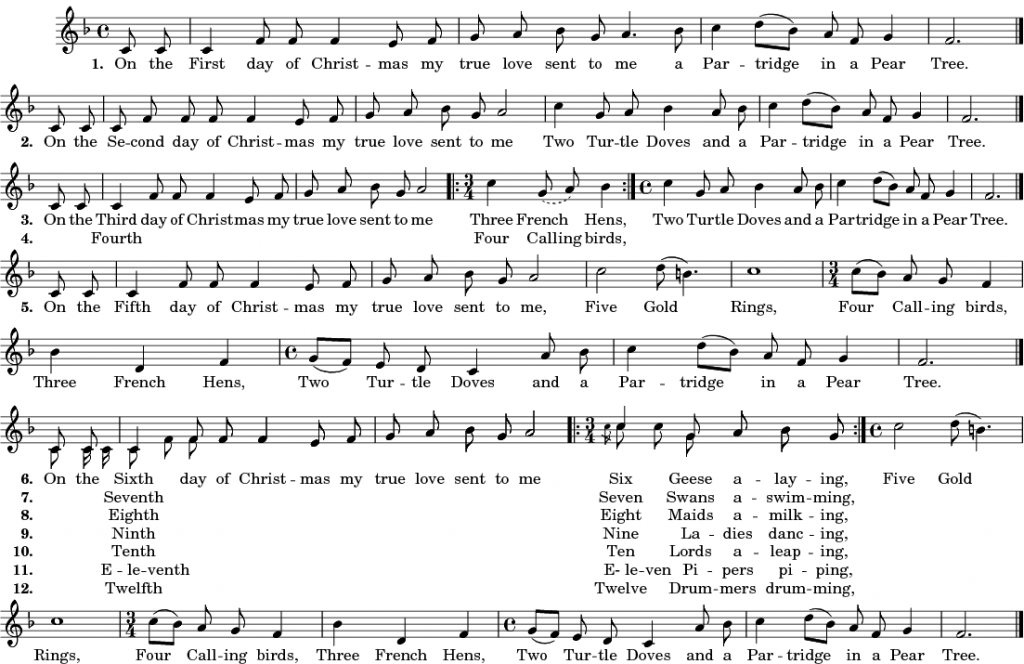
My true love sent to me 6 Geese a Laying; 5 Golden Rings; 4 Calling Birds; 3 French Hens; 2 Turtle Doves and a Partridge in a Pear Tree
The Lord of Misrule, Masters of the Revels, and Boy Bishops
The Roman festival of Saturnalia, held between 17th and 23rd of December, included reversing rules so that slaves, ruled and masters served. In the medieval period, the disorder of Christmas was continued with the election of Lords of Misrule, Masters of the Revels, and Boy Bishops.
John Stow’s, Survey of London
He was London’s first great historian, wrote of the Lord of Misrule in London. In this section, Stow begins the role of the Lords of Misrule at Halloween and continues it until Candlemas, in erly February. See my post here for more details on Candlemas. This is what Stow says:
Now for sports and pastimes yearly used.
First, in the feast of Christmas, there was in the king’s house, wheresoever he was lodged, a lord of misrule, or master of merry disports, and the like had ye in the house of every nobleman of honour or good worship, were he spiritual or temporal. Amongst the which the mayor of London, and either of the sheriffs, had their several lords of misrule, ever contending, without quarrel or offence, who should make the rarest pastimes to delight the beholders.
These lords beginning their rule on Alhollon eve, continued the same till the morrow after the Feast of the Purification, commonly called Candlemas day. In all which space there were fine and subtle disguisings, masks, and mummeries, with playing at cards for counters, nails, and points, in every house, more for pastime than for gain.
Against the feast of Christmas every man’s house, as also the parish churches, were decked with holm, ivy, bays, and whatsoever the season of the year afforded to be green. The conduits and standards in the streets were likewise garnished; (…) , at the Leaden hall in Cornhill, a standard of tree being set up in midst of the pavement, fast in the ground, nailed full of holm and ivy, for disport of Christmas to the people…
Holm is an evergreen oak called Quercus ilex. John Stow talks about the Tree in Leadenhall Street being destroyed in the great wind of 1444 which you can read about here. You might also like to see the following posts, which include information about John Stow and London’s customs, and churches.
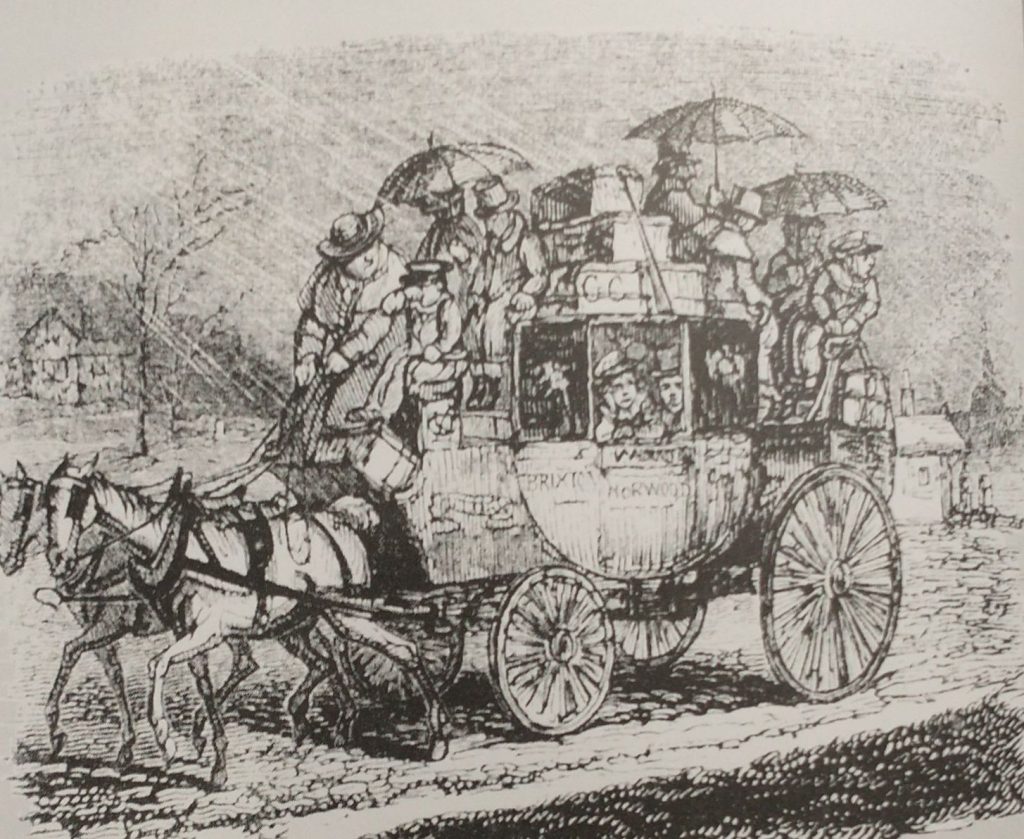
As the Sun enters the House of Capricorn remember the poor Coachman travelling all day everyday in all weathers. Washington Irving in his ‘Old Christmas’ (Originally ‘The Sketch Book of Geoffrey Crayon’ pub. 1819) describes him with a broad red face, a broad body widened by drinking beer; swathed with any numbers of layers of coats trying to keep the cold out. He has many worries on his mind as he has a coach full not only of people who need looking after but also a lot of parcels and commissions that need to be carried out in the many stops along the way. He is delivering parcels, turkeys, geese, presents, children, you name it he is responsible for its safe delivery.
Feel sorry for the people crowded inside the carriage but even sorrier for those sitting on the roof. They have umbrellas in a vain attempt to keep dry, but the umbrella tines will be poking you in your ear, and the run off from the canopy of the umbrella might trickle down your neck. There might be 6 people inside and up to 10 on the roof. 3d for travelling inside and half of that for the roof. voach
Inside, you are next to a large man who is not very salubrious looking, nor too worried about pressing his thighs against you.
John Keats blamed his consumption on his journey on the roof of a stage-coach travelling from London to Hampstead on a cold wet day in February.
Stage coaches became regular sights on the road during the 17th Century and were quite dangerous as the roads were in such a poor condition. It was suggested that passengers made their wills before travelling! From the late 17th and with Parliament increasingly used to set up not-for-profit toll road, the roads got better, and ‘Flyers’ and mail coaches could get up to the tremendous speed of 10 miles an hour, and averaging 7. This happened because improved roads meant improved suspensions, and wheels, and more and faster horses could be harnessed.
This revolutionized travel. It used to take 5 days in around 1700 to get to Manchester from London, by the mid 18th Century the time taken was reduced to 24 hours, and there were many more scheduled coaches, The mail coaches had priority, the coach had a blunderbuss and two pistols to deter highway men, and the guard had a post-horn with which to warn other vehicles to give clear passage, to alert tollgate keepers to open gates, and to announce arrival at a stop. Extra horses would be harnessed to help get up steep hills which, in some cases, like Broadway in the Cotswolds, might mean an additional 10 horses. Passengers might be asked not only to get off the coach to lighten the load but also to push if the going got boggy. On mail coaches, the passengers were not allowed to get off when the horses were changed, and only 4 were allowed inside the coach.
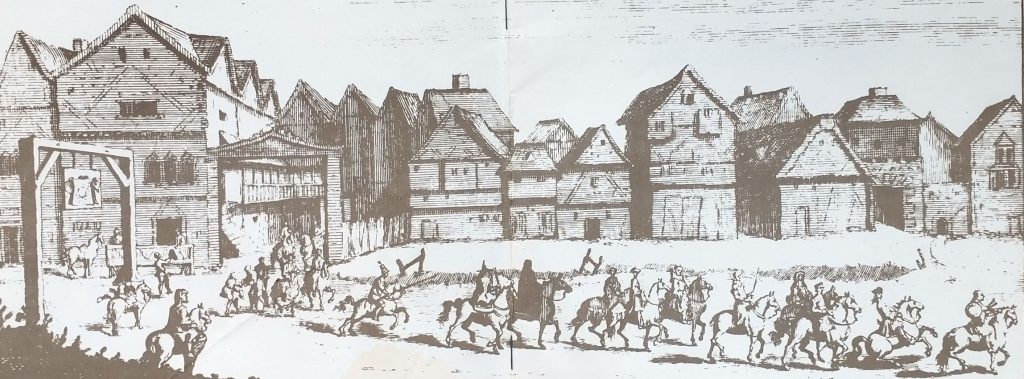
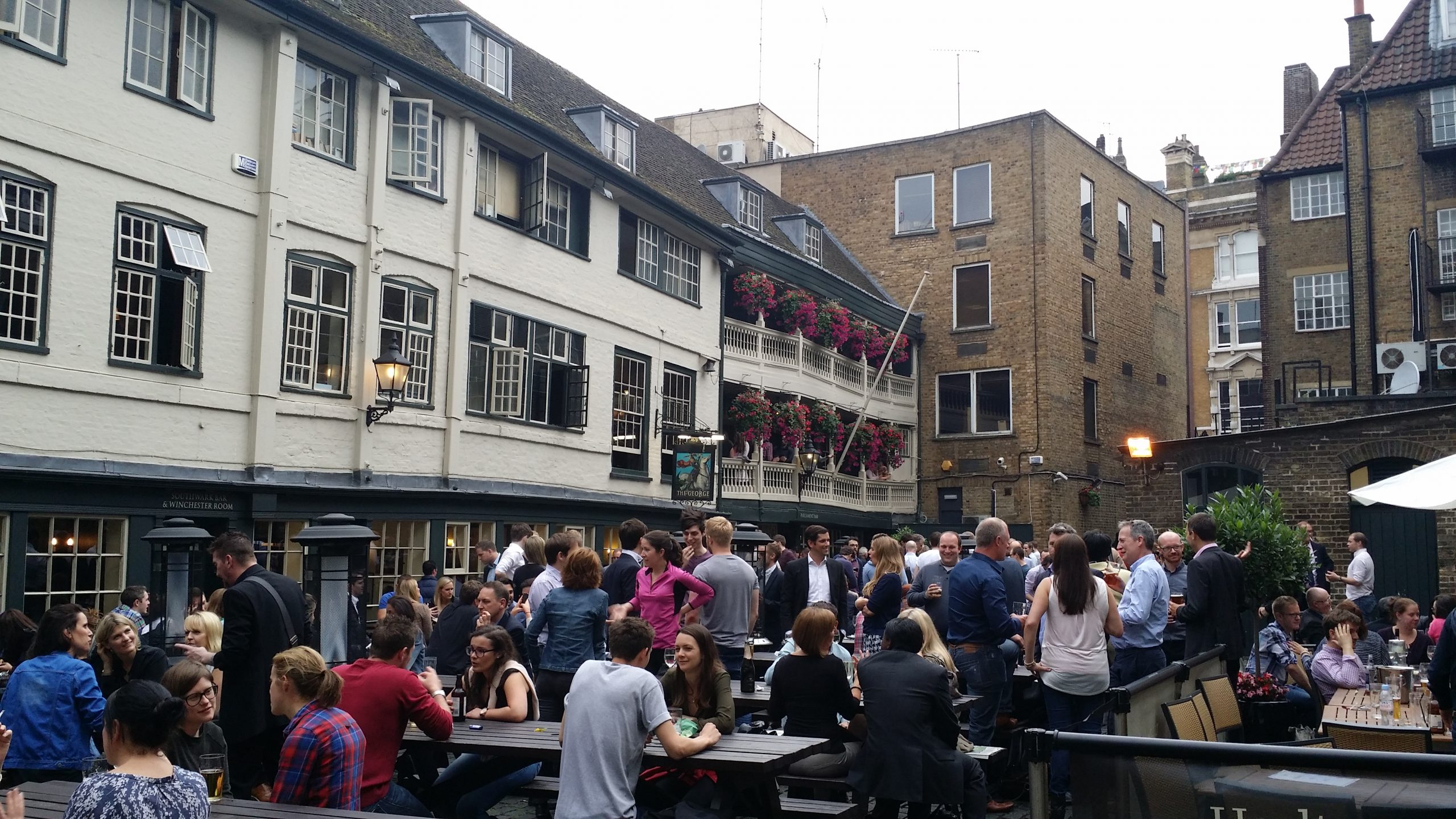
London was ringed by Coaching Inns, which were coach terminals and hotels. The most famous ones, remaining, are in Southwark on the approach road to London Bridge. The Tabard where the Chaucer’s Canterbury Tales started, The White Hart where Dickens’ Sam Wheeler is the Bootboy, and the George, which although not quite so literary is at least still half intact.
Pilgrims leaving the Tabard Inn for the Canterbury PilgrimageGeorge Inn,Southwark (photo Kevin Flude)
Capricorn
‘The man born under Capricorn shall be iracundious and a fornicator; a liar, and always labouring.
....The woman shall be honest and fearful, and have children of three men, she will do many pilgrimages in her youth and after have great wit.’
From Kalendar of Shepheards 1604 quoted in ‘The Perpetual Almanac of Folklore by Charles Kightly’.
iracundious is first mentioned in a work published by Caxton in the 15th Century and pretty much obselete by the 17th Century. It means easily angered or irritable.
I have been waiting to post this for a long time, as it relates to Christmas. (Was it really a month ago?) By the way, I have added to some text to yesterday’s Brexit posts.
This evening is also Imbolc, the Celtic Festival to Brigantia and St. Bridget of Kildare. Candlemas tomorrow.
This is a letter from Mary Musgrove in Persuasion (Chapter 18). This is Jane Austen’s most mature and probably the best novel,. Here the moany Mary Musgrove writes a typically FOMO letter which illustrates how Christmas, for the well, off really continued to February 1st and Candlemas.
February 1st “My dear Anne,–I make no apology for my silence because I know how little people think of letters in such a place as Bath. You must be a great deal too happy to care for Uppercross, which, as you well know, affords little to write about. We have had a very dull Christmas; Mr. and Mrs. Musgrove have not had one dinner party all the holidays. I do not reckon the Hayters as anybody.
The holidays, however, are over at last: I believe no children ever had such long ones. I am sure I had not. The house was cleared yesterday, except of the little Harvilles; but you will be surprised to hear they have never gone home. Mrs. Harville must be an odd mother to part with them so long. I do not understand it. They are not at all nice children, in my opinion; but Mrs. Musgrove seems to like them quite as well, if not better, than her grandchildren.
What dreadful weather we have had! It may not be felt in Bath, with your nice pavements; but in the country it is of some consequence. I have not had a creature call on me since the second week in January, except Charles Hayter, who had been calling much oftener than was welcome.
Between ourselves, I think it a great pity Henrietta did not remain at Lyme as long as Louisa; it would have kept her a little out of his way. The carriage is gone to-day, to bring Louisa and the Harvilles to-morrow. We are not asked to dine with them, however, till the day after, Mrs. Musgrove is so afraid of her being fatigued by the journey, which is not very likely, considering the care that will be taken of her; and it would be much more convenient to me to dine there to-morrow.
I am glad you find Mr. Elliot so agreeable, and wish I could be acquainted with him too; but I have my usual luck: I am always out of the way when any thing desirable is going on; always the last of my family to be noticed. What an immense time Mrs. Clay has been staying with Elizabeth! Does she never mean to go away? But perhaps if she were to leave the room vacant, we might not be invited. Let me know what you think of this. I do not expect my children to be asked, you know. I can leave them at the Great House very well, for a month or six weeks.
I have this moment heard that the Crofts are going to Bath almost immediately; they think the Admiral gouty. Charles heard it quite by chance; they have not had the civility to give me any notice, or of offering to take anything. I do not think they improve at all as neighbours. We see nothing of them, and this is really an instance of gross inattention.
Charles joins me in love, and everything proper.
Yours affectionately,.”
It is my paragraphing rather than the original. The mystery of the book is how such a lovely, considerate, able daughter like Anne, can be from the same family as both her awful sisters, and her monstrous, egotistical father.
But is it? Wikipedia says it is the 9th Day of Christmas, as the first is Christmas Day. But the Perpetual Almanac of Folklore by Charles Kightly counts from Boxing Day. So for him, it is the 8th Day, and I have seen this in other older sources. For example: Gervase Markham’s ‘The English Husbandman of 1635 says:
‘What weather shall be on the sixth and twentieth day of December, the like weather will be all the month of January.’
This is the idea that the weather on each day of Christmas is linked to the weather in the corresponding month. So the weather for the first month of the year, will be determined by the weather on the first day of Christmas. Note that for Markham the first day is 26th not the 25th.
But if it is the 9th Day of Christmas we can therefore expect the weather in September 2024 to be unusually warm and wet. Otherwise, a warm and wet August!
For more on which days are the 12 days of Christmas, have a look at my 12th Night post:
Here are some fascinating links with a seasonal theme, and at the end of the post the December posts I have reviewed, revised and reposted. And to remind you, I have a Winter Solstice Virtual Tour on Friday, and a Jane Austen Virtual Tour taking place on Saturday.. Follow the links on the www.chr.org.uk to find out more or book.
The wintery landscapes of Utagawa Hiroshige | with Alfred Haft |
This is a short video of an event held for British Museum members. It’s on YouTube, so it should be available for non-members. It shows, with some animation, beautiful snowy landscapes by the great Hiroshige. It is 12 minutes long.
Santa Claus’ Elitist Origins
I came across Ben Tumin’s conversation with Professor Stephen Nissenbaum on Santa Claus’ Elitist Origins in Tumin’s Skipped History Substack posts. Nissebnaum wrote a highly rated book called the ‘Battle for Christmas’, which pointed out that, before the 19th Century, Christmas was largely outdoors, and a riotous time of debauchery, gluttony, and drunkenness. The ruling classes managed in the 19th Century to change this for a quieter, indoor, family-based experience. Well worth a listen.