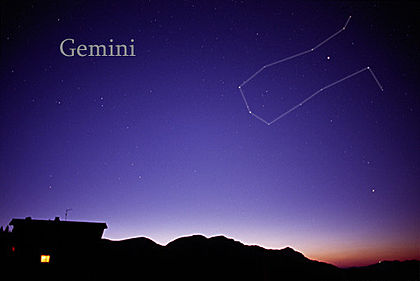
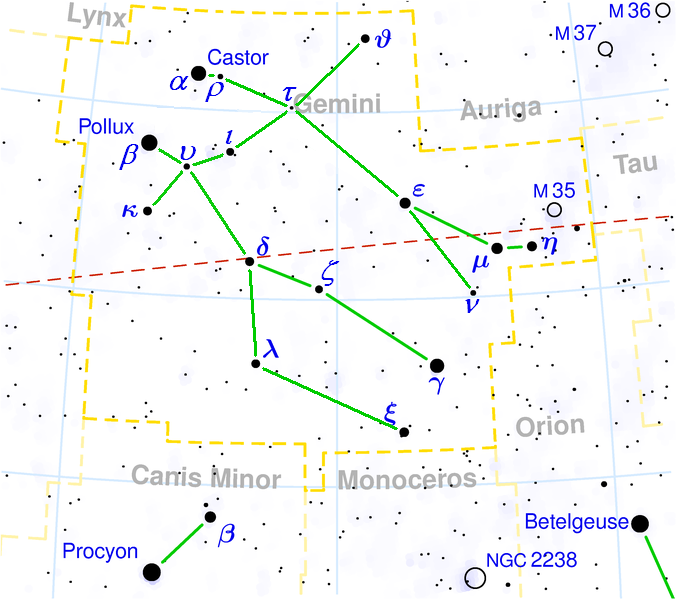
Gemini should be almost overhead in the Northern Hemisphere, and can be picked out by its two brightest starts, Castor and Pollux. The constellation can be seen from September to May. But between September to November it is only visible in the morning before sunrise. It is best viewed from January to March. For evening viewing it is possible from December to May In February it should best visible at 9.00pm.
The Divine Twins, the Dioscuri, were horsemen, patrons of calvary, athletes, and sailors. Pollux is the son of Zeus and Leda (raped by Zeus in the guise of a swan). His twin brother has a different and mortal father, the King of Sparta and the same mother, Leda. So they are examples of heteropaternal superfecundation.
One is therefore immortal and the other isn’t. They had many adventures including sailing with Jason as Argonauts.
According to some versions of the story, Castor was mortally wounded, and Zeus gave his twin brother the option of letting Castor die while Pollux spends eternity on Mount Olympus. Or sharing his immortality with his brother. He agreed to the latter, and the twins spend half their year as the Constellation of Gemini and the rest, immortal, on Mount Olympus. Thus, they are the epitome of brotherly love.
Their sisters were, no less than Helen of Troy, and Clytemnestra. But more about them in read my post on the brothers and sisters here.
Yesterday’s Subscribers Email
For some obscure reason, the email excluding a couple of paragraphs which were in the online version.
This is what you missed:
Magic and Toothache
John Aubrey, an erudite and educated 17th Century writer, reports on the use of Magick for tooth care. When he relates these unlikely cures he often provides information that the person who told him the story is worthy of belief. So he seems to give some credence to the efficacy of these magical ‘cures’. But, judge for yourself; this is what he wrote:
To Cure the Tooth-ach.
Take a new Nail, and make the Gum bleed with it, and then drive it into an Oak. This did Cure William Neal, Sir William Neal’s Son, a very stout Gentleman, when he was almost Mad with the Pain, and had a mind to have Pistoll’d himself.
To Cure the Tooth-ach, out of Mr. Ashmole’s Manuscript Writ with his own Hand.
Mars, hur, abursa, aburse.
Iesu Christ for Marys sake,
Take away this Tooth-ach.
Write the words, Three times; and as you say the Words, let the Party burn one Paper, then another, and then the last.
He says, he saw it experimented, and the Party immediately Cured
John Aubrey’s Miscellanies 1695
Cerne Abbas Giant
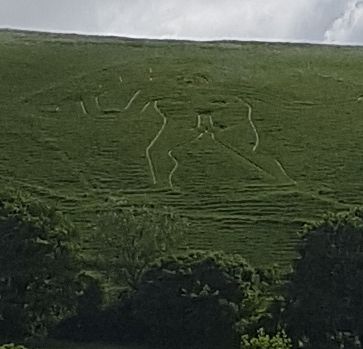
On February 3rd, 2026 the National Trust announced that it had received £330,000 in 60 days to purchase land around the infamous Cerne Abbot Giant. This was on top of £2m in grants previously received. This means they can buy the ‘138‑hectare (340‑acre) site – equivalent to 190 football pitches – surrounding the famous Cerne Abbas Giant in Dorset.’ (National Trusts Press Release).
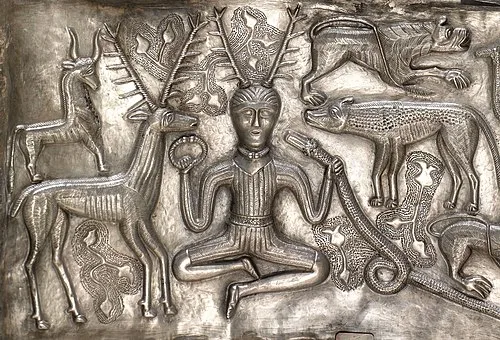
The giant is one of the icons of Hardy’s Dorchester. It is ‘drawn’ or sculpted by cutting the turf to reveal the white chalk below. Chalk Cut figures appear particularly in the South West. The Vale of the White Horse chalk cut figures has been dated to the Late Bronze Age. Most people thought the Cerne Abbas Giant was in the Romano-Celtic tradition so was either pre-Roman, or perhaps Hercules and, therefore, Roman. The name of the village and Abbey are named after the Celtic Horned God Cernunnos. For more about him read my Almanac of the Past Page here.
Some dissenters believed the lack of references to the Giant showed that it could not have been cut until the 17th Century. Some even thought it might be a ‘cartoon’ of Oliver Cromwell! They could not believe that the Monks of Cerne Abbey would allow a giant erect phallus to overlook their holy site for all those centuries.
How we laughed!
Dating the Cerne Abbas Giant
But the National Trust embarked on a project to get the Giant properly dated. They used Optically Stimulated Luminescence (OSL) dating, which had also been used on the White Horse. But the results which came back were shocking. It appears to have been cut in the Late Saxon period.
I do admit to a certain amount of scepticism. The art style is similar to British Art of the Iron Age, part of the Celtic Art tradition. Also, how reliable is OSL dating? The process depends on taking soil samples from the soil nearest the chalk, and OSL measures the time since the soil was last exposed to light. It’s a relatively new technology, although based on Thermoluminescence dating of pottery, which has been around since the 1970s. So,, if they are analysing soil that does not represent the first cutting of the figure then the dating would be wrong.
However, there was also some corroboration in the form of snails which were not indigenous to the UK? So a date of 700-1100AD is suggested. And I have nothing other than a gut reaction to the date they propose. Maybe I’m just disappointed by a Saxon date as I have no way of understanding the context?
For more about the Giant look at the www.nationaltrust.org.uk/visit/dorset/cerne-giant/history-of-the-cerne-giant.
My Part in the Cerne Abbas Story
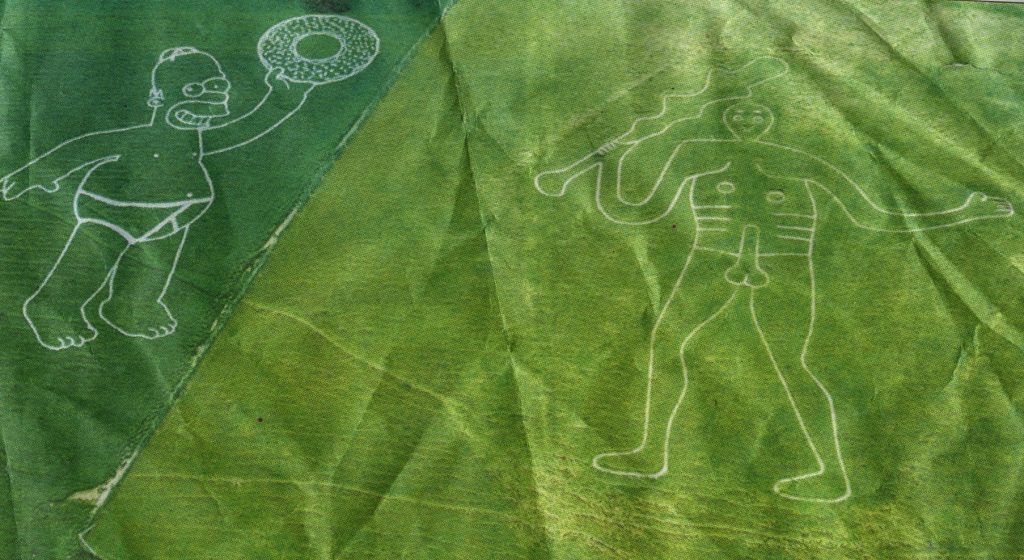
Here is a cartoon I really like:
The first Coach Trip I ever led was in the 1980s. An American College Professor asked my friend and I to lead a tour of Arthur’s Britain and Hardy’s Wessex. The group included his wife and about 10 students. We drove a mini bus around and stayed in Bed and Breakfast in places like Avebury and Cerne Abbas.
Following the Tour, the professor wrote to tell us that he had been successful in one of his, unstated, aims for the tour. He revealed that this was to get his wife pregnant. He was a bit of a romantic and thought it would be fun to try for the baby while staying in such mystical places. Apparently, they had heeded our tales of the fertility rites that used to take place on and around the Giant, and had gone out for a moonlight walk, and ‘rested’ on one of the Giant’s testicles.
Lost Books from the Ancient World
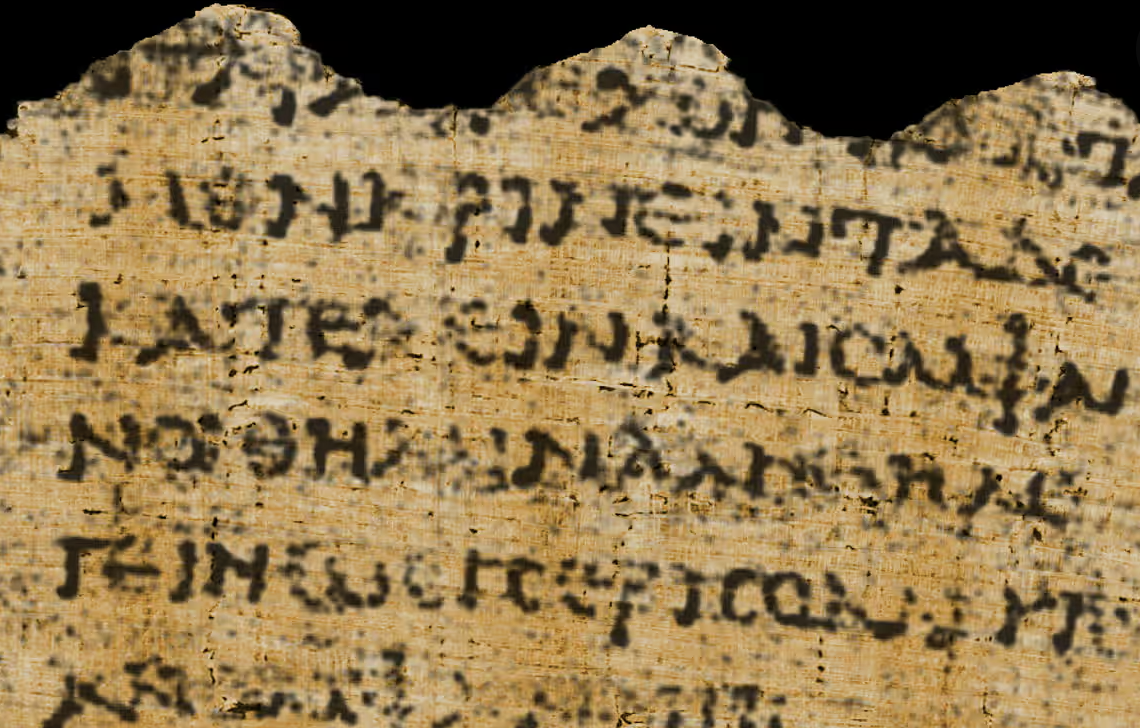
Last year, one of the most exciting discoveries was made. This was the news that burnt scrolls from Herculaneum have been digitally unrolled. Then ‘read’ using AI. The scroll was in the library of Julius Caeser’s father in law it is thought. There are over 1,000 carbonised scrolls found in 1750 in the Villa of the Papyri. And this one reveals details of Plato’s last hours. But more than that, the technology opens the possibility of other lost books being discovered. Of the ‘known unknowns’ I would like to see are the lost history books of Tacitus. But perhaps the ‘unknown unknowns’ are even more exciting. What might we find out?
Here is an excellent introduction to the discoveries:
On This Day
1306 – This is the day that Robert the Bruce killed his rival for the Crown of Scotland. He murdered John ‘Red’ Comyn, In front of the high altar of Greyfriars Church in Dumfries. Somehow he got away with this most impious act, to confirm Scotland’s independence from England.
1567 – the first Gunpowder plot saw the Kirk o’ Field house in Canongate, Edinburgh, blown up. Outside the house was found the corpse of Lord Darnley. But he was strangled not burnt. He was the second husband of Mary, Queen of Scots. Darnley was thought to be responsible for the brutal murder of the Queen’s Private Secretary, David Rizzio. He was Italian and was often in close proximity to Mary. Darnley didn’t like the rumours of an illicit affair. So recruited a gang of Scottish Noblemen. On 9 March 1566They went up the stairs of Holy Rood Palace where they tore Rizzio from the protection of the Queen. They stabbed him 57 times in front of her and her ladies in waiting. (Julius Caesar was stabbed 23 times).
Darnley’s murder it was thought was the Queen’s way of getting rid of a, frankly, stupid, and nasty husband. Albeit, very good-looking and charming. Her third husband, Earl Bothwell, is frequently blamed, and whether she was part of it we don’t know.
1616 – Judith Shakespeare married Thomas Quiney. See my post https://chr.org.uk/anddidthosefeet/object-of-the-day-shakespeares-signet-ring/
Two February 10th posts were brought together to create this post, which was republished in 2026