St Pancras and the Ice Saints
It has been unusual cold in the last few days. You can blame this on the St Pancras and the Ice Saints. These are saints with feast days from May 11th to May 14th. They are: St. Mamertus, St. Pancras, and St. Servatius (and in some countries, Saint Boniface of Tarsus – Wikipedia). They represent a medieval belief that there was often a cold snap in early May. So the idea of the Ice Saints was probably to help persuade farmers to delay sowing until later in May. But modern statistics disprove this, but it is true that a late frost can cause havoc with crops.
St Pancras in Rome
He was a 14 year old who refused to give up his Christian Faith during the persecution of Christians by the Emperor Diocletian. He was beheaded on the Via Aurelia, in Rome, traditionally, on 12 May 303 AD. His body was buried in the Catacombs, but his head is kept in a reliquary in the Church of Saint Pancras in Rome.
Pancras means ‘all-powerful’ in Greek. His youth makes him the Patron Saint of children, but he is also the patron saint of jobs and health. He is ‘invoked’ against cramps, false witnesses, headaches, and perjury.
St Pancras in Canterbury
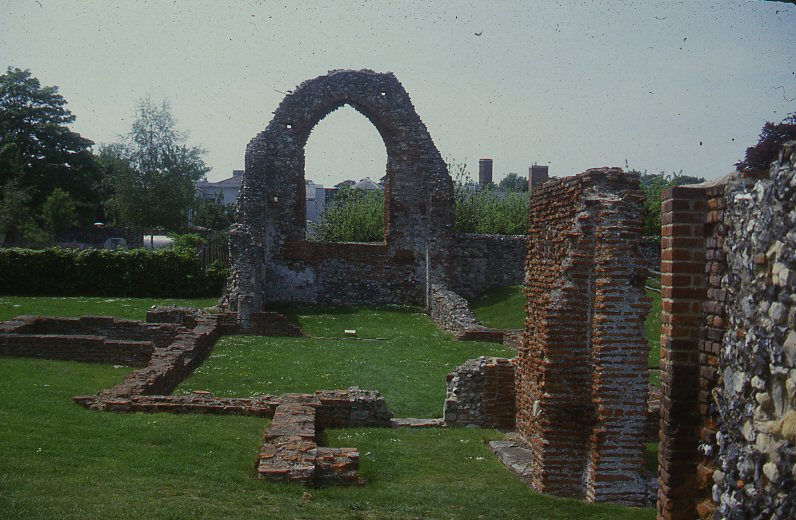
Pope Gregory is said to have given St Augustine relics from St Pancras when his mission came to Kent in 597AD. They built a church dedicated to St Pancras in Canterbury. The ruins still survive in the grounds of what is now St Augustine’s, Canterbury (see picture at top of this post).
St Pancras in London
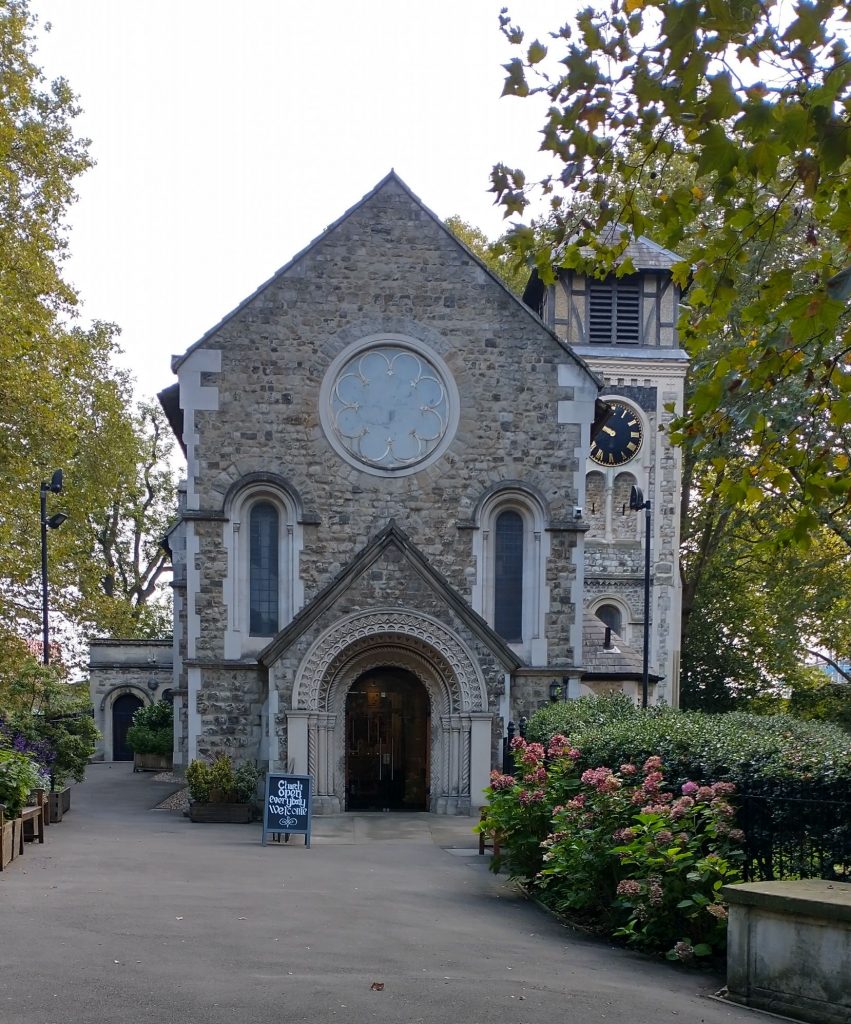
This story is partly responsible for the claims that St Pancras Old Church, in Camden (pictured above) is a very old foundation. It is claimed there was a late Roman place of worship here. But there is very little solid evidence for this. It is also argued that, if it isn’t late Roman, then it dates to just after 604AD. This is when St Mellitus, sent by St Augustine, established St Pauls Cathedral. It is suggested that Mellitus also founded St Pancras Church. St Pancras’ Church was a Prebend of St Pauls Cathedral (a Prebend provides the stipend (pay) to support a Canon of a Cathedral). But this is not evidence it was established as early as the Cathedral was, and there really isn’t any other credible evidence for a 604 date.
When the Church was restored, the architects said it was mostly Tudor work with traces of Norman architecture. However, it was reported that a Roman tile or two were reused in the fabric. This is about the only evidence, but it helps keep the legend going.
If you read the Wikipedia page, you will see evidence of two strands to the contributions. One is playing down the legends of its early foundation. The other trying to keep hold of its place as among the ‘earliest sites of Christian worship’. Read the wikipedia page here: https://en.wikipedia.org/wiki/St_Pancras_Old_Church to make up your own mind.
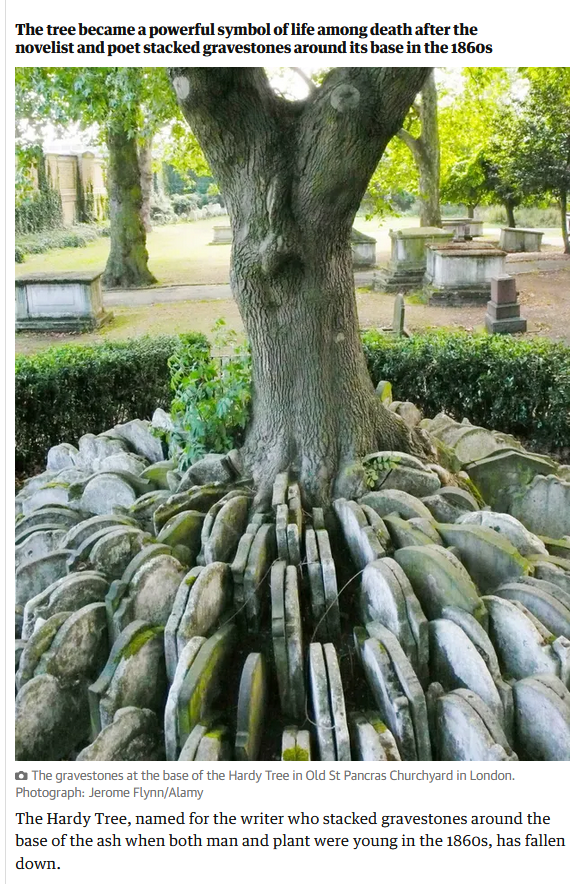
It is a lovely Church, on an impressive site, with links to Thomas Hardy, and Sir John Soane whose tomb is the design inspiration for the iconic Red Telephone Box.
Headaches
As Patron Saint of Headaches, St Pancras Day is a good day to make worms come out of your head. Or so say the Fairfax Household Book of the 17th/18th Century as quoted in Charles Kightly’s ‘The Perpetual Almanac’:
‘To make a worm come out of the head. Take, in May, the marrow of a bull or cow, and put it warm into the ear, and the worm will come forth for sweetness of the marrow.’
Generally,willow bark was used for headaches. We know this would have worked as the bark contains salicin, which is converted by the body into salicylic acid. This is a precursor to aspirin (acetylsalicylic acid). But it is not as effective.
On This Day
113 – Trajan’s Column is finished in Rome. Reliefs sculptures on the Column celebrate his victory over the Dacians. There is a copy made of plaster on display at the V&A. The sculptures provide a prime document on the Roman army.
1593 – London playwright Thomas Kyd is arrested and tortured. He lived with Christopher Marlowe. In the search of their rooms, it was claimed they found evidence of atheism and blasphemous documents, including the claim that Jesus was homosexual. Kyd claimed the documents were Marlowe’s. Marlowe was awaiting news of whether he was going to prosecuted, when he was murdered in a tavern in Deptford, possibly by Government agents.
First Published in 2024, revised 2025 OnThis day added in 2026