Pax, the Concordia Peace Festival, Elagabalus, and Carausius January 29th

Photo from ebay sale of coin of Carausius, showing the reverse with image of the Roman Goddess Pax.

The Goddess Book of Days (Diane Stein) lists today as the birthday of Pax and her Greek equivalent Irene. She is the Goddess of Peace and the daughter of Jupiter and the Justitia, Goddess of Justice. This suggests that a lasting peace can only be assured by strength and justice. The usurping Emperor Carausius (whose coin you can see above) had good reason to use Pax on his coins. He took control of Britain and some of Gaul from the Roman Empire. But he seems hoped he might rule alongside the Tetrachy of Emperors set up by Diocletian.

This is what Eutropius wrote:

Image of a quotation by Eutropius translation from 'Literary Sources for Roman Britain.' and from

He was murdered by Allectus his financial minister in 296AD. Text above taken from my book In Their Own Words where you can read the rest of Carausius’ story.

Concordia

The Goddess book also says this is the day of the Concordia Peace Festival in Rome. Concordia is the Goddess of agreement, in war, marriage and in civic society. Harmonia is the Greek equivalent. Ovid has special days to Concordia on January 17th and January 30th. I’m led to the idea that much of January was dedicated to Concordia and Pax. For more on Concordia, look at my January 17th post here.

Pax in Ovid

Pax had her festival on the 30th January. Ovid in Fasti writes:

Book I: January 30
My song has led to the altar of Peace itself.
This day is the second from the month’s end.
Come, Peace, your graceful tresses wreathed
With laurel of Actium: stay gently in this world.
While we lack enemies, or cause for triumphs:
You’ll be a greater glory to our leaders than war.
May the soldier be armed to defend against arms,
And the trumpet blare only for processions.
May the world far and near fear the sons of Aeneas,
And let any land that feared Rome too little, love her.
Priests, add incense to the peaceful flames,
Let a shining sacrifice fall, brow wet with wine,
And ask the gods who favour pious prayer
That the house that brings peace, may so endure.
Now the first part of my labour is complete,
And as its month ends, so does this book.

Translated by A. S. Kline 2004 (Tony has a lovely site here: where he makes his translations freely available.)

Concordia, Julia Aquilia Severa & Elagabalus

Roman coin, showing both sides, of the Goddess Concordia
A patera is a sacrificial bowl, and a cornucopia is a horn of plenty (Image from Wikipedia)

The coin above is of Julia Aquilia Severa. She was a vestal virgin, who married the Emperor Elagabalus (c. 204 – 11/12 March 222). She was his 2nd and 4th wife. Normally, a vestal virgin was buried alive, if she lost her virginity.

But I probably should say ‘her 2nd and 4th wife’ as some sources suggest Elgabalus wanted to be known as a woman. The Wikipedia page of his wife has Elagabalus with the pronoun, ‘Her’. While the Emperor’s own web page uses him throughout. He or she married several women and was said by some to be married to several men. They were also accused of prostituting themself in Taverns and Brothels. Clear? Confusing pronouns? Sorry to hedge my bets, but we don’t know what Elagabalus would want us to use? Wikipedia says:

‘In November 2023, the North Hertfordshire Museum in Hitchin, United Kingdom, announced that Elagabalus would be considered as transgender and hence referred to with female pronouns in its exhibits due to claims that the emperor had said “call me not Lord, for I am a Lady”‘

Elagabalus was born Sextus Varius Avitus Bassianus. He adopted the name of Elagabalus as he was a supporter of Syrian Sun God Elagabal. He, a Syrian, wanted to promote the God to the top of the Roman Pantheon of Gods. Varius rose to power partly because of his strong Grandmother, Julia Maesa. She was the sister of Julia Domna, the wife of African Emperor Septimus Severus (who lived for some time in York). Their children are the Emperors depicted in Gladiator II starring Paul Mescal.

Elagabalus’s reign was fairly chaotic. He lost power, when his Grandmother transferred support to his cousin, Alexander, and Elagabalus and his mother were assassinated.

Here, is a fascinating article in the Guardian about the Pax Romana. ‘Their heads were nailed to trees.’

Pax & Tagging

Posh boys in England, playing tagging games, used to shout ‘Pax’ to claim immunity or to call a temporary halt in the contest. I remember my childhood friends using the word ‘vainites’ as well as pax. But we were not by any means posh. There are many other ‘truce’ terms used in tagging games. They are listed in this fascinating. Wikipedia page. From which I discover that Vainites comes from the medieval period and means: ‘to make excuses, hang back or back out of battle’.

First Published in January 2024, and revised, expanded and retitled in January 2025

Sementivae Dies—the Days of Sowing January 24–26

Victoria and Albert Museum” by Nick Garrod, licensed under CC BY-NC-ND 2.0. First V&A Director, Sir Henry Cole, to the left of the picture. Greek Deities in the roundells

Sementivae, was a festival dedicated to seed and to Ceres. Ceres is an Earth Goddess who gives her name to our word cereal. The festival was also called. Paganalia. The Mediterranean world had many names for the Earth Goddess. Tellus, Demeter, Cybele, Gaia, Rhea etc..

Ceres can be seen on the top left roundel resting on the Globe on the marvellous Ceramic Staircase at the V&A (photo above). And in my slightly out of focus photograph below. (To be honest, in real life, it looks a little more like my photo than the gorgeous photo above!)

Ceres represented Agriculture, Mercury Commerce, and Vulcan Industry.  Old Photo by the Author.  T
Ceres represented Agriculture, Mercury Commerce, and Vulcan Industry. Old Photo by the Author.

Sementivae Dies – a moveable feast.

To create life, we need earth and water to nurture and seeds for fertility. And so into the cold dead world of January the Romans created a festival of sowing. It had two parts, one presided over by Mother Earth (Tellus) and the other by Ceres, the Goddess of Corn. The actual day of the festival was chosen not by rote on a set day of the calendar but by the priests, in accordance with the weather. This seems very sensible, as there is no point sowing seeds in terrible weather conditions. I’m assuming the Priests took professional advice!

On the 24th-26th January Tellus prepared the soil, and in early February seeds were sown under the aegis of Ceres. Tellus Mater (also Terra Mater) was known as Gaia to the Greeks.

Gaia

Gaia was selected by James Lovelock & Lynn Margulis in the 1970s as the face of their Gaia hypothesis. To me, the importance of the idea is not the scientific principle that environments co-evolve with the organisms within them. But, rather in Gaia as a personification of our world as a complex living ecosystem. One that we have to care for. Gaia exists as a series of feedback loops. Lovelock hypotheses that she will spit us out unless we can live in balance with our alma mater.

Ovid and Sementivae

This is what the Roman Poet Ovid has to say in his poetic Almanac known as ‘Fasti’ (www.poetryintranslation.com)

Book I: January 24

I have searched the calendar three or four times,
But nowhere found the Day of Sowing:
Seeing this, the Muse said: That day is set by the priests,
Why are you looking for moveable days in the calendar?
Though the day of the feast ís uncertain, its time is known,
When the seed has been sown and the land ís productive.
You bullocks, crowned with garlands, stand at the full
trough,
Your labour will return with the warmth of spring.
Let the farmer hang the toil-worn plough on its post:
The wintry earth dreaded its every wound.

Steward, let the soil rest when the sowing is done,
And let the men who worked the soil rest too.
Let the village keep festival: farmers, purify the village,
And offer the yearly cakes on the village hearths.
Propitiate Earth and Ceres, the mothers of the crops,
With their own corn, and a pregnant sow ís entrails.
Ceres and Earth fulfil a common function:
One supplies the chance to bear, the other the soil.
Partners in toil, you who improved on ancient days
Replacing acorns with more useful foods,
Satisfy the eager farmers with full harvest,
So they reap a worthy prize from their efforts.
Grant the tender seeds perpetual fruitfulness,
Don’t let new shoots be scorched by cold snows.
When we sow, let the sky be clear with calm breezes,
Sprinkle the buried seed with heavenly rain.
Forbid the birds, that prey on cultivated land,
To ruin the cornfields in destructive crowds.
You too, spare the sown seed, you ants,
So you’ll win a greater prize from the harvest.

For more on Ovid look at my post on Ovid and Juno here. Or you can search for Ovid in the Search box.

First Published in January 2023, republished in January 2024, 2025


St Distaff’s Day & the Triple Goddesses, January 7th

Spinning
Spinning—showing the distaff in the left hand and the spindle or rock in the right hand

I’m not sure what the Three Kings were doing on the day after Epiphany. But, the shepherds, if they were like medieval English farmworkers, would still be on holiday. They went back to work, traditionally, next Monday, which is Plough Monday. By contrast, the women, according to folk customs, went back to work St. Distaff’s Day, the day after Epiphany. In an ideal world, St Distaff’s Day is the Sunday after Epiphany (January 6th), and Plough Monday is the next day. Of course, it doesn’t always work out that way. I am not sure the woman going back to work on the 7th January, would be happy with the men lounging about until Plough Monday,. This year on the 13th January.

A distaff is ‘a stick or spindle on to which wool or flax is wound for spinning’. Because of its importance in the medieval and early modern economy, it became a synecdoche for women. St Distaff is a ‘canonisation’ of this use of the word. So, a day to celebrate working women.

We know that medieval and early modern women were a vital part of the work force, despite the demands of childcare. Many women took on apprenticeships, even more continued their husband’s work after he died. Some professions like silk became a female speciality. Plus, London was full of female servants and nurses. Many women had several jobs. The exhibition at the British Library on Medieval Women. In Their Own Words, indicated that most of the sex workers had two or more other jobs. In the house, the wife was the mistress of a formidable range of technologies. Baking, Brewing, Cooking, Laundry, Gardening, Dairy, Medicine (including distillation), horticulture, spinning, sewing and embroidery. Even, aristocratic women did embroidery of the finest quality, and it often made an important financial contribution to the household.

St Distaff’s Day and Plough Monday

Robert Herrick (1591–1674), born in Cheapside, London, a Goldsmith, priest, Royalist and Poet wrote in ‘Hesperides’.

Partly work and partly play
You must on St. Distaff’s Day:
From the plough, soon free your team;
Then come home and fother them;
If the maids a-spinning go,
Burn the flax and fire the tow.
Bring in pails of water then,
Let the maids bewash the men.
Give St. Distaff all the right;
Then bid Christmas sport good night,
And next morrow every one
To his own vocation.

Here he links the plough team with St Distaff’s Day. This implies that the ploughs would be out on the next day. So as St Distaff’s Day is not always on a Sunday, perhaps Plough Monday is not always on a Monday? He certainly suggests everyone goes back to work on the day after St Distaff’s Day.

This image has an empty alt attribute; its file name is Screenshot-2022-01-07-18.53.35.png

Saints & Goddesses of the Distaff Side

In London, the Fraternity of St Anne and St Agnes met at the Church dedicated to the saints. It is by a corner of the Roman Wall on the junction of Gresham Street and Noble Street. St Agnes is the patron saint of young girls, abused women and Girl Scouts. St Anne is the mother of the mother of the Son of God. So, she represents the three generations of women: maidens, mothers, and grandmothers.

This image has an empty alt attribute; its file name is romanmoreb0029.jpg
The Three Mother Goddesses (and someone else) “Limestone relief depicting four female figures sitting on a bench holding bread and fruit, a suckling baby, a dog and a basket of fruit’ the Museum of London

This trinity of women were worshipped by the Celts. Archaeologists discovered the sculpture above while investigating the Roman Wall a few hundred yards away at Blackfriars. Scholars believe it depicts the Celtic Three Mother Goddesses. The fourth person is a mystery, maybe the patron of a nearby temple. The relief sculpture was removed perhaps from a temple, or the temple was trashed at some point. Then the sculpture was used as rubble and became part of the defences of London.

The idea of triple goddesses is a common one. In Folklore and History they have been referred to as Maiden, Mother, and Crone, or even Maiden, Mother and Hag. They come in Roman, Greek, Celtic, Irish, and Germanic forms. Their names include the Norns, the Three Fates, the Weird Sisters, the Mórrígan and many more. The Three Fates, the Goddess Book of Days says, were celebrated during the Gamelia. This is the Greco/Roman January Festival to the marriage of Zeus and Juno. The Festival also gives its name to the Athenian month of January.

The use of the terms Hag and Crone for the third Goddess is rare now, but was common. It does a great disservice to the importance of the Grandmother figure. (Although the original meaning of the words were less pejorative. For example, Hag may have meant diviner, soothsayer.) The three phases of womanhood are equally as important to the continuation of the species. They provide love, support, and experience through the generations. Compare these three generations of supportive deities with Ouranos (Uranus), Cronus (Saturn) and Zeus (Jupiter). Saturn castrated and deposed his father, Uranus. Later, he tried to eat his son, Jupiter. But then, Jupiter is nobody’s idea of an ideal father. As one example, he eats his lover, Metis, to avoid her giving birth. (See my post on the birth of Athena.)

Recent work on human evolution has suggested that the role of the Grandmother is crucial to our species’ ability to live beyond the age of fertility. Because, in evolutionary terms, once an individual cannot procreate, their usefulness for the survival of the genes is finished. So what’s the point of putting resources into grandma’s survival? The theory is the Grandmother has such an impact on the survival of the next generation, that longevity. for the female, beyond fertility makes evolutionary sense.

Have a look at this site for more information.

Natural History Museum, Oxford, K Flude photo.

There was a theory widely held that the original Deities, dating before the spread of farming, were mother goddesses. The idea is that the hunter-gather goddesses (perhaps like the Venus of Willendorf) were overthrown by the coming of farmers. These patriarchal societies worshipped the male gods, which destroyed the ancient Matriarchy. Jane Ellen Harrison proposed an ancient matriarchal civilization. Robert Graves wrote some interesting, but no longer thought to be very scientific studies, on the idea. Neopaganism has taken these ideas forward.

More information on St Agnes in this post below:

One This Day

1845. Today is the anniversary of the breaking of the fabulous Portland Vase by a drunken visitor to the British Museum. It looks immaculate despite being smashed into myriad pieces, a wonder of the conservator’s art. To see the vase and read its story, go to the BM web site here:

wedgwood catalogue of its copy of the portland vase

In the orthodox church, дед Мороз  (Ded Moroz= father of frost), accompanied by Cнегурочка (Snieguroshka= fairy of the snow) brings gifts on New year’s eve, (which is on January 7th). He travels with a horse drawn troika.

Today’s Interesting link

Medieval Sin and the Pointy Shoe — for details, read the BBC’s interesting article.

First Published in 2022, and revised in January 2024 and 2025

Hangover Cures & Bacchus – January 1st

Marble statue of Bacchus from the Temple of Mithras London. The inscription reads ‘hominibus vagis vitam’ Translation … (give) life to men who wander.

On the eighth day of Christmas
my true love sent to me:
8 Maids a Milking; 7 Swans a Swimming; 6 Geese a Laying
5 Golden Rings
4 Calling Birds; 3 French Hens; 2 Turtle Doves
and a Partridge in a Pear Tree

Closing Time

The 8th day, New Years Day, is the day of the Throbbing Head. In ‘Closing Time’ Leonard Cohen wrote about drinking to excess. I like to think he refers to Christmas and New Year’s Day:

And the whole damn place goes crazy twice
And it’s once for the devil and it’s once for Christ
But the boss don’t like these dizzy heights
We’re busted in the blinding lights of closing time.

Trouble is the song mentions summer. Oh well. You can enjoy the official video on YouTube below:

Hangover Cure

So what you need is a hangover cure. Nature provides many plants that can soothe headaches. And in the midst of the season of excess, let’s start with a hangover cure.

Common ivy Photo by Zuriel Galindo from unsplash

Ivy and Bacchus

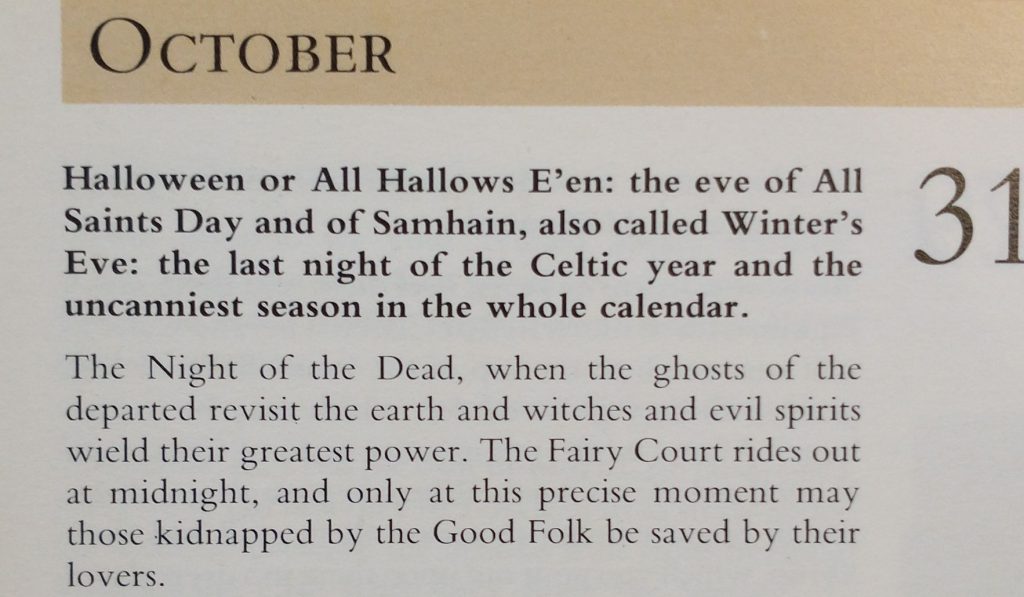
Ivy, ‘is a plant of Bacchus’…. ‘the berries taken before one be set to drink hard, preserve from drunkenness…. and if one hath got a surfeit by drinking of wine, the speediest cure is to drink a draft of the same wine, wherein a handful of ivy leaves (being first bruised) have been boiled.’

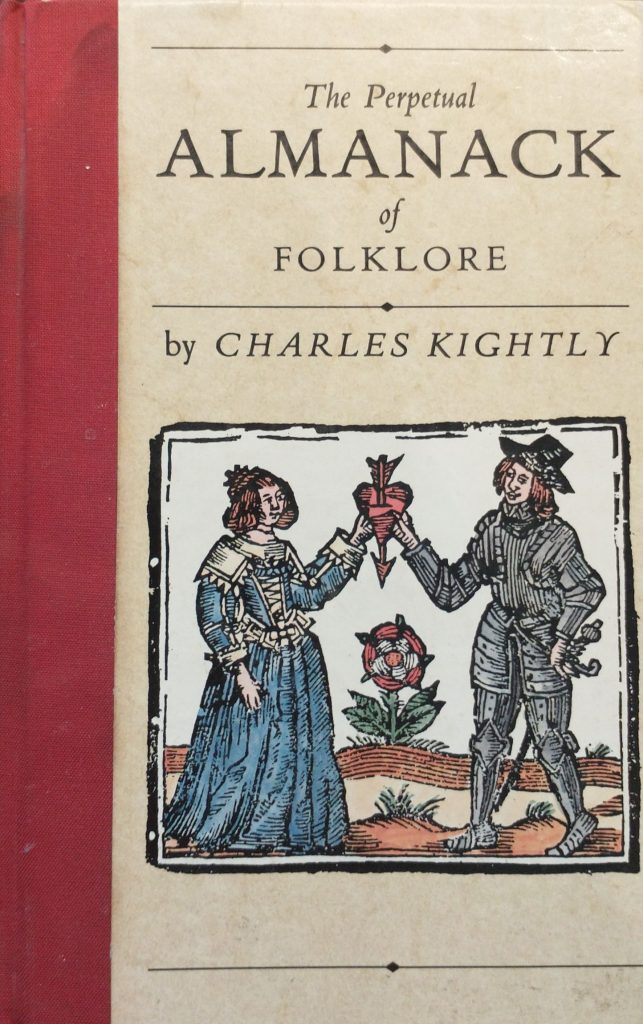
Culpeper Herbal 1653 quoted in ‘the Perpetual Almanac’ by Charles Kightly

The image of Bacchus, at the top of the post, is from a fascinating article by the Museum of London on wine making in Roman Britain. Bacchus is often shown with an ivy crown around his head as Romans were wont to wear them to fend of hangovers.

Skullache, and Willow,

Crack Willow Trees on the Oxford Canal, August 2021

One of the best documented folk hangover cure is willow bark. It could be used for headaches, earaches and toothaches. Here is a record of how simple it was to use:

‘I am nearly 70 years old and was born and bred in Norfolk… My father, if he had a ‘skullache’ as he called it, would often chew a new growth willow twig, like a cigarette in the mouth.’

‘A Dictionary of Plant Lore by Roy Vickery (Pg 401)

In the 19th Century, Willow was found to contain salicylic acid from which aspirin was derived. As a child I remember chewing liquorice sticks in a similar way. However, we chewed, supposedly for the pleasure and the sweetness not for the medicinal virtues of the plant.

Country Weather

January 1st’s weather on the 8th Day of Christmas was warm and wet all day. So, according to Gervase Markham, the 8th Month, August, will be similarly warm and drenched. (source: ‘The English Husbandman’ of 1635.)

On this Day

It was the Day of Nymphs in Greece dedicated to Artemis, Andromeda, Ariadne, Ceres. (according to the Goddess Book of Days by Diane Stein.)

First Published in 2024, republished in 2025

Birthday Of The Sun December 25th

The First Day of Christmas, my true love sent to me a Partridge in a Pear Tree

Nebra Sun disc from Stonehenge Exhibition British Museum
Nebra Sun disc from Stonehenge Exhibition British Museum (photo Kevin Flude) The Disc shows the Sun, the Moon, the Pleides, and illustrates the Summer and Winter Solstice movements of the Sun.

Dies Natalis Solis Invicti

On the 25th December were born Jesus, Mithras, Attis, Saturn, Apollo, and the Invincible Sun.

The Sun Gods have quite a complicated interrelationship. Zeus, and Apollo are both also considered to be Sun Gods. Apollo is particularly interrelated to Helios, the Greek God who drives the Chariot that carries the Sun across the skies every day. The Romans had a God called Sol who some say was a deity who declined to be of minor importance, until the transexual Emperor Elagabalas and then Aurelian in 274 AD revived the cult. Sol Invictus was the focus of Constantine the Great, and has been suggested as a response of the Romans to a trend towards monotheism in the later Roman period. Sol for Constantine was a gateway God to Christianity.

It is also notable that early worship of Jesus is full of solar metaphors, Jesus being, for example, the light of the world. Churches are also virtually all orientated East West, aligned with the rising and setting suns. The Altar is always at the East End, and effigies on tombs face the East.

Did the Celts have a sun-god? Belenos is a contender, but linguists are proposing his name does not come from words meaning bright but from strong. The God Lugh’s name is suggested to mean ‘shining’ but his attributes are more of a warrior than a sun god. Taranis is probably the best candidate, but he is more of a sky or thunder god than specifically a sun god. However, his symbol is a wheel and the wheel is symbolic of the turning of the year.

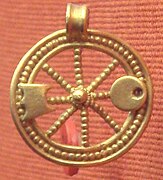
The Golden Wheel from Haute Marne in France

The Golden Wheel from Haute Marne in France, (Public Domain, Wikipedia)

His 8 spoked wheel is said to be symbolic of the Sun and it represents the division of the year by the 4 quarterly sun festivals (Winter Solstice, Spring Equinox, Summer Solstice and Autumn Equinox) and the 4 cross-quarter festivals, (Samhain or Halloween, Imbolc or Candlemas, Beltane or May Day, Lughnasa or Harvest Festival).

December 25th is a few days after our reckoning of the Solstice but it was the date of the Roman Solstice.

Christmas Cake

Today, you might be tucking into a Christmas Cake (originally eaten on Twelfth Night). Now, I know many Americans have a bizarre belief that fruit cake is the cake of the devil, something you receive as a gift and give away to someone else, as most Americans hate it. More fool them for missing out on one of the delights of the Christmas period, that and cold turkey sandwiches. Christmas Cake is made on stir up Sunday, the last Sunday in November, to let the ingredients develop their flavour. They are then covered with marzipan and decorative icing.
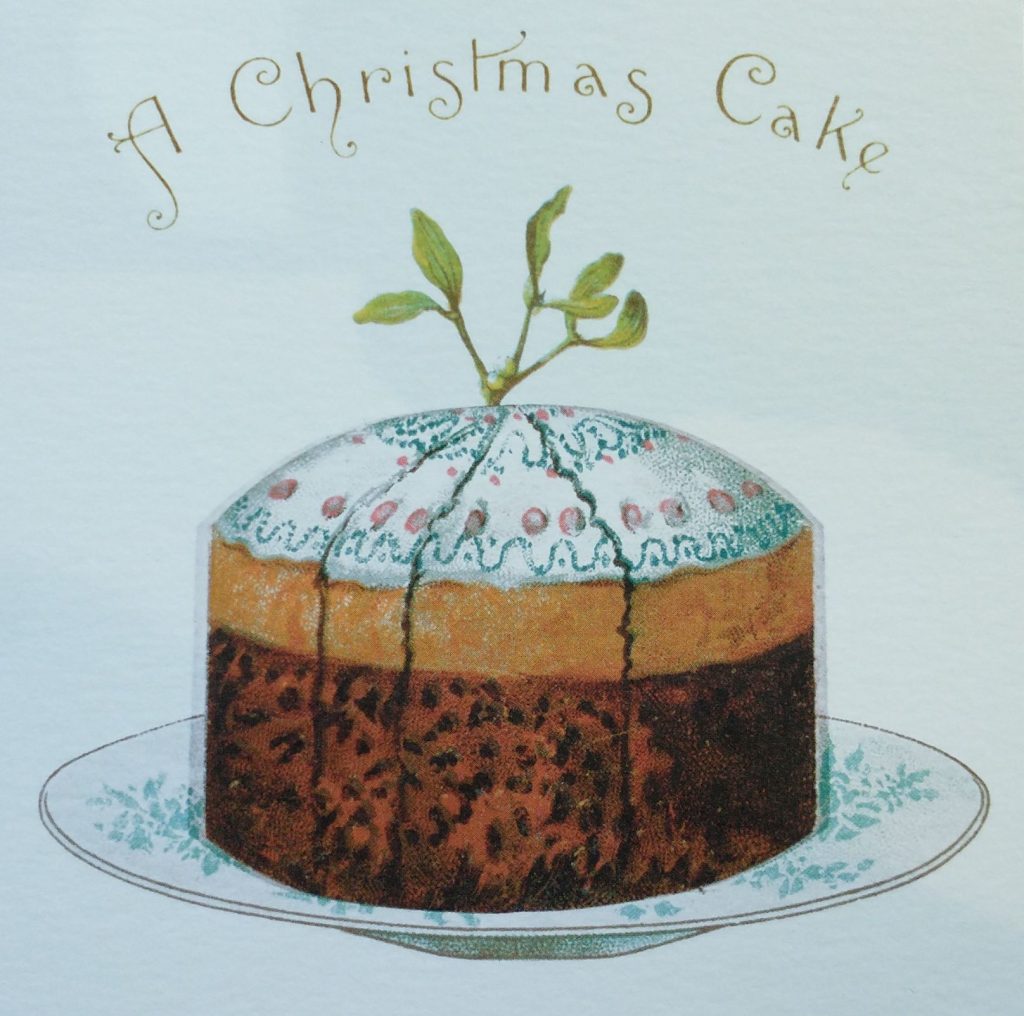
19th Century Christmas Cake, generally now the icing continues down the side of the cake.

In Germany, they also eat a fruit bread called Stollen or Weihnachtsstollen. The tradition is said to have been started in the 15th Century, when the Pope gave dispensation to allow the use of butter in the fasting period of Advent. The Germans had to use oil to replace the banned butter, but they could only make oil from turnips, so eventually the Pope allowed the use of butter, with which they made bread with added dried fruits.
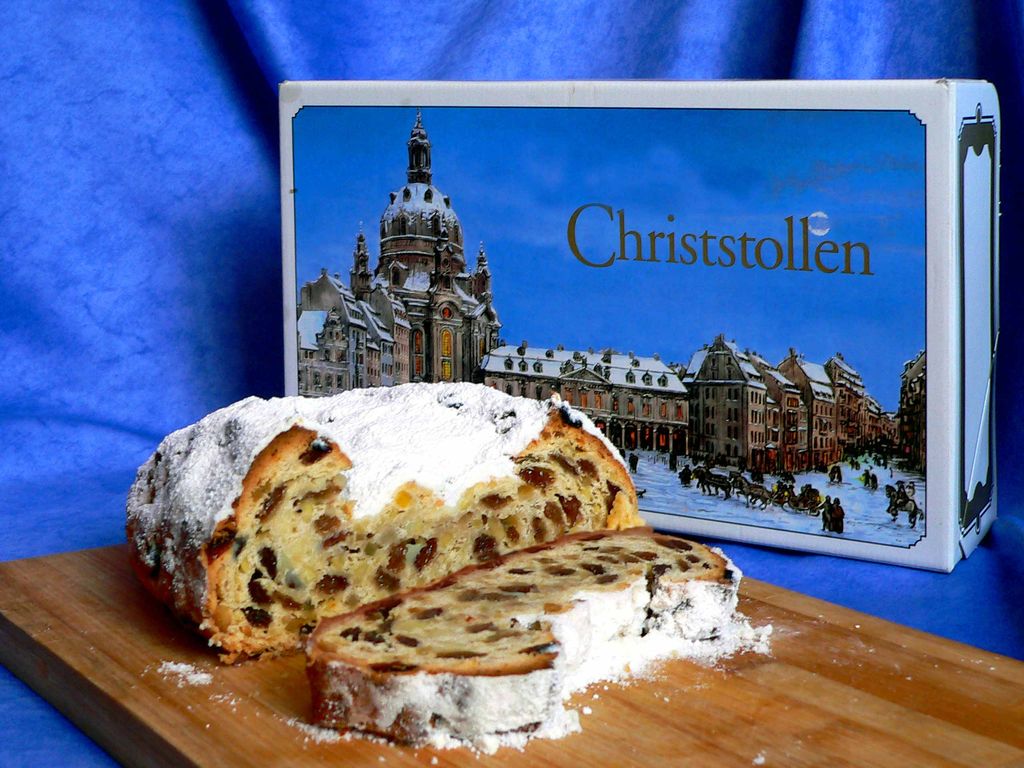
Stollen By Gürgi – Own work, Public Domain, https://commons.wikimedia.org/w/index.php?curid=3720379

In Italy, they eat Panettone, a fruit bread/cake. It is a sourdough, and a cross between a brioche and a cake. It often comes in a beautiful decorative tin, and is delicious. The centre of panettone production is Milan and this year is the 200th Anniversary of Milan’s famous Marchesi 1824 which makes artisanal Panettone from ‘fine ingredients such as six-crown sultanas, naturally candied fruit, Bourbon vanilla from Madagascar, Italian honey and eggs from free-range hens, blended in a slow-rising dough with the exclusive use of Marchesi 1824 sourdough starter‘. Thank you, Mara from Milan, for the heads-up.
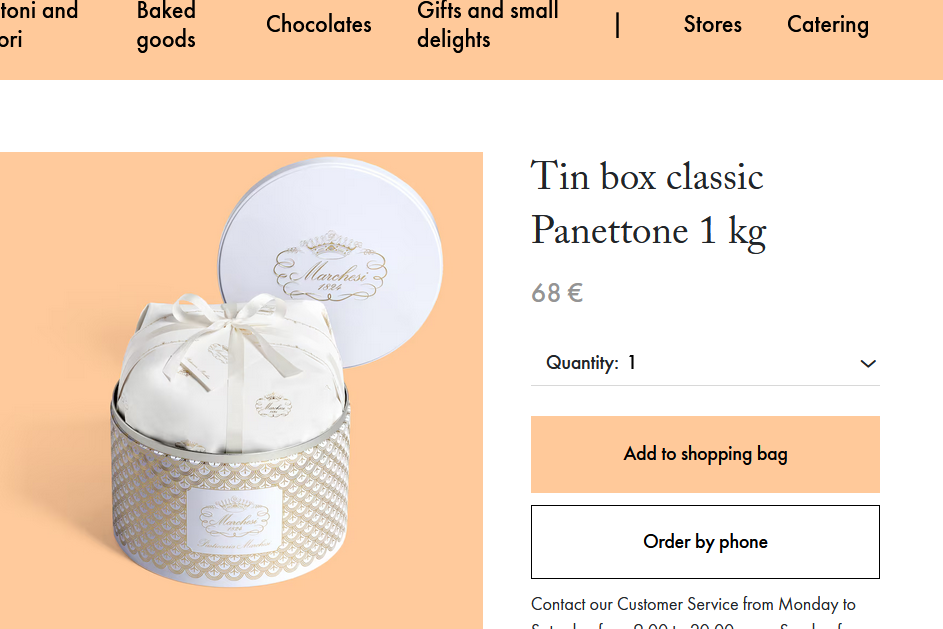
Screen shot from website – does not click through to sales!

Which is best? The only way to find out is to eat several slices of each. America, you don’t know what you are missing.

For stir up sunday see the second half of this post of mine.

First Published 24th December 2022, Republished 25th December 2023, 2024

Eve of the Birthday Of the Sun God December 24th

Helios, Colossus of Rhodes, artist's impression, 1880
Helios Colossus of Rhodes, artist’s impression, 1880

Tomorrow is the Dies Natalis Solis Invicti.  But as, in the Northern Tradition, the day begins at dusk, so Christmas Day really begins on Christmas Eve. So many countries celebrate the eve as much or more than the day. Also the Christian Church follows a similar tradition of beginning the celebrations on the eve.  This is said to be following the Jewish tradition.  In Genesis are the words;

‘And there was evening, and there was morning—the first day.’

Christian tradition holds that Jesus was born on the holy night and thus is celebrated by the midnight mass.

In Germany there is a relatively light dinner often consisting of potato salad and sausages.  Gifts are exchanged afterwards.

December 24th is a day for Mothers, as tomorrow, the 25th, will be born Jesus, Mithras, Attis, Saturn, Apollo, and the Day of the Birth of the Invincible Sun, Solis Invictus. And so we think of Mary, Isis, Theia, the Three Mother Goddesses and mothers everywhere.

First Published 24th December 2022, Republished 2023,2024

December 21 – Reflections on the Solstice

The Solstice and the East Pediment of the Parthenon

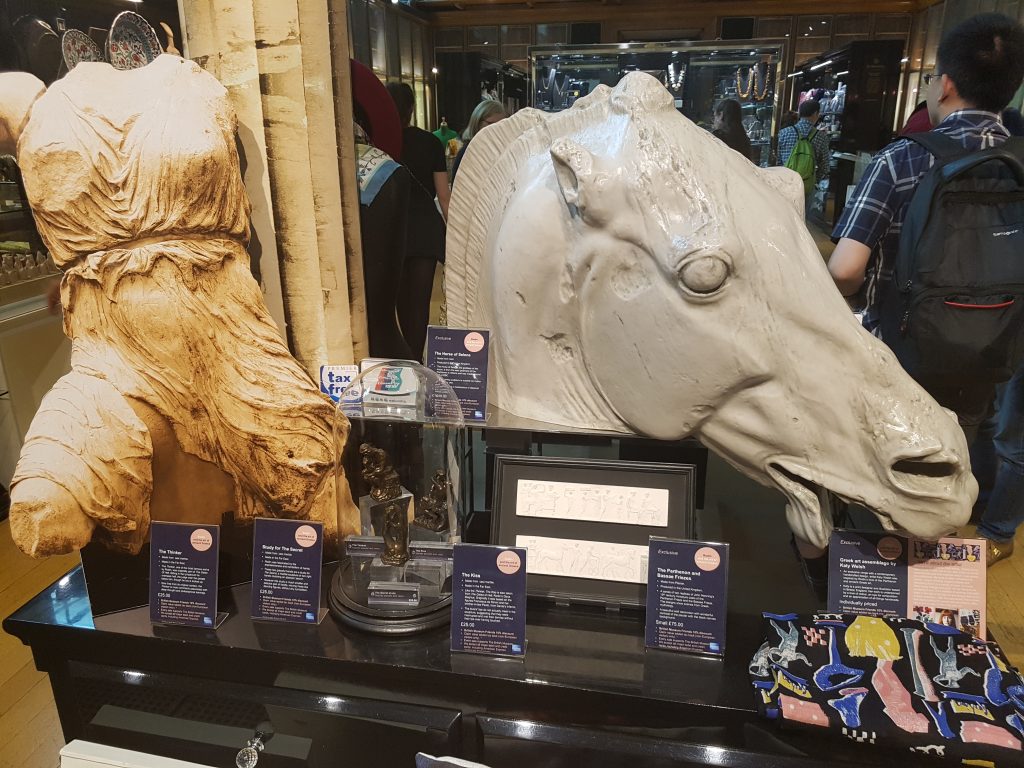
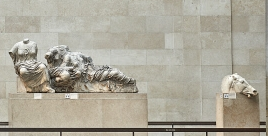
British Museum Shop, reproductions of Hestia and Selene’s Horse from the Parthenon Marbles

At the Summer Solstice, I took a group to the British Museum and, a few days later, to Stonehenge, and managed to ‘integrate’ the two into a solstice narrative. At the BM, over years of trying to explain the sculptures, I have been building in my mind an interpretation of the Pediment that gives, I hope, an original insight into the possible intentions of the sculptors. I don’t know how ‘true’ it is, but I do think it gives an insight into metaphor and symbolism in great works of art. Bear in mind that there is a lot of uncertainty about some of the attributions, and, that the male and female virtues that I am talking about are traditional ones, not necessarily how we would express it in the modern world.

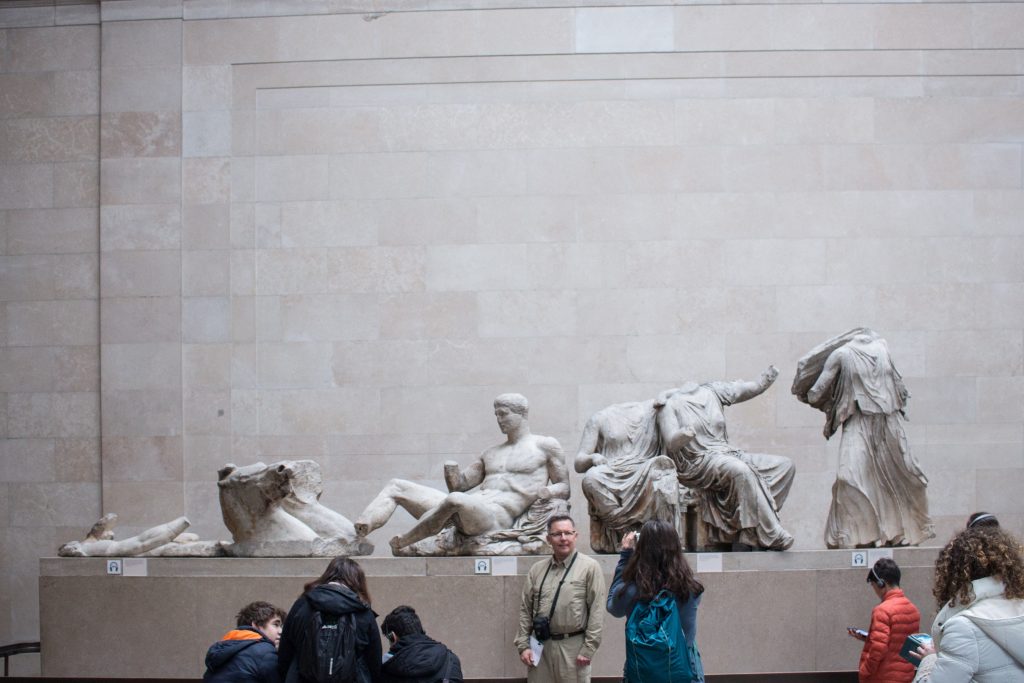
Pediment Sculptures Photo by Nicole Baster on Unsplash

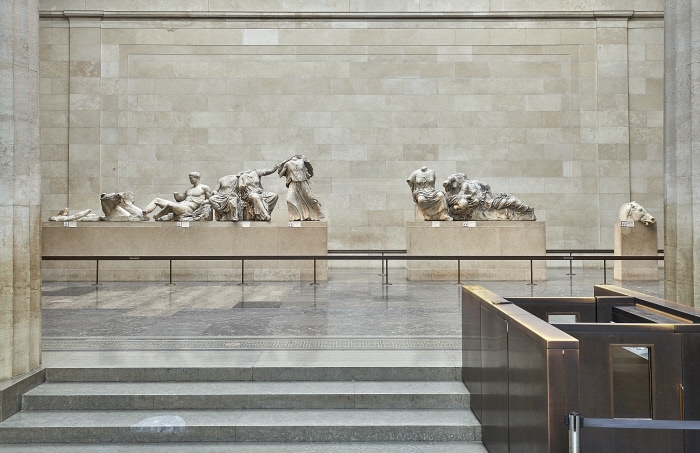
At the left of the above photography, you see the horses that take Helios chariot into the sky to bring up the sun to light the world every day. Most sun deities are male, and the Sun gives light and life to the world, without it this earth is an inert block of ice cold stone. The next statue is casually laying back and looking fit, relaxed and not looking as if he is in that position because of the impossible triangular Pediment space he inhabits. He is the epitome of male strength, usually identified with Hercules but other people have other ideas and a young Dionysus is another suggestion. Whoever he is he represents male beauty and strength. So this end of the pediment represents the Sun and male virtues. This is the East Pediment of the Parthenon which is orientated to the rising sun, a little north of east.

Next are Demeter, the goddess of fertility, the goddess of the earth. Placed here to remind us that the Sun needs the Earth to create life and sustenance. It reminds us that the universe is not male, the male only works in conjunction with the female. Demeter is cuddling her daughter Persephone, the Goddess of Hades. She reminds us that life is a cycle of death and life. Plants die, turn into soil and create the conditions for future life.

Next is Hebe, daughter of Zeus and Hera, wife of Heracles (Hercules). She is the cupbearer to the Gods and gives them the ambrosia that keeps them forever young. She is the Goddess of Immortality, a reminder that the universe is eternal.

Next to Hebe is a void where there was the central statue of the east pediment depicting the Birth of Athena (according to Pausanias who wrote a guide in the 2nd Century BC to the Temple). Athena was born from the head of her father Zeus- a virgin birth. Athena therefore is, in some ways, the greatest of the Olympians, as she has the virtues of her female sex and the virtues of her father’s masculinity (and, dear Gods, hopefully not the massive ‘Me Too’ vices of her father). She is therefore, wise, nurturing, just, intuitive, decisive, a leader; an ideal combination of male and female.

Zeus (sitting) Hephastus to right (looking back with Axe)  Athena just visible above Zeus's head
Zeus (sitting) Hephastus to right (looking back with Axe) Athena just visible above Zeus’s head

So Zeus eats Athena’s mum, Metis, who is pregnant with her. Sometime later he has a cracking headache. Hephaestus, the disabled artificer God hits Zeus over the head to clear the headache. Zeus gives birth to a fully formed Athena from the split in his head. She was known as Athena Parthenos, Athena the Virgin. Her name is originally Athene but it got changed to Athena in 500 BC.

Hestia, Dione, Aphrodite, Horse of Selene’s chariot

To Athene’s left is Hestia (Vesta for the Romans). Her name means “hearth, fireplace, altar” and she is the goddess of the domestic sphere, of the comforts of home, of a warm fire enjoyed by a loving family.

The next set are two beautifully draped women languidly leaning on each other, and these are Dione, with her daughter Aphrodite – the Goddess of Love. Dione is the daughter of Gaia and Uranus daughter of earth and sky. So, here, counterpoised to Hercules, are epitomes of women. Women of power, creation, and love.

Finally, we have the exhausted horse of Selene. Her chariot takes the moon into the sky, positioned opposite to Helios and the Sun. Selene is the Moon goddess, and the Moon is beautiful, powerful as it gives us the tides and fundamental to the life of humans as she presides over the menstrual cycle. Compared to the movements of the Sun which any fool can work out, and which are relentless (symbolising Justice) the movements of the Moon are mysterious to most of us. So Selene is beautiful, powerful, creative and the Goddess of Intuition.

So, if you put it all together, the East Pediment of the Parthenon shows that the world is a union of the male and the female, balanced between the two with Zeus and Athene in the middle, with Athene holding the main part because she, in her person, represents both the male and the female.

Of course, we know that the Athenian society was a patriarchal one with women mostly kept in the domestic sphere. But here, at least, women were given an equal billing in the organisation of the Cosmos.

Sculptures from the east pediment of the Parthenon

I must end by warning the reader that this is only my interpretation. I am not a scholar of Ancient Greece. I have come to my own conclusion based on spending a lot of time looking at the marbles, doing Solstice Virtual Tours, and mostly informed by the labels in the gallery, with of course, some reading including Mary Beard’s book entitled ‘Parthenon’ and the BM’s guidebook. In particular, I have not incorporated into my ‘story’ the sculptures that were in the gaps that do not survive or only in fragments scattered throughout the Museum world. Mary Beard was cleverer than I, not reaching conclusions on the basis that we don’t know. But what we do know is that in the centre is Zeus and Athene and at the edges are the chariots of the Sun and the Moon. And so fitting to celebrate the Solstice.

Originally written in 2022 and revised 2024

Grecian Winter – Hesiod’s Works & Days December 15th

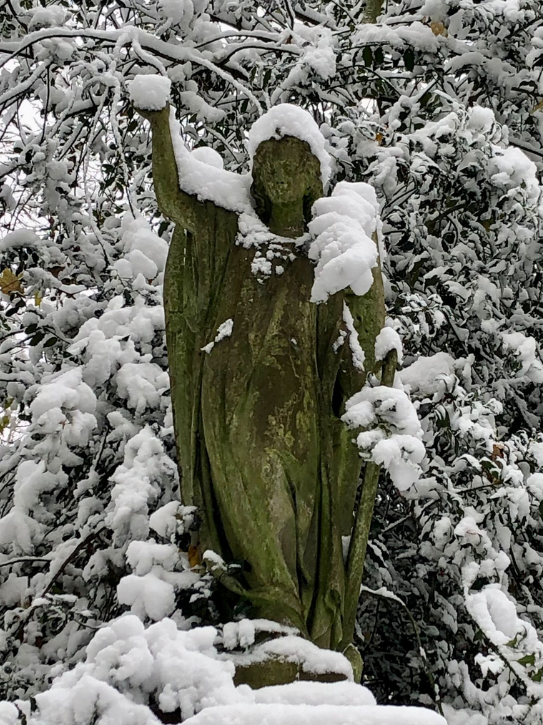
Abney Park cemetary in winter
Abney Park cemetery in winter photo by Harriet Salsibury

Hesiod is a contemporary of Homer, and therefore one of the first European poets, one of the first commentators on Greek life, thought, religion, mythology, farming and time keeping. ‘Works and Days’ is his Farmers Almanac and therefore long overdue an appearance on my Almanac of the Past.

Hesiod’s poems also introduce the idea of the epoch, past glorious epochs of Gold and Bronze with a further descent to his own epoch which was of the base metal age of Iron. In the 19th Century, European antiquarians, imbued with a humanist belief in Progress, developed the idea of Stone, Bronze and Iron Ages, an almost direct opposite of Hesiod’s, downhill-all-the-way to the present idea.

Hesiod also brings in early references to Prometheus and Pandora, two of the great myths of the flaws of humanity.

This is what he says of Winter. It is from a translation by Christopher Kelk, available to download here (I have added line breaks after full stops, just for ease of reading.)

…. you should make
A detour during winter when the cold
Keeps men from work, for then a busy man
May serve his house. Let hardship not take hold,
Nor helplessness, through cruel winter’s span,
Nor rub your swollen foot with scrawny hand.

An idle man will often, while in vain
He hopes, lacking a living from his land,
Consider crime. A needy man will gain
Nothing from hope while sitting in the street
And gossiping, no livelihood in sight.

Say to your slaves in the midsummer heat:
“There won’t always be summer, shining bright –
Build barns.” Lenaion’s evil days, which gall
The oxen, guard yourself against. Beware
Of hoar-frosts, too, which bring distress to all
When the North Wind blows, which blasts upon the air
In horse-rich Thrace and rouses the broad sea,
Making the earth and woods resound with wails.

He falls on many a lofty-leafed oak-tree
And on thick pines along the mountain-vales
And fecund earth, the vast woods bellowing.
The wild beasts, tails between their legs, all shake.

Although their shaggy hair is covering
Their hides, yet still the cold will always make
Their way straight through the hairiest beast.

Straight through
An ox’s hide the North Wind blows and drills
Through long-haired goats. His strength, though, cannot do
Great harm to sheep who keep away all chills
With ample fleece. He makes old men stoop low
But soft-skinned maids he never will go through –
They stay indoors, who as yet do not know
Gold Aphrodite’s work, a comfort to
Their darling mothers, and their tender skin
They wash and smear with oil in winter’s space
And slumber in a bedroom far within
The house, when in his cold and dreadful place
The Boneless gnaws his foot (the sun won’t show
Him pastures but rotate around the land
Of black men and for all the Greeks is slow
To brighten).

That’s the time the hornèd and
The unhorned beasts of the wood flee to the brush,
Teeth all a-chatter, with one thought in mind –
To find some thick-packed shelter, p’raps a bush
Or hollow rock. Like one with head inclined
Towards the ground, spine shattered, with a stick
To hold him up, they wander as they try
To circumvent the snow.

As I ordain,
Shelter your body, too, when snow is nigh –
A fleecy coat and, reaching to the floor,
A tunic. Both the warp and woof must you
Entwine but of the woof there must be more
Than of the warp. Don this, for, if you do,
Your hair stays still, not shaking everywhere.

Be stoutly shod with ox-hide boots which you
Must line with felt. In winter have a care
To sew two young kids’ hides to the sinew
Of an ox to keep the downpour from your back,
A knit cap for your head to keep your ears
From getting wet.

It’s freezing at the crack
Of dawn, which from the starry sky appears
When Boreas drops down: then is there spread
A fruitful mist upon the land which falls
Upon the blessed fields and which is fed
By endless rivers, raised on high by squalls.

Sometimes it rains at evening, then again,
When the thickly-compressed clouds are animated
By Thracian Boreas, it blows hard. Then
It is the time, having anticipated
All this, to finish and go home lest you
Should be enwrapped by some dark cloud, heaven-sent,
Your flesh all wet, your clothing drenched right through.

This is the harshest month, both violent
And harsh to beast and man – so you have need
To be alert. Give to your men more fare
Than usual but halve your oxen’s feed.
The helpful nights are long, and so take care.

Keep at this till the year’s end when the days
And nights are equal and a diverse crop

Keep at this till the year’s end when the days
And nights are equal and a diverse crop
Springs from our mother earth and winter’s phase
Is two months old and from pure Ocean’s top
Arcturus rises, shining, at twilight.

Hesiod’s Works and Days: Translation Christopher Kelk

Acturus is not seen in winter, and in the Northern Hemisphere its rising (50 days after the winter solstice) and has always been associated with the advent of spring.

Boreas was the winged God of the North wind, which bore down from the cold Mountains of Thrace (north of Macedonia). One of his daughters, Khione, was the Goddess of Snow. Lenaion was associated with January one of the festivals of Dionysus, and a theatrical season in Athens particularly for comedy.

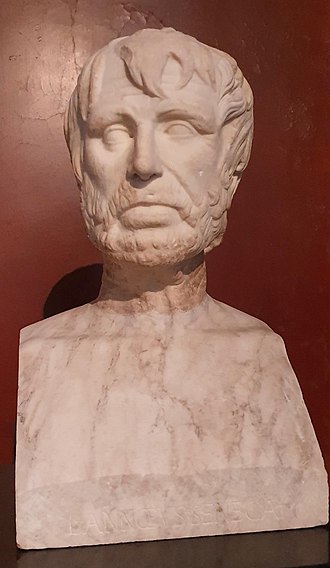
Roman Bust of Hesiod (Wikipedia photo by Yair Hakla) Neues Museum

First published 15th December 2022, republished December 2023, 2024

Ashmolean Advent Calendar, William Burges & the Singing Pierides December 12th

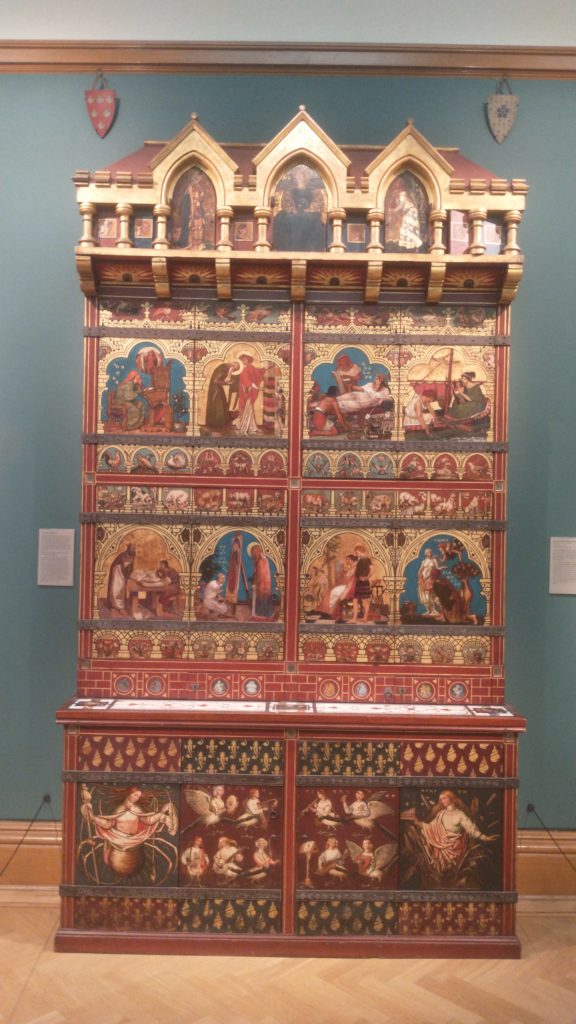
The Great Bookcase by William Burges Ashmolean Museum (Photo K. Flude)

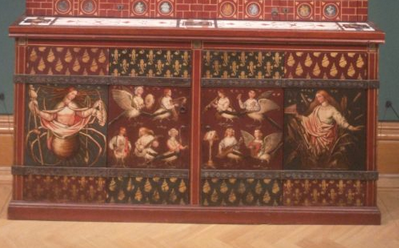
The Ashmolean posts, every year, an online Advent Calendar with gorgeous items behind each ‘flap’. The choice seems to be, mostly, a random selection. But their collection is so wonderful, they are all interesting. Last year, December 12th’s choice was a netsuke; the year before the Singing Pierides painted by Henry Stacy Marks which you can see on the bottom of the Great Bookcase by William Burges (above).

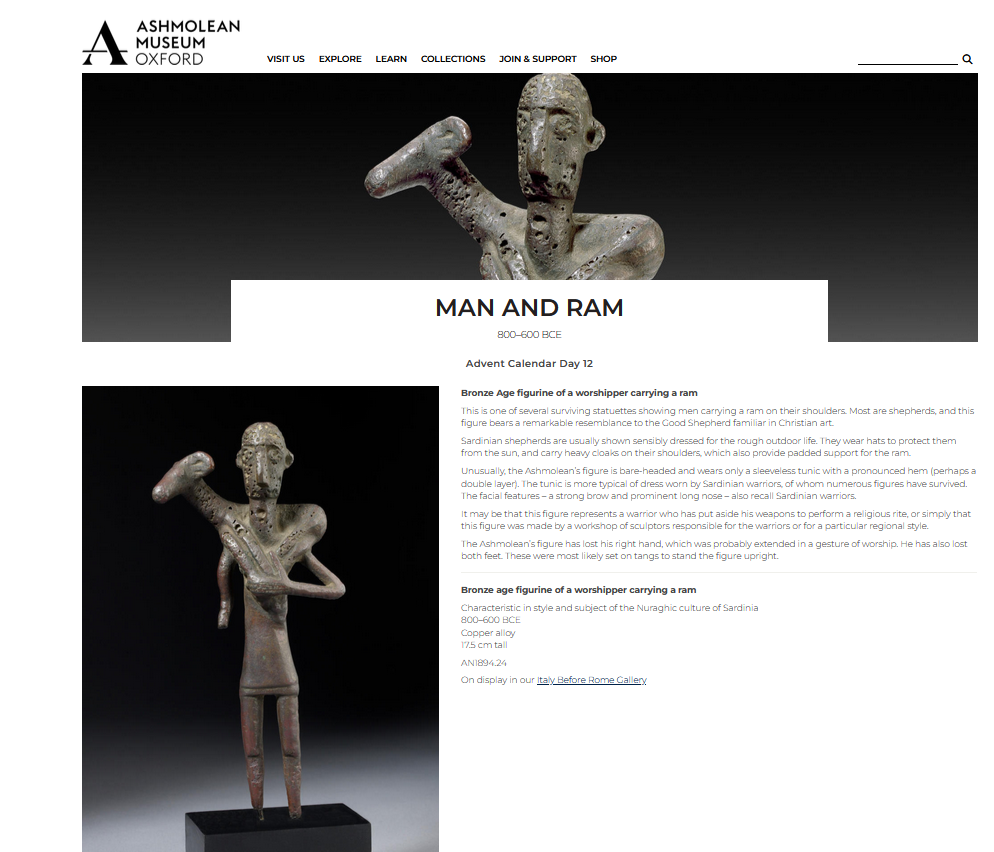
This year it was a nuragi bronze age stature of a shepherd, a screen shot of which I show below.

The Nuragic culture in Sardinian is not well known. They lived in round towers called nuraghe, which are a little like the Brochs of Scotland, and they created these marvellous bronze statuettes which give a real insight into life in the Bronze Age. They were around during the time of the Mycenaean Culture in Greece. But their origins and indeed their history are argued about. They may be part of the ‘Sea People’ who brought the end to the Bronze Age cultures of the Eastern Mediterranean or they may not.

Here, in Britain, the Bronze Age is dominated by discussions of henges, barrows, metal axes and swords. But with very little sense of what life was like to live in those days. However, go to the Cagliari Museum and look at these wonderful statues, and it becomes possible to picture the people. Particularly with a copy of ‘Il Popolo di bronzo’ by Angela Demontis to hand. It is a catalogue of Nuragi statures with interpretative drawings. It really bring the people to life depicted in the statues. They are mostly warriors, but there are also people who seem to have more normal trades such as shepherd and baker.

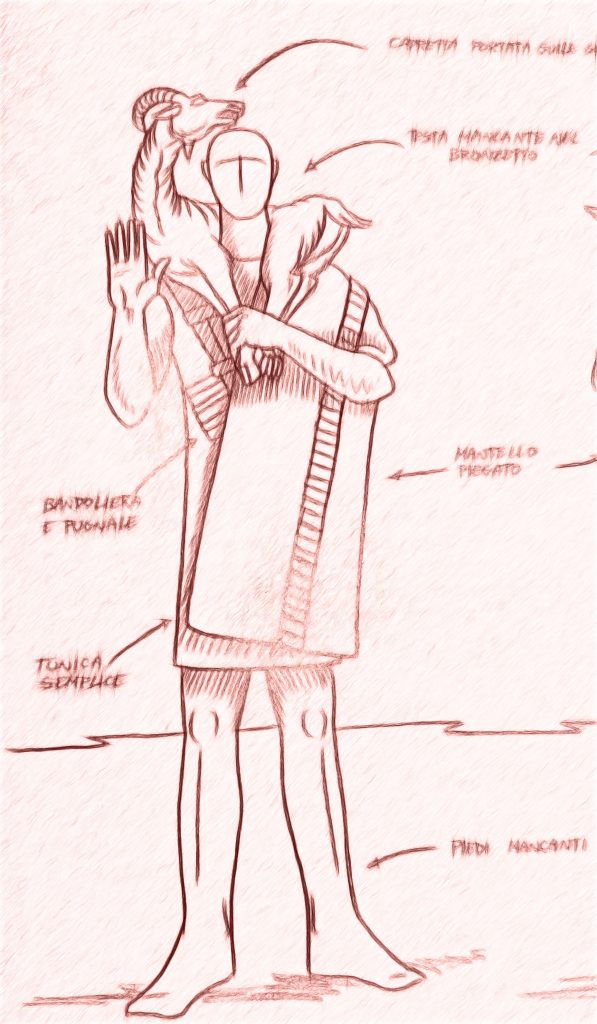
Here is my slight adaption of one of the drawings

A sketch drawing of a Nuragi sculpture derived from ‘Il Popolo di bronzo’ by Angela Demontis

What you can see is some detail of the clothes and the knife belt around the torso and under the cloak, and a living person appears before you, not just a lump of bronze. Wikipedia has a long article on the nuragic culture and you can see some of the bronzes here.

On December 12th 2022, the Advent calendar, which you can access here, highlighted the Great Bookcase by William Burgess and in particular the paintings above which are the Singing Pierides painted by Henry Stacy Marks. The Pierides, were a sort of classical Greek Von Trapp singers, 9 daughters who foolishly challenged the Muses to a singing competition. Of course, the Goddesses of the Arts — the Muses won and had the Pierides turned into songbirds as a warning to all those who overrate their own talents! Watch out all you karaoke singers the Goddesses may have you in their sights!

‘Whenever the daughters of Pierus began to sing, all creation went dark and no one would give an ear to their choral performance. But when the Muses sang, heaven, the stars, the sea and rivers stood still, while Mount Helicon, beguiled by the pleasure of it all, swelled skywards tilI, by the will of Poseidon, Pegasus checked it by striking the summit with his hoof.

Since these mortals had taken upon themselves to strive with goddesses, the Muses changed them into nine birds. To this day people refer to them as the grebe, the wryneck, the ortolan, the jay, the greenfinch, the goldfinch, the duck, the woodpecker and the dracontis pigeon.’

Antoninus LiberalisMetamorphoses (wikipedia)

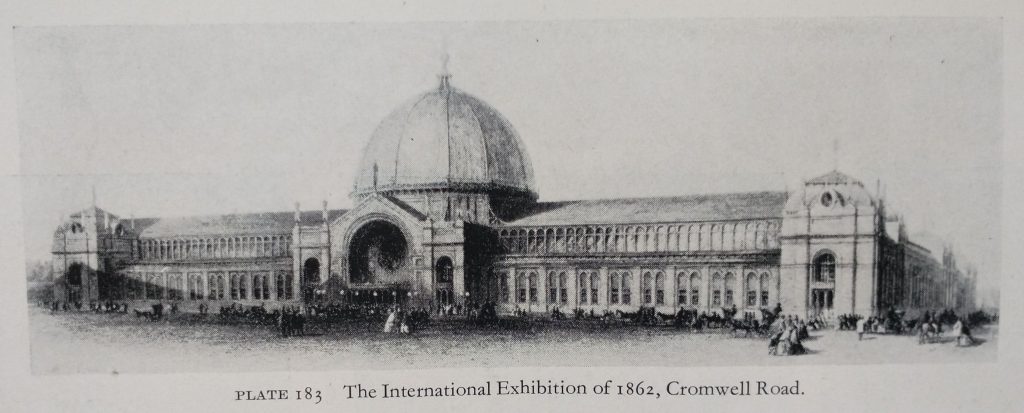
The bookcase by William Burges was originally displayed as the centre point of the ‘Medieval Court’ of the 1862 International Exhibition. The Exhibition was almost as successful as the more famous Great Exhibition of 1851. Both got about 6m visitors. The 1862 Exhibition was just south of the site of the 1851 (on the south side of Hyde Park) and in the Royal Horticultural Society’s gardens (now the Science and Natural History Museum).

Engraving of the International exhibition of 1862, Cromwell Road

Burges is one of the great Gothic Revival architects and a designer in the Arts & Crafts Movement with an affinity for Pre-Raphaelite painters, 14 of whom he asked to paint panels on his bookcase. The decorative scheme was to represent the Pagan and Christian Arts (Museum label).

Originally written for December 12, 2022, revised and republished December 2023, and the Nuragi added in 2024

Day of the Moon Goddess Selene February 7th

Full Moon Photos by Natalie Tobert – you can find out more about her work here:

The Goddess Book of Days’ has the the 7th as the Day of Selene and other Moon Goddesses. (February 6th as the Festival of Aphrodite)

Selene is one of the most beguiling of Goddesses as she is the epitome of the Moon (Romans knew her as Luna). She, who gives that silvery, ethereal light to dark days, who appears and disappears to a routine few of us really understand. She is therefore beautiful, beguiling, unknowable. She is the Goddess of Intuition. She brings the tides and the monthly periods, and so is a Goddess of power as well as fertility, pregnancy and so love, and mothers, and babies.

To my mind, far more powerful than Aphrodite, Selene seems much more independent. On the Parthenon Marbles at the British Museum she is shown with her brother Helios, the Sun God; with Hercules – the epitome of male strength, Demeter and Persephone, representing the earth and underworld (or life and death), Athene and her father, Zeus; Iris, the messenger Goddess; Hestia, the Goddess of the home, and Dione with her daughter ,Aphrodite, representing love. At one end, Helios brings up the sun with his Chariot and Horse and at the other, Selene’s horse sinks exhausted in Oceanus after a glorious night of moon shine. It’s a wonderful arrangement, which suggests the scheme was to show a balanced cosmos between female and male forces, framed by the Sun and the Moon.

cartoon of Elgin Marble, showing Selene's Horse at the right hand end
Cartoon of Elgin Marble, showing Selene’s Horse at the right hand end

I did a longer piece on this pediment of the Parthenon Marbles here

Photograph of the Moon against a black background byMike Petrucci -unsplash
Selene – Moon Goddess by Mike Petrucci -unsplash

I have used several of Natalie Tobert’s photos in my post which I pluck from Natalie’s face facebook feed which is a veritable visual feast. She worked, as an archaeologist at the Museum of London at the same time as me. She is an excellent potter, photographer and artist. Natalie was a Fellow of the Royal Society of Arts, and a member of Society of Designer Craftsmen. You can see more of her pictures here.

This is going to be transferred to April 20th in 2025.

First published in 2022, and revised February 2024.