St Etheldreda October 17th 679

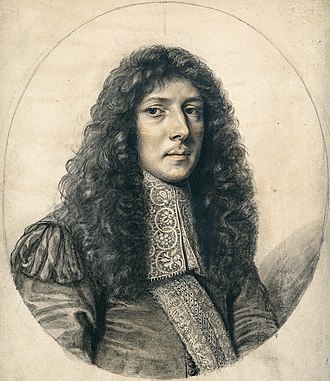
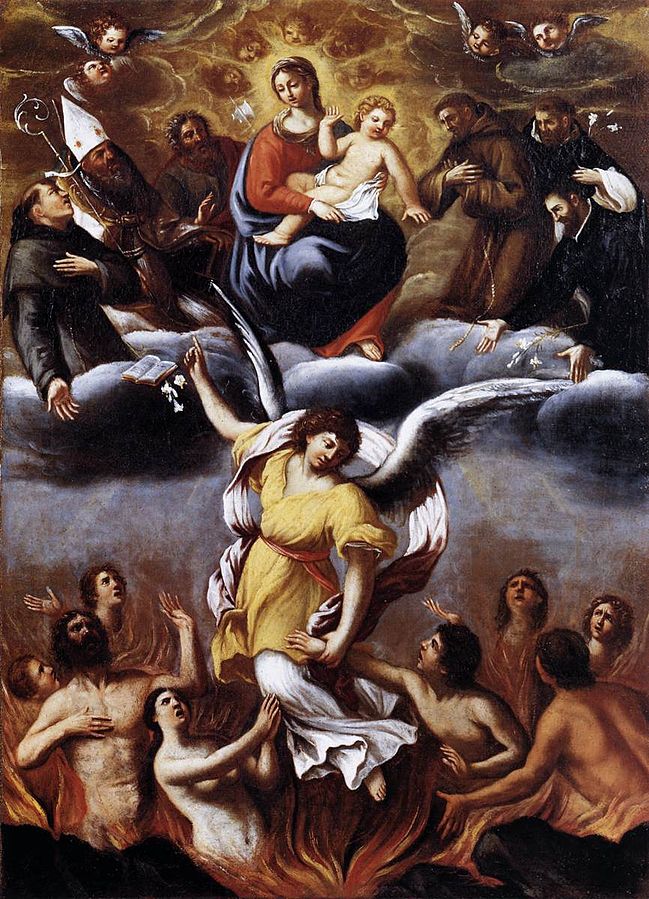
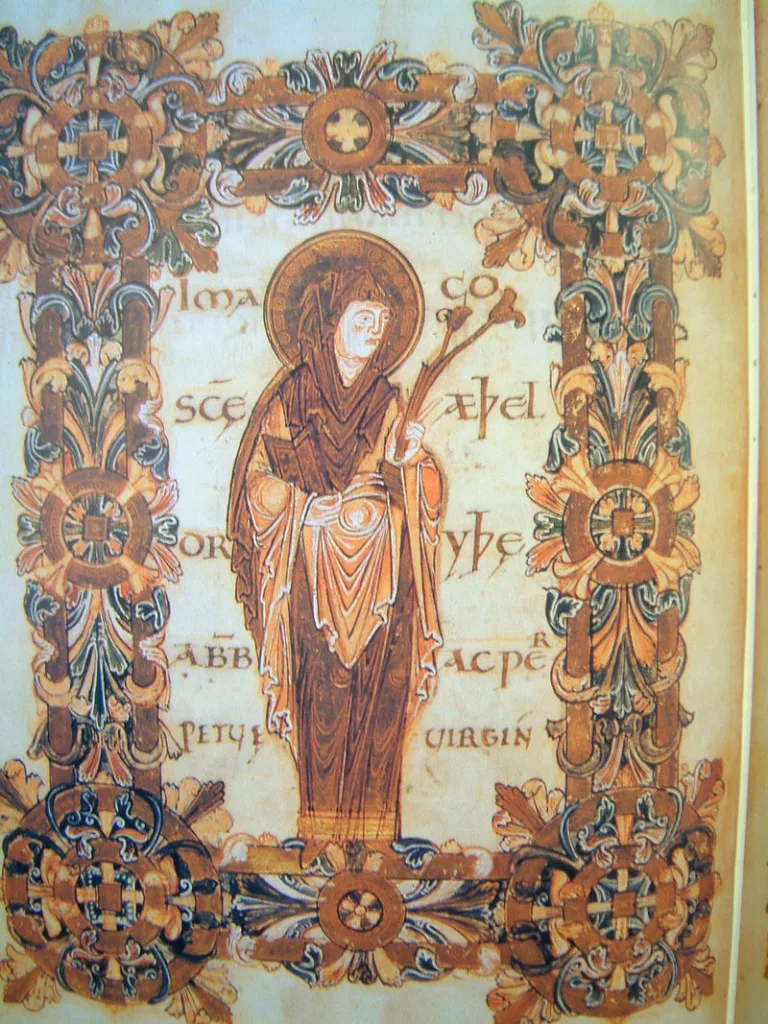
St Etheldreda or St Audrey By monk – [1], Public Domain, https://commons.wikimedia.org/w/index.php?curid=32907989

I’m republishing this post as I dated it to February 17th rather than October 17th and a few other egregious typos.

Etheldreda, also known as Audrey or Æthelthryth or Æðelþryð or Æþelðryþe is celebrated on October 17th, (the date her remains were ‘translated’ from her burial place to the Church at Ely) and on 23 June the date she died,

She lived from March 4th 636 to June 23rd 679. She is one of the well-born Saxon Virgin Saints of the 7th Century. This is when many royal Abbeys were founded by female members of the Anglo-Saxon Royal families, in the years following the conversion of the Anglo-Saxons to Christianity. She is the daughter of King Anna of East Anglia, and the sister of Saint Sexburga (widow of King Erconbert of Kent).

Etheldreda is said to be a Virgin despite being married twice. Etheldreda was widowed after three years of her first marriage. Then she married Egfrid, son of King Oswy of Northumbria. Egfrid got fed up with her virgin state. With the support of St Wilfrid, St Etheldreda was released to a Nunnery run by Wilfred’s aunt. In 672 she founded the famous double monastery at Ely, which is where the wondrous Cathedral of Ely still stands.

Here she died, and the many miracles that followed, led to Ely being one of the main destinations for Pilgrimages. St Sesxburga took over as Abbess after her death. By the number of Churches and holy days remembering Etheldreda show she was perhaps the most famous female saint of the era.

Tawrdy Audrey

Etheldreda died of a neck tumour, which she blamed on the heavy jewellery she wore around her neck before she became a nun. So she is a patron of those with neck or throat ailments. Accordingly, on February 3rd St Etheldreda’s Church in London holds the Blessing of the Throats ceremony. St Blaise is also a saint protecting the throat and you might like to read my post about him and throats here.

Pilgrims used to buy cheap, old-fashioned linen from the market at Ely, which they would wear around their neck to protect or cure them of throat illnesses. Puritans satirised the practice by coining the word Tawdry, from St Audrey, which came to represent cheap goods sold to gullible pilgrims.

Mopsa the shepherdess in Shakespeare’s Twelfth night says to her sweetheart:

“Come, you promised me a tawdry-lace and a pair of sweet gloves.

Have a look at this excellent article to read more about Tawdry and St Etheldreda.

However, I thought something was amiss and searched for Tawdry in the excellent website SHAKESPEARE’S WORDS by DAVID CRYSTAL & BEN CRYSTAL (which I use all the time). And indeed Mopsa is not in Twelfth Night but in the Winter’s Tale which I saw recently at the RSC. Mopsa’s man can’t buy it for her as he has been cheated out of his money by the fey Autolycus.

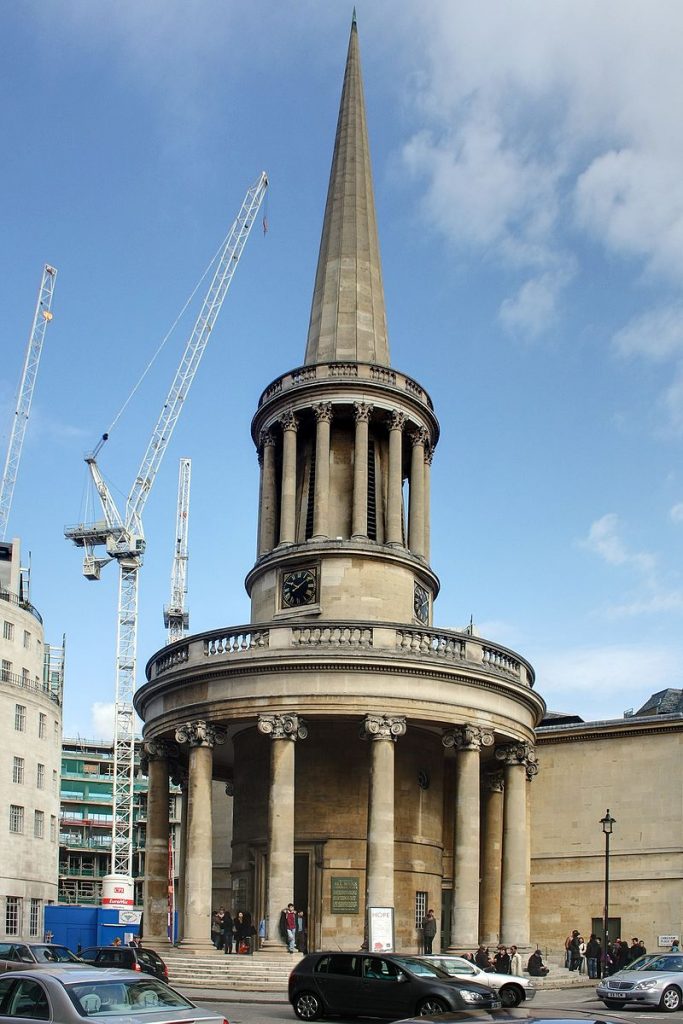
St Etheldreda’s Church in Ely Place London

Church of St Etheldreda., Ely Place London

St Etheldreda’s in London is in Ely Place, near Hatton Garden. There is a lovely old pub there called the ‘Ye Olde Mitre’ (which is a reference to a Bishop’s Mitre). The Church was founded (1250 and 1290) as the London residence of the Bishops of Ely. Inside are memorials to Catholic martyrs executed during the Reformation. (see my post on the Douai Martyrs here).

Ely place was lived in by John of Gaunt following the destruction of his Savoy Palace in the Peasants Revolt. Christopher Hatton rented parts of it in the reign of Queen Elizabeth II. During the Civil War it was used to hold Royalist Prisoners of War. Agnes Wicks fictionally lives at Ely Place. (Agnes is the woman David Copperfield should have married, rather than the ridiculous Dora).

In the 19th Century, the former Chapel was bought by the Catholic Church and restored by George Gilbert Scott.

Etheldreda is remembered in the Church of England with a Lesser Festival on 17 October according to Book of Common Prayer tradition, and alternatively 23 June in the Common Worship calendar of Saints. (Wikipedia.

First Published on October 17th 2025

Tally Sticks & Parliament burning down October 16th 1834

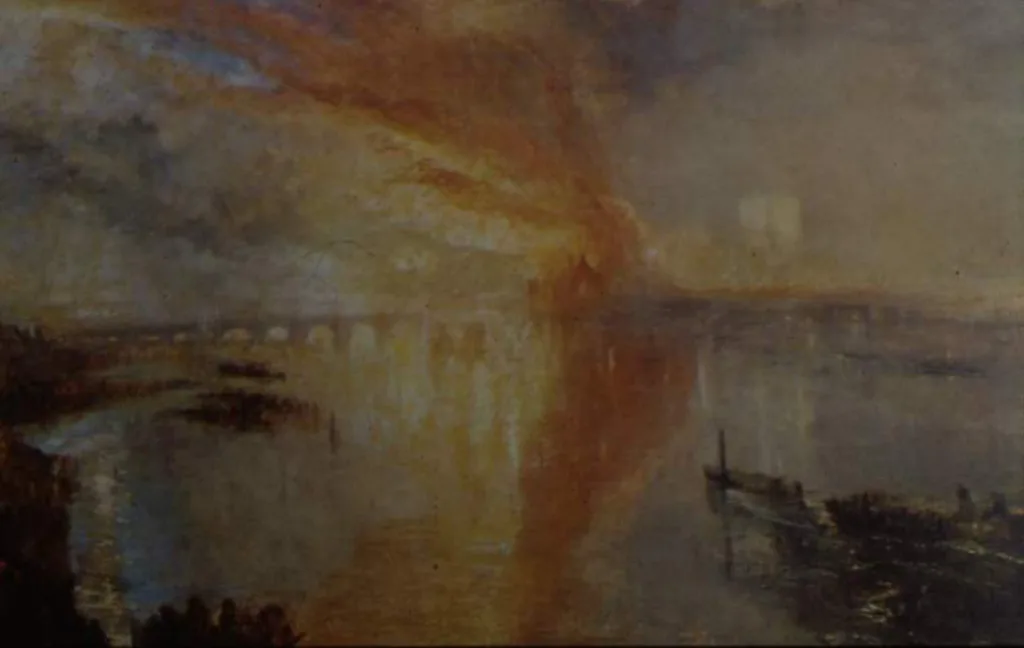
The Burning of the Houses of Lords and Commons, 16th October, 1834. Joseph Mallord William Turne Public Domain (Wikipedia). Cleveland Museum of Art

In 1834, the Government decided to end the use of Tally Sticks by the Exchequer and replace them with paper ledgers. They decided to burn the sticks that had been used to record financial transactions for six hundred years. Richard Weobley, the Clerk of Works decided not to give the Tallies to staff as firewood, but to burn them in two stoves below the House of Lords. The chimney was designed for coal not for wood, and it started a fire that destroyed virtually the entire Houses of Parliament and most of the ancient Palace of Westminster.

Engraving of the Old , Pre-fire, Palace of Westminster.

Architects including Sir John Soane and Robert Adams warned about the dangers of a fire at the complex which were built before modern fire prevention methods, such as fire walls, and fire doors. But they were ignored. There was no Fire Brigade just a few antiquated old Parish Engines. but, the Insurance companies had created the London Fire Engine Establishment (LFEE) led by the charismatic James Braidwood. However, the Palace was not covered by insurance.

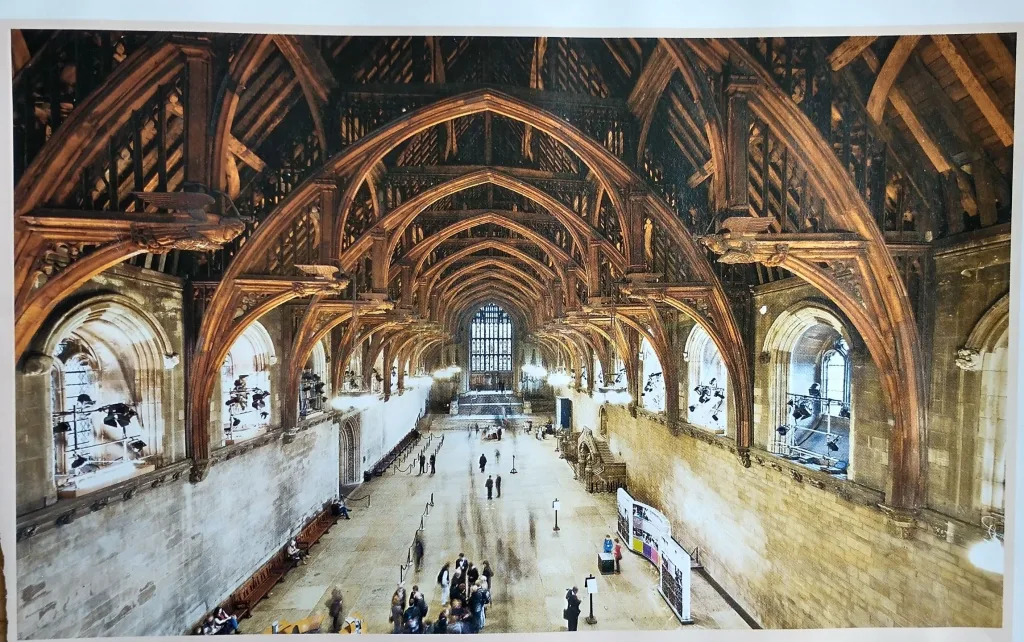
None the less the LFEE turned up. Initially they could do little as the Thames was low and they could not get enough water to help stop the fire. But later as the Tide rose, the water supply improved. Also, the LFEE could now bring up its LFEE’s floating fire engine from storage in Rotherhithe. Braidwood got his men to spray the famous Hammer beam roof with water, and the 11th Century, Westminster Hall survived. The roof was installed by Master Carpenter, Hugh Herland in the 14th Century when the Hall was reroofed. The timber came from the Farnham area of Surrey. (for more on the Fire look here).

The Hammerbeam Roof of Westminster Hall, Saved by James Braidwoof’s Fire Engine Establishment.

The fire was such a conflagration that thousands of Londoners came to see it. It was not long after very unpopular Acts of Parliament including the Great Reform Bill of 1832, which failed to give the vote to the working class, and the Poor Law Amendment which Dickens attacks in Oliver Twist. (see my post of the Chimes for more on Dickens’s Social Journalism).

It is said the Londoners cheered as the Palace burnt down. Thomas Carlyle, remembered: ‘the crowd was quiet, rather pleased than otherwise; whew’d and whistled when the breeze came as if to encourage it: “there’s a flare-up (what we call shine) for the House o’ Lords.”—”A judgment for the Poor-Law Bill!”—”There go their hacts” (acts)! Such exclamations seemed to be the prevailing ones. A man sorry I did not anywhere see. (reported in Wikipedia.

Tally Sticks

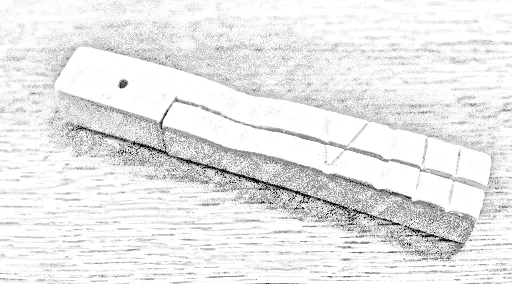
Sketch up Sketch of Tally sticks. The Foil is the shorter part at the bottom of the picture, and the Stock is the longer L-shaped piece. The lines represent pounds, shillings and pence. The V represents £20.

From the Medieval period, England used Tally Stick for public finances. These were held by the Exchequer. The Government’s financial division gets this name from a chequered cloth which was used to help reckoning up revenues. They used 6 inch lengths of Willow cut on the banks of the Thames, to keep records of transactions. The willow would be marked with lines to represent the amount of money involved in transactions – say a sale of a farm. The willow tally would be split longways about 5 inches of its length. One piece the foil would be given to the debtor, and the other piece, the stock, would be kept by the creditor ~(usually the Government). Each part of the Tally also had the details of the transaction in ink. The pieces could also be used to transfer the debt, and could act almost like currency.

But the genius of the ideas is that it is effective against fraud. The two parts of the stick, would not only have to match with the lines which were cut across them but also the natural grain of the wood, which would provide a unique fingerprint, proof against fraud.

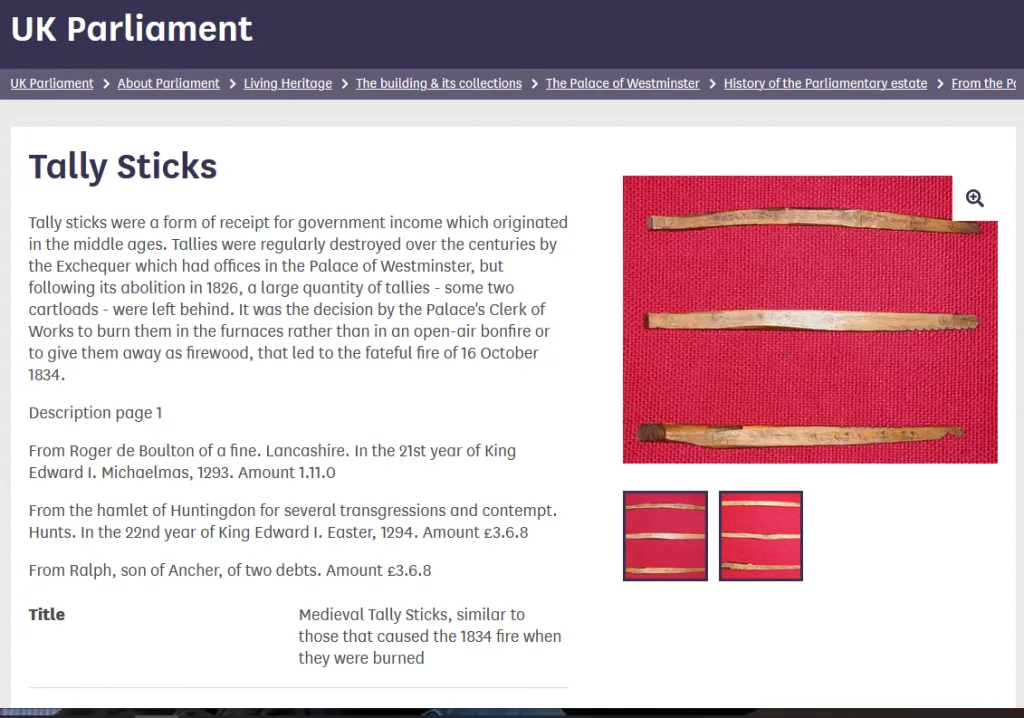
Screenshot from UK Parliament Web site https://www.parliament.uk/about/living-heritage/building/palace/estatehistory/from-the-parliamentary-collections/fire-of-westminster/tallysticks/

To read more about Tally Sticks, please read:

https://www.geoffreymhodgson.uk/secret-history-of-tally-stick

Or BBC’sTim Harford https://www.bbc.co.uk/news/business-40189959

Exchequer, in British history, the government department that was responsible for receiving and dispersing the public revenue. The word derives from the Latin scaccarium, “chessboard,” in reference to the checkered cloth on which the reckoning of revenues took place. (https://www.britannica.com/money/Exchequer)

First Published on October 16th, 2025

I went to the Stratford-upon-Avon Mop on October 12th

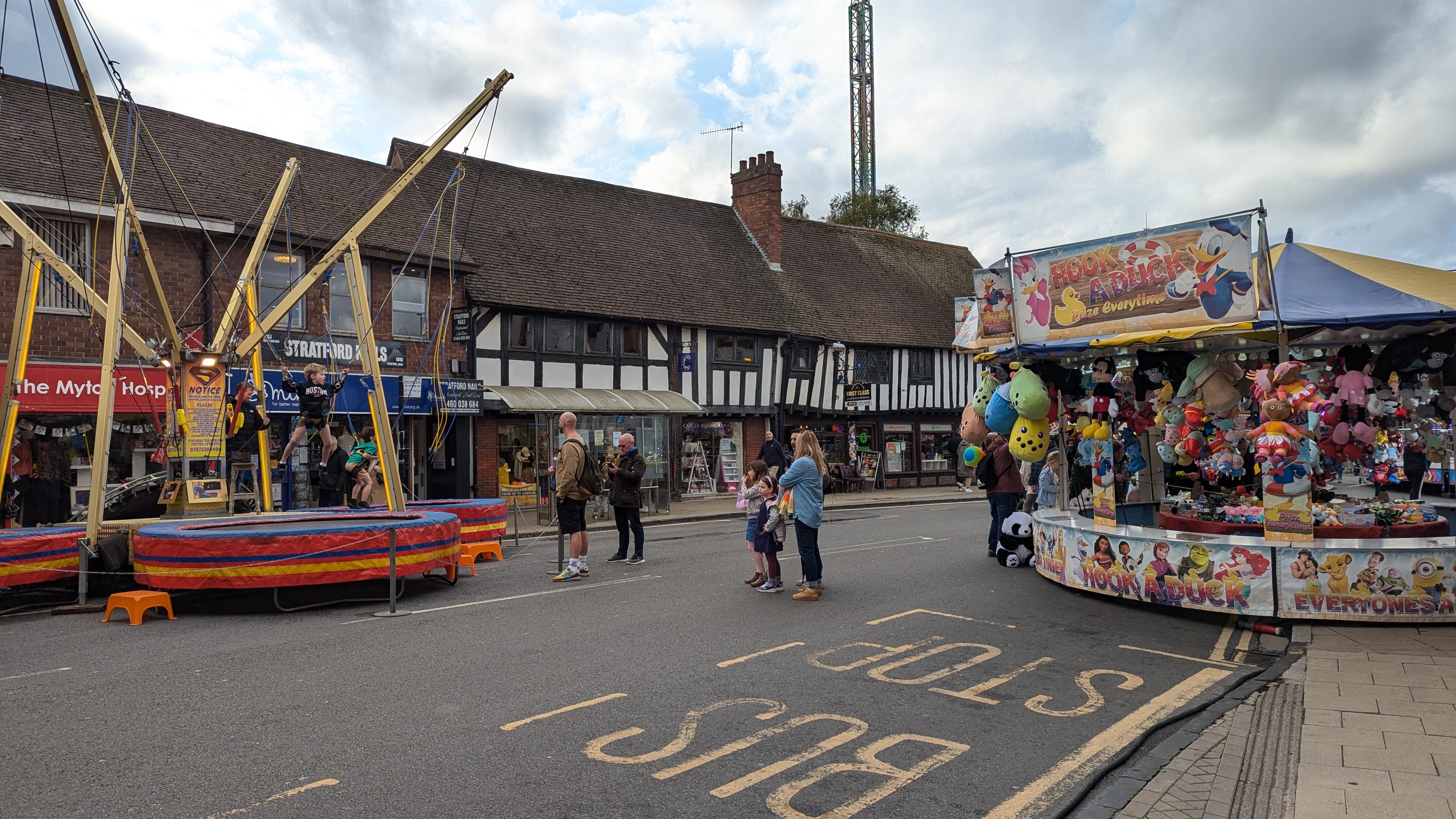
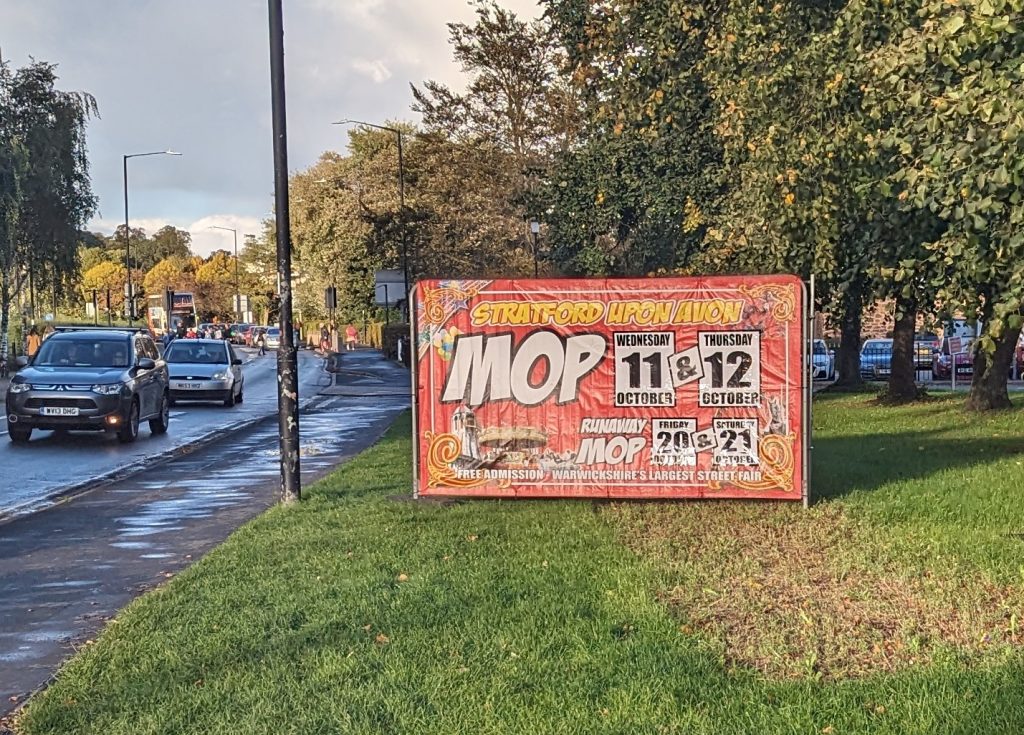
This year the Stratford Mop fair was on the 11th and 12th October, and I was there to see it!As I reposted a long post about the Mop a couple of days ago, I thought I should report back. To recap, the Mop began as a Michaelmas (Old Style) Hiring Fair, and has continued in Stratford ever since. But the modern incarnation is no longer a Hiring Fair and no shepherds were to be seen.

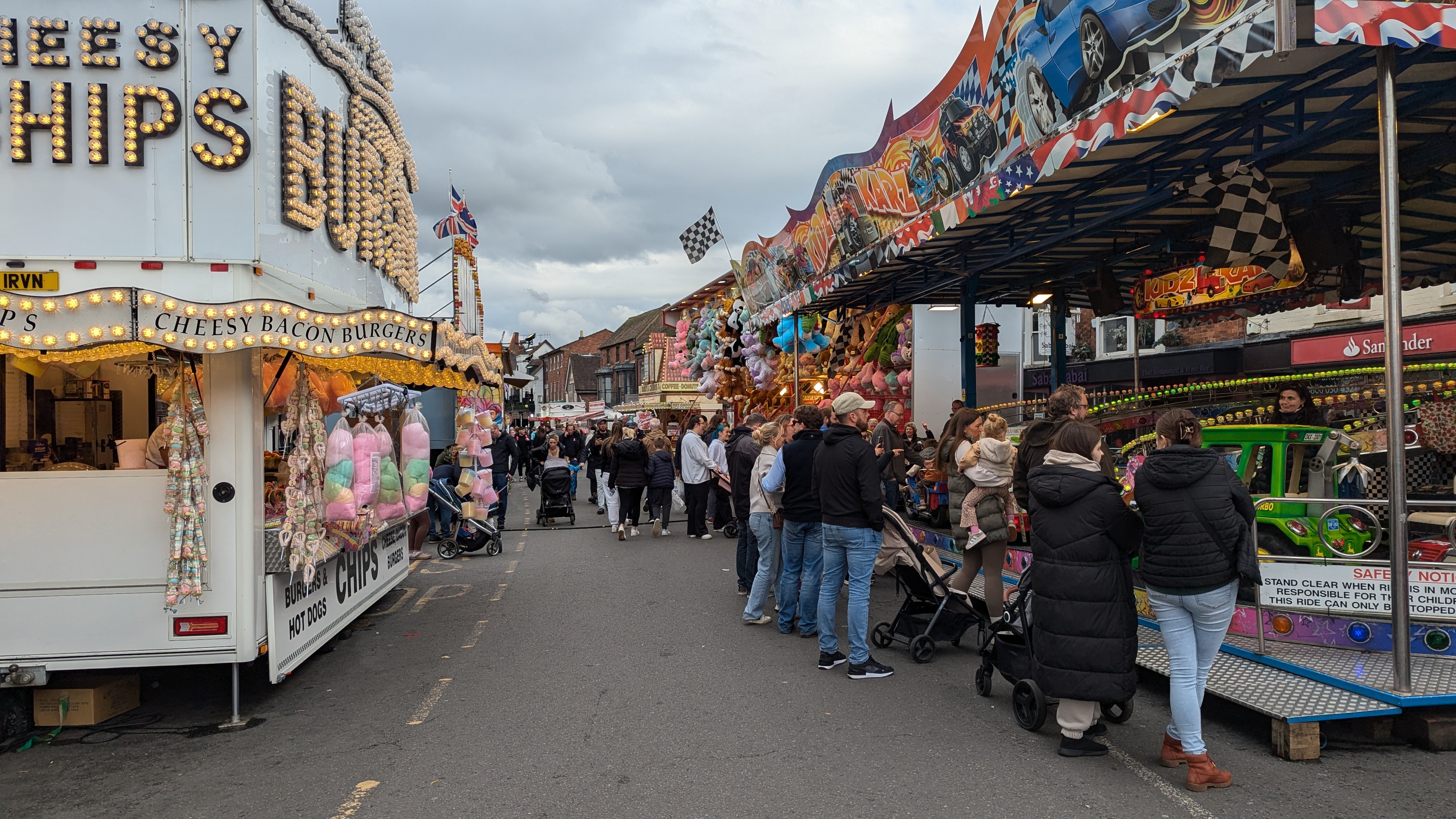
2024 Stratford on Avon Mop. Photo Kevin Flude

The centre of the Town was crowded with a cacophony of shooting galleries, games to win soft toys, stalls selling toffee apples, candy floss, burgers, and all things bad for you. And interspersed with the stalls were all sorts of rides, carousels and all the raucous fun of the fair.

Stratford-upon-Avon Mop Festival (2023 sign)

You might have noticed I have labelled the photographs differently, one Stratford-upon-Avon, the other Stratford-on-Avon. Most prefer the ‘upon’ but I thought this wrong as the Council building in Church Street uses the simpler ‘on’. Having looked it up, I see that the answer is both are correct. Stratford-upon-Avon is used for the Town, and Stratford-on-Avon for the Town and area around the town. Now you know!

Now, I cannot find any reference in Shakespeare to a funfair, and all references to a Mop, are to the thing you mop the floor with. But he does mention St Bartholemew’s Fair obliquely, and certainly knew his friend, Ben Jonson’s Play ‘St Bartholemew’s Fair’. It is a great play based in London, at the annual fair in Smithfield. It was one of the great Wool fairs of England. It was held every year on St Bartholemew’s Day August 24th, and lasting sometimes weeks long. Please read my post on Bartlemas here.

Harvest Moon October 7th

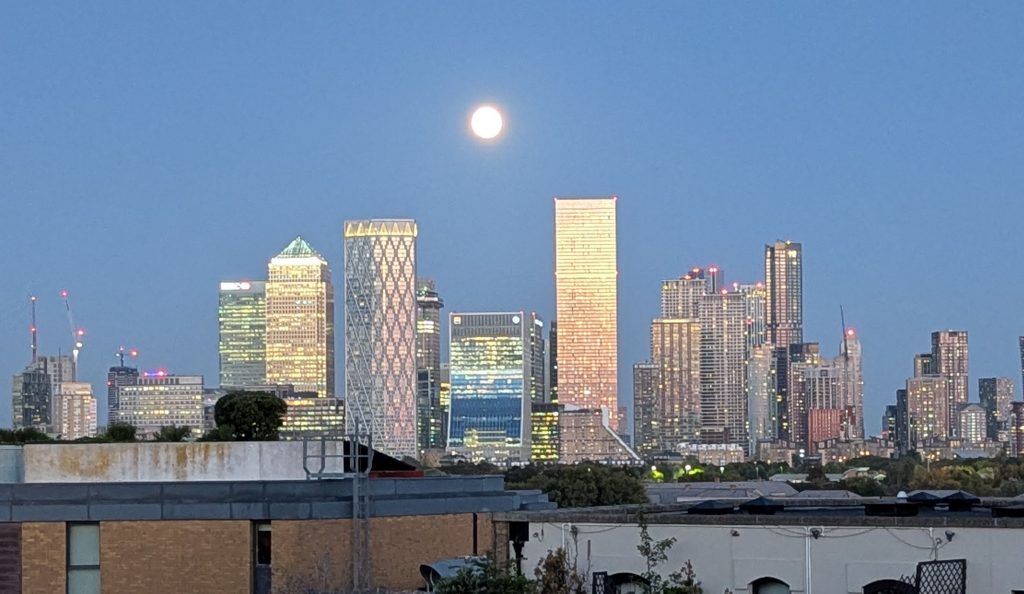
Harvest Moon (Oct 6th 25) over Canary Wharf from Wapping. (Photo K Flude).

The Harvest supermoon will rise at 6.20pm, today on October 7th 2025. It looked pretty full last night from my vantage point in a penthouse flat in Wapping. A supermoon is a full moon that occurs when the distance between the Earth and the Moon are at their minimum. So it is bigger and brighter and even more magical.

This one is known as the Harvest Moon or the Hunter’s moon for fairly obvious reasons.

It is definitely the time to play my favourite song.

To find out about the Moon Goddess Selena see my post on the Oak Moon in December and also here.

First Posting on October 7th, 2025

Hampstead Heath Conker Championship October 5th

A strung Conker ready to play Wikipedia by Kevin Doncaster CC BY 3.0

When I was at school, this was the time of the year we got the Conkers out. These are the inedible seeds of the Horse Chestnut tree. We picked up the green husks from the ground. tore out the conker. Used a skewer to drill a hole through them. Threaded a string through the hole, knotted it.

Then we faced up to our friends. One person hangs their conker from their hand just above waist height. The opponent, then swings his or her conker at the dangling conker, hoping to smash it to smithereens. If your conker wins it would be a one-er. Then, if you beat another yours would be a two-er. If a three-er beat your two-er, they would be a five-er. And so on.

Problem is some boys (or more often their dads) would be cunning. They would process their conker to make them stronger. Soaking them in vinegar, drying them and trick in or out of the book. Recently, a competition found the champion had a conker made out of steel! Whether he used it or nor was disputed. But all sorts of augmentation of conkers took place.

So to find out how to play it properly follow this link to the Hampstead Championship. You can participate next year!

https://www.ianvisits.co.uk/calendar/hampstead-heath-conker-championships-402314

World Championship Conkers

This appears to take place at Shuckburgh Arms in Southwick, near Oundle. This year they were short of conkers and they were supplied with emergency conkers by the Royal estate at Windsor. For more information look here.

for Foraging Wild Chestnuts follow this link.

First Published in October 2025

Zeppelin Sunday October 1st 1916

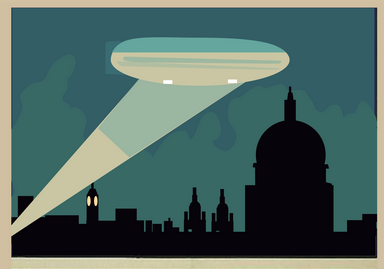
A silhouette of a Zeppelin caught in searchlights over the City of London

On October 1 1916, Kapitanleutnant Heinrich Mathy’s L31 Zeppelin burst into flames after an attack by the Royal Flying Corp. Near Potters Bar he decided to jump out. He was found by farmers still alive and lying face up but died soon after. All 19 Crew died.

Mathy was one of the most experienced Zeppelin Captains.  He began his attacks on London on the night of September 8th 1915.  Mathy piloted Zeppelin L 13 across Central London, dropping bombs as they went, from University College London to Liverpool Street Station. See my post here.

The early raids were almost immune from attack. The height the Zeppelins could reach was often beyond the height the defenses could reach. Also RFC’s weapons were mostly unable to badly damage the Zeppelins. The problem was that machine gun fire could not puncture enough holes to shot down the Zeppelins or to set the hydrogen alight. Also Bombs proved ineffective.

But this was to change in the summer of 1916. In June 1915 the RFC tried out John Pomeroy’s explosive bullets. They did not, immediately, convince the authorities they were the answer. Then Flight Lieutenant Brock (from the fireworks family) designed a .303 explosive bullet. Pomeroy continued develping his bullets and in May of 1916, the RFC ordered batches of both bullets. Then followed the development of phosphorous incendiary bullets. And the ‘Sparkler’ a new tracer bullet developed by the Sparkler Soda Siphon Company. Successes against Zeppelins increased. Zeppelin SL.11 was shot down by William Leefe Robinson on 2/3 September 1916. The Zeppelin came to earth at Cuffley. Thousands of London came to see the wreckage on ‘Zepp Sunday’. Robinson won the Victoria Cross.

Later in September other Zeppelins were forced down, and on 1st October, L31 was shot down. Mathy came in via the Suffolk coast, Chelmsford, Harlow and Enfield Lock in North London. The Anti-Aircraft shelling alerted the RFC Fighters. 4 fighters zoned in on Mathy’s Zeppelin. Lt Wulfstan Tempest, strafed the Zeppelin several times to no effect. Then approaching towards the tail of the Airship, he noticed it was glowing red from inside. Then she started to fall. She crashed in Hertfordshire in Potters Bar, not far from the previous downing at Cuffley.

Here, is a podcast originally written for a Zeppelin Walk for London Walks. It includes an eyewitness account by Hugh Turpin of the shooting down of the Zeppelin (SL.11). Please ignore the dates of walks, as this was a couple of years ago. But I am planning to repeat the virtual tour during the winter of 2025/6.

First Published in 2025


First & Last Coal-fired Power Stations September 30th 2024

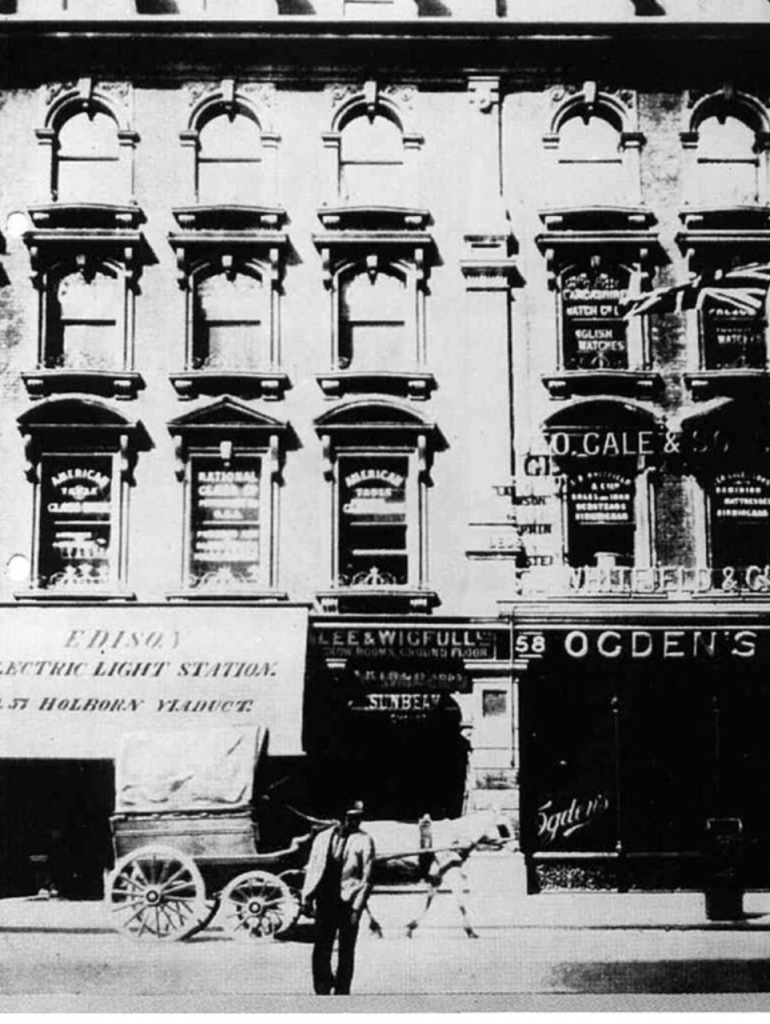
Holborn Edison Electric Light Station First & Last Coal-fired Power Stations

On this day, last year, Britain’s last coal-powered power station generated its final watt of electricity.  Ratcliffe-on-Stour’s closure means Britain is the first country to meet its target of phasing out coal.

The Nottingham power station opened in 1968, and once employed over 3000 people.

For more details follow this link https://www.theguardian.com/business/2024/sep/30/end-of-an-era-as-britains-last-coal-fired-power-plant-shuts-down

Edison Electric Light Station

The first coal-fired power station in Britain was at Holborn Viaduct in London, opened as the Edison Electric Light Station on 12th January 1882.

The power was generated by a steam engine powered by coal.  The electricity powered incandescent electric carbon-filament lights which lit up 986 lights to illuminate the road from Holborn Viaduct to St Martin’s-le-Grande.  The light bulb was invented 3 years previously. 

The number of lights was soon increased to 3,000. But the Station made a loss and was closed down 2 years later. The lights converted to gas.  Sadly, the building was destroyed in the Blitz.

Shoreditch Electric Light Station

A couple of miles to the East, in 1895, the Shoreditch Electric Light Station was established.   It used waste to produce electricity and steam for the local public baths.  The generating and combustion chambers, now houses a Circus School which my children attended.

It was officially opened by Lord Kelvin, the famous physicist in 1897. The Consulting Engineer was Edward Manville who came up with a scheme for a ‘dust destructor’. This comprised: an electricity generating station; a public bath heated by the waste heat from the generator; a library and museum.  It cost 200,000 pounds.  In 1899, in nearby Nile Street, the Shoreditch Vestry Council set up the first municipal housing scheme powered by electricity.

This level of enterprise by a local council seems like a fantasy of a distant past but also, given the sustainability of the project, unbelievably modern.

The motto on the side of the Power Station was ‘Light and Power from Dust’. The scheme was run by the local vestry council which adopted the motto ‘More Light, More Power’. This was also adopted by the new municipal Borough of Shoreditch when it was formed as part of the new London County Council.  The Power Station was renamed as the rather wonderful: Shoreditch Borough Refuse Destructor and Generating Station and adorned with the motto: PULVERE LUX ET VIS ‘Out of the dust, light and power’.

The story of the dust destructor and the generating station is told in some detail here and well worth a read.

First Written 2024 and updated in 2025

St Matthews Day & Christ’s Hosptial September 21st

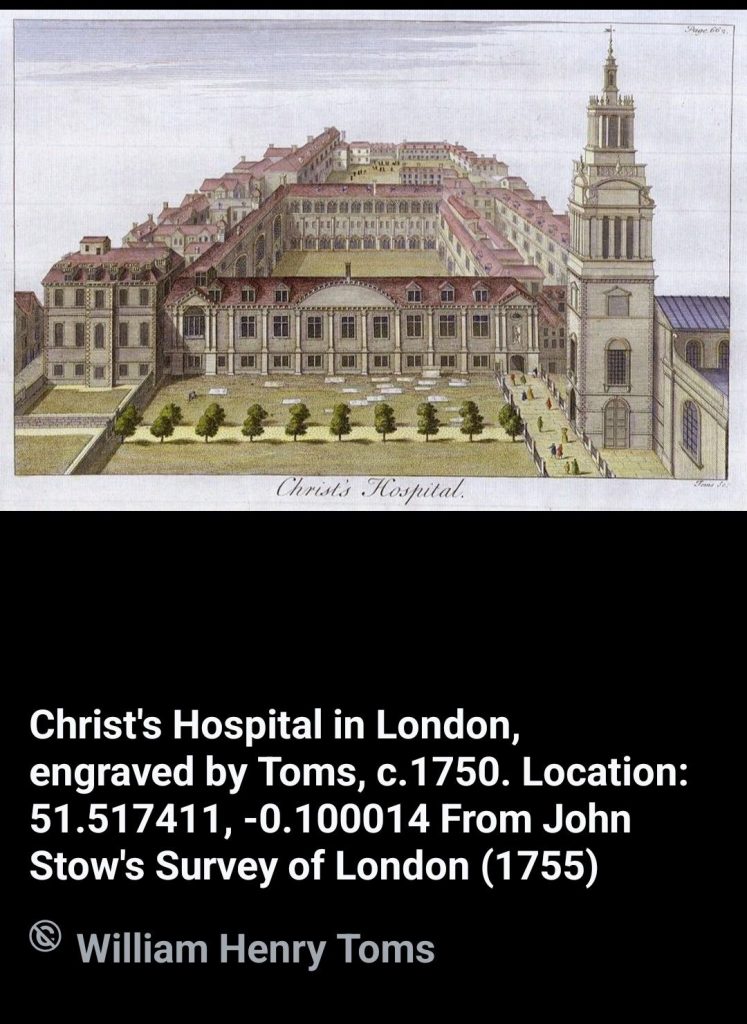
Christ’s Hospital from Wikipedia

In the City of London, St Matthew’s Day was the day that they elected Governors to Christ’s Hospital, it was followed by a service at Christchurch attended by Aldermen, Sheriffs, the Lord Mayor and a procession of the children attending the school. 

Dissolution of the Monasteries

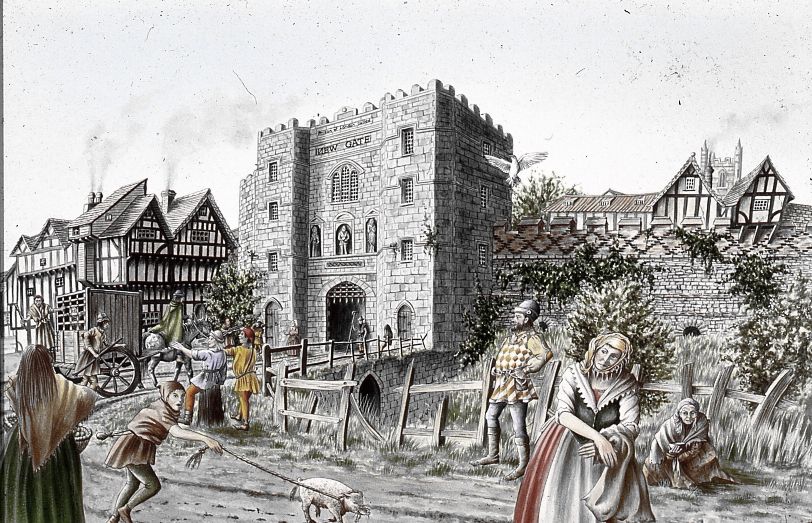
Christ’s Hospital was founded in 1552 by a settlement arranged by Edward VI after the Reformation.  The abolition of the Monasteries by Henry VIII caused a huge problem for the City of London, with the destruction of education and social services managed by monks and nuns.  Henry VIII had already re-established St Bartholomew’s to look after the Poor Sick in the City.  To complete the post dissolution, Edward IV established three Royal Hospitals to sort out additional problems.  Bridewell Hospital became an orphanage and place of correction for wayward women.  St Thomas Hospital for the homeless and poor sick of South London. Christ’s Hospital was to provide schooling.  The school was originally near Newgate and Christchurch Church, which was originally the Choir of the Greyfriars Church.

The school was set up in 1552 and was for boys and girls.   The Mathematical School was added in the late 17th Century to provide navigation skills for sailors.

Flogging the boys

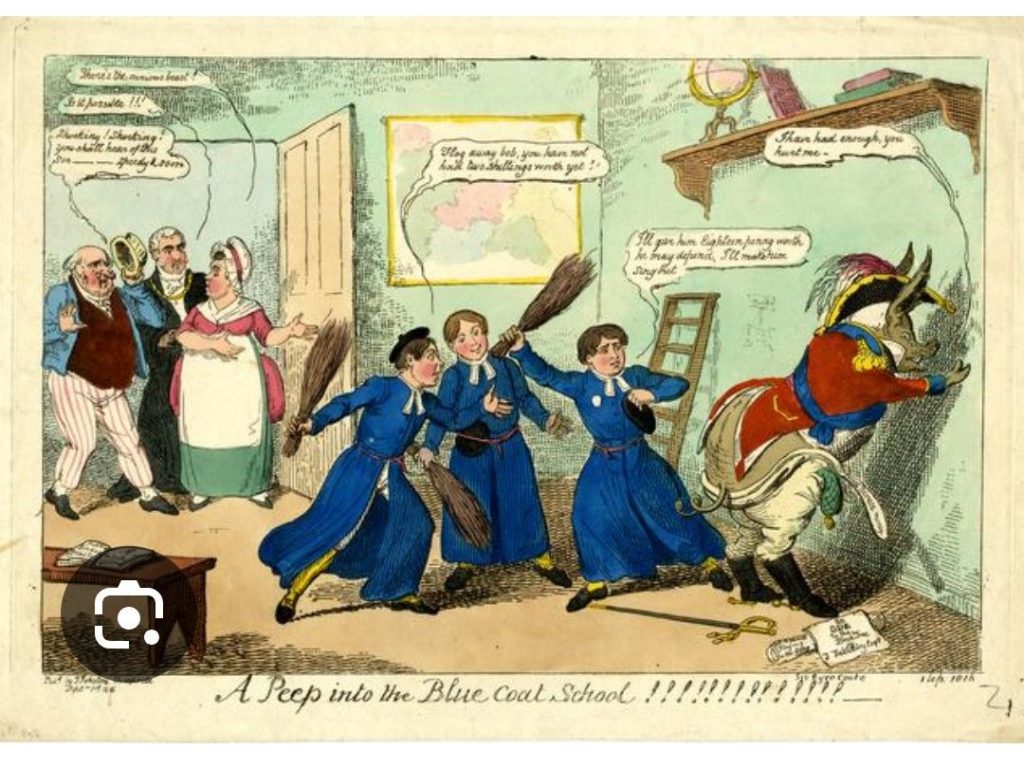
In 1815, a shocking event took place. An MP named Sir Eyre Coote entered the Mathematical school.  He shooed  the younger boys away but paid the older ones to participate in mutual flogging. He was discovered by the school nurse doing up his breeches.  George Cruikshank, a vaunted caricaturist, created a cartoon of the occasion, and it is extraordinary how it was treated far from seriously. 

Cruikshank Cartoon

The blue-coated boys of Christ’s Hospital, eventually moved to Hertford but are now in Horsham.  They maintain their City affiliation and still come to the City on or around St Matthews Day and take part in the Lord Mayor’s Show.  The school is a public school, but has a large percentage of its students funded by bursaries.  In 2016 former pupils opened up about historic sexual abuse leading to the prosecution of 6 teachers of Christchurch.

For more information look here: https://blogs.bl.uk/untoldlives/2015/09/st-matthews-day.html

Also on St Matthews Day, the historic Bush Hotel in Farnham distributed bread to the poor.  This began in 1660 a local benefactor bequeathed one pound annually to pay for the bread.

First Published in 2024, and revised 2025

The Ultimate RAF London Blitz Story September 15th 1940

Black and white photo from a german plane above another german bomber over docklands in the Blitz

On September 15th 1940 Ray Holmes, World War 2 RAF Pilot, flying a Hurricane, took on three Luftwaffe Bombers over Central London.  He shot one down, chased another off and engaged the third which seemed to be heading for Buckingham Palace.

Between the 8th and 13th of September 1940, the Palace had been hit 5 times. The London Blitz had only ‘begun’ on September 7th though the first raid on the City of London was on the 25th August on Fore Street.

Holmes, by now had ran out of bullets, but deliberately targeted the fin of the Dornier Bomber, and crashed into it causing the bomber to crash down into Victoria Station. Holmes’ Hurricane, spiralled down out of control, but he was able to bail out and landed in a dustbin, much to the bemusement of the locals. Holmes died aged 90 in 2005.

This post is heavily based on the story below, where it is told in full detail.

https://www.mylondon.news/news/nostalgia/battle-britain-fighter-pilot-who-19963243

Published in 2024 and revised in 2025

The Queensberry House Cannibal, Inspector Rebus and the Scottish Referendum September 11th 1997

Queensberry House to the right, home of the The Queensberry House Cannibal. The Scottish Parliament in the background. Royal Mile, Cannongate in the foreground. (Photo: K. Flude)

Ian Rankin’s Edinburgh

One of my favourite books on Edinburgh is by Ian Rankin.  It is one of the Inspector Rebus series. What makes Rankin a great crime writer is how the author makes Edinburgh central to the story. It adds realism to his stories.  As you read the stories you enjoy learning about Edinburgh, its culture, history, people, streets and topography. And get insights into Edinburgh’s moods.

Model of the Scottish Parliament, with Queensberry House in the bottom right hand corner.

I haven’t read all the Rebus books but the one I want to feature is ‘Set in Darkness’ published in 2000.  It is set in the period immediately after the success of the Scottish Referendum to set up a Scottish Parliament. The story also takes us back to 1979 when the first Scottish Referendum ‘failed’.

The Queensberry House Cannibal

The book begins with a body found in Queensbury House, which is being preserved and incorporated into the new Scottish Parliament buildings.

Scottish Parliament Building (photo by the author)

This setting was suggested by the well-known tale of the Queensberry House Cannibal; James Douglas the 3rd Marquess of Queensberry and, for a time, the Earl of Drumlanrig. The tale begins on the day, in 1707, that the Scottish Parliament agreed to disband itself. The Parliamentarians voted for an Act of Union with the United Kingdom.

On that day, the young Lord was left alone in Queensbury House with no one to look after him, except a kitchen boy. James had mental issues, and when the adults came home, they discovered that he had eaten the kitchen boy by spit-roasting him. The ghost of the boy is said to haunt the house. Or so the story goes.  It’s always treated as a true story, but there is a suspicion it was a black calumny on those who agreed to the end of the Scottish Parliament.

For more on the event, look here.

The Restoration of the Scottish Parliament 11th September 1997

So, as today is the anniversary of the day the Scots voted Yes to a restoration of its Parliament (11th September 1997), let’s have a look at the long history of devolution. We will take the story backwards.

The referendum asked the Scots two questions. The first was: did they support a separate Parliament for Scotland? The second. Should it have the power to vary levels of taxation? 74.3% voted yes to the Parliament, and 63.5% voted yes for powers of taxation. On the 1st July 1999 the Scottish Parliament was set up by the Blair Government. The new Parliament was elected by the Additional Member system of proportional representation. The country is split into regions, the regions into constituencies, and each constituency elects a member of the Scottish Parliament by first part the post system. Each region has a party list of additional potential members, and the seats are allocated between the parties to make the final result as proportion as possible. This is said to combine the advantages of constituency MPs, and PR.

The ‘Failed’ 1979 Referendum

But this wasn’t the first vote for a measure of independence.  In 1979, the Scottish Act set up a referendum for a Scottish assembly.  James Callaghan was the Prime Minister, and the act followed a Royal Commision on the Constitution. The Referendum was won with a majority of 52%, but an amendment to the Act had a stipulation that there had to be a vote of at least  40% of the registered electorate for the vote to succeed. It won only 32% of the 62% turnout so the Act failed. (if only Cameron had done something similar for the Brexit Referendum!).

So it would be another almost 20 years before the Scots got their own debating chamber.

1707 Act of Union

The Scots lost their Parliament on the 1st May 1707 when the Act of Union with England was enacted.  The Scottish Parliament had been in existence since the early 13th Century.  The Scots had no House of Commons, but its unicameral Parliament had representatives from the Three Estates: prelates representing the Church; Aristocrats representing the nobility, and Burgh Commissioners representing the Towns.  Later, Shire Commissioners were added to represent the countryside.

The decision to disband the Parliament of Scotland was very controversial, and blamed on the self-interest of the Nobility against the wishes of the people. Scotland had lost out on the huge profits being made by the Empire by England, excluded as the Scots were by the Navigation Acts from trading freely within the British Empire. So the Scots set up their own  Company of Scotland Trading to Africa and the Indies which invested in the disastrous  Darién scheme,

The idea was to build a colony on the Isthmus of Panama.  80% of the participants in the settlement died, and the 20% of Scottish wealth which was invested in the scheme was lost. Many of the Scottish members of Parliament lost money in the Scheme, and compensation and bribery offered by the English encouraged the Parliamentarians to accept the advantages of free trade within the British Empire and to join the Westminster Parliament.

Joint Monarchies

In 1603, the Scottish and English monarchies joined in the person of James VI of Scotland who became James 1st of England on the death of his childless aunt, Queen Elizabeth 1. But the Scots kept their own Parliament and legal system. There were attempts to bring a closer Union, but these all failed until 1707.

England Overlording it?

From the early beginnings of Scottish existence as an independent nation, the English Monarchy claimed to be the feudal overlord of Scotland. Scotland was normally able to deny this until the reign of Edward I. After the battle of Bannockburn the Scottish made a declaration of their complete independence from England at Arbroath. It was sent to the Pope who accepted it. This helped the Scots defy England until 1603 when the two monarchies joined.

To see the rest of my Edinburgh Booklist click here. or to see my post on poetry on the wall of the Scottish Parliament.

First Written in 2024, revised 2025

To follow up have a look at these websites:

The original Scottish Parliament

How the Scottish Parliament works