Sagittarius, Martinmas Old Style and Pack-Rag Day November 22nd

November 22nd is the dawning of Sagittarius.

According to the Kalendar of Shepherds 1604, women born on this day should marry at age 13, shall have many sons and live to 72 years old. Men born on November 22nd will be merciful, far-travelled, prosperous after early dangers and live to 72 years and 8 months. Can’t help feeling that prophecy this precise is heading for a fall. (see my post sliding-ducks-and-the-equivocation-of-prophecy/).

Martinmas Old Style and Pack-Rag Day

Pack-Rag Day, hiring of farm workers

Martinmas was the Festival of Winter’s Beginning and is celebrated on November 11. It was one of the most famous medieval festivals. In 1752, the calendar was transformed when Britain transferred from the Julian to the Gregorian Calendar, 11 days were lost from the Calendar, so the original date of the festival would be what we know as November 22nd. So this is Martinmas Old Style.

In the East Riding of Yorkshire, hiring fairs were held around this time. It was also called Pack-Rag Day as servants carried their clothes to their new place of work.

A hiring fair is how Gabriel Oak is hired by Batheseba Everdene in ‘Far From the Madding Crowd’ by Thomas Hardy. They were often also held at Michaelmas, and in Warwickshire are called Mops. See my post on the Mop here.

On this Day

As you may have noticed, I have been adding a section called ‘On this Day’ which highlights some notable events that have happened on this day in history. In my quest to create an almanac of the past with a reasonable post for every day, my loyal subscribers will be getting a post they read last year. So, I am trying to add extra content to make it worthwhile. Hence, this ‘new’ section (one year old today).

So, I will either republish a previously published post. It should be better proofread (although I’m perfectly capable of adding extra embarrassing typos). The content should be improved or expanded. Or with an added ‘On this Day’ section. Therefore, if you find you have read the post before, just scroll down to the new content at the bottom.

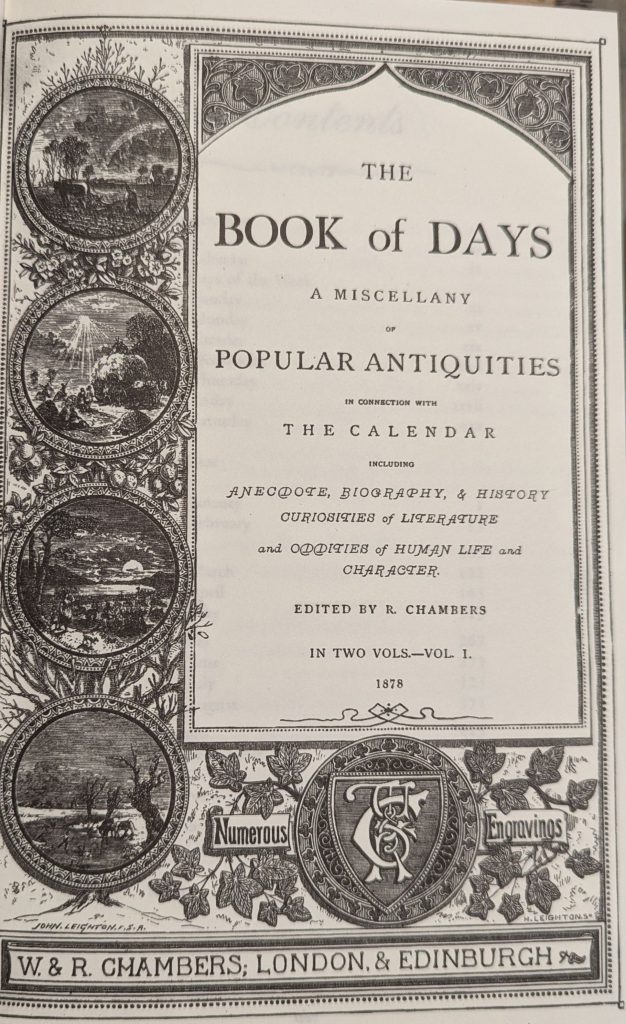
One of my sources for the ‘On this Day’ section is Chambers’ ‘Book of Days A Miscellany of Popular Antiquities’in connection with the Calendar’. The original was published, in 1864, by Robert Chambers one of the original founders of Chambers Publishing. The new one takes is inspiration from the original. I found out about it from Sir Roy Strong and Julia Trevelyan Oman’s ‘The English Year, which is itself a personal selection from the Chambers Book of Days. Sir Roy was my boss when I was an Assistant Keeper at the V&A.

1963 President Kennedy and Governor John Connally were shot while part of a motorcade in Dallas.

1968 The Beatles White Album was released

1990 British Prime Minister Mrs Thatcher resigned.

Originally published as two separated posts on 22nd November 2022, republished on 22nd November 2023, merged 2024, and expanded 2025

Beginning of the Month of Frimaire November 21st

The frosty month of the French Revolutionary calendar.

The rational calendar divided the year into twelve 30-day months, plus 5 days for end of year festivities. And a leap year every 4 years.

Weeks were 10 days long, 3 per month. Days were named first day, second day, third day up to tenth day. There were ten hours in a day, 100 minutes per hour, and 100 seconds per minute. But this last part didn’t last very long, French people really objected to their day and hours being mucked up.

Revolutionary period pocket watch

The Revolutionary Year was adopted in 1793 but began retrospectively from September 22nd, 1792 commemorating when the Republic was proclaimed. Thereafter, the First Republic started on: Le premier Vendémiaire de l’an 1.

Napoleon gave it up as a bad job in 1806, and restored the Gregorian Calendar.

For my fuller explanation of the French Revolutionary Calendar click here).

On this Day

1847 James Young Simpson wrote an account of his testing of Chloroform for use as an anaesthetic. It was published in the medical journal, the Lancet. Chloroform was invented in 1831, used on animals successfully in 1842. But it was considered too dangerous for humans.

Simpson and his two assistants were in the habit of meeting in his Edinburgh house, at 52 Queen Street, in the New Town. There they tested new chemicals. He obtained some Chloroform, for the three of them to try. They found themselves merry, and the next thing they remember was waking up to a new dawn.

Chloroform is more effective than Ether, but the margin of error is tighter. Simpson and his friends were lucky the chosen dose didn’t kill them. Nor did the sudden unconsciousness  knock them out or injure them.

They then tried it on his niece, Miss Petrie.  Success meant it was set to become the anaesthetic of choice, particularly for childbirth, for the next 100 years.

1877 Thomas Edison announced the invention of the phonograph.  This ushered in a new age of inexpensive recordings of music. Musicians feared it meant the end of the careers of most musicians.  And indeed, it had profound effects, but live music survived.  And so we hope it will also survive AI.

Wikipedia describes the process that produces the music for the gramophone, as:

The sound vibration waveforms are recorded as corresponding physical deviations of a helical or spiral groove engraved, etched, incised, or impressed into the surface of a rotating cylinder or disc, called a record.

First published on November 21st 2022, republished on November 21st 2023, 2024, 2025

Night Fowling November 19th

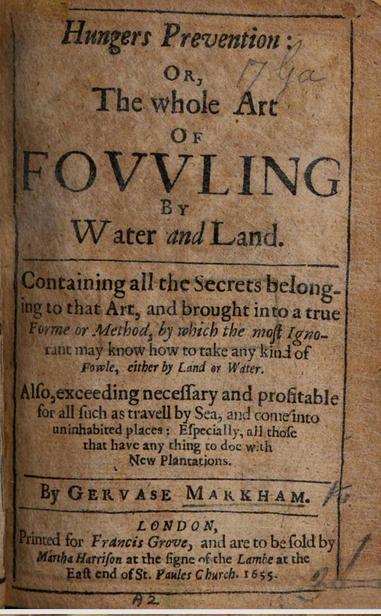
Gervase Markham Hungers Prevention: or, the Whole Art of Fowling by Water and Land. (Printed, London: for Francis Grove, 1655).

This was the period of the year for ‘Night-fowling’. Gervase Markham wrote a whole book about it in the 17th Century. It was called Hungers Prevention: or, the Whole Art of Fowling by Water and Land. (Printed London: for Francis Grove, 1655).

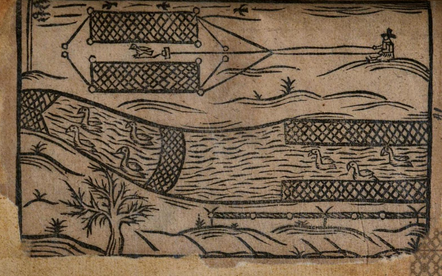
In it, he tells the reader to go to ‘a stubble field in November when the air is mild and the moon not shining. There take a dolorous low bell, and net. Spread the net over the stubble where there may be fowl, ring the bell, light fires of dry straw, and the fowl will fly and become entangled in the net.

Title illustration from Gervase Markham Hungers Prevention: or, the Whole Art of Fowling by Water and Land. (Printed London: for Francis Grove, 1655).

In Britain today, the Wild fowling season is from 1 September – to 20th February and largely takes place on the marshes and foreshore.

Duck, Geese, waders and other birds are the quarry. Species involved include:
Gadwall goose, Canada goose, Common snipe, Coot, Goldeneye duck, Greylag goose, Golden plover, Moorhen, Mallard, Pink-footed goose, Jack snipe, Pintail, European Woodcock, white-fronted goose, Pochard, Scaup1, Shoveler, Teal, Tufted duck, Wigeon

(from https://basc.org.uk/wildfowling/advice/wildfowling-code-of-practice/)

For more Gervase Markham books see my post here:

On this Day

On this day, in 1660, Charles I was born.

In 1863. President Abraham Lincoln gave the Gettysburg Address.

World Toilet Day

Today is the United Nations’s World Toilet Day. It is ‘Sustainable Development Goal 6 Safe toilets for all by 2030’. It is astonishing that we, as a species, have:

3.5 billion people (who) still live without safely managed sanitation, including 419 million who practise open defecation.’

That is a third of the world’s population if my figures are correct. It also impacts particularly badly on women in those areas where decent hygiene cannot be guaranteed.

These are the ‘Key messages you should know on World Toilet Day’

  1. Toilets are a place for peace. This essential space, at the centre of our lives, should be safe and secure. But for billions of people, sanitation is under threat from conflict, climate change, disasters and neglect.
  2. Toilets are a place for protection. By creating a barrier between us and our waste, sanitation services are essential for public and environmental health. But when toilet systems are inadequate, damaged or broken, pollution spreads and deadly diseases get unleashed.
  3. Toilets are a place for progress. Sanitation is a human right. It protects everyone’s dignity, and especially transforms the lives of women and girls. More investment and better governance of sanitation are critical for a fairer, more peaceful world.

First published Nov 19th 2022. Republished Nov 19th 2023, 2024, 2025

Time to make Sausages November 18th

Hackney City Farm. Photo K Flude

Following Martinmas, farmers used to slaughter a good many of their animals because of the difficulty of feeding them during the winter. So this was the time to make sausages from all that meat and guts. Follow this link for a Tudor Sausage recipe.

Pigs were a very productive part of the Medieval and Early modern farmers’ economy. Almost as much pork was eaten as lamb. The upper classes, of course, preferred beef. But even the lowliest family would keep a pig. They would be pastured in forests, commons and fallow fields around the village, foraging for themselves on whatever they could get. In Autumn, they would be taken to specially grown copses of pollarded oak groves. The farmers pollarded the trees to keep them short and bushy. They could use the wood they pruned for wood working projects, or for firewood. When the acorn season came, they would hit the low branches with cudgels to release a lovely torrent of acorns on the floor for the pigs to feast themselves upon. So they grew fat for Martinmas when they were slaughtered.

Another benefit for a community of peasants living on the margin was that the sow might have 6 – 14 piglets. When the time came to slaughter the pig, the small holder could swap piglets with others, and share the bounty of the slaughtered animal. This would be reciprocated, and help made good food available more of the time.

Window of Edinburgh Royal Mile Cafe. Photo KFlude

For more on the benefits of pigs to agroecolog, have a read of this fascinating site: forests-of-pork-the-agroecology-of.

Random Sausage Fact

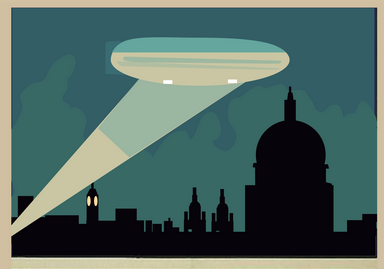
A silhouette of a Zeppelin caught in searchlights over the City of London. Zeppelins

Sausages were severely rationed in Germany in World War 1 because they used nearly 200,000 cattle guts to make gasbags for each of the Zeppelins that bombed London. This made them very difficult to shoot down as the gas was held in so many separate bags.

To read my Zeppelin post look here:

On this Day

1477 – Caxton Prints 1st Book in England. Westminster

https://information-britain.co.uk/linkunit.htm

‘The Dictes or Sayingis of the Philosophres’, dated 18th November 1477. was from the French by Anthony Woodville, the 2nd Earl River brother-in-law of King Edward IV,

However, some people say the first book he published in Englandwas an edition of Chaucer‘s The Canterbury Tales. See https://www.merton.ox.ac.uk/library-and-archives/exhibitions/caxtons-first-edition-of-canterbury-tales for more/

First published November 2024, revised 2025

St Cecilia’s Day, Henry Wood and the BBC Proms November 17th

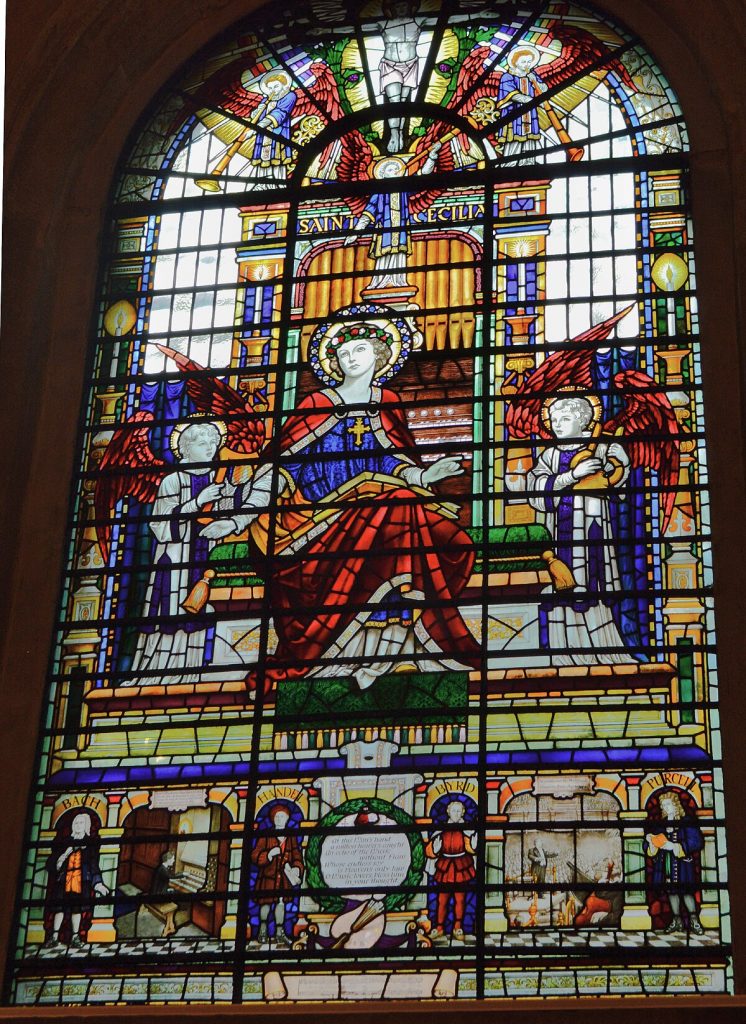
St Sepulchre-without-Newgate, Musician’s Chapel, St Cecilia window. 17 August 2022, Andy Scott

November 17th is St Cecilia’s Day She is the patron saint of musicians and was martyred in Rome in the Second or Third Century AD. The story goes that she was married to a non-believer. During her marriage ceremony she sang to God in her heart (hence her affiliation with musicians). She then told her husband that she was a professed Virgin. So, if he violated her, he would be punished by God. Cecilia told him she was being protected by an Angel of the Lord who was watching over her. Valerian, her husband, asked to see the Angel. ‘Go to the Third Milestone along the Appian Way’ he was told where he would be baptised by Pope Urban 1. Only then would he see the Angel. He followed her advice, was converted and he and his wife were, later on, martyred.

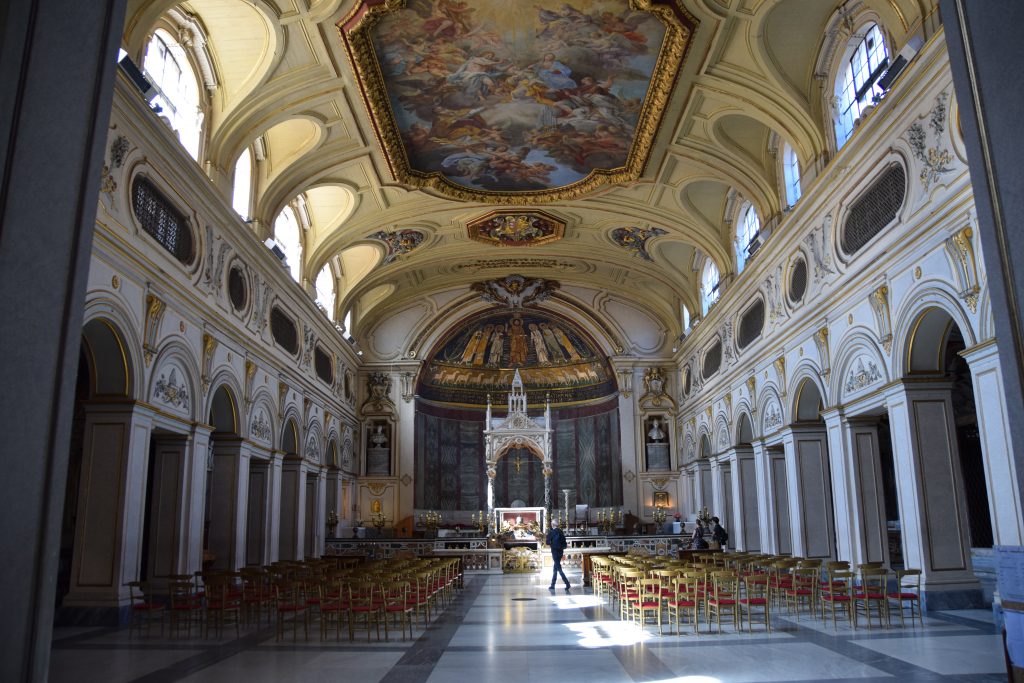
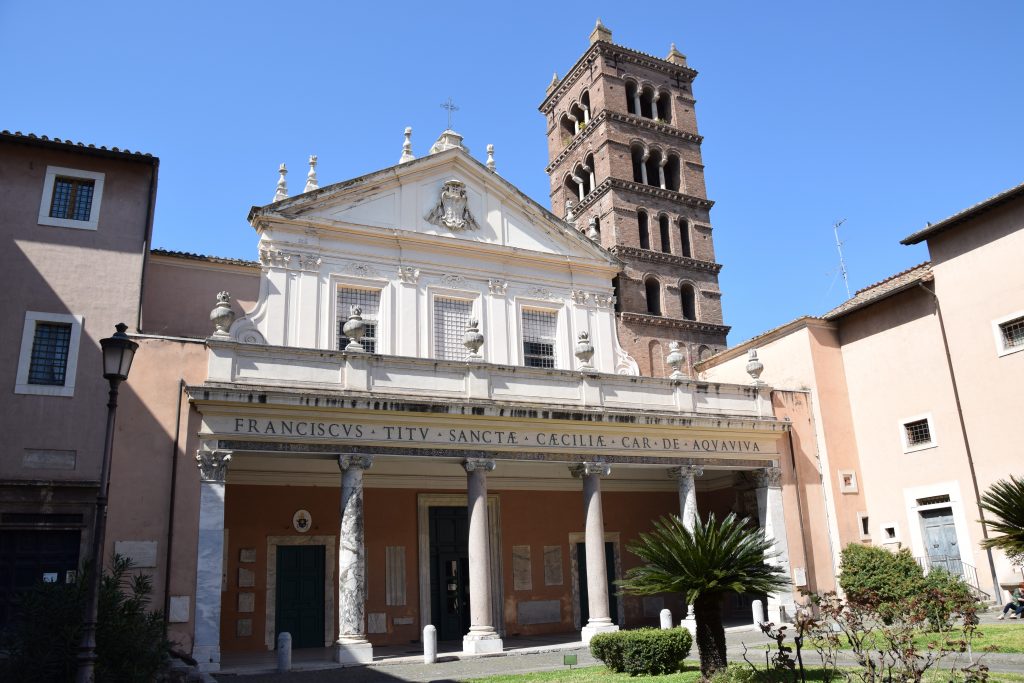
The Church in Rome, Santa Cecilia in Trastevere, is said to be built on the site of her house, and has 5th Century origins. My friend, Derek Gadd, recently visited and let me use these photographs:

St Cecilia in London

There is a window dedicated to her in the Holy Sepulchre Church-without-Newgate, In London, opposite the site of the infamous Newgate Prison.  Henry Wood, one of our most famous conductors and the founder of the Promenade Concerts, played organ here when he was 14. In 1944, his ashes were placed beneath the window dedicated to St Cecilia and, later, the Church became the National Musician’s Church.

This window is dedicated to the memory of
Sir Henry Wood, C.H.,
Founder and for fifty years Conductor of
THE PROMENADE CONCERTS
1895-1944.
He opened the door to a new world
Of sense and feeling to millions of
his fellows. He gave life to Music
and he brought Music to the People.
His ashes rest beneath.

The Concerts are now called the BBC Proms and continue an 18th and 19th Century tradition of, originally, outdoor concerts, and then indoor promenade concerts. At the end of the 19th Century, the inexpensive Promenade Concerts were put on to help broaden the interest in classical music. Henry Wood was the sole conductor.

Wikipedia reports :

Czech conductor Jiří BÄ›lohlávek described the Proms as “the world’s largest and most democratic musical festival”.

The Eight-week Festival is held at the Royal Albert Hall. It moved here during World War 2 after the original venue, the Queen’s Hall, was destroyed in the Blitz in May 1941.

On This Day

1278 Edward 1 had over 600 Jews imprisoned in the Tower of London for coining, clipping and other counterfeiting. Of these, 269 Jews, along with 29 Christians, were executed. They were hanged at the Guildhall in the City of London. By 1290, the King had squeezed all the money he could from the Jews, and they were expelled, not to be let back into the Kingdom until the reign of Oliver Cromwell in the 17th Century. This ended a long period of savage state run antisemitism. Click here for further information.

First Published on November 17th 2023 and revised in November 2024, 2025.

Time to Tup your Sheep – November 7th

City Farm, Hackney. Small flock of Bluefaced Leicester Sheep, the big golden one is the Ram, the others are the ewes he has tupped. Photo K Flude

The old Shepherd’s saw is:

‘In with a bang and out with the fools’.

The bang is Guy Fawkes Day on November 5th, and the fools are a reference to All Fools Day on April 1st. The gestation period of a ewe is 147 days (on average). (sheep-farmers-year). So farmers introduce the Ram into a field of Ewes on or around November 5th. This means the lambs will be born around the beginning of the traditional lambing season.

(see my posts on Guy Fawkes Day and All fools Day)

Tupping Times

The Ewes have been enjoying themselves in the fields, The flocks have been thinned out, with the young ones being sent to market, mostly for meat. The grass has been growing at the end of the summer, with the wetter weather. The ewes will be in excellent condition, and will have been thoroughly checked by the shepherd.

The chosen ram will be dressed with a harness on his chest, which will have a sheep’s crayon on it. The crayon is known as raddle or reddle. The ram, also know as a tup, will mate with whichever of the ewe(s) that catch his eye. Each one he tups (mounts or covers) will be left with a paint mark, from the reddle on his chest, on her back. The farmer will inspect the ewes periodically. A ewe with two or more reddle marks on her back, will be taken out of the field. This will force the ram to spread his attentions to the, as yet, untupped, ewes. He will continue until all ewes have been tupped. And then onto the next field full of ewes. Diggory Veen is the Reddleman in Hardy’s ‘Return of the Native’. I talk about him, lambing and reddle in my post here.

Some of the young ewes will be kept to reinforce the flock. Males will only be kept if they will be sold to another farmer as a tupping ram. They cannot breed on the farm as this will lead to inbreeding. So, a ram will be purchased or swapped from another farm. The farmer will want to choose one that fits into his/her idea of what the ideal sheep is. whether it is grown for meat, or to be hardy, or for its wool etc.

Raddled

To be raddled is to be flushed, red with drink, or over made up. It has a sense of dissipation about it. One might have more sexual encounters than is normal. Just like the ewe with too many raddle marks on her back? Or the Raddle man with a red face and hands from all the raddle he handles?

Bluefaced Leicester Sheep and my Hat!

I was delighted to see my local City Farm had a small herd of Bluefaced Leicester Sheep. I was visiting with my Grandson when I took the photograph at the top of the page. The sherderdess told me the blue-marking in this case was not a result of mating. She thought 2 or more of them were already pregnant, however.

My association with the breed comes from a lovely yarn shop in Conwy (Ewe Felty Thing) which had a rail of clothes marked ‘wearable art’. I bought a woolly beanie which they told me was:

‘Hand-spun, hand knitted from a bluefaced leicester sheep.

Hand-spun, hand knitted Beanie from a Bluefaced Leicester sheep. purchased at (Ewe Felty Thing) Photo K Flude

I still have it. It cost a small fortune, but worth every penny!

A bluefaced Leicester Ram, might cost £1000 if a bought as a lamb, £4,000 if bought as a shearling, or up to £40,000 if a prize lamb. It is one of the biggest lambs with a long back, and longwool with ringlets. There is no wool on the face and neck so you can see its blue-grey skin, below the white hair – hence its name. It is often bred with hill sheep ewes, which combines the prolificacy of the ram with the mothering abilities of the ewes.

Generally, nowadays the wool from a shearing will only be worth about 80p in today’s market. This will not pay for the cost of the shearing, but it is necessary for health and hygiene reasons.

Posted on 7th November 2025

Remember, Remember, the 5th of November

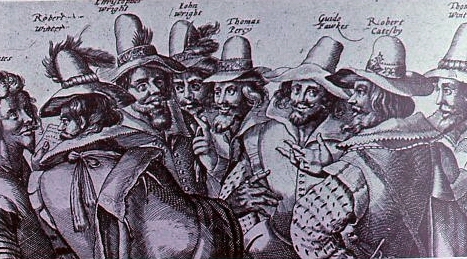
Old print showing the plotters for the Gunpowder plot
The Gunpowder Plotters, culminating on the 5th of November

Soon, after the discovery of the Gunpowder Plot, Parliament legislated for an annual commemoration of the Catholic Plot. The date they chose was the anniversary of finding Guy Fawkes with a lantern next to piles of barrels of Gunpowder underneath Parliament. This was the occasion of the State Opening of Parliament, 5th November 1605. The King, his Queen, the King’s children. The Lords from the House of Lords & MPs from the House of C would all have been blown up.

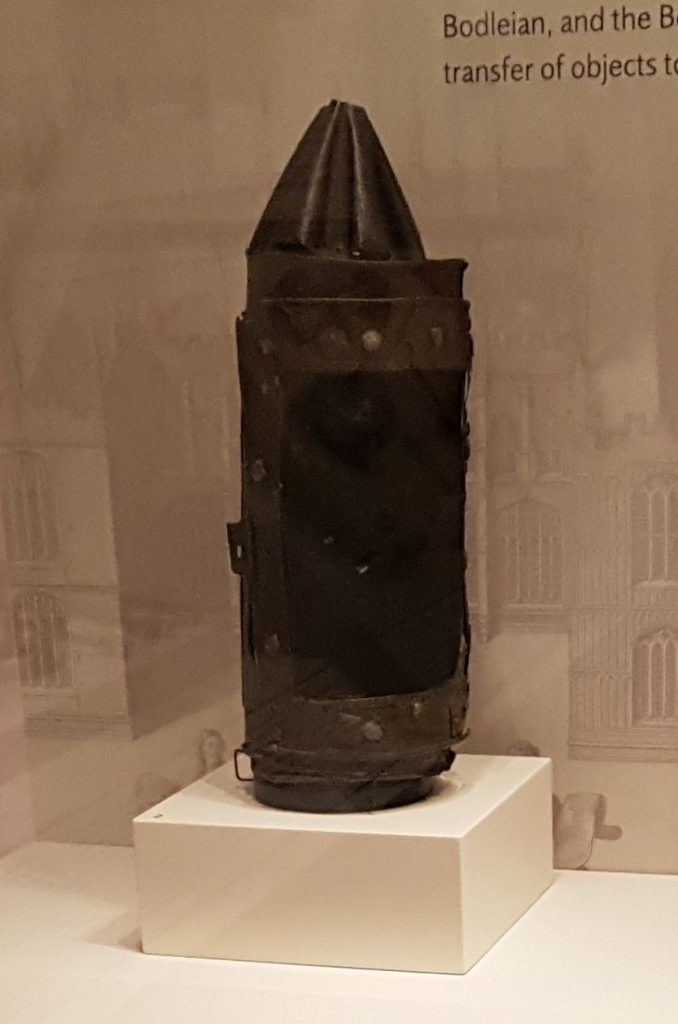
The Ashmolean Lantern

Guy Fawkes Lantern at the Ashmolean Museum

This was the one held by Fawkes. It was given the Museum by Robert Heywood in 1641. He got it from his brother, Peter, who was a Westminster Magistrate among the party who arrested Guy Fawkes in the cellar. Peter Heywood, took the lantern from Guy Fawkes to stop him setting fire to the pile of gunpowder barrels. Or at least that is the story Robert Heywood told.

A commemoration of fireworks and bonfires was clearly appropriate given that it has been estimated that the amount of gunpowder in the barrels would have killed the king, the Royal Family, the House of Lords and the House of Commons and devastated a huge area around Westminster. But some suggest that the nature of the commemoration draws some elements from Halloween – use of bonfires and dressing up. Halloween was frowned upon by puritans, but they supported Guy Fawkes Day as it was anti-catholic.

Banner in Lewes

The anti-catholic nature of the celebration is a fact, but it really isn’t something we think about today. There is little anti-Catholic prejudice in Britain (except in one or two very specific places). Irish friends are amazed we still celebrate it, but for the vast majority of people in Britain it is really just Fireworks night, nothing to do with anti-catholic sentiment.

The Lewes Bonfire

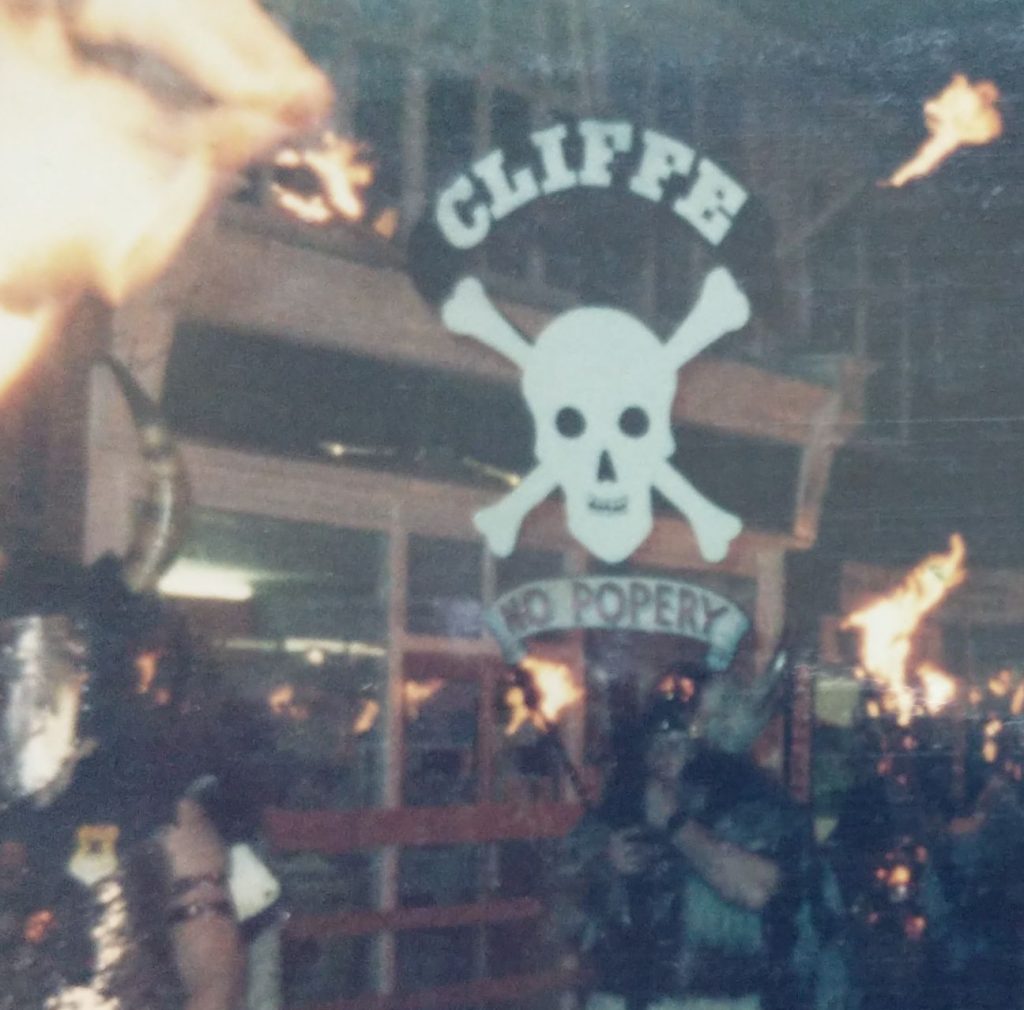
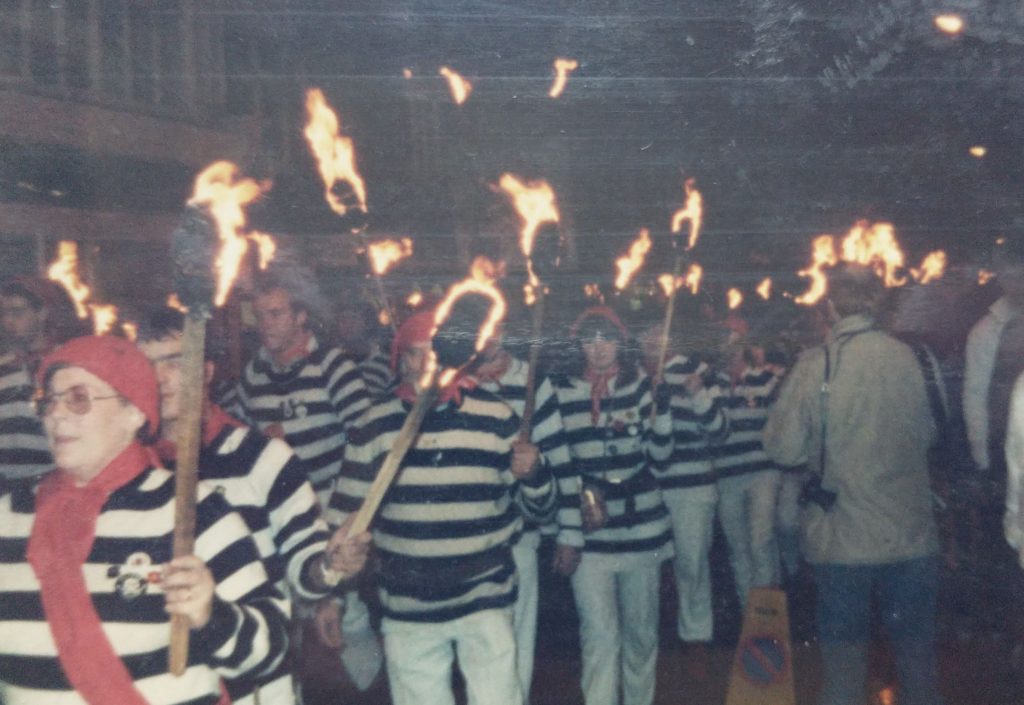
Traces of the original anti-catholic nature of it do continue in places like Lewes, which is one of the most traditional Fireworks Nights. This consists of clubs who organise a parade through the town. Then it ends with the burning of an effigy of the Pope and, more recently, other unpopular figures on the contemporary scene. Click here for more on Lewes.

Procession in Lewes

Tar Barrel Rolling

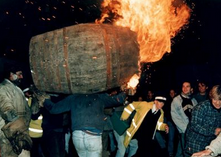
Ottery St Mary continues the tradition of using Tar Barrels. These are wooden barrels in which tar and tinder are set on fire. The Barrels are either rolled through the Town, or down a hill. But in Ottery they are carried on the shoulders of volunteers (see video below). This has a pedigree which goes back before 1605 as there are references to tar barrels and displays in Protestant processions to celebrate the accession to the throne of Edward VI and Elizabeth 1.

Tar Barrels in Ottery St Mary
Stephen and Claire – 2 Zany Brits on YouTube

Discovering the Plot

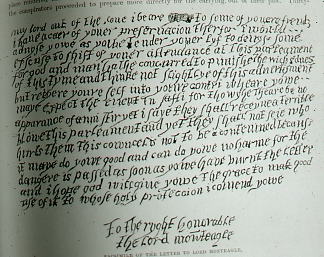
King James 1 took credit for discovering the plot as he is said to have deciphered the warning given in a letter, written to William Parker, 13th Baron Morley, 4th Baron Monteagle. Monteagle wrote the letter at his house in Hoxton, London (commemorated by a plaque in Hoxton Street near where I live) which warned against turning up at Parliament but was not explicit as to the nature of the threat.

Letter Lord Monteagle passed on to King James 1

My lord, out of the love I beare to some of youere frends, I have a care of youre preservacion, therefore I would aduyse you as you tender your life to devise some excuse to shift youer attendance at this parliament, for God and man hath concurred to punishe the wickedness of this tyme, and thinke not slightly of this advertisement, but retire yourself into your country, where you may expect the event in safety, for though there be no apparance of anni stir, yet I saye they shall receive a terrible blow this parliament and yet they shall not seie who hurts them this cowncel is not to be contemned because it may do yowe good and can do yowe no harme for the dangere is passed as soon as yowe have burnt the letter and i hope God will give yowe the grace to mak good use of it to whose holy proteccion i comend yowe.

National Archives

James realised this sentence: ‘they shall receive a terrible blow this parliament and yet they shall not seie who hurts them ‘ implied an explosion. His father, Lord Darnley, was killed in a Gunpowder Plot in Edinburgh, so perhaps he was particularly attuned to the threat. On the other hand, there is a possibility that the King’s Secret Service were aware of the plot and arranged matters, so the King could receive the credit for its discovery.

The Fifth of November

    Remember, remember!
    The fifth of November,
    The Gunpowder treason and plot;
    I know of no reason
    Why the Gunpowder treason
    Should ever be forgot!
    Guy Fawkes and his companions
    Did the scheme contrive,
    To blow the King and Parliament
    All up alive.
    Threescore barrels, laid below,
    To prove old England’s overthrow.
    But, by God’s providence, him they catch,
    With a dark lantern, lighting a match!
    A stick and a stake
    For King James’s sake!
    If you won’t give me one,
    I’ll take two,
    The better for me,
    And the worse for you.
    A rope, a rope, to hang the Pope,
    A penn’orth of cheese to choke him,
    A pint of beer to wash it down,
    And a jolly good fire to burn him.
    Holloa, boys! holloa, boys! make the bells ring!
    Holloa, boys! holloa boys! God save the King!
    Hip, hip, hooor-r-r-ray!

English Folk Verse (c.1870)

See my post on preparing for Guys Fawkes day here:

First published 5th November 2021, revised 2024, 2025

The Horned God & Preparing for Guy Fawkes Day November 4th

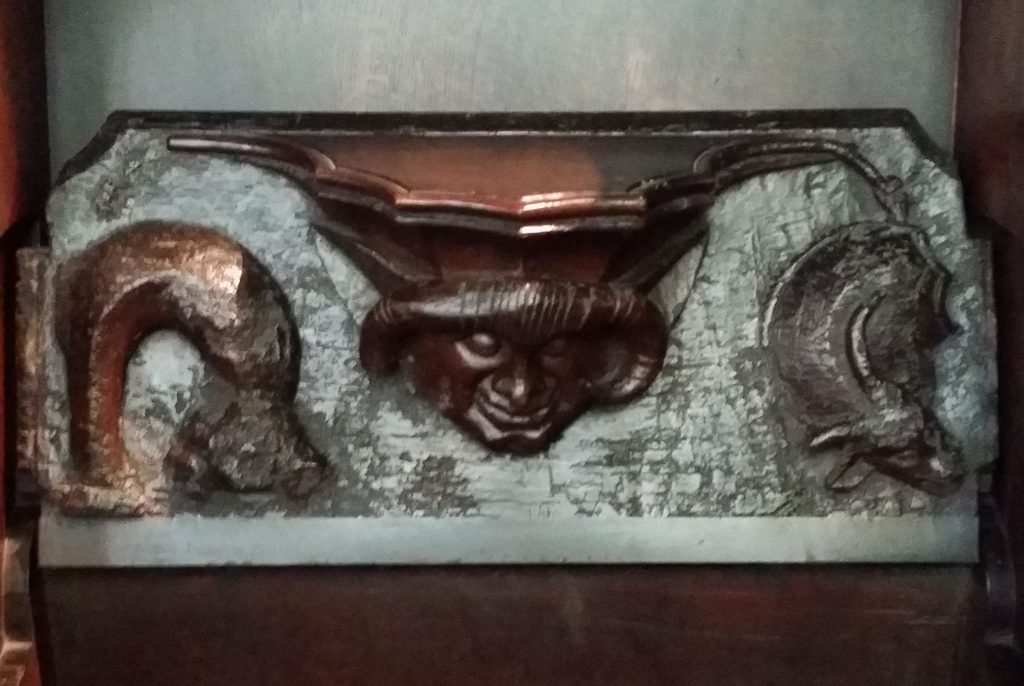
medieval monks seat showing carving of a Horned man (with Ram's Horn) at Stratford on Avon Holy Trinity Church) Photo: K Flude
Horned God (with Ram’s Horn) at Stratford on Avon Holy Trinity Church) Photo: K Flude. Carving of a dolphin to the left (symbol of Christ) a goat to the right (symbol of the damned – as Christ divides the sheep from the goats who are going to hell)

Horned Gods

November 4th is dedicated to hunting gods such as Herne, the Horned God, Cernunnos, The Green Man and Pan.

Herne the Hunter appears in Shakespeare:

There is an old tale goes, that Herne the
Hunter
(sometime a keeper here in Windsor Forest)
Doth all the winter-time, at still midnight
Walk round about an oak, with great ragg’d horns;
And there he blasts the tree, and takes the cattle,
And makes milch-kine yield blood, and shakes a chain
In a most hideous and dreadful manner.
You have heard of such a spirit, and well you know
The superstitious idle-headed eld
Receiv’d, and did deliver to our age
This tale of Herne the Hunter for a truth.

William Shakespeare, The Merry Wives of Windsor, Act 4, scene 4

I have recently seen a brilliant staging of the Merry Wives of Windsor at the Royal Shakespeare Company in Stratford. I saw it three times and think it one of the best Shakespeare productions I have seen. The lead actor, John Hodgkinson, with whom I used to play cricket, was a fantastic Falstaff.

Cernunnos

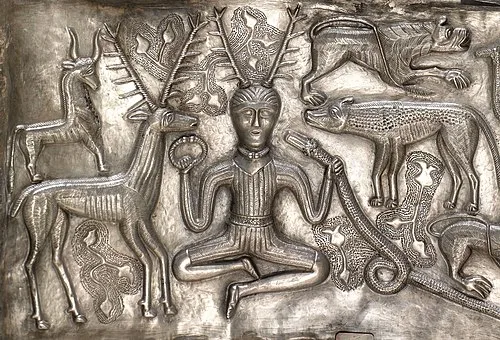
Cernunnos comes from karnon which means “horn” or “antler”. This may be the source of the name ‘Cerne’. (Please note that the Cerne Abbas Giant has just been redated from the Celtic to the Anglo-Saxon period.) Cerney and Cirencester in Gloucestershire might have similar origins for their names. The Cornovii is the name of three tribes in Britain. Cornwall, Shropshire and Caithness. It seems to mean people of the Horn, and the Horn thought to be stag’s horns. He is most often found in statues in the area around Paris, with an antler on his head, cross-legged and with a snake with him. He may be the god of the celtic underworld.

A Cernunnos-type figure on the Gundestrup cauldron (plate A). He sits cross-legged, wielding a torc in one hand and a ram-horned serpent in the other. Public Domain Wikipedia

The National Trust are appealing for funds to buy the Cerne Abbas Giant – click here to see the appeal.

Preparing for Guy Fawkes Day with Ginger Cake

Felicity Cloake The Guardian Parkin

Ginger cake is the traditional accompaniment to a cold night watching the Fireworks. There is a good recipe in Markham’s The English Housewife of 1683. But I’m suggesting you use this recipe from the Guardian for Parkin Cake. ‘Parkin is a gingerbread cake traditionally made with oatmeal and black treacle, which originated in Northern England.’ (Wikipedia).

For my post on November the 5th look here.

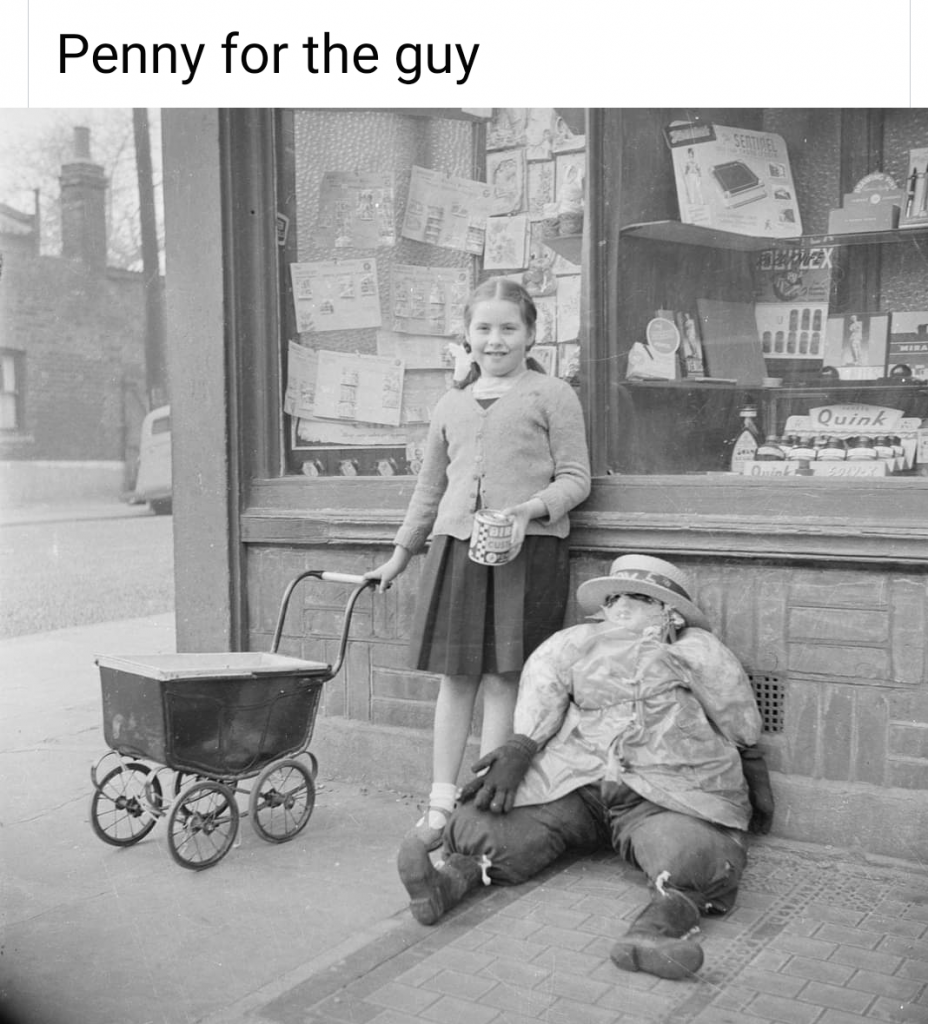
London picture Penny for the Guy on Guy Fawkes Day

I haven’t seen children asking for ‘a penny for the Guy’ for a while. But it was part of my childhood. We would create a ‘Guy’ out of old clothes and take it into the streets to raise money. The Guy is named after Guy Fawkes, who was discovered on 5th November 1605 in a cellar under Parliament. He was by a pile of barrels of gunpowder with a slow match. The plan was to blow up the King and Parliament, on the occasion of the Opening of Parliament on the 5th of November.

Once the plot had been broken and the plotters hanged, drawn and quartered, the King ordered that November 5th should be commemorated throughout the Country. Bonfires were a part of the seasonal celebrations at the time, used at Halloween, but this aspect was transferred to November 5th and continues as a major British event every year.

The money we raised, we spent exclusively on ‘bangers’ loud explosive fireworks not pretty fountains, Roman candles nor rockets. The bangers just made a horrendously loud bang. One stunt we experimented with was to cycle through the streets and to put a lit banger into the handle bars, which would act as a rocket launcher! Don’t try this at home.

Meanwhile, we would collect wood for the village bonfire:

A stick and a stake
For King George’s sake
Will you please to give us a faggot
If you won’t give us one, we’ll steal you two
The better for we and the worse for you.

English Folk Verse (c.1870)

First published 4th November 2021, republished 4th November 2024, 2025

All Souls Day – November 2nd

Picture of window sill with skulls, Chrysanthemums  and pictures of remembrance
El Dia de los Muertos – All Souls Day, in Haggerston, London. Photo K Flude.

Today is the Mexican Day of the Dead. In fact, the second day of El Dia de Muertos. Here is a video from Mexico, which you will enjoy for its Latin song and images of the Day of the Dead in Mexico. (It’s on Facebook, so may not work unless you have a login). And here is a YouTube explanation of celebrations in Mexico.

Today is the day to celebrate all those loved ones who have passed away. To keep them in mind, to remind you that you still care about them. It is the third day of the season of Allhallowstide, following All Hallows Evening (Halloween), and All Saint’s Day.

Beata, who comes from Poland, tells me that, November the 1st is the day when relatives visit the cemeteries of the dead. Loved ones bringing chrysanthemums to decorate the graves. It’s a happy day for the dead because they are being remembered and visited. Today, November 2nd, is a more sombre day – a day to stay at home and think of the loved ones. Perhaps looking through albums of photographs?

Souling

In England, it was the time of year in which ‘Souling’ used to take place. Households made soul-cakes. Children or people in need of food come to visit and are given soul cakes in exchange for praying for the dead.

Soul, soul, for a souling cake.
I pray good Missus for a souling cake.
Apple or pear, plum or cherry.
Anything good to make us merry.

Traditional rhyme from Shropshire and Cheshire

Moving on from Purgatory

This is based upon the idea of Purgatory, and the belief that intervention on Earth can influence the amount of time an ancestor spends in purgatory for their sins. John Aubrey (1626 – 1697), antiquarian, collector of folklore and writer, mentions a custom in Hereford which shows a variant of the idea.

John Aubrey (Wikipedia)

In the County of Hereford was an old Custom at Funerals, to hire poor people, who were to take upon them all the Sins of the part deceased. One of them I remember (he was a long, lean, lamentable poor rascal). The manner was that when a Corpse was brought out of the house and laid on the Bier; a Loaf of bread was brought out and delivered to the Sin-eater over the corps, as also a Mazer-bowl full of beer, which he was to drink up, and sixpence in money, in consideration whereof he took upon him all the Sins of the Defunct, and freed him (or her) from Walking after they were dead.

John Aubrey, Remains of Gentilism 1688

This belief in the power of action in the Here and Now to lubricate passage through Purgatory to the Ever After was a major part of fund-raising for Catholic Institutions before the Reformation. For example, in the records of St Thomas Hospital, Southwark, a wealthy widow called Alice (de Bregerake – if I remember the spelling correctly) left her wealth to the hospital in return for an annual Rose rent; lifetime accommodation in the Hospital in Southwark, and for the monks and nuns to pray for her soul and the souls of her ancestors.

Purgatory was not a settled thing in Catholic Theology before the 12th Century or so. However, the idea that prayers for the dead could be useful dates back before the Roman period. Catholics took 2 Maccabees as their biblical authority for Purgatory. But Luther demoted Maccabees to “apocrypha“. And today the Anglicans view it as ‘useful’ but not to be used for ‘doctrine.’

Ludovico Carracci: English: An Angel Frees the Souls of Purgatory (Wikipedia)
Ludovico Carracci: English: An Angel Frees the Souls of Purgatory 1610 (Wikipedia)

All Souls, London

One of London’s most beautiful churches is dedicated to All Souls. It is All Souls, Langham Place. It is just near the BBC HQ and on a wonderful site, as it is on a bend in Regent’s Street. This shows it to great advantage. The architect was John Nash (1824) as part of his transformation of the West End with his boulevard from Regent’s Park south to Westminster. As he could not get all the property owners on the alignment of the road to sell him the land, he disguised this enforced bend with a magnificent Church.

All Souls Langham Place By David Castor (dcastor) – Own work, Public Domain, https://commons.wikimedia.org/w/index.php?curid=6516081
Regent’s Street looking north to All Souls (photo K Flude)

See my posts on Halloween and, and All Hallows Day here

Revised 2nd November 2025, 2024, 2023 and first published 2nd Nov 2021

All Hallows Day – November 1st

 chrysanthemums
Chrysanthemums Flowers for the Dead (the author’s back garden)

How the Celtic festival that marked the beginning of Winter became All Hallows is not clear. Some say the Church set up its own festival independent of the Northern European traditions. But it is as likely that the Church adopted existing pagan festivals, and gave them a Christian spin.

Samhain, on October 31st, was, for Celtic religions, not only the beginning of Winter but also the beginning of the Year. As I noted on my Halloween post the Festivities began in the evening before the day because Celtic and Germanic traditions began their day at Dusk. So Halloween is not, in fact, the evening before, it is the start of the day of the festival.

Facebook Image giving the words for Samhain in Celtic languages

The Church adopted the Roman tradition of the day beginning not at Dusk but at Midnight. So the festival of All Hallows is on November 1st not October 31st. But the Church mimicked the old ways of doing things by celebrating the evening before as the Vigil of All Hallows’ Day. This was called All Hallows Evening or Halloween.

All Hallows by the Tower, London

Engraving of All Hallows Barking

In London, there is a Church called All Hallows, on Tower Hill. It is associated with Barking Abbey, founded in the 9th Century. Therefore, it is known as All Hallows Barking or All Hallows by the Tower. The Church has a prominent position on Tower Hill, which would have been visible from boats coming up the Thames. Also in the Church is the earliest Post-Roman arch in a Church in the City of London. This is made of reused Roman bricks. Moreover, in the crypt are Roman tessellated floors.

Letter from Pope Gregory to St Augustine

Now, I don’t want to be shot down in flames because there is no evidence that there was a Roman Temple here. Nor indeed a Roman or immediately Post-Roman Church. But it is one of the earliest Churches in the City of London. There must have been Christian Churches in Roman London, and this would be on my list of candidates. It is simply that the attribution to All Hallows provides a possible link to Celtic festivals. So speculation rather than anything else. The letter above, gives a context for the conversion of a pagan Temple to a Christian Place of Worship.

An Uncanny Day to Hallowed Day

For the Celts, Samhain was an uncanny day when all the sprites and spirits are alive and in the world. The Church took that, and span in on its head. So it became a ‘hallowed’ holy day when all Saints are celebrated and alive to us. Celebrated on October 31st and November 1st.

A celebration of All Saints was originally in May in the Church but was changed to the 1st November in the 7th Century by Pope Boniface. Later it was swapped back to May. But fixed again on the 1st November in the 9th Century. It is followed on the 2nd by All Souls’ Day. (see my post on All Souls Day here.

So on the 1st November, those celebrating the pagan festival would be in full swing after a hard night of celebration. The embers of the Fire would be still burning, stones left around the fire would be inspected for the prophecy they told of the future. Each person had a stone, and if it was still intact it was good luck, if it had disappeared the future was not good.

La Toussaint et Dia de Todo Los Santos

In France, All Hallows or All Saints is called La Toussaint, and flowers such as Chrysanthemums, which blossom in late October, were put on the graves. In Spain, it is Dia de Todo Los Santos and is a national holiday upon which people put flowers on the graves of the dead.

In Mexico, Dia de los Muertos celebrates Holy Innocents on the 1st. People create altars to the lost ones, with their favourite flowers, toys, food stuffs,, photographs. People argue about the pre-colombian aspects of the festival as there are similarities to European All Saints Days celebrations. But Quecholli, was a celebration of the dead that honoured Mixcóatl – the god of war. It was celebrated between October 20th and November 8th.

A correspondent in Mexico has sent back these pictures of the festivities in Mexico.

The female figure to the left is La Catrina. This image was popularised by an early 20th Century design by José Guadalupe Posada and developed in a mural by Diego Rivera. For more details click here.

A Day Off for the English

In the Laws of King Alfred the Great, this day was a day off for freemen. See my post on Days off in the Anglo Saxon Calender on August 15th.

First published in 2022, revised in 2023, 2024, 2025