Snails & Cider December 5th

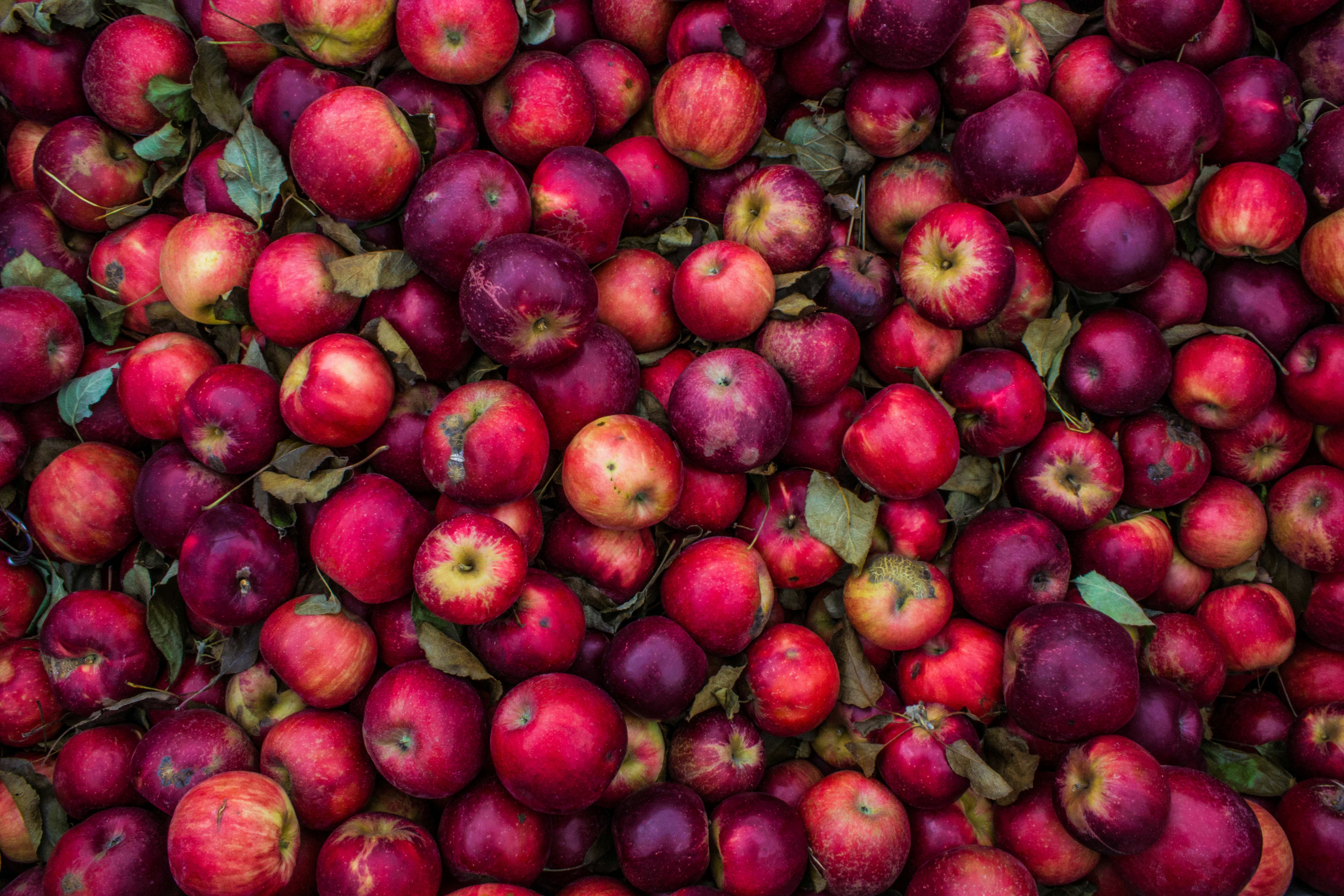
Snails. Photo by Mats Hagwall on Unsplash

Worlidge’s ‘Systema Agriculturae’ of 1697 says this is the time to destroy snails. He suggests that, at Michaelmas, you create a shelter for snails against a wall using bricks or boards. In Early December the plantsman can get his revenge on the little blighters, all unsuspecting and snuggled up in their cosy den. (More from Worlidge see my post here:)

The RHS has some more modern advice, but generally takes a negative opinion of snails. The Birmingham and Black Country Wildlife Trust take a much more positive view of snails and slugs. They propose their contribution to nature should be rewarded by our learning to love and live with the little critters.

(Thanks to Charles Knightly’s Perpetual Almanac)

Improving the cider before Christmas

Old Cider Tree Illustration

Britain is by far the largest Cider drinking nation, drinking 32% of the global total. South Africa is second at 15%. One of the reasons is that Britain does not have the climate for mass wine making, while it has an excellent climate for growing apples, particularly in the West Country. But other counties also produce it including: Somerset, Devon, Dorset, Herefordshire, Worcestershire, Gloucester, Kent, Sussex, Suffolk, Norfolk, and Cider has expanded into other counties such as Buckinghamshire and Cheshire.

As Cider makers approach Christmas, they will be worrying what their Cider is doing. If the cider was a bit off, an old trick was to add half a peck of wheat to restart the fermentation. This would make it more mild and gentle. Also, adding mustard or two or three rotten apples could clear the cider.

Although it’s all a little Thomas Hardy, Cider expert Gabe Cook provides instruction here in how to make cider from your own cider tree without investing in a huge fruit press. To buy small cider presses and cider making kits click here.

For Cider and Waissailling see my post here.

On This Day

1791 Death of Mozart. ‘Mozart appears as a being eccentrically formed to be a medium for the expression of music and no grosser purpose. Iin this he was strong: in everything else of body and mind, he remained a child during the 36 years to which his life was limited. Chambers Book of Days, 1864.

1872 Mary Celeste,a brig, carrying a cargo of alcohol, found abandoned off the Azores

1933 Prohibition Ended

First Published on December 5th 2022, revised and republished on December 5th 2023, 2024 and 2025

December and Kalendar of Shepherds December 1st

French 15th Century December and the ‘Kalendar of Shepherds’

December comes from the Latin for ten – meaning the tenth month. Of course, it is the twelfth month because the Romans added a couple of extra months especially to confuse us. For a discussion on this, look at an early blog post which explains the Roman Calendar.

In Anglo-Saxon it is ærra gēola which means the month before Yule. In Gaelic it is An Dùbhlachd – the Dark Days which is part of An Geamhrachd, meaning the winter. The word comes from an early Celtic term for cold, from an ‘ancient linguistic source for ‘stiff and rigid’’, which describes the hard frosty earth. (see here for a description of the Gaelic Year). In Welsh, Rhafgyr, the month of preparation (for the shortest day).

For the Christian Church, it’s the period preparing for the arrival of the Messiah into the World. (see my post on Advent Sunday which this year was yesterday November 30th).

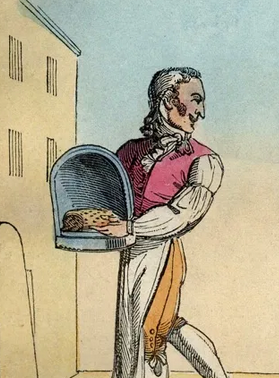
For a closer look at the month, I’m turning to the 15th Century Kalendar of Shepherds. Its illustration (see above) for December shows an indoor scene, and is full of warmth as the bakers bake pies and cakes for Christmas. Firewood has been collected, and the Goodwife is bringing something in from the Garden. The stars signs are Sagittarius and Capricorn.

The Sparrow and the Warm Hall

The Venerable Bede has an interesting story (reported in ‘Winters in the World’ by Eleanor Parker) in which a Pagan, contemplating converting to Christianity, talks about a sparrow flying into a warm, convivial Great Hall, from the bitter cold winter landscape. The sparrow enjoys this warmth, but flies straight out, back into the cold Darkness. Human life, says the Pagan, is like this: a brief period in the light, warm hall, preceded and followed by cold, unknown darkness. If Christianity, he advises, can offer some certainty as to what happens in this darkness, then it’s worth considering.

This contrast between the warm inside and the cold exterior is mirrored in Neve’s Almanack of 1633 who sums up December thus:

This month, keep thy body and head from cold: let thy kitchen be thine Apothecary; warm clothing thy nurse; merry company thy keepers, and good hospitality, thine Exercise.

Quoted in ‘the Perpetual Almanack of Folklore’ by Charles Kightly

December in the ‘Kalendar of Shepherds’

The Kalendar of Shepherds text below gives a vivid description of December weather. Dating from 1626 it gives a detailed look at the excesses of Christmas, which people are on holiday, and who is still working hard. But it concludes it is a costly month.

Nicholas Breton’s ‘Fantasticks of 1626 – December from the Kalendar of Shepherds

Six Dozen Years – a Lifespan

The other section of the Kalendar then elaborates on the last six years of a man’s life, with hair going white, body ‘crooked and feeble’. (from 66 to 72). The conceit here is that there are twelve months of the year, and a man’s lot of ‘Six score years and ten’ is allocated six years to each month. So December is not just about the 12th Month of the Year but also the last six years of a person’s allotted span. The piece allows the option of living beyond 72, ‘and if he lives any more, it is by his good guiding and dieting in his youth.’ Good advice, as we now know. But living to 100 is open to but few.

Kalendar of Shepherds

Interesting from my point of view as I have reached the end of my life span as suggested by the Calendar, and my father is 98 and approaching his hundred!

About the Kalendar of Shepherds.

The Kalendar was printed in 1493 in Paris and provided ‘Devices for the 12 Months.’ The version I’m using is a modern (1908) reconstruction of it. It uses wood cuts from the original 15th Century version and adds various texts from 16th and 17th Century sources. (Couplets by Tusser ‘Five Hundred Parts of Good Husbandrie 1599. Text descriptions of the month from Nicholas Breton’s ‘Fantasticks of 1626.) This provides an interesting view of what was going on in the countryside every month.

For more on the Kalendar look at my post here.

The original Kalendar can be read here: https://wellcomecollection.org/works/f4824s6t

To see the full Kalendar, go here:

On This Day

1990 The UK was rejoined to Europe for the first time for 8000 years, when the Channel Tunnellers breached the final wall of rock. French and British workers exchanged flags and shook hands. The Tunnel was opened to traffic in 1994 more than 10 years after work started and 200 years since Napoleon proposed the idea. Read what ICE has to say about the (ICE – Institute of Civil Engineers!).

Britain was connected to the Continent until about 6,100BC, the North Sea, the Channel, and the Irish Sea were all dry (or marshy lands). Water levels were rising and ice melting. the Storegga Slides in Norway saw huge cliffs of ice slipped into the sea. This caused a tsunami over 30ft high and penetrating 25 miles inland. Read the BBC here.

Since then, Britain has been an Island. Archaeologists have been exploring the flooded area which is known as Dogger Land, after the Dogger Bank. (for more on Dogger Land.)

First Published in 2024, republished 2025

How to make a Dish of Snow & Ice Houses November 29th

Photo Zdenek Machacek -unsplash

Yesterday, I posted about the exciting discovery that Ann Shakespeare might have stayed in London with her husband. Here you can read the academic article about the research. Really worth reading!

A Dish of Snow

There is a 0% chance of snow, in London and 90% chance of snow in Glen Shee, Scotland, according to the Snow Risk Forecast. And here is an appropriate medieval recipe:

To make a dish of Snowe

Take a potte of sweete thicke creme and the white of eight egges and beate them altogether with a spoone then putte them into your creame with a dish full of Rose Water and a dishfull of Sugar withall then take a sticke and make it cleane and then cutt it in the ende fowre square and therewith beate all the aforesayd thinges together and ever as it ariseth take it of and putte it into a Cullander thys done take a platter and set an aple in the middest of it and sticke a thicke bush of Rosemarye in the apple then cast your snowe upon the rosemarye and fill your platter therewith and if you have wafers cast some withall and thus serve them forth

From Medieval Manuscripts, British Library. Blog. https://blogs.bl.uk/digitisedmanuscripts/medieval-history/page/2/

BF – Before Fridges

Before fridges, snow gave the chance for ice cream and other cold desserts. The problem was keeping it for longer than the cold spell. So many Stately Homes had ice-houses. The V&A had an ice-house just outside their glorious, Henry Cole commissioned restaurant. There is an ice house preserved at the Canal Museum, in Kings Cross. It was set up by Carlo Gatti in 1857 to store ice shipped in from Norway. Another one, in Holland Park, dates from 1770 and served the infamous Fox family (PM Charles James Fox etc).

The first ice house was in Mesopotamian, but in the UK they were introduced by James 1 at his palaces in, first, Greenwich Park, and then Hampton Court. An ice house generally consists of a pit in the ground, brick lined, which tapered to a point. Above was a circular, often domed building. The ice was protected by insulation such as straw, and this structure would allow ice to be available all through the summer.

Ice House Dillington, Somerset
Ice House Dillington, Somerset, photo K Flude

My great-grandmother hung a basket outside the window in winter to keep things cold. On my fridge-less narrow boat, I have been known to keep milk and butter outside the door on the front deck. And to suspend and submerge wine in a plastic bag in the canal in high summer. Butteries and Pantries were typically cut into the ground to make them cooler. A Roman Warehouse in Southwark, of which the wooden floor still survived, had a ramp down to the floor which was cut into the ground surface. The ramp suggests it was used for storing barrels, where they were kept cool.

Sketch of Roman Warehouse found in Southwark.

For more on Icehouses (and an Icehouse in York) and the history of ice cream, see my post from August.

Written November 28th 2022, revised and republished 2023, 2024,2025

November ‘the month of immolations’

Kalendar of Shepherds November

This post slipped through the editorial net.  So, I need to get it out there before November is a cold memory.

November is the 9th Month of the Roman Calendar. Novem coming from the Latin for nine. But the Romans added two months to the calendar during the time of the Dictator, Julius Caesar (for his reforms click here). So 9th month is now the 11th.

In Welsh it is ‘Tachwedd’ which means the month of slaughtering. Blōtmōnaþ (Blotmonath) in Anglo -Saxon – the month of blood. These reference the fact that this was the month when the surplus animals were slaughtered or as the historian, Venerable Bede has it, ‘the month of immolations’. In Irish the month of November is called sawhain. It is also the name of the festival marking the beginning of winter which starts at dusk on 31st October. We call it Halloween, the celts Sawhain or words similar. (see my post on Halloween).

The image, at the top of the page, from the Kalendar of Shepherds shows some aspects of November – star signs Scorpio and Sagittarius; Pigs are fattening up on the acorns in the forest and then being slaughtered, smoked or dried to preserve them through the hard winter. The text of the Kalendar (read it below) gives a good summary of what early modern life in November was like. In summary, the day when the ‘poore die through want of Charitie’.

Kalendar of Sherherds – November

For more details on the Kalendar of Shepherds see my post here.

Time to see the Pleiades

They can be seen from Autumn to Spring, but they are visible all night in the Northern Hemisphere in November and December.

Nebra Sun disc from Stonehenge Exhibition British Museum
Nebra Sun disc from Stonehenge Exhibition British Museum. The Pleiades is thought to be represented by the 7 stars in the cluster above and between the Sun and the Cresent Moon, on this bronze age copper and gold disc

First published in 2024, revised in 2025

Death of Old Parr (and Yarrow) November 13th 1635

Thomas Parr, aged 152. Line engraving by J. Condé, after Sir P.P. Rubens, 1793

(V0007249EL, aft Credit: Wellcome Library, London. Wellcome Images images@wellcome.ac.uk http://wellcomeimages.org Thomas Parr,
Copyrighted work available under Creative Commons Attribution only licence CC BY 4.0 http://creativecommons.org/licenses/by/4.0/)

I first came across the story of Old Parr, when I lived in Camden Town. It was the name of a local pub, in Plender Street, near to my flat. I found out it was named after a very long-lived man called Thomas Parr. He was said to be 152 years old when he died in 1635. He was on his way to visit King Charles 1st in London.

If we are to believe his story, he was born in 1483 and was married when he was 80. He fathered two children. Then married for a second time at 120 years old. He was buried in Westminster Abbey.

There are, or I should say were,, 3 London Pubs named Old Parr’s Head or Parr’s Head. They were in Camden, Islington, and West Kensington. But have all closed either converted to flats or into a branch of Jigsaw (Islington).

His tomb in Westminster Abbey has this inscription:

THO: PARR OF YE COUNTY OF SALLOP, BORNE.
IN AD: 1483. HE LIVED IN YE REIGNES OF TEN
PRINCES VIZ: K.ED.4. K.ED.5. K.RICH.3.
K.HEN.7. K.HEN.8. K.EDW.6. Q.MA. Q.ELIZ.
K.JA. & K. CHARLES. AGED 152 YEARS.
& WAS BURYED HERE NOVEMB. 15. 1635.

Medical Opinions of Old Parr

The famous William Harvey (discoverer of the circulation of blood) undertook an autopsy. He found Parr’s internal organs to be in a good state. He suggested this might be due to Parr’s diet of:

‘subrancid cheese and milk in every form, coarse and hard bread and small drink, generally sour whey’ and lived free of care.

However, medically his age is nigh on impossible to believe. Wikipedia has the following 10 oldest verified humans. All I think, female:

1Jeanne Calment21 February 18754 August 1997122 years, 164 days[b]France
2Kane Tanaka2 January 190319 April 2022[10]119 years, 107 daysJapan
3Sarah Knauss24 September 188030 December 1999119 years, 97 daysUnited States
4Lucile Randon11 February 190417 January 2023[13]118 years, 340 daysFrance
5Nabi Tajima4 August 190021 April 2018117 years, 260 daysJapan
6Marie-Louise Meilleur29 August 188016 April 1998117 years, 230 daysCanada
7Violet Brown10 March 190015 September 2017117 years, 189 daysJamaica
8Maria Branyas4 March 190719 August 2024[16]117 years, 168 daysSpain[c]
9Emma Morano29 November 189915 April 2017117 years, 137 daysItaly
10Chiyo Miyako2 May 190122 July 2018[19]117 years, 81 daysJapan

Wikipedia lists the top 100. The oldest man is a mere 116 years old. A Guardian article reports on a study on Maria Branyas, number 8 above. It concludes she had a number of genetic factor that made her less vulnerable to killer diseases like heart attack and diabetes, But she was also not overweight, ate a lot of yoghurt, did not drink or smoke, and had a lively social life in her local area.

BP Doughty thinks Parr might have been over 100 when he died, although others suggest perhaps only as old as 70 – 80. Doughty BP. Old Parr: or how old is old? South Med J. 1988 Jul;81(7):906-8. doi: 10.1097/00007611-198807000-00023. PMID: 3293237.

Old Parr’s death is reputed on different days in the sources I found. But it seems he was buried on 15th November 1635, but died on 13th, not 14th, of November.

For more on Camden see my post on Thomas Hardy and St Pancras.

November 13th is also the Time to Gather Yarrow

Yarrow
(achillea millefolium) – image by CongerDesign

This is the time to gather yarrow which is often still flowering. It grows everywhere creeping through its roots and spreading with its seeds, until it becomes a garden weed.

Traditionally, it is one of the most useful of medicinal plants. It had a myriad of uses and a plethora of names (see thefreedictionary for a comprehensive list). It was used for wounds (aka ‘Soldier’s Woundwort’); staunches nose bleeds (aka ‘Nosebleed’); inflammations (aka ‘Stauchweed’). It also slows hair lose, reduces pain of tooth-ache and good for those who cannot hold their water. Generally, it was considered excellent for stomach problems, diabetes, periods pains, anything to do with blood flow (aka ‘Bloodwort’)..

It also has a devilish tradition so used for divination by spells, and thus aka Devil’s Nettle, Devil’s Plaything, Bad Man’s Plaything.

On a gentler note, hopeful lovers will put it under their pillow and dream, thereby, of their future spouse. (Mrs Grieve). In Sussex and Devonshire, so Wikipedia tells me, one should pick Yarrow from a young man’s grave and recite this poem:

Yarrow, sweet yarrow, the first that I have found,
in the name of Jesus Christ, I pluck it from the ground;
As Joseph loved sweet Mary, and took her for his dear,
so in a dream this night, I hope, my true love will appear.

The yarrow is then put under the pillow. preparatory to falling asleep and dreaming of someone dark and handsome.

See my post below on the medical and other effects of Dandelions.

Old Parr was first published on 14th November 2022. Revised 14th November 2023, and 13th November 2024. Yarrow was first published on 14 November 2022, revised 13 November 2023, and combined with Old Parr in 2024.

Revised and republished 2025

Enjoying a St Martin Summer; a Halloween Summer or an Indian Summer – November 12th

Autumn leavesfor a St Martin Summer

A late warm patch is now often called an ‘Indian Summer’. This term was first used in the United States in the 19th Century. It may refer to a warm period in which Indigenous Americans could continue hunting.

Previously, in England, a warm patch in the Autumn was called a ‘St Martin Summer’. It could also be called ‘a Halloween Summer.’ St Martin’s Day is the 11th November, and is, in a normal year, the day around when the weather turns to feel wintry. See my post on St Martin’s Day.

A Very Warm early November.

The Met Office in the UK has stated that we had a particularly warm October, and a record breaking early November. They explain:

As November began, a flow of warm air from the south swept across the UK. This southerly pattern, combined with cloudy skies, helped trap warmth overnight, leading to unusually high daily minimum temperatures. ‘

They note that the warmest November 5th on record was at Teddington on the Thames in West London, and the average temperature was 14.4 deg C (58F).

But I can’t really call it a St Martin’s Summer because although warm it wasn’t very sunny. We had some sunny but didn’t feel summery.

A warm spell is, in fact beneficial to many plants. The problem comes if it is followed by a quick cold spell. Plants need time to harden off to prepare to face cold weather. A warm winter will also allow many insects to survive and so in the summer plants will be adversely affected by a plague of pests.

For more information on how mild weather affects plants:

Revised and Republished in November 2025

Martinmas – Festival of Winter’s Beginning November 11th

Martinmas. Statue of St Martin at Ligugé

So, this is All Saints Day, Old style, also known as Martinmas, St Martin’s Day, one of the most important Christian festivals of the medieval world.

Father Francis Weiser in the Handbook of Christian Feasts and Customs suggests this was the Thanksgiving of Medieval Europe:

It was a holiday in Germany, France, Holland, England and in Central Europe. People first went to Mass and observed the rest of the day with games, dances, parades, and a festive dinner, the main feature of the meal being the traditional roast goose (Martin’s goose). With the goose dinner, they drank “Saint Martin’s wine,” which was the first lot of wine made from the grapes of the recent harvest. Martinmas was the festival commemorating filled barns and stocked larders.

It was celebrated with Bonfires in Germany, and with St Martin’s Beef and Mumming plays in England. Following the Reformation, its place in the Calendar has been taken by  Halloween and Bonfire Night.

St. Martin of Tours

St Martin of Tours, 20th Century Stained Glass, St James Church. Chipping Camden.Window 1925 Commemorating World War 1. St Martin’s Feast Day is Armistice Day.Photo K Flude

Martin was a soldier in the Roman Army who would not fight because of his Christian beliefs. When he met a beggar, he cut his cloak in half and shared his cloak. He rose in the hierarchy of the Gallic Church and became Bishop of Tours. According to legend, his funeral barge on the River Loire was accompanied by flowers and birds. He died in AD397. He is one of the few early saints not to be martyred. Martin is the saint of soldiers, beggars and the oppressed. Furthermore, he stands for holding beliefs steadfastly and helping those in need.

St Martin’s in the fields

Early 20th Century Image of Trafalgar Sq. St Martin’s is in the top right-hand corner.

There are two famous Churches dedicated to St Martin in Central London with possible early origins. St Martin’s in the Fields, near Trafalgar Square, has been the site of excavations where finds show a very early settlement, with early sarcophagi. It is the one place where a convincing case can be made for continuity between the Roman and the Anglo-Saxon period. It is possible, that the Church was founded soon after St Martin’s death (397AD). A kiln making Roman-style bricks was found. A settlement grew up near the Church and this expanded to become Lundenwic, the successor settlement to Londinium.

St Martin’s Within

Old Print of London c1540 showing St Pauls, with St Martin's by the wall to the left of the photo
Old Print of London c1540 showing St Pauls, with St Martin’s by the wall to the left of the photo

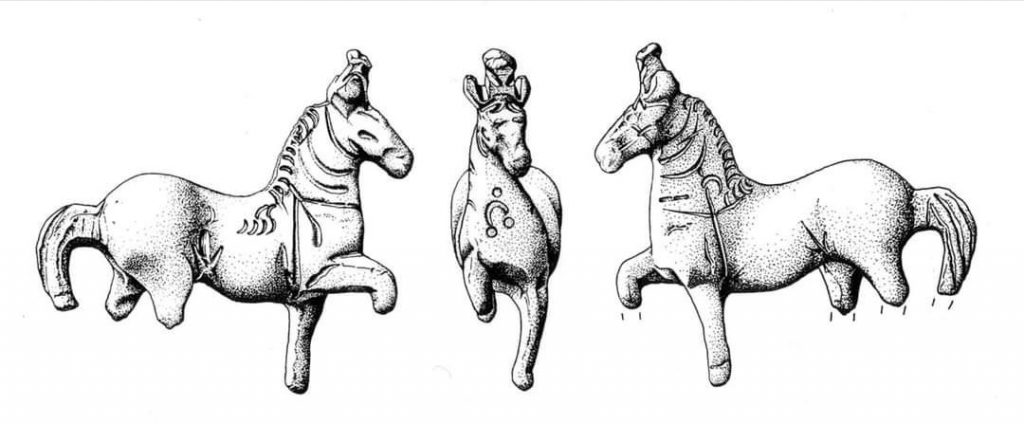
The other St Martins is St Martins Within, just inside the Roman Gate at Ludgate. Many early churches are found at or indeed above Gates. This one also has legendary links to burial places for King Lud, and for King Cadwallo. He. Cadwallon ap Cadfan, was the last British Kings to have any chance of recovering Britain from the Anglo-Saxons. Geoffrey of Monmouth says that Cadwallo was buried here in a statue of a Bronze Horseman. This was thereby a ‘Palladium’ – something which protects a place from invasion. (See my post about Palladiums of London). It has been suggested by John Clark, Emeritus Curator at the Museum of London, that Geoffrey of Monmouth might have used the discovery of a Roman Equestrian Statue as an inspiration for the story.

St Martin was also the saint of Travellers, and this might explain the location of the Church near the gate. Although there is nothing but legendary ‘evidence’, it would make sense for an early church to be built near Ludgate,. This is the Gate that leads to St Pauls which was founded in 604AD from Lundenwic which was booming in AD650.

Although the City seems to have mostly devoid of inhabitants from the end of the Roman period to the 9th Century, the presence of St Pauls Cathedral means that Ludgate was most likely still in use or at least restored around this period. It leads via Fleet Street and Whitehall, almost directly to the other St Martin.

St Martin and lime plaster

Michaelmas was also the time of year when lime plaster was renewed because lime needs to be kept moist when renewed. It takes three to four days to form the calcite crystals that make it waterproof. Lime plaster was used on most timber framed buildings.

(Originally, posted 11 Nov 2021, revised 2022, 2023, 2024, 2025)

Time to Tup your Sheep – November 7th

City Farm, Hackney. Small flock of Bluefaced Leicester Sheep, the big golden one is the Ram, the others are the ewes he has tupped. Photo K Flude

The old Shepherd’s saw is:

‘In with a bang and out with the fools’.

The bang is Guy Fawkes Day on November 5th, and the fools are a reference to All Fools Day on April 1st. The gestation period of a ewe is 147 days (on average). (sheep-farmers-year). So farmers introduce the Ram into a field of Ewes on or around November 5th. This means the lambs will be born around the beginning of the traditional lambing season.

(see my posts on Guy Fawkes Day and All fools Day)

Tupping Times

The Ewes have been enjoying themselves in the fields, The flocks have been thinned out, with the young ones being sent to market, mostly for meat. The grass has been growing at the end of the summer, with the wetter weather. The ewes will be in excellent condition, and will have been thoroughly checked by the shepherd.

The chosen ram will be dressed with a harness on his chest, which will have a sheep’s crayon on it. The crayon is known as raddle or reddle. The ram, also know as a tup, will mate with whichever of the ewe(s) that catch his eye. Each one he tups (mounts or covers) will be left with a paint mark, from the reddle on his chest, on her back. The farmer will inspect the ewes periodically. A ewe with two or more reddle marks on her back, will be taken out of the field. This will force the ram to spread his attentions to the, as yet, untupped, ewes. He will continue until all ewes have been tupped. And then onto the next field full of ewes. Diggory Veen is the Reddleman in Hardy’s ‘Return of the Native’. I talk about him, lambing and reddle in my post here.

Some of the young ewes will be kept to reinforce the flock. Males will only be kept if they will be sold to another farmer as a tupping ram. They cannot breed on the farm as this will lead to inbreeding. So, a ram will be purchased or swapped from another farm. The farmer will want to choose one that fits into his/her idea of what the ideal sheep is. whether it is grown for meat, or to be hardy, or for its wool etc.

Raddled

To be raddled is to be flushed, red with drink, or over made up. It has a sense of dissipation about it. One might have more sexual encounters than is normal. Just like the ewe with too many raddle marks on her back? Or the Raddle man with a red face and hands from all the raddle he handles?

Bluefaced Leicester Sheep and my Hat!

I was delighted to see my local City Farm had a small herd of Bluefaced Leicester Sheep. I was visiting with my Grandson when I took the photograph at the top of the page. The sherderdess told me the blue-marking in this case was not a result of mating. She thought 2 or more of them were already pregnant, however.

My association with the breed comes from a lovely yarn shop in Conwy (Ewe Felty Thing) which had a rail of clothes marked ‘wearable art’. I bought a woolly beanie which they told me was:

‘Hand-spun, hand knitted from a bluefaced leicester sheep.

Hand-spun, hand knitted Beanie from a Bluefaced Leicester sheep. purchased at (Ewe Felty Thing) Photo K Flude

I still have it. It cost a small fortune, but worth every penny!

A bluefaced Leicester Ram, might cost £1000 if a bought as a lamb, £4,000 if bought as a shearling, or up to £40,000 if a prize lamb. It is one of the biggest lambs with a long back, and longwool with ringlets. There is no wool on the face and neck so you can see its blue-grey skin, below the white hair – hence its name. It is often bred with hill sheep ewes, which combines the prolificacy of the ram with the mothering abilities of the ewes.

Generally, nowadays the wool from a shearing will only be worth about 80p in today’s market. This will not pay for the cost of the shearing, but it is necessary for health and hygiene reasons.

Posted on 7th November 2025

The Horned God & Preparing for Guy Fawkes Day November 4th

medieval monks seat showing carving of a Horned man (with Ram's Horn) at Stratford on Avon Holy Trinity Church) Photo: K Flude
Horned God (with Ram’s Horn) at Stratford on Avon Holy Trinity Church) Photo: K Flude. Carving of a dolphin to the left (symbol of Christ) a goat to the right (symbol of the damned – as Christ divides the sheep from the goats who are going to hell)

Horned Gods

November 4th is dedicated to hunting gods such as Herne, the Horned God, Cernunnos, The Green Man and Pan.

Herne the Hunter appears in Shakespeare:

There is an old tale goes, that Herne the
Hunter
(sometime a keeper here in Windsor Forest)
Doth all the winter-time, at still midnight
Walk round about an oak, with great ragg’d horns;
And there he blasts the tree, and takes the cattle,
And makes milch-kine yield blood, and shakes a chain
In a most hideous and dreadful manner.
You have heard of such a spirit, and well you know
The superstitious idle-headed eld
Receiv’d, and did deliver to our age
This tale of Herne the Hunter for a truth.

William Shakespeare, The Merry Wives of Windsor, Act 4, scene 4

I have recently seen a brilliant staging of the Merry Wives of Windsor at the Royal Shakespeare Company in Stratford. I saw it three times and think it one of the best Shakespeare productions I have seen. The lead actor, John Hodgkinson, with whom I used to play cricket, was a fantastic Falstaff.

Cernunnos

Cernunnos comes from karnon which means “horn” or “antler”. This may be the source of the name ‘Cerne’. (Please note that the Cerne Abbas Giant has just been redated from the Celtic to the Anglo-Saxon period.) Cerney and Cirencester in Gloucestershire might have similar origins for their names. The Cornovii is the name of three tribes in Britain. Cornwall, Shropshire and Caithness. It seems to mean people of the Horn, and the Horn thought to be stag’s horns. He is most often found in statues in the area around Paris, with an antler on his head, cross-legged and with a snake with him. He may be the god of the celtic underworld.

A Cernunnos-type figure on the Gundestrup cauldron (plate A). He sits cross-legged, wielding a torc in one hand and a ram-horned serpent in the other. Public Domain Wikipedia

The National Trust are appealing for funds to buy the Cerne Abbas Giant – click here to see the appeal.

Preparing for Guy Fawkes Day with Ginger Cake

Felicity Cloake The Guardian Parkin

Ginger cake is the traditional accompaniment to a cold night watching the Fireworks. There is a good recipe in Markham’s The English Housewife of 1683. But I’m suggesting you use this recipe from the Guardian for Parkin Cake. ‘Parkin is a gingerbread cake traditionally made with oatmeal and black treacle, which originated in Northern England.’ (Wikipedia).

For my post on November the 5th look here.

London picture Penny for the Guy on Guy Fawkes Day

I haven’t seen children asking for ‘a penny for the Guy’ for a while. But it was part of my childhood. We would create a ‘Guy’ out of old clothes and take it into the streets to raise money. The Guy is named after Guy Fawkes, who was discovered on 5th November 1605 in a cellar under Parliament. He was by a pile of barrels of gunpowder with a slow match. The plan was to blow up the King and Parliament, on the occasion of the Opening of Parliament on the 5th of November.

Once the plot had been broken and the plotters hanged, drawn and quartered, the King ordered that November 5th should be commemorated throughout the Country. Bonfires were a part of the seasonal celebrations at the time, used at Halloween, but this aspect was transferred to November 5th and continues as a major British event every year.

The money we raised, we spent exclusively on ‘bangers’ loud explosive fireworks not pretty fountains, Roman candles nor rockets. The bangers just made a horrendously loud bang. One stunt we experimented with was to cycle through the streets and to put a lit banger into the handle bars, which would act as a rocket launcher! Don’t try this at home.

Meanwhile, we would collect wood for the village bonfire:

A stick and a stake
For King George’s sake
Will you please to give us a faggot
If you won’t give us one, we’ll steal you two
The better for we and the worse for you.

English Folk Verse (c.1870)

First published 4th November 2021, republished 4th November 2024, 2025

October – Winterfylleth, Hydref, or Deireadh Fómhair

October from the Kalendar of Shepherds

Kalendar of Shepherds

The 15th Century French illustration in the Kalendar of Shepherds shows October as a busy month. It is the time when the cereals are being flailed, the fields ploughed and sown. Perhaps winter wheat or barley or peas and beans?

The 16th Century English text of the Kalendar of Shepherds (read the illustration) shows what a busy month it was, but the writer comes down hard against the month as ‘a messenger of ill news’ the harbinger of cold dark nights.

About the Kalendar of Shepherds.

The Kalendar was printed in 1493 in Paris and provided ‘Devices for the 12 Months.’ I’m using a modern (1908) reconstruction of it using wood cuts from the original 15th Century version. It includes various text from 16th and 17th Century sources. (Couplets by Tusser ‘Five Hundred Parts of Good Husbandrie 1599. Text descriptions of the month from Nicholas Breton’s ‘Fantasticks of 1626. This provides an interesting view of what was going on in the countryside every month.

https://wellcomecollection.org/works/f4824s6t To see the full Kalendar, go here:

Astrological October

The star signs of October are the Scales of Libra and the Scorpion of Scorpio.

The star signs of October

Angelic October

Michael is the Angel of Autumn, the Angel of Judgement Day, and the Weigher of Souls. Uriel is the Angel of Libra and was sent by God sent to warn Noah. So the protector against, floods, fire and natural disasters. Scorpio’s Angel is Barbiel, he looks over health, genitalia and doubtful things. (‘An Angel Treasury’, Jacky Newcomb).

You might like to look at my post on Michaelmas here.

Roman October

In the Roman world it was, originally, the 8th Month (octo=8) but then they added January and February to the year. So it became the 10th Month. It was their time to celebrate the new wines of the Harvest. In Britain, the wine harvest is late September to October, but in hotter climes can be from July. But the grapes need to be processed, and the Romans thought that new wine was health giving and celebrated it in October.

Rustic October

But for many people, October is a beautiful month. The dying leaves bring a sophisticated array of rustic colours, which makes the wooded countryside exceptionally beautiful.

Autumn in Haggerston Park, London (photo Kevin Flude)

It can still be warm enough to go for pleasant walks. And the surfeit of the harvest and the culling of animals meant there was plenty to eat before winter austerity begins.

Anglo-Saxon Winter Fall

The Venerable Bede tells us that the month was called Winterfylleth, in the 8th Century. The English divided the year into Summer and Winter. And Winter began for the Anglo-Saxons on the first full moon of October. This means that this year winter begins on 7th October. This is the Harvest or Hunter’s Moon, which is also a supermoon, the first of 3 ending the year.

Celtic October

In Welsh, it is Hydref, which also means Autumn. For the Welsh it was the last month of Autumn and the last month of the year. The Celtic new year, and winter starts on 1st November. The same is true of the Irish Calendar. Autumn is called Fómhair, and October Deireadh Fómhair which means ‘End of Autumn’.

Astronomical & Meteorological Autumn

Astronomically, autumn ends at the Winter Solstice and meteorologically at the end of November. So the Celtic Autumn ends a whole month or more earlier than the other measures. My very personal view is that Winter begins on November 5th more often than not. This is an evening we often spend outside watching the fireworks displays to celebrate Guy Fawkes’ Night. It always seems to be the first time that you feel cold enough to need hat, gloves, and scarves.

First Published in Autumn 2024, revised 2025