
Shrove Tuesday – Pancake Day – Mardi Gras – End of the Carnival

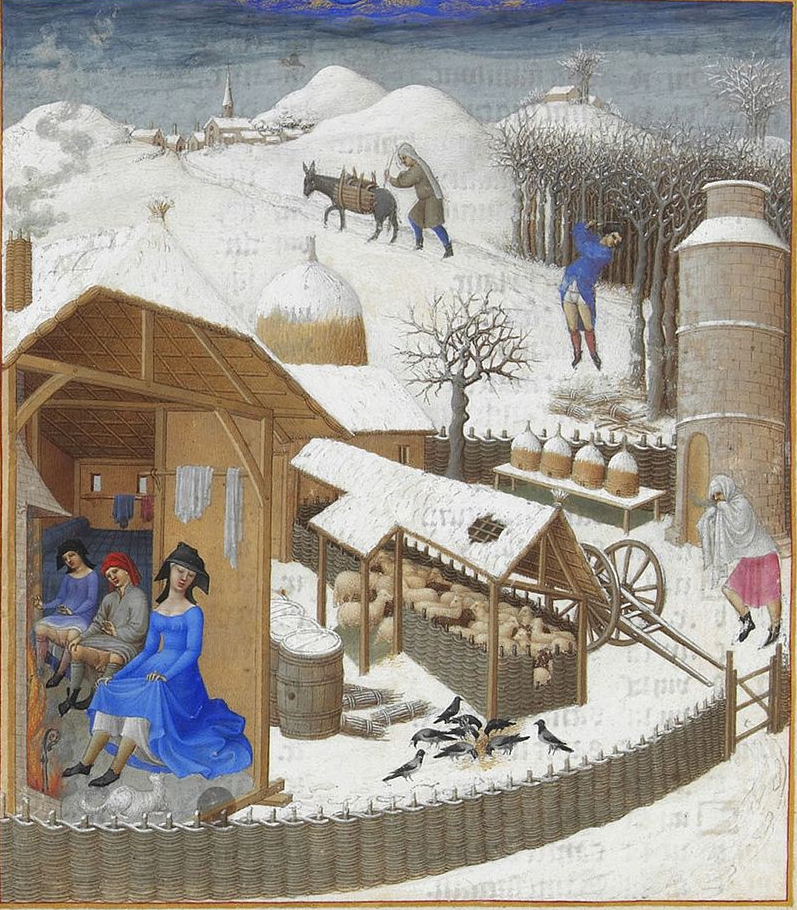
Les_Très Riches Heures du Duc de Berry February (Detail)  The people inside are warming their legs and their hands in front of a roaring fire.
Les Très Riches Heures du Duc de Berry February (Detail) The people inside are warming their legs and their hands in front of a roaring fire.

Shrove Tuesday & Carnival

This year, February 17th is Shrove Tuesday, the end of the Carnival. Etymology-on line says the origins of the term Carnival are:

1540s, “time of merrymaking before Lent,” from French carnaval, from Italian carnevale “Shrove Tuesday,” from older Italian forms such as Milanese *carnelevale, Old Pisan carnelevare “to remove meat,” literally “raising flesh,” from Latin caro “flesh” (originally “a piece of flesh,” from PIE root *sker- (1) “to cut”) + levare “lighten, raise, remove” (from PIE root *legwh- “not heavy, having little weight”).

Folk etymology has it from Medieval Latin carne vale ” ‘flesh, farewell!’ ” Attested from 1590s in the figurative sense of “feasting or revelry in general.” The meaning “a circus or amusement fair” is attested by 1926 in American English.Related entries & more 

www.etymonline.com

Pancake Day/Shrove Tuesday

Pancake Day is another name for Shrove Tuesday. It is the day we eat up all our surplus food. Then on Ash Wednesday we must begin our lenten fast and turn our mind to repentance. Pancake Day, in the UK, is celebrated with a simple pancake with lemon and sugar. Here is a recipe from the BBC. On the other hand, Shrove Tuesday can be a day of excess before the 40 days of restraint. Shrovetide was normally three days from the Sunday before Lent to Ash Wednesday, the beginning of Lent. (Here is my post on Ash Wednesday).

Mardi Gras

In France, it’s called Mardi Gras which means Fatty Tuesday, in Italy Martedi Grasso. In New Orleans it stretches from Twelfth Night to Shrove Tuesday. But as we saw, in my post on Fat or Lardy Thursday‘ the Carnival period was more normally a week. In most other places it is one to three days. In Anglo-Saxon times there was ‘Cheese Week’, ‘Butter Week’, ‘Cheesefare Sunday’ and ‘Collop Monday’, preceding Ash Wednesday.

Shrove Tuesday the Day to be Shriven

Shrove Tuesday is the day we should be ‘shriven’ which means to make confession. The Church has been leading up to Easter since Advent – before Christmas. (See more on Advent Sunday here). Easter is the date of the conception and, also, the date of the execution and apotheosis of Jesus Christ. So the pious should confess their sins, then undertake their lenten fast before entering the Holy Week purged and sin-free.

In the Anglo-Saxon Church, there was a custom called ‘locking the Alleluia.’ The Church stopped using the word Alleluia from 70 days before Easter. Alleluia represented the return from exile in Babylon. So, with the approach of the death of Christ it was not felt appropriate to be celebratory.

The sombre nature of this block of time was highlighted by Ælfric of Eynsham (c. 955 – c. 1010).

Now a pure and holy time draws near, in which we should atone for our neglect. Every Christian, therefore, should come to his confession and confess his hidden sins, and make amends according to the guidance of his teachers; and let everyone encourage each other to do good by good example.

Ælfric, Catholic Homilies Text Ed. Peter Clemoes quoted in ‘Winters in the World’ Eleanor Parker

Time for Football!

Shrove Tuesday was the traditional time for football games, in the days before football had any rules to speak of. It was a wild game. Teams tried to get a bladder from one end of town to the other, or one side of a field to the other. In Chester, the Shrove Tuesday football game was held on the Roodee island. It was so rowdy that the Mayor created the Chester Races specifically to provide a more sedate alterative to the violence of the ‘beautiful game.’

Here is a youtube video of Shrovetide Football at Royal Asbourne in Derbyshire. You will notice it seems chaotic but if you look at the participants directed the action you can see how involved they are in it.

Royal Asbourne Shrove Tueday Football

In London, Henry Fitzstephen wrote about Shrove Tuesday Games in London in the late 12th Century:

‘Every year also at Shrove Tuesday, that we may begin with children’s sport, seeing we all have been children, the school boys do bring cocks of the game to their master, and all the forenoon they delight themselves in cockfighting. After dinner all the youths go into the fields to play at the ball. The scholars of every school have their ball, or baston in their hands. The ancient and wealthy men of the City come forth on horseback to see the sport of the young men and to take part of the pleasure in beholding their agility.’

Fitzstephen was the first biographer of Thomas Becket.

Pancake Race

The City of London has an annual pancake race at the Guildhall Yard. It is an inter-livery company competition. The Livery Companies also known as medieval Guilds, have to run across the Guildhall while holding a frying pan and pancake. There is a zone marked out where they have to toss the pancake. Here is a youtube video of the 2023 race.

Pancake Day/Shrove Tuesday Pancake Race

First published on February 21st, 2023 republished on February 13th 2024, and March 4th 2025, February 17th 2026

The Festival of Fools, Fornacalia and Fornication February 17th

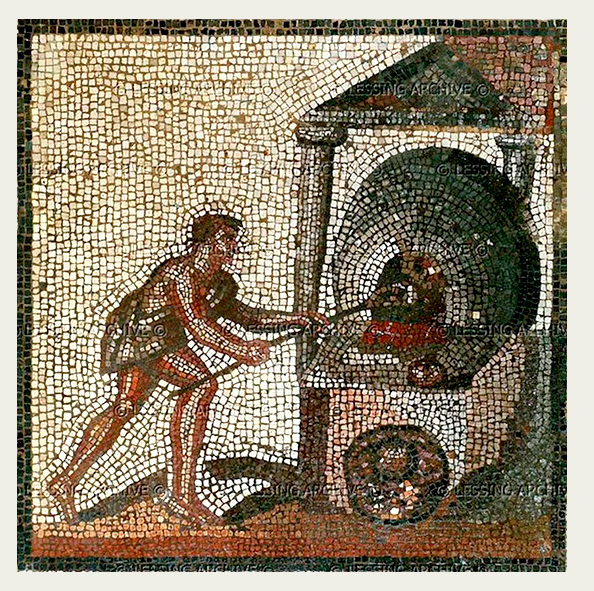
Mosaic of a man taking a loaf of bread out of a bread oven
Mosaic of Roman Bread Oven France

Fornacalia was a corn festival that took place around February 7th to the 17th. Romans were assigned individual days to celebrate (see below) but the last day, today, was reserved for those fools who did not know their proper day.

Pliny the Elder says it was King Numa Pompilius (753-673 BC), who established Fornacalia, The Feast of Ovens. Fornacalia celebrated Fornax who was the Goddess of the Oven – specifically the grain oven for drying grain. The word for oven is also Fornax, from which we probably derive our word furnace.

Organising the Fornaclia and the Curio Maximus

The Festivals in Rome were organised by the Curio Maximus who was a priest who supervised the curiae. In Rome the citizens were arranged, originally, into the 3 ancient tribes of Rome (founded in the 8th Century BC). The Tribes were supposed to represent the ancient ethnic groups. These were the Ramnes the Latin population, the Tities the Sabines, and the Luceres the Etruscans. The tribes were then divided into 10 curiae each. So there were 30 curiae.

Each Roman was supposed to be assigned to one of the curiae, which had a religious, social and voting function. The name may come from ‘co-viria – a gathering of men’. The members of the curiae were known as curiales. Each curiae had their own priest, or curio, and assistant priest ‘flamen curialis‘. And they organised the religious ceremonies of the curiae. They met in a meeting place called the curia.

So the Curio Maximus would declare when a festival was to be held, and get the curiae to organise the celebrations at the curia. I hope you are still with me! They would choose a date, for example for the Fornacalia, between about the 7th Feb and the 17th of February. And the citizens would go to their curia where there would be a ceremonial roasting of the grain, and baking into bread which would be in honour of the Goddess Fornax.

Ovid & the Feast of Fools

Ovid, who wrote his almanac poem on the Roman festivals (Fasti), reveals many of these details. This is what he says:

Learn too why this day is called the Feast of Fools.
The reason for it is trivial but fitting.
The earth of old was farmed by ignorant men:
Fierce wars weakened their powerful bodies.
There was more glory in the sword than the plough:
And the neglected farm brought its owner little return.
Yet the ancients sowed corn, corn they reaped,
Offering the first fruits of the corn harvest to Ceres.
Taught by practice they parched it in the flames,
And incurred many losses through their own mistakes.
Sometimes they’d sweep up burnt ash and not corn,
Sometimes the flames took their huts themselves:
The oven was made a goddess, Fornax: the farmers
Pleased with her, prayed she’d regulate the grain’s heat.
Now the Curio Maximus, in a set form of words, declares
The shifting date of the Fornacalia, the Feast of Ovens:
And round the Forum hang many tablets,
On which every ward displays its particular sign.
Foolish people don’t know which is their ward,
So they hold the feast on the last possible day.


Book II: February 17 From: Fasti, Book 2. Translated by A.S Kline and available here

For more information: www.vindolanda.com/blog/celebrating-the-fornacalia wikipedia.org/wiki/Fornacalia

Fornication

I am led to believe that the Roman word for the person who looked after a furnace was the fornicator. And as heat was a ’cause’ of lust, fornicators well, they fornicated.

However, others derive the word from the word Fornix, which is an arch. And arches, it was said, was where the Brothels were, hence fornicator. Not sure that I’m going with the idea that Brothels were always under arches. Below is what the online etymology dictionary’s definition which might help you make up your mind:

from Late Latin fornicationem (nominative fornicatio), noun of action from past-participle stem of fornicari “to fornicate,” from Latin fornix (genitive fornicis) “brothel” (Juvenal, Horace), originally “arch, vaulted chamber, a vaulted opening, a covered way,” probably an extension, based on appearance, from a source akin to fornus “brick oven of arched or domed shape” (from PIE root *gwher- “to heat, warm”). Strictly, “voluntary sex between an unmarried man and an unmarried woman;” extended in the Bible to adultery. The sense extension in Latin is perhaps because Roman prostitutes commonly solicited from under the arches of certain buildings.

As you can see, it’s a big old mix-up of arches, brothels, brick ovens, all quite unconvincing, so I’m sticking with my over-heated stoker theory. To find out more about Ovid and his Almanac look at my post here.

The Annona

Rome had a population of one million people, and keeping them fed was a difficult task. So the celebration of Fornacalia was an important feast designed to protect Rome’s all important grain supply. The Imperial Government took on the responsibility of providing the grain in a system called the Annona. and provided the Citizens with free bread. The Italian Annona brought much of its grain from Egypt.

Londinium & the Annona

Dominic Perring in his recent book on Roman London (Londinium in the Roman Empire) speculates that the fluctuating fortunes of London was dependent upon the routing of a northern Annona through Londinium. When the Emperor was engaged with the North Western Empire London thrived, when he wasn’t interested it declined.

On This Day

1634 – Puritan author William Prynne was sentenced in the Star Chamber for publishing “Histrio-masti”, criticising the theatre (and criticising Bishops). This was one of various trials he faced in the Star Chamber. The Star Chamber was not a normal court, with a Jury but was the instrument of repression by Charles I’s autocratic regime. Prynne had already been imprisoned in the Tower of London for a year. On the 17th February he was sentenced to: imprisonment for life; £5,000 fine; expelled from Lincoln’s Inn (i.e. deprived of the right to practice law); deprived of his Oxford degree; to have his ears cut off; to be pilloried at Westminster and Cheapside in the City of London. Oh and branded on the Cheek with S.L (Seditious Libeller).

1864 – The CSS H. L. Hunley, a Confederate vessel, is the first submarine to sink a warship, the USS Housatonic.

First published February 2023. Revised and republished 17th February 2024, 2025, On This Day added 2026

Fat Thursday Last Thursday before Lent

plate of doughnuts called pączki for  tłusty czwartek (Fat Thursday)
A plate of Polish pączki for tłusty czwartek (Fat Thursday)

Fat Thursday

Today is El Jueves Lardero in Spain, Giovedì grasso in Italy, Weiberfastnach in the Rhineland, Tłusty Czwartek (Fat Thursday) in Poland and Tsiknopempti in Greece.

Please read out that sentence loud, attempting the accents because it’s very therapeutic!

Fat Thursday is the last Thursday before Lent. It is the first day of the Carnival season which reaches a climax on Mardi Gras, or Shrove Tuesday. This is the day before Ash Wednesday, when the 40 days of fasting before Easter begins.

In Poland, the tradition is to eat pączki which we call doughnuts and the Germans call Berliners. I remember when President Kennedy made a famous speech in Berlin and said ‘Ich bin ein Berliner’. He was cheered to the echo but was actually saying ‘I am a doughnut! Doughnuts traditionally should be made with red jam. But now people can use cream, or almost any sort of sugary nonsense.

Zofia’s Doughnuts (pączki) all cooked on Feb 12th 2026. Fat Friday Tłusty Czwartek. Zofia makes them for a whole host of relatives and neighbours.

Spain is more savoury on Greasy Thursday, where tortilla are eaten. They also eat sausages, bacon, and pork. In Catalonia, they eat tortilla with butifarra.(which are sausages in the Roman tradition). Here is a recipe for butifarra.

In Italy giovedì grasso (Fat Thursday) is when:

“the fooling and the mumming, the dancing, shrieking, and screaming would be at its height.”

This is recorded by the English writer Marie Corelli in her book Vendetta (1886). Look at these sites for more on Fat Thursday and El Jueves Lardero.

Lardy Thursday? Butter Week & Lardy Cake

There are indications that the week before Shrove Tuesday, in the Anglo Saxon period, was one of merriment and feasting. Eating the things that were not allowed in Lent. So in Old English this week is Cheese Week or Butter Week, and there was a Cheesefare Sunday. (‘Winters in the World’ by Eleanor Parker).

But I cannot find any references to traditions of a fat Thursday or a Lardy Thursday in the UK. But we do have the fabulous Lardy Cake. It is a cake that drips with sugar and lard (pig fat). It is one of my very favourite cakes. The main ingredients are rendered lard, flour, sugar, spices, currants and raisins. I was brought up on Lardy Cake, Chelsea Buns, Spotted Dick, and Sticky Willies (iced buns). Every day was Fat Thursday! I am surprised I wasn’t an overweight child!

It is by no means a countrywide cake. My own theory is that it was a delicacy of the West Saxons. And I fondly imagine King Alfred tending to the Lardy Cake when musing about defeating the Vikings. I have bought lardy cake in Woking and Guildford in Surrey. There is a great Lardy Cake to be eaten in the centre of Winchester (Alfred’s Capital). Along the Thames Valley in Reading, but best were sold in Cornmarket in Oxford, in, the since closed, Woolworths. These are all in areas controlled by Wessex in the 9th Century.

Worcester Dripping Cake

When lecturing at Worcester I found a variant of it which is called Worcester Dripping Cake. Worcester is in the Kingdom of Mercia. Dripping is melted fat, often from Beef. Many Londoners were brought up on Bread and Dripping.

Wikipedia says Lardy Cake is from: ‘southern counties of England, including Sussex, Surrey, Hampshire, Berkshire, Wiltshire, Dorset and Gloucestershire.’ But I have never found it myself around Stonehenge, or in Dorchester, nor in the Cotswolds. So I would say Sussex, Surrey, Hampshire, Berkshire and Oxfordshire are the lardy cake heartlands. It is said to have been originally for special occasions, so maybe there once was a Lardy Thursday tradition. It feels like there should be one!

A slice of lardy cake from The Indulgent Baker at 32d Church Street, Caversham, Reading, Berkshire, England, UK.Photo Wikipedia.SmuconlawCC BY-SA 4.0

And here, courtesy of the BBC and the handsome (but possibly, dare I say it, a little ‘lardy’) Paul Hollywood of Bake-off fame, is a recipe for Lardy Cake. Please make it and feel that wonderful English Pudding feeling of a lead weight in your stomach.

https://www.bbc.co.uk/food/recipes/lardy_cake_80839

The recipe says ‘This recipe has a generous amount of dried fruit in a rich dough that’s lighter and less sweet than most shop-bought lardy cakes‘. So, it’s not going to be entirely authentic!

I did try making Lardy cake and I put it in that category of food which is best left for the professionals to do, along with Croissants and Chelsea Buns.

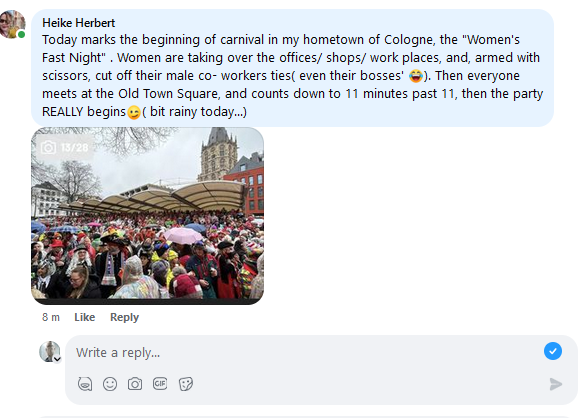
Following posting this page on Facebook, Heike Herbert posted this response concerning ‘Women’s Fast Night on February 8th in Cologne or Koln:

Screenshot of Facebook post about Women's Fast night in Cologne on 8th February.

Aristotelis Psitos emailed me to say that the Greek Orthodox ‘Fat Thursday’ is on a different date.

Making Lardy Cake

After last year’s post I decided to try to bake Lardy Cake .

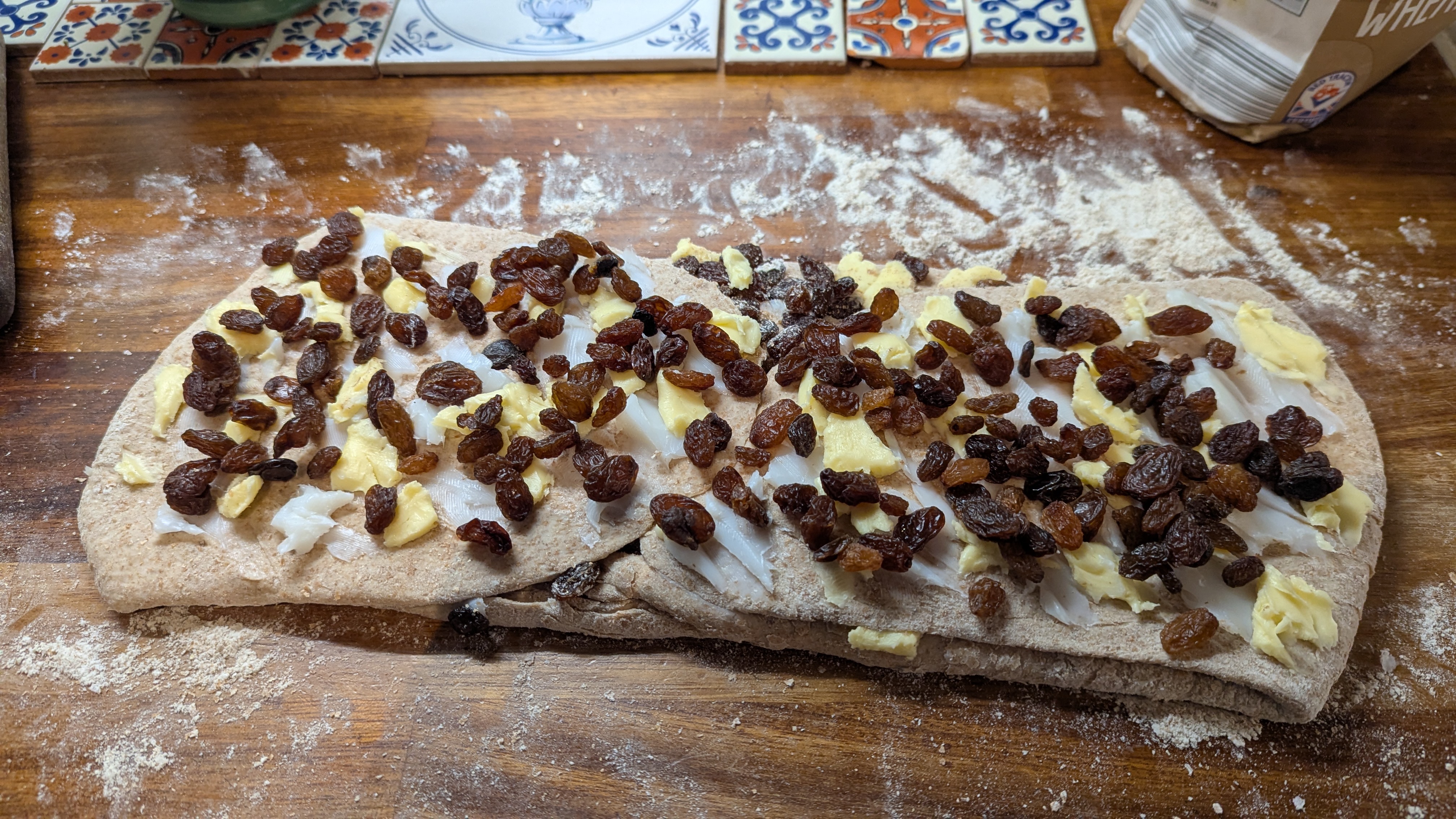
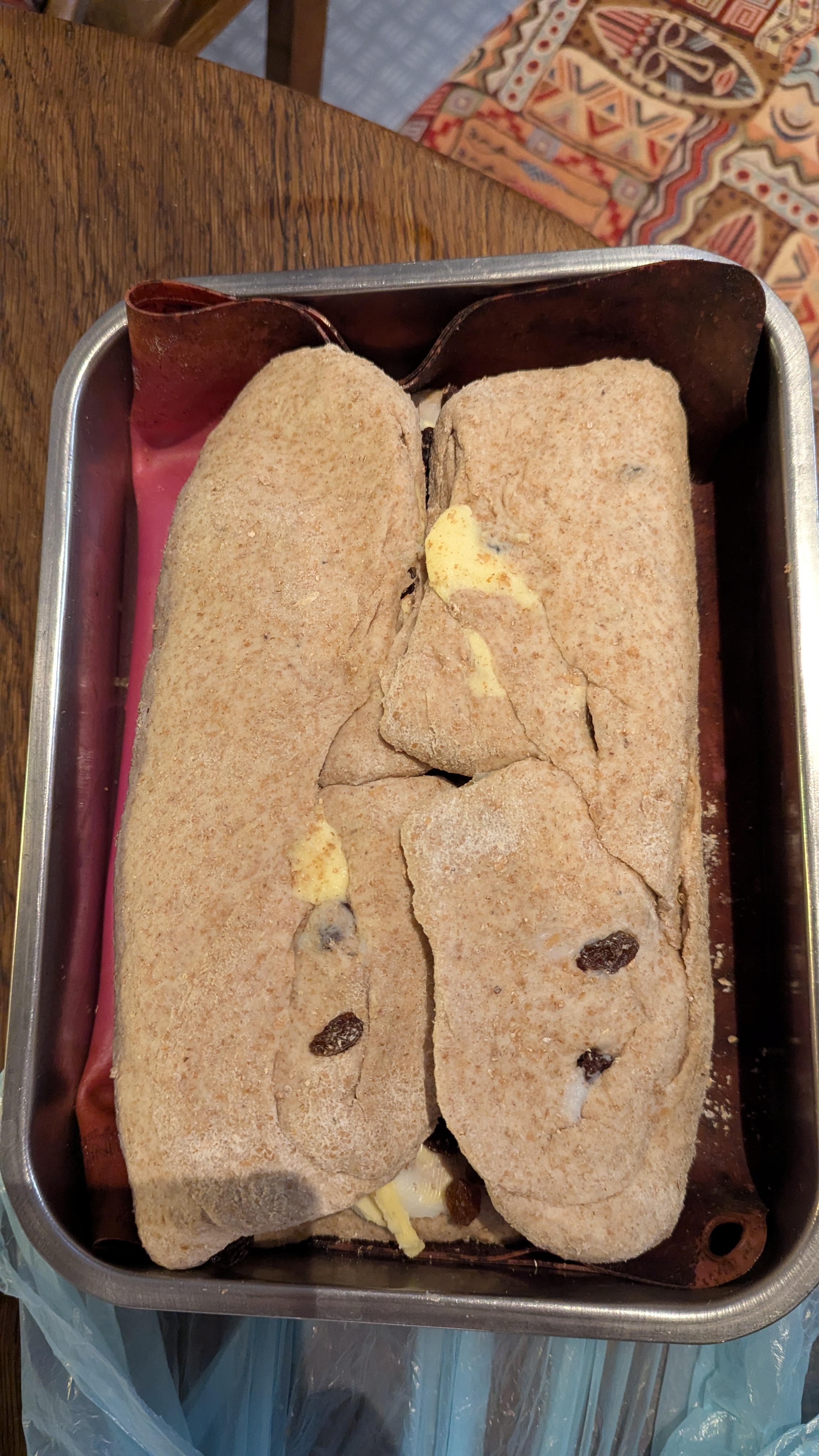
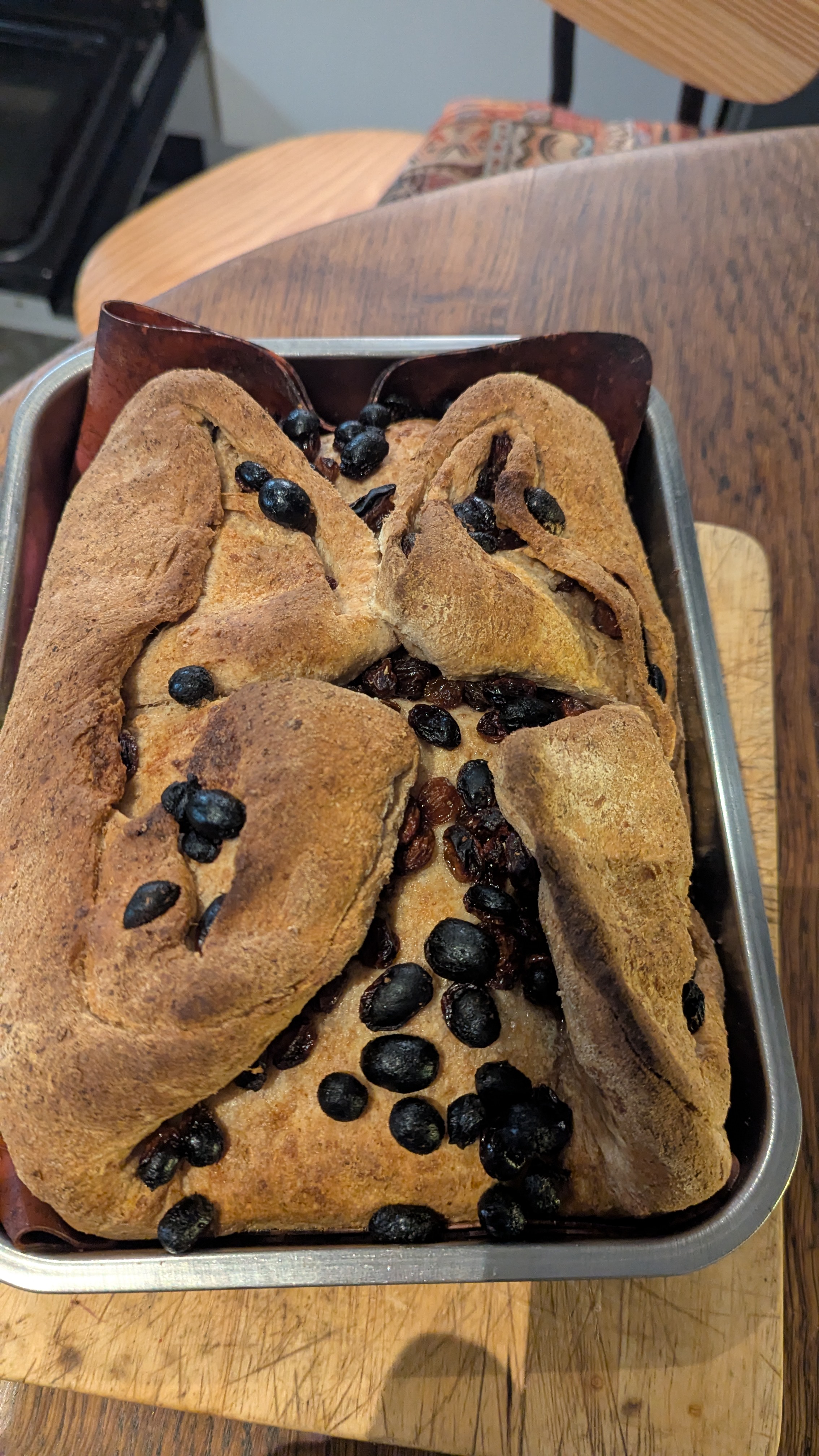
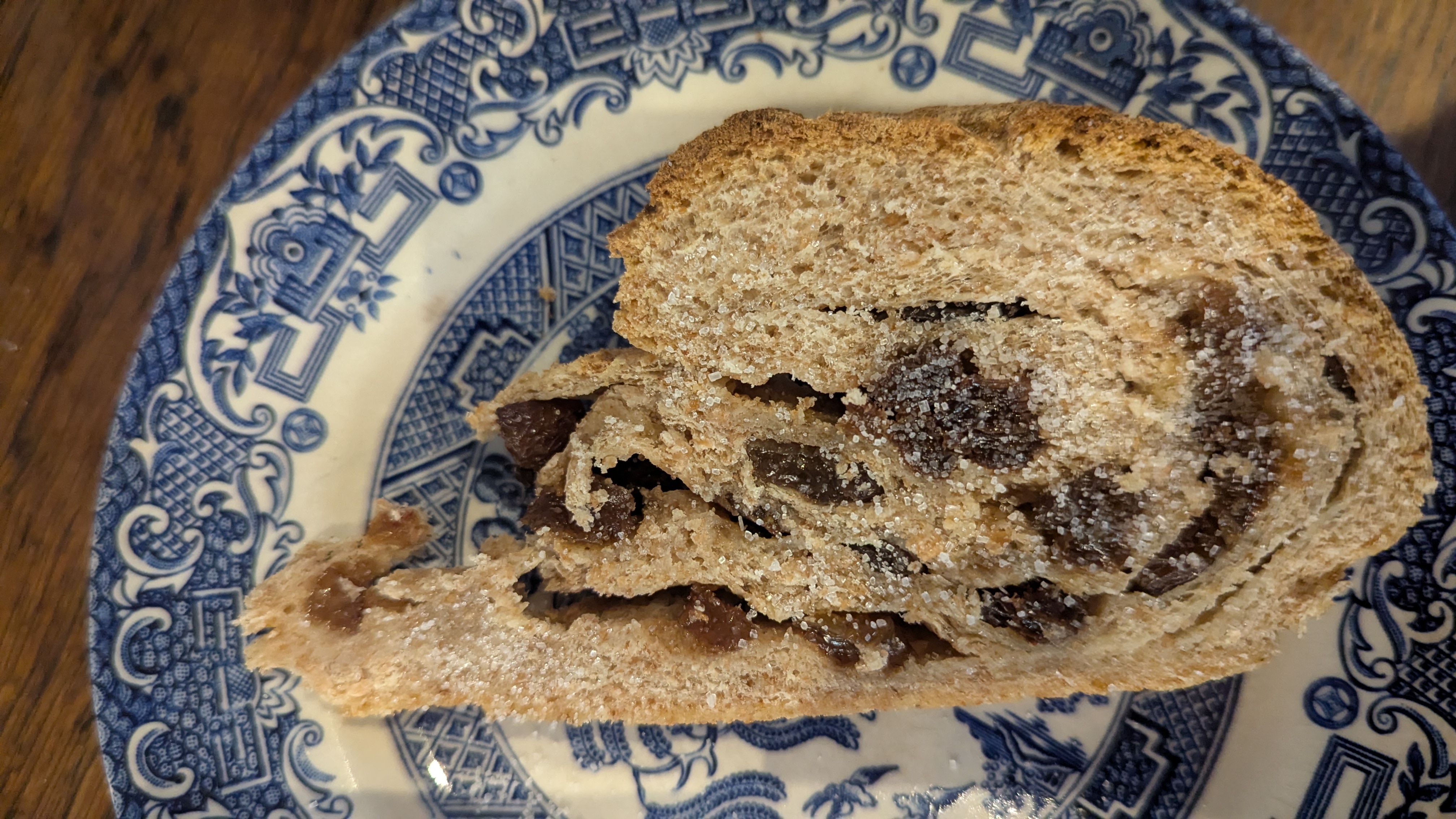
Ok, so my first error was pretty fundamental.I forget to put the sugar in! Secondly, I was distracted so did not put the timer on. It was therefore a little overcooked, but not disastrously. I also used Wholemeal flour rather than Strong White flour, which Paul Hollywood suggested. I sprinkled caster sugar on it. I’ve had about 4 slices, last night and this morning. I have now washed the utensils 4 times, and they are still covered in lard! But at least it’s less fat ingested. Verdict: Quite Good. To be honest, it is more like a fruit bread than a lardy cake. And next time, I’ll buy it rather than make it.

First Published 2024, revised 2025, Making Lardy Cake moved from February 27th 2026

St Agatha Feast Day February 5th

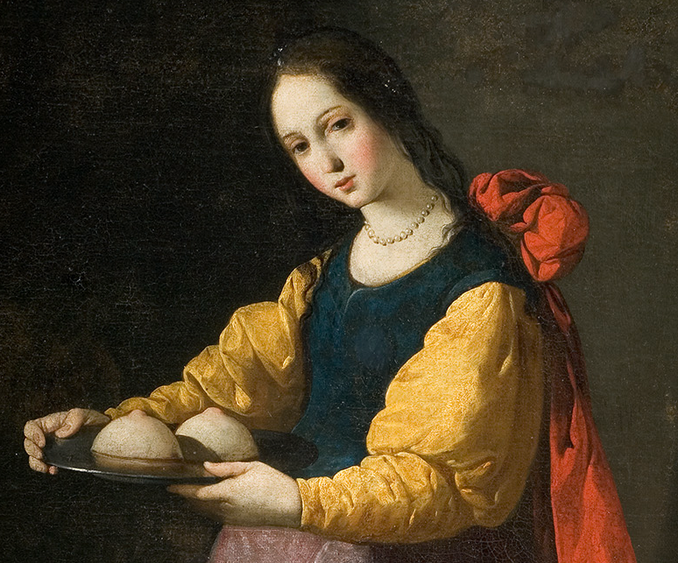
Saint Agatha, detail from a painting of Francisco de Zurbarán FROM wikipedia
Saint Agatha, detail from a painting of Francisco de Zurbarán – she is carrying her severed breasts

She is a Sicilian Saint, who refused to sleep with a powerful Roman (Quintianus) in the third Century. St Agatha was imprisoned, tortured, had her breasts pincered off, and still refused to sleep with him and died in prison. She is remembered in Sicily by cakes shaped as breasts eaten on her feast day (I kid you not).

breast shaped cakes called Minne di Sant'Agata, a typical Sicilian sweet
Minne di Sant’Agata, Sicilian (Wikipedia)

St Agatha Patronage

Her patronage springs from the usual mixture of deep and simplistic identifications. So she is ‘the patron saint of rape victims, breast cancer patients, martyrs, wet nurses, bell-founders, and bakers.’ As she is from Sicily ‘she is invoked against eruptions of Mount Etna.’ And therefore also against fire and earthquakes.’ (Wikipedia).

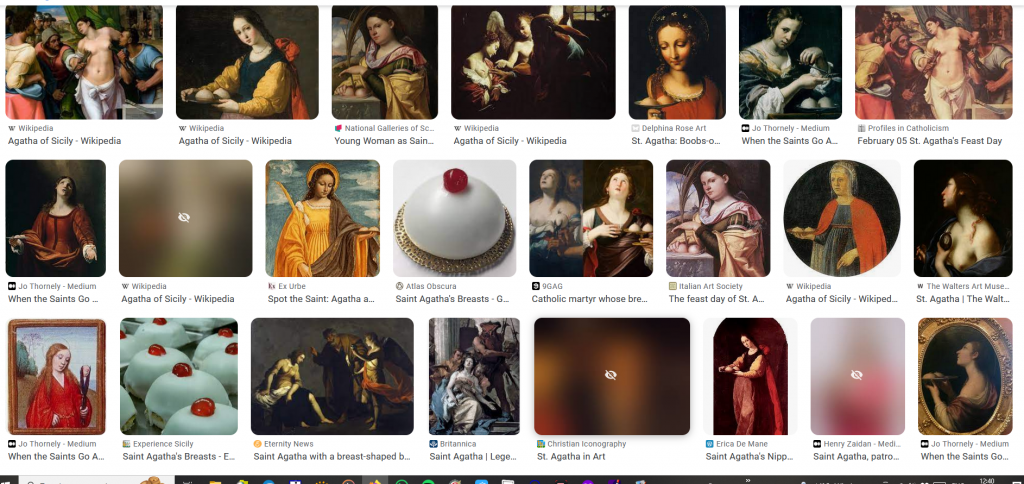
Bell Founders and Bakers? So, the bakers and bell founders, it is suggested, may have mistaken the trays of breasts as bells or loaves? Unlikely in my opinion, as Google image search shows they look clearly like breasts. They are cakes, of course, so that can help explain the Bakers, but the Bell Founders?

She was martyred, at the age of 20 (231-251AD), in the last year of the reign of Emperor Decius (Emperor 249 to June 251 AD). Thus, she is an early martyr whose cult was established in antiquity. But many of the details of her life and death are, as usual, apocryphal and from later traditions.

Results of a search for images of St Agatha in Google
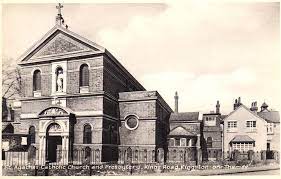
St Agatha's Church, Kingston on Thames
black and white illustration
St Agatha’s Church, Kingston on Thames

St Agatha and Etna

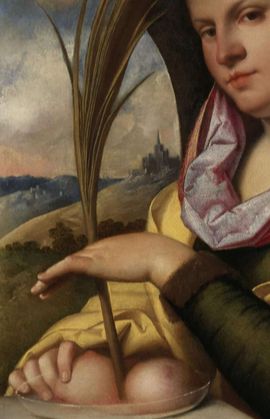
Detail of a Portrait of St Agatha by Cariana (Paintedin 1516-17). In the backgrouns is Catania

A year after her death, Mount Etna erupted. According to the story, the Christians of her home town of Catania lifted the Martyr’s veil towards the flowing lava. And the City was saved as the lava flow stopped. Hence, she protects against eruptions and by extension, earthquakes, and fire. This part of the story I got from my friend Derek who sent me the link to a piece written by Father Patrick van der Vorst. This also has the full image of the detail of painting by Cariani I show here.

For an explanation of gory matrydom’s please read my post on St Blaise.

For more on St Agatha, Ravenna, and a story about my motorcycling days please look at this post.

On This Day

2 BC – Caesar Augustus is granted the title Father of the Country (pater patriae) by the Roman Senate. Ovid celebrated this day in his alamanac poet Fasti. He seems to be praising Augustus mentioning him with the divine Julius Caesar, and Romulus and Reamus, founders of Rome.

Book II: February 5: Nones

Now I wish for a thousand tongues, and that spirit
Of yours, Homer, you who celebrated Achilles,
While I sing the sacred Nones in alternating verse.
This is the greatest honour granted to the calendar.
My wit deserts me: the burden ís beyond my strength,
This special day above all I am to sing.
Why did I wish, foolishly, to lay so great a task
On elegiac verse? This was a theme for the heroic stanza.
Sacred Father of the Country, this title has been conferred
On you, by the senate, the people, and by us, the knights.
Events had already granted it. Tardily you received
Your true title, you’d long been Father of the World.
You have on earth the name that Jupiter owns to
In high heaven: you are father of men, he of gods.
Romulus, give way: Caesar by his care makes your walls
Mighty: you made such as Remus could leap across.
Tatius, and the little towns of Cures and Caenina,
Knew you: under this Leader all the sun sees is Roman.

But suddenly the verse turns dark, and the references to Augustus are now slights and accusations. He continues:


You owned a little patch of conquered land:
Caesar possesses all beneath Jupiter’s heavens.
You raped married women: under Caesar they are ordered
To be chaste: you permitted the guilty your grove: he
forbids them.
Force was acceptable to you: under Caesar the laws
flourish.
You had the title Master: he bears the name of Prince.
Remus accused you, while he pardons his enemies.
Your father deified you: he deified his father.
Already Aquarius shows himself to the waist,
And pours the gods flowing nectar mixed with water,
And you who shrink from the north wind, be pleased,
A softer breeze is blowing from the West.

Ovid only finished the first 5 chapters of his calendar poem. He was exiled from Rome by Augustus, we don’t know why. But perhaps this is why he was exiled, because he was willing to defame the Godly Tyrant, Augustus, who had destroyed the Roman Republic. Dictators demand flattery, not criticism. Ovid paid the price. For more on Ovid’s exile please read my post on his abandonment of the Fasti here.

1811 – The Prince of Wales appointed Prince Regent during his dad’s, George III, mental incapacity

1924 – The famous pips, the time signal, first broadcasted by the BBC from Greenwich

1944 – War time diarist, Joan Wyndham receives letter from Norwegian lover Hans Gundersen. It confirms he is still alive and that she loves him. Follow the link to read his drunken letter and Joan’s reaction.

See my post here for another Joan Wyndham diary entry.

1953 – Last foodstuffs taken off Rationing in the UK. From this day forward, people could eat as many sweets and as much chocolate as they wanted. In the War they were limited to 2oz per person, and post war 6oz per person per week.

1990 – the last pips broadcasted from Greenwich by the BBC, henceforth the BBC generated their own pips.

First published in 2024, and republished in 2025, Ovid section added 2026

February – ‘the enemy to pleasure and the time of patience’

February Title page from Kalendar of Shepherds.

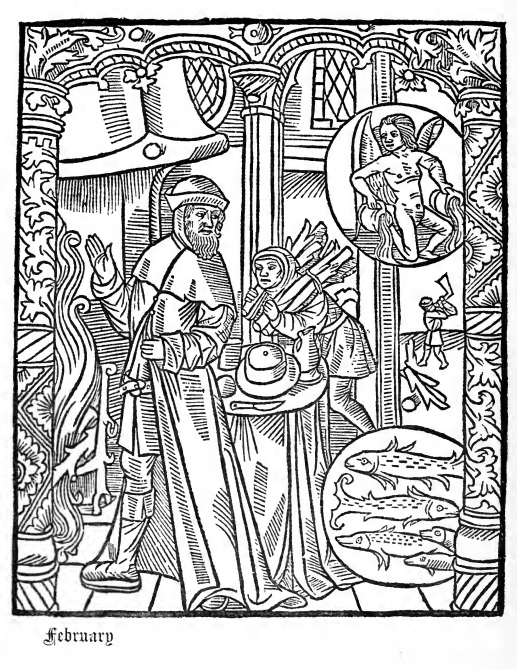
The 15th Century French illustration, above, shows February as a time to cut firewood, dress warmly and stay by the fire. Food on the table is a nutritious pie and the fish are there to remind us it is the month of Pisces. In the other roundel is the other February star sign the Water Carrier, Aquarius.

Star signs of February
February in the Kalendar of Shepherds

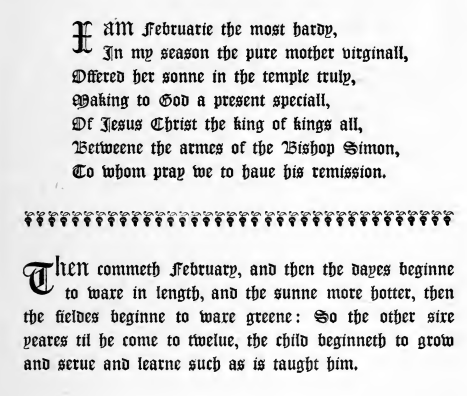
The poem above is a reference to the Candlemas celebration of the presentation of the child Jesus at the Temple. The paragraph below the line (above) gives a summary of February. It ends with the idea that runs through the Kalendar. There are twelve apostles, twelve days of Christmas, twelve months in the year. So, there are twelve blocks of six years in a person’s allotted 72 years of life. In the January entry the Kalendar suggests the essential uselessness of 0-6 year old children. But for February, it allows that 6-12 years old children are beginning to ‘serve and learn’.

The Kalendar’s View of February

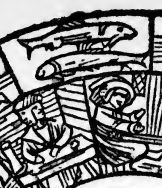
pisces from the zodiac from kalendar of shepherds
Pisces From the zodiac from kalendar of shepherds

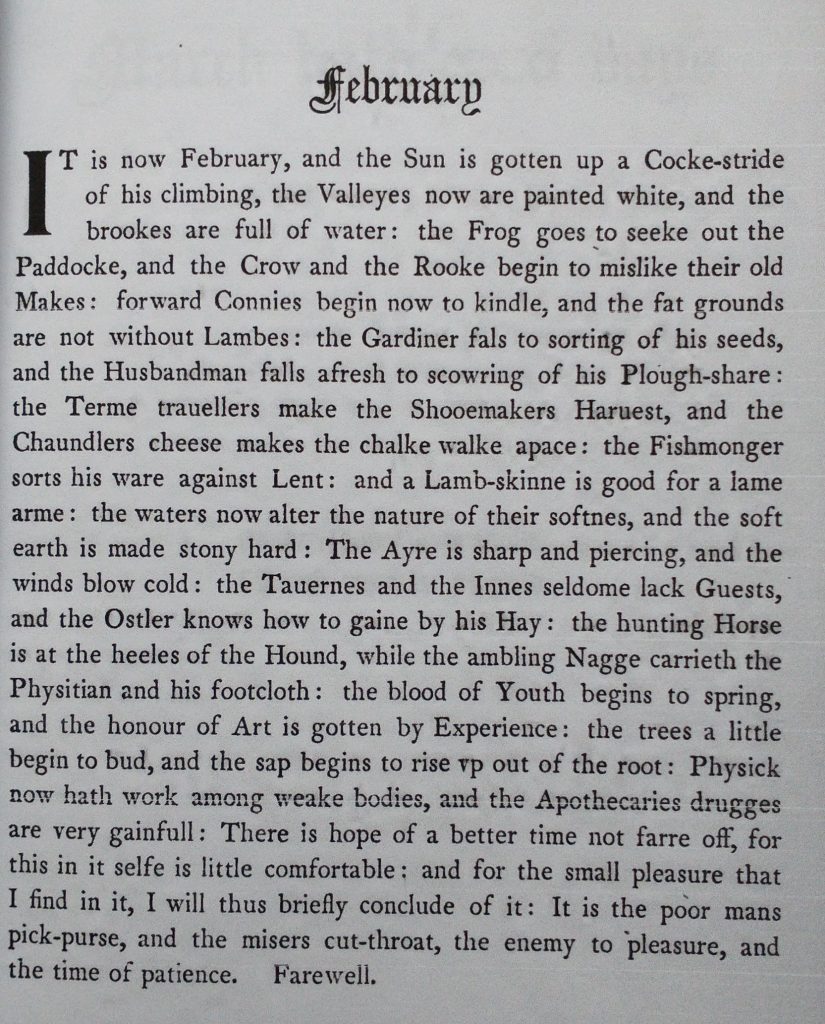
Below, is the text for February. This gives a rural view of life in winter. It ends with the line that February:

is the poor man’s pick-purse, the miser’s cut-throat, the enemy to pleasure and the time of patience.’

Description of February in the Kalendar of Shepherds

About the Kalendar of Shepherds.

The Kalendar was printed in 1493 in Paris and provided ‘Devices for the 12 Months.’ The version I’m using is a modern (1908) reconstruction of it. It uses wood cuts from the original 15th Century version and adds various texts from 16th and 17th Century sources. (Couplets by Tusser ‘Five Hundred Parts of Good Husbandrie 1599. Text descriptions of the month from Nicholas Breton’s ‘Fantasticks of 1626.) This provides an interesting view of what was going on in the countryside every month.

For more on the Kalendar look at my post here.

The original Kalendar can be read here: https://wellcomecollection.org/works/f4824s6t

Hesiod and February

Hesiod, in his ‘Works and Days’ describes February as a merciless cold, windy time. Hesiod was writing around 700BC. He gave us ‘the story of Prometheus and Pandora, and the so-called Myth of Five Ages.’ (Links are to Wikipedia.)

Avoid the month Lenaeon, (February) wretched days, all of them fit to skin an ox, and the frosts which are cruel when Boreas blows over the earth.
He blows across horse-breeding Thrace upon the wide sea and stirs it up, while earth and the forest howl.
On many a high-leafed oak and thick pine he falls and brings them to the bounteous earth in mountain glens: then all the immense wood roars and the beasts shudder and put their tails between their legs, even those whose hide is covered with fur; for with his bitter blast he blows even through them, although they are shaggy-breasted.
He goes even through an ox’s hide; it does not stop him. Also he blows through the goat’s fine hair.
But through the fleeces of sheep because their wool is abundant, the keen wind Boreas pierces not at all; but it makes the old man curved as a wheel.
And it does not blow through the tender maiden who stays indoors with her dear mother, unlearned as yet in the works of golden Aphrodite, and who washes her soft body and anoints herself with oil and lies down in an inner room within the house,
on a winter’s day when the Boneless One (an Octopus or a cuttle?) gnaws his foot in his fireless house and wretched home; for the sun shows him no pastures to make for, but goes to and fro over the land and city of dusky men, and shines more sluggishly upon the whole race of the Hellenes.
Then the horned and unhorned denizens of the wood,] with teeth chattering pitifully, flee through the copses and glades, and all, as they seek shelter, have this one care, to gain thick coverts or some hollow rock.
Then, like the Three-legged One (an old man with a stick) whose back is broken and whose head looks down upon the ground, like him, I say, they wander to escape the white snow.

Original text available here. and for more on Hesiod see my post here.

Februarius

The Roman month Februarius was the month of purification. Februa was the name of the purification ritual held on February 15 (full moon) in the old lunar Roman calendar. The Romans originally considered winter a monthless period of the year. So they only had 10 months to the year. Later they added January and February. March was the first month, so September was the 7th month, October the 8th, November 9th and December the 10th and final month. Names derived from the Latin for 7th, 8th, 9th, 10th.

For more on the Roman Calendar look at my posts

https://chr.org.uk/anddidthosefeet/march-1st-the-month-of-new-life/

https://chr.org.uk/anddidthosefeet/leap-day-february-29th/

First Published February 4th 2024, revised 2025, 2026

Gilbert White & The Cold of January 1776 January 28th

Photo of London Fields in the snow of 2022
Photo of London Fields in the snow of 2022 by Kevin Flude

January 1776:

‘On the 27th much snow fell all day, and in the evening the frost became very intense. At South Lambeth, for the four following nights, the thermometer fell to 7, 6, 6, and at Selborne to 7, 6, 10, and on the 3ist of January , just before sunrise, with rime on the trees and on the tube of the glass, the quicksilver sunk exactly to zero, being 32 degrees below the freezing point’ Gilbert White

Gilbert White and Darwin

He, of course, is talking Fahrenheit, so well below zero. If there was a Giant upon whose shoulders Charles Darwin climbed, then Gilbert White owned one pair.. He was one of many churchmen of the 18th and 19th Century who spent their extensive leisure time, on observing God’s wonderful creation in their gardens and parishes. What made White so important was that his practice was ‘observing narrowly’ and regularly. For example, his observations of the importance of earth worms were fundamental to Charles Darwin’s own studies. When Darwin came back from his travels on the Beagle, he settled in a country property in Orpington. Like White, he used his garden and the local area as his laboratory. Here he worked to prove his theory of evolution.

Gilbert White and Earth worms

Earth worms were one of Darwin’s passions. This is what Gilbert White wrote about their contribution to nature:

“Earth-worms, though in appearance a small and despicable link in the chain of Nature, yet, if lost, would make a lamentable chasm. For, to say nothing of half the birds, and some quadrupeds which are almost entirely supported by them, worms seem to be the great promoters of vegetation, by boring, perforating, and loosening the soil, and rendering it pervious to rains and the fibres of plants, and, most of all, by throwing up such infinite numbers of lumps of earth called worm-casts, which, being their excrement, is a fine manure for grain and grass.”

(Quoted from https://gilbertwhiteshouse.org.uk)

By such minute and repeated observations, Gilbert White investigated the food chain, and the migration of birds (which was at the time disputed). He laid the foundations of what we now call ecology.

Gilbert White’s Career

He became Dean of Oriel College in Oxford. But chose to spend his career in the relatively humble occupation of Curate. A Curate is the bottom-feeder in the Anglican Church food chain. A Curate hardly earned enough to maintain a position in the Gentry (£50 p.a.). Although, White was upgraded to the title of Perpetual Curate. He still would only be pulling in, I guess, something like £200 p.a. (Patrick Bronte was also a Perpetual Curate). Essentially, it is Vicar looking after a part of a too large Parish.

Financially, White didn’t need much, he inherited his father’s property at Shelborne, Hampshire. White’s grandfather was the Vicar at Shelborne. But Gilbert could not inherit the title because he went to Oriel College. The ‘living’ of the Parish of Shelborne was ‘in the gift of’ Magdalen College. And they were not going to give the role to an alumnus of a rival college.

Gilbert White & The Austen Family

The house, now open to the public, is just around the corner from Chawton. This is where Jane Austen spent her last years. He was born in 1720; was 55 when Austen was born, and he died in 1793, when she was 18. He lived 4 miles away, so the families knew of each other. We know Jane Austen’s brother wrote a poem about Gilbert White and his natural history observations, particularly on birds.

From ‘Selbourne Hanger’ by James Austen

Who talks of rational delight }
When Selbourne’s Hill appears in sight }
And does not think of Gilbert White? }
Such sure he was – by Nature grac’d
With her best gift of genuine taste;
And Providence – which cast his lot
Within this calm, secluded spot,
Plac’d him where best th’enquiring mind
Might study Nature’s works, and find
Within her ever open book
Beauties which others overlook.
Enthusiast sweet! Your vivid style
The attentive reader can beguile
Through many a page, and still excite
An Interest in what you write!
For whilst observant you describe
The habits of the feathery tribe
Their Loves and Wars – their nest and Song,
We never think the tale too long.

For more information on White and Austen, go to Gilbert White’s House’s web page here:

More Snow!

Here is more of that epic cold January 1776

‘… but by eleven in the morning, though in the shade, it sprang up to I6J,1 — a most unusual degree of cold this for the south of England. During these four nights the cold was so penetrating that it occasioned ice in warm chambers and under beds ; and in the day the wind was so keen that persons of robust constitutions could scarcely endure to face it. The Thames was at once so frozen over both above and below bridge that crowds ran about on the ice. The streets were now strangely encumbered with snow, which crumbled and trod dusty ; and, turning grey, resembled bay-salt : what had fallen on the roofs was so perfectly dry that, from first to last, it lay twenty-six days on the houses in the city ; a longer time than had been remembered by the oldest housekeepers living…..’

‘The consequences of this severity were, that in Hampshire, at the melting of the snow, the wheat looked well, and the turnips came forth little injured. The laurels and laurustines were somewhat damaged, but only in hot aspects. No evergreens were quite destroyed ; and not half the damage sustained that befell in January, 1768. Those laurels that were a little scorched on the south-sides were perfectly untouched on their north-sides. The care taken to shake the snow day by day from the branches seemed greatly to avail the author’s evergreens. A neighbour’s laurel-hedge, in a high situation, and facing to the north, was perfectly green and vigorous ; and the Portugal laurels remained unhurt.’

More Frost!

‘We had steady frost on to the 25th, when the thermometer in the morning was down to 10 with us, and at Newton only to 21. Strong frost continued till the 31st, when some tendency to thaw was observed ; and, by January the 3d, 1785, the thaw was confirmed, and some rain fell.’

Rosemary flowering in december
Rosemary flowering in my garden, photo by Kevin Flude

Gilbert White’s House is open to the public and also contains a display on Lawrence Oates, who died on Scots Antarctic expedition. For more information look at my post here.

There is another mention of Gilbert White in the Almanac of the Past here.

Foods in Season

Here are food stuffs that are in season now.

Wild Greens: Chickweed, hairy bittercress, dandelion leaves, sow thistle, winter cress

Vegetables: Forced Rhubarb, purple sprouting broccoli, carrots, brussels sprouts, turnips, beetroot, spinach, kale, chard, leeks, Jerusalem artichokes, lettuces, chicory, cauliflowers, cabbages, celeriac, swedes

Herbs: Winter savory, parsley, chervil, coriander, rosemary, bay, sage

Cheeses: Stilton, Lanark Blue

(from the Almanac by Lia Leendertz)

On This Day

1754 – Horace Walpole coined the new word ‘serendipity’ from the ‘Three Princes of Serendip’ fairy tale. The Princes ‘ere always making discoveries, by accidents and sagacity, of things they were not in quest of.’

1898 – Walter Arnold became the first motorist to be fined for speeding. He was going 8 miles an hour in a 2 mile an hour area in Kent

1986 – Explosion of US Space Shuttle Challenger. All 7 astronauts killed, including teacher Christa McAuliffe who would have been the first civilian in space.

The food section posted originally in 2023, the part on Gilbert White written on 28th January 2024, revised 2025, On This Day added 2026

Sementivae Dies—the Days of Sowing January 24–26th

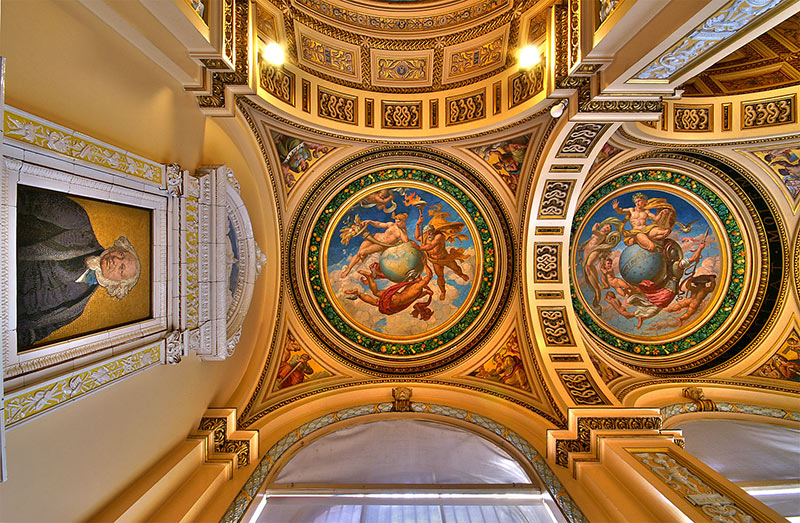
Victoria and Albert Museum” by Nick Garrod, licensed under CC BY-NC-ND 2.0. First V&A Director, Sir Henry Cole, to the left of the picture. Greek Deities in the roundells

Sementivae, was a festival dedicated to seed and to Ceres. Ceres is the Corn Goddess who gives her name to our word cereal. The festival was also called. Paganalia. The Mediterranean world had many names for the Earth Goddess. Tellus, Demeter, Cybele, Gaia, Rhea etc. who is celebrated around this time of the year with Ceres.

Ceres can be seen on the top left roundel resting on the Globe on the marvellous Ceramic Staircase at the V&A (photo above). And in my slightly out of focus photograph below. (To be honest, in real life, it looks a little more like my photo than the gorgeous photo above!)

Ceres represented Agriculture, Mercury Commerce, and Vulcan Industry.  Old Photo by the Author.  T
Ceres represented Agriculture, Mercury Commerce, and Vulcan Industry. Old Photo by the Author.

Sementivae Dies – a moveable feast.

To create life, we need earth and water to nurture and seeds for their fertility. And so into the cold dead world of January the Romans created a festival of sowing. It had two parts, one presided over by Mother Earth (Tellus) and the other by Ceres, the Goddess of Corn. The actual day of the festival was chosen not by rote on a set day of the calendar but by the priests, in accordance with the weather. This seems very sensible, as there is no point sowing seeds in terrible weather conditions. I’m assuming the Priests took professional advice!

On the 24th-26th January Tellus prepared the soil, and in early February seeds were sown under the aegis of Ceres. Tellus Mater (also Terra Mater) was known as Gaia to the Greeks.

Gaia

Gaia was selected by James Lovelock & Lynn Margulis in the 1970s as the face of their Gaia hypothesis. To me, the importance of the idea is not the scientific principle that environments co-evolve with the organisms within them. But, rather in Gaia as a personification of our world as a complex living ecosystem. One that we have to care for. Gaia exists as a series of feedback loops. Lovelock hypotheses is that she will spit us out unless we can live in balance with our alma mater. I cannot believe he was not knighted. However, he is one of my heros.

Photo of James Lovelock with Greenery behind him and a statue of a female who may be the earth goddess Gaia,
James Lovelock. The original uploader was Bruno Comby at English Wikipedia. – Transferred from en.wikipedia to Commons., CC BY-SA 1.0, https://commons.wikimedia.org/w/index.php?curid=3873472. I hope the Goddess in the background is Gaia

Here is a tribute to Lovelock by his friend Bryan Appleyard. In it. He claims that work done by Lovelock ‘saved the world’. Lovelock invented a device that enabled the detection (and eventual eradication) of DDT and CFCs. If you remember, CFCs were destroying the Ozone layer until international agreement phased them out. Lovelock also worked for MI5. Appleyard, writing in The Sunday Times, described Lovelock as “basically Q in the James Bond films”.

Ovid and Sementivae

Ovid allocated January 24th to Sementivae but explains it is a variable date. But let’s let the Roman Poet Ovid has to say in his poetic Almanac known as ‘Fasti’ (www.poetryintranslation.com)

Book I: January 24

I have searched the calendar three or four times,
But nowhere found the Day of Sowing:
Seeing this, the Muse said: That day is set by the priests,
Why are you looking for moveable days in the calendar?
Though the day of the feast ís uncertain, its time is known,
When the seed has been sown and the land ís productive.
You bullocks, crowned with garlands, stand at the full
trough,
Your labour will return with the warmth of spring.
Let the farmer hang the toil-worn plough on its post:
The wintry earth dreaded its every wound.

Steward, let the soil rest when the sowing is done,
And let the men who worked the soil rest too.
Let the village keep festival: farmers, purify the village,
And offer the yearly cakes on the village hearths.
Propitiate Earth and Ceres, the mothers of the crops,
With their own corn, and a pregnant sow ís entrails.
Ceres and Earth fulfil a common function:
One supplies the chance to bear, the other the soil.
Partners in toil, you who improved on ancient days
Replacing acorns with more useful foods,
Satisfy the eager farmers with full harvest,
So they reap a worthy prize from their efforts.
Grant the tender seeds perpetual fruitfulness,
Don’t let new shoots be scorched by cold snows.
When we sow, let the sky be clear with calm breezes,
Sprinkle the buried seed with heavenly rain.
Forbid the birds, that prey on cultivated land,
To ruin the cornfields in destructive crowds.
You too, spare the sown seed, you ants,
So you’ll win a greater prize from the harvest.

For more on Ovid look at my post on Ovid and Juno here. Or you can search for Ovid in the Search box for other my posts on the Roman poet.

On This Day

1788 – Foundation of the first colony of European Settlers at Port Jackson, now Sydney. It is now Australia Day, a public holiday.

1841 – Hong Kong became a British Sovereign Territory

1926 – The first Public demonstration of a TV image given by Scottish electrical engineer John Logie Baird (1888-1946) (see https://bairdtelevision.com/firstdemo.html)

1998 – ‘I did not have sexual relations with that woman’ or so said Bill Clinton, lying through his teeth. (although I guess it depends on your definition of lying?) For more, look at the Time article here.

First Published in January 2023, republished in January 2024, 2025, 2026


Rabbiting January 19th

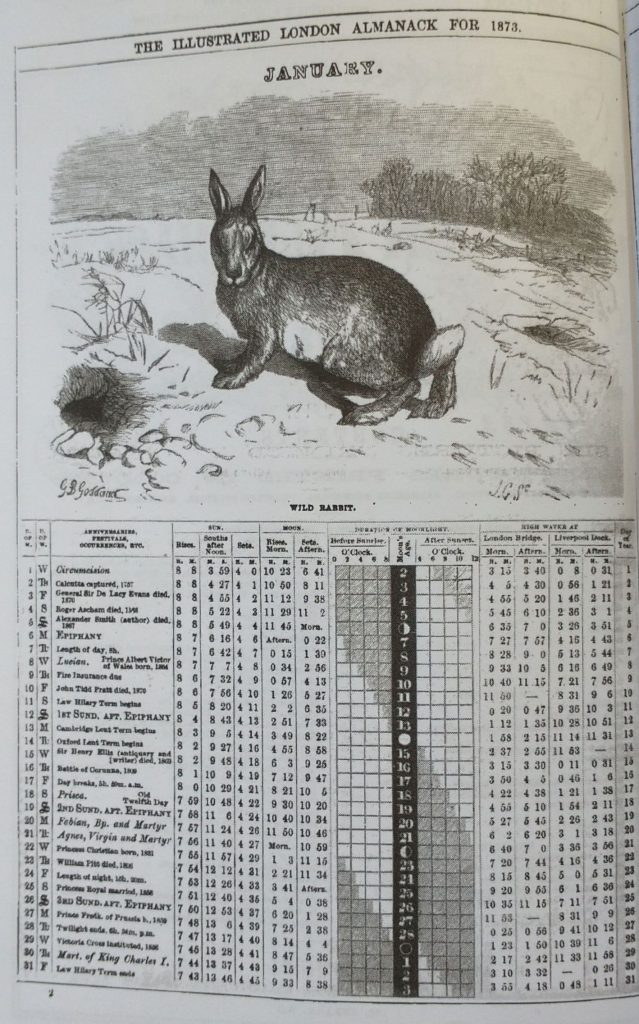
London Illustrated Almanac of 1873
January from London Illustrated Almanac of 1873

January & Rabbits

In January, the ‘coney is so ferreted that she cannot keep in her borough’ says Nicholas Breton. He wrote in the January entry of the Kalendar of Shepherds. (See my post here). In modern speech he means, ‘the rabbit is so hunted with the aid of ferrets that she cannot keep to her burrow’. The London Illustrated Almanac of 1873 chose the Rabbit as its wild animal of the month.

Good Luck Rabbits!

If you need good luck say ‘Rabbit, Rabbit’. No less a person than FD Roosevelt used to say this. No one knows why. Rabbits’ feet are lucky too. I remember some of my friends had them in our Surrey village in the early 60s. Some of Dad’s neighbours kept ferrets, and I remember dead Rabbits hanging from walls. The merits of the feet are given by the history.com website:

“A 1908 British account reports rabbits’ feet imported from America being advertised as ‘the left hind foot of a rabbit killed in a country churchyard at midnight, during the dark of the moon, on Friday the 13th of the month, by a cross-eyed, left-handed, red-headed bow-legged Negro riding a white horse,’

https://www.history.com/news/

As to why, no one really knows. But Pliny the Elder in 71AD reported that cutting off the foot of a live hare could cure gout. There are European traditions of rabbit and other animal’s feet amulets curing all sorts of ailments. There are associations with witches, who could shape-shift into a rabbit. So a rabbit’s foot would be witchy and therefore powerful. In March, I reported on the Hare, and their, similar, associations with witches:

To find out about Rabbit welfare have a look at Rabbiting On Magazine.

Rabbit, Rabbit

For lovers (?) of music, Chas and Dave’s hit song ‘Rabbit’ has a chorus of ‘Rabbit, Rabbit’. According to the Cockney singers (they do love a Knee’s Up) it comes from the Cockney Rhyming Slang expression: Rabbit and Pork. This means ‘Talk’ because it rhymes with ‘Pork’. But, according to the rules of Cockney, you can shorten the phrase to Rabbit. To hear about the origins of the song, and royal connections, click here. To watch the official video. (It is misogynistic and of its day. Also, you may have to listen to an advert, but I don’t make any money from the ad!)

Now, I must stop rabbiting on. Time to get things done.

On This Day

1915 – German Zeppelins bomb the towns of Great Yarmouth and King’s Lynn. 20 people killed in the first major aerial bombardment of a civilian target. See my post on the September 8th Zeppelin attack on London.

Today the V&A ‘celebrated’ Blue Monday with an article on China’s Blue and White Ceramics.

First, published, as January and Rabbiting in 2023, revised in January 2024, 2025, January moved to its page and page revised and retitled 2026

Lambing January 18th

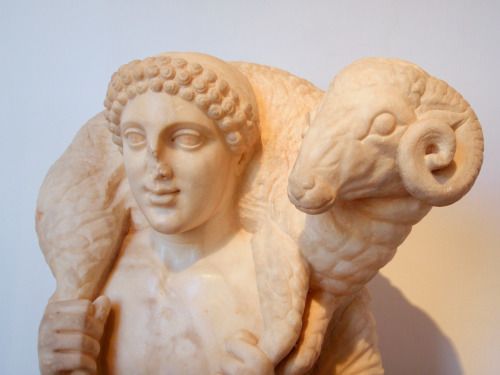
Hermes the ram-bearer near Roman 1st BCE copy of 5th Greek statue
Hermes the ram-bearer, Roman 1st BCE copy of 5th Greek statue

Lambing

You are getting another copy of this because it was published without additions I made to the On This Day section.

If a lamb be born sick and weak, the Shepherd shall fold it in his cloak, blow into the mouth of it and then, drawing the Dam’s dog, shall squirt milk into the mouth of it. If an Ewe grow unnatural, and will not take her Lamb after she has yeaned it, you shall take a little of the Clean of the Ewe (which is the bed in which the Lamb lay) and force the Ewe to eat it, or at least chew it in her mouth and she will fall to love a Lamb naturally. But if an Ewe have cast her Lamb, and you would have her take to another Ewe’s Lamb, you shall take the Lamb which is dead, and with it rub and daub the live Lamb all over, and so put it to the Ewe, and she will take to it as naturally as if it were her own.

Gervase Markham, ‘Cheap and Good Husbandry’ 1613 (quoted in the Perpetual Almanac by Charles Kightly).

All about Lambing

Lambing can begin in the second part of Janauary in the south-west of the UK. But it gets progressively later as you travel north. Itinerant shearers, now often from New Zealand, travel the country shearing sheep. They will begin in the south and then progress north.

March and April are peak lambing time in the UK. But the season runs from February to April. Some farmers even lamb before Christmas (and it is not unknown to lamb in November).

The country expression is ‘in with a bang and out with the fool’ which suggests an ideal time to tup, is November 5th, on Fireworks Night. So that the lambs will be born, 5 months later, around the 1st of April. A litter is normally one or two but occasionally more. Ewe’s get fed depending on how many lambs they will be having.

Thomas Hardy & the Reddle Man

In the ‘Return of the Native’, Thomas Hardy has a character called Diggory Venn, he is a reddle man. He travels the country in a little pony and trap selling reddle. This is a red ochre dye with which shepherds mark their flock. Part of the plot is about the reluctance of women to marry a man whose red, reddle-stained face, makes him look like a devil.

The reddle is used to mark sheep, particularly before lambing. The ram is given a collar or girdle with a marker full of reddle in it. When he mounts the ewe, she will have a red mark on her back. When she has been tupped twice, she will have two red marks on her back. She will then be taken out of the field, to encourage the ram to impregnate the others. Reddle and other dyes can be used to mark lambs chosen for slaughter, or dipping, or weighing etc

(Tup is a country verb: I tup. You tup. We are tupping etc., and means what happens when the ram ‘covers’ the ewe).

For more on Thomas Hardy see my posts:

Hardy’s Henge
The End of Hardy;s Tree

And about the Mayor of Casterbridge:
Wife selling
Failed Weather Forecasting
And the most popular of all my posts: The Skimmity Ride

On This Day!

1486 – Dynastic marriage of King Henry of Lancaster (Henry VII) to Elizabeth of York, daughter of Edward IV, ends rivalry that led to the War of the Roses

1779 – Peter Mark Roget, physician, scholar, thesaurus creator was born, brought into this world, delivered, popped out, brought forth, sprogged, engendered, begat, birthed.

1896 – First xray generating machine displayed to the public by American H L Smith, but building on the work of English physicist William Crookes and German, Wilhelm Röntgen. Portable machines, designed for hospital use on the Battlefields were developed by Spaniard Mónico Sánchez Moreno and the Polish/French scientist Marie Curie.

First Published 2023, revised 24,25,26

How to Keep Apples & if the frost be very extreame January 9th

Gervase Markham was born in 1568, in Nottinghamshire, and was a prolific writer. Today, prompted by the Perpetual Almanac by Charles Kightly, I am looking through Markham’s eyes at Apples. Apples were an important source of joy as well as nutrition through a cold winter, as fresh produce became unavailable.

Markham wrote detailed books for use by the householders, the Husbands and the Housewives. And with the coming of frost, the survival of food in your food store might depend upon reading Markham’s books. When the frosts hit, as they are now doing in the UK, you had to look after your store of apples. They were an important sweet food source over the winter.

For the women, he wrote the English Housewife, published in 1615. Here is his recipe for Apple Tart.

For the Housewife How to Make Apple-tart

Take apples and peel them and slice them thin from the core into a pan with white wine, good store of sugar, cinnamon and rosewater, and so boil it all shall it be thick. Then cool it and strain it, and beat it very well together with a spoon, and then put it into your coffin or crust and bake it. It carrieth with the colour red.

Gervais Markham, the English Housewife 1683 version (quoted by Charles Kightly).

For the Husband, How to Keep Apples in Frost

Lots of apples in a pile Photo by sydney Rae on Unsplash
Photo by sydney Rae on Unsplash

For the men, he wrote the English Husbandsman, published in 1613 and ‘Printed by T. S. for Iohn Browne, and are to be sould at his shop in Saint Dunstanes Church-yard.’ This is the St Dunstan’s in Fleet Street, I think (near Sweeney Todds, the Barbers.) The book is available on Project Gutenberg (Gervase Markham the English Husbandman. Project Gutenberg).

So to the frost – Markham ends his extensive piece on the best way to store apples as follows:

To keepe Fruit in frost. If the frost be very extreame, and you feare the indangering your fruit, it is good to couer them somewhat thicke with fine hay, or else to lay them couered all ouer either in Barley-chaffe, or dry Salte: as for the laying them in chests of Iuniper, or Cipresse, it is but a toy, and not worth the practise: if you hang Apples in nettes within the ayre of the fire it will kéepe them long, but they will be dry and withered, and will loose their best rellish.

I remember my Grandmother would store her excess apples from the tree, wrapped in paper and stored in cupboards in the pantry or outbuilding. They were often wrinkled but always delicious, and I think were Russets, which remain my favourite apple.

At the bottom of the piece, I include the rest of Markham’s advice for storing apples. To summarise it: Don’t store them near the ground. Place them on shelves ordered by variety based on which variety lasts longest. So at the back will be the long-lived species such as Russets and Pippins, to eat as spring approaches. The front the ones you need to eat now such as the ‘Costard, Pome-water, Quéene-Apple‘ varieties.

Marocco, Pocahontas and the Rhino – performing at the Bell Savage

Markham wrote many books, including one on the famous performing horse Marocco. He starred in shows at the Bell Savage, just outside Ludgate in the City of London. The horse would whinny in triumph with the naming of an English King. But snort with derision with the naming of a Pope. He could also count and add up. He was rumoured to have been burnt at the stake as a witch in Edinburgh. But this does not appear to be true. Also, appearing at the Bell Savage in the 17th Century was a Rhinoceros, other prodigies and Pocahontas.

How to Keep Apples extended version

For a more modern text on what to do with excess apples from your tree, have a look here. However, do read on to get an insight into life and the varieties of Apples that were eaten in the 17th Century.

The place where you shall lay your fruit must neither be too open, nor too close, yet rather close then open, it must by no meanes be low vpon the ground, nor in any place of moistnesse: for moisture bréedes fustinesse, and such naughty smells easily enter into the fruit, and taint the rellish thereof, yet if you haue no other place but some low cellar to lay your fruit in, then you shall raise shelues round about, the nearest not within two foote of the ground, and lay your Apples thereupon, hauing them first lyned, either with swéet Rye-straw, Wheate-straw, or dry ferne: as these vndermost roomes are not the best, so are the vppermost, if they be vnséeld, the worst of all other, because both the sunne, winde, and weather, peircing through the tiles, doth annoy and hurt the fruit: the best roome then is a well séeld chamber, whose windowes may be shut and made close at pleasure, euer obseruing with straw to defend the fruit from any moist stone wall, or dusty mudde wall, both which are dangerous annoyances.

The seperating of Fruit. Now for the seperating of your fruit, you shall lay those nearest hand, which are first to be spent, as those which will last but till Alhallontide, as the Cisling, Wibourne, and such like, by themselues: those which will last till Christmas, as the Costard, Pome-water, Quéene-Apple, and such like: those which will last till Candlemas, as the Pome-de-roy, Goose-Apple, and such like, and those which will last all the yéere, as the Pippin, Duzin, Russetting, Peare-maine, and such like, euery one in his seuerall place, & in such order that you may passe from bed to bed to clense or cast forth those which be rotten or putrefied at your pleasure, which with all diligence you must doe, because those which are tainted will soone poyson the other, and therefore it is necessary as soone as you sée any of them tainted, not onely to cull them out, but also to looke vpon all the rest, and deuide them into thrée parts, laying the soundest by themselues, those which are least tainted by themselues, and those which are most tainted by themselues, and so to vse them all to your best benefit.

Turning your Fruit

Now for the turning of your longest lasting fruit, you shall know that about the latter end of December is the best time to beginne, if you haue both got and kept them in such sort as is before sayd, and not mixt fruit of more  earely ripening amongst them: the second time you shall turne them, shall be about the end of February, and so consequently once euery month, till Penticost, for as the yéere time increaseth in heate so fruit growes more apt to rot: after Whitsontide you shall turne them once euery fortnight, alwayes in your turning making your heapes thinner and thinner; but if the weather be frosty then stirre not your fruit at all, neither when the thaw is, for then the fruit being moist may by no meanes be touched: also in wet weather fruit will be a little dankish, so that then it must be forborne also, and therefore when any such moistnesse hapneth, it is good to open your windowes and let the ayre dry your fruit before it be turned: you may open your windowe any time of the yéere in open weather, as long as the sunne is vpon the skye, but not after, except in March onely, at what time the ayre and winde is so sharpe that it tainteth and riuelleth all sorts of fruits whatsoeuer.

Gervase Markham the English Husbandman Project Gutenberg

1799 – Income Tax introduced for the first time by Prime Minister William Pitt the Younger at the rate of two shillings to the pound. This novel tax was used to pay for the war against Napolean.

1806 – Huge numbers attend Funeral and internment in St Pauls of Horatio Nelson, Killed at the Battle of Trafalgar.

January 9th 2024, revised 2025, 2026