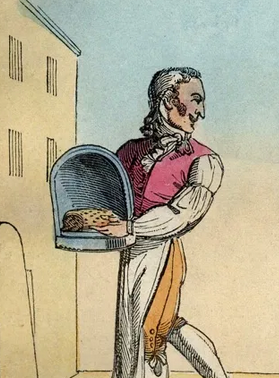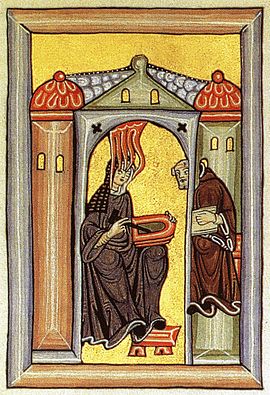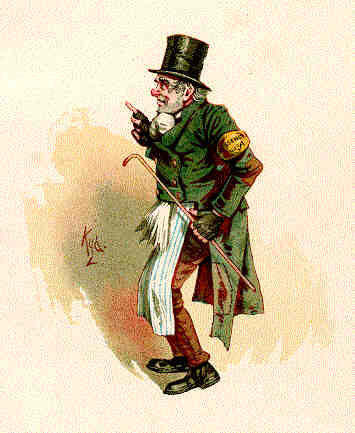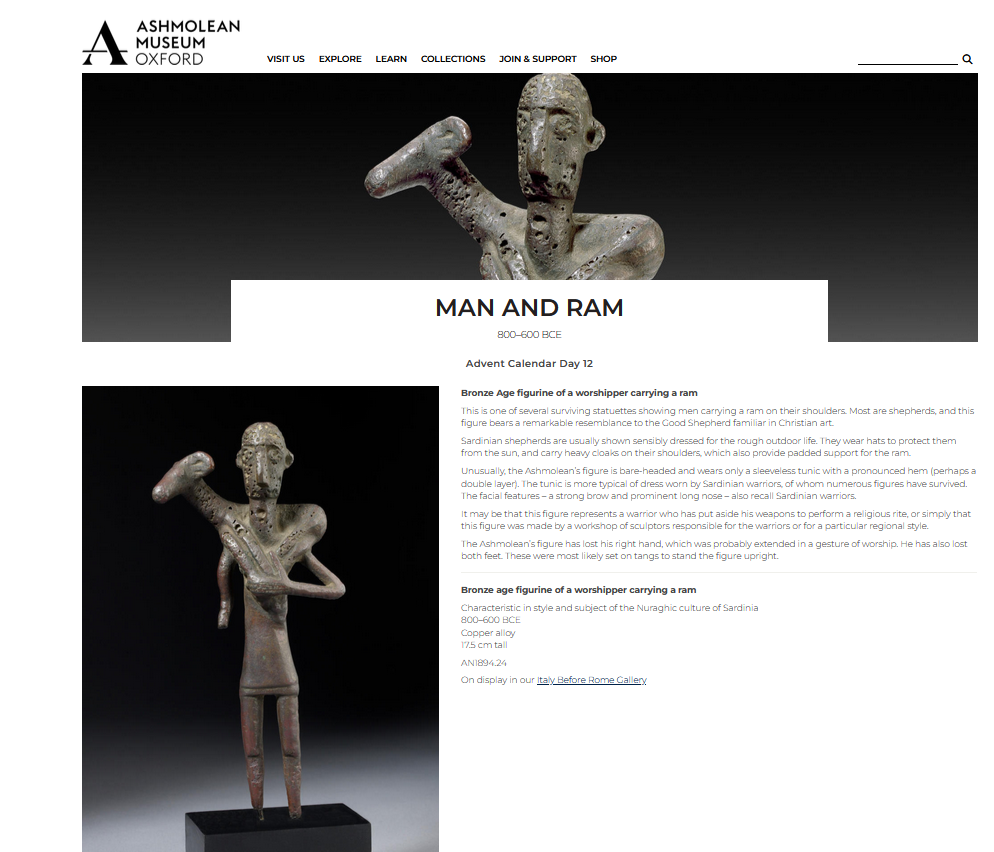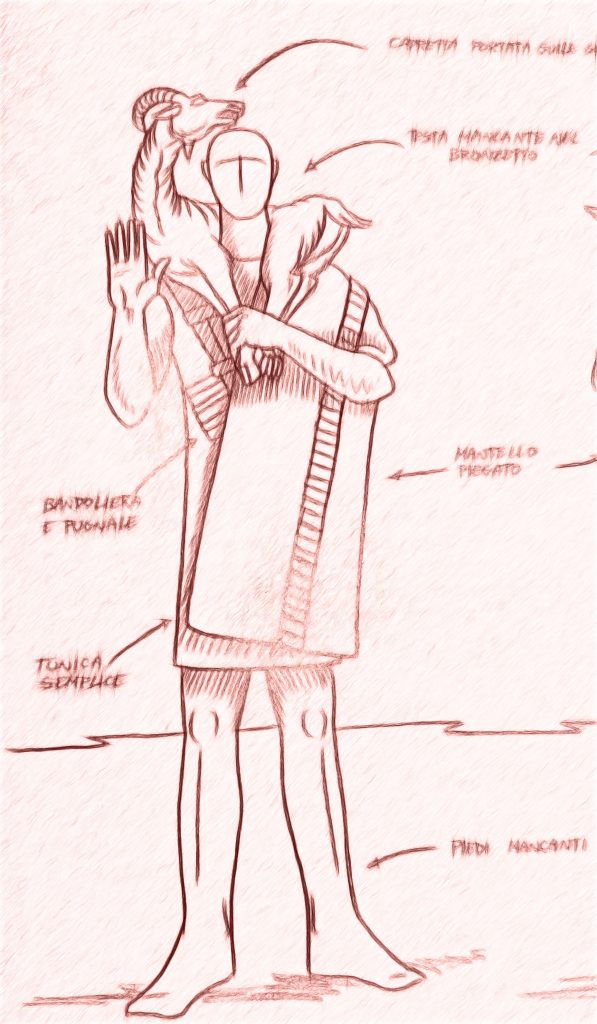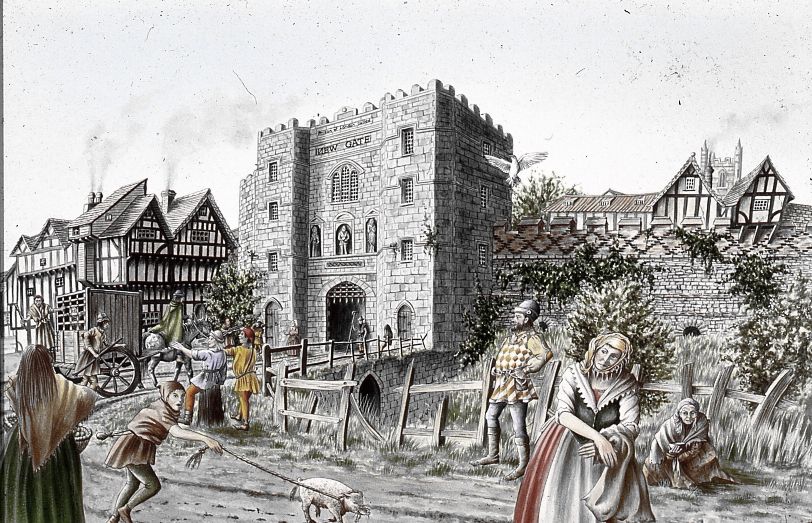
Monday’s Child & St Budoc December 8th

a manger scene in which  one of the three kings says

~Just to be perfectly clear. These gifts are for you Birthday and Christmas

Monday’s child is fair of face,
Tuesday’s child is full of grace.
Wednesday’s child is full of woe,
Thursday’s child has far to go.
Friday’s child is loving and giving,
Saturday’s child works hard for a living.
And the child born on the Sabbath day Is bonny and blithe, good and gay.

Fortune-telling poems are a big part of folklore. It says something about the power of the rhyme that people can believe a random rhyme can shape someone’s whole life. Interesting that there are many versions of this rhyme. I chose one that had an optimistic Thursday. Two year’s ago, my second Grandson was born, on a Thursday, just like me. And I’ve still got far to go.

Tinker Tailor

The Tinker Tailor rhyme is another example of a fortune-telling rhyme. This is the extended version, I found on wikipedia.

When shall I marry? This year, next year, sometime, never.

What will my husband be? Tinker, tailor, soldier, sailor, rich-man, poor-man, beggar-man, thief.

What will I be? Lady, baby, gypsy, queen.

What shall I wear? Silk, satin, cotton, rags

How shall I get it? Given, borrowed, bought, stolen.

How shall I get to church? Coach, carriage, wheelbarrow, cart.

Where shall I live? Big house, little house, pig-sty, barn.

One person recites the power verse by verse. The subject of the fortune-telling does something like counting petals on a flower, counts bounces of a ball, or gives a number between one and four. The outcome determines the future.

To see another fortune-telling rhyme, read my post about Magpies.

St Budoc

Today, is St Budoc’s Feast Day. However, it’s held on the 9th if you are in Brittany. Boduc is a Celtic name which either means “saved from the waters” or more likely ‘Victory’ or ‘Victorious’.

This etymology is shared by Queen Boudicca. Budoc lived in the 5th Century, after the Fall of Roman Britain. His mother was a Princess whose evil step-mother (or mother-in-law), persuaded her son that she was unfaithful. The Prince ordered the pregnant Princess to be thrown into the sea in a wooden cask. They floated around for 5 months, until Budoc was born. (Saved by the intercession of St Bride?). So, they landed safely in Cornwall, and afterwards went to Ireland. (Or they landed in Ireland.)

Eventually, Budoc’s dad realised his wife was faithful. So he came to rescue his wife. Sadly, they soon both died. (Or the wife survived). Budoc became a monk, and then a famous Bishop in late 5th Century Brittany at Doll. St Budoc is worshipped in several place: Pembroke, Cornwall, Devon, Brittany, and Oxford. But we have very little reliable evidence about him.

Monday’s Child published in 2023. St Budoc added in 2024, Revised 2025.

‘There’s Rosemary, that’s for Remembrance’ December 7th

Flowering Rosemary
Flowering Rosemary in the author’s garden

According to the Perpetual Almanac by Charles Kightly, this is the time when Robins are much to be seen singing their winter song, and when it is time to protect plants, particularly Rosemary, against winter frosts.

In December, rosemary flowers with a delicate blue flower. Rosemary was one of the most important plants, metaphorically and medically. Mrs Grieve, in her ‘Modern Herbal’ says it is used in medicine for illnesses of the brain and was thought to strengthen the memory. And as rosemary helps the memory, they are symbolically/metaphorically associated with friendship, love, worship and mourning. A branch of Rosemary was given as a gift to wedding guests, so they would remember the love shown at the ceremony. It was also entwined in the Bride’s wreath.

Shakespeare uses Rosemary in his plant lore in Hamlet.

OPHELIA: There’s rosemary, that’s for remembrance.
Pray you, love, remember. And there is pansies, that’s
for thoughts.

LAERTES: A document in madness:
thoughts and remembrance fitted.

OPHELIA: There’s fennel for you, and columbines.
There’s rue for you, and here’s some for me.
We may call it herb of grace o’ Sundays.
O, you must wear your rue with a difference.

There’s a daisy. I would give you some violets,
but they withered all when my father died. They
say ‘a made a good end.

(sings) For bonny sweet Robin is all my joy.

Ham IV.v.176

Rue is the herb of grace and has the sense of ‘regret’. Pansies are also for remembrance, and their heart shaped flowers are for love and affection. Fennel represents infidelity and Columbines insincerity or flattery. Daisies are for innocence. Violets are associated with death, particularly of the young. As to how Orphelia means them all to be understood is not entirely clear, particularly Fennel and Columbine. Some think they are directed towards Claudius and/or Gertrude.

https://study.com/learn/lesson/flower-symbolism-hamlet-william-shakespeare-overview-examples.html

Being evergreen, Rosemary was associated with religion and everlasting life. It was called the rose of the Virgin Mary. Lying on a bed of rosemary, the Virgin’s cloak was said to have been dyed blue.  Indeed, Mary is mostly depicted in a blue cloak in Renaissance paintings.

And so Rosemary is especially important for Christmas. At Christmas, it was used to bedeck the house and used at funerals to remember the dead.

The Virgin Mary Googled.

Its strong aroma means it was used as an incense and also used in magic spells

Thomas More let rosemary ‘runne all over my garden walls’ because bees love it and as sacred to remembrance, therefore to friendship.

Rosemary flowering in december
Rosemary flowering in December

I mostly use Rosemary for the very rare occasions when I cook lamb, but it is much more versatile than that, or so the SpruceEats website tells me:

‘Rosemary is used as a seasoning in various dishes, such as soups, casseroles, salads, and stews. Use rosemary with chicken and other poultry, game, lamb, pork, steaks, and fish, especially oily fish. It also goes well with grains, mushrooms, onions, peas, potatoes, and spinach. ‘

https://www.thespruceeats.com/all-about-rosemary-3050513

On this Day

1917- End of the Battle of Cambrai in which Tanks were first used. The tanks had initial success when over 400 hundred of them were used by the British on the first day of the battle. Because the British Army did not precede the attack with the usual artillery barrage, the attack was a complete surprise and the British penetrated deep into the German Lines. But the army had too few troops to exploit the breakthrough and by early December the Germans had mostly recaptured the territory the tanks had won. So the battle was indecisive, but successfully showed the role of the tank in future battles. Casualties amounted to about 45,000 on each side.

1941 – Pearl Harbour bombed. The Japanese attack killed more than 2,300 U.S. military personnel were killed. Another 1,100 at least were wounded, and eight battleships were damaged or destroyed.

On December 8th, Congress approved Roosevelt’s request for a declaration of war on Japan. In the Senate, the vote was 82 – 0 and 388–1 in the House.

On 11 December 1941. Germany declared war on the US, in line with the Tripartite Pact between the two countries and Italy. Later that same day, the US declared war on Germany, with no dissenters from the vote.

First published Dec 7th 2023, revised 2024, 2025
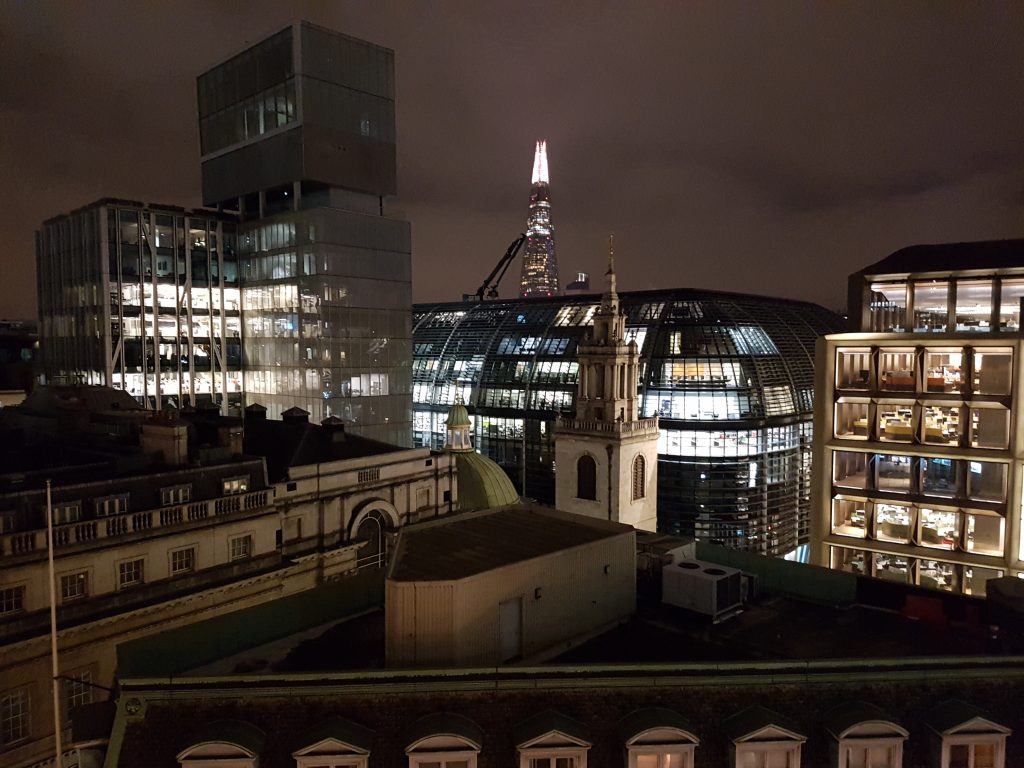
St Nicholas & Boy Bishops December 6th

St Nicholas saving citizens from poisoned olive oil. Detail of painting by Margarito of Arezzo. National Gallery

Santa Klaus was, originally a 4th Century Bishop from Asia Minor who saved three girls from prostitution. He throw golden balls through their window enabling the girls to marry with a good dowry and live a moral life. Saint Nicholas, also, saved three boys from beheading. So he became the patron saint of children. He died on the 6th of December in Myra, present day Turkey. From the moment of his internment, his tomb flowed with myrrh. There are many other miracles. Once St Nicholas appeared on a storm tossed boat and saved the sailors. Another has him saving people from poisoned olive oil. (see picture above.)

In 1087, the Normans from Apulia raided Myra, then under the control of the Seljuk Turks. The gang of 67 men stole the Saint’s remains, to bring them to Bari, in Southern Italy. Bari already had 6 churches dedicated to St Nicolas. In 1969, Pop Paul VI revoked his Feast Day as he decided there was no evidence St Nicholas was a real person.

Despite this, he is the ‘patron saint of sailors, merchants, archers, repentant thieves, children, brewers, pawnbrokers, toymakers, unmarried people, and students in various cities and countries around Europe’ (Wikipedia). He is also known as Nicholas the Wonderworker.

It’s all about the Balls

Representation of the balls can still be seen hanging in front of pawnbroker’s shops. The gifts Nicholas gave led to the exchange of gifts to honour him. Originaly, gift giving took place on December 6th, his feast day. The Dutch took the tradition of Santa Klaus to the United States. Here it mixed with other traditions, including the English Father Christmas, to create our modern spirit of Christmas, and Santa Klaus.

Boy Bishops

By Unknown author – fullhomelydivinity.org, Public Domain,
https://commons.wikimedia.org/w/index.php?curid=6709993

The idea of Boy Bishops may come from a tradition established by Saturnalia. This was the festival, in the Roman world, when servants exchanged duties with their masters and mistresses. Tthe Lord of Misrule presided over Medieval Christmas. While Church ceremonises were presided over by Boy Bishops. The tradition was attacked in some quarters but defended by others. They felt it engendered empathy. had an element of humanity and instigated seasonal fun. The Boy Bishops were elected on December 6th. Their reign might continue until Childermas (Holy Innocents Day December 28th).

The custom was stopped by Henry VIII. It was then revived and is still practised to this day in the Cathedrals of Hereford and Salisbury. The Boy Bishops wears full ceremonial gear and takes part in ceremonies and services for three weeks.

Boy Bishops in London

There are also medieval records that speak of the custom:

“two children’s copes, also a myter of cloth of gold set with stones.”
1549 “For 12 oz. silver, being clasps of books and the bishop’s mitre,

St. Mary-at-Hill, London Church Accounts

“The vj myter of Seynt Nycholas bysshoppe, the grounde therof of whyte sylk,
garnysshed complete with ffloures, gret and small, of sylver and gylte, and stones

Westminster Abbey, St Pauls & St Nicholas Cole Abbey London inventories

Also records at St Pauls record: una mitra alba cum flosculis breudatis ad opus episcopi parvulorum baculus ad usum episcopi parvulorum;’

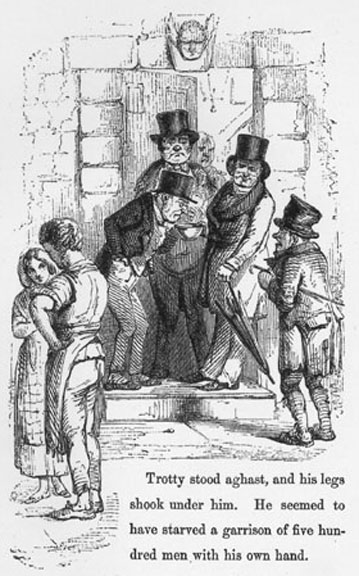
St Nicholas Cole Abbey in the City of London has an inventory dating to the Reformation that records vestments for children at St Nicholas. The Church is first mentioned in the 12th Century and was never an Abbey. The Cole part of the name refers to a ‘Coldharbour’ which was a traveller’s or poor persons shelter from the cold. The Church was rebuilt by Christopher Wren after the Great Fire. This is, probably, the location where Trotty Veck stands awaiting employment as a messenger or runner, in Dickens’s second greatest Christmas Book after the Christmas Carol. The story is more a New Year story than a Christmas story. (I tell the story in my post here).

For more on boy bishops look at this, and look at this 1935 film about Boy ~Bishops in Compton, Guildford.

The Lord of Misrule.

Middle Temple, like the other Inns of Court in London, also had a Winter period of ‘condoned disorder’. This continued through to Christmas and beyond to Candlemas. It was presided over by a Lord of Misrule, or in the Middle Temple’s case a Prince of Love. The Revels of 1597-8 were republished in 1660. Each December, students, barristers and Benchers create and perform the Inn’s annual Christmas Revels. With thanks to https://www.middletemple.org.uk/about-us/history/elizabethan-and-jacobean-times

On This Day

1648 Pride’s Purge. The day that the New Model Army had had enough, and Colonel Thomas Pride, excluded members of the Long Parliament from sitting in Parliament. This led to the Execution of Charles I, and the establishment of Britain’s first and only Republic. (see my post on the execution of Charles I)

I am doing a walk Charles I and the Civil War – the Martyrdom Anniversary Walk on January 30th 2026. And a Virtual Tour on the Civil War, Restoration & the Great Fire of London on the evening of January 30th.

1964 Martin Luther King made a flying visit to St Pauls to deliver a sermon on his way to pick up the Noble Peace Prize in Oslo. He based his sermon on the following poem. The visit is described on the St Pauls Web Site here

Be The Best Of Whatever You Are

By Douglas Malloch

If you can’t be a pine on the top of the hill,
  Be a scrub in the valley — but be
The best little scrub by the side of the rill;
  Be a bush if you can’t be a tree.

If you can’t be a bush be a bit of the grass,
  And some highway happier make;
If you can’t be a muskie then just be a bass —
  But the liveliest bass in the lake!

We can’t all be captains, we’ve got to be crew,
  There’s something for all of us here,
There’s big work to do, and there’s lesser to do,
  And the task you must do is the near.

If you can’t be a highway then just be a trail,
  If you can’t be the sun be a star;
It isn’t by size that you win or you fail —
  Be the best of whatever you are!

Douglas Malloch. “Be The Best Of Whatever You Are.” Family Friend Poems,

First published December 6th, 2022. Revised and republished 6th December 2023. Martin Luther added in 2024, Pride’s Purge added in 2025

Feast Day Of King Lucius – First Christian King Of Britain? December 3rd

King Lucius York Minster Window

The Venerable Bede tells us that King Lucius converted to Christianity in around 180AD. He says that the King asked Pope Eleutherius to send teachers to instruct him. The Venerable Bede (died 735 AD) got this from the Liber Pontificalis of c 590. There is also a tradition that St Peter’s Cornhill in London was set up by King Lucius, and that St Peter’s is the oldest Church in London.

13th Pope Eleutherius

What to make of this? Bede is considered to be a reliable historian and got his information, in this case, from the Vatican. Pope Eleutherius is held to be a real Pope. He reigned at the right time, from perhaps as early as c. 171, and to his death which may be as late as AD 193. (Wikipedia). But the tradition of Lucius has been written off as a legend.

But to my mind there are questions that need asking. Not the least of the questions to ask about the veracity of this legend is: ‘What does it mean to be called the King of Britain in the middle of the Roman occupation?’

St Peters Church First Cathedral in Britain?

As to the early origin of St Peters Church, archaeologists dismissed the tradition of a Roman St Peters Church because it is built over the Roman Forum. So how can it have been the site of a Christian Church?

St. Peter’s seen from Cornhill in a rarely seen view as there is normally a building in the way. (Photo K Flude)

But the balance of possibilities, arguably, changed in the 1980s, when archaeologists led by Gustav Milne showed that the Basilica of the Forum was pulled down in about 300AD. So from being practically an impossibility, there is now a possibility that this subsequently became the site of a Roman Church. It doesn’t make it true but it makes it more of a possibility.

We know London sent at least one Bishop to Constantine the Great’s Council of Arles in AD 314. So a Christian community in London must have predated this time. There must have been Churches, here. And a site at the prestigious centre of the Capital of Londinium, makes a lot of sense. There are, in fact, three Churches on the site of the Roman Forum: St Peters, St Michael and St Edmund the Martyr.

Constantine the Great

In AD 306, Constantine was acclaimed Emperor on the death of his Father, Constantius Chlorus. Constantius’s wife was Helena, a Christian. He and his mother were in York when his father died. He was recognised as Caesar, (but not Augustus) by Emperor Galerius and ruled the province for a while. Then he moved to Trier, then moved on Rome, where he accepted the Christian God’s help to win the Battle of Milvian Bridge. This led him to supreme power in the Roman Empire. And might give a context for the demolished Basilica to be replaced by a Church.

There is, however, no archaeological evidence for St Peters being Roman in origin apart from the demolition of the Basilica and the legends. And there is certainly no evidence of the Basilica being turned into a Church as early as the 2nd Century.

Early Christianity in Britain

Where does that leave King Lucius? There are well attested Christian traditions that Britain was an early convert to Christianity. (The following quotes are from my book ‘In Their Own Words – A Literary Companion To The Origins Of London‘ D A Horizons, 2009 by Kevin Flude and available here.)

In Their Own Words – A Literary Companion To The Origins Of London‘ D A Horizons, 2009

So, an early date for an active Christian community is likely. A Church, replacing the Basilica, is plausible, particularly, after Constantine the Great probably passed through London on his way to seize the Roman Empire. So an early date for St Peters in possible. But there is no evidence for its origin as early as the late 2nd Century, the time of King Lucius.

A King of Britain in the Roman Era?

And could anyone, claim to be the ‘King of Britain’ at this date? We do know that King Togidubnus was called Great King of Britain in a Roman Temple inscription in Chichester in the First Century.

Altar Dedication, Chichester

To Neptune and Minerva, for the welfare of the Divine House by the authority of Tiberius Claudius Togidubnus, Great King of Britain, the Guild of Smiths and those therein gave this Temple from their resources, Pudens, son of Pudentinus, presenting the site.

https://romaninscriptionsofbritain.org/inscriptions/91

Togidubnos seems to have been placed in control of a large part of Southern England, centred around Chichester, after the invasion of 43AD. He is thought to have been the successor to Verica, who was exiled and called on the Romans to restore his throne. Tactitus says that Togidubnos remained loyal down ‘to our own times’ that is to the 70s AD. So he presumably held the line for the Romans against the Boudiccan revolt in 60AD.

The Romans had used Verica’s fall as their excuse for invasion, and so an honorific of Great King to him and his successors makes sense. It is assumed that after Togidubnos’s death after 80AD, the title lapsed. But it might have stayed with the family as an empty honour? Furthermore, we know that Britain had a plethora of Kings and Queens before the Roman period. Also, the Romans never conquered the whole of Britain. There were, therefore, many British Kings all the way through the period of Roman control, not least beyond Hadrian’s Wall.

So, it is possible there was someone in Britain who had, or made, a claim to be ‘King’. Whether he was ‘a’ or ‘the’ or merely descended from a King of Britain, we don’t know. And that that someone, perhaps converted to Christianity, possibly in the time of Pope Eleutherius. He may have taken the Roman name Lucius. Who knows? Its possible.

Confusing Luci?

It has been suggested that King Lucius of Britain was confused with King Lucius of Edessa, but this is considered unsatisfactory. Also, the link to London and St Peters, need not be a contemporary one. It might be two traditions that are linked together at a later period. But, of course, there is a faint possibility that the Basilica shrine room, above which St Peter’s is built, was converted for Christian use at the earlier time necessary to make sense of the King Lucius story.

King Lucius may not be a proper saint, but he has a feast day. This is because of his connections to Chur in Switzerland. There is a tradition that Lucius was martyred here. This got him an entry in the Roman Martyrology. David Knight proposes that the Chur connection comes from the transplanting of rebellious Brigantes to the Raetia frontier in the 2nd Century AD. He suggests that the Brigantes brought the story of Lucius to Chur. At the end of the King’s life, is it possible he travelled to join his people in exile in Switzerland. Here he met his unknown end. If true, this would base the story of Lucius in the North rather than London. For further reading, see ‘King Lucius of Britain’ by David J Knight.

Early Bishops of London

John Stow in the 16th Century records the tradition of King Lucius, which comes with a list of early British Bishops of London. These he finds are recorded in Jocelin of Furness’s ‘Book of British Bishops’. This book is discussed by Helen Birkett ‘Plausible Fictions: John Stow, Jocelin of Furness and the Book of British Bishops’. In Downham C (ed) /Medieval Furness: Texts and Contexts/, Stamford: Paul Watkins, 2013.

Her analysis concludes that the book is a ’12th-century confection in support of moving the archbishopric from Canterbury ‘back’ to its proper place in London. (This information was included in a comment to the original post by John Clark, Emeritus Curator of the Museum of London.)

To sum up. We can’t bring King Lucius out of legend, nor find any credible source linking him him with St Peters Cornhill. But the site of St Peters is a plausible, though unproven, location for a Roman Church from the 4th Century onwards. It also makes sense of the choice of the Saxons, to name their Church St Pauls. St Peter is more common as a dedication for important Churches and perhaps they chose St Paul as they knew of the ruins of St Peters the old Cathedral.

Any other early Cathedrals?

Archaeologists have also tentatively identified a masonry building in Pepys Street on Tower Hill as the Episcopal Church of late Roman London. The foundations suggest a large aisled building. Its identification as a Cathedral springs from multiplying the found foundations symmetrically by a factor of four and comparing the result to Santa Tecla in Milan. The discovery of Marble and window glass doesn’t sit so well with the alternative suggestion that it is a granary. But, to my mind, it’s not very convincing, although Dominic Perring in his recent book ”London in the Roman World’ makes the most of the case for it being a Cathedral.

And Finally?

If you look at the two maps above. The one on the left shows the Forum, the white lines are the Roman Road system. You might just be able to see the modern road system super-imposed. What this shows is that the Forum is on a different axis than the modern day road system. Cornhill cuts right across the North Western corner of the Forum. Where the letter L is, and to the left is under the modern road. So, that shows that this part of the Forum must have been knocked down before Cornhill was built. On the right hand side you can see the dark grey east-west road which is Cornhill. To the South of it you can see a dark area (above the green of St Peter’s Churchyard). This grey area is St Peters. What the Google map shows clearly, is that the orientation of St Peters, is clearly on a different orientation to that of the modern road of Cornhill. And that orientation is closer to the orientation of the Roman Forum. This makes it more likely that the axis upon which St Peters was originally built (assuming Wren followed the original axis when he rebuilt it after the Great Fire) conformed to the Roman grid pattern. This is by no means proof, and can only be proved by excavation. But, its interesting.

On This Day

1660 – Margaret Hughes became the first woman (we know about) to act on the English Stage. She played Desdemona in Shakespeare’s Othello. It was staged in a converted tennis court called the Vere Street Theatre, which was in Lincoln’s Inn Fields. In 1660 Charles II was restored to the throne, and had got used to watching female actors perform while he was in exile in France. So when he returned, he licensed two theatre managers, Thomas Killigrew and Sir William Davenant to run theatre. Davenant claimed to be the natural son of William Shakespeare, suggesting that Shakespeare stayed in his parents’ Inn, the Crown, in Cornmarket, Oxford on his way home to Stratford-upon-Avon.

First Published on December 3rd, 2022. Revised in December, 2023, 2024 and 2025

Advent Sunday

Colours of the Church Year

Advent Sunday 2025 was yesterday, November 30th. It is the beginning of the Christian Liturgical year, its name comes from the Latin ‘adventus’, or ‘coming’. It is the four Sundays before Christmas, the ‘coming’ of Jesus. So, therefore, the serious part of the Christian year and of the Messiah’s life begins here. His birth and his death. It begins with the ‘Hanging of the Greens’ when Churches and other public buildings were bedecked with seasonal foliage. The ‘Liturgical colours’, which are violet, green, gold (or white) and red – are changed to purple and used for altar linen, clergy robes and other hangings.

Advent divides the world into those who love to plan; who love to anticipate, and people like me who buy all my presents in a mad flurry on Christmas Eve. Surely, my nephew will like the Arsenal Yearbook, my father ‘The History of the Spitfire’ and my brother the remastered version of the early Fleetwood Mac LP that I have, he tells me, already bought him twice before. (In my defence, not the middle-of-the -road Fleetwood Mac but the one with Peter Green in it and capable of the Green Manalishi. Play it here).

Advent Calendars

It dates back to 480AD; although it was the Council of Tours in 567 that ordered monks to fast every day in December until Christmas time. This was sometimes known as St Martin’s Fast or Nativity Fast. The Fast might simply mean no more roasts but eating fish, and soups and stews. Other traditions including Advent wreaths and Advent Calendars, these are 18th or 19th Century in origins. Originally, they may have had pictures or texts for each day, but now it is mostly chocolate that counts down the year. However, recently, more expensive Advent Calendars might have a different gin or whisky. tea or in my grandsons’ case a different dinosaur each day.

Fortum and masons christmas advent calendar
Fortum and Masons, Piccadily. A living Christmas advent calendar

Too Late to wed before Advent

Traditionally, you could not marry after Advent and before 12th Night. So it’s now too late to marry before that bump gets too big!

First Published 28th November 2022. Republished Dec 3rd 2023, 2024, 2025

December and Kalendar of Shepherds December 1st

French 15th Century December and the ‘Kalendar of Shepherds’

December comes from the Latin for ten – meaning the tenth month. Of course, it is the twelfth month because the Romans added a couple of extra months especially to confuse us. For a discussion on this, look at an early blog post which explains the Roman Calendar.

In Anglo-Saxon it is ærra gēola which means the month before Yule. In Gaelic it is An Dùbhlachd – the Dark Days which is part of An Geamhrachd, meaning the winter. The word comes from an early Celtic term for cold, from an ‘ancient linguistic source for ‘stiff and rigid’’, which describes the hard frosty earth. (see here for a description of the Gaelic Year). In Welsh, Rhafgyr, the month of preparation (for the shortest day).

For the Christian Church, it’s the period preparing for the arrival of the Messiah into the World. (see my post on Advent Sunday which this year was yesterday November 30th).

For a closer look at the month, I’m turning to the 15th Century Kalendar of Shepherds. Its illustration (see above) for December shows an indoor scene, and is full of warmth as the bakers bake pies and cakes for Christmas. Firewood has been collected, and the Goodwife is bringing something in from the Garden. The stars signs are Sagittarius and Capricorn.

The Sparrow and the Warm Hall

The Venerable Bede has an interesting story (reported in ‘Winters in the World’ by Eleanor Parker) in which a Pagan, contemplating converting to Christianity, talks about a sparrow flying into a warm, convivial Great Hall, from the bitter cold winter landscape. The sparrow enjoys this warmth, but flies straight out, back into the cold Darkness. Human life, says the Pagan, is like this: a brief period in the light, warm hall, preceded and followed by cold, unknown darkness. If Christianity, he advises, can offer some certainty as to what happens in this darkness, then it’s worth considering.

This contrast between the warm inside and the cold exterior is mirrored in Neve’s Almanack of 1633 who sums up December thus:

This month, keep thy body and head from cold: let thy kitchen be thine Apothecary; warm clothing thy nurse; merry company thy keepers, and good hospitality, thine Exercise.

Quoted in ‘the Perpetual Almanack of Folklore’ by Charles Kightly

December in the ‘Kalendar of Shepherds’

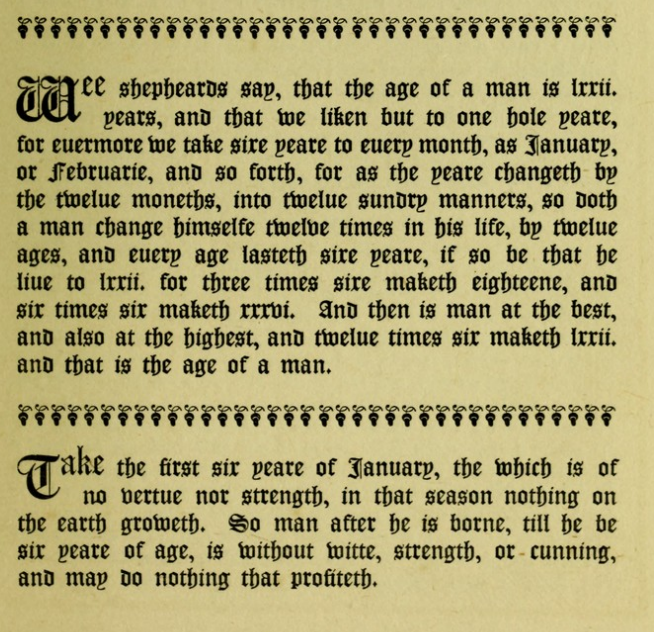
The Kalendar of Shepherds text below gives a vivid description of December weather. Dating from 1626 it gives a detailed look at the excesses of Christmas, which people are on holiday, and who is still working hard. But it concludes it is a costly month.

Nicholas Breton’s ‘Fantasticks of 1626 – December from the Kalendar of Shepherds

Six Dozen Years – a Lifespan

The other section of the Kalendar then elaborates on the last six years of a man’s life, with hair going white, body ‘crooked and feeble’. (from 66 to 72). The conceit here is that there are twelve months of the year, and a man’s lot of ‘Six score years and ten’ is allocated six years to each month. So December is not just about the 12th Month of the Year but also the last six years of a person’s allotted span. The piece allows the option of living beyond 72, ‘and if he lives any more, it is by his good guiding and dieting in his youth.’ Good advice, as we now know. But living to 100 is open to but few.

Kalendar of Shepherds

Interesting from my point of view as I have reached the end of my life span as suggested by the Calendar, and my father is 98 and approaching his hundred!

About the Kalendar of Shepherds.

The Kalendar was printed in 1493 in Paris and provided ‘Devices for the 12 Months.’ The version I’m using is a modern (1908) reconstruction of it. It uses wood cuts from the original 15th Century version and adds various texts from 16th and 17th Century sources. (Couplets by Tusser ‘Five Hundred Parts of Good Husbandrie 1599. Text descriptions of the month from Nicholas Breton’s ‘Fantasticks of 1626.) This provides an interesting view of what was going on in the countryside every month.

For more on the Kalendar look at my post here.

The original Kalendar can be read here: https://wellcomecollection.org/works/f4824s6t

To see the full Kalendar, go here:

On This Day

1981 – Launch of the BBC Micro

1990 The UK was rejoined to Europe for the first time for 8000 years, when the Channel Tunnellers breached the final wall of rock. French and British workers exchanged flags and shook hands. The Tunnel was opened to traffic in 1994 more than 10 years after work started and 200 years since Napoleon proposed the idea. Read what ICE has to say about the (ICE – Institute of Civil Engineers!).

Britain was connected to the Continent until about 6,100BC, the North Sea, the Channel, and the Irish Sea were all dry (or marshy lands). Water levels were rising and ice melting. the Storegga Slides in Norway saw huge cliffs of ice slipped into the sea. This caused a tsunami over 30ft high and penetrating 25 miles inland. Read the BBC here.

Since then, Britain has been an Island. Archaeologists have been exploring the flooded area which is known as Dogger Land, after the Dogger Bank. (for more on Dogger Land.)

First Published in 2024, republished 2025

St Andrew’s Day November 30th

The Saltire – flag of Scotland

Saint Andrew was the first Apostle and, it was he who introduced his brother, Simon Peter, to Jesus. He was a simple fisherman. Not much about his later life is known, but the idea that he was martyred on a X-shaped cross, the saltire, is probably a medieval invention. As a fisherman, he is patron of fishermen, and fishmongers. Furthermore, the patron saint of Scotland and Russia; of singers and pregnant woman, and efficacious in offering protection against sore throats and gout.

His association with Russia comes from Eusebius, who quotes Origen recording that Andrew preached in Scythia. The Chronicle of Nestor says he travelled to Kiev and Novgorod and so became a patron saint of Ukraine, Romania, and Russia. (Wikipedia).

Scottish legends has St Andrew both visiting Scotland himself and some of his relics coming to Fife in the 4th Century or the 8th Century. St Rule (aka St Regulus) was tasked with taking some of Andrew’s relics to the edges of the world. In the 4th Century he turned up in Fife where he was welcomed by the Pictish King, Óengus I. He brought with him a kneecap, arm, and finger bone of St Andrew, which were kept in St Rule’s Church. This gave St Andrew’s name to the town. Óengus I is actually an 8th Century Pictish King, so perhaps the relics came to Scotland in the 8th Century which is a little more realistic. The relics were transferred to the Cathedral, but they were destroyed in the Reformation. In 1979, the Archbishop of Amalfi gifted a piece of Saint Andrew’s shoulder blade to St Andrews and Pope Paul VI gave further remains to Scotland in 1969.

The Town of St Andrews

The earliest recorded name for the town is Gaelic and is Cennrígmonaid, which means something like the King’s Peninsula near the Moor. The fame of the Church changed the name of the town to St Andrews (no apostrophe, as it was named before the French gave us apostrophes in the 1600s). St Andrews is also famous as the home of golf and the oldest University in Scotland, (founded in 1412).

St Andrew’s Day Celebrations

The Day is an official bank holiday in Scotland and is celebrated with events all over the country, including a torchlight procession in Glasgow. (https://theculturetrip.com/europe/united-kingdom/scotland/articles/what-is-st-andrews-day-and-how-do-people-celebrate-it-in-scotland/). Celebrate with a Haggis and a Whisky!

In Kent and Sussex Andrewtide gave the right to hunt squirrels, and in Hasted’s History of Kent (1782) the day is said to allow the ‘lower kind’ to form a lawless rabble hunting any manner of hares, partridges, and pheasants. (Perpetual Almanac by Charles Kightly).

St Andrew in London

On the corner of Leadenhall Street and St Mary Axe in the City of London is one of the very few medieval Churches that survived the Great Fire of London is 1666. It was sheltered by the firebreak that was the Leadenhall, a big market building made of stone (but with a big lead roof).

The Church is the Maypole Church, as it was here the Maypole or the shaft was stored under the eves of the Church when not in use. Hence, St Andrew’s sobriquet of ‘Undershaft’. The May Day riot in 1517 put an end to the dancing around the Maypole but the pole itself survived until 1547 when, in a Puritan riot, the ‘stynking idol’ was destroyed. (see my May Day blog post here for more details of Mayday.)

John Stow and Hans Holbein, memorials in St Andrews

This is where the great London historian John Stow is buried. His Survey of London is one of the best sources for Medieval and Tudor London. Every three years, on April 5th or thereabouts, there is a commemorative service and his quill is changed. The Lord Mayor attends. The service is organised by Stow’s Guild – the Merchant Taylors.

John Stow, author of the ‘Survey of London‘ first published in 1598. Available at the wonderful Project Gutenberg: ‘https://www.gutenberg.org/files/42959/42959-h/42959-h.htm’

There is also a plaque to Hans Holbein, but no one knows, for sure, where he is buried. He died in London in 1543, possibly of plague.

Agas Map 1561 showing St Andrews (right centre)

Last Day to get married before Advent.

Traditionally, you could not marry after Advent and before 12th Night. So now might be the last chance to marry before that bump gets too big! This may be the reason that Shakespeare had to organise a special licence to get married in 1582! Advent that year was on 2nd December. See my post on their wedding here.

19th Century Illustration (From Author’s Collection)

Wedding dresses were traditionally whatever pretty dress you had. White only became de rigueur once Queen Victoria wore one, and the costs of material reduced because of mass production.

The Saltire

The story of the Saltire stretches back to the Picts. In 832AD Picts under the High King Angus MacFergus were returning from a punitive raid into Northumbria. They were chased by the North Anglians led by Athelstan (not the English King) into East Lothian at place still called Athelstaneford. It is to the south of Edinburgh. Angus led prayers to St Andrew for victory. Above the battle appeared in the clowds a white diagonal cross, against a blue sky. Angus promised St Andrew he would become the Patron Saint of the Country. (at the time called Alba, and later called Scotland). Athelstaneford still calls itself ‘Birthplace of the Scottish Flag.’ the-flag-heritage-centre/the-legend-of-the-saltire/

First Published on 30th November 2022, Revised and republished on 30th November 2023, Advent weddings added in 2024, Revised and Saltire added 2025

How to make a Dish of Snow & Ice Houses November 29th

Photo Zdenek Machacek -unsplash

Yesterday, I posted about the exciting discovery that Ann Shakespeare might have stayed in London with her husband. Here you can read the academic article about the research. Really worth reading!

A Dish of Snow

There is a 0% chance of snow, in London and 90% chance of snow in Glen Shee, Scotland, according to the Snow Risk Forecast. And here is an appropriate medieval recipe:

To make a dish of Snowe

Take a potte of sweete thicke creme and the white of eight egges and beate them altogether with a spoone then putte them into your creame with a dish full of Rose Water and a dishfull of Sugar withall then take a sticke and make it cleane and then cutt it in the ende fowre square and therewith beate all the aforesayd thinges together and ever as it ariseth take it of and putte it into a Cullander thys done take a platter and set an aple in the middest of it and sticke a thicke bush of Rosemarye in the apple then cast your snowe upon the rosemarye and fill your platter therewith and if you have wafers cast some withall and thus serve them forth

From Medieval Manuscripts, British Library. Blog. https://blogs.bl.uk/digitisedmanuscripts/medieval-history/page/2/

BF – Before Fridges

Before fridges, snow gave the chance for ice cream and other cold desserts. The problem was keeping it for longer than the cold spell. So many Stately Homes had ice-houses. The V&A had an ice-house just outside their glorious, Henry Cole commissioned restaurant. There is an ice house preserved at the Canal Museum, in Kings Cross. It was set up by Carlo Gatti in 1857 to store ice shipped in from Norway. Another one, in Holland Park, dates from 1770 and served the infamous Fox family (PM Charles James Fox etc).

The first ice house was in Mesopotamian, but in the UK they were introduced by James 1 at his palaces in, first, Greenwich Park, and then Hampton Court. An ice house generally consists of a pit in the ground, brick lined, which tapered to a point. Above was a circular, often domed building. The ice was protected by insulation such as straw, and this structure would allow ice to be available all through the summer.

Ice House Dillington, Somerset
Ice House Dillington, Somerset, photo K Flude

My great-grandmother hung a basket outside the window in winter to keep things cold. On my fridge-less narrow boat, I have been known to keep milk and butter outside the door on the front deck. And to suspend and submerge wine in a plastic bag in the canal in high summer. Butteries and Pantries were typically cut into the ground to make them cooler. A Roman Warehouse in Southwark, of which the wooden floor still survived, had a ramp down to the floor which was cut into the ground surface. The ramp suggests it was used for storing barrels, where they were kept cool.

Sketch of Roman Warehouse found in Southwark.

For more on Icehouses (and an Icehouse in York) and the history of ice cream, see my post from August.

Written November 28th 2022, revised and republished 2023, 2024,2025

The Shakespeares’ Wedding November 28th 1582

Droeshout Portrait of Shakespeare from the First Folio

Shakespeare was married at 18 years old. This was unusually young for the age. Young men generally entered into a 7-year apprenticeship followed by several years of wage labour as a journey man (from the french, jour, to denote being paid by the day.) At 18, he would have been unusual if he could afford a wife and household at this tender age. His wife was 26-year-old Anne Hathaway. This is slightly late for a woman to be married in the 16th Century, 22-23 would be more usual. Susanna, their daughter was baptised 26 May 1583, 6 months later. Twins, Hamnet and Judith, were baptised 2 February 1585.

The fact that Shakespeare was younger than Anne Hathaway, and that the baby was premature, has led many Shakespeare scholars to believe Shakespeare may have left Stratford to escape an unhappy marriage. This is often expressed in misogynist terms. But, there is an unstated assumption that Mrs Shakespeare stayed in Stratford while Shakespeare spent most of his life in London.

However, a new interpretation of a 1978 fragment has, for the first time, revealed evidence that, Mrs Shakespeare stayed with her husband in London. The piece is a request to Mrs Shakespeare in Trinity Lane (Little Trinity Lane today see map below) to pay the money her husband was holding on behalf of a young apprentice. Why Shakespeare was unable or unwilling to pay we have no idea. But perhaps the fact that it reveals that his wife was in London and seems to have independent means is more important.

How do we know this anything to do with our William Shakespeare? The answer is that the fragment was found in Hereford Cathedral’s Library as part of a binding of a book published by Richard Field. Field was from Stratford on Avon, and it was he who published Shakespeare’s ‘Venus and Adonis’ and ‘the Rape of Lucrece’. It seems unlikely it is about another couple of Shakespeares.

So, it really does change the view of the relationship. Little Trinity Lane is shown on the map below. It is near Southwark Bridge, and Mansion House Underground Station.

Map of the part of the City of London, Little Trinity Lane is in the ventre with an orange boomerang shape below it. Southwark and the Millenium Bridges can be seen at the bottom, and St Pauls top left corner.

I would recommend you read the original article, which discusses in detail all the evidence pertaining to these fragments. Here it is online for you to peruse.

On This Day

2003 My first edit on Wikipedia. As Director of the Old Operating Theatre Museum, I set about making sure the pages associated with the Museum, St Thomas Hospital and Guy’s Hospital were up to date. This is the latest version of the page I first updated. I updated the history of the Hospital. The earliest recovered wikipedia page was on January 15th 2001.

First Published on November 28th, 2025

Jimi Hendrix in London November 27th

Jimi Hendrix in London at Montague Place

To my mind, THE genius of the electric guitar, and a great singer and songwriter.

Born Johnny Allen Hendrix in Seattle on 27th November 1942. He was spotted by ex-Animals Chas Chandler (bassist) when performing in small cafés In New York as Jimmy James. Chandler suggested he came to England. On the flight, they decided to change his name to Jimi. He arrived on September 24, 1966.

“It’s a different kind of atmosphere here. People are more mild-mannered. I like all the little streets and the boutiques. It’s like a kind of fairyland”

https://www.independent.co.uk Jimi Hendrix’s London.

On his first day in London, he met Kathy Etchingham,. She found them a flat on the upper floors of 23 Brook Street, which is now part of Handel&Hendrix in London. This is a a small museum to the two musical giants who lived next door to each other (if they were time travellers that is!).

For the English middle class, it’s comforting to know that Jimi bought the furnishings of the flat from their favourite, the nearby John Lewis Department store. However, he got his swinging 60s look from Carnaby Street and Portobello Road Market.

The Blues and London

London wasn’t an arbitrary choice for a young American Bluesman. The wave of British Bands that came to international prominence in 1964, was based on the almost forgotten (by the mainstream media) Black American Blues legends such as Woody Guthrie and Ledbelly. Bands like the Rolling Stones, the Beatles, and the Animals loved this music, and began their careers playing cover versions in Clubs in London. (For more on the British Blues Revival, look here🙂

Hendrix’s younger brother, Leon, spoke about the importance of London to Hendrix

“He loved England ‘cos it was like Seattle. It was like home. It was the same climate, y’know? And this is where all the music was. This is where all of his friends were – Eric Clapton, The Beatles, the Rolling Stones, Brian Jones, everybody…”

He concluded: “After people played, they all went and jammed together. Like, when Jimi played a concert that was only the warm-up… After the concert, he was out and about lookin’ for somebody to play with and somebody’s studio to jam at. They’d just be jammin’ all night ’til, like, seven or eight in the morning. It was awesome.”

Reported in Mouth Magazine 2018 and quoted in https://faroutmagazine.co.uk

Hendrix and Hey Joe

Chas Chandler was interested in managing bands, and thought Hey Joe, which he heard Hendrix play, could be a hit single. Hey Joe got to no 6, in January 1967 in the UK Top Ten, but failed to make an impression in the US.

Here is a YouTube film of Hendrix playing ‘Hey Joe’.

Finally, have a look at this bill for bands on at the Saville Theatre.

One month in 60s London!

For details of Hendix Gigs look at the Set list Web site, which shows he performed at the Saville Theatre in Jan,May and June 1967 on his First European Tour, and again in Aug and Oct on his 2nd European Tour.

The Independent website above gives a good guide to Hendrix in London. An excellent documentary on Hendrix was recently aired on BBC Sounds, Everything but the Guitar.

On this Day:

Eels are now in Season. (for Eels, Eel Pie Island, and its amazing musical heritage click here🙂

1703The Great Storm

About one this morning, the terrible storm arose, which continued till past seven, the wind southwest, the light not known in the memory of man; blew down a vast number of the tops of houses, Chimneys, etc.; the damage incredible., the lady Nicholas and a great many people killed and many wounded: most of the boats and barges forced ashore; an East India ship cast away near Blackwall, besides several merchant ships and colliers; divers of the great trees in St James’s Park, Temple Grayes Inn, etc, blown down; and we are apprehensive we shall hear of great losses at sea.

From Narcissus Luttrell, diary, 1703, quoted from ‘A London Year’ compiled by Travis Elborough and Nick Rennison.

First published on Nov 27th 2022, as part of Stir Up Sunday! And revised onto its own page on the same day, 2023, and updated 2024 and 2025