Winter Solstice, December 21st

Mass Clock Steventon Church Hampshire

The Winter Solstice this year is: Sunday, December 21, at 3.03pm GMT in the UK. according to the Royal Museums Greenwich. Today, the Sun is at its lowest midday height of the year.  This morning was the most southerly rising of the Sun this year. If the southward diminishing of the Sun everyday were to continue, life will be extinguished on earth. The world would have no light and no heat. So, societies all round the world, made a point of honouring their Sun Gods and Goddesses on this day.

And so on this day, or so it was thought, our Deities renew their promises as the Sun begins its rebirth. It begins to rise further north each day, the Sun at noon is higher, and it sets further north. So the days are longer, brighter, eventually warmer. Thank God(s)!

For some, it’s just the turn in the cycle of life. For others, it’s the death of the old Sun and the birth of a brand-new Sun.  The Egyptians believed that the sun was reborn every day as a dung beetle.

Symbolically, the winter solstice is an ending as well as a beginning. It is a turning point and a promise by the Deity that the world will continue. It will turn, the wheel will turn. Warmth and growth will return. Buds already growing in the earth will break out and bring new growth.

The Winter Solstice – time for a party!

Culturally, it’s a time to have a party before the weather gets really cold. It is a time to evaluate your life; look back at the lessons from the last year. A time to begin, like the Sun, a new and hopefully better cycle.

Note. So if the Sun is at its shortest and weakest, why isn’t it the coldest time of the year? That is because the earth and particularly the oceans retain the heat of the Sun, and so the coldest time is at the end of January.

For a discussion, on the Solstice and the Parthenon Marbles look at my post:

First published on Dec 21st 2021, revised and republished on Dec 22nd 2023, Dec 21st 2024,2025

Greater Cycles & the Ages of Man December 19th

Capella Palatina Palermo 12th Century Mosaics God is shown creating the firmament. ‘And God said, Let there be a firmament in the midst of the waters, and let it divide the waters from the waters’

We are coming up to the key days in the year. And so will be looking at calendars and counting days. But what about ages, epochs and aeons?

‘Practical Magic in the Northern Tradition’ reports that there are seven ages of the world:

This is how they calculate it: the life of a yew tree is 729 years, and there are seven ages from the creation of the world until its doom. So the world will last 5103 years.

‘Practical Magic’ divides ages up as follows:

A wattle has a life of 3 years (1*3)
Three wattles are the life of a hound – 9 years (3*3)
Three hounds are the life of a steed – 27 years (9*3)
Three steeds are the life of a man – 81 years (27*3)
Three men are the life of an eagle – 243 years (81*3)
Three Eagles are the life of a yew. – 729 years (243*3)

How Old is a Yew Tree/Eagle

A comment by a reader has prompted me to write the following about the ages given above:

‘Practical magic’ says the poem is ‘Ancient’. So it’s folklore and not science, and the ages are opinion not scientific fact.

As I understand it Yew trees live a long time but not quite as long as many people think. I base this on the Yew Tree at Steventon, Hampshire where Jane Austen was born. The tree has/had a plague on it saying it was 1200 years old. I used to visit it regularly. On one visit, I was told that an expert opinion suggested it was more like 700 years old. (ifmy memory serves). I do not have the details, but my source would have been one of the people associated with the Church.

The Woodland Trust (says Yew Trees get old at 900 years. They cite a few which are ‘said to be’ over 2000 years old. But are they? The scientific sites I have looked at suggest that Yew Trees should be described as ‘ancient’ from 400 not 900 years. There are problems with dendrochronology dating of yew trees, and so most methods depend upon an estimation from the width of the tree trunk. But that, itself, depends upon how much you believe in the claims of the ancient trees. So, I think it’s best to take the extreme cases with a very large pitch of salt. So 729 years is probably not so far off the mark for a Yew tree.

As to Eagles, this website on eagles says they can live to 30ish in the wild and 68 years in captivity. So the claim for 243 years is way off the mark! Wattles what are they? I have searched, but not found any reference. My guess is a short-lived bird.

The End Was Nigh

Archbishop Usher of Armagh (1581 – 1656) calculated that the world was created in 4004 BC. He counted the begettings in the Bible. If we accept his date, and apply the seven yew tree ages rule (5,103), then the world should have ended in AD 1099 (give or take a year). But it didn’t end then, did it? We are in the 9th Age and counting.

It doesn’t make sense to me to have a factor of 3 for the smaller divisions, and then to switch to a factor of seven. Surely, far more logical is to have a factor of 3*3 years. So, if there were nine ages of the world, then it would survive for 6561 years, which will end in approx. 535 years time (cAD2557). This calculation has the massive advantage of not yet being proved wrong! (Please note, cult owners, I have copyright on this date).

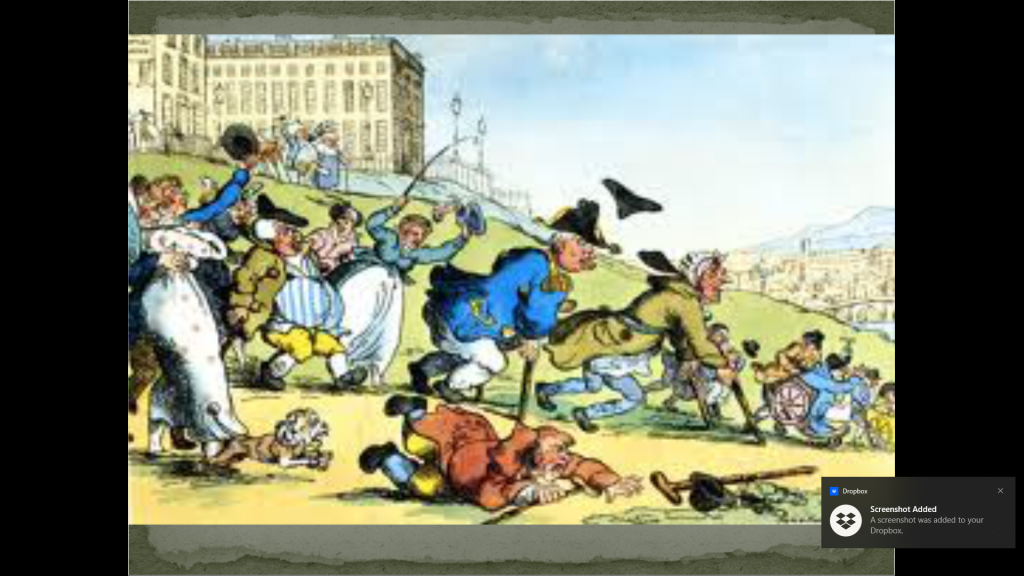
It’s notable that when a Cult declares the imminent end of the world, and they trudge up to the top of a high eminence to observe it (normally by Hampstead Pond in London). They seem quite happy to trudge back down again. Soon they are up and running again with the same enthusiasm for the next ‘end of the world’ date.

Of course, the world was created around 4.54 ± 0.05 billion years ago according to Wikipedia. According to the Doomsday Clock the world will end at 12 O’clock and we are 89 seconds away from it. This is based on a catastrophic end for our civilisation. If we avoid this then other scientists have suggested mammals will be wiped out in approximately 250 million years.

Abrahamic Ages

The Jewish tradition was for six or seven ages of 1000 years. The seventh didn’t really count because it was the age of the messiah when there was a 1000-year sort of super sabbath. Or another idea is that it was an age that ran parallel with the other six. So the world was to be 6000 years long.

With the coming of Christianity, dating the Creation, and (therefore the Day of Judgement) became more important. The Romans dated from the foundation of Rome, and the Greeks from the First Olympiad. But beyond that they had a whole mythology and creation myths about an Age of Gold. Followed by a Bronze Age (Troy and all that) followed by their very own base Iron age. You can read about this in my post about Hesiod.

The Anno Munda

An early Christian attempt to tell the age of creation was the Anno Munda‘s arrangement of the Year. This is pretty complicated and is based on a Talmudic tradition. A late Roman version uses ‘the Diocletian Years’, which is when the persecution of Christians began. It held that the world was created 5500 years before the Birth of Christ. So we are 5500BC plus 2025 years since the date of the creation. And it was supposed to have ended in 500AD. 6000 years after the Creation. so we have outlived Creation by 1525 years.

St Augustine of Hippo took the tradition of six ages and brought it into the Christian canon. These are the six ages:

  • The First Age “is from the beginning of the human race. That is, from Adam, who was the first man that was made. Down to Noah, who constructed the ark at the time of the flood“, i.e. the Antediluvian period.
  • The Second Age “extends from that period on to Abraham, who was called the father indeed of all nations”.
  • The Third Age “extends from Abraham on to David the king”.
  • The Fourth Age is “from David on to that captivity whereby the people of God passed over into Babylonia”.
  • The Fifth Age is “from that transmigration down to the advent of our Lord Jesus Christ
  • The Sixth Age: “With His [Jesus Christ’s] coming, the sixth age has entered on its process.”

Wikipedia.

As each age is 1000 years, then you can see why so many people were worried as 1000 AD approached.

The Seven Ages of Man

The Age of Man can also relate to the average age of a human lifespan. Of course, six is not such a magical number as seven, and so Shakespeare ran with the idea in the Seven Ages of Man spoken by Jacques in ‘As you like it’. If there are seven ages of human life, and we have a span of six score and ten, then each age is ten years.

All the world’s a stage,
And all the men and women merely players;
They have their exits and their entrances,
And one man in his time plays many parts,
His acts being seven ages. At first, the infant,
Mewling and puking in the nurse’s arms.
Then, the whining school-boy with his satchel
And shining morning face, creeping like snail
Unwillingly to school. And then the lover,
Sighing like furnace, with a woeful ballad
Made to his mistress’ eyebrow. Then, a soldier,
Full of strange oaths, and bearded like the pard,
Jealous in honour, sudden, and quick in quarrel,
Seeking the bubble reputation
Even in the cannon’s mouth.

And then, the justice,
In fair round belly, with a good capon lined,
With eyes severe, and beard of formal cut,
Full of wise saws, and modern instances,
And so he plays his part. The sixth age shifts
Into the lean and slippered pantaloon,
With spectacles on nose and pouch on side,
His youthful hose, well saved, a world too wide
For his shrunk shank, and his big manly voice,
Turning again toward childish treble, pipes
And whistles in his sound. Last scene of all,
That ends this strange eventful history,
Is second childishness and mere oblivion,
Sans teeth, sans eyes, sans taste, sans everything.


(Jacques, Act 2, Scene 7)

The Kalendar of Shepherds

Now, the Kalendar of Shepherds has a similar idea, but it calculates it differently. The Kalendar, based on a 15th Century French original, says there are 12 ages of man, corresponding with the 12 months of the year. Each age is 6 years long, and so our likely lifespan is 72.

Kalendar of Shepherds

Each month is allocated to one of the ages, and has an insight into human life for that span. In January, the first 6 years of a human life are mapped out. If you read above you will see we have no ‘wit, strength or cunning. Nor ‘may do nothing that profiteth’ in those first years. A little harsh, and as a fond grandfather, it, I refute it. In December, the last 6 years are prefigured.

Our alloted span, says Practical Magic is 81 years, Kalendar of Shepherds say 72, and Shakespeare offers us 70.

The Office of National Statistics says:

In 2022 to 2024:

  • Life expectancy at birth in the UK was 83.0 years for females and 79.1 years for males. This is an increase of 18 weeks from 82.7 years for females and 21 weeks from 78.7 years for males since 2019 to 2021.

Capella Palatina, Sicily

By the way, the Capella Palatina, illustrated at the top of this post, is a marvel of gold mosaics. It is absolutely stunning. It makes a trip to Palermo a must.

On This Day

1843 – Charles Dickens published ‘A Christmas Carol’

First Published on December 18th 2022, revised and republished in December 2023, 2024,2025

Collect your Holly & Ivy December 18th

Picture of Christmas greenery on a gift box
Holly and Ivy by Tjana Drndarski-via unsplash

So, the old Sun is dying, and if the Sun keeps going down we are all going to die. With all of nature dying or hibernating, evergreens are a symbol of a promise/proof that life will continue through the dark days. So, with its bright-green leaves and its luminous berries, Holly is the ideal evergreen for the Solstice. And as the prickles symbolise Christ’s Crown of Thorns, and the berries the red blood of Jesus, the symbolism works, too, for Christians.

Henry Mayhew (editor of Punch) in his ‘London Labour and London Poor’ (1851–62) talks of Christmasing for Laurel, Ivy, Holly, and Mistletoe. He calculated that 250,000 branches of Holly were purchased from street coster mongers every Christmas. He says that every housekeeper will expend something from 2d to 1s 6d, while the poor buy a pennyworth or halfpennyworth each. He says that every room will have the cheery decoration of holly. St Pauls Cathedral would take 50 to a 100 shillings worth.

He also calculates that 100,000 plum puddings are eaten. Mistletoe he believes is less often used than it used to be, and he hopes that ‘No Popery’ campaigners will not attack Christmassing again.

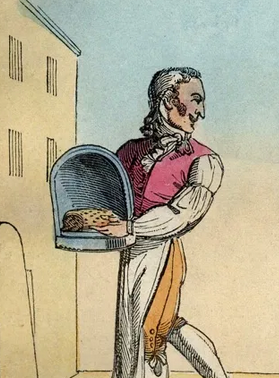
Hot plum pudding seller from Sam Syntax Cries of London 1820s
from the Gentle Author Spitalfields Life web site
Hot plum pudding seller from Sam Syntax Cries of London, 1820s
from the Gentle Author Spitalfields Life website

Culpeper on Ivy (1814 edition):

‘Ivy’ says Culpeper in his Herbal of 1653, its winter-ripening berries are useful to drink before you ‘set to drink hard’ because it will ‘preserve from drunkenness’. And, moreover, the leaves (bruised and boiled) and dropped into the same wine you had a ‘surfeit’ of the night before provides the ‘speediest cure’. (The Perpetual Almanac of Charles Kightly)

It is so well known to every child almost, to grow in woods upon the trees, and upon the stone walls of churches, houses, &c. and sometimes to grow alone of itself, though but seldom.

Time. It flowers not until July, and the berries are not ripe until Christmas, when they have felt Winter frosts.

Government and virtues. It is under the dominion of Saturn. A pugil of the flowers, which may be about a dram, (saith Dioscorides) drank twice a day in red wine, helps the lask, and bloody flux. It is an enemy to the nerves and sinews, being much taken inwardly, out very helpful to them, being outwardly applied. Pliny saith, the yellow berries are good against the jaundice; and taken before one be set to drink hard, preserves from drunkenness, and helps those that spit blood; and that the white berries being taken inwardly, or applied outwardly, kills the worms in the belly. The berries are a singular remedy to prevent the plague, as also to free them from it that have got it, by drinking the berries thereof made into a powder, for two or three days together. They being taken in wine, do certainly help to break the stone, provoke urine, and women’s courses. The fresh leaves of Ivy, boiled in vinegar, and applied warm to the sides of those that are troubled with the spleen, ache, or stitch in the sides, do give much ease. The same applied with some Rosewater, and oil of Roses, to the temples and forehead, eases the head-ache, though it be of long continuance. The fresh leaves boiled in wine, and old filthy ulcers hard to be cured washed therewith, do wonderfully help to cleanse them. It also quickly heals green wounds, and is effectual to heal all burnings and scaldings, and all kinds of exulcerations coming thereby, or by salt phlegm or humours in other parts of the body. The juice of the berries or leaves snuffed up into the nose, purges the head and brain of thin rheum that makes defluxions into the eyes and nose, and curing the ulcers and stench therein; the same dropped into the ears helps the old and running sores of them; those that are troubled with the spleen shall find much ease by continual drinking out of a cup made of Ivy, so as the drink may stand some small time therein before it be drank. Cato saith, That wine put into such a cup, will soak through it, by reason of the antipathy that is between them.

https://www.complete-herbal.com/culpepper/ivy.htm

Happy Eponalia

Roman Horse from Bunwell, Norfolk. Illustration by Sue Walker.

In 2021 I posted about Eponalia for the 18th Dec but I have now added the text to this page.

I’ve been too busy working on my Jane Austen and Christmas Virtual Tour ) to post over the last few days. And I have, therefore, shamelessly stolen this post off my Facebook friend Sue Walker, who is a talented archaeological illustrator, artist and a very good photographer.

She wrote: ‘the 18th December is the festival of the Celtic goddess Epona, the protector of horses, she was adopted by the Romans and became a favourite with the cavalry. This finely sculpted bronze horse with a head dress and symbol on its chest is 37mm high – found in Bunwell #Norfolk #Archaeology’

First published on December 17th 2022, Revised and republished December 2023

St Hildegard of Bingen. Visions of Migraine, December 17th

Hildegard von Bingen receives a divine inspiration and passes it on to her scribe. From the Rupertsberg Codex of Liber Scivias.
St Hildegard of Bingen receives a divine inspiration and passes it on to her scribe. From the Rupertsberg Codex of Liber Scivias.

What a relief! Here is a Saint who was not flayed alive, burnt on a griddle, scratched with wool combs, crucified upside down, beheaded, eyes gouged out, etc. etc. (consider identifying the Saints in this list as my Christmas Quiz). She died of illness, aged 81 and was famous not just for her visions but her erudition, her scientific writings, and her musical compositions. She came from the Rhineland area of Germany.

Before you proceed to read this post listen to this YouTube clip of her sublime music.

Hildegard of Bingen: De Spiritu Sancto (Holy Spirit, The Quickener Of Life)

Magistra Bingen, Monophony and Migraine

She was elected as Magistra (Mother Superior) of her Convent in 1136, and went on to found two other nunneries. But, was made famous by her writings on her visions. She was also a renowned composer of sacred monophony,

There has been speculation that her visions were caused by migraine. Read Mary Sharratt’s piece for more details, from which I took the following quotation.

When I was forty-two years and seven months old, Heaven was opened and a fiery light of exceeding brilliance came and permeated my whole brain, and inflamed my whole heart and my whole breast, not like a burning but like a warming flame, as the sun warms anything its rays touch.

Hildegard von Bingen, Scivias, translated by Mother Columba Hart, O.S.B., and Jane Bishop

Writings on Science and Medicine

Among the many books she wrote were two famous and early books on medicine and science. Her medical writing was highly practical although, of course, based on the humoural theories which had held sway since Hippocrates. However, she did think that the four humours had a hierarchy. She considered blood and phlegm the more superior humours, representing the celestial elements of fire and air. While black bile and yellow bile represented the earthly humours of earth and water.

Just as physicists today look to find a unifying theory of everything, Hildegard also tried to find unities within the body of classical knowledge. According to Wikipedia, she:

‘often focuses on interrelated patterns of four: “the four elements (fire, air, water, and earth), the four seasons, the four humours, the four zones of the earth, and the four major winds.” ‘

Linked also to the celestial bodies and to religion, she gave her world view in Causae et Curae c. 42:

It happens that certain men suffer diverse illnesses. This comes from the phlegm which is superabundant within them. For if man had remained in paradise, he would not have had the flegmata within his body, from which many evils proceed, but his flesh would have been whole and without dark humour [livor]. However, because he consented to evil and relinquished good, he was made into a likeness of the earth, which produces good and useful herbs, as well as bad and useless ones, and which has in itself both good and evil moistures. From tasting evil, the blood of the sons of Adam was turned into the poison of semen, out of which the sons of man are begotten. And therefore their flesh is ulcerated and permeable [to disease]. These sores and openings create a certain storm and smoky moisture in men, from which the flegmata arise and coagulate, which then introduce diverse infirmities to the human body. All this arose from the first evil, which man began at the start, because if Adam had remained in paradise, he would have had the sweetest health, and the best dwelling-place, just as the strongest balsam emits the best odour; but on the contrary, man now has within himself poison and phlegm and diverse illnesses.

Wikipedia

And here I was hoping to find light and joy in a medieval Saint’s story! So we seem to be doomed by Adam’s Fall, and the poor quality of his semen. (Having recently watched Hugo Blick’s Wild West box set ‘The English’, I can quite understand the syphilitic underpinnings of Hildegard’s theory).

It also reminds me of Pandora’s Box. At least we know the Greco-Roman Gods were flawed divinities. While the Abrahamic God is omnipotent. Why then does he allow evil, cruel or unfair outcomes from his own creations?

Feverfew

Feverfew CC BY 2.5, https://commons.wikimedia.org/w/index.php?curid=216947

On the subject of headaches, Hildegard was a keen user of feverfew, which has been, since the 18th Century, a suggested cure for Migraine. I didn’t find it worked for me, being a sufferer since age 12. And it never occurred to me to think that the flashing lights, partial temporary blindness, tingling muscles and devastating headaches might be a gift from God.

Hildegard wrote the following about feverfew:

“If you suffer from a sick intestine, boil the Motherswort with water and butter or oil and add some spelt flour. Prepare a drink, for it helps the intestines.”

Hildegard of Bingen, Physica, Cap. 116 quoted in Hildegard’s Feverfew Use (www.healthyhildegard.com/feverfew-uses)

And so it became popular among women for gynaecological issues and abdominal pain. Feverfew has flowers like a daisy, ‘growing in every hedgerow’ according to Mrs Grieve’s English Herbal. Grieve’s says it is good for nervous and hysterical complaints; low-spirits; as a syrup good for coughs; as a tincture against swellings caused by bites of insects and vermin. However, https://www.drugs.com/npp/feverfew.html says the :

‘leaves possess emmenagogic activity (ejection of the placenta and fetal membranes) and may induce abortion. Use is not recommended during breastfeeding or in children younger than 2 years.

And there are also potential issues.

St Hildegard seems to have two special days – one is Dec 17th and the other is the day she died, September 17th 1179 which is her ‘Liturgical Feast’.

On This Day

1538 – The Pope, Paul III, finally passes a Bull of Excommunication against Henry VIII and declares his Kingdom forfeit. By which time it was far too late to have much impact. Pope Clement had first warned Henry of the risk of Excommunication at the end oof 1531. Henry was told to treat his Queen with ‘marital affection’ in all things. Had he taken decisive steps at this early stage would the outcome have been different?

First Published on December 18th, 2022, Revised and republished December 2023, 2024, 2025, On This Day added February 2026

Trotty Veck, the Chimes and Charles Dickens’ Christmas Books December 16th

Dickens character Trotty Veck waits to run a message
Trotty Veck 1889 Dickens The Chimes by Kyd (Joseph Clayton Clarke)

As Christmas looms, seasonal publications have a mixture of wonder and joy at the coming family reunions and festivities mingled with an awareness that, for some, Christmas will depend on the Food Bank or the Charity Shelter. The weather is now cold, living costs continue to rise at the very time extra spending is needed to unlock the joy of the Season. Also to counter the dark, the cold, and the spectre of death which, in fact, has always been central to the season of winter.

Charles Dickens’ Christmas Books epitomise this dichotomy.And by adding an element of the supernatural, provided a vehicle for joy and hope. It also came with a forceful political message that the authorities and the rich were not doing their Christian duty to alleviate poverty. Christmas Carol contrasts the wealth of a mean rich Stockbroker with the family of his poor employee Bob Cratchit, and provides a powerful tale of redemption.

The Chimes

But in this post I want to concentrate on his second Christmas Book, ‘The Chimes’. It was published on December 16th, 1844. And tells the story of the stick-thin Trotty Veck who is an aged City messenger, nicknamed Trotty because of his habit of keeping himself warm by running on the spot. He is afraid to let his daughter, Meg, marry as he has so little hope for the future. While he is worrying, he, Meg and her intended Richard are approached by Alderman Cute and Mr Filer.

Meg, Richard, Mr Filer, Gentleman, Alderman Cute and Trotty Veck. Probably located by the door of St Nicholas, Colechurch, City of London.

Cute represents the financial industries in the City of London and the Law. Filer the new breed of political economists. These, working with the ideas of Malthus and the new science of Statistics, had proved, that generous support for the poor would, inevitably, lead to a country full of poor people and no rich people. And thus, they justified the Poor Law Amendment Act of 1832. At this time Dickens was a Parliamentary reporter (1831-1834), and he observed the cruelty and absurdity of this piece of iniquitous legislation. In 1929 my mother was born in a workhouse, where she had been taken by her unmarried mother. She was so ashamed she didn’t tell her children until she was in her 70s.

The Workhouse

That is the legacy of the cruel Workhouse system. It was based on providing the lowest possible level of support offering separation from family, meagre food, and sparse comforts. This the rate payers believed would encourage the poor to stop being lazy and get back out there to earn their own living. Thus allowing taxes to fall. (brilliantly satirised by Dickens’ Oliver Twist, asking for ‘More’).

Below, I enclose the scene from the Chimes, which satirises the attitude of the governing classes.

‘And you’re making love to her, are you?’ said Cute to the young smith.

‘Yes,’ returned Richard quickly, for he was nettled by the question.
‘And we are going to be married on New Year’s Day.’

‘What do you mean!’ cried Filer sharply?Enough  ‘Married!’

‘Why, yes, we’re thinking of it, Master,’ said Richard.  ‘We’re rather in a hurry, you see, in case it should be Put Down first.’

‘Ah!’ cried Filer, with a groan.  ‘Put that down indeed, Alderman, and you’ll do something.  Married!  Married!!  The ignorance of the first principles of political economy on the part of these people; their improvidence; their wickedness; is, by Heavens! enough to—Now look at that couple, will you!’

...

‘A man may live to be as old as Methuselah,’ said Mr. Filer, ‘and may
labour all his life for the benefit of such people as those; and may heap up facts on figures, facts on figures, facts on figures, mountains high and dry; and he can no more hope to persuade ’em that they have no right or business to be married, than he can hope to persuade ’em that they have no earthly right or business to be born.  And that we know they haven’t.  We reduced it to a mathematical certainty long ago!’

Alderman Cute was mightily diverted, and laid his right forefinger on the side of his nose, as much as to say to both his friends, ‘Observe me, will you!  Keep your eye on the practical man!’—and called Meg to him. 

...

‘Now, I’m going to give you a word or two of good advice, my girl,’ said the Alderman, in his nice easy way.  ‘It’s my place to give advice, you know, because I’m a Justice. ...

‘You are going to be married, you say,’ pursued the Alderman.  ‘Very
unbecoming and indelicate in one of your sex!  But never mind that.
After you are married, you’ll quarrel with your husband and come to be a distressed wife.  You may think not; but you will, because I tell you so. Now, I give you fair warning, that I have made up my mind to Put distressed wives Down.  So, don’t be brought before me.  

You’ll have children—boys.  Those boys will grow up bad, of course, and run wild in the streets, without shoes and stockings.  Mind, my young friend!  I’ll convict ’em summarily, every one, for I am determined to Put boys without shoes and stockings, Down.  Perhaps your husband will die young (most likely) and leave you with a baby.  Then you’ll be turned out of doors, and wander up and down the streets.  Now, don’t wander near me, my dear, for I am resolved, to Put all wandering mothers Down.  All young mothers,of all sorts and kinds, it’s my determination to Put Down.  Don’t think
to plead illness as an excuse with me; or babies as an excuse with me;
for all sick persons and young children (I hope you know the
church-service, but I’m afraid not) I am determined to Put Down.  

And if you attempt, desperately, and ungratefully, and impiously, and
fraudulently attempt, to drown yourself, or hang yourself, I’ll have no pity for you, for I have made up my mind to Put all suicide Down!  If there is one thing,’ said the Alderman, with his self-satisfied smile, ‘on which I can be said to have made up my mind more than on another, it is to Put suicide Down.  So don’t try it on.  That’s the phrase, isn’t it?  Ha, ha! now we understand each other.’

Project Gutenberg - The Chimes by Charles Dickens

It is a savage burlesque of a satire but at its core, Filer provides the economic/statistical justification. Cute enforces it by legal harassment of the poor. Dickens was writing after a recent introduction of legislation making suicide a punishable offence.

Government Cruelty

This has a contemporary resonance. During my lifetime, the first British Government to be cruel in its provision of benefits, in my opinion, for the poor was Teresa May’s Conservative Government. Her laws made getting help so difficult that people died as a result of the deliberately difficult system. ‘I, Daniel Blake’ a 2016 film by Ken Loach brilliantly captured the essence of this system. That government’s treatment of the Windrush generation was a similar example of bureaucratic cruelty. And the continual decline of the benefit system over the 14 years of Conservative Government meant that the poor bore the brunt of austerity. Keir Starmer started his period in office on the wrong foot too cutting benefits to the poor.

Dickens, progressive propagandist

The piece above reminds us what a brilliant propagandist Dickens was. Every generation of children, since he wrote Christmas Carol, has read it or seen it in popular retellings such as The Muppet Movie. I think it could be argued that the ‘More’ scene in Oliver Twist and the Christmas Carol have made the case for compassionate care and redemption far better than contemporary Christianity or political parties.

In the Chimes. these two men discourage Trotty from letting the young ones marry. He has a dream and sees the hopeless result of his decision: suicide, prostitution, crime. When he wakes up, he realises that what they do have is hope. Hope springs eternal and he lets them marry.

For more on this scene, have a look at the Victorian Web

Dickens was not a socialist. ‘Hard Times’ shows that Dickens was against strikes, despite leading a strike when he was a young newspaper man. He was a free trade Liberal; a reformer who believed that the rich needed to do their Christian duty and provide charitable support, pay decent wages and look after their dependents and servants. He thought society should care less about the dogma of Christianity but look to its essence, ‘love your neighbour like yourself’. This, alone, was sufficient to right the wrongs caused by the selfish.

First Published on December 16th 2022, republished and revised in December 2023, 2024, 2025

St. Lucy & Eye Care through the Ages December 14th

Medieval Cataract Surgery – calling couching Eye Care through the Ages .

So, on St Lucy’s Day, you, being someone worried about your eyes, might have sought an altar dedicated to St Lucy, the patron saint of eye health. (see December 13th’s Post on St Lucy). Although you may be disappointed that there has been no miraculous cure for you, you might have been encouraged to do something about it. So that’s what this post is about.

There are only two churches in the UK dedicated to St Lucy or St Lucia. One run by the National Trust in Upton Magna, Shropshire, but there must have been a few chapels in Cathedrals and Abbeys dedicated to her. I have my eyes open for them!

For Redness of the Eye or Pink Eye

There are many household books still, existing. These show that much of medical practice was carried out in the home, by ordinary men and women. More often women, actively not only collected useful recipes and cures, but also tested them out and improved them. Here is an example:

For the redness of eyes, or bloodshot. Take red wine, rosewater, and women’s milk, and mingle all these together: and put a piece of wheaten bread leavened, as much as will cover the eye, and lay it in the mixture. When you go to bed, lay the bread upon your eyes calmer and it will help them.

Fairfax Household book, 17th/ 18th century. (Reported in The Perpetual Calendar of Folklore by Charles Kightly)

‘Pink eye’ is mentioned in a document unearthed at the Roman Fort of Vindolanda.  It lists the troops of the Cohort in occupation.  We read that of the garrison of 750, 474 are absent with 276 in the fort of which 38 are sick, 10 with ‘pink eye’.  This is probably conjunctivitis.

Prevention is better than cure

Things hurtful to the eyes. Garlic, onions, radish, drunkenness, lechery, sweet wines, salt meats, coleworts, dust, smoke, and reading presently after supper.

Good for the eyes. fennel, celandine, eyebright, vervain, roses, cloves and cold water.

Whites Almanack 1627

Cataract operations

Cataract operations have been carried out since 800 BC using a method called ‘couching’.

The practitioner would sit facing the patient and pass a long needle through the cornea to impale the lens. “He would then forcibly dislodge the lens — rupturing the zonules — and push it into the vitreous cavity, where it would hopefully float to the bottom of the eye and out of the visual axis.”

This was a last resort when the cataract was opaque and the patients nearly blind. It would mean they would need very thick lenses to see well again but, crude as it seems, it worked.

But the operation, without anaesthetics must have been a considerable ordeal. The recovery (still required today for those suffering from a displaced retina) means that the patient has to lie on their back for a week with supports on either side of the head to prevent movement. Of course, there was a serious risk of infection, so prophylactic visits to a chapel of St Lucy might be called for.

The modern treatment for cataracts was established in the 1940s and offers a great solution in 15 minutes surgery. Currently, the NHS has been having trouble dealing with all the cases required, (6% of surgery is for cataract operations). Before COVID-19, there was some talk about cataracts being, in practice, not readily available on the NHS. The waiting time is supposed to be 18 weeks but, for example, at NHS Chesterfield Royal Hospital the waiting time approaches almost 10 months. But waiting times around the country vary from 10 weeks to over a year.

Patrick Brontë’s Eye

On 26th August 1846 Charlotte Brontë took her father to Manchester from Haworth for Cataract surgery. The operation took 15 minutes but without anaesthesia. He was very calm and said the pain was ‘a burning pain.’ It was vital he stay still through the pain. Then, he had to remain in bed for a month in the dark, minimising movement. Leeches were applied to his face, to reduce the inflammation of the wound. He was looked after by a nurse 24 hours a day, supervised by Charlotte. She used the time she spent waiting in writing Jane Eyre. Her Father’s vision was significantly improved and he was able to resume his Parish duties.

Here is a youtube film about Patrick Brontë‘s operation:

Looking through Samuel Pepys’s eyes

You will note, above, that it was considered bad for the eyes to read in low light. It is a myth and not true. Poor Samuel Pepys was continually worried about his reading and writing habits ruining his eyesight. This is an extract from the poignant last entry in his famous diary:

And thus ends all that I doubt I should ever be able to do with my own eyes in the keeping of my journal, I being not able to do it any longer, having done now so long as to undo my eyes almost every time that I take a pen in my hand; and therefore, whatever comes of it, I must forbear: and therefore resolve from this time forward to have it kept by my people in long-hand. I must be consented to sit down no more than is fit for them and all the world to know; or, if they be anything, which cannot be much now my amores are past and my eyes hindering me almost all other pleasures. I must endeavour to keep a margin in my book open, to add, here and there, a note in shorthand with my own hand.

Samuel Pepys Diary, May 31st

The sad thing is that Pepys had another 38 years before he went blind, and what glorious diary entries have we missed because of his false fears of the effect of eye strain?

First published in 2022, updates 2023,  2024 and 2025

Anniversary of the Birth of Jane Austen December 16th

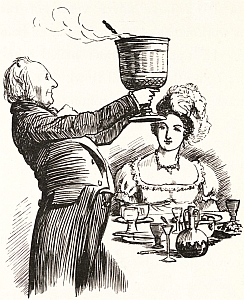
Wassail Bowl being brought in by a Servant into a dining hall on Christmas Day
From ‘Old Christmas’ by Washington Irving

To Celebrate the Anniversary of the Birth of Jane Austen in Steventon on Tuesday 16 December 1775. I am running my Virtual Tour entitled:

Christmas With Jane Austen

tonight at 7:30 GM

It looks at the traditions of Christmas during the Regency period and how Jane Austen might have celebrated it. It will give some background to Jane Austen’s life and her knowledge of London. We used her novels and her letters to find out what she might have done at Christmas.

This is a London Walks Guided Walk by Kevin Flude and to book just click here:

Over the winter, I am running a series of online talks. The next one is on the Winter Solstice.

Sorry about the short notice, but the marketing is all done by London Walks, and tend not to add links to my walks and lectures here. But as today is Jane Austen’s Birthday it seemed silly not to!

These are the upcoming Virtual Tours. To book for any click here:

To see my post christmas-with-jane-austen click here

First Published on December 16th 2025

St Lucy: Festival of Light December 13th

St Lucy, by Francesco del Cossa (c. 1430 – c. 1477) (Wikipedia User:Postdlf)

I reposted my two posts on St Lucy, and the follow-up email on eye-care, on the appropriate days. But the email to subscribers was not sent. So here it is again. The name Lucy is from the same Latin origin (Lucidus) as lucent, lux, and lucid. It means to be bright, to shine or be clear. It is similar to the Ancient Greek λευκός (leukós, “white, blank, light, bright, clear”. Luke has the same origins (bright one, bringer of light and light of the sacred flame) and is very appropriate for the most literate of the evangelists.

St Lucy of Syracuse

St Lucy is from Syracuse in Sicily. She was a victim of the Diocletian Persecution of Christians in the early 4th Century. She is an authentic early martyr. But details of her story cannot be relied upon as true. She was a virgin, denounced as a Christian by her rejected suitor. Then, miraculously saved from serving in a brothel.; destruction by fire, but did not escape having her eyes gouged out. Finally, her throat was cut with a sword.

Her connection to light (and the eye gouging) makes her the protectress against eye disease. So she is depicted holding two eyes as you can see in the picture at the top of the page. Other symbols include a palm branch which represents martyrdom and victory over evil. Other symbols are lamp, dagger, sword or two oxen.

She appears in Dante’s Divine Comedy, as the messenger to Beatrice whose job is to get Virgil to help Dante explore Heaven, Hell and Heaven.

St. Aldhelm (died in 709) puts St Lucy in the list of the main venerated saints of the early English Church, confirmed by the Venerable Bede (died in 735). Her festival was an important celebration one in England. It was views ‘as a holy day of the second rank in which no work but tillage or the like was allowed’.

Dimming of the Light

This year is a glorious sunny St Lucy’s Day.  But, the afternoons soon dim. So, at this time of the year, we are in need of a festival with bright lights to cheer us up! And St Lucy’s Day is the beginning of the winter festival that culminates with the Solstice, where the old sun dies, and the new one is born. December the 13th was the Solstice until Pope Gregory reformed the Calendar in the 16th Century, as nine days were lopped off the year of transition.

Sankta Lucia in Sweden

The festival of Sankta Lucia is particularly popular in Sweden, where December 13th is thought to be the darkest night. In recent years, the Swedish community in the UK has had a service to Lucia in St Pauls. But the last couple of years has been in Westminster Cathedral.  This year on the 5th December.  And a Santa Lucia Carol Concert on 12 December at St Paul’s. But every year it has either been and gone or  sold out by the time I get around to thinking of going!

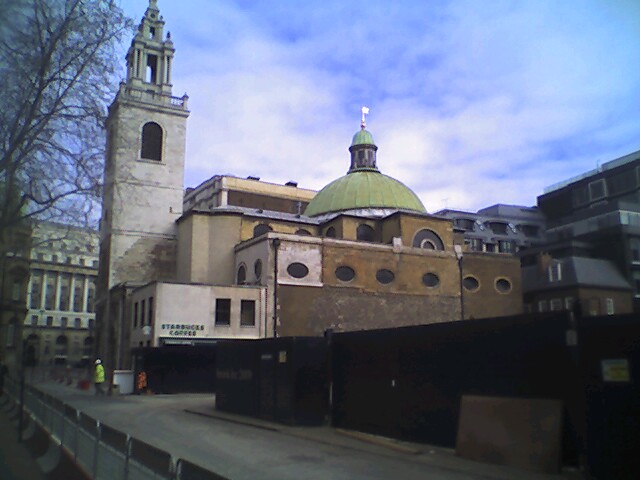
St Stephens Church by Christopher Wren (Photo K Flude) a rare view during building work.

I found out about Sankta Lucia from a Swedish choir who hired me to do a tour of the City of London some years ago. We went into Christopher Wren’s marvellous St Stephen’s Church.  Under the magnificent Dome, the choir fancied the acoustics and spontaneously sang. I recorded a snatch of it, which you can hear below

Swedish Choir singing in St Stephen’s London
St Stephens Church in the middle foreground of the photo. (Photo K Flude)

You can watch the Sankta Lucia service in Westminster Cathedral below:

The Importance of Light

Recent medical research has shown the importance of light, not only to our mental health but to our sleep health.  Work places need to have a decent light level with ‘blue light’ as a component of the lighting. It is also an excellent idea to help your circadian rhymes by going for a morning walk, or morning sun bathing, even on cloudy days. This will help you sleep better. And so St Lucy remains relevant as an inspiration

To see my post on Roman and Medieval eye care and St Lucy click this link.

First Posted on December 13th, 2022, updated on December 13th 2023, 2024 and 2025.

Ashmolean Advent Calendar, William Burges & the Singing Pierides December 12th

The Great Bookcase by William Burges Ashmolean Museum (Photo K. Flude)

The Ashmolean posts, every year, an online Advent Calendar with gorgeous items behind each ‘flap’. The choice seems to be, mostly, a random selection. But their collection is so wonderful, they are all interesting.

The Great Bookcase by William Burges & the Singing Pierides

In 2022 The Ashmolean featured the Great Bookcase by William Burges. Burges is one of the great Gothic Revival architects and a designer in the Arts & Crafts Movement with an affinity for Pre-Raphaelite painters. He asked 14 of them to paint panels on his bookcase. The decorative scheme was to represent the Pagan and Christian Arts (Museum label).At the bottom of the Wardrobe are the Singing Pierides painted by Henry Stacy Marks. The Pierides were a sort of classical Greek Von Trapp singers, 9 daughters who foolishly challenged the Muses to a singing competition. Of course, the Goddesses of the Arts — the Muses won., As punishment for their vanity, they turned the Pierides into songbirds. Let this be a warning to all those who overrate their own talents!

‘Whenever the daughters of Pierus began to sing, all creation went dark and no one would give an ear to their choral performance. But when the Muses sang, heaven, the stars, the sea and rivers stood still, while Mount Helicon, beguiled by the pleasure of it all, swelled skywards tilI, by the will of Poseidon, Pegasus checked it by striking the summit with his hoof.

Since these mortals had taken upon themselves to strive with goddesses, the Muses changed them into nine birds. To this day people refer to them as the grebe, the wryneck, the ortolan, the jay, the greenfinch, the goldfinch, the duck, the woodpecker and the dracontis pigeon.’

Antoninus LiberalisMetamorphoses (wikipedia)

Burges & the International Exhibition of 1862

Engraving of the International exhibition of 1862, Cromwell Road
Print of the International Exhibition of 1862, South Kensington

The bookcase by William Burges was originally displayed as the centre point of the ‘Medieval Court’ of the 1862 International Exhibition, South Kensington, London. The Exhibition was almost as successful as the more famous Great Exhibition of 1851. Both got about 6m visitors. The 1862 Exhibition was just south of the site of the 1851 (on the south side of Hyde Park) and in what were then the Royal Horticultural Society’s gardens (now the Science, Natural History Museum, Imperial College etc.)

Raphael

This year, they posted a Raphael drawing of an angle. I show a screen shot below. But to have a real look click here.

The Nuragi

Last year it was a nuragi bronze age stature of a shepherd, a screen shot of which I show below. 2023 December 12th’s choice was a netsuke.

Nuragi statue of a Shepberd

I discovered the Nuragi on a University Field trip, with my students, to the Capital of Sardinia, Cagliari. The Nuragic culture is not well known. However they have amazing Bronze sculptures which give the viewer a really vivid view of their lives and fashions in the Bronze Age. They lived in round towers called nuraghe, which are a little like the Brochs of Scotland. They were around during the time of the Mycenaean Culture in Greece. But their origins and indeed their history are argued about. They may be part of the ‘Sea People’ who brought the end to the Bronze Age cultures of the Eastern Mediterranean, or they may not.

Here, in Britain, the Bronze Age is dominated by discussions of henges, barrows, metal axes and swords. But with very little sense of what life was like to live in those days. However, go to the Cagliari Museum, look at these wonderful statues, and it becomes possible to picture the people. Particularly with a copy of ‘Il Popolo di Bronzo’ by Angela Demontis to hand. It is a catalogue of Nuragi statures with interpretative drawings. It really brings the people to life depicted in the statues. They are mostly warriors, but also there are ‘normal trades’ such as shepherds and bakers which are depicted as well.

Here is my slight adaption of one of the drawings. It is of a shepherd similar to the one photo’d above.

A sketch drawing of a Nuragi sculpture derived from ‘Il Popolo di bronzo’ by Angela Demontis

What you can see is some detail of the clothes and the knife belt around the torso. Not to mention the sheep around his neck! The drawing brings a living person from the Bronze Age before you, not just a lump of bronze. Wikipedia has a long article on the nuragic culture. You can see a wonderful collection of nuragi bronzes and their homes on this website.here.

Originally written for December 12, 2022, revised and republished December 2023, and the Nuragi added in 2024 and Raphael added in 2025

Gordon Russell, the Mosquito and Broadway December 11th

De Havilland DH.98 Mosquito B Mk IV Series 2n (Wikipedia CCO), parts of it were made in Broadway

On December 11th 1940 a bomb dropped on a barn in a beautiful village in the Cotswolds. Broadway is a tourist attraction. It was considered one of the most beautiful villages in Britain. It was the playground for many artists, writers, actors, designers and other bohemians of the late 19th Century.

There were several large fires in Broadway during the war. On the night of December 11th 1940 a German bomber dropped a quantity of incendiary bombs on the village. A number of them fell on Gordon Russell’s furniture factory setting light to a large wooden, thatched barn. The building containing fine furniture and textiles, brought from London for safe keeping, was quickly destroyed. Ironically, the barn also contained a large order of furniture for Sir John Anderson – the Minister for Air Raid Precautions!


Another incendiary landed on the machine shop roof burning a hole, before being extinguished, it is believed, by a factory worker who lived nearby. The temporary plywood patch which was nailed on the underside of the hole was still in place when the factory was demolished in 2004. When a cottage adjacent to the factory was recently re-thatched, an unexploded incendiary bomb was discovered lodged in the old thatch. According to an Evesham Journal report, published at the end of the war, bombs fell in the Broadway area on seven separate occasions.

Quotes above from http://www.broadwayfire.co.uk/second_world_war.htm

So, the Broadway fire brigade history pages suggests the raid was on December 11. But other sources prefer the night of November 14th. The night of the infamous Coventry Raid. But I have found another site claiming the raid that destroyed the barn was in October! But I’ve moved this blog post from November 14th to December 11th because I think the Fire Brigade should know what it is talking about!

Gordon Russell

Gordon Russell was a famous furniture designer. During the War, he turned over his carpentry workshops to the war effort. They made the wings of the famous World War Two Mosquito fighter bombers in Russell’s modernist furniture factory. This was in the Back Lane of Broadway. And next to the bombed barn is now a Co-Op supermarket.

The Mosquito was fast enough to be a fighter and could carry a decent payload of bombs. Because of their flexibility and speed, they had many roles in the war, including being the pathfinder for many of the nighttime raids on Germany.

Russell’s factory also made ammunition boxes, and high-precision aircraft models for wind tunnel testing and other purposes. Gordon himself designed a utility range of furniture to minimise the amount of wood needed for new furniture during the war.

Images above taken by Kevin Flude of the displays at the Gordon Russell Museum, Broadway. The Museum is well worth a visit, and Broadway itself remains a delight.

My Father & the Mosquito

My father, I discovered a couple of nights ago, worked on Mosquitoes in his time in the RAF. His job was to salvage instruments from crashed aeroplanes. Mosquitoes were, along with Spitfires, and Hurricanes, amongst the ones he worked on. To buy his war time autobiography follow this link!

For more from the Almanac about Broadway, see:

and:

Another source for this post was: https://www.facebook.com/share/p/nEzPogPpsy7QD4US/

First published on 14th November 2024, Moved to December 11th 2025