The Beginning of the Universe as We Know It; Birthdays of Adam, Lilith, & Eve; Conception of Jesus, Start of the Year March 25th

Lilith is shown coming her hair and looking in a mirror
Study for Lady Lilith, by Rossetti. 1866, in red chalk. Now in the Tel Aviv Museum of Art (Wikipedia
Study for Lady Lilith, by Rossetti. 1866, in red chalk. Now in the Tel Aviv Museum of Art (Wikipedia) Lilith born at The Beginning of the Universe

This is now my most popular post. March 25th is the Annunciation—the day that the Archangel Gabriel tells Mary she is pregnant. (to see some very fine paintings of this meeting, look at my other March 25th post march-25th-feast-of-the-annunciation/). When I first wrote this post I was discovering how it all fitted together as I wrote.  So I’m leaving it the way it was, proof reading and clarifying if necessary, but keeping the thrill of the discovery of the the significance of March 25th as the day that saw the Beginning of the Universe.

March 25th is also the anniversary of the birth of Adam and Eve (and Lilith); the death of Jesus Christ; the anniversary of the Immolation of Isaac; the Parting of the Red Sea; the Fall of Lucifer; and, (until 1752 in the UK) the beginning of the Year. 

Of course, it isn’t. Or to put it another way, no one can, or ever could, prove any of these dates except 1752. So what they speak to is the way the Church saw the world as logically structured by God. Christian thinking about the year, the world, the universe, creation, developed over many years and took influences from many cultures. It is also very complicated to work out the sequence, so I’m going to summarise what I know (or at least what I think I know).

Happy Birthday, Dear Jesus.

Christians chose Christmas Day as the Birthday of Jesus, probably partly because it was a prominent birthday already shared with several Gods.  Particularly, Attis, Mithras,  Saturn and the Unconquered Sun. It was approximately at Solstice, the beginning of the Solar Year, and close to one of the main festivals of the Roman World, the Saturnalia. So it made it easier for new converts who could retain elements of their festivals after conversion.

December 25th might have been selected by the pagan religions because it is the time when the Sun begins to rise further north each day.  The days stop shortening and start lengthening, light increases with the promise of warmer weather and budding plants. It was considered a rebirth of the Sun.

Solstice Anniversaries

So, Jesus was born on/or around the Solstice, so he must have been conceived approx. 9 months earlier.  This is approximately at the Spring Equinox.

Ah, you are thinking!  But today isn’t the equinox. It’s a few days after the equinox. Surely, God doesn’t do approximately?

I have always thought that the 4 or 5 days difference between the Solstice, the Equinox and the Christian festivals was down to the fact that the Calendars were not well coordinated with the actual movements of the Sun (because the Sun does not circle the earth in 365 days, or in 365 and a quarter days, but 365 days, 6 hours, 9 minutes. Unless corrected for this means dates slip from their proper place in the Solar Year. It also makes lunar Calendars difficult to align with the Sun cycles, and vice versa.

But when I first wrote this a sudden revelation dawned upon me which will be revealed in the next few paragraphs.

So, God sends his Son to save the human race. God is a logical being, so she would send her Son at an appropriate time? If Jesus is born at or near the Solstice, which is an appropriate time for the Son of the Creator, then conception 9 months earlier, March 25th, is near the Equinox.  This is the beginning of Spring. For many people, Spring is a new beginning, for example, the Anglo-Saxons saw Winter as the death of the year, and Spring as the young Year. It all makes sense.

The Creation

So to the Creation. God, having a free choice, would have created the world at the beginning of Spring. In fact, if you think about it, God creates everything necessary for life at the creation in 6 days. As soon as it has all been created and put together, it is bound to immediately spring into new life. The first season must, therefore, be Spring? Right? So March 25th?

This gives a nice symmetry with Jesus’s Life. Conceived on March 25th, born December 25th, and died 30–40 years later, according to the Church, at Easter, on March 25th. (the only other famous person I know, born and died on the same day is William Shakespeare).

Easter

Easter, when Jesus is martyred, isn’t March 25th I hear you saying. But remember, Easter is a lunar festival, so its date varies each year. In fact the next time is 2035. Births and deaths, on the other hand, are fixed to the Solar Calendar. Therefore, the Church chooses March 25th as the most appropriate day to pin the death of Jesus, on the anniversary of his conception and the anniversary of the creation of the Earth. I am guessing that this is also the preferred date for the Day of Judgement.

It is also the Birthday of Adam, and his first wife Lilith (or so some say), and Eve. More about Lilith below. I hope this is all making sense?

Why was Adam born on March 25th?

I had thought this date was just one of the parallels that the Church liked, Jesus and Adam born on the same day. But, I have just worked out why Adam is born on March 25th, and why these dates are not the Equinox, March 20th/21 but March 25th, which has been bugging me.

Let’s go back to the beginning of Creation as described in Genesis. It has the following sequence of Seven Days, beginning with the Equinox March 20th. I have added dates to the 6/7 day sequence of Creation:

  • Day 1: Light – March 20th
  • Day 2: Atmosphere / Firmament – March 21st
  • Day 3: Dry ground & plants – March 22nd
  • Day 4: Sun, moon & stars – March 23rd
  • Day 5: Birds & sea creatures – March 24th
  • Day 6: Land animals & Adam, Lilith and Eve – March 25th
  • Day 7: The Sabbath of rest – March 26th
  • For more information www.bibleinfo.com

So there you have it! Adam, Eve (and Lilith) were created on Day 6 with the Land Animals – March 25th. Jesus conceived, also on this date, and so 9 months later is born on December 25th. It all makes sense, and aligns the Jesus’s Life, the Christian year fully with the Solar Year and the Creation!

And that, dear Reader, is the very first time anyone has been able to explain to me why Christmas is not at the Solstice, and why the Annunciation was not at the Equinox. Maybe you all know this, but it is very exciting to work this out for myself. And believe me, I have done a lot of reading about calendars and not spotted an explanation.

When was the Creation?

The Anno Munda‘s is a Jewish Calendar which begins counting from a year before the Creation – the Year of Emptiness. This was 5500 years plus 2026 years ago so 7526 Before the Present. And it was supposed to have ended in 600AD, 6000 years after the Creation. So, they got that wrong.

Dionysius Exiguus replaced the Anno Mundo year with the AD/BC system in the 6th Century AD). This became popular when the Venerable Bede used it in his writings in the 8th Century.

Beginnings of the year

The Celts chose October 31st, Julius Caesar chose January 1st, other cultures have other dates, and the Spring Equinox is another choice sometimes made. The Church and Dionysius Exiguus choose March 25th, although secular society also recognised the claims of January 1st. Britain kept to March 25th until 1752 when we adopted the Gregorian Calendar. But people like Samuel Pepys celebrated New Year’s Eve on 31st December. So January 1st was the secular New Year, but the Christian year number did not change until March 25th. So King Charles I thought his head was being cut off on January 30th 1648; while history books will tell you it was cut off on January 30th 1649. Same day, same head, different reckonings.

January 1st, the New Moon and New Year

December 31st/January 1st is essentially a Solstice New Year Festival. And I have, previously, used the difficulty of keeping calendars as to why these days has slipped out of alignment with the Solstice. But, today I realised that it is as likely that the reason is the Solar/Lunar nature of our time keeping. The year, and its festivals, is largely arranged around the Solar Cycle. But our weekly and monthly cycles are orginally derived from the Moon.

The first of a month, was called the Kalends by the Romans, the Nones the half moon, and the Ides signified the New Moon. The kalends of January is then, originally, the First New Moon after the Winter Solstice. So, January 1st is not a slightly misdated Solstice Festival it is a Festival celebrating the first New Moon of the New Year! Sorry, to seem excited but this is the first time I have realised this.

Over time societies give up trying to sync the lunar and solar calendars. Roman and Christian cultures gave up and fixed the moon months, completely abandoning any attempt to keep the months to the actual lunar cycle. This is our current system, in which only Easter and festivals that depend on Easter remain  true to the movements of the moon festival, much to our perennial confusion.

Maybe you all know this, but it’s put many things into perspective for me!

Lilith

The April 2023 Issue of ‘History Today’ had a short piece called ‘The Liberation of Lilith’ which suggests that the story of Lilith, a figure from Jewish Folklore, is first attested in a Medieval satirical text called ‘The Alphabet of Ben Sira’. The story goes that Lilith is created from the same clay as Adam. Adam then demands she lies below him during sex. She refuses, saying that they are both made from the same stuff and, therefore, equal. Adam refuses to accept this, and so Lilith leaves the Garden of Eden. So the story goes.

The story of Lilith, Sarah Clegg suggests, is one of a series of similar stories found around Europe and Asia. And Clegg assumes that it is gradually modified to make Lilith a demon who will kill babies unless the names of three angels are spoken out loud.

The story survived as a charm to keep babies safe, and perhaps to remind people of equality among the sexes. But this causes problems for, OK, let’s call them out, the Patriarchy. Lilith cannot be equal to Adam so she is made into a monster, not made from the same clay as Adam but from the scum and waste left over from Adam’s creation. I imagine the story then went on to propose that God creates Eve from Adam’s rib, and so she is created from Adam, and is, therefore, not equal, but subservient to him, although not as bad as Lilith. Lilith is now a significant figure in feminist folklore circles.

I wrote about more about eras and ages in my post which you can see her: Greater Cycles and the Six or Seven Ages

Lilith by Rossetti

Attached to the watercolour of Lilith by Rossetti (at the top of the page), was a label with a verse from Goethe‘s Faust as translated by Shelley. (Wikipedia)

“Beware of her fair hair, for she excells
All women in the magic of her locks,
And when she twines them round a young man’s neck
she will not ever set him free again.”

The model is Fanny Cornforth, Rossetti’s mistress. He painted another version a few years later, but the model in that is Alexa Wilding. His models are arguably more interesting than the man himself and include: Elizabeth Siddall, Jane Morris and Fanny Cornforth. Christina Rossetti, his poet sister, modelled for Rossetti’s painting, Ecce Ancilla Domini which you can see here.

For more on the Annunciation, look at my other March 25th post here.

I think I might have enough material to begin my own Cult.

First Written 25th March 2024, revised 2025, 2026

The Wandering Cardinal Points & Digital Heritage March 21st

Photo  by Jordan Ladikos on Unsplash of a weather vane showing the cardinal points
The Cardinal Points shown on a weather vane. Photo by Jordan Ladikos on Unsplash

The day after the Equinox we look at the cardinal points of the compass:

“chief, pivotal,” early 14c., from Latin cardinalis “principal, chief, essential,” (online etymological dictionary).

The Importance of South

On its annual cycle, the Sun is always on the move. At the Equinox the Sun now rises due East, and sets due West. It then rises every day further towards the north and sets further to the South until the Solstice. The Solstices mark the extreme Northerly and Southerly rising and settings. Dawn and Dusk vary accordingly.

So, the only real fixed point in the Sun’s entire journey (as seen from Earth) is Noon. Every day of the year, every day of our lives, the Sun is at the highest point at Noon. And this is the definition of South. But the Sun never strays into the North. So the North is the polar opposite of the South- cold, remote, more mysterious.

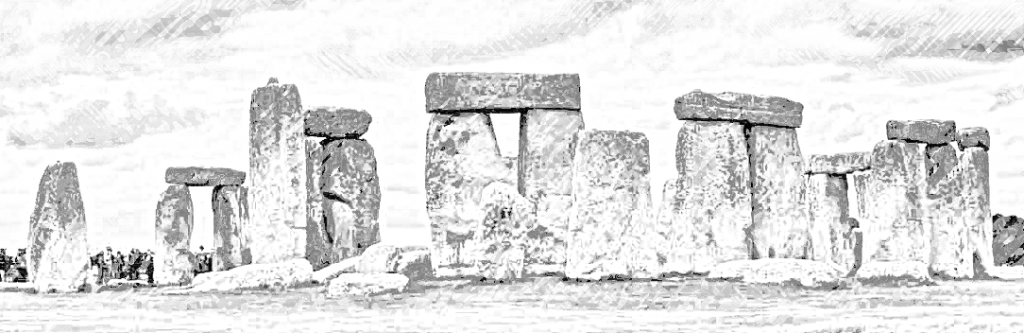
To my mind, it makes, of the Cardinal Points, the South very special. At Stonehenge, there are two exits. The biggest is aligned to the Midsummer Sunrise and Midwinter Sunset axis. But there is a smaller second entrance and this aligned due South. There is also a uniquely small standing stone in the main circle of Sarsens, which is aligned to the South. (Although we don’t know if this stone is original). However, there was some sort of corridor heading South through the mysterious wooden phase which precedent the stone Stonehenge. So, we can be sure South was important at Stonehenge.

Sketch of Stonehenge showing the smallest Sarsen stone near the Southern Entrance

Noon, derives from ‘nona hora’ in Latin and is ‘one of the seven fixed prayer times in traditional Christian denominations.’ (Wikipedia)

The Predominance of the North?

And yet, North, has come to be the principal of the cardinal points. It is shown on virtually all modern maps. It is the direction that people of my generation and hemisphere think of as being ‘up’.

The Google generation sees things differently. There are countless tourist maps on walls or plinths where North is no longer at the top. Up is shown as being the way you are facing. Users have to fight with Google Maps to put North at the top of the map. My children mock me when I say ‘Out of the Tube station, turn up the High street northwards.’ Their view of maps is completely contextual. They do not see any reason to know where the cardinal points are. I point out that the Tube probably has two exits on either side of the road. So, it doesn’t work to say ‘turn left out of the tube’.

There may also be an element of sexual difference, with men more likely to have a cardinal point view while women navigate more by landmarks. ‘Walk past the M&S, turn left to the Park and straight on’. One paper says: ‘during spatial navigation, women typically navigate an environment using a landmark strategy, whereas men typically use an orientation strategy.’

Although I see this decline of the north as being part of the Decline of the West. I also ‘things were better in my day’. But in fact it is simply returning to the way maps were produced in the past. Here is an example below, which has East at the top.

Representation of a Roman Map with the top being roughly East.

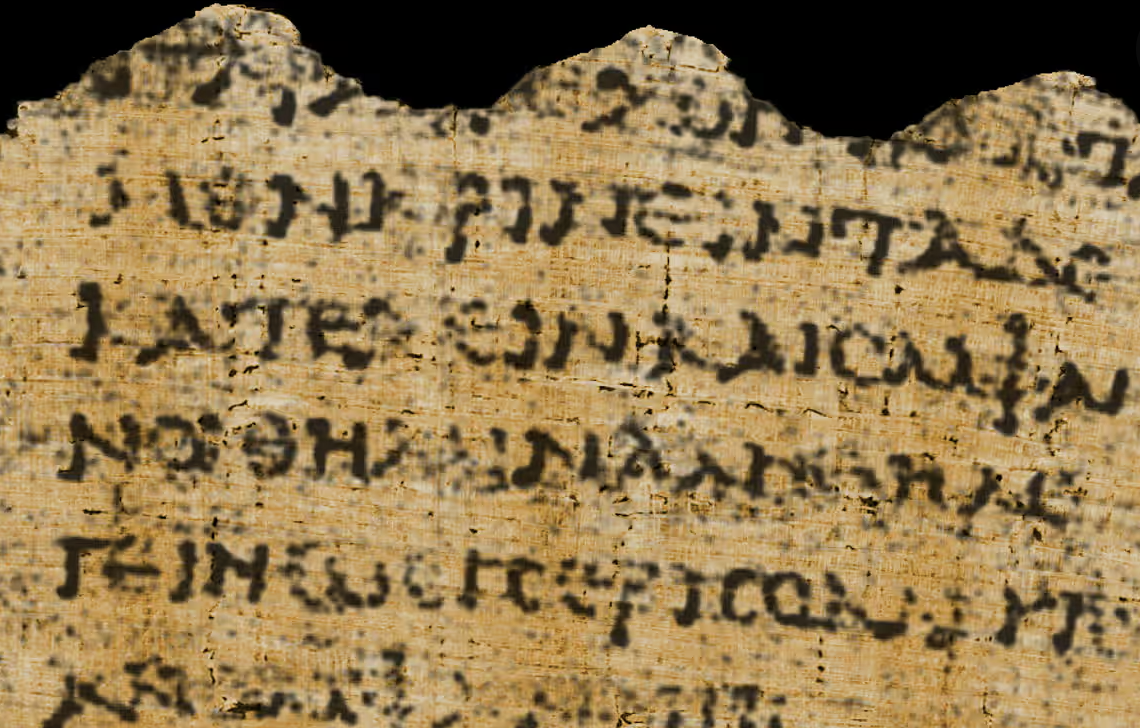
I have since looked further on this subject of North and Maps, particularly finding my answers on this web site: why-is-north-up-on-maps. It tells me that the earliest map the Turin Papyrus, has South at the top. This is probably because the Nile was the fount of all things in Egypt so it is in pride of place at the top of the Map. Other maps tend to have East at the top. The thinking is that the North was cold and who would want to go there?, The West was where the Sun went down, so the Sunrise direction should be at the Top. Often Jerusalem was in the middle with the East at the top. To this day, we talk about orienting ourselves, which means literally means finding your direction eastwards. But the 16th Century things flipped, and North became the top of the map. Was this because the Age of Exploration depended on the North Star? Maybe not because it was used for navigation for a long time before the 16th Century. Was it because of the use of the compass which pointed North? Perhaps not because the compass was first used in the 10th Century. The answer seems to be that Flemish geographer and mapmaker Gerardus Mercator in 1569 put North on top of the map. His projection became the most used map, and everyone started to follow suit.

Mercator projection of the world between 85°S and 85°N. Note the size comparison of Greenland and Africa, and the massive inflation of Antarctica’s landmass. CC BY-SA 3.0

The Magnetic Poles

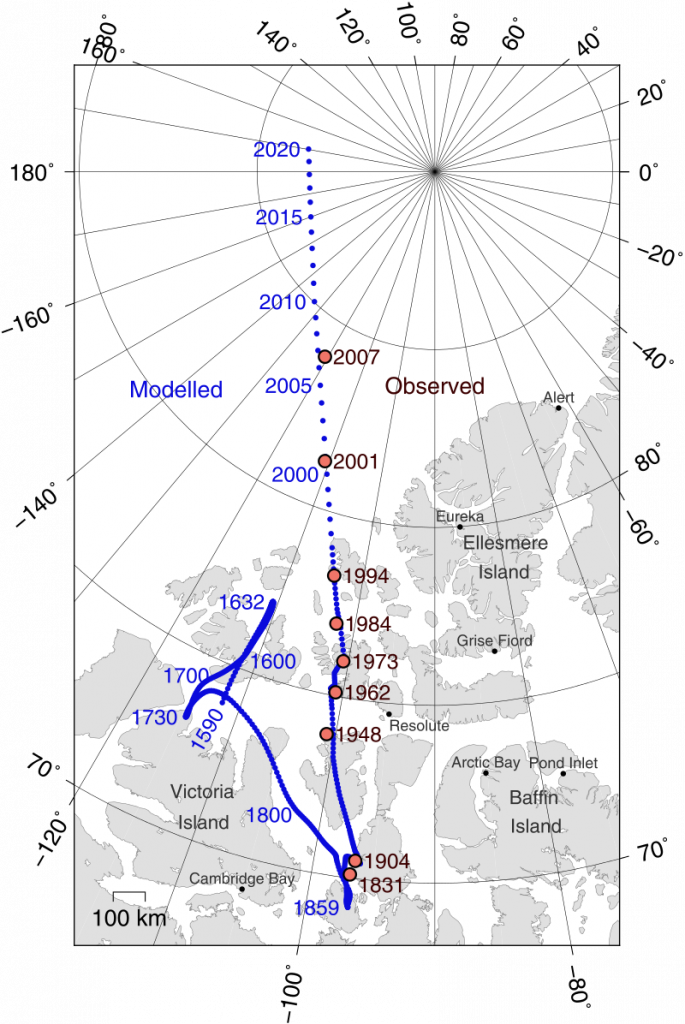
Of course, there is another version of the cardinal points: the magnetic cardinal points. The magnetic North wanders over time. It does not necessarily coincide with geographic north. In recent times they are close enough. But in the past there have been huge variations. Occasionally, the earth has had geomagnetic reversals when the North Pole has pointed in different directions, including south. The last one was 780,000 years ago. On average, they take place very roughly every 500,000 years.

The magnetic pole is caused by the molten iron in the earth’s core and mantle, which creates a dipole. Fluctuations in the dynamo flow of the molten iron cause occasional reverses. The science is very complicated and, even now, not entirely understood. Is it a random consequence of flow dynamics? Or do external events, like sinking continents, or meteor strikes cause the reversal?

Wanderings of the Cardinal Points. Observed pole positions taken from Newitt et al., “Location of the North Magnetic Pole in April 2007“. Earth Planets Space, 61, 703–710, 2009 Modelled pole positions taken from the National Geophysical Data Center. “Wandering of the Geomagnetic Poles” Map created with GMT Wiipedia CC BY 4.0

Since the first use of compasses for navigation in the 11th/12th Centuries, the magnetic pole hasn’t wandered enough to be of concern to navigation. It has wondered a few hundred miles over the last 500 years. Now, it is speeding up, from 9km a year to 52km (since 1970). This Wikipedia page is pretty good at an explanation.

My Job Tracking the Cardinal Points

My first proper job after university was as a technician then research assistant at Oxford University studying these phenomena. I say ‘proper’ because when I left University, I became an itinerant archaeologist. This led me to digs in Switzerland, Northampton, East Anglia and Nottingham. Then, I got the job at the Research Laboratory for Archaeology and the History of Art, at Keble College, Oxford.

I worked for Dr. Mike Barbetti who was an expert on the wanderings of the Magnetic Pole. His interest was firstly in the pure science of the subject. But he was keen to explore the applied uses in Archaeology as well. So, after being appointed as a Research Fellow at Oxford, he set up an epic journey from his native Australia to Oxford. It went via some of the iconic sites of Palaeolithic Archaeology, including Olduvai Gorge, Tanzania. The site of excavations by Mary and Louis Leakey.

To plot the movements of the magnetic north, scientists needed dated samples. Early human sites provided dated sites over a long time span. Also, archaeomagnetism, as the discipline became known, offered the possibility of dating sites. Another application was to determine whether deposits were fired or not. One of the sites Mike sampled was a candidate for the first evidence of fire in human existence.

Cutting up Samples

As I said, Mike’s interest was discovering how the magnetic field of the earth changed over time. And, more importantly, what was the mechanism. He shipped back to Oxford samples of soil cast in Plaster of Paris. My job was to cut the samples up. I cut them up with an electric saw in a shed in the backyard of the Laboratory. Then we measured the direction and intensity of the magnetic field in the samples.

Soil contains particles of iron, and they align randomly. So a sample of soil has a low magnetic intensity and a random direction of magnetic field. But once heated up, the iron particles align to the current direction of the magnetic pole. Its intensity is proportional to the intensity of the Earth’s magnetic field. These measurements provide a method of plotting the changes of the magnetic field over time. And from these data, models can be constructed explaining how the iron in the earth’s core worked as a giant magnet.

Once we had built a reference curve for the movements and intensity of the magnetic pole over time, we hoped to develop another dating method. Other methods such as radio carbon, thermoluminescence, and tree ring dating, were being developed at the Research Laboratory in Oxford at the same time.

My part in Digital Heritage Part 1

Having got the results, I took them to the Oxford University Computer Centre. There, I typed them up onto machine-readable cards. Added a copy on cards of our computer programme written in Fortran, and gave them to the Computing Staff. The program and data were run through the Centre’s mainframe computer. (probably an IBM or ICL computer, the size of a house!) 24 hours later, I received a print-out to proofread.

I located mistakes, ran an editing run of punched cards, essentially instructing the computer: ‘on card two replace 2.5 with 2.6, and run the programme again’. I would pick up the results 24 hours later. It seems extraordinarily primitive now, but then it was an enormous saving of time.

And that, patient reader, was my early contribution to Digital Heritage and pure science. Mike published many articles of which I was joint author of three articles, two in the prestigious Science Journal Nature. And it is annoying that my citations in the groves of academia are still dominated by articles I co-wrote in the late 1970s/80s!

Mike’s work was important in the development of the study of the earth’s magnetic field. However, the use of archaeomagnetism has never risen above strictly limited. Occasionally, in specific circumstances, it can be useful. But those circumstances tend to be times when no other methods have worked. Most often, it is used in attempting to date kilns.

These are the papers:

Barbetti. M and K. Flude, ‘Palaeomagnetic Field Strengths from Sediments baked by Lava flows of the Chaine des Puys, France.’ Nature, Vol. 278 No 5700. 1979

Barbetti. M and K. Flude, ‘Geomagnetic Variation during the Late Pleistocene Period and changes in the radiocarbon time scale.’ Nature, Vol. 279 No 5710. 1979

Barbetti M., Y. Taborin, B. Schmider and K. Flude ‘Archaeomagnetic Results from Late Pleistocene Hearths at Etoilles and Marsangy, France’. Archaeometry 22. 1980

More on my contribution to Digital Heritage in posts to come.

OnThis Day

630 – Emperor Heraclius returns the True Cross, one of the holiest Christian relics, to Jerusalem. (see my post on the True Cross and Roodmas)

1152 – Annulment of the marriage of King Louis VII of France and Queen Eleanor of Aquitaine. She went on to marry Henry II of England which makes this one of the most amazing events of the medieval period. The transfer of lands from French control to English control as a result was huge. She eventually was imprisoned by her new husband for supporting their children’s rebellion.

1556 – Former archbishop of Canterbury Thomas Cranmer executed for heresy in Oxford. He had recanted, but recanted his recantation when he discovered there were still going to burn him. By rights, he should have been reprieved, but Queen Mary was determined to make an example of the man who help Henry VIII and Thomas Cromwell make England a Protestant state. The fire was on Broad Street, and he is said to have thrust his arm that signed the recantation into the fire, calling it ‘that unworthy hand.’

1829 – Duel Day is celebrated at Kings College when the Duke of Wellington fought a duel against George Finch-Hatton, 10th Earl of Winchilsea, because of disagreement about Roman Catholic Emancipation. The duel took place in an asparagus fields which would later become Battersea Fields. Wellington shot first and either missed or deliberately shot wide, and Winchilsea aimed high. He then apologised to Wellington. For more details see www.kcl.ac.uk/duel-day.

First written March 2023, revised 21st March 2024, Revised and Mercator added 2026

The Spring Equinox March 20th

Video by Heike Herbert of Druids at the Spring Equinox at Tower Hill, London

New content will be found at the bottom in the ‘On This Day section.’ So, Spring has sprung, not only meteorologically speaking but also astronomically. We are 20 days into the meteorological Spring which started on 1 March (see my post here.) Today, we are starting the astronomical or solar Spring.

The 20th of March is the Spring Equinox, or Vernal Equinox, midway between the Winter Solstice and the Summer Solstice. The sun has been rising further north each day since December 21st. Today it rises due East, and sets due West. The day and night are roughly equal in length (although by no means exactly). At 14:45 today, the Sun is directly overhead at the Equator.

The term vernal comes from the Latin for Spring, and today is the Primavera, the first day of Spring. The Anglo-Saxons originally used the word lencthen (Lent) for Spring. But later adopted the idea of the ‘springing’ of the year when the plants bud. In Middle English, the word Spring is also used for sunrise, the waxing of the moon and the rising tides. These are called spring tides. But also for the sprouting of the beard and the first appearance of pubic hair! Happy Spring Time!

Printemps

Up to the 15th Century, the English also used the French term ‘prime-temps’ in the sense of ‘first times’. This follows the idea that the year is young, while Winter represents old age. As we shall see, on March 25th, there was also a belief that the world was created in Spring at the Equinox. Jesus was also conceived at this point of the annual cycle. (see my post /march-25th-the-beginning-of-the-universe-as-we-know-it-birthday-of-adam-lilith-eve-conception-of-jesus-start-of-the-year)

Zodiacally, if that is a word, Spring is Aries (brave and impulsive); Taurus (sensual and stubborn), and Gemini (dynamic and talented).

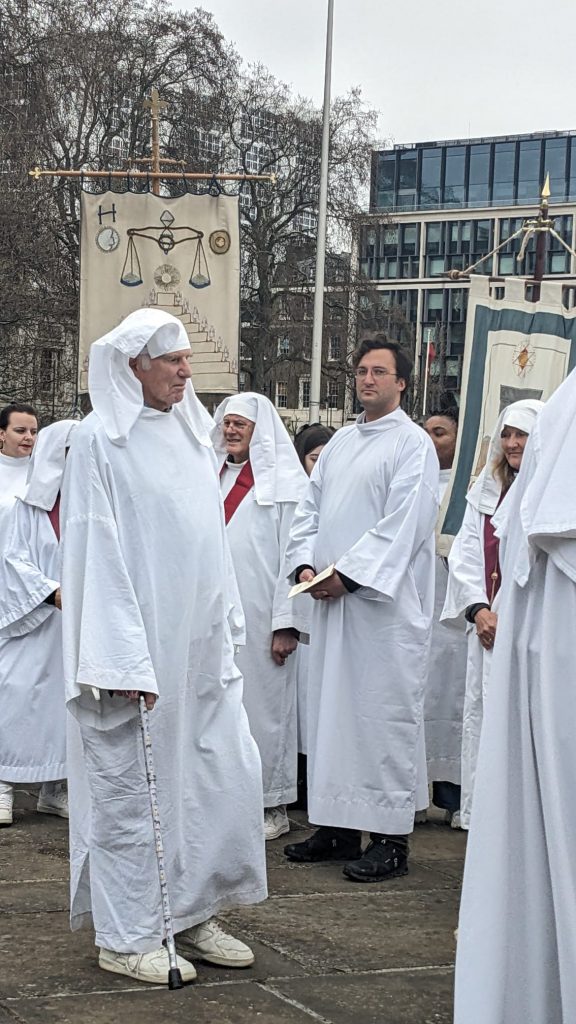
Druids at Tower Hill

Druids at the Spring Equinox Tower Hill London, Photo by Heike Herbert

The Druids have a ceremony at Tower Hill every year on the Spring Equinox. When I last attended I remember the druid costumes were often made with nylon sheets, and their footware was mostly tennis shoes. I see from the photos the nylon has at least been replaced with cotton, and the plimsolls with trainers. Not quite sure what that pair of black trainers are doing in the picture!

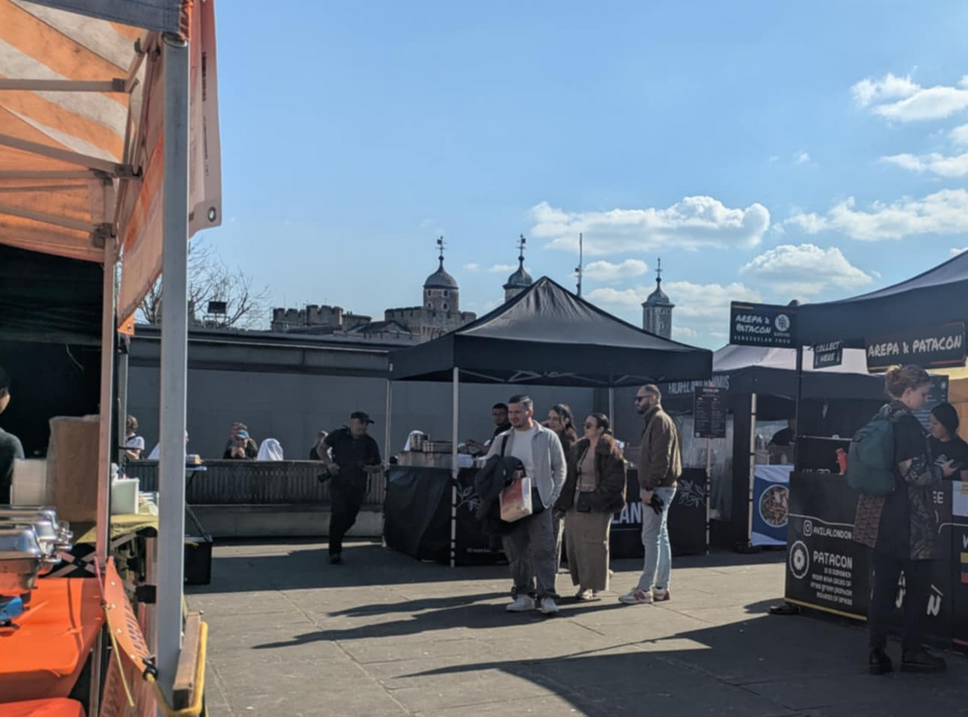
As my photos are getting long in the teeth, I have used photos by Heike Herbert. She attends most years. The ones above from 3 years ago. In 2025, she reported that the atmosphere has been affected by a street food market,. This restricted the space for the Druid Circle. The food stalls are there every Thursday, so it only impacts the Druid assembly once every 7 years! In 2026 the Druids meet at Tower Hill at 12 noon.

Tower Hill, Spring Equinox, 2025 and street food, Photo by Heike Herbert

Modern Druids

I say modern druids because there is no convincing evidence that the modern fellowships of Druids can trace their origins back to prehistory. Druidry was reinvented in the 18th Century — for example, the Ancient Order of Druids was formed in 1781. They were set up as societies in the tradition of the Freemasons. They held to belief in the fundamental importance of nature. However, one group, the British Circle of the Universal Bond, claim descent from a group persecuted by the Bishop of Oxford in 1166. Look at their website for more details and for an idea of their beliefs.

Prehistoric Spring Equinox

When did the Equinox first had importance for human society? The answer is, probably, at least as long as we have been reasoning creatures. On January 14th, I draw attention to a recent discovery by an amateur ‘citizen scientist’. He suggested there was evidence in Cave Painting for the use of a Palaeolithic Calendar. Follow this link to see the post.

Stonehenge and the Sun

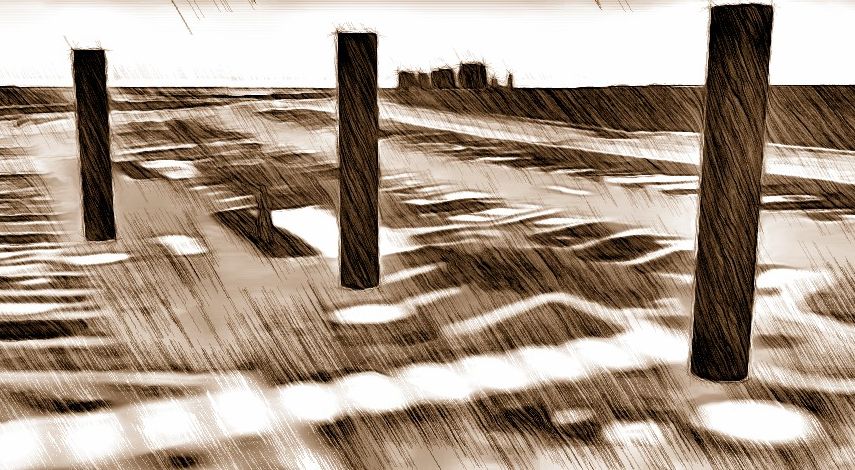
At Stonehenge, in the old Car Park, they found three huge Pine post-holes in a line. Dating evidence shows they were erected in the Mesolithic period, thousand of years before Stonehenge. They align to the direction of the Mid-Summer Sunrise and Mid-Winter Sunset (NNE/SSW). If, and it’s a big if, you were sighting from Stonehenge itself, which was built some 5000 years in the future.

Imaginary reconstruction of the Carpark Postholes

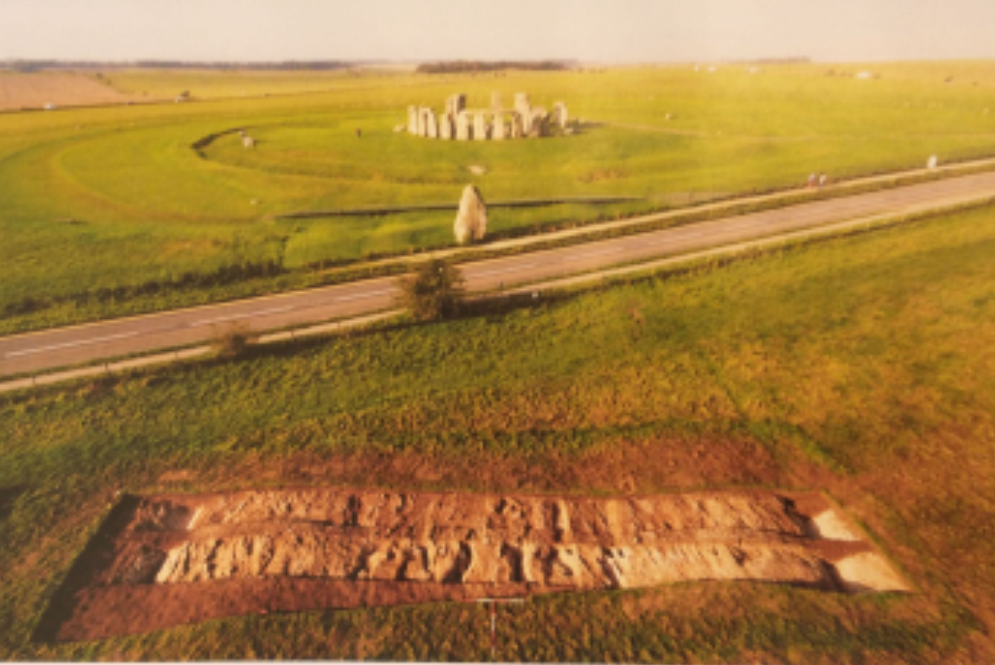
It is a bit of a stretch using two pieces of evidence so far apart in time. But recent excavations have revealed that there are natural periglacial striations in the soft chalk bedrock at Stonehenge. These lines point to the Solstices. They not only predate Stonehenge but also the three post holes. The striations may well have been visible from the time they were created when the glaciers melted.

Around 12,000 years ago (date from my memory so approximate), the climate changed and the glaciers melted. This left a lot of water rushing around the landscape. At Stonehenge, it gouged out striations in the chalk. By chance, or as ordered by the Gods/Goddesses/Divine Nature, the striations pointed to the Solstice Axis. Richard Jacques excavations in the Stonehenge area revealed that the aurochs came to the Stonehenge area for grazing and water. Aurochs are huge wild cows with enough meat on them to feed 200 people. So, the solar axis is near a place where the Gods/Goddesses/Divine Nature provided super-abundance in the guise of herds of Aurochs.

Foreground shows the periglacial striations aligned on the Solstice. Source Current Archaeology?

Burial Mounds aligned to the Equinox

That the major movements of the Sun were of interest to Neolithic and Bronze Age society is confirmed by the alignment of many megalithic monuments dating from 3,600 BC onwards, including, of course, Stonehenge. All around the UK are long barrows and other burial mounds, many of which are indeed sited/sited E-W to the Equinoxes. Many are fairly approximate. But at Loughcrew, County Meath in Ireland the Vernal Equinox shines right into the burial chamber. The sun’s light shines onto a stone marked by stone carvings. Similar alignments exist at Knowth and Dowth in the Boyne Valley. More about Loughcrew in my post here)

Harmony & the Spring Equinox.

The Equinox also has another role, which is to be the anchor of the cardinal points. The world is orientated to North, South, East, West. The Equinox is a time when there is a harmony, a balance in the universe. Therefore, it is a fortunate, a lucky time, a time to fall in love or undertake notable undertakings. But, in the Christian world marriage traditionally had to wait a little longer, until after the commemoration of the death of the Messiah,

On This Day

Today, is The International Day of Happiness. This was set up by the UN on 28 June 2012. This year’s theme:

explores the relationship between social media and happiness, highlighting the potential challenges for our wellbeing as well as ways we can all use tech for good.

Go to the web site for more information. But these are the three steps they suggest: (I’ve cut and pasted them from the site)

Step 1: Choose

Be mindful of if, when and how much you are on social media.

  • Pause and ask yourself, “What do I really want to do right now?” Keep a list of analogue activities you can do instead, like playing music, drawing, gardening or going outside for a walk.
  • Set a timer so scrolling is a short snack rather than a wormhole.
  • Give your mind space to think, keep the bedroom phone free, try a ‘digital sabbath’.

Step 2: Connect

Don’t let scrolling be a substitute for real connection.

  • Phone a friend for a chat, or send some voice notes, instead of scrolling.
  • Make plans offline, get excited about your next adventure with loved ones.
  • Use social media to connect with supportive friends and communities that are meaningful to you.

Step 3: Curate

Personalise your experience to support your wellbeing.

  • Follow plenty of positive accounts – bloom scroll, don’t doom scroll.
  • Share and amplify uplifting stories, messages and ideas, be aware of misinformation.
  • Be kind in the comments, it matters more than you think.

If you have found this useful, spread the word and encourage others to do the same. Use the hashtag #InternationalDayOfHappiness.

The World Happiness Report

This is published annually by the Wellbeing Research Centre at the University of Oxford. More details here. Finland is top for the 9th year in a row. US is 23rd, UK is 29th. These are the top 25 happy countries:

  1. Finland
  2. Iceland
  3. Denmark
  4. Costa Rica
  5. Sweden
  6. Norway
  7. Netherlands
  8. Israel
  9. Luxembourg
  10. Switzerland
  11. New Zealand
  12. Mexico
  13. Ireland
  14. Belgium
  15. Australia
  16. Kosovo
  17. Germany
  18. Slovenia
  19. Austria
  20. Czechia
  21. United Arab Emirates
  22. Saudi Arabia
  23. United States
  24. Poland
  25. Canada

I’m going out for a walk, to phone a friend and to move my narrow boat as it’s a beautiful sunny day. Winter Solstice in Helsinki? Happy Days!

First Written in March 2023, and revised in March 2024, 2025, OnThis Day added in 2026

St. Patrick’s Day, St Albans, Nicholas Fuentes, & Cats March 17th

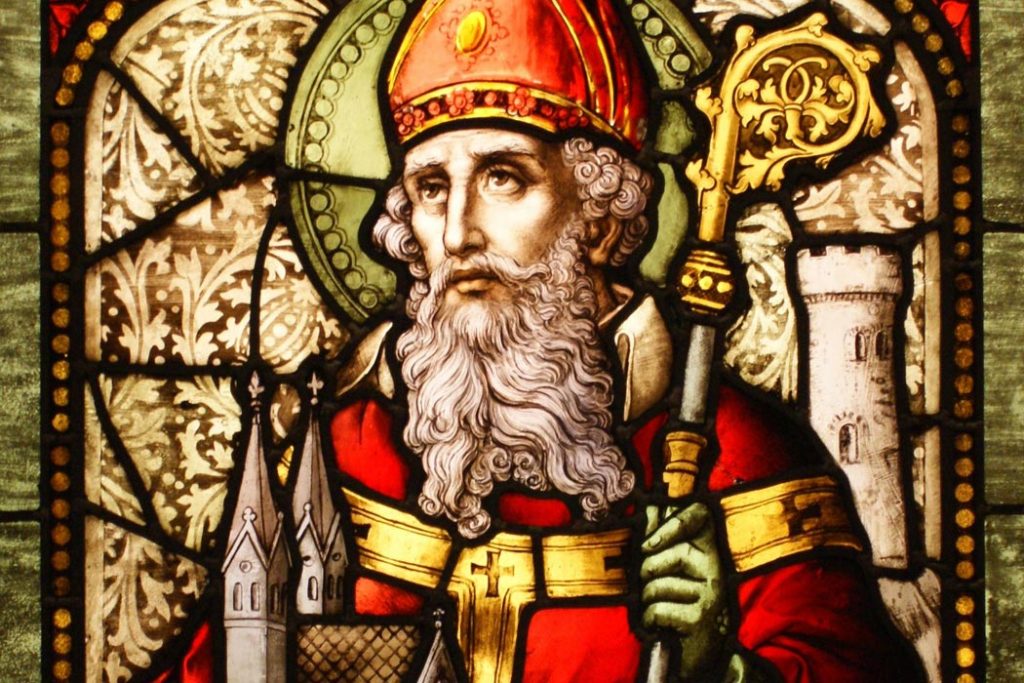
Stained Glass window depicting St Patrick with a  crock and a castle
Stained Glass window depicting St Patrick (source of image, lost in the mists of time!)

St Patrick

St. Patrick has a very interesting autobiography (Confession), because it is one of the only personal reminisces of life in post-Roman Britain. He wrote in the form of a letter. In it, he explains that he was captured by Irish pirates while living in a Romano-British Town.  His father we discover was a Decurion and a Deacon which suggests elements of Roman political organisation continued.  No one knows the dates of St Patrick’s life, but he lived in the 5th Century. The use of Roman titles suggests, to some, an earlier rather than a later date.   Perhaps in the early 400s. Unless, of course, you want to propose that Roman life continued later into the 5th Century than the first few decades. (which, increasingly, people are proposing.)

The town he lived in was called Bannavem Taburniae.  Many places have been proposed for it.  The closest linguistically is Bannaventa in Northamptonshire, but this seems a very unlikely place for Irish raiders to land, being about as far away from the sea as it is possible to get in Britain!

Nicholas Fuentes

Scholars have suggested South Wales and the Scottish borders most commonly.  But my favourite suggestion, but about as unlikely as Northampton, is Battersea in London.  This suggestion was made in the pages of the London Archaeologist by then editor Nicolas Fuentes. 

Fuentes was one of a pioneering group of archaeologists when Rescue Archaeology first began a campaign to record the archaeology being destroyed by massive redevelopment of town centres in the 1970s.

He changed his name from the anglicised Nicholas Farrant back to its original Fuentes. He then wrote a magnificent series of papers, in London Archaeologist, which located St. Patrick in Battersea; St Alban’s execution in London and all 12 battles of King Arthur around Greater London.

St Albans Martyrdom in London

All were well argued, but as a set they do raise an eyebrow, being unsupported by any clear evidence. And, as far as I know, without much scholarly support.  The one I really like is locating St Alban’s Martyrdom in London rather than in St Albans. It reminds everyone that the first reference to St Alban, which is by Gildas in the 6th Century, places the execution of the Saint firmly in London. It also makes sense of the story that Alban, keen for martyrdom, gets God to part the River so he can go quickly to the execution spot. The bridge it was said was full of people going to see the execution.

In Gildas’s case, the execution is in London, probably at the Amphitheatre, up a hill from the the mighty Thames. So God parted the Thames for Alban. Anglo-Saxon historian, the Venerable Bede places St Alban’s death firmly in St Albans, but the river that God needs to part there- the River Ver, is a piddle. Alban could have crossed it easily, hardly requiring even Wellington boots! Not much of a miracle compared with parting the Thames. The likely site of execution in both cases would have been the Amphitheatre, rather than the side of the hill where the St Albans execution site is located. But Gildas did mention the hill, which makes sense in the case of London and not in St Albans, as it is outside of the Roman City. away from the amphitheatre.

To my, unscholarly mind, when we worship people we tend to venerate them, at their birthplace and death place. So to me, it makes sense that St Alban’s main shrine was at Verulamium where he was born (now known as St Albans) and London where he died.

St Germanus

There is some supporting evidence from the hagiography of St Germanus of Auxerre. This tells us that Germanus came to an amphitheatre for a religious debate about 15 years after the end of the Roman occupation of Britain. After the debate, he went to a nearby shrine dedicated to St Alban. Unfortunately, the writer of the memoir is not really interested in post-Roman Britain, so does not tell us whether it was in London or St Albans. But there is an early church dedicated to St Alban just by the Roman Amphitheatre in London. For more on St Germanus follow this link to my post.

However, archaeology does not reveal any evidence early enough to support the idea that the Church is that early. Fuentes, argued that London as the Capital was likely to have been the place where capital punishments were carried out, particularly in the case of a Roman Citizen like Alban. I must note that in placing any credibility to Fuentes theory, I am standing largely alone.

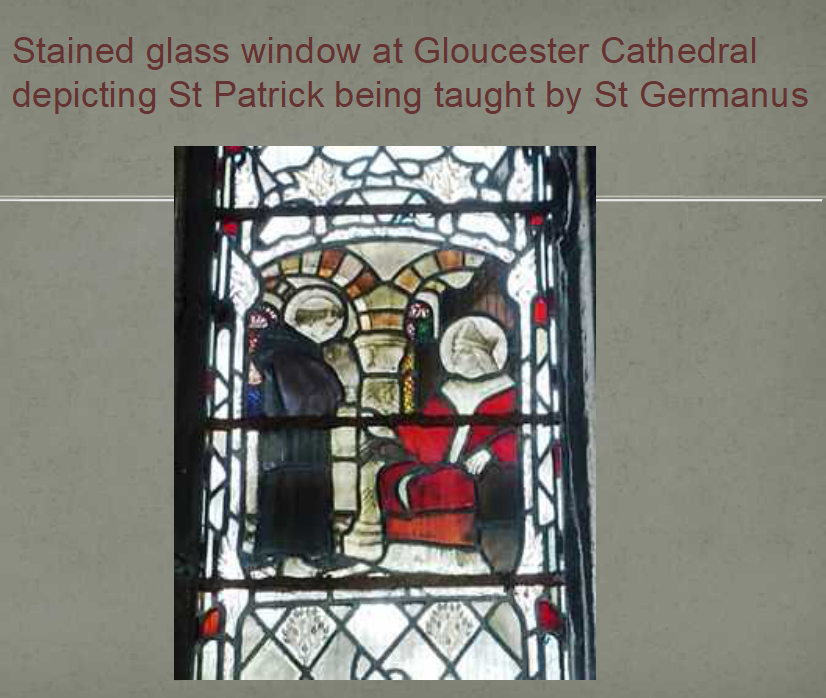
stained glass window from Gloucester Cathedral of St Patrick being taught by St Germanus
Stained glass window of St Patrick and St Germanus

The Twelve London Battles of King Arthur

I’m not so convinced by the 12 Battles of King Arthur were fought in the London Area. They are more likely to have been spread throughout Britannia. But the place name evidence is never going to be identify most of the locations.

St Patrick From Battersea?

So, to the point – St Patrick in Battersea?  The evidence, as I remember it, is really only place name evidence. the suggestion that Battersea was derived from: Badrices īeg, ‘Badric’s Island’ and later Old English: Patrisey (Wikipedia), So, Patrick’s Island.  The word ‘sea’ is used in that sense along the River Thames. For example in Chelsea, Thorney, Putney derived from ey which is short for eyot (island). Also spelt ait.’

St Patrick lived as a teenage slave for 6 years, then escaped from captivity in Ireland and returned home. Trained as a priest, in perhaps Auxerre (home to St. Germanus who is another crucial witness to post Roman Britain. (See my post here.) and returned to Ireland to begin the conversion to Christianity. He is the Patron Saint of Ireland, with St. Brigitte and St. Colomba.

St Patrick from Banwell?

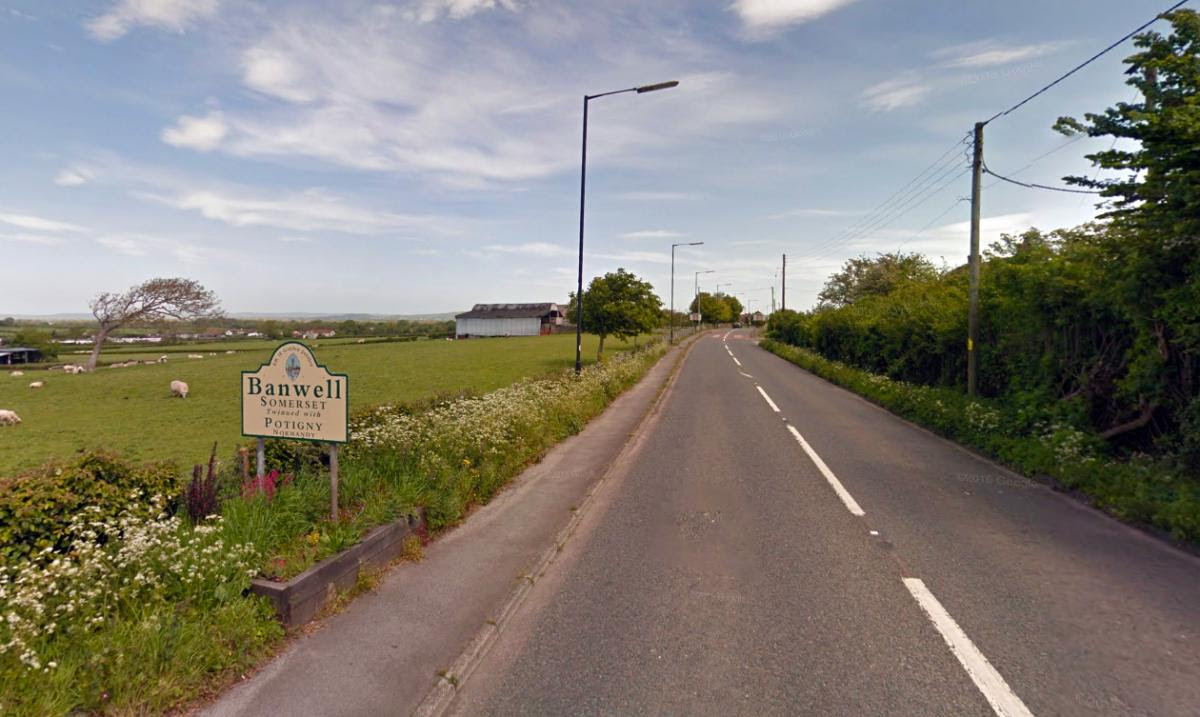
Another candidate for Bannavem Taburniae’ comes from Andrew Breeze FSA. I read about this in Salon IFA, the newsletter of the Society of Antiquaries. Also you can read more about it in this History First article. Breeze has revived a theory that the Saint comes from the West Country, and that the ‘Bannavem Taburniae’ is Banwell, near Weston-super-Mare in North Somerset. He suggests that ‘Bannaventa was a Latinisation of a Brittonic name that included banna, for a bend’, crook or peak. Venta is a well known word for an area of local administration or marketplace. For example, Venta Bulgarum, was the name for Winchester in the Roman period.) . He suggests that these ‘elements, as well as the Berniae element of ‘Taburniae’, can be found in the name Banwell, itself a compound name of the Brittonic ‘Banna’ and the Old English wylle, both meaning pool, or in the names of surrounding villages.’ I’m sure Fuentes did something similar for Battersea.

mage credit: Looking south from Winthill, near Banwell, Somerset, Colin S Pearson; Banwell in Somerset, Google Street View
Image credit: Looking south from Winthill, near Banwell, Somerset, Colin S Pearson; Banwell in Somerset, Google Street View

What Banwell has over the London theory is that it is more likely to have been subject to Irish Raiders than London. But, for me, it is just another theory based on placename evidence that might or might not be true. I have read any number of Archaeology books where arguments about placenames are deployed to add some solidity to some theory about King Arthur, or a tale from Geoffrey of Monmouth. I therefore distrust them all. They essentially create circular arguments.

St Gertrude’s Day

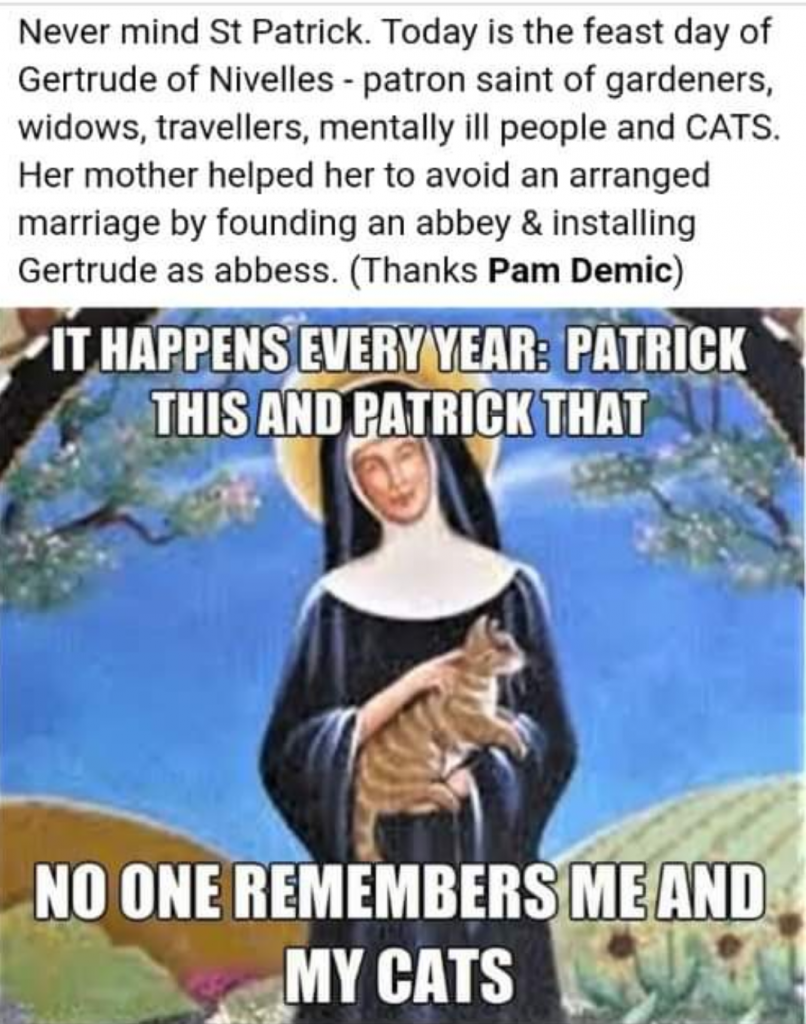
And least we forget, today is also St Gertrude’s Day, patron saint of Cats.

comical post from facebook of St Gertrude Patron saint of cats
Facebook post, posted by a friend, and about St Gertude patron saint of cats.

On This Day

45 BC – Julius Caesar consolidated his power by defeating his main rival Pompey the Younger, and allies, at the the Battle of Munda. He went on to establish his Dictatorship, which led to his assassination on March 15th (see my post on the Ides of March)

1845 – The Rubber Band patented by Stephen Perry of St Johns Wood, London, for Messers Perry and Co,. Rubber Manufacturers of London.

Specification of the Patent granted to Stephen Perry, of Woodland’s-place, St. John’s-wood, in the County of Middlesex, Gentleman, and Thomas Barnabas Daft, of Birmingham, Manufacturer, for Improvements in Springs to be applied to Girths, Belts, and Bandages, and Improvements in the Manufacture of Elastic Bands. —Sealed March 17, 1845.

1861 – The Kingdom of Italy proclaimed with Victor Emmanuel as King. The unification of Italy was the culmination of the Risorgimento, led by Garibaldi, Cavour, Mazzini and Victor Emmanuel. It survived until 18 June 1946 when Italy became a Republic.

1951 – First Appearance of Dennis the Menace in the boy’s Comic the Beano. Published in Dundee, by DC Thomson. I read the Beano as a boy, along with the Robin, the Eagle, Topper, the Dandy, The Hotspur, and Whizzer and Chips. What made Dennis great was that he was a bad boy and didn’t get any better. Always at war with the ‘Softies’ – basically well-educated boys. And made us laugh with his antics. For more comic nostalgia read: nostalgiacentral.com/pop-culture/books-comics/british-comics-of-the-50s-60s-and-70s/

Dennis the Menace By DC Thomson – The Beano 3671, Fair use, https://en.wikipedia.org/w/index.php?curid=38472209

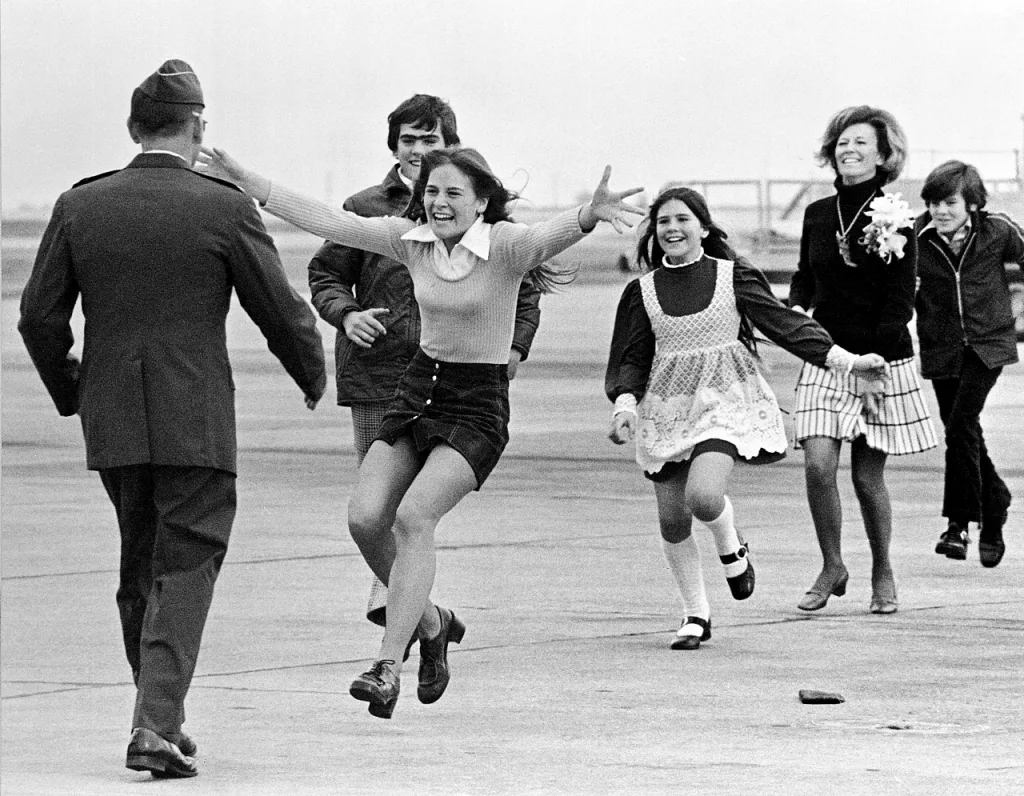
1973 – The Pulitzer Prize–winning photograph Burst of Joy is taken and symbolised the end of the US involvement in the Vietnam War

‘Burst of Joy’ By Slava “Sal” Veder”, Associated Press – https://www.columbiatribune.com/picture-gallery/news/2020/03/17/today-in-history-march-17/67299331007/, Public Domain, https://commons.wikimedia.org/w/index.php?curid=153972466

First Published in 2024, republished in 2025, On This Day augmented 2026

International Women’s Day March 8th

The Soviet Union 1949 CPA 1368 stamp (International Women’s Day, March 8. (Wikipedia)

Today, is International Women’s Day. It began, as an idea within Socialist organisations in 1909/1910. Following the February Revolution in Russia and women gaining the vote, March 8th was chosen as the day to celebrate. The wider feminist movement adopted it in the 1960s followed by the UN in 1977. Since when, it has been a day to celebrate women’s achievements and campaigns worldwide.

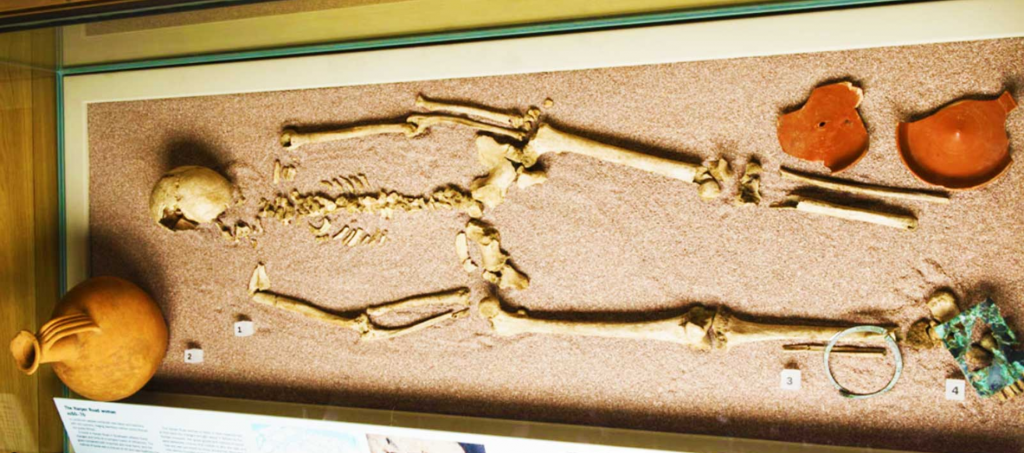
Harper’s Road burial

The Harper Road Burial Southwark a photo of a skeleton in a museum case with grave goods.
The Harper Road Burial Southwark (museum of London web site)

Another important historic female was found in an excavations at the Harper’s Road. . I was reminded about it by reading Dominic Perring’s new book ‘London in the Roman World.’ He uses it to establish that Southwark was a place where people lived both before and after the Roman Conquest in 43AD. The burial was found in the 1970s’ and dated to 50 – 70 AD (Roman Invasion of Britain was in 43 AD). Recent scientific analysis has shown that the burial was of a woman (21 – 38 years of age). She had brown eyes and black hair and was brought up in Britain. Her grave goods indicate she was wealthy. She had both imported Roman pottery but also typically British Iron Age objects. The combination shows some adaption between her native culture and the new Roman ways.

Her British objects included a bronze necklace (a torc possibly of Catevalaunian or Trinovantian origin) and a mirror. Dr Rebecca Redfern & Michael Marshall on the Museum of London’s website make a case for her being a:

‘Powerful women in late Iron Age London’.

Mirrors of Power?

They make a case for the mirror being

‘used by women for divination and magic, and were a source of knowledge that only women could command. Being able to use and read the mirror meant that the woman was highly regarded by her community.’

To read about her story follow this link:

Iron age burials are often found either with a sword or a mirror and the thinking is that the mirror reflects an equivalent status to a sword. I think we can say that the finds do reflect someone of standing, but as to the use of the mirror that must be speculation. Divination using a mirror is called ‘scrying’ and the British Museum has John Dee’s scrying apparatus from the 16th Century. You can buy scrying mirrors on etsy. https://www.etsy.com/uk/market/scrying_mirror. But to make a case that Mirrors were not just utilitarian and prestige objects but also in use for supernatural/religious purposes is surely just speculation?

Melanie Giles & Jody Joy in ‘Mirrors in the British Iron Age: performance, revelation and power published in 2007 (and available to read here) concludes:

‘Iron Age mirrors, whether made of iron or bronze were beautiful,  powerful, and potentially terrifying or dangerous objects. They were used in the  preparation and presentation of the body and prestigious displays, but may also have been associated with powers of augury and insight into the past, or access to ancestral or spiritual worlds.’

Women in the Age of Iron

The evidence we have for iron communities is for a powerful role for women in contrast to the Romans. The Romans dismissed women when they wrote that Boudicca was ‘uncommonly intelligent for a women’. In fact, she nearly forced the Romans to abandon their conquest of Britain. We also know that Queen Cartimandua of the Brigantes had executive power in the North of Britain. The Britons also worshipped the three Mother Goddesses, which focussed on the value of woman as maidens, mothers, and grand-mothers.

For more about Roman Southwark read my post of Roman Mosaic is biggest found in London for 50 years.

A book to order for International Women’s Day is ‘Patriarchs’ in which Angela Saini investigates when the Patriarchy took over. I heard her talk about it and it seems an excellent introduction.

https://www.theguardian.com/books/2023/mar/08/the-patriarchs-by-angela-saini-review-the-roots-of-male-domination

On This Day

1702 – Queen Anne ascends the throne on the occasion of her brother-in-law William III falling off his horse and dying.

First Published in 2023, and revised in 2025, Dorothy Thurtle added March 11th 2026

The Feast Day of St Winnold March 3rd

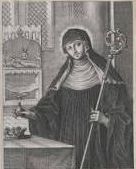
Portrait of Saint Guénolé (St Winnold) after a bust in silver on a reliquary from the Church Saint-Guénolé in Locquénolé.Public Domain Abgrall Jean-Marie (1846-1926) – Bibliothèque nationale de France

Here is a weather poem in which St Winnold appears

First comes David, then comes Chad.
And comes Winnold, roaring like mad.
White or black.
Or old house thack.

St David’s Day was March 1st. St Chad, the 2nd. St Winnold’s Day is the third of March. Winnold is his English name, and Winneral, or Winwaloe or Guénolé his Celtic names.

The poem suggests that snow, rain or wind is going to come on these three days. When the wind roars, it will threaten the thatch of houses. If the storms do not come in the first 3 days, then they will come on the last three days of March, which were called ‘the Borrowing Days’. Or so it is said.

St Winnold was around 50 years (460 – 3 March 532) after the end of Roman Britain. His family was from Cornwall. He was the son of a Prince Fragan of Dumnonia, and St Gwen the Three-Breasted, His mother’s Feast day is October 3rd. She is a Saint of fertility, because of God’s Gift of an extra breast. They moved to Brittany to escape a British Plague. Their son grew up to be holy and was the founder and first abbot of Landévennec Abbey (the Monastery of Winwaloe). It is south of Brest.

Winwaloe became what is known as a ‘phallic saint’ because he was associated with fertility. Wikipedia says this came about because of confusion about the origin of his name:

his name was thought to derive from gignere (French engendrer, “to beget”)’

St Winnold’s Breton name is Guénolé. How this etymology works is not clear to me! But surely, he as likely to have got a reputation for helping people with fertility problems from his mother? Supplicants would make a wax phallus to persuade the Saint to help them conceive. There are several churches/ chapels dedicated to him in Wales, and a Priory in East Anglia.

You might like to read my post about St Blaise Day & The Tadpole Revels February 3rd, or on St Chad.

On This Day

March 3rd 1847 Alexander Graham Bell was born. He was born in Edinburgh, and lived Scotland, in London, Canada and the US.

First written August 2024, republished MArch 2026

St. Walburga and St. Ethelbert of Kent’s Day February 25th

engraving of St Walburga
St. Walburga
(public domain)

Today is the Feast day of two significant Saints, St. Walpurga and St. Ethelbert.

St. Walpurga

St. Walpurga was a nun at Wimborne in Dorset.  She, and her brothers St Willibald and St Winebald, accompanied their uncle, St Boniface of Crediton (in Devon) on his mission to convert the Germans to Christianity. They all became leading figures in the new German Church. Willibald set up the Monastery at Heidenheim, which was a duel monastery housing both Monks and Nuns. His sister, St Walpurga, became Abbess of the Monastery in 761. She died on 25 February 777 or 779 (the records are unclear),

In 870, St. Walpurga remains were ‘translated’ to Eichstätt, which St Willibald had set up as the Diocesan centre of this part of Bavaria. The date of the transfer was the night of April 30th/May 1st. This was her feast day. But the Church moved it to February 25th, to commemorate her death. However, May Eve is now ‘notorious’ as Walpurgis Night. This is the night of May Eve when witches are abroad up to all sorts of mischief, May Day being one of the main pagan festival days. Her body was placed in a rock-cut niche and her bones started exuding an oil called Walpurgis Oil which was said to have medical properties. She was also involved in a miracle of a boat saved in a storm-tossed sea.

For these reasons, Walpurgis is the Saint for battling pests, rabies, whooping cough, storms and sailors. She is also associated with witchcraft but not because of any actual association with it. Her remains were moved again in 1035 when she was enshrined at the Benedictine Abbey of St. Walburga which was named after her.

Walpurgis Nacht

Terrible things happen on Walpurgis Night in Dracula by Bram Stoker. So, the night has now become a trope for Heavy Metal Bands, doyens of horror stories and the Satanic. For more on this read my piece on Walpurgis Nacht.

Coincidently, I was reading about the fuss made about a Heavy Metal Band, called a Plague of Angels, playing in the glorious York Minster. A member of the band tried to calm down the controversy, saying people should just chill out. But other group members used to be in a band called ‘The Cradle of Filth’. Among their claims for Heavy Metal Fame is that they wore the most controversial t-shirt in heavy metal history. This has a visual of a nun in a compromising position and a slogan saying ‘Jesus is a ……..’ (add your favourite swear word here). All very silly. But it struck a cord with me, as I have a scene in my novel (unpublished) which is based on extreme forms of Heavy Metal Bands. I thought I might have gone over the top, but this story reassures me that extreme Metal can be extremely offensive!

To read more read the Guardian page. To publish my novel, email me!

St. Ethelbert.

Ethelbert is responsible for welcoming the Augustinian Mission to the Angles sent by the Pope, St Gregory. This re-established Christianity in Eastern Britain, and set up the Anglican Church or the Church of England as it became known.

I tell this story in this post.

On This Day

1308 – Edward II crowned King of England. His reign ended disastrously, with his Queen having an affair with Lord Mortimer and Edward losing control of the country (and Scotland). He was forced to abdicate, and died/was murdered/killed with red-hot pokers/or escaped to live a life as a hermit on the continent. Choose your favourite or read my History of the Kings and Queens of Britain.

1507 – Queen Elizabeth I excommunicated by Pope Pius and declared usurper of the throne, leading to the Spanish Armada and various plots against her life. (my post on Queen Elizabeth’s nicknames is here)

1836 – The Colt Revolver awarded a United States patent. Previously, he had obtained a UK Patent. It created the classic ‘Western’ Revolver’, much later called the Colt 45. It was a revolving-breech loading, folding trigger hand gun.

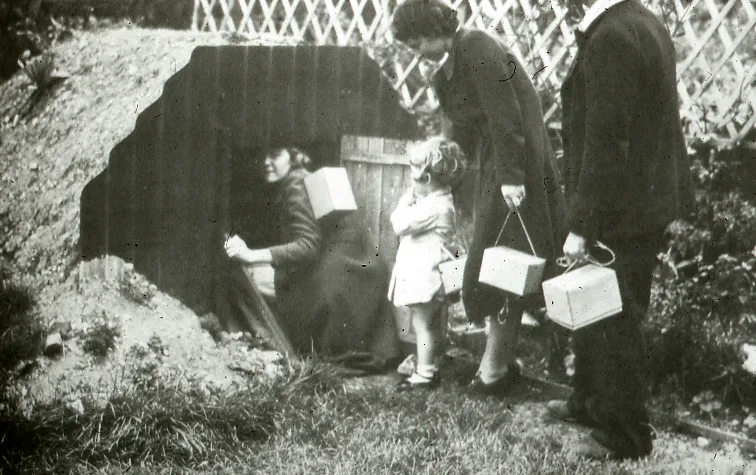
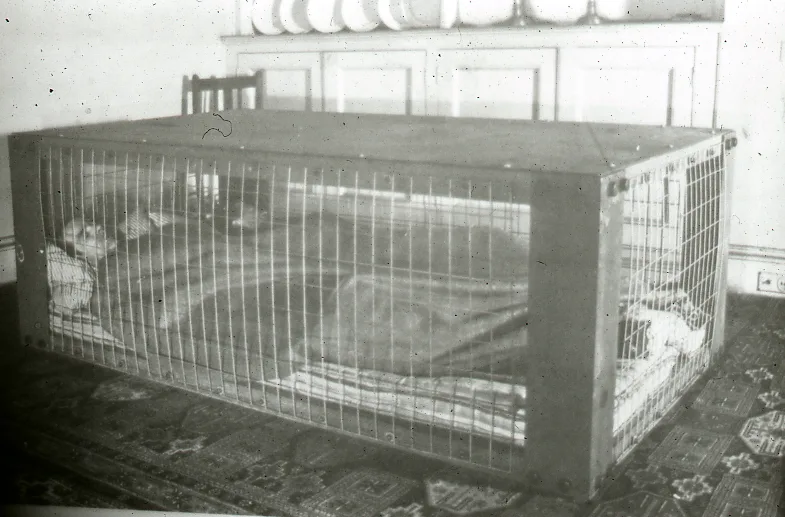
1939 – The first Anderson shelter built in a garden in Islington, London. They were named after the Home Secretary, and were dug in a trench with soil piled over the corrugated iron domed roof. Inside were bunks for the occupants to sleep in. They were 6 ft high, 4.5 ft wide, and 6.5 ft long. 2.5 million were built. The next shelter was the Morrison Shelter named after Herbert Morrison, who succeeded Anderson as Home Secretary. The Morrison Shelter was like a massive table that would protect the shelterers if the house collapsed above it. It allowed the family to sleep inside. London also had public shelters made of brick in many streets, or used cellars and brick arches as shelters. A small proportion of the population preferred to sleep in the Underground. Many stayed in their beds, unless planes were directly overhead. Photos from ‘The British People at War’ published during the war.

1956 – Nikita Khrushchev denounces Stalin.

First Written February 2024, revised February 2025. On This Day added in 2026

The Sun Enters the House of Pisces February 20th

Attributes of Pisceans selfless, mystical compassionate imaginative sensitive

pisces from the zodiac from kalendar of shepherds
Pisces from Kalendar of Shepherds

A man born in Pisces shall be a great goer, a fornicator, a mocker and covetous: he will say one thing and do another. He shall trust is his sapience, he shall have good fortune: He will be a defender of widows and orphans. He shall be fearful on water: he shall soon pass all adversities and live 72 years after nature.

The woman shall be delicious, familiar in jests, pleasant of courage, fervent, a great drinker. She shall have sickness of her eyes and be sorrowful by shame, needlessly. Her husband will leave her and she shall have much trouble with strangers. She shall travel much, have pain in his stomach and live seventy-seven years.

Both man and woman shall live faithfully.

Kalendar of Shepherds, 1604 (from the Perpetual Almanac by Charles Kightly)

What surprises me about the fortune-telling above is that it has to be nearly always wrong as the predictions are way too specific. The art of the fortune-telling is about being vague, with subtle predictions that can be interpreted in different ways.

Here is Old Moore’s Prediction for Pisceans this week:

Innovation and originality flow freely as your unique perspective solves problems that stump others. Social consciousness drives you toward meaningful causes or community involvement. While your independent streak is strong, collaboration with like-minded individuals amplifies your impact. An unexpected insight arrives through friendship.

oldmooresalmanac-com-pisces-horoscope

Now, the Old Moore’s 2023 Almanac had a page on Liz Truss of all people, written before she became Prime Minister. It is clear they thought she had a real chance of being PM. They say she has ‘an almost steely determination and plenty of apparent ambition. …. She has every astrological requirement necessary to keep her nose clean and at this moment in time is certainly among the main contenders.‘. So yes, they are right about her being among the main contenders, but absolutely no hint of the epic disaster that her PMship was.

London Stone as a Palladium

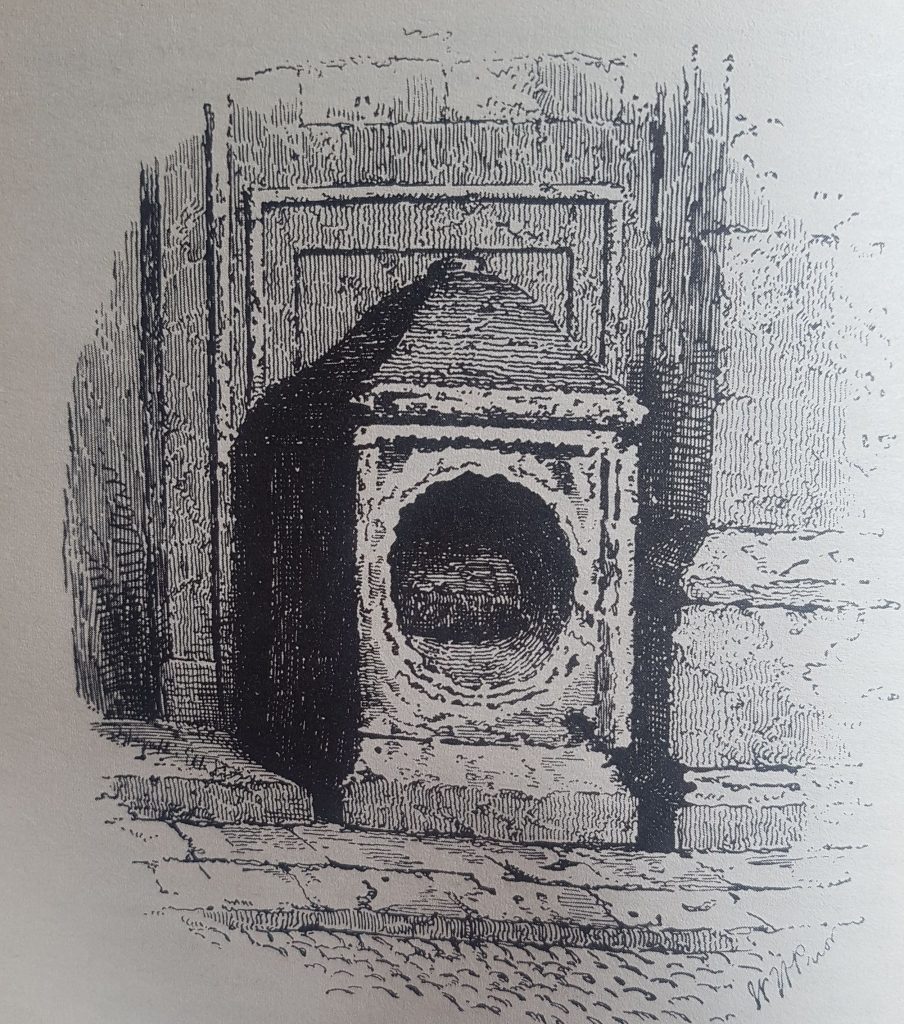
OLD ENGRAVING OF London stone
Old Engraving of London Stone, Cannon Street

On February 18th, I revised a post about Ravens, King Bran’s Head and other Palladiums that protected Britain (or London) from invasion. If you missed it, look here. A possible palladium I missed out is London Stone. To remind you, a palladium is something that stops your country or City being harmed or invaded.

London Stone is an eponymous stone found in Cannon Street, in the heart of the City of London, It is first mentioned in the 12th Century, and no one knows why it was famous. In 1862, an ‘ancient proverb’ surfaced:

“So long as the Stone of Brutus is safe, so long shall London flourish”

It was made anonymously in the journal Notes and Queries. In Welsh, it was “Tra maen Prydain, Tra lled Llyndain’. This verse, if genuine, would link the Stone to Brutus of Troy, the legendary founder of London. To be precise: by genuine, I don’t mean it would prove the stone was linked to King Brutus, or that Brutus was a real person. I mean, if genuine, it would prove that in the medieval period the stone was linked to Brutus.

Richard Williams Morgan

However, the writer has been identified as Richard Williams Morgan, who was a passionate Welsh Nationalist and prolific author. He was, also, not very scrupulous with his analysis of sources. As no earlier source can be found, it is thought Morgan made it up.

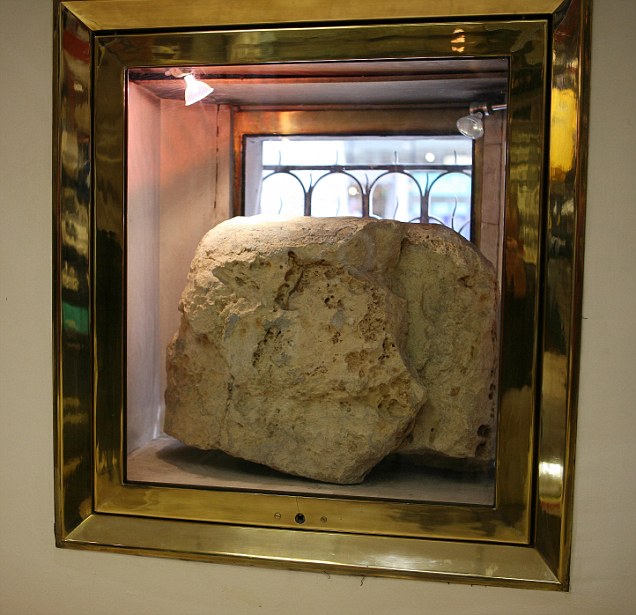
He lived in London in the 1850s and was very struck by the London Stone. Archaeologists prefer the idea that London Stone is, likely, a milestone from which the Romans measured distance. For Shakespeare, it was the stone on which rebel Jack Cade claimed lordship of London. For the romantic, it was a coronation stone; a stone of power; the sword in the stone, stone; or an ancient megalith. The truth is, we have no idea. But it has been called the London Stone since the 12th Century.  Why was it so named, and what was it ‘for’ or symbolic of?

picture of london stone from the inside
Pic by Graham Hussey pic shows the LONDON STONE which is in Canon Street, London .pic taken inside the Tech Sports shop

Morgan came to the conclusion it was the stone plinth on which the original Trojan palladium had stood. This was a wooden statue of Pallas Athene, that protected Troy from invasion.  It was stolen by Odysseus and Diomedes shortly before the successful Trojan Horse plot. It was then taken to Italy.

Morgan’s idea was that King Brutus brought it from Rome when he sailed into Exile in Britain. Brutus, was a descendant of Aeneas. Aeneas was the only Trojan leader to escape from the destruction of Troy. He found his way to Rome, after leaving Dido in Carthage. He was the ancestor of Romulus who founded Rome, and the ancestor of King Brutus.

According to legend, Brutus gathered all the Trojan slaves and exiles in the Mediterranean. He then sailed to found a new Troy in our green and pleasant lands. His new capital he called Troia Nova (New Troy), which became Trinovantum, then Lud’s Dun, and finally London. Or so the Myths say.

Morgan’s theory held that the Stone was used as the altar stone of the Temple of Diana. Folklorist contend that the temple was originally on the site of St Pauls Cathedral. Morgan (in the 19th Century) was the first person to link London Stone with Brutus, or so people thought and still think (see Wikipedia). That was until 2018.

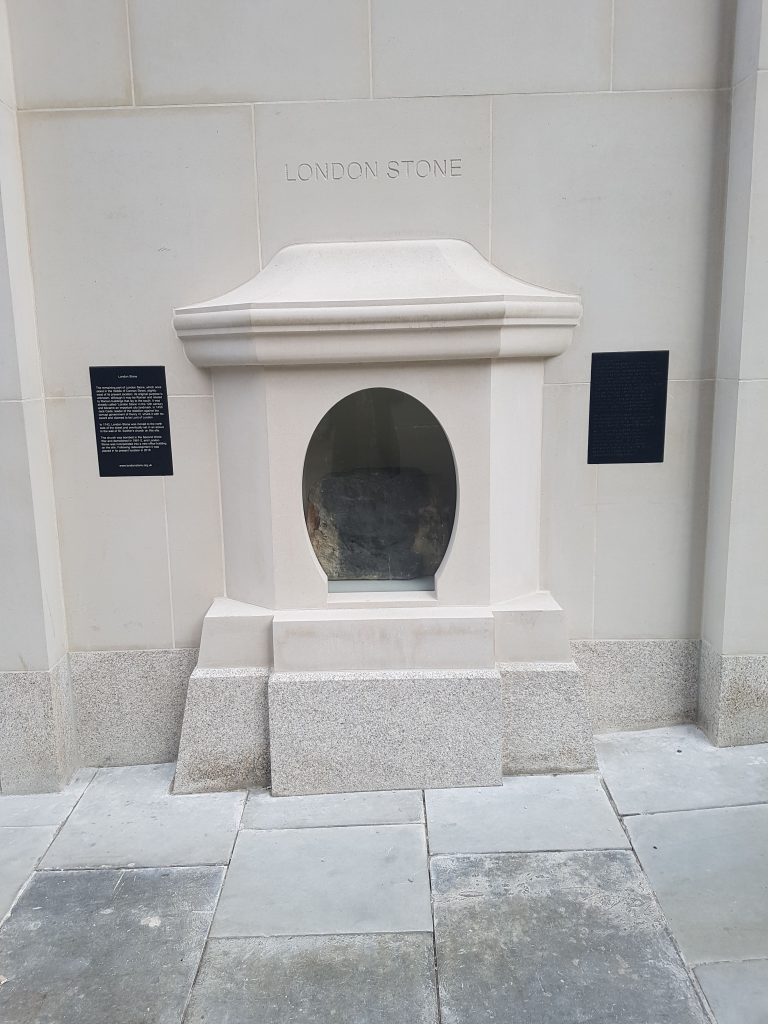
Picture of the plinth in which London stone is rehoused recently
London Stone as recently rehoused.(Photo K Flude)

John Clark

John Clark, Emeritus Curator at the Museum of London, found a reference to a narrative poem of the 14th Century. This links London Stone to Brutus and to the future prosperity of London. Just as Morgan did. So, it makes it possible, at least, that Morgan did not just make the connection but drew on a medieval ‘tradition.’

Brutus set up London Stone
And these words he said anon:
‘If each king that comes after me
Makes this city wide and roomy  
As I have in my day,
Still hereafter men may say 
That Troy was never so fair a city  
As this city shall be.’

From Burnley & Wiggins 2003b, lines 457–64(John Clark’s modern English version)

For the full story, see John Clark’s article.

London Stone & the Neolithic

Recent archaeological discoveries reveal that London was the site of Late Neolithic feasting on a possibly large scale (discussed here:). This increases the possibility that the London stone is a ‘ritual’ stone from prehistory. But, of course, there is still no evidence that London Stone is prehistoric, and even less that Brutus actually existed. 

On This Day

1472 – Orkney and Shetland are given to Scotland by Norway in lieu of  dowry for Margaret of Denmark.

1933 – Adolf Hitler meets with German industrialists to arrange for financing of the Nazi Party’s election campaign. Democracy is doomed.

Written in 2023 and revised in February 2024 and 2025 Pisces and London Stone joined into one page 2026

The Raven, the Palladium and the White Hill of London February 18th

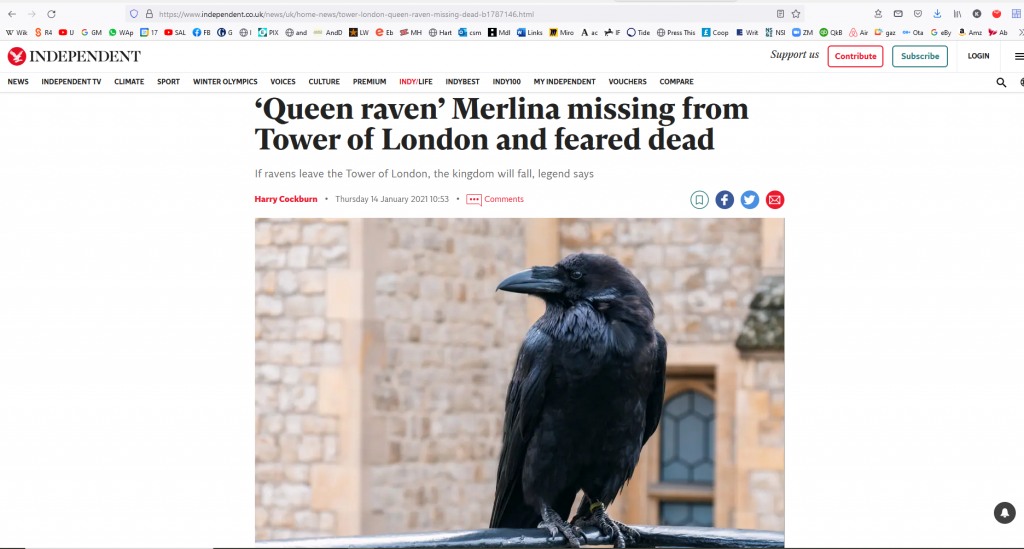
Shows a photo of a missing Raven at the Tower of London
The Independent January 2021 The Raven the Palladium of Britain

The Raven – the Palladium of Britain

Corvus corax is hatching. An early nesting bird, the Raven is the biggest of the Corvids. They were pushed to the west and north by farmers and game keepers but are making a comeback. Ravens are finding towns convenient for their scavenging habits. So they, again, cover most of the UK except the eastern areas. The Raven is one of the Palladiums of Britain.

A Palladium is something that keeps a city or country safe, They are named after a wooden statue of Pallas Athene, which protected Troy. Perceiving this, Odysseus and Diomedes stole the Palladium from Troy shortly before the Trojan Horse episode. Troy fell and the palladium went to Italy (I’m guessing with Diomedes who is said to have founded several cities in Italy). It ended up in Rome.

The Romans claimed to be descendants of Trojan exiles led by Aeneas. So it was back with its rightful owners. It protected Rome until it was transferred to the new Roman capital at Constantinople. It then disappeared, presumably allowing the Ottoman Turks to conquer the City of Caesar? To read of London Stone as a Palladium see my post here.

The Raven, Aneirin & Arthur

The Ravens habits (it is said they know where the battlefields are before they are fought) and their black plumage have made them harbingers of death. In poetry, Ravens glut on blood like the warriors whose emblem they are. Here is a very famous quotation from Y Gododdin, a medieval poem but thought to derive from a poem by the great poet Aneirin from the 7th Century.

He glutted black ravens on the rampart of the stronghold, though he was no Arthur.’

This is one of the much argued-about references to King Arthur in the ‘Was he a real person’ trope. The point being, it doesn’t make sense to mention Arthur if King Arthur wasn’t a real person. The story at the Tower of London is that the Ravens kept in the Tower, with clipped wings, keep Britain safe from Invasion. (But see below).

Bran’s Head – the original Palladium of Britain?

A raven landing with a brown background
By Sonny Mauricio from Unsplash

The Raven was also the symbol of the God-King Bran. Bran was one of the legendary Kings of Britain. His sister, Branwen, was married to the King of Ireland. To cut a long story short, Branwen was exiled by her Irish husband to the scullery. She trained a starling to smuggle a message to her brother, to tell of her abuse.

So Bran took an army over the Irish Sea to restore her to her rightful state. But the ships were becalmed. Mighty Bran blew the boats across the sea – he was that much a hero. Bran was mortality wounded in the fighting that followed. This was a problem because he had previously given away his cauldron of immortality.  He gave it to the Irish King in recompense for the insults given to the Irish by Bran’s brother, who hated anyone not British.

Bran’s Head Returns to London

So, the dying Bran, told his companions to cut off his own head and take it back to the White Hill in London. His head was as good a companion on the way back as it was on the way out, and the journey home took 90 years.

At last, they got to London, where Bran told his men to bury his head on the White Hill. As long as it stays here, he said, Britain would be safe from foreign invasion. The White Hill is said to be Tower Hill with its summit at Trinity Gardens, although Primrose Hill is sometimes offered as an alternative.

This was one of the Three Fortunate Concealments and is found in ‘the Triads of the Island of Britain.’ The Triads are from medieval manuscripts which preserve fragments of folklore, mythology and history. They are grouped in groups of three.

Arthur and Bran’s Head

But many years later, King Arthur saw no need for anybody or anything other than himself to protect the realm. So he had the head dug up. Calamity followed in the shapes of Sir Lancelot and Mordred which led to the end of the golden age of Camelot and conquest of Britain by the Saxons. This was one of the Three Unfortunate Disclosures.

If we want a rational explanation for the story, there is evidence that Celtic cultures venerated the skull, and palladiums play a part in Celtic Tales.

So what was Arthur doing destroying the palladium that kept Britain safe? Vanity is the answer the story gives. But, perhaps, it’s a memory of Christian rites taking over from pagan rituals? God, Arthur might have thought, would prefer to protect his people himself rather than Christians having to rely on a pagan cult object.

Ravens in the Tower of London

The story of Bran’s head is inevitably linked to the Ravens in the Tower who, it is still said, keep us safe from invasion.  As you can see from the photo at the top we still get in a tizz when one goes missing.

Sadly, and I am probably sadder about this than most, the link between the Tower, Bran, and the Ravens cannot be substantiated. Geoffrey Parnell, who is a friend of mine, told me that while working at the Tower of London he searched the records assiduously for the story of the ravens.  He found no evidence of the Raven myth & the Tower before the 19th Century, and concluded that it was most likely a Victorian invention. IanVisits has a 2025 story about the Ravens, and also concurs that the Ravens are a recent myth.

The Welsh Triads give a total of two palladiums for Britain, a couple of nationalistic fighting dragons.

Three Fortunate Concealments of the Island of Britain

The Head of Bran the Blessed, son of Llyr, which was concealed in the White Hill in London, with its face towards France. And as long as it was in the position in which it was put there, no Saxon Oppression would ever come to this Island;
The second Fortunate Concealment: the Dragons in Dinas Emrys, which llud son of Beli concealed;
And the third: the Bones of Gwerthefyr the Blessed, in the Chief Ports of this Island. And as long as they remained in that concealment, no Saxon Oppression would ever come to this Island.

All good but then came:

The Three Unfortunate Disclosures:

And there were the Three Unfortunate Disclosures when these were disclosed.
And Gwrtheyrn the Thin disclosed the bones of Gwerthefyr the Blessed for the love of a woman: that was Ronnwen the pagan woman;
And it was he who disclosed the Dragons;
And Arthur disclosed the head of Bran the Blessed from the White Hill, because it did not seem right to him that this Island should be defended by the strength of anyone, but by his own.

Gwrtheyrn is Vortigen, the leader of the Britons after the fall of the Roman Empire in Britain, one or two leaders before Arthur. Vortigern, which means something like strong leader in Welsh was a real person in so far as he, unlike Arthur, is mentioned by Gildas a near contemporary source.

The story of the dragons is supposedly from the pre-Roman Iron Age.  Every May Day, the Dragons made a terrible noise, causing miscarriages and other misfortunes. So, King Ludd, whom legends says gave his name to London (Ludd’s Dun or Ludd’s walled City), drugged the dragons.  He had them buried in a cavern at Dinas Emrys in Eryri (Snowdonia). The Red Dragon represented the Britons (also called the Welsh) and White Dragons the Saxons.

Vortigern, Merlin and Vortimer

Hundreds of years later, (five hundred?) after the Romans had come and gone.  Vortigern was trying to build a castle in Eryri at Dinas Emrys.  But the walls keep falling down. ‘You need the blood of a boy born not of man’, his necromancers say.  They find a boy called Ambrosius aka Merlin whose mother had lain with an incubus.  Merlin accused the necromancers of ignorance and explains the wall collapse is caused by two dragons.  They find the cavern and let the dragons go.  The walls now stand undisturbed. But the Welsh Red Dragon and the Saxon White Dragon can not now be at peace, and the Britons are defeated by the Saxons.

Vortigern betrayed his own people for the lust of Rowena the daughter of Hengist, the Saxon. Hengist was given the province of Kent as his reward, and thus began the Anglo-Saxon take over.

Vortigern’s son is Gwerthefyr (or Vortimer). He was a better man than his dad and fought to keep the Saxons out. After Vortimer’s death his bones were buried at the chief ports on the South Coast. Here they acted as a palladian and they kept the country safe.  But they were moved to Billingsgate, in London and put in a Tower. The loss of the palladium allowed the Saxons to land safely on the Kent coast and consolidate their increasing hold over Britain and turning it into England.

Birds in Love

Here is a lovely little medieval poem. It was found in 1931 in the end leaf of a manuscript where someone had been testing their goose quill and scribbled these three lines:

All the birds have begun their nests

Except for me and you

What are we waiting for now?

This is from Dr Florence H.R.Scott’s lovely medieval substack here:

Wet Weather

Why it is so wet in the UK at the moment (February 18th)? The answer seems to be that there is a block of cold weather over the States that is moving the Jet Stream south, bringing lots of wet weather. But there is also another block of cold weather over Scandinavia. This means that the low pressures being driven by the Jet Stream, have no where to go and are stopping and dumping their rain all over the UK.

To hear the Observer’s explanation listen here.

On This Day

3102 BC – the death of Krishna starts Kali Yuga, the fourth and final yuga of Hinduism.

1478 – George, Duke of Clarence, traitor to his Brother, Edward IV, was executed in private at the Tower of London. It is said he was drowned in a vat of Malmsey Wine.

1678 – First Part of Pilgrim’s Progress by John Bunyan published.

1991 – The IRA plant bombs at Paddington station and Victoria station in London. The IRA gave warnings, and the Victoria bomb went off at 4.20am and caused no casualties. At or just before 7am, the IRA warned that all London Stations were to be bombed in 45 minutes time. The Authorities were slow to clear the stations and at Paddington a bomb went off at 7:40am. 1 person was killed and 38 people were injured. 11 days earlier, the IRA attacked Downing St with a mortar bomb attack.

Written on February 21 revised in February 18th 23, 24, 25, Birds in Love, Wet Weather and On This Day added in 2026

Constellation of Gemini overhead, February 10th

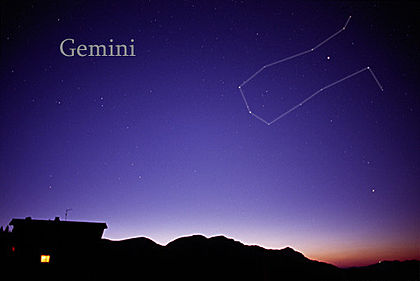
Photo  of consteltion of gemini with connecting lines to show it better
Gemini Till Credner – Own work, http://www.AlltheSky.com from wikipedia

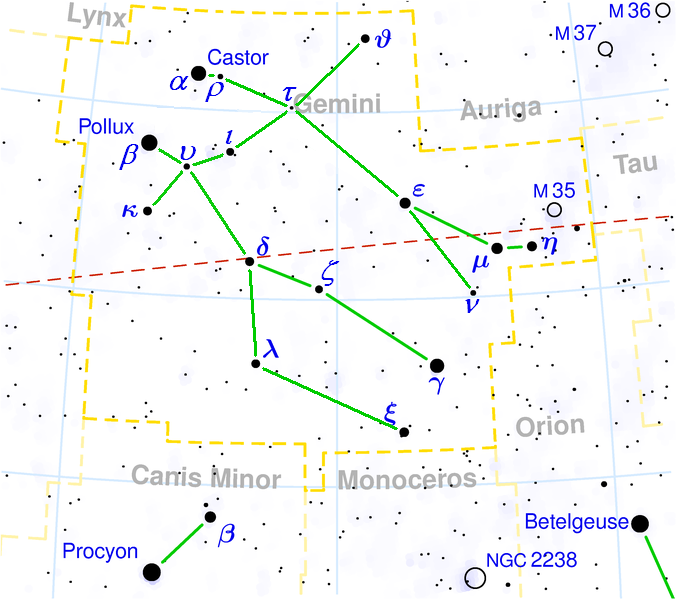
Gemini should be almost overhead in the Northern Hemisphere, and can be picked out by its two brightest starts, Castor and Pollux. The constellation can be seen from September to May. But between September to November it is only visible in the morning before sunrise. It is best viewed from January to March. For evening viewing it is possible from December to May In February it should best visible at 9.00pm.

The Divine Twins, the Dioscuri, were horsemen, patrons of calvary, athletes, and sailors. Pollux is the son of Zeus and Leda (raped by Zeus in the guise of a swan). His twin brother has a different and mortal father, the King of Sparta and the same mother, Leda. So they are examples of heteropaternal superfecundation.

One is therefore immortal and the other isn’t. They had many adventures including sailing with Jason as Argonauts.

According to some versions of the story, Castor was mortally wounded, and Zeus gave his twin brother the option of letting Castor die while Pollux spends eternity on Mount Olympus. Or sharing his immortality with his brother. He agreed to the latter, and the twins spend half their year as the Constellation of Gemini and the rest, immortal, on Mount Olympus. Thus, they are the epitome of brotherly love.

Their sisters were, no less than Helen of Troy, and Clytemnestra. But more about them in read my post on the brothers and sisters here.

Diagram of H. A. Rey‘s alternative way to connect the stars of the constellation Gemini. Twins are shown holding hands. Wikipedia AugPi CC BY-SA 3.0

Yesterday’s Subscribers Email

For some obscure reason, the email excluding a couple of paragraphs which were in the online version.

This is what you missed:

Magic and Toothache

John Aubrey, an erudite and educated 17th Century writer, reports on the use of Magick for tooth care. When he relates these unlikely cures he often provides information that the person who told him the story is worthy of belief. So he seems to give some credence to the efficacy of these magical ‘cures’. But, judge for yourself; this is what he wrote:

To Cure the Tooth-ach.

Take a new Nail, and make the Gum bleed with it, and then drive it into an Oak. This did Cure William Neal, Sir William Neal’s Son, a very stout Gentleman, when he was almost Mad with the Pain, and had a mind to have Pistoll’d himself.

To Cure the Tooth-ach, out of Mr. Ashmole’s Manuscript Writ with his own Hand.

Mars, hur, abursa, aburse.
Iesu Christ for Marys sake,
Take away this Tooth-ach.

Write the words, Three times; and as you say the Words, let the Party burn one Paper, then another, and then the last.

He says, he saw it experimented, and the Party immediately Cured

John Aubrey’s Miscellanies 1695

Cerne Abbas Giant

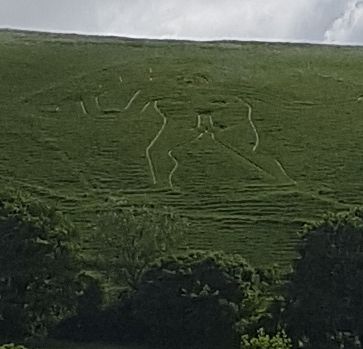
Cerne Abbas Giant 2017 photo by K Flude

On February 3rd, 2026 the National Trust announced that it had received £330,000 in 60 days to purchase land around the infamous Cerne Abbot Giant. This was on top of £2m in grants previously received. This means they can buy the ‘138‑hectare (340‑acre) site – equivalent to 190 football pitches – surrounding the famous Cerne Abbas Giant in Dorset.’ (National Trusts Press Release).
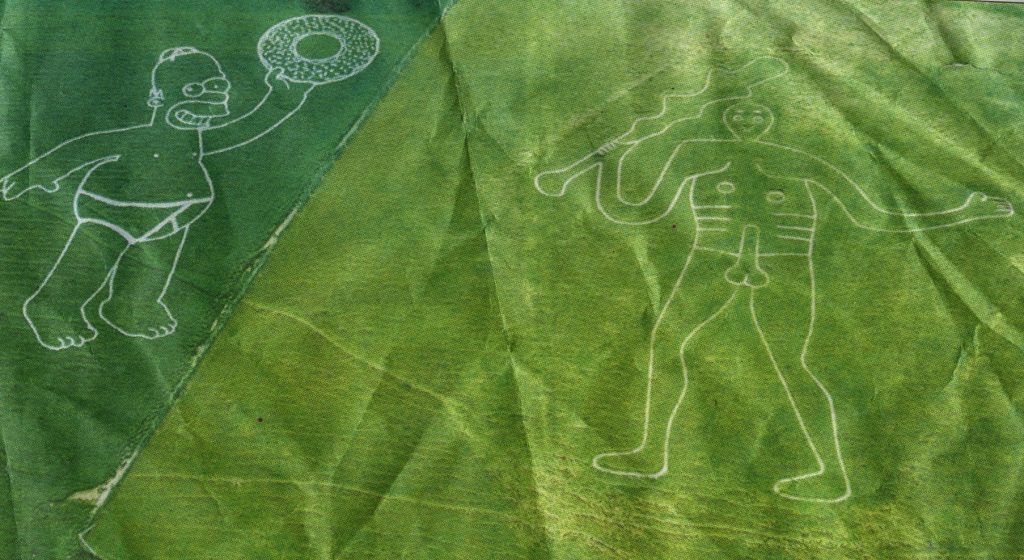
The giant is one of the icons of Hardy’s Dorchester. It is ‘drawn’ or sculpted by cutting the turf to reveal the white chalk below. Chalk Cut figures appear particularly in the South West. The Vale of the White Horse chalk cut figures has been dated to the Late Bronze Age. Most people thought the Cerne Abbas Giant was in the Romano-Celtic tradition so was either pre-Roman, or perhaps Hercules and, therefore, Roman. The name of the village and Abbey are named after the Celtic Horned God Cernunnos. For more about him read my Almanac of the Past Page here.

Some dissenters believed the lack of references to the Giant showed that it could not have been cut until the 17th Century. Some even thought it might be a ‘cartoon’ of Oliver Cromwell! They could not believe that the Monks of Cerne Abbey would allow a giant erect phallus to overlook their holy site for all those centuries.

How we laughed!

Dating the Cerne Abbas Giant

But the National Trust embarked on a project to get the Giant properly dated. They used Optically Stimulated Luminescence (OSL) dating, which had also been used on the White Horse. But the results which came back were shocking. It appears to have been cut in the Late Saxon period.

I do admit to a certain amount of scepticism. The art style is similar to British Art of the Iron Age, part of the Celtic Art tradition. Also, how reliable is OSL dating? The process depends on taking soil samples from the soil nearest the chalk, and OSL measures the time since the soil was last exposed to light. It’s a relatively new technology, although based on Thermoluminescence dating of pottery, which has been around since the 1970s. So,, if they are analysing soil that does not represent the first cutting of the figure then the dating would be wrong.

However, there was also some corroboration in the form of snails which were not indigenous to the UK? So a date of 700-1100AD is suggested. And I have nothing other than a gut reaction to the date they propose. Maybe I’m just disappointed by a Saxon date as I have no way of understanding the context?

For more about the Giant look at the www.nationaltrust.org.uk/visit/dorset/cerne-giant/history-of-the-cerne-giant.

My Part in the Cerne Abbas Story

Here is a cartoon I really like:

Homer and the Cerne Abbas Giant, Image from Facebook of unknown origin.

The first Coach Trip I ever led was in the 1980s. An American College Professor asked my friend and I to lead a tour of Arthur’s Britain and Hardy’s Wessex. The group included his wife and about 10 students. We drove a mini bus around and stayed in Bed and Breakfast in places like Avebury and Cerne Abbas.

Following the Tour, the professor wrote to tell us that he had been successful in one of his, unstated, aims for the tour. He revealed that this was to get his wife pregnant. He was a bit of a romantic and thought it would be fun to try for the baby while staying in such mystical places. Apparently, they had heeded our tales of the fertility rites that used to take place on and around the Giant, and had gone out for a moonlight walk, and ‘rested’ on one of the Giant’s testicles.

Lost Books from the Ancient World

burnt scrolls from Heraculeum

Last year, one of the most exciting discoveries was made. This was the news that burnt scrolls from Herculaneum have been digitally unrolled. Then ‘read’ using AI. The scroll was in the library of Julius Caeser’s father in law it is thought. There are over 1,000 carbonised scrolls found in 1750 in the Villa of the Papyri. And this one reveals details of Plato’s last hours. But more than that, the technology opens the possibility of other lost books being discovered. Of the ‘known unknowns’ I would like to see are the lost history books of Tacitus. But perhaps the ‘unknown unknowns’ are even more exciting. What might we find out?

Here is an excellent introduction to the discoveries:

https://www.theguardian.com/science/2024/feb/05/ai-helps-scholars-read-scroll-buried-when-vesuvius-erupted-in-ad79

On This Day

1306 – This is the day that Robert the Bruce killed his rival for the Crown of Scotland. He murdered John ‘Red’ Comyn, In front of the high altar of Greyfriars Church in Dumfries. Somehow he got away with this most impious act, to confirm Scotland’s independence from England.

1567 – the first Gunpowder plot saw the Kirk o’ Field house in Canongate, Edinburgh, blown up. Outside the house was found the corpse of Lord Darnley. But he was strangled not burnt. He was the second husband of Mary, Queen of Scots. Darnley was thought to be responsible for the brutal murder of the Queen’s Private Secretary, David Rizzio. He was Italian and was often in close proximity to Mary. Darnley didn’t like the rumours of an illicit affair. So recruited a gang of Scottish Noblemen. On 9 March 1566They went up the stairs of Holy Rood Palace where they tore Rizzio from the protection of the Queen. They stabbed him 57 times in front of her and her ladies in waiting. (Julius Caesar was stabbed 23 times).

Darnley’s murder it was thought was the Queen’s way of getting rid of a, frankly, stupid, and nasty husband. Albeit, very good-looking and charming. Her third husband, Earl Bothwell, is frequently blamed, and whether she was part of it we don’t know.

1616 – Judith Shakespeare married Thomas Quiney. See my post https://chr.org.uk/anddidthosefeet/object-of-the-day-shakespeares-signet-ring/

Two February 10th posts were brought together to create this post, which was republished in 2026