
By tradition, Shakespeare was born on St George’s Day April 23rd 1564. He died on the same day in 1616 at age 52. Cervantes died on the same day.
Shakespeare’s death date is given by the burial register at the Holy Trinity Church, Stratford on Avon where he was buried. His baptismal record also survives at the same church and is on April 26th 1564. So, we don’t actually know when he was born, but christening were held soon after birth for fear of the high infant mortality rates, so 23rd April has been assigned to be Shakespeare’s birthday.
Taken to the chamber
Anne Shakespeare would have ‘taken to her chamber’ about four weeks before the due date. The windows or shutters were fastened, as fresh air was thought to be bad for the birthing process. Female friends and relatives came to visit; the room would be decorated with fine carpets, hangings, silver plates and fine ornaments. It was held that external events could influence the birth, any shocks or horrors might cause deformities and anomalies, so a calm lying-in room was clearly a good idea.
When labour began, female friends, relatives, and the midwife were called to help out. A caudle of spiced wine or beer was given to the mother to strengthen her through the process. Today, the maternal mortality rate is 7 per 100,000. An estimate for the 16th Century is 1500 per 100,000. So most women would have heard of or attended the birth of a women who had died during or following children birth. There were also no forceps. So if a baby were stuck and could not be manually manipulated out, then the only way forward was to get a surgeon to use hooks to dismember the baby. This was the only way to save the life of the mother. Doctors were not normally in attendance, but could be called in emergency,
Swaddling
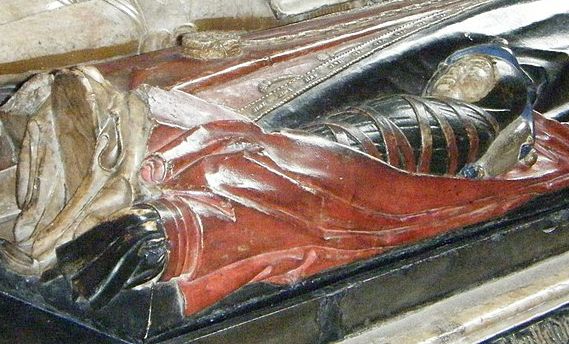
Immediately after washing, the baby was swaddled. The swaddling was often very tight and could affect the baby’s growth. Also, it might have affected the learning process. The free movemenb of hands and feet are now considered important in the early learning process. Swaddling lasted eight to nine months, and only went out of fashion after Jean Jacques Rousseau wrote against the practice.
Christening & Registration
Puerperal fever killed many women even after successful childbirth, for example Queen Jane Seymour who died after 5 days. During these dangerous early days, the mother was kept in a dark room. Perhaps three days after birth, friends were invited to celebrate ‘upsitting’ when the mother was no longer confined to bed. This is when christening would take place. Edward VI was christened to a huge audience in the chapel at Hampton Court three days after his birth.
Licensed midwives could baptise newborn babies provided they used the correct wording and informed the Church. This allowed the registration of the birth to be properly reported. Thomas Cromwell was responsible for the law in 1538 which insisted on a parish register to record weddings, christenings, and funerals. The law was reaffirmed by Queen Elizabeth in 1558. Registers had to be stored in a locked chest in the Church. In 1597, the records had to be on parchment not paper. In 1603 the chest had to have three locks! Since writing this I have realised the significance of the three locks. In St Eadburga’s Church in Broadway in there is a locked box for alms, and it has three locks too. This was so that it could only be opened when all 3 Church Wardens were present.
If the christening were in the church, the mother might not be there as she was expected to stay in her chamber for another week or so. A week or a few weeks later, the mother would be ‘churched.’ This was a thanks-giving ceremony. Puritans did not like the idea as it might be confused with a purification ceremony.
Breastfeeding
Breastfeeding would last a year or so but, buty high status women choose to use a wet-nurse. They went to some effort to find a suitable wet nurse. It was believed that the quality of the breast milk was important for the babies’ development both physically and temperamentally. Poor children who lost their mothers were unlikely to survive. For without breast milk, the baby would be fed pap – bread soaked in cow’s milk.
Thanks very much to Alison Sim’s book ‘The Tudor Household’ for a lot of the above.
On This Day
1016 – Edmund Ironside succeeded his father Æthelred the Unready as King of England. Unfortunately, Edmund dies soon after dividing England with Danish King Cnut. Subsequently, Cnut takes over the entire country.
1661 – King Charles II crowned in Westminster Abbey. Read my post on John Evelyn’s reaction to the restoration of Monarchy after the the Commonwealth period of Republican Government.
1942 – World War II: German bombers hit Exeter, in what became known as the Baedeker Raids. They were in retaliation for the success of the British bombing of Lübeck, and of Rostock. In the following days the Luftwaffe bombed Bath, Norwich and York. A German official said they would bomb every building with three stars in the Baedeker Tourist Guide. Hitler said the English were: ‘beings with whom you can only talk after you have first knocked out their teeth‘
First published in 2023 and republished in April 2024. On This day added 2026