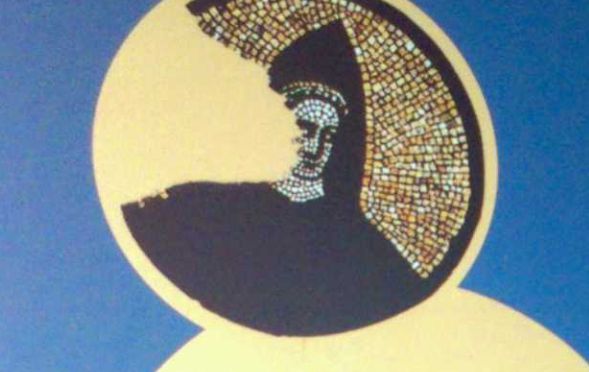
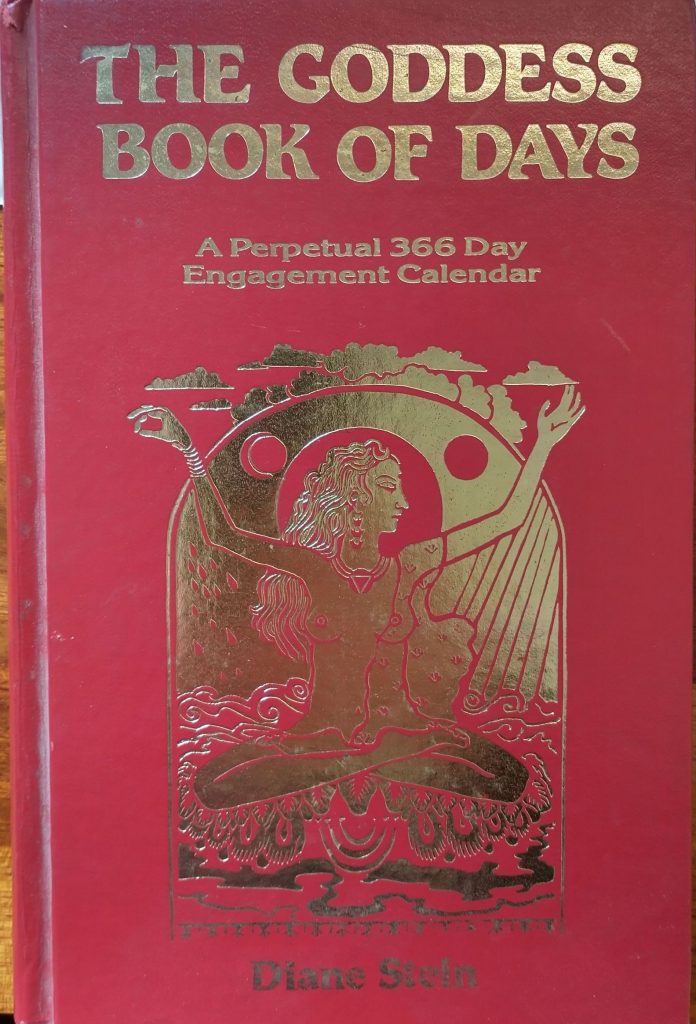
December 11th is dedicated to Bruma the Roman Goddess of Winter or so says my Goddess Book of Days,. However, I’m not having much luck tracking her down. Elsewhere, I find reference to a Greek or Roman festival of Winter called Brumalia. It starts in late November and ends on the 25th December, the Roman Solstice. Or so they say. But, only the Goddess Book of Days has it on December 11th.
However, there is more evidence for the Brumalia festival in the Eastern Roman Empire. So, let’s imagine a Winter Goddess beginning her reign on November 24th. Then, Saturnalia took place from 17th – 24th December and the climax of the reign of the Winter Goddess was Brumalia on the 25th December. The festival was celebrating the seeds in the ground, necessary for a good harvest. To ensure a good harvest Civic officials delivered gifts of wine, olive oil, grain, and honey to the Priests and Priestesses of the Goddess Ceres. Farmers sacrificed sheep and pigs to Saturn and Ceres. They inflated sheep bladders with air and jumped upon them as part of the celebration!
December 25th
Aurelian in 274 AD fixed December 25th by as the day to celebrate Sol Invictus. The worship of the Unconquered Sun was the Roman attempt to have a monotheistic element to their religion. December 25th was also chosen by Mithras, Saturn, and Christians. For more about December 25th see my post here.
Underlying this confusion of dates is the difficulty of aligning the solar year to the calendar year, and in the Roman period it was all over the place until Julius Caesar fixed the Calendar. (for more on that, see my post here)
Roman Hoodie
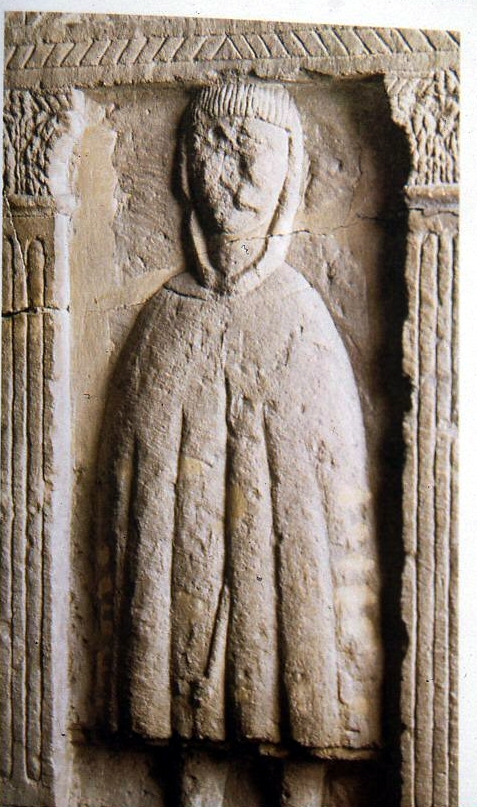
The picture of the tombstone, above, comes from Cirencester, and the inscription says:
Philus, son of Cassavus, a Sequanian, aged 45, lies buried here.
For details look at the ‘Roman Inscriptions of Britain.org’ here:
Philus’ cloak is very interesting. Similar Hoodies are found in other places in Roman Britain, for example, on a mosaic at Chedworth. They are called the Birrus Britannicus. And were famous throughout the Empire. It was a hunting cloak made of wool. I imagine it was a sort of ‘thorn proof’ woollen garment that was warm, rugged, and waterproof. Britain was exported hunting dogs and slaves. The Cotswold wool was also famous in medieval Europe. It was made from Cotswold Lion sheep which were introduced first during the Roman period into the local sheep stock. The large number of rich Roman villas in the area suggest that the wool made the local economy strong.
The British Hoodie, and Inflation.
In AD 301, the emperor Diocletian issued his Edict of Maximum Prices. In it, the Emperor rages against inflation:
Greed raves and burns and sets no limit on itself. Without regard for the human
race, it rushes to increase and augment itself, not by years or months or else days, but almost by hours and very moments. Diocletian Maximum Prices Edict (click here for Pdf)
The Edict then lists maximum wages and prices. The birrus listing says that the Tailor,
‘cutting and finishing a hooded cloak (birrus) of the finest quality shall have a maximum wage of 60 denarii. ‘
The sanctions against breaking the Edict were terrifying. This suggests the difficulty of enforcement was compensated for by extreme punishment. Diocletian also insisted that labour shortages were addressed by making children follow the same profession as fathers. Interesting how familiar rampaging inflation and severe staff shortages seems to a post.
Reorganisation of the Roman World
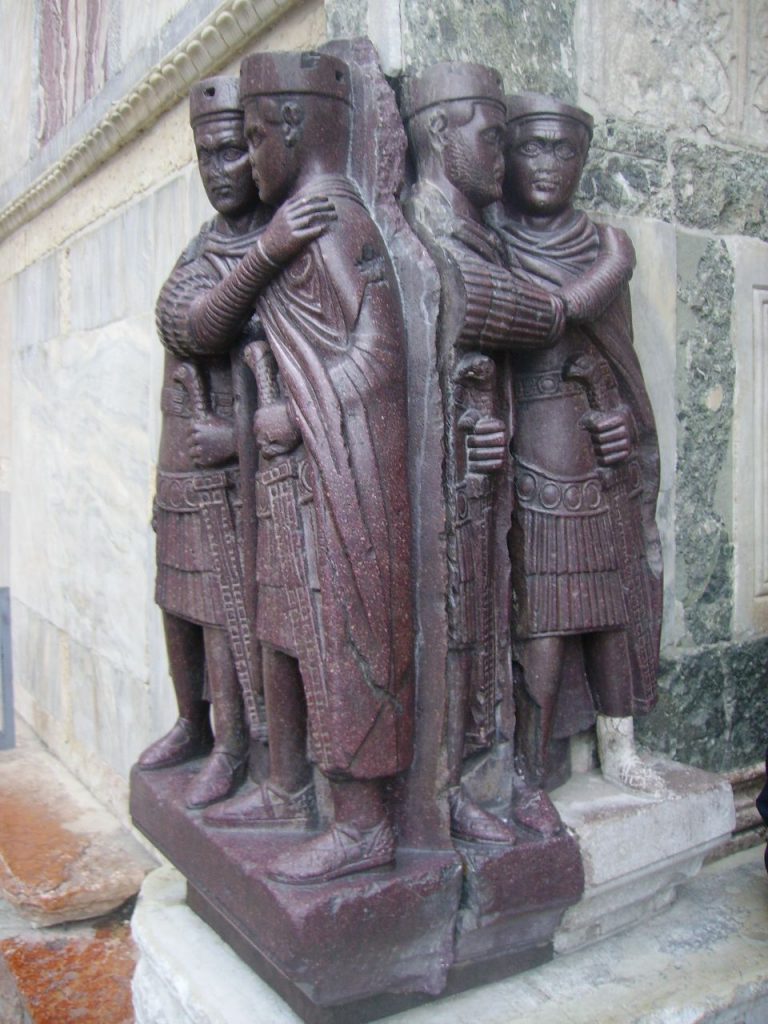
Diocletian was obviously a very logical man, looking for structural fixes to society’s problems. His analysis of the Roman Empire and its frequent Civil Wars/Coup D’Etats/Usurpers was that there was a deficiency in the career ladder for megalomaniacs. So to stop them usurping the Emperorship, he set up a rational career progression and divided up the Empire as follows:
1 Augustus for the Eastern (Greek speaking) Empire
1 Augustus for the Western (Latin speaking) Empire
2 Caesars for each Augustus
Prefects reporting to the Caesars
Vicari reporting to the Prefects
Governors reporting to the Vicarius.
So you could begin your career in charge of a Province, then progress to the Diocese, then to the Prefecture, then to a quarter of the Empire, then to the Western Empire and finally to be the top dog in the richest Greek-speaking part of the Empire – the supreme Augustus. Brittania was divided up into 4 provinces, each controlled by a non-military Governor. They reported to the Vicarius in London, who reported to the praetorian prefecture of the Gallic region, which was based at Trier, who reported to Rome. They copied in the supreme Emperor who normally hung out in the East of the Empire. (the rich bit).
Did it work? Well, while Diocletian was alive maybe. When his Augustus of the West Constantius Chlorus died, his troops, in York, declared his son Constantine to be Augustus. Thus, bypassing the peaceful progression from Governor to Augustus. The system reverted to the usual tactic of wiping out your fellow Prefects, Caesars and Augustii. After his victory at the Battle of Milvian Bridge, Constantine was universally recognised as the supreme Augustus. He moved the Eastern Capital from Nicosia to Byzantium and renamed it Constantinople.
More on the Sequani
The Sequani were from the upper Saône Valley, near Besançon.
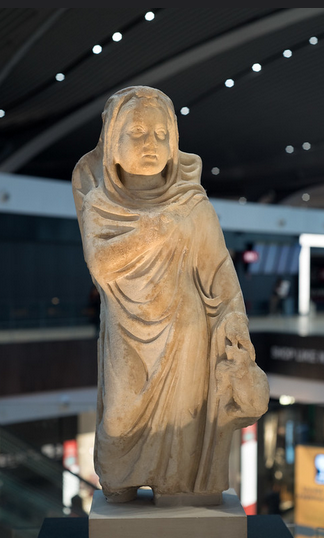
One of our readers alerted me to the Wikipedia page on the Sequani which explains that the name comes from the Goddess Sequana who is a water goddess. The centre of the territory is Besançon which is on the Doubs River. part of the Haute Saône Doubs and near to the springs that are the source of the Seine (west of Dijon). The Fontes Sequanae (“The Springs of Sequana”) gave her name to the River Seine, and a healing spring was established in the 2nd/1st BC. Enlarged by the Romans, it became a significant health centre. as Wikipedia explains in the clip below:
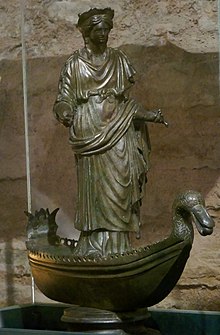
‘Many dedications were made to Sequana at her temple, including a large pot inscribed with her name and filled with bronze and silver models of parts of human bodies to be cured by her. Wooden and stone images of limbs, internal organs, heads, and complete bodies were offered to her in the hope of a cure, as well as numerous coins and items of jewellery. Respiratory illnesses and eye diseases were common. Pilgrims were frequently depicted as carrying offerings to the goddess, including money, fruit, or a favourite pet dog or bird.’
https://en.m.wikipedia.org/wiki/Sequana
First, published on December 11th,2022. Revised and republished on December 11th 2023, 2024, 2025