
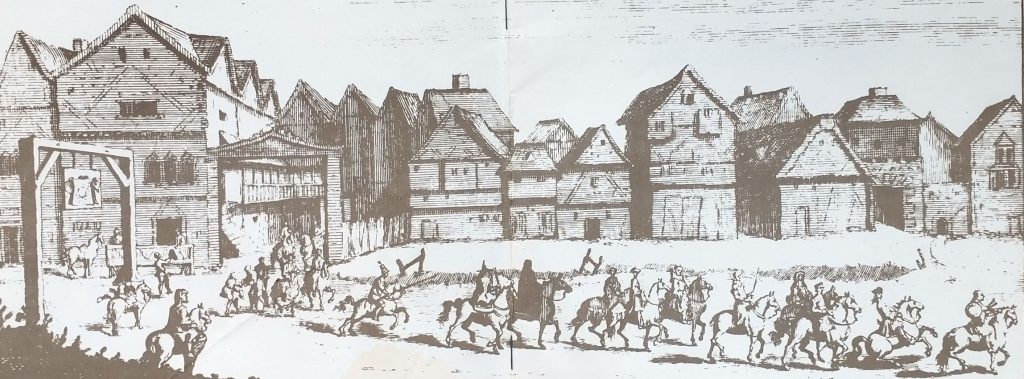
Canterbury Pilgrimage
Tonight (April 18th 2026 7.45pm) , I am leading my annual Canterbury Tales Virtual Pilgrimage. This is the day Chaucer’s pilgrims leave London to ride to Canterbury. (For more details or to book look here.) Also, at 11am today i do my Chaucer’s London walk – for details click here.
And I have just realised the above paragraph is wrong! Chaucer mentions it is April 18th in the Man of Law’s Tale which is told on the day they leave Dartford, the second day of the pilgrimage! According to an academic 1387 was the year and the timetable is:
Tuesday 16 April Gather at the Tabard
Wednesday 17th April Leave the Tabard early in the Morning. Ride to Dartford
Thursday 18th April leave Dartford after 10am which annoys Harry Bailly. Overnight in Rochester
Friday 19th April Probably overnight at Ospringe
Saturday 20th April travel to Canterbury, Probably overnight in Chequer of Hope, Mercery Lane but this comes from medieval fan fiction as Chaucer doesn’t say much about what happened in Canterbury, But tells of their riotous time in Canterbury.
Dating the Pilgrimage
At the beginning of the prologue, Chaucer gives clues as to the date. They go when April showers and Zephyrus’s wind is causing sap to rise in plants, engendering flowers. It is also when Aries course across the sky is half run. The pilgrims are accompanied by Harry Bailly who is the landlord of the Tabard Inn in Southwark. He was a real person and a fellow Member of Parliament of Chaucer. He is jolly and quite knowledgeable. In the Man of Law’s prologue we get a glimpse of Harry time telling in the days before clocks.
Telling the Time
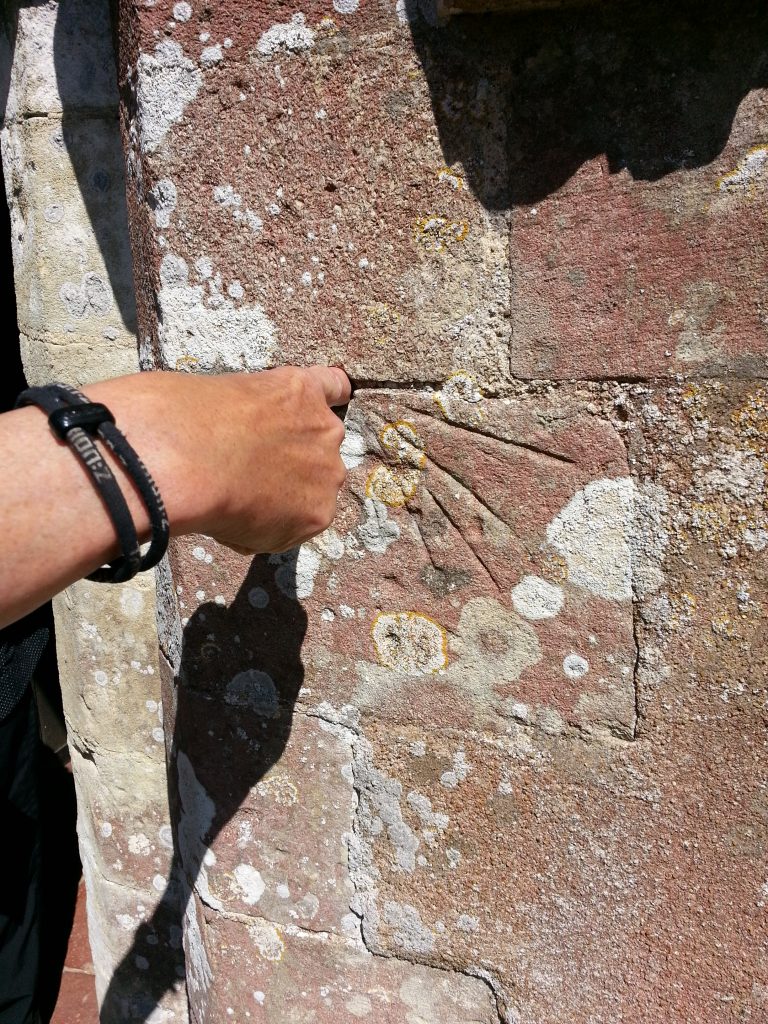
Chaucer mentions ‘artificial day’ and this is a reference to the way days were divided into hours. There were twelve hours in the daylight part of the day, and twelve hours in the dark night. So in the winter daylight hours were short, and in the summer long.
Romans used water clocks. King Alfred used candles marked into hours. Harry Bailly knows how to tell the time by the height of the Sun. Harry tells the pilgrims it’s about time they got underway. Here is an extract:
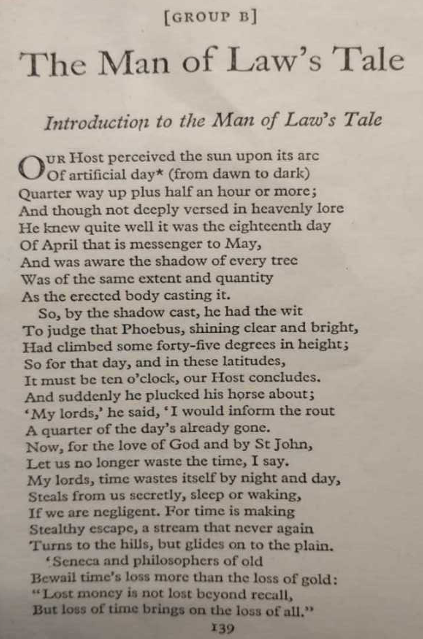
Essentially, he is telling the time by the length of the shadows. On April 18th the shadows of trees are equal in length to the tree. Showing that the Sun has climbed 45 degrees and in this latitude it must be 10 o’clock. Time to get going on the Pilgrimage!
Mass Clocks & Time Divisions
The illustration of the mass clock at Jane Austen’s Church at Steventon shows how easy it was to tell the time by the sun. The first mass clock I noticed was at St James’ Cooling in Kent. Dickens used this in Great Expectations, where Pip’s brothers and sisters were buried. Once you find one mass clock, you suddenly discover them everywhere!
Telling the time, before mechanical clocks, was not complicated. The basic unit is the day and the night, and we can all tell when the dawn has broken. The Moon provides another simple unit of time. The month’s orbit around the Earth is roughly every 29 days. The new, the crescents and full moons provide a quartering of the month. For longer units, the Earth orbits around the Sun on a yearly basic. But it is easily divided into four, the winter solstice; the spring equinox, the summer solstice and the autumn equinox.
Nature’s Way of Time Telling
But there were other ways of marking days in the calendar, with natural time markers marked by, for example, migrating birds, lambing, and any number of budding and flowering plants such as snowdrops, daffodils and elm leaves:
When the Elmen leaf is as big as a mouse’s ear,
Then to sow barley never fear;
When the Elmen leaf is as big as an ox’s eye,
Then says I, ‘Hie, boys” Hie!’
When elm leaves are as big as a shilling,
Plant, kidney beans, if to plant ’em you’re willing;
When elm leaves are as big as a penny,
You must plant kidney beans if you mean to have any.’
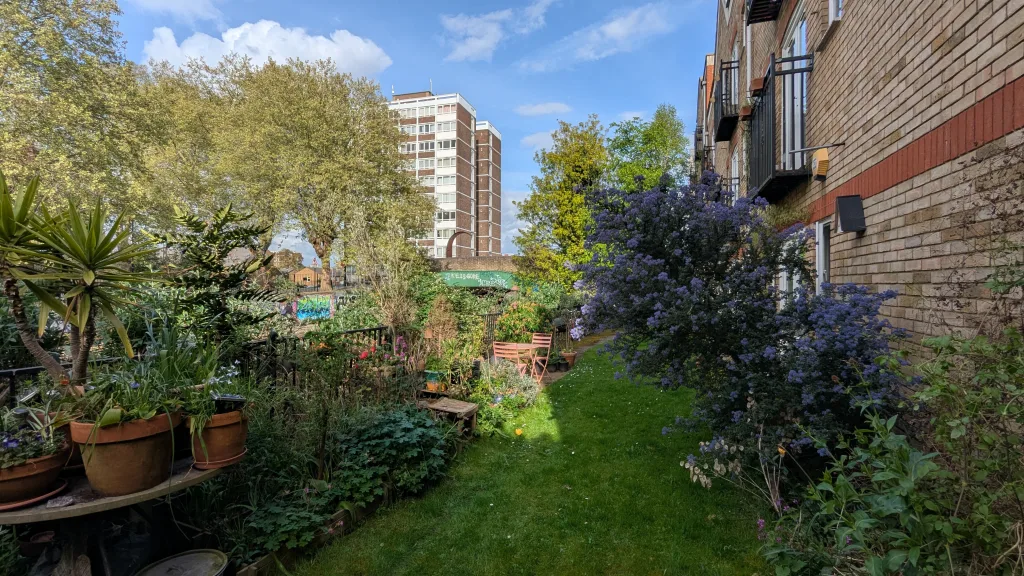
In my north-facing garden, I have my very own solar time marker. All through the winter, the sun never shines directly on my garden. Spring comes appreciably later than the front, which is a sun trap facing south. But on 17th April, just after 12 o’clock the sun peeks over the block of flats to the south of me. It finds a gap between my building and the converted warehouse next door. For a short window of time, a shaft of a sunbeam brings a belated and welcome spring. This for my garden is the real beginning of spring. I took a photo of it this year.
New Light on Thomas Becket’s Window at Canterbury
Recent research has revealed the true story behind stained glass windows at Canterbury which had been reassembled wrongly. The story is told here:
On This Day
2026 The Tweed Run is a mass cycle ride around London with everyone dressed in Tweeds. It’s a twelve-mile ride around London (not a run). This year it is starting near Spa Fields, which is near Exmouth Market in Islington. The route is only published on the day of the race. See here for some photos of last year’s run. https://www.tweedrun.com
First published in 2023, revised 2025, 2026