De Havilland DH.98 Mosquito B Mk IV Series 2n (Wikipedia CCO), parts of it were made in Broadway
On December 11th 1940 a bomb dropped on a barn in a beautiful village in the Cotswolds. Broadway is a tourist attraction. It was considered one of the most beautiful villages in Britain. It was the playground for many artists, writers, actors, designers and other bohemians of the late 19th Century.
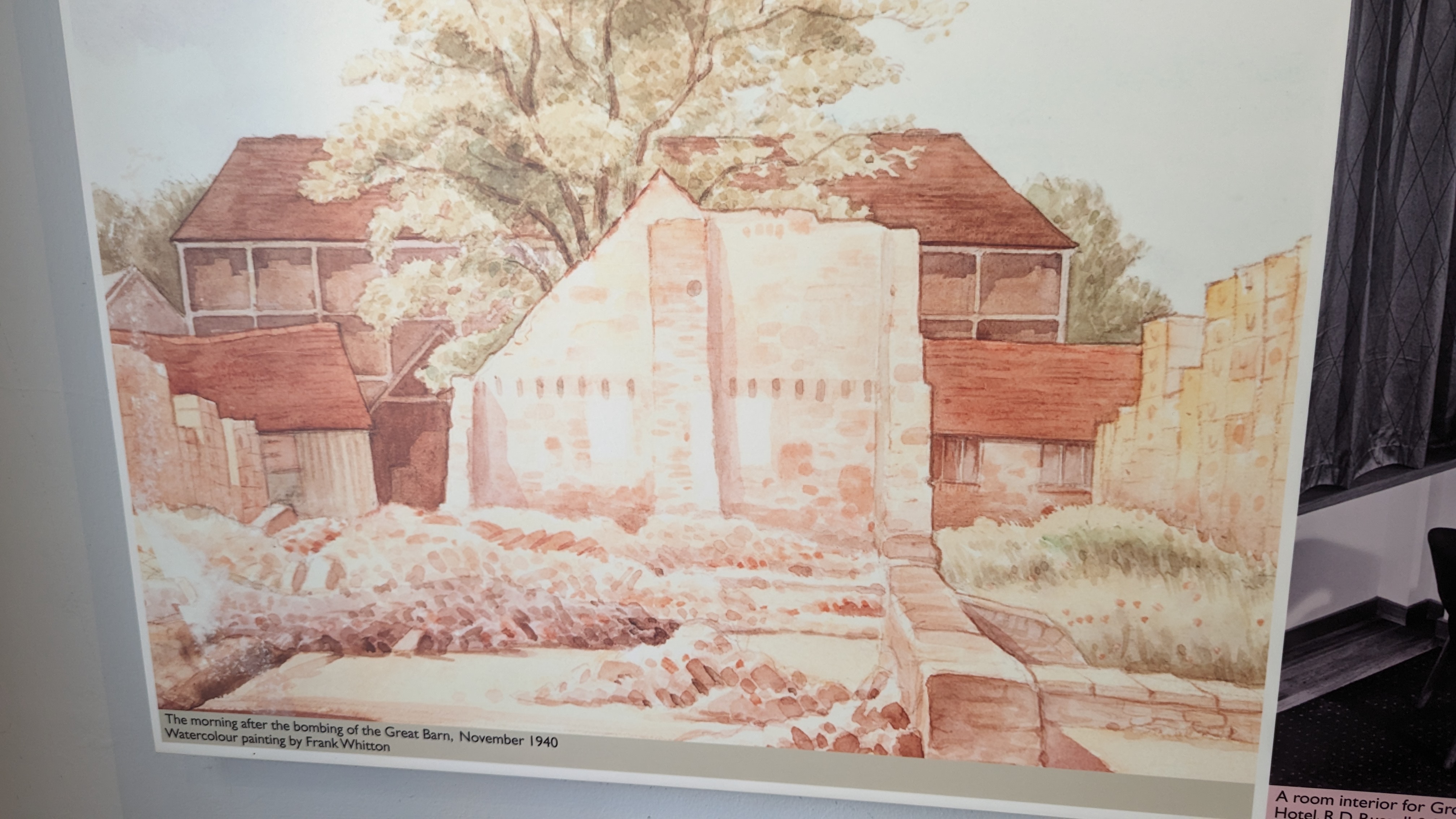
‘There were several large fires in Broadway during the war. On the night of December 11th 1940 a German bomber dropped a quantity of incendiary bombs on the village. A number of them fell on Gordon Russell’s furniture factory setting light to a large wooden, thatched barn. The building containing fine furniture and textiles, brought from London for safe keeping, was quickly destroyed. Ironically, the barn also contained a large order of furniture for Sir John Anderson – the Minister for Air Raid Precautions!‘
‘Another incendiary landed on the machine shop roof burning a hole, before being extinguished, it is believed, by a factory worker who lived nearby. The temporary plywood patch which was nailed on the underside of the hole was still in place when the factory was demolished in 2004. When a cottage adjacent to the factory was recently re-thatched, an unexploded incendiary bomb was discovered lodged in the old thatch. According to an Evesham Journal report, published at the end of the war, bombs fell in the Broadway area on seven separate occasions.‘
So, the Broadway fire brigade history pages suggests the raid was on December 11. But other sources prefer the night of November 14th. The night of the infamous Coventry Raid. But I have found another site claiming the raid that destroyed the barn was in October! But I’ve moved this blog post from November 14th to December 11th because I think the Fire Brigade should know what it is talking about!
Gordon Russell
Gordon Russell was a famous furniture designer. During the War, he turned over his carpentry workshops to the war effort. They made the wings of the famous World War Two Mosquito fighter bombers in Russell’s modernist furniture factory. This was in the Back Lane of Broadway. And next to the bombed barn is now a Co-Op supermarket.
The Mosquito was fast enough to be a fighter and could carry a decent payload of bombs. Because of their flexibility and speed, they had many roles in the war, including being the pathfinder for many of the nighttime raids on Germany.
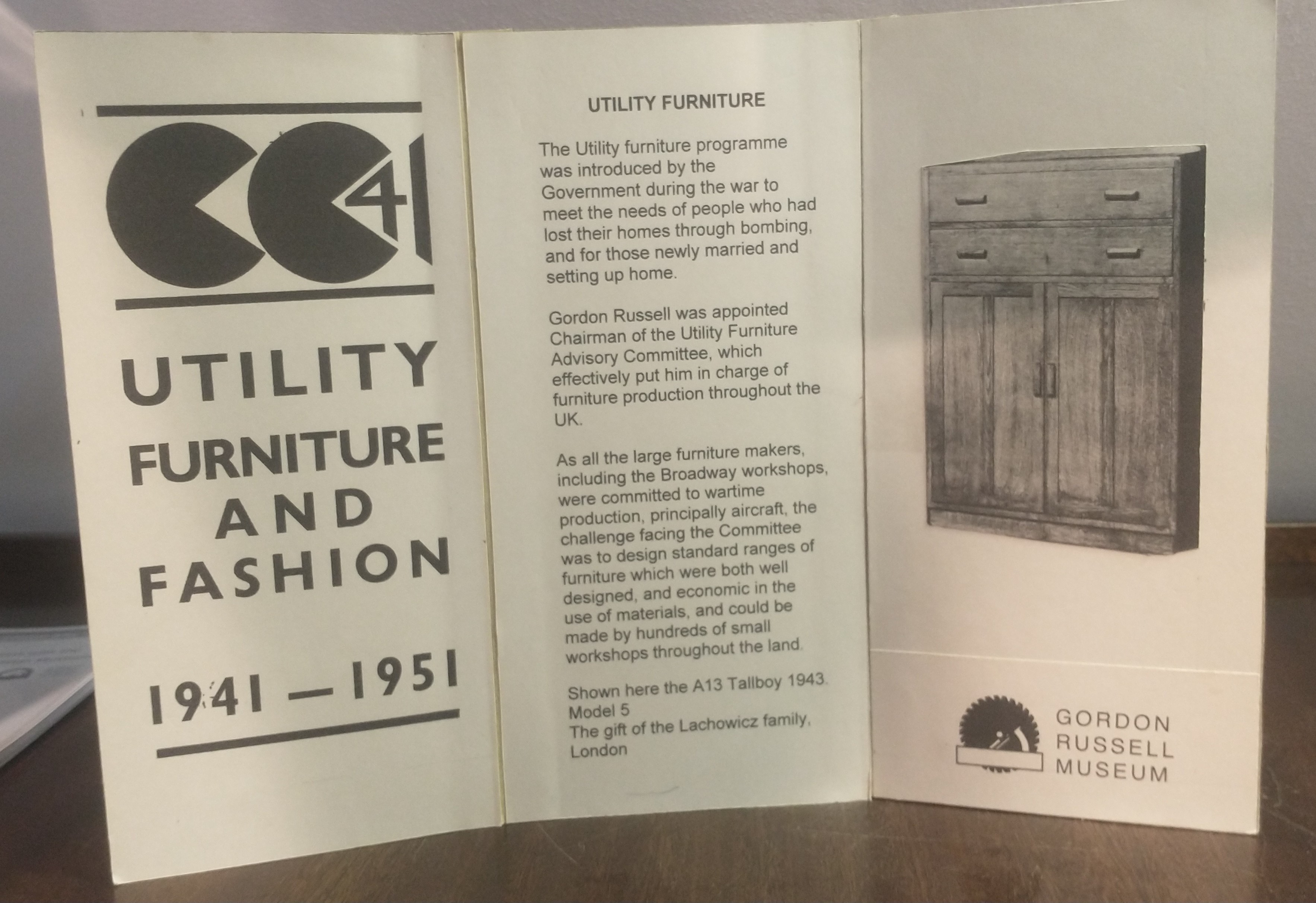
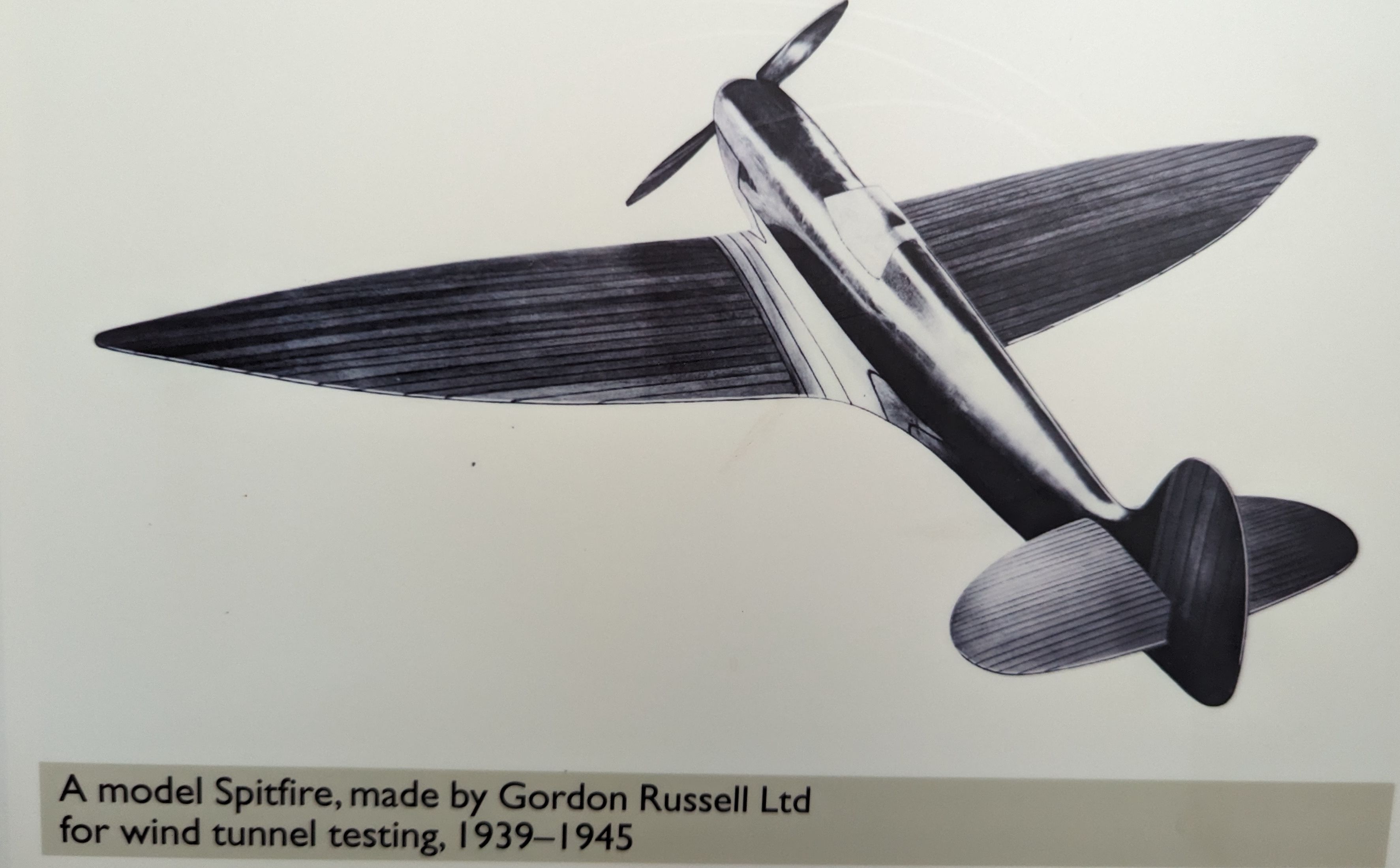
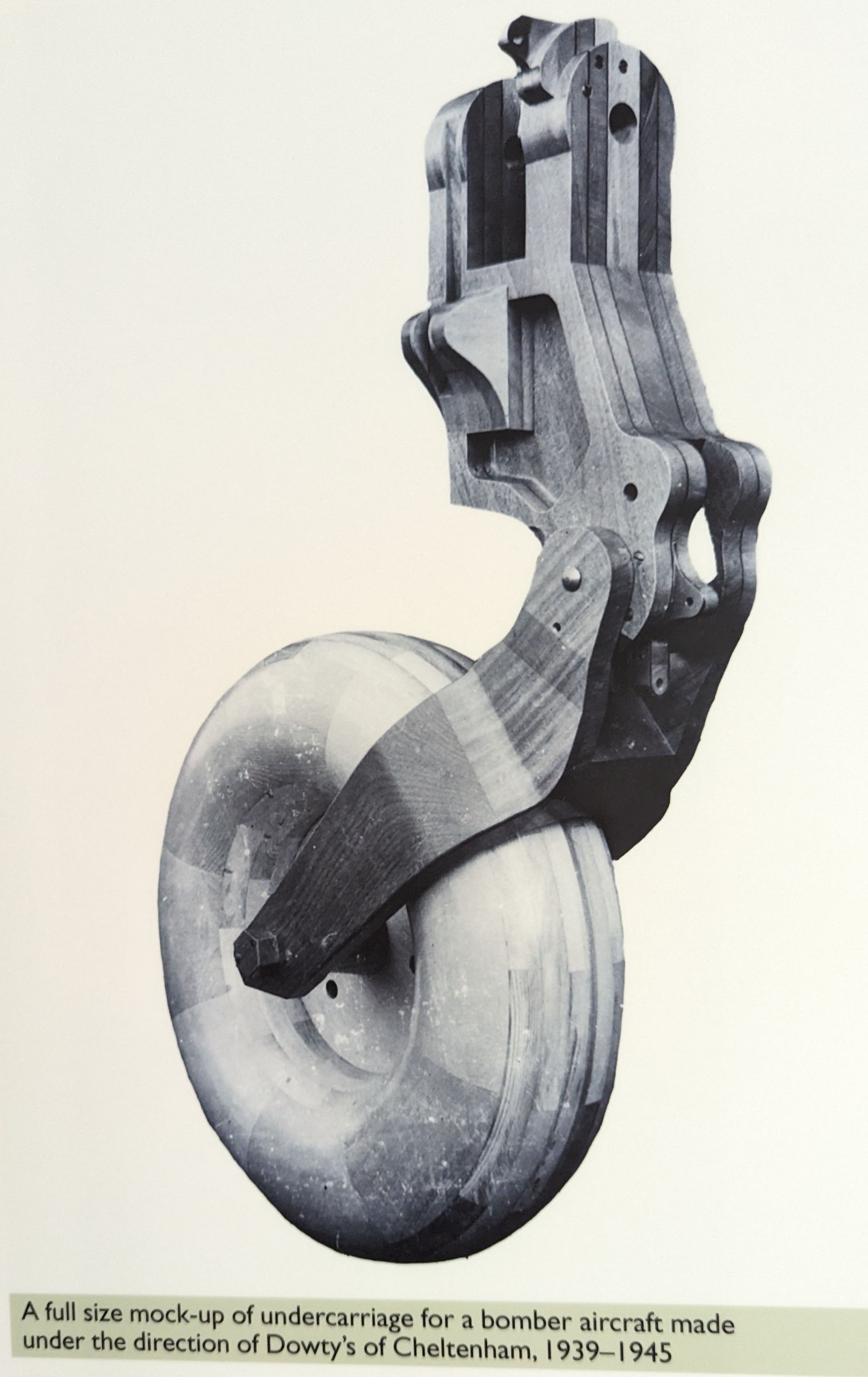
Russell’s factory also made ammunition boxes, and high-precision aircraft models for wind tunnel testing and other purposes. Gordon himself designed a utility range of furniture to minimise the amount of wood needed for new furniture during the war.
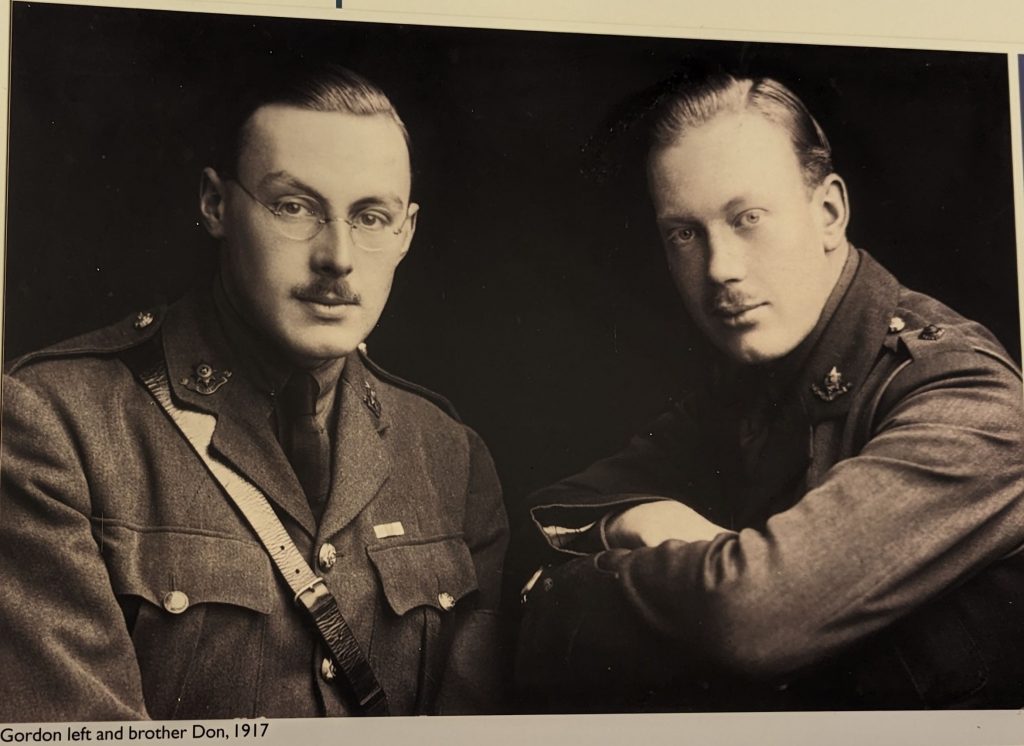
Gordon Russell’s Utility Range WW2The Barn destroyed by bombing by Frank WhittonModel Spitfire for wind tunnel testingGordon and Don Russell 1917
Images above taken by Kevin Flude of the displays at the Gordon Russell Museum, Broadway. The Museum is well worth a visit, and Broadway itself remains a delight.
My Father & the Mosquito
My father, I discovered a couple of nights ago, worked on Mosquitoes in his time in the RAF. His job was to salvage instruments from crashed aeroplanes. Mosquitoes were, along with Spitfires, and Hurricanes, amongst the ones he worked on. To buy his war time autobiography follow this link!
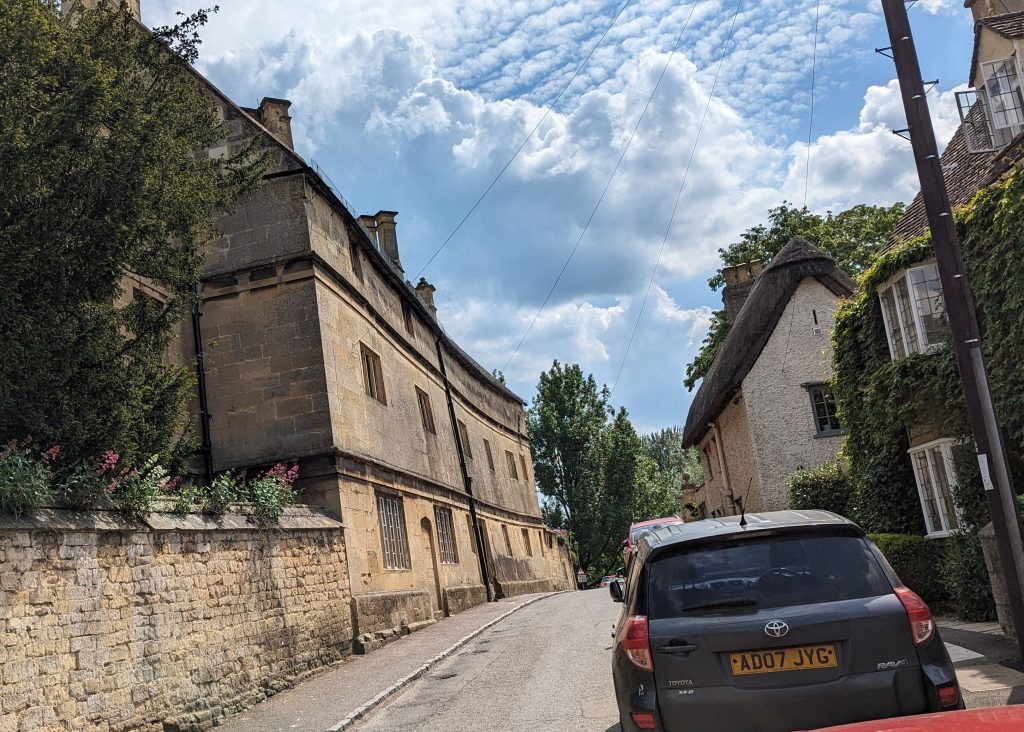
The Court House, Chipping Campden, poor photo by the Author! Where the mystery of the Chipping Campden Murder began
When I take Road Scholar groups to Chipping Campden, in the Cotswolds, we pass the Court House (pictured above) where I tell the story of the disappearance of William Harrison. Last time, looking at my old ragged notes, I noticed that the disappearance took place on the 16th August.
On that day in 1660 70 yr old William Harrison left the Court House where he was the Steward. The Steward went for a 2-mile walk, collecting rents. When he didn’t return, his wife sent out a man servant, John Perry, to bring him home. Neither had returned by the next morning.
Harrison’s son went out to search for his dad, and found John Perry. The two of them searched for Harrison without luck. Meanwhile, Harrison’s neckband and shirt were found with his hat. The clothes were said to be blood stained, but as those who read Sherlock Holmes will know, there was no certain test for blood stains (a test was introduced in the late 19th Century).
But the identification of blood stains led to suspicion of John Perry. He said he was innocent, but he buckled under questioning, maintaining it was nothing to do with him. But he claimed his brother and mother murdered Harrison for his money. Perry soon changed his testimony about his brother and mother and eventually pleaded insanity. All three were hanged.
Two years later, Harrison returned home, claiming to have been abducted by pirates and sold into slavery in Turkey before escaping and returning to England.
This is, pretty much, the bones of the story I have told my groups over the last 15 years. But what is wonderful about my job and this ‘Almanac of the Past:, is that you get to dig that little bit deeper than the local guidebook.
The first new ‘fact’ I discovered was that Harrison was Steward to the Lady Juliana Noel. She has a very prominent monument in St James Church, near the Court House and has long fascinated me. I will write more about her one day. Meanwhile, have a look at my post on her Dad, Baptist Hicks and how the family came to be Lords of the Manor of Chipping Campden, and Campden Hill, Notting Hill.
Back to my new discoveries about the Crime! John Perry, his mother and brother were actually tried twice for the crime. The first judge refused to try them for murder in the absence of the body. But they were encouraged to plead guilty to robbery, as they would then be eligible for an amnesty for first time convictions. This had been introduced by the new King Charles II on his restoration. So they were convicted.
However, another Judge was willing to try them in the absence of a body, and they were, after all, tried for the murder. But having pleaded guilty to robbery (to avoid the risk of being executed), they had no real defence to the charge and were sentenced to be hanged.
Nor was the hanging simple: Joan Perry, the mother, was hanged first because she was said to be a witch who was preventing her sons from pleading guilty. After she was hanged, her sons still maintained their innocence. The oldest son was then hanged. But the youngest son still claimed his innocence and was hanged too.
The hangings took place on the hill above Broadway, the highest point of the Cotswolds, where Broadway Tower now stands, and a famous beauty spot. Mother and son were buried under the Gibbet, but John Perry was hanged in chains and kept on display as a warning to others not to follow his example.
As to William Harrison’s story of his abduction, it sounds a little unlikely in rural Gloucestershire. To a modern mind, it seems more likely that he felt the need to leave home, or had some form of breakdown, or did he collude with the Perry’s to steal money from the Noel Estate? I wonder how he reacted when told that three people lost their lives because of him?
But, it has been suggested that Harrison was kidnapped by people involved in the English Civil War who had secrets to keep which Harrison as Steward might have known. He said English people had kidnapped him and put on a ship to America which was attacked by ‘Turkish’ (maybe Barbary?) Pirates.
The case led to a ‘no body, no murder’ rule which survived until 1954. But in modern times a body is not essential to a successful prosecution for murder, particularly in domestic murder cases, provided there is sufficient evidence to prove the case.
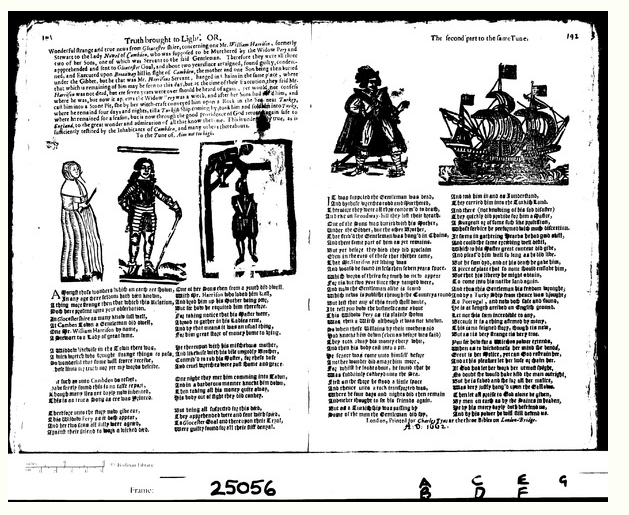
The case is normally referred to as ‘The Chipping Campden Wonder’ and it has often been written about, for example by Linda Stratmann. I have been wondering why it was so named, there being nothing wonderful about a murder or an abduction. But I have just found a ballad that was written about the case that might explain it. This claims that Joan Perry was indeed a witch, Harrison was attacked and buried in a pit but was, somehow, magically conveyed to Turkey, from which he eventually escaped to return to Chipping Campden. The Wonder is presumably the saving of Harrison by God and transportation to Turkey? The ballad clarifies that there was therefore no miscarriage of justice, as the Perrys were involved with diabolical doings, and that the Grace of God saved Harrison despite the best efforts of the Perrys.
Here is the ballad of the ‘Wonder’.
‘Amongst those wonders which on early are shown, In any age there seldom hath béen known, A thing more strange then that which this Relation, Doth here present unto your observation. In Glocestershire as many know full well, At Camben Town a Gentleman did dwell, One Mr. William Harrison by name, A Stewart to a Lady of great fame.
A Widdow likewise in the Town there was, A wick wretch who brought strange things to pass, So wonderful that some will scarce receive, […]hese lines for truth nor yet my words beleive.
[…] such as unto Cambden do resort, Have surely found this is no false report, Though many lies are dayly now invented, This is as true a Song as ere was Printed.
Therefore unto the story now give ear, This Widow Pery as it doth appear, And her two sons all fully were agréed, Against their friend to work a wicked déed.
One of her Sons even from a youth did dwell, With Mr. Harrison who loved him well, And bred him up his Mother being poor, But sée how he requited him therefore.
For taking notice that his Master went, Abroad to gather in his Ladies rent, And by that means it was an usual thing, For him great store of money home to bring.
He thereupon with his mischevous mother, And likewise with his vile ungodly Brother, Contriv’d to rob his Master, for these base And cruel wretches were past shame and grace.
One night they met him comming into Town, And in a barbarous manner knockt him down, Then taking all his money quite away, His body out of sight they did convey.
But being all suspected for this déed, They apprehended were and sent with spéed, To Glocester Goal and there upon their Tryal, Were guilty found for all their stiff denyal.
Jt was supposed the Gentleman was dead, And by these wretches robd and Murthered, Therefore they were all thrée condem’d to death, And eke on Broadway-hill they lost their breath.
One of the Sons was buried with his Mother, Vnder the Gibbet, but the other Brother, That serv’d the Gentleman was hang’d in Chains, And there some part of him as yet remains.
But yet before they died they did proclaim Even in the ears of those that thither came, That Mr. Harison yet living was And would be found in less then seven years space.
Which words of theirs for truth do now appear For tis but two year since they hanged were, And now the Gentleman alive is found Which news is publisht through the Countrys round
But lest that any of this truth shall doubt, Ile tell you how the business came about This Widow Pery as tis plainly shown Was then a Witch although it was not known.
So when these Villains by their mothers aid Had knockt him down (even as before was said) They took away his money every whit, And then his body cast into a pit.
He scarce was come unto himself before Another wonder did amaze him more, For whilst he lookt about, he found that he Was suddainly conveyd unto the Sea.
First on the shore he stood a little space And thence unto a rock transported was, Where he four days and nights did then remain And never thought to see his friends again.
But as a Turkish ship was passing by Some of the men the Gentleman did spy, And took him in and as I understand, They carried him into the Turkish Land.
And there (not knowing of his sad disaster) They quickly did provide for him a Master, A Surgeon or of some such like profession, Whose service he performed with much discretion.
It séems in gathering Hearbs he had good skill, And could the same excéeding well distil, Which to his Master great content did give, And pleas’d him well so long as he did live.
But he soon dyd, and at his death he gave him, A piece of plate that so none should enslave him, But that his liberty be might obtain, To come into his native land again.
And thus this Gentleman his fréedom wrought; And by a Turky Ship from thence was brought; To Portugal, and now both safe and sound, He is at length arrived on English ground.
Let not this séem incredible to any, Because it is a thing afirmed by many, This is no feigned story, though tis new, But as tis very strange tis very true.
You sée how far a Witches power extends, When as to wickedness her mind she bends, Great is her Malice, yet can God restrain her, And at his pleasure let her loose or chain her.
If God had let her work her utmost spight, No doubt she would have kild the man outright, But he is saved and she for all her malice, Was very justly hang’d upon the Gallows.
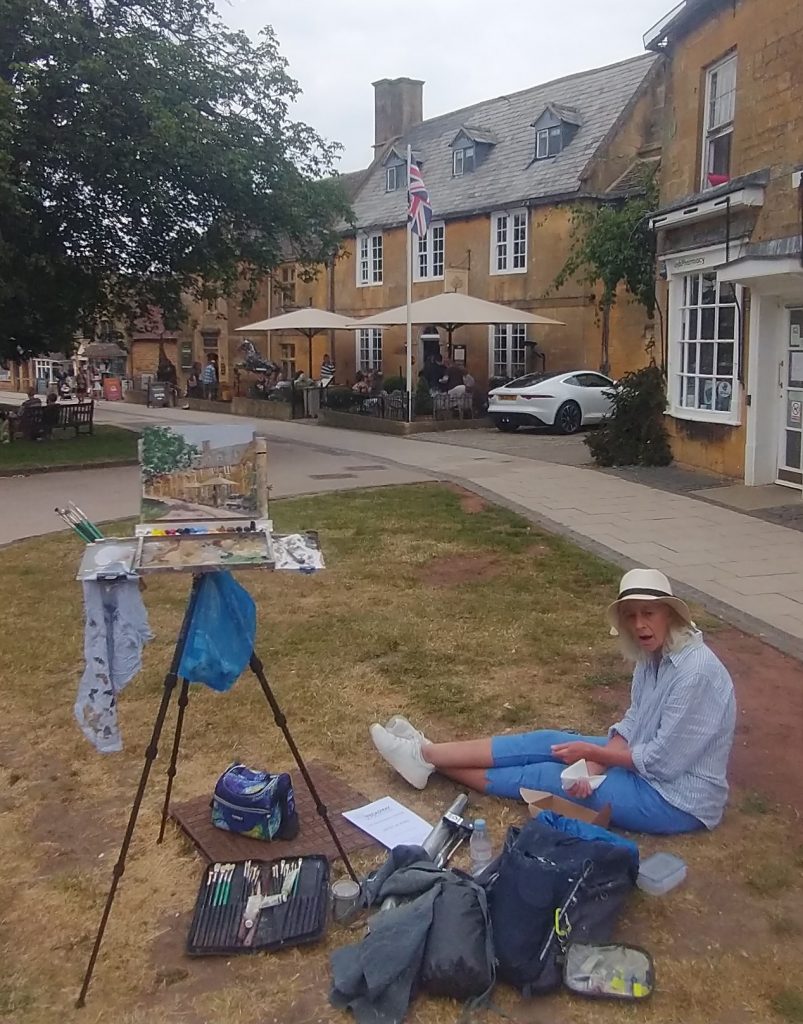
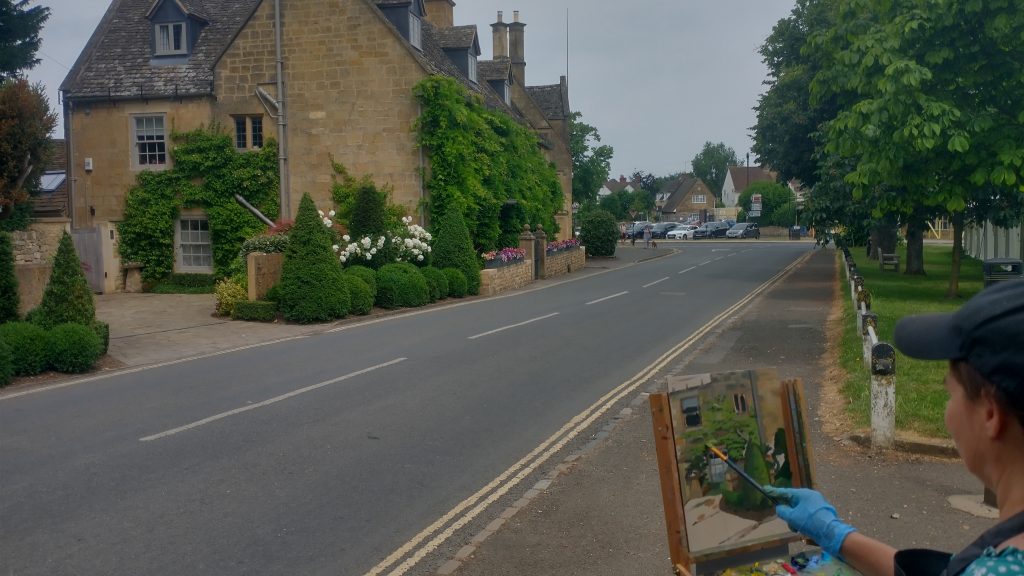
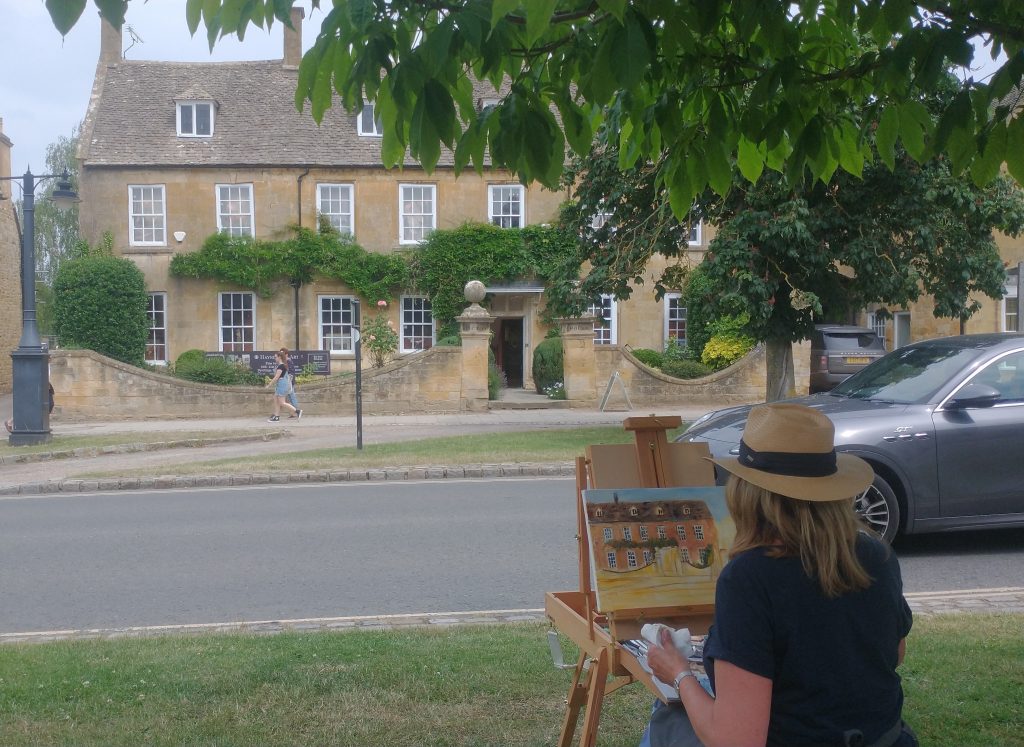
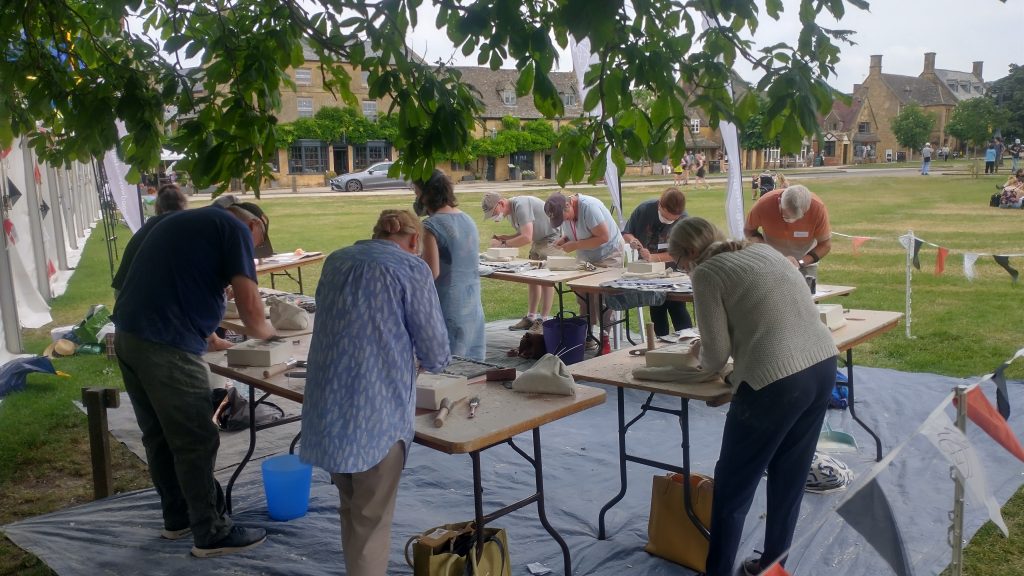
One of the joys of my Summer is revisiting places I know and love in my role as a Course Director for Road Scholar. I first came across the ‘en plein air’ in 2023. On Sunday, June 18th. I was in Broadway, once considered the most beautiful village in Britain. It was also the model for Riseholme in the wonderful Lucia books by E. F. Benson (made into a TV series by the BBC starring Prunella Scales, Geraldine McEwan and Nigel Hawthorne).
The day I visited, in 2025, was last Sunday, June 15th. I have added new photos and revised the texts.
How it Works
The artists register in the morning and have their paper or canvas stamped, or given a block of Maltese stone. This proves that they have done all the work on the day itself.
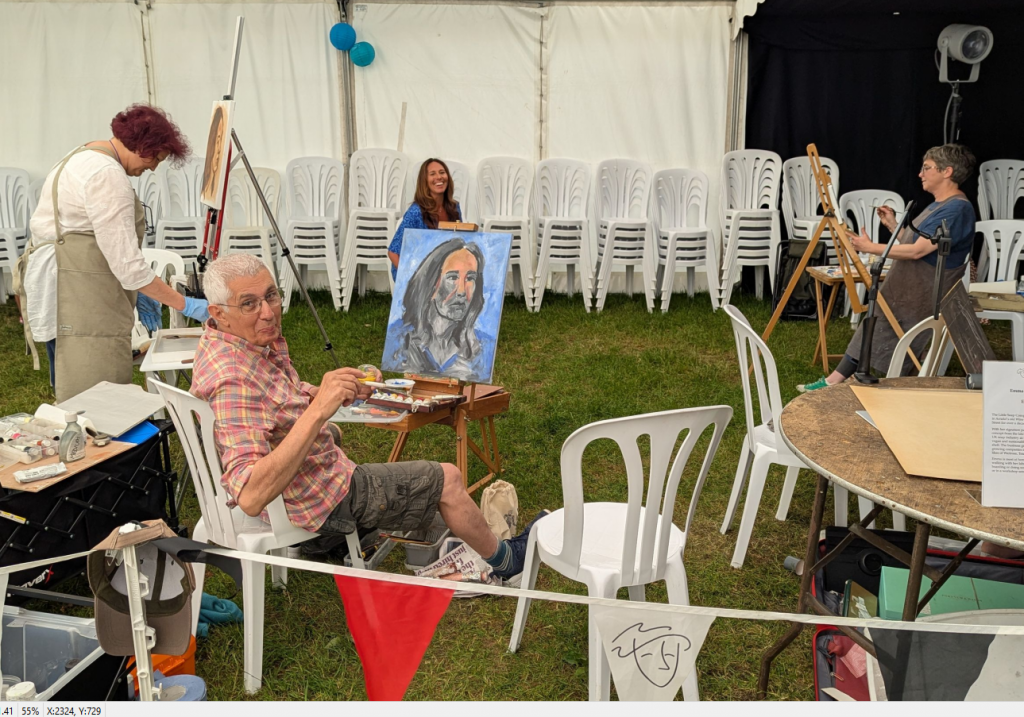
This year there were no sculptors. Instead, there were live models in the marquee being painted by portrait painters.
Broadway Paint off, Local Portraits. 2025 Photo K Flude
They take their blank canvases to create a work of art in the village. At 4pm or so, they are judged. At 5pm, the art works are exhibited and are on sale in the Marquee on the village green.
Broadway Arts Festival 2025, Photo K Flude
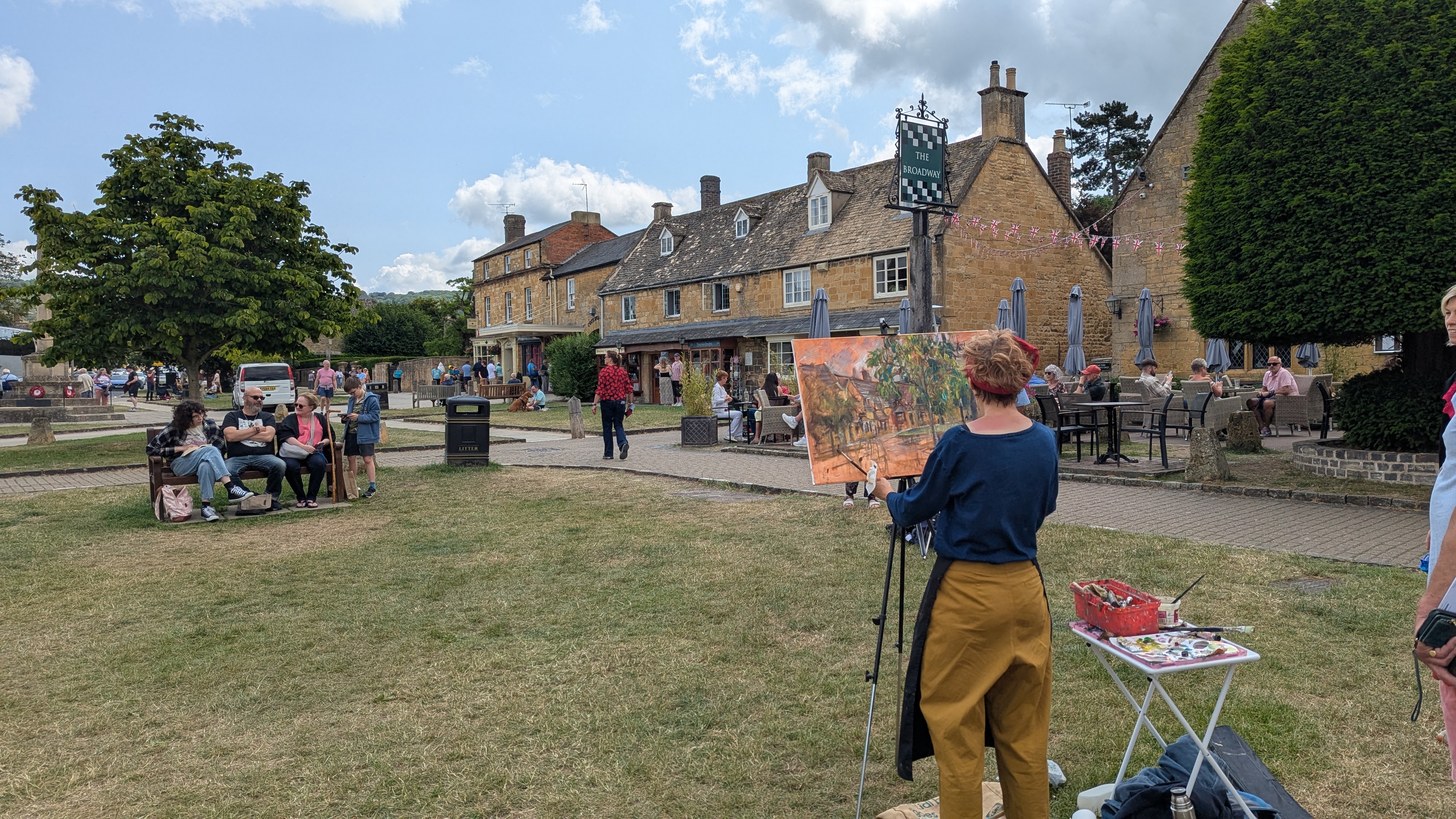
It’s always a delight walking around Broadway. Bun, but with an artist and easel every 50 yards or so even more enjoyable.
The Most Beautiful Village?
The appellation of most beautiful village, came in the late 19th Century. Broadway, once gained its wealth by selling wool. When that declined, the village became an important stop on the Toll Roads. It was on the stage coach route from Aberystwyth to Worcester, Oxford, and London. Fish Hill, nearly 1000 feet high, was an obstacle and coaches made a stop here to prepare or recover. Some coaches used up to 10 horses to get to the top. But with the arrival of Brunel’s Great Western Railway to the Cotswolds the village was nearly ruined. Half the village, the Broadway Museum says, moved away as their livelihood serving the coaching trade died.
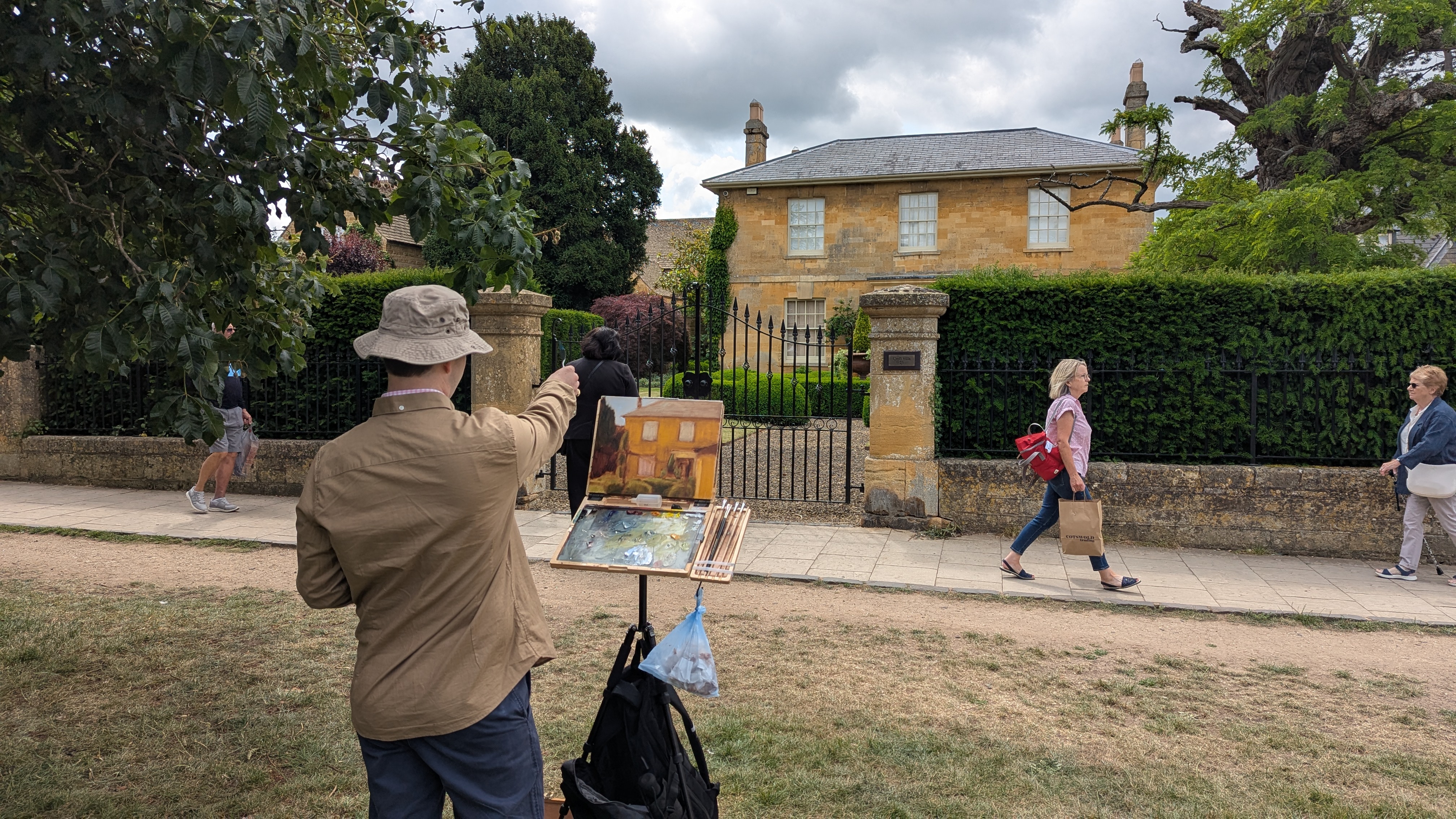
Artist painting in the ‘Great Broadway Paint off’ 2023 Photo K FludeAnother artist participating Artist in the ‘Great Broadway Paint off’ Photo K Flude 2023@dawnjordanart Great Broadway Paint off’ Photo K Flude 2023
But artists and writers, led by Americans Frances Millet and Edwin Abbey, turned Broadway into a much sort-after country retreat. Visitors included Oscar Wilde, J. M. Barrie, Singer-Sargeant, William Morris, Edward Burne-Jones, Gabriel Dante Rossetti, American actress, Mary Anderson, Edward Elgar, E. F, Benson. Mark Twain visited for Millet’s marriage.
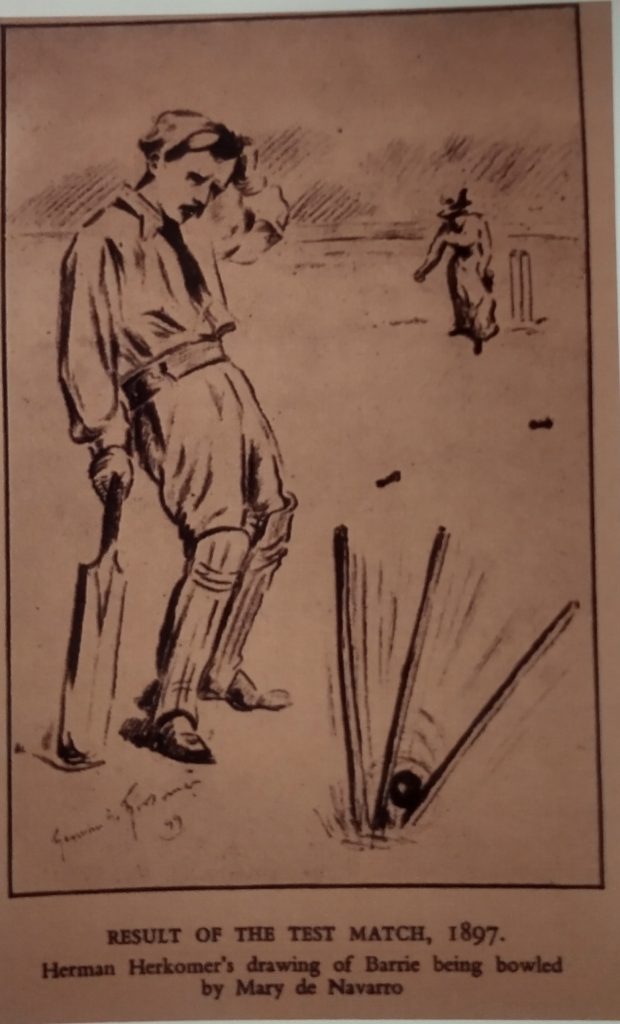
J.M. Barrie being bowled by Mary de Navarro. (aka Mary Anderson, who played many roles including Juliette at Stratford-on-Avon)
Gordon Russell & Henry T Ford
What made the visit particularly interesting was the story told by the volunteer at the Gordon Russell Museum in Broadway. This is the story as I understood it:
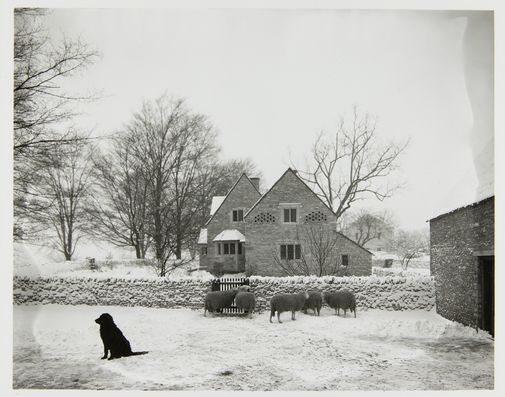
The Russells restored the Lygon Arms in Broadway using Arts And Crafts architects. They also restored antique furniture. The son, Gordon Russell, became a leading designer of modernist Furniture. He advertised to passengers on the Cunard Line in order to attract the attention of rich American visitors. One, Henry T Ford, was interested. He came to Broadway, staying at the Lygon arms. He was taken to nearby village Snowshill, where Ford bought a Cotswolds Farmhouse, complete with Blacksmith’s workshop. They were shipped stone by numbered stone to Brentford on the Thames. Then to the London Docks and across the Atlantic. Here. Ford set them up in a Museum in Michigan where they still are!
Sculptors at the Great Broadway Paint off (2023)
Research suggests it’s a little more complicated, in so far as Ford purchased his first Cottage before coming to Broadway. But it still leaves a delightful story about American ideas of Quintessential English village life. For pictures see my post here. And for another look at the story look at this web site here:
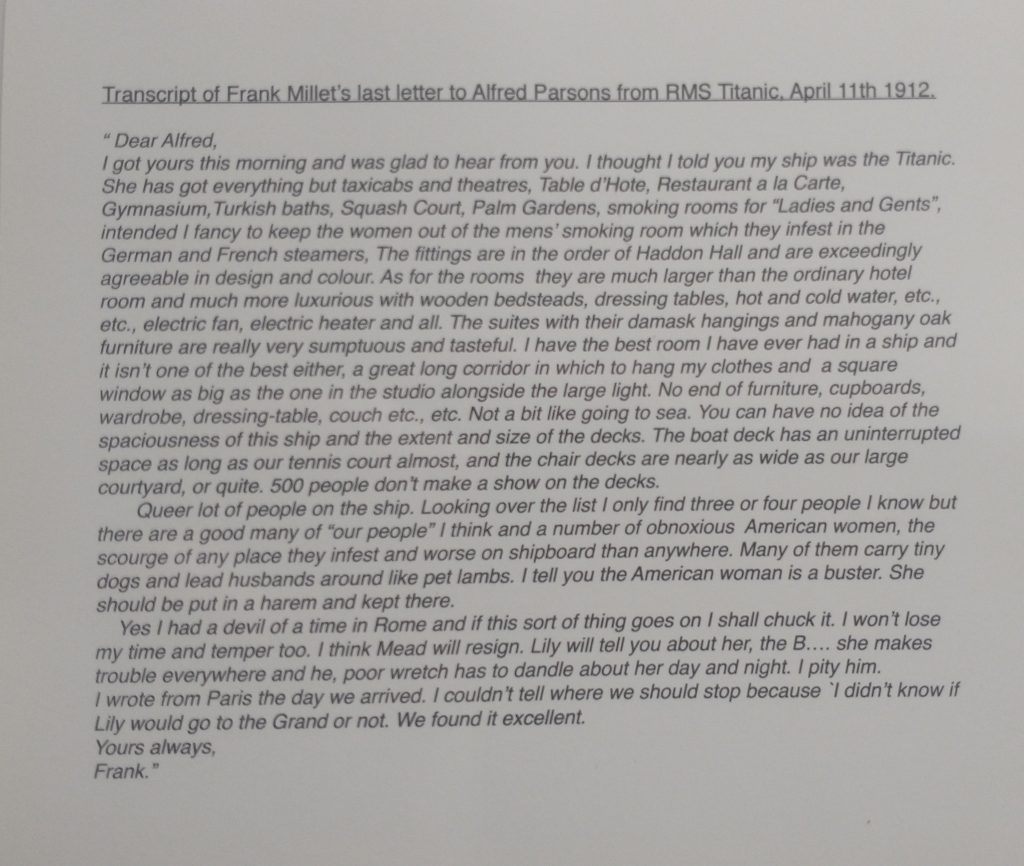
By the way, Frances Millet planned to return to the States on the Titanic. He was one of the 1500 who drowned. A letter he wrote while on the ship was posted, probably in France. It is on display in the Broadway Museum (2023).
Cotswold Cottage relocated to Dearborn, Michigan, Jan 1931. The Dog is called Rover.
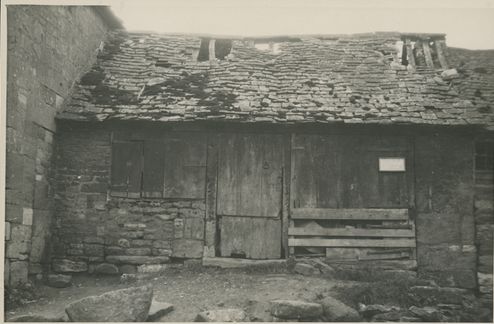
Following my post where I introduced the story of Henry Ford and his visits to Broadway; my subscriber from Paris sent me details that led me to a really comprehensive description of Ford’s activities in the Cotswolds. He loved it so much, as the post from the Henry Ford Museum reveals, that he sent to the US not only a complete Cottage, but also the Barn, Stables and dry stone walling. He then went to stay in the Lygon Arms in Broadway; visited nearby Snowshill, where a dilapidated Blacksmith Shop dating to the 1600s with all its tools was purchased and sent to the Museum in Michigan.
Snowshill Blacksmith shop dating to the 1600s taken to the Henry Ford Museum, Dearborn, Michigan
Here is the post – it has lots of interesting photos.