December 21 – Reflections on the Solstice

The Solstice and the East Pediment of the Parthenon
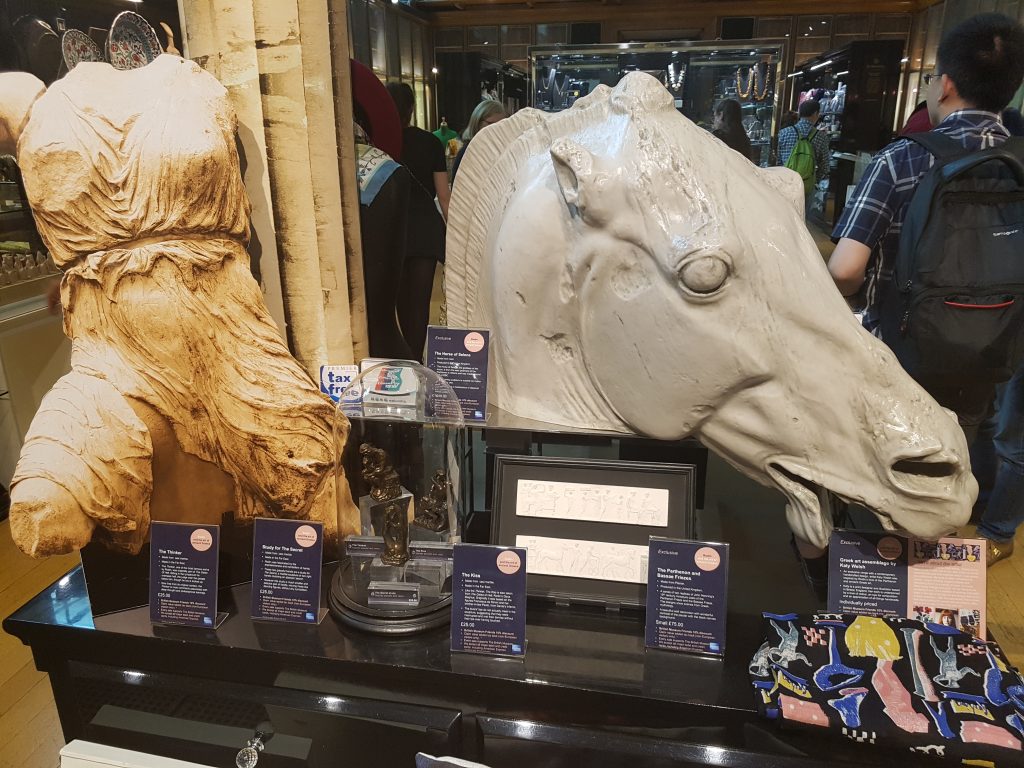
British Museum Shop, reproductions of Hestia and Selene’s Horse from the Parthenon Marbles

At the Summer Solstice, I took a group to the British Museum and, a few days later, to Stonehenge, and managed to ‘integrate’ the two into a solstice narrative. At the BM, over years of trying to explain the sculptures, I have been building in my mind an interpretation of the Pediment that gives, I hope, an original insight into the possible intentions of the sculptors. I don’t know how ‘true’ it is, but I do think it gives an insight into metaphor and symbolism in great works of art. Bear in mind that there is a lot of uncertainty about some of the attributions, and, that the male and female virtues that I am talking about are traditional ones, not necessarily how we would express it in the modern world.
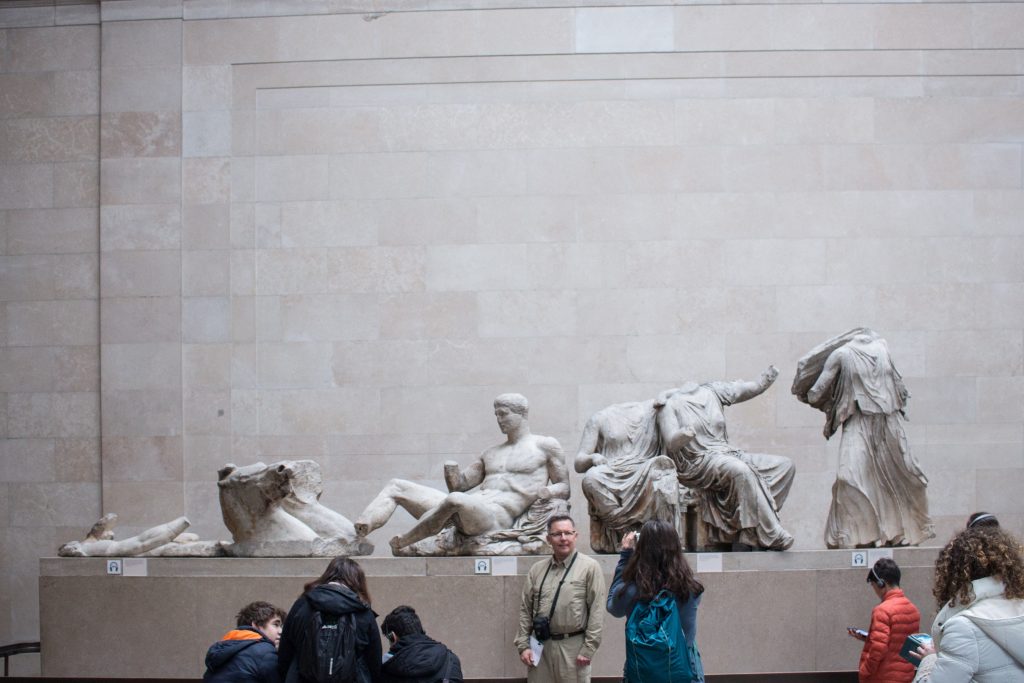
Pediment Sculptures Photo by Nicole Baster on Unsplash

At the left of the above photography, you see the horses that take Helios chariot into the sky to bring up the sun to light the world every day. Most sun deities are male, and the Sun gives light and life to the world, without it this earth is an inert block of ice cold stone. The next statue is casually laying back and looking fit, relaxed and not looking as if he is in that position because of the impossible triangular Pediment space he inhabits. He is the epitome of male strength, usually identified with Hercules but other people have other ideas and a young Dionysus is another suggestion. Whoever he is he represents male beauty and strength. So this end of the pediment represents the Sun and male virtues. This is the East Pediment of the Parthenon which is orientated to the rising sun, a little north of east.

Next figure is Demeter, the goddess of fertility, the goddess of the earth. Placed here to remind us that the Sun needs the Earth to create life and sustenance. It reminds us that the universe is not male, the male only works in conjunction with the female. Demeter is cuddling her daughter Persephone, the Goddess of Hades. She reminds us that life is a cycle of death and life. Plants die, turn into soil and create the conditions for future life.

Next is Hebe, daughter of Zeus and Hera, wife of Heracles (Hercules). She is the cupbearer to the Gods and gives them the ambrosia that keeps them forever young. She is the Goddess of Immortality, a reminder that the universe is eternal.

Next to Hebe is a void where there was the central statue of the east pediment depicting the Birth of Athena (according to Pausanias who wrote a guide in the 2nd Century BC to the Temple). Athena was born from the head of her father Zeus- a virgin birth. Athena therefore is, in some ways, the greatest of the Olympians, as she has the virtues of her female sex and the virtues of her father’s masculinity (and, dear Gods, hopefully not the massive ‘Me Too’ vices of her father). She is therefore, wise, nurturing, just, intuitive, decisive, a leader; an ideal combination of male and female.
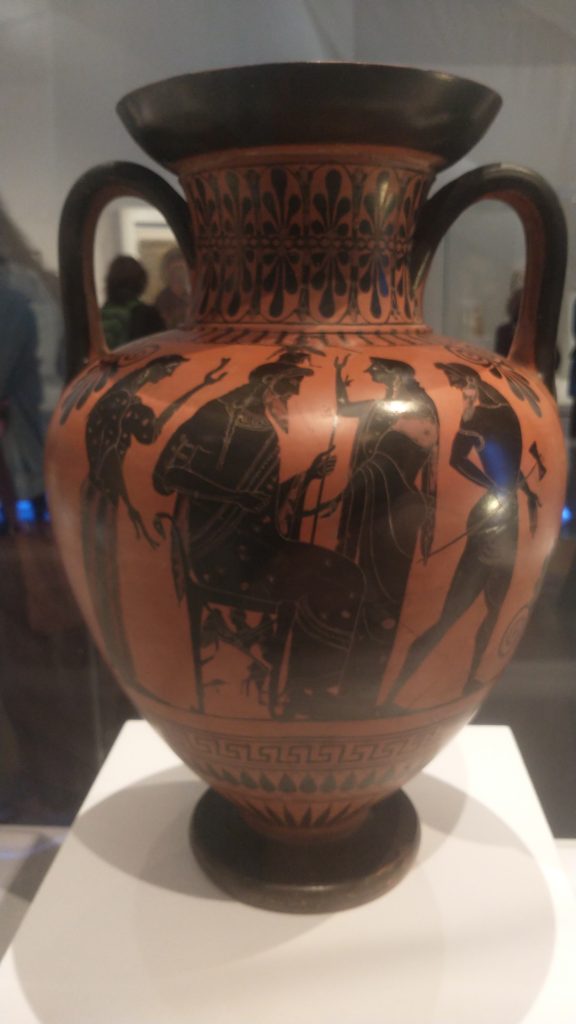
Zeus (sitting) Hephastus to right (looking back with Axe)  Athena just visible above Zeus's head
Zeus (sitting) Hephastus to right (looking back with Axe) Athena just visible above Zeus’s head

Her back story is that her dad, Zeus eats her mum, Metis, who is pregnant with her. Sometime later, he has a cracking headache. Hephaestus, the disabled artificer God hits Zeus over the head with an axe to clear the headache. Zeus gives birth to a fully formed Athena through the split in his head. She was known as Athena Parthenos, Athena the Virgin. Her name is originally Athene but it got changed to Athena in 500 BC.
Hestia, Dione, Aphrodite, Horse of Selene’s chariot

To Athene’s left is Hestia (Vesta for the Romans). Her name means “hearth, fireplace, altar” and she is the goddess of the domestic sphere, of the comforts of home, of a warm fire enjoyed by a loving family.

The next set are two beautifully draped women languidly leaning on each other, and these are Dione, with her daughter Aphrodite – the Goddess of Love. Dione is the daughter of Gaia and Uranus daughter of earth and sky. So, here, counterpoised to Hercules, are epitomes of women. Women of power, creation, and love.

Finally, we have the exhausted horse of Selene. Her chariot takes the moon into the sky, positioned opposite to Helios and the Sun. Selene is the Moon goddess, and the Moon is beautiful, powerful as it gives us the tides and fundamental to the life of humans as she presides over the menstrual cycle. Compared to the movements of the Sun which any fool can work out, and which are relentless (symbolising Justice) the movements of the Moon are mysterious to most of us. So Selene is beautiful, powerful, creative and the Goddess of Intuition.

So, if you put it all together, the East Pediment of the Parthenon shows that the world is a union of the male and the female, balanced between the two with Zeus and Athene in the middle, with Athene holding the main part because she, in her person, represents both the male and the female.

Of course, we know that the Athenian society was a patriarchal one with women mostly kept in the domestic sphere. But here, at least, women were given an equal billing in the organisation of the Cosmos.
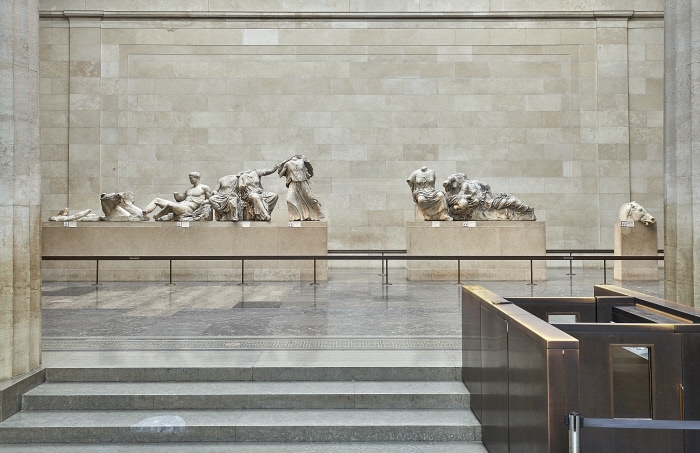
Sculptures from the east pediment of the Parthenon

I must end by warning the reader that this is only my interpretation. I am not a scholar of Ancient Greece. I have come to my own conclusion based on spending a lot of time looking at the marbles, doing Solstice Virtual Tours, and mostly informed by the labels in the gallery, with of course, some reading including Mary Beard’s book entitled ‘Parthenon’ and the BM’s guidebook. In particular, I have not incorporated into my ‘story’ the sculptures that were in the gaps that do not survive or only in fragments scattered throughout the Museum world. However, what we do know is that in the centre is Zeus and Athene and at the edges are the chariots of the Sun and the Moon. And so fitting to celebrate the Solstice.

For a look at the Winter Solstice in general, look at my post here:

Originally written in 2022 and revised 2024, 2025

Christmas with Jane Austen December 20th

Christmas with Jane Austen and Bullet Pudding

Christmas at Godmersham Park

Fanny Austen Knight was the daughter of Jane Austen’s rich older brother Edward. He, rather strangely to our modern minds, was adopted by distant relatives who were childless. ‘Hey! We have enough boys to be going on with – happy for you to take one, particularly as you own two stately homes!’ as Mr and Mrs George Austen probably never said.

One of those homes was Godmersham Park in Kent, the other was in Chawton, a lovely Hampshire Village where Jane, Cassandra and Mum Cassandra lived, and is now a Museum dedicated to Jane Austen.

Fanny also rather cruelly remembers Jane and Cassandra as being unfashionably dressed and not up with upper-class etiquette. She wrote this when she was an old woman. When she was a teenager and being well brought up, she wrote letters to friends of the family and relatives. Here are extracts from her Christmas letters.

Christmas Games

1811 to 1812 Fanny writing to a friend, Miss Dorothy Chapman

I don’t know whether I told you that Misss Morris’s are at home for the Christmas holidays. They are very nice girls and have contributed a good deal to our entertainment. None of us caught the whooping cough and have been very well the whole time. We have, in general, had cards, snapdragons, bullet pudding etc on any particular evening and Whist, Commerce and others and tickets were the favourite games. I think when cards fail the boys played every evening at draughts, chess, and backgammon.

Commerce is a three card poker type game played with counters. Tickets was Lydia Bennett’s favourite game, which is a gambling game based on luck. It is called, in Pride and Prejudice, ‘Lottery Tickets.’ One imagines it is not a compliment to Lydia’s intelligence that she prefers a game of pure chance.

Bullet Pudding

Bullet Pudding is explained by Fanny in another letter

‘You must have a large pewter dish filled with flour which you must pile up into a sort of pudding with a peak at the top, you must then lay a Bullet at the top & everybody cuts a slice of it & the person who is cutting it when the Bullet falls must poke about with their noise & chins until they find it & then take it out with their mouths which makes them strange figures all covered with flour, but the worst is that you must not laugh for fear of the flour getting up your nose & mouth & choking you. You must not use your hands in taking the bullet out.’

I used to play this as a child at Christmas. We used a coin, not a bullet. The contestants walk around the table with the flour pudding on which has a knife ready for cutting the pudding. When the music stops, the one the knife is pointing at cuts off a slice of the flour pudding. They hope not to make the flour collapse and the coin fall. In my family, we pushed the winner’s head into the flour to maximise the fun. Snapdragons is a lively game, you put some brandy in a tray or flat dish, add a few raisins, light the brandy and the game is to pick up and eat the raisins without getting burnt!

Other games mentioned by Fanny

Hunt the Slipper, Oranges and Lemons, Wind the Jack; Lighting a Candle in Haste; Spare Old Noll.

Another niece Anna received Jane Austen’s advice on writing a novel:

You are now collecting your people delightfully, getting them exactly into such a spot as is the delight of my life. Three or four families in a country village is the very thing to work on, and I hope you will do a great deal more, and make full use of them while they are so very favourably arranged.’

Follow this link to see my post on Mary Musgrove’s Christmas Letter to Anne Elliot in Persuasion.

First Published 20th December 2022, revised and republished December 2023, 2024, 2025
Collect your Holly & Ivy December 18th

Picture of Christmas greenery on a gift box
Holly and Ivy by Tjana Drndarski-via unsplash

So, the old Sun is dying, and if the Sun keeps going down we are all going to die. With all of nature dying or hibernating, evergreens are a symbol of a promise/proof that life will continue through the dark days. So, with its bright-green leaves and its luminous berries, Holly is the ideal evergreen for the Solstice. And as the prickles symbolise Christ’s Crown of Thorns, and the berries the red blood of Jesus, the symbolism works, too, for Christians.

Henry Mayhew (editor of Punch) in his ‘London Labour and London Poor’ (1851–62) talks of Christmasing for Laurel, Ivy, Holly, and Mistletoe. He calculated that 250,000 branches of Holly were purchased from street coster mongers every Christmas. He says that every housekeeper will expend something from 2d to 1s 6d, while the poor buy a pennyworth or halfpennyworth each. He says that every room will have the cheery decoration of holly. St Pauls Cathedral would take 50 to a 100 shillings worth.

He also calculates that 100,000 plum puddings are eaten. Mistletoe he believes is less often used than it used to be, and he hopes that ‘No Popery’ campaigners will not attack Christmassing again.

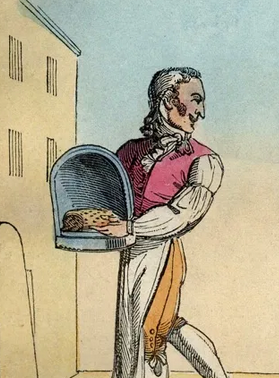
Hot plum pudding seller from Sam Syntax Cries of London 1820s
from the Gentle Author Spitalfields Life web site
Hot plum pudding seller from Sam Syntax Cries of London, 1820s
from the Gentle Author Spitalfields Life website

Culpeper on Ivy (1814 edition):

‘Ivy’ says Culpeper in his Herbal of 1653, its winter-ripening berries are useful to drink before you ‘set to drink hard’ because it will ‘preserve from drunkenness’. And, moreover, the leaves (bruised and boiled) and dropped into the same wine you had a ‘surfeit’ of the night before provides the ‘speediest cure’. (The Perpetual Almanac of Charles Kightly)

It is so well known to every child almost, to grow in woods upon the trees, and upon the stone walls of churches, houses, &c. and sometimes to grow alone of itself, though but seldom.

Time. It flowers not until July, and the berries are not ripe until Christmas, when they have felt Winter frosts.

Government and virtues. It is under the dominion of Saturn. A pugil of the flowers, which may be about a dram, (saith Dioscorides) drank twice a day in red wine, helps the lask, and bloody flux. It is an enemy to the nerves and sinews, being much taken inwardly, out very helpful to them, being outwardly applied. Pliny saith, the yellow berries are good against the jaundice; and taken before one be set to drink hard, preserves from drunkenness, and helps those that spit blood; and that the white berries being taken inwardly, or applied outwardly, kills the worms in the belly. The berries are a singular remedy to prevent the plague, as also to free them from it that have got it, by drinking the berries thereof made into a powder, for two or three days together. They being taken in wine, do certainly help to break the stone, provoke urine, and women’s courses. The fresh leaves of Ivy, boiled in vinegar, and applied warm to the sides of those that are troubled with the spleen, ache, or stitch in the sides, do give much ease. The same applied with some Rosewater, and oil of Roses, to the temples and forehead, eases the head-ache, though it be of long continuance. The fresh leaves boiled in wine, and old filthy ulcers hard to be cured washed therewith, do wonderfully help to cleanse them. It also quickly heals green wounds, and is effectual to heal all burnings and scaldings, and all kinds of exulcerations coming thereby, or by salt phlegm or humours in other parts of the body. The juice of the berries or leaves snuffed up into the nose, purges the head and brain of thin rheum that makes defluxions into the eyes and nose, and curing the ulcers and stench therein; the same dropped into the ears helps the old and running sores of them; those that are troubled with the spleen shall find much ease by continual drinking out of a cup made of Ivy, so as the drink may stand some small time therein before it be drank. Cato saith, That wine put into such a cup, will soak through it, by reason of the antipathy that is between them.

https://www.complete-herbal.com/culpepper/ivy.htm

Happy Eponalia

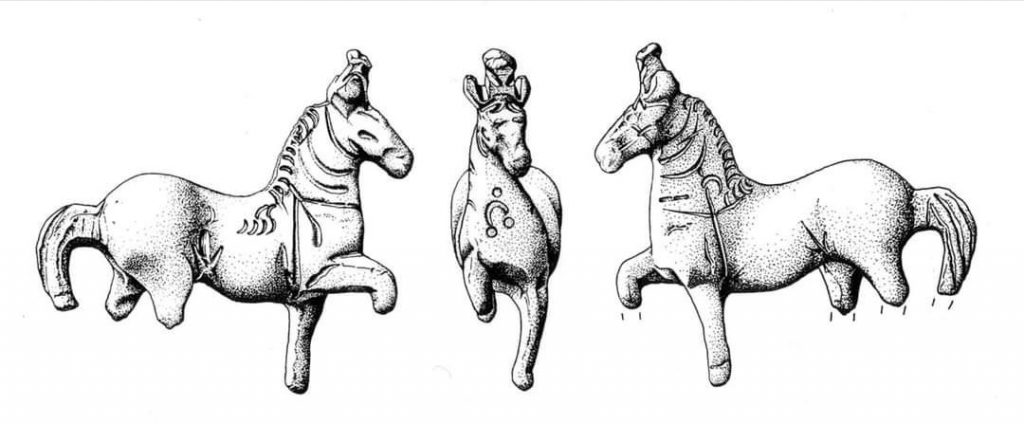
Roman Horse from Bunwell, Norfolk. Illustration by Sue Walker.

In 2021 I posted about Eponalia for the 18th Dec but I have now added the text to this page.

I’ve been too busy working on my Jane Austen and Christmas Virtual Tour ) to post over the last few days. And I have, therefore, shamelessly stolen this post off my Facebook friend Sue Walker, who is a talented archaeological illustrator, artist and a very good photographer.

She wrote: ‘the 18th December is the festival of the Celtic goddess Epona, the protector of horses, she was adopted by the Romans and became a favourite with the cavalry. This finely sculpted bronze horse with a head dress and symbol on its chest is 37mm high – found in Bunwell #Norfolk #Archaeology’

First published on December 17th 2022, Revised and republished December 2023

Trotty Veck, the Chimes and Charles Dickens’ Christmas Books December 16th

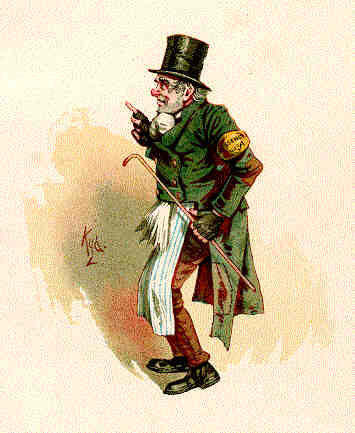
Dickens character Trotty Veck waits to run a message
Trotty Veck 1889 Dickens The Chimes by Kyd (Joseph Clayton Clarke)

As Christmas looms, seasonal publications have a mixture of wonder and joy at the coming family reunions and festivities mingled with an awareness that, for some, Christmas will depend on the Food Bank or the Charity Shelter. The weather is now cold, living costs continue to rise at the very time extra spending is needed to unlock the joy of the Season. Also to counter the dark, the cold, and the spectre of death which, in fact, has always been central to the season of winter.

Charles Dickens’ Christmas Books epitomise this dichotomy.And by adding an element of the supernatural, provided a vehicle for joy and hope. It also came with a forceful political message that the authorities and the rich were not doing their Christian duty to alleviate poverty. Christmas Carol contrasts the wealth of a mean rich Stockbroker with the family of his poor employee Bob Cratchit, and provides a powerful tale of redemption.

The Chimes

But in this post I want to concentrate on his second Christmas Book, ‘The Chimes’. It was published on December 16th, 1844. And tells the story of the stick-thin Trotty Veck who is an aged City messenger, nicknamed Trotty because of his habit of keeping himself warm by running on the spot. He is afraid to let his daughter, Meg, marry as he has so little hope for the future. While he is worrying, he, Meg and her intended Richard are approached by Alderman Cute and Mr Filer.

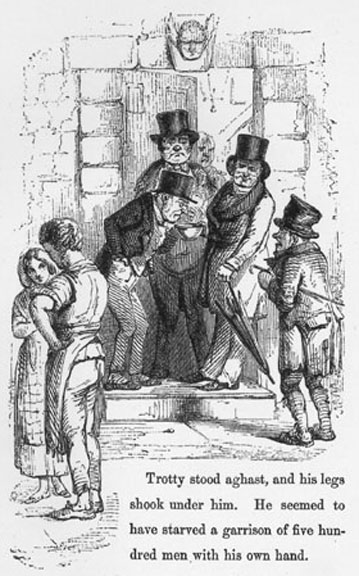
Meg, Richard, Mr Filer, Gentleman, Alderman Cute and Trotty Veck. Probably located by the door of St Nicholas, Colechurch, City of London.

Cute represents the financial industries in the City of London and the Law. Filer the new breed of political economists. These, working with the ideas of Malthus and the new science of Statistics, had proved, that generous support for the poor would, inevitably, lead to a country full of poor people and no rich people. And thus, they justified the Poor Law Amendment Act of 1832. At this time Dickens was a Parliamentary reporter (1831-1834), and he observed the cruelty and absurdity of this piece of iniquitous legislation. In 1929 my mother was born in a workhouse, where she had been taken by her unmarried mother. She was so ashamed she didn’t tell her children until she was in her 70s.

The Workhouse

That is the legacy of the cruel Workhouse system. It was based on providing the lowest possible level of support offering separation from family, meagre food, and sparse comforts. This the rate payers believed would encourage the poor to stop being lazy and get back out there to earn their own living. Thus allowing taxes to fall. (brilliantly satirised by Dickens’ Oliver Twist, asking for ‘More’).

Below, I enclose the scene from the Chimes, which satirises the attitude of the governing classes.

‘And you’re making love to her, are you?’ said Cute to the young smith.

‘Yes,’ returned Richard quickly, for he was nettled by the question.
‘And we are going to be married on New Year’s Day.’

‘What do you mean!’ cried Filer sharply?Enough  ‘Married!’

‘Why, yes, we’re thinking of it, Master,’ said Richard.  ‘We’re rather in a hurry, you see, in case it should be Put Down first.’

‘Ah!’ cried Filer, with a groan.  ‘Put that down indeed, Alderman, and you’ll do something.  Married!  Married!!  The ignorance of the first principles of political economy on the part of these people; their improvidence; their wickedness; is, by Heavens! enough to—Now look at that couple, will you!’

...

‘A man may live to be as old as Methuselah,’ said Mr. Filer, ‘and may
labour all his life for the benefit of such people as those; and may heap up facts on figures, facts on figures, facts on figures, mountains high and dry; and he can no more hope to persuade ’em that they have no right or business to be married, than he can hope to persuade ’em that they have no earthly right or business to be born.  And that we know they haven’t.  We reduced it to a mathematical certainty long ago!’

Alderman Cute was mightily diverted, and laid his right forefinger on the side of his nose, as much as to say to both his friends, ‘Observe me, will you!  Keep your eye on the practical man!’—and called Meg to him. 

...

‘Now, I’m going to give you a word or two of good advice, my girl,’ said the Alderman, in his nice easy way.  ‘It’s my place to give advice, you know, because I’m a Justice. ...

‘You are going to be married, you say,’ pursued the Alderman.  ‘Very
unbecoming and indelicate in one of your sex!  But never mind that.
After you are married, you’ll quarrel with your husband and come to be a distressed wife.  You may think not; but you will, because I tell you so. Now, I give you fair warning, that I have made up my mind to Put distressed wives Down.  So, don’t be brought before me.  

You’ll have children—boys.  Those boys will grow up bad, of course, and run wild in the streets, without shoes and stockings.  Mind, my young friend!  I’ll convict ’em summarily, every one, for I am determined to Put boys without shoes and stockings, Down.  Perhaps your husband will die young (most likely) and leave you with a baby.  Then you’ll be turned out of doors, and wander up and down the streets.  Now, don’t wander near me, my dear, for I am resolved, to Put all wandering mothers Down.  All young mothers,of all sorts and kinds, it’s my determination to Put Down.  Don’t think
to plead illness as an excuse with me; or babies as an excuse with me;
for all sick persons and young children (I hope you know the
church-service, but I’m afraid not) I am determined to Put Down.  

And if you attempt, desperately, and ungratefully, and impiously, and
fraudulently attempt, to drown yourself, or hang yourself, I’ll have no pity for you, for I have made up my mind to Put all suicide Down!  If there is one thing,’ said the Alderman, with his self-satisfied smile, ‘on which I can be said to have made up my mind more than on another, it is to Put suicide Down.  So don’t try it on.  That’s the phrase, isn’t it?  Ha, ha! now we understand each other.’

Project Gutenberg - The Chimes by Charles Dickens

It is a savage burlesque of a satire but at its core, Filer provides the economic/statistical justification. Cute enforces it by legal harassment of the poor. Dickens was writing after a recent introduction of legislation making suicide a punishable offence.

Government Cruelty

This has a contemporary resonance. During my lifetime, the first British Government to be cruel in its provision of benefits, in my opinion, for the poor was Teresa May’s Conservative Government. Her laws made getting help so difficult that people died as a result of the deliberately difficult system. ‘I, Daniel Blake’ a 2016 film by Ken Loach brilliantly captured the essence of this system. That government’s treatment of the Windrush generation was a similar example of bureaucratic cruelty. And the continual decline of the benefit system over the 14 years of Conservative Government meant that the poor bore the brunt of austerity. Keir Starmer started his period in office on the wrong foot too cutting benefits to the poor.

Dickens, progressive propagandist

The piece above reminds us what a brilliant propagandist Dickens was. Every generation of children, since he wrote Christmas Carol, has read it or seen it in popular retellings such as The Muppet Movie. I think it could be argued that the ‘More’ scene in Oliver Twist and the Christmas Carol have made the case for compassionate care and redemption far better than contemporary Christianity or political parties.

In the Chimes. these two men discourage Trotty from letting the young ones marry. He has a dream and sees the hopeless result of his decision: suicide, prostitution, crime. When he wakes up, he realises that what they do have is hope. Hope springs eternal and he lets them marry.

For more on this scene, have a look at the Victorian Web

Dickens was not a socialist. ‘Hard Times’ shows that Dickens was against strikes, despite leading a strike when he was a young newspaper man. He was a free trade Liberal; a reformer who believed that the rich needed to do their Christian duty and provide charitable support, pay decent wages and look after their dependents and servants. He thought society should care less about the dogma of Christianity but look to its essence, ‘love your neighbour like yourself’. This, alone, was sufficient to right the wrongs caused by the selfish.

First Published on December 16th 2022, republished and revised in December 2023, 2024, 2025
St. Lucy & Eye Care through the Ages December 14th

Medieval Cataract Surgery – calling couching Eye Care through the Ages .

So, on St Lucy’s Day, you, being someone worried about your eyes, might have sought an altar dedicated to St Lucy, the patron saint of eye health. (see December 13th’s Post on St Lucy). Although you may be disappointed that there has been no miraculous cure for you, you might have been encouraged to do something about it. So that’s what this post is about.

There are only two churches in the UK dedicated to St Lucy or St Lucia. One run by the National Trust in Upton Magna, Shropshire, but there must have been a few chapels in Cathedrals and Abbeys dedicated to her. I have my eyes open for them!

For Redness of the Eye or Pink Eye

There are many household books still, existing. These show that much of medical practice was carried out in the home, by ordinary men and women. More often women, actively not only collected useful recipes and cures, but also tested them out and improved them. Here is an example:

For the redness of eyes, or bloodshot. Take red wine, rosewater, and women’s milk, and mingle all these together: and put a piece of wheaten bread leavened, as much as will cover the eye, and lay it in the mixture. When you go to bed, lay the bread upon your eyes calmer and it will help them.

Fairfax Household book, 17th/ 18th century. (Reported in The Perpetual Calendar of Folklore by Charles Kightly)

‘Pink eye’ is mentioned in a document unearthed at the Roman Fort of Vindolanda.  It lists the troops of the Cohort in occupation.  We read that of the garrison of 750, 474 are absent with 276 in the fort of which 38 are sick, 10 with ‘pink eye’.  This is probably conjunctivitis.

Prevention is better than cure

Things hurtful to the eyes. Garlic, onions, radish, drunkenness, lechery, sweet wines, salt meats, coleworts, dust, smoke, and reading presently after supper.

Good for the eyes. fennel, celandine, eyebright, vervain, roses, cloves and cold water.

Whites Almanack 1627

Cataract operations

Cataract operations have been carried out since 800 BC using a method called ‘couching’.

The practitioner would sit facing the patient and pass a long needle through the cornea to impale the lens. “He would then forcibly dislodge the lens — rupturing the zonules — and push it into the vitreous cavity, where it would hopefully float to the bottom of the eye and out of the visual axis.”

This was a last resort when the cataract was opaque and the patients nearly blind. It would mean they would need very thick lenses to see well again but, crude as it seems, it worked.

But the operation, without anaesthetics must have been a considerable ordeal. The recovery (still required today for those suffering from a displaced retina) means that the patient has to lie on their back for a week with supports on either side of the head to prevent movement. Of course, there was a serious risk of infection, so prophylactic visits to a chapel of St Lucy might be called for.

The modern treatment for cataracts was established in the 1940s and offers a great solution in 15 minutes surgery. Currently, the NHS has been having trouble dealing with all the cases required, (6% of surgery is for cataract operations). Before COVID-19, there was some talk about cataracts being, in practice, not readily available on the NHS. The waiting time is supposed to be 18 weeks but, for example, at NHS Chesterfield Royal Hospital the waiting time approaches almost 10 months. But waiting times around the country vary from 10 weeks to over a year.

Patrick Brontë’s Eye

On 26th August 1846 Charlotte Brontë took her father to Manchester from Haworth for Cataract surgery. The operation took 15 minutes but without anaesthesia. He was very calm and said the pain was ‘a burning pain.’ It was vital he stay still through the pain. Then, he had to remain in bed for a month in the dark, minimising movement. Leeches were applied to his face, to reduce the inflammation of the wound. He was looked after by a nurse 24 hours a day, supervised by Charlotte. She used the time she spent waiting in writing Jane Eyre. Her Father’s vision was significantly improved and he was able to resume his Parish duties.

Here is a youtube film about Patrick Brontë‘s operation:

Looking through Samuel Pepys’s eyes

You will note, above, that it was considered bad for the eyes to read in low light. It is a myth and not true. Poor Samuel Pepys was continually worried about his reading and writing habits ruining his eyesight. This is an extract from the poignant last entry in his famous diary:

And thus ends all that I doubt I should ever be able to do with my own eyes in the keeping of my journal, I being not able to do it any longer, having done now so long as to undo my eyes almost every time that I take a pen in my hand; and therefore, whatever comes of it, I must forbear: and therefore resolve from this time forward to have it kept by my people in long-hand. I must be consented to sit down no more than is fit for them and all the world to know; or, if they be anything, which cannot be much now my amores are past and my eyes hindering me almost all other pleasures. I must endeavour to keep a margin in my book open, to add, here and there, a note in shorthand with my own hand.

Samuel Pepys Diary, May 31st

The sad thing is that Pepys had another 38 years before he went blind, and what glorious diary entries have we missed because of his false fears of the effect of eye strain?

First published in 2022, updates 2023,  2024 and 2025

Anniversary of the Birth of Jane Austen December 16th

Wassail Bowl being brought in by a Servant into a dining hall on Christmas Day
From ‘Old Christmas’ by Washington Irving

To Celebrate the Anniversary of the Birth of Jane Austen in Steventon on Tuesday 16 December 1775. I am running my Virtual Tour entitled:

Christmas With Jane Austen

tonight at 7:30 GM

It looks at the traditions of Christmas during the Regency period and how Jane Austen might have celebrated it. It will give some background to Jane Austen’s life and her knowledge of London. We used her novels and her letters to find out what she might have done at Christmas.

This is a London Walks Guided Walk by Kevin Flude and to book just click here:

Over the winter, I am running a series of online talks. The next one is on the Winter Solstice.

Sorry about the short notice, but the marketing is all done by London Walks, and tend not to add links to my walks and lectures here. But as today is Jane Austen’s Birthday it seemed silly not to!

These are the upcoming Virtual Tours. To book for any click here:

To see my post christmas-with-jane-austen click here

First Published on December 16th 2025

St Lucy: Festival of Light December 13th

St Lucy, by Francesco del Cossa (c. 1430 – c. 1477) (Wikipedia User:Postdlf)

I reposted my two posts on St Lucy, and the follow-up email on eye-care, on the appropriate days. But the email to subscribers was not sent. So here it is again. The name Lucy is from the same Latin origin (Lucidus) as lucent, lux, and lucid. It means to be bright, to shine or be clear. It is similar to the Ancient Greek λευκός (leukós, “white, blank, light, bright, clear”. Luke has the same origins (bright one, bringer of light and light of the sacred flame) and is very appropriate for the most literate of the evangelists.

St Lucy of Syracuse

St Lucy is from Syracuse in Sicily. She was a victim of the Diocletian Persecution of Christians in the early 4th Century. She is an authentic early martyr. But details of her story cannot be relied upon as true. She was a virgin, denounced as a Christian by her rejected suitor. Then, miraculously saved from serving in a brothel.; destruction by fire, but did not escape having her eyes gouged out. Finally, her throat was cut with a sword.

Her connection to light (and the eye gouging) makes her the protectress against eye disease. So she is depicted holding two eyes as you can see in the picture at the top of the page. Other symbols include a palm branch which represents martyrdom and victory over evil. Other symbols are lamp, dagger, sword or two oxen.

She appears in Dante’s Divine Comedy, as the messenger to Beatrice whose job is to get Virgil to help Dante explore Heaven, Hell and Heaven.

St. Aldhelm (died in 709) puts St Lucy in the list of the main venerated saints of the early English Church, confirmed by the Venerable Bede (died in 735). Her festival was an important celebration one in England. It was views ‘as a holy day of the second rank in which no work but tillage or the like was allowed’.

Dimming of the Light

This year is a glorious sunny St Lucy’s Day.  But, the afternoons soon dim. So, at this time of the year, we are in need of a festival with bright lights to cheer us up! And St Lucy’s Day is the beginning of the winter festival that culminates with the Solstice, where the old sun dies, and the new one is born. December the 13th was the Solstice until Pope Gregory reformed the Calendar in the 16th Century, as nine days were lopped off the year of transition.

Sankta Lucia in Sweden

The festival of Sankta Lucia is particularly popular in Sweden, where December 13th is thought to be the darkest night. In recent years, the Swedish community in the UK has had a service to Lucia in St Pauls. But the last couple of years has been in Westminster Cathedral.  This year on the 5th December.  And a Santa Lucia Carol Concert on 12 December at St Paul’s. But every year it has either been and gone or  sold out by the time I get around to thinking of going!

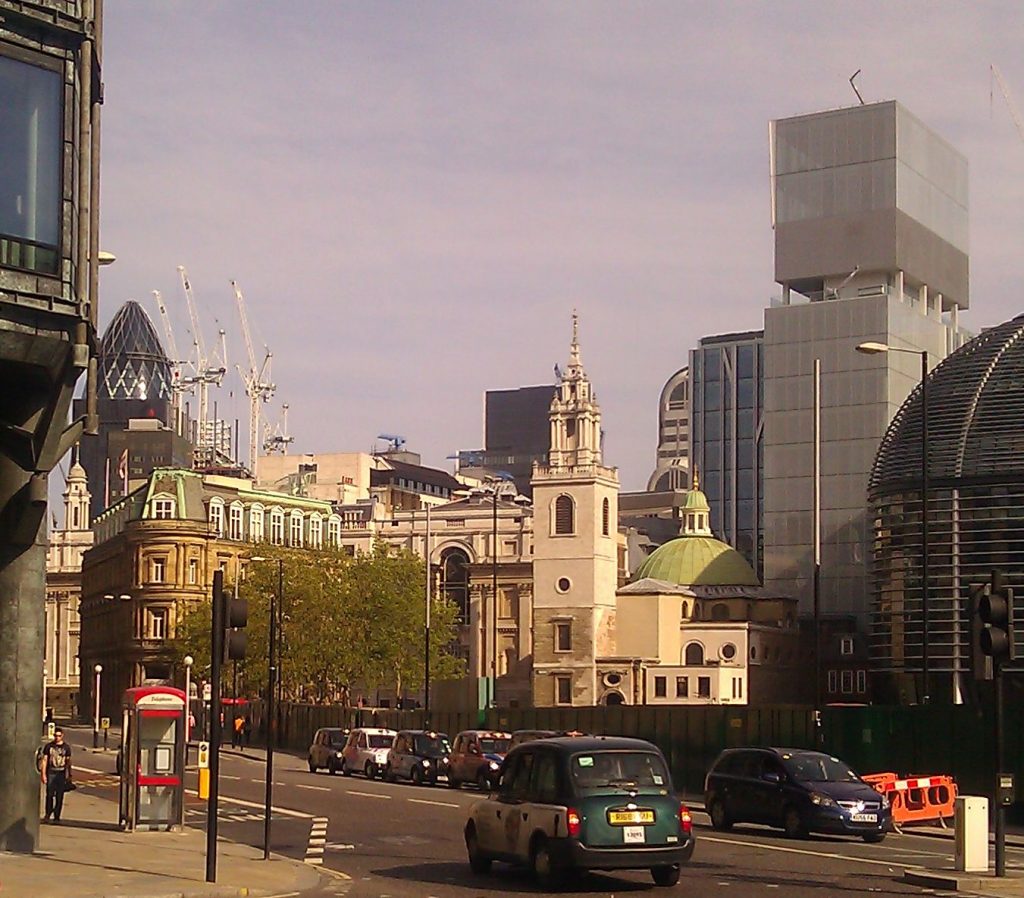
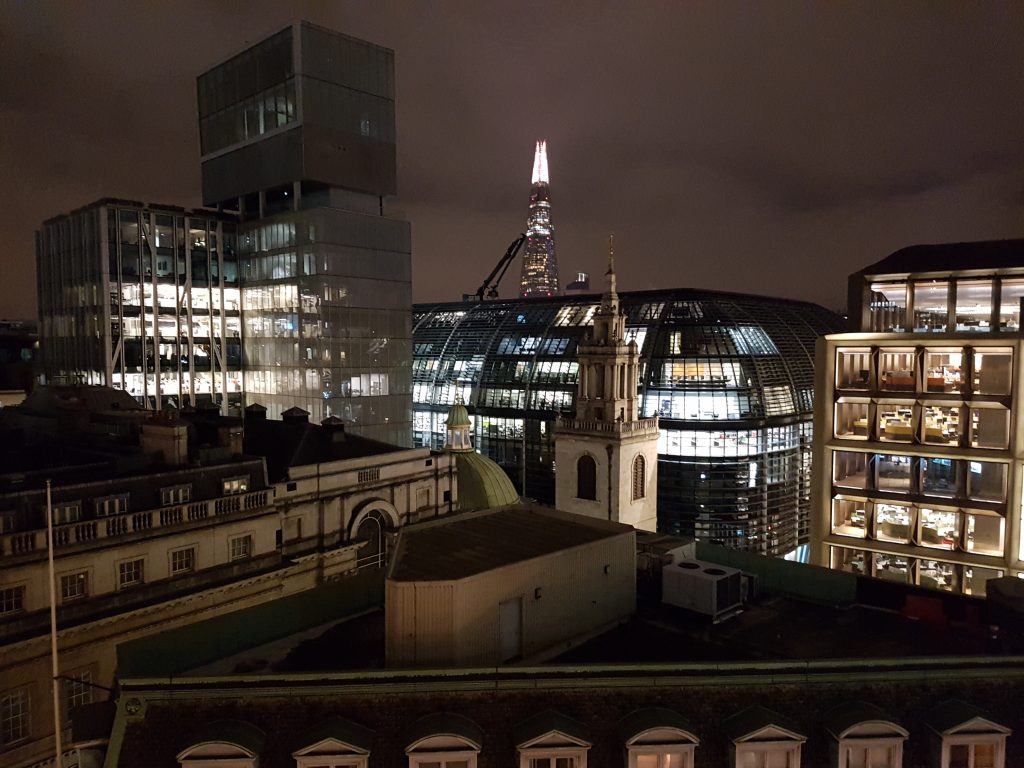
St Stephens Church by Christopher Wren (Photo K Flude) a rare view during building work.

I found out about Sankta Lucia from a Swedish choir who hired me to do a tour of the City of London some years ago. We went into Christopher Wren’s marvellous St Stephen’s Church.  Under the magnificent Dome, the choir fancied the acoustics and spontaneously sang. I recorded a snatch of it, which you can hear below

Swedish Choir singing in St Stephen’s London
St Stephens Church in the middle foreground of the photo. (Photo K Flude)

You can watch the Sankta Lucia service in Westminster Cathedral below:

The Importance of Light

Recent medical research has shown the importance of light, not only to our mental health but to our sleep health.  Work places need to have a decent light level with ‘blue light’ as a component of the lighting. It is also an excellent idea to help your circadian rhymes by going for a morning walk, or morning sun bathing, even on cloudy days. This will help you sleep better. And so St Lucy remains relevant as an inspiration

To see my post on Roman and Medieval eye care and St Lucy click this link.

First Posted on December 13th, 2022, updated on December 13th 2023, 2024 and 2025.

Ashmolean Advent Calendar, William Burges & the Singing Pierides December 12th

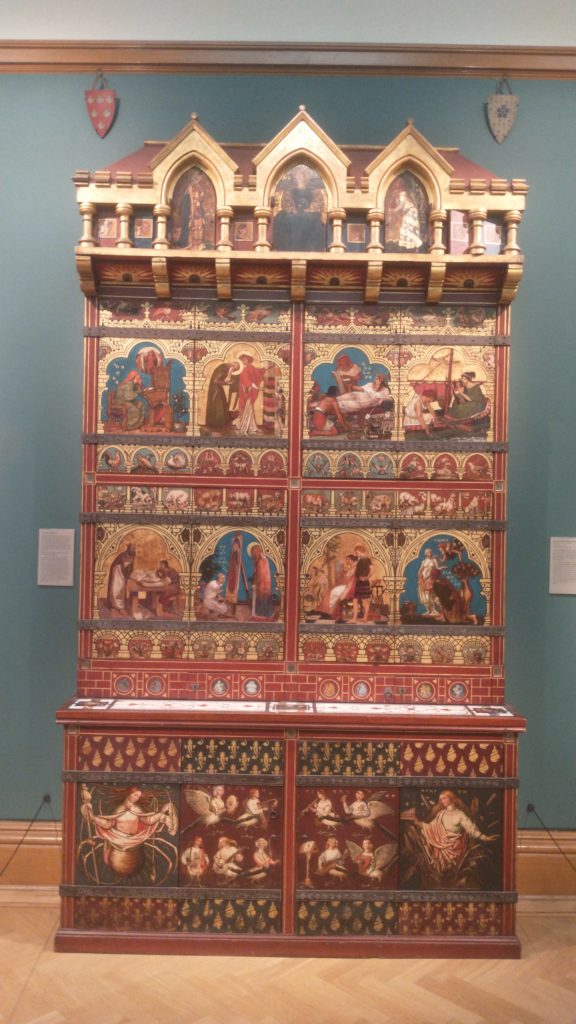
The Great Bookcase by William Burges Ashmolean Museum (Photo K. Flude)

The Ashmolean posts, every year, an online Advent Calendar with gorgeous items behind each ‘flap’. The choice seems to be, mostly, a random selection. But their collection is so wonderful, they are all interesting.

The Great Bookcase by William Burges & the Singing Pierides

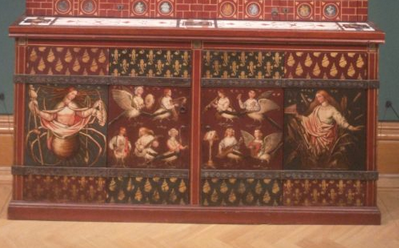
In 2022 The Ashmolean featured the Great Bookcase by William Burges. Burges is one of the great Gothic Revival architects and a designer in the Arts & Crafts Movement with an affinity for Pre-Raphaelite painters. He asked 14 of them to paint panels on his bookcase. The decorative scheme was to represent the Pagan and Christian Arts (Museum label).At the bottom of the Wardrobe are the Singing Pierides painted by Henry Stacy Marks. The Pierides were a sort of classical Greek Von Trapp singers, 9 daughters who foolishly challenged the Muses to a singing competition. Of course, the Goddesses of the Arts — the Muses won., As punishment for their vanity, they turned the Pierides into songbirds. Let this be a warning to all those who overrate their own talents!

‘Whenever the daughters of Pierus began to sing, all creation went dark and no one would give an ear to their choral performance. But when the Muses sang, heaven, the stars, the sea and rivers stood still, while Mount Helicon, beguiled by the pleasure of it all, swelled skywards tilI, by the will of Poseidon, Pegasus checked it by striking the summit with his hoof.

Since these mortals had taken upon themselves to strive with goddesses, the Muses changed them into nine birds. To this day people refer to them as the grebe, the wryneck, the ortolan, the jay, the greenfinch, the goldfinch, the duck, the woodpecker and the dracontis pigeon.’

Antoninus LiberalisMetamorphoses (wikipedia)

Burges & the International Exhibition of 1862

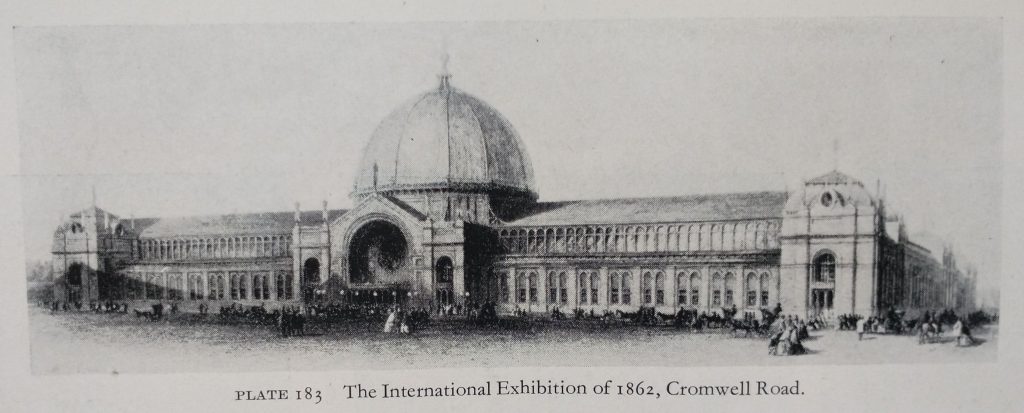
Engraving of the International exhibition of 1862, Cromwell Road
Print of the International Exhibition of 1862, South Kensington

The bookcase by William Burges was originally displayed as the centre point of the ‘Medieval Court’ of the 1862 International Exhibition, South Kensington, London. The Exhibition was almost as successful as the more famous Great Exhibition of 1851. Both got about 6m visitors. The 1862 Exhibition was just south of the site of the 1851 (on the south side of Hyde Park) and in what were then the Royal Horticultural Society’s gardens (now the Science, Natural History Museum, Imperial College etc.)

Raphael

This year, they posted a Raphael drawing of an angle. I show a screen shot below. But to have a real look click here.

The Nuragi

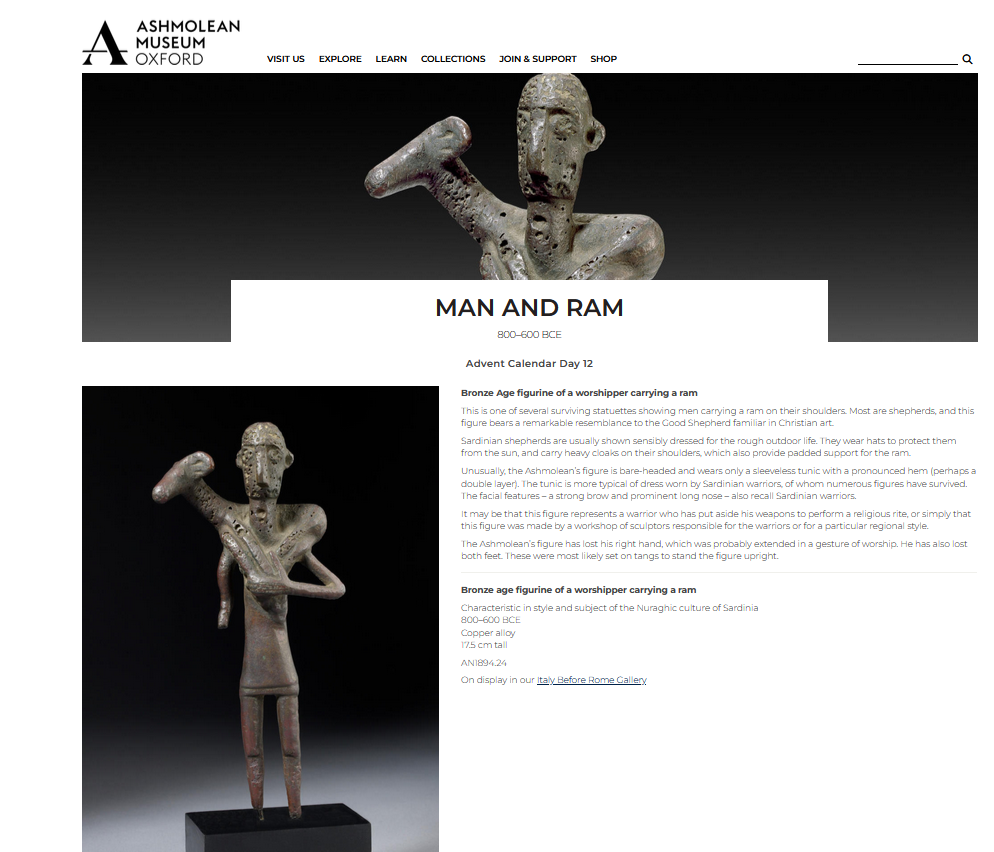
Last year it was a nuragi bronze age stature of a shepherd, a screen shot of which I show below. 2023 December 12th’s choice was a netsuke.

Nuragi statue of a Shepberd

I discovered the Nuragi on a University Field trip, with my students, to the Capital of Sardinia, Cagliari. The Nuragic culture is not well known. However they have amazing Bronze sculptures which give the viewer a really vivid view of their lives and fashions in the Bronze Age. They lived in round towers called nuraghe, which are a little like the Brochs of Scotland. They were around during the time of the Mycenaean Culture in Greece. But their origins and indeed their history are argued about. They may be part of the ‘Sea People’ who brought the end to the Bronze Age cultures of the Eastern Mediterranean, or they may not.

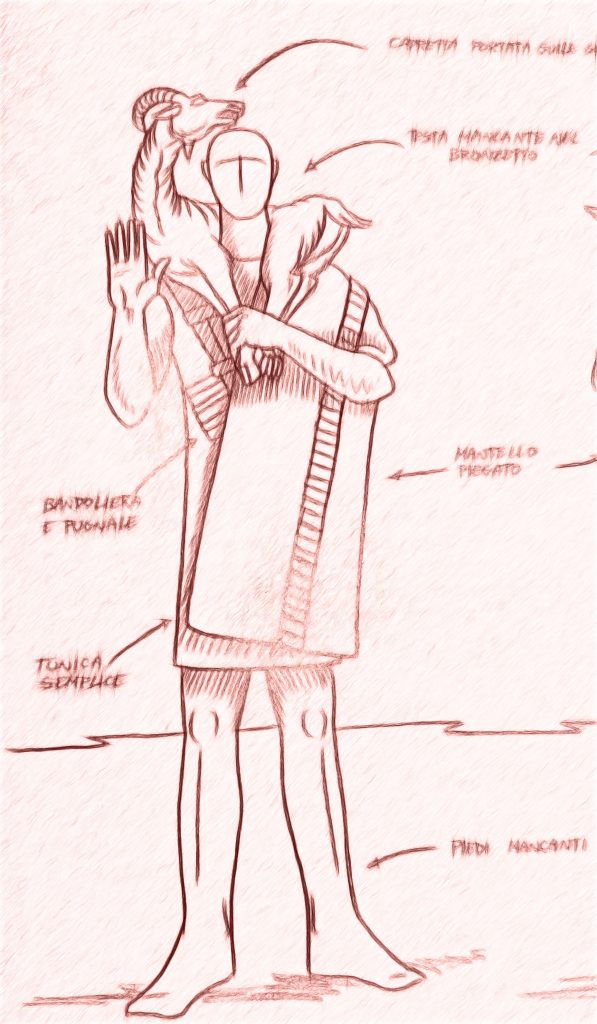
Here, in Britain, the Bronze Age is dominated by discussions of henges, barrows, metal axes and swords. But with very little sense of what life was like to live in those days. However, go to the Cagliari Museum, look at these wonderful statues, and it becomes possible to picture the people. Particularly with a copy of ‘Il Popolo di Bronzo’ by Angela Demontis to hand. It is a catalogue of Nuragi statures with interpretative drawings. It really brings the people to life depicted in the statues. They are mostly warriors, but also there are ‘normal trades’ such as shepherds and bakers which are depicted as well.

Here is my slight adaption of one of the drawings. It is of a shepherd similar to the one photo’d above.

A sketch drawing of a Nuragi sculpture derived from ‘Il Popolo di bronzo’ by Angela Demontis

What you can see is some detail of the clothes and the knife belt around the torso. Not to mention the sheep around his neck! The drawing brings a living person from the Bronze Age before you, not just a lump of bronze. Wikipedia has a long article on the nuragic culture. You can see a wonderful collection of nuragi bronzes and their homes on this website.here.

Originally written for December 12, 2022, revised and republished December 2023, and the Nuragi added in 2024 and Raphael added in 2025

The Winter Festival of Brumalia, Roman Hoodies and Diocletian’s Edict of Maximum Prices December 11th

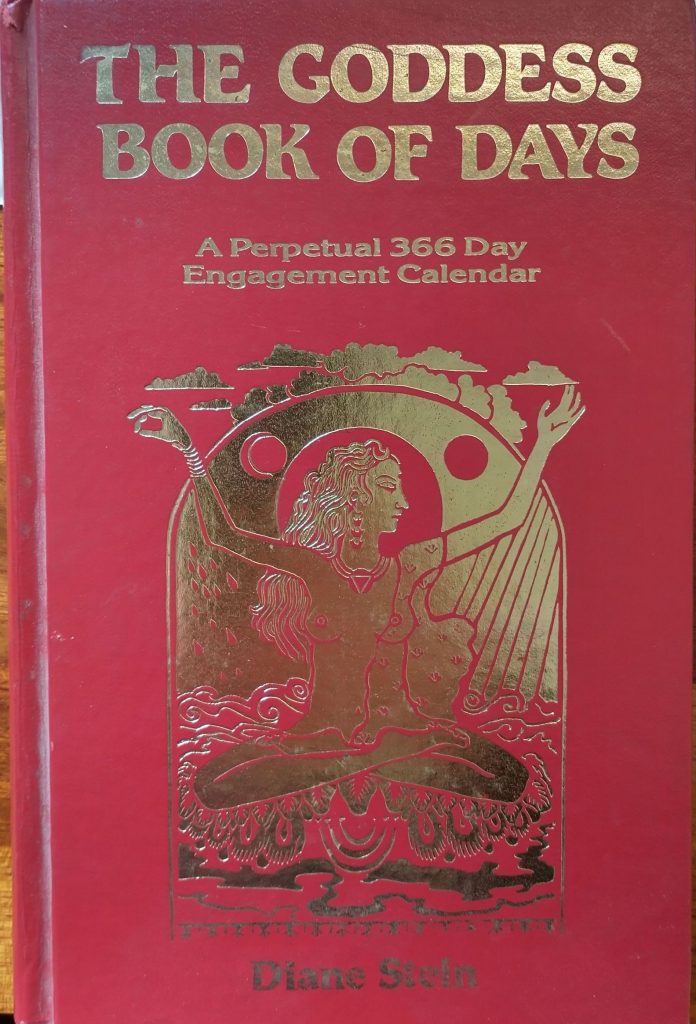
December 11th is dedicated to Bruma the Roman Goddess of Winter or so says my Goddess Book of Days,. However, I’m not having much luck tracking her down. Elsewhere, I find reference to a Greek or Roman festival of Winter called Brumalia. It starts in late November and ends on the 25th December, the Roman Solstice. Or so they say. But, only the Goddess Book of Days has it on December 11th.

cOVER OF THE GODDESS BOOK OF DAYS by Diane Stein
Cover of the Goddess Book of days

However, there is more evidence for the Brumalia festival in the Eastern Roman Empire. So, let’s imagine a Winter Goddess beginning her reign on November 24th. Then, Saturnalia took place from 17th – 24th December and the climax of the reign of the Winter Goddess was Brumalia on the 25th December. The festival was celebrating the seeds in the ground, necessary for a good harvest. To ensure a good harvest Civic officials delivered gifts of wine, olive oil, grain, and honey to the Priests and Priestesses of the Goddess Ceres. Farmers sacrificed sheep and pigs to Saturn and Ceres. They inflated sheep bladders with air and jumped upon them as part of the celebration!

December 25th

Aurelian in 274 AD fixed December 25th by as the day to celebrate Sol Invictus. The worship of the Unconquered Sun was the Roman attempt to have a monotheistic element to their religion. December 25th was also chosen by Mithras, Saturn, and Christians. For more about December 25th see my post here.

Underlying this confusion of dates is the difficulty of aligning the solar year to the calendar year, and in the Roman period it was all over the place until Julius Caesar fixed the Calendar. (for more on that, see my post here)

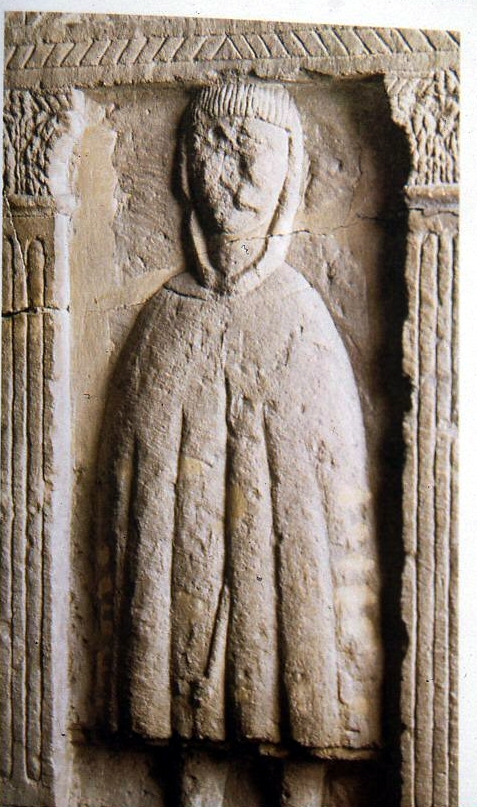
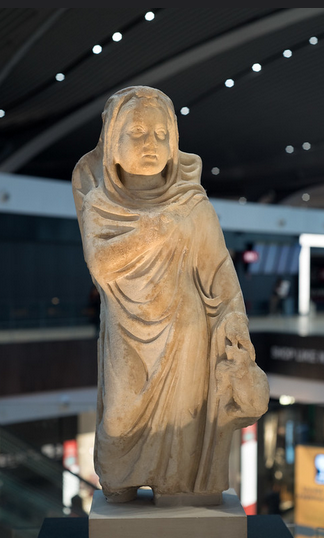
Roman Hoodie

The picture of the tombstone, above, comes from Cirencester, and the inscription says:

Philus, son of Cassavus, a Sequanian, aged 45, lies buried here.

For details look at the ‘Roman Inscriptions of Britain.org’ here:

Philus’ cloak is very interesting. Similar Hoodies are found in other places in Roman Britain, for example, on a mosaic at Chedworth. They are called the Birrus Britannicus. And were famous throughout the Empire. It was a hunting cloak made of wool. I imagine it was a sort of ‘thorn proof’ woollen garment that was warm, rugged, and waterproof. Britain was exported hunting dogs and slaves. The Cotswold wool was also famous in medieval Europe. It was made from Cotswold Lion sheep which were introduced first during the Roman period into the local sheep stock. The large number of rich Roman villas in the area suggest that the wool made the local economy strong.

The British Hoodie, and Inflation.

In AD 301, the emperor Diocletian issued his Edict of Maximum Prices. In it, the Emperor rages against inflation:

Greed raves and burns and sets no limit on itself. Without regard for the human
race, it rushes to increase and augment itself, not by years or months or else days, but almost by hours and very moments. Diocletian Maximum Prices Edict (click here for Pdf)

The Edict then lists maximum wages and prices. The birrus listing says that the Tailor,

cutting and finishing a hooded cloak (birrus) of the finest quality shall have a maximum wage of 60 denarii. ‘

The sanctions against breaking the Edict were terrifying. This suggests the difficulty of enforcement was compensated for by extreme punishment. Diocletian also insisted that labour shortages were addressed by making children follow the same profession as fathers. Interesting how familiar rampaging inflation and severe staff shortages seems to a post.

Reorganisation of the Roman World

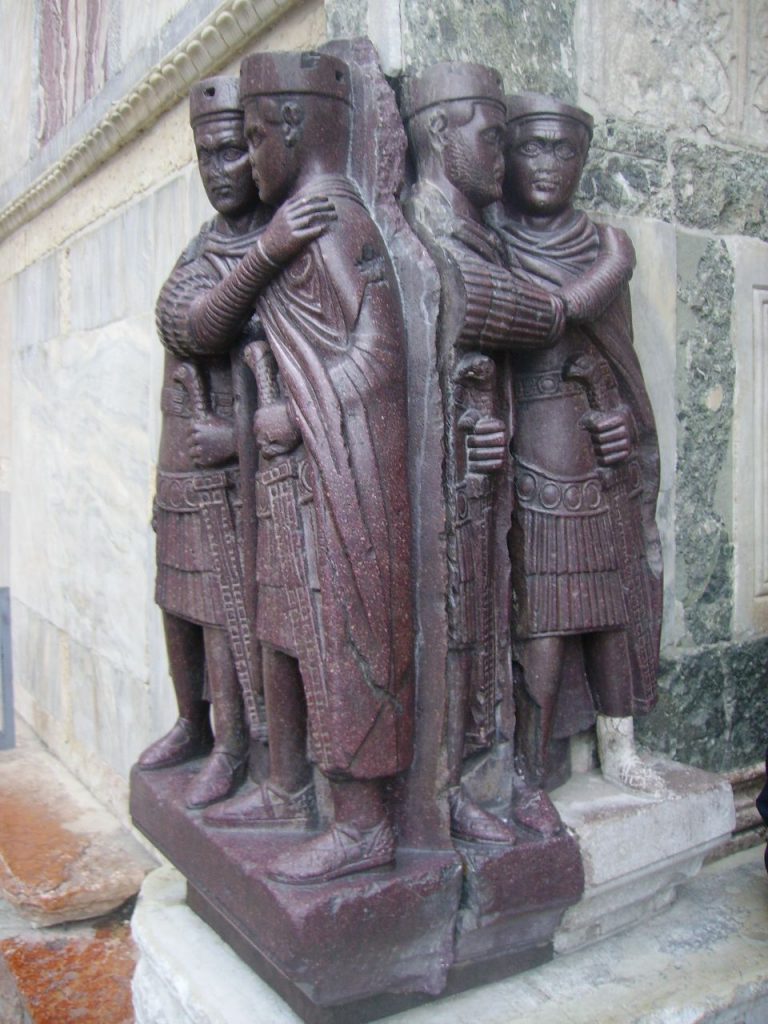
Diocletian, having a hug in with his junior Augustus and 2 Caesars, Venice

Diocletian was obviously a very logical man, looking for structural fixes to society’s problems. His analysis of the Roman Empire and its frequent Civil Wars/Coup D’Etats/Usurpers was that there was a deficiency in the career ladder for megalomaniacs. So to stop them usurping the Emperorship, he set up a rational career progression and divided up the Empire as follows:

1 Augustus for the Eastern (Greek speaking) Empire
1 Augustus for the Western (Latin speaking) Empire
2 Caesars for each Augustus
Prefects reporting to the Caesars
Vicari reporting to the Prefects
Governors reporting to the Vicarius.

So you could begin your career in charge of a Province, then progress to the Diocese, then to the Prefecture, then to a quarter of the Empire, then to the Western Empire and finally to be the top dog in the richest Greek-speaking part of the Empire – the supreme Augustus. Brittania was divided up into 4 provinces, each controlled by a non-military Governor. They reported to the Vicarius in London, who reported to the praetorian prefecture of the Gallic region, which was based at Trier, who reported to Rome. They copied in the supreme Emperor who normally hung out in the East of the Empire. (the rich bit).

Did it work? Well, while Diocletian was alive maybe. When his Augustus of the West Constantius Chlorus died, his troops, in York, declared his son Constantine to be Augustus. Thus, bypassing the peaceful progression from Governor to Augustus. The system reverted to the usual tactic of wiping out your fellow Prefects, Caesars and Augustii. After his victory at the Battle of Milvian Bridge, Constantine was universally recognised as the supreme Augustus. He moved the Eastern Capital from Nicosia to Byzantium and renamed it Constantinople.

More on the Sequani

The Sequani were from the upper Saône Valley, near Besançon.

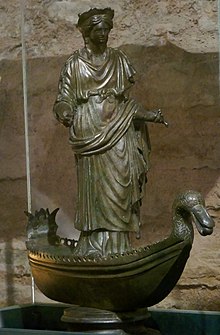
One of our readers alerted me to the Wikipedia page on the Sequani which explains that the name comes from the Goddess Sequana who is a water goddess. The centre of the territory is Besançon which is on the Doubs River. part of the Haute Saône Doubs and near to the springs that are the source of the Seine (west of Dijon). The Fontes Sequanae (“The Springs of Sequana”) gave her name to the River Seine, and a healing spring was established in the 2nd/1st BC. Enlarged by the Romans, it became a significant health centre. as Wikipedia explains in the clip below:

Image of Sequana in a duck boat by Wikipedia FULBERT • CC BY-SA 4.0

‘Many dedications were made to Sequana at her temple, including a large pot inscribed with her name and filled with bronze and silver models of parts of human bodies to be cured by her. Wooden and stone images of limbs, internal organs, heads, and complete bodies were offered to her in the hope of a cure, as well as numerous coins and items of jewellery. Respiratory illnesses and eye diseases were common. Pilgrims were frequently depicted as carrying offerings to the goddess, including money, fruit, or a favourite pet dog or bird.’

https://en.m.wikipedia.org/wiki/Sequana

First, published on December 11th,2022. Revised and republished on December 11th 2023, 2024, 2025

Gordon Russell, the Mosquito and Broadway December 11th

De Havilland DH.98 Mosquito B Mk IV Series 2n (Wikipedia CCO), parts of it were made in Broadway

On December 11th 1940 a bomb dropped on a barn in a beautiful village in the Cotswolds. Broadway is a tourist attraction. It was considered one of the most beautiful villages in Britain. It was the playground for many artists, writers, actors, designers and other bohemians of the late 19th Century.

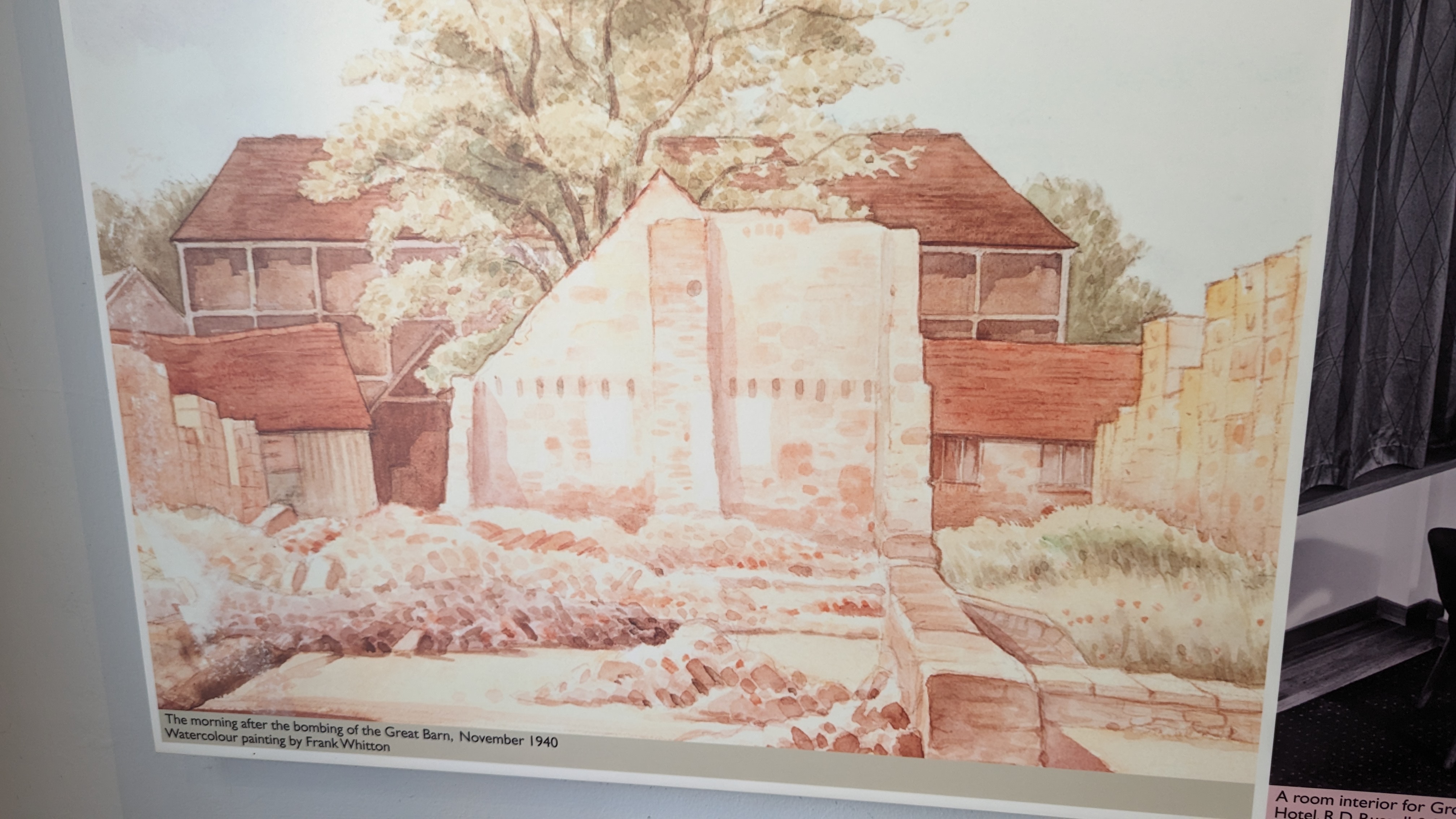
There were several large fires in Broadway during the war. On the night of December 11th 1940 a German bomber dropped a quantity of incendiary bombs on the village. A number of them fell on Gordon Russell’s furniture factory setting light to a large wooden, thatched barn. The building containing fine furniture and textiles, brought from London for safe keeping, was quickly destroyed. Ironically, the barn also contained a large order of furniture for Sir John Anderson – the Minister for Air Raid Precautions!


Another incendiary landed on the machine shop roof burning a hole, before being extinguished, it is believed, by a factory worker who lived nearby. The temporary plywood patch which was nailed on the underside of the hole was still in place when the factory was demolished in 2004. When a cottage adjacent to the factory was recently re-thatched, an unexploded incendiary bomb was discovered lodged in the old thatch. According to an Evesham Journal report, published at the end of the war, bombs fell in the Broadway area on seven separate occasions.

Quotes above from http://www.broadwayfire.co.uk/second_world_war.htm

So, the Broadway fire brigade history pages suggests the raid was on December 11. But other sources prefer the night of November 14th. The night of the infamous Coventry Raid. But I have found another site claiming the raid that destroyed the barn was in October! But I’ve moved this blog post from November 14th to December 11th because I think the Fire Brigade should know what it is talking about!

Gordon Russell

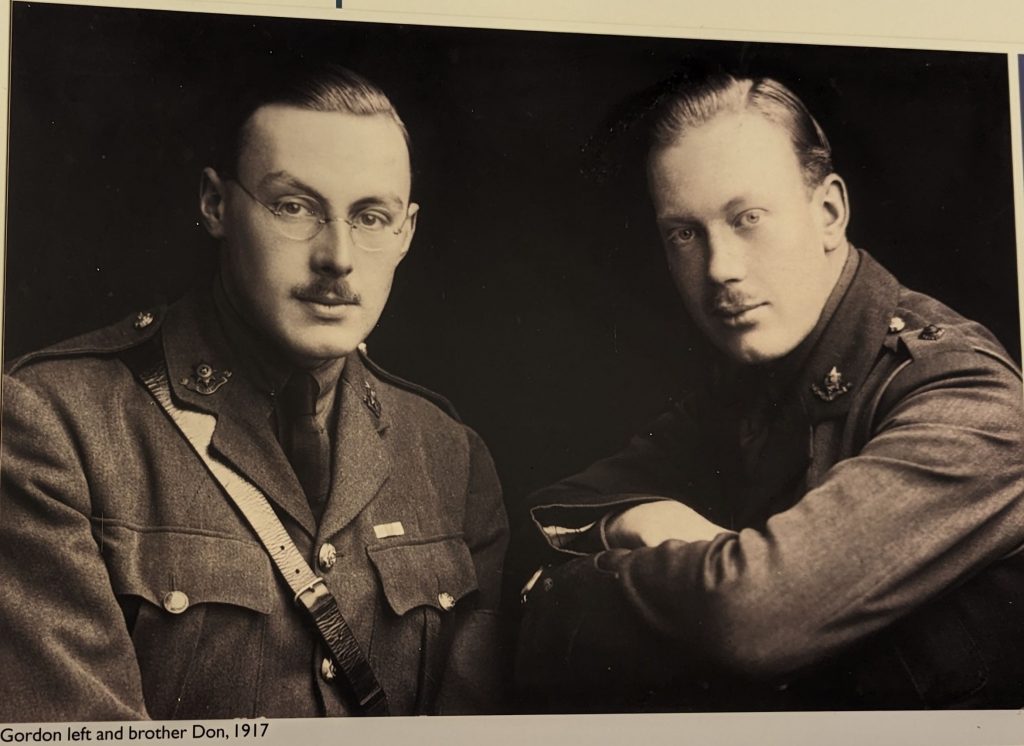
Gordon Russell was a famous furniture designer. During the War, he turned over his carpentry workshops to the war effort. They made the wings of the famous World War Two Mosquito fighter bombers in Russell’s modernist furniture factory. This was in the Back Lane of Broadway. And next to the bombed barn is now a Co-Op supermarket.

The Mosquito was fast enough to be a fighter and could carry a decent payload of bombs. Because of their flexibility and speed, they had many roles in the war, including being the pathfinder for many of the nighttime raids on Germany.

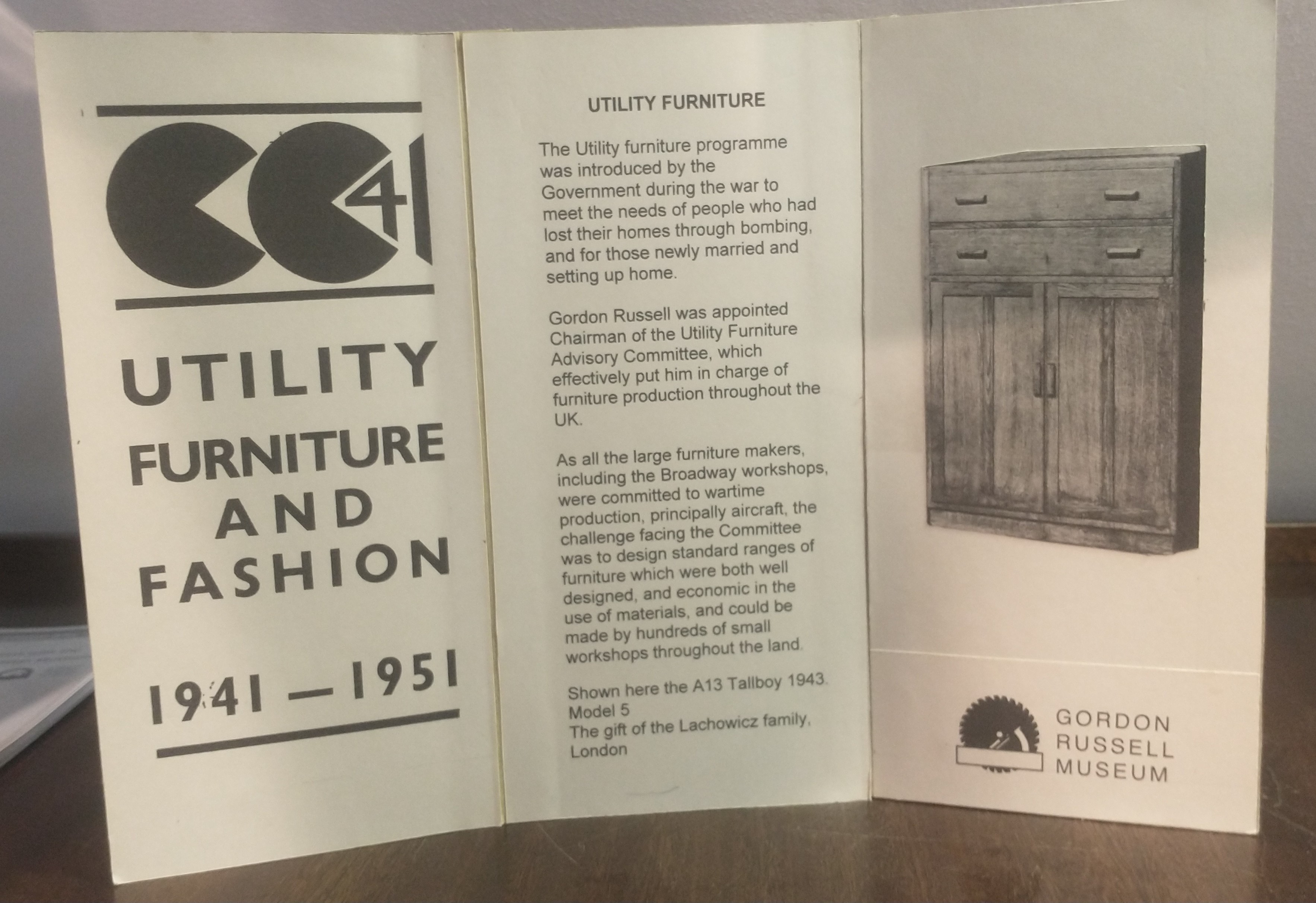
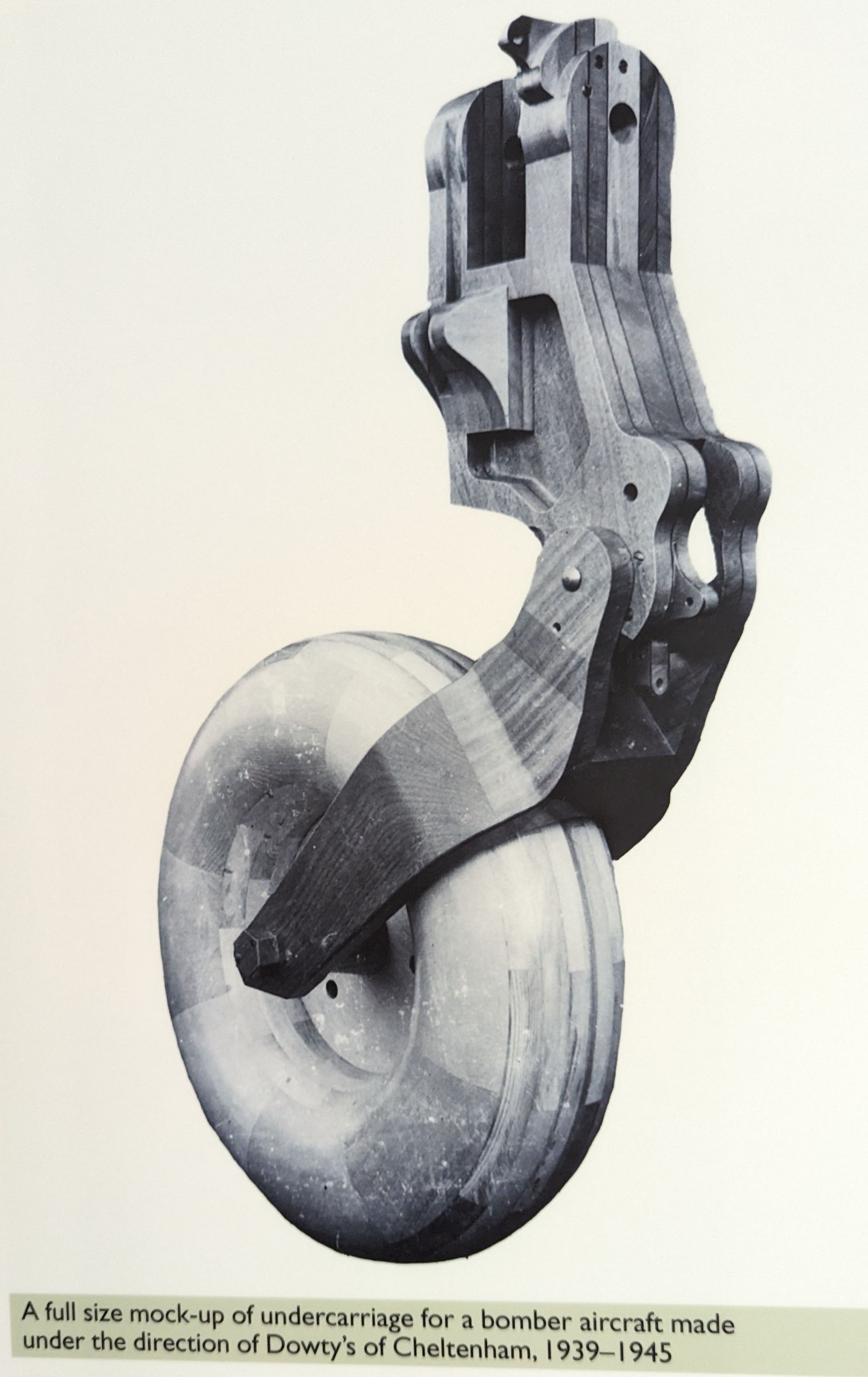
Russell’s factory also made ammunition boxes, and high-precision aircraft models for wind tunnel testing and other purposes. Gordon himself designed a utility range of furniture to minimise the amount of wood needed for new furniture during the war.

Images above taken by Kevin Flude of the displays at the Gordon Russell Museum, Broadway. The Museum is well worth a visit, and Broadway itself remains a delight.

My Father & the Mosquito

My father, I discovered a couple of nights ago, worked on Mosquitoes in his time in the RAF. His job was to salvage instruments from crashed aeroplanes. Mosquitoes were, along with Spitfires, and Hurricanes, amongst the ones he worked on. To buy his war time autobiography follow this link!

For more from the Almanac about Broadway, see:

and:

Another source for this post was: https://www.facebook.com/share/p/nEzPogPpsy7QD4US/

First published on 14th November 2024, Moved to December 11th 2025