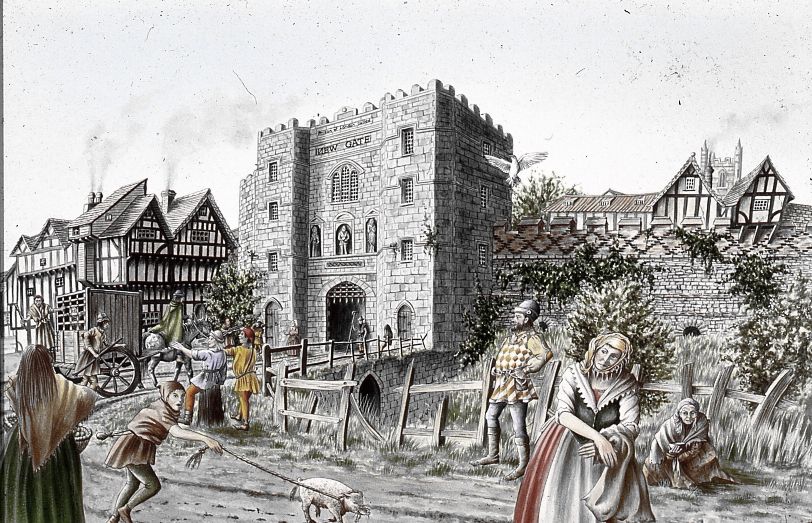

This is St Mark’s Feast Day. So this post is about St Mark, and as he was a writer, a history of pens. But first new content:
Object of the Week – the Humble Aglet
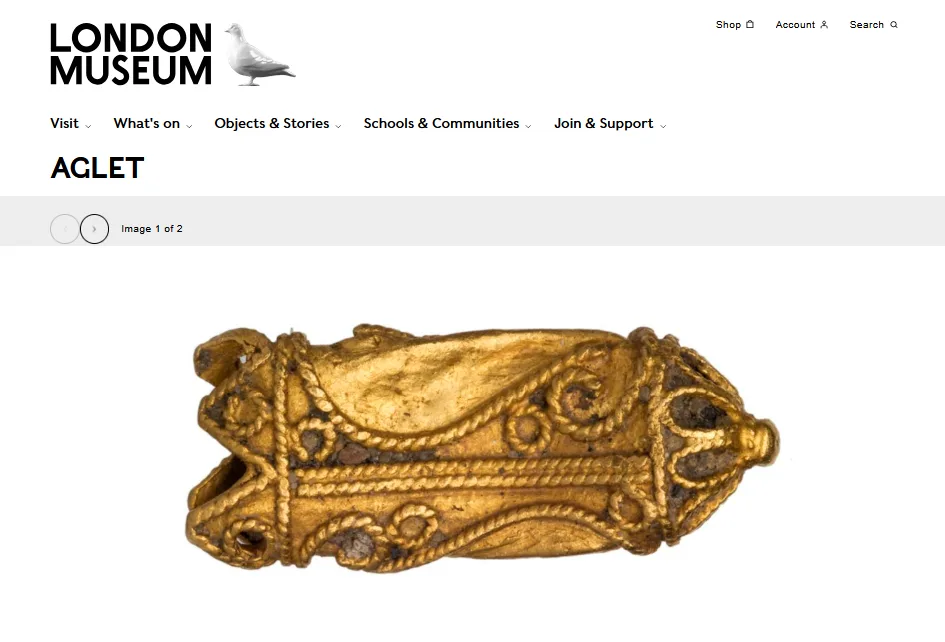
I suspect most of us don’t think much about aglets. They are that little pointy thing at the end of a lace. When they break we discover how useful they are at poking a string through a hole. The one above is a glorious gold example found at Greenwich, and possibly from Royal Tudor clothing. Details of it are here on the London Museum web site: https://www.londonmuseum.org.uk/collections/v/object-919752/aglet.
This morning, Roseann Milano sent me a link to an instagram reel from the National Gallery in which aglets are discovered on very famous paintings. I cannot find a non-Instagram version of it, for which apologies, but I do recommend you spend 3 minutes looking at https://www.instagram.com/reels/DXeGFiwjYhL/. It’s a great little video with an excellent narrative. Thanks Roseann.
St Mark. Who He?
There is a lot of discussion about who he was. So, various Marks might be St. Mark the Evangelist but there is no consensus. Modern scholars tend to think none of the Gospel writers were contemporary witnesses. So, Mark, whoever he was, is a convenient label for the person who wrote St Mark’s Gospel. I will let you use Google to follow the discussion. But from Wikipedia, here is a taste of it:
‘However, Hippolytus of Rome, in On the Seventy Apostles, distinguishes Mark the Evangelist (2 Timothy 4:11), John Mark (Acts 12:12, 25; 13:5, 13; 15:37), and Mark the cousin of Barnabas (Colossians 4:10;Philemon 24). According to Hippolytus, they all belonged to the “Seventy Disciples” who were sent out by Jesus to disseminate the gospel (Luke 10:1ff.) in Judea.’
One of the Marks went with St Paul on his first missionary journey, but he fell out with Paul so didn’t go on the second one. But they patched it up and he was with Paul in Rome where Paul was martyred. Where, if, Mark was martyred is not known, but there is a tradition that he was the first bishop of Alexandria and martyred there in the reign of Trajan. In 829 relics arrived in Venice which were claimed to be St Marks, and so Venice’s famous Cathedral is called St Marco, and the symbol of St Mark is the winged Lion.

Saints
Just to explain my interest in Saints: The main reasons are: One to shed some light on the history of Roman and Early Medieval Europe, and secondly, to highlight those Saints which were important to everyday Medieval life. Of course, I enjoy the frequently, far-fetched and bizarre, stories that are told about the saints. In this case, my interest in St Mark was to find a home for a little research on the history of Pens!
Reed Pens
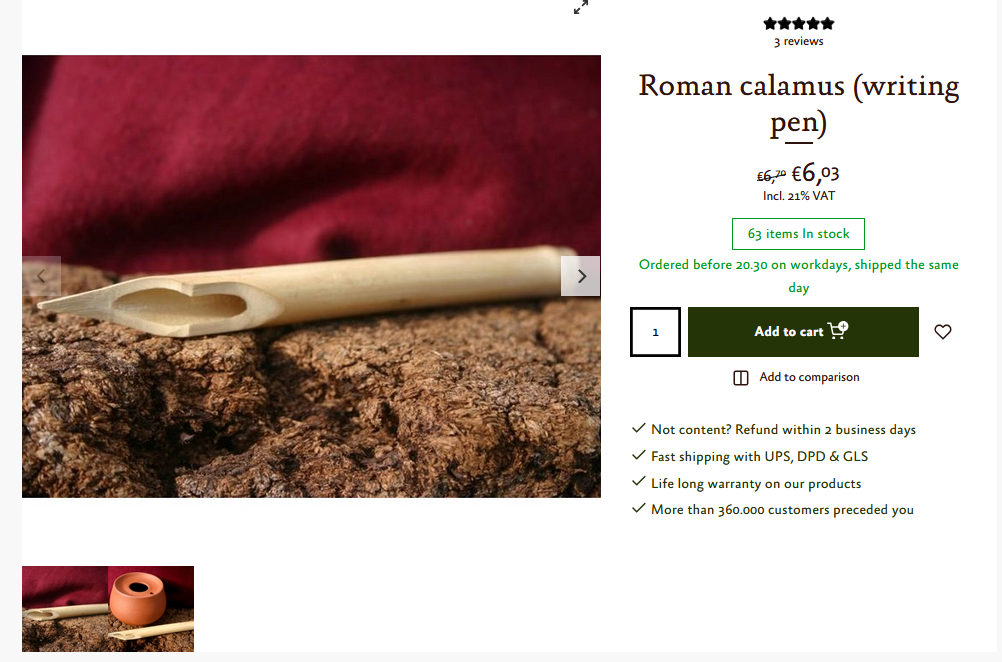
The history of Pens arguably begins with the Reed pen. These were used from 3000BC by the Egyptians. They were made from sea rushes and were ideal for writing on papyrus.
Here is a replica Roman reed pen you can buy:
Metal Stylus
The metal stylus was invented around 1300 BC and used by the Romans to write on wax Tablets. These had a point at one end and a flat triangle at the other to erase any mistakes.
At the Bloomberg site in the Walbrook Valley in London, a metal stylus was found with this inscription on its four faces, showing it was a novelty pen!
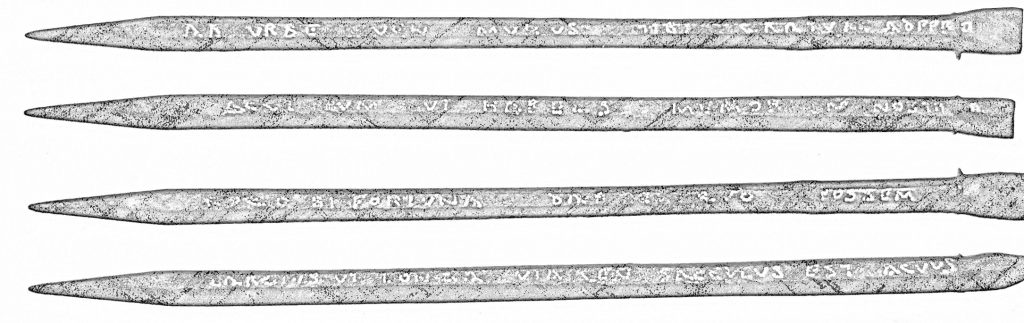
From Rome, a keepsake to bring you pleasure –
a pointed gift so you will always remember;
I wish I could have given you so much more
but the journey is long and funds are short.
To see a photo of it look at this web site.
Wax Tablets
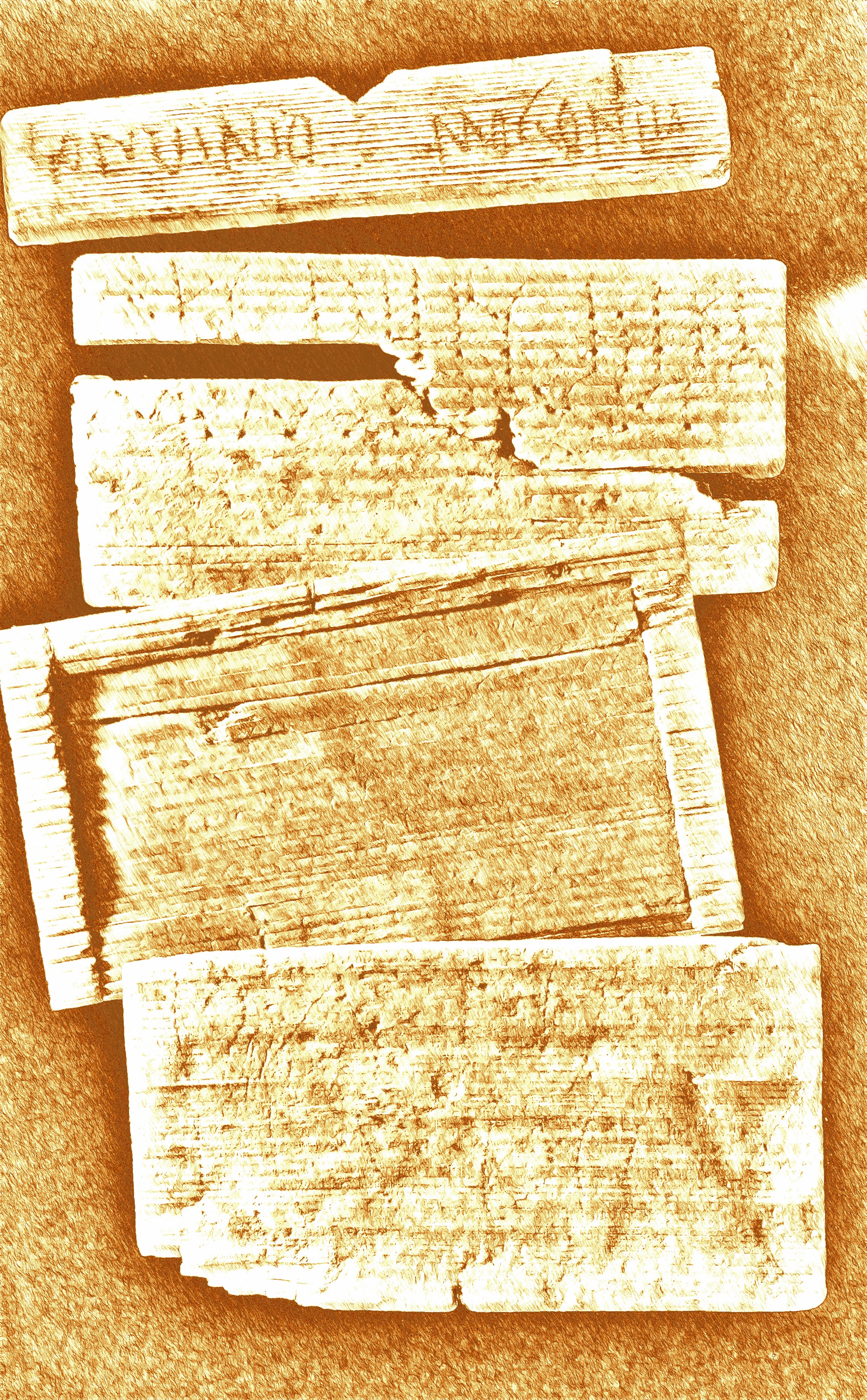
Here are some examples of Roman wax tablets that have been deciphered from London.
Rufus, son of Callisunus, sends greeting to Epillicus, and all his fellows. I believe you know that I am very well. If you have made the list, please send it. Do look after everything
carefully so that you turn the girl into cash.
Writing Tablet, ‘Museum of London (now called the London Museum!)
The most important information from this find is that the son (Rufus) has been given a Latin name by his father (Callisunus) whose name seems to be of Celtic origin; the girl referred to could be a slave.
Another tablet found at No. 1 Poultry (the Bloomberg site) dates to the early 2nd Century and reveals the astonishing fact that slaves could own other slaves.
‘Vegetus, assistant slave of Montanus the slave of the August Emperor, has brought the girl Fortunata, by nationality a Diablintian… … for 600 denarii. She is warranted healthy
and not liable to run away’
So we have a slave owning a slave who owns a slave who is selling a slave! Fortunata comes from what is now called Rheims in France. These were all written in Latin on a wooden wax writing table.
Curses
The next one was scratched onto a scrap of lead before consigning it to the ground:
‘I curse Tretia Maria and her life and mind and memory and liver and lungs mixed up together, and her words, thoughts and memory; thus may she be unable to speak
things that are concealed nor be able-‘
The rest of it is missing. This is a ‘curse’. It was probably written by a Priest for the sad supplicant who wanted Maria to keep schtum. The above example are from my book on the origins of London. (To buy click here ).
Roman Vindolanda & Underwear
The Romans also wrote on papyrus and on birchbark. The British Museum has a marvellous collection of birchbark pads which were written on in Vindolanda (near Hadrian’s Wall) and using ink. My favourite tells the recipient they are to receive underwear, socks and sandals in the post. To find out more follow this link: https://www.britishmuseum.org/collection/galleries/roman-britain/vindolanda-tablets
Romans made little inkwells out of Samian ware – you can see one in the small picture above near the reed pen. The stylus was the most frequent artefact found in Roman London. So it was a pen-pushers City. Read this excellent piece on Roman writing.
For more on Roman London read my post roman-mosaic-is-biggest-found-in-london-for-50-years-in-roman-britain/
Quill Pens
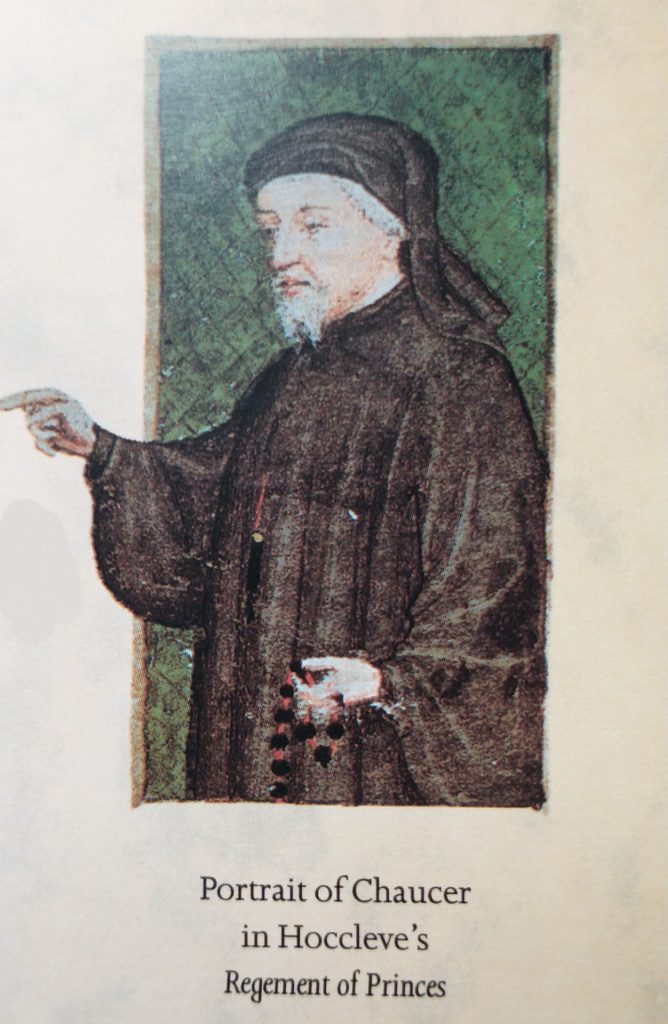
The history of pens then is in the hands of the Quill. They took over from the Egyptian Reed pen and in Europe from the 6th Century onwards. They remained the most common type of pen until the mass production of steel nibs. This was pioneered in Birmingham in the 19th century. These made the previously ubiquitous hand made quills and reed pens redundant.
Fountain Pens
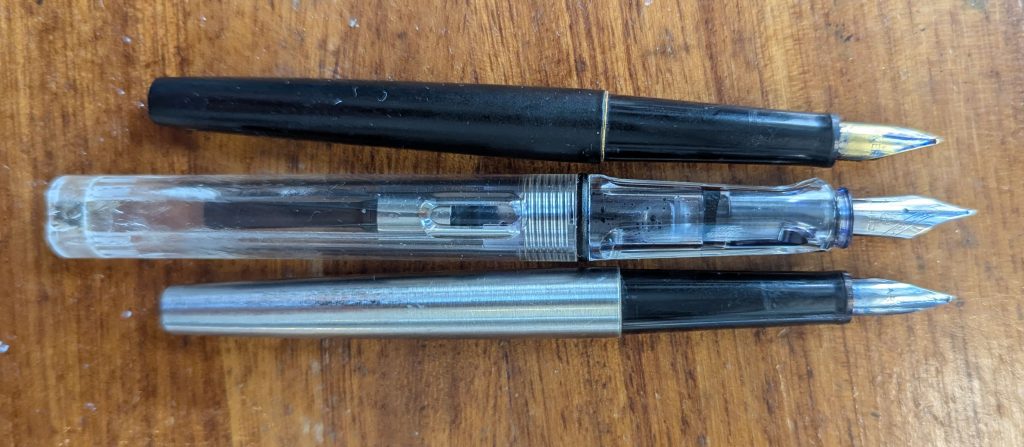
At end of the 19th Century, the first reliable fountain pens were introduced. Many authors date the invention of fountain pens to the early 17th century or even earlier. But, all of these early efforts were failures. None of them led to any revolution in pen technology.’ The problem was flow control and the ‘lack of recognition of the importance of air exchange in the ink delivery system’. The first successful fountain pens were by Waterman of New York and Parker of Janesville, Wisconsin 1884 and 1894 respectively.
This information, which sparked this post, came from the website below, which has much of interest on fountain pens.
I’m working on pencils for St Luke’s Feast Day! Then to finish the history of pens with biros on St Matthew’s Day? Sadly, still an aspiration!
First Published on April 25th 2025. Object of the day added in 2026 and text revised.
Discover more from And Did Those Feet
Subscribe to get the latest posts sent to your email.